About

Posts by :

HARMAN Phoenix is the Most Beautiful Thing in Film Photography

HARMAN Phoenix is the Most Beautiful Thing in Film Photography

Being announced today is the brand new HARMAN Phoenix film emulsion — the first color film from the same company as Ilford in many years. But this is something incredibly special: it’s also the first color film emulsion made completely from scratch that we’ve heard of in years, according to sources we spoke to before the film’s announcement. This limited-edition film has a bunch of special properties to it that make it really unique. We’ll tell you everything you need to know below.

Experts We Talked to in This Article

In pursuing better journalism, the Phoblographer is actively working to put our sources up front to combat misinformation and hearsay that otherwise taints the credibility of facts. Here are our sources, along with links to where you can find out more about them, and some information on why they’re considered experts in their field.

  • Bill Manning: Bill is the man behind the Studio C41 podcast and the Atlanta Film Company, which takes Kodak movie film and cuts it for 35mm still emulsions that can be processed using the ECN-2 process. He also actively training film photography workshops across the country.
  • Brent Eysler: Brent is a long-time film photographer currently working at B&H Photo in the Road Marketing Department. He’s recently notable as the man behind the B&H Photo Museum and the lighting designer at the recent BiLD Expo.
  • Zeb Andrews: Zeb is the general manager of Blue Moon Camera and Machine. In the past year, Zeb, who’s worked at Blue Moon Camera for 20 years, is most proud of the fact that he’s managed their new consignment process that makes it so much easier for film photographers to use their website.
  • Lanna Apisukh: Lanna is a freelance photographer and Fujifilm Creator who works with the NYTimes, Wall St Journal, the New Yorker, Eater, etc. She feels the most significant story that she’s worked on recently was photographing Geraldo Rivera on his boat for a few days. The story was for the NYTimes as an end-of-career profile after his ousting from Fox News.

All of our sources spoke to us and provided us with approval on publishing during the creation of this article. You can read more about the Phoblographer’s Ethics on our Disclaimers page, linked here.

The ISO is Variable Between ISO 100-400

HARMAN Phoenix is a film like Lomography X Pro Slide 200 (previously reviewed here) in that it more or less has a variable ISO, but this is a C41 film and not a slide film. Harman states that you can expose it between ISO 100 to ISO 400, but that the results that they like the most come at ISO 200. We can only imagine that the more light you give it, the better it will look depending on how you process it.

This differs from something like Kodak Portra 400, where you expose it at ISO 200 and then develop it at 320 to get nice results. It’s also completely different from the gone Fujifilm PRO400H, where you expose it at ISO 75 to get the pastel look. In fact, we haven’t tested a film like this before in C41 that isn’t something like Lomochrome Purple or Turquoise — so it’s truly unlike anything else out there.

“We defintiely need any new films we can get, and more diversity in film stocks and manufacturing — not just another rebranded Kodak product.”

Brent Eysler

“I’ve heard some people speculate on if it’s repackaged Kodak film, but it’s not,” states Zeb Andrews, General Manager at Blue Moon camera, when speaking to the Phoblographer. He further describes it as something that has its own niche. “It doesn’t look like any other film on the market, and HARMAN has completely made it in their own factories. It doesn’t seem to have a lot of latitude due to that contrast.” Zeb continued to expand on how it’s such a different film, and that it’s something that is pretty unexpected — though when you think about it as a whole, it makes a lot of sense.

Blue Moon also has its own lab, and it’s the Phoblographer’s preferred choice for film development. So Zeb spent time with the film shooting it. He notes that the negatives have a purple base — which is very similar to Ilford XP2. “So that means that it has a tendency to print and scan yellow and green, and it requires more correction in scanning,” he explains. “This looks kind of like what happens when you cross-process Kodak slide film.”

Zeb, who’s been working with Harman Phoenix since August, shot portraits and landscapes with it. And here’s how he describes it:

“The strength for landscapes is that it really makes colors pop, so you can get really vibrant colors in your landscapes. Because it has a naturally yellow bias, the greens can be accentuated because the yellow bleeds into the green base. With portraiture, it’s trickier because of the contrast in the grain. That yellow bias also tends to get into skin tones; so you don’t get natural looking skin tones from this film, but you can embrace that look if you want.”

Zeb Andrews

Photographer Bill Manning echoes what Zeb said in different ways. He was told that it’s an experimental film, so he approached it as such. Bill describes it as not a perfect film at all. “It’s prone to halation, grainy for a 200-speed film, it is very contrasty, and has a small dynamic range,” he tells us. “Phoenix 200 requires a little more attention at the scan and photographers should communicate with their lab tech to make sure to scan this film using Harman Technology’s scanning guidance. Once corrected at the scan, the colors are super punchy and very pleasing.” Bill continued to share that you basically want to treat it like slide film.

“I firmly believe photographers will use these limitations to their advantage and create impactful work with it!”

Based on how we’ve shot many other film emulsions that work similarly, we can imagine that the intended effects will be more apparent at ISO 400 and lessened at ISO 100. And by intended effects, we’re talking about halation.

Yes, There’s Halation with HARMAN Phoenix

Some folks might not like the fact that this film has halation. “This is just the beginning of HARMAN’s colour journey.” says Giles Branthwaite, Sales & Marketing Director in the press release sent to the Phoblographer. “Sales from this film will allow us to further invest, refine, and improve our formulations, coating capabilities and colour technology. Our aim is that each new colour film we produce is an improvement on the previous.” However, some photographers are also perfectly alright with the fact that there is halation and other characteristics that the photography industry previously labeled as imperfections in the pursuit of marketing.

“Half of us are walking around with Glimmerglass and Pro Mist Filters on our cameras just to get some of that magic back,” says Brent Eysler to the Phoblographer in an interview — citing that he knew about it because of a previous leak. “I think that the world, especially in analog photography, is ready to embrace some of those imperfections.” Brent’s words more or less resonate with everything that we say here at the Phoblographer in our reviews. Even Gordon Laing, the Editor of Camera Labs, recently stated that he’s in love with a new lens that wouldn’t been traditionally called imperfect.

[embedded content]

Make no mistake, too, this isn’t the same halation that you’d get from Cinestill with a red tinge when pointing your lens at light sources. Instead, it will be more similar to a light bloom effect. Combine this with a lens that delivers a lot of lens flare, which could be too much. Luckily, if you’re using a film SLR camera, there are lots of excellent lenses made by Zeiss that cut down on this. We’ve reviewed lots of them and rounded them up in a guide for you that you can find at this link.

Ilford Color Films are Coming Back

What’s truly special about the new HARMAN Phoenix film is that it’s truly made from the ground up. Traditionally for many years, brands like Lomography and Fujifilm have been rebranding Kodak film. Sometimes there’s a special extra something added. But for the most part, we can think of it like Panasonic and Nikon using Sony’s camera sensors. Lucky for us, though, this isn’t a rebranded Kodak film emulsion.

“This is an incredible first step for Harman,” says Bill. “There are 2 (maybe 3) players in the industry making color films. To have Harman come into the industry creates healthy competition, and this is a good sign for industry growth.” Bill continued to state that he’s elated that it extends the longevity of the film industry overall.

“Having options is good for the consumer, and I welcome this. Ultimately, ECN-2 is just chemistry, and while I haven’t done it yet, I would LOVE to see how Phoenix 200 looks in ECN-2.”


Extra sample images were provided to us by Zeb Andrews. All photographs are used with permission.

Working photographers are bound to be curious about this, and some might immediately write it off. But we’ve interviewed tons who use film in their regular work. Photographer Lanna Apisukh is really excited about this new film. “I also think that you keep hearing about film being dead and that people are switching to digital. But in the past five or six years, it’s been exciting to see all these kids using film for this slower process,” she tells us. She believes that there’s a demand for film again and that it’s great that photographers are getting hyped for the roots of photography. Film photography is also treated with more reverence coupled with intent due to its sensory process.

Lanna has indeed shot a few assignments on film, but she admits that they’re rare and often unexpected. “…it’s okay to reach out to your editor for the budget needed,” she tells us. “It also depends on how quick the turnaround is for the story. If it’s a feature where you have a little bit of time.” Most of the time, she shoots digitally for her work. But she’s using film a lot for her personal projects.

With positive feedback from Giles and the prediction in place that the film community will go nuts for this, we’re finally going to start seeing new color films come back to the photography world. Considering how much Gen Z and Millennials love film, it will truly be something special as film photography and digital photography work in coexistence with one another.

Preview Of Living Arts Of Tulsa’s Holiday Art Market

Preview Of Living Arts Of Tulsa’s Holiday Art Market

Local artists are getting into the holiday spirit. Living Arts of Tulsa is having its Holiday Art Market starting Friday night, Dec. 1. News On 6’s Alyssa Miller was live to give us a festive preview.

Friday, December 1st 2023, 10:22 am

By:

News On 6

Local artists are getting into the holiday spirit. Living Arts of Tulsa is having its Holiday Art Market starting Friday night, Dec. 1. News On 6’s Alyssa Miller was live to give us a festive preview.

Best of 2023: Top 42 Photographs From Around the World

Best of 2023: Top 42 Photographs From Around the World
fireworks in Mexico

Photo: Pável Vélez (Instagram)

Whenever it nears the end of a year, we feel compelled to take pause and reflect on the past 12 months. It’s almost instinctual, this desire to revisit current events and reassess them with fresh eyes. Almost nothing allows us to do this better than photography. The world is frozen in time within each photograph, allowing us to either relive a moment or embrace a new perspective we ourselves haven’t experienced. This is the magic of photography and we owe a huge debt of gratitude to photographers around the world that allow us to dive into these visual aids imbued with emotion, information, and nostalgia. That’s why we at My Modern Met love taking a look back each year at the past 365 days of incredible photography, and 2023 is no different.

This year has been filled with imagery that has wowed us. And with AI being so prevalent in nearly all walks of life lately, it is all the more refreshing to see photographers, with camera in hand, capture snippets of real life. In particular, nature has proven to be an unwavering source of awe and inspiration. From the spectacular views of the Moon and cosmos to the sweeping landscapes down on Earth to the exotic creatures that wade through the sea, we’ve been reminded of the natural beauty that surrounds us at every corner and elevation. It is a wakeup call about all that we must work to preserve.

The environment and its inhabitants have been prime subjects over the past year. Everything from the image of a microscopic juvenile sea star (only 1 centimeter wide) to a giant wave with what seems like the face of a man have stuck out in our minds this year. There are also images of people that have really resonated in 2023. Human life is precious and seeing the faces of these varying individuals from all walks of life looking joyous, angry, forlorn, proud, confident, or otherwise have all reached out beyond the frame and tugged at our emotions and inner psyche.

Ultimately, 2023 has been a year of images reflecting the beauty and heartbreak found all across the globe. Each image is a reminder of the passage of time. Whether it is an actual time-lapse image or a light painting, or it’s a fleeting moment we won’t ever see again in our lifetime, these photos we’ve selected offer a range of views of people, animals, landscapes, the universe, and a wide scale of emotions felt over the last year.

Join us as we take a visual journey through the highs, lows, and everything in between of 2023.

Take a look at our selection of the “best photos of 2023″—a mix of images that reflect the beauty of the natural world and a range of emotions expressed in human portraits.

Glacier ice cave with Northern LightsGlacier ice cave with Northern Lights

Photo: Ryan Newburn (Instagram | Facebook)

Cloud surrounding the top of a volcanoCloud surrounding the top of a volcano

Photo: Francisco Negroni (Website | Instagram)

JetBlue airplane passing across blue supermoonJetBlue airplane passing across blue supermoon

Photo: Andrew McCarthy (Website | Instagram)

woman stands in front of light halo with water reflections in the foregroundwoman stands in front of light halo with water reflections in the foreground

Photo: Eric Pare (Website | Instagram | Facebook | Twitter | YouTube | 500px)

Waves that looks like a face at Lake ErieWaves that looks like a face at Lake Erie

Photo: Cody Evans (Instagram)

Indigenous Nilotic people of KenyaIndigenous Nilotic people of Kenya

Photo: Migwa Nthiga (Instagram)

Composite Lighting Photo by Ugur IkizlerComposite Lighting Photo by Ugur Ikizler

Photo: Uğur İkizler (Website | Instagram)

Scientific PhotographyScientific Photography

Photo: Laurent Formery (Twitter)

Scott Taylor Angry Bird PhotoScott Taylor Angry Bird Photo

Photo: Scott Taylor (Website)

Rainbow plane contrailsRainbow plane contrails

Photo: Soumyadeep Mukherjee (Instagram | Facebook)

Aurora Australis by Dan ZafraAurora Australis by Dan Zafra

Photo: Dan Zafra of Capture the Atlas (Website | Facebook | Instagram)

Moon between the arc de triomphe by Stefano ZanarelloMoon between the arc de triomphe by Stefano Zanarello

Photo: Stefano Zanarello (Website | Instagram | Facebook)

Best Photos of 2023Best Photos of 2023

Photo: Sanna Sander (Website | Instagram)

Four Eagles Fighting Over a BranchFour Eagles Fighting Over a Branch

Photo: Karthik Subramaniam (Instagram)

Analemma in EgyptAnalemma in Egypt

Photo: Wael Omar (Instagram | Facebook | YouTube)

Two ballerinas on Utah's salt flatsTwo ballerinas on Utah's salt flats

Photo: Brad Walls (Website | Instagram)

Black and white photo of ballerinaBlack and white photo of ballerina

Photo: David Teran (Website | Facebook | Instagram)

Best Photo of 2023Best Photo of 2023

Photo: Francesco Luongo (Instagram)

Black and white photo of a boyBlack and white photo of a boy

Photo: Abhishek Basak (Instagram)

cholita skatercholita skater

Photo: Celia D. Luna (Website | Instagram | Facebook | Twitter)

Billy Dihn Street PhotographyBilly Dihn Street Photography

Photo: Billy Dinh (Website | Instagram)

Kherson boy by Andras D. HajduKherson boy by Andras D. Hajdu

Photo: Andras D. Hajdu (Website|Instagram)

gelada by Patrice Quillardgelada by Patrice Quillard

Photo: Patrice Quillard (Website|Instagram|ColorPIx)

Best Photos of 2023Best Photos of 2023

Photo: Shaaz Jung (Website | Instagram)

Best Photos of 2023Best Photos of 2023

Photo Liron Gertsman (Website | Instagram)

Best Photos of 2023Best Photos of 2023

Photo: Johnny Kääpä (Website | Instagram)

Best Photos of 2023Best Photos of 2023

Photo: Omar Reda (Website | Instagram)

Best Photos of 2023Best Photos of 2023

Photo: Vitor Schietti (Website | Instagram)

Best Photos of 2023Best Photos of 2023

Photo: Jay Shah (Website | Instagram)

Best Photos of 2023Best Photos of 2023

Photo: José D. Riquelme (Website | Instagram)

Green Aurora in Iceland by Lorenzo Ranieri TentiGreen Aurora in Iceland by Lorenzo Ranieri Tenti

Photo:Lorenzo Ranieri Tenti (Instagram)

Man standing outside Amsterdam BillardMan standing outside Amsterdam Billard

Photo: Nicolas Miller (Instagram)

Sun Halo at 63 degrees by Goran StrandSun Halo at 63 degrees by Goran Strand

Photo: Göran Strand (Website|Instagram|Facebook)

Best Photos of 2023Best Photos of 2023

Photo: Kat Zhou (Website | Instagram)

Best Photos of 2023Best Photos of 2023

Photo: Regis and Kahran Bethencourt (Website | Instagram)

Best Photos of 2023Best Photos of 2023

Photo: Jaydene Chapman (Facebook | Instagram)

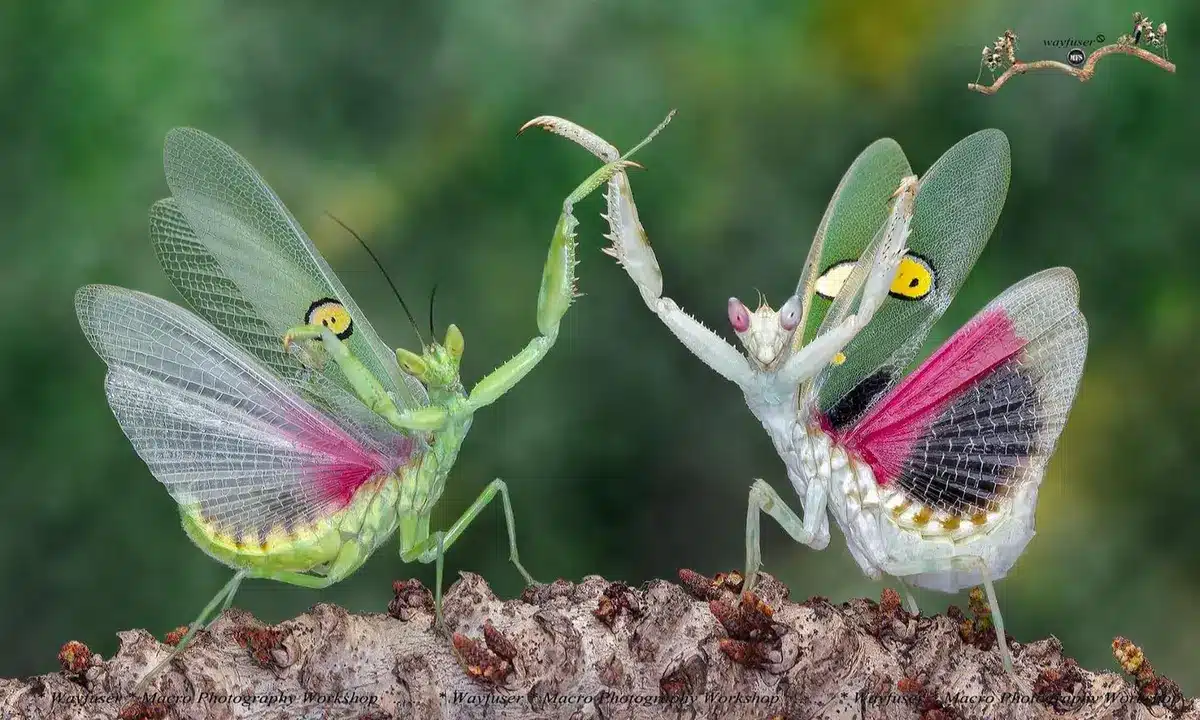
Two praying mantises dancing togetherTwo praying mantises dancing together

Photo: Pang Way (Instagram)

Best Photos of 2023Best Photos of 2023

Photo: Laurent Ballesta (Website | Instagram)

Best Photos of 2023Best Photos of 2023

Photo: Mihail Minkov (Website | Instagram)

Photo of a PenguinPhoto of a Penguin

Photo: Craig Parry (Website | Instagram)

Kid celebrating on truckKid celebrating on truck

Photo: Iván Silva (Instagram)

Related Articles:

Best of 2022: Top 50 Photographs From Around the World

Best of 2021: Top 50 Photographs From Around the World

Best of 2020: Top 60+ Photographs From Around the World

Best of 2019: Top 50 Photographs From Around the World

Best of 2018: Top 36 Photographs From Around the World

UNESCO World Heritage Designation in Ohio Honors Indigenous Culture

UNESCO World Heritage Designation in Ohio Honors Indigenous Culture
Image credit: Herb Roe on wikimedia.org

“We stand upon the shoulders of geniuses, uncommon geniuses who have gone before us. That’s what we are here about today,” said Chief Glenna Wallace of the Eastern Shawnee Tribe of Oklahoma, as reported by the AP. Wallace spoke before a crowd gathered at the Hopewell Culture National Historical Park in Chillicothe, OH. The occasion? The dedication of eight locations related to the ancient Indigenous Hopewell culture was designated by the United Nations Educational, Scientific and Cultural Organization (UNESCO) as World Heritage sites.

UNESCO designates landmarks or areas as World Heritage sites via an international convention. The designation, awarded to a place for having cultural, scientific, historical, or other significance, protects the location under the law. As the UNESCO website states, the organization “seeks to encourage the identification, protection and preservation of cultural and natural heritage around the world considered to be of outstanding value to humanity.”

“World Heritage sites belong to all the peoples of the world,” according to UNESCO, “irrespective of the territory on which they are located.”

The designation of the sites in Ohio will bring worldwide attention to the state. The recognition also comes after decades of work by activists and others seeking to preserve and honor Indigenous history and culture. As the AP writes, “the sheer magnitude of the ancient Hopewell culture’s reach was lifted up as enticement to a new set of visitors from around the world.”

Engineering Marvels

The eight locations designated as UNESCO World Heritage sites in southern Ohio are part of the Hopewell Ceremonial Earthworks, huge earthen structures built by Indigenous people thousands of years ago along the Ohio River. As UNESCO writes, the Earthworks “are the most representative surviving expressions of the Indigenous tradition now referred to as the Hopewell culture.” The Earthworks include sculpted hillsides, geometric shapes, giant mounds, and plazas, each with ceremonial importance.

The road to UNESCO World Heritage designation, preservation, and respect…has been long, with years of work by Indigenous people, scholars, and activists.

According to NPR, “It might be unusual to consider huge mounds of dirt as anything significant, however, UNESCO calls the earthworks a ‘masterpiece of human creative genius,’” which is one of the criteria to be considered for the designation. As NPR reports, “design and construction of the Earthworks show the people during this early era had a clear understanding of geometry, architecture, and solar and lunar alignments and multi-year cycles.”

Members of Ohio’s Shawnee Tribe were involved in the UNESCO World Heritage nomination, along with other tribes and the National Park Service. Shawnee Chief Ben Barnes told NPR, speaking about his ancestors, “They’re great civil engineers. They’re artists, they’re astronomers, mathematicians, and for my people, that’s not the way that Shawnee people, or any Indigenous peoples in this country, are typically portrayed in media.”

The Hopewell Ceremonial Earthworks consists of the Mound City Group, Hopewell Mound Group, Seip Earthworks, High Bank Earthworks, Hopeton Earthworks, Octagon Earthworks, Great Circle Earthworks, and Fort Ancient Earthworks. The road to UNESCO World Heritage designation, preservation, and respect for these sites has been long, with years of work by Indigenous people, scholars, and activists.

Fighting for History

One of the Hopewell sites, the Octagon Earthworks in Newark, OH, was turned into a golf course in 1910. The layout of the Moundbuilders Country Club course, as the New York Times reported in 2021, “is built around the mounds, which were prescribed by the cosmology of the Native Americans who created them approximately 2,000 years ago as a way to measure the movement of the sun and the moon through the heavens.” 

“We wouldn’t want a country club on the Acropolis. We don’t want a country club on the Octagon.”

For more than a century, the country club leased the land from the county for golfing despite growing public outcry over using the land in this way. Before becoming a golf course, the mounds were used as an encampment for the Ohio National Guard.

According to the New York Times, the first publicized efforts to protest the use of the mounds by the country club came in 2005, when a motion to dig into the mounds’ foundations to build a new clubhouse was denied. “At that point, a group led by local professors and Native Americans organized a protest campaign—and some residents began questioning whether the course should exist at all.”

The country club’s reluctance to relinquish the site was viewed as a denial of Indigenous culture and the importance of the Hopewell in history. As John N. Low, the director of the Newark Earthworks Center and a citizen of the Pokagon Band of Potawatomi Indians, told the New York Times, “We wouldn’t want a country club on the Acropolis. We don’t want a country club on the Octagon.”

After years of legal battles, the Ohio Supreme Court ruled in 2022 that the Ohio History Connection, a statewide nonprofit history organization, would take the golf course by eminent domain and work on restoring it into a public park. Justice Michael P. Donnelly wrote in the decision, “The historical, archaeological and astronomical significance of the Octagon Earthworks is arguably equivalent to Stonehenge or Machu Picchu.” Less than a year later, the UNESCO World Heritage designation was awarded to the Octagon Earthworks.  

“This place was the center of North America, the center of culture, the center of happenings.”

Centering Hopewell Contributions

The recognition of the Hopewell Ceremonial Earthworks marks Ohio’s first UNESCO World Heritage designation. It’s also only the 25th such designation in the United States. The Earthworks join the likes of the Great Pyramid of Giza in Egypt, Stonehenge in England, and New York’s Statue of Liberty.

Ohio Governor Mike DeWine (R) said in a statement that the designation “will ensure that the earthworks created by American Indian Tribes over 2,000 years ago will get international attention, drawing even more visitors to see these amazing places. I encourage Ohioans and people from across the globe to visit these eight sites to experience the awe-inspiring earthworks that are such a special part of Ohio’s history.”

For Indigenous people in Ohio and beyond, the UNESCO World Heritage designation is more personal, with a potential impact that could be wide-ranging. Chief Barnes told NPR that he viewed the honor as a step toward combating racist and ignorant stereotypes about his people and his ancestors.” 

The contributions of the Hopewell were and continue to be hugely important, not just for Americans but for the world, deserving of protection and recognition. “The long journey toward this recognition tells a larger story about imperiled Native American sacred sites in the eastern half of the United States and the challenges faced by those who wish to protect them,” wrote Stephen Warren, a professor of history and program coordinator of Native American and Indigenous Studies at the University of Iowa, in an op-ed for the Columbus Dispatch.

Speaking at the Hopewell Culture National Historical Park, Chief Wallace told the AP, “This place was the center of North America, the center of culture, the center of happenings, the center for Native Americans, the center for religion, the center for spirituality, the center for love, the center for peace.”

Murrow Indian Children’s Home Brick Fundraiser builds hope for the future

Murrow Indian Children’s Home Brick Fundraiser builds hope for the future

MUSKOGEE, Okla.- The Murrow Indian Children’s Home is hosting a brick fundraiser for their non-profit organization. The organization serves as an inter-tribal children’s home. The fundraiser’s initial goal is to sell at least 1,000 bricks.

Executive Director of the Murrow Indian Children’s Home Betty Martin (Cherokee) started the brick fundraiser project. It began when she decided to place bricks around the eagle sculpture on the mound outside the home. The sculpture was made by Native artist Parker Boyiddle (Kiowa/Wichita/Delaware/Chickasaw).

When it came time to add on to the statue with a brick pathway, the home needed to turn to someone who could create a design that would complement it. Kenneth Johnson (Mvskoke/Seminole) is a well known artist who came up with the layout and design with these bricks. Johnson has designed many Indigenous sculptures, jewelry, as well as arts and crafts that have been used during many events.

According to Martin, Johnson will be at the Murrow Indian Children’s Home in April to start the project. She is hoping he will be able to attend the dedication ceremony. Purchasing a brick is not only a great way to support the home, it is also a way to become embedded in the it’s legacy.

“Not only is it a fundraiser but those people will become part of history because down the road people will come and look at those. There will be all these names of people who helped support Murrow Indian Children’s Home,” Martin said.

When choosing where to place the bricks, Martin thought it would be a great idea to put them around the eagle sculpture in order to enhance it.

Bricks will be available for purchase until the end of December. Payments can be made online or by mail. For those that live locally near the home, donors are welcome to drop off donations in person.

Daily Life

“Our mission is to provide a safe and nurturing environment for American Indian children and provide a home placement. We provide them cultural experiences and spirituality,” Martin said.

The home takes in any Native child within the state of Oklahoma who are in tribal custody. Family placement is allowed if both parents are deceased. Placement within families depends on if a family member is available to take in the child, and if they can provide them with a safe home environment. According to Martin, the home currently houses 15 children, but they can serve a capacity of up to 30 children.

The home has two programs. One is for younger children who are in tribal custody, the other is called a transition program. This is for children who are about to age out of foster care.

Each child at the home attends a public school nearby. While the home is similar to a boarding school, Martin clarified its purpose is to provide a home for foster children.

The transition program is for children who are 18 years old, or who are about to turn 18 years old. The program helps direct them to lead an independent life. The home’s gift shop helps fund the transition program.

Paintings made by the children at the Murrow Indian Children’s Home can be found at their gift shop. (Shayln Proctor/MM)

The transition program helps students find employment, become responsible in handling documents, budgeting, finding resources and making doctor appointments.

“To me budgeting is always a big deal because if you can’t budget, you can’t survive. Budgeting is critical to learning to live independently,” Martin said.

When the transition program first began it provided six bedrooms within each of its cottages. “In my opinion I believe that when the kids are transitioning, they should have their own space, they all need their own bedroom,” Martin said.

Overall Martin wants to see each child succeed, have fun and be able to live life independently.

Activities

While children stay at the home they take part in different activities in order to stay spiritually and physically connected to their culture. Some have been to a ceremonial ground, some have been to a powwow. The home tries to incorporate as much culture as they can into the lives of their tenants.

Before the Covid-19 Pandemic the home provided cultural activities taught by members of the community. One of those activities included crafting stickball sticks. Now post Covid, the home does not see as many people coming in to teach these activities.

One of the classes still provided includes a ribbon skirt class taught by a women’s group called Red Spirit. They currently have three girls involved, however Martin hopes to see them come back so that every girl at the home can learn how to make their own ribbon skirt.

According to Martin each child has different talents, whether it is beading, art, basket weaving, sports or playing in a band. “I always tell them you’re Native, every Native person has talent somewhere,” Martin said.

Martin recognizes the unique struggles within younger and older children. Regardless, she tries her best to make them comfortable and provide a place that feels like home.

“There are so many Native American children that are homeless, especially the ones that have been in custody and then they end up homeless. Well I just don’t want that to see that happen,” Martin said. “Also there’s a very high incarceration rate of Natives that has got to stop, we have to break that cycle.”

Making the Transition

After the children grow up and follow their own path, Martin tries to stay in touch. One former child from the home includes a young man who now works on a cruise ship, another, a young woman. They both call Martin to keep her up to date on their current whereabouts.

For children past and present, Martin wants them to feel that they are meant to be here, and are worthy to do anything they set their mind to.

“I know a lot of the kids, they just think well I could never be a nurse or I couldn’t be a doctor or things like that. But they can, they just got a slow start that’s all,” Martin said.

For more information about the Brick Fundraiser or about the organization, the Murrow Indian Children’s Home can be contacted at 918-682-2586. They also have a Facebook page, Murrow Indian Children’s Home (The Official Home Page).

Why Small Businesses Matter: Treja Nicole Photography

Why Small Businesses Matter: Treja Nicole Photography

Why Small Businesses Matter

Shop small, do big things for your community

Why Small Businesses Matter puts a spotlight on the local merchants who donate their time, talent, goods, and services for the betterment of our community. The shop local movement spreads virally as local businesses who are “tagged” have the opportunity to share their story!

You’re IT Treja Nicole Photography!

Four questions with Tréja London, founder of Treja Nicole Photography.

Why did you start your business?

I started my business out of passion and enjoyment of photographing people. I knew I wanted to make a career out of it ever since I was gifted a camera for my 16th birthday. Once I graduated college and worked for a large photography company it made me realize this was something I wanted to pursue as a business. It has now been 5 years of business and 11 years of photographing.

What is your best-selling product/service?

As of right now, brand photo sessions are the most popular. I enjoy helping other small businesses make an impact with professional images.

How many local businesses do you use to support your business (products and services) and can you name them?

The local business I use is Union Savings Bank for business banking. Molten Java I enjoy their hot teas while I edit photos.

Have you reimagined your small business?

For the past 8 years, I would travel with backdrops, lighting, etc to set up in Client’s homes. I recently partnered with Visage Beauty & Creative Studio in Danbury, CT, and also have opened a photo studio space in Meriden, CT for people to have their photos taken as well as offer workshops.

Visit Treja Nicole Photography online here, and make sure to check out their FacebookInstagramTwitter pages as well!

HamletHub thanks Fairfield County Bank for making our Why Small Businesses Matter series possible!

The B-52s x Save The Chimps, the Best of Miami Art Week and Beyond

The B-52s x Save The Chimps, the Best of Miami Art Week and Beyond
image

Dozens of fairs. Hundreds of galleries. Thousands of artists. Tens of thousands of artworks. Hundreds of thousands of spectators. Too many shows and parties and lunches and brunches and diners and toasts and hosts and installations and “activations” to count. Miami Art Week, held the first full week of December each year, is the Super Bowl of contemporary art in America.

How can any one thing possibly stand out amidst all that commotion?

Most don’t, a rare few do.

One of those for 2023 is an interspecies art project pairing the legendary pop music group The B-52s with artsy chimpanzees from “Save the Chimps,” a rescue sanctuary located in Ft. Pierce, FL. The collaboration can be seen at this year’s Spectrum Miami art fair, taking place December 6 through 10 at the Mana Wynwood Convention Center.

The group has collaborated over the last six months with 16 creative apes from one of the largest chimpanzee sanctuaries in the world, developing an art collection entitled “Wild Planet,” named after the band’s second album. Comprised of 52 acrylic on canvas paintings in various sizes, the artworks, ranging in price between $1,000 and $5,000, will be available for purchase at the fair. Interested parties should act fast, nearly half the collection has already been scooped up by fans prior to the exhibit’s opening.

The B-52s’ interest in animal advocacy goes back years. The group has a decades long association with People for the Ethical Treatment of Animals and their first hit, 1979’s “Rock Lobster,” is an animal rights anthem.

In a conversation with Forbes.com, The B-52s lead singer and co-founder Kate Pierson explained how she was introduced to “Save the Chimps” by the organization’s events director and friend Dan Mathews. “Save the Chimps” supplies its animals with art making materials as an engagement tool. Not all of them are interested any more than all humans are interested in art making, but for those individuals who are, their pursuit is keen.

Remove images of uncontrollable primates swinging in cages throwing paint around and rolling in it. Man’s closest genetic relative in the animal world gives thought and consideration to its compositions. Pierson visited the sanctuary in summer of 2022, amazed by the intensity and artistic intention of the chimps painting there.

Pierson was wowed by the brush handling, their focus, and the obvious joy and interest they take in artmaking. The idea for a collab was hatched.

Band members paint the base canvases in various background colors recalling their most popular album covers. They also select the color combinations for the chimps to finish each artwork in their own style during their leisure time. Each piece in the collection has been named after a B-52s song or lyric and is signed by the band.

A limited-edition poster from the collection will also be available to purchase for $50 during the fair. All poster and artwork sales proceeds go to “Save the Chimps” in support of its life-long care for chimpanzees rescued from research laboratories, the pet trade and the entertainment industry.

Beyond Art Week

After the crowds have left Art Week, Miami remains one of the top destinations in the world for contemporary art. Highlighting this winter’s presentations is “Gary Simmons: Public Enemy,” opening at the Perez Art Museum December 5 to coincide with Art Week and running through April 28, 2024. “Public Enemy” marks the first comprehensive career survey for Gary Simmons (b. 1964, New York) and features nearly 70 sculptures, paintings, photographs, works on paper, and installations, as well large-scale wall drawings created on-site.

This is not pink flamingo, rum drink, party artwork. Miami may be known for good times, but Simmons philosophy is that the job of an artist is to take viewers out of their comfort zone.

“Art isn’t always a pretty, nice thing,” he says. “Sometimes it needs to punch you in the face.”

Put your mouthpiece in because Simmons’ work does just that.

Since the late 1980s, Simmons has played a key role in situating questions of race, class, and identity at the center of contemporary art discourse. Notable for his early application of appropriated pop-cultural imagery, Simmons’ work aims to analyze and expose histories of racism in visual culture. Over the course of his career, he has revealed traces of these histories in sports, cinema, literature, music, architecture, and urbanism, while drawing heavily on genres such as hip hop, horror, and science fiction.

“Public Enemy” references early hip hop and the iconic group of the same name, and also the target Black men carry on them in America as an imagined “public enemy” in the minds of many.

Speaking of hip hop, the next must-see on a Miami arts crawl is Art of Hip Hop, an exhibition opening in Wynwood (299 NW 25th St.) December 5 spotlighting the visual unsung heroes of Hip Hop culture including photographers, album cover artists, graffiti visionaries, and logo designers.

The inaugural exhibition, From the Bronx to the Beach, will showcase rare vintage ephemera ranging from hip hop’s first New York City DJ, Kool Herc, to Miami’s own pioneer Uncle Luke. On display are the works of famed hip hop photographers alongside hip hop album covers. The exhibition also shines a special spotlight on Miami’s own hip hop history, capturing it through the lenses of local historian and photographer Derick G and photographer Esdras T. Thelusma.

More local history comes alive at the Historic Hampton House Museum of Culture & Art, located within a former Green Book hotel. The Green Book was a travel guide for African Americans during Jim Crow with information on what restaurants, hotels and attractions were safe for Black travelers.

The museum debuts “Gimme Shelter,” its first art exhibition, on December 5. Featuring over 25 artists including superstars Derrick Adams, Nick Cave, Charles Gaines, Howardena Pindell and Carrie Mae Weems, the show highlights how shelter and safety are integral to cultural production and collective creation.

Also opening just in time for Art Week, an all-new Museum of Sex housed in a 32,000-square-foot converted warehouse in the Allapattah district. The Museum of Sex New York flagship debuted in 2002, and its first satellite location promises to bring the same commitment to preserving, presenting, and celebrating the cultural significance of human sexuality to Miami.

The Museum of Sex in Miami opens with the first U.S. solo museum exhibition for pioneering Japanese artist Hajime Sorayama, a retrospective look at the design and marketing of sexual health products from the 1920s to today, and an enhanced edition of the museum’s blockbuster installation “Super Funland: Journey into the Erotic Carnival.”

Lastly, enjoy Miami’s perfect winter temps by perusing art along The Underline, another idea imported from New York.

Meg Daly founded The Underline in 2013 after a bike accident with the purpose of transforming the underutilized land below Miami’s Metrorail into a 10-mile linear park, urban trail, and public art destination recalling New York’s High Line. The Underline has become the fastest moving project of its size in the country, raising over $140 million in support, and one of the most visited and appreciated sites in Miami as a real effort in making the city more resilient and connected.

Enjoy The Underline’s developing art trail beginning at the Brickell Metrorail Station North Entrance (SW 1st Avenue & SW 10th Street, exit north).

Charles City Arts Center’s Karl Haglund: Holiday Art Market; Spoken Word; December Art Classes & More

Charles City Arts Center’s Karl Haglund: Holiday Art Market; Spoken Word; December Art Classes & More

COMMUNITY CONVERSATIONS BROUGHT TO YOU BY FLOYD COUNTY MEDICAL CENTER

fcmc


Charles City Arts Center Assistant Director Karl Haglund joined the morning show for Community Conversations where he spoke about the upcoming Holiday Art Market, along with December after school art classes and more.

https://kchanews.com/wp-content/uploads/2023/12/12-1-23-Karl-Haglund-Art-Center.mp3

For more details on Arts Center events and activities, go to CharlesCityArts.org.