She’s a California girl making her presence known in a South Florida world.
From Burning Man to the 305. Giant steel woman lands in South Beach ahead of Art Week


OzarksFirst Fast & Local: First look at the new Fire …
Springfield News Today

When Springfield picked up the first snow the last …

Share the Harvest provides deer meat to families …

Springfield homicide victim identified

SPD investigating homicide at La Siesta Place.

Software error alters Nixa sewer bills

Surge in deer population spurs rise in road accidents

Hunter finds rare all-white doe in Versailles


In the current issue of AUSTRALIAN GEOGRAPHIC I spoke with Melbourne-based artificial intelligence (AI) photo artist, Morganna Magee, who deliberately makes her images imperfect to impart an “uncanny” feel and to draw the viewer’s attention to their artifice. Morganna is a conservation photographer whose better-known analogue work celebrates the beauty of kangaroos in the hope that more people will advocate against their culling and harvesting for pet meat and leather goods. In her AI image above Morganna creates a humanoid kangaroo warmly embracing a person who, on closer inspection, appears part animal, forcing the viewer to imagine themselves as a kangaroo, the very definition of empathy.
Morganna says she uses AI to supplement what wildlife photographers are already doing to celebrate the wonder of the natural world. She manipulates images to heighten our emotional response – never intending that the viewer think the work is real. In this image, for example, she purposely misplaces an eye and merges a human arm with that of a kangaroo. The background is imperfectly rendered to emphasise the scene’s fabrication.
“I’ve always believed in the power of photography to change things, but its getting harder as we move along as a society,” Morganna says. “Maybe AI is a tool that can help with that. With the flood of citizen photography, wildlife tourism and the rapid way in which we consume imagery, we’ve become a bit sanitised to what we’re seeing. It’s an echo chamber, and different imagery is needed to reach beyond it.” Morganna considers AI to be another visual culture tool, hoping its ability to draw emotions from an audience and heighten our empathy for animals such as kangaroos can only be a good thing.
American photographer Philip Toledano creates deliberately absurd scenes in his series Another America and has become the ‘whipping boy’ for AI. I had showcased Toledano’s incredibly moving personal project documenting his father’s final days while I was working in a previous picture-editor role. Intimately photographing a loved one’s death is as visceral and real as it gets. Fast forward 15 years, and Toledano is creating fictional worlds set in 1940s and ’50s America where apes are sentient beings living amongst us. He uses Midjourney, an AI generator, that Toledano says is like working “with a very talented but very drunk person, and you have to kind of bludgeon it into giving you what you’re asking for”. Toledano explores a post-truth world, deliberately setting his work in the golden era of 1950s photojournalism when truth, he says, was “biblical in its veracity”.
Although he doesn’t regard his creations as photography any more, referring to it as ‘photography adjacent’, the work looks enough like photography to make him the subject of hot debates in photo forums. Toledano sees Midjourney as working in the same way as a photographer works, in that any image that is created is a unique image that is the sum of every other image it has been exposed to, or – in the case of a photographer – of everything they have seen in their life.
In April this year the whole highly charged debate around AI and documentary photography intensified when respected photojournalist and long-time National Geographic Explorer Michael C. Brown published some images of Cuban refugees crossing the 90 miles of ocean separating Havana from Florida.
Although Brown was very clear that he used AI and presented the imagery as photo illustration, his background as a photojournalist led many people to question his integrity. His response was, “This is not journalism, this is storytelling”.
For the past few decades, working as a photo editor on magazines and newspapers, I have seen a distinction, like Michael C. Brown, between journalistic stories and conceptual storytelling. For straightforward reporting, documentary and news stories, there are strict ethical parameters around any assignment. Removing or inserting elements in the image are regarded as violating the industry standards of truth and accuracy in photojournalism. Images are not modified once they are made, except for colour correction, contrast, removal of dust and cropping.
The nature of published photography as a real-world documentary record, with all those layers between what is seen in front of the lens and how a photo is eventually realised on the page, is incredibly complex.
There is always the perspective perceived by the photographer, the style, the approach and the interpretation. Lens choice, what to show and what to exclude in the framing, editing, toning and sequence – all are inherently manipulative. Photo editors choose photographers for a look or feel, and that has inevitably a point of view.
How to keep photography honest has long been a question, well before the advent of Photoshop. National Geographic ignited a fiery debate on the topic after their controversial 1982 cover, where they moved two pyramids closer together to fit the constraints of the cover.
The history of doctoring photos dates back to the earliest days of the photograph. Stalin routinely air-brushed his enemies out of photos, Mussolini had a horse handler removed from a heroic portrait of himself, and China’s ‘Gang of Four’ disappeared from a photo of a memorial ceremony for Mao Zedong.
Life magazine removed a fence to give a 1970 Pulitzer Prize–winning photo of student deaths in the Kent State University protest more impact, and photographer Steve McCurry, best known for his photo of the Afghan girl on the 1985 cover of National Geographic, was accused of breaching photojournalism ethics. McCurry heavily edited his images, even removing people, later leading him to define his practice as ‘storytelling’ rather than ‘photojournalism’.
Wildlife photographer Art Wolfe came under criticism for cloning animals to fill spaces and it was revealed that he had altered a third of his images in his celebrated 1994 book Migrations.
Last year a stunning, and – in hindsight – implausible photo of an elusive snow leopard near Mount Everest proved too good to be true.
Proliferating ‘photography game farms’ further muddy the field for truth telling in nature photography; they enable photographers to stage a photograph, with handlers moving the animal around to look as if they were photographing in the wild.
World Press Photo winner and Australian photojournalist Matthew Abbott says, “Our great asset as documentary photographers is our integrity. This cannot be replaced by AI.” Abbott acknowledges that, “Reality and truth have a complicated relationship with photography…stories with integrity, and photos with integrity, might be a better way to put it.” The types of photography Abbott is referring to are photojournalism, street photography, sport photography – all loosely described as ‘documentary photography’.
We have an expectation that photographs represent the truth, but all images have an agent. “Photography is an incredibly subjective craft. I’ve never met two people with the same truth, nor seen true objectivity ever demonstrably applied to anything,” writes Peter Von Agtmael, a member of the prestigious Magnum Photos agency. “We shouldn’t mistake something factual for something truthful, and we should always question which facts are employed, and how.”
This month a mammoth exhibition on photography opened at the National Gallery of Victoria investigating this very topic, of real versus imagined.
Senior curator of photography, Susan Van Wyk, reflects that, while we have an expectation that photographs represent the truth, she doesn’t know if there is anything that “categorically, hands down, tells you the entire truth of this moment, this event, this person”. The exhibition features works by past photographic greats that call our attention to the artifice of the medium. One of the more famous of these in the show is Robert Capa’s photo, The Falling Soldier, notorious after allegations that the photo was faked.
In magazines, staged photography has also long held a place and been showcased. For opinion pieces and commentary content, photographs often engage people in a different way via stylised set-up photos or sourced through a stock agency, sometimes producing a fictional scene to realise conceptual ideas.
The work of conservation photographer Nick Brandt bears little relation to traditional wildlife documentary. He uses highly conceptual approaches to surprise and reach audiences. “You have to work harder now to create something different. I only embark on a new project if I feel it’s never been done before,” he says. Brandt constructs elaborate, often composite scenes to portray people and animals that have been impacted by climate change. In his ongoing global series The Day May Break, he even concocted a non-toxic fog, especially for the shoots, to symbolise the rapidly disappearing natural world.
Like this kind of conceptually driven, post-documentary photography, perhaps AI imagery may offer a fresh way to address old themes and generate interest in the cultures of indifference and compassion fatigue. Amber Terranova argues that “artists have an opportunity to reach new audiences by showing them something they have never seen before, by creating more and more attention around a particular subject matter through embracing a new technology”.
Michael Christopher Brown argues that AI can help us report on inaccessible places and is a form of photorealistic exploration of stories that are impossible to tell. For him, collaborating with AI allowed him to tell the story of real Cuban refugees without jeopardizing their safety and trust. Earlier this year AI images, generated from eyewitness testimony collected by lawyers from the firm Maurice Blackburn, were used to show the horrors of offshore detention on Nauru and Manus islands. The law firm’s creative agency worked closely with survivors to fine-tune the images to make sure they reflected their experiences, and used Australian photojournalist Mridula Amin to consult on the project. “If we had just generated these images and not engaged with the survivors, this campaign would have felt very thin and would have felt less ethical,” the campaign’s creative director Gavin Chimes says.
From Australian Geographic’s perspective, does AI-generated imagery give our readers the opportunity of imagining something that is impossible to witness, because of either inaccessibility or risk to the subject? AUSTRALIAN GEOGRAPHIC has long used hyper-realistic illustrations to help us imagine long-lost worlds or vulnerable species. In 2022 our photographer Max Mason-Hughes visited a dry rock paddock, outside Gulgong in NSW, as part of an archaeological dig team, and discovered the remains of a 15-million-year-old billabong. Our illustrator Franz Antony was able to bring the ancient billabong to life, showing how the site was once a tropical rainforest full of flora and fauna.


Perhaps photo realistic ‘reportage illustration’ via AI may allow us to showcase vulnerable species that are difficult to access, or would place the animal under stress to be traditionally photographed. With such large swathes of Australia under pastoral lease, many of Australia’s threatened species are out of sight on private property or in areas restricted for their protection. A prime example are the remaining 315 northern hairy-nosed wombats protected in two rural Queensland properties run by Australian Wildlife Conservancy. Australian Geographic recently shared Brad Leue’s remotely captured photos of this critically endangered species on large digital screens around Australia; the animals were impossible for the photographer to access in person.

Like Morganna, I can see that AI, or synthetic image making – perhaps we shouldn’t call it photography – has value as an add-on to traditional documentary. If AI imagery can be used as a tool leading to positive change by drawing attention to the pressing issues of our day, then embracing AI is surely worth it, but rest assured, we won’t be using it to replace our talented photographers in the field any time soon.


Every month, hundreds of galleries add newly available works by thousands of artists to the Artnet Gallery Network—and every week, we shine a spotlight on one artist or exhibition you should know. Check out what we have in store, and inquire for more with one simple click.
What You Need to Know: Miami and Amsterdam-based SmithDavidson Gallery will present “A New Generation; A New Perspective” at Art Cologne, taking place from November 16–19, 2023. Showcasing the work of female Australian Indigenous artists, the presentation will hold a special focus on First Nations painter Emily Kame Kngwarray, one of Australia’s most esteemed artists. Alongside 12 works by Kngwarray, work by other important female artists will also be shown, including Naata Nungurrayi, Barbara Weir, Gloria Petyarre, Maggie Watson Napangardi, and Minnie Pwerle. Together, the showing will offer invaluable insight into the work of Second Generation artists of the Aboriginal Australian Art Movement.
Why We Like It: SmithDavidson Gallery’s presentation at Art Cologne promises to be a jewel box exhibition bringing the historically important and influential work and practices of late 20th and early 21st century artists. Though frequently overlooked by the greater art world, the significance of the Aboriginal Australian Art Movement cannot be understated, especially the innovations and advancements made by recent generations of female artists. Emily Kam Kngwarray’s paintings uniquely illustrate the myriad ways a combination of traditional and contemporary approaches has resulted in innovations that have helped to expanded the entirety of the art movement. The presentation underscores the gallery’s longstanding commitment to Australian Indigenous Art, bringing it to the fore of art world discourse and attention.
According to the Gallery: “SmithDavidson Gallery has been a prominent advocate and educator internationally for Australian Indigenous Art since 2006. Following the positive responses to the gallery’s presentation at Art Cologne 2022, including front-page coverage at the Kölnische Rundschau, the gallery’s presentation for 2023 highlights the specific era between 1985 and 2010 of the ‘Second Generation’ painters. An era in which female painters take the lead and whose innovations greatly expanded the art movement. Utopian artist Emily Kam Kngwarray is without a doubt the most notable artist from this era and her ability to experiment with both subject matter, composition, and color has changed our understanding of ‘Australian Aboriginal Art.’ At the same time, artists like Nyurapayia Nampitjinpa—or ‘Mrs. Bennett’ as she was the wife of the late artist John John Bennett—and Naata Nungurrayi, expanded the art of the Western Desert with new color schemes and subject matters; telling their own stories inspired by the Women’s Dreamings hidden from the male perspect ive and, up to that point, also from the art world at large.”
See featured works below.

Emily Kam Kngwarray, Yam Dreaming (1996). Courtesy of SmithDavidson Gallery.

Emily Kam Kngwarreye, My Country Wall (1994). Courtesy of SmithDavidson Gallery.

Maggie Watson Napangardi, Digging Sticks (1995). Courtesy of SmithDavidson Gallery.

Naata Nungurrayi, Untitled (2002). Courtesy of SmithDavidson Gallery.
SmithDavidson will be showing at Art Cologne, booth #C301, November 16–19, 2023.
Follow Artnet News on Facebook:
Want to stay ahead of the art world? Subscribe to our newsletter to get the breaking news, eye-opening interviews, and incisive critical takes that drive the conversation forward.

Photography on the Pixel 8 series has gotten better as various Adobe apps now support raw images taken by Google’s flagship smartphone line.
To give you a quick refresher, “raw files are unprocessed image files captured straight from your camera’s sensor.” The format takes more data, such as white balance, than standard JPEG pictures offering greater flexibility when editing. JPEG files, on the other hand, remove a lot of data in an effort to save storage space on a device resulting in poorer quality. The Pixel 8 is capable of editing photographs with its own set of tools, however, it isn’t as robust as something like Photoshop. As 9To5Google points out in its report, this newfound support gives users the opportunity “to go beyond what [Google Photos] offers in the way of editing.”
Moving forward, you can directly upload DNG files, which is the filename extension given to raw images taken by a Pixel 8, to Adobe software such as Photoshop, Lightroom, and After Effects. These apps accept pictures taken by either the selfie camera, wide-angle lens, or the main rear sensor. If you own a Pixel 8 Pro, you can also upload photographs taken by the ultrawide camera as well as the telephoto lens.
There are a couple of restrictions to be mindful of, although it’s nothing major. First, Camera Matching profiles will not be available to Pixel 8 users. These profiles, according to Adobe, can “mimic” unique color customizations implemented on a camera. Currently, the only sources these apps recognize are those from Apple ProRAW files taken by the iPhone 15 Pro.
Additionally, the phone’s Camera Raw plug-in must be running version 16.0.1. This can be solved by simply installing the latest software patch on your Pixel. 9To5Google recommends updating whatever Adobe programs you have as well in order to ensure they can accept the raw photos. There are other smartphones that are compatible with Adobe Camera Raw. A full list can be found on the company’s Help Center website.
If you’re in the market for a mobile device that is great at photography, check out TechRadar’s list of the best camera phones for 2023.


Photos by Sercan Küçükşahin for Anadolu Ajansı
As the warmer months came to a close in İncesu, Keyseri, Turkey, archaeologists currently at work in a sprawling ancient complex announced that the Roman-era mosaics they uncovered—already recognized as the largest ever found in the region—just keep getting bigger.
İncesu sits atop the ancient town of Sadogora, or Sadacora, a late Roman and early Byzantine municipality, remnants of which were originally encountered in 2010. Initial excavations brought a series of beautiful mosaic floors to light, some bearing Latin and Greek inscriptions. Legal reasons prevented any further work until 2020, but when archaeologists resumed digging, it wasn’t long before they realized they were unearthing a site of epic proportions.
By the end of the 2021 season, ten rooms of what archaeologists are tentatively designating a 4th-century Roman villa of great significance, boasted more than 3,000 square feet of mosaic floors in excellent condition. This year, the excavation more than doubled its surface area, exposing 6,500 square feet of mosaics out of a total 43,000 square feet that has been excavated across the entire site.
Can Erpek, a professor of Byzantine art and archaeology at Nevsehir Haci Bektas Veli University, posits that the site may have been an imperial structure, perhaps belonging to rulers or administrators of the region. He says, “We are talking about a high-end residence spread over a very large area; a residence with 33 rooms, (and) we have not reached the limits of this residence. We foresee that the current residence will expand even further with our excavations that will continue next year.” (via The History Blog)


Do stories and artists like this matter to you? Become a Colossal Member today and support independent arts publishing for as little as $5 per month. The article The Largest-Ever Roman Mosaic Found in Anatolia is Revealed to Be Even More Expansive appeared first on Colossal.

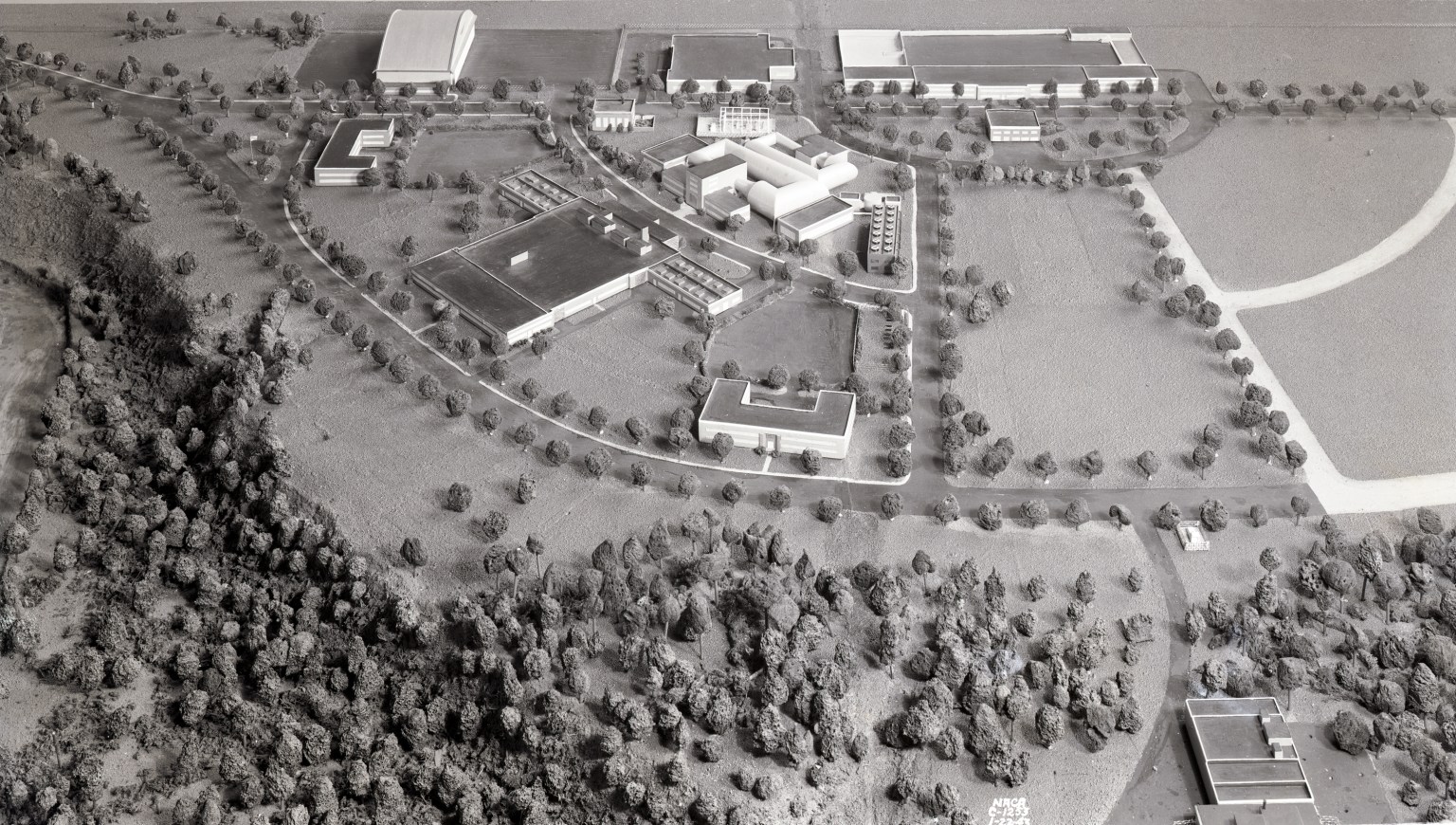
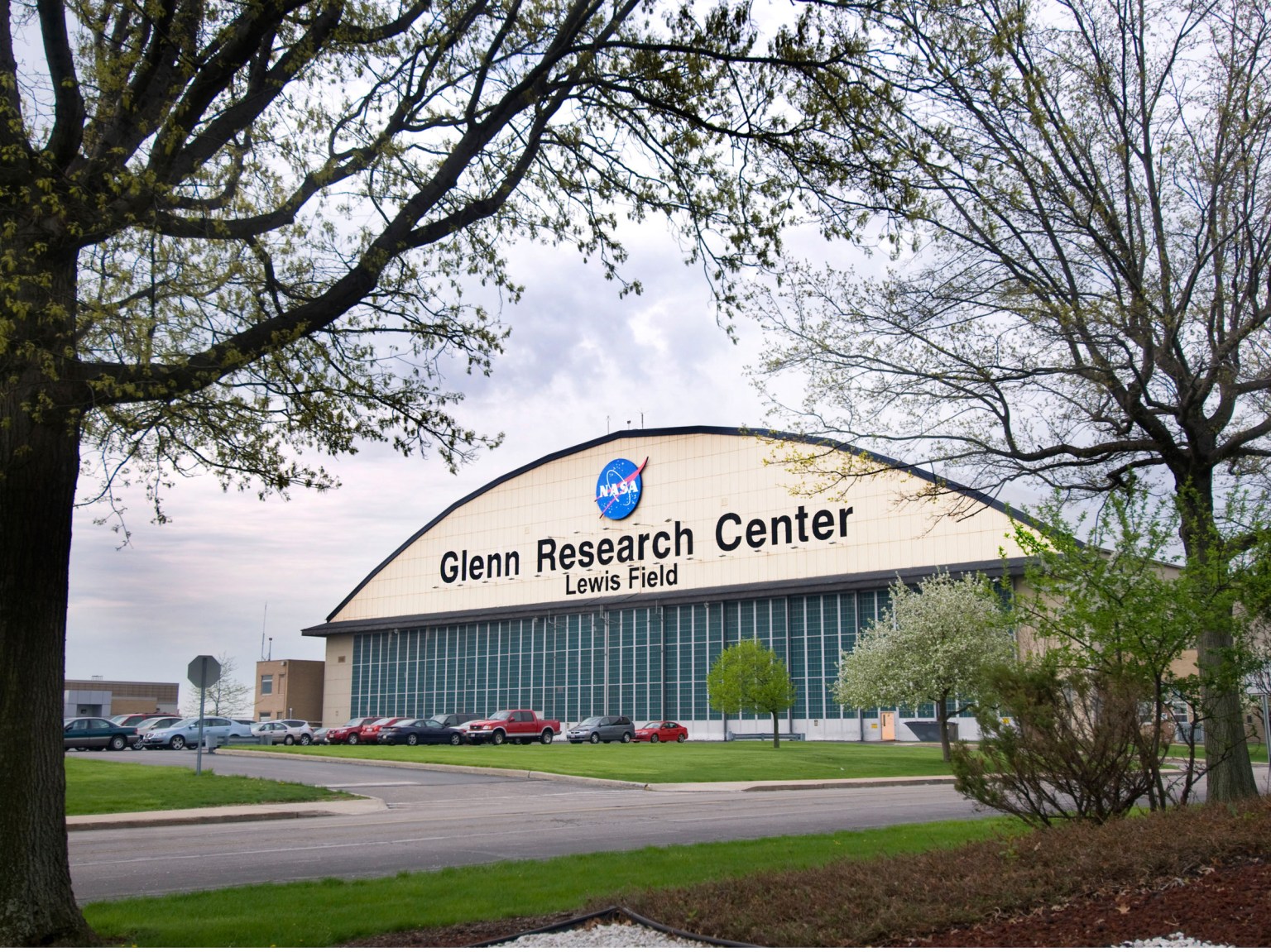
The official photographic archive at NASA’s Glenn Research Center represents a continuous visual and historic record of the center’s facilities, research, and people since its inception in 1942. This website contains nearly 40 years of images selected from a photographer’s perspective.
1942 – 1979
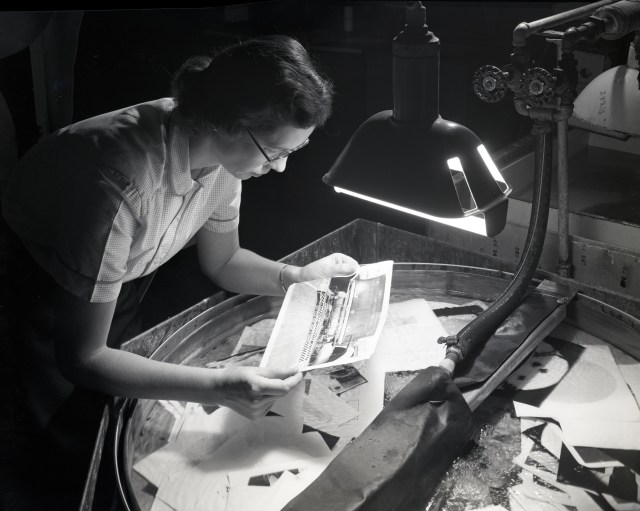
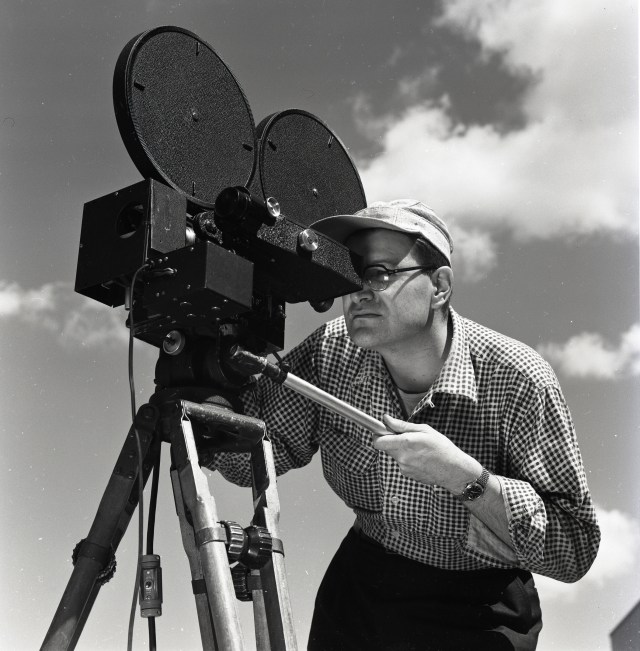
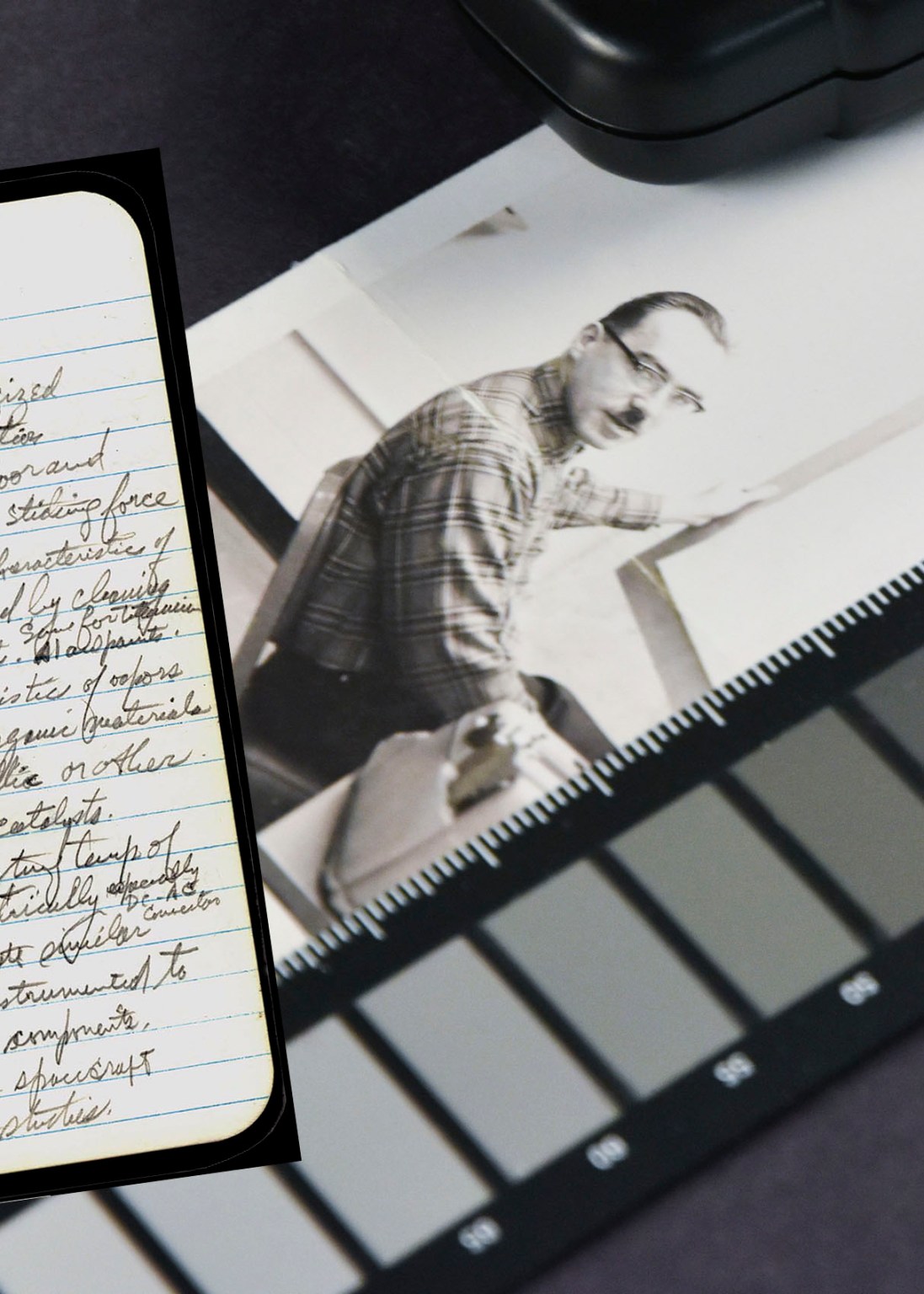
NASA Glenn’s entire image collection contains nearly 450,000 images. Most were stored in their original film formats in environmentally stable bunkers at Plum Brook Station (today, NASA’s Armstrong Test Facility) in Sandusky, Ohio. A number of these images had been viewed infrequently or not at all since their original date of capture. With the introduction of digital photography in the 1990s, an effort was initiated to digitize and re-catalog the older negatives as time and budget allowed. The center began systematically digitizing all of the negatives in 2008 and began using an external vendor in 2011 to accelerate that process. The entire collection of negatives was completed in 2017, and the originals have been sent to the National Archives.
;
;
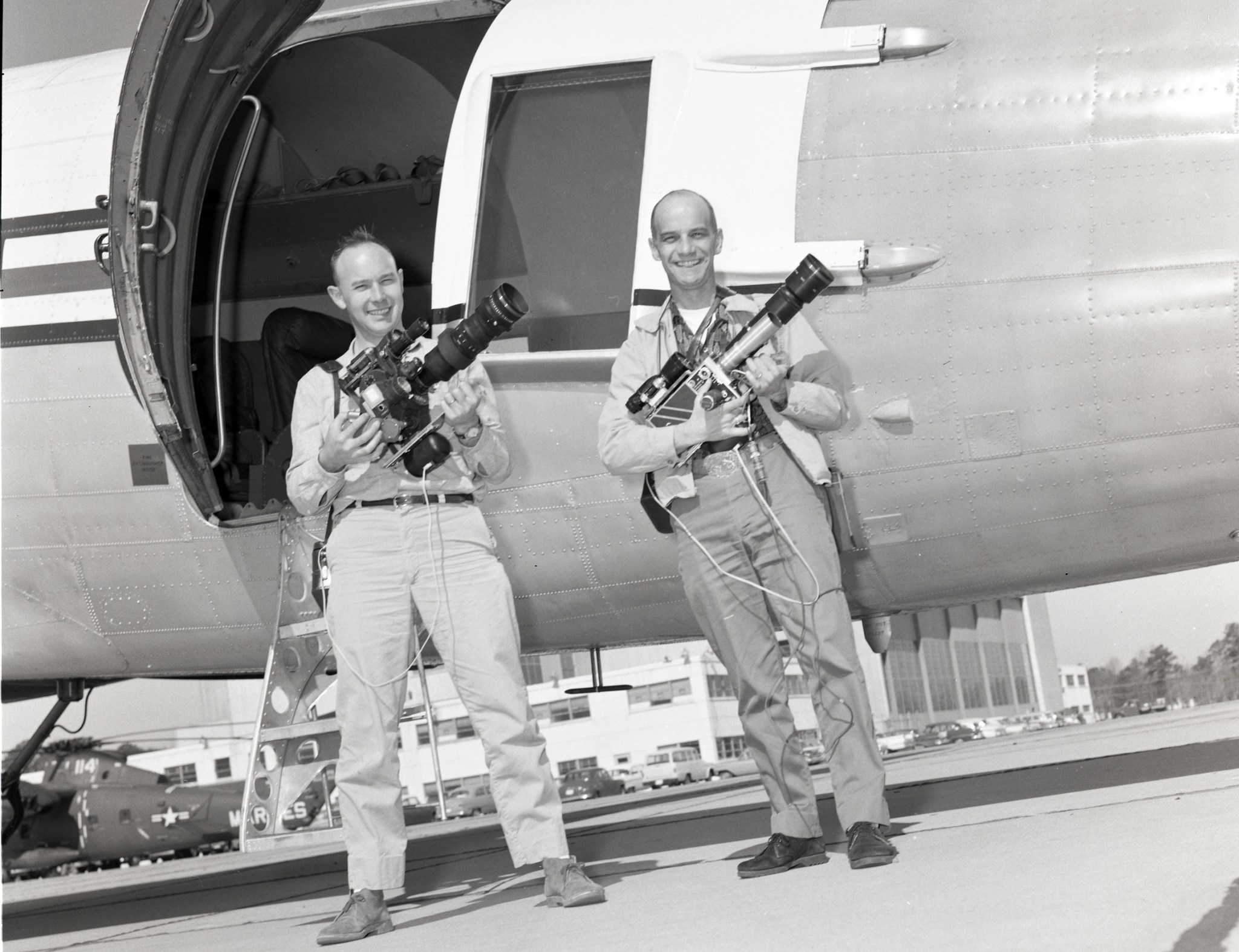
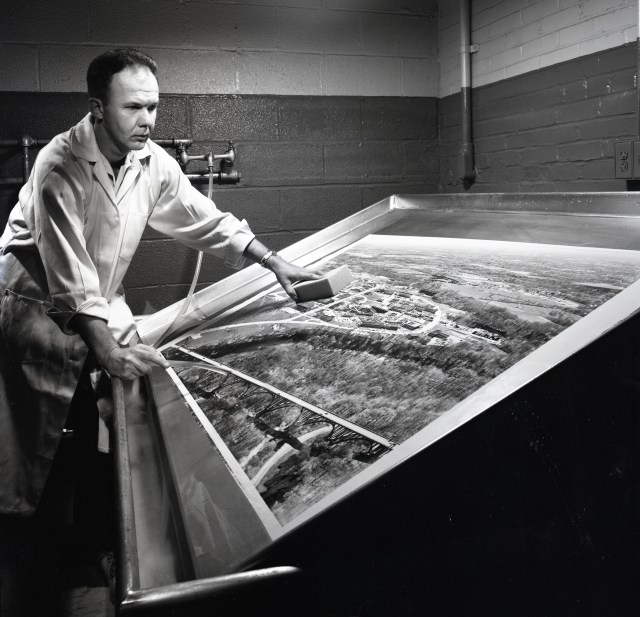
The images selected for these galleries offer an interesting glimpse into both the early research and culture of Glenn Research Center along with detailed descriptions that provide a setting and context for the current research activities at NASA.
By Marvin Smith (former NASA photographer)
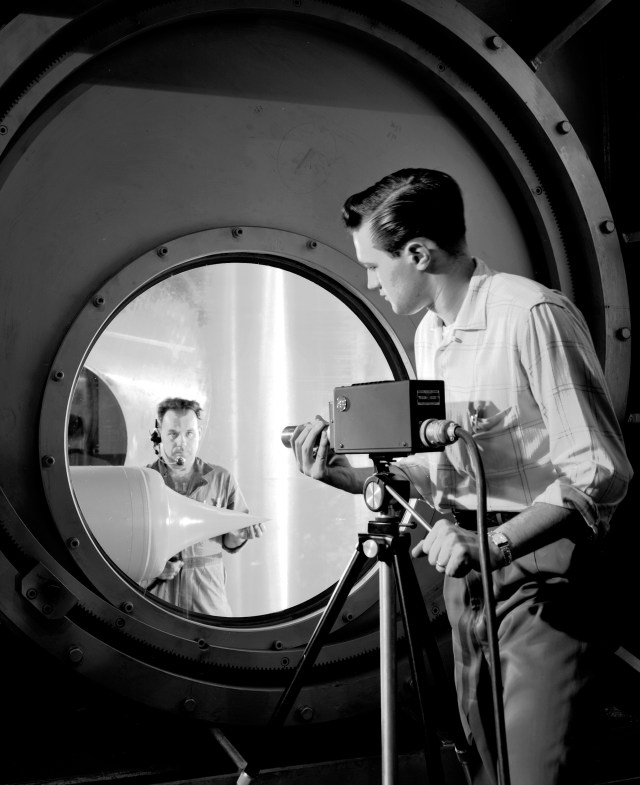
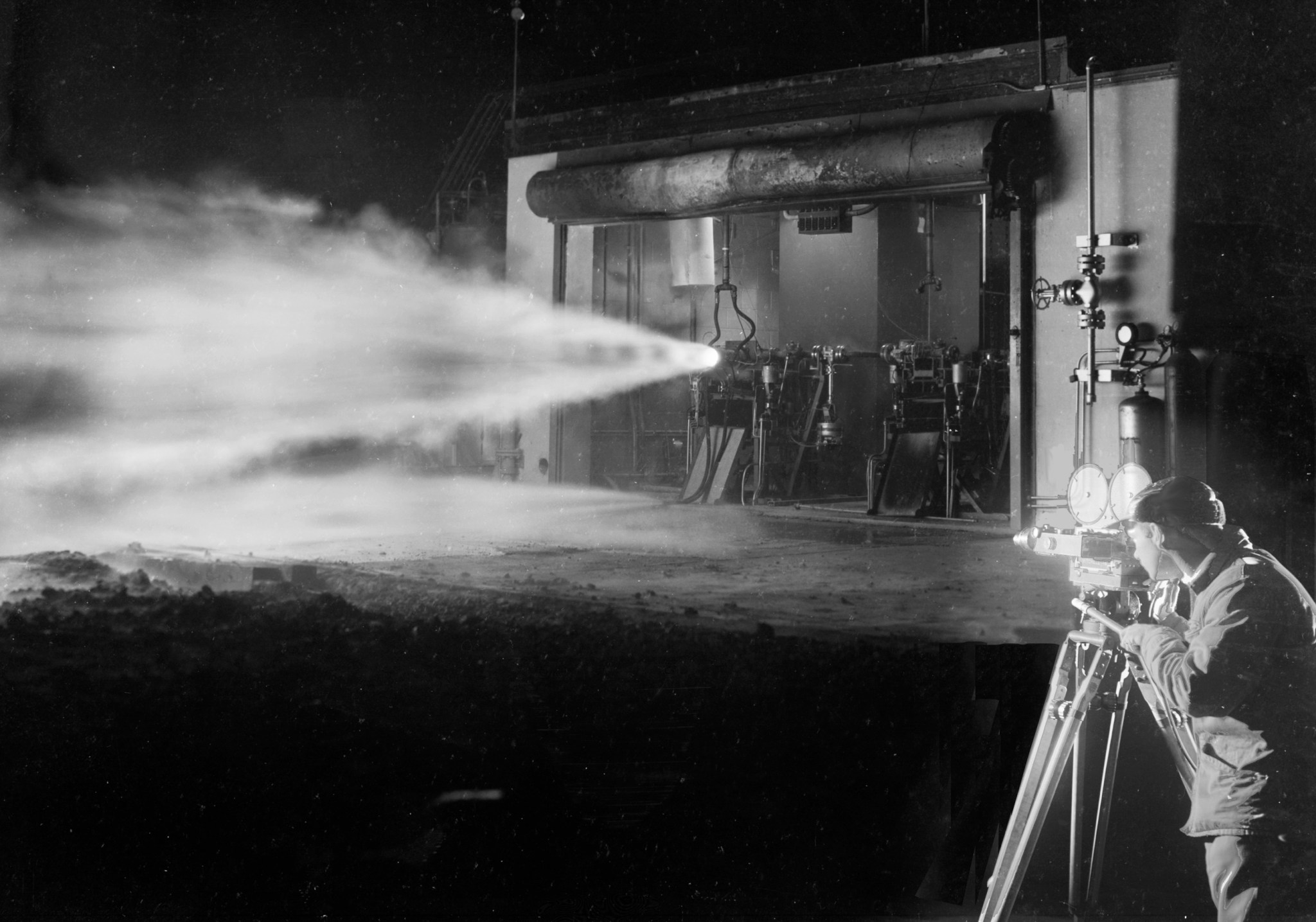
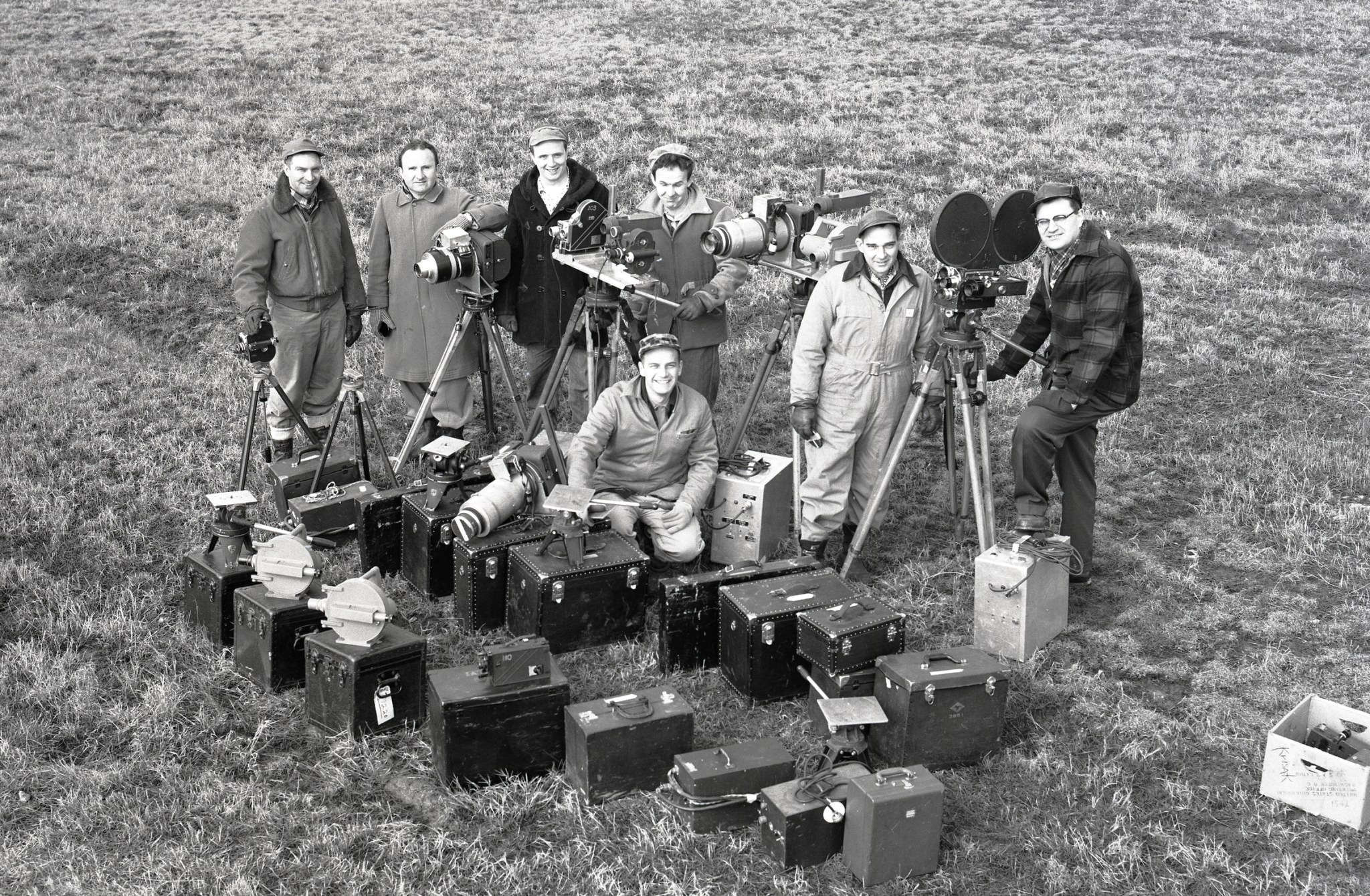
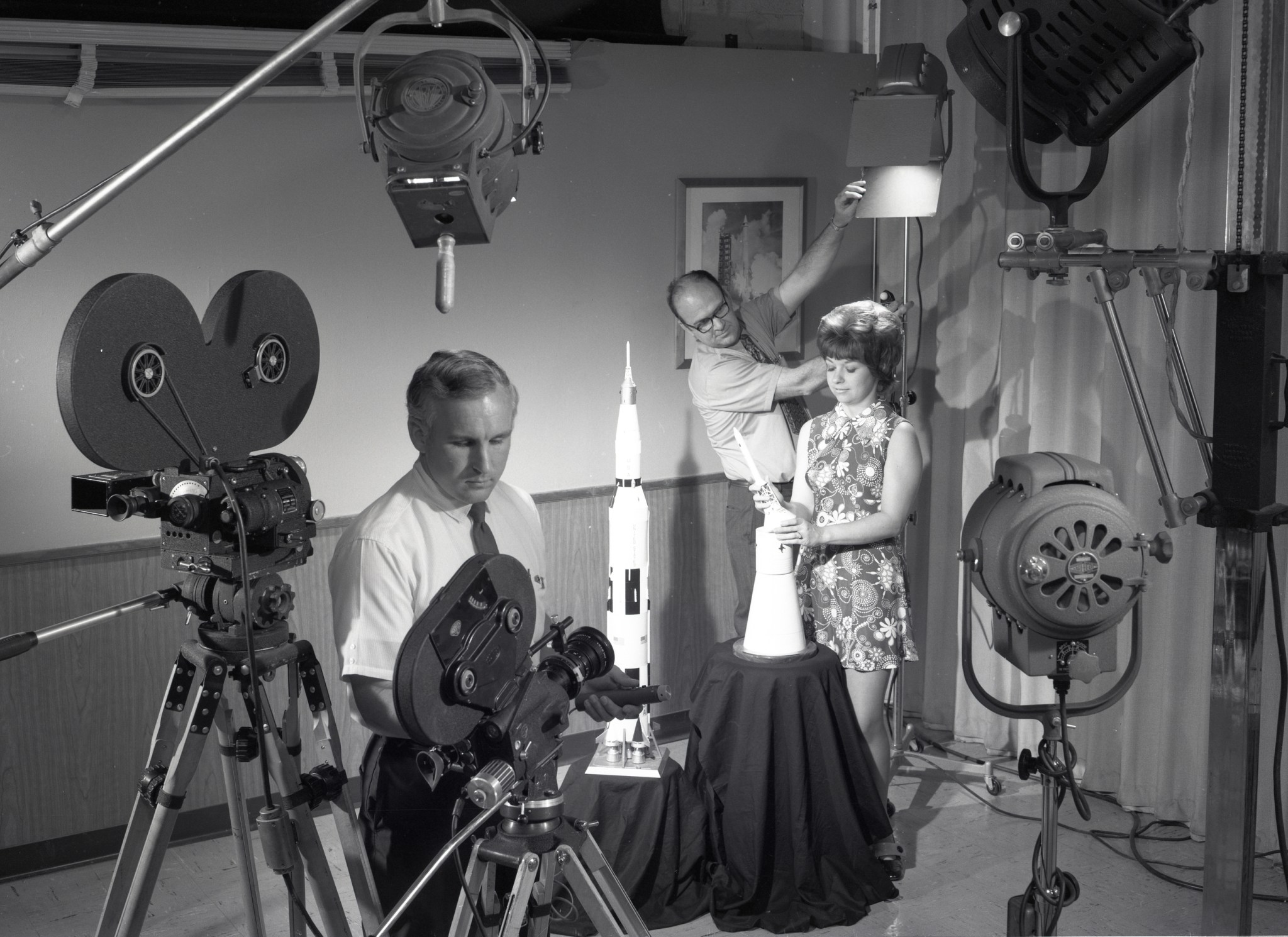
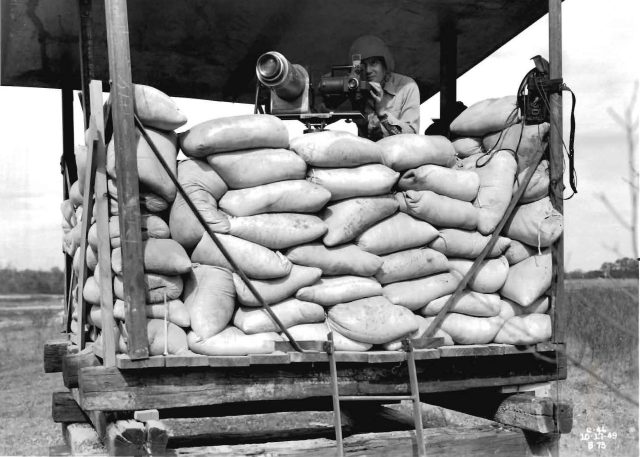
The Lewis Photo Lab was established in 1942. The staff was expanded over the next few years as more test facilities became operational. Many of the early Center photographers honed their skills in military service during WWII. In their new roles as NACA photographers, they were tasked to accompany pilots on test flights, use high-speed cameras to capture fleeting events such as combustion tests, and work with technology, such as the Schlieren camera, to capture supersonic aerodynamic phenomena.
As NACA and NASA broke new ground to define air and space travel, these photographers “wrote the books” on the tools and techniques required to capture images in world-class research facilities. For instance, in 1955 NACA Lewis photographer Bill Wynne developed a method for inserting a timekeeping device on a 16mm camera that displayed elapsed time in the movie footage to one thousandth of a second. While the demands of scientific research drove technical innovation in image capture, the group also documented construction projects, performed publicity work, created images for reports, and photographed data recording equipment. These diverse work situations, coupled with difficult research demands, sparked the creativity evident in many of the images.
Photographers working primarily with large, field cameras and 8- by 10-inch sheet film created the early images in this collection. When portability was important, 4×5 Speed Graphic and Crown Graphic cameras were used. These cameras became the standard in the early 1960s as color film became more common. Roll film cameras were used starting in the 1970s, but 4×5 Crown Graphic cameras were still the standard for ease in negative handling and storage. More compact 35mm cameras were later used for specific applications requiring a smaller footprint and increased number of shots per roll.

While each new generation of camera and lighting equipment altered the photographers’ techniques and the look of the images produced during a given time period, certain image characteristics and an overall aesthetic persist. Strong image sharpness and depth of field are seen, even to this day, in many of the facility research images. Aside from the practical aspect of this technique, wherein all project hardware details are easily identified, the sharpness conveys a highly focused view not typically seen with the human eye. Coupled with high-powered, broad lighting, the images take on an almost formal look that can be striking in and of itself. Additionally, technicians and researchers are often seen posed in these images to demonstrate operations or to provide scale against a massive backdrop of hardware, reinforcing the size and scope of technical achievement.
The Photo Lab’s expertise and specialized equipment were key research tools in the early decades of the center’s existence. The staff conveyed ideas, projects, data, breakthroughs, and even accidents to the research community and general public. What continues to this day is the unique blend of technician, historian, and artist, known as a photographer, opening a window into the fascinating world inside the gates of NASA Glenn Research Center.
Featured Story
William Wynne, noted photographer and photojournalist, passed away on April 19, 2021 at the age of 99. His professional career…
Cleveland, Ohio is home to Glenn Research Center, NASA’s third oldest center. Glenn’s current expertise in areas such as propulsion, energy conversion, communications, and materials has its roots in the center’s accomplishments in the 1940s, 1950s, and 1960s. The center’s erudite staff, strong leadership, and unique test facilities have historically produced breakthroughs in jet engines, icing, high-speed flight, high-energy propellants, rocket combustion, satellite communications, engine efficiency, solar cells, and wind energy.