
UWL student’s artwork accepted into national exhibition
Bringing emotion to life


Mastering Studio-Quality Photography: Modern Techniques for Every Photographer
Description: Elevate your photography skills with our guide to crafting studio-quality shots. Explore the latest techniques and tips that will help photographers of all levels create stunning images.
Whether you’re a beginner or a seasoned pro, these modern methods will take your photography to the next level.
In the ever-evolving world of photography, pursuing studio-quality shots has become an art form. Gone are the days when such mastery was limited to a few professionals.
Today, with the knowledge and equipment, every photographer can craft studio-quality shots that rival the work of experts. This article will explore modern techniques that have made this possible, helping you elevate your photography game and capture stunning images that leave a lasting impression.
The fundamental building block of achieving studio-quality photography hinges on your meticulous equipment selection.
While the camera nestled within your smartphone undoubtedly can capture impressive imagery, delving into the realm of high-quality cameras and lenses can herald a transformative difference in your photographic journey.
These precision instruments allow you to exercise exacting control over many elements within your frame, encompassing factors such as depth of field and exposure.
Nonetheless, it is imperative to recognize that your photographic arsenal extends beyond the camera alone. Tripods, for instance, offer a stable platform that significantly diminishes the likelihood of unsightly camera shake, ensuring razor-sharp images.
Meanwhile, lighting equipment and meticulously curated backdrops form the foundation for creating a controlled environment conducive to studio photography.
As you embark on this equipment-acquisition odyssey, conducting thorough research and prudently considering your budget are indispensable practices. Each piece of gear you invest in is a pivotal contribution to advancing your photographic craft.
Distinguishing between amateur and professional photographers usually boils down to their mastery of the intricate dance of light in photography. The importance of lighting in the studio photography domain cannot be overstated.
It serves as the keystone for crafting images that are striking and resonate deeply with viewers. For professional studio photographers, effectively manipulating light is an art form. They use softboxes, umbrellas, and reflectors to add lighting effects to photos, thus elevating their quality to a new level.
Consider softboxes, which are virtuosos at generating soft, uniform lighting that banishes harsh shadows and ensures the photographer’s aesthetic brilliance remains undisturbed.
On the other hand, Umbrellas shine as versatile light diffusers, artfully dispersing and enhancing the inherent beauty of light. Reflectors, a valuable asset in a photographer’s toolkit, step in to redirect and amplify light toward the subject, skillfully eradicating shadows and endowing images with an authentic, luminous radiance.
Unlocking the full potential of lighting is an art form in itself. Aspiring photographers are encouraged to embark on a journey of experimentation with many lighting configurations.
This exploration encompasses different angles, distances, and lighting combinations. Delving into these facets will unearth the precise mood and contrast needed to infuse life into your composition.
Once you have the equipment and lighting in place, it’s time to focus on composition and framing. Composition is arranging elements within the frame to create a visually pleasing image.
Techniques like the rule of thirds, leading lines, and symmetry can help you compose captivating shots. Framing involves using elements within the scene to draw attention to your subject and add depth.
Remember that rules are meant to be broken in art, but understanding these principles will give you a solid foundation to work from. With practice, you’ll develop an intuitive sense of framing and composing your shots for maximum impact.
In today’s digital era, the realm of photography is greatly influenced by post-processing and editing techniques, which wield a significant impact on achieving studio-quality shots.
Leveraging powerful software like Adobe Lightroom, Photoshop, or Luminar Neo, photographers can refine their images by employing cutting-edge tools like color settings, framing or AI remove background for an elevated touch.
However, a delicate balance must be maintained throughout the editing process to preserve the authenticity of your photographs. It’s easy to fall into the trap of overediting, which can create images that appear unnaturally enhanced.
To embark on the editing journey, you should initiate the process by addressing minor imperfections in your photographs. Subsequently, focus on tasks like color correction and sharpening to enhance the overall visual appeal.
Always bear in mind that subtle refinements often yield the most pleasing results. The primary objective of editing should be to accentuate the innate beauty of your image rather than obscuring it with excessive alterations.
Becoming proficient in studio-quality photography is a challenging endeavor. It requires practice, dedication, and a willingness to learn from successes and failures. Consider joining photography communities, attending workshops, or seeking feedback and constructive criticism from fellow photographers.
Crafting studio-quality shots is within reach for every photographer. By choosing the right equipment, mastering lighting, understanding composition and framing, and using post-processing techniques wisely, you can elevate your photography skills to the next level.
The key is to practice, refine, and never stop learning. With determination and an artistic eye, you can capture images that captivate and inspire, making your mark in photography.



/ Image: Christie’s Images Limited 2023
A Monet masterpiece never previously sold at auction led a record-breaking night at Christie’s New York, defying a patchy art market.
Le basin aux nymphéas (1917-19) sold for $74 million, including house fees. It was one of the highlights of the auction house’s 20th-century evening sale – a centrepiece of the auction house’s Fall Marquee Week – which brought in a total of $640.8 million.
The sale saw new auction highs for Fernando Botero, Richard Diebenkorn, Arshile Gorky, Barbara Hepworth, Joan Mitchell, and Joan Snyder.
[See also: Audemars Piguet takes home coveted top prize at ‘Oscars of watchmaking’ in Geneva]
Imogen Kerr, co-head of the 20th century evening sale, said it had been ‘a true celebration of great art, with masterpieces ranging from the Impressionist era through contemporary classics of the current day’. She added: ‘It was a particular honour for us to sell Claude Monet’s exquisite Le bassin aux nymphéas, which realised $74 million. We are looking forward to building upon the momentum as we head into our Day Sales.’
The evening sale was veteran auctioneer Jussi Pylkkänen’s swan song. Pylkkänen hung up his gavel after 38 years, saying, ‘what a night for Christie’s, and what a night for the art market’. His final sale was the Monet.
Last week Picasso’s Femme à la montre (1932) sold at Sotheby’s New York. The painting of the artist’s young, lover Marie-Thérèse Walter, fetched $139 million, becoming the second most expensive Picasso ever sold at auction.

Christie’s Fall Marquee Week, which has so far netted sales of $814,880,410, continues.
Below, Spear’s shares highlights from the autumn auction season…

Mark Rothko’s Untitled (Yellow, Orange, Yellow, Light Orange), 1955, widely considered to be the artist’s most successful work, was be one of several highlights of the 20th-century sale at Rockefeller Center on 9 November during Christie’s New York’s marquee week of sales.
The near-seven-foot tall painting was in the artist’s personal collection until he died, at which point it passed into the hands of legendary 20th-century collectors and art patrons, Paul and Bunny Mellon. It is now up for sale for the first time in half a century. It was estimated to reach in the region of $45 million but sold on the night to a phone bidder for $40 million.
Filled with rich, dynamic fields of colour that casts a spellbinding glow over the viewer, Untitled (Yellow, Orange, Yellow, Light Orange) exemplifies the boldness and complexity of Rothko’s finest work.
Alex Rotter, chairman of 20th and 21st century art at Christie’s, said: ‘Rothko stands among the giants of 20th-century art. He was deliberate in his process, with a singular intention of taking the practice of painting to new heights—achieving a psychological impact with his work that no other artist had previously.
‘His work continues to awe viewers of all generations, creating a deep emotional impact—a religious-like experience for those who stand before it. The painting we are offering is a best-in-class example, it is all-encompassing, radiating with an indescribable heat and intensity.’

Picasso’s vibrant portrait of Marie-Thérèse Walter, Femme endormie, came to Christie’s New York from the California home of Ivan Reitman, the filmmaker behind movies including Ghostbusters, Dave and Kindergarten Cop.
This colourful portrait of Marie-Thérèse Walter was in the possession of the Picasso family for nearly 60 years before its acquisition in 1993.
It is presented as part of the Ivan & Genevieve Reitman: A Life in Pictures sale, alongside works by Willem de Kooning, Jean Dubuffet, Loie Hollowell, Brice Marden, Richard Diebenkorn, Agnes Martin, Joan Snyder, and Saul Steinberg.
[See also: Can London’s art fairs survive in post-Brexit Britain?]
Femme endormie was created during what Max Carter, Christie’s vice chairman of 20th and 21st century art, describes as ‘among the most fraught years of Picasso’s life’.
‘His wife, Olga, refused to divorce him; the Great Depression was in its fifth year; political turmoil engulfed France; and his native Spain, which he would visit for the final time that August, teetered on the brink of civil war,’ Carter said.
‘Picasso painted less—there are fewer than 45 recorded oils from 1934 and in 1935 he gave up painting altogether—and his imagery was dark and brooding. But on one glorious day in July, he produced three radiant visions of Marie-Thérèse Walter.’
On the night, the painting surpassed its $25m-$35m estimate with a hammer price $37m ($42.9m with fees).
Picasso’s works are a major draw in auctions. Over the past decade alone, Picasso artworks have generated over $2 billion in sales, more than any other artist.

This meditation on love, loss and the transience of the human condition, part of a celebrated triptych, was another leading highlight in the 20th-century evening sale at New York’s Rockefeller Center, securing the night’s second-highest sale.
The painting went for a hammer price of $45 million, a little short of the $50 million estimate but with fees, the painting went for $52.2 million.
Francis Bacon’s 1976 masterwork was painted in the aftermath of his muse and great love George Dyer’s tragic death in 1971, and is shot through with the traces of his life and the force of the artist’s grief.
Never before seen at auction, the painting has remained in the collection of a single private family for nearly half a century. It is expected to sell for in the region of $50 million.

Monet’s never-before-seen at auction masterpiece Le bassin aux nymphéas, explores the ephemeral atmosphere, seasonal blooms and glimmering reflections of light of the French impressionist’s beloved lily pond in Giverny.
This superb example of Monet’s water lily series, one of four renderings, has been held in the same family collection for over 50 years.
A Monet Nymphéas of this scale and quality had not come to auction since a canvas in the historic May 2018 sale of the collection of Peggy and David Rockefeller achieved a price of $84.7 million.
On Thursday was sold for a hammer price of $64 million to a phone bidder.

A veritable Cézanne feast was up for sale this November in New York for the first time in half a century, with Fruits et pot de gingembre a highlight of an exceptional trio by the French impressionist alongside Quatre pommes et un couteau and La mer à L’Estaque.
Fruits et pot de gingembre hails from his series of Cézanne’s still-life compositions now celebrated as his signature artistic achievement and is part of a select group of canvases Cézanne painted in the late 1880s and early 1890s.
[See also: What’s next for fractional art investment?]
This work was most likely painted in the studio Cézanne kept at his parents’ estate on the outskirts of Aix-en-Provence – the same site where he painted his highly celebrated Card Players series.
Cartern described Fruits et pot de gingembre, as ‘one of the most important and exquisite Cezanne still lifes ever to be sold at auction.’
Fruits et pot de gingembre hammered at $33.5 million, or $38.9 million with fees. That figure was just above its low estimate of $35 million.

Picasso’s Femme à la montre, a vivid portrait of his muse and lover Marie-Thérèse Walter, was the top lot in an exciting white-glove evening sale at Sotheby’s New York, where the painting beat estimates, fetching $139 million.
Hailed as a ‘masterpiece’ and a ‘trophy’ acquisition, the portrait defined the collection of the late, great American art patron and collector Emily Fisher Landau, who died earlier this year. It was painted in 1932 – a key period in Picasso’s personal and professional life. (Indeed, the year was so influential that in 2017-18 the Tate Modern and Musée national Picasso-Paris collaborated on the twin exhibitions ‘Picasso 1932’.)
The combination of the piece, time period and provenance is a ‘dream combination’ from a value perspective, explained Julia Bell, the founding director of Parapluie. Femme à la montre.
It was one of several pieces from Landau’s collection auctioned in what was, at $406.4 million, one of the highest totalling sales ever staged and the most valuable sale devoted to a female collector in auction history.
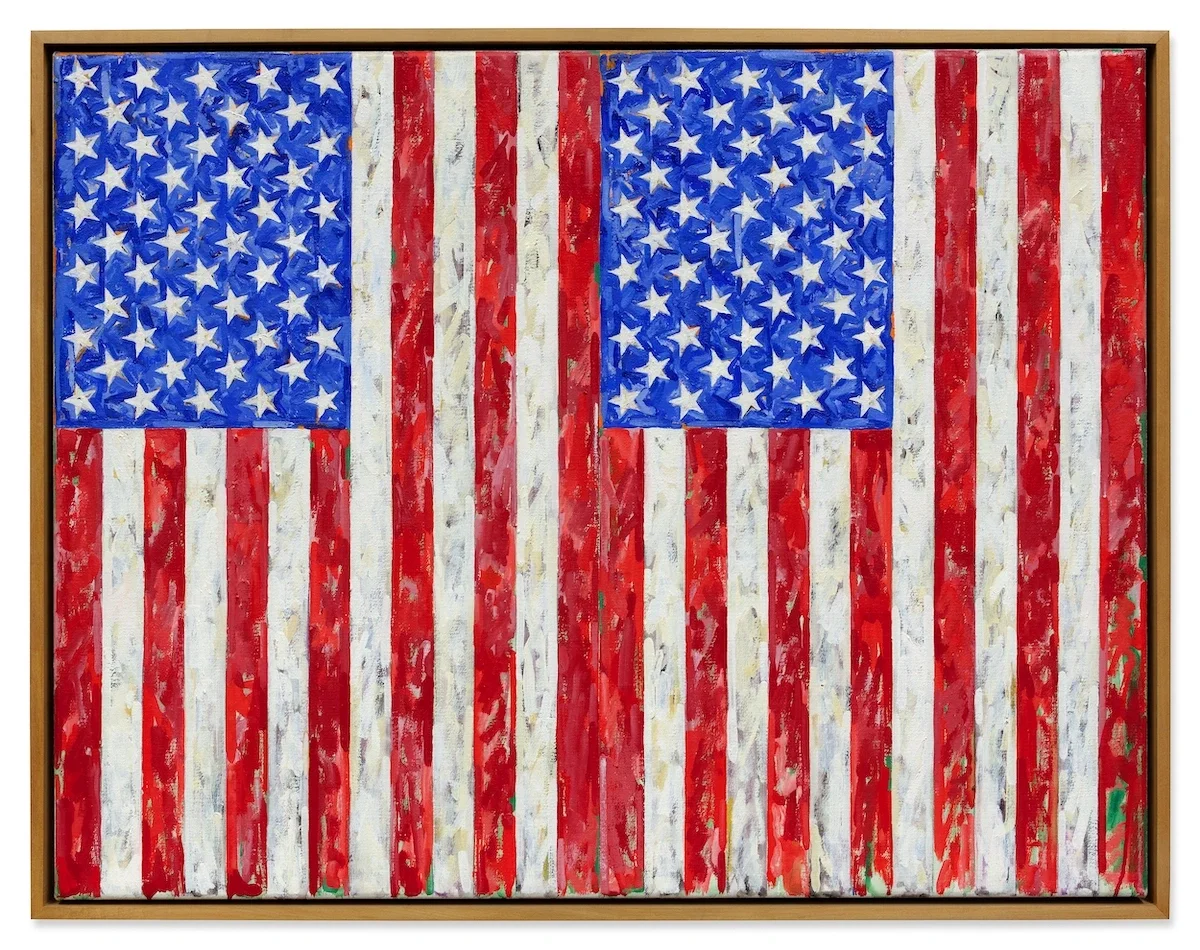


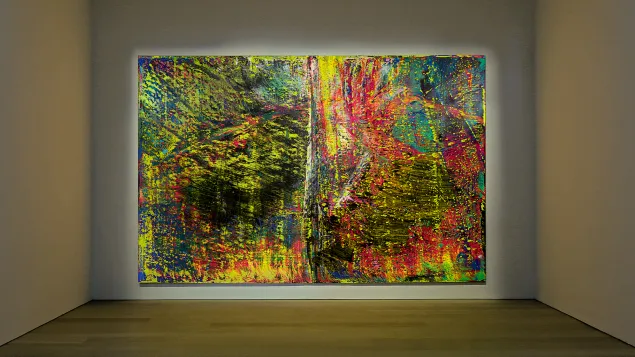
The auction power of German painter Gerhard Richter has continued to grow over the years; his auction record stands at $46.3 million for a 1986 Abstraktes Bild sold in 2015 by Sotheby’s in London, while within the last 10 years, seven abstract paintings by Richter have sold for over $30 million, Phillips’ deputy chairman for the Americas and senior international specialist of 20th-century and contemporary art, Jeremiah Evarts says.
While Abstraktes Bild 1987 is not estimated to reach quite that (it has an estimate of $30 million) it is still a star lot of Phillips’s international fall auction season.
The sheer size of this work makes it a standout in a marquee season with many highlights. Comprising of two distinct panels fixed to one another, the painting as a whole measures over eight feet in height and spans over 13 feet in width, Abstraktes Bild, 1987, is one of the largest works from Richter’s oeuvre to ever be offered at auction, according to Phillips.
While Richter painted several works as part of the Abstrakte Bilder series between 1986-1989, the only one on a similar scale hangs in Lisbon’s Museu Coleção Berardo.

Phillips is offering 30 works of art from the Triton Collection Foundation in a dedicated evening sale this November.
The Triton Collection Foundation has committed itself to assembling an outstanding collection of avant-garde works that span the century and feature movement-defining examples of impressionist, modern, and post-war art.
Sharing top billing with Pablo Picasso’s Femme en corset lisant un livre, 1914-1917, Fernand Léger’s Le 14 juillet, 1912-1913 forms part of a sale Phillips say could fetch $70 million that also includes Georges Braque’s La bouteille de Bass, c.1911-1912; and Joan Mitchell’s Untitled, 1954.
Originally acquired by the Dutch shipping and oil magnate Willem Cordia and his wife, Marijke van der Laan, the collection moved to a foundation overseen by Cordia’s children when he died in 2011. Of the 30 works offered at this sale, 24 are coming under the hammer for the first time.
Keesjan Cordia of the Triton Collection Foundation, said: ‘Our parents dedicated themselves to sharing that collection with the wider public. They took great care and pride in the works that they have chosen to acquire; never adding works that do not fit the quality or standard of the collection and always patiently waiting for those unique pieces they knew were out there. Ultimately, our role is to serve as temporary hosts for the incredible works in an ever-evolving collection.
‘Our hope is that the treasures find homes that allow them to continue to contribute to the public understanding and appreciation of art.’


Stress fractures are a harsh reality for distance runners. It happens all the time. It happened to Xavier Gallo, a member of The University of Toledo’s men’s cross country team, while he was training for the 2021 season. Facing months of rehab, Gallo decided to make the most of his time on the sideline.
“I still really wanted to be a part of the team but, since I was injured, I couldn’t run for eight to 10 weeks,” said Gallo, a native of Dublin, Ohio. “So, I started coming to practice and taking photos.”
Following a stress fracture while training for the Toledo’s men’s cross country team 2021 season, Xavier Gallo discovered his love of photography, and was later hired as a marketing intern for the Toledo Athletic Department.
It was through documenting his teammates’ activities that Gallo discovered a passion for photography. When word spread that there was a capable photographer on the cross country team, Gallo was tabbed to photograph the 2021 Mid-American Conference Cross Country Championship for the Toledo Athletic Department. He also shot some Toledo football games that fall. His photos turned out to be excellent and were used on social media and the UT Athletic Department’s website.
Heather Lutz, UT’s associate athletic director for marketing, was impressed by Gallo’s work and hired him as a marketing intern in 2022. Gallo’s first official assignment as an intern was the 2022 football home opener.
“Xavier did a great job of capturing the experience of Toledo football, the big plays as well as the emotion of athletes and coaches,” Lutz said. “He did a tremendous job of telling the story of Toledo Football.”
Gallo parlayed that experience into an internship with a Michigan-based company, all the while still interning at UT. He soon discovered that the corporate life was not for him.
“I got the internship through a job fair here on campus,” said Gallo, a double major in marketing and entrepreneurship and innovation in the John B. and Lillian E. Neff College of Business and Innovation. “It was the kind of business where employees wore suits and ties and worked a traditional 9-to-5 shift.”
Gallo had no such concerns about creative freedom in his position at UToledo. He expanded his role into shooting and editing videos and found he had a knack for it. He created the 2021-22 and 2022-23 highlight videos that were played at the annual Rocket Awards reception. He felt as though the first video was slightly rushed so he spent extra hours compiling footage for the second video.
“I ended up putting in about 17 hours into sorting through and editing footage for the 2022-23 video,” said Gallo. “It was a lot of fun, and it’s something I’m most proud of.”
Gallo has worked with almost every sport at UT, taking photos and videos that are used on social media, graphics and emails. He also has a few other projects in the works, including a documentary focusing on the Toledo men’s cross country team, and a video recapping his work at the University. After graduation next spring, he plans to continue creating videos, either as a freelancer or with an agency.
In addition to working as a marketing intern, Gallo also is involved in the Launchpad Student Section. He took over the role of president in January 2022. As president, Gallo has contributed to an increase in student attendance at UT football and basketball games and helped grow a larger social media presence for the organization. He also works closely with the Athletic Marketing Department and administration to coordinate student tailgates.

After sitting out the men’s cross country team 2021 season so his stress fracture could heal, Gallo returned to competition in 2022.
Gallo’s efforts have not gone unnoticed.
“The Launchpad has undergone significant improvements in the last year since Xavier became president,” said Vice President and Director of Athletics Bryan B. Blair. “I have no idea how he balances all this while being an excellent student and Division I athlete, but we are extremely fortunate to have him.”
“He has a huge passion for The University of Toledo,” said Director of Cross Country and Track and Field Andrea Grove-McDonough. “He’s a creative guy. There is no doubt he’s going places.”
Even though Gallo’s interests diverted his attention away from his sport, he still sees cross country as an important part of his life. After sitting out the 2021 season so his stress fracture could heal, Gallo returned to competition in 2022. He ran in four races in 2022, clocking a PR of 27:09.9 at Notre Dame’s Joe Piane Invitational, and also competed this fall.
“I had to get back to the physical state of being a runner,” Gallo said. “Eventually it came back. It was just tough to get there. It’s been a tricky time, but I’m happy to have had the opportunity to run with my guys again.”
Even though Gallo does not score among the team’s top runners, he has made an oversized impact on the cross country program and the Athletic Department overall.
“Xavier is one of those glue pieces in terms of culture, just an all-around great guy who is respected by his teammates,” said Grove-McDonough. “When you can’t necessarily make the same impact athletically as the number-one runner but you find a way to make an impact anyway, that’s something special. Xavier has that.”


You would be forgiven if you walked into Miriam Abascal Zimms’ home and forgot you were in someone’s house. Inside the doors, you’re instantly greeted by art from floor to ceiling. Whether it’s pieces she made, from Santa Fe or her native Guatemala, the variety is enough to make the waterfront views of Lutz’s Lake Brant the second-most visually impressive part of the property.
When you turn the corner, there is a row of world masks adorning the wall. Just below, you notice the sink and refrigerator and are reminded that this is, in fact, someone’s home and not a live-in art gallery.
That art just may be Zimms’ life, though.
It was not always that way. Zimms has been on a long journey to get to where she is today.
A first-generation immigrant, Zimms left her native Guatemala in 1971 when she was 4. Along with her mother, Rosa, the two set out for America hoping to create their own version of the American dream.
If Zimms’ life were a book, the first chapter would be her mother’s version of that dream.
“I always had this creative side to me as a child,” Zimms said. “But I couldn’t tell my mother I wanted to go to New York and be on Broadway.”
She doesn’t remember much from those first few years in the United States, but she remembers her mother working hard and persevering in the face of discrimination.
“I always had this creative side to me as a child. But I couldn’t tell my mother I wanted to go to New York and be on Broadway.”
– Miriam Abascal Zimms
To honor her mother’s dreams, Zimms embarked on a career in business. She worked as a consultant in solid waste management for county governments, corporations and institutions, helping to plan their conservation and sustainability strategies. She took great pride in running zero-waste and waste reduction programs.
She was making the planet a better place for future generations.
Sadly, Zimms was not far into her career when her mother passed. Zimms was just 26. Her mother was 58 when she died from metastatic breast cancer.
Three other women on her mother’s side had also been diagnosed with either skin cancer, breast cancer or both. And her maternal grandfather had passed away from stomach cancer.
Zimms knew her risks. She started doing self-breast exams immediately. Once a month. Every month. She also got annual MRIs.
For 17 years, she found nothing. Two hundred straight self-exams. Everything status quo.
Until one day in 2010, when she became the fifth woman in her family to have that dreaded realization.
She found a lump in her left breast.
“I was not shocked,” she said. “But I was surprised.”
The diagnosis was triple-negative breast cancer (TNBC). She was 43.
“I remember thinking, ‘Wow, I really have done everything I was supposed to do,’” she said. “I embraced a wellness lifestyle. I exercised. I was eating healthy because I saw the women in my family go from being fit, healthy women to their bodies changing when they hit menopause.”
Zimms came to Moffitt Cancer Center for her treatment.
Up first was three months of chemotherapy. Once that was finished, she underwent a double mastectomy and the start of breast reconstruction to begin the process of feeling whole again. Reconstruction required four surgeries over the course of three years to complete. She worked through it all.
During that time, through genetic testing, she learned she had a BRCA1 mutation. With a newly discovered risk for ovarian cancer, Zimms had her ovaries and fallopian tubes removed.
A few months after recovering from surgery, something still didn’t feel right. She brought up her concerns to her surgeons, John Kiluk, MD, and Philippe Spiess, MD, who called for a CT scan of her lower body.
That scan revealed a suspicious spot on her pelvis. The initial fear was that her breast cancer had spread.
“When that biopsy came back, I got a phone call saying, ‘Do you want the good news or the bad news?’ And I said, ‘Well, I’d like the good news first,’ and the good news was that it was not metastatic TNBC,” Zimms recalled. “But the bad news was that I had chondrosarcoma, primary bone cancer.”
If her first cancer diagnosis was surprising, this new diagnosis was a full-blown shock.

Zimms found herself in a dark place during her recovery from chondrosarcoma, which had followed months of treatment for breast cancer. A chance visit to Moffitt’s Arts in Medicine studio introduced her to the Zentangle art style that would transform her life.
There had been little to no time to separate from the breast cancer, months of chemotherapy and all the surgeries, but she couldn’t take a break now. Her life was on the line.
Zimms underwent an internal hemipelvectomy. She had the majority of her left pelvis, hip ball and top part of her femur removed.
What followed was seven months of bed rest with in-home physical therapy, then one and a half years of additional in-home physical therapy. A lifetime of physical therapy became part of her new full-time job.
“The surgery saved my life,” Zimms said. “But it left me with the inability to use my left leg and took away many of the things I used to do. I’ve had to modify the way I live, including my energy level of productivity.”
During the months of not being able to leave her bed, the negative thoughts crept in.
“I felt like a helpless baby,” she said. “I needed a full-time caregiver to help me with everything. That was when I started to think about the loss of my primary female body parts. My breasts, fallopian tubes, ovaries and now my left pelvis.”
She was depressed. She was down. She was angry.
She describes the feeling as being on a bus. She was on her journey exploring how to live life after breast cancer. Suddenly, someone slammed on the brakes.
“The last four years just came flying forward,” she said. “And I had to deal with it.”
It was the darkest time in her life.
Then Moffitt’s Arts in Medicine program brought out a light in Zimms that had been dormant for decades.
The Arts in Medicine program started in 1998 and celebrates its 25th anniversary this year.
It began with a single artist and a cart full of art supplies. Frances Falk was the program’s first coordinator, serving in the role from 1998 to 2003. Falk would visit patients at their bedsides and in the lobbies and waiting areas, bringing art directly to the people.
Later that first year, the program added a musician and transitioned into an open studio for patients to visit while they were undergoing treatment.
The program is based off an expressive arts model. The idea is to use art for healing and self-discovery.
“Our artists and musicians are not practicing as therapists,” explained Amanda Bonanno, the program’s current coordinator. “They’re not coming up with goals or treatment plans. The control is all in the hands of the participant.”
“No one is going to interpret or impose any meaning on the artwork that is made. As a result, it’s oftentimes a process that opens people up to sharing, and that is their choice.”
– Amanda Bonanno, Arts in Medicine Program Coordinator
Bonanno joined Moffitt as the Arts in Medicine coordinator in 2016. She believes the open-endedness of the program gives patients the ability to feel free in their expression.
“No one is going to interpret or impose any meaning on the artwork that is made,” Bonanno said. “As a result, it’s oftentimes a process that opens people up to sharing, and that is their choice.”
Today, the program has seven artists-in-residence sharing both visual art and music across three Moffitt locations. That includes two art studios for anyone to visit during their time at Moffitt. True to the program’s origins, the artists still use the art carts to visit patients right where they are.
Zimms had visited the art studio at Moffitt’s Magnolia campus some during her breast cancer treatment. But during her recovery from hip surgery, something magical happened.
Marcia Brown was the artist-in-residence working in the studio that day. She had brought over a few projects to try, including Zentangle art, a creation of patterns using a repetition of dots, lines, curves and orbs.
Zimms initially declined. The rehabilitation process she was going through was brutal. She had to learn to sit, stand and walk again. The most basic movements came with a combination of pain and fear that was often overwhelming.
“I wasn’t in a space of wanting to put anything dark on paper,” she said. “It all felt so dark. But that’s the space I was in.”
That’s when Brown had the idea to flip the script. Instead of having Zimms put black ink on white paper, Brown suggested using a white pen on black paper.
Zimms took the supplies home, and the rest is history.
“At that point in my life, people were giving me books and all this big stuff to do at home, and I was not in a mental space to absorb any of that,” she said. “So I needed something small and fast.”
What followed was 300-plus pieces of Zentangle art tiles. People around Zimms quickly took notice.
“My husband and my stepdad would tell me I was really talented,” Zimms said. “But then one of the Moffitt artists asked me to start bringing some of my pieces in and said, ‘Wow, Miriam, you’re really doing something special here.’”

Zimms describes her artistic style as “art brut,” a French term that refers to pieces made outside of the traditional definition
of fine art.
The decision was made to showcase Zimms’ art in Moffitt’s Healing Arts Gallery, which features art made by patients, families and staff. Each of her 300 pieces was framed and displayed for over a year. The pieces told the story of Zimms’ journey. From her breast cancer to chondrosarcoma. They are tributes to her husband, Mitch Kessler, and Moffitt, as well as loss, pain and suffering.
“I did get a lot of feedback from doctors, and people would write me saying that they would stop and look at it. It really did a lot of healing,” Zimms said. “Not just for the patients and families, but for team members who would stop every day on their way to the parking lot. It really touched a lot of people’s lives.”
Zimms left her career in waste management to focus on her chondrosarcoma recovery. Cancer may have taken that part of her life from her, but it ended up unlocking something different.
“I believe that allowed the left brain to shut down,” she said. “And what had been there when I was younger and very creative was allowed to completely blossom and show its face.”
Local libraries started noticing her work and invited her to host shows and speak to art groups.
“People started to ask me if they could purchase this piece or that piece,” she said. “That’s when things really started happening.”
Zimms suddenly found an additional life purpose as an artist and teacher of the Zentangle method and expressive arts, contributing greatly to her own healing.
Arts commissions started calling. She was connected with Arts4All Florida, an organization that pairs artists with disabilities with galleries throughout the state. To date, her art has appeared in 10 galleries in Florida.
Zimms now spends her days working on new art projects and teaching Expressive Tangling, a combination of Zentangle and expressive arts, to groups both locally and virtually across the country. Although she still deals with chronic pain, PTSD and anxiety, her feelings of depression are no longer constant. They have begun to come and go.
She describes her artistic style as “art brut,” a French term that refers to pieces made outside of the traditional definition of fine art. Also known as outsider art, it’s often self-taught or discovered following a major loss or health impact.
In her art, Zimms has also started focusing on larger pieces, applying repetitive patterns using tangling strokes to showcase a theme of body loss. It’s a theme she knows all too well.
Zimms has 17 scars on her body to document her journey. Each of those 17 scars are showcased in her art.
“Body loss stays with us,” she said. “When there’s a piece of our physical body that’s been removed, it’s traumatic.”
If chapter 1 of her life story was her mother’s American dream, this was chapter 2. It was her American dream.
“It’s really an opportunity that came into my life thanks to the Arts in Medicine studio at Moffitt,” she said. “It came at a time that I needed something to give me purpose. It was a gift and a blessing.”
Zimms and her husband believe in the healing power of the arts, and they have become generous supporters of the Arts in Medicine program. They want to make sure all patients have access to these types of holistic support programs. In June 2022, they donated a piano to the cancer center in honor of Jerry Kessler. It now sits in the lobby of the Richard M. Schulze Family Foundation Outpatient Center with the intent of providing joyful music for years to come.
Zimms is now 10 years’ chondrosarcoma free and 13 years’ breast cancer free. She has yearly follow-up scans to keep an eye out for any signs of new disease.
“I witnessed my mother’s courage. I gained my knowledge and strength through her experience and then through my own,” Zimms said. “Even though she passed when I was young, her legacy is carried inside of me. And no one can take that away from me. Not even cancer.”

Zentangle art is a creation of patterns using a repetition of dots, lines, curves and orbs. For Zimms, the artistic technique opened up a creative part of her that contributed to her healing.
This article originally appeared in Moffitt’s Momentum magazine.


Photographs on view in the “Wonders and Witness: Contemporary Photography from Korea” exhibition at the Center for Creative Photography. [MMCA]
A photography exhibition depicting “the diverse facets of Korean life” since the 1990s will kick off Saturday at the Center for Creative Photography (CCP) in Arizona.
Titled “Wonders and Witness: Contemporary Photography from Korea,” the exhibition was co-organized by the National Museum of Modern and Contemporary Art (MMCA) and the CCP.
The CCP is located in the University of Arizona’s Tucson campus and is home to some 110,000 works of famed American photographers.
It is the CCP’s first exhibition on Korean photography.
The photographs, by 12 Korean photographers, are from the MMCA’s collection and touch on subjects including literature, sociology, economy, and religion.
![The Center for Creative Photography in Arizona is pictured. [MMCA]](https://www.mecreates.com/story/news/wp-content/uploads/2023/11/d2122761-6b06-41f9-a4f9-10a6a19f522b.jpg)
The Center for Creative Photography in Arizona is pictured. [MMCA]
The 12 photographers include Gwon Do-yeon, Kim Ok-sun, Kim Seung-gu, Kim Tae-dong and Lee Sun-min.
Descriptions on the photographs will be available in Korean, English and Spanish.
There will also be a symposium on Korean photography and public talks with the artists on Saturday and Sunday.
“Wonders and Witness: Contemporary Photography from Korea” continues until Jan. 27 next year.
For more information, visit the CCP’s website.
BY SHIN MIN-HEE [shin.minhee@joongang.co.kr]






