About

Posts by :

A Photographer Tried for 5 Years to Enter a Pencil Factory—and the Wait Was Worth It

A Photographer Tried for 5 Years to Enter a Pencil Factory—and the Wait Was Worth It

It took Christopher Payne five years to get into the pencil factory.

Payne, an industrial photographer, is obsessed with processes. How things are made, where they come from, the people who make them. And he knew the General Pencil Company factory in Jersey City was a perfect subject for his work.

“I’ve had a lot of success with everyday objects, like pencils and newspapers, that people take for granted,” Payne said. “It’s always fun to find something that is mundane and make it beautiful.”

And over the five years of talking with the owners to get access to General Pencil, he was learning about the factory’s production schedule, when they run specific colors, all with the aim of capturing the essential process.

a photo from the book made in america the industrial photography of chrisopher payne

General Pencil. Jersey City, New Jersey

© 2023 Christopher Payne
a photo from the book made in america the industrial photography of chrisopher payne

General Pencil. Jersey City, New Jersey

© 2023 Christopher Payne

“I didn’t just show up,” he said, “I knew the factory and I knew what I wanted.”

Payne’s striking photos of how pencils are made can be found in his new book, Made in America: The Industrial Photography of Christopher Payne, along with dozens of other factories he’s visited to document American manufacturing. His photography is strikingly detailed, beautifully lit, and, most importantly, human. Even in his photos of high-tech microchip production, the people stand out as much as the machines.

Made in America: The Industrial Photography of Christopher Payne

Made in America: The Industrial Photography of Christopher Payne

Made in America: The Industrial Photography of Christopher Payne

Now 22% Off

“Our iPhones are not entirely made by robots, they’re made by people. You might have an automated process but a lot of the assembly is actually made by hand,” Payne said. “I wish people would feel more respect for people that do this work.”

Payne remembers growing up in a time when every town in America was known for making something. But now, with decades of outsourcing and manufacturing moving overseas “most people don’t know where their goods come from or how they’re made.”

“There’s a disconnect that didn’t exist when every town made something,” he said. “I don’t mean to be nostalgic about it because working in a factory is really hard. Manual labor is hard.”

a photo from the book made in america the industrial photography of chrisopher payne

Stern Pinball Factory. Elk Grove Village, Illinois

© 2023 Christopher Payne
a photo from the book made in america the industrial photography of chrisopher payne

Corning Vaccine Vials. Corning, New York

© 2023 Christopher Payne
a photo from the book made in america the industrial photography of chrisopher payne

John Deere Davenport Works. Davenport, Iowa

© 2023 Christopher Payne

And Payne also has no delusions about the economic struggle of making goods in America. But you can’t help but notice some romanticism in his images. He isn’t offering false promises about a return of American manufacturing. But he is pointing out that we still build great things here and will continue to in the future. And it’s just beautiful to look at.

“I have no delusion that things are going to change,” he said, “but I do hope people will be a little more appreciative of the process. And most of all of manual labor and what it takes to make something.”

a photo from the book made in america the industrial photography of chrisopher payne

S&D Spinning Mill. Millbury, Massachusetts

© 2023 Christopher Payne

In the second half of Payne’s book, we get a glimpse of the new direction of American manufacturing. Electric cars, semiconductors, wind turbines—advanced pieces of technology that take skilled workers to build. Payne has visited dozens of these factories for this project, but he finds these modern factories present a distinct challenge. Often the actual manufacturing is done inside enclosed boxes, or sealed off behind glass. In these spaces, like the GlobalFoundries semiconductor factory in Malta, New York, he finds that a more abstract approach can work.

“It’s funny, the most interesting photo I thought I made at GlobalFoundries was not on the manufacturing floor, it was underneath the chip fab looking up at the underside of the floor.” Payne said. “You see all this different stuff, like spaghetti, and you realize how complex the entire operation is.”

a photo from the book made in america the industrial photography of chrisopher payne

Global Foundries Semiconductor Chip Factory. Malta, New York

© 2023 Christopher Payne

Whether photographing the Ford F-150 Lightning assembly or a hand-built Steinway piano, Payne’s goal is the same. “I’m always looking for that picture that sums up the essence of the space—what is the most essential operation.”

a photo from the book made in america the industrial photography of chrisopher payne

Ford Renewable Energy Vehicle Center. Dearborn, Michigan

© 2023 Christopher Payne

This book isn’t the end of Payne’s obsession with the manufacturing process. In fact, he already has his next industry in mind: fire hydrants.

“A fire hydrant is like a tree,” he said. “What’s underground is much larger than what you can see above ground.”

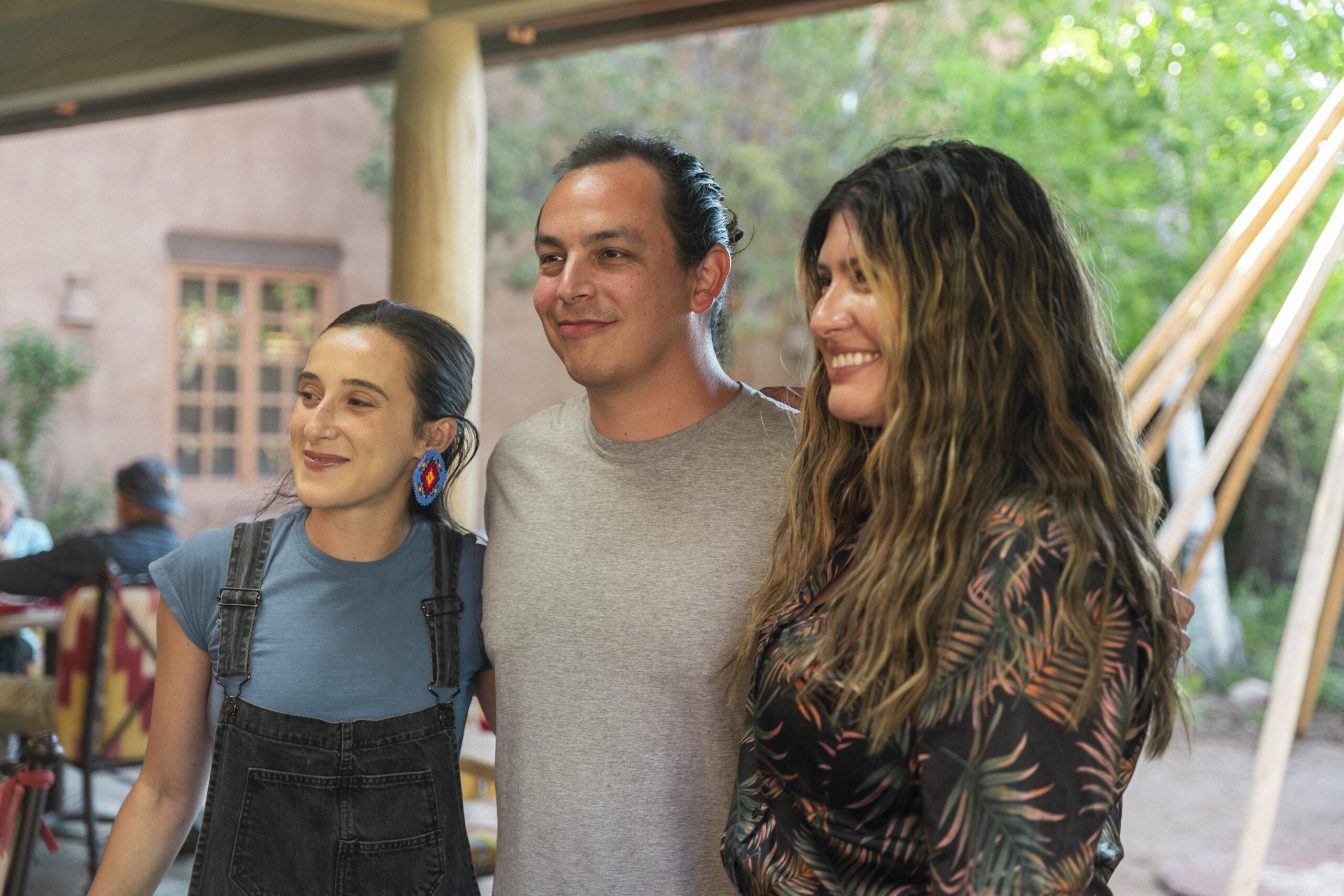
An Indigenous Infinity: A Dispatch from Adam Piron

An Indigenous Infinity: A Dispatch from Adam Piron
image

by Adam Piron

I’ve been thinking a lot about time over this past year. In Western European cultures, there’s the idea that the future lies in front of us and the past lies behind. But for the Kiowa, my own tribe from Oklahoma, it’s something like the other way around. And that makes sense, because we can’t see the future. We’re taught in this country to think of movement through time as analogous to physical movement. The present moment means nothing in physics, as time is merely another dimension, and the whole universe exists “now,” a word that has no meaning. There is no word for time in Kiowa.

Every November, when Native American Heritage Month comes around, we’re encouraged to look back and to celebrate how far our communities and certain luminaries have come, and the paths they’ve forged for us to take on further into the future. This is a noble and worthy sentiment, but I think it would also behoove us to apply a logic beyond the confines of the Gregorian calendar system, one that recognizes and realigns Indigeneity and its accomplishments on its own terms and conditions. Perhaps something closer to an Indigenous concept of time or, at the very least, something shaped to the contours of how it fits across many of our cultures — as something circular, a loop that feeds off of and back into itself.

Throughout the history of Sundance Institute’s Indigenous Program, our support for Indigenous artists has been built on a similar concept of cyclical force. We believe in taking Indigenous artists and their work to Indigenous communities to find other Indigenous artists in need of support, and once their work is ready to be seen then taking it back to communities to continue to circle. Similarly, many of the artists that we have supported through our efforts have gone through other channels of support within our program, within the Institute, and beyond. These efforts have been built over and by generations of other artists and their communities. This continues to be a collective effort, one where we honor the work of others that laid the space for where we are and one where we are also able to form further and without limits.

In kicking off this month, we will further highlight just a few of the many artists and their accomplishments over this past year and just how far they’ve come and will continue to go. We celebrate these artists and their work yesterday, today, tomorrow, and across the boundaryless dimension we’ve come to call time. 

Here are some of the opportunities they have forged for themselves and each other, as well as new horizons our program will add to these efforts:

Discover the Cutting-Edge Photography Exhibition Making Waves in Paris

Discover the Cutting-Edge Photography Exhibition Making Waves in Paris

Mika Ninagawa’s section of “I Remember You.” Photo: BFA/Pierrick Rocher

Parisian art lovers were treated to a two-day photographic exhibition in the Marais, featuring five artists thinking about memory, nostalgia, and what we want to remember. Curated by the brilliant New York–based Isolde Brielmaier, who is also the deputy director of the New Museum, the show at Salon Corderie focused on artists from all over the world with diverse practices and backgrounds. “I have been following all of their work for a long time and once they were given the brief, they all just ran with it,” shares Brielmaier.

The results were inspiring and fascinating to see how each artist approached the subject. Karl Hab visited an old friend, and Stefan Ruiz delved deeper into portraiture. Malin Fezehai, a documentary photographer, is interested in performers, and she knew immediately who she wanted to shoot. She explains, “I have always been fascinated with performers and the characters they create. Marawa is a hula hoop performer and we took a road trip from L.A. to Las Vegas for this project!”

“I Remember You” photography exhibition. Photo: BFA/Pierrick Rocher

Tokyo’s Mika Ninagawa created an immersive environment of vivid, colorful flowers. “I am always collecting the precious moments of everyday life and then layer them,” she says. “The important moments are those in our day-to-day life.” She quietly captured the beauty of nature, the fleeting essence of a blooming flower, and the slow decay.

Hong Kong–based Vivien Liu had wanted to photograph her city for a while, and this project gave her the opportunity to do so. As a trained and practicing architect, she is interested in the humanity of architecture and also, capturing buildings before they are destroyed. “I have a deep rooted history with these buildings as my grandmother lived in one of them,” she says. “They are in the not so glamorous parts of town, and they are all being destroyed. I wanted to capture them before their expiration dates were up.”

Works by Stefan Ruiz in “I Remember You.” Photo: BFA/Pierrick Rocher

Works by Vivien Liu in “I Remember You.” Photo: BFA/Pierrick Rocher

Brielmaier says what surprised her the most was, “What they each came up with and the way each artist speaks about their ideas of memory and nostalgia.” When asked about how the selection process took place, the curator is quick to state, “Everything I do is with an eye on diverse backgrounds and giving a platform to voices which may have been excluded previously. This is how I proceed as a curator. This is a diverse group of artists from all over and with different approaches.”

This too-short exhibition was not only a brilliant initiative, but notably featured all images shot exclusively with an iPhone 15 Pro Max. Even more reason to look closely and think about these captured moments.

The “I Remember You” exhibition. Photo: BFA/Pierrick Rocher

“I Remember You” is on view at 14 rue de la Corderie in Paris from November 10–11.

Cover: Mika Ninagawa’s section of “I Remember You.”

Photo: BFA/Pierrick Rocher

A Child’s Drawings Inform Cold Picnic’s Frames Rug Collection

A Child’s Drawings Inform Cold Picnic’s Frames Rug Collection

The duo behind Cold Picnic, Peter and Sung Buer, have brought their young daughter’s illustrations into the fold with the introduction of the Frames Collection. The bamboo silk rugs and runners include five playful designs made using slightly iridescent yarn, a color palette with pops of neon, and the intention to embrace the contradictions of self-expression: reserve and spontaneity, delicacy and practicality, self-preservation and recklessness.

Time Frame Rug

Bamboo silk is best known for its soft, luxurious, ethereal feel that comes to resemble crushed velvet as time passes. A delicate yet durable fabric, the yarn’s dimension allows its colors to appear differently, depending on the angle views and which way the pile is facing. Bamboo silk is also very fine, enabling the inclusion of more details and delicate lines in the design, which makes the rugs appear more like drawings through a range of shades, shadows, and highlights.

olive green, cream, and brown abstract rug on white background

Time Frame Rug

“Working in bamboo silk yarn allows us to use darker colors without worrying about heaviness, since the sheen gives such a wide spectrum of light and color,” said Peter. “We deliberately chose colors that interact with light in order to highlight this feature.”

kitchen table and two stools on top of an abstract rectangular rug

Frames Rug

Peter and Sung’s daughter, Freya, inspired the collection with her oil crayon-on-paper drawings. They include frames drawn along notebook edges and even “mommy’s tummy,” created when Sung was pregnant with her second daughter. The childlike motifs and dark colors of the Frames Collection remain true to the young artist’s original sketches and vision.

detail of blue, green, and cream colored rug

Frames Rug

“‘Frames’ literally refers to the pages of frames Freya used to fill her notebook with and in our minds, we were translating them into rugs as soon as we saw them,” said Peter. “It made us so happy to turn her drawings into a realized collection, and felt like her official inclusion into Cold Picnic, which she has been influencing since before she was born.”

kitchen table and two stools on top of an abstract rectangular rug

Frames Rug

Sung added, “For us, the mood of the collection conjures a period of childhood that is so short and filled with tenderness. There’s a sense of nostalgia and wistfulness in the collection, as an attempt to capture something almost impossible like time and self-confidence. But the story here is also about acceptance, evolution, and expression.”

dark green and tan abstract rug on white background

Frames Rug

Cold Picnic uses color as one of the most important elements of their work, selecting hues according to medium. The Frames Collection features dark greens, blues, and black with pops of neon green and yellow set against a golden palette. Each rug is made in India by skilled artisans at a factory that runs exclusively on solar energy. The rugs are available in sizes 2’x3’,2’3”x6’, 5×5, 4’x6’, 6’x9’, and 8’x10′.

kitchen table and two stools on top of an abstract rectangular rug

Frames Rug + Frames Runner Rug

black and white dog laying on a blue, cream, and black rug runner

Frames Runner Rug

blue, cream, and black rug runner in a styled kitchen

Frames Runner Rug

dark blue, black, and tan abstract rug on white background

Frames Runner Rug

dining table and four chairs on top of an abstract rectangular rug

Freya Rug in Black

detail of dining chair on abstract rug

Freya Rug in Black

black and tan abstract rug on white background

Freya Rug in Black

rectangular neon green and tan rug in a styled living space

Freya Rug in Gold

detail of neon green and tan rug corner

Freya Rug in Gold

neon green and tan abstract rug on white background

Freya Rug in Gold

child's drawing in pink and green crayon on white paper

Freya’s Drawing

child's drawing in green crayon on white paper

Freya’s Drawing

child's drawing in red crayon on white paper

Freya’s Drawing

To learn more about the Frames Collection, visit coldpicnic.com.

This post contains affiliate links, so if you make a purchase from an affiliate link, we earn a commission. Thanks for supporting Design Milk!

Kelly Beall is Director of Branded Content at Design Milk. The Pittsburgh-based writer and designer has had a deep love of art and design for as long as she can remember, from Fashion Plates to MoMA and far beyond. When not searching out the visual arts, she’s likely sharing her favorite finds with others. Kelly can also be found tracking down new music, teaching herself to play the ukulele, or on the couch with her three pets – Bebe, Rainey, and Remy. Find her @designcrush on social.

What a Landscape Photographer Has Learned After Two Decades in the

What a Landscape Photographer Has Learned After Two Decades in the

Landscape photography can be a lonely genre, and it can be easy to fall into seeking external validation and creating the same images over and over. However, living fully in the present, trying new things, and taking risks leads to photographic growth. That’s one of the most important lessons an experienced landscape photographer has learned over 20 years.

Coming to you from Alister Benn of Expressive Photography, this great video discusses the most important lesson he has learned after two decades in the craft. Photography helps detach us from daily worries, and that is why Benn advocates viewing photos as diary pages, recording events and memories. He reminds us every picture is unique, created by pointing your camera and making individual decisions only you can make. This allows you to reflect on progress in your mental health and photographic purpose when comparing past work to current, and more importantly, to center yourself and be reminded of why we really chose to pursue photography in the first place. We all first picked up a camera for the first time because we enjoyed it, and it’s important to be reminded of that once in a while. Check out the video above for the full rundown from Benn.

And if you really want to dive into landscape photography, check out our latest tutorial, “Photographing the World: Japan With Elia Locardi!” 

Targeted Marketing, Team Approach Will Be Key To Wealth Management Success, Bluespring Says

Targeted Marketing, Team Approach Will Be Key To Wealth Management Success, Bluespring Says

Referrals are nice for any business owner, but financial advisory firms need to actively market their services targeted to their ideal clients in order to grow, according to Angela Osborne, chief operating officer for Bluespring Wealth Partners.

Market uncertainty and volatility always presents challenges for advisors but the same unpredictable nature of the financial world can present opportunities for advisors to reach out to new clients and solidify relationships with existing clients.

These and other trends are going to dominate the industry in the years to come, she said.

Optimizing state-of-the-art marketing tools is only one way advisors can take advantage of the trends that are washing over the financial field and the economy as a whole.

Marketing of the future will focus on defining the ideal client for the firm and targeting the firm’s service pitch to those clients, Osborne, whose 30-year career has taken her to Bluespring after senior level roles at Morgan Stanley and Black Rock, among other firms, said in a wide-ranging interview. 

“Advisory firms are constantly looking for new clients. Firms rely heavily on referrals but they need to augment referrals with their marketing efforts. Challenges are always opportunities as well,” she said.  “Market conditions are always going to be uncertain, but advisors can use this uncertainty to get closer to clients.”

Bluespring Wealth Partners, a subsidiary of Austin-based Kestra Holdings and an acquirer and supporter of wealth management firms, has developed programs to take advantage of the future trends in the industry, said Osborne. 

“Trends that are developing in the financial industry are going to require advisors to be more than just money managers; they will have to be life coaches,” she said.

With nearly two-thirds of RIAs relying on referrals to grow their business, it’s now more important than ever for financial advisors to possess the knowledge, skills, and tools to help them generate and close leads as a supplement to their existing pipeline. Future marketing will need to focus on defining the ideal client for the firm and targeting the firm’s service pitch to those clients, Osborne said.

“Firms also will need to nurture advisors who can close a deal with prospective clients,” Osborne said. “The firm needs to know how to train the next generation of rainmakers.”

In addition to cultivating new clients, advisory firms need to cultivate the talent base for their firms.

“Some big name firms are laying off staff members, including advisors, but that does not necessarily mean more talent is available for other firms.” Osborne said. “Firms need to attract advisors who can complete the deal with prospective clients.

“Then the firms need to know their advisors can deal with the more complex services required by high-net-worth clients in the future,” she said.

Firms of the future will need to work with teams of advisors and experts, not just one advisor per client, if they want to provide holistic planning.

One of the programs Bluespring developed to assist its partner firms is the Blueprint for Growth program, which is designed to stimulate consistent and sustainable growth among those partner firms. The program helps address a core challenge for advisory firms — attracting and retaining new clients.

Blueprint for Growth was developed to assist with the problems of acquiring new clients and effectively generating leads in order to increase revenue and ultimately drive growth.
 
“This program is an extension of our commitment to develop scale and leverage for our partner firms by building a comprehensive wealth management platform,” Osborne said. “As an integrated business-to-consumer solution, the Blueprint for Growth program will accelerate growth and build efficiencies within the entire Bluespring network, creating a culture of referral and growth for partner firms to ensure future business growth, sustainability, and value.”

Another trend that is becoming clear is the need to offer high-net-worth clients more family office style services, including such things as trust services and philanthropic planning. If the firm does not have the expertise to handle some services, the firm needs a network of third party experts they can bring in to handle clients’ needs.                                        
                                        
At the same time, as more advisors are aging out of their businesses and retiring, there will be a need for a second generation to take over, Osborne said. Bluespring developed the Bluespring Successor Academy in 2019, which features industry experts and peer discussions to train the next generation of advisors.

“The future of the financial world is going to require firms to be nimble so they can meet the changing needs of clients,” she said.

2023 Best Modern Travel Gifts for the Jetsetter

2023 Best Modern Travel Gifts for the Jetsetter

Know someone with a bad case of wanderlust? Or someone who has to travel often because their work demands that single-serving, carry-on lifestyle? The holidays are also a time when many of us are traveling to return home or visit family, making it an ideal opportunity to give those near and dear gifts to make the stress of travel a little more comfortable, fun, and maybe even a bit more fashionable. Check out some of our favorite modern travel accessories below!

A dopp kit/toiletry bag should be compact in size, durable in construction, and easy to fill with all of your travel necessities. But what sets apart the Acne Studios version from all others we’ve perused is its more fashionable style, a durable nylon-ripstop bag with a big ole handle, a cool looking tonal-sand grid pattern, and a suede-trimmed ID slot to make sure nobody mistakes your kit for their own. It’s pricey, but the material guarantees it should last many trips around the globe.

grid of six different travel photo book styles designed to turn digital images into photo albums

Most of the gifts listed in this guide are intended to make travel easier while en route or upon reaching a destination. But Artifact Uprising’s hardbound photo book is what we’d gift our favorite globe trekker when they’ve returned home, a template to turn their digital photos into a visual record of where they’ve been, what they saw, and who they’ve met all in printed form. Beyond being a great memento, a customizable photo book is an effective means to compel the traveler with hundreds of smartphone photos to pick out only the most cherished “wish you were here” memories.

Mint green slim backpack with magnetic flap front, alongside second image to left showing its interior capacity, shown with small items inside

Traversing airports with a huge backpack or purse slung across the shoulder can be cumbersome, so traveling with a slimmer option like this waterproof rucksack is not only practical, but tons more comfortable. This slim silhouette bag is deceptively large, and is outfitted with enough capacity to carry a 13″-15″ laptop in its own dedicated pocket. There’s even a concealed external phone pocket on the back panel that simplifies reaching for your phone or passport without making a big production out of it (and it also makes for a handy secretive spot to keep cash). With 10 different colors to choose from, you might want to buy more than one.

Black wand shaped garment steamer with gold and red detailing

It’s a bummer traveling abroad and unpacking a suitcase filled with folded or wrinkled clothes only to discover your hotel room doesn’t have an iron and board easily on hand. Traveling with a garment steamer is a pro-level solution, making anyone’s shirt or dress more presentable. Using a steam wand does especially well for wardrobes leaning heavily toward light cottons and linens, and it packs light and slim.

Round multi-port travelers international power adapter with carrying case

Who hasn’t heard the big sad trombone after realizing you’ve arrived somewhere abroad that requires a completely different power plug with limited charging ports available? The Super Bagel isn’t just a great name, but a handy design that allows charging a multitude of devices all at once, with an 18 watt fast charge USB-C and USB-A charging port, alongside 5 AC sockets and an international plug adapter. Pulling out a bagel to share is always a welcome gesture, but even more so when someone is in dire need of a recharge.

Two images of dark blue Sony ANC headphones, one by itself from the front, the second stored in a carrying case.

I tell everyone who travels regularly that a pair of active noise canceling headphones is a complete game changer. I’ve sat next to crying babies – alongside a few tantrum-prone adults – numerous times over the last year after buying a pair of Sony’s top-of-the-line ANC headphones, and they’ve never stopped impressing with their ability to neutralize unwanted wails with impressive ease. They’re also great for watching movies onboard or connecting wirelessly to a phone or tablet, making dialogue intelligible even with the constant sound of a jet engine thrum. There are other headphones with comparable audio, but the 1000XM5 stands out for their lightweight comfort, something you come to appreciate during flights measured in hours.

Small army green carrying document case with strap, with second image showing its spacious 7 pocket interior complemented with bright orange detailing.

Even the aforementioned slim backpack above might be overkill while exploring a city, when all you want is a place to safely keep the bare necessities during sightseeing excursions. The Tanker Travel Case opens up like a salesman hawking wares from their trench coat, with seven pockets and two pen sleeves, with vibrant splashes of rescue orange on the inside. Constructed from the same 3-layer fabric developed for US Air Force flight jackets, this nylon twill, polyester cotton, and taffeta sewn bag is tough, but super lightweight. Designed to sling underneath a jacket or coat out of view, you’ll be tempted to show off your Japanese made bag to all to admire.

Black round vibrating massage ball with six multi-colored LED lights.

I don’t know how many times I’ve wished I had packed my Rumble Roller to massage out the knots after enduring a long international flight. If you know someone with frequent flyer mileage tallied in the six or seven figure range, chances are they’ll really appreciate being gifted one of these compact vibrating massage balls. It’s the next best thing to carrying around a roller or booking an expensive appointment with a masseuse, and can also be used en route to soften the edges from flying coach.

four color travel journal

Despite my tech-laden ways, I still like to write everything down while traveling, including details about my itinerary, accommodations, sights to see, places to eat, and contacts on the ground. Something about the hand + brain connection aids in the retention of all sorts of information and memories no amount of pecking on my iPhone ever does. This colorful notebook by Poketo is ideal for that purpose, small enough to slide into a travel pack, and always ready for a note or a reminder at a glance.

Three travel toothbrush cases staged with their tops removed on the precipice of a small light blue stand surface

If you plan to buy a nice toiletry bag, why perpetually ruin it by tossing in a wet toothbrush? That’s the argument for investing in a toothbrush holder. These cheerfully pastel hued cases aren’t just cute, but include a small drain at the bottom to keep your dental implement from getting gnarly and a rubber pull tab up top makes getting to it easier even when jet lagged. Combine a holder with a bottle of toothpaste bits and a fancy toothbrush to say you care about your wanderlust-stricken recipient’s most missed smile.

Follow along so you don’t miss any of our 2023 Gift Guides this year!

This post contains affiliate links, so if you make a purchase from an affiliate link, we earn a commission. Thanks for supporting Design Milk!

Gregory Han is a Senior Editor at Design Milk. A Los Angeles native with a profound love and curiosity for design, hiking, tide pools, and road trips, a selection of his adventures and musings can be found at gregoryhan.com.

Six Nations artist’s new play tackles false claims of Indigenous ancestry, with humour

Six Nations artist’s new play tackles false claims of Indigenous ancestry, with humour

The seeds for the play were sown long before the controversy surrounding Buffy Sainte-Marie’s Indigenous ancestry, but there’s no denying that Six Nations artist January Rogers’ new work is timely.

The premise of “Blood Sport” involves a fictitious game show in which contestants compete for Indigenous heritage. It was selected for a staged reading on Friday (Nov. 10) at the Weesageechak Begins to Dance festival in Toronto.

The allegations and headlines surrounding Sainte-Marie followed a CBC report last month that she falsely claimed her Indigenous roots. However, Rogers began working on the play well before that.

Coming off shooting her web series “NDNs on the Airwaves” last year, one of Rogers’ frequent collaborators, Yuma Dean Hester, commissioned her to write a play about the subject of people who claim to be Indigenous but aren’t.

Approaching the situation through the lens of satire, Rogers took inspiration from factual experiences “that we see happen in the Native community, more often than not these days,” she said.

The play also touches on the emotional aspects, addressing both what Rogers described as the “ridiculousness of folks who are trying to pass themselves off,” as well as some of the “real, lived-experiences by people who are attempting to come back home in a really honourable, and serious and authentic way.”

That coming home experience is something Rogers herself experienced when she returned to her community of Six Nations in 2019 after spending years living on the West Coast.

While her primary goal in writing the play was to create an effective theatre piece, Rogers said she does hope it will spark others to “have those conversations among themselves and decide for themselves where their knowledge and reactions are going to land with this issue.”

It may even serve as a bit of a tonic or a balm for people who are having a hard time in light of what has been said about Sainte-Marie, said Rogers.

“The feeling of being deceived is never an easy one to get over. And when it’s done on this level, it’s probably even more hard to come to terms with,” she said.

“My heart goes out to those who are struggling with that information and with where they’re going to land with that,” she said, adding “but come on out and have a laugh in the meantime.”

Celeste Percy-Beauregard’s reporting is funded by the Canadian government through its Local Journalism Initiative. The funding allows her to report on stories about Brant County.





