About

Posts by :

This Man Was The First One To Click Photo Of A Spirit. Read His Story

This Man Was The First One To Click Photo Of A Spirit. Read His Story

William H Mumler created what is known as the First ‘Spirit Photograph.’

Spirit photography, as it sounds, is a type of photography that tries to capture pictures of the spirits of dead people. It became popular in the mid-19th century, shortly after photography was invented. William H Mumler was one of the first people to take spirit photographs. 

Many people believe that spirit photographs are evidence of the existence of the spirit world or the afterlife. Spirit photography was popular from the mid-19th century to the early 20th century.

The First Spirit Photograph that William H Mumler, who was a jewelry engraver and amateur photographer, created was apparently taken accidentally when he shot a double-exposure image. Later, it turned out that he took a picture of himself in 1862 that also showed the spirit of his dead cousin standing behind him.

According to The New Yorker, regarding the photo as a curio, he began to pass it around, garnering astonishment and acclaim from the city’s thriving spiritualist community. As word spread, Mumler’s hobby became a lucrative business, and soon he was taking spirit photographs from dusk till dawn, summoning lost loves beneath his skylight, and dispensing solace to a public addled by the rising death count of the Civil War. His images retain their intimate, macabre tint even now.

The Man Who “Captured” Lincoln’s Ghost on Camera

The Guinness Book of World Records reported that some of Mumler’s most famous photos include Mary Todd Lincoln with the spirit of her husband, Abraham Lincoln. According to the book Ghosts Caught on Film, the photograph was taken around 1869. Mumler supposedly didn’t know that the spirit in the photograph was Lincoln and did not realize who it was until the photo was developed.

Controversies 

The GWR refers to a History article and mentions that Peter Manseau, curator of American religious history at the Smithsonian Institution’s National Museum of American History, says Mumler was a fraudster but admits he did not know how the photographer managed to pull off his hoax.

“It was a genuine religious movement that meant a lot to people at a time when the nation was going through mourning and loss like it never had before,” Manseau said in the article.

According to the history article, there was a case where Mumler created a spirit photograph for a woman who had recently lost her brother in the Civil War. Eventually, her brother returned home, but rather than accusing Mumler of fraud, the woman blamed it on an evil spirit trying to deceive her.

Click for more trending news

The Man Behind The Murals: State College Native Shares Stories & Activism Through Art

The Man Behind The Murals: State College Native Shares Stories & Activism Through Art

As you walk around downtown State College, you may notice vibrant and unique murals that brighten up Happy Valley. Maybe, you’re even wondering who the brain behind the art is.

State College native Michael Angelo Pilato has been making an impact around downtown and campus through his murals and artistic visions since he was in seventh grade and is back in town to continue his legacy.

“I started painting murals to make the place look better,” Pilato said. “To take an ugly wall and make it look better.”

Growing up, Pilato, along with his sister and twin brother Mark Anthony Pilato, were raised to become artists. With his mother co-creating Arts Fest and his father teaching at Penn State, art and creativity was in his blood.

At just five years old, Pilato and his twin sold art pieces during Arts Fest, quickly realizing his true passion wasn’t just making art. It was inspiring people with his creations that resonated with Pilato.

During his teenage years, that passion and love for the arts grew as the years went on. As a student in the State College Area High School alternative program, Pilato was given the opportunity to learn in a more authentic and immersive environment, rather than learning in a boring classroom.

Continuing his artistic path, Pilato studied at the Philadelphia University of the Arts before traveling to Canada for animation school. After graduation, Pilato came back to State College to help crate Penn State’s first animation department.

For the last 25 years, Pilato has joined forces with another local artist, Yuriy Karabash, expanding on his previous murals and transforming downtown into a beautiful work of art. The duo has since worked on what they call “inspiration murals” in different towns across the country including, Williamsport, Orlando, and of course, State College.

“I started painting people who inspired me,” Pilato said. “I would go to those people and they would tell me about who inspired them… There are people from the murals, every mural, with somebody from one town to the other who has made an impact that connects each town together in some way.”

These inspirational murals were designed to tell the stories of the influential people of each community while honoring bereaved community members with halos to carry on their memories. Pilato would reach out to their family and community members to showcase their story in art form, encouraging them to fill the murals with their handprints to give his work a deeper meaning.

“You’re looking at people from the past and the present and the hand prints represent the future,” Pilato said. “Everybody has one thing in common: they found something in their life that inspires them. But, they also surround themselves with passionate people.”

Pilato uses his own tragedy, his daughter’s death, to motivate him to keep on creating and spreading awareness of the people and events he draws about.

Pilato managed to transform his pieces into activism with bold statements and real-world issues and the intention of helping community members carry on the legacies of people who faced traumatic deaths or people with interesting stories. For roughly seven years, right before his return to State College, Pilato worked with the community of Orlando to remember and honor the Pulse Nightclub shooting of 2016.

“Yuriy and I say our paintbrushes are our weapons,” Pilato said. “I’m not a violent person, I can’t fight. But, I can fight those bastards that took those lives by making their memories even stronger… That’s my true love.”

His acts of activism don’t stop there. Every year on September 11, Pilato stays awake for 48 hours straight to add to his murals with fallen victims of the community and honor the national disaster.

“I was going 80 hours straight sometimes because I don’t stop until I finish with the piece I’m working on,” Pilato said. “I’ll learn a story of somebody that was killed in that community and carry on their memory. I want to remind people to truly never forget.”

As an artist and activist, Pilato has broken many barriers throughout his career, such as being the first artist to draw 3D designs while wearing 3D glasses. Most recently, Pilato and Karabash finished a mural complete with 3D aspects, which they’ve been working on since his return, that hangs across the Rivera apartment building.

Looking toward the future, the pair have several plans in the works to continue acts of inspiration and activism not only around State College but around the world.

“We want to do inspiration murals around the world and connect them all together on the Internet to make one big mural called the ‘World Mural’ to show how we all love the same, our stories are the same, even our enemies have the same stories we do,” Pilato shared. “In a lot of cases, they’re fighting for their families just like we are.”

Additionally, Pilato plans to make an app that allows students and Penn Staters to interact with his inspirational mural. By tapping on a person with a mobile device, they will have access to the story and background of each person. Further down the line, Pilato plans to collaborate with a writer to publish a book about his inspiration mural and another about his life.

“I’m looking forward to this time of my life to give back a lot and to really do something I never did before,” Pilato said. “I want to focus on the students and educate what I know to them so they can help like I did when I was their age, make our community look better through art, whether it be abstract realism, sculptural, installations, [or] music.”

Evan Halfen is a junior broadcast journalism major from Newark, DE, and is one of Onward State’s writers. Evan loves all things Penn State, tailgating, being loud, just about any beach, and his puppies, Butterscotch and Wentzy. You can direct all your suggestions, roasts, and jokes to his Instagram: @evan.halfen or email: [email protected].

‘A healthier addiction than drugs’: How Elton John got hooked on photography

‘A healthier addiction than drugs’: How Elton John got hooked on photography

Earlier this year in Stockholm, Elton John performed the final concert in his five-year Farewell Yellow Brick Road world tour, bringing down the curtain on one of the most successful music careers in history. Yet anyone expecting the global superstar and hugely influential activist to sink quietly into the oblivion of retirement is badly mistaken.

This week, the Victoria and Albert Museum announced the biggest photography exhibition in its history, to open next May, and drawn entirely from the collection of Sir Elton and his husband, David Furnish. Comprising 300 works by 41 artists, it not only features some of the most iconic images in the history of the medium, but announces John as one of the most significant collectors of the post-war era. “Everything [in my collection] has been chosen by me,” Sir Elton told The Observer in 2016. “My curator will suggest stuff, but nobody goes and collects on my behalf. I’m not known for my restraint, but for me this collection is about love, not collecting for the sake of it or grandstanding.”

Certainly, as you’d expect from a singer-songwriter whose trademarks include diamond-studded glasses, diamond-studded jackets and diamond-studded, well, everything, John never does things by halves. He began collecting photography in 1990 after successfully entering rehab following a 20-year struggle with cocaine addiction. He now has 9,000 works in his possession – a number that dwarfs that of many major museums – and which require the services of a full-time director. In 1993, he set the then record price for a single photograph when he paid £112,000 for Man Ray’s Surrealist masterpiece Glass Tears.

Say ‘Challah!’: UMich’s Dash Moore talks mid-century urban Jewish photography

Say ‘Challah!’: UMich’s Dash Moore talks mid-century urban Jewish photography
Alex Spear
STREET VIEW: Deborah Dash Moore lectures Tuesday night in Kresge Auditorium. Moore formerly directed the Frankel Center for Judaic Studies at the University of Michigan.

On Tuesday night, Bowdoin welcomed Deborah Dash Moore, a professor of history and Judaic studies at the University of Michigan, to a crowded Kresge Auditorium as this fall’s Harry Spindel Memorial Lecture.

Since 1977, the Spindel lectureship has brought Jewish artists, writers and academics who study Jewish topics to Bowdoin. Dash Moore, a historian of American Jews, spoke at this year’s lecture about her most recent book, “Walkers in the City: Jewish Street Photographers of Midcentury New York,” which examines photographs taken by working-class Jews in twentieth-century New York City.

For roughly an hour, Dash Moore spoke about the photographers and photographs she explores in her book to a group of students, faculty and community members, many of whom were photographers or Jews themselves.

Dash Moore explained how the development of photography and subsequent dissemination of relatively low-cost cameras afforded Jewish New Yorkers new opportunities to explore the city that they previously did not have, equipped with the power of a camera.

“A significant cohort of these young Jewish men and women embraced photography and its possibilities,” Dash Moore said. “A camera’s basic documentary potential presented an intrepid New Yorker with a world of challenges: how to see—how to review—the street and make sense of its traditions and its occasional outbursts of chaos with their urban smarts and small cameras.”

Dash Moore then shifted her focus to discussing the specific photos taken by Jewish photographers Morris Engel, Sid Grossman and Helen Levitt, among others. She discussed the gendered dynamics of photography, specifically in relation to the male gaze, and the skills that made a good photographer, including “luck and pluck, patience and skill.”

The photos Dash Moore examined included photos of New Yorkers watching other New Yorkers, New Yorkers gathering at restaurants and storefronts and New Yorkers at Coney Island. Many of these photos included groups of younger city dwellers gathering in a way the urban elite at the time didn’t appreciate.

“Reformers have long observed city people loitering on busy corners, hanging around in candy stores and bars and drinking soda pop on stoops and have passed a judgment that most of which is, ‘this is deplorable,’” Dash Moore said. “Photographers disagreed. They often pictured these groups, rarely presenting them in a threatening or negative light.”

Many Bowdoin students and faculty members enjoyed the event, including Senior Lecturer in Environmental Studies and co-chair of the Spindel Lecture fund, Jill Pearlman. Pearlman’s pedagogy focuses on architecture and urbanism, and she serves as one of the advisors for the Urban Studies minor.

“You can’t understand the urban landscape of New York without factoring in the Jews,” Pearlman wrote in an email to the Orient. “The impact of the Jews on the urban landscape has been felt in many ways.”

Pearlman also discussed factors behind bringing in Dash Moore, including relevance of her work to current Bowdoin course offerings, namely her own “City, Anti-City” course and Professor of Art Michael Kolster’s documentary photography seminar.

“Because of that, we knew we would have an engaged (and captive) audience,” Pearlman wrote.

Elias McEaneney ’27, a student in Pearlman’s “City, Anti-City” course, enjoyed how Dash Moore’s talk blended history with art.

“One of the biggest things I took away from the lecture was a glimpse into what it’s like to try and analyze history not from a purely scholarly lens,” McEaneney said. “I found myself viewing these photos the way I would view them as an artist as well, incorporating context and my understanding of the principles of art into the greater understanding of the photos.”

A/E: Native super athlete inspires exhibition

A/E: Native super athlete inspires exhibition

#inform-video-player-1 .inform-embed { margin-top: 10px; margin-bottom: 20px; }

#inform-video-player-2 .inform-embed { margin-top: 10px; margin-bottom: 20px; }

Norman artist Steve Hare has made Jim Thorpe (1888-1953) the subject of his paintings more than 75 times.

There’s something he’s learned about the Sac and Fox, Citizen Potawatomi and Kickapoo Nations athlete born near Prague in Indian Territory right before Oklahoma statehood. People either have memories, possibly distant ones about Thorpe or they don’t know a thing about him. They often have never heard of the first Native to win an Olympic gold medal representing the USA in 1912. Hare curated an exhibition titled “Breaking Barriers: The Jim Thorpe Collection” that’s up now at Mainsite Contemporary Art Gallery, 122 E. Main Street with a closing reception on Art Walk night November 10.

“I believe that art encourages memory and discovery,” Hare said. “It allows us the opportunity to reconnect with things that we once knew but maybe had forgotten and it gives us the opportunity to discover new things if we weren’t familiar with the subject matter.”

That’s been Hare’s North Star since the idea for Breaking Barriers occurred to him. Thorpe has been deceased for over 70 years. His entire stellar professional athletic career and later playing parts in Hollywood films was before most Americans had a TV set in their homes.

“I think people will reconnect with Jim Thorpe through the exhibition because if they grew up in Oklahoma they learned about him as a kid,” Hare said. “The other group will be those completely unfamiliar with Thorpe.”

Breaking Barriers includes work by Norman High School art students. These 17 young people were led by NPS instructor Tauri Simms. Not a single one of the students knew who Jim Thorpe was before being recruited for this project.

“It’s a younger demographic who have not heard the stories passed down by their parents or grandparents,” Hare said. “What I hope to achieve with this exhibit is remembering or discovery.”

Hare has been painting since 2015. He’s an Executive Council member and artist with the Oklahoma Sports Hall of Fame which has an extensive collection of athlete themed art. Hare’s work recalls paintings by American artist Leroy Neiman (1921-2012) who also painted athletes and used brilliant colors with expressionistic flair.

“I like the way this exhibition has come together,” Hare said. “It’s been a long journey for me, it’s been well over a year. Last year, Thorpe’s two Olympic gold medals were officially recognized by the International Olympic Committee and that was the last box a collective group of people wanted to check to right a wrong.”

Thorpe’s gold medals had been rescinded because he’d played semi-professional baseball before the Olympics, violating amateurism rules of the day.

“I was coming at this exhibit from a different place before July of 2022 and all these things Jim Thorpe accomplished throughout the course of his career still had some wrongs to right,” Hare said. “There was obviously a huge celebration and at that point I pivoted to more of that for Jim Thorpe instead of a place that was a little angrier because of all the wrongs that had been done to him over the years. I’m thankful I was able to do the pivot.”

Norman artist Ginna Dowling and Corbin Leonard who is a novice artist working in metals contributed to Breaking Barriers.

“Ginna Dowling is a longtime friend, incredible artist, great storyteller and gallery windows are her fingerprint,” Hare said. “When I assembled this it was super important for me to be able to visually tell the story on the outside of the exhibit before the patrons even walked in. It sets the tone for what they’re going to see on the inside. Corbin Leonard is completely unknown, so this is a great opportunity for him.”

Hare is a Norman High School alum and reached out to his alma mater to get a fresh perspective on Jim Thorpe through student work.

“Each of the participating 17 students created work in their medium of choice, their own version of what Thorpe’s story means to them,” he said. “I’m proud to have been able to touch these 17 lives of young people who didn’t know about him before. It’s my hope that the 20 voices that are in this exhibit from an artistic expression standpoint have the opportunity to share their point of view about what Jim Thorpe meant to us.”

Hare was able to take Dowling, NPS’s Tauri Simms and the 17 students to the Oklahoma Sports Hall of Fame to steep in the history they’d be involved with in this project.

“The students all did their own research and I had the opportunity to spend time with each one of them,” Hare said. “They each wrote an artist’s statement and it’s awesome the way Jim Thorpe had an impact on their learnings over a very short amount of time. I’m excited for the public to see their work over a variety of mediums.”

Each year the Oklahoma Sports Hall of Fame presents the Jim Thorpe Award to the USA’s best defensive back in college football. Hare is both on the award selection committee and then paints a portrait of each year’s recipient.

“I’ve done that for several years now and that level involvement has allowed me to come from a really great place to understand what the Jim Thorpe award stands for,” Hare said. “And it’s the only major college football award where we evaluate the athletes by 49% what they do on the field and 51% character. That was super important to Thorpe’s family and we do everything we can as a committee to uphold that. Breaking Barriers is another opportunity to educate as many people about the Jim Thorpe story as we possibly can.”

#inform-video-player-3 .inform-embed { margin-top: 10px; margin-bottom: 20px; }

How a ‘photographer without a camera’ tells the stories behind mundane images

How a ‘photographer without a camera’ tells the stories behind mundane images

Not a great deal is known about Carlo and Luciana, it seems. They came from Vignola, a small Italian city near Modena and not far from Bologna. They married and honeymooned. Carlo worked as a clerk in a hardware store and Luciana worked as a tailor. They retired. They spoke only Italian. They were childless. Luciana died first, Carlo several years later.

When they had the opportunity, they liked to travel. And travel they did – to China, Cuba, India, Thailand, the Red Sea, America and beyond. The reason we know so much about their holidays is because of the photo albums they made, filled with the portraits they took of each other, always pictured in exactly the same spot.

Black and white images of Luciana and Carlo on a street with parked cars and buildings in the background
Black and white images of Carlo and Luciana sitting on a balcony with one foot resting on the edge with a body of water behind them

Their pictures are the subject of an exhibition in Bologna, part of the city’s Foto/Industria festival, by curator and self-styled “photographer without a camera” Erik Kessels, a longtime curator, editor and repurposer of amateur, “found” and vernacular photography.

For more than 20 years Kessels has been riffling through once precious, now unwanted, photo albums, finding the work of amateurs who, as he puts it, “without them knowing, make a beautiful narrative or document of their lives, sometimes with lot of mistakes, sometimes in a very beautiful way”.

He often makes his finds in flea markets, or by buying online, or occasionally through more direct contact. “Sometimes a person rings my doorbell with a bag of albums, saying: ‘I won’t live that long any more and I want you to have them.’ Mostly it’s not interesting, of course,” he laments.

“I have around 15,000 family albums that I have bought over time, and 99% of those 15,000 are fucking boring. They are really horrible because they are only landscapes or waterfalls or boats or cars.”

On this occasion, Sergio Smerieri, a studio owner and neighbour of Carlo and Luciana’s who had helped the couple print and compile their photos, brought the work to his attention. Kessels, always looking for personal documents to use as working material, was undeterred by the prosaic content. “There are still a lot of stories to tell behind existing or mundane images,” he says.

Black and white images of Carlo and Luciana sitting on a wall next to a motorbike with a high ridge in the background
Black and white images of Carlo and Luciana standing next to a car with trees and a whitewashed building in the background

Carlo and Luciana began travelling, by motorbike and later in their Fiat, when they were young, and when snapshots were black and white. By their mid-20s, though, it appears that work commitments curtailed their activities. Certainly they took no photos until their retirement 40 years later. Then their package holidaying began in earnest. “They started again,” says Kessels, “they travelled all over the world, and always did the same trick.”

Carlo and Luciana in Greece

With the couple’s adherence to a rigid pictorial protocol and a deadpan systematicity, their pictures could be mistaken for those of a pair of itinerant conceptual artists. Kessels concedes that is one way of viewing the work, but he stresses that for a couple travelling alone, “this was purely practical for them. That’s why I quite like it.

“Carlo and Luciana had no children. They didn’t do this as an artistic act – they just did it out of practical reasons. Of course there were no selfie sticks or other ways of making the picture. He took a picture of her, and she of him in the same spot, and then they put them next to each other in the album so they have, in a way, one image with both of them in it.”

Carlo and Luciana crouch on the sand on a beach
Carlo and Luciana stand on a path next to a beach

For Kessels, presenting the pictures in a new context offers an opportunity for them to be re-evaluated. “Just by taking them out of their context and putting them in a book or an exhibition, people start to look at them differently. I didn’t crop them; I never do anything to the colour; I never retouch them. In my case the edit is important. How to exhibit it is like my act of reappropriation.”

Carlo and Luciana took through binoculars across a body of water

As part of his reimagining of the holiday snaps, Kessels takes pains to include the 40-year hiatus that interrupts the albums. He displays blank panels in the exhibition, and 40 white pages in a book of the work. “The beautiful thing in this case is that there are 40 years without any image and that is quite special,” he says.

One reason the dual portraits hold such appeal for him is that they predate the era of selfie sticks, social media and filter apps.

“In a way that’s also what I’m interested in. I mean nowadays maybe people are much more aware of what they do because we grow up now in an image culture. With a mobile phone and its images you are very aware that you can be quite artistic, or that people have seen there are certain ways of doing things that are interesting.”

Not so for Carlo and Luciana.

Carlo and Luciana in front of a monlith
Carlo and Luciana in front of the Eiffel Tower

And, unlike the original albums which were arranged by country and dated, he is reluctant to include caption material. He prefers, he says, “to try to make people pause, to look at the images first, and slowly maybe imagine your own story”.

Carlo and Luciana sit in front of a boat

“I’m always searching in people’s very mundane albums for very specific stories. I’m almost like a visual archaeologist,” he says. “Sometimes the images are quite clear and the narrative is quite clear. Sometimes I need to look at it and digest it and wait and see before I get the idea of ‘OK it’s about this.’ That is the nice part of it – it’s a puzzle sometimes.”

Carlo and Luciana is on display in Bologna as part of the Foto/Industria festival until 26 November.

Carlo and Luciana, edited by Erik Kessels and Sergio Smerieri, is published by Kesselskramer.

This interview was made possible with the assistance of Foto/Industria

Phil Penman Made a Street Photography Soul Food Book

Phil Penman Made a Street Photography Soul Food Book

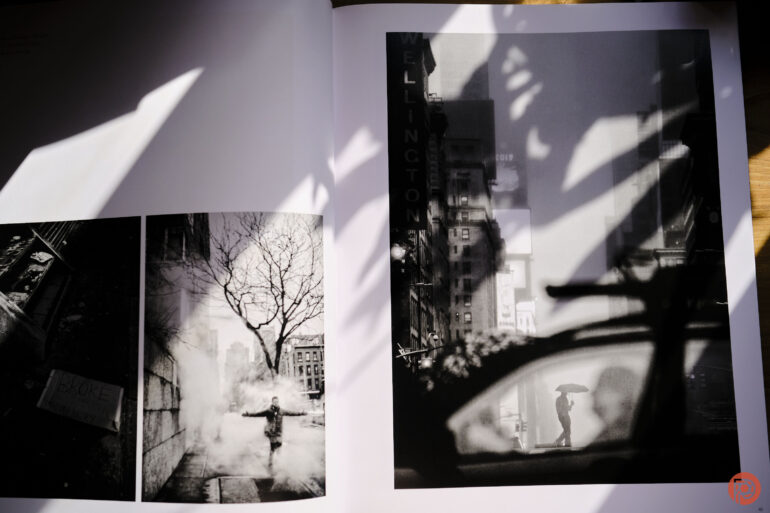
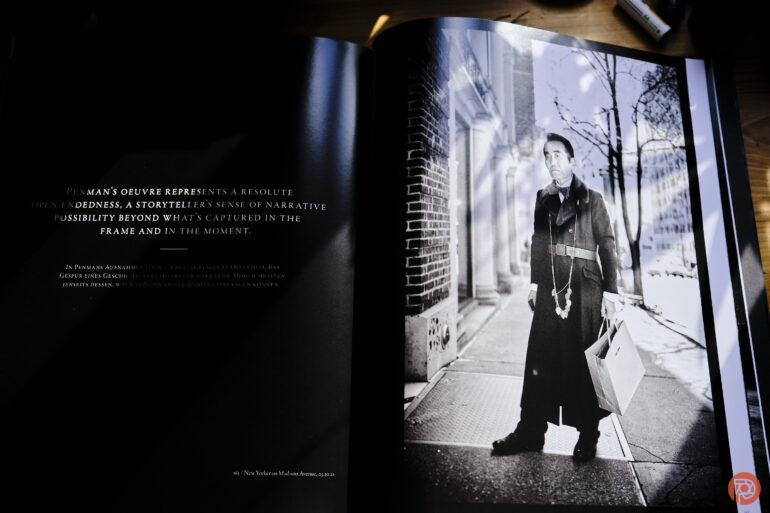
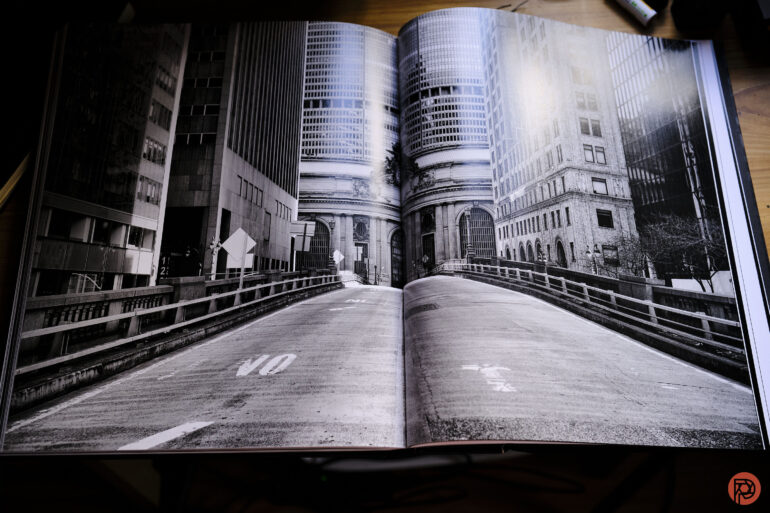
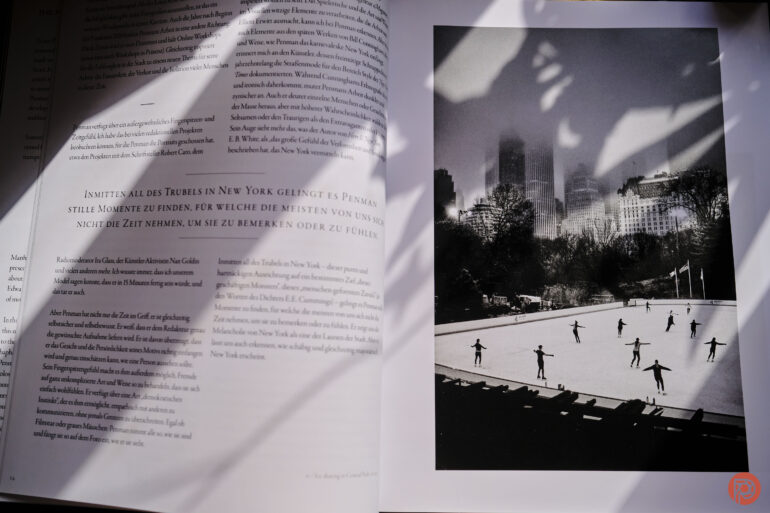
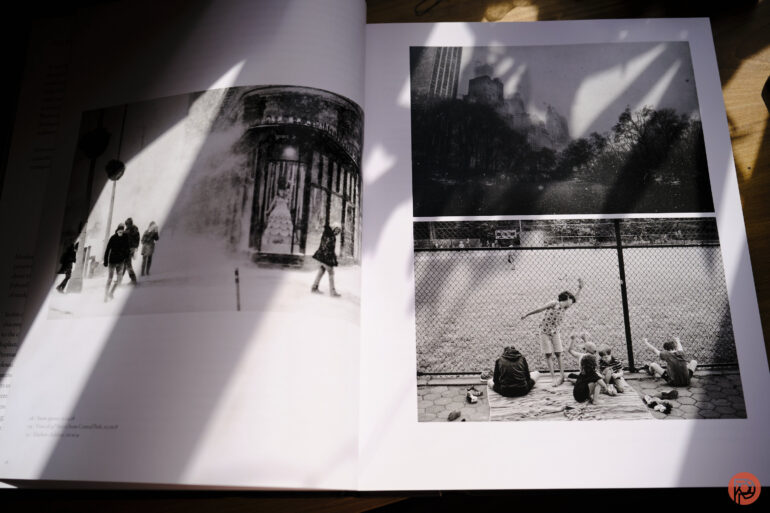
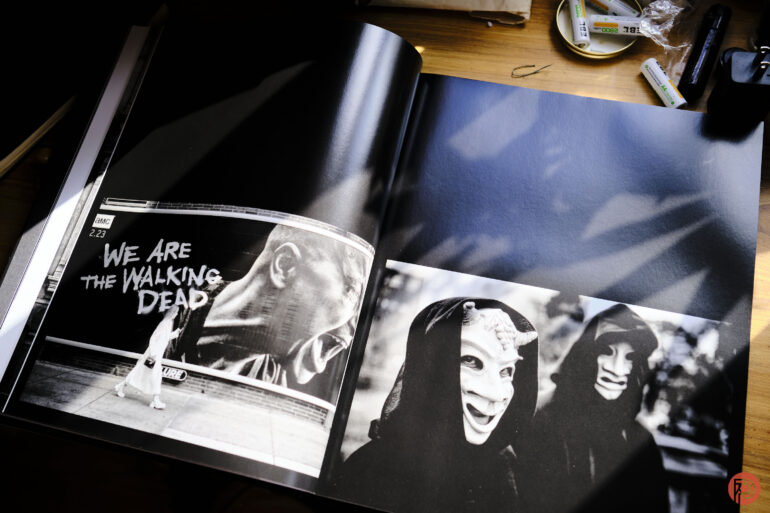
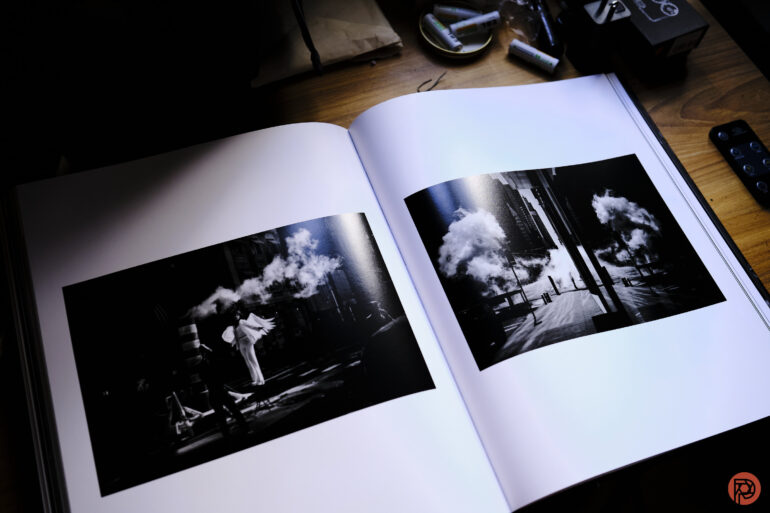
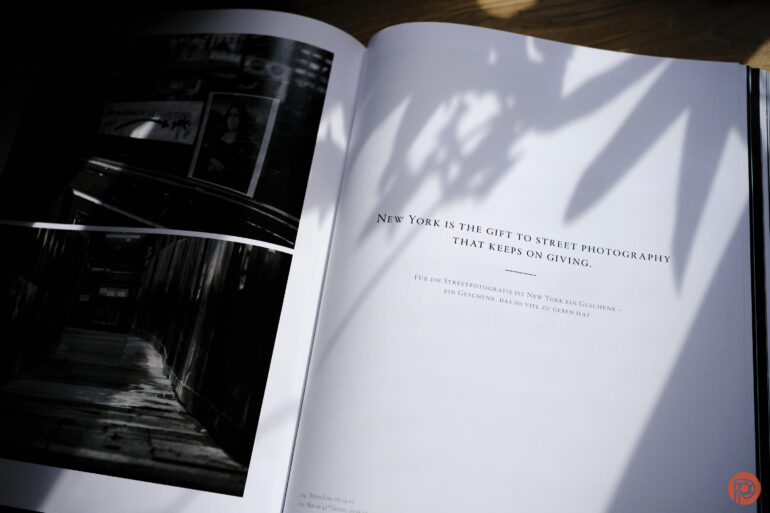
Black and white photos: check! Beautiful street photography moments that look timeless: check! Leica: check! A printed set of photographs with no advertising interruptions: checkmate! Photographer Phil Penman is no stranger to being featured in our online magazine and sharing compelling tales. His latest book, entitled New York Street Diaries, is a deep dive into the work that he’s done over the years. In many ways, this book is soul food for the street photographer.

To understand how this book is soul food, you must dive into who Phil is. Phil Penman is originally from Britain and came to America many years ago. He’s a former press photographer, and these days is mainly known in the world for his street photography work. Browse through his website, and you’ll see that he’s created several beautiful photos. But it’s in this book that you truly start to see where and how he stands out from several others. And for $50, this book is a worthwhile investment into your growth as a photographer.

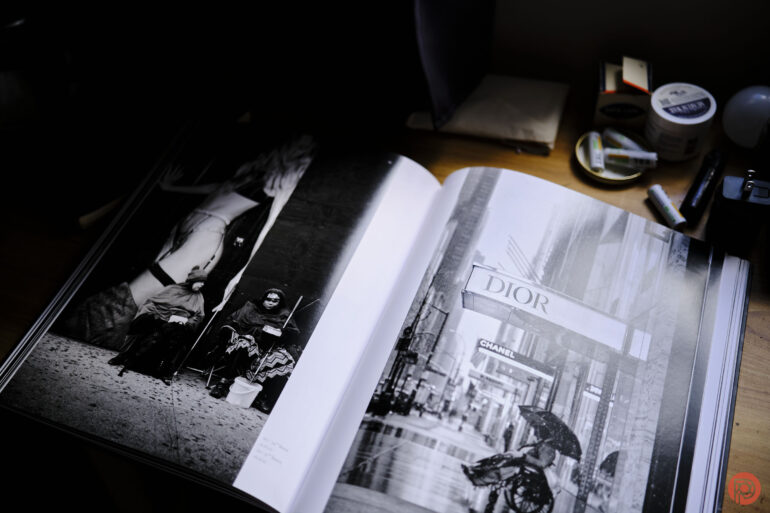
“I wanted to do a truthful portrayal of a time in our history that I hope we never have to see again,” says Phil to the Phoblographer when asked about his inspiration for the book. “From the shadowy underbelly of the homelessness and grittier NYC to the beautiful serenity of walking through the snow at night. We all have our own vision of New York, and this is mine.” He continues to state that while some think that the graffiti streets are an eyesore, it’s part of what makes the city so beautiful and unique to him. This vision is holistically seen throughout the book.

To truly savor this book, I sat down and enjoyed two glasses of nice whiskey. It’s similar to what you’d experience when you go to hang out at a meetup of photographers geeking out about their prints or something. You typically hang out, and then you get into the mode of looking at the images. These rituals are often much more fun together with someone else.

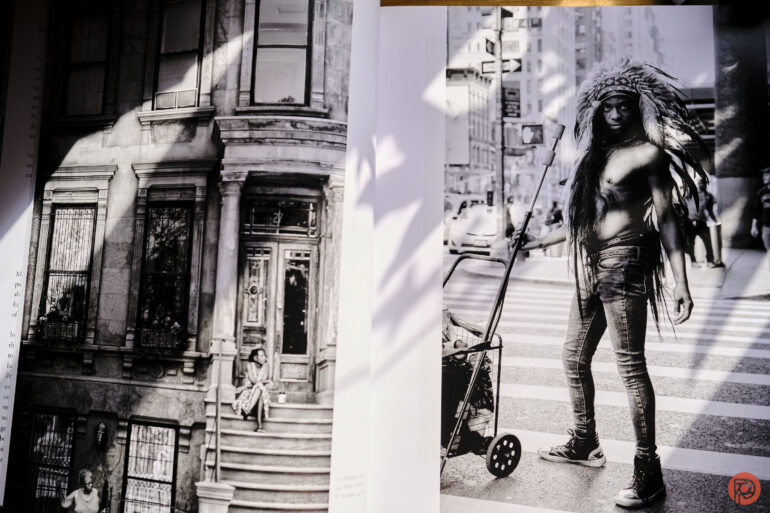
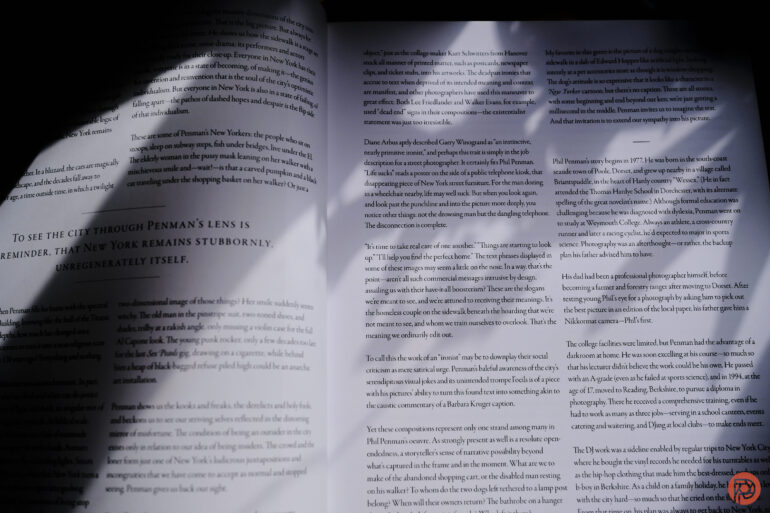
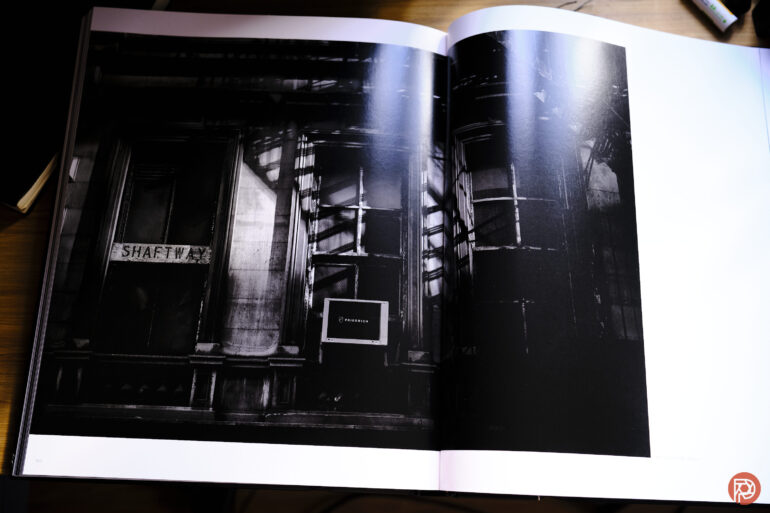
All of Phil’s photographs are black and white — and in this way, one can see him as a modern archetype for the genre of street photography or black and white work. Page through the book, and you’ll spot incredible photographs that will satisfy several camps of photographers. Fine art photographers will appreciate how Phil plays with light and contrast in his photographs. Street photographers will adore how he captures people through a lens that doesn’t at all seem like a colonial eye to the people of New York — but as a sincere admirer. And most importantly, most of the photographs aren’t split down the middle of the page break. Instead, the images are placed in a way that we can clearly see them, or they’re just vertical images that you want to stare lovingly at.

Truly, looking through the book shows you that Phil is in love with New York for what it was and what it is. I mean, isn’t this the kind of love story that we want to know about and that we yearn for? Wouldn’t you want to be holistically loved for what you are? And more importantly, wouldn’t you want to have that expressed about you? We think of New York in a way that is sometimes scoffed at. And I admit that even as a native New Yorker, I’ll scoff at parts of the city that bring me sadness for various reasons. But I also accept that those parts have also, at one time, brought me happiness. Through Phil’s book, you see nothing but admiration portrayed in a classic retelling of the modern landscape of the city and its people.

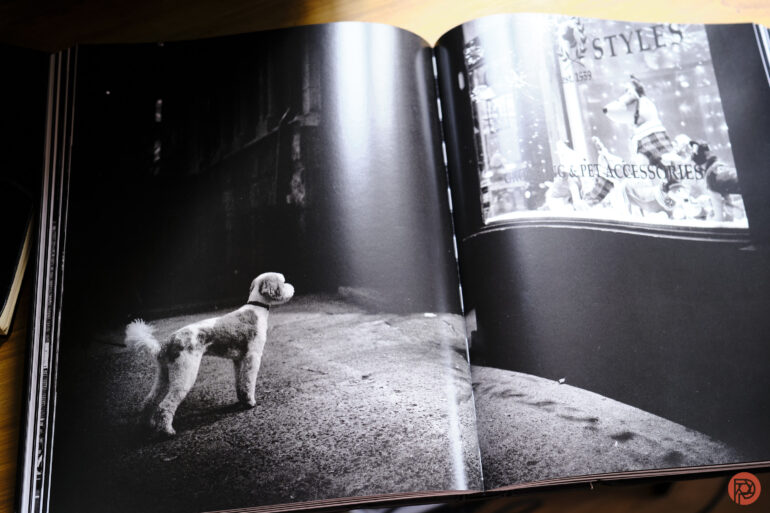
While I adore the fine art images that Phil makes, I don’t think that they’ll be the most riveting ones to people who buy this book. Phil’s best work arguably showcases people and moments that we otherwise just don’t see.

Do yourself a giant favor and get your hands on this book. And more importantly, read the text inside. It’s big enough that even someone with failing eyesight can read it easily.


Rating: 5 out of 5.

A

Phil Penman Made a Book That’s Soul Food for Street Photographers
To understand how this book is soul food, you must dive into who Phil is. Phil Penman is originally from Britain and came to America many years ago. He’s a former press photographer, and these days is mainly known in the world for his street photography work. Browse through his website, and you’ll see that he’s created several beautiful photos. But it’s in this book that you truly start to see where and how he stands out from several others. And for $50, this book is a worthwhile investment into your growth as a photographer.