About

Posts by :

F5: Alexis Hope Talks About Sexual Health, Bacteria in Design + More

F5: Alexis Hope Talks About Sexual Health, Bacteria in Design + More

Dr. Alexis Hope thrives when free to create playful experiences that help people find joy, self-compassion, and connection with others. Her practice centers on designing spaces for artistic freedom, exploration, and community support. As an experimental designer who works across disciplines, she believes that anything can be the material for creativity. Currently, Alexis is a co-founder and Chief Product Officer of focused.space, a company helping people to reach their personal, professional, and creative goals in community with others.

“My practice often involves teaching and learning, mentoring, and taking creative risks. I’m here to have fun and bring others along for the ride,” Alexis shared. “This approach turns out to be a great match for co-founding a startup, which is what I’m up to now! Our members [at focused] include a lot of creative workers, freelancers, and fellow entrepreneurs whose struggles I can really relate to. We help people feel motivated and inspired, and provide lightweight structure and support to help them make progress on their work, and feel good doing it.”

Dr. Alexis Hope Photo: Wondra

Prior to co-founding focused, Alexis spent a decade at MIT, where she received her PhD at the MIT Media Lab in 2021, working with the Lifelong Kindergarten research group. As a designer, Alexis has worked across a variety of domains – ranging from cameras for deep-sea exploration, creative learning technologies for children, artistic tools for zero-gravity environments in orbit, hackathons to improve breast pumps (…what?!), low-cost ultrasound machines for providing prenatal care in areas with limited resources, and more. She’s currently a 2023 United States Artists Fellow representing the field of Art & Design.

As a musician, Alexis taps into her creativity in another way, singing and writing songs for two bands: Calico Beach Party and Double Bitch. “I’m really passionate about making music. When I sing and play the guitar, I really feel ‘in my body.’ My mind empties and I go somewhere else for a while.”

“For me, my work and personal life are extremely fluid. I take inspiration from everything. I don’t hesitate to take a long walk in the middle of the day if I need to. I’ll spend an hour talking to a stranger. focused helps me do all of that, while also making sure I accomplish the goals that really matter to me each day, the ones that are going to move the needle. I try to be really in tune with my energy levels and important commitments each day, and ride the wave.”

Today, Alexis Hope joins us for the weekly Friday Five!

four separate images of objects on light green backgrounds

Sexual Healing Collection (clockwise from top left: Brush, Mirror, Stone, Pelvic Sensor) Photo: Nienke Helder

1. Sexual Healing by Nienke Helder

Nienke is one of my favorite designers, and her area of expertise is sexual health. She is a rare mix of empathetic, thoughtful, and casual when it comes to topics that can feel taboo. (That’s something that really resonates with me from my own work on the “Make the Breast Pump Not Suck” hackathon). Her project “Sexual Healing” really inspires me – it is a collection of sensory objects for people who experience sexual problems after a traumatic experience. They are beautiful, functional, and really change the narrative around sexual trauma and healing. The objects help people find pleasure again, tuning into and prioritizing their own sense of safety and joy. I think her approach helps people who have experienced trauma see themselves differently. Instead of being a problem to be solved, you are someone who deserves to feel good.

purple book reading Feminist Designer on a lilac background

Photo: Ali Place

I can’t wait for this book to come out. (Ed. note: The book is now available.) Ali brought together over 40 contributors from 16 different countries to explore the intersection of design and feminist theory. I contributed a short case study about one of my projects (the “Make the Breast Pump Not Suck” Hackathon), and I’m really excited to read everyone else’s contributions. It’s the perfect book to help us reimagine the role of design in shaping culture.

science project kit in red, blue, yellow, and white

Photo: Julie Legault

3. Amino Labs

My friend Julie finds a way to be creative with any material. She’s formally trained in jewelry design, electronics, leather-working… you name it, she’s done it. But over the past decade, she’s been really focused on a pretty unexpected material for design: bacteria. She runs a company called Amino Labs – they create educational materials and kits for people to invent new things with biology. You can use bacteria to engineer new smells, pigments, biomaterials, medicines, and more. Julie lives in the future and every kit I’ve ever bought from them inspires me.

person dressed in black uses light to create tracers on a black background

Photo: Jimmy Day

4. Illuminate by Chelsi Alise Cocking

Chelsi is an artist and designer who uses code as a material. At heart, she’s an experimentalist. To me, she is a constant reminder of the value of play in building a strong design practice. Chelsi uses her Instagram like a journal, sharing the small visual delights that she creates each day – you can feel the joy and learning radiating out of every pixel! She also recently completed a larger project called Illuminate, an interactive piece that brings people’s movement to life in the space. It’s so lovely.

Photo: Ron Boszko

5. Reversible Bracelet by Biba Schutz

Biba Schutz is my cousin, and also happens to be one of the most creatively inspiring women I’ve ever met. She’s in her 70s, lives in NYC where she has her studio, and makes really incredible jewelry. She has a rare combo of playfulness and hard-won technical sophistication that blows my mind. The piece above is one of her most popular bracelets, it’s a reversible (!!!) chainmail cuff with a perfect magnetic closure. I don’t know how she figured out how to make it, but it’s a dream to wear.

Work by Alexis Hope:

animated gif of a revolving paper mountain on a yellow background

Electronic paper mountain: Lights up at night! Homemade circuits and low-poly laser-cut papercraft that required way too many hours to glue together.

four abstract-shaped flesh colored blobs on a black background

Designing Monsters: Creating a visual language for (slightly cute) horror.

three brown-skinned woman proudly display their work on a project

Breast Pump Hackathon: I was co-founder and Creative Director of the “Make the Breast Pump Not Suck” project at the MIT Media Lab. This project was a series of collaborative design events that brought hundreds of people together to improve the postpartum experience.

three colorful homemade paintbrushes

Homemade Brush Experiments: Finding ways to have fun with recycled materials.

This post contains affiliate links, so if you make a purchase from an affiliate link, we earn a commission. Thanks for supporting Design Milk!

Kelly Beall is Director of Branded Content at Design Milk. The Pittsburgh-based writer and designer has had a deep love of art and design for as long as she can remember, from Fashion Plates to MoMA and far beyond. When not searching out the visual arts, she’s likely sharing her favorite finds with others. Kelly can also be found tracking down new music, teaching herself to play the ukulele, or on the couch with her three pets – Bebe, Rainey, and Remy. Find her @designcrush on social.

Indigenous designers get the spotlight at Northwest Native Fashion Show

Indigenous designers get the spotlight at Northwest Native Fashion Show

The Wednesday night show hadn’t officially started, but the crowd was already starting to giggle in anticipation as the lights lowered at the event center at the Wildhorse Resort and Casino.

THANKS TO OUR SPONSOR:

Thunder boomed over the sound system as the smoke machines whirred to life. A figure veiled in black walked the catwalk as a narrator talked about the people’s connection to the land and the work to preserve it for the next seven generations.

“We must assess our intention for mindful creation and destruction, for we are at the hands of both,” the narrator said.

Not long after, the model shed her veil to reveal a bright yellow two-piece outfit adorned with tribal jewelry. The 2023 Northwest Native Fashion Show on the Umatilla Indian Reservation had begun.

The brainchild of two Indigenous economic development officials, the fashion show was meant to spotlight Native designers who were looking to jump from the realm of hobbyist to professional fashion, their work incorporating the traditional artisanry of their tribes with more contemporary designs.

As a part of the larger Northwest Native Economic Summit, the fashion show was meant to be a part of a growing movement to support Native-owned small businesses.

And on Wednesday, that movement walked the catwalk.

‘Dedication to their craft’

The first inklings for the fashion show came when Jacob Wallis was young

A member of the Confederated Tribes of the Umatilla Indian Reservation with Yakama and Niimiipuu heritage, Wallis was given the Native name Watáy — summer ermine — by his grandmother. He remembered that his family often got together to make clothes for variety shows at their church.

Wallis said he still has VHS tapes showing the clothing made at these family gatherings, “department store” quality in his eyes. Some of those family members died before they could be recognized for their talents, he said.

“I’ve always felt kind of sad that they passed away (with) people not really knowing their work and their dedication to their craft,” he said. “I’ve always envisioned there being some type of platform that we can have for those creatives to be able to shine … more than just, ‘Oh, we just did it for a variety show in a backyard’ situation.”

Those plans solidified after he met Casey Pearlman. Both Wallis and Pearlman work in tribal economic development — Wallis as the business services manager for Nixyaawii Community Financial Services on the Umatilla Indian Reservation and Pearlman as the director of business development at the Affiliated Tribes of Northwest Indian Economic Development Corp. in Portland.

The pair were at a training summit in Portland last year and Pearlman had helped organize a reception at the Center for Native Arts and Cultures. Wallis found himself inspired by the space and quickly found an ally in Pearlman.

“He kind of sashayed across the room and he looked around,” Pearlman recalled. “He said, ‘Did you plan this?’ And I said, ‘Yep.’ He said, ‘Oh, this is great. We should do a fashion show in here.’ And seven months later, we had our first fashion show here in Wildhorse.”

The first show was planned on a tight timeline for a small audience. Intended to act as a reception for the business summit, the first fashion show brought in 75 people.

THANKS TO OUR SPONSOR:

With more time to plan the second show, Wallis and Pearlman upped their ambition. This year’s event still coincided with the summit, but it was open to the general public and ticketed separately. Three hundred people attended.

Wallis was motivated to put on these shows because he wanted to demonstrate to Indigenous creators that their clothing and crafts didn’t just have cultural or personal value, but monetary value as well. Visitors bought dozens of items displayed on the runaway last year, Wallis said.

Pearlman said they were also intentional in the way they planned the event. Not only were the designers Native, but also the DJ, makeup artists and hair stylists. Many were from the Columbia plateau tribes: the CTUIR, the Confederated Tribes of Warm Springs, the Nez Perce Tribe and Yakama Nation.

“To put plateau designs made by plateau artists on a runway and for sale here, and just kind of model how these people deserve to be treated,” she said. “We’re happy to be that role model for the broader community.”

The pair can see the event expanding as a source of inspiration for other Native fashion shows on other reservations.

Wallis said the rise in Native designers and other tribal small businesses can be viewed as an expansion of tribal sovereignty.

“Our sovereignty has pretty much been limited to tribal enterprise and in tribal government, but we have so much more to develop. I think there’s been this level of hesitancy,” he said. “But the time is now and we’re making sure that we’re capitalizing on that.”

Self-reliance

Dave Tovey remembers when elders used to tell other tribal members that the Great Depression never reached the Umatilla Indian Reservation.

While many tribal members may not have had traditional employment, the director of Nixyaawii Community Financial Services said they still could rely on their traditions for subsistence and other needs. Tovey said his grandmother used to feed dozens of migrants who were traveling through Eastern Oregon looking for work.

As an economic development official who works for the CTUIR, Tovey said he’s looking to cultivate a similar spirit of self-reliance in the modern tribal economy.

“We need to make sure that, should the rest of the world fall apart, we still have a lot of the tools here to be self-reliant and keep our community safe and fed and secure,” he said.

Tovey is also the president of the Affiliated Tribes of Northwest Indian Economic Development Corp. and helped bring this year’s economic summit back to Wildhorse. He sees the fashion show as a natural extension of that spirit.

Nixyaawii provides both consumer and small business loans to tribal members, but he said much of the economy in Indian Country is still informal.

“I think there’s a lot of stuff that happens on the reservation that’s not a recorded economy. [It’s] a lot of trade and a lot of other things,” he said. “We’re at that point [where] we’re trying to help people identify those areas and help them along that route.”

When Wallis and Pearlman contacted potential designers for the show, many of them saw themselves as hobbyists rather than professionals.

A member of the CTUIR, designer Melinda Broncheau’s career got started out of necessity when she couldn’t afford to buy her children traditional clothing as a single mother. She relied on the traditions taught by her mother and grandmother and taught herself techniques if there was something she didn’t know.

“I think that mindset is a designer person,” she said. “If there’s something you want, and you put your own little spin on it, it’s your design now.”

With the help of Nixyaawii, she was able to open her own business, Ruby’s Indian Supplies and Crafts, during the COVID-19 pandemic.

Broncheau was excited to show off her wares at the fashion show Thursday, even if she didn’t want to bask in the spotlight. After the models finished showing off her clothes, she kept her curtain call brief as the audience serenaded her with applause.

THANKS TO OUR SPONSOR:

Mastering Customer Engagement Strategies: The Art of Cultivating Brand Loyalty

Mastering Customer Engagement Strategies: The Art of Cultivating Brand Loyalty
[embedded content]

The Gist

  • Empowering brand enthusiasts. Harness the organic advocacy of brand enthusiasts within local communities as a potent strategy for cultivating a lively brand connection with customers.
  • Crafting localized immersive experiences. Prioritize authentic, localized experiences over generic global marketing campaigns.

Fostering brand allegiance and enhancing customer interaction is always the goal. The best path’s just not always clear.

It requires connecting to customers on a deep, personal level and simply knowing where their passion is, was and is likely to be. Brand loyalty is often found nestled within these nuanced customer engagement strategies.

Sounds easy, right? It isn’t. It takes work connecting with customers on a level beyond support and commerce transactions. How do you truly connect with your customers in a non-transactional way?

Justin Racine, CMSWire Contributor, recognizes these personal customer connections can lead to great customer engagement strategies. He catches up with us today with another awesome personal tale spanning yesteryear and today and gleans important customer experience business lessons. The video interview stems from Racine’s article on brand loyalty via early memories of Porsche enthusiasts — including he and his Dad, as Justin recalls taking rides in a Porsche with his father behind the wheel. He’s now a brand enthusiast that loves going to car shows years later.

The conversation in the video interview unveils:

  • Brand Enthusiast Harnessing: Channeling the organic advocacy of brand enthusiasts, within the core of communities, as a channel for nurturing a vibrant brand environment.
  • Local Experiential Cultivation: A maneuver toward fostering local communities, where authentic real-life encounters overshadow the appeal of traditional marketing campaigns.
  • Dialogue-Driven Engagement: Transitioning from monologues to dialogues, where insights gleaned from engaged communication sculpt experiences that reverberate with resonance amongst customers and potential brand enthusiasts.
  • Sensory Engagement Venture: A journey toward crafting memorable moments, engaging human senses and forging deeper brand connections.
  • Social Media Storytelling: Unraveling authentic brand enthusiast narratives on social media platforms.

The myriad facets of these strategies reveals a common thread: the quest for authentic, meaningful interactions that lay the cornerstone for enduring brand loyalty and vibrant customer engagement strategies.

Let’s dive more into these customer engagement strategies that can lead to brand loyalty:

Leveraging Brand Enthusiasts

Brand enthusiasts, with a lens on the automotive industry, can act as organic brand ambassadors within their communities. This form of organic advocacy, Racine suggests, connects people with a brand beyond traditional marketing and customer support and customer experience campaigns.

“Not only do they drive the vehicle, but they embody what it means to represent that brand,” Racine said. “They make their vehicle uniquely their own, and it becomes a part of their personality. And it’s a representation of who they are. And because of this, these auto manufacturers are now starting to embrace these enthusiasts even more through social channels. … And really embracing the idea that these folks are not only brand ambassadors, but they’re also helping them sell cars.”

Brand enthusiasts go to car shows and extol the virtues of the latest features and models their favorite brands offer. Not only that, they connect with people who may be in the entry levels of brand enthusiasm and inspire them to maybe buy a vehicle of their own, Racine added. 

Brands can emulate the concept of the car show by creating communities of customers, where brand enthusiasts inspire one another on a deep, personal level. You can’t replace consumer-to-consumer interactions where brand enthusiasts interact, and “you can actually tangibly feel the passion that this person is articulating with their words and their actions and their body language.” That’s more than any salesperson can do, Racine said, adding, “and I think a lot of the automotive organizations are realizing that the power of enthusiasts is so strong that they should tap into it, because it’s helping them sell vehicles, and it’s helping them create customers for life.”

The takeaway for brands: any brand is capable of curating an enthusiast group.

Related Article: 10 Guaranteed Ways to Improve Customer Satisfaction

Localized Immersive Experiences

With a personal anecdote of a Porsche event as a backdrop, Racine delves into the essence of crafting localized, immersive experiences. He sees a shift of focus toward nurturing local communities, placing a premium on authentic, real-life experiences over generic, global marketing campaigns — ultimately leading to stronger customer engagement strategies.

“And I think that’s what you’re going to continue to see in the automotive space, of course, but this is also going to push into other verticals as well,” Racine said. “And if your brand can adopt this mindset, and start to build some of these immersive interactions, and looking more local versus global … global campaigns are important for marketing, of course. But if you can focus the locality of the people within the community, and tap into different organizations that already have the finger on the pulse of what’s important to them, the dividends will provide massive amounts of uplift for years to come.”

Related Article: Brand Loyalty: Cars, Coffee & Exceptional CX

Two-way Communication and Customer Engagement

The conversation with Racine also covers shifting from monologues to dialogues with customers, shedding light on the significance of two-way communication. Racine suggests gleaning insights from engaged communication, especially through the lens of customer service and sales personnel, to tailor experiences that resonate. 

The best way to leverage this? People on the front lines. In B2B settings, you have customer service and sales, and “they’re the tip of the spear on the front lines to the sentiment that customers are providing,” according to Racine. “And I can guarantee you today that they know of two or three or four or five different people that they’re servicing that are enthusiasts or brand advocates.”

They love ordering from a particular salesperson. Or a particular technologist within the brand helped them build some new features on the website.

“And they feel heard by the B2B organization,” Racine said. “There’s a dialogue. We don’t want to have a monologue. We want two-way communication. … Even in a B2B organization, folks will tell you how they’re feeling. And that’s a great way to start. And once you’ve identified these folks, it’s really then just enabling them. How can their story become a part of your story?”

Appealing to the Five Senses

Racine foresees a movement toward experiences that speak to human senses. He references his earlier tale on Corona beer, elaborating on how brands can create indelible memories by engaging the senses, a pathway he believes leads to more immersive in-store experiences, fortifies the brand connection and creates solid customer engagement strategies.

“That is a perfect example of what we’re going to continue to see in the customer experience space,” Racine said. “We as consumers, or really we as human beings, have five senses. And when all of them are appealed to in a way that meets and exceeds our expectations, we really have a good experience. And I think brands are starting to do that more with immersive experiences within stores. Before you buy that new stainless steel pan to cook on, why not come in and take a cooking class and see how it can be used?”

Curate experiences within your brand communities that are focused around the five senses. And if you can do that effectively, you’re going to create customers for life, according to Racine. “That’s what I’m focused on,” he said.

Related Article: Embrace Multi-Sensory Customer Experience, Just Like Corona Does

Cultivating Loyalty: A Harmonic Convergence of Engagement Strategies

In conclusion, clearly not all brands can gather consumers around the calendar year in one room showing off great products like a brand like Porsche can. That’s why Racine mentions online communities and avenues like online reviews and social media as a conduit for narrating authentic stories of enthusiasts, a potent marketing tool in his view. Brands like Porsche are now narrating real enthusiast stories on their platforms, etching a more authentic and relatable brand image to work into your customer engagement strategies.

The landscape of customer engagement strategies is akin to a fertile ground where the seeds of brand loyalty and enriching customer experiences are sown. The narrative underscores a shift toward more authentic, localized and immersive strategies, each chord playing a symphony that resonates with the modern consumer.

“At the end of the day, you’re only as strong as your last best experience,” Racine said. “So why not continue to curate experiences in the way that customers want, and what customers want is to be able to relate and connect and have communication with other people who are like-minded.”

UA Little Rock to Host Street Photography Exhibition – News

UA Little Rock to Host Street Photography Exhibition – News

UA Little Rock will host a pop-up exhibition of street photography by Jacobb Nichol from Oct. 9-13.

The exhibition, which is free and open to the public, will be held in the Focus Gallery in the Windgate Center of Art and Design. It will feature the street photography of Nichol, a senior mass communication major with a journalism emphasis from Little Rock. The exhibition highlights 12 photographs Nichol captured while “beating the streets taking candid photographs of people in street settings.”

“I started street photography to capture the raw emotions that are presented on the streets, the times where people let their emotions come to the surface instead of masking them,” Nichol said.

Nichol said that his street photography project was greatly impacted by the loss of a loved one.

“I lost someone important to me, and taking photos allowed me to escape from the hardship, where I could think and reflect on life’s choices and the reason I am taking these photographs,” he said. “I found the reason is that these photos are a source of motivation in seeing life in the moment, being present in times of precious moments, and freezing them for further reflection. I hope the viewers will see what I felt in these photographs and get a sense of how I viewed the world while making them. I hope they can see that life is precious and fragile, and being present in the moment is the goal of life.”

The UA Little Rock Art Galleries in the Windgate Center are open from 9 a.m. to 5 p.m. Monday through Friday, 10 a.m. – 1 p.m. Saturday, and 2-5 p.m. Sunday.

For more information, contact Nathan Larson, interim art gallery director and curator, at 501-916-5104 or nglarson@ualr.edu.

Share this Post:

Sunbath: Film Photography, the Cinematic Version

Sunbath: Film Photography, the Cinematic Version

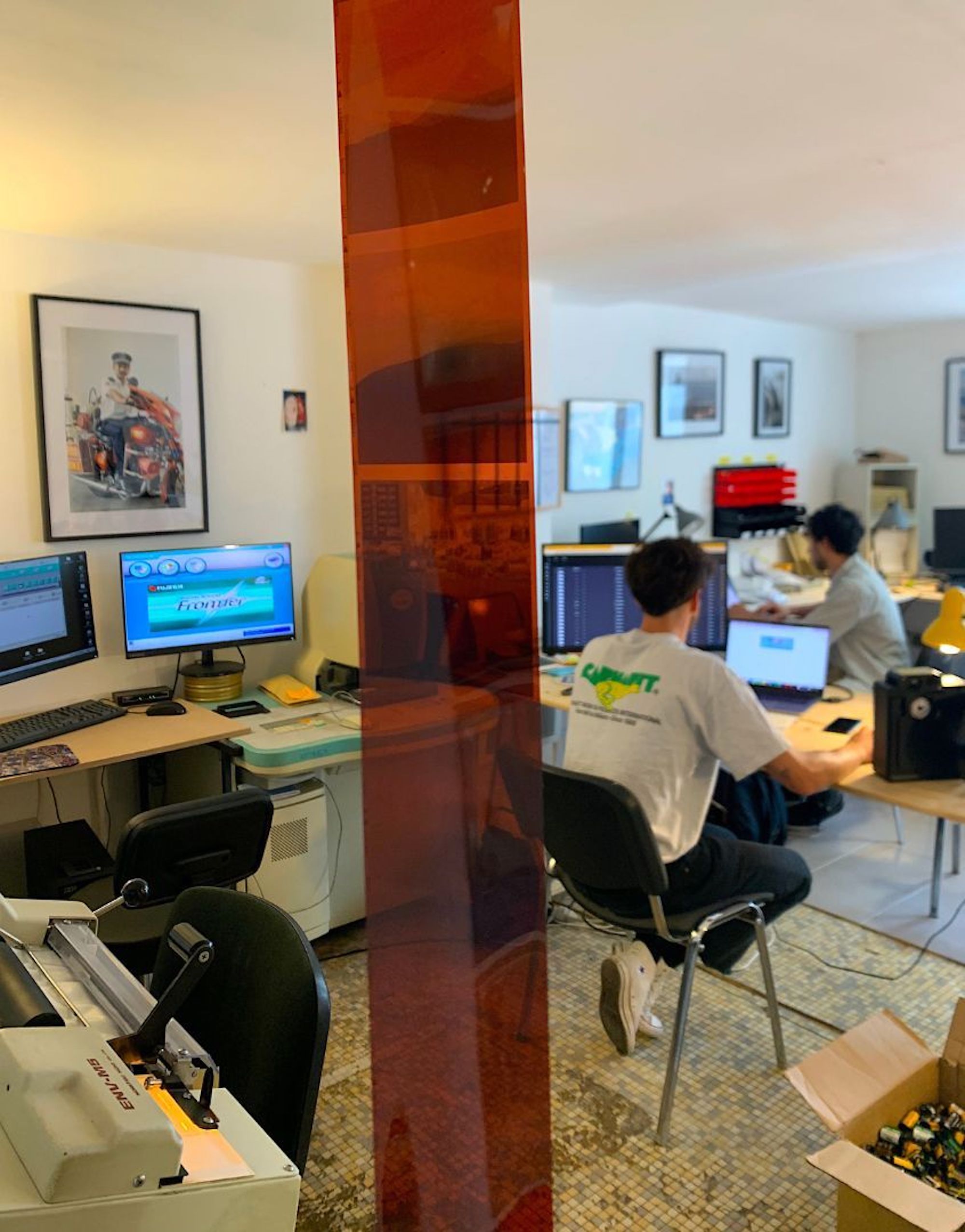
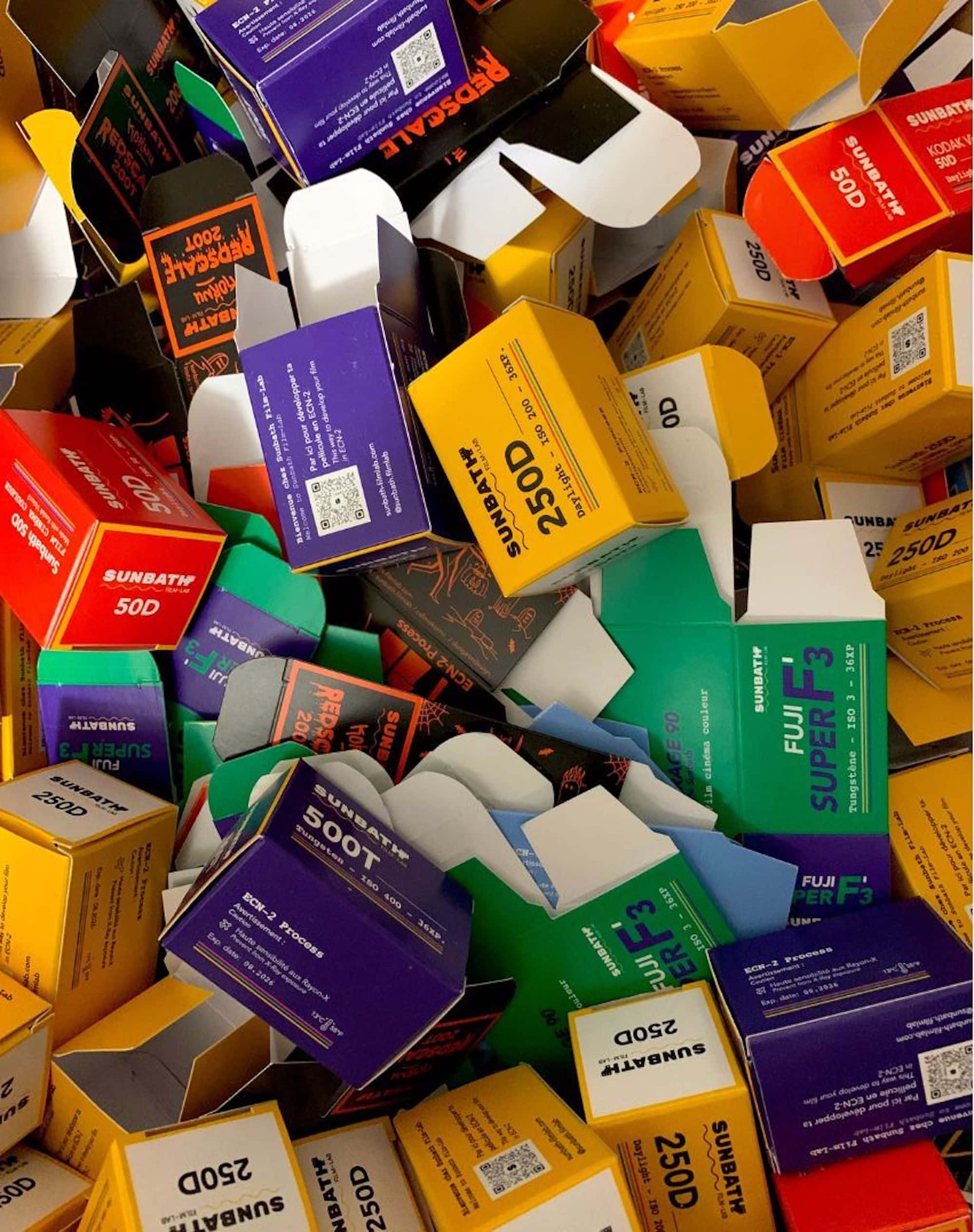
Off the beaten path at the Rencontres d’Arles, Maxime, Léo, and Valentin sell their color film rolls at a small makeshift stand. These film rolls, encased in pastel-colored cardboard boxes, are unique: they were handmade using repurposed cinematic film.

The project began with Valentin and Maxime Tanchaud, two brothers passionate about analog photography. To economize, the duo decided to buy 300-meter reels of cinematic film fresh off the factory line. Donning lab coats and gloves, they set out to breathe a new life into this film. Some extensive research and experimentation later, the project expanded, giving rise to Sunbath Filmlab.

Chemistry 101

Sunbath’s laboratory is located in Pantin, near Paris. Inside, there’s no darkroom; instead, a Noritsu developer takes center stage. User-friendly and efficient, this machine can quickly process a large number of 35mm films. However, cinematic films are a different story; they come with a layer of remjet, an anti-halation and antistatic coating. These films require a special manual process: ECN2 and C41 development.

Drawing inspiration from cinematic film development techniques and adapting them for photography, Sunbath has made ECN2 development their signature method. “You have to be ready to slip your gloves back on and really get hands on with the chemistry,” says Maxime. “There are other labs that work with cinematic film, like CinéStill. The big difference is that they remove the anti-halo layer, which is essential for the film’s color balance, so that their film can be developed using the C41 process by any photo lab.”

The Sunbath lab in Pantin
The cinema films that pass through Sunbath are processed by hand using film-specific chemistries.

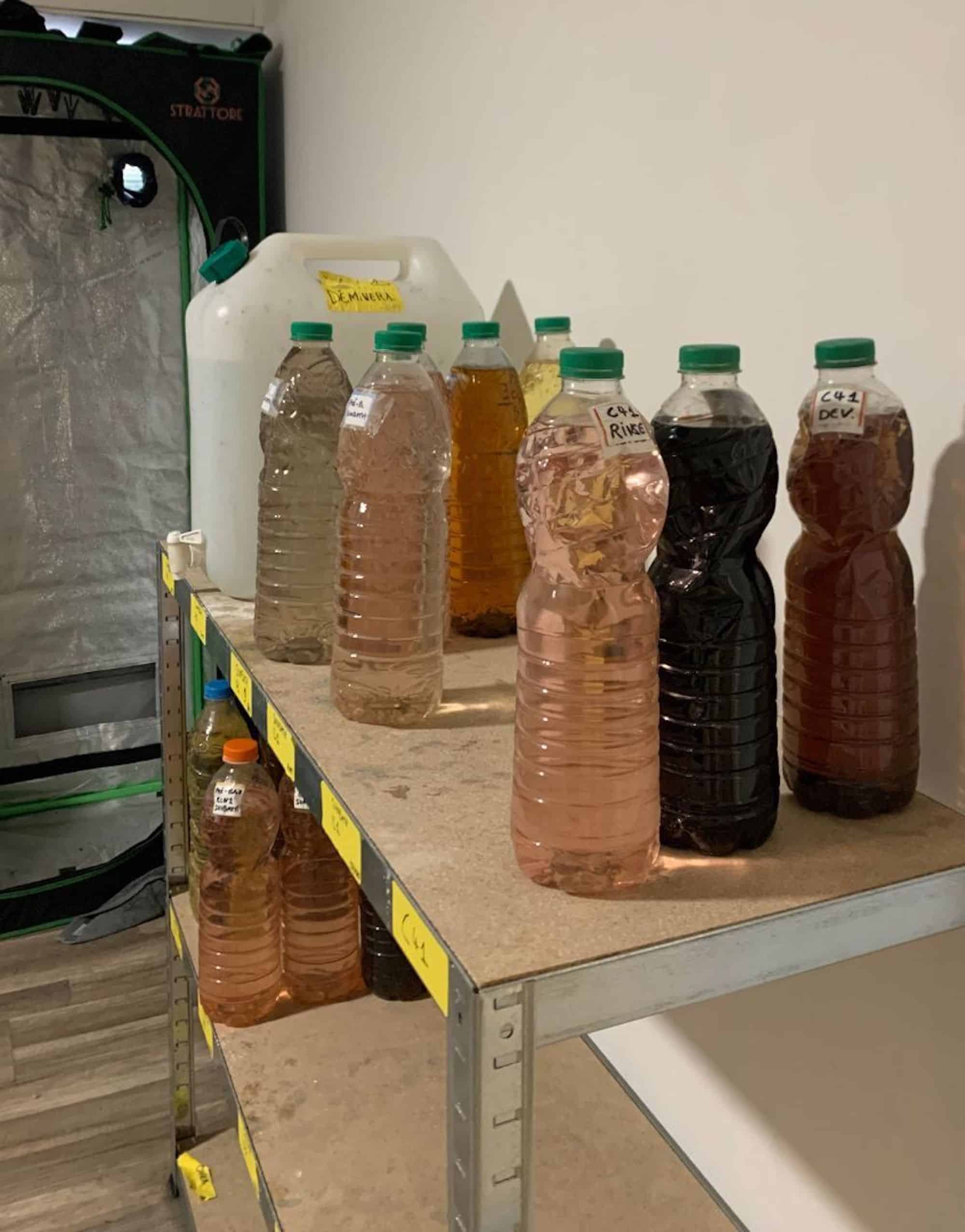
At the back of the workshop, films, tanks, dryers, chemicals, and dilutions sit side by side. Everything goes through a Jobo processor, a kind of temperature-controlled vat equipped with a motor for alternating rotation of a developing tank. Valentin meticulously explains each step as if it were a culinary recipe: “You have to be precise, calculate the temperatures for the water bath, mix and renew the chemicals to maintain their effectiveness, and adjust the dilutions according to volume.”

It takes skill, but above all, patience, Valentin acknowledges: “ECN2 development is done in five baths. The entire cycle, from spooling to development, takes about an hour and a half, plus another two to three hours for drying.” In contrast, Valentin shows a machine and explains how much simpler C41 development is: “You load your films, and in nine minutes they’re dry and ready to scan. It’s old equipment, but it’s a joy to use. It saves an incredible amount of time.”

100% handmade

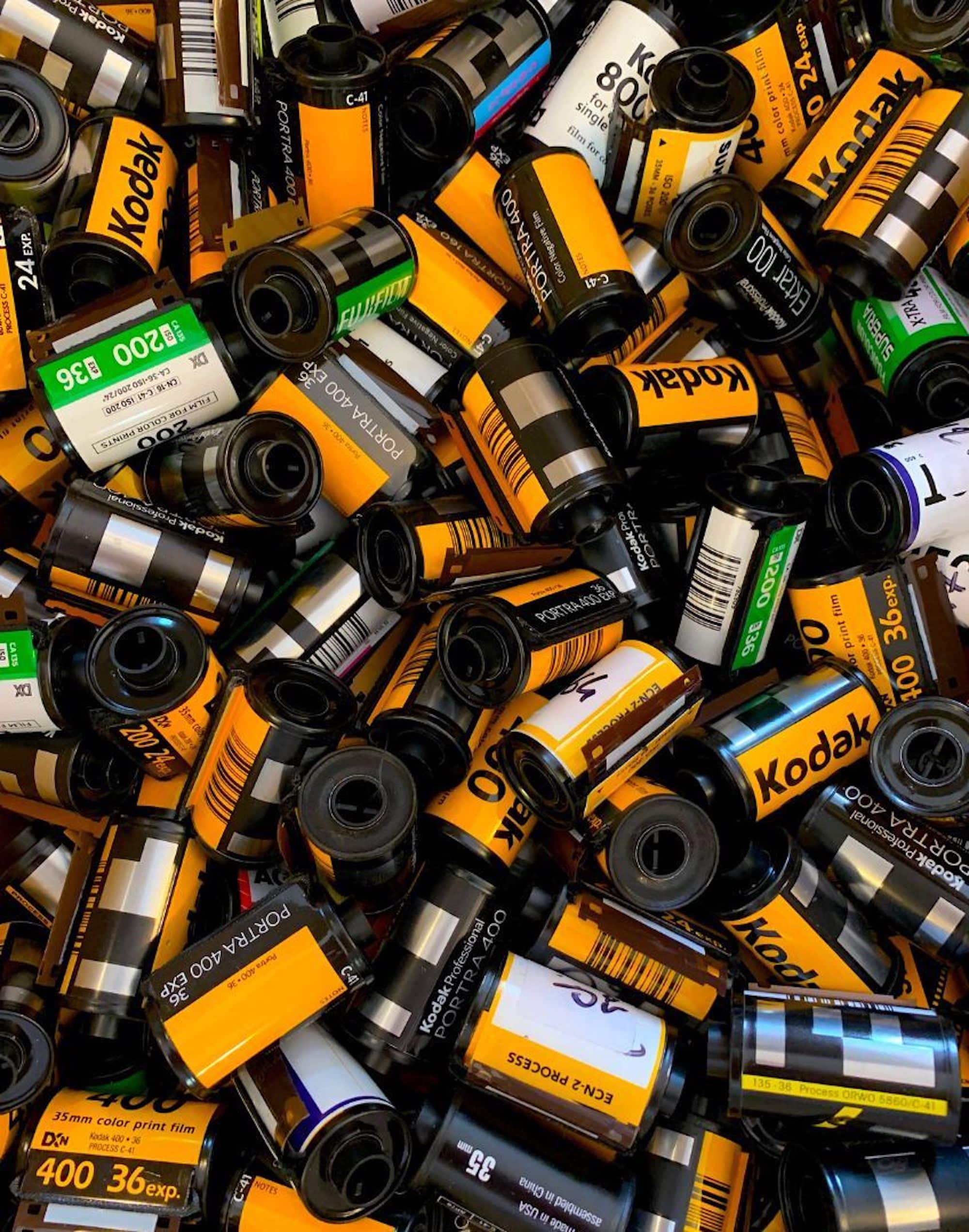
Self-taught and self-sufficient, the creators of Sunbath do everything themselves. This includes not only developing the film but also the work of cutting and packaging. They prepare their own 35mm film rolls, winding them onto spools in recycled cartridges stamped with the Sunbath logo. They even built their own website using Squarespace, launching it before even formally establishing a business. “In the beginning, we started developing in our own sink. The first month we made 1000 euros in revenue!”

“We learned accounting, logistics, marketing…” Maxime recalls. “We didn’t outsource anything. We couldn’t afford it anyway. We figured, why not take an extra month or two and create something truly reflects who we are?” To do so, the two brothers learned as they went along, via discussion groups or with the help of more experienced friends. “We mostly learned thanks to people who were interested in our project. Even today, people come along and offer us tips and advice.”

Sunbath Filmlab collects film cartridges for reuse
Sunbath Filmlab packaging is also collected after use for recycling or reuse.

In addition to cinematic film still produced today, Sunbath is continually seeking innovation. And they don’t shy away from seasonal offerings. For Halloween, they released redscale film that produces orange-reddish results. Last summer, they launched limited-edition disposable cameras. “We’re pretty insatiable; as soon as one project is done, we’re on to the next thing.”

Sunbath is much more than your plain old photo lab: it aims to create a community, showcasing the photos of its members on its online gallery and on Instagram. The owners are even considering hosting physical exhibitions to promote their cinematic film rolls and the photographers who use them. “We’ll be back at Arles next year, but this time with an exhibition.”

Photo with Sunbath 50D film by Maxime Peschard
Photo with Sunbath 200T film by Louise Boyé Della Giustina
Photo with Sunbath 250D film by Alexandre Cornille
Photo with Sunbath 500T film by Océane Entfellner

Learn more about Sunbath Filmlab on their website or at 22, rue Beaurepaire, Pantin.

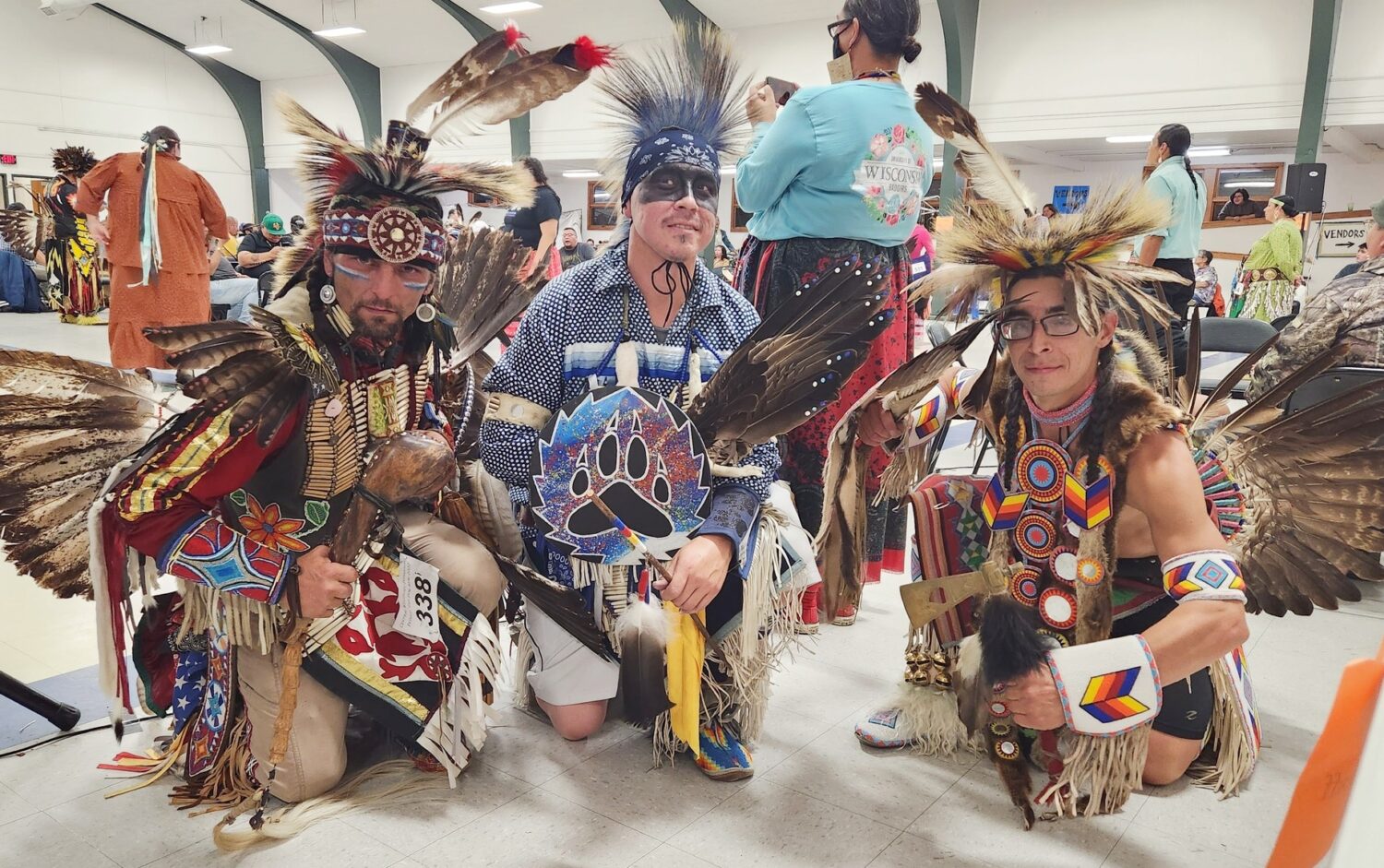
3rd annual Central Wisconsin Indigenous Peoples’ Day Pow Wow & Native American Art Market returns this weekend

3rd annual Central Wisconsin Indigenous Peoples’ Day Pow Wow & Native American Art Market returns this weekend
Last year’s Central Wisconsin Indigenous Peoples’ Day Pow Wow
(Photo: Central Wisconsin Indigenous Peoples’ Day Committee)

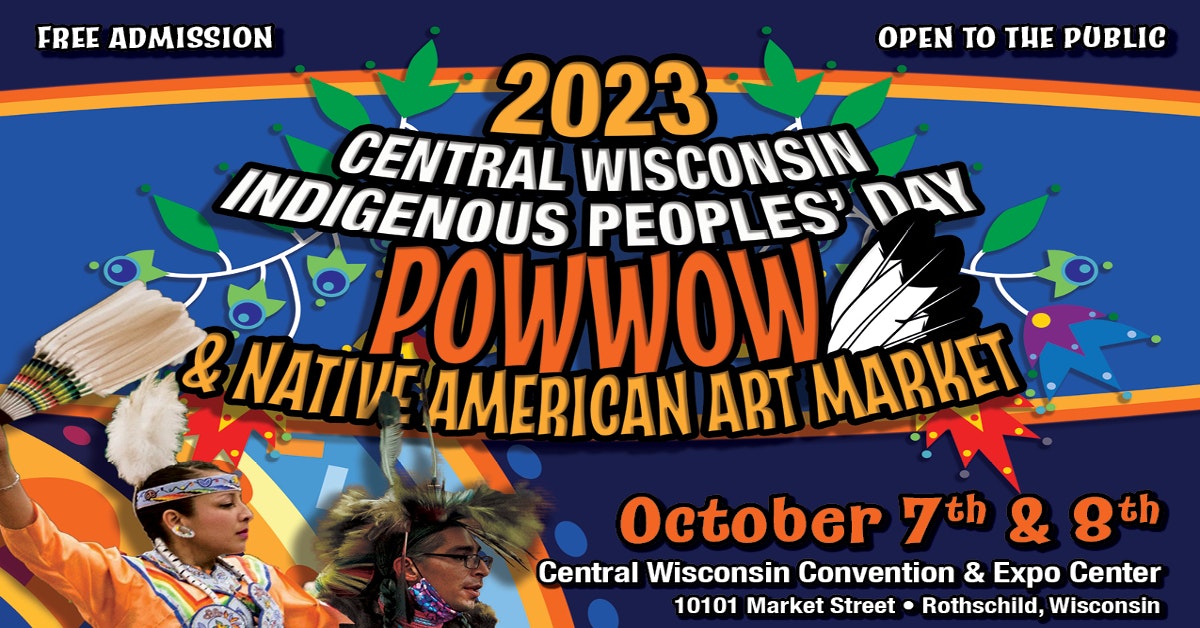
The Central Wisconsin Indigenous Peoples’ Day Pow Wow & Native American Art Market in Rothschild, Wis., is returning this weekend. Hosted by the Central Wisconsin Indigenous Peoples’ Day Committee (CWIPDC), this event is currently the only Native American event in Marathon County. In addition to music and dancing, there will be over 30 Native American craft vendors and food vendors at the event.

“The Indigenous Peoples’ Day Pow Wow is a fitting way to celebrate our continued existence, way of life, and contributions to greater society; we’re still here,” said CWIPDC founding director and Ho-Chunk tribal member Tricia Zunker in a statement. “It wasn’t that long ago that our people couldn’t sing our songs or gather publicly to dance — only in 1978 was this right restored. We invite the community to join us and enjoy the beautiful dancing and powerful music and to support the Indigenous artisans.”

CWIPDC was formed in 2019 to organize this annual pow-wow in celebration of Indigenous Peoples’ Day, the second Monday of October.

The event will be held at the Central Wisconsin Convention and Expo Center, 10101 Market Street, in Rothschild on Saturday and Sunday. Rothschild is located approximately two hours straight north of Madison. Grand Entry is at 1 p.m. and 7 p.m. on Saturday, Oct. 7 and at noon on Sunday, Oct. 8. A traditional feast is offered at 5 p.m. on Saturday, Oct. 7.  Admission is free for the Central Wisconsin Indigenous Peoples’ Day Pow Wow & Native American Art Market and it is open to the public.

Sponsors for this event include Ho-Chunk Nation (gold sponsor); Forest County Potawatomi (gold sponsor); B & A Esther Greenheck Foundation (bronze sponsor); Democratic Party of Wisconsin (bronze sponsor); Connexus Cares; Lac du Flambeau Band of Lake Superior Chippewa Indians; Ho-Chunk Gaming-Wittenberg; Wisconsin Public Radio; Wausau Pilot & Review; and the Victor & Helen Geisel Foundation.

Bound to inspire

Bound to inspire
The Santa Fe Book Arts Group is holding its “Celebration of the Book” event at Santa Fe libraries throughout the month of October.

Victoria photographer relives memories through photography

Victoria photographer relives memories through photography

When Ingrid Kabela first arrived in Victoria from Germany in the early 1960s, she experienced culture shock. Everything from the wide-open roads to the different types of bread available at grocery stores, it was a completely different environment from her hometown in Hochspeyer, Germany.


Seagull

Seagull on the wall of Cathedral Mont St. Michel, St. Malo, France.


“When I came [to Victoria] the first time it was so different, that is hard to imagine somebody from Europe to come to rural Texas,” Kabela said.

#placement_588509_0_i{width:100%;margin:0 auto;}


Ship

Ship off the coast of Argentina on the way to Montevideo, Uruguay.


Brittany

Coast of Brittany, France in August 2019.


Kabela first started her journey with photography after her husband, Edward Joe Kabela, a U.S Army soldier, bought her a camera after a tour in Korea. Through her husband’s military duties, Kabela traveled all around Europe, taking her camera everywhere she went. She documented her family’s travels and through this she fell in love with photography.


Easter egg hunt

Sandra and Michael Kabela at an Easter egg hunt in the forest of Hochspeyer, Germany, Easter 1969.


JFK

John F. Kennedy at Armed Forces in South Naples, Italy in July 1963.


“Travel and photography has always been my passion,” Kabela said.

“You have something tangible to look at to refresh your memories and the many happy moments that you’ve had in life.”


Buckingham Palace

Buckingham Palace, London, England during Easter 1972.


Kabela memorializes her trips and memories through making her own photo books that feature a comprehensive number of images that she’s taken over the years.


Chapel

Chapel close to Marfa.


Since 1976 Kabela has settled down in Victoria, but she makes time for traveling across the country and abroad.

The Victoria Photography Club helps encourage Kabela to look back through her work and relive lifelong memories.


Grindlewald

Grindlewald, Switzerland.


Alpine Glowing

Alpine glowing.


Lake Fandango

Lake Fandango, tip of Argentina in Patagonia, 450 miles from Antarctica.


“Photography gives you the opportunity to relive the happy and sometimes sad memories, she said.”