About

Posts by :

‘It gave such comfort’ – loss of Sycamore Gap tree touches lives

‘It gave such comfort’ – loss of Sycamore Gap tree touches lives

EPA/EFECopyright: EPA/EFE

“It’s so grim, I felt sick, as so many people did, when I saw
it,” says writer and environmentalist Prof Robert McFarlane.

“It was a film star, it was a tree that ashes
were scattered under, marriages were made under it, it was a shelter for tired
walkers.”

He points out that it was chopped down on the eve
of the State
of Nature report
‘s publication – an audit of how things are faring
for the living world in the UK.

“Nature is under attack and has been for a long time in these
islands,” he said, adding: “We have not looked after our woods well.”

But he added: “When you lose something like this, what a response
it’s pulled out – grief, poems, paintings, drawings, photographs, stories and
memories.

“The question is how do we now use that strength of feeling and
turn it to the good?”

Eiteljorg Museum provides updates on upcoming exhibits

Eiteljorg Museum provides updates on upcoming exhibits

More than $1 million in Western American art was recently sold at the 18th annual Eiteljorg Quest for the West Art Show and Sale that ran  Sept. 8-9. About 200 artworks from the recent sale, including paintings and sculptures by the Quest for the West artists, remain on view at the Eiteljorg Museum for the public to see.

The Quest for the West public exhibition runs through Oct. 8, and is included with regular museum admission. A curator-led gallery tour of the Quest for the West exhibit takes place at noon Oct. 6 and is included with regular admission; museum members get in for free.

The Eiteljorg Museum will host the Indigenous Peoples’ Day Community Celebration with artists, storytelling and cultural presentations from 10 a.m. to 5 p.m. Oct. 7, with regular admission. Then on Oct. 9, admission will be free for Indigenous Peoples’ Day.

Looking ahead to the fall, the Eiteljorg, in partnership with Arte Mexicano en Indiana, has a series of exhibits and events related to Día de Muertos (Day of the Dead).

From Oct. 14 to Nov. 19, the museum will host an exhibition by Vincennes-based artist Fernando Lozano, We Remember / Nostotros Recordamos, that reflects upon the lives lost during the COVID-19 pandemic to date in all 50 states and U.S. territories. It is included with regular museum admission.

From Oct. 10 to Nov. 3, the museum and its partners will host a Community Altar and Ofrenda Exhibit. Community groups create ofrendas, or altars, in honor of loved ones who have passed. This exhibit has free admission.

From 10 a.m. to 7 p.m. Oct. 21, the museum will host the Día de Muertos (Day of the Dead) Community Celebration, featuring music and dance performances, cultural presentations, a Mercado (marketplace) and the popular Catrina parade. Admission to the event and the museum is free that day.

For details, visit the website at eiteljorg.org/diademuertos.

A fascinating exhibition of contemporary Native American art opens at the Eiteljorg on Nov. 11 and continues through Feb. 25, 2024. UNSETTLE / Converge: The 2023 Eiteljorg Contemporary Art Fellowship will feature the works of five Native artists from the U.S. and Canada who create multi-media, ceramic sculpture, assemblage, beadwork and photography. The exhibition will be included with regular museum admission.

For more about these and other events, visit the Eiteljorg Museum’s website at Eiteljorg.org.

The Eiteljorg is at 500 W. Washington St., Indianapolis.

ArtDependence | Gauri Gill wins Tenth Prix Pictet, World’s Leading Photography and Sustainability Award

ArtDependence | Gauri Gill wins Tenth Prix Pictet, World’s Leading Photography and Sustainability Award

Indian photographer Gauri Gill was announced as the winner of the tenth cycle of the Prix Pictet, the global award for photography and sustainability receiving the prize of 100,000 Swiss Francs. Gauri Gill was selected from a shortlist of 12 photographers by an independent jury.

Gill’s work emphasises her belief in working with and through community, in what she calls ‘active listening’. For more than two decades, she has been engaged closely with marginalised communities in the desert of western Rajasthan, and for the last decade with Indigenous artists in Maharashtra. 

Her winning series ‘Notes from the Desert’ looks at whole spectrum of life: drought years and the year of a great monsoon – when Barmer became Kashmir

Family Affair: Q&A with Cherokee artist Kindra Swafford on Cherokee Art Market

Family Affair: Q&A with Cherokee artist Kindra Swafford on Cherokee Art Market

Over 150 Indigenous artists will take part in the 18th annual Cherokee Art Market, Oct. 14-15, inside Hard Rock Hotel and Casino Tulsa. Among them is Cherokee Nation artist Kindra Swafford, of Tahlequah, who is participating for the fourth year. 

“My favorite thing about CAM is that from the moment you walk in, to the moment you break down your booth, there is an incredible environment,” Swafford says. “We are all helping each other, checking in with others to see if they need anything. We cheer each other on in sales and with awards. You feel like a big family and you can hear the laughter echoing down the halls of the ballroom area.”

Swafford took part in a Q&A to discuss their work and more. 


IMAGE THREE Quantum Yona[66] copy.jpg

Quantum Yona by Kindra Swafford


How do you describe your art?

My work consists of a variety of mediums, but I lean toward watercolor as my primary medium. I try to keep learning and pushing my art to new heights. I want to continuously change and grow — who doesn’t? I love creating fun compositions from my personal experiences or adventures in nature. My art is described as saturated subjects over-imposed to create a glitch. A glitch is made by duplicating the same image with overly saturated hues. It’s unique and jarring at first and I love it. You can find some of my watercolors to be 3-inches across and others that are almost 8-foot-tall. I am known for creating large watercolors. I also love doing pop art from shows, games and comics.

What is the price range of your work?

My artwork ranges from $60 to $10,000. I want to be sure anyone that walks into the market has a choice between my large-framed watercolors or limited prints of those works. I hear a lot, “Not everyone can afford an original, but people can afford limited prints.” I offer unframed originals priced as low as $60. As artists, we put so much time and care into what we create for the show and we want people to enjoy our work. You will find quality work from booth to booth at CAM and a lot of us have worked hard to ensure there is something for every buyer.  

Who are some artists that inspire you through their work?

It’s the people that are utilizing their native language in their art, that have picked up traditional pottery or weaving and have taught others in the community. Those are the super stars. I’m inspired by the playful color compositions of Jerry Sutton’s pieces, the positive impressions Roy Boney’s daily sketches bring to social media, the emboldening images of women in Keli Gonzales’ work, the intricate but delicate line work of Kristin Gentry’s ink/watercolors, and the beautiful abstracts of Dean Wyatt.  

Family Affair: Q&A with Cherokee artist Kindra Swafford on Cherokee Art Market

Family Affair: Q&A with Cherokee artist Kindra Swafford on Cherokee Art Market

Over 150 Indigenous artists will take part in the 18th annual Cherokee Art Market, Oct. 14-15, inside Hard Rock Hotel and Casino Tulsa. Among them is Cherokee Nation artist Kindra Swafford, of Tahlequah, who is participating for the fourth year. 

“My favorite thing about CAM is that from the moment you walk in, to the moment you break down your booth, there is an incredible environment,” Swafford says. “We are all helping each other, checking in with others to see if they need anything. We cheer each other on in sales and with awards. You feel like a big family and you can hear the laughter echoing down the halls of the ballroom area.”

Swafford took part in a Q&A to discuss their work and more. 


IMAGE THREE Quantum Yona[66] copy.jpg

Quantum Yona by Kindra Swafford


How do you describe your art?

My work consists of a variety of mediums, but I lean toward watercolor as my primary medium. I try to keep learning and pushing my art to new heights. I want to continuously change and grow — who doesn’t? I love creating fun compositions from my personal experiences or adventures in nature. My art is described as saturated subjects over-imposed to create a glitch. A glitch is made by duplicating the same image with overly saturated hues. It’s unique and jarring at first and I love it. You can find some of my watercolors to be 3-inches across and others that are almost 8-foot-tall. I am known for creating large watercolors. I also love doing pop art from shows, games and comics.

What is the price range of your work?

My artwork ranges from $60 to $10,000. I want to be sure anyone that walks into the market has a choice between my large-framed watercolors or limited prints of those works. I hear a lot, “Not everyone can afford an original, but people can afford limited prints.” I offer unframed originals priced as low as $60. As artists, we put so much time and care into what we create for the show and we want people to enjoy our work. You will find quality work from booth to booth at CAM and a lot of us have worked hard to ensure there is something for every buyer.  

Who are some artists that inspire you through their work?

It’s the people that are utilizing their native language in their art, that have picked up traditional pottery or weaving and have taught others in the community. Those are the super stars. I’m inspired by the playful color compositions of Jerry Sutton’s pieces, the positive impressions Roy Boney’s daily sketches bring to social media, the emboldening images of women in Keli Gonzales’ work, the intricate but delicate line work of Kristin Gentry’s ink/watercolors, and the beautiful abstracts of Dean Wyatt.  

Photographer Kurt Weston Didn’t Let Losing His Vision Stop Him

Photographer Kurt Weston Didn’t Let Losing His Vision Stop Him

“I see the world much like it appears in an impressionist painting, all speckly and blurred with no definition or detail,” says photographer Kurt Weston. “It is as if there was a big glob of Vaseline on my eye.” Kurt is a legally blind photographer that was interested in the art form as a young boy. But a terrible side-effect of some medicine caused him to almost fully lose his eyesight. Still, that hasn’t stopped Kurt from wanting to make photos. With his Sony RX100 II in hand, he’s still shooting.

All images by Kurt Weston. Used with permission. Be sure to also check out his website.

Alpha Vision is presented in partnership with Sony. Sony has made several strides towards helping low vision creators with packages like the Retinal Projection Camera Kit. Other cameras, like the Sony A7R V, Sony A7C II, and Sony A7C R, have extra accessibility features that help someone navigate the menu system and use the camera much easier. This story is part of an initiative to bring the voices and artwork of these photographers to the front. Our Editor in Chief is legally blind, so these stories bring a unique understanding to the type of images these photographers produce.

How Kurt Weston Got Into Photography

As a young boy, Kurt loved looking at Life Magazine and several others. Specifically, he loved portraits. “I would take my favorite photos from these magazines and I created a huge collage on one of the walls in my bedroom,” he tells us. “Those amazing faces would stare at me every day and it was then I knew I would be a photographer.” From there he got into photography via a twin reflex camera.

Throughout high school, he spent lots of time in the darkroom making prints. Eventually, his parents built him one at home.

His artistic talent was something he wanted to go to college for. But his parents dissuaded him. Instead, he went into Fashion Merchandising. After working in clothing for a while, he realized he wouldn’t be happy unless he was a photographer. So he kept at it. Eventually, he received a BA in photography from Columbia College in Chicago (1985). From there, he worked in large commercial studios and for photographer Frank Misek.

“All through my classes at Columbia College and while I worked at (SBD) I continued to photograph portraits of people I would meet at the clubs and alternative venues,” he shares. “The Gay, Punk, New Wave and performance art scenes were profuse in 1980s Chicago. I met many creative people who I collaborated with to photograph stunning portraits.” It eventually lead him to fashion photography.    

Essential Camera Gear

“My go-to point and shoot is the Sony RX100 II Camera with the Carl Zeiss lens,” he tells us. “This camera comes with a 1-inch sensor and is so incredibly compact I can take it everywhere.” But besides this, Kurt shoots a lot of film and vintage camera gear.

From this, he gets photos with richer blacks and tonalities that make for multiple exposures that he really liked. For one project he even used a scanner as a camera. “I would spray the scanner glass with foaming glass cleaner, sometimes incorporating pieces of tinsel and shards of broken glass to replicate the obstructions I experience in my field of vision,” he tells us. “The scanner worked amazingly well for this project, and these images have garnered much attention.” Ultimately, he liked having a wide range of equipment to get the results he delivers.

How Kurt Creates With His Eyesight

Kurt lost his eyesight in a really unfortunate way. “I lost most of my sight due to experimental medication used to treat an AIDS-related condition called CMV Retinitis,” he tells us. “The medication caused Uveitis which is an extreme inflammation of the eyes. Every part of both eyes became damaged – my retinas, my corneas’ and my pupils all terribly damaged.” As a result, he’s totally blind in the left eye and only sees a bit in the right eye. Even what he sees is pretty odd. He sees floaters all the time. In fact, he didn’t even think he’d ever shoot again.

After some time, he realized that with the assistance of low-vision tech he could still photograph. “I began creating fine art photographs which I exhibited in art exhibitions and galleries,” he shares. “I decided at this point to turn my attention to creating autobiographical images to represent my vision loss which became my ‘Blind Vision’ series of self-portraits. I also created a series of touchable photographs which were exhibited at the Berkeley Art Museum in an exhibit called Blind at the Museum.” In this exhibit, folks with perfect eyesight would blindfold themselves and feel the photographs while listening to the audio descriptions of the work. They’ve been exhibited internationally and received quite a bit of acclaim.

After being diagnosed with a rare form of cancer, he was told by a medium that he has to be around nature as much as possible. So he started walking around with his guide dog. From there, he continued to go about photographing in places like the Pacific Northwest. “In many of the images I utilized intentional camera movement, (ICM) which illustrated how I perceived these environments,” he tells us. “The exhibition garnered me the Arts Orange County Outstanding Artist Achievement Award, as well as an interview on CNN. More recently, I have seen ICM’s becoming a widely used technique by sighted photographers – go figure.” It’s been 15 years, and he survived the cancer.

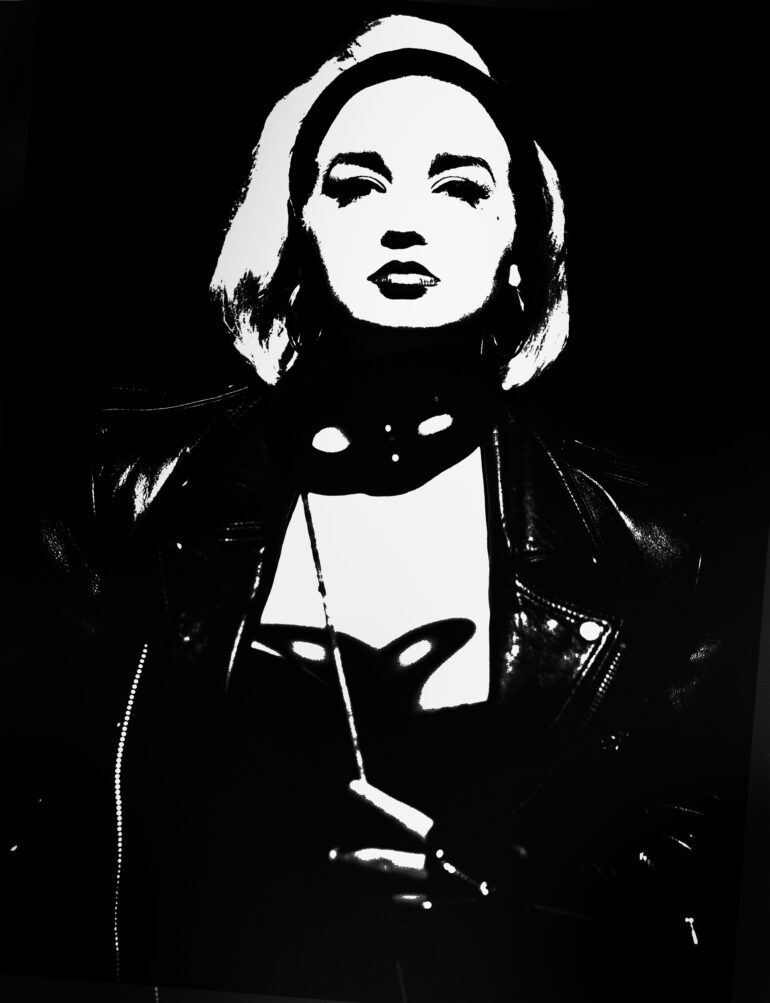
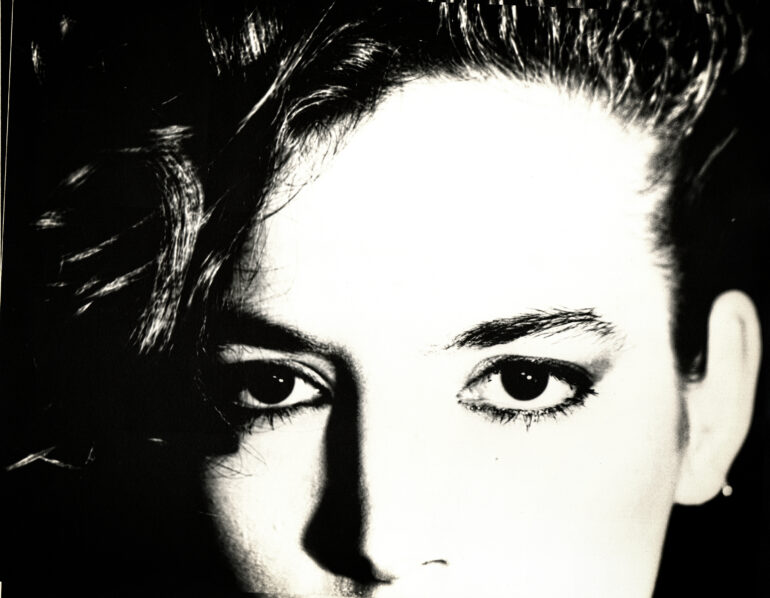
He’s still fascinated by black and white photography. Specifically, he loved the Chiaroscuro style of portraiture. And here he is talking about it:

This Italian term which literally means ‘light-dark’ was made famous by the artist Caravaggio. In my portraits I utilize the distinct tonal contrasts between my luminous subjects and their dark, shadowy backgrounds as well as, the dark environments they are portrayed in. This luminosity, this light emitting from my subject allows me to see the final print more distinctly and creates a very dramatic portrait with the attention specifically on the subject.

On top of all this, Kurt finds inspiration from Film Noir and getting to know his subjects before photographing them.

Thoughts On AI

Of course, one has to be curious of what a legally blind photographer thinks of AI. “As a legally blind person, AI has provided tools which I can utilize in order to be more independent,” he tells us. “But when it comes to creativity and art making, an actual person needs to be the creator. No machine or app can create anything better than what is conceived, imagined and manifested by human consciousness.” Overall, he thinks that it’s the art and the story of the artists that is what’s so incredibly important.

I am confident art generated by human beings will be infinitely more interesting and desirable. Ultimately content providers will realize it’s worth and value over AI generated content. 

Desert Hot Springs artist receives a grant initiative from Creative Corps Inland SoCal

Desert Hot Springs artist receives a grant initiative from Creative Corps Inland SoCal
The city of Desert Hot Springs is congratulating its local artist and resident Bernard Hoyes on receiving the Creative Corps Inland SoCal Grant Initiative. The $4.7 million initiative invited artists, creatives, and engaged community members to submit proposals surrounding several aspects of recovery, encompassing pandemic response, water and energy conservation, disaster resilience, civic engagement, and