
GREENFIELD — A bronze sculpture of a woman and two children will soon join the artistic landscape in downtown Greenfield.
ARTFUL ADDITION: Bronze sculpture will soon grace county annex and future Riley Trail – The Daily Reporter


Hold onto your cowboy hats. This is no ordinary Western art show.
The simply titled “Cowboy” opens at the Museum of Contemporary Art Denver on September 29 and it’s sure to garner major attention in the Western U.S. and beyond.
The show, organized by curators Nora Burnett Abrams and Miranda Lash, takes aim at the mythic figure, which they describe as “one of the most fraught and persistent figures in contemporary American culture.” The show raises questions such as how the myth of the cowboy exists today and how this archetype of masculinity shaped how we think about gender now. It further delves into cowboys’ relationship to the land through a series of broad perspectives and aims to debunk the homogenous concept of the cowboy as a white male.

Karl Haendel, Rodeo 11 (2023). Image courtesy the artist and Vielmetter Los Angeles, Mitchell- Innes & Nash, New York, and Wentrup Gallery, Berlin
“There is no mythic figure who is more grand and complicated than the cowboy,” said Burnett Abrams in a phone interview. Originally, she said, she was looking into the history of the Black cowboy, but over the course of years of conversations, the concept was broadened.
“We approached it from all angles,” said Lash, including very much from the side of satire and critique, but also from the perspective of “homage,” with artists incorporating the stories of their own family members. “The stories range from the deconstructive impulse to the very personal. Cowboys are just so much more diverse than what gets depicted in the mainstream media.”
While the show starts with some classic blue-chip names and works like a John Baldessari (The Space Between Hat Rock and Shadow), Richard Prince’s famous Marlboro Man photo, and Andy Warhol’s film of a horse, it quickly delves into the contemporary and ultra-contemporary realm with 27 artists spanning 70 works.

Stephanie Syjuco, Set Up (The Broncho Buster 2) (2022). Image courtesy the artist, Catharine Clark Gallery, San Francisco; RYAN LEE Gallery, New
York; and Silverlens, Manila.
Take for instance Stephanie Syjuco’s photographs of Frederic Remington’s famous bronze sculptures of bucking broncos in the Amon Carter collection that depict them being measured with tape and alluding to the popularity of—and poking fun at—the sculptures and replicas on CEO desks across the country as symbols of bravura. “She jokes about how it’s such a popular bronze on the desks of corporate executives because it connects so deeply with this idea of the rugged individual, the entrepreneur, the man who sets his own terms,” said Lash.
The two curators said the tagline for the show could be: “This is not your grandfather’s Remington.”
Another topic that the show tackles is the “very problematic binary of the cowboy versus Indian, which is just an invention,” said Burnett Abrams.

Grace Kennison, I Remember Being Alone (2023). Image courtesy the artist.
One of the artists included in the show is Oklahoma native Nathan Young, whose art delves into his family history with parents who are of the Pawnee and Delaware Tribe. The multi-disciplinary artist delves into Pawnee rodeo culture in this series of work in the show.
And four contemporary artists, including Rafa Esparza, Young, and Colorado-based artists R. Alan Brooks and Gregg Deal were commissioned to make work for the show.
“There are those who are Native American or are of Native American descent who actively participate in cowboy culture,” said Lash. “There is not that distinction or binary.”
Burnett Abrams said: “Our ambition is to expand the story and I think that for those who are ready to be a part of that, it’s going to be amazing.”
“Cowboy” is on view at MCA Denver, 1485 Delgany Street, Denver, through February 18, 2024.
More Trending Stories:
Follow Artnet News on Facebook:
Want to stay ahead of the art world? Subscribe to our newsletter to get the breaking news, eye-opening interviews, and incisive critical takes that drive the conversation forward.


If you think digital downloads are enough to supply clients with, think again. USB drives are still the standard, and here is why.
Wedding and portrait photography holds huge significance for clients and their families, as the creation of these images allows them to cherish and relive special moments in their lives. The value of capturing these moments cannot be overstated; key milestones in the family life cycle are documented generation after generation, creating a visual document of children growing up, getting married, and going on to have children of their own.
While we, as photographers, understand the significance of preserving these memories for our clients, our clients aren’t often too great at archiving and preserving their images long-term. Over the years that I operated a photography studio, I encountered many people who had lost important family images due to not taking care of their digital files. One client had lost their phone, and with it, all the images that they had ever taken of their then two-year-old child. Another client contacted me a while back to say that she had lost images that I had shot of her son during a messy divorce and had no digital backup. She was so grateful to learn that I still had the digital files from that photo session eight years before.

As photographers, we prioritize safeguarding our work against loss and should encourage clients to do the same. It is crucial to educate them on the importance of preserving their family archive to prevent image loss. When discussing products and packages with your clients, I believe it is our duty to help educate people about the importance of preserving the family archive to prevent image loss. With that in mind, clients should be encouraged to choose both print and digital copies of their images.
While digital downloads have become a common method of delivering images, they lack the personalized, boutique feel that physical products can offer. The most user-friendly method of supplying digital files is through a USB drive, which is a physical product of its own. Of all the products available on the market, my favorite is the custom-printed wooden USB drive from Zno. Made of solid maple wood, both sides can be printed with a full-color image across both the body and cap, which is a premium touch. The wooden USB drive is slightly larger than the standard in order to make sure that printed sides can hold appropriate detail. My advice would be to print a client image on one side and your company logo or website address on the reverse.

Ordering the wooden USB drives is easy through the Zno’s cloud-based album designer, known as Zno Designer. This user-friendly platform enables effortless design and customization on the USB drives to match your branding. And not to mention you can upload online gallery photos during the design process into Zno Designer directly from Zno Gallery.


Since Marianne Blanchard began pursuing her dream career as a tattoo artist, she’s always wanted to branch out on her own. After 11 years, last at a shop in Albany, when she was ready to make the move, she sought to get as close to her ancestral roots at Grand Ronde as possible.
She found a home in Dallas.

We’re blessed to have more than one museum dedicated to photography here in NYC. The International Center of Photography (ICP) has existed for many years. However, it’s recently been overshadowed by Fotografiska in a few ways — especially with the marketing of the Chapel Bar attached to the museum. Nonetheless, one can’t deny the massive floor-to-ceiling windows lighting the prints at ICP. For Fall 2023, there seem to be a few unifying themes. The first is the idea of human photography — which we emphasize a lot in our interviews here on the site. But the other one seems to be the idea of slapping photography for social media in the face in favor of something that you’d want to look at in a museum.
Editor’s Note: The Phoblographer was invited to the press preview of the Fall 2023 exhibits free of charge. We took an Uber there on our own account. ICP provided pastries and beverages to the press, and we imbibed a coffee. None of this affects our reporting. Declarations like this are part of our editorial credibility standards, which you can read more about at this link.
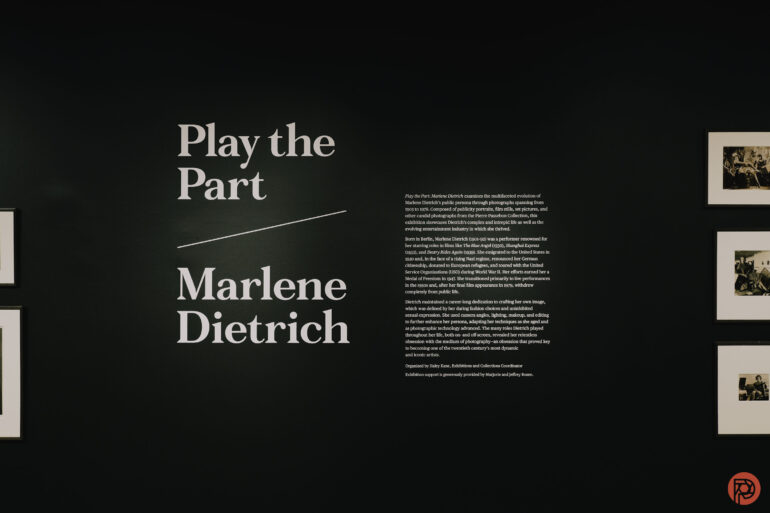
Visitors will be treated to three exhibits for Fall 2023 at the International Center of Photography. The second floor has one-half dedicated to Muriel Hasbun, while the other half is called Immersion and is a group show between three different photographers. The top floor is dedicated to Marlene Dietrich, who was very specific about how she was photographed. This section features images by Richard Avedon, Irving Penn, and many other big names. All of the work embraces something we talk about on this site — the idea that photographers should leave behind social media and return to the idea of doing certain things in person again. Of course, there’s a lot that can be done virtually. However, the print is an experience that can only be had in person.
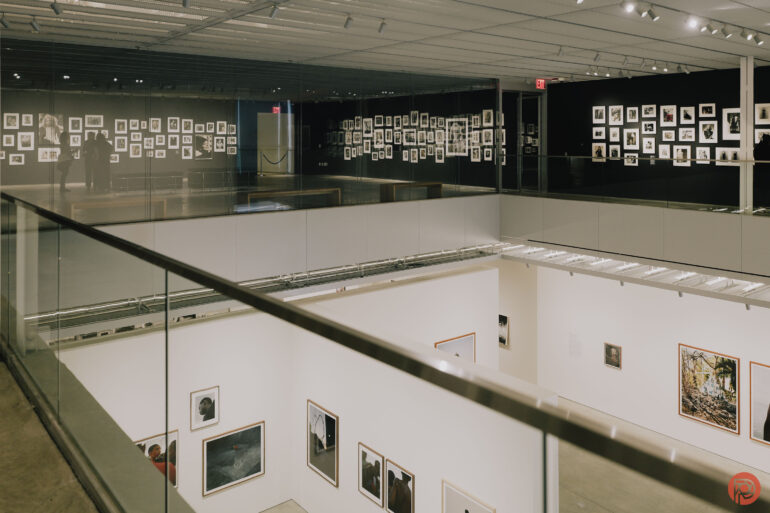
Worth noting, firstly, is the fact that ICP finally seems to be taking cues from the designers at Fotografiska and using museum glass to minimize reflections. Despite their efforts, ICP’s lighting is so aggressive that other attending journalists also voiced their annoyance when I discussed it with them. While it’s better than it was in the past, the museum- celebrating 50 years of service to the arts next year- still feels a bit like it’s phoning it in. This is evident in the lighting and the lack of clear and distinct separation between the exhibits.
Muriel Hasbun’s exhibit does something that I feel is incredibly important these days: it’s bilingual. Many museums tend to only show descriptions in English. But moving back to Queens, NY, the most diverse place in the world has reminded me that we’re not alone. Here, signs are in various languages. And a museum that preaches inclusivity should indeed be provided translations where possible.
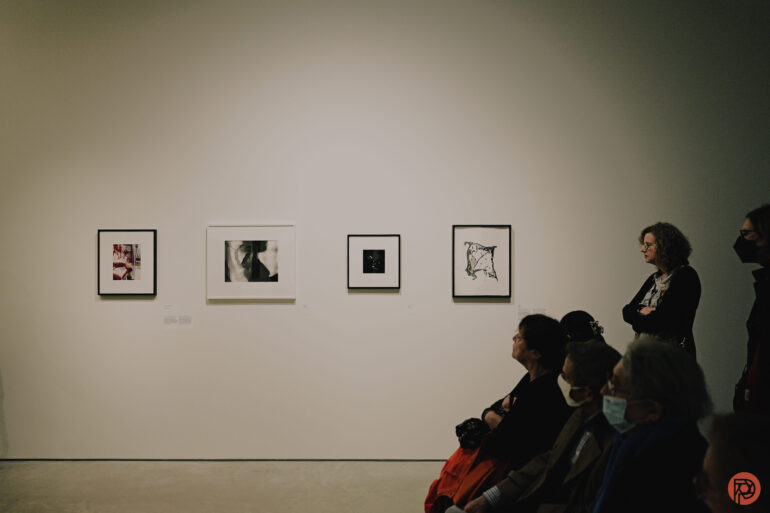
As you go through Muriel’s work, you’ll need to remember the idea of exile and loss. That’s all an essential part of it; you can find it in the descriptions. Many photos are created through analog processes that can only be done in the darkroom unless you do Photoshop work. There are, for example, multiple exposures that overlay parts of Muriel’s life with seismographs. Ms. Haburn attended the press opening and couldn’t entirely give me a straight answer when I asked her about the emotions she was going through when she made this work. It was done during the COVID lockdowns — so it essentially was a bunch of them.
Clearly, this is not the style of work that you’d see on social media platforms.
But you can only get that from the artists, and ICP doesn’t do an outstanding job explaining the work. And to reach out to newer audiences, they must find a way to connect the artistic and psychological parts of the brain. People are open to their interpretations of art, but knowing intentions is crucial here.
The exhibit explores war, genocide, and some randomness. For example, I’m not exactly sure why there’s an entire section dedicated to dental photography or why the curators felt it was so important. At least, they don’t do an excellent job of explaining why we’re looking at the photos.
If you’re new to understanding photography as an art form, you might not immediately comprehend what’s in front of you. But from interviewing photographers for a decade and a half, I can provide a solid hypothesis that Muriel is trying to connect various parts of her life together — which otherwise seems fractured by her past in multiple ways. Wars, oppression, and exile do that to people.
At the end of Muriel’s exhibit, I could relate to her in ways — though not in the same. I have dreams where people I currently know somehow or another have met random folks in my life, like my 6th-grade teacher, for example. And those random fragments of life merge pretty well and show an artistic maturity that I hope doesn’t disappear in the face of social media’s dominance of photography.
Muriel’s work is fantastic, and you should indeed check it out. But ICP did a not-so-great job of displaying the work, controlling the lighting, etc.
From Muriel’s section, you can walk directly into the Immersion space and not even fully realize that you’re in another gallery. That’s part of how ICP labels the section. Be warned when you inadvertently walk from one area into another. With that said, Immersion seemingly takes the idea of outsiders looking into society and trying to integrate with it while holding onto their own identities. It showcases the work of Gregory Halpern, Raymond Meeks, and Vasantha Yogananthan.
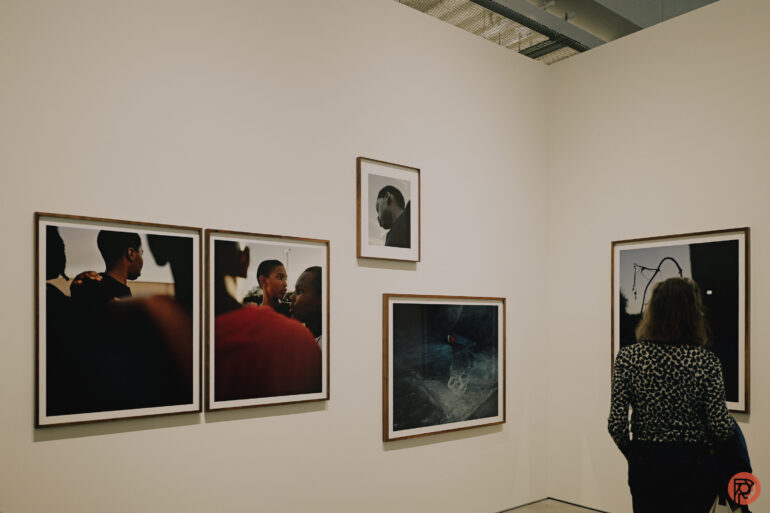
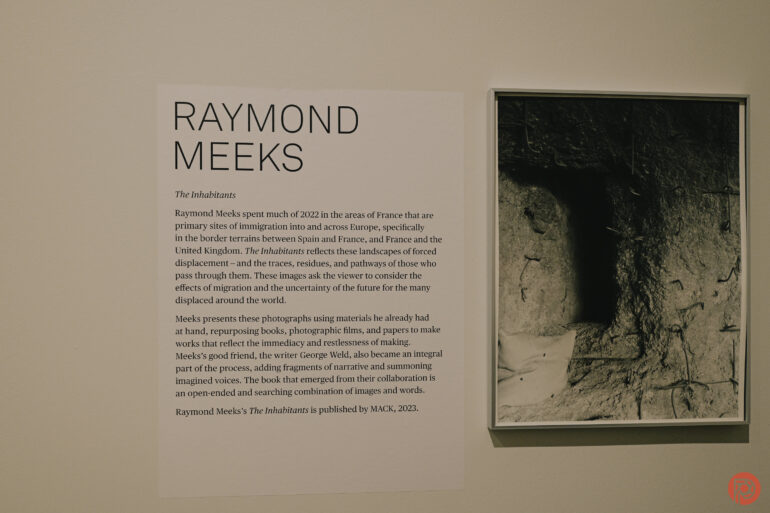
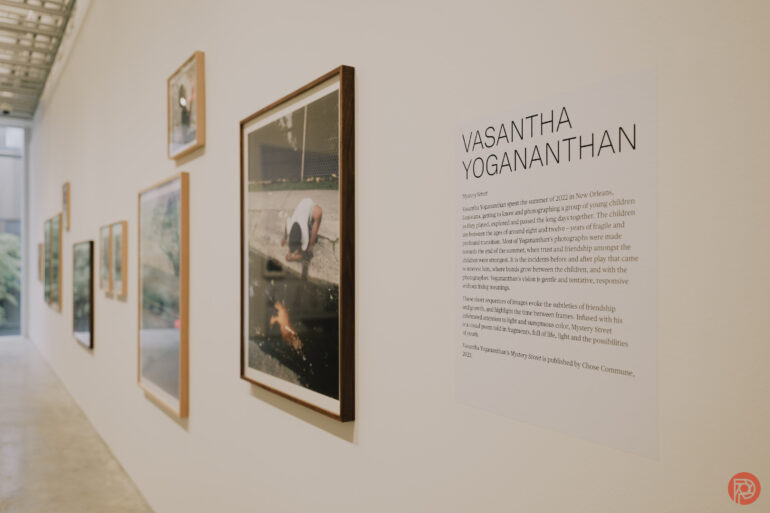
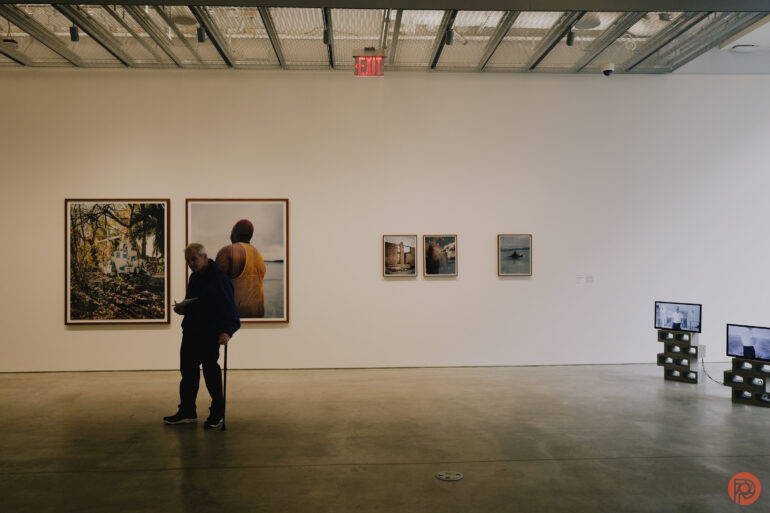
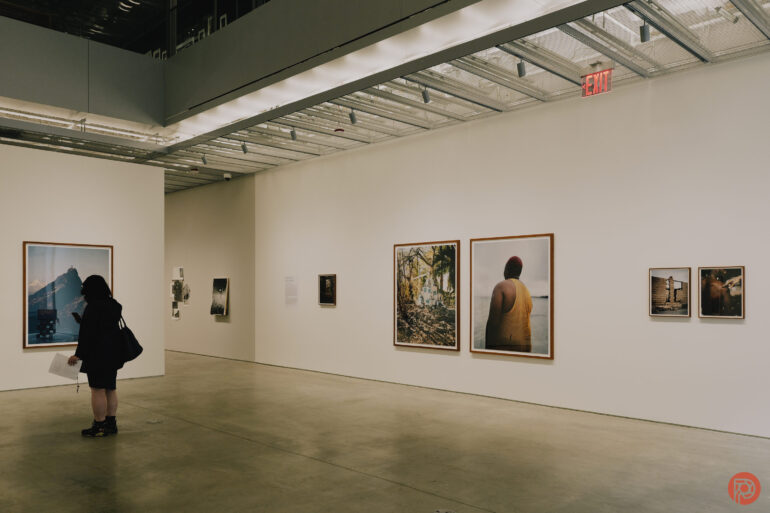
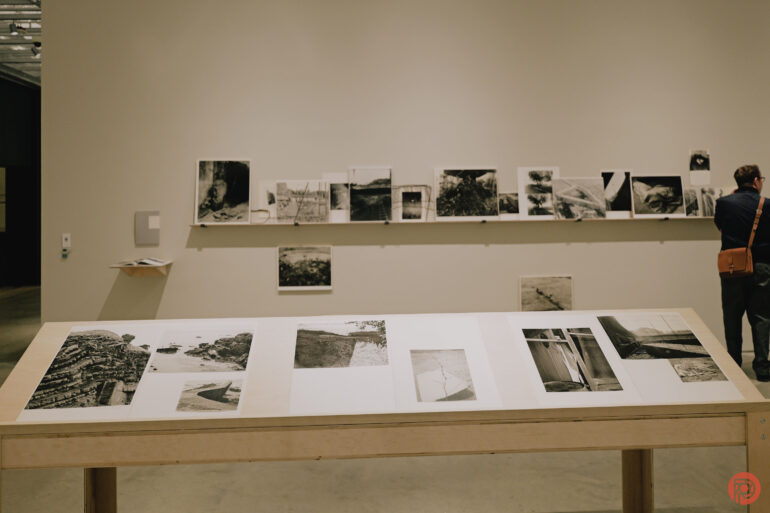
The work of Raymond Meeks talks about displacement, while Halpern discusses cultural conflict and colonialism. These are essential ideas and conversations to have — with Halpern’s curation subtly saying quite a bit about how influencers try to take advantage of areas in their own ways. Yogananthan works to showcase the interactions between children — and shows some very human moments that folks might otherwise not even think of or care about. These sections aren’t all split up very well, and even other journalists found the work to be a bit perplexing. For example, there are a few images that you’d look at and wonder why they’re in a museum like ICP.
Move upstairs to the exhibit space dedicated to Marlene Dietrich, and you’ll see echoes in today’s conversations on beauty standards. The work is a bunch of aged black-and-white images with very few color ones. Specifically, they’re photos of Marlene. She was particular about how she was lit, which shows in her poses, attire, etc.
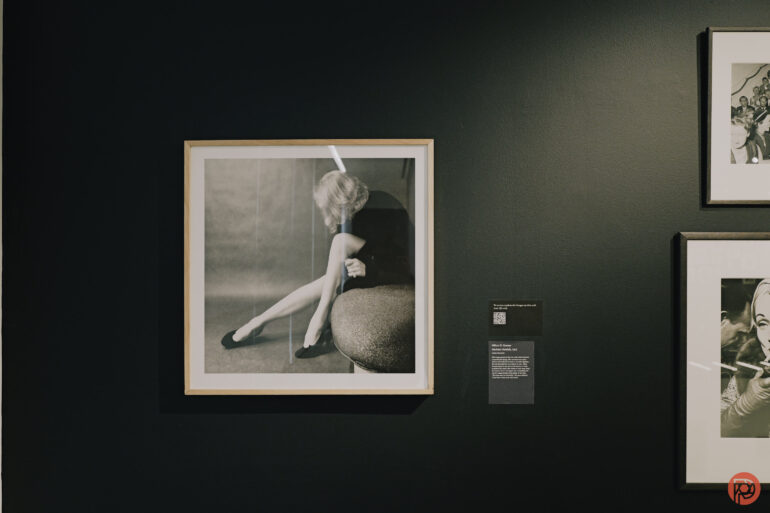
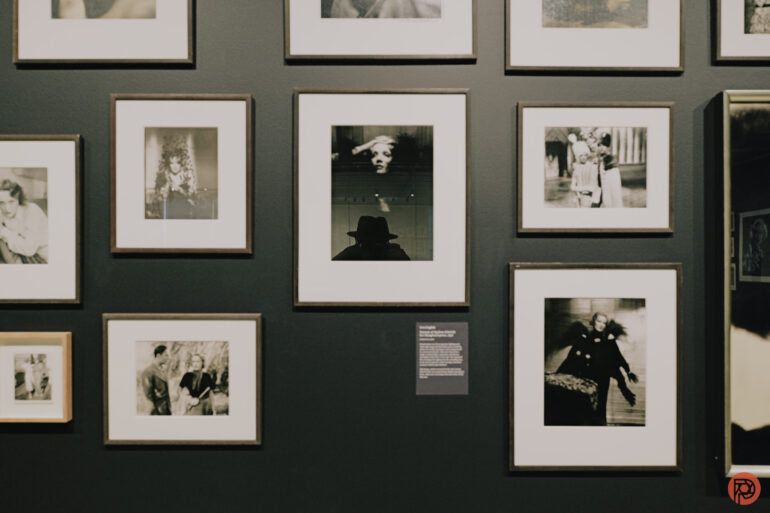
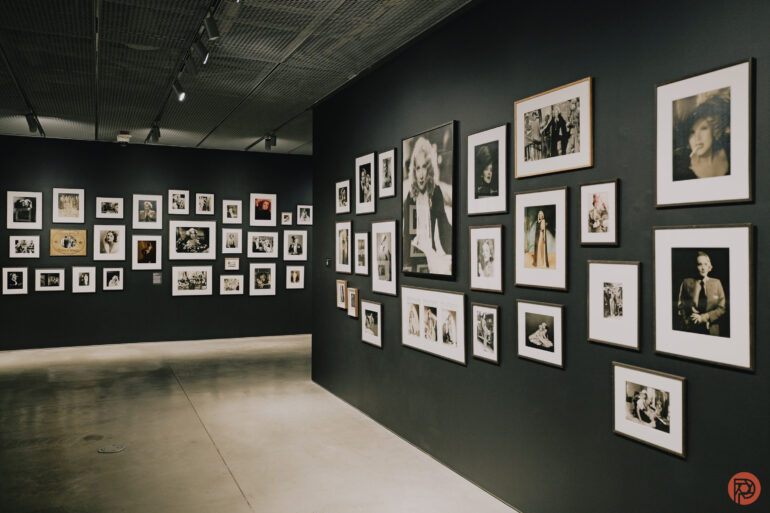
ICP’s captions, which you can look at here, don’t help much. I’d love to know more about each photograph, but the information isn’t available to anyone looking at the images at the museum. Anyone new to photography as an art form would probably never understand why those photographs are in a museum.
While I genuinely believe that conversations on beauty standards are essential, it could’ve and should’ve been done in more than just the context of a privileged white woman. But the idea plays into how beauty standards these days are defined by social media.
In summary, I think ICP is doing a great job with its intentions, but its execution is lacking a bit due to the space itself. The reflections on the images sometimes make it difficult to clearly see and understand the work. And I can imagine that if you’re surrounded by others at the museum, you’ll move around to give others their space, too. Eventually, someone might just give up on looking at an image and not understand what they’re looking at. Because of this, we recommend going during an off-hour to really take in the experience. And when you do, think critically about the work.


The Victoria Native Friendship Centre has unveiled an Art of Reconciliation mosaic inspired by the National Day of Truth and Reconciliation.
The mosaic was unveiled Tuesday (Sept. 26) at the Greenglade Community Centre and was designed by Coast Salish artist Dahlila Charlie from Beecher Bay First Nation. Charlie completed the design work in just over two weeks.
“I wanted to make it orange for Orange Shirt Day coming up,” Charlie said. “The design has a mama bear and a baby bear to represent the matriarchs in my family. They have been strong leaders. There’s also an eagle’s head that represents respect and a beaver symbolizing our ancestors building the foundation for future generations to keep doing the work that we’re doing.”
Orange Shirt Day, now known as the National Day for Truth and Reconciliation, is taking place Saturday (Sept. 30).
“I hope people who see this art are reminded to be gentle with yourself this time of year,” Charlie added. “It’s not always easy, but you’re not alone.”
Charlie’s artwork was transferred onto 64 mosaic tiles and then painted and decorated at several free workshops.
“This is the second iteration of this project, which has been happening with different artists, cultural leaders, and in different parts of southern Vancouver Island.” said Ron Rice, executive director of the Victoria Native Friendship Centre.“Of course, we encourage everyone to participate, to witness, and to contribute to reconciliation in many ways.”
ALSO READ: ‘These are our lands’: B.C. First Nation chief on Truth & Reconciliation Day
Greater VictoriaIndigenousTruth and Reconciliation

The Victoria Native Friendship Centre has unveiled an Art of Reconciliation mosaic inspired by the National Day of Truth and Reconciliation.
The mosaic was unveiled Tuesday (Sept. 26) at the Greenglade Community Centre and was designed by Coast Salish artist Dahlila Charlie from Beecher Bay First Nation. Charlie completed the design work in just over two weeks.
“I wanted to make it orange for Orange Shirt Day coming up,” Charlie said. “The design has a mama bear and a baby bear to represent the matriarchs in my family. They have been strong leaders. There’s also an eagle’s head that represents respect and a beaver symbolizing our ancestors building the foundation for future generations to keep doing the work that we’re doing.”
Orange Shirt Day, now known as the National Day for Truth and Reconciliation, is taking place Saturday (Sept. 30).
“I hope people who see this art are reminded to be gentle with yourself this time of year,” Charlie added. “It’s not always easy, but you’re not alone.”
Charlie’s artwork was transferred onto 64 mosaic tiles and then painted and decorated at several free workshops.
“This is the second iteration of this project, which has been happening with different artists, cultural leaders, and in different parts of southern Vancouver Island.” said Ron Rice, executive director of the Victoria Native Friendship Centre.“Of course, we encourage everyone to participate, to witness, and to contribute to reconciliation in many ways.”
ALSO READ: ‘These are our lands’: B.C. First Nation chief on Truth & Reconciliation Day









