
A few resident artists have recently returned to and finished new sculptures at Lincoln’s Sculpture in the Wild.
A look at Sculpture in the Wild’s newest art pieces


POPLAR BLUFF, Mo. (KFVS) – A Heartland artist is making her hometown brighter, one project at a time.
Mattilyn Stacy recently finished her new mural, titled “Familiar Wonders,” at the Poplar Bluff Library.
The Poplar Bluff native said she drew inspiration right from her backyard.
“I kind of wanted something that matched the theme of Missouri and native animals and wildlife and a lot of the inspiration came from things I had seen in my hometown around Missouri,” said Stacy.
Stacy said she also wanted the wall to draw kids’ attention.
“Bright colors, I wanted wildlife but I wanted it to be a little more imaginative vivid colors, the moths on the side are this big,” she explained.
The mural is in the Library’s Sensory Garden.
Library Director Shannon Midyett said it was the perfect spot.
“Public art and public libraries share a lot of common goals,” Midyett said. “They both strive to provide a place that sparks imagination and inspire creativity, they both serve as a meeting place and gathering point, and they both build and connect community.”
Stacy said she is grateful to be able to leave her mark on her hometown.
“The fact that it will be here for years and years with my name on it,” she said.
Copyright 2023 KFVS. All rights reserved.

Igor Mikula, “Caring Parent,” Czech Republic
Chosen from more than 8,000 submissions, the winners of this year’s Nature TTL Photographer of the Year competition capture both the immense beauty of our planet and the threats we face with a changing climate. Thomas Vijayan took home the top prize for his heartbreaking panoramic of the Austofonna Ice Cap cracking and emitting gushing waterfalls into the sea. Covering more than 8,000 square kilometers, Austoffana is rapidly melting in a region experiencing the disastrous effects of warming temperatures and rising sea levels. Also recognized were a spectacular image of the Northern Lights streaming through an Icelandic cave, a jaguar wandering through a cinder block wall, and a ball of honeybees clamoring for a new home.
Find some of our favorite photos below, and view the complete gallery at Nature TTL.

Lucy Monckton, “House Hunting,” Staffordshire, United Kingdom

Thomas Vijayan, “Austfonna Ice Cap,” Svalbard, Norway

Fernando Constantino Martínez Belmar, “Crossing Barriers,” Solidaridad, Quintana Roo, Mexico

Andy Schmid, “Crowd Control,” Skjervøy, Norway

Jane Hope, “Fighting Robins,” Scotland, United Kingdom

Josselin Cornou, “Strong Solar Storm Through an Icelandic Cave,” Iceland

Rowan Dear, “Depth Perception,” Manly Beach, Sydney, Australia
Do stories and artists like this matter to you? Become a Colossal Member today and support independent arts publishing for as little as $5 per month. The article In the Nature TTL Photographer of the Year Contest, Breathtaking Wonder and Imminent Loss Are On Full Display appeared first on Colossal.

If you’ve ever had trouble explaining just what it is you do as a photographer, here’s a handy explainer for the non-photographers in your life.
YouTuber and self-proclaimed “all around cool guy” Casually Explained offers an explainer about any and all types of photography. If you’re a wildlife photographer, macro photographer, high school yearbook photographer, or micro photographer (that’s a new one for me), then what you do is explained within the video above in great, hand-drawn detail.
The artist explains practical ways to make money in photography, whether that’s selling your gear or shooting video for someone’s Only Fans site. Practical and useful tips all around.
If you’re looking to make more professional photos, the video adds, it’s key to spend the money on full frame sensors with big lenses that can create shallow depth of field, where the background is blurry while the subject is in sharp focus. These are the kinds of photos that cell phones just can’t really do well. But Midjourney can.
The video spends a bit of time talking about wildlife photography, akin to the type you see in National Geographic. And while it’s easy to lampoon the photographer spending time in a cage in the freezing arctic, it is a true point that half the battle of photography is just being there with a camera in hand.
There’s even some advice thrown in about pricing here, something I’ve often struggled with. More or less, it’s an inverse relationship: charging a client more means the job will likely be easier than if you had charged the client less. Strangely, I often find this advice to be true.
All kidding aside, there’s actually a fair amount of technical explanation of photography here that’s easy to understand. If you’ve ever wanted to understand what some genres of photography actually entail, you could do worse than start with this (literal) joke of a video.


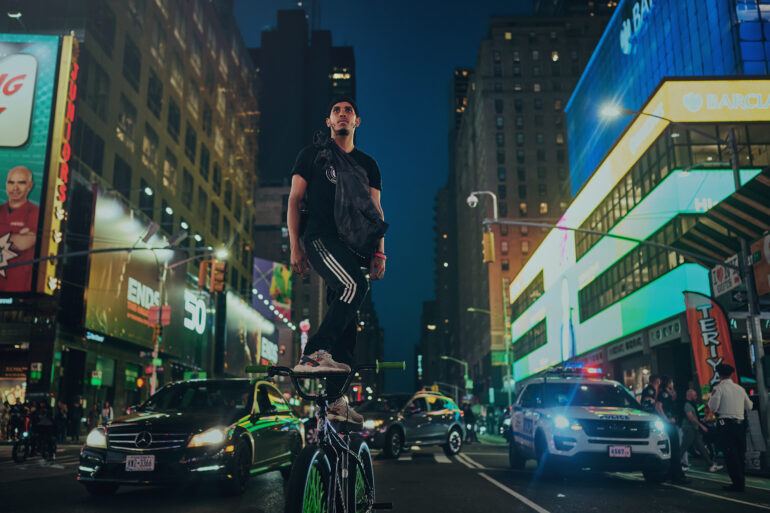
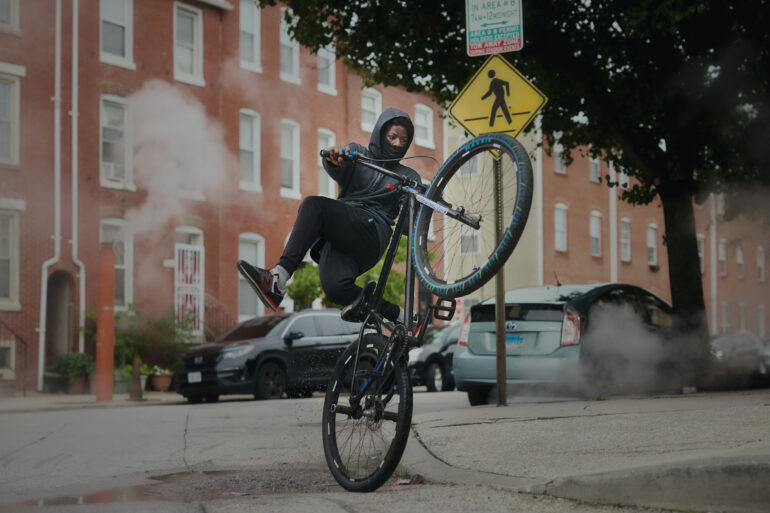
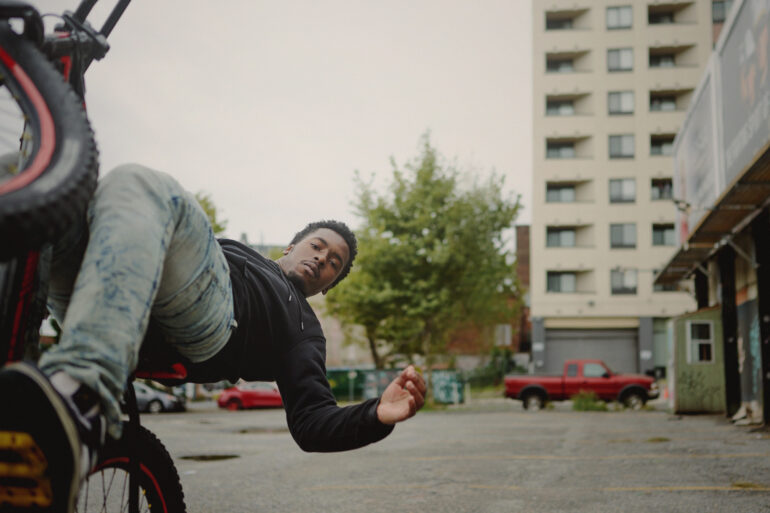
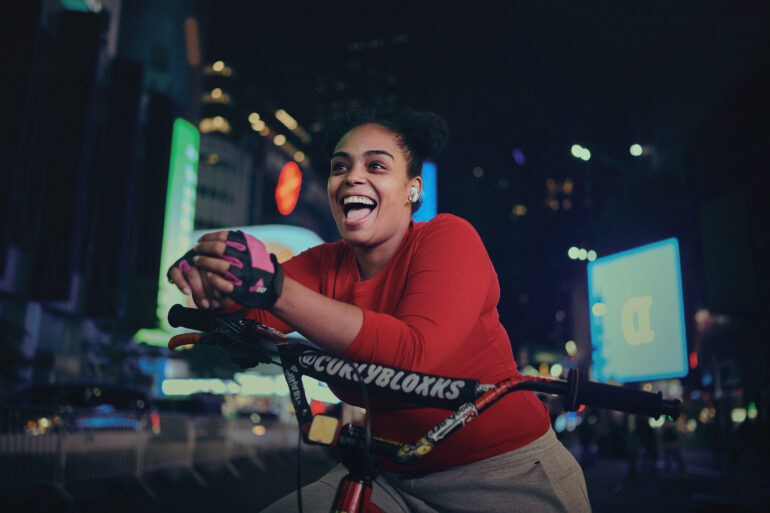
“I’ve never wanted to shoot bikes as I didn’t want to mix my hobbies (and mental escape methods!) with my work,” says photographer Matthew Joseph to the Phoblographer in an interview, hitting ever so hard with that line. “It was only on completion of this project and really going into the edit on the interviews that I realized bikes had always been such a big thing for me – since I was a kid.” Indeed, Matt’s work around bike culture in NYC and Baltimore is exceptional. As the project grows like others have, we think that it’s going to evolve into something very beautiful.
All images by Matthew Joseph. Used with permission. Follow him on Instagram and check out his website.


Matthew Joseph: My story is not unfamiliar to most – the classic situation whereby the family camera happened to be a Pentax SLR so manually focussing on a prime lens and manually exposing everything was the way I learned photography. I consider myself very fortunate to be of an age where I really came into it just before (and through) the film-digital transition, it taught me so much. It was a family holiday in Amsterdam when I was 11 that I realized the best way of avoiding family photos, was to be the one taking them. So I took charge and then ghosted a multitude of old-school photographers at family weddings over the next few years, delivering a reportage story of the day to the bride and groom, just for fun…and before reportage, wedding photography was the thing it is today!
Then, I didn’t get the posh fancy new camera I’d asked for for Christmas, I got an old second-hand manual Pentax MX. But it was the best thing my parents could have done because it kept me learning. Then I shot my first paid job at 16, and the camera always followed me with whatever I was doing in life. It snowballed (gradually) from there.
Matthew Joseph: I have a lot of cameras and have used different systems professionally over the years. But I was a fairly early adopter the the mirrorless world (when Nikon finally got their act together!) and haven’t looked back. It helps me achieve so much more and the tech advances in AF alone are just so worth it. My camera cases definitely aren’t any lighter because of it – what most people refer to mirrorless system as – if anything they’re heavier because the really good glass which is starting to be released now is epic and huge! I struggled with the Z7 and Z6 range for a while because what we all really needed was the Z9. And it really hasn’t disappointed. I got one of the first Z8s in the UK as I was eager to get rid of the Z7ii and its inability to work as a real robust pro camera. Annoyingly the Z8 is basically a duplicate of the Z9 in a smaller body missing a few key features. I would have rather it be slower, but with a higher resolution, it would have made more sense in my arsenal. My whole lens system is native Nikon Z glass, but I go to some efforts to counter the digital ‘perfection’ of the system and aim to bring some humanity and romance back to it if I can, using various filters and techniques – in camera and in post.
My favourite thing to do is to pair vintage lenses with mirrorless tech. The new mounts on mirrorless systems make it really easy to mount vintage Leicas, Hasselblads etc – I’ve even got a re-housed Canon ‘Dream Lens’ which is crazy. The best pairing is the 35mm Leica Summricon f/2 on a Nikon Z8 – for personal travel. But on much of my commercial work I can’t afford the risk of missing focus as my work is fast and reactive.
I won’t bore you (or should I!?) with listing off my other boxes/shelves of gear, I own a lot because I rent it onto my commercial jobs. I mix using Profoto with other forms of continuous light, but most of my efforts revolve around re-shaping and manipulating natural light, that’s my thing. I’m all about keeping things feeling as human as possible, but also maintaining a cinematic and polished quality to it at the same time. It’s a constant balance!
Everything is carried around in colour-coded Pelis (now I’m getting carried away)… I’ll stop here.
Matthew Joseph: It’s the specific culture of the ‘BikeLife’ movement which is what I was drawn to more than bikes in general. I mean, I’m a huge cyclist, cycling fan, owner of bikes and it’s a big interest area for me. But I’ve never wanted to shoot bikes as I didn’t want to mix my hobbies (and mental escape methods!) with my work. It was only on completion of this project and really going into the edit on the interviews, that I realized bikes had always been such a big thing for me – since I was a kid. Bikes provided a means of transport, escape, opportunity, and fun – especially growing up in a rural area with 5 other siblings to be taxied around to clubs etc, there wasn’t always a lift going! The Bike in itself is the ultimate in class-leveling transport. Rich or poor, you can probably own some form of two-wheels. For those in the BikeLife movement, it’s really starting to provide a way forward for those who largely may be from tough backgrounds with not a lot of options. I love that.

The toughest part of any personal project is usually two things: access & creative vision. Both were completely true on this, for sure. Access starts off hard, but it gets easier as you get into it, and especially once you start shooting it – so you start to build material to convince people of your vision, and then hopefully get them on board. Being on the ground it accelerates it further as you’re constantly meeting new people and they’re curious as to why you’re there with your camera. Social media – especially Instagram – really makes the initial start easier too. BikeLife lives on Instagram, so that had to be my way in, but you still have to make enough noise to be heard. Then, creatively – I always start with an approximation of a vision, a rough guideline – some boundaries for me to play within… then it often completely changes as I’m shooting it, and I start to see the wider project slowly unfold the more I shoot. I am constantly adjusting my trajectory and reacting to my experiences, I really hate being locked off and limited, I want to respond. In the moment is where I’m at my best – I always put this down to wedding photography training me at an early age!!!
Matthew Joseph: As previously mentioned – it’s the potential and hope it’s giving to those who don’t have much. The human story, that’s always what I’m after. I got that plenty. I love meeting people from different walks of life in different places and just being polite and curious. I want to understand their journey and how they’ve got to where they’ve got to – Emmanuel from the Bronx and Maine from the Projects in Baltimore are a long way from my experience growing up. I didn’t have to deal with things they’ve perhaps had to, so the fact that bikes and photography brought us together into the same place for a brief moment, well to me, that’s special. You can hear their personal stories in the photo-films.
Bikes in cities are dangerous, but they’re dangerous everywhere. They’re mainly dangerous due to cars and the humans driving them – though there, of course, some bad and dangerous cyclists out there. The BikeLife movement on their ‘Ride-outs’ can appear particularly lawless and perhaps threatening to the untrained eye, so the sub-culture has some PR to take care of. I’m hoping this project can go some way to helping that!
Matthew Joseph: Thank you – that’s exactly what I’m after with this stuff, so it’s humbling to hear that you saw it too. And yes, AI – wow, a huge and evolving topic which, my opinion on it changes weekly. It’s not going away, that’s for sure. So, I’m trying to remain positive and help it push me further into the ‘human.’ Yes, AI will be able to create anything, but I don’t pre-conceive my images. So, my creativity is in the moment, and I’d never be able to use AI to replace that. Right now, I’m putting my faith in humanity and hoping that humans will be humans and continue to be drawn to real-human emotions. I think we’re naturally drawn to the more human photography and art – people are interested in people. So, it’s imperfections, unpredictable angles/moments/locations/expressions, and being able to respond to a situation and portray someone’s story – that’s where for me, the power lies. Yes, you can prompt AI to copy the work of Dorothy Lange, but what I’m hoping to see in the future is a demand for accountability as to whether that moment really existed, or whether it was created by AI. If we as a population continue to demand that – whether it’s a small print or some other verification method – then we have hope. The beauty of photography is that it can transport someone who wasn’t there to that situation. So photography has to remain relevant for that alone. We just all have to tell the truth along the way!

As soon as Stillwater native Chuck Black saw the single pintail duck land in a small pothole in the Red Rock Lakes National Wildlife Refuge in southern Montana, he knew he had hit the jackpot.
Black, a wildlife artist, and his wife, Erica, had been tracking the drake over the course of two days during the spring of 2020. The pintail was one of the five eligible waterfowl species for the 2023 Federal Duck Stamp Art Contest, and Black thought the encounter was his best chance to videotape and photograph the duck as reference for a painting.
On their last day in the refuge, the couple rose before sunrise and quietly trekked to the site. “We lay prone on the shore, wrapped in a camouflage blanket, with our camera gear,” he said. “Sure enough, right on schedule, he dropped in and landed just 10 yards out from us. We got to observe him and video and photograph him as he waited for a hen, which was nesting nearby, to arrive. We were lucky. I knew right away, as soon as we left the pond that day, that I had come up with something.”
That something turned into an oil painting of the pintail duck and a cluster of cattails that won the coveted spot on the federal duck stamp scheduled to be issued sometime in late June 2024.
Black, 37, of Belgrade, Mont., watched the livestream of the judging on YouTube and said he started hyperventilating when he realized his painting had received the highest score. The competition included 199 entries.
“The final entry in the contest was a really good design,” he said. “We knew what score I was given, but then we had to wait all the way until the end. I felt like I was having a panic attack when I saw the score come up, and it was a couple of points below mine.
“It was unbelievable, and it still feels that way,” he said. “I don’t think my phone has stopped ringing. I’m still trying to come to grips.”
It was the 10th time Black had entered the prestigious national contest and first time he made it to the final round of judging. He submitted his first entry in 2009.
“When I first started entering, I was really ambitious,” said Black, who won state duck stamp contests in California in 2015 and Colorado in 2013. “In more recent years, I’ve had to focus on a more practical use of my time to make my art into a career. I can’t devote that much time into something that most likely won’t happen, but this year, I had the right photos and videos, and I just knew I had to try with that.”
Video of waterfowl works better than a photo when capturing reference materials for his artwork, he said. “I think I get more out of the bird’s behavior,” he said. “It’s helpful at capturing the way the light hits it as it rotates and things like that.”
He turns to photos when he begins the sketching process. “Composition is a big thing, so I try to come up with all sorts of ideas using these materials I’ve gathered to figure out what composition is the most appealing.”
A panel of five art, waterfowl and stamp authorities judges each competition, which is run by the U.S. Fish and Wildlife Service. The judges give each entry a score by holding up a card with a number. Judges evaluate entries based on a number of different categories, including accuracy of the waterfowl and habitat; composition; inclusion of any mandatory elements or published theme, and suitability to be made into a stamp.
“It’s hard to tell what the judges might be looking for because they change every year,” he said. “But anatomy, proper morphology of the bird, is always emphasized.”
After several weeks playing with different compositions, Black spent three solid weeks painting the pintail duck. “I worked from the time I got up in the morning until the time I went to bed,” he said. “It’s a pretty solid few weeks once I do get started on it.”
He shipped the painting to the U.S. Fish & Wildlife Service headquarters in Falls Church, Va., on Aug. 13, two days before the postmark deadline for entries. “I usually hang on to it right up until the required deadline,” he said. “I always leave time for small corrections, tweaks. Some years are more stressful than others. There have been some years where I felt like I screwed up something at the end and had a panic attack.”
This year’s panic attack didn’t come until after the painting was in the mail. That’s when Black realized he forgot to make a couple of changes he had planned on doing at the end: adding an iris to the pintail’s eyeball and fixing a line at the bottom of the duck’s bill.
“I had taken a photograph before I shipped it, and I looked at it on the computer, and all these little things kept coming back,” he said. “It was, ‘Oh no! I didn’t revisit the eyeball’ … I still don’t think my bird was perfect, but I suppose it was just enough that they didn’t dock me on that.”
The duck stamp, which sells for $25, is required by all waterfowl hunters. Established in 1934, the program has raised more than $1.2 billion to conserve more than 6 million acres of habitat, according to the U.S. Fish & Wildlife Service.
Winners of the contest don’t earn a cash prize, but they keep the rights to their work and can sell it to collectors.
Many artists have gained critical acclaim with their entries, including Minnesota brothers Joe, Bob and Jim Hautman, who have won 15 times. Joe Hautman’s painting of three tundra swans flying over a wetland won the 2022 contest; it was his sixth winning entry.
The brothers were immortalized in the movie “Fargo,” when Marge Gunderson’s artist husband laments his poor chances of winning a duck stamp contest because “the Hautmans” have entered it, too.
Black’s love of the outdoors and wildlife started at a young age. His parents, Dennis and Kathy Black, took him and his older brother, Tom, on long camping and canoeing trips in Canada’s Quetico Provincial Park, north of the Boundary Waters Canoe Area, twice a year.
“We’d canoe in for seven or eight days,” Black said. “It’s a profound and moving place to explore. That’s really where I grew my love for not just being outside, but really being in the backcountry and experiencing what it’s like to be out there for days on end. I just became addicted to it. Through the years, I’ve just tried to structure my life and utilize all the time that I have available to just keep me in and around the outdoors in any way. I really consider it to be where I find my peace.”
Dennis Black also took the boys hunting in North Dakota, and that’s where Chuck Black remembers seeing his first duck stamp. “As a kid, I was very interested in sketching and drawing,” he said. “That was around the time when the Hautman brothers started winning the contest, and they got a lot of notoriety. I would see their paintings at the art gallery at the St. Croix Mall. I’ll always remember that because I would get my hair cut at the place next door, and I’d get to go there afterwards. I remember walking in and it was always Terry Redlin and the Hautmans. I’ve been really obsessed with it since I was a little kid.”
Black, who graduated from Stillwater Area High School in 2005, credits his art teachers at Stillwater Middle School and the high school, especially Chris Windmiller and Sheila Elie, with helping ignite his interest in art.
“They were so encouraging,” he said. “I remember sitting in Mrs. Elie’s class and thinking, ‘Well, maybe I could pursue this’ because she and a lot of the other students were so supportive,” he said.
Black went to the University of North Dakota and graduated with a bachelor’s degree in wildlife biology. He worked at a number of jobs at the state and federal level, including at the Minnesota Department of Natural Resources, Great Smoky Mountains National Park, Theodore Roosevelt National Park, Colorado Parks and Wildlife and the U.S. Fish & Wildlife Service in Fergus Falls, before moving to Montana in 2015.
He had worked a seasonal job with the Montana Department of Fish, Wildlife and Parks, and knew it would be a good place for him to pursue a full-time career in wildlife art.
“A big part of the decision in moving here was just the access,” he said. “There’s so much that you can do between Yellowstone and the Forest Service lands and the mountains.”
He and his wife, Erica, were married in 2022. The couple have a camper on their pickup truck and spend a lot of time outdoors doing research for his paintings.
“It’s vital to my growth as an artist,” he said. “But at the same time, I really do enjoy just taking in the moment and trying to really maximize my experience when I’m out, so sometimes … I’ll just go out with my cellphone and take pictures.”
Black said he stopped doing custom work a few years ago after he got to the point where he had enough people who wanted to purchase his art. “That was always the goal: To paint what I really wanted to paint. It took a long time, but I feel like I’m there now. It feels really great just to paint what’s on my mind.”
Much of Black’s latest work involves paintings depicting barns and cabins. “I’m interested in their relationship with the wild — how they pertain to the way we connect with the wild and how that intertwines,” he said.
Now that he’s a federal duck stamp winner, he reckons he’ll enter again sometime. “I definitely have the motivation to try entering again,” he said.
Dennis and Kathy Black say they are thrilled their son has achieved national recognition for his artwork.
“Like all parents, you worry about your children and their livelihood,” Dennis Black said. “With Charles, we never doubted his ability as an artist, but it’s not easy making a living in the art world. We’re proud of the fact that we never discouraged him from following his dreams and passion.”
Chuck Black said he is proud he stuck with creating the art that he loves.
“I got a lot of pushback in college art classes, but, really, when you’re doing something that you’re passionate about, other people can recognize that, and they can get behind it,” he said. “A lot of my own personal growth in art was just because I stuck with what I really loved and wanted to create around it.”
“Here’s my advice: Stay true to what you love,” he said. “It’s really easy to get influenced by outside opinions. As an artist, to have the perspective of what’s important to you, is really what creates your own unique voice, and that’s what draws people to liking certain artwork.”






