
The AlloyFX art installation can be seen for a limited time at the Midtown Parking Garage.
Alien Sculpture Clive Lands in Covington


Over a decade ago, Tamara Honey founded her eponymous interiors firm, House of Honey, a female collective of interior designers who want to create meaningful experiences through their work. Currently, she collaborates with the collective on private residential properties, restaurants, and hotels, with design studios in both Montecito and Pasadena, California.
A self-described maximalist, Tamara truly excels at creating bespoke environments that reflect her clients and their unique surroundings. “I have been collecting vintage furniture, lighting, and art for over a decade, and sold on 1st dibs for many years. I love the mix of old and new for all of our interiors,” she added. Through Tamara’s projects, she celebrates life out loud by creating moments of escape through cultivation and curation. What remains is a sense of joy, confidence, and a “well-textured life.”
Today, Tamara Honey joins us for Friday Five!

Tamara Honey
Photo: @aiinthekitchen
Flowers are an all-day favorite! Every great story begins with sensory experience. We are developing two interior scents that tap into our love for the two places where our design studios are located. Ortega is born out of the desire to recall and capture driving the winding tree-lined ridge in Montecito. Bellefontaine is inspired by the rose-lined streets and lush gardens of Pasadena.

Photo: @isabelitavirtual
Our obsession with the disco ball as a symbol of freedom and fun is real. The spaces we design inspire connection and living life out loud. Home should be a place where you laugh, love, dance, and play. We definitely follow the call of the disco ball at House of Honey!
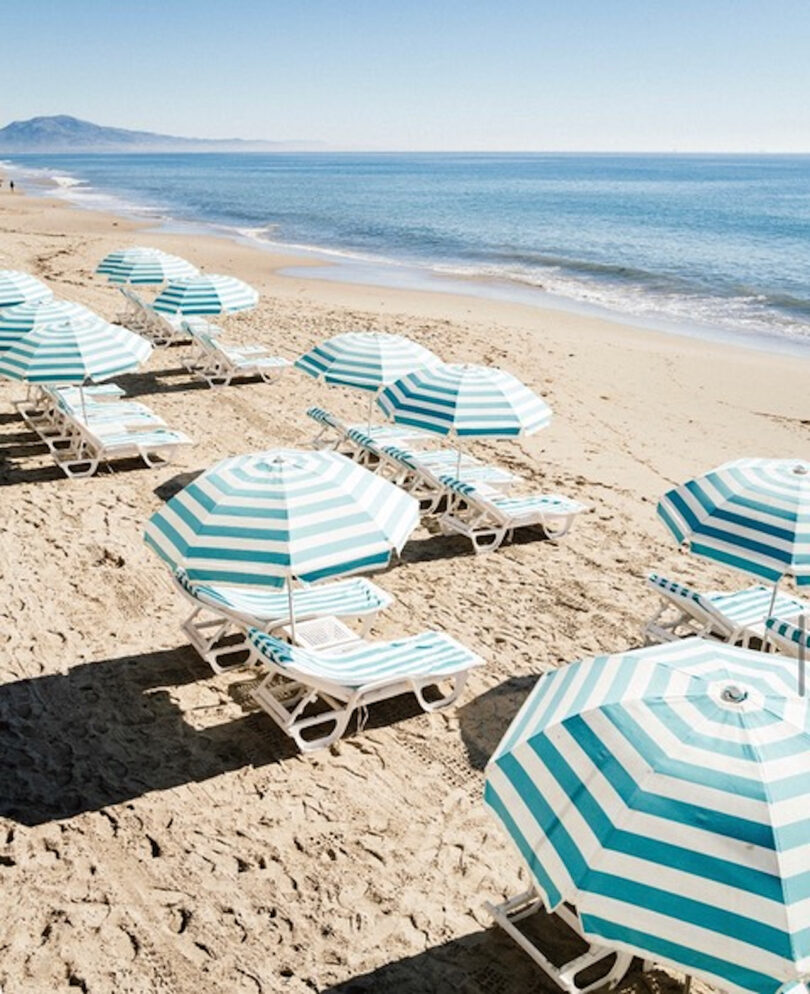
Photo: Rosewood Miramar Beach
Montecito, where I have both a house and a design studio, holds a special place in my heart. When I first visited, it reminded me of my childhood growing up in Halifax, Canada. My home there is placed in a forest setting, but minutes from the beach. It’s my very happy place!

Photo: Abel Macias
Infusing color into interiors is instinctual for me, and I never shy away from it. I think that our design is courageous and narrative-shifting as a result. We are committed to delighting and surprising our clients through color choices, but most importantly, encouraging them to live boldly with a boundless enjoyment of the every day.

Photo: Dima Konjaria
At an early age, I developed a love of vintage cars (my obsession grew to include vintage furniture and art, but that’s another story!). I still love to stroll around a vintage car show, and love riding in a convertible with a sense of freedom and abandon.
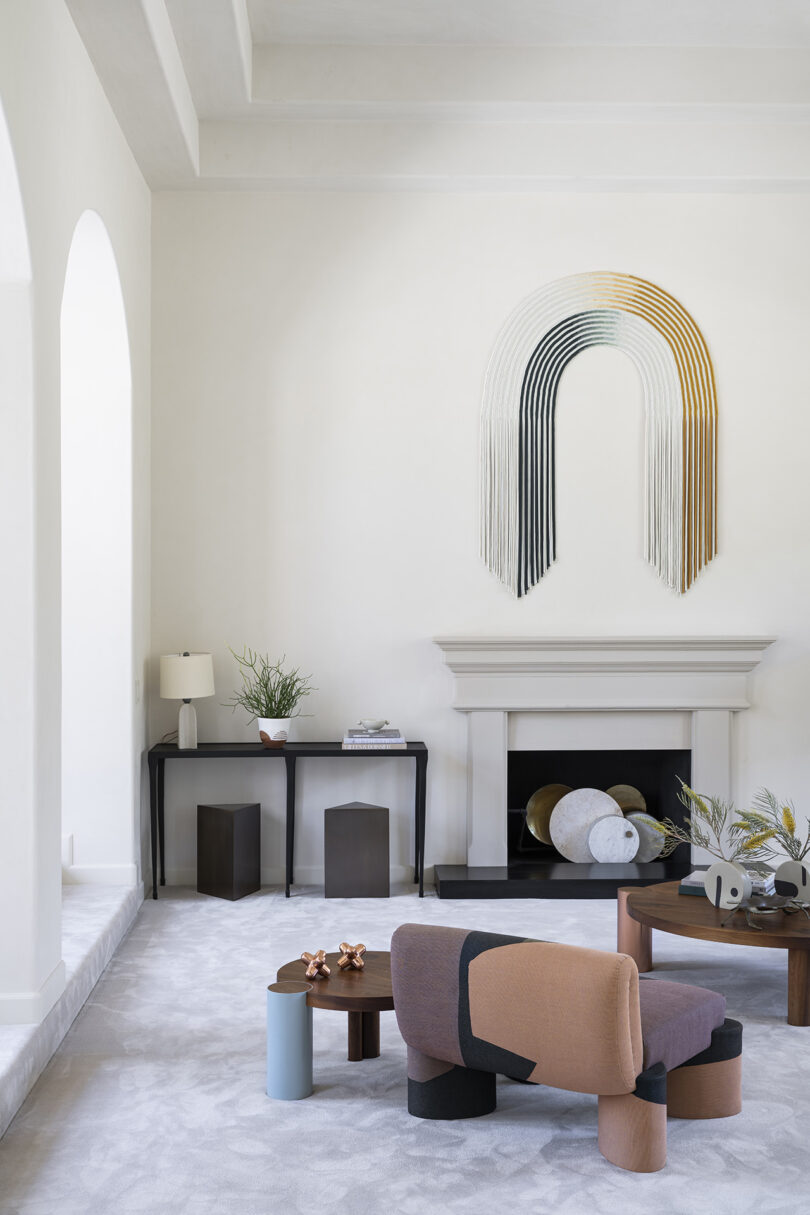
Photo: Manolo Langis

Photo: Victoria Pearson

Photo: Victoria Pearson

Photo: Jason Rick


Over a decade ago, Tamara Honey founded her eponymous interiors firm, House of Honey, a female collective of interior designers who want to create meaningful experiences through their work. Currently, she collaborates with the collective on private residential properties, restaurants, and hotels, with design studios in both Montecito and Pasadena, California.
A self-described maximalist, Tamara truly excels at creating bespoke environments that reflect her clients and their unique surroundings. “I have been collecting vintage furniture, lighting, and art for over a decade, and sold on 1st dibs for many years. I love the mix of old and new for all of our interiors,” she added. Through Tamara’s projects, she celebrates life out loud by creating moments of escape through cultivation and curation. What remains is a sense of joy, confidence, and a “well-textured life.”
Today, Tamara Honey joins us for Friday Five!
Photo: @aiinthekitchen
Flowers are an all-day favorite! Every great story begins with sensory experience. We are developing two interior scents that tap into our love for the two places where our design studios are located. Ortega is born out of the desire to recall and capture driving the winding tree-lined ridge in Montecito. Bellefontaine is inspired by the rose-lined streets and lush gardens of Pasadena.

Photo: @isabelitavirtual
Our obsession with the disco ball as a symbol of freedom and fun is real. The spaces we design inspire connection and living life out loud. Home should be a place where you laugh, love, dance, and play. We definitely follow the call of the disco ball at House of Honey!

Photo: Rosewood Miramar Beach
Montecito, where I have both a house and a design studio, holds a special place in my heart. When I first visited, it reminded me of my childhood growing up in Halifax, Canada. My home there is placed in a forest setting, but minutes from the beach. It’s my very happy place!
Photo: Abel Macias
Infusing color into interiors is instinctual for me, and I never shy away from it. I think that our design is courageous and narrative-shifting as a result. We are committed to delighting and surprising our clients through color choices, but most importantly, encouraging them to live boldly with a boundless enjoyment of the every day.

Photo: Dima Konjaria
At an early age, I developed a love of vintage cars (my obsession grew to include vintage furniture and art, but that’s another story!). I still love to stroll around a vintage car show, and love riding in a convertible with a sense of freedom and abandon.

Photo: Manolo Langis

Photo: Victoria Pearson

Photo: Victoria Pearson
Photo: Jason Rick

“Atomic Wind” (2023), hand-dyed Hanji paper, 184 x 152 x 13 centimeters. All images © Ilhwa Kim, courtesy of HOFA Gallery, shared with permission
Meandering rows of flat paper seeds flow through Ilhwa Kim’s landscapes, creating densely lined paths among the abstract expanses. The South Korean artist (previously) rolls tight wads of Hanji paper, which she’s dyed primarily in greens and blues with occasional pinks and yellows, and binds the individual components in a rectangular form. Variances between the slim, tall seeds and the short, wider pieces add texture and depth to the aerial-inspired works that appear to look down at a settlement or pastoral scene from above.
The sculptures shown here are part of Kim’s forthcoming solo show at London’s HOFA Gallery titled Tacticle Hands. Referring to the pieces as “living architecture,” the artist gravitates toward movement, conveying heaving breaths or the way a breeze can make a field of grass seem as if it’s dancing. “I create artworks that combine sculpture and painting in order to explore the richness, dynamism, and depth of sensory experience on canvas,” she says. “These layered, entangled, and ever-evolving sensory experiences, happening in a world defined by nature’s infinite possibilities, are what I strive to capture in my works.”
Tactile Hands is on view from September 29 to October 11. You can find more of Kim’s sculptures on Instagram.

“Developer” (2023), hand-dyed Hanji paper, 119 x 93 x 13 centimeters


“Archaeological White” (2023), hand-dyed Hanji paper, 132 x 164 x 13 centimeters

“Private Walk” (2023), hand-dyed Hanji paper, 119 x 93 x 13 inches

“Rocket’s High” (2023), hand-dyed Hanji paper, 119 x 93 x 13

“Low Altitude Flight” (2023), hand-dyed Hanji paper, 192 x 224 x 13 centimeters

“Tender Strokes” (2023), hand-dyed Hanji paper, 132 x 164 x 13 centimeters
Do stories and artists like this matter to you? Become a Colossal Member today and support independent arts publishing for as little as $5 per month. The article Vibrant Lines of Paper Twist and Surge Through Ilhwa Kim’s Dynamic Landscapes appeared first on Colossal.

The life of a photographer, professional or hobbyist, has a lot of ups and downs. The creative process is a complicated thing that draws on experience, technique, intuition, and more, and understanding its ebbs and flows can be beneficial not only in maximizing your output but weathering the lulls. This fantastic video interview features a pair of experienced landscape photographers discussing a wide range of meaningful wisdom and advice sure to make you a better creative.
Coming to you from Alister Benn of Expressive Photography and William Neill, this excellent video interview discusses a huge range of topics, including the creative process, confidence as a photographer, and much more. I think Benn and Neill have some particularly good experience with regards to how the life of a photographer has evolved as our relationship with the internet has continued to change, and it is well worth listening to. Finding personal meaning in your photographs instead of relying too heavily on external validation is tremendously important. After all, at the end of the day, you picked up a camera because you enjoyed the creative process, so do not fall into the trap of seeking out those dopamine hits from social media and the like. Check out the video above for the full rundown.


When 22-year-old Iranian woman Mahsa Amini died at the hands of mortality police who deemed she was wearing her head covering improperly, it sparked a wave of unrest in the country — A country that is difficult to document.
Journalists had to decide the best way to publish imagery from inside a country that is goverened by a regime that is hostile to foreign press. At the recent Visa Pour l’Image photojournalism festival in France, there was the first-ever anonymous photographer exhibit.
Two journalists from the prestigious Le Monde curated the anonymous exhibit, as they painstakingly authenticated each image for the exhibition Uprising in Iran.
“From September 16 2022, the day Mahsa Amini died, the reality of what was happening in the streets was visible on social networks,” Marie Sumalla, a Le Monde journalist, tells RFI.
“It was important to think about how we were going to collect these images in order to verify them, publish them, and give them to our readers.”
The French journalist brought in Iranian experts to confirm the images by geolocating them, checking sources, and verifying dates.
“From then on, the videos and photos began to appear on social networks, but with great difficulty,” adds Le Monde journalist Ghazal Golshiri.
“In Iran, WhatsApp and Instagram have been blocked since September 2022. Facebook and Twitter have been blocked since 2009, and Telegram since 2019. So the Iranians need anti-filtering software.”
Uprising in Iran also includes a powerful photo by Ahmad Halabisaz of a young Iranian woman sitting in a busy square in the Iranian capital Tehran with her hair uncovered, defying the mandatory hijab law in the strict Islamic country. The photo has received multiple awards, including an honorable mention at the World Press Photo awards.
“We felt it was important to show Ahmad Halabisaz’s photograph. Ahmad is someone we have worked with on several occasions,” says Sumalla.
“The fact that this photograph won a World Press award was an important sign for the journalism community.”
For more, head to the Visa Pour l’Image website.
Image credits: Photographs by Darafsh

From Shadow and Light to the Vladem’s terraces and Window Box Project, these internationally celebrated artists will leave a mark and should be on your artists-to-explore checklist.
Nancy Holt with Mirrors of Light II at Walter Kelly Gallery in Chicago, Illinois (1974); photo John R. Bayalis; © Holt/Smithson Foundation / Licensed by Artists Rights Society, New York
Nancy Holt (1938–2014): A Massachusetts native who moved to Galisteo in the mid-1990s after the death of her husband, artist Robert Smithson, Holt was a force within the conceptual- and land-art movements. Her largest pieces require the viewer to put in some legwork while contemplating notions of earth and sky. See this: Mirrors of Light II, 1974, 10 mirrors and a 650-watt quartz light, produced while she was working on her most well-known work, Sun Tunnels, in Utah’s Great Basin Desert
Angela Ellsworth (born in 1964): Raised as a Mormon, Ellsworth identifies as queer and uses sculpture, drawing, installation, and performance to address gender roles, spirituality, and mysticism. In her Pantaloncini series, the art professor at Arizona State University turns traditional Mormon undergarments into sculptures via thickets of pearl-topped pins that cast a sense of sparkling beauty on the outside. Seen from within, they pose more prickly questions about history, identity and religious repression. See this: Pantaloncini Double Untitled (Agnes), 2019, 42,648 pearl corsage pins, colored dress pins, fabric, steel
August Muth


So, you want to start film photography. I completely understand you: it’s a beautiful process, and the wait before you see the images is incredibly exciting! But alas, if you’re new to film, it may feel overwhelming. I mean, where do you even start? Don’t worry, Isaac Abner‘s got you covered. In his recent video, he shares everything you need to know before you start film photography.
In the video, Isaac discusses everything from film formats, film choices, camera options, and the development process. He also shares some valuable tips for anyone considering exploring this medium.
If you’re switching to film from digital photography, let’s go through some key differences first:
Film photography is slower and more deliberate. The images are stored on film, obviously, and you get a limited number of exposures. You also can’t review the image instantly, but that’s part of film photography’s charm.
Digital photography is faster and more convenient. Your images are stored on memory cards, and you can get thousands of photos on a single card. You can review images instantly, which is certainly convenient if you’re still learning.
Isaac also guides you through various film formats. This includes the most common 35mm film, which is definitely a recommendation if you’re new to the medium. There are also 110mm, 120mm (medium format), and large formats like 4×5 and 8×10. Finally, there’s the instant film, coming in all sorts of sizes and formats. It develops instantly, as the name suggests, and Isaac doesn’t discuss it much in the video.
As I mentioned, definitely start with the 35mm. It’s the most affordable and the easiest to find, and you can have it developed in any lab. Not all labs develop medium and large formats (ask me how I know), so your new adventure can turn into an unnecessary hassle.
There are two groups of film types, so to say. First, there are slow-speed Films vs. high-speed films. This refers to light sensitivity, aka ISO. Films with lower ISO (like 100, 200, 400) have smaller grain and they’re ideal for daylight shots. High-speed films like Kodak Portra 800, Ilford Delta 1600 have a larger grain size, and you’ll use them for low-light situations like night photography or concerts, for example.
The other group of film types depends on the colors and the process used to develop them. There’s the black and white film, which you can easily develop on your own. But don’t go there just yet. 🙂 There’s the color negative film, typically with better dynamic range, allowing more recovery of highlights and shadows. Finally, there’s the slide film. it produces a positive image but typically has less dynamic range. I haven’t seen slide film sold here in Serbia in ages, and most of us do color photography on color negative film. Here are some most common films, easy to find and almost every lab develops them:
Now that you’ve got the idea which film to get, it’s time to discuss cameras. Isaac recommends 35 mm film cameras for beginners, and I agree. The choice is huge: from disposable cameras and point-and-shoots to more serious SLRs and even premium rangefinders like Leica.
Before you make a choice, think about the level of automation and features you want. If you’re already familiar with photography, digital cameras, and manual settings, you can choose a more complex camera or one with no automatic settings. If not, you can start with a point-and-shoot or an SLR that offers more automatic options.
Then, think about whether you need autofocus. Some film cameras offer it, and if you can’t imagine focusing manually or just don’t see well, this is another thing to consider. Vintage cameras have less automation, and newer film cameras have more electronic conveniences. You can find manuals for many cameras online so that you can familiarize yourself with the controls and functionality.
Remember that understanding exposure is crucial, as you might already know from doing digital photography. But redoing a shot with a film camera literally costs money, so think about the exposure triangle, accounting for the film speed, aperture, and shutter speed. Also, learn to focus accurately, whether through manual focusing scales or modern autofocus functionality.
Now that you’ve taken your photos with your film and your camera – of course, it’s time to develop the film. Honestly, the easiest way to do it is just to send your film to a lab. This is especially recommended if you’re just starting. Developing film yourself can be cost-effective, but it requires lots of learning, access to specific chemicals, a dark room, and frankly – a whole bunch of mistakes before you get it right.
You can also post-process film. In fact, terms like “dodge” and “burn” actually originate from film techniques. After all, you can edit developed and scanned film photos in Photoshop, Lightroom, or any other editing software you use for digital photos. However, excessive post-processing isn’t something I’d recommend. After all, you want to keep that authentic film look, don’t you?
To sum it all up, Isaac recommends that you start with smaller, cost-effective film formats like 35mm. Also, begin with user-friendly 35mm cameras with automatic features, and learn the essential functionalities and controls of the camera. At first, send films to professional labs for development… You can learn to do it yourself later. And once your film is developed and scanned, tread lightly with post-processing to maintain the inherent film look.
[Everything You NEED To Know When Starting Film Photography via FStoppers]




