About

Posts by :

Native students learn valuable lessons that could improve their chances of college success

Native students learn valuable lessons that could improve their chances of college success

During the week of July 25-28, 2023, a group of 84 Native youth participated in IndigeSTEAM; a weeklong summer engagement program where 9-12th grade students accelerate their academic preparation for college, explore Indigenous-led, culturally relevant and immersive programming in science, technology, engineering, art and math (STEAM), along with exploring careers in health sciences and medicine.

Students of IndigeSTEAM learn techniques of CPR. Click to enlarge.

The University of Utah American Indian Resource Center (AIRC) in partnership with the U’s Spencer Fox Eccles School of Medicine and Honors College hosted IndigeSTEAM, part of larger institutional efforts to build sustainable pathway programs for Native/Indigenous students to study at the university. The program helps advance the health, well-being, and academic success of tribal communities across the state. These efforts ensure tribal sovereignty through collaboration with tribal nations and further the institution’s commitment to the University of Utah land acknowledgment.

“The goal of the program is to ensure college readiness, provide an on-campus experience to motivate students to complete high school, and strengthen cultural identity and belonging by emphasizing cultural knowledge and traditional ways of learning,” said AIRC Director Samantha Eldridge.

IndigeSTEAM is funded by the 1U4U grant and in partnership with American Indian Services summer enrichment preparatory program. AIS PREP is a free educational preparatory program for Native American youth who live on or near reservations. Students experience three summers of rigorous science, technology, engineering and math (STEM) instruction, which has been proven to raise test scores by 30% and help students become ready to pursue advanced high school courses. Students traveled to the university and stayed at Kahlert Village to celebrate the completion of the AIS PREP program. This summer, the program was expanded under IndigeSTEAM to include students along the Wasatch Front. 

“AIS PREP is happy to partner with the American Indian Resource Center to bring STEAM education opportunities to our students. This is our third year bringing students to the U, and the highlight of our summer. We look forward to continuing this partnership for many years to come,” said AIS PREP Director Kevin Sekaquaptewa.

“We envision IndigeSTEAM will attract more Native/Indigenous students into medicine to improve healthcare for all,” said Donna Eldridge, director of Spencer Fox Eccles School of Medicine Office of Health Equity, Diversity, and Inclusion. She leads OHEDI’s tribal outreach and engagement initiatives to address the under-representation of Native/Indigenous students in STEM disciplines and increase the number of AI/ANs in health careers and medicine.

“I would like to acknowledge that the program allows indigenous high school students to explore degrees/careers at the University of Utah and connect to indigenous college students in STEAM,” said Dylan Bia of the Native American Research Internship (NARI) and Medical Admissions Preparatory Program (MAPP). “IndigeSTEAM embodies native ideologies of a strong community focus and holistic perspective to support every student’s journey in higher education.”

A hands-on suturing workshop helped students learn about basic suturing techniques from second-year medical students, Jenna Murray and Caroline Nelson, co-founders of the university’s first formal chapter of the Association of Native American Medical Students.

“Programs like IndigeSTEAM are invaluable as they not only show students how fun science and medicine can be, but they also connect them with Native role models who have pursued higher education,” said Jenna Murray. “The goal of our workshop was to show students that they can grow up to be physicians just like us, and that there is support for them along the way.” 

“Providing avenues for young indigenous students to see representation in historically underrepresented fields, though thoughtfully constructed and culturally conscious programs such as IndigeSTEAM, is an incredible way to encourage students to believe in themselves,” added Caroline Nelson.

Students visited the Department of Anesthesiology Center for Patient Simulation with hands-on practice on cardiopulmonary resuscitation (CPR), intubation, and ultrasounds with Dr. Ken Johnson.

Students of IndigeSTEAM learn techniques of intubation. Click to enlarge.

“We are grateful to the IndigeSTEAM program organizers for their initiative to bring students to learn about some of the many educational opportunities the University of Utah has to offer,” he said.

The experience for many was the first step to seeing themselves on a college campus. Students also visited the Crocker Science Center Laboratory, Honors College, Rice-Eccles Stadium and participated in workshops facilitated by Turtle Island Art Collective and the Federal Aviation Administration.

The event instilled a sense of belonging for many as they began to imagine post-secondary possibilities. 

“It is always refreshing to see young Indigenous youth on campus, it is a good reminder of how important our work as the AIRC is in fostering community and a sense of belonging for the next generation of young Indigenous scholars,” said AIRC program manager Tashina Barber.

Salamanca schools adopts updated Warrior logo

Salamanca schools adopts updated Warrior logo

SALAMANCA — For the first time in 45 years, the Salamanca “Warrior” logo is going to look a little different.

The traditional school logo of a Seneca male, originally designed by Carson Waterman and introduced in 1978, has received an update from the Seneca artist. The Board of Education adopted the updated design as the district’s official logo Tuesday.

The Seneca Nation granted the Salamanca City Central School District permission to continue using the logo and Warrior nickname in May after the New York State Board of Regents announced in 2022 that public schools with Indigenous nicknames, logos or mascots must change them. The only exception was if a federally recognized tribe residing in New York gave a district permission.

“We went through a rather rigorous process for several months gathering community feedback,” said Dr. Mark Beehler, district superintendent. During one a public feedback session, Waterman presented an updated version of the logo for the school if the district were granted permission to continue using it, Beehler said.

“We then collaborated and worked with the Seneca Nation, and through their efforts they endorsed that, and we continue to use the logo that we have, what we refer to as our Warrior logo, and continue to be the Warriors,” he said.


Salamanca Warrior Logo NEW

The updated logo is very similar to the logo the district has used since the 1970s, Beehler said, but there are also several notable changes in the design. He said the district’s Native American Curriculum Team has developed some informational material around the logo to go with it.

“Information that can be used and will be shared not only with community members but everywhere our logo goes so we have a better understanding of the logo itself,” Beehler added.

Trending Food Videos

As with the original logo, the Senecas, or the Onöndowa’ga:’ people, are the “Keepers of the Western Door,” which is why the male in the logo faces west. The man in the logo also continues to wear his hair in a long braid. It is common in indigenous communities to see both men and women wear long hair in resistance to the boarding school experience of the 19th and 20th centuries when children were forced to have short haircuts.

Among the changes are to the gasto:wä’, or feathered headdress, worn only by Hodinöhsö:ni’ (Iroquois) men to identify their nation. The logo’s headdress shows one feather sticking up to indicate the Onöndowa’ga:’.

Additionally, the skin tone for the man in the logo was at Waterman’s discretion, noting that it’s an inaccurate stereotype to assume all indigenous people have the same skin tone and look alike. Waterman’s signature is also incorporated into the logo itself.

“Historically, Native American art has had the artist’s name taken away, and we wanted to do our best to try to undo that,” Beehler said. “Since this is (Waterman’s) design, we want to make sure that he was associated with it.”

Before Waterman’s original design in the mid-1970s, the district used a caricatured “American Indian” logo featuring the profile of a stereotyped indigenous person. The headdress style depicted most closely resembled that of Plains tribes in the central United States, whose homelands are more than 1,000 miles east of New York.

Most of the Salamanca school district lies within the Allegany Territory of the Seneca Nation. At least 30% of Salamanca students identify as Native American, with one recent poll at 38%. Additionally, many athletics teams in Salamanca have a large number of Seneca students on their rosters, with some teams, such as boys and girls lacrosse, consisting mostly of Seneca players.

The Regents board voted unanimously on the decision without discussion. The proposal was announced by the state Education Department in November 2022, and education officials began urging school boards to begin the process to change mascot images and names ever since.

The “Warriors” name has been used by Salamanca High School since at least the 1930s, with the name used several times in a 1937 yearbook. The district’s logo and identity was reaffirmed in 2001 when a similar statement made by the state Education Department required districts to decide whether to change when an initial ban on utilizing Native American name and imagery was implemented.

Obituary: Dan Rios, longtime newspaper photographer who chronicled San Diego County history, dies at 84

Obituary: Dan Rios, longtime newspaper photographer who chronicled San Diego County history, dies at 84

Dan Rios, a longtime North County newspaper photographer who donated his 1 million-image collection to Cal State San Marcos in 2018, died Sept. 6 at his home in Escondido. He was 84.

From 1968 to 2001, Rios shot roughly 43,000 assignments for the Times-Advocate and North County Times newspapers, ranging from wildfires to U.S. presidential visits to murder trials. Sean Visintainer, head of special collections at CSUSM, described the vast collection of image negatives as “an exceedingly important” chronicle of the region’s people, places and historical events.

Over the past eight years, Rios battled kidney failure with thrice-weekly dialysis treatments. Three weeks ago, he chose to end treatments and enter hospice care. Theresa Rios, his wife of 42 years, said that in her husband’s dying weeks, he hired workers to complete an unfinished home remodeling project to ensure that nothing was left undone when he died.

“He was very good to me, and he was a good man,” she said. “I loved the way he always kept his word on anything he promised me to the end.”

Born April 10, 1939, Rios was one of six children born in the San Joaquin Valley town of Hanford to a day laborer and housekeeper. The family moved to San Diego for the weather when Rios was 13, settling in a house near the Ocean Beach Pier. He dropped out of school in the eighth grade to work for a landscape maintenance company. Two years later, he started his own gardening business that became so successful, he hired his father after the first year.

But at age 21, he realized he had hit the ceiling of what he could accomplish in his career because he couldn’t speak or read English, couldn’t do complicated math and didn’t have a high school diploma. So he returned to school to earn his degree, then enrolled in community college, studying for a degree in civil engineering. When a professor encouraged him to find a hobby to enjoy when he retired, Rios bought one of the cameras he had been admiring at a nearby Sears and enrolled in a photography class at City College. At 26, he knew instantly that he had found his life’s calling.

“I loved everything about it,” he told the Union-Tribune in 2020. “I loved shooting; I loved working in the darkroom. I’d buy 100-foot rolls of film and go through them so fast. I’d spend eight or nine hours a day in the darkroom without even realizing how much time had passed. It was so much fun.”

Dan Rios goes through his photo negatives in 2020 with archivist Laura Nelson at Cal State San Marcos.

Dan Rios goes through his photo negatives in 2020 with archivist Laura Nelson at Cal State San Marcos. He passed away on Sept. 6, 2023, at the age of 84.

(Don Boomer/For the San Diego Union-Tribune)

His college photography teacher helped him get a job taking photos for an advertising agency for $1.50 an hour. That’s where he learned to shoot and develop color photos, which made him a hot commodity to the Times-Advocate, which in 1968 was looking to hire a photographer who could help the newspaper transition from all black-and-white photos.

As chief photographer at the T-A, Rios saw through the paper’s transition to color; its transition from an afternoon to a morning newspaper in 1990; and the merger with the North County Blade-Citizen in 1995 to create the North County Times. He also oversaw the paper’s transition from film to digital photography in the 1990s. He retired in 2001.

Among the many images he captured during his career were visits to the region by several U.S. presidents, wildfires, flash floods, courtroom trials, sailings of the Star of India, Chargers games, animal births at what’s now the San Diego Zoo Safari Park and the opening of the Coronado bridge. Asked in 2020 to pick a favorite image, Rios said he couldn’t choose because he loved them all.

Retired marketing manager Laurie Brindle, who worked with Rios at the T-A and North County Times, said she remembers him as someone so full of life, laughter and joy that “you couldn’t help but smile when you saw him. He was just the greatest guy, so much fun to work with. He lit up the room. And he was such a good photographer because he was so sensitive to the people he captured on film.”

Rios began storing the newspapers’ negative archives at his home in 1977 when T-A editors decided to throw them out to make room for a newsroom expansion. He credits his college photography teacher with instilling in him the value of the archive, saying: “Your negatives are the most important thing you have. Don’t sell them, don’t give them away and don’t ever lose them.”

Photographer Dan Rios uses an eye scope device to look at negatives at Cal State San Marcos in 2020.

Photographer Dan Rios uses an eye scope device to look at negatives at Cal State San Marcos in 2020.

(Don Boomer/For the San Diego Union-Tribune)

Around 2012, a group of Escondido historians affiliated with Escondido Library’s archive center, The Pioneer Room, began encouraging Rios to find a permanent and public home for the negatives, which at the time were stored in nearly 800 cardboard banker’s boxes in his garage.

In 2017, he began working with the Special Collections staff at CSUSM on a plan to donate his archive and work with the staff to help catalog the images. Over the past several years, and with the help of the public, the images have been logged and identified, and those spreadsheets are in the process of being uploaded online. Only 1 percent of the images themselves have been digitized so far, but the online database can be used to request images in the collection at archivesearch.csusm.edu/repositories/3/resources/8.

“Dan and his family were kind enough to donate us the copyright, so the images are freely available to the public for nonprofit education purposes without charge,” Visitainer said. “It’s really a great public good that Dan left North County. We’re happy Dan thought of us and we were able to make it available.”

Besides photography, Rios was also an active gardener and furniture-builder.

Rios is survived by his wife Theresa, his three children and Theresa’s four children, as well as many many grandchildren and great-grandchildren. He was pre-deceased by one son. Rios’ remains were cremated at his request. His family is planning a private memorial.

pam.kragen@sduniontribune.com

Global Street Photography Contest Highlights Slice-of-Life Snapshots

Global Street Photography Contest Highlights Slice-of-Life Snapshots
Women carrying baskets on their head at market in Ghana

“A delicate balance” by Regula Tschumi. Finalist.
Location: Ghana

With its monthly photography contests, The Independent Photographer promotes talented photographers around the world. Judged by American street photographer Richard Sandler, the March 2023 Street Photography competition demonstrates the high quality of the work creatives submit. From a barber on the streets of India to a colorful market in Ghana, these candid moments are incredible snapshots of life across the globe.

Photographer Alain Schroeder won the contest for his image of a man curled up for a nap in a narrow alleyway in India. Schroeder’s ability to snap the photo at the perfect moment captured the judge’s imagination. “This is my kind of masterpiece,” Sandler admits. “The formal composition and the people within the frame are in a perfect, yet uneasy, balance. The light within the picture is varied and painterly and subtle so that the air feels dream-like and evocative. The best pictures, like this one, ask more questions than they answer.”

Sandler also appreciated second-place winner Daniel Ramos’ ability to bring clarity to a complicated situation. Bringing chaos into order, Ramos is able to capture the instant that cotton candy is being whipped up for a crowd as the sun sets in Mexico City.

All of the top 10 photos demonstrate the ability to quickly make observations and take pictures that immortalize a moment in a manner that transforms them into a work of art. Be sure to check out all of The Independent Photographer’s monthly photo contests, which are all judged by esteemed photographers like Sandler, Steve McCurry, and Jimmy Nelson.

And if you are a street photographer yourself, there is a new edition of the contest running during the month of September. The September Street Photography competition is accepting entries until September 30, 2023.

Check out the incredible winners of The Independent Photographer’s Street Photography Contest.

Award Winning Street Photography by Alain SchroederAward Winning Street Photography by Alain Schroeder

“Dreamland” by Alain Schroeder. 1st place.
Location: Varanasi, India

Cotton Candy Being Made in Mexico CityCotton Candy Being Made in Mexico City

“Untitled” by Daniel Ramos. 2nd Place.
Location: Mexico City, Mexico

Dogs seeking shelter from a storm in KolkataDogs seeking shelter from a storm in Kolkata

“Shelter from the Storm” by Jonathan Jasberg. 3rd Place.
Location: Kolkata, India

Street barber in KolkataStreet barber in Kolkata

“A Close Shave” by Arpit Mehrotra. Finalist.
Location: Kolkata, India

This contest is one of 12 monthly contests that the photography site runs.

Woman wearing fashionable sunglasses in Piazza di Spagna in Rome.Woman wearing fashionable sunglasses in Piazza di Spagna in Rome.

“Untitled” by Gian Marco Venturi. Finalist.
Location: Rome, Italy

Traveler girl from Ireland posing for the camera at a playgroundTraveler girl from Ireland posing for the camera at a playground

“The Playground” by Joseph-Philippe Bevillard. Finalist.
Location: Galway, Ireland

Men on horses in ChennaiMen on horses in Chennai

“Untitled” by David Keith Brown. Finalist.
Location: Chennai, India

Street Photography in Trinidad, CubaStreet Photography in Trinidad, Cuba

“Puppets” by Johannes Maechtel. Finalist.
Location: Trinidad, Cuba

Image of a commuter taking the stairs to catch the subway in ChicagoImage of a commuter taking the stairs to catch the subway in Chicago

“Subway Light Play” by John Yuhas. Finalist.
Location: Chicago, USA

The Independent Photographer: Website | Facebook | Instagram

My Modern Met granted permission to feature photos by The Independent Photographer.

Related Articles:

24 Dynamic Winners of the World Sports Photography Awards

Eye-Opening Winners of the Close-up Photographer of the Year Contest

22 Winners and Finalists of the 2023 Sony World Photography Awards Open Competition

Winners of the 2023 BigPicture Natural World Photography Competition Embrace Our World’s Biodiversity

BU Global Music Festival Returns Saturday to the BU Beach

BU Global Music Festival Returns Saturday to the BU Beach

Musicians from Malawi, Iran, Ukraine, and more will perform, offer workshops

The BU Global Music Festival, now in its sixth year, offers members of the University community, and the general public, a chance to see the world from Comm Ave. The free event gives audiences a unique opportunity to hear music from places they’ve never been, sit in on workshops with the musicians, and even shop at a global bazaar.

The popular daylong festival returns this Saturday, September 16, on the BU Beach, featuring musicians from Ukraine via Canada, Malawi, San Salvador, Iran, Cape Verde, and New Orleans, starting at 1 pm. Find a full schedule here.

“Some people have been going for years, some people are attending for the first time,” says Elana Harris (MET’23), assistant director of the BU Arts Initiative, the festival’s primary sponsor. “It’s one of the first major events of the school year that students can just pull up to, relax, and have a great time.”

This is Harris’ first year as assistant director of the fest; she’s the point of contact for all things contracts, scheduling, promotion, and communications. The heart and soul of the event continues to be Marié Abe, a former College of Fine Arts associate professor of music, musicology, and ethnomusicology, now an associate professor of ethnomusicology at the University of California, Berkeley. Though no longer at BU, Abe remains at the helm of curating the yearly lineup and will return to campus for this weekend’s program. “It’s sort of become my baby,” she says of the festival. “I feel like the word has finally gotten around in our sixth year, and I’d love for it to keep going as long as possible.”

The acts Abe looks for need to represent not only their countries of origin, but also an array of female, queer, and indigenous artists in order to break up what she calls “decades of a ‘world music’ industry that has mostly been dominated by male stars.”

And their sounds must be diverse, as well.

“I don’t want it to be just a traditionalist, folkloric acoustic sound,” she says. Global music “is not just untouched tradition; there are lots of artists that are doing super creative stuff—and towards the end of the day, we want some pumping party music.”

In years past, Abe has also made sure to include artists who represent countries that have been in the news, like Puerto Rico’s Orquesta El Macabeo, who played the fest in 2018 after Hurricane Maria devastated the island. This year is no exception, with Ukrainian and Iranian artists on the roster.

“It’s a way of offering an opportunity for students, faculty, and everybody to have a chance to understand who’s behind the headlines,” Abe explains. “We always have workshops during the festival that are a way for the audience to ask [the artists] any questions they may have and get a chance to actually talk to them.”

Below is a preview of the six musical acts featured in the 2023 Global Music Festival, from Ukrainian EDM (electronic dance music) to New Orleans jazz funk and a range in between. Which one will be your favorite?

Photo courtesy of BU Arts Initiative

Ukrainian-Canadian Balaklava Blues is the fest’s headliner, and Abe makes it clear that audiences should expect a lot from them. “They have been closing other big music festivals in Europe,” she says, “So we should be in for a treat.” Before forming the group, Mark and Marichka Marczyk were no strangers to creating music out of disparate, and sometimes clashing, elements. Balaklava Blues is the husband-and-wife duo’s third project, coming on the heels of their successful Lemon Bucket Orkestra, a boozy Balkan 12-piece punk ensemble, and Counting Sheep, proudly billed as a “guerilla folk opera.” Balaklava Blues stays true to the Marczyks’ more-is-more conceptual formula, combining traditional Ukrainian polyphony with skronky EDM beats to create a cultural melange worthy of its name.


Photo: A group of people wearing bright, flamboyant Mardi Gras Indian outfits stand and pose in front of a large stoop. Large pink and purple feathers are showcased on outfits and headdresses.
Photo courtesy of BU Arts Initiative

For centuries, Mardi Gras Indians—Black and indigenous artists who perform rhythmic call-and-response sections in elaborate costume—have been the cornerstone of New Orleans culture. Big Chief Juan Pardo’s Tribal Gold is a riff on that tradition, with the longtime performer backed up by The New Orleans Suspects, a jazz-funk quartet, in “a mix of indigenous music coming together with that Second Line sound you hear during Mardi Gras,” according to Harris. Blending the Suspects’ funk-inflected grooves with Pardo’s exuberant stage presence, Tribal Gold is a rollicking, over-the-top tour of the bayou and a crash course in New Orleans culture rolled into one.


Photo: Two people wearing matching outfits pose for a photo at a Malawian roadside. They wear white collared shirts, red, green, and black sweater vests, and khaki pants.
Photo courtesy of BU Arts Initiative

“Why should we buy our instruments when we can build our own and get the sound we want?” is the ethos of Josefe and Yobu, the duo behind Madalitso. Discovered busking with handmade instruments in Lilongwe, the capital city of their native Malawi, the two soon found themselves touring Europe, and later the United States. Praised for its raw, unpolished instrumentation and joyful authenticity, Madalitso is a medley of strumming, picking, and foot-tapping that gets a lot of mileage out of sparse materials. “They are pure exuberance, pure joy,” says Abe.


Photo: A white woman with long red hair and wearing a black dress poses with a kamancheh (a stringed instrument) in her arms. She poses in front of a black background.
Photo courtesy of BU Arts Initiative

Mehrnam Rastegari lives in two worlds: one steeped in traditional music and ancient instruments, and one that holds the old ways up to the light of modernity, melding them with contemporary influences. Rastegari, who hails from Iran but now lives in the United States full time, is a singer, violinist, and composer, but she is best known for her performances using a kamancheh, an Iranian bowed instrument dating back to the 10th century. Certified as a master kamancheh player and hailed as one of the foremost players in the world, Rastegari’s music is snaky, seductive, and dizzyingly intricate. “You get transported as you hear her play,” says Harris.


Photo: a Cape Verdean woman with tan skin and large, dark blonde afro poses with arms outstretched. She wears a rainbow dresses that flows behind her as she poses on a scenic beach.
Photo courtesy of BU Arts Initiative

Like a Cape Verdean Billie Holiday, Fantcha’s wheelhouse is the wistful torch song. Unlike the other acts in this year’s fest, her sound is “melancholic; the opposite of a party vibe,” according to Abe. There are strong influences in Fantcha’s sound, which borrows from Cape Verdean musical traditions with a heavy dose of Portuguese and Cuban flavor. Fantcha’s presence at the Global Music Festival speaks to the sizable Cape Verdean community in Boston; though she is not a resident of the city, her performance will be “backed by New England–based Cape Verdean musicians,” to ground the global


Photo: A group of six people wearing brightly-colored shirts and hats poses for a photo. Three sit while the other three stand behind them. They all wear neutral expressions as the background displays an ornate, European-inspired background.
Photo courtesy of BU Arts Initiative

It’s not [typical] European music—it’s a Mediterranean, folkloric sound,” Abe says of southwest France’s San Salvador. “They’re searching for their roots.” The group’s lyrics are in Occitan, a lesser-known Romance language spoken in the south of France, Monaco, Italy, and Catalonia, and their sound marries the ancient language to the ancient sounds of the area’s troubadours. A sextet of vocals and percussion, San Salvador is hard to characterize as a cappella, but they are not particularly easy to characterize as anything else. “You just want to move when you hear them,” says Harris. “They have so much energy.”

Event Details

2023 BU Global Music Festival

A free, globe-trotting festival featuring six musical acts from around the world, as well as workshops and an international bazaar

Explore Related Topics:

New Portrait photography feature to adjust subject focus not exclusive to iPhone 15

New Portrait photography feature to adjust subject focus not exclusive to iPhone 15

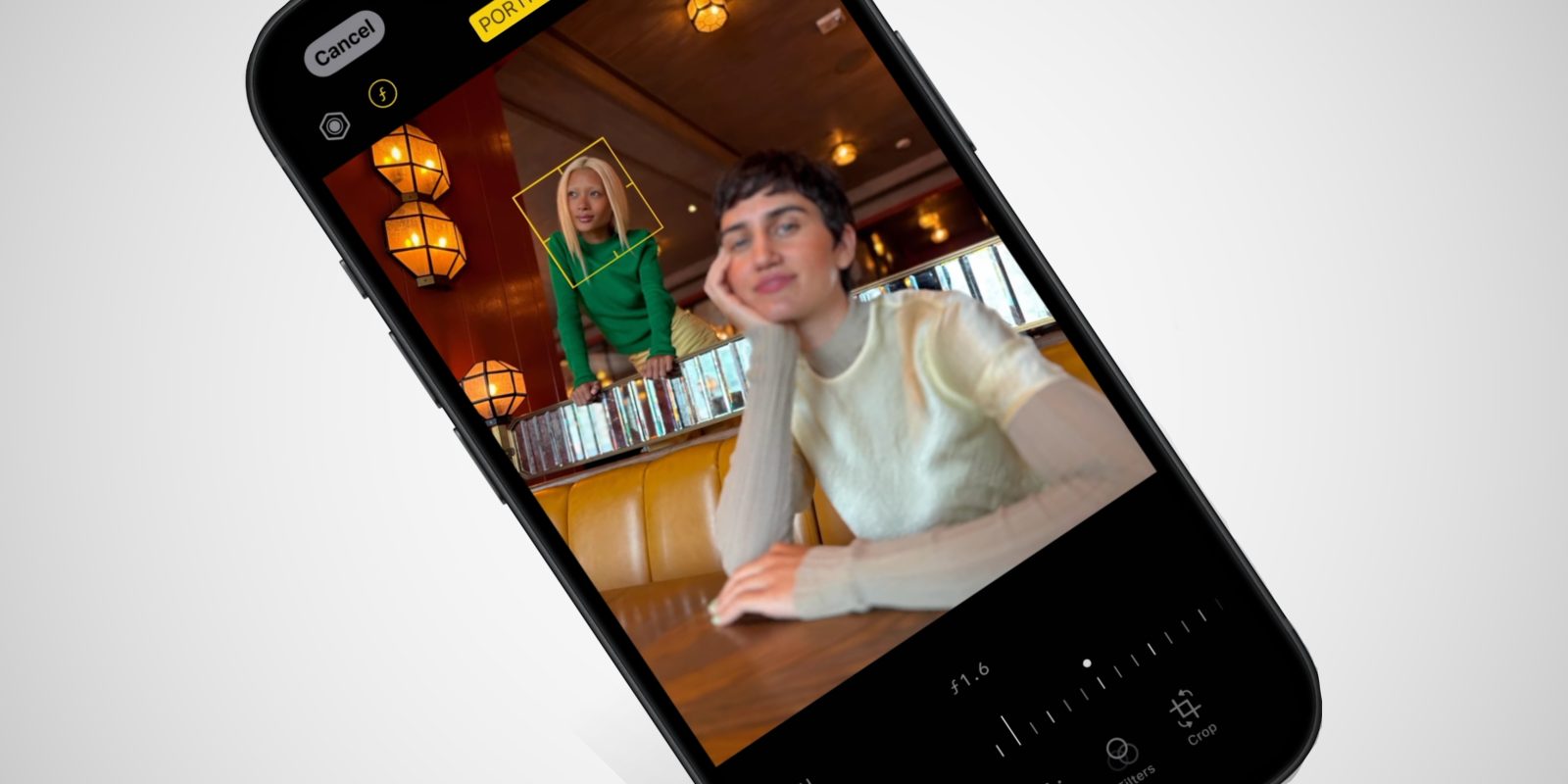
During the September keynote event, Apple touted a whole bunch of new Portrait mode features for the iPhone 15 series, like automatic capture of Portrait mode shots while using the main shooting mode in the Camera app and the ability to change the subject in focus in the Portrait mode shot after you have taken it.

Well, it turns out that at least some of that stuff is also coming to older phones too. Twitter user Dylan pointed out that on the iOS 17 release candidate build, iPhone 14 Pro users can also refocus their Portrait mode shots after they have been taken.

This story is supported by Mosyle, the only Apple Unified Platform. Mosyle is the only solution that fully integrates five different applications on a single Apple-only platform, allowing businesses and schools to easily and automatically deploy, manage, and protect all their Apple devices. Over 38,000 organizations leverage Mosyle solutions to automate the deployment, management, and security of millions of Apple devices daily. Request a FREE account today and discover how you can put your Apple fleet on auto-pilot at a price point that is hard to believe.

“This

Until this week, if you took a Portrait mode shot, the desired subject was “baked in” at the time of taking the photo, so the same foreground region would always be in focus, and the same background region would be blurred. Users could adjust the intensity of the blur, though, or remove it altogether.

But now, when you edit a Portrait photo, you can tap on a part of the image to change the focus altogether. If two people are in the photo, for example, you can switch which person is blurred out by tapping on their faces.

This is one of the big marketing features of the iPhone 15 and iPhone 15 Pro camera system, but it’s actually enabled wholly through software, and Apple has also made it available on iPhone 14 Pro devices. You can even change the focus on old Portrait mode shots in your library, not just newly taken images.

It makes some sense that the feature is also available on the 14 Pro, as the iPhone 15 and iPhone 15 Plus are powered by the same A16 Bionic chip as the 14 Pro. Last night, we reported that the HEIF Max setting is also present on the iPhone 14 Pro and iPhone 14 Pro Max.

But owners of iPhone 14, iPhone 14 Plus, and the iPhone 13 series will also be pleased to hear that Depth and Focus Control is also available on those phones too, according to Apple’s iPhone Compare page.

However, other parts of the new iPhone 15 camera stack are not available on older models. For instance, the 14 Pro does not seem to automatically take Portrait mode shots while using the main camera. Neither does it get the ability to take 24-megapixel photos that balance detail and light capture.

iOS 17 will be available to download for free for iPhone and iPad users this coming Monday, September 18. iPhone 15 goes up for pre-order on Friday and deliveries start from September 22. All iPhone 15 models will come with iOS 17 preinstalled.

FTC: We use income earning auto affiliate links. More.