About

Posts by :

A Magical Summer At Sundance Labs

A Magical Summer At Sundance Labs
image

Dear friends —

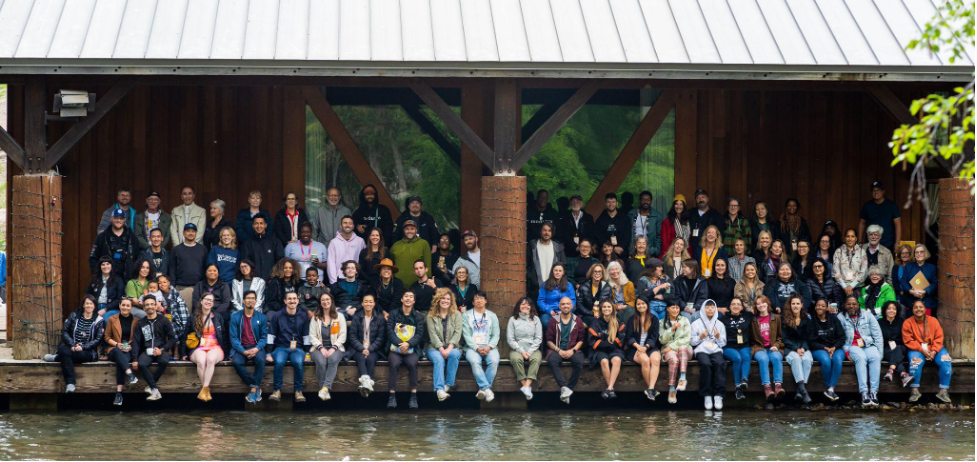
We’ve just completed a magical summer at the Sundance Resort and other beautiful locations, where artists came together to workshop projects and develop brave, risk-taking stories at our signature Sundance Labs. This has always been a part of our year-round work that’s near and dear to my heart, and it felt especially timely this year. 

As we speak, our entire country is having a conversation about the vital role of artists in society, and the right of creatives to earn a living from their work. In the midst of this challenging moment for our industry, it was invigorating and inspiring to feel the boundless creative energy of our Sundance fellows and watch new ideas take root. It brought home an essential truth: Supporting artists — creatively, strategically, and financially through grants — has never been more important. We remain committed to the future of Sundance Labs and are proud to stand in solidarity with the WGA and SAG/AFTRA in building a fairer and more equitable future for artists. 

We got a powerful glimpse of that future beginning with the Native Lab in New Mexico, which brought together five Indigenous artists from the U.S., Canada, and New Zealand to work on their narrative feature and episodic pilot scripts. Through cold reads, one-on-ones with lab advisors, and a workshop with director Joan Tewkesbury, participants focused on writing with authenticity and specificity to tell their stories with their own unique Indigenous voice.

At the closing circle of the Directors Lab, one Fellow summed up an experience shared by many who participated: “I have never felt more alive in my life than during the time I spent here at the lab.” I couldn’t agree more; it was thrilling to experience the intersection of nature and storytelling as we brought eight directors together to workshop their feature projects. Every day was full of creativity, imaginative possibility, and a willingness to try new approaches and push boundaries. It was a special treat to have four alumni — Gina Prince-Bythewood, Rick Famuyiwa, Miguel Arteta, and Ira Sachs — return as advisors, joining Artistic Director Gyula Gazdag and many others who have made a deep commitment to our culture of generosity. We also had a beautiful celebration of Joan Darling and Joan Tewkesbury, who have contributed to our labs for more than 30 years (!) and will continue to support Sundance fellows online.

Next up, we moved into the online Screenwriters Lab, which gave many of our fellows the opportunity to translate their discoveries from the Directors Lab into work on their scripts. Highlights included one-on-one feedback sessions with advisors, an in-depth advisor discussion of unforgettable film endings, and a conversation with Tarell Alvin McCrainey about the writing of the exquisite film Moonlight.

Following the Screenwriters Lab, we hosted five feature documentaries in post-production at the annual Documentary Edit and Story Lab. Artists from the U.S., Jordan, and Palestine set up a makeshift edit room at the Sundance Resort, working intensively with six world-renowned advisors to reimagine and reinvigorate their work. The lab also hosted a track for emerging editors who gained real-world experience working alongside fellows. A few weeks later, the Ignite Lab at MASS MoCA brought together ten filmmakers from ages 18–25 to establish the foundation for what will be a year-long fellowship focused on providing young artists with a robust creative community as they begin their careers.  

We closed out July with our Producers Lab, focusing on holistic producing, sustainability and fostering the essential creative and business partnership between directors and producers. And looking to the Fall, we’re excited to support storytellers at our Episodic Lab and Catalyst. 

There were so many memorable moments this summer — from watching scripts come alive for the first time to sitting with our fellows and advisors as they worked through rough cuts of scenes. It was awe-inspiring to witness fellows from all over the country and all around the globe connect across storytelling forms, backgrounds, identities, and experiences. And, of course, we laughed a lot, connected deeply, and enjoyed a safe space that honors creativity and individual voices. 

Thanks so much to our incredible staff, advisors, fellows, crews, actors, volunteers, funders, and partners for your enduring commitment, and for making Sundance such a special and meaningful place for discovery and community. With each moment of resilience and inspiration, each moment of vulnerability, and each thought-provoking insight, it becomes even clearer that these stories need to be told as part of the cultural conversation — and the fiercely talented, independent artists we support have so much to offer our world.

In gratitude,

Glacial Grandeur Takes Center Stage at The Bolder Lodges, Lysefjord, Norway

Glacial Grandeur Takes Center Stage at The Bolder Lodges, Lysefjord, Norway

Located at the southernmost end of a series of majestic Norwegian fjords and encircled by a mountainous stretch exists a landscape where even the most oversized personality can be made to feel humbled by nature’s grandeur. Lysefjord, renown amongst hikers, campers, kayakers, mountain bikers, and adventurers drawn to its awe-inspiring scenery, was till now mostly off the radar of the design-first traveling set. The Bolder Lodges is a small enclave of architectural cabin-style retreats furnished into a warm womb with a view that may tempt the architectural set to “rough it” within the gentlest of accommodations.

Two cabins shown situated upon large concrete pillars to further near the tree line along a snow-covered mountain landscape.

Each of the four cabins stand upon large concrete pillars to further elevate the structure and view.

Designed by Norwegian architectural firm Snøhetta, four 35m2 cabins – Stylten, Myra, Stjerna, and Eldhuset – are snuggly situated on the mountainside to offer guests exemplary views of Lysefjorden from above the tree line. Sheets of glass maximize the sensation of being part of nature even when safely nestled into the comfortable confines of each structure.

A majestic panoramic view of the nearby fjord located below the series of cabins from the glass facade covered bedroom. Interior is furnished with armchair, bed and pouf.

While the cabins themselves are comfortably cozy in dimension, the architecture’s tall ceilings and large panoramic windows create a “cliff’s edge” effect, inviting the sensation of hanging over a naturally occurring edge.

A majestic panoramic view of the nearby fjord located below the series of cabins from the glass facade covered bedroom, with light blue bedding and off-white blanket.

Black detailing and wood cabinetry appointed modern kitchen with small collection of white natural ceramics staged on top shelf over a kitchen sink.

Dark cozy bedroom with white linens and view of surrounding forest through side windows. Small black sconce to the right of the bed.

Natural materials such as wood, marble, and leather lean toward the darkly minimalistic, accentuated by an earthy palette and organic textures across the built-in bed and bathroom located on the ground floor. Each of the cabin’s upper floors is dedicated to a kitchen and dining area appointed by Vipp.

Overhead shot of off white fabric pouf with two books and a drinking glass set on top of it to the left of a bed.

Side by side photos of The Bolder Lodge interiors; left image shows panoramic view looking out onto the fjord from a slim dining area, the other a dark small kitchen with a circular black kitchen vent and black countertops done by Vipp.

Guests can choose to pre-order provisions to stock their Vipp designed kitchens for in-cabin dining, with a refrigerator, induction cooktop and oven, Nespresso coffee machine, tea kettle and a selection of kitchen utensils provided.

Dining table with Scandinavian modernist design tea kettle, candle holder, mug, creamer and small bowl with two dining chairs face to face with majestic view of the Norwegian fjord waters below.

Clad in untreated red cedar, the cabins’ exteriors reference the surrounding forest and are intended to patina into a natural gray finish as the elements blend the structures into the surrounding landscape. In contrast, oak wood dominates within, but Snøhetta has made sure to avoid uniformity in the layout to give returning guests a unique experience within each cabin structure with every visit.

Snow covered mountains with several of the The Bolder Lodges obfuscated by the trees, with clouds blanketed across the large fjord to the right.

Overhead photo of The Borders Lodge during winter, with the entire roof blanketed in a thick layer of snow.

The site is off the grid except for electricity powering the light and the amenities in the cabins. The naturally sourced spring water from the treatment plant under the parking is cleaner than the water in the local river running over the mountain.

Two Adirondack style wooden chairs situated on a hillside next to one of the cabins of The Bolder Lodges during dusk or dawn.

Silhouette of one of the The Bolder Lodges cabin during a hazy warmly illuminating sunrise with a bridge spanning the fjord in the distant background and the mountains reflected across the water.

Silhouette of one of the The Bolder Lodges cabin during a hazy warmly illuminating sunrise with a bridge spanning the fjord in the distant background and the mountains reflected across the water.

There are also two 22-square-meter SkyLodges with two double bedrooms. Designed in a cube over cube floor plan, architect John Birger Grytdal has created accommodations as close to a tree house experience as one could imagine in Lysefjord.

View of the of the two smaller 22 square meters SkyLodges overhanging the mountainside, captured during a dramatically darkened cloudy sky with the interior of the cabin warmly illuminated.

Side by side photos of The Bolder Lodges' bathroom and interior furnishings, including a small bathroom sink and leather armchair with tilting adjustable floor lamp in black.

It may be a cabin, but you won’t be roughing it. Soft cotton towels and luxury toiletries from Barbor appoint the fully equipped bathroom, complete with warm shower and flush-toilet.

What: The Bolder Lodges
Where: Ryfylkevegen 251, 4110 Forsand, Norway
How much: From $371/night for two occupants; a newly opened Grand Lodge offering two double bedrooms and two bathrooms is available with prices made available upon inquiry.
Highlights: The glacial carved landscape draws thousands of hikers and outdoor adventurers, with numerous trails to explore and 4,444 steps of ascending the world’s longest wooden staircase situated in the nearby village of Flørli. The Pulpit Rock (Preikestolen) in Ryfylke is a popular vantage point made even more famous by Mission: Impossible – Fallout; the view requires a moderately demanding 4–kilometer hike during the warmer months, but a guide is recommended during the winter.
Design draw: Each of the four cabins are dramatically furnished with Scandinavian designs from Vipp and Eikund, the dark interior palette resulting in a stark contrast to the glacial-bright views.
Book it: The Bolder Lodges

Photos courtesy of The Bolder Lodges

Go virtually on vacation with more design destinations right here.

Gregory Han is a Senior Editor at Design Milk. A Los Angeles native with a profound love and curiosity for design, hiking, tide pools, and road trips, a selection of his adventures and musings can be found at gregoryhan.com.

A New USPS Collection Enlarges the World’s Tiniest Lifeforms to the Size of a Postage Stamp

A New USPS Collection Enlarges the World’s Tiniest Lifeforms to the Size of a Postage Stamp

All images courtesy of USPS

One of the newest releases from the U.S. Postal Service features creatures so microscopic they’re too small for even the back of a postage stamp. Released earlier this month, the Life Magnified collection contains 20 of the world’s tiniest living forms, from a cluster of supple red blood cells and a single strand of fibrous hair to the sprawling network of mouse brain neurons. While most stamps shrink a photo or illustration to fit within the confines of the rectangular sticker that’s less than an inch wide, this series enlarges the images to reveal the infinitesimal in striking, vivid detail.

Included in Life Magnified are several scientists and photographers featured on Colossal, including Igor Siwanowicz (previously) and Jason Kirk (previously). Shop the collection at USPS.


A stamp features a blue and orange zebrafish

The collection of life magnified stamps in a stamp book

Do stories and artists like this matter to you? Become a Colossal Member today and support independent arts publishing for as little as $5 per month. The article A New USPS Collection Enlarges the World’s Tiniest Lifeforms to the Size of a Postage Stamp appeared first on Colossal.

Photographer Captures the Eccentric People of California

Photographer Captures the Eccentric People of California
California Dreamers
Nancy and Spencer Hunt.

A photographer traveled to California to meet some of the weird and wonderful people who call the Golden State home.

California, and Los Angeles in particular, is a huge magnet for people who want to realize their dreams and live out their fantasies. For her latest project, California Dreamers, Sally Davies met a vast array of West Coast dwellers including everyday folk and notable figures.

“I didn’t know that many people there, so I just got started with who I did have,” Davies tells PetaPixel. “Those people recommended their friends — people they thought would be good additions to the project.”

California Dreamers
Gary and Joan Gand who have been together since they were 17.
California dreamers
Gabbi in Palm Springs with her parrot Baxter.
California dreamers
John and Xiao and kids photographed at their home in Silverlake.
Linda Ramone
Linda Ramone, the subject of many songs by The Ramones.

“I also had people in New York that had been in my New Yorkers book call their California friends and insist they join the West Coast project. That started a chain reaction and the saying, ‘It takes a village’ was really true. I left each photo shoot with at least one or two new people to contact,” adds the photographer.

As Davies mentions, she shot a similar project in New York where she delved into the famous apartments on Manhattan Island and the people who live there.

California dreamers
Lynda Kahn photographed at home in L.A.
california dreamers
Stephen Henry who bought his house in Silver Lake in 1996.
California Dreamers
Kitten Kay Sera photographed at home in West Hollywood with her dog Pinkaboo.
California dreamers
Cybill in her dungeon-like home.

New Yorkers was released during Covid when people were locked inside their homes. But after the project was finished, Davies wanted to keep exploring this style of portraiture.

“I had been spending time in California the last few years and had a hunch that it might be my next book,” she says.

“You never know until you try something, but the response to California Dreamers has been off the hook. I guess the interest in each other’s stories and homes has outlived Covid.”

California dramers
Richard Haymes and Michael DeJong with their dog Atticus.
California dreamers
Kimberly Biehl Boaz and Greg Boaz.
California dreamers
Pamela Des Barres photographed at her home in Reseda, California.

Capturing the California Dreamers

Davies says that on her first trip, she photographed “about a dozen people” and came back to shoot the rest in the following two months.

“It was full pedal to the metal but with the help of my assistant Vin who had a car, we got it done,” she says.

“We would cover as much territory on those car days as humanly possible, sometimes photographing two or three people in one day.

“Each person was given a Q&A prior to our photo shoot, so I already had that done when we took their photo.”

Mat Gleason’s Mom and Dad photographed at home in Huntington Park.
California Dreamers
Sara Reyna photographed at her home, in Cathedral City.
California Dreamers
Denise Cook photographed at her home in Inglewood.

Davies says she learned from her first project in New York that bringing lights wasn’t necessarily a good idea.

“As I was setting them up I could feel the person getting uneasy and a bit nervous. It took too long and the energy changed” she explains.

“So after that, I just used an on-camera flash that I bounced off the ceiling. I just needed to make sure the people and their treasures were well-lit.”

California Dreamers
Jeff Guthrie at his house in Venice.
California Dreamers
Sheila Silber who says Malibu hasn’t changed in 21 years.
California Dreamers
Deke Dickerson in the Valley.

Davies uses a Sony a7R with an 18mm wide lens attached and her shoots were quick, taking no longer than 20 minutes and sometimes being done in five.

“I tried not to manipulate the moment. I just wanted to photograph the person quickly before either of us started overthinking the shot,” she adds.

California Dreamers is available from Ammonite Press. More of Davies’ work can be found on her website, Instagram, and Facebook.


Image credits: All photos by Sally Davies.

Australian Geographic nature photographer of the year 2023

Australian Geographic nature photographer of the year 2023
image

Although it’s a petrifying first sight, ask yourself who is more scared right now? Since this is only a photograph, a paused juncture in time, you missed a vital moment. You missed the glimpse of her spiderlings hidden behind her, the moment she became a courageous mother in my eyes. Sunshine Coast, Queensland

Recycled Fishing Nets Find Life as 3D-Printed Philips MyCreation Lamps

Recycled Fishing Nets Find Life as 3D-Printed Philips MyCreation Lamps

Designer Aleksandra Gaca’s pioneering efforts across the realm of 3D-woven textiles has won her acclaim for materials exhibiting a rhythmic topological complexity hinting of movement or even growth. Fearlessly experimental, Gaca’s weaving techniques have appeared within the interior cabin of a concept car, across 3D woven textile acoustic panels, and applied to her own chic shawl. Open to new challenges, Gaca partnered with Philips MyCreation to explore utilizing recycled fishing nets to “weave” a series of luminaires into the brand’s Coastal Breeze collection.

Manufactured completely with recycled synthetic polymeric fibers, all four pendant designs are composed of innumerable layers printed to evoke the textures of sand dunes, rippling water, and fish scales, each exhibiting the same characteristic blue green color of the fishing nets from which they were born from. A pleasing benefit of reusing the recycled synthetic polymers is the subtle gradient from green to yellow that only becomes visible when illuminated.

Detail of 3D printing process showing an additive printer applying layers of recycled fishing net sourced filament while manufacturing the Philips MyCreation pendant light.

Close up macro of the small irregularities of the green textured design created during the 3D-printing process across each layer that gives each pendant light its own unique character.

Small irregularities in the 3D-printing process are embraced by Gaca as a unique fingerprint each made-to-print light exhibits.

Close up of the small irregularities visible across the green textured design of pendant light created using the additive 3D-printing process.

“I find inspiration in geometric and abstract shapes in architecture, and patterns found in nature,” explains Gaca. “My main focus is on developing designs that offer sensory experiences, just like the way nature does. I want to create fabrics that are not just visually appealing but also offer a tactile and even auditory experience, all contributing to a better living and working environment.”

Underside view of the Droplet Three Pendant light designed by Aleksandra Gaca and made using 3D printing technology. Green lamp against light tan background.

Side view of the Droplet Three Pendant light designed by Aleksandra Gaca and made using 3D printing technology.

Side view of the Droplet Three Pendant light designed by Aleksandra Gaca and made using 3D printing technology.

Underside view of the Droplet Three Pendant light designed by Aleksandra Gaca and made using 3D printing technology. Green lamp against light tan background.

Philips sourced the discarded fishing nets in collaboration with Fishy Filaments in Cornwall, United Kingdom to help reuse a portion of the 200,000 tons of new fishing net manufactured annually. The technology giant then needed to develop a new process to handle the material, first sorting, cleaning, then melting the nets to eventually be reformed into a 100% recycled filament that could be used to translate Gaca’s soft textile geometric patterns into solid lighting objects.

Five woven textile swatches and a roll of Aleksandra Gaca's woven textile sample set across a table next to an illuminated Philips Droplet Three Pendant light.

Previous 3D-printed luminaries within the MyCreation catalog were made with at least 55% recycled or bio-circular materials. The Coastal Breeze collection is the brand’s first using 100% recycled materials.

Overhead angled view of Aleksandra Gaca working with three large spools of filament with an illuminated Philips Droplet Three Pendant light overhead.

Aleksandra Gaca holding an illuminated Philips Droplet Three Pendant light in both hands, with light softly glowing across her face.

ThePhilips MyCreation Coastal Breeze collection is just one of numerous 3D-printed design styles the brand now manufactures on demand. There’s also Icelandic-inspired lamps, Japanese lantern designs, and intricately textured table lamps made to look and feel like wicker, amongst numerous other contemporary options.

With plastic waste being an enormous environmental issue, sustainable design will require more companies to adopt similar bio-circular sourcing and manufacturing processes, scaled to become the rule, rather than the exception to reduce carbon emissions, eliminate waste, and create a circular economy where plastic is reused in perpetuity.

Gregory Han is a Senior Editor at Design Milk. A Los Angeles native with a profound love and curiosity for design, hiking, tide pools, and road trips, a selection of his adventures and musings can be found at gregoryhan.com.

Bruce Davidson Digs Deep and Finds Gems He Had Overlooked

Bruce Davidson Digs Deep and Finds Gems He Had Overlooked
image

In the exhibition “The Way Back,” the photographer presents unseen outtakes from his nearly 70-year career as a chronicler of American life.

Breathtakingly fast and painstakingly slow: Before the introduction of the digital camera, a photographer worked in those parallel time frames. The click of the shutter was instantaneous, but then the film had to be developed, the contact sheets or color slides reviewed, and the selections made for printing.

Pressed for time, a working photographer typically made these decisions hurriedly. In old age, there is time for reconsideration. Bruce Davidson, who turns 90 next month, has been reviewing his archive for the last eight years. In “The Way Back,” the title both of an exhibition now at the Howard Greenberg Gallery, in New York, and a more compendious book to be published this fall, he is presenting photos he overlooked, putting them on public view for the first time.

In a 2015 interview, Davidson named for me some photographers he thought had taken the art form to “a new departure point”: Eugène Atget, Henri Cartier-Bresson, Robert Frank, Diane Arbus. He did not include himself. He knows he has followed trails blazed by pioneers. What makes him remarkable is the empathy that won over his subjects and the devoted persistence of his investigations.

A photograph from Davidson’s breakout series, “Brooklyn Gang,” 1959, when he embedded himself with a gang of teenagers in pre-gentrified Park Slope.via Bruce Davidson/Magnum Photos via Howard Greenberg Gallery, New York

Frank, who is probably Davidson’s greatest influence, restlessly sought to portray scenes and people new to him; it is one reason he did not enjoy or succeed at the lucrative task of crafting photo essays for Life magazine. In contrast, Davidson has preferred to mine the same subject for months or years, getting so close to people that you come to feel you know them yourself.

Davidson broke into professional photography at Life. Fascinated by the camera from the time he was 10, he was encouraged by his stepfather, who advised him to apply to the Rochester Institute of Technology. From there, he went to study photography at Yale, where his photographs of the college football team garnered five pages in Life. In his 20s, he had begun his professional career.

In an early series on the circus in 1958, he took intimate photographs of Jimmy Armstrong, a clown with dwarfism. He showed Armstrong playing the trumpet in a shabby bedroom, depositing cash at a bank window, performing in makeup and costume, and eating a sandwich alone in a diner. The book “The Way Back” includes another version of the previously published trumpet picture, taken from a greater distance and a lower angle to reveal Armstrong’s living quarters. It discloses more but delivers a slightly lower impact. It made me think of a jazz singer’s alternate version, in which you can better discern the lyrics but lose a bit of the mood.

In a photo Davidson took in the Bronx in 1963, a young man leads off a woman whose headband accents a bouffant flip.Bruce Davidson/Magnum Photos via Howard Greenberg Gallery, New York

The risk of unlimited empathy is sentimentality, a pitfall that tripped up a youthful Davidson at times in his pictures, including those of Armstrong and another favorite subject, an elderly Parisian widow. His breakthrough came soon enough, in 1959, when he embedded himself with a Brooklyn gang of teenagers who ruled a bit of turf in pre-gentrified Park Slope. Like a sputtering match, the kids saunter, primp and canoodle for Davidson’s camera, before they will ineluctably succumb — as Davidson’s wife, Emily Haas Davidson, established in a 1998 interview with a former gang member — to addiction, despair and suicide.

One classic photograph (which surpasses anything in this collection of outtakes) portrays a beautiful young woman with remarkable eyebrows smoking a cigarette and pushing back her hair, as she looms, knowing and defiant, above three of her friends who are intertwined on a blanket in Prospect Park. (At the gallery, she can be seen, charismatic as ever, in another shot where she has joined them on the blanket.) It is a memorably poignant image that would make a nice pendant to one of the Brooklyn gang pictures in the Greenberg show — a boy standing on a gritty street with cupped hands catching the rain.

Davidson’s “East 100th Street” series, taken between 1966 and 1968, focused on residents of a single block in East Harlem, Manhattan.via Bruce Davidson/Magnum Photos, via Howard Greenberg Gallery, New York

Along with the Brooklyn gang, which is the best represented, there are also alternate takes at the gallery from two other major Davidson projects: his documentation of the civil rights struggle in the South in the ’60s, including those he took while traveling with the Freedom Riders; and a two-year immersion with a large-format camera among the hard-pressed Hispanic and Black residents of East 100th Street in East Harlem. In both, he crossed the racial divide and earned the trust of his subjects.

But the two pictures in this rediscovered trove that stick with me most are from lesser known undertakings. Both feature women with big hair. In a photograph taken in the Bronx in 1963, a young Hispanic man clutches a box of what appear to be candy bars in one hand while he leads off a woman whose white headband accents a bouffant flip. Her stare at the photographer — and therefore at the viewer of the photograph — is what arrests you: direct, tough and savvy beyond her years.

A portrait taken in Yosemite National Park in 1965, part of a series Davidson made of people relaxing in a camp site. via Bruce Davidson/Magnum Photos, via Howard Greenberg Gallery, New York

The other portrait was taken in Yosemite National Park in 1965, part of a series Davidson made of people relaxing at a camp site. A wry rejoinder to the wilderness photographs made there a century before by Carleton Watkins, Davidson’s pictures displayed how Yosemite by this time catered not so much to adventurers but to citified tourists, like a young woman with a startling beehive hairdo who sits placidly at a picnic table laden with her provisions. A big gas-guzzling car is parked beyond her. Sharp but not mocking, the Yosemite picture, like the civil rights and East 100th Street projects, was Davidson’s report on what he found in America. Neither doom-saying nor starry-eyed, he was simply being observant. And honest.

Bruce Davidson: The Way Back

Through Sept. 16, Howard Greenberg Gallery, 41 East 57th St, Manhattan; 212 334-0010, howardgreenberg.com





