About

Posts by :

Tips for Beginners on Shooting Night Photography in Big Cities

Tips for Beginners on Shooting Night Photography in Big Cities

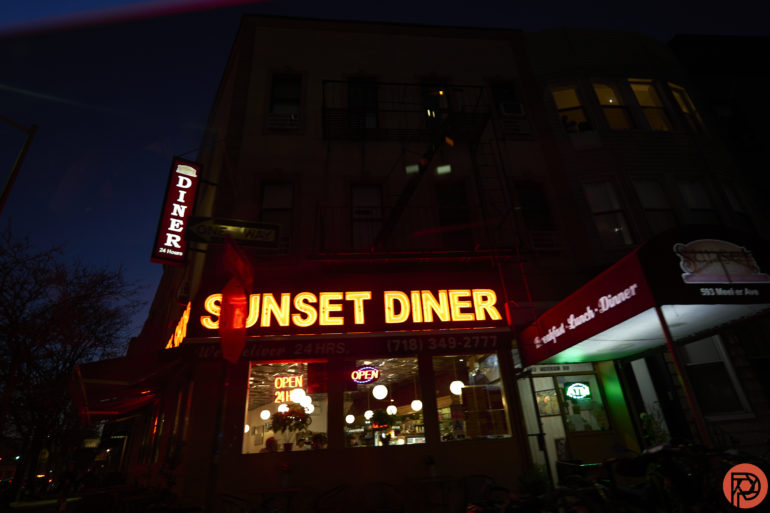
One of the best things to do when you get a brand-new camera is night photography. Sure, you can do it at night in the middle of the desert. But the frenetic pace of big cities also lends itself to adapting to what’s in front of you. It presents a fascinating challenge for your brand-new camera and can fuel you creatively in ways that we can’t even explain. So here are some tips on shooting night photography and how Panasonic cameras can help you make the most of the experience.

This piece is presented in partnership with Panasonic Lumix. We’ve independently and ethically reviewed all the products in this post already without sponsorship. And we worked with them to recommend a few key gems to you.

Recommended Settings for Night Photography
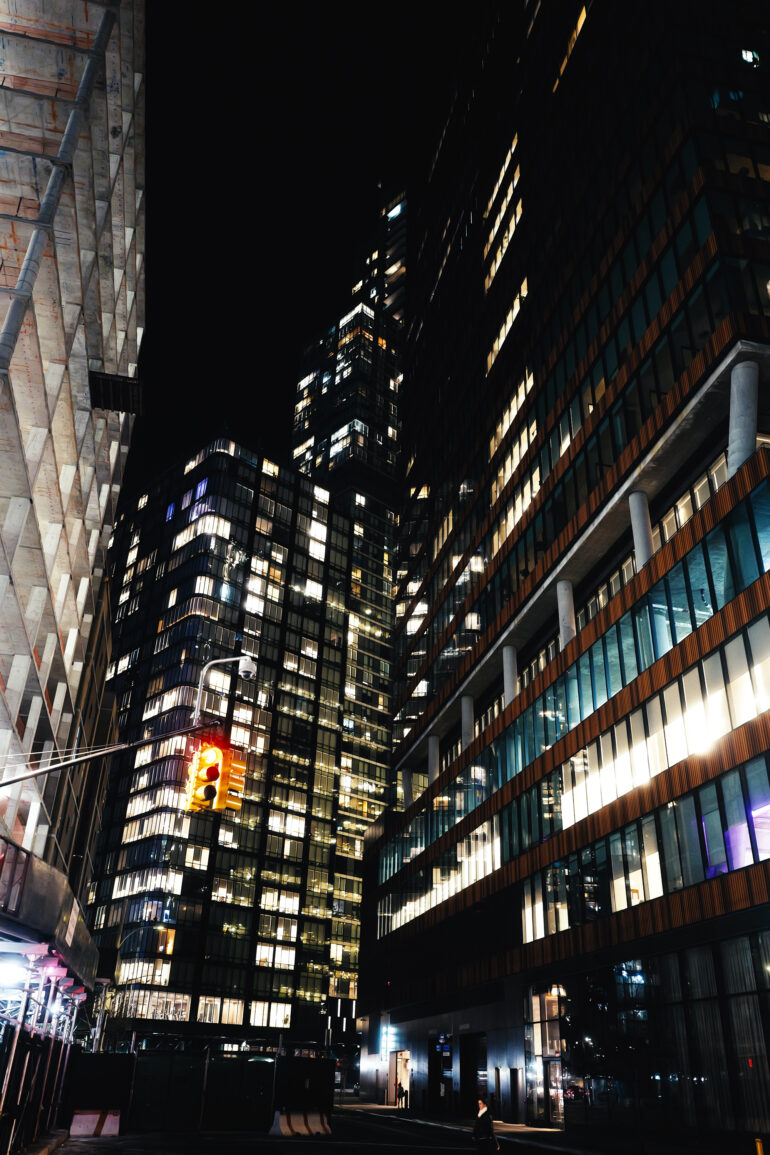
Here are a few of our recommended settings for shooting night photography in big cities.

  • Keep your ISO raised up to at least 1600. Though Panasonic Lumix cameras have some of the best image stabilization that we’ve tested, we don’t expect most beginners to know how to do things like controlling their breath while shooting photos. Your ISO is the overall sensitivity that your camera has to the scene in front of you. Think of it as your standard salad before you put dressing and other toppings inside — but you’re choosing your own variant of what the standard salad is. Pure greens is like ISO 100 while ISO 1600 takes it to the next level with greens, tomatoes, onions, etc.
  • Trust us, shooting at a higher ISO is organically much better than what you’d get with your smartphone. You’re using a full-frame camera or a Micro Four Thirds in the case of Panasonic’s options. You’re probably shooting your photos to put them online. But with a dedicated camera, you can think so much larger. Consider printing them — which is something you’d never really want to do with smartphone cameras. A print is a far different experience — get people together to come have them look at them in person and stare at them.
  • Shoot with a wider aperture on your lens. That’s a number that is signified by an f and 3.5 or 1.8 — specifically, they’re either whole numbers of decimal points. A wider aperture is a lower number like f1.4. It also gives you a blurry background and lets more light into the scene.
  • Compared to your smartphone, the aperture (otherwise known as an f-stop) is simulated via processing via the computer inside the smartphone. With a dedicated camera, you’ve got much more control here. More importantly, it looks better too.
  • Your shutter speed is set in fractions of seconds. Most people can’t handhold a camera and not get blurry photos slower than 1/60th of a second even with image stabilization. So make sure that you’re shooting at a faster shutter speed. Fast than 1/60th of a second, for example, is 1/1000th of a second. You can audibly hear these differences with the shutter.
  • Most photographers would tell you to just do it in post-production, but we think you should get it right in-camera. With that, we’re discussing white balance. Panasonic cameras have a lot of symbols that are preset to get a specific color in your photos. Some look warmer (more orange) while others are cooler (more blue in tone.) At night, try to go for something Tungsten (3200K if setting manually) or Daylight (5500k if setting manually.) They’ll both give you very cinematic effects. However, sometimes you want something in between.
  • Panasonic cameras also have preset color setups like CineLike V2 or D2. These can further customize your looks and palette. Think of these like adding a preset to your photos before you shoot them. There’s also Real Time LUT.

Shooting Wide (And Why It’s Best)

Shooting photos with a wide-angle lens is one of the best things you can do when shooting night photography. Part of the reason for this is because it lets you take in the vast landscape around you. But the more scientific reason is that it lets you shoot at a slower shutter speed. The reason for this is called the reciprocal rule of shutter speeds — which states that your shutter speed should be, at a minimum, the reciprocal of your lens to get a blur-free photo. So a 50mm lens, per se, would need to be shot at 1/50th. Of course, image stabilization in Panasonic cameras and more can help.
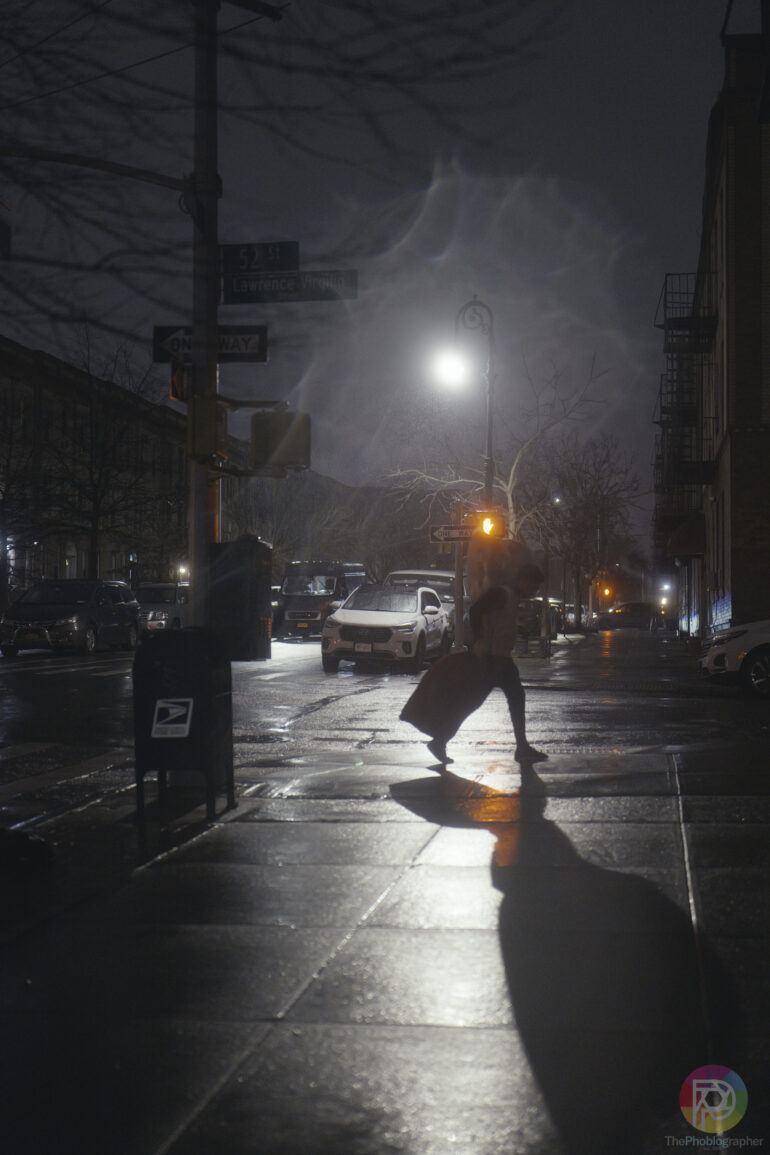
Because of this and the fact that it mimics the way I see, I tend to reach for a 35mm equivalent lens. With Micro Four Thirds, that’s around a 20mm lens. With full frame, the 35mm f1.8 calls to me.

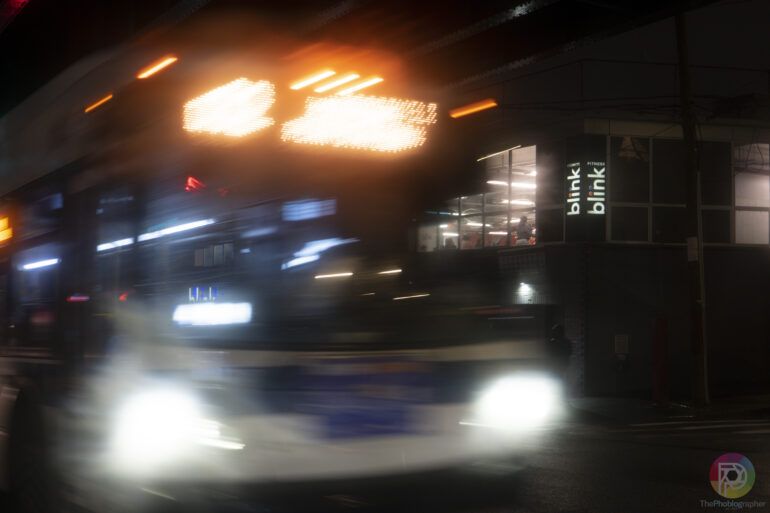
For the record, too, I like to shoot my images with a bit of a slower shutter speed as I really like blur in my images. That aesthetic is currently very fashionable.

Compose by Color and Light

When you’re shooting photos at night, don’t necessarily think about just the rule of thirds. Consider composing your scene by color and light. After you’ve set your white balance to what you want, this will become far more clear. Typically in cities, there isn’t a whole lot of color — or it’s separated very clearly at night. When you set the white balance, that changes a bit. You can suddenly see the way the camera sees and start composing scenes based on how certain colors stand out. The same can be done with points of light as they create visually-fascinating lines and contrast.
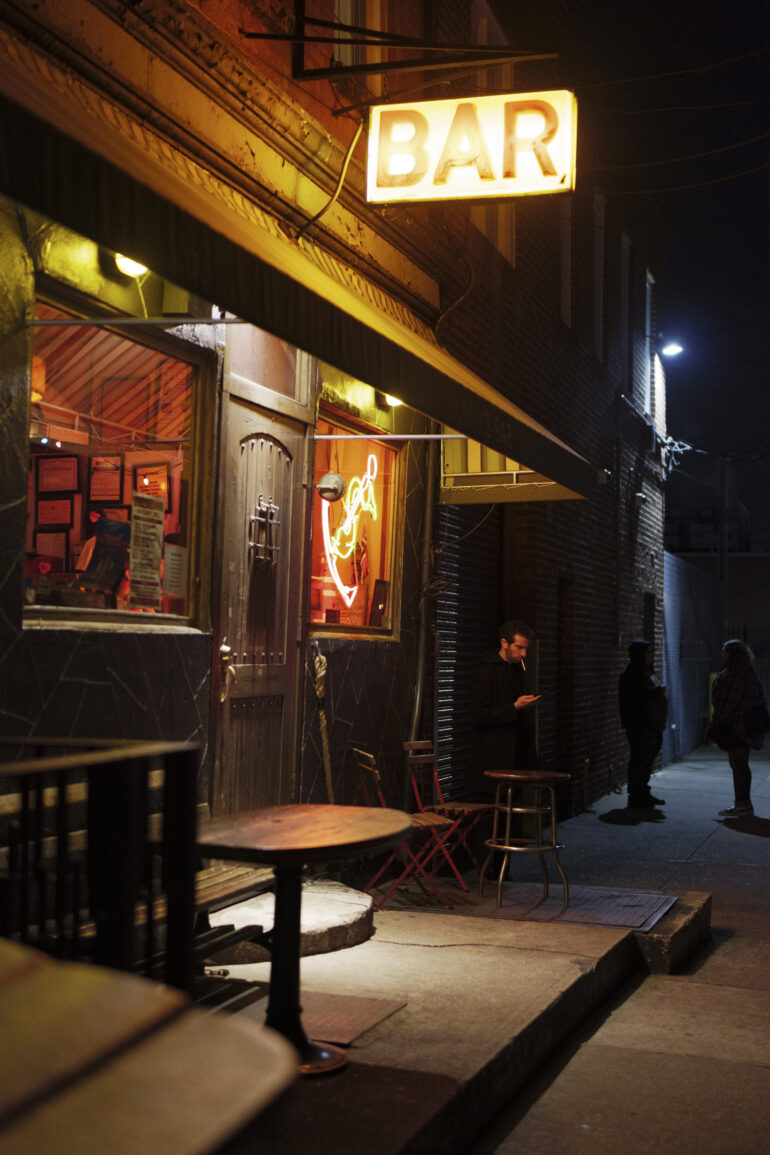
People Detection

One of the favorite things of so many people to do at night is street photography. For that, Panasonic cameras have human and animal detection built in. But you can set it to just focus on humans, their body overall, or their faces and eyes. Turn this on at night and use it in conjunction with choosing the focusing point. Combine that with composing by color and light.

A fun thing to do is to look at a scene and admire it for what it is. Then wait for people to move in and out of it to see what you get.

Exposure Preview: Use it or Not?

By default, cameras are set to help you see what sort of exposure you’d get from the camera. This is called exposure preview. However, it affects autofocus performance in low light when doing night photography. This can mean that you actually do miss the shot at times. Instead, you can read the light meter on the side of the camera’s screen or use aperture priority, which will help you overall by only letting you control the aperture and other settings that you want to be locked.

Keep these in mind when shooting night photos, and you’ll see the magic that your Panasonic cameras can help you produce.

Get the jump on Santa Fe Indian Market with ‘Legacy’ magazine

Get the jump on Santa Fe Indian Market with ‘Legacy’ magazine

The largest event of the Santa Fe summer is around the corner.

Santa Fe Indian Market, taking place Aug. 19-20 on the Plaza, isn’t simply two days of artists sharing their culture and creativity with the world.

For one thing, more than two days are involved. For the Native artists, work begins months ahead of market. Every piece is handcrafted, reflecting the artist’s years of training but also centuries of culture.

C+C Photography Gallery : Natan Coe : Nostalgia – The Eye of Photography Magazine

C+C Photography Gallery : Natan Coe : Nostalgia – The Eye of Photography Magazine

Until August 21st, C+C Photography Gallery in Nantucket presents Nostalgia, an exhibition by Natan Coe. Here is the text of the gallery :

Coe’s newly released 2022-23 Nantucket series captures the nostalgic essence of the island complemented by the artist’s signature element of surprise.
Emphasizing the beautiful unpredictability of both the natural landscape and of the human body, each work documents a specific moment in time that cannot be replicated.
Depicted in the misty outline of a wave crashing on the shore, the unique pattern of tire marks left on the sand, and the tangled strands of a woman’s hair blowing in the breeze, Coe’s latest body of work celebrates the result of a truly unplanned, organic moment.

C+C Photography Gallery
30 A Main Street, Nantucket, MA (774) 325-5965
www.candcgallery.com

Julia Scully, influential photography editor and memoirist, dies at 94 – The Eye of Photography Magazine

Julia Scully, influential photography editor and memoirist, dies at 94 – The Eye of Photography Magazine

Julia Scully, who after 20 years as editor of Modern Photography magazine wrote an acclaimed memoir about her Depression-era childhood, when her mother put her and her sister in an orphanage before moving the family into a roadhouse in a remote part of Alaska, died July 18 at her home in the New York City borough of Manhattan. She was 94.

Her death was confirmed by Jana Martin, a daughter of Scully’s companion, Harold Martin, a photographer.

Scully began working at photography magazines in the 1950s and was hired to be editor of Modern Photography in 1966. The magazine was as devoted to the technical side of photography as it was to its aesthetics. Scully focused on the latter, and under her tenure, the magazine was instrumental in the emerging recognition of photography as art.

She started a section of the magazine called Gravure that asked renowned photographers such as Irving Penn about the circumstances and artistry of their pictures; wrote a column called “Seeing Pictures,” in which she described the work of photographers she admired; and reported on exhibitions.

“Gravure and different series that we did later just kind of took up the idea of photography as an art form,” Andy Grundberg, a former picture editor at Modern Photography and later a companion of Scully’s, said in a phone interview.

He added: “Julia was friends with photographers, had been married to a photographer and was in the swing of things at a time when galleries were being established for photography and museums were getting more interested.”

While leading the magazine, she published a series of arresting portraits by Mike Disfarmer, an obscure photographer from rural Heber Springs, Arkansas, who had died in 1959. Disfarmer’s customers came to his Main Street studio, with its plain backdrops, to celebrate life’s transitions — for 50 cents a shot — in black and white.

Scully was alerted to Disfarmer’s work by Peter Miller, a local newspaper editor.

She and Miller collaborated on a 1976 book, “Disfarmer: The Heber Springs Portraits, 1939-1946,” which presented 66 of his photographs. Writing in The New York Times Book Review, Peter C. Bunnell wrote that the pictures “are not nostalgic, but haunting, suggesting daguerreotypes of strangely familiar yet unknown relatives. ” He added: “Julia Scully’s sensitive text illuminates both the man and the place.”

In an essay the next year in Aperture magazine, Scully wrote that there was a “conscious intent, rather than a naive artistry,” behind Disfarmer’s portraiture, helping him to create photographs with a “piercing clarity.”

Excerpt from the article by Richard Sandomir originally appeared in The New York Times.

Arts Center offering new exhibitions

Arts Center offering new exhibitions

Submitted photos
The Arts Center in Elkins is currently displaying exhibitions by local artists Julie Weiford, Wilhelmina McWhorter and Keegan Campbell.


ELKINS — The Arts Center will host a reception on Saturday from 4 to 6 p.m. for artists Julie Weiford, Wilhelmina McWhorter and Keegan Campbell.

All three artists’ exhibitions will display through Sept. 28 at The Arts Center.

“Algothquian” is an exhibition created by artist Moll (Julie Weiford), and is a combination of indigenous and gothic aesthetic. Moll’s artwork is a triad of her native heritage, West Virginia upbringing, and herself as an individual. Using assorted media from felt, beads, to glitter, Moll conveys a broad range of themes and emotions all presented with a mischievous grin.

She is an indigenous artist from West Virginia, specializing in one of a kind works. She explores Appalachian and Algonquian culture through a gothic lense. She refers to her style as “Algothquian”, a mix of the words “Algonquian” and “goth.” Each one of her art works come with its own unique beaded frame that holds just as much meaning as the works they border.

“My Mom Says It’s Perfect” is a duo exhibition by Wilhelmina McWhorter and Keegan Campbell. Exploring their styles, expressing freely and finding joy in the silly and mundane world. It is both Campbell’s and McWhorter’s debut gallery. This exhibit finds them diving into public displays of artistry; however, all that matters is that their moms said it’s perfect.

Campbell is from Elkins, and has lived the last 13 years in Morgantown. He attended WVU for both his bachelor’s and master’s degrees, and currently works as an independent clinical social worker. He has always appreciated art, architecture, landscapes, and people’s efforts to create. He enjoys the creepy, dark, ugly and distorted sides of life, but also enjoys the simplicity of natural beauty, joy and rich earthy colors.

Wilhelmina (Willa) McWhorter was born and raised in Elkins. She studied acting and English lit and petry at WVU then later earned a Physical Theatre Certification from Dell’Arte School of Physical Theatre in Blue Lake, California. Her life has taken her down many paths, all over the United States, South America, and Europe, and her work has led her to many communities and experiences.

After the pandemic took away her job in Liverpool, she forged her way back to the mountains in search of her next adventure. It was through this metamorphosis that she discovered her own passions in painting. Much like her late father, William McWhorter, she found herself immersed in the work.

She finds joy in painting the world through an impressionistic, colored brush and draws inspiration from how shadow and light interact with one another to create the things we perceive. This gallery is a chance for her to display progress while she works through the posthumous art lessons of her late father. If anyone has contact with the afterlife, can you ask for an extension on next week’s homework?

The Arts Center is a welcoming and inclusive home where everyone is encouraged to create, explore, and discover the value of art through exceptional programming. The Center encourages arts opportunities for a lifetime of personal enlightenment. Committed to making art more accessible to everyone, it offers art programs for individuals of all ages and abilities. The Center wants to encourage conversation and connections, bring joy to your life, and exceed your expectations in all areas of art. Empower yourself through the arts!

The Art Center is presented with financial assistance from the West Virginia Department of Arts, Culture and History, and the National Endowment for the Arts, with approval from the WV Commission on the Arts.

Today’s breaking news and more in your inbox

Art Beat: Taste Edmonds, free concerts, a new musical and Edmonds Art Studio Tour

Art Beat: Taste Edmonds, free concerts, a new musical and Edmonds Art Studio Tour

Taste Edmonds 2023 — Last chance to get presale tickets

Friday – Sunday, Aug. 11 – 13

Frances Anderson Center

700 Main St., Edmonds

We are mere days away from the can’t-miss event of the summer! Online presale will end at noon Thursday, Aug. 10.

Tickets will be available at the door for a slightly higher price. Read about this and many other exciting details on the Taste website. (Be sure to check out the newly added FAQ page.)

Don’t worry —  the only app you’ll need for this event is an appetizer! If you purchased your tickets ahead of time, bring a printout, a screenshot or have your confirmation email open to the included QR codes to get your wristband.

Don’t miss the Makers Market! This weekend, the Edmonds Chamber of Commerce will turn the Edmonds Library Plaza rooftop overlooking the Puget Sound into a Makers Market full of handcrafted treasures, innovative designs, and locally made goods. The Taste Edmonds Makers Market will feature 30 vendors and will be free to the public, while Taste Edmonds — featuring food, live music and more — will require paid entry.

The Taste Edmonds Makers Market is an ode to makers, craftspeople, artisans and creatives of the Puget Sound area making everything from candles to jewelry, and soaps to pottery. This year’s focus is on showcasing the best of local maker products to build community, support local, and give vendors a chance to reach thousands of new eyes during the Taste Edmonds weekend. Check here for a full line up of vendors.

Volunteers still needed. This event would not be possible without the team of amazing, dedicated and very cool volunteers. Volunteer shifts last about five hours and include responsibilities like staffing the box office, monitoring entrances and more. If you’d like to be included among this incredible population of VIPs, check out the list of open volunteer shifts and sign up.

~ ~ ~ ~

Free summer concerts in Edmonds Aug. 13-17

85th Street Band.

The sixth week of free Edmonds Summer Concerts in the Park features three acts that will get people dancing. On Sunday, Aug. 13, check out the 85th Street Big Band at Edmonds City Park, followed on Tuesday, Aug. 15 with the Sidekickers and Thursday, Aug 17 with Bread & Gravy, both at the Hazel Miller Plaza, in downtown Edmonds.

Performing at City Park (600 3rd Ave. S.) Aug. 13, the 20-member 85th Street Big Band. under the musical direction of Katie Kruse, has earned a solid reputation as an accomplished band featuring swing favorites from the 1930s, ‘40s and ‘50s.

On Aug. 15 from 4:30-6 p.m., enjoy the feeling of kicking back with good friends on a summer afternoon with The Sidekickers. at Hazel Miller Plaza (5th Avenue South and Maple Street. The trio performs pop, rock and jazz, from original compositions to favorite covers. The Sidekickers features members Bill Derry, Darla Kiste and Megan Jeffrey.

Then, on Thursday, Aug. 17 — also from 4:30-6 p.m. — enjoy some good comfort music for your soul by Bread & Gravy, playing a variety of music styles, including Americana, blues, rock, soul and pop. The group was voted second for Best Live Performance Group in the Best on the Peninsula, 2017.

Summer Concerts in the Park is a program of the City of Edmonds Arts Commission with sponsorship support from Lynnwood Honda, Carter Motors/Lynnwood Acura and the Hazel Miller Foundation. Find a complete schedule of concerts here.

~ ~ ~ ~

Ballyhoo Theatre Mainstage presents “Shapeshifters”

Friday evening, Saturday matinee and evening, Sunday matinee, Aug. 11-13, 

Evening 7:30-9:30 p.m.

Matinee 2-4 p.m.

The Black Box Theater at Edmonds College

20310 68th Ave. W., Lynnwood

Be one of the first audiences to see a wonderful new musical in this pilot production. Shapeshifters, A Queer Comic Book Musical, written by Truth Future Bachman (they/them), is a musical-theater multiverse dedicated to LGBTQIA2S+ superheroes. Using the lens of superhero science fiction, Shapeshifters encourages young queer and trans participants, and their allies, to consider what “others” them as their superpower, and is equal parts entertainment and empowerment.

This actor-driven production is part of the pilot development process and is designed to allow participants to create text as part of the narrative, providing the opportunity to inject their personal DNA into this theatrical experience. With a fantastic techno-inspired score unlike anything you’ve heard before, this is an amazing opportunity to be part of the creation of a new musical.

Shapeshifters is directed by Shileah Corey, with choreography by Erich W. Schleck and Robbi Moore. Musical direction is by Lucas Lindberg and Shileah Corey. The show runs August 11-13, 2023, with shows Friday and Saturday evenings and Saturday and Sunday matinees, at The Black Box at Edmonds College. Inclusive ticket pricing ranges from pay what you can to $20. Order tickets here.

~ ~ ~ ~

Edmonds Art Studio Tour – All are welcome

L-R: One Fish, Two Fish by Martha Hurst, Margarita Orange by Patty McNamee, and Moonstruck by Kim Parsley

Saturday and Sunday, Sept. 16-17 

Click here for a map of participating studios.

Edmonds Art Studio Tour is excited to announce this year’s in-person community engagement, where they open their studios to those interested in purchasing handmade works and learning more about each artist’s creative process.

The artists selected to participate in the annual studio tour are chosen based on specific criteria, including a connection to the Edmonds community. During the weekend of Sept. 16-17, the public can tour the studios where all artists will be featuring their work and will be available to discuss their creative process. Some will also be sharing demonstrations during this time. Their work, much of it for purchase, is featured on each artist’s website, and all are accessible via the Edmonds Art Studio Tour website.

Art has many healing qualities to not only the artists who create, but also to those who find a connection with art. Now, more than ever, we can all benefit from something that clears the mind. This year’s artists appreciate your support and hope to provide you with a healthy distraction.

— By Elizabeth Murray

Photo by Brittany Gross

Elizabeth Murray is a freelance writer thankful to call Edmonds home. When she’s not busy wrangling her two kids (and husband), you can find her playing ukulele and singing with The Band LeLe.