
Kato Living Josh Madson Photography


Janvier, from Cold Lake First Nations in Alberta, is considered one of Canada’s greatest painters
Bob Weber (new window) · The Canadian Press
One of Canada’s greatest painters, who wedded Indigenous elements to the mainstream of modern art, has died.
Alex Janvier, whose thousands of works hang in private homes and public galleries across the country, was 89.
Painting says it all for me,
Janvier said in a statement in 2012. It is the Redmantalk in colour, in North America’s language. Our Creator’s voice in colour.
Officials at the Assembly of First Nations annual general meeting announced the death and held a moment of silence in the artist’s honour on Wednesday.
Janvier was born Feb. 28, 1935, on the Cold Lake Indian Reserve, now Cold Lake First Nations, northeast of Edmonton. His father, Harry Janvier, was the band’s last hereditary chief before federal law forced election officials on the band.
One of 10 children, Alex Janvier grew up on the land, hunting, fishing and trapping, as well as farming. At the age of eight, he was sent to the Blue Quills Residential School near St. Paul, Alta.
That kind of story does a lot of unusual things to your life,
Janvier recalled. It tears your language, culture and beliefs. They probably removed a lot of it.
But at the school Janvier had access to pencils, crayons, watercolour paints and lots of paper.
By the time he reached his early teens, he was under the tutelage of Carlo Altenberg, an art professor at the University of Alberta, who exposed the young Denesuline to the work of European modernists such as Vassily Kandinsky, Paul Klee and Joan Miro.
After high school, Janvier studied at Alberta’s Provincial School of Technology and Art in Calgary, now the Alberta University of the Arts. He studied with prominent artists, including Illingworth Kerr and Marion Nicoll.
In 1962, after a brief teaching stint, Janvier took up painting full time — a risky proposition for an Indigenous artist when such work was considered of more ethnological than artistic interest. Still, Janvier was able to make a living as a painter, illustrator and occasional instructor.
Janvier married Jacqueline Wolowski in 1968. They would eventually have six children.
In 1973, with other First Nations artists Norval Morrisseau, Daphne Odjig and Jackson Beardy, he helped found the Professional Native Indian Artists Incorporation to bring their work to the mainstream.
We had to open a lot of doors,
Janvier recalled. A show in a Montreal gallery was the group’s first, and others followed.
We finally got that rubber stamp and other gallery owners started to open their doors.
Since then, Janvier’s work has been shown in galleries across Canada, as well as in Sweden, Paris, London, New York and Los Angeles.
WATCH | 1993’s unveiling of Janvier’s massive mural on a museum’s domed ceiling:
It is widely collected, and commissioned work hangs in the National Gallery and the Royal Alberta Museum, as well as schools, commercial offices, municipal buildings and band offices from coast to coast.
His massive mosaic, Iron Foot Place, has greeted thousands of hockey fans at Edmonton’s Rogers Place, home of the Edmonton Oilers of the National Hockey League.
He also designed a $200 coin for the Royal Canadian Mint.
Unlike many other First Nations artists of his generation, Janvier’s work tends not to come directly from traditional legends and stories. He draws equally on the patterns and bright colours of traditional Denesuline beadwork and the work of painters such as Kandinsky.
But his renowned flowing lines and intricate designs are all his own.
Though generally abstract, Janvier did react to the world around him on his canvasses.
In 1988, his painting Lubicon, with its shocking reds, expressed his anger at how that First Nation was being treated. He completed a series about his time in the residential school, including one called Apple Factory. The Oka crisis in 1990 inspired him to paint O’Kanada.
He received numerous honorary degrees and awards, including the Order of Canada, the Lifetime Achievement Award from the National Aboriginal Achievement Foundation, the Queen Elizabeth Diamond Jubilee Medal and membership in the Royal Canadian Academy of the Arts.
In 2003, Janvier and members of his family opened the Janvier Gallery in Cold Lake, not far from where he was born. Visitors could sometimes meet the artist fresh from the studio, covered in paint-splattered jeans and happy to sit and chat.
He painted into his last days, keeping his fingers nimble by assembling jigsaw puzzles at night.
I am a free man because I can create,
he wrote in 2016. “I thank the Great Spirit for my family and for being able to express myself through my paintings.
When I die, I want to have a paintbrush in my hand.

About the Author: Samantha Phillips is Tlingit – Kaagwaantaan, Eagle/Brown Bear of Klukwan and grew up in Yakutat. As a young woman she learned of her Tlingit grandmother’s suffering of severe discrimination and mistreatment while attending a residential boarding school. Publicly speaking out about what her grandmother endured served as a powerful lesson to Samantha that Indigenous voices need to be heard. By focusing on making a difference, she has passionately poured her storytelling abilities into various writing pursuits. When she is not writing in her current home in Madison, Alabama, Samantha can be found making memories with her life’s work—her six children.
“I reawaken sleeping traditions,” says Sugpiaq (Alutiiq) artist and teacher Hanna Sholl. The intent look of resolve, of determination, is clearly felt when she talks about her culture. It is clear Hanna has something to say, not only in her voice, but her hands dance, illustrating her passion.
According to Hanna Sholl, many of her Sugpiaq traditions were put to sleep during Alaska’s colonization. It wasn’t until the 1980’s that those traditions began to slowly awaken from their slumber. In many ways, Hanna’s life holds a parallel.
Born in Kodiak to a Sugpiaq mother and a French-descended father, Hanna’s childhood consisted of traveling back and forth between both families when her parents separated. Raised much of the time in Portland, Oregon, Hanna felt a longing for her ancestral homelands, a connection she couldn’t quite grasp. She recalls one instance, around the age of ten, returning to Kodiak and physically feeling the sense of “home.” Hanna audibly exhales at the memory, a gentle smile warming her countenance.
As the oldest of six, responsibility came natural to Hanna. On her own at the age of 17, ambitious and determined, Hanna put herself through Cosmetology school, worked night shifts at McDonalds and even got married at the age of 18. When her mom asked her and her new husband to drive her van up through the Alaska Highway Hanna jumped at the chance. Once in Kodiak, Hanna quickly decided she never wanted to leave!
When settling into her life in Kodiak, Hanna’s mom suggested she dance with the Alutiiq Dance group. The dance group eagerly welcomed her. As she began to dance she felt a connection, she says, that was embedded in her DNA. Dancing, in fact, opened the floodgates of learning and self-discovery for Hanna.
Recounting the meaningfulness her traditional Sugpiaq dancing brought her, Hanna overflows with passion, her hands expressively reiterating her words. “I was trying to fill these holes… and I am dancing and I am singing…and I am wanting to know what I am singing so I am learning the language. And I am wanting to dance my own stuff so I am learning how to make headdress, I am learning how to make regalia and it’s all filling in. I felt myself starting to get this fire – like, if this so effective for me and it’s not being taught to our kids…what a difference it could make! All of the heartache I could’ve avoided! Had I been validated in my art and my herbal practice, along with the cultural elements that my body was craving on a DNA level.
“It pulled pieces of me that were vital to my existence so that I had to fill them with other things. It became very clear to me that this can help. This can change lives. This can make a difference. This can change our world, or our Sugpiaq nation.”
Hanna began the practice of instantly teaching whatever she was learning and not worrying about becoming an expert first. She wanted to disseminate any knowledge she was receiving as quickly as possible. Hanna credits the guidance of many fantastic mentors pouring into her thirst for knowledge. Her mission has expanded to the point of her teaching classes and materials to help people of all ages utilize art as a healing agent.
This passion for sharing fueled her mission to create a space for cultural healing through art. Hanna’s classes cater to all ages, from curious preschoolers to seasoned elders. She passionately teaches Sugpiaq designs, traditional crafts like oil lamp carving, and the stories woven into each artistic expression.
However, Hanna emphasizes that she’s not merely an instructor; she’s a facilitator of cultural revival. Her oil lamp carving class exemplifies this perfectly. While the practical skills of carving are important, Hanna delves deeper, sharing the history and traditional uses of the lamps. She connects the past to the present, suggesting suitable modern oils and wicks, and even incorporates language translations and songs into the learning experience. Her goal extends beyond classrooms; it’s about reviving traditions within Sugpiaq homes, fostering a sense of cultural identity in everyday life.
Hanna’s artistic expression extends beyond educational settings. Her murals grace the walls of Kodiak and even reach as far as Seattle’s Sacred Medicine House. Collaborations with organizations like the Alutiiq Museum further amplify her message. Together, they create educational children’s coloring books, bridging the gap between cultural knowledge and artistic exploration.
Hanna’s message for visitors to Alaska is simple: learn about the Indigenous communities before you arrive. By understanding the Sugpiaq people and their history, visitors can create a more meaningful connection with the land and its people. Supporting local businesses like Hanna’s storefront Tungiutaa in Kodiak ensures that authentic cultural experiences are available to all.
Hanna Sholl’s story is one of resilience, artistic expression, and a burning desire to heal herself and her community. Through her art and dedication, she is reawakening dormant traditions and paving the way for a future where cultural healing thrives.
Hanna invites visitors to come in to her store Tungiutaa in the Kodiak mall and follow her on Facebook and Instagram.

Meet the Texas Photographer Going Viral for Her Impressive Polaroid Lift Skills
10 July 2024

One of Canada’s greatest painters, who wedded Indigenous elements to the mainstream of modern art, has died.
Alex Janvier, whose thousands of works hang in private homes and public galleries across the country, was 89.
“Painting says it all for me,” Janvier said in a statement in 2012. “It is the Redmantalk in colour, in North America’s language. Our Creator’s voice in colour.”
Officials at the Assembly of First Nations annual general meeting announced the death and held a moment of silence in the artist’s honour on Wednesday.
Janvier was born Feb. 28, 1935, on the Cold Lake Indian Reserve, now Cold Lake First Nations, northeast of Edmonton. His father, Harry Janvier, was the band’s last hereditary chief before federal law forced election officials on the band.
One of 10 children, Alex Janvier grew up on the land, hunting, fishing and trapping, as well as farming. At the age of eight, he was sent to the Blue Quills Residential School near St. Paul, Alta.
“That kind of story does a lot of unusual things to your life,” Janvier recalled. “It tears your language, culture and beliefs. They probably removed a lot of it.”
But at the school Janvier had access to pencils, crayons, watercolour paints and lots of paper.
By the time he reached his early teens, he was under the tutelage of Carlo Altenberg, an art professor at the University of Alberta, who exposed the young Denesuline to the work of European modernists such as Vassily Kandinsky, Paul Klee and Joan Miro.
After high school, Janvier studied at Alberta’s Provincial School of Technology and Art in Calgary, now the Alberta University of the Arts. He studied with prominent artists, including Illingworth Kerr and Marion Nicoll.

In 1962, after a brief teaching stint, Janvier took up painting full time — a risky proposition for an Indigenous artist when such work was considered of more ethnological than artistic interest. Still, Janvier was able to make a living as a painter, illustrator and occasional instructor.
Janvier married Jacqueline Wolowski in 1968. They would eventually have six children.
In 1973, with other First Nations artists Norval Morrisseau, Daphne Odjig and Jackson Beardy, he helped found the Professional Native Indian Artists Incorporation to bring their work to the mainstream.
“We had to open a lot of doors,” Janvier recalled. A show in a Montreal gallery was the group’s first, and others followed.
“We finally got that rubber stamp and other gallery owners started to open their doors.”
Since then, Janvier’s work has been shown in galleries across Canada, as well as in Sweden, Paris, London, New York and Los Angeles.

Celebrated artist Alex Janvier has just finished painting a striking mural on the ceiling of Ottawa’s Museum of Civilization in 1993.
It is widely collected, and commissioned work hangs in the National Gallery and the Royal Alberta Museum, as well as schools, commercial offices, municipal buildings and band offices from coast to coast.
His massive mosaic, Iron Foot Place, has greeted thousands of hockey fans at Edmonton’s Rogers Place, home of the Edmonton Oilers of the National Hockey League.
He also designed a $200 coin for the Royal Canadian Mint.

Unlike many other First Nations artists of his generation, Janvier’s work tends not to come directly from traditional legends and stories. He draws equally on the patterns and bright colours of traditional Denesuline beadwork and the work of painters such as Kandinsky.
But his renowned flowing lines and intricate designs are all his own.
Though generally abstract, Janvier did react to the world around him on his canvasses.
In 1988, his painting Lubicon, with its shocking reds, expressed his anger at how that First Nation was being treated. He completed a series about his time in the residential school, including one called Apple Factory. The Oka crisis in 1990 inspired him to paint O’Kanada.

He received numerous honorary degrees and awards, including the Order of Canada, the Lifetime Achievement Award from the National Aboriginal Achievement Foundation, the Queen Elizabeth Diamond Jubilee Medal and membership in the Royal Canadian Academy of the Arts.
In 2003, Janvier and members of his family opened the Janvier Gallery in Cold Lake, not far from where he was born. Visitors could sometimes meet the artist fresh from the studio, covered in paint-splattered jeans and happy to sit and chat.
He painted into his last days, keeping his fingers nimble by assembling jigsaw puzzles at night.
“I am a free man because I can create,” he wrote in 2016. “I thank the Great Spirit for my family and for being able to express myself through my paintings.
“When I die, I want to have a paintbrush in my hand.”


Photographer Frank Stewart, standing in front of his portrait of jazz pianist Ahmad Jamal, talks to press members at the Brandywine River Museum of Art. Photo by Rich Schwartzman.
For the first time in nine years, the Brandywine River Museum of Art has a photography exhibit on display.
“Frank Stewart’s Nexus: An American Photographer’s Journey, 1960s to the Present” runs through Sept. 22.
He began shooting photos at 14 when he and his mother attended the 1963 Martin Luther King March on Washington, D.C.
Now 75, Stewart said at a press preview that he wanted to be a painter, but photography became his primary art.
“My mother was a painter and I wanted to follow in her footsteps and make her proud of me,” he said. “I started painting and then I found out I was terrible.”
Stewart was impatient with painting, he said, because it took too long, but he could shoot 36 exposures in a short time.

“I could find out how many were terrible right away,” he said.

Stewart’s 1997 “Stomping the Blues” is gelatin silver print from the collection of Rob Gibson of Savannah, Georgia.
Amanda Burdan, the museum’s senior curator, said the Chadds Ford, Pennsylvania, institution was interested in Stewart’s work partly because it had been nearly a decade since it offered a photography exhibit.
“We want to introduce it in a smart and thoughtful way,” she said.
The last photography exhibit at the Brandywine was James Welling’s “Things Beyond Resemblance” in August of 2015. It featured photos he took of sites painted by artist Andrew Wyeth, source of one of the museum’s core collections.
“One of the things that we are really attracted to in the larger body of Frank’s work is his social consciousness, his intelligent environmental issues,” Burdan said. “That inspired us to get to know his work more, but it’s really a retrospective of his entire career.”
The exhibit — co-curated by Ruth Fine, formerly of the National Gallery of Art in D.C., and Fred Moten, a poet, scholar and professor of performance studies at the NYU Tisch School of Fine Arts, along with Burdan — is broken down into seven sections, with representing a theme.

“Smoke and the Lovers” taking in Memphis at Hawkins Grill in 1992 is in the collection of the Museum of Modern Art in New York City.
Rituals, Sound Taste Touch, Africa Caribbean New Orleans: Searching for Roots, Artist Portraits Windows Drawings, Social Practice, Cultures in Color, and Chromatic Music. In all, those themes reflect Stewart’s exploration of life and artistic style.
Fine said the Ritual section of the exhibit starts with him taking pictures of the march and reflects his search for his background.
“When he did those,” she said, “he wasn’t an artist yet. He was at the march with his mother and realized something amazing was going on…Beyond that, the Ritual section includes a lot of work that deals with rituals within the African American community or rituals within the spaces he lived.”
But Stewart’s work goes beyond that. He traveled to New Orleans several times after Hurricane Katrina to document the destruction and the attempts to rebuild sections of the city that had been destroyed.

“Number 1” shows how Stewart used an unavoidable light behind Fidel Castro as part of the image composition.,
He’s traveled extensively and was even able to photograph Fidel Castro while in Cuba.
Stewart said he and other photographers and writers were taken to a room and told not to move from where they were sitting. Castro came in and gave a speech.
There was a light that was on in the background behind Castro. Stewarts wasn’t allowed to change locations and shoot from a different angle to avoid the light, so he made it part of the image’s composition.
IN THE NEWS: Christina School Board puts Superintendent Shelton on leave
Stewart’s artistic journey has taken him to the streets and clubs to photograph artists, singers, musicians, and everyday people living their lives.
“With this exhibition, we have we have a chance to get a sense of the unlimited range and depth of a contemporary genius,” Moten said in a press release. “[His] combination of loving care for his subjects and thoughtful consideration of his medium is singular and invaluable.”

Share this Post


Photographer Frank Stewart, standing in front of his portrait of jazz pianist Ahmad Jamal, talks to press members at the Brandywine River Museum of Art. Photo by Rich Schwartzman.
For the first time in nine years, the Brandywine River Museum of Art has a photography exhibit on display.
“Frank Stewart’s Nexus: An American Photographer’s Journey, 1960s to the Present” runs through Sept. 22.
He began shooting photos at 14 when he and his mother attended the 1963 Martin Luther King March on Washington, D.C.
Now 75, Stewart said at a press preview that he wanted to be a painter, but photography became his primary art.
“My mother was a painter and I wanted to follow in her footsteps and make her proud of me,” he said. “I started painting and then I found out I was terrible.”
Stewart was impatient with painting, he said, because it took too long, but he could shoot 36 exposures in a short time.
“I could find out how many were terrible right away,” he said.

Stewart’s 1997 “Stomping the Blues” is gelatin silver print from the collection of Rob Gibson of Savannah, Georgia.
Amanda Burdan, the museum’s senior curator, said the Chadds Ford, Pennsylvania, institution was interested in Stewart’s work partly because it had been nearly a decade since it offered a photography exhibit.
“We want to introduce it in a smart and thoughtful way,” she said.
The last photography exhibit at the Brandywine was James Welling’s “Things Beyond Resemblance” in August of 2015. It featured photos he took of sites painted by artist Andrew Wyeth, source of one of the museum’s core collections.
“One of the things that we are really attracted to in the larger body of Frank’s work is his social consciousness, his intelligent environmental issues,” Burdan said. “That inspired us to get to know his work more, but it’s really a retrospective of his entire career.”
The exhibit — co-curated by Ruth Fine, formerly of the National Gallery of Art in D.C., and Fred Moten, a poet, scholar and professor of performance studies at the NYU Tisch School of Fine Arts, along with Burdan — is broken down into seven sections, with representing a theme.

“Smoke and the Lovers” taking in Memphis at Hawkins Grill in 1992 is in the collection of the Museum of Modern Art in New York City.
Rituals, Sound Taste Touch, Africa Caribbean New Orleans: Searching for Roots, Artist Portraits Windows Drawings, Social Practice, Cultures in Color, and Chromatic Music. In all, those themes reflect Stewart’s exploration of life and artistic style.
Fine said the Ritual section of the exhibit starts with him taking pictures of the march and reflects his search for his background.
“When he did those,” she said, “he wasn’t an artist yet. He was at the march with his mother and realized something amazing was going on…Beyond that, the Ritual section includes a lot of work that deals with rituals within the African American community or rituals within the spaces he lived.”
But Stewart’s work goes beyond that. He traveled to New Orleans several times after Hurricane Katrina to document the destruction and the attempts to rebuild sections of the city that had been destroyed.

“Number 1” shows how Stewart used an unavoidable light behind Fidel Castro as part of the image composition.,
He’s traveled extensively and was even able to photograph Fidel Castro while in Cuba.
Stewart said he and other photographers and writers were taken to a room and told not to move from where they were sitting. Castro came in and gave a speech.
There was a light that was on in the background behind Castro. Stewarts wasn’t allowed to change locations and shoot from a different angle to avoid the light, so he made it part of the image’s composition.
IN THE NEWS: Christina School Board puts Superintendent Shelton on leave
Stewart’s artistic journey has taken him to the streets and clubs to photograph artists, singers, musicians, and everyday people living their lives.
“With this exhibition, we have we have a chance to get a sense of the unlimited range and depth of a contemporary genius,” Moten said in a press release. “[His] combination of loving care for his subjects and thoughtful consideration of his medium is singular and invaluable.”

Share this Post


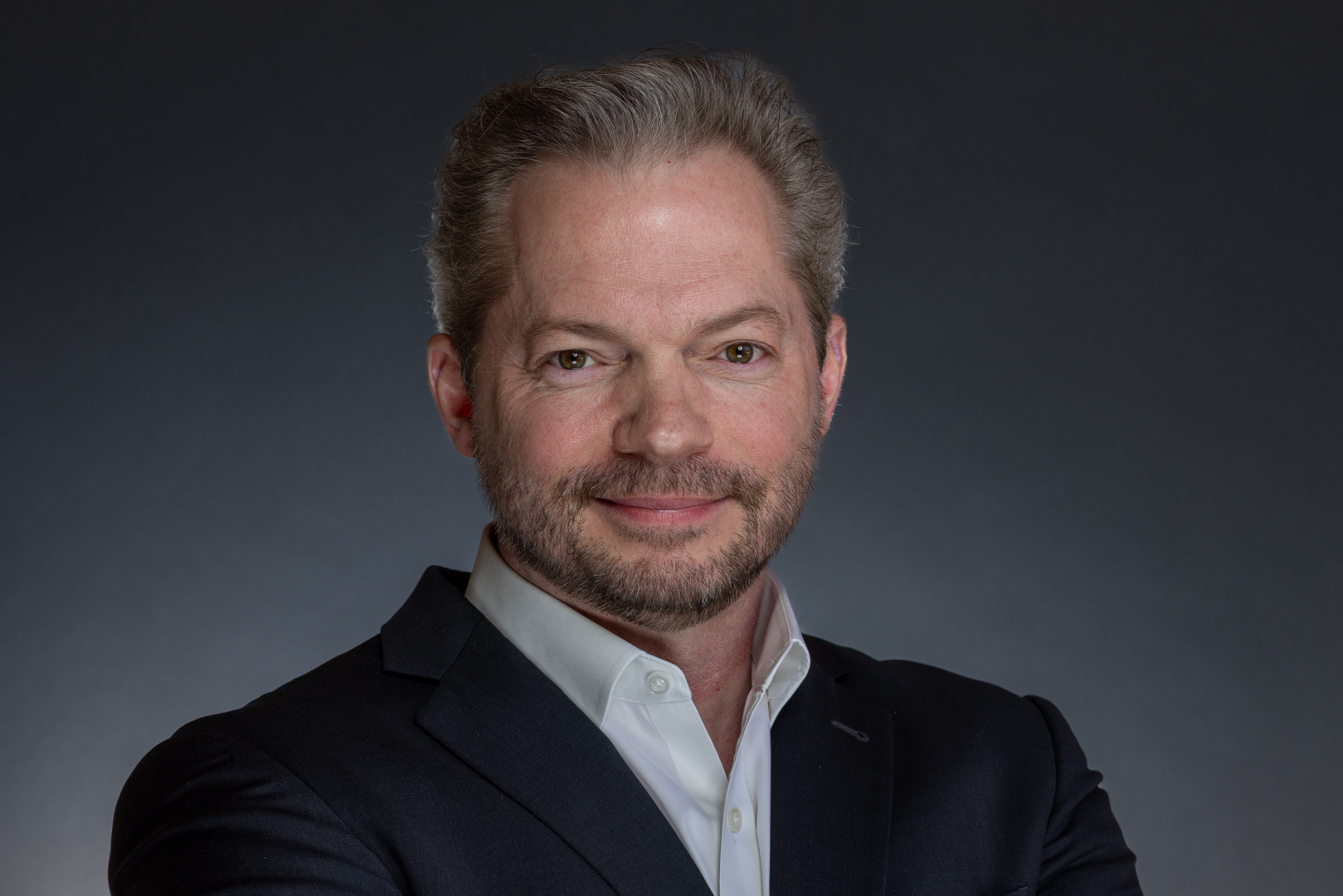
Corporate Headshot Photographer

Corporate Photographer
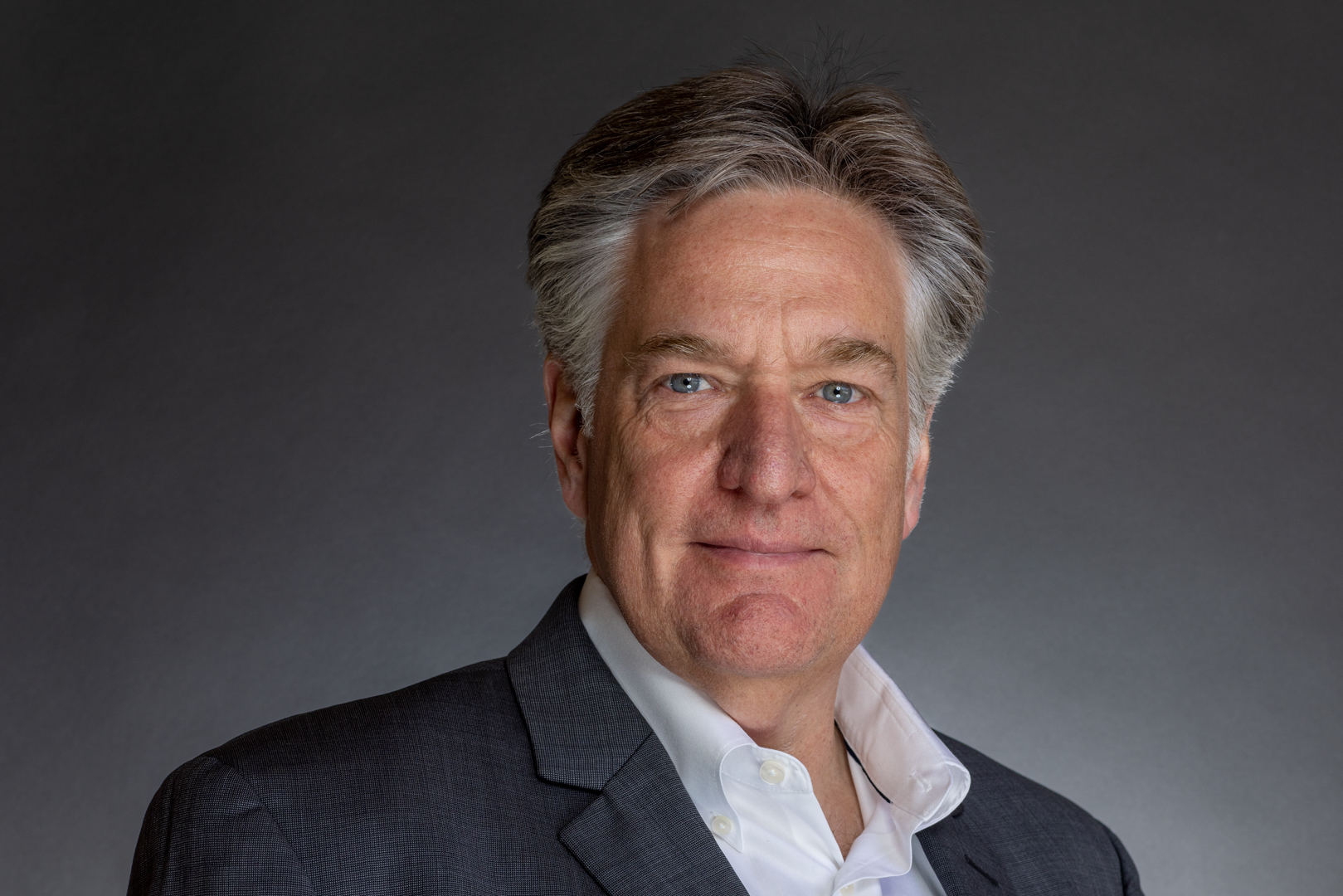
Headshot Photographer
Christian Purdie Photography, a veteran in corporate photography based in Las Vegas, now offers on-site headshot services for offices and corporate events.
— Christian Purdie
LAS VEGAS, NV, UNITED STATES, July 10, 2024 /EINPresswire.com/ — Las Vegas Corporate Photographer Introduces On-Site Corporate Headshots
Las Vegas corporate photographer Christian Purdie is pleased to announce the launch of on-site corporate headshot services at Las Vegas Conventions, catering to businesses and professionals visiting the Las Vegas area.
With the increasing demand for professional and polished corporate headshots, Christian Purdie Photography is now bringing its expertise directly to offices and corporate events. This new service aims to provide convenience and efficiency for busy professionals who require high-quality headshots without the inconvenience of traveling to a studio. Their on-site headshot mobile studios allow companies with staff or employees who work in different states to have a unified branding look to their headshots by bringing studio equipment to Las Vegas convention floors.
“Our goal is to make it as convenient as possible for professionals to obtain exceptional headshots that reflect their personal brand and corporate image,” said Christian Purdie. “By offering on-site services, we eliminate the time and logistical challenges associated with visiting a studio, ensuring a seamless and enjoyable experience for our clients.”
Christian Purdie Photography specializes in creating impactful headshots that enhance professional profiles and corporate branding. Whether for individual executives, entire teams, or corporate events, their photographers have the expertise and equipment necessary to capture the perfect shot in any setting.
The on-site service includes professional lighting setup, backdrop options, and expert guidance to ensure each client achieves their desired look as well as scheduling to accommodate the busy schedules of corporate clients. Upgraded services include assistants, tethered shooting to view images instantly, and individual gallery creation.
For more information about on-site corporate headshots or to schedule a session, visit www.christianpurdie.com or contact info@christianpurdie.com.
About Christian Purdie Photography: Working as a corporate photographer in Las Vegas for over two decades is a leading provider of corporate photography services, specializing in professional headshots, team photos, and event coverage. With a commitment to quality and client satisfaction, they have earned a reputation for delivering exceptional results tailored to meet the unique needs of businesses and professionals.
Christian Purdie
Christian Purdie Photography
+ +1 702-530-4384
email us here
Visit us on social media:
Facebook
X
LinkedIn
Instagram
YouTube
TikTok


Alex Janvier in his studio on Cold Lake First Nation, Alta., on Aug. 16, 2018.Amber Bracken/The Globe and Mail
One of Canada’s greatest painters, who wedded Indigenous elements to the mainstream of modern art, has died.
Alex Janvier, whose thousands of works hang in private homes and public galleries across the country, was 89.
“Painting says it all for me,” Janvier said in a statement in 2012. “It is the Redmantalk in colour, in North America’s language. Our Creator’s voice in colour.”
Officials at the Assembly of First Nations annual general meeting announced the death and held a moment of silence in the artist’s honour on Wednesday.
Janvier was born Feb. 28, 1935, on the Cold Lake Indian Reserve, now Cold Lake First Nations, northeast of Edmonton. His father, Harry Janvier, was the band’s last hereditary chief before federal law forced election officials on the band.
One of 10 children, Alex Janvier grew up on the land, hunting, fishing and trapping, as well as farming. At the age of eight, he was sent to the Blue Quills Residential School near St. Paul, Alta.
“That kind of story does a lot of unusual things to your life,” Janvier recalled. “It tears your language, culture and beliefs. They probably removed a lot of it.”
But at the school Janvier had access to pencils, crayons, watercolour paints and lots of paper. By the time he reached his early teens, he was under the tutelage of Carlo Altenberg, an art professor at the University of Alberta, who exposed the young Denesuline to the work of European modernists such as Vassily Kandinsky, Paul Klee and Joan Miro.
After high school, Janvier studied at Alberta’s Provincial School of Technology and Art in Calgary, now the Alberta University of the Arts. He studied with prominent artists, including Illingworth Kerr and Marion Nicoll.
In 1962, after a brief teaching stint, Janvier took up painting full time – a risky proposition for an Indigenous artist when such work was considered of more ethnological than artistic interest. Still, Janvier was able to make a living as a painter, illustrator and occasional instructor.
Janvier married Jacqueline Wolowski in 1968. They would eventually have six children.
In 1973, with other First Nations artists Norval Morrisseau, Daphne Odjig and Jackson Beardy, he helped found the so-called Indian Group of Seven – more formally known as the Professional Native Indian Artists Incorporation – to bring their work to the mainstream.
“We had to open a lot of doors,” Janvier recalled. A show in a Montreal gallery was the group’s first, and others followed.
“We finally got that rubber stamp and other gallery owners started to open their doors.”
Since then, Janvier’s work has been shown in galleries across Canada, as well as in Sweden, Paris, London, New York and Los Angeles.
It is widely collected, and commissioned work hangs in the National Gallery and the Royal Alberta Museum, as well as schools, commercial offices, municipal buildings and band offices from coast to coast.
His massive mosaic, Iron Foot Place, has greeted thousands of hockey fans at Edmonton’s Rogers Place, home of the Edmonton Oilers of the National Hockey League.
He also designed a $200 coin for the Royal Canadian Mint.
Janvier was born Feb. 28, 1935, on the Cold Lake Indian Reserve, now Cold Lake First Nations, northeast of Edmonton.Amber Bracken/The Globe and Mail
Unlike many other First Nations artists of his generation, Janvier’s work tends not to come directly from traditional legends and stories. He draws equally on the patterns and bright colours of traditional Denesuline beadwork and the work of painters such as Kandinsky.
But his renowned flowing lines and intricate designs are all his own.
Though generally abstract, Janvier did react to the world around him on his canvasses.
In 1988, his painting Lubicon, with its shocking reds, expressed his anger at how that First Nation was being treated. He completed a series about his time in the residential school, including one called Apple Factory. The Oka crisis in 1990 inspired him to paint O’Kanada.
He received numerous honorary degrees and awards, including the Order of Canada, the Lifetime Achievement Award from the National Aboriginal Achievement Foundation, the Queen Elizabeth Diamond Jubilee Medal and membership in the Royal Canadian Academy of the Arts.
In 2003, Janvier and members of his family opened the Janvier Gallery in Cold Lake, not far from where he was born. Visitors could sometimes meet the artist fresh from the studio, covered in paint-splattered jeans and happy to sit and chat.
He painted into his last days, keeping his fingers nimble by assembling jigsaw puzzles at night.
“I am a free man because I can create,” he wrote in 2016. “I thank the Great Spirit for my family and for being able to express myself through my paintings.
“When I die, I want to have a paintbrush in my hand.”








