About

Posts by :

Today’s Photo from Ted Grussing Photography: With and Without

Today’s Photo from Ted Grussing Photography: With and Without

… a little fun and change of pace as we head out to the bed of Spuria Innovator Iris’s in my back yard … both images show one of the iris’s as the bloom is beginning to unfurl, but the one above has a ladybug at the top of the bud in exquisite detail, whilst the one below is relying on its natural beauty to attract my attention.
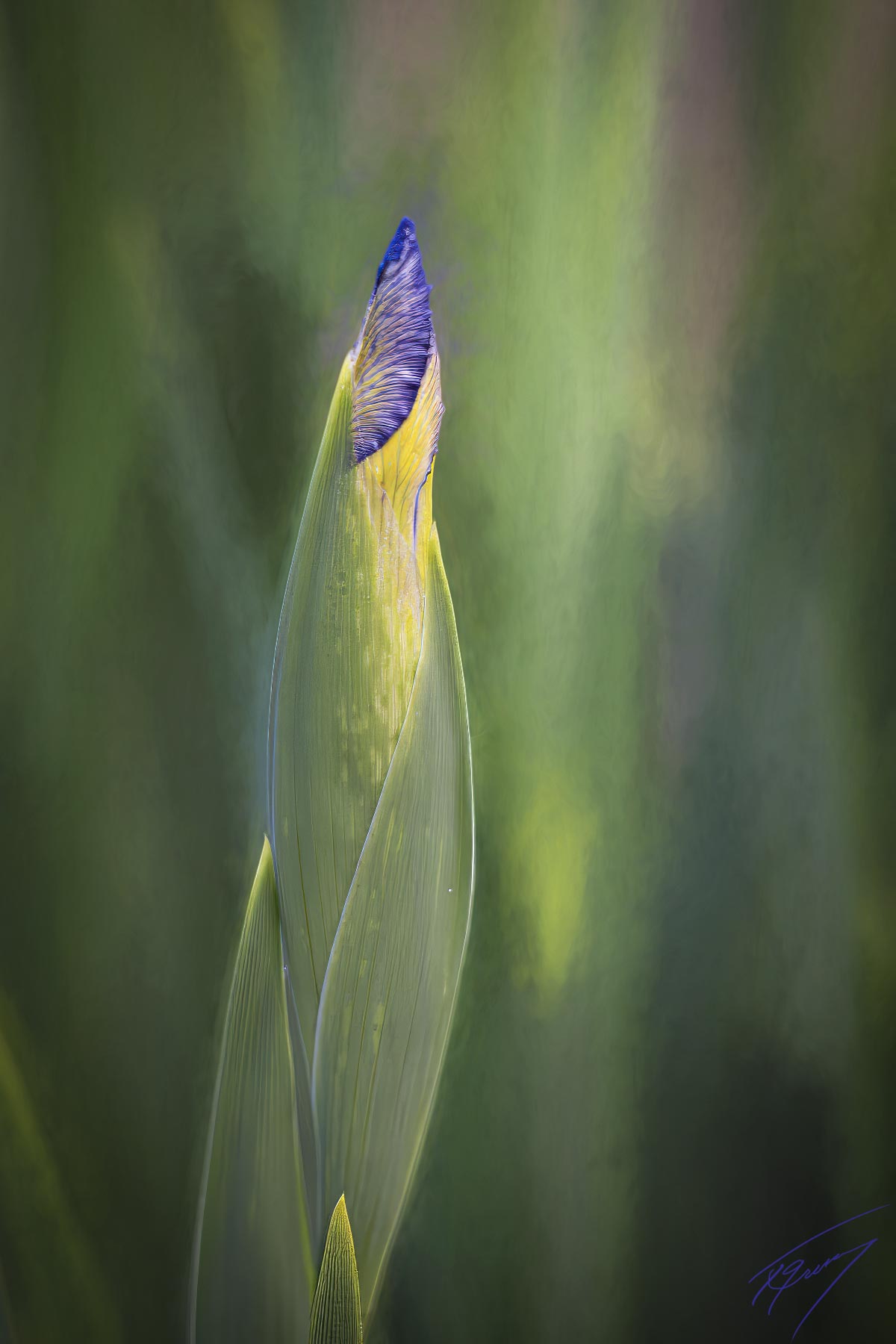
The blooms are now in the past, but the memories live on and next year they will again bloom … seasons pass and life goes on for all of us … what a gift!

A belated Happy Fathers Day to all the dads out there …

Another new week underway and time to wrap this day … lots of things on the agenda this week beginning with a day of cutting gems after a few espressos when I wake … finding eight shots is about the right amount to get a good jump start on the day 🙂

Have a beautiful day … keep breathing … keep smiling!

Cheers,

Ted

O PASSER-BY, O passer-by!
Have you good words of me
Upon your lips as I draw nigh
To you each day?
If so, I ask
That you’d them say,
For soon I’m gone and cannot hear,
So speak the kindly word
I beg, and smile while yet I’m near.
I’d speak to you,
If courage came,
And I quite knew
You’d take the love my heart oft sends,
And give me yours as well,
O passer-by, come, let’s be friends!
Life’s smiles and tears
And happiness
And childish fears
Are mine, just like your own each day,
(You understand, I know.)
So come and let’s be friends, I say.

O PASSER-BY by Max Ehrmann

###

photo_tedgrussingThe easiest way to reach Mr. Grussing is by email: ted@tedgrussing.com

In addition to sales of photographs already taken Ted does special shoots for patrons on request and also does air-to-air photography for those who want photographs of their airplanes in flight. All special photographic sessions are billed on an hourly basis.

Ted also does one-on-one workshops for those interested in learning the techniques he uses.  By special arrangement Ted will do one-on-one aerial photography workshops which will include actual photo sessions in the air.

More about Ted Grussing


Healing Paws

Healing Paws

This is an advertisement

What is natural lighting in photography?

What is natural lighting in photography?

Natural light, often synonymous with available light, is a cornerstone of photography. Its ability to give life to your images and induce raw emotions is what makes it a favourite among photographers. By allowing them to produce aesthetically appealing images, natural light enhances the artistry in their work.

However, harnessing natural light isn’t always straightforward. Its intensity and quality can be influenced by many factors including the time of day, weather conditions, and geographical location, leading to unexpected and sometimes undesirable results. Moreover, the inability to control it in the same way as artificial light often proves challenging. This article explores the art of using natural light in photography and offers some tips on how to best utilize this resource.

What is Natural Lighting in Photography?

Natural lighting in photography refers to the use of sunlight as the primary source of illumination. Unlike artificial light sources such as studio lights, natural light originates from the sun and is therefore readily available and free to use. Natural light can be direct or indirect, depending on whether it’s coming straight from the sun or has been reflected off other surfaces.

The use of natural light in photography is as old as the art form itself. Early photographers had no choice but to use it, and even today, many professional and amateur photographers prefer natural light due to its variability and the unique ambiance it creates.

Natural Lighting Photography DefinitionNatural Lighting Photography Definition

Natural Lighting Photography Definition

In the world of photography, natural light is defined as any light that originates from the sun, either directly or indirectly. It can further be classified into several categories based on its characteristics such as quality, direction, and colour.

The quality of natural light can be harsh or soft. Harsh light produces strong shadows and high contrast, while soft light results in less defined shadows and lower contrast. The direction of light refers to the angle from which light is hitting your subject, which can affect the appearance of depth and texture. Finally, the colour of light changes throughout the day, with warm tones appearing during sunrise and sunset, and cooler tones during midday.

How to Use Natural Lighting in PhotographyHow to Use Natural Lighting in Photography

How to Use Natural Lighting in Photography

Using natural lighting in photography involves understanding its characteristics and learning to work with them rather than against them. Firstly, knowing the best times of the day to shoot is essential. During the “Golden Hour” (shortly after sunrise or before sunset), the light is soft and warm, which can create a magical effect in your photos. Conversely, the “Blue Hour” (just before sunrise or after sunset) provides cool, diffused light that is ideal for creating moody and atmospheric shots.

Direction is also key. Front lighting (where the light source is behind the photographer) creates even lighting across the subject, but can lack depth. Side lighting (where the light is coming from one side of the subject) enhances texture and depth. Backlighting (where the light source is behind the subject) can create dramatic effects and silhouettes.

Best Natural Lighting for PhotographyBest Natural Lighting for Photography

Best Natural Lighting for Photography

The “best” natural lighting for photography is subjective and depends on the mood and effect you want to create. For soft, flattering portraits, the Golden Hour is often preferred. For dramatic landscapes with long shadows and intense contrast, shooting at midday can be effective.

However, overcast days are often overlooked. The clouds act like a giant softbox, diffusing the sunlight and creating even, soft light. This is perfect for minimising shadows and reducing contrast, which can be particularly helpful for portrait photography.

04 Use a reflector04 Use a reflector

Manipulating Natural Light

While natural light is not as malleable as artificial light, there are still ways to manipulate it. One popular method is the use of reflectors. A reflector can bounce sunlight back onto your subject, filling in shadows and illuminating darker areas.

They come in different colours, with silver increasing the light’s intensity and white providing a softer fill. Gold reflectors are popular because they cast a warm, sunny colour onto the subject, mimicking the soft, glowing light found during the Golden Hour. This makes them especially useful for adding a warmer tone to skin in portrait photography or creating a summery, radiant feel in outdoor shots.

Diffusers can also be used to soften harsh sunlight and reduce contrast. Like reflectors, they are lightweight and portable, making them a valuable tool for photographers who frequently work outdoors.

Remember, while natural light can be unpredictable, learning to work with it can lead to stunning, one-of-a-kind photographs. Embrace the challenge and let nature’s light guide your creativity.

A lesson in loony patience: Minnesota photographer wins national award

A lesson in loony patience: Minnesota photographer wins national award

PARK RAPIDS, Minn. — Local wildlife photographer and loon educator Steve Maanum captured a winning photo of Minnesota’s beloved state bird.

His image of a Big Mantrap Lake loon and a chick on a nest, entitled “Patiently Waiting,” is featured on this year’s Loon Appreciation Week poster.

“Once in a while I get lucky,” said a humble Maanum.

He won the same contest in 2019.

It’s sponsored by LoonWatch, a program of the Sigurd Olson Environmental Institute at Northland College in Ashland, Wis.

ADVERTISEMENT

Held the first week of May, LoonWatch promotes loon education and conservation during Loon Appreciation Week by creating and distributing a new poster each year.

Maanum explained his photography process.

“Using a long telephoto lens, a photo blind and a great deal of patience, I was able to document the behavior of the adult loon and the first chick as both sat and waited for the second egg to hatch. As you can see from the upright posture of the loon, it is experiencing no stress and my hidden presence is not causing any discomfort during this sensitive time.”

Gems of Big Mantrap Lake

According to the Big Mantrap Lake Association (

https://mantraplake.org/loons

), “Big Mantrap Lake boasts a high population of loons due, in part, to the lake’s many bays and points, but a lot of it has to do with the lake’s volunteer ‘Looners’ who run the loon nesting program.”

Maanum is one of those Looners.

This season, he reports, “The first chicks appeared on the weekend of June 10-11, and by June 15, we counted 16 chicks on the lake. A total of 43 eggs were laid, one nest was abandoned and another nest lost its first two eggs to predators, so they re-nested and yesterday afternoon (June 14) an eagle raided that nest. Both eggs were lost. Incubation is still occurring on other nests so predation and hatching numbers may change day by day.”

The management program on Mantrap began in the mid-1980s and “has grown into a widely recognized success story,” Maanum said.

Big Mantrap loons have been featured by National Geographic and the Smithsonian Channel.

ADVERTISEMENT

“The miles of privately owned shoreline, and the commitment to leave it undeveloped, has been an essential and appreciated factor in making Mantrap Lake an important loon research location,” Maanum continued.

Along with interesting loon facts, the LoonWatch poster emphasizes that “Good nesting sites are critical loon habitat.”

“Air and water pollution, loss of habitat, and increasing recreational activities on lakes all pose serious threats to loons across North America, and in some cases are responsible for loons and loon music disappearing from traditional nesting lakes.”

Essential loon etiquette

LoonWatch also ensures that contest photos are taken in an ethical way. The guiding principle: Place the welfare and safety of the loons and their habitats above all else and avoid disturbing them in any way.

A general rule of thumb for good loon etiquette is to keep a distance of 200 feet from loons and loon chicks, according to LoonWatch.

Never flush birds – that is, disturb them and make them fly or swim. In breeding season, it can interfere with reproduction.

Never get too close to a loon family with chicks. If you separate a loon parent from its chicks, this could be fatal for the chicks, especially when they are very young.

ADVERTISEMENT

Posters are available to the public for $7 each and may be ordered at

www.northland.edu/sustainability/soei/loonwatch/loonposter/#loonposter

.

Shannon Geisen is editor of the Park Rapids Enterprise.

Paul McCartney says new photography book filled with “little memories which make up a life” – 100.7 FM – KSLX

Paul McCartney says new photography book filled with “little memories which make up a life” – 100.7 FM – KSLX
Liveright / W.W. Norton

Paul McCartney’s recently released photography book, 1964: Eyes of the Storm, features pictures from the early days of Beatlemania, and putting it together was a great walk down memory lane for the Rock & Roll Hall of Famer.

“Well, I mainly see it as a ‘behind the scenes’ publication. After all these years, it was lovely for me to be taken backstage again,” he reveals in a Q&A on his website. “I love just looking at old pictures of the guys.”

One such picture is of John Lennon with his glasses. McCartney writes, “… obviously it’s hugely sad, because I miss him so much. But this just reminds me of growing up with him and all the pleasant memories.”

He adds, “Whenever I see John with these sorts of glasses, it reminds me of the way he would take him off when there were girls around. For some reason people think they look better without their glasses! And now, whenever other people do that it always reminds me of John.”

He says the book “just brings back all those little memories which make up a life.”

As for whether he’s still taking pictures, McCartney shares, “I am a keen photographer, and now of course it’s all iPhone. It’s just too easy!” 

He says, “The iPhone quality is really pretty good, but having a daughter, Mary, who is a professional photographer, she tells me she always takes the precaution of taking a nice picture on a what she calls her ‘real’ camera, just because, you can do pretty much anything with that.”

Copyright © 2023, ABC Audio. All rights reserved.

Artsy kids paint face sculpture

Artsy kids paint face sculpture
Artist Brandi Hofer, who leads the Lloydminster Public School Division Art Academy with teacher Derek Kappel, unveiled the group’s latest piece of public art near the Kindergarten playground of College Park School. Geoff Lee Meridian Source The placing of a colourful piece of public art near the Kindergarten playground at College Park School was

Charming Squirrel Portraits Showcase Sillier Side of the Cute Creatures

Charming Squirrel Portraits Showcase Sillier Side of the Cute Creatures

The right photographer can bring out a surprising side of their subject. Photographer Johnny Kääpä reveals the different emotions of his local red squirrels. His portraits showcase the multiple facets of their personalities, from sassy to silly to surprised. Kääpä’s animal portraits feel relatable to us humans, making each image a delight.

Kääpä has spent a lot of time befriending the squirrels that live near his home in Sweden. Over the past year, however, he observed and photographed his friend Wonky and her babies. The creature and her kids had just moved to a new squirrel drey, aka their tree nest.

Kääpä photographed them using his outdoor squirrel studio, which includes lights and a reflector. Each portrait requires him to wait for the rodents to “step inside his studio” which he’s planned for by arranging flowers and greenery. But ultimately, the shot is up to the squirrel. “I try to find the best camera settings and angles to see what I can get,” he writes.

While there are many adorable moments in photographing squirrels, one stand-out memory is when Kääpä had the fleeting chance to capture the babies at play. “Some may worry that they would be disturbed, but if I get too close, they stop playing and just sit still. So, to get the playful pictures, you need a long lens, to keep still, and not have them notice you. This period doesn’t last more than one to two weeks.”

Scroll down to see Kääpä’s charming photos and then follow him on Instagram to see what he’s photographing next.

Photographer Johnny Kääpä reveals the different emotions of his local red squirrels.

Squirrel Portrait by Johnny KääpäSquirrel Portrait by Johnny Kääpä

His portraits showcase the multiple facets of their personalities, from sassy to silly to surprised.

Squirrel Portrait by Johnny KääpäSquirrel Portrait by Johnny Kääpä

Kääpä’s animal portraits feel relatable to us humans, making each image a delight.

Squirrel Portrait by Johnny KääpäSquirrel Portrait by Johnny Kääpä

Kääpä photographs the squirrels using his outdoor squirrel studio, which includes lights and a reflector.

Squirrel Portrait by Johnny KääpäSquirrel Portrait by Johnny Kääpä

Each portrait requires him to wait for the rodents to “step inside his studio” which he’s planned for by arranging flowers and greenery.

Squirrel Portrait by Johnny KääpäSquirrel Portrait by Johnny Kääpä

But ultimately, each shot is up to the squirrel.

Squirrel Portrait by Johnny KääpäSquirrel Portrait by Johnny Kääpä

Johnny Kääpä: Website | Instagram | Facebook

My Modern Met granted permission to feature photos by Johnny Kääpä.

Related Articles:

Squirrel Saved by a Compassionate Redditor Comes Back to Visit Every Day

Squirrels Pose Like Tiny Superheroes Ready To Take on Big Battles

Curious Red Squirrels Interact With Tiny Props To Create the Most Adorable Photos

Photographer Captures Adorable Moment Squirrel Takes in Sweet Smell of Flower

Talk to the Trib: Juneteenth and hip-hop

Talk to the Trib: Juneteenth and hip-hop

The University of Pittsburgh and 1Hood Media, collaborated to host “This Thing We Call Hip-Hop,” an event celebrating Juneteenth and the 50th anniversary of the emergence of the popular music genre.

The Friday event included music, trivia, and a panel discussion with Pittsburgh native artists including Fedd The God and Hardo.

Five event facilitators sat down with us on video to discuss the event, Juneteenth, and the intersections of history, culture, and music.

  • Chance Wideman, director of equity and Inclusion programs at Pitt
  • Chantel Peterson, panel moderator
  • Farooq Al-Said, director of operations at 1Hood Media.
  • Miracle Jones, director of policy and advocacy at 1Hood Media
  • Cameron Herman, Asst. professor, at Buffalo State University

Watch what they have to say in our new video feature: Talk to the Trib.

Zachary Gibson is a Tribune-Review staff writer. You can contact Zachary by email at zgibson@triblive.com or via Twitter .

What AI Means for Photography and ‘Fake News,’ According to an Expert at Penn State

What AI Means for Photography and ‘Fake News,’ According to an Expert at Penn State

In 2018, the professor S. Shyam Sundar led a field study about misinformation and “fake news” in India. The research team found that, as opposed to audio and text, misinformation presented in video format was not only more likely to be believed but also more likely to be shared. He discusses the experience on the latest episode of the Feature Shoot photography podcast, which was devoted to the subject of artificial intelligence (AI): 

“Imagery is a particularly important area for its potential to cause a lot of damage. We tend to overtrust images.” – S. Shyam Sundar on the Feature Shoot photography podcast

S. Shyam Sundar is the James P. Jimirro Professor of Media Effects, the Co-Director of the Media Effects Research Laboratory, and the Director of the Center for Socially Responsible Artificial Intelligence at the Donald P. Bellisario College of Communications at Pennsylvania State University. 

In this episode of our podcast, he spoke with Feature Shoot’s Founder Alison Zavos about the potential challenges and opportunities presented by AI across media, with a focus on images. Their conversation took place shortly after an incident involving an AI-generated (fake) image of an explosion near the Pentagon, which briefly affected the stock market. According to experts, it might be the first time an AI image has influenced markets.  

AI might have the potential to cure cancer or generate solutions to climate change, but we need to enter into this brave new world with caution. Right now, AI images can be nearly indistinguishable from photographs—and they will keep getting better.

With AI images already deceiving people, what can be done to protect the public from misinformation? Adobe has proposed one potential solution, and Sundar shared some of his ideas with us as well as part of the photography podcast.

For those of us in the photography industry, in particular, the future of AI remains uncertain. Will AI be just another way of creating and modifying images (similar to editing), or could the technology ultimately replace photographers? 

“Photographers have to ask themselves, ‘How can I imbue a humanness that is distinct from a machine into my pictures?” Sundar suggests. “‘What else—in terms of the ‘soul of a human,’ so to speak—can make a picture inherently human and distinct from AI?’” 


Listen to the Feature Shoot photography podcast here!

Miss our last episode? Check it out here.

Discover More
