About

Posts by :

Paul McCartney’s photos of early Beatlemania are in a book and on display in London

Beatles fan in New York, February 1964. Taken out of the back of the Beatles’ car on West Fifty-Eighth, crossing the Avenue of the Americas.

©1964 Paul McCartney

©1964 Paul McCartney

This famous moment in music history is now visible from a different angle.

Any capsule history of rock music, or pop music, or the 1960’s will include the Beatles’ arrival in the United States in early 1964. The images are all familiar — young men with bowl haircuts (that they’d later grow out) and businesslike suits (which they’d later trade for more exotic sixties fashions) and their catchy hit songs (which they’d later make weirder and more psychedelic). Also familiar: the screaming fans, who would remain about the same for decades.

What’s different about the photos in Paul McCartney’s book 1964: Eyes of the Storm is the point of view of the photographer: McCartney himself.

Self-portraits in a mirror. Paris, 1964.

©1964 Paul McCartney

©1964 Paul McCartney

One of the most striking images shows a crowd, mostly women, behind police barricades at New York City’s Plaza Hotel. They are screaming directly at McCartney even as he snaps their picture in black and white.

In another image, McCartney photographs two men as they point cameras at him.

Photographers in Central Park, New York City.

©1964 Paul McCartney

©1964 Paul McCartney

McCartney says an archivist brought the photos out of his archives. He hadn’t seen them in decades. “Most of them I don’t remember taking because it was a whirlwind,” he said.

Some of the images capture his fellow band members at rest in hotel rooms. Others show America as it was in 1964 — in particular, New York, Washington D.C. and Miami, the three U.S. cities the Beatles toured. (The book also shows prior stops in Liverpool, London and Paris.) One photo shows a railroad worker watching their train pass; others are portraits of police officers who watched over them.

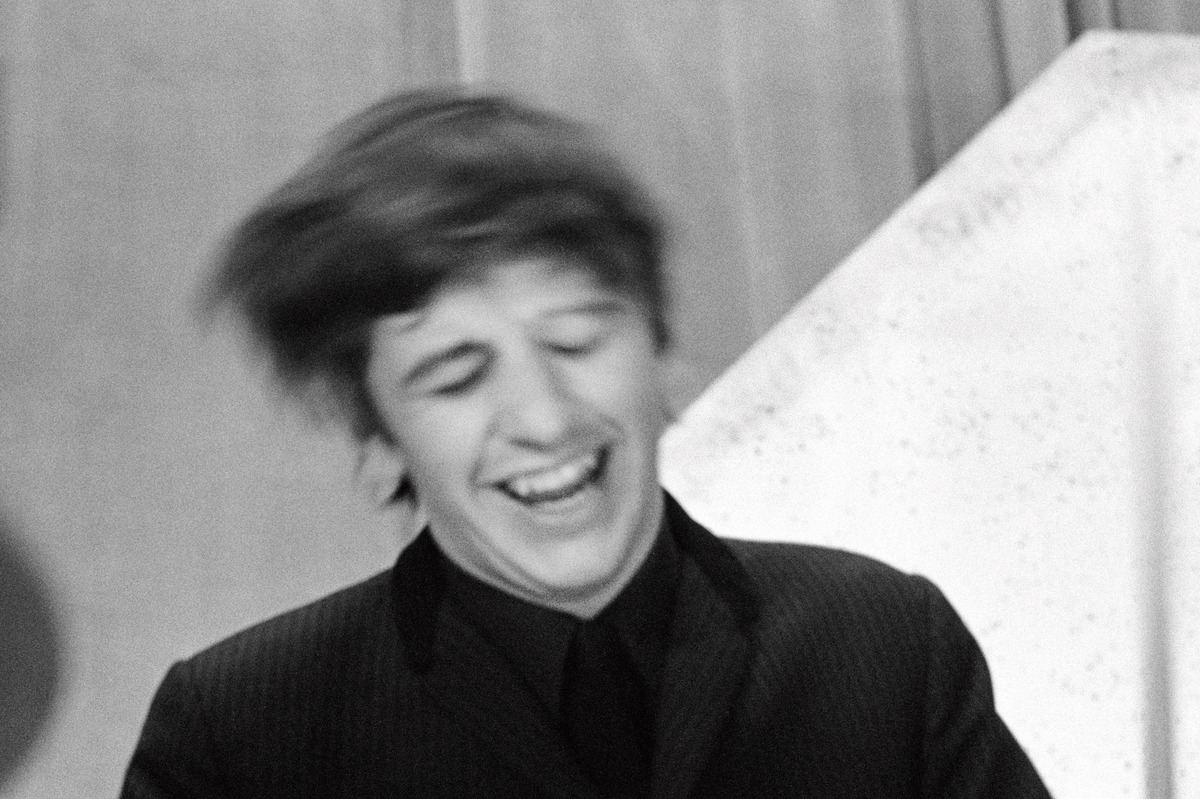
Ringo Starr, in London.

©1963 – 1964 Paul McCartney

©1963 – 1964 Paul McCartney

“I’m very proud of being part of the working class, which I think you guys would call blue collar,” McCartney said, referring to his youth in Liverpool, England. “If you’re looking for photos, they’re often the great faces. The faces where there’s a story behind them.”

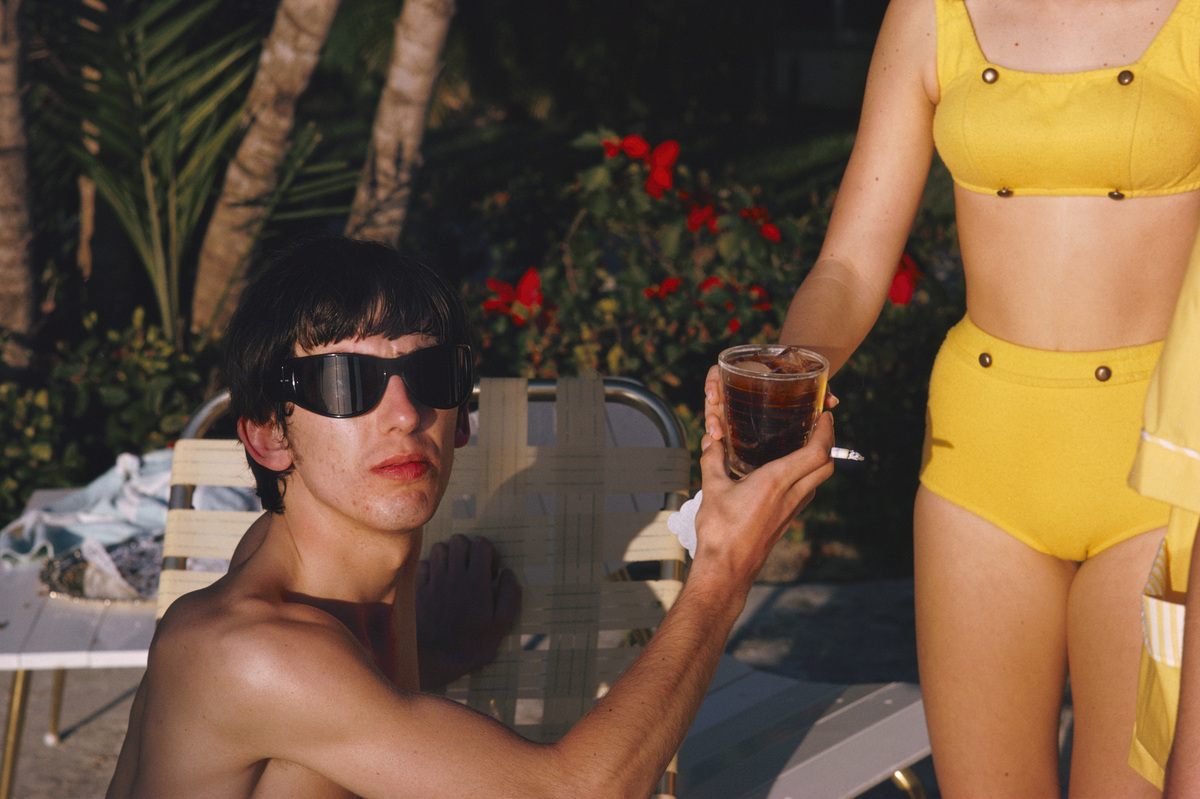
George Harrison in Miami Beach, 1964.

©1964 Paul McCartney

©1964 Paul McCartney

The photos, which now hang in a London art gallery, document a moment when McCartney, not quite 22, was experiencing an almost unprecedented level of fame.

John Lennon in Paris, 1964

©1964 Paul McCartney

©1964 Paul McCartney

He recalls it as “a very special time” in America. It was a few months after the assassination of President John F. Kennedy, and a few months before Congress passed the Civil Rights Act of 1964. “The attitudes that had gone before us were being changed.”

The Beatles changed with the times: their once-cheerful hits evolved rapidly through the 1960’s, at times growing dark, weird, or druggy. Yet their music retains a timeless quality. Though the band had broken up by 1970, much of their catalog remains familiar.

McCartney’s photographic return to an early moment in his journey prompted a question: Is there anything he wishes he could go back and tell his younger self?

Self-portraits. London, 1963.

© 1963 – 1964 Paul McCartney

© 1963 – 1964 Paul McCartney

Get to know the people you work with, he answers. “I think I might have said to my younger self: Look, you know, not only take this moment, but really nurture these relationships.” He said that today he talks regularly with Ringo Starr, the only surviving Beatle besides McCartney.

McCartney then interrupted his own insight. “Oh, wait a minute,” he said. In fact he was close to his bandmates in the early days, “so I’m probably just making it up.”

The audio version of this interview was edited by Reena Advani and produced by Barry Gordemer. Majd Al-Waheidi edited it for digital.

An old school building, damaged by hurricanes, again home for Lake Charles artists and nonprofits

An old school building, damaged by hurricanes, again home for Lake Charles artists and nonprofits

Hurricanes Laura and Delta caused immense damage to buildings across southwest Louisiana in 2020, including many of the region’s cultural institutions. Now, many of them have found a new home inside a historic school building in downtown Lake Charles, which finally reopened Monday after years of repairs following the storms.

“Central School was a thriving hub for arts and cultural activities, an incubator for aspiring artists, musicians and performing artists,” Lake Charles Mayor Nic Hunter said at a ribbon cutting for the historic schoolhouse turned cultural center. With tenants moving back in, it is taking that role again, providing a space for artists, nonprofits and cultural organizations to work and mingle.

“It’s really exciting to all be in one space and bounce ideas off of each other,” said Kari Casey, director of outreach and programming for the Children’s Museum of Southwest Louisiana. The museum saw its space in downtown Lake Charles destroyed by Laura and is currently waiting for its new building to be constructed.

“Everybody is doing the best we can to bring Lake Charles back, especially when it comes to the arts and humanities,” Casey said. The reopening of Central School, which has long served as a cultural hub for the city, is one step in that direction.

“These walls are filled with arts and culture,” Casey said. “You come and you’re inspired to carry on the tradition.”


CS Casey

Kari Casey, director of outreach and programming, in the temporary office of the Children’s Museum of Southwest Louisiana at Central School in Lake Charles.


Another organization with a long history in the city has also found its temporary home at Central School. The Lake Charles Little Theater, founded in 1926, had been bouncing around town for nearly three years after losing its home, located only a few blocks away, to Laura.

“We’ve done shows all across town in all kinds of different sized venues,” said Brett Downer, director of the theater’s board. “We’ve been in borrowed spaces, temporary spaces. That’s the beauty of Central School. Now that it’s back, we have a permanent home.”

Eventually, he said, the theater is planning to have its own building once again, but with its old location a complete loss, rebuilding will take years. Until then, the theater will be utilizing its space in the historic school building for rehearsals, auditions, office space and, once it’s repaired, shows in the schoolhouse’s auditorium.

Newer organizations, too, have found their place in the bright and airy 1912 building.

Saige Mestayer, marketing and campaign director for Smoke & Barrel, a nonprofit that puts on its namesake whiskey and barbecue festival every winter, along with a growing number of other events, said that having an office to work out of has been game changing.

“I love this, having a space and being able to connect with so many people,” Mestayer said. The “vintage feel” of the building adds to the charm, she pointed out. Mestayer joined the nonprofit in April and said that, since moving into the space after roughly two months of working from home, “the productivity is through the roof.”


CS Mestayer

Saige Mestayer, marketing and campaign director for Smoke & Barrel, in her new office at Central School in Lake Charles.


Currently, she’s planning a new early childhood education program the nonprofit is hoping to create under the umbrella of the United Way of Southwest Louisiana.

Restoring the historic building was no easy task, Hunter pointed out. “Repairing any structure post-disaster is not easy, but repairing a historic structure, like Central School, requires extra care,” the mayor said. All in all, the restoration cost the city $4.8 million, a cost the city is hoping to be reimbursed for by FEMA, and took nearly three years to complete.

But, Hunter noted, the restoration of historic buildings like Central School and the nearby historic city hall — now used primarily for art exhibits and events — is worth it.

“These were buildings with significant historic value,” Hunter said. The Community Foundation of Southwest Louisiana has created a special fund dedicated to the preservation of both buildings, Hunter announced at Monday’s ribbon cutting.


CS SIGNS

Signs listing tenant of Central School in Lake Charles before Hurricane Laura.


Historic preservation has, at times, taken a backseat to economic redevelopment in Lake Charles, said historian Adley Cormier, with many historic buildings only visible in historic photographs today. The Majestic Hotel, which hosted U.S. presidents during their visits to Lake Charles, and the Arcade Theater, where Houdini performed in his day, are just two prominent structures that were lost nearby and are still missed by residents today.

And while repeated hurricanes have not made the task of preservation any easier, Hunter pointed out that the repairing of Central School marked a success.

“It’s just a wonderful thing that we have a community and a city that has embraced these historic structures and that we don’t repeat some of the mistakes of the past,” Hunter said.

Veterans of Vietnam and the Cold War topic of next Historic Photography Show

Veterans of Vietnam and the Cold War topic of next Historic Photography Show

The Pennsylvania Room of the Ligonier Valley Library has announced the title of this year’s Historic Photography Show, “Faces of Ligonier Valley: Veterans of Vietnam and the Cold War.” The exhibit will be held July 11 through Sept. 12, in the Pennsylvania Room and hallway. Photographs of men and women who served during this era, artifacts and documents are being solicited for loan. Documents and photographs will be copied (with the lender’s permission), and all materials will be returned at the close of the exhibit.

An Opening Reception will be held on Tuesday evening, July 11, from 4 to 7 p.m. in the Pennsylvania Room. Refreshments will be served.

9 Canonical Body Artists You Should Know

9 Canonical Body Artists You Should Know
body-artists


Body artists often make works about the relationship between the body and the mind. Through their body, they explore themes like suffering, pain, nudity, or shame. Body art also deals with gender, power, and identity. Body artists have often blurred the existing lines in the relationship between the artist and the audience. In recent years, many body artists have been experimenting with body implants and virtual bodies. Here are 9 body artists that you should know.

What is Body Art?

body artist marina abramovic
Marina Abramovic during The Artist is Present performance, 2010, via WSJ

The breadth of body art is wide: Body and face modifications have been around for a long time dating back to prehistoric times. Tattooing and face painting are old practices originating in the native cultures of New Zealand and North America. Mimes can also be considered a type of body art that originated in Ancient Greece. Performance art, also known as Body art, first appeared as a medium of its own in the middle of the 1960s, and then had a revival in the 1990s.

During the 1960s and 1970s, the Western world saw several social revolutions like the struggle for women’s equality. The perpetuation of idealizations of women’s bodies in Western art and the media, which men overwhelmingly generated, started being studied by artists and art historians. Feminist artists reclaimed their bodies and used new ways to represent them. Using their bodies in performance became a way for many artists to assert control.

By using their bodies artists connected their individual experiences with the shared human experience. A body artist’s performance, thus, functioned as a synecdoche to humanity and the challenges we face in finding common ground for our experiences. The body became a perfect tool to show that something personal was indeed political.

1. Chris Burden

chris burden shoot
Shoot by Chris Burden, 1971, via Carnegie Museum of Art

Get the latest articles delivered to your inbox

Sign up to our Free Weekly Newsletter

​​Chris Burden cemented his place in art history with the work called Shoot. In a public exhibition in 1971, the controversial artist invited a friend to fire at him with a .22 rifle from a distance of 15 feet. The gunman was slightly off target, and the bullet entered Burden’s arm. This performance allowed the audience to witness a real example of what happens when someone gets shot. The desensitization of society to violence and the difference between seeing a terrible event live and on television were the main themes in this work.

2. Marina Abramović

marina abramovic balkan baroque
Balkan Baroque by Marina Abramović, 1997, via Christie’s

In response to countless murders in the former Yugoslavia, Abramović composed Balkan Baroque. She spent four days washing each of these gory bones while sitting on top of 1,500 cow bones, wearing a white dress, surrounded by projected photographs of her and her parents. She sang some of her country’s folk songs and recorded an explanation of how to eliminate rats in the Balkans. Due to the scorching heat and foul stench in the basement chamber, the performance progression became visceral. She believed that the analogy between being unable to wash away all the blood and not being able to remove the disgrace of war had a universal application.

3. Yoko Ono

yoko ono cut piece
Cut Piece by Yoko Ono, 1964, via MoMA, New York

Yoko Ono was one of the pioneers of participatory art. Ono first performed her Cut Piece in Kyoto in 1964. Since then, she has performed it in Tokyo, New York, London, and, most recently, Paris in 2003. The involvement of others is fundamental to her work. Cut Piece depends on the audience’s willingness to understand and comply with the artist’s directions, or the rules she called the score. These rules defined the roles of participants.

Cut Piece had the artist sitting on a stage in her finest suit, holding a pair of scissors in front of her. The audience was directed to approach her one at a time, using the scissors to snip off a small piece of her garment which they were to keep. Some people cautiously approached her, snipping a tiny square of fabric from her skirt or sleeve. Others came boldly, slicing off the bra straps or the front of her clothing. In an interview with MoMA, Ono stated: When I do the Cut Piece, I get into a trance, and so I don’t feel too frightened.…We usually give something with a purpose…but I wanted to see what they would take….There was a long silence between one person coming up and the next person coming up. And I said it’s fantastic, beautiful music, you know? Ba-ba-ba-ba, cut! Ba-ba-ba-ba, cut! Beautiful poetry, actually.

4. Valie EXPORT

valie export body configurations
Body Configurations by Valie EXPORT, 1976, via MoMA, New York

This photograph shows a woman tracing the cityscape of Vienna with her body by bending her back to mimic the curb’s curve. The image overlaps with a thick red line that follows the shape emphasized by the position, making the relationship between the city and the body prominent. It is a part of the Körperkonfigurationen (Body Configurations) series, which Valie EXPORT began working on in the middle of the 1970s. The figures in the series accentuate the geometry of the city. The prints are highlighted by additions like the red line seen in the work above or black ink painted over silver gelatin prints. The artist’s body is depicted as something that contrasts the cityscape.

5. Gina Pane

body artist gina pane azione sentimentale
Azione Sentimentale by Gina Pane, 1973, via MoMA, New York

Gina Pane is best known for her Azione pieces, in which she would execute a series of actions using her own body. These actions frequently demanded extreme physical endurance and pain tolerance. She encouraged the audience to empathize emotionally with what she was experiencing. She performed her actions privately, but they were precisely set and shot so that the viewer might sense the emotional depth of the piece even if they had not observed its making.

Azione Sentimentale is a complex, multilayered work that uses the visual language of ritual and religion to comment on pleasure, grief, and love between women. Pane performed this act in front of an all-women audience at Milan’s Galleria Diagramma. She entered the gallery wearing all white while holding red roses. She offered the roses to the audience and then took them back. She removed the thorns and stabbed her arm with them by neatly arranging them in a row. She then cut the palm of her hand with a razor blade. After which, she started giving the audience white roses stained by her bloodied palm. The juxtaposition of white and red, the blood, and the stigmata all mark sacrifice and allude to Christian theology.

orlan defiguration refiguration
Défiguration-Refiguration, Self-hybridations précolombienne no. 35 by ORLAN, 1998, via AWARE

ORLAN is a pioneer of what she considers Carnal Art. She poses intriguing concerns about consent, self-image, and beauty that foreshadow and inspire many current debates on transhumanism, utopian technology, and body modification. The methods ORLAN uses to draw the audience’s attention to her body, such as cameras, microscopes, and live feeds, are critical for the meaning of her works. ORLAN’s body is the main subject of her works. Her work explores the process of surgery rather than the end product of plastic surgery, making the altered body a place of public debate instead of a spectacle.

7. Beth Stephens and Annie Sprinkle

beth stephens annie sprinkle ecosexuality
Ecosexuality by Annie Sprinkle and Beth Stephens, 2008, via ArtCollaboration.co.uk

Annie Sprinkle has dealt with sex and love in various contexts, from the point of view of a sex worker and a porn actress to that of a performance artist. She and her partner Beth Stephens are pioneers of ecosexuality, a form of earth-loving sexual identity that declares that the Earth is our lover. Seeing nature as a lover suggests that a connection with the Earth is reciprocal, and as a result, ecosexuality holds people responsible for protecting the environment. This questions heteronormative notions and redefines concepts of gender, love, and sexuality.

Beth Stephens and Annie Sprinkle married Earth in 2008. The first marriage was followed by many more, including a white wedding to the snow, a purple wedding to the moon, and many more. The wedding guests joined Stephens and Sprinkle as they vowed to love, honor, and cherish many facets of the cosmos. Sprinkle and Stephens have authored vows for marrying the Earth, ecosexual manifestos, and directions for making love to the Earth called 25 Ways to Make Love to the Earth.

8. Herman Nitsch

herman nitsch orgies mysteries theatre drawing
The last supper drawing from The Orgies Mysteries Theatre by Herman Nitsch, 1983, via Nitsch Foundation

Herman Nitsch was a contemporary artist from Austria. His performances are theatrical and they incorporate different media. He focused on involving bodies in rituals and violence in order to explore life more holistically.

The Orgies Mysteries Theater was a 6-day performance held at a folk festival meant to celebrate humans. The work consisted of different artistic mediums and it was first performed in the 1950s.

9. Yayoi Kusama: Body Art Without the Artist’s Body

yayoi kusama infinity mirror rooms
Infinity Mirror Rooms by Yayoi Kusama, 2011/2017, via Tate, London

Infinity Mirror Rooms is a series that Kusama started making in the 1960s. The artist has now produced over twenty of these rooms. Each Infinity Mirror Room is a pitch-black room entirely covered in mirrors. Kusama had previously decorated these rooms with lanterns, phalluses, and pumpkins. Today, little LED lights suspended from the ceiling flash repetitively to create pulsing electronic polka dots. The mirrors provide the impression of limitless space. The person experiencing the room becomes essential to the piece itself.

The artist’s body is not present, nevertheless, the work depends on the viewer’s body and physical presence to create meaning. The participant’s body doubles, triples, and quadruples in infinity. Thus, this work plays with the perception of the body and identity.

Indigenous artists turn trams into moving galleries

Indigenous artists turn trams into moving galleries

Six city trams have been transformed into a moving gallery of Indigenous art.

The Melbourne trams hit the tracks on Tuesday to bring the work of First Nations artists to the streets.

The designs are centred on the theme of Blak Futurism – a call to envision a better future for Australia’s first peoples.

Among the six artists from Victoria is Boonwurrung/Erub woman Amina Briggs, whose purple, pink and blue design incorporates native birds and a national map with the word reclaim above it.

The artworks will remain on the trams for 12 months.

Each tram features a QR code to allow passengers to learn about the artists and their designs.

The third annual project is part of the RISING festival and brings together Yarra Trams, Creative Victoria and the Department of Transport.

Light up! The best of Photo Basel 2023

Light up! The best of Photo Basel 2023
image

René Burri was a Swiss photographer, known for his images documenting major political and cultural events of the late 20th century. It wasn’t until joining the photographic cooperative Magnum Photos in 1955 that he began the work he would become best known for, documenting key figures in military, political and cultural spheres all across the world for Life, the New York Times, Stern, Paris-Match, and Look

How professional photographers can use AI to elevate their craft and grow their business

How professional photographers can use AI to elevate their craft and grow their business

The world of photography stands on the brink of an intriguing evolution. As artificial intelligence grows more sophisticated, the potential for this technology to reshape photography is clear. However, this need not be seen as a threat to professional photographers. Instead, it should be recognised as an exciting opportunity to enhance our craft, extend our services and expand our businesses.

One of the significant ways photographers can leverage AI is by integrating it into their workflow to reduce time-consuming, repetitive tasks. AI-powered software can assist with everything from sorting and categorising images to sophisticated photo editing tasks like colour correction, skin retouching or background removal. This frees up valuable time, allowing photographers to focus more on the creative aspects of their work, nurturing client relationships or expanding their businesses.

AI can also transform the way photographers handle large volumes of work. For instance, in event photography, where hundreds or thousands of photos are captured, AI algorithms can rapidly sift through these, picking out the images that are in focus, well-composed and contain recognised faces. This ability to process vast amounts of data quickly and accurately will significantly cut down on photographers’ post-production time.

Beyond workflow optimisation, AI opens also up opportunities to create new types of images and services. For instance, AI can generate realistic virtual backgrounds or create composite images that would be costly or impossible to capture in reality. Photographers can leverage this capability to offer innovative, customised solutions to their clients, be it in advertising, fashion or portrait photography.

The ability of AI to analyse and learn from vast datasets also holds promise for market research and strategic planning. AI-powered analytics can reveal trends and patterns in styles, themes or subjects that resonate with specific audiences. This insight can guide photographers in tailoring their work to meet market demands, thus giving them a competitive edge.

Moreover, embracing AI can facilitate photographers to venture into the growing realm of virtual reality (VR) and augmented reality (AR). Whether it’s creating immersive virtual tours for real estate, developing interactive AR filters for social media or producing high-resolution 360-degree images for e-commerce, photographers can offer a wide array of services that were previously inaccessible.

As AI technology advances, the line between photography and digital art is becoming increasingly blurred. Today’s photographers can use AI as a creative partner, producing artwork that combines the best of human creativity and AI’s capabilities. This creates an entirely new genre of art, where photographers are not just capturing reality but reimagining it.

The rise of AI in photography signifies not the end, but a new beginning. It represents a wealth of opportunities waiting to be explored. It’s an invitation to photographers to push the boundaries of their creativity, extend their services and grow their business.

To thrive in this evolving landscape, photographers need to adapt and embrace the change. It’s time to see AI not as a replacement, but as a partner – one that can complement our skills, enhance our creativity and, ultimately, help us tell better stories through our lenses.

Southern Arkansas University Dean’s List Spring 2023

Southern Arkansas University Dean’s List Spring 2023

Special to The Banner-News

Southern Arkansas University has announced that 551 students earned a 3.5 GPA or higher for the spring 2023 semester and have been named to its Dean’s List.

Janie Barham is a senior Game, Animation, and Simulation Design major from Emerson, AR.

Anna Dooly is a sophomore Elementary Education (STEM) major from Emerson, AR.

Malli Dooly is a senior Psychology major with a minor in Animal Science from Emerson, AR.

Austin Evans is a senior Marketing (Media Option) major from Emerson, AR.

Karli Rabb is a junior Agriculture (Pre-Veterinary) major from Emerson, AR.

Blake Sanders is a junior Middle School Education major from Emerson, AR.

Cage Arnold is a sophomore Computer Science (Cyber Security and Privacy Option) major from Magnolia, AR.

Jameson Baker is a sophomore Exercise Science (Strength and Conditioning) major from Magnolia, AR.

Tylaa Beraud is a sophomore Chemistry (Forensic Science) major from Magnolia, AR.

Natalie Boyd is a junior Elementary Education (STEM) major from Magnolia, AR.

Azaria Broomfield is a senior Public Health major from Magnolia, AR.

Ja’Nicia Brown is a senior Social Work major from Magnolia, AR.

Jaden Bush is a sophomore Psychology major from Magnolia, AR.

Lauren Chambliss is a senior Pre-Health Professional Biochemistry major from Magnolia, AR.

Rodrick Coffman is a junior Computer Science major from Magnolia, AR.

Allison Coppersmith is a junior Management major with a minor in Finance from Magnolia, AR.

Shannon Coppersmith is a sophomore Studio Art major from Magnolia, AR.

Zoie Dixon is a junior Pre-Nursing major from Magnolia, AR.

Kenneth Ellis is a junior University Studies major from Magnolia, AR.

Nohelia Garcia De Los Santos is a senior Psychology major with a minor in Social Work from Magnolia, AR.

Noah Garland is a senior Computer Science major from Magnolia, AR.

Gabrielle Gee is a junior Pre-Nursing major from Magnolia, AR.

Dale Gray is a sophomore K-12 Physical Education and Health major from Magnolia, AR.

Maggie Gunnels is a senior Mass Media major from Magnolia, AR.

Jefferson Hagaman is a junior Elementary Education (STEM) major from Magnolia, AR.

Riley Hall is a sophomore Psychology major from Magnolia, AR.

Kelsey Hayes is a senior Biology major from Magnolia, AR.

Zachary Heathman is a junior Sport Management (Coaching Option) major with a minor in Finance from Magnolia, AR.

Jackson Heflin is a senior Music Education (Instrumental) major from Magnolia, AR.

Sa’riya Hildreth is a freshman Pre-Nursing major from Magnolia, AR.

Khang Ho is a senior Pre-Health Professional Biochemistry major from Magnolia, AR.

Soraya Iverson is a junior Pre-Art Therapy major from Magnolia, AR.

Korylynn Jennings is a junior Mass Media major from Magnolia, AR.

Brandon Johnson is a senior Information Systems major from Magnolia, AR.

Abbie Jolly is a senior Public Health major from Magnolia, AR.

David Lindsey is a senior Industrial Technology major from Magnolia, AR.

Maria Lopez is a sophomore Studio Art major from Magnolia, AR.

Shadiamond Love is a senior Public Health major from Magnolia, AR.

Rory Lowther is a sophomore Marketing (Media Option) major from Magnolia, AR.

Mukunda Mashburn is a junior Plant Science major from Magnolia, AR.

Caitlyn McCormack is a senior Wildlife and Conservation Biology major with a minor in General Business from Magnolia, AR.

Hunter McLaughlin is a senior Middle School Education major from Magnolia, AR.

Olivia Munn is a sophomore Elementary Education (STEM) major from Magnolia, AR.

Anwar Nahshal is a freshman Computer Science major from Magnolia, AR.

Riley Payne is a junior Pre-Health Biology major from Magnolia, AR.

Ruth Rivera is a sophomore Pre-Professional Exercise Science major from Magnolia, AR.

Reaves Rogers is a senior Animal Science major from Magnolia, AR.

Clemente Saenz is a junior Nursing major from Magnolia, AR.

Jason Schulz is a senior K-12 Physical Education and Health major from Magnolia, AR.

Sydney Scruggs is a senior Elementary Education (STEM) major from Magnolia, AR.

Jamar Sloan is a sophomore Mass Media major from Magnolia, AR.

Jonathan Stevens is a junior Information Systems major from Magnolia, AR.

Parker Tinnell is a senior University Studies major from Magnolia, AR.

Brayden Voss is a senior History major from Magnolia, AR.

Emma Walker is a senior Pre-Nursing major from Magnolia, AR.

Sara Westfall is a sophomore Pre-Nursing major from Magnolia, AR.

Carlin Whaley is a senior Mass Media major from Magnolia, AR.

Zachary Lout is a sophomore Pre-Professional Exercise Science major from McNeil, AR.

Gabriel Reyna Garcia is a sophomore Engineering major from McNeil, AR.

Jordan Sigala is a senior Engineering major from McNeil, AR.

Katherine Collier is a junior Pre-Nursing major from Stamps, AR.

Reagan Doster is a junior Computer Science major from Stamps, AR.

Brittany Hatter is a senior Interactive Media and Marketing major from Stamps, AR.

Shauna Mason is a senior Psychology major with a minor in Criminal Justice from Stamps, AR.

Logan Pierson is a senior Music Education (Instrumental) major from Stamps, AR.

Gillian Cauldwell is a senior University Studies major from Stephens, AR.

Clistie Ferrell is a senior Political Science major with a minor in Social Work from Stephens, AR.

Luke Impson is a sophomore Marketing (Media Option) major with a minor in Communications Design from Stephens, AR.

Magen West is a senior Graphic Design major with a minor in Digital Photography and Film from Stephens, AR.

Jordan Hall is a junior Middle School Education (STEM) major from Taylor, AR.

Shaylee Hoyle is a junior Engineering major from Taylor, AR.

Tanner Hoyle is a junior Engineering major from Taylor, AR.

Lenzie Langley is a senior Middle School Education major from Taylor, AR.

Kaylee Morehead is a senior Pre-Nursing major from Taylor, AR.

Taryn Franks is a senior Public Health major from Waldo, AR.

Jasmine Fuller is a sophomore Criminal Justice major from Waldo, AR.

Aaliyah Grant is a senior Information Systems major from Waldo, AR.

Jalisa Harris is a sophomore Pre-Nursing major from Waldo, AR.

Micheal Jones is a junior Graphic Design major from Waldo, AR.

Kimberly Saunders is a senior Middle School Education major from Waldo, AR.

Raediesha Tucker is a senior Musical Theatre major with a minor in Psychology from Waldo, AR.

Brendan Ybarra is a senior Psychology major with a minor in Criminal Justice from Waldo, AR.

Abigail Young is a senior Pre-Health Biology major with a minor in Music from Waldo, AR.

A total of 551 students were honored on this semester’s Dean’s List.

Southern Arkansas University provides students the complete college experience in a caring environment of service, innovation, and community. With more than 100 degrees in four distinct colleges and the School of Graduate Studies, SAU initiates new degree programs to fit the needs of career and professional trends of today.

To learn more about SAU, visit www.saumag.edu.