About

Posts by :

skinflint Restores 1920s–1970s Lighting for Homes, Restaurants + Shops

skinflint Restores 1920s–1970s Lighting for Homes, Restaurants + Shops

“We don’t make lights, we find them,” says British lighting brand skinflint. They have been giving new lives to vintage lights for more than a decade – and in that time they have saved more than 50,000 lights from landfill. They rescue lighting from all over the world, from abandoned glassworks in Budapest to old Navy ships in shipbreakers’ yards in Gujarat, restoring every light to modern electrical standards without compromising character. Design Milk speaks to co-founder Chris Miller to find out more.

Chris Miller

Tell me about your childhood, education, background, and how you first became interested in repair.

Repairing, restoring, fixing, mending – they were all the norm in my household growing up. We didn’t just throw things away. But it wasn’t until I got a little older that I realized my mindset differed from the predominantly throwaway culture elsewhere. When I look back, I realize it’s this that led me towards restoration as a career path – skinflint was founded on a mission to stop vintage lights from going to landfill; repairing vintage lights has always been an act of care for our planet and our people.

A row of pendant lights hangs above a set table in a restaurant

What appeals to you about repairing objects versus creating something new?

And a triple-bottom-line approach underpins everything we do. As a Certified B Corp, we will always prioritize people and the planet over profit. And restoring and repairing vintage lights is how we achieve this. Our vision is to buck ‘fast furniture’ fashion trends, so it wouldn’t make sense for us to design and manufacture new lights and add to the waste pile. Vintage lights were made to last, designed before the notion of ‘planned obsolescence’. That’s why we often find them in amazing locations around the world, outliving the buildings they exist within. The ceilings may be falling down but the lights are still standing!

A white women in her 30s holds a screwdriver to the inside of a pendant light

There are many words for repair with slight nuances in their meaning – mending, fixing, hacking, restoring, repurposing… which do you prefer in relation to your work and why?

‘Restoration’ is the word that best sums up what we get up to at skinflint. To us, it means working with each vintage light to preserve as much of the original character as possible. We ensure each light meets modern-day technological standards but also preserve signs of age and patina; they’re the bits that tell the story of where the lights have been – everywhere from churches in the UK to private residences in Prague and factories in the Eastern Bloc.

Three strip lights hang from a black-painted high ceiling

What is the inspiration behind it – where did the idea come from?

We’ve always wanted to challenge the status quo; why can’t modern-day homes, hotels, shops, and restaurants be fitted with salvaged and restored vintage lights? In 2009, we put the theory to the test in a Victorian home in North London, and with that, skinflint was born. Fourteen years later we’ve grown, but always stayed true to our founding mission. Our ethos means we continue to make business a force for good and ensure we give back through initiatives like 1% for the Planet every year.

restaurant interior with pendant lights lit

Which repair techniques are you using and why? How did you learn the techniques you’re using and why?

We treat each vintage light differently, there is no one-size-fits-all approach! Some lights are soda-blasted to remove old paint, some are polished, some are lacquered – restoration is a slow and steady process. But regardless of the intricacies, we will always work sustainably and prioritize the environment in our processes.

A white hand holds a vintage industrial light

How do your repairs change the function or story of the object?

The aim of the game is to preserve. We never want to change the function of salvaged vintage lights, just ensure that they’re able to live on to tell their story. That’s part of the beauty of what we do at skinflint – the first chapter in a light’s life might be illuminating old mine shafts, but the possibilities of where it could go next are endless. We work closely with other B Corps like Aesop and Patagonia, who now have skinflint lights that once lit 1940s factories suspended from their ceilings!

A set of pendant lights hangs above a green-tiled bar

How visible or invisible is the repair and why is that important?

We talk a lot about never compromising character. Signs of patina are an added bonus; it’s these little details that all add to the story of each individual light. They’re great conversation starters above dining room tables! But we will always ensure that the electrical components meet modern-day technological standards. As a proud member of the UK Lighting Industry Association, we’re independently audited, approved, and verified at every stage to ensure that all of our lights are expertly restored to modern standards for faultless functionality.

A white man in a shirt and a cap is adjusting a chandelier

How have people reacted to this project or body of work? How do you feel opinions towards mending and repair are changing?

Consumer behavior is definitely changing. As individuals, we’re all a lot more aware of our impact on the environment and the proof is in the questions our clients are asking. They want to know we’re working sustainably and that we’re kept in check. And we are! Our B Corp Certification means that we’re legally obligated to consider our impact – and to report on it. It’s the little reminder we need to continue to evolve our ways of working, and making sure the work we do is truly circular. That’s why we recently introduced Full Circle, our product buy-back scheme. It means our clients can return their skinflint vintage lights for a 50% credit towards a future purchase. It keeps vintage lights in existence for longer and we also offer a lifetime guarantee, meaning we’ll repair any lights that need a little extra TLC.

A white man in a shirt and cap adjusts a desk lamp

What do you think the future holds for repair and restoration?

We’re proud to be the first vintage lighting company to introduce a product buy-back scheme and we like to think of ourselves as a game-changer in the industry. What we’ve done is demonstrate that a fully circular approach to vintage lighting is absolutely possible. And we hope that others in the industry will follow suit, bringing change to the sector as a whole. We’re excited to see what the future holds.

advertisement for wasted by katie treggiden

Katie Treggiden is a purpose-driven journalist, author and, podcaster championing a circular approach to design – because Planet Earth needs better stories. She is also the founder and director of Making Design Circular, a program and membership community for designer-makers who want to join the circular economy. With 20 years’ experience in the creative industries, she regularly contributes to publications such as The Guardian, Crafts Magazine and Monocle24 – as well as being Editor at Large for Design Milk. She is currently exploring the question ‘can craft save the world?’ through an emerging body of work that includes her fifth book, Wasted: When Trash Becomes Treasure (Ludion, 2020), and a podcast, Circular with Katie Treggiden.

Sponsor spotlight: Test your photography skills during Edmonds Rotary Photomarathon June 10

Sponsor spotlight: Test your photography skills during Edmonds Rotary Photomarathon June 10

Are you looking for a fun and creative way to support a great community organization? Then you should sign up for the Edmonds Rotary Photomarathon — a six-hour photography challenge where you’ll have to capture as many photos as you wish, but only one photo per theme, or topic, can be submitted.

You can take your photos anywhere in the world, using your digital camera or a smart phone, so you can explore your own backyard or travel to a new place.

Six themes or topics will be released on the morning of June 10, at 10 a.m. PDT. Each registrant can submit one photo per topic or theme. The deadline to submit all or any photos is 4 p.m. PDT Saturday, June 10.

The event is open to all skill levels, so whether you’re a beginner or a seasoned professional, you’re sure to have a great time. 

All winners will have their winning photo displayed at the Rotary Club of Edmonds Annual Oktoberfest on Sept. 15 and 16 at the Frances Anderson Center.

All proceeds from this event go to support community service projects by the Rotary Club of Edmonds.

Registration is now open, but limited, so don’t miss out. Visit the website to register today.

KYT Merges Medicine + Fashion With Innovative Bag Collection

KYT Merges Medicine + Fashion With Innovative Bag Collection

At the age of 20, designer and KYT (Keeping You Together) founder Bridget Scanlan was diagnosed with Type 1 Diabetes. As her pancreas stopped producing insulin, she had to learn to manage blood glucose tests and insulin injections – as well as all of the equipment that comes with it. Soon, KYT released three designer bags meant to empower diabetics and streamline their daily treatment in a stylish way.

“From talking to diabetics around the world, I got universal insights into the daily diabetes struggle,” Scanlan says. “It sparked a thought: could smarter design empower people to feel better about dealing with daily treatment? I wanted to redesign diabetes, so we could all redefine it.”

Jumping into action, her background in fashion design and entrepreneurship led the way. “Every zip, every angle, every equipment detail has been influenced by the insights gathered from the hundreds of incredible diabetics who have opened up and shared their diabetes stories (and gripes) with me,” she shared.

light-skinned hand interacting with diabetes tools in a black bag

The contemporary bag designs feature smart layouts, using quality materials such as gold-rated Italian leather and solid brass hardware, and are ethically crafted. Each bag holds and organizes the carrier’s diabetic supplies, such as a testing kit, pump consumables, and insulin pens.

four black bags on pedestals

The SideKYT is a crossbody bag that streamlines users’ essential diabetes supplies by splitting into two sections: life essentials up front and diabetes equipment in the back. A testing station allows blood glucose levels to be evaluated straight from the bag.

If you’re looking for something larger, the SideKYT+ style might be for you. It’s a larger crossbody bag designed for pump users or those who want to carry more equipment or spares.

Lastly is the StarterKYT. The compact case allows users to discreetly carry supplies, measuring in at the size of a sunglasses case. It locks together with magnets and unfolds flat to create a testing station, then can be easily folded up again.

Currently, all three bags are available for pre-order, which includes a 15% price cut. 

light-skinned hands interacting with diabetes tools in a black bag on a table

light-skinned hand picking up a black case

light-skinned hand removing a black case from a brown bag

light-skinned hands interacting with diabetes tools in a black bag on a picnic blanket

light-skinned person wearing a black and white garment while carrying a black bag

light-skinned person wearing all white carrying a black bag while walking

light-skinned person wearing a bold geometric short-sleeved shirt and carrying a black backpack

light-skinned person wearing a bold geometric short-sleeved shirt and carrying a black backpack

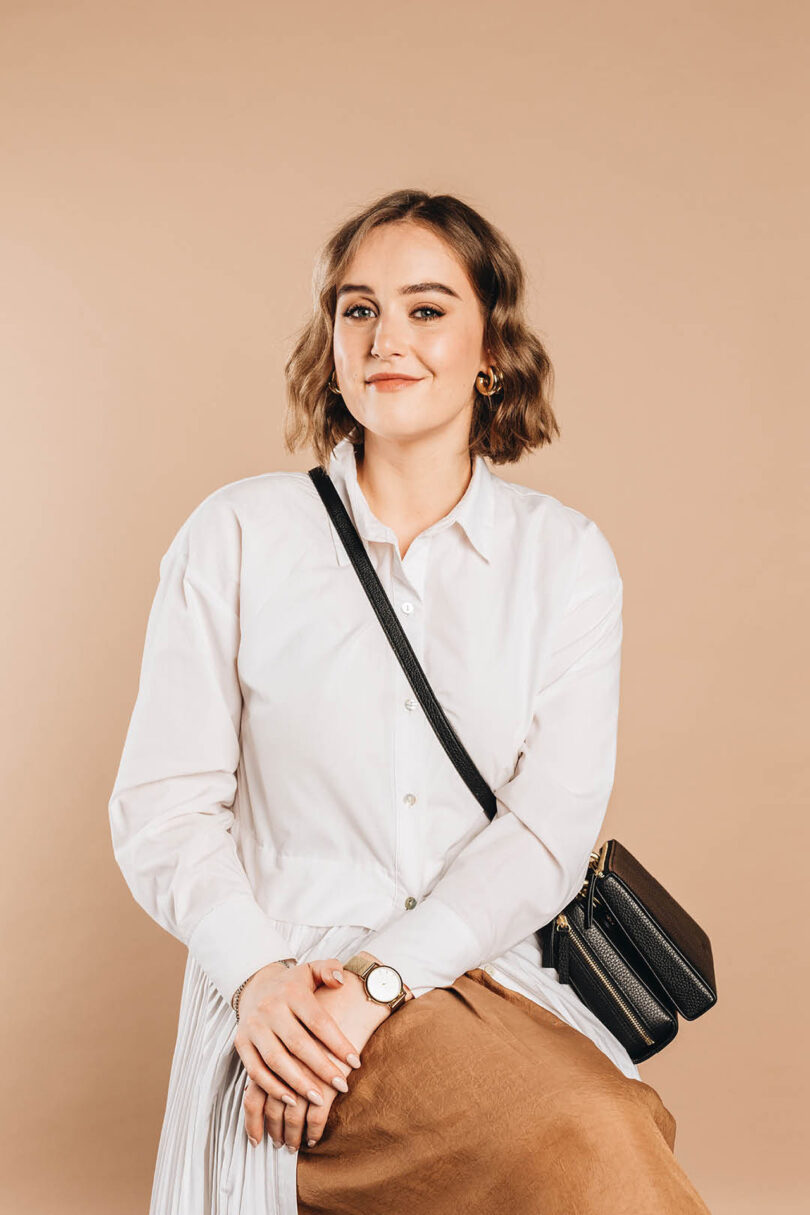
light-skinned woman with short brown hair wearing a button-down white shirt and a crossbody black bag

Bridget Scanlan

A donation from every KYT bag sold helps diabetes charities get crucial supplies to those in need. To learn more or pre-order, visit kytbags.com.

Kelly Beall is senior editor at Design Milk. The Pittsburgh-based graphic designer and writer has had a deep love of art and design for as long as she can remember, and enjoys sharing her finds with others. When undistracted by great art and design, she can be found making a mess in the kitchen, consuming as much information as possible, or on the couch with her three pets. Find her @designcrush on social.

KYT Merges Medicine + Fashion With Innovative Bag Collection

KYT Merges Medicine + Fashion With Innovative Bag Collection

At the age of 20, designer and KYT (Keeping You Together) founder Bridget Scanlan was diagnosed with Type 1 Diabetes. As her pancreas stopped producing insulin, she had to learn to manage blood glucose tests and insulin injections – as well as all of the equipment that comes with it. Soon, KYT released three designer bags meant to empower diabetics and streamline their daily treatment in a stylish way.

“From talking to diabetics around the world, I got universal insights into the daily diabetes struggle,” Scanlan says. “It sparked a thought: could smarter design empower people to feel better about dealing with daily treatment? I wanted to redesign diabetes, so we could all redefine it.”

Jumping into action, her background in fashion design and entrepreneurship led the way. “Every zip, every angle, every equipment detail has been influenced by the insights gathered from the hundreds of incredible diabetics who have opened up and shared their diabetes stories (and gripes) with me,” she shared.

light-skinned hand interacting with diabetes tools in a black bag

The contemporary bag designs feature smart layouts, using quality materials such as gold-rated Italian leather and solid brass hardware, and are ethically crafted. Each bag holds and organizes the carrier’s diabetic supplies, such as a testing kit, pump consumables, and insulin pens.

four black bags on pedestals

The SideKYT is a crossbody bag that streamlines users’ essential diabetes supplies by splitting into two sections: life essentials up front and diabetes equipment in the back. A testing station allows blood glucose levels to be evaluated straight from the bag.

If you’re looking for something larger, the SideKYT+ style might be for you. It’s a larger crossbody bag designed for pump users or those who want to carry more equipment or spares.

Lastly is the StarterKYT. The compact case allows users to discreetly carry supplies, measuring in at the size of a sunglasses case. It locks together with magnets and unfolds flat to create a testing station, then can be easily folded up again.

Currently, all three bags are available for pre-order, which includes a 15% price cut. 

light-skinned hands interacting with diabetes tools in a black bag on a table

light-skinned hand picking up a black case

light-skinned hand removing a black case from a brown bag

light-skinned hands interacting with diabetes tools in a black bag on a picnic blanket

light-skinned person wearing a black and white garment while carrying a black bag

light-skinned person wearing all white carrying a black bag while walking

light-skinned person wearing a bold geometric short-sleeved shirt and carrying a black backpack

light-skinned person wearing a bold geometric short-sleeved shirt and carrying a black backpack

light-skinned woman with short brown hair wearing a button-down white shirt and a crossbody black bag

Bridget Scanlan

A donation from every KYT bag sold helps diabetes charities get crucial supplies to those in need. To learn more or pre-order, visit kytbags.com.

Kelly Beall is senior editor at Design Milk. The Pittsburgh-based graphic designer and writer has had a deep love of art and design for as long as she can remember, and enjoys sharing her finds with others. When undistracted by great art and design, she can be found making a mess in the kitchen, consuming as much information as possible, or on the couch with her three pets. Find her @designcrush on social.

Endless Forest: Mary Maka Digitally Illustrates Otherworldly Woodland Creatures to Tame Fears

Endless Forest: Mary Maka Digitally Illustrates Otherworldly Woodland Creatures to Tame Fears

All images © Mary Maka, shared with permission

Inspired by the short stories of the late Nigerian writer Amos TutuolaMary Maka illustrates woodland creatures with fantastical characteristics as part of her Endless Forest series. The Portugal-based artist has always been interested in mythology and nature, and after reading Tutuola’s works, she decided to render spirited animals that could plausibly emerge from the pages of his books.

Often hybrid in form, the beasts are based on unique fears. “Hunters gave names to the phenomena and creatures that were most frightening,” Maka says. “By giving them a name and endowing them with human qualities, the fear became less intense. Spirits that had names could now be allies and help in hunting and gathering.” This sentiment grounds her work as she translates each fear into vibrant colors, grainy textures, and playfully exaggerated features, which she hopes ameliorates panic and worry.

The digitally illustrated series began as an animation that is currently in progress. Keep an eye out for that, along with an upcoming poster release, on Behance and Instagram.


A red fox appears to skate on rollerskates with a bird on its back against a green backdrop

A pink rabbit with elongated ears makes an O with its mouth in the middle of two flower pots

A purple bear bears its teeth with two pink trees nearby

Four illustrations of hybrid animals, each making a menacing face

A red creature climbs a purple tree with a large bushy tail with a white tip

A grid of 28 creatures in the series

A panda like creature walks along amid massive flowers

Do stories and artists like this matter to you? Become a Colossal Member today and support independent arts publishing for as little as $5 per month. The article Endless Forest: Mary Maka Digitally Illustrates Otherworldly Woodland Creatures to Tame Fears appeared first on Colossal.

The Art of Platform Marketing: You’ve Gotta Sell It

The Art of Platform Marketing: You’ve Gotta Sell It


DevOps / Platform Engineering / Software Development”>Michael Coté”>

The Art of Platform Marketing: You’ve Gotta Sell It – The New Stack


Modal Title

2023-06-06 06:05:41

The Art of Platform Marketing: You’ve Gotta Sell It

sponsor-vmware,sponsored-post-contributed,

One of the most important parts of a platform engineering strategy is one often overlooked. Take lessons from sales to boost adoption


Jun 6th, 2023 6:05am by


Featued image for: The Art of Platform Marketing: You’ve Gotta Sell It

“How do we get developers to actually use our platform?”

This is a question I’m often asked. A good first step is to make sure you take a product management approach and build an app platform that developers actually want to use, making sure that the golden path to production is not only useful but, well, fun. However, there is a second step that is often overlooked and misunderstood by platform teams: good, old-fashioned marketing. Once you have your platform set up, you have to build up what is essentially a full marketing plan to drive interest in and use of that platform. This includes not only brand, messaging and positioning and campaigns for outreach, but also platform advocacy.

What Platform Marketing Does

Platform marketing is used to drive awareness, trust and interest, but it also gives you an opportunity to get product management feedback about your platform. That last part is one of the underappreciated parts of advocacy (or “developer relations” as it’s sometimes called). When you’re developing in a product mindset, as most platform teams do, you’ll appreciate as much feedback as you can get from your customers — your developers. When infrastructure teams tell me they’ve built a platform or a Kubernetes cloud for developers but that developers aren’t using it, it’s usually because they need to do much more platform marketing.

Marketing doesn’t come easy to infrastructure people. It’s an off-putting word, perhaps only rivaled by “enterprise sales rep.” As ever with eye-roll-inducing phrases, what people actually dislike is bad, boring and useless marketing. At large organizations, most of the successful platform teams I talk with pay close attention to marketing, to good marketing. The likes of Mercedes-Benz, JPMorgan Chase, Duke Energy, The Home Depot, BT, the U.S. Air Force and Army and many others start their platform marketing plans from day one. And, in fact, marketing is a key part of scaling and sustaining how these organizations improve the way they make software.

I’ll be covering platform marketing as one of the “7 lessons from 7 years of running platforms” in my upcoming talk at PlatformCon, being held June 8 and 9. In the meantime, here’s a preview of one of those seven lessons: marketing and advocacy.

Brand

“Do you have a T-shirt yet?” my colleague DaShaun Carter likes to ask platform teams. This can seem like a flippant question, but it gets to an important part of platform marketing: establishing a brand. You need a name for your platform and the philosophy of software it supports. For example, the U.S. Air Force uses the brand Kessel Run, and JPMorgan Chase has the Gaia brand.

A brand performs two functions.

First, it creates an identity and a definition of what exactly your platform is. People tend to identify with the tools they use. They’re Java developers, Rust developers, Linux administrators, they follow XP or they’re site reliability engineers (SREs) instead of “DevOps engineers,” and so forth. That identity creates affinity and attraction to the brand — in this case, your platform. In doing so, it creates a certain joy in using the platforms and a passion for the platform.

Second, a brand helps define what your unique methodology and philosophy is. No matter if you’re doing agile, following DevOps principles, practicing SRE or sorting out what “platform engineering” means this quarter, you’ll need to adapt those methodologies to your organization’s unique needs. The sages of these methodologies aren’t so fond of cafeteria DevOps, where you just pick and choose the practices you want to use. However, in many large organizations, to get better, you need to make compromises and adapt stringent methodology principles.

Using your own name helps you take ownership of the methodology you’re putting together and change it as you learn what works. It’s a good time saver too. As one executive told me on a long elevator ride a few years back, don’t ever use the word “agile” when you’re doing agile. The first thing that’ll happen is that someone will start complaining that you’re not doing real agile, that you’re doing it wrong. And then you get stuck in the narcissism of a small-differences black hole instead of just getting on with the work.

The Book

You’re certainly going to need a manual, training, documentation and the usual three-ring binder material. But you’ll also want to write up the thinking that’s behind the brand. You need to codify and distribute your intentions, goals and principles. This is something more tactical, more usable than vision and strategy.

The exact content of The Book will vary, so it’s good to look at examples for inspiration. While it’s just a narrow slice of what would be in The Book, the UK Digital Service has a great list of design principles. You can see how we think about software at VMware Tanzu Labs in things like our FAQ and books like “Radically Collaborative Patterns for Software Makers.”

As you scale your platform to hundreds, then thousands of developers, this ongoing documentation of your thinking will be critical. It’s more than just tech documentation, it’s documenting the culture that your platform is built to support. This book will also help the platform team remember the point of the platform and their work as well. For example, to get the organization focused on building well-designed software, using lean-design techniques, deploying weekly, etc.

Platform Advocacy

Finally, the successful platform teams I talk with have very active platform advocacy. This means having at least one person working full time to just talk with, work with and listen to the people who use your platforms, usually developers. The role of “developer advocate” is pretty well understood by us vendors and cloud providers. Developer advocates love talking to people, and we also love talking about our craft. This means you can find out how it’s done easily by just asking us.

You’ll probably start with just one platform advocate who visits with developer teams throughout your organization listening to what these teams do, teaching them how to use the platform and associated methodologies and listening to their feedback. The advocate acts as a spreader of your platform, a booster and an explainer. Also, often overlooked, the advocate takes feedback from developers and others back to the platform team. They advocate for both the platform team and for the platform users.

As your platform and overall software transformation scale, you’ll add more advocates. Like JPMorgan Chase, you might even have a whole team of platform advocates. The Cloud Foundry platform team at Mercedes-Benz provides training, systematic feedback collection, quarterly community updates and numerous other community management functions that you’d expect an advocate to help with.

One of the common, maybe required, practices the advocacy team follows is holding quarterly internal conferences. These are actual, in-person conferences, often rotating through different regions and office locations with an online component. At these conferences, your platform team and executive sponsors talk a little bit about the platform, but you mostly get your customers — developer teams — to present and talk about the projects they’ve worked on. This serves two functions: training and, that’s right, marketing.

The marketing you’re taking advantage of at internal conferences is the most coveted of all marketing treasures: word of mouth. Having developers tell other developers that your platform is good, great even, will be the best way to get developers to use your platform, and use it well.

Start Platform Marketing on Day One

In addition to those important aspects of platform marketing, you’ll also need to do some marketing fundamentals, like producing content and documentation and working with product management to understand your customers and go to where they are, so to speak.

I haven’t seen many platform teams (or any, perhaps) that have scaled and sustained their developer platform without platform marketing. You’ve got to start thinking about marketing from day one, assigning at least one full-time advocate to start that work of creating a brand name and documenting your ongoing platform philosophy and principles. As with developer advocacy, you don’t need to spend time reinventing the wheel: Tech marketing is a well-understood set of practices. The trick is to actually do it.

If you want to hear the other six lessons of scaling and sustaining platforms in large organizations, check out my full talk at PlatformCon, ”7 lessons from 7 years of running platforms.”

Group
Created with Sketch.

TNS owner Insight Partners is an investor in: Pragma.

RIT’s Metaproject 13 Encouraged Students To Push the Boundaries of Seating

RIT’s Metaproject 13 Encouraged Students To Push the Boundaries of Seating

RIT’s annual Metaproject is now in its 13th iteration, encouraging students to produce design that’s “semantically correct, syntactically correct, and pragmatically understandable, but also visually powerful, intellectually elegant, and timeless.” All while staying in line with the Design is One philosophy at the school’s Vignelli Center for Design Studies. For Metaproject 13, students partnered with alumni-owned, high-end furniture brand Lazzoni and shared their work during NYCxDesign 2023.

The term “metaproject” acts as an overarching theme when referring to an industry partnership that places the students’ work into a more global view. The school’s philosophy is part of the conversation of Metaproject in order to make use of and challenge modernist ideological foundations in practice, learning from available archival resources. Lazzoni shares this same point of view, asking the students to develop a unique seating solution based on the mindset.

scale models of furniture surrounded by students

building front reading LAZZONI

Students taking part in Metaproject 13 presented their scaled ideas knowing that there was the possibility of their seating project being manufactured and added to Lazzoni’s catalogue – a first for Metaproject. On May 20th, the full-scale versions of contemporary chairs and sofa prototypes were showcased at Lazzoni’s Madison Avenue showroom. Dylan Malone’s Shell Chair, a convertible armchair that becomes a lounge with a simple pull, was crowned as the winning design that will move on to production and become available to consumers.

exterior window reading metaproject in yellow

showcase interior with modern furniture

showcase interior with modern grey furniture

armchair with pull out ottoman

Shell Chair, Dylan Malone Transforms from a sleek armchair into a relaxing lounge with just a pull. The tri-tone upholstery gives near infinite customization for any modern home or office. The design language is expandable to a wide range of related products such as loveseats and sectionals.

triangular shaped furniture

Hareket, Clare Maxwell The Hareket seating system utilizes inventive typology through simple geometry and encourages rearrangement to promote various social interactions. The simplicity of the form leaves its use to interpretation.

modular seating system

Hagia Sophia Seating System, Danny Harig The modular Hagia Sophia Seating System brings endless combinations of seating solutions into a living space. Inspired by Turkish architecture and tempered by the Vignellis’ restrained approach, it is a home of relaxation and conversation.

person sitting on light pink sofa with curved backrests

The Stage Lounge, Emma Yee The Stage Lounge is a place that supports togetherness or separation, collaboration or solitude, work, rest, or even play. The movable, weighted cushions allow for an easy shift from one scene to another.

grey armchair made of blocks

Şebeke, Joey Ruan This gridded system of tufted modules can be easily reconfigured from an armless chair to a sofa. With a back that can fold down in two orientations, one can create varying seat depths and widths, armrests, and surfaces..

curvaceous modern grey armchair

Enjoy Chair, Linying Xu The Enjoy Chair intends to create a space for relaxation and a place for small items which often get lost. TV remote, phones, and other items fit neatly into the storage slots in the chair’s arm. Combining functions leads to an enjoyable seating experience.

modern black and chrome barstool

Hafiza, Matt Hotaling The Hafıza is a minimal but elegant barstool for the home. Inspired by the Laz typography, hafıza means memory in Turkish, a perfect name for remembering and creating new memories.

orange and patterned modern sofa

Temel (root) Sofa, Rebecca Arens Emerging from the ground, this sofa brings the user down to their roots. Comfortably seating two, the curvilinear form is soft and welcomes you to sink in and relax.

hexagonal grey armchair

The Honeycomb Collection, Max von Bartheld The Honeycomb Collection is a basic geometric shape elevated to incorporate design and comfort, inspired by nature and the vast honey culture of the Turkish people and the Las tribe. The Honeycomb Loveseat is a compact chair that holds two people for a closer connection.

curvaceous modern grey chair

Havadan Sudan, Ruth Shin Havadan Sudan seating defies typical seating classifications and cultivates a micro-climate of shared consciousness for its participants who are challenged to sit in, on, and with its physical structure.

reclining black armchair with person reading seated

Arc, Rebecca Harris Arc is an interactive seating device designed for – and not to constrain – the body. Using Vignelli’s design sensibilities and Lazzoni’s established brand language, this is a seat for the home that allows for lounging, focused work, and everything in between.

modern black chair and ottoman

Moon Chair, Will Davis A chair that takes inspiration from the crescent moon pictured on the Turkish flag to create a space for the placement of a circular ottoman. The design is meant to be unique and recognizable to serve as an iconic chair, while also utilizing a cohesive, minimal, and elegant design language that fits into the Lazzoni brand.

modern white chaise sofa with a person sitting on it

Tas, Brynna Justice Tas seating holds space for the user and encourages conversation within the vessel. It has the ability to be modular and custom for large scale contract work, while also developing an open and comfortable environment for every user and every activity.

To learn more about Metaproject, or 2023’s Metaproject 13, visit rit.edu.

Kelly Beall is senior editor at Design Milk. The Pittsburgh-based graphic designer and writer has had a deep love of art and design for as long as she can remember, and enjoys sharing her finds with others. When undistracted by great art and design, she can be found making a mess in the kitchen, consuming as much information as possible, or on the couch with her three pets. Find her @designcrush on social.

Abbey Road Studios announces return of its Music Photography Awards

Abbey Road Studios announces return of its Music Photography Awards

The Abbey Road Music Photography Awards returns for its second year, with Cat Burns and Sophie Ellis-Bextor among the judging panel this time, with Rankin remaining on as lead judge.


The annual event is designed to celebrate the best in music photography, with this year’s instalment celebrating the best of 2022’s offering.

The awards are for both the established and the undiscovered, with six open-invite categories and four invited categories on offer, all of which are aimed to spotlight the most memorable music moments and the photographers who captured them. 

Among the judging panel for the four invited categories – which include a ‘Portrait Award’, ‘Editorial Award’, ‘Artist At Work Award’ and ‘Icon Award’ – are an esteemed collection of names from a combination of music, photography and styling backgrounds.

Hak Baker
Credit: Rankin

They include, BRIT Award-nominee Cat Burns; photographer Vicky Grout; leading stylist and consultant Karen Binns; kitchen disco icon Sophie Ellis-Bextor; the winner of 2022’s MPA Icon Award, Eric Johnson; stylist and creative director Matthew Josephs; and New York Times Deputy Photo Editor Nakyung Han.

Abbey Road Studios photographer-in-residence Simon Wheatley, meanwhile, joins the panel for the ‘Underground Scenes’ category.

The group is of course also joined by the award’s co-founder and leading force in British photography, Rankin.

Speaking of the awards, the seminal photographer has said: “I’m thrilled to announce the 2023 Abbey Road Studios Music Photography Awards is now officially open.

Caroline Polachek
Credit: Sacha Lecca

“It doesn’t matter if you’re emerging, or a celebrated professional photographer, we want you to enter because we want your photographs to be seen.

“The MPAs is close to my heart because I founded the awards together with Abbey Road. This is our opportunity to celebrate what music photography means, not just to the audience and the musicians, but to the photographers behind the lens.

“This year, I’ll be giving you the opportunity to win a day’s mentorship with me on a music shoot, so make sure to get your entry in before 18 July.”

The categories for this year’s open-invite categories, meanwhile, which are designed for those with no prior experience or acclaim, include: ‘Undiscovered Music Photographer of The Year’, ‘Music Moment of The Year Award’, ‘Live Music Award’, ‘In The Studio Award’, ‘Underground Scenes Award’, ‘Hip Hop 50’.

For more information and for ways to apply, visit the site’s website here.