
Untitled Draft 05/17/2023 9:05 AM


A native of Altoona, PA, chalk artist Tonia Crawford moved to Loudoun 19 years ago to raise a family. She creates extremely detailed large-scale chalk drawings that can be seen at multiple public spaces in Loudoun including Lost Rhino Brewing Co and The Buffalo Wing Factory as well as on Instagram at @Chalkoholic and her website www.linktr.ee/Chalkoholic.
Favorite place to eat in Loudoun?
There are so many. If I must choose one, I love the sushi at Passion Fin in Goose Creek Village in Ashburn.
Favorite place for a craft beverage. Ocelot, a small craft brewery in Sterling. Amazing people, wonderful atmosphere and great beers named after song lyrics from some of their favorite artists.
Best kept secret in Loudoun? World’s Okayest Trivia – absolutely the most fun and funny trivia I’ve ever experienced. The host is Chris Drummond who started doing it when he was manager at House 6 Brewing Company in Ashburn. Now he hosts it at breweries throughout Loudoun such as Lost Rhino and Bear Chase. It’s wonderfully entertaining.
What’s a must-see place for an out-of-town visitor? My family loves Leesburg Animal Park south of Leesburg and Franklin Park near Purcellville. We roller skate in the outdoor rink and go to exhibits at the Visual Arts Center. Seeing Bob Ross’s paintings there a few years ago was something I’ll never forget.
Favorite event in Loudoun? Lot Con at Comic Logic Books and Artwork, the comic shop in Ashburn Village. Usually taking place on a Sunday in spring and summer, it’s an amazing event at which local artists, authors and creators show their work. I’m super lucky to be part of it a couple times a year. They are a big group of fun, creative people who make you feel like family.
What’s a fun fact to share about Loudoun? I thought it was neat that the movie Foxcatcher with Steve Carell, Mark Ruffalo, and Channing Tatum was filmed at Morven Park.
What do you like about the art scene in Loudoun? I see more and more art-related events every year. I love festivals in the summer and the craft fairs during the holidays. So many awesome local creatives!
How did you start doing chalk art? I worked at Brewer’s Alley in Frederick, MD, in the early 2000s. We needed chalk signs for events and they were very well received by everyone who saw them. I knew then that I wanted to do more.
What is unique about your art and what inspires you to create? From feedback I have gotten, I would say the extreme level of detail I put into my pieces, plus the large-scale size of them. I am always inspired by the excitement of my clients and the reactions of people who see my work.
What makes Loudoun appealing to artists? It’s a fun, busy place filled with so many clients that have a need for and appreciate all types of art.
Where should locals go to celebrate the arts in Loudoun? There is art just about everywhere in Loudoun. A lot of businesses in the area have murals and framed work by local artists. Anyone can support local artists, not only by purchasing their work but also by following them on social media and sharing their art with others.
Visit Loudoun strives to bring tourists to the county, but locals can be tourists, too. In this series, we ask Loudoun residents to tell us about the joys, secrets and delights of their own backyard. Discover something new and share your local adventure with Visit Loudoun using #loveloudoun.

In the world of photography, there are several technical terms that can be overwhelming for beginners. ISO is one such term that often confuses aspiring photographers. In this article, we will try to simplify the concept of ISO and explain its significance in digital photography.
ISO stands for International Organization for Standardization, which sets standards for various industries, including photography. In photography, ISO refers to the sensitivity of a digital camera’s image sensor to light. It measures how much light is needed to create a properly exposed image. In simpler terms, ISO determines the camera’s ability to capture images in low light conditions without compromising the quality.
Back in the days of film, ISO referred to film sensitivity. It still worked pretty much the same way as today’s modern cameras, in that ISO 100, was great for bright sunny days, while ISO 1600 or even ISO 6400 was more for dark indoor settings or night photography.
ISO is represented by a numeric value, such as ISO 100, ISO 400, or ISO 640. The lower the ISO number, the less sensitive the image sensor is to light, resulting in less noise in the image. On the other hand, higher ISO numbers increase the sensor’s sensitivity, allowing you to capture images in low light environments but at the cost of introducing more noise.
So, what exactly is noise? Noise in photography refers to the grainy veil that can obscure details and degrade the quality of an image. It occurs in low light situations or when using high ISO settings, as the camera’s sensor struggles to gather enough light, resulting in amplified noise. Noise can distort colors, reduce sharpness, and create an overall lack of clarity. Often making the images unusable. Noise can also be caused by severely underexposed images, rather than high ISO.
Many camera manufacturers have base ISO settings, this is the lowest native ISO on that camera (or brand). Why is this important? It gives you the potential to produce the highest image quality, minimizing the visibility of noise as much as possible. Older DSLRs and a number of modern cameras have a base ISO of 200, whereas most modern digital cameras (like my Sonya7RIII) have a base ISO of 100. Google the base ISO for your camera and always try to stick to the base ISO to get the highest image quality. However, that’s not always possible to do, especially in low light conditions.

ISO is closely related to two other fundamental aspects of photography: aperture and shutter speed. Together, these three factors determine the exposure of an image. While aperture controls the amount of light entering the camera through the lens, and shutter speed determines the duration of the exposure, ISO affects the camera’s sensitivity to light. Balancing these settings is essential to achieve a well-exposed image without overexposure or underexposure.
The choice of ISO setting depends on the shooting conditions and desired artistic effect. For well-lit environments, such as outdoor daylight, a low ISO setting (e.g., ISO 100 or 200) is suitable. This ensures minimal noise and maximum image quality. In low light situations, like indoor or night photography, higher ISO values (e.g., ISO 800 or above) can be used to capture brighter images. However, it’s important to note that higher ISO values may introduce noise, reducing the overall image quality.
Advancements in camera technology have significantly improved the performance of higher ISO settings. Many modern cameras can handle high ISO values with minimal noise, allowing photographers to capture quality images even in challenging lighting conditions. However, it’s still advisable to use the lowest possible ISO setting to maintain optimal image quality whenever feasible.

Of course, it’s not always possible to use ISO100, especially in low light situations or if you need to increase your ISO to get a faster shutter speed. That is where post-production can help. It can’t always fix every image, but in certain situations, it can help enormously. you can try Lightroom Denoise, Topaz Denoise, Luminar Neo Noiseless AI, DXO Pure Raw3, just to start you off.
ISO is a crucial setting in photography that determines the sensitivity of the camera’s image sensor to light. By understanding ISO and its relationship with aperture and shutter speed, photographers can capture well-exposed images in various lighting situations, striking a balance between sensitivity and image quality.


One of Insta360’s biggest sales of the year is happening right now, and you can grab a whole lot of cool photography gear, including action cameras and selfie sticks, at great prices. Here are our top picks from the Insta360 summer sale.
Compatible with DJI Mavic Air 2 and Air 2S, Insta360 Sphere is a product that will let you capture 5.7K 360-degree immersive drone footage with endless reframing possibilities. The ultimate tool to level up your aerial videography content, Sphere features Insta360’s proprietary Flowstate stabilization technology to ensure that the captured video is silky smooth.
Typically priced at $430, the Sphere is available to buy for just $352 during the Insta360 summer sale.
[embedded content]
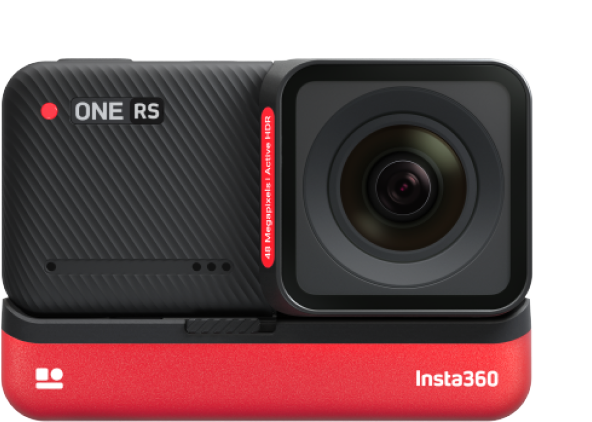
Insta360 ONE RS is an incredible action camera with a high-performance 4K Boost Lens whose 1/2-inch image sensor captures detailed wide-angle 4K/60fps videos and 48MP stills. It comes with a fresh sports HDR mode, designed especially for dynamic shooting scenes. Meaning, the camera balances the exposure while maintaining a stable picture, ensuring more light and dark details. In addition, ONE RS supports a 6K widescreen mode. This mode adopts the classic 2.35:1 ratio, and can shoot super textured 6K movie-like movies with one click.
You can buy the ONE RS for $239 during the Insta360 summer sale, which is a 20% discount on its regular price of $300.
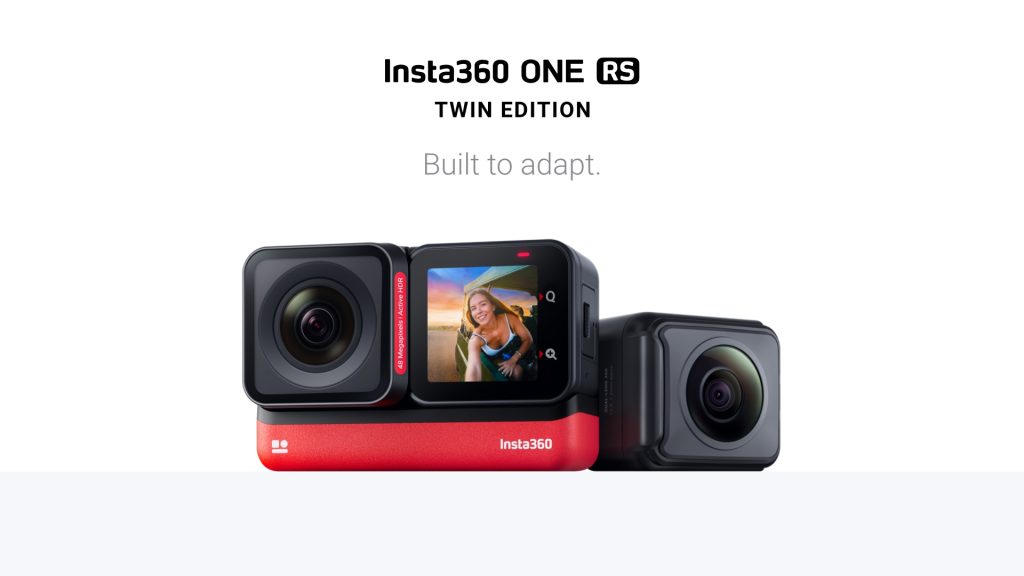
The Twin Edition of Insta360 ONE RS comes with two swappable lenses. In addition to the 4K lens detailed above, with this model, you also get a 360-degree panoramic lens to shoot 5.7K high-definition videos. So, whether it is skiing or riding a motorcycle, you can enjoy one-click shooting without worrying about composition, and then freely select the angle and picture for editing in the later stage.
Insta360 ONE RS Twin Edition is available to buy at $441 during the summer sale, which is a discount of $140 on its regular price.
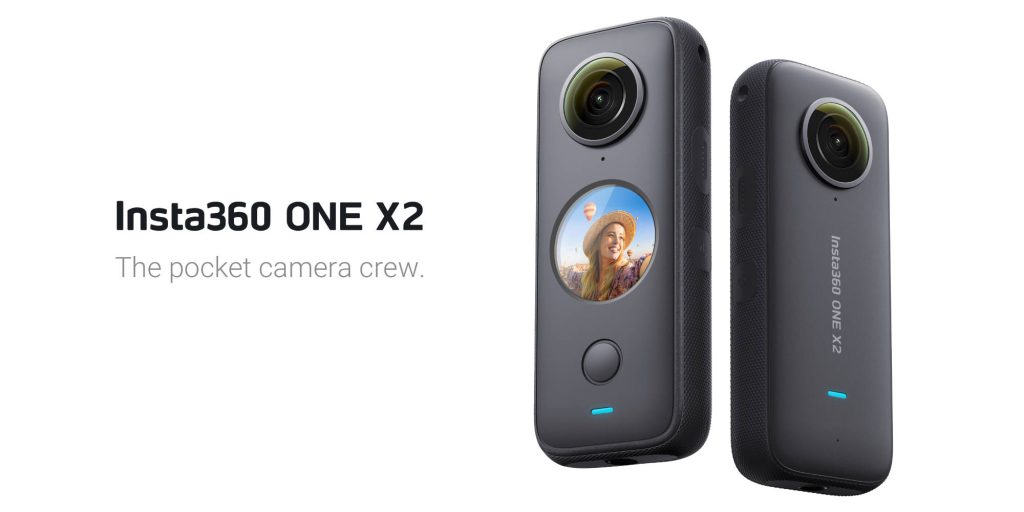
With its 5.7K 360-degree photo and video capturing prowess, the ONE X2 is perfect for places where you may not be allowed to fly a drone. Ideally paired with Insta360’s famed Invisible Selfie Stick (currently available at a discount of 12%), the product comes equipped with a high-brightness touchscreen and can shoot for up to 80 minutes. It allows you to capture easy drone-like angles and third-person perspectives with the flick of a wrist. Moreover, the camera is waterproof up to 10 meters, which means you can take it out in a rainstorm or while surfing without worrying.
Typically priced at $430, the Insta360 ONE X2 is available to buy for just $364 during the ongoing summer sale.
The ultimate tool for creative, third-person shots, Insta360’s Extended Edition Selfie Stick extends to up to 3 meters with adjustable lengths in between. However, at its most compact, the product measures only 14 inches, which makes it super convenient to carry. Pair it with one of Insta360’s 360-degree cameras, such as the ONE X2 above, and you can capture otherwise impossible angles with ease!
During the summer sale, Insta360 Extended Edition Selfie Stick can be grabbed for $89 at a discount of 11%.

Meanwhile, if you already own an Insta360 product, you might want to check out the discounts on accessories here.
Read: Hover X1: New 125g self-flying camera drone with Follow mode
FTC: We use income earning auto affiliate links. More.

An art exhibition that blossomed from several academic disciplines coming together will open for one night only.
Jason Judd is an art teacher and the business academy lead at Auburn High School. He said he and other teachers of the academy wanted to create a cross-curriculum project.
“My history of being in the art business,” he said, “I saw a really amazing opportunity where these worlds collided. I was like, ‘well, I mean, I did budgets, we did marketing, we had to do design, we had to do technical writing.’”
This is the first time that students from the academy’s science, English, business, math, graphic design, and art classes created something together.
Judd said the project started out with the science class making tie dye fabrics, after that the art students manipulated the cloth.
“Then that set the stage for math to use the exhibition for budgeting,” Judd explained, “for English, to use it for technical writing, and for design to take all those elements and to design a brochure.”
“Abstract Creations” will display from 5:30 p.m. to 7:30 p.m. Friday, June 2 at Octane restaurant in Rockford. A silent auction will also take place.

Some visual memories stay with you from childhood. For me, one such vivid memory is of a large tapestry at Oxburgh Hall, a National Trust property in Norfolk. This, part of a series of hangings worked by Mary, Queen of Scots, features animals from all around the world – including one hilarious monkfish, memorably represented as a fish’s tail topped with the head of a monk. Thanks to the British Library, I now know that this image is drawn directly from the book De aquatilibus (1553) by the naturalist Pierre Belon, where it appears with a blue-scaled body morphing into a monk’s habit and tonsured head.
This illustration is made much of in the marketing for the exhibition ‘Animals: Art, Science and Sound’ at the British Library, which offers an amusing view into the history of humanity’s understanding of nature while sending a serious message about the relationship between image, description, observation and knowledge in natural history. As the exhibition makes clear, this kind of knowledge has never been more important than at the present time, when so many species are at risk.
‘Animals’ is a rich and rewarding tour through both the animal kingdom and the British Library’s extraordinary collections. The exhibition presents a 2,000-year story of discovery, destruction and endless wonder. It is divided into four sections focused on particular environments – darkness, water, land and air – each looking at extraordinary or well-known species, the ways they have adapted to their surroundings or the threats they face. The catalogue offers the opportunity to delve more deeply into a selection of the works on display.

The Hip-po-pot-a-mus (1918–20), a record published by the Talking Book Corporation. British Library, London
Large and lusciously illustrated books such as The Birds of America (1827–38) by John James Audubon demonstrate how humans have sought to represent the natural world by recording animals in their habitat. Belon’s monkfish is one cautionary tale about the importance of direct observation, as are some beautiful but implausibly coloured illustrations by Samuel Fallours from 1718, featuring Indonesian fish and crustaceans; these required extensive artistic licence, as the artist had to imagine the colouring lost so quickly in dead fish specimens. Then there is the tale of the bird of paradise: long thought to be constantly in flight and surviving on dew-laden sunlight, thanks to the lack of feet on any specimens sent back to Europe.
Fast forward through time, and the library’s sound archives allow us to hear animals in the wild. Field recordings include early sonograms by the amateur naturalist John Hooper, used to study the behaviour of the nocturnal and largely silent bat. Songs of the Humpback Whale (1970), an album recorded by bio-acoustician Roger Payne, played a crucial role in the international conservation movement to save whales from extinction. The album sold more than 125,000 copies; it remains the most popular nature recording in history. By combining immersive lighting with soundscapes – alongside the richly varied imagery, sounds and texts that make up the show – the exhibition is effective in engaging our senses.

Metamorphosis Insectorum Surinamensium (detail; 1705), Maria Sibylla Merian. British Library, London
One underlying theme to emerge from the show is the crucial yet often overlooked contributions made by women. We meet Sarah Bowditch, who illustrated and wrote The Fresh-Water Fishes of Great Britain in instalments from 1828 to 1838; Maria Sibylla Merian, who travelled from Amsterdam to Suriname in 1699 to record the metamorphosis of insects; and Indian artist Sita Ram, who drew South Asian animals for albums collated by Lady Flora Hastings in 1818–20. Recent acquisitions by the library include Evanesco: A Selection of Beleaguered Frogs (2020) by Alicia Bailey, a diamond-shaped artist’s book inspired by the biology notebooks of her great aunt.
This thread continues into the finale of the exhibition, ‘Going Forward’, in which three contemporary women are filmed talking about their work. Researcher Kate Scott-Gatty speaks about her surveys of hedgehog populations for the Zoological Society of London; Miranda Lowe discusses her role as the principal curator of crustacea at the Natural History Museum; the composer Roma Yagnik shares how she drew on the British Library’s sound archives to make a new audio work.
On my visit, the exhibition was buzzing with groups marvelling at the beauty or strangeness of the animals represented within. The British Library has produced a timely reminder of the fragile world in which we live, and the very great risk that we pose to its fauna.

Illustration of a Monkfish from De aquatilibus (Of Aquatic Species; 1553), Pierre Belon. British Library, London
‘Animals: Art, Science and Sound’ is at the British Library, London, until 28 August.


This year’s shortlist was narrowed down from over 3,000 entries to 25 images.
The annual Milky Way Photographer of the Year competition features the best photos of our galaxy as selected by the travel photography blog Capture the Atlas. This year’s 25 winning images, revealed on Wednesday, were captured everywhere from places like Madagascar and Yemen to New Zealand and Patagonia.
On its website, Capture the Atlas said, “Modern cameras can capture vibrant details and colors in the night sky beyond what our eyes can see. However, what really matters in any great image is the photographer behind the camera, who provides the idea, plan, and creativity to bring the image to life.”
Now, here are a few of the finest images from the competition, which include pictures captured from the remote deserts of Socotra, Madagascar, Atacama, and Namibia. It also includes spectacular pics taken from Patagonia, Australia, and New Zealand.

Argentina – “Cafayate Star Factory” by Gonzalo Javier Santile

Madagascar – “Night Under The Baobab Trees” by Steffi Lieberman
This year’s shortlist was narrowed down from over 3,000 entries to 25 images, that were snapped in 16 countries around the globe. According to its website, the entries were judged not just on the quality of the images, but on the story behind the shot and how well it might inspire others to get out there and snap their own photos.

Namibia – “South Of Home” by Lorenzo Ranieri Tenti

Spain – “Celestial Shield” by Ivan Ferrero
Sharing a collage of winning images on social media, the organisation wrote, “Be inspired by the best Milky Way images taken around the world!”
✨THE 2023 MILKYWAY PHOTOGRAPHER OF THE YEAR✨https://t.co/gaSaoIlrS5
Be inspired by the best Milky Way images taken around the world! pic.twitter.com/2kUwblXctj
— Capture the Atlas (@capturetheatlas) May 30, 2023
Sharing tips with those hoping to hone their astrophotography skills, Capture the Atlas also noted that the Milky Way season ranges from February to October in the Northern Hemisphere and from January to November in the Southern Hemisphere. The best time to see and photograph the Milky Way is usually between May and June on both hemispheres, it revealed.

 Representative image”>
In the ever-evolving realm of marketing, it seems that empty buzzwords have become a language of their own. From boardrooms to email signatures, these catchy phrases permeate every corner of the business world, leaving many feeling adrift in a sea of jargon. But hey, don’t worry! Navigating this linguistic maze is an art, and it comes with a wry smile
Welcome to the world of Buzzword Bingo, where the goal is not only to survive but to find humor in the perplexing and often absurd language of marketing. It’s a game played by professionals who have become adept at deciphering these empty phrases and finding ways to connect with their audiences on a more genuine level.
Imagine you’re sitting in a meeting, and the room is abuzz with corporate speak. Phrases like “synergy,” “disruptive innovation,” and “growth hacking” are being flung around like confetti. Instead of feeling overwhelmed, savvy marketers have learned to embrace the absurdity and create their own game of Buzzword Bingo. With a wry smile and a mental scorecard, these individuals listen intently, checking off the empty phrases as they are spouted by their colleagues. It’s a silent competition, a battle of wits against the empty rhetoric that threatens to drown out meaningful communication. The winner isn’t determined by who shouts “Bingo” first, but rather who can maintain their composure without bursting into laughter.But Buzzword Bingo isn’t just about poking fun at the overused phrases that populate the marketing landscape. It’s about recognizing the need for authenticity and forging genuine connections with customers. In a world saturated with empty promises and exaggerated claims, finding a way to stand out is essential. The true masters of Buzzword Bingo understand that while these phrases may be empty, they still hold power. They can be used strategically to grab attention, create curiosity, and build momentum. The key is to infuse them with substance and purpose, to go beyond the buzz, and deliver on the promises made. Take, for example, the phrase “thought leadership.” It’s a term that has been thrown around so often that it’s lost much of its meaning. But by pairing it with genuine expertise and valuable insights, marketers can transform it from a hollow buzzword into a catalyst for change and innovation.
So, the next time you find yourself drowning in a sea of marketing jargon, take a step back and embrace the art of Buzzword Bingo. Instead of feeling overwhelmed, approach it with a wry smile and a sense of humor. Use it as an opportunity to connect with others who are equally exasperated and find common ground in the absurdity of it all.
Remember, marketing doesn’t have to be a game of smoke and mirrors. By infusing your efforts with authenticity, substance, and a touch of humor, you can rise above the empty phrases and create meaningful connections that resonate with your audience. And perhaps, along the way, you’ll become a master of Buzzword Bingo, navigating the treacherous seas of marketing with a wry smile.

How Chris Capossela and His Marketing Team Are Harnessing a Wave of AI Infused Offerings to Drive Growth
Chris Capossela has been leading worldwide marketing for Microsoft across both the consumer and commercial businesses since 2014. In that time, Capossela has been quietly transforming the Microsoft brand. Over the last nine years, coincident with Satya Nadella’s tenure as CEO, the financial value of the Microsoft brand has grown fourfold (to $278 B). The stronger brand gives the company expanded permission to move into the large and growing markets for cybersecurity, cloud software, and AI.
While Capossela and his team had a lot to do with that outcome, he gives most of the credit to the vision, processes, and team Nadella put in place when he took over as CEO. “Marketing has been part of building the brand, but this is a team sport,” says Capossela. “That’s the way we’re structured. So the growth in brand value is always a reflection also on the performance of the overall leadership team – engineering, sales, finance, legal – and the financial performance that team has achieved since Satya became the CEO.”
The growing power of the brand affords Microsoft the credibility to expand into a much wider range of markets that extend well beyond their legacy in PC operating systems like cloud computing and cyber security. ”Our security business has become a real juggernaut for us,” says Capossela. “The same goes for the development community which has come to rely on our tool set. A decade ago, the notion that GitHub would be part of a thriving ecosystem of open source development within Microsoft might seem foreign.” Today over 100 million developers worldwide use the Microsoft owned open source platform to build, ship and maintain software
Chris Capossela, Microsoft’s Executive Vice President and Chief Marketing Officer
Microsoft
“I think one of the things we’ve really learned is the power of the Microsoft brand is stronger than the power of any individual product name – even with something as big or as important as Windows or Xbox,” says Capossela. That ability to expand and extend the brand into new product areas is important given the size, breadth, and variety of growth markets the company has before it. In the last decade, a confluence of secular trends has dramatically expanded the market for Microsoft’s evolving portfolio of productivity, intelligent cloud and personal computing products. For example:
· The mainstream shift to cloud computing and “as a service” models across industries has created a fast growing market for enterprise cloud infrastructure that will exceed $250 Billion this year, according to Synergy Research Group forecasts;
· Artificial Intelligence (AI) offers the potential to eliminate and automate drudgery and unlock the creative and innovative potential of humans. A Microsoft external analysis of 31,000 global workers and trillions of Microsoft 365 productivity signals found that nearly 2 in 3 workers struggle to free up time for innovation and strategic thinking because they are swamped with mundane tasks that should be rationalized or automated;
· The recent pandemic redefined the nature of work by creating diverse, digital, dynamic and distributed workforces that rely on the type of collaboration, communications, and productivity tools Microsoft creates in their day-to-day work;
· The untapped market for cybersecurity is measured in the Trillions of dollars and experiencing 35% job growth in an uncertain economy where many technology functions are experiencing layoffs;
· The gaming industry – which is eclipsing movies and television as the primary source of entertainment – is expanding even faster as it moves to the cloud;
· Low-code development tools like Microsoft Power Apps and Azure will account for 75% of new application development by 2026, according to Gartner.
Microsoft is well positioned to become the dominant player in these markets. For example, the mainstream shift to cloud computing has fueled the growth of Microsoft’s Intelligent Cloud Solutions – centered around the ascendence of the Azure Cloud Computing platform – to comprise over 40% of the company’s revenues and command a quarter of the global cloud infrastructure market.
AI is opening up an equally large market for the company. The recent excitement over OpenAI’s ChatGPT’s generative AI tool has demonstrated the art of the possible in a wide range of consumer, workplace and commercial applications. The ChatGPT’s generative AI tool has reached 1 million users 12 times faster than the iPhone, 60 times faster than Facebook, and 200 times faster than Netflix streaming video. Microsoft has invested heavily in OpenAI and is now investing to lead in the new AI wave across all of their solution areas to exploit the unprecedented speed at which generative AI applications are being adopted by businesses and consumers according to the CEO in their most recent earnings call. The company is expanding applications of generative AI across modalities – from audio (VALL-E) to video (GODIVA) and 3D (RODIN-Diffusion) – and use cases like DNA sequencing (MoLeR), code generation (GitHub Copilot) and data engineering (Copilot in Microsoft Fabric).
“AI is being infused to drive innovation across our entire infrastructure product portfolio,” says Capossela. For example, the company is committed to turning Azure into an AI supercomputer for the entire world. Azure is the exclusive cloud provider for every tool OpenAI (the maker of the revolutionary ChatGPT tool) has in the works. “Our Build conference for the developer community is focused on AI from start to finish,” he continues. At the conference, Microsoft CEO Satya Nadella announced 50 AI Copilots available to developers with thousands more on the way.
From a productivity perspective, Microsoft has introduced a wave of solutions and partnerships that are leveraging AI to make work more productive and creative. These range from the core Microsoft 365 application suite, to the Power Platform BI tool, to using AI in Teams to make it faster to prepare for, execute, and follow up on meetings. According to Capossela, all of these solutions support the core mission of Microsoft because they aim to solve the twin challenges of the modern workforce – eliminating drudgery and unlocking creative and innovative potential. “When we saw the potential upsides and downsides of AI and we saw what we thought we could do with Word, with Teams, with Visual Studio, GitHub, and Azure, this notion of Copilot emerged,” he continued. “We’re not going to automate people away from their work. We are going to be their Copilot. We’re going to take the drudgery away from them, but they’re still completely in control.” For example, the Dynamics 365 Copilot works across CRM and ERP systems to bring the next generation of AI to employees in sales and finance to automate burdensome tasks like manual data entry, content generation and notetaking.
“Great companies position themselves for secular trend changes,” he continues. “We’ve been quite fortunate that Satya has been able to do that first with the cloud. Now I would say AI infused technology will be the second most important shift that hopefully will power the next 10 years for the global economy. And that’s what we’re busy doing.” Microsoft’s founder Bill Gates believes the impact of a future AI -enabled personal assistant – or “copilot” – will be so profound that the first company to develop it will transform the way work gets done and the future of the search, commerce, and internet industries as we know them today.
“As a marketing team, we still have to position ourselves with the right products in those segments to capitalize on those secular shifts,” warns Capossela. That is no small task given the breadth of market opportunity AI opens up for Microsoft. Microsoft operates in a marketplace cluttered with hundreds of rapidly converging software categories, over 30,000 SaaS software companies, and hundreds of thousands of apps, products, and solutions for sale. More are on the way. So Capossela and his team have had to find smart ways to simplify and focus their messaging and positioning despite the wide array of AI infused innovation Microsoft’s product teams are introducing into this crowded marketplace in 2023.
One way has been to lean more on the company brand rather than proliferate product brands. “More and more of our teams have learned and want to lean into more of a companywide approach on something like naming or branding,” he continues. “That’s been a huge change that I’ve gotten to witness. It used to be everyone wanted their own thing with their own everything, your own icon, their own message.”
Another way to communicate the wide range of innovation that AI has spawned across its product line (from productivity solutions to search and cloud computing) is by focusing on a handful of solution areas rather than hundreds of new product launches. Each of these individual solution areas represents an enormous expansion market for Microsoft – propelled by secular trends and market tailwinds. “We focus on what we call ten customer solution areas,” says Capossela. “These are the ten core businesses we’re in. Gaming is one of them. Security is another. The others include cloud infrastructure, data and AI, modern work and digital and app innovation. We have a different way to go to market in each of these ten solution areas.”
“One of the gifts Satya gives me as the CMO is an organization structure that allows us to look left to right so we can manage packaging and pricing across all of our products as it relates to AI and move with more speed,” says Capossela. His span of control as CMO includes: product marketing, business planning, brand, advertising, events, media buying, communications and market research as well as all digital direct and retail sales for all Microsoft products and services. “By having a centralized marketing organization, you can do those naming decisions and business model design in a far more comprehensive end to end way than if you have seven or ten different presidents of ten different businesses, all who have their own marketing, pricing, licensing and finance teams,” he continues. “That allows us to say, this huge wave is coming – how do we think about naming this stuff? How do we think about packaging and pricing this stuff?”
For example, in terms of naming, rather than introduce dedicated AI products, or product variants, the company has introduced the notion of an AI Copilot that can be applied to many of the solutions in the portfolio to improve individual productivity and unlock human creativity. “We decided that the word Copilot was an important word for us to latch on to, because despite all of our products, almost everything we do is to empower somebody else to do what they want to do,” says Capossela. AI “copilots” are being infused into a wide range of solutions and tools in the Microsoft portfolio – Microsoft 365, Dynamics CRM, Bing search, Edge browser, the Power Platform BI tool, and the biggest canvas of all – the flagship Windows product.
Another way that Chris’s marketing team has become more effective is by actually using Microsoft tools and analytics to leverage the mountains of customer engagement data generated by the modern commercial model. Capossela views the ability to harness the first party customer interaction data their organizations generate as a key to succeeding in their jobs going forward. “Great data with great analytics with machine learning is a really, really transformative recipe for marketers,” he emphasizes. “Most marketers I know have access to lots and lots of data. We’re lucky that we do too. And a lot of it is first party customer data. But it’s the tools and the analytics that have gotten much, much better. In our case, we’ve been able to make very fast project progress in just a handful of years because of the power of the technology we have at our disposal across our product and partner ecosystem. Whether that’s things like Azure Machine Learning which we now use extensively, or the power of these Copilots that we’re building into our products, or social listening that we can do with our own technology and also partners. As marketers, we are using these tools to become very smart about the audiences we focus on. who those people are, the language that they use on social, what their perceptions are towards Microsoft, the stories that resonate with them, the ways we can target them – all of which we can do analytically without even having to do research necessarily.”
In recognition of his contributions to the marketing craft, Chris is being inducted into the AMA Marketing Hall of Fame this June 7th in New York City. The Hall Of Fame award celebrates the world’s best marketers, recognizing brilliance in marketing and innovation across the marketing profession.









