About

Posts by :

Benjamin Harjo Jr. influential Native American Artist dies Saturday, age 78

Benjamin Harjo Jr. influential Native American Artist dies Saturday, age 78

Well known and recognized Native American artist Benjamin Harjo Jr. has died at the age of 77,

He was known as the “Picasso of Native American art” He won numerous awards in his career including The Red Earth Grand Award in 1987, the 34th Annual Featured Artist and Gold Medal Award at the 1990 American Indian Cowboy Artists Wichita Kansas Show. In 2007 he created a poster honoring the state’s American Indian influence for Oklahoma’s Centennial Commission.

Harjo was honored with many awards in his lifetime as he was a gifted artist and printmaker. His work is included in the Smithsonian Institution’s National Museums of the American Indian in Washington D.C.

Over the years Native American Art has become more popular because of the work of such artists as Harjo. A fondly remember mentor to many up-and-coming artists over the years.

Vancouver photographer captures images of orcas ‘metres’ from his kayak

Vancouver photographer captures images of orcas ‘metres’ from his kayak
image

Liam Brennan had a once-in-a-lifetime experience while kayaking near the University of British Columbia last Wednesday.

The 23-year-old headed out near Locarno Beach in the evening, a route he frequently paddles.

But this time, his routine route was far form ordinary.

As he lifted his paddle to turn around and head back in, he noticed an unusual sound about a kilometer in the distance.

“I heard the blow, which I suspected was a whale, but I immediately told myself, ‘there’s no way,’” said Brennan.

But his instincts were right.

“I looked over my shoulder and there was huge a dorsal fin on the horizon,” he said. “It was a mix of terror, but exhilaration like, ‘Oh my god this is actually happening?’”

Within a few minutes, a pod of orcas came within metres of his kayak.

“One male kind of did a circle around me, there was a female on one side of me. At one point I was just surrounded, which was just spectacular.”

The incredible moment happened within minutes, but he managed to pull out his DSLR camera to capture the experience.

“It raised its head right out of the water, must have been 15 or 20 meters from kayak, so unbelievable”

Fascinated by marine life, he posted the photos online in hopes of identifying the pod.

Researchers determined the three transient killer whales were a mother with her two sons.

“Scientists that spend a lot of time around these whales can ID the individuals based on their dorsal fin, the white patch above their eye and the grey area behind their dorsal fin,” said Dr. Beth Volpov with the Marine Mammal Research Unit at the University of British Columbia.

“This is an extremely rare experience, seeing a transient killer whale from a kayak is like winning the lottery.”

There’s about 350 transient killer whales swimming in and out of Salish Sea. A male orca can grow up between six and nine metres long, more than triple the size of an average kayak.

“My images, especially of the male orca, right in front of the city skyline can be a pretty powerful symbol of ecological resilience,” said Brennan. “I think it’s a pretty cool juxtaposition to have this symbol of wild nature right in front of the city and I hope it conveys the message that we’re always connected to nature.”

The incredible moment was made even more special for Brennan, who now holds a UBC Environmental Science degree.

“For it to happen, just under a week before I was graduating was pretty amazing, I was pretty excited.”

His dream to paddle alongside orcas is what he says he’ll remember as a graduation gift–a memory he’ll never forget.

Prince’s guitar sculpture arrives

Prince’s guitar sculpture arrives
Staff photo by Fritz Busch Iowa sculpture artist Jefferson Davis, left, shakes hands with sculptor donor Joel King of Henderson at the 15-foot-tall sculpture of Prince’s guitar installed in front of the Minnesota Music Hall of Fame (MMHF) in New Ulm Sunday.The MMHF recently received a donation of Prince memorabilia from the Prince Legacy Foundation […]

Cleve Carney Museum of Art’s Andy Warhol exhibition among the summer’s most anticipated cultural events

Cleve Carney Museum of Art’s Andy Warhol exhibition among the summer’s most anticipated cultural events

Among the suburbs’ most anticipated cultural events this summer is the Cleve Carney Museum of Art exhibition “Andy Warhol Portfolios: A Life in Pop/Works from the Bank of America Collection” opening Saturday, June 3, at the McAninch Arts Center.

Exclusive to the Cleve Carney Museum of Art, “Andy Warhol Portfolios” consists of 200 Warhol works, 94 of them from the Bank of America collection, along with 150 Warhol photographs and original works from the museum’s permanent collection. The exhibition, which comes on the heels of CCMA’s 2021 blockbuster “Frida Kahlo: Timeless,” also includes “Andy Warhol: Silver Clouds,” an interactive installation consisting of oversize, metallic balloons on loan from The Andy Warhol Museum in Pittsburgh.

The combination of Warhol works, an historical exhibit highlighting parts of his life, a kids’ pop art print factory, a Studio 54 experience and a Central Park-inspired outdoor area along with concerts, a workshop and free lectures, makes for an accessible, “multifaceted experience that tells the story of Warhol,” said CCMA curator Justin Witte.

While many CCMA visitors will gravitate toward the iconic pieces inspired by Marilyn Monroe and Campbell’s Soup, Witte encourages them to take in his favorite works, the sunset series.

“Andy was a talented colorist. His use and understanding of color is fantastic and comes through in all of his work,” especially that series, Witte said.

“They’re incredibly beautiful, subtle and skilled pieces,” said Witte, who predicts “Silver Clouds” will be a favorite among visitors.


Andy Warhol’s “Campbell’s Soup II: New England Clam Chowder (1969)” is among the works on display at Glen Ellyn’s Cleve Carney Museum of Art this summer.
– Courtesy of The Andy Warhol Foundation for the Visual Arts, Inc.

“It’s dynamic, beautiful and interactive,” he said. “It’s also very fun. And it’s accessible.”

The photographs from the CCMA collection offer a deeper understand of the artist in that they illuminate Warhol’s inner life, Witte said.

“The photos we have highlight his process of doing portraits and making silk-screens,” he said. “It gives us a peek into his everyday life. You get a sense of Andy the person.”

“Andy Warhol Portfolios” runs through Sept. 10 at the CCMA, McAninch Arts Center, College of DuPage, 425 Fawell Blvd., Glen Ellyn. Tickets range from $25-$40 and are available at (630) 942-4000 or warhol2023.org.


The Warhol exhibition may be among the biggest suburban events this summer, but it’s not the only one. Here are noteworthy exhibitions running at suburban and city venues.

Suburban exhibitions

“65 Years”: May 29 through Nov. 11 at the First Division Museum, Cantigny Park, 1S151 Winfield Road, Wheaton. A nod to Cantigny’s 65th anniversary this year, the exhibition consists of more than 465 artifacts, some of which have never been displayed. Reflecting the mundane and the momentous, the items highlight soldiers’ everyday lives as well as their honors including medals, patches and flags. (630) 668-5161 or cantigny.org.

Elmhurst Art Museum debuts “Marvelocity: The Art of Alex Ross” showcasing artist/illustrator Alex Ross who, over his 30 years, has revitalized such characters as Spiderman, Captain America, Black Panther and Storm from the X-Men.
– Courtesy of Alex Ross

• “Marvelocity: The Art of Alex Ross”: June 3 through Aug. 20 at the Elmhurst Art Museum, 150 Cottage Hill Ave., Elmhurst. The exhibition includes more than 50 works by the acclaimed illustrator, who has translated images of The Avengers, Captain America, Spider Man, Black Panther and the X-Men’s Storm into fine art. It chronicles Ross’ evolution through childhood drawings to sketches to paintings to his three-dimensional busts of Marvel Universe characters. (630) 834-0202 or elmhurstartmuseum.org.

Storm, of the X-Men, is among the superheroes included in Elmhurst Art Museum’s “Marvelocity: The Art of Alex Ross.”
– Courtesy of Alex Ross

• “No Rest: The Epidemic of Stolen Indigenous Women, Girls, and 2Spirits”: Through September at the Mitchell Museum of the American Indian, 3001 Central St., Evanston. Twelve Indigenous artists contributed 35 works to this exhibition, which highlights crimes committed against Native American women and members of the Native American LGBTQIA community. According to federal sources, urban, rural and reservation-based Native communities experience the nation’s highest violent crime rates including domestic and sexual violence. (847) 475-1030 or mitchellmuseum.org.

Children playing among the wreckage of D-Day Invasion, Omaha Beach, Normandy, France, in 1947 is among the photographs on display as part of the Illinois Holocaust Museum’s “Chim: Between Devastation and Resurrection” showcasing works by the famed photographer who was born Dawid Szymin and published under the name David Seymour.
– Courtesy of The International Center of Photography

• “Chim: Between Devastation and Resurrection”: Through Feb. 4, 2024, at the Illinois Holocaust Museum and Education Center, 9603 Woods Drive, Skokie. This photography exhibition showcases the work of the 20th-century photographer who was born Dawid Szymin in 1911 and published under the name David Seymour. An astute observer of 20th-century European politics, social life and culture, he covered the struggle against fascism and the rebuilding of countries ravaged by World War II, including the struggle for workers’ rights. The exhibition’s more than 50 photographs highlight postwar reconstruction of Europe, elections, the effect of the war on children and the birth of the new state of Israel. (847) 967-4800 or ilholocaustmuseum.org.

“Stillness in Motion” is among the large-scale sculptures by artist Olga Ziemska included in the Morton Arboretum’s “Of the Earth” exhibition.
– Courtesy of Olga Ziemska

• “Of the Earth”: Through spring 2025 at the Morton Arboretum, 4100 Illinois Route 53, Lisle. This installation showcasing works by Polish American artist Olga Ziemska includes five, large-scale sculptures “created from reclaimed tree branches and other natural materials gathered from various locations throughout the arboretum’s 1,700 acres.” It examines Ziemska’s “we are nature” philosophy designed to remind people that the same basic elements form everything in nature, including ourselves. (630) 968-0074 or mortonarb.org.

“Titanic: A Tribute to the Tragedy”: Ongoing at the Volo Auto Museum, 27582 Volo Village Road, Volo. The exhibition recounts the maritime tragedy of April 14, 1912, when the luxury ocean liner struck an iceberg and sank nearly three hours later. It includes tributes to the ship’s artifacts including a collection of Titanic-era automobiles, a 1910 Steinway grand piano like the one onboard and some personal effects of ship band leader Wallace Hartley. (815) 390-4853 or volocars.com.

The National Museum of Mexican Art presents “Nuestras Historias: Stories of Mexican Identity,” an exhibition showcasing the Chicago museum’s permanent collection.
– Courtesy of Michael Tropea

Chicago exhibitions

“Nuestras Historias: Stories of Mexican Identity From the Permanent Collection”: Ongoing at The National Museum of Mexican Art, 1852 W. 19th St., Chicago. The exhibition highlights works from the museum’s permanent collection, which showcase the stories of Mexican identity in North America through ancient Mesoamerican and colonial artifacts, modern Mexican art and folk art from both sides of the U.S.-Mexico border. nationalmuseumofmexicanart.org.

Rodolfo Morales’ 1990 painting “Mystical Woman/Mujer Mística” is among the works included in the National Museum of Mexican Art’s current exhibition “Nuestras Historias: Stories of Mexican Identity From the Permanent Collection.”
– Courtesy of the National Museum of Mexican Art

• “Gary Simmons: Public Enemy”: June 13-Oct. 1 at The Museum of Contemporary Art Chicago, 220 E. Chicago Ave., Chicago. MCA’s exhibition marks the first career retrospective of the multidisciplinary artist whose work is rooted in examinations of race, class and gender as depicted in America’s visual culture. (312) 397-4010 or mcachicago.org.

“Diaspora Stories: Selections From the CCH Pounder Collection”: Through July 16 at The DuSable Black History Museum and Education Center, 740 E. 56th Place, Chicago. This exhibition features paintings from the collection of Emmy Award-nominated CCH Pounder (“NCIS: New Orleans,” “Avatar,” “The Shield”). An avid art collector for more than 40 years, Pounder’s collection numbers more than 500 works including Kehinde Wiley, Robert Pruitt, Ebony G. Patterson, Mickalene Thomas, Betye Saar and Geoffrey Holder, among others. The exhibition consists of 24 works by artists from Cuba, Senegal, South Africa, Martinique, Cameroon, Trinidad, Jamaica, Cape Verde and the U.S. in a capsule collection that showcases contemporary art’s current Black Renaissance. (773) 947-0600 or dusablemuseum.org.

“Kwame Brathwaite: Things Well Worth Waiting For”: Through July 24 at The Art Institute of Chicago, 111 S. Michigan Ave., Chicago. Inspired by music, Kwame Brathwaite picked up a camera in 1956 intending to document the “Black is Beautiful” movement. Over the course of his career, Brathwaite documented the lives of Black people — ordinary citizens and celebrities — alongside the civil rights and Black Power movements. This exhibition focuses on the photographer’s passion for music. Also at The Art Institute, “Van Gogh and the Avant-garde: The Modern Landscape” features 25 of the artist’s paintings along with works by his fellow pioneers Georges Seurat, Paul Signac, Emile Bernard and Charles Angrand, whose vivid colors and brush strokes reflected novel painting techniques. The exhibition runs through Sept. 4. artic.edu.

“Pompei: The Exhibition,” which includes replica body casts representing the disaster’s human toll, runs through Sept. 4 at Chicago’s Museum of Science and Industry.
– Courtesy of Museum of Science and Industry, Chicago

• “Pompei: The Exhibition”: Through Sept. 4 at The Museum of Science and Industry, 5700 S. DuSable Lake Shore Drive, Chicago. “Pompei” offers visitors a glimpse into what life was like in ancient Rome through more than 150 artifacts — including sculptures, armor, jewelry and coins — and immersive, multimedia experiences. Holographic displays include a simulation of Mount Vesuvius’ eruption and a gladiator competition. msichicago.org.

“First Kings of Europe”: Through Jan. 28, 2024, at The Field Museum, 1400 S. Lake Shore Drive, Chicago. The Varna treasure, consisting of human-made gold objects from 6,000 years ago; Bronze Age swords and armor; and a Thracian prince’s gold crown are among the 700 objects included in this exhibition. Twenty-six museums in 11 European countries contributed prehistoric tools, weapons and sculptures that reveal life within these early societies and chronicle how warriors evolved into kings. (312) 922-9410 or fieldmuseum.org.

Immersive exhibitions

“Immersive Van Gogh” returns to the Lighthouse ArtSpace to run in conjunction with “Mozart Immersive: The Soul of a Genius.”
– Courtesy of Michael Brosilow

• “Immersive Van Gogh,” a digital exhibition consisting of Vincent Van Gogh’s masterworks, runs in repertory with “Mozart Immersive: The Soul of a Genius” at the Lighthouse Artspace at the Germania Club, 108 W. Germania Place, Chicago. The Mozart exhibition chronicles the composer’s life using some of his most famous compositions accompanied by recorded video that includes dancer/actor Mikhail Gorbachev and his father, Leopold. mozartimmersive.com.

Summer preview: The comprehensive guide to Artpark & Company’s 2023 season

Summer preview: The comprehensive guide to Artpark & Company’s 2023 season

Fri, May 19th 2023 10:00 am

Artpark’s anniversary celebration begins with international performers, Indigenous artists, rising musical stars

√ Interview with President Sonia Kozlova Clark

By Joshua Maloni

GM/Managing Editor

Artpark & Company’s focus for this summer – its 50th season – centers on five key words: spectacle, drama, Indigenous & global influences.

Indeed, arts and culture will take center stage this year, as the award-winning venue will host educational and entertaining events across the Lewiston state park’s 150-acre campus.

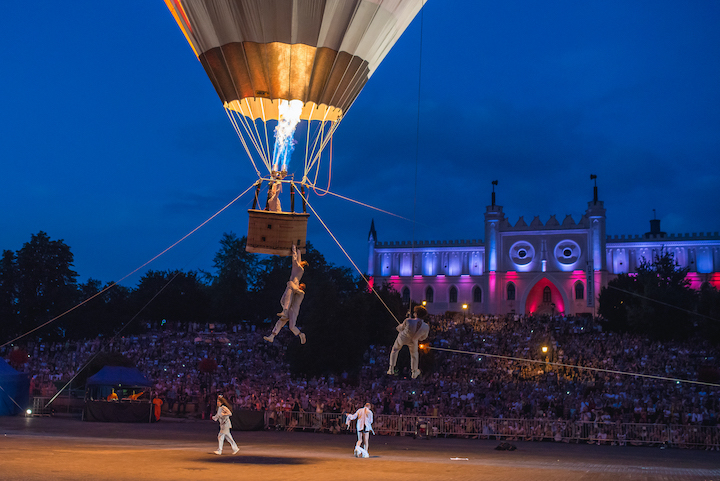
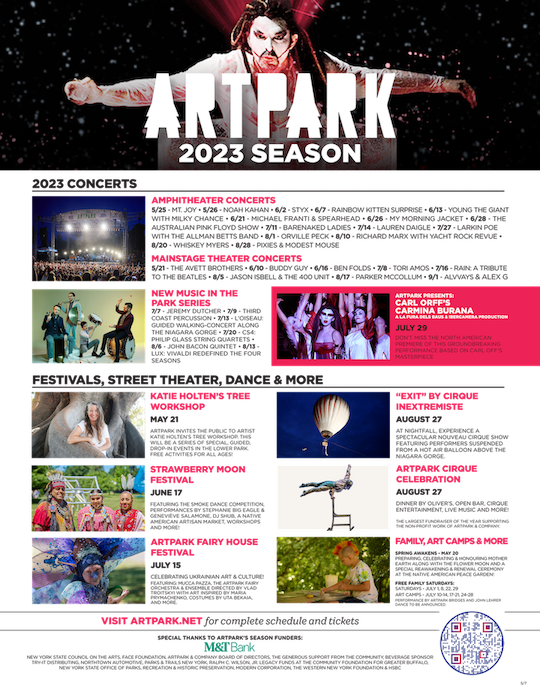
Organizers shared, “Hotly anticipated events this summer include the North American premiere of the spectacular production of ‘Carmina Burana’ by Spain’s La Fura dels Baus; a hot air balloon escape act by the French Cirque Inextremiste and a ‘Cirque Celebration’ fundraiser directed by Sxip Shirey; guitar legend Buddy Guy’s farewell tour; the 13th annual Artpark Fairy House Festival, this year adding a celebration of the culture of Ukraine under the creative collaboration of Kyiv’s theater director Vlad Troitskyi and Tbilisi’s designer Uta Bekaia; concert attractions like Ben Folds and double-headers like Pixies with Modest Mouse; rising music artists like Noah Kahan, Orville Peck and Larkin Poe; and the Artpark Strawberry Moon Festival, celebrating Indigenous cultures of the Buffalo-Niagara Region. …

“Artpark has already announced more than 30 performances and concerts, two festivals, several art installations, six international creative residencies, art camps, and even the launch of Artpark’s ‘Art Ale’ in partnership with Resurgence Brewing Co.”

President Sonia Kozlova Clark previewed the new season in a recent Q&A. This is part one of her interview.

Artpark & Company President Sonia Kozlova Clark (Photo by dellas, traffic east)

••••••••

Q: I would say Artpark probably fared better than most over the pandemic – the site remained open, you came up with creative new programming, and received several grants and awards. You had crowds in thick and thin. What have you learned about your audience in recent years, and how do you best serve them in 2023?

Sonia Kozlova Clark: That’s a very good question – and it is complicated because our audiences are changing – and they are changing more rapidly since COVID.

To define what is our audience today versus what it was three years ago, I would say that, during COVID, we were able to think about our strengths, our unique features, and also our future with support from federal and state funding sources and the local community. We were able to strengthen our partnerships with presenters like Live Nation, AEG Live, Funtime; grow our artistic and management team; and with that take some risks. What we learned in the process of trying some new bands and recalibrating some of our event structures and expectations, is that there’s a tremendous new audience for Artpark, both locally, which includes Lewiston, Buffalo, the rest of Western New York, and as far as Canada, as Canadians are starting to come back.

We learned that our audiences are, indeed, interested in the great diversity of music and other programs. They represent different demographics, segments or pockets of the population that we can serve in very different ways.

Artpark itself occupies a vast territory, and its 150 acres offers some very interesting opportunities for engagement. We have several stages: the well-known Artpark Amphitheater with a large capacity of up to 10,000 people. We also have the Artpark Mainstage Theater, which is the enclosed theater with an open lawn with which Artpark opened in 1974.

We also have the intimate Emerald Grove stage, named after the installation by Jesse Walp that surrounds it. This chamber stage has a garden-like setting and has become the primary setting for the fast-growing “New Music in the Park Series” where the informal atmosphere gives our audiences permission to experience something very new to them.

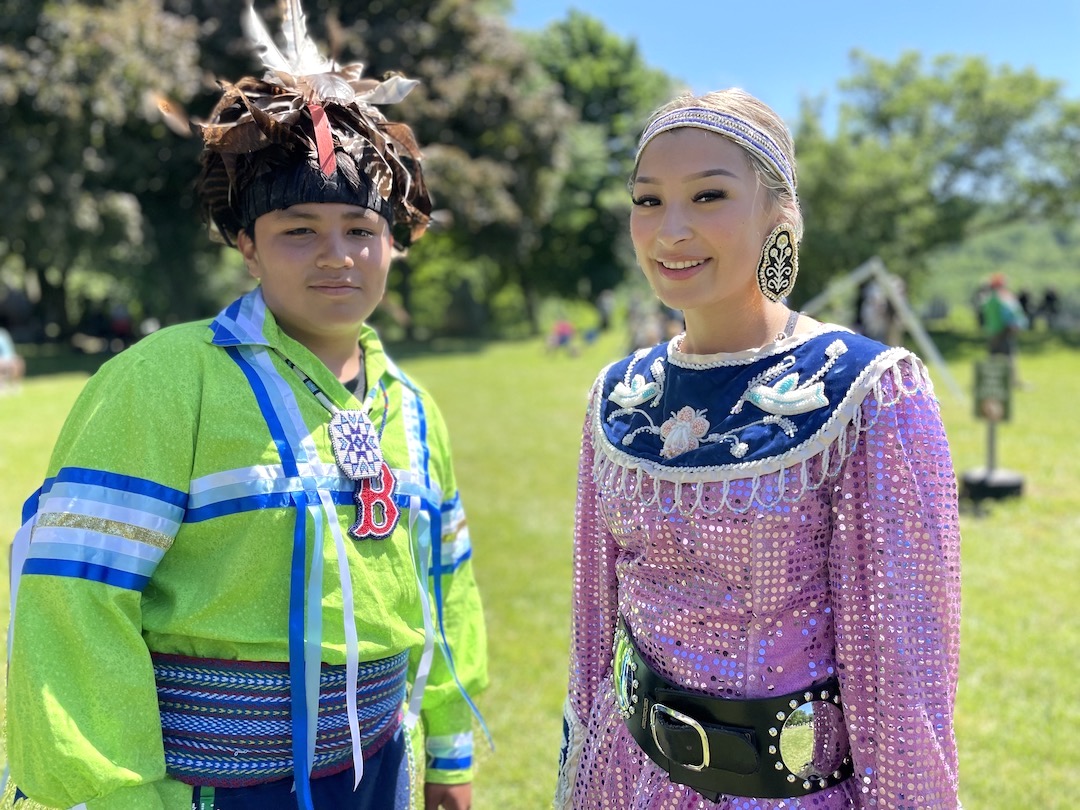
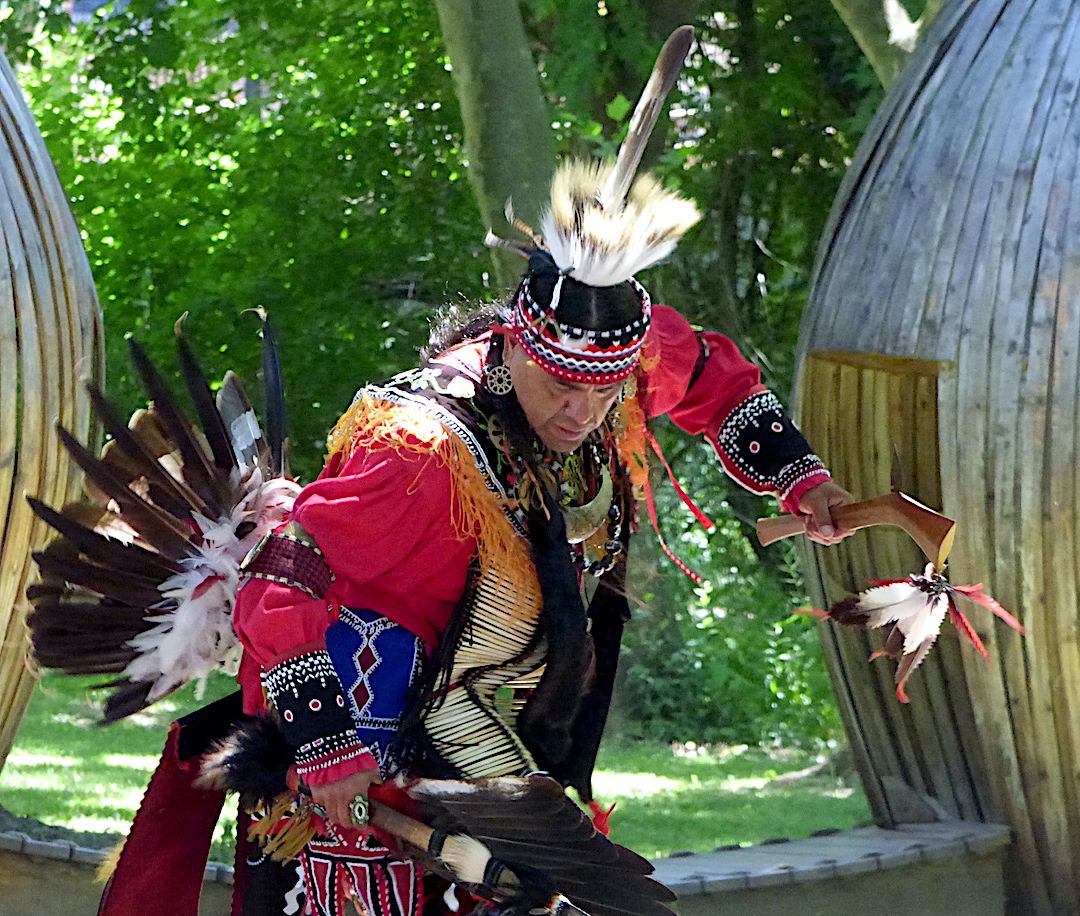
We also have been using the grounds of Artpark, rich with performance and festival opportunities. Both our Strawberry Moon Festival celebrating the local Indigenous cultures and the Fairy House Festival this year focusing on the art of Ukraine mixed with the local fairy house creations in the woods will take advantage of the wonderful nature of the lower park.

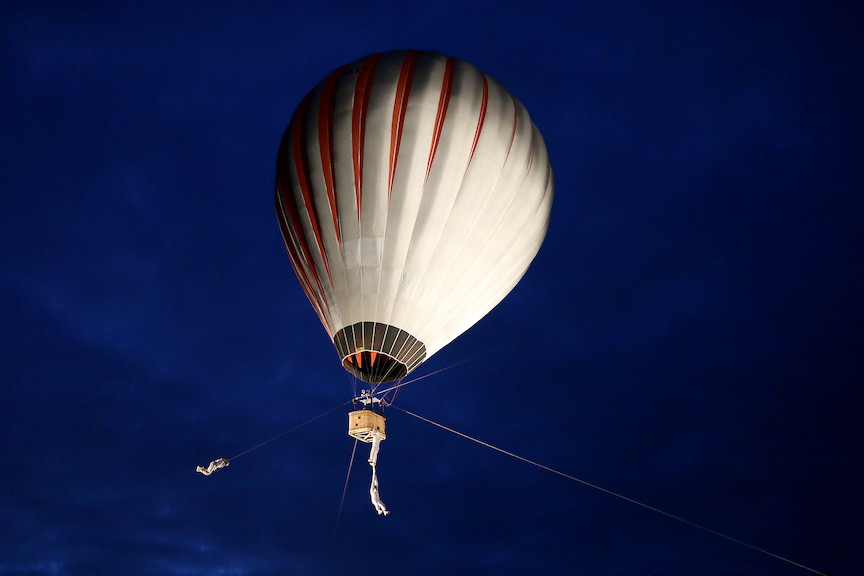
The Cirque Inextremiste performance calling for a large outdoor area for the hot air balloon hoisting acrobats up in the air will take place on the upper parking lot B. One of the “New Music in the Park” concerts – “L’ouiseau,” curated by now local conductor Brett Chancellor – will take our audience on a walking music tour on the stunning Niagara Gorge to explore the work of contemporary composers Kaija Saariaho, Iannis Xenakis, Brent Chancellor and Messiaen with dance and Native American spoken word.

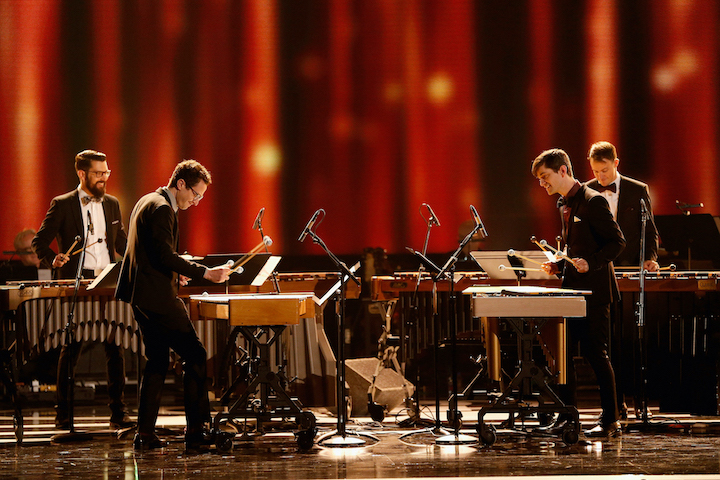
We will have on-stage performances of music by Philip Glass and Vivaldi and take advantage of the natural acoustic dome of the Emerald Grove with Third Coast Percussion.

And, of course, the massive theatrical production of “Carmina Burana” by La Fura dels Baus with Buffalo Philharmonic, Buffalo Philharmonic Chorus conducted by Gil Rose, and 200-plus performers will take place on our exceptional, one-of-a-kind opera stage.

Image: Carnaval Sztukmistrzów // Lublin // Exit fot. Natalia Wierzbicka

Cirque Inextremiste (Photo provided by Artpark & Company)

••••••••

Q: I think, certainly, diversity in programming is something that you’ve been very successful at over the years.
The previous administration, out of necessity – then I would say popularity and practicality – focused on outdoor concerts. There was no indication the cultural programming you’ve initiated would become as well-received as it is today. What led you to believe those programs were possible – and that they could work at Artpark?

Sonia Kozlova Clark: When I first came to Artpark, what I saw was, again, this vibrant palette of opportunities for presentation. I have produced very different types of arts and events in the past, and I could see how Artpark is unique from any other venues I had worked with.

Artpark as a place of nature and as a community presents almost limitless ways to explore the different types of performance, theater, music, Cirque, street theater, or art in public spaces. Also, of course, visual arts is a tremendous legacy and opportunity for Artpark, which we are strategically rebuilding. We are approaching these opportunities in phases and by layering one new discipline at a time.

The opportunities come from the site itself – its history, also its legacy, and, very importantly, from the people around us. It’s the Buffalo community, so fond of innovative music and theater; the Lewiston community, so rich with people who know their history and the memories of coming to Artpark to experience the various types of performances. It’s also the Indigenous people who were here long before any others.

Our understanding of what is diversity, specifically, at Artpark is also a very interesting subject. We often times talk with our board, funders, artistic partners and curators about how to make our organization more diverse, and how to make our audience more diverse. Oftentimes, the fallback is to say, “Well, Lewiston is a pretty homogenous society.” Initially, I thought, the local diversity was economic and maybe educational. But soon I have discovered the incredible depth and richness of the Haudenosaunee and their predecessors, thank you to Eva (Nicklas) and Irene (Rykaszewski) from the Lewiston Art Council, and Michele-Elise Burnett, who I’ve met through our board member Seymour Knox IV.

With their help, some reading, and the stories told by Neil Patterson Sr. of the Tuscarora Nation, or Peter Jamison of the Seneca Nation, and many others, I learned that the Haudenosaunee Nations are in themselves very diverse, but also so present here. Their presence here is not always the most obvious, as we see them through the limited focus of shared festivals or events, but the reality is so much richer.

Through the work of Michele-Elise, Artpark’s Indigenous arts producer and staff member, our relationship has been flourishing now for a number of years, starting with the Artpark Strawberry Moon Festival and expanding now to a summer-long program focused on Indigenous ways of knowing. I am grateful to Kehala and Jordan Smith and all the scholars and artists helping us build a more close-knit relationship, which sometimes feels like family.

The success of attracting an audience is through seeing your community, all its fine tones and different shades of cultural and economic differences, social and even political views. And for us at Artpark, there is such an interesting palette to work with here.

Another path for success is in programming strategy. Layering the new over time, mixing it with the familiar. When you bring something new, the recognition doesn’t happen all at once. You have to adjust the strategy for each particular kind of art and audience. It’s not one-size-fits-all.

Cirque Inextremiste (Photo provided by Artpark & Company)

••••••••

Q: Of course, we know concerts are still a very big draw. What can you tell me, looking at this year’s lineup, that stands out to you – or that people should be excited about or even curious about, with regard to the bands and the acts you’ve booked?

Sonia Kozlova Clark: As you said, it’s a very diverse lineup, and addresses different types of audiences.

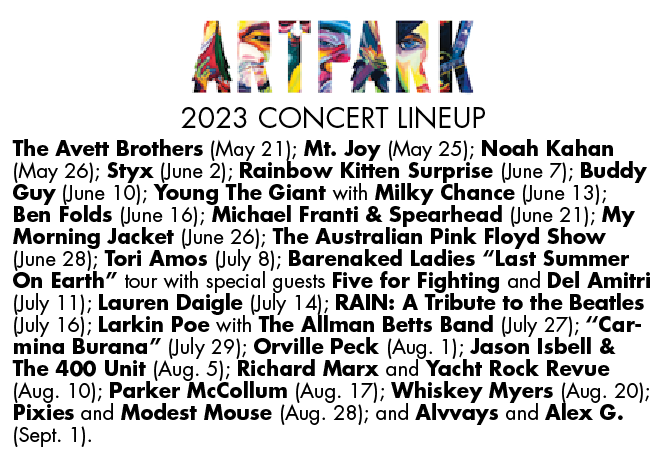
I am, as always, excited about Barenaked Ladies, which now has become a staple event in Western New York. They are more popular here in Western New York, or at Artpark, than practically anywhere else. It’s just a very special relationship that we have developed over time between our community and the band. So, for that alone, it’s absolutely a special to Artpark event, and all of us always look forward to it.

I think, of course, Styx on June 2, is something that so many of us are looking forward to, as well. They’ve been to Artpark now a number of times, and this year it seems bigger than ever.

We rarely ever start that early, but this year our first concert is May 21, with the Avett Brothers. Again, a great band. They’ve been to Artpark twice before. So great to see them back, and it looks like it is going to be a packed house. And it’s great to see the audiences coming back, and then some.

Buddy Guy is an iconic figure in music. It’s his last – or self-proclaimed last – tour. We’ll see. I hope he changes his mind. He will definitely be a highlight, for me personally, and I’m sure for many in the community.

I think Larkin Poe is a fantastic duo that I think everybody should discover, if they haven’t yet – with the Allman Betts Band. Together, it’s a great pairing.

One of my favorite musicians is Ben Folds. To me, it’s definitely a highlight. I’ve followed his career from the very early days, and I’m so glad to see him back with us.

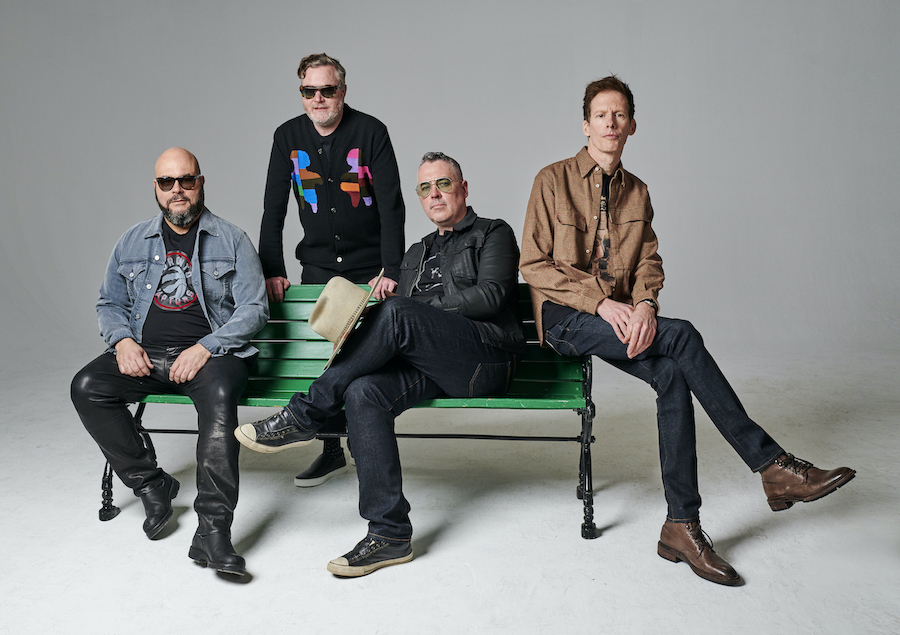
Pixies and Modest Mouse will close our amphitheater season, and what a great, incredible pairing that is. I’m definitely looking forward to that. I was doing the happy dance when we confirmed that particular concert.

And then we have not one but two North American premiers: Carl Orff’s “Carmina Burana,” in a spectacular production by La Fura dels Baus with Buffalo Philharmonic Orchestra, Buffalo Philharmonic Chorus, conducted by Gil Rose. It’s a modern spectacle. It’s a very edgy spectacle based on a medieval collection of poems and songs written in Latin and Middle High German. The texts cover a wide range of themes, such as drinking, gambling, love and the fickleness of fortune.

The poems were discovered in a Bavarian monastery in the 19th century and later set to music by composer Carl Orff in the 1930s. Musically it is extraordinary, recognizable and powerful. I call it the “Heavy Metal of the ’30s.” Its main song, “O Fortuna!,” was recorded and remixed in so many different styles. The Trans-Siberian Orchestra has done a track; in addition to all the classical interpretations, of course. It runs the whole gamut. There’s hardly a human being on this planet that doesn’t know this tune.

The production is by a renowned company in Spain – La Fura dels Baus – who I have been in conversations with over a number of years now – their focus is on opera as a spectacle, oftentimes outdoors with immersive video, flying acts and spectacular stage effects. They’ve been in the United States a number of times. The last time they were at the Mostly Modern Festival at Lincoln Center with a production of Haydn in 2018.

Their Carmina production has toured around the world for over 10 years, but it’s never been in North America. And I’m very excited to be able to present this just at Artpark, just for us, just because we can, and just because it makes sense for us.

We are also fortunate to be working with the visionary conductor Gil Rose with whom we are building a long-term plan for reintroducing opera to Artpark, and, as always, with our friends at the Buffalo Philharmonic Orchestra and the Buffalo Philharmonic Chorus, also the Tanzen Dance and other local performers.

And the second North American premiere at Artpark will be with Cirque Inextremiste on Aug. 27, which we are bringing in partnership with University of Arizona and Rochester Fringe Festival. This French group are completely unique and out of their own kind, they define themselves as “sweet lunatics trapped in spite of themselves in a life-size epic” in one of the wildest shows you will ever see, called “EXIT.”

Barenaked Ladies (Photo by Matt Barnes // provided by Artpark & Company)

••••••••

Q: It’s a big anniversary season. How will that milestone be recognized this summer?

Sonia Kozlova Clark: We plan to celebrate by the continuous growth of Artpark as an institution and exploration of its potential while also recognizing its legacy. We have programs that highlight our Haudenosaunee people through Strawberry Moon Festival and summer-long Indigenous programs. We are restarting the opera program, once so prominent at Artpark, and so well known in this country. We are bringing new voices and international productions, which are impactful not only for our own audience, but for the artists themselves. Through these international collaborations and national partnerships, Artpark’s name is now present in the professional discourse around the world.

I was recently at Carnegie Hall, at a concert, and a number of people I ran into from New York City ran up to me with their memories of Artpark as an opera hub back in the 1980s. It’s still in the memories of people far away from here. So, being able to reinstate this program with a tremendous conductor – we call him a conductor in residence and also a curator of opera – Gil Rose – I think that’s a very momentous kind of occasion.

Being able to produce a series of “New Music” concerts, that’s very much, again, an homage to something that was celebrated and developed at Artpark. It’s what we call “New Music.” Something that was started by Creative Associates in Buffalo, and very much developed in Artpark, as well, and really translated to the very fabric of this cultural organization, and to see it carried forward with the musicians of today. Jeremy Dutcher, Third Coast Percussion – these are very well-known new musicians working, and experimenting with the types of music that are both very new to us today, but also date back to the traditions that were first honed in the 1970s – just when Artpark was established.

So, there are all these kinds of overtones of going back and also moving forward, all at the same time – and building a brand-new program we have not had in the past, is Cirque. So, we’ve done smaller productions as a part of our Fairy House Festival and other special events: Cirque Orange from Hamilton, Cirque Barcode from Montreal, Giraffe Royal from Estonia and others over the past six years.

They all represent the artform known as Cirque Nouveau mixed with street theater, as we’ll call it. It is a fast-emerging popular form of performance, normally not involving a tent nor animals, not necessarily with the kind of acrobatics and clowns that everybody expects from the past – the red nose kind of act. In this new type of cirque, the acrobats and clowns are also actors – they act within the parameters of dramaturgy. They tell stories. It’s half circus, half theater.

And this year, we’re bringing this French production called “Exit” by a circus company called Cirque Inextremiste. Again, it’s quite a feat. It’s a big risk – on many levels. We’re doing it in partnership with two other presenters in North America: the University of Arizona and the Rochester Fringe Festival. We could not do this alone.

But again, it signals the beginning of something new and pretty large-scale going forward.

The Artpark opportunities are tremendous – and the 50th season brings it all together.

I’ll also mention that, next year, we’ll be celebrating our 50th anniversary. So, prepare to party for the next two years.

Images from the 2022 Strawberry Moon Festival at Artpark in Lewiston.

Third Coast Percussion (Photo by Rich Polk // provided by Artpark & Company)

••••••••

Q: We’ve spoken about the various initiatives Artpark is taking to give back to the community – and even to use the word you mentioned, “risk,” as far as some of the programming and events Artpark is undertaking to benefit the community. How can that community – how can patrons – give back to Artpark?

Sonia Kozlova Clark: Thank you for that question. For us, the most important thing you can do is to come. Bring your friends. Bring your children. Bring your parents. Come, come, come. Come to anything you don’t know yet. Come to things you have been too many times and love. Come, be here. Be with us. That’s No. 1.

And, of course, we’re a nonprofit organization. We are a self-sustaining organization. We do work in partnership with New York State Parks, who maintain the facilities; but our park operates with only less than 5% of state funding. The rest is raised by our own team led by our very powerful and dedicated board of directors, through various funding opportunities. And the foundation for these resources is in the individual giving, so every small gift brings a compounded effect.

Our individual donor drive is always on and you can make a difference today by going to artpark.net; there’s a button at the top of the menu that says, “Donate Now & Support.” Any gift is good enough – $5, $20, $5,000 – we will honor it, and use it appropriately, and it will move us forward, and make our programming available to the whole community in the long term.

•For more information on Artpark & Company programming, visit www.artpark.net. Tickets are available online at www.ticketmaster.com.

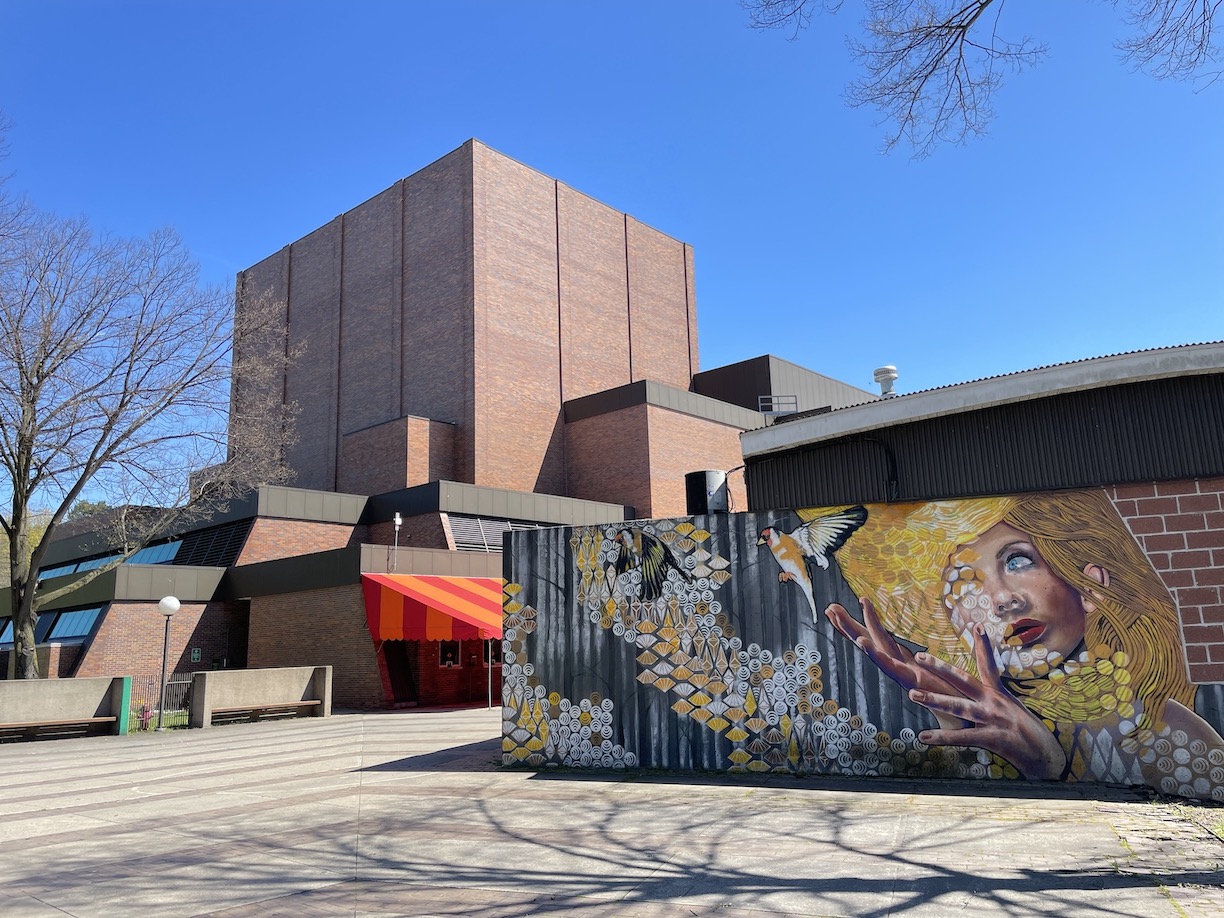
Artpark’s front outdoor lobby area and ticketing courtyard

Click to download the Artpark & Company schedule (PDF)

Stamp of Distinction

Stamp of Distinction
Dhoomimal Art Gallery’s recent exhibition shows that printmaking, despite a low commercial value, has stood the test of time

Remembering Randy Wagner: Wyoming’s ‘5-Foot-19′ Rodeo Photographer And Cowboy State Ambassador

Remembering Randy Wagner: Wyoming’s ‘5-Foot-19′ Rodeo Photographer And Cowboy State Ambassador

Wyoming lost one of its most passionate ambassadors May 15 when 89-year-old Randy Wagner — photographer, administrator, motorcycle enthusiast and Wyoming travel ambassador — died while in hospice care in Cheyenne. 

For more than 60 years, Wagner was a towering presence in the travel and rodeo industries in Wyoming — in more ways than one.

“Randy would describe himself as being ‘5-foot-19,’” said friend and colleague Gene Bryan. “He was 6-foot-7. I have a long history with ‘The Tall Guy,’ we shared a lot of experiences.”

Artist Chris Navarro, who befriended Wagner in the early 1990s, called Wagner a “gentle giant.”

“He was a great guy,” Navarro said. “I don’t know anybody who didn’t like him. He was just really generous.”

Journalism Background

Wagner grew up in Lander, and as a young man had two loves — motorcycles (he got his first at age 14), and photography. He had acquired a 1940s-era Super D Graflex camera, which he experimented with at night in his mother’s kitchen since he had no proper darkroom.

After graduating from high school, he attended the University of Wyoming with the intention of earning a degree in engineering. 

“I quickly decided that journalism was my calling,” Wagner wrote in a biography featured in artist Chris Navarro’s book “The Art of Rodeo.” “The ‘J’ Department had a real darkroom with enlargers and all the right chemicals. I got hooked on the magic of photography and photojournalism.” 

Wagner’s college career was interrupted in 1956, when he left to serve in the Army Corps of Engineers from 1956-58 as division photographer. After his return, he went on to graduate from UW in 1959 with a bachelor’s degree in professional journalism, which he put to use right away, Bryan said.

“He was an alumnus of the Laramie Boomerang,” Bryan told Cowboy State Daily. “He was there before me, and I was there (as sports editor) from 1960-1964.”

Randy Wagner was well known for his rodeo photography, like this shot of Chris Ledoux.
Randy Wagner was well known for his rodeo photography, like this shot of Chris Ledoux. (Cowboy State Daily Staff)

Documenting Wyoming

Bryan called Wagner a “world-class photographer,” first becoming aware of his work as chief photographer for the Wyoming Game and Fish Department in the early 1960s.

But it was when Bryan went to work for the state of Wyoming in 1967 that he began working directly with Wagner. 

“Randy and Pete McNiff were two of the first staffers at the Wyoming Recreation Commission, which now is known as the State Parks and Cultural Resources office,” said Bryan. “And while he was there, Randy did a documentary on the Oregon Trail. So in addition to everything else, he was probably one of the renowned authorities on our historic trails in Wyoming.”

When the staff photographer at the Travel Commission retired, then-director Frank Norris hired Wagner away from the Recreation Commission. 

“When he became our staff photographer for the travel commission, I got to work with him hand-in-glove,” said Bryan. 

Serving The State

But when Norris died in 1978, Wagner took a big step forward.

He was named the new director of the Wyoming Travel Commission, during which time he served on the board of directors of the Travel Industry Association of America and was named to that organization’s Executive Committee and Corporate Strategic Task Force. Additionally, Wagner was elected chairman of the National Council of State Travel Directors and named U.S. Travel Director of the Year in 1984. 

“He got Wyoming involved in the international marketing of tourism,” said Bryan. “He hired Chuck Box — C.J. Box — as his international marketing manager.”

In 1988, Bryan found himself once again following in Wagner’s footsteps, replacing Wagner as director of the Travel Commission when he stepped down that January.

But Bryan didn’t let Wagner stray too far from service to the state of Wyoming. Shortly after Bryan took the mantle of the Travel Commission, the devastating Yellowstone fires of 1988 became front-page news.

“The first thing I did is I hired Randy under contract to get to that park as soon as he could and start photographing,” said Bryan. “So we had documentation of the fire through that whole summer and fall, thanks to Randy.” 

Additionally, Bryan said Wagner was a “world-class” writer, when he put his mind to it.

“He wrote some articles for me when I was editing the monthly newsletter,” said Bryan. “They were just damn good. He had gone on a pack trip into the Wind Rivers with some folks, and that article still sticks in my mind as one of the finest pieces of writing I’ve ever read.”

Rodeo Photographer

Even while serving as the director of the Wyoming Travel Commission, Wagner couldn’t leave his beloved camera untouched.

Beginning in 1978, Bryan served as the executive director for Cheyenne Frontier Days, and Wagner was his go-to photographer.

“Randy was our unofficial staff photographer during that whole period,” said Bryan. “And he was not a trained rodeo photographer, but I can say without fear of contradiction that he was absolutely one of the best rodeo photographers that ever walked the arena.”

Wagner was inducted to the Cheyenne Frontier Days hall of fame in 2012, in large part because of his work as a photographer for the “Daddy Of ’Em All.” For 30 years he was the event’s official photographer, and even after retirement continued to take up-close-and-personal photographs of the action on a volunteer basis.

“He’s the one that developed that rodeo photography pit (at Cheyenne’s Frontier Park),” said artist Chris Navarro, who collaborated with Wagner on “The Art of Rodeo,” a history of Cheyenne Frontier Days. “But he designed it for him, and he was 6-7, so most average height people need a little stool to get (good shots).”

Randy Wagner was shooting that day in 1989 at the Cheyenne Frontier Days Rodeo when Lane Frost made what would be his last bull ride.
Randy Wagner was shooting that day in 1989 at the Cheyenne Frontier Days Rodeo when Lane Frost made what would be his last bull ride. (Cowboy State Daily Staff)

Lane Frost’s Last Ride

A memory that Wagner carried with him to the end was of a hot summer day in 1989, when a Frontier Park arena record was set, and a rising star came crashing to the ground. Wagner wrote about that day in Navarro’s “Art of Rodeo.”

“If there was one rodeo that will forever stand out in my memory, it would have to be the Sunday Finals in 1989. On that miserable rainy-day Marty Staneart rode the champion bull, Mr. T, to an arena record 93 score, winning the event. It was the first time in over 150 attempts that Mr. T had been ridden for the full eight seconds. It was the highlight of the day. Perhaps of the entire rodeo season. The low point would come minutes later when Lane Frost made an almost equally sensational ride followed by a bad dismount. The bull horned him in the back as he was trying to get to his feet. He was dead within minutes. It happened right in front of me and I will never be able to wipe it from my memory. I wish I could.”

Navarro first met Wagner while working on his bronze sculpture of Lane Frost at Frontier Park. At the time, Wagner was a volunteer photographer for the rodeo. 

“I always saw him carrying around a camera,” said Navarro. “So he helped me take some pictures of my Lane Frost monument. It was really helpful, and I asked him if I owed him anything, and he said no. And I said, ‘Wow, he’s a good guy.’”

Navarro was so impressed with Wagner that when he decided to publish a book about Cheyenne Frontier Days, he enlisted Randy’s help.

“When I started this idea of doing this book, I knew he had shot all the rodeo footage back in the ’60s up to the 2000s,” said Navarro. “He had thousands of photographs.”

Dangerous Perspective

But being a rodeo photographer was not without its dangers. In Navarro’s book, Wagner related the story of his own savage goring by a bull in 1985.

“Somehow, I managed to photograph over 400 CFD rodeos during 45 years in the arena without incident … except for 1985. That year I got careless on opening day and a bull picked me off the fence and turned me into a frisbee. Bobby Romer came to the rescue (just as the bull was trying to break my back) and the medics sent me to the hospital, along with the cowboy who was riding the bull. I spent the next five days there and left with a lot of stitches but still able to sing baritone. The major casualties of the wreck were two perfectly good Nikon cameras.”

But amazingly, Wagner managed to capture a photo of the bull that nearly ended his life, which was included in “The Art of Rodeo.”

Randy Wagner got this shot of a rodeo bull before, as Wagner described it, “turned me into a frisbee.” (Cowboy State Daily Staff)

Biker At Heart

Anyone who knew Wagner personally could attest to his lifelong love of motorcycles, beginning at age 14.

“Randy rode motorcycles from the time he was old enough to get his license,” said Bryan. “In fact, he had the first motorcycle license plate in Fremont County: 10-1. And he kept it right up to the end.” 

Starting in the early ’70s, Wagner and his wife, Betty, traveled with friends from the Rocky Mountains to Nova Scotia. According to his obituary, Wagner logged more than 700,000 miles on his bike, traveling to all the lower 48 states, and took tours of Europe, New Zealand, Mexico, Canada and Switzerland.

Wagner’s Legacy

Randy’s wife was by his side for 67 years, but died in January last year. The couple had four children – two of them, daughters Kary and Kriste, are married with their own families. Tragically, another daughter, Kelly, and their only son, Kraig, preceded both their parents in death.


Wagner’s legacy lives on, though, in his remaining children and grandchildren, as well as his collection of photographs and personal items that are being preserved at the University of Wyoming American Heritage Center in Laramie and the Cheyenne Frontier Days Old West Museum in Cheyenne. 

“He was just a giant in more ways than one,” said Bryan. “Physically, of course, and as a photographer, as a travel marketer, as a historian. And he was just one of those people that  didn’t seek accolades for it — he just liked doing the work.”

In case you missed it

BLACKPINK’s Jennie Slays The Infamously Unflattering “Getty Images” Photography Test

BLACKPINK’s Jennie Slays The Infamously Unflattering “Getty Images” Photography Test

Getty Images is known to be one of the harshest photography sites as they do not use flattering angles or provide any post-editing of stars they capture. Many celebrities have been captured looking incredibly different from their own social media photos.

Over the years, Getty has taken photos of many K-Pop artists, including BLACKPINK‘s Jennie, who has beat harsh photography with her unedited visuals, like in these nine instances below!

1. 2023 Met Gala

Jennie looked every bit Chanel’s princess at this event.

Embed from Getty Images

2. Coachella 2019

Jennie slayed not only the stage but also the photos taken of her!

Embed from Getty Images

Embed from Getty Images

3. “La Raphia” Jacquemus Show

She looks good, even caught in motion.

Embed from Getty Images

4. Porsche Sonderwunsch Haus Event

Jennie introduced her special collaboration with the car brand at the event, but also looked gorgeous while posing for the media.

Embed from Getty Images

Embed from Getty Images

5. Chanel Madmoiselle Prive Exhibition 2017

This image deserves to be in a magazine.

Embed from Getty Images

6. Chanel Paris Fashion Week F/W 2023

Her smile is everything.

Embed from Getty Images

7. 2023 Coachella Weekend 2

This look was everything on Jennie

Embed from Getty Images

Embed from Getty Images

8. Jacquemus Hawaii Fashion Show

Absolutely stunning.

Embed from Getty Images

9. Chanel Paris Fashion Week Womenswear F/W 2020

She rocked this mature look, serving CEO energy.

Embed from Getty Images

BLACKPINK