About

Posts by :

Franklin County artist’s work showcased in the municipal building

Franklin County artist’s work showcased in the municipal building

York Co. election day road closure ‘brings to light …

32 mins ago


.cls-3{fill:#fff;fill-rule:evenodd}

Restaurants headed for busy season: How they are …

2 hours ago


.cls-3{fill:#fff;fill-rule:evenodd}

Ghost Bikes on Display on the Capital steps

2 hours ago


.cls-3{fill:#fff;fill-rule:evenodd}

York County encouraging bike safety

2 hours ago


.cls-3{fill:#fff;fill-rule:evenodd}

Franklin County artist’s work showcased in the municipal …

2 hours ago


.cls-3{fill:#fff;fill-rule:evenodd}

Kevin Myers no longer employed at Dauphin County …

2 hours ago


.cls-3{fill:#fff;fill-rule:evenodd}

PIAA makes girls wrestling official high school sport …

3 hours ago


.cls-3{fill:#fff;fill-rule:evenodd}

PIAA approves girls wrestling at May board meeting

51 mins ago


.cls-3{fill:#fff;fill-rule:evenodd}

PIAA set to sanction girls wrestling as official …

1 day ago


.cls-3{fill:#fff;fill-rule:evenodd}

What’s Trending

3 hours ago


.cls-3{fill:#fff;fill-rule:evenodd}

Disney store at Hershey Tanger Outlets closes; only …

2 hours ago


.cls-3{fill:#fff;fill-rule:evenodd}

Fatal crash shuts down Interstate 81 North in Franklin …

7 hours ago


.cls-3{fill:#fff;fill-rule:evenodd}

Artist who falsely claimed Native American heritage sentenced for violations of the Indian Arts and Crafts Act

Seattle – A 67-year-old Western Washington artist was sentenced today to 18 months of federal probation for violations of the Indian Arts and Crafts Act (IACA) by representing himself as a Native American artist, when he had no tribal enrollment or heritage, announced U.S. Attorney Nick Brown. Jerry Chris Van Dyke aka Jerry Witten, of Seattle, pleaded guilty in March 2023. At the sentencing hearing, U.S. District Judge Tana Lin noted that this was not a one-time error, but a ten-year period of “undermining a community and identity.”

“Prosecuting cases of fraud in the art world is a unique responsibility and part of our work to support Tribal Nations,” said U.S. Attorney Nick Brown. “I hope this case will make artists and gallery owners think twice about the consequences of falsely calling an artist Native and work Native-produced. They should consider the damage to reputation, the legal fees, and ultimately a criminal record. Fake Native art should be kept out of the marketplace because it harms the legitimate Native art community.”

The investigation of Jerry Van Dyke began in February 2019, when the Indian Arts and Crafts Board received a complaint that Van Dyke was representing himself as a Nez Perce Indian artist, when in fact, he is not an enrolled tribal member. Investigators from the U.S. Fish and Wildlife Service made undercover purchases at a gallery in the Pike Place Market area of Seattle that advertised pendants Van Dyke had made as Native American art. Van Dyke used the name Witten for these sales. When interviewed by agents, Van Dyke admitted knowing about the Indian Arts and Crafts Act, and admitted he was not a tribal member. Through the gallery Van Dyke had sold more than $1,000 worth of carved pendants represented as Native American artwork based on Aleut masks. According to the plea agreement, Van Dyke had worked with the gallery for more than ten years, with the gallery owner providing him with woolly mammoth ivory, antlers, animal bones and fossilized walrus ivory to make the pendants that it sold.

Speaking in court today, Shannon F. Wheeler, Chair of the Nez Perce, said “artwork is full of our culture… it is a piece of who we are.” Chair Wheeler continued that the sale of fake Native art “continues a process of devaluing us as a people.”

Native art “speaks of the enduring relationship that we have with our landscape,” said Nez Perce Cultural Resource Director Nakia Williamson. “All we have left is our identity, and that is under attack.”

“Jerry Van Dyke’s false tribal affiliation and marketplace saturation erodes the sustainability and economic well-being of Native American artists,” said Edward Grace, Assistant Director of the U.S. Fish and Wildlife Service Office of Law Enforcement. “Our dedicated team of special agents works on behalf of the U.S. Department of the Interior and the Indian Arts and Crafts Board to protect American Indian and Alaska Native artists and the consumers who purchase authentic Native American art and craftwork. This sentencing is important in the ongoing effort to end violations of the Indian Arts and Crafts Act. We want to thank our partners at the U.S. Department of Justice and the Indian Arts and Crafts Board for their assistance with this investigation.”

“By statute, the Indian Arts and Crafts Board (IACB) is responsible for the Indian Arts and Crafts Act, a truth-in-marketing law governing the sale of Indian art and craftwork. The prosecution of Jerry Van Dyke under the Indian Arts and Crafts Act for counterfeiting Alaska Native art is another critically important step in protecting the economic livelihoods and rich cultural heritage of contemporary and traditional Indian artists, as well as preserving the vitality of the Indian art market in the Northwest and nationwide,” stated IACB Director Meridith Stanton. “When individuals and businesses market art misrepresented as Indian made, they undercut Indian artists and Indian economies, and prey upon unwitting consumers. For those selling counterfeit Indian art and craftwork, wherever you are we will diligently work to find you and prosecute you under the Act.”

Van Dyke pleaded guilty in March 2023 to Misrepresentation of Indian Produced Goods and Products. The crime is punishable by up to one year in prison.

The case was investigated by the U.S. Fish and Wildlife Service. The case was prosecuted by Assistant United States Attorney and Tribal Liaison J. Tate London.

Must-Try Lenses for Beginner Photographers

Must-Try Lenses for Beginner Photographers

When starting out in photography, you might want to purchase as much gear as possible. However, professional photographers who have been doing this for decades seem to have every lens in the world. It is natural to strive to buy as much gear to be as professional as possible, but the devil is in the details, as it takes decades to amass gear, and even then, the pros still have some things they want to purchase.

For example, I have been toying with the idea of owning a medium format camera for a while now. I’m not saying I will purchase it, but I just might. It all depends on how well work goes in the summer. I digress. While the natural instinct for many beginners would be to simply buy gear, there is an alternative few consider: renting. Renting costs way less, and you can rent any piece of gear you want. For example, if I want to try out something particular before buying, I can just rent it and do the testing. In this article, I will suggest some high-end pro lenses that you should rent and test out as a beginner photographer. These mainly apply to portrait and fashion photographers, however, any image creator will find these lenses useful to some degree in their line of work.

Starting with the king of 50mm lenses, this goes directly against the first piece of advice every photographer gets: get a 50mm f/1.8. While it is a great lens, it is nothing compared to the pro version, which is sharper and more accurate. When I tried that lens out, I noticed that it was quite heavy, which made me realize that I would probably not invest in it.

The second lens that always caught my attention when I was a beginner was the 70-200mm f/2.8 lens. It just seemed like a perfect piece of gear that I am simply missing out on. In fact, when I saved up, it was the first piece of real pro gear that I bought back in the day. I still have that lens. It’s a beast. Nowadays, though, I rarely use it as, once again, it is a heavy piece of gear. Another reason is that it forces me to be naturally distant from the subject, which is not desirable if I want to make a connection and really work with the model in front of my camera. The only reason for not selling the lens is that if a client requests to have a shallow depth of field, I end up using the f/2.8 at 100+mm to get it.

The most boring lens, which I coincidentally reviewed as well. The reason it is boring is that it has none of the cool features that other lenses do. The zoom range is average, the narrow depth of field is almost nonexistent, and the excitement is mild. At the same time, this is the lens I use 95% of the time. While the zoom range does not offer super wide or super-telephoto images, it offers enough to produce fashion, beauty, and other work. I can get full-body, half-body, and close-up images with the 24-70mm. I strongly believe that this is a lens every photographer should try and use.

Going to wider apertures and focal lengths, this is a lens that many photographers enjoy using for full-body portraits. No wonder, as it offers both a relatively wide field of view, as well as a wide aperture which can help create shallow depth of field. Such a lens can be great in an event, wedding, portrait, or fashion photography bag. The high-end versions of this lens offer extremely good sharpness and accuracy, as well as fast and responsive autofocus.

This list would not be complete without this lens. I mean, can we honestly skip this marvelous piece of gear that so many portrait photographers use to capture their images? It offers everything needed to make interesting images: long focal length, wide aperture, and, what’s more, sharpness. At the same time, if you try out this lens, you will quickly find out that it is not all sunshine and rainbows, and it, in fact, has a few downsides, such as weight and focusing. If you shoot a close-up portrait at f/1.2, you will quickly realize that the subject’s nose disappears, as well as the ears. The 85mm is better used for half-body images as then you get the subject more or less in focus. Then again, sharpness and focusing are big problems with this particular lens. The elements are huge, and if you get your hands on the older versions of this lens, you might quickly be disappointed with the results. For Canon 5D Mark II owners: forget it. I have never seen anything focus worse than a 5D Mark II with an EF 85mm f/1.2. This is where I have to admit that having a mirrorless camera is much better than a DSLR. Due to the focusing technology that modern cameras and lenses have, you can easily get incredible shots with f/1.2 at 85mm. It really helps you focus on shooting and not the tech.

Closing Thoughts

In conclusion, as a beginner photographer, it is a must to test out lenses before making any big purchases. Renting gear is an affordable and effective way to determine which lenses work best for your style of photography. I strongly recommend doing this. I think that selecting the right lenses can make a significant difference in your photography. It is important to consider your style and the type of photographs you want to create before making any purchases. Remember that it takes years for pros to amass gear, so take the time to test and experiment before buying gear. With time, practice, and the right gear, you can take your photography to the next level.

What lenses have you tested out throughout the years? Did you end up buying them? What were the best and worst lenses that you tried? We would love to know in the comments.

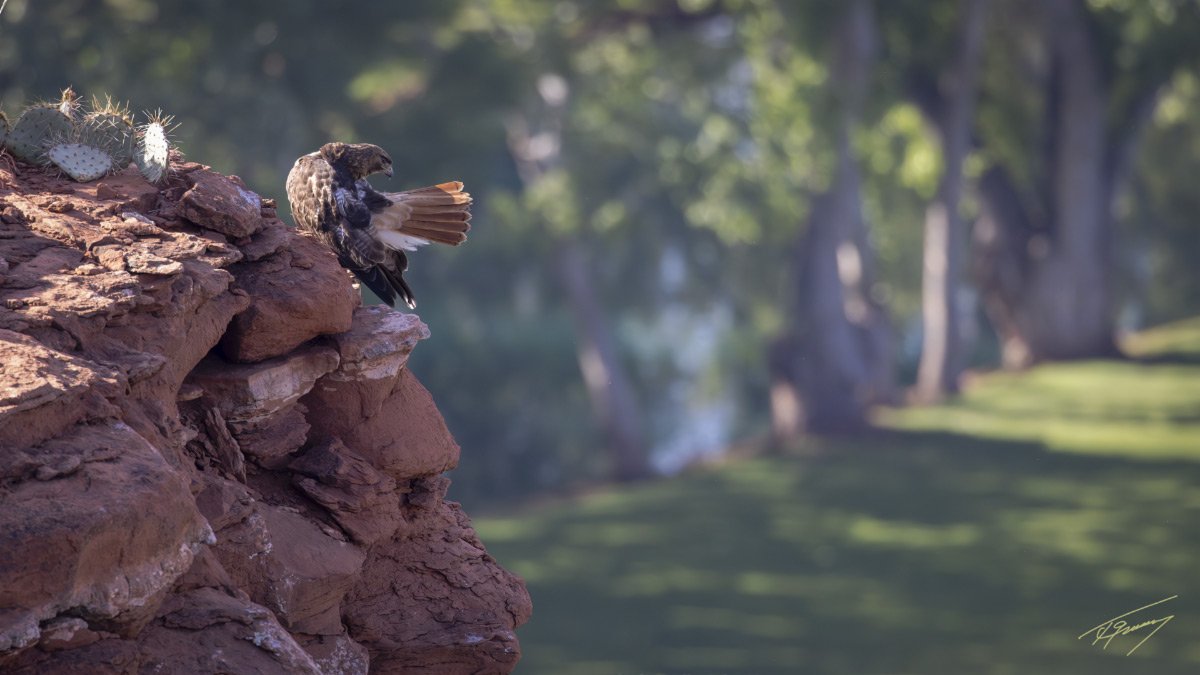
Today’s Photo from Ted Grussing Photography: Meet the Family

Today’s Photo from Ted Grussing Photography: Meet the Family

… another beautiful morning, except that this morning found me about 150 feet above the ground in a open tram and about 50 feet below my friends home and shooting the red tail family that again is using a rebuilt nest from last year in the cliff about 500 feet south of their home and 50 feet below it.

The first photo above is of the mating pair of RED TAIL HAWKS before they assumed their duties as parents … gleefully planning their life together, flying free without a care in the world … then the kids came a couple of weeks ago and the next photo shows the two kids on the right side of the nest. I think they are encouraging their parents to come and bring them breakfast … keep in mind that these young ‘uns are only about two weeks old and over the course of the next four to five weeks they will transform into mostly grown red tail hawks and will be flying … they are perched on the edge of a precipice 150 feet above the ground … first flight is for real.

The next photo shows mom delivering a pack rat for breakfast to the kids. The kids grow fast and that necessitates a lot of food and the photo below shows mom cleaning herself up a bit as she is perched high above the ground on the edge of a cliff and searching for the next meal for the kids. The fact that I am using a 700mm lens distorts the perceived height … those trees are about a half mile away!

Next update next week and expect a substantial change … seems the kids are decorating the walls too … they have not yet learned to eject their “white paint” out over the edge 🙂

Have a beautiful day, keep breathing and smiling … best way to make someone else’s day.

Cheers,

Ted

A bird flies through the sky, and I fly with it. I am in
each pearl of moisture sparkling in the sun. I lie lazy
on the clouds. And I acknowledge my kinship with
each winged thing.

I see all as one, and nothing repels me, as this new
day climbs noiselessly out of the valley of the night.

Peace lies over the world and over the world of my soul.

excerpt from On A May Morning by Max Ehrmann

###

photo_tedgrussingThe easiest way to reach Mr. Grussing is by email: ted@tedgrussing.com

In addition to sales of photographs already taken Ted does special shoots for patrons on request and also does air-to-air photography for those who want photographs of their airplanes in flight. All special photographic sessions are billed on an hourly basis.

Ted also does one-on-one workshops for those interested in learning the techniques he uses.  By special arrangement Ted will do one-on-one aerial photography workshops which will include actual photo sessions in the air.

More about Ted Grussing

Missouri Prairie Foundation invites you to bring your brush to the lush with Paint it Prairie event

Missouri Prairie Foundation invites you to bring your brush to the lush with Paint it Prairie event
3039c2d8 7432 479d Ae36 Ef966e4bfe4c

Artist Melissa Chaney’s landscape painting of pale purple coneflowers amid tall, native grasses at Snowball Hill Prairie. // Courtesy MPF

Artists and nature enthusiasts of all ages are invited to enjoy the blooming wildflowers of Harrisonville’s native prairie May 20 at the Missouri Prairie Foundation’s fourth annual Paint it Priaire plein air painting event.

Plein air, which is French for “out of doors,” refers to the practice of painting entire finished paintings outside. Pioneered by impressionists in the mid-19th century, visitors to the Paint it Prairie event will get to channel their inner Monet at Missouri Prairie Foundation’s Snowball Prairie, located 35 minutes southwest of downtown Kansas City in Harrisonville.

Nature enthusiasts are encouraged to attend and learn about the native prairie through interpretive hikes planned for 10:00 a.m. and 2:00 p.m.

Tables will also feature information on the Harrisonville Fine Art Association and Missouri Prairie Foundation and its Grow Native program.

The event is free to all who enjoy art and community on the 20-acre original native prairie. And truly, we could all benefit from a wholesome painting session among like-minded nature enthusiasts and an abundance of grass?

The event starts at 7 a.m. and will go until 5 p.m. Artists should come prepared with their own medium supplies, drinking water in a non-disposable container, and a camera if desired. In the event of inclement weather, Paint it Priaire will be moved to June 10.

New 6-week business course offered to CSKT artists and creators

New 6-week business course offered to CSKT artists and creators

Creatives Indigenous by Native Max, an organization that aims to empower Indigenous entrepreneurs, is hosting a six-week business accelerator program for Salish and Kootenai artists who want to start or expand their businesses. 

In the program, entrepreneurs will learn about business opportunity analysis, model development, leadership, team building and cash flow, among other things. 

James Bible of Salish and Kootenai Business Services said the organization is excited to partner with the program. He said small businesses “create employment, drive innovation, contribute to community development, provide economic stability and foster diversity.”

The class will kick off at Salish Kootenai College on June 3, and the following classes will be taught online. The program also finishes with in-person business presentations and a pitch contest on July 22, according to a news release. 

People are also reading…

The course is limited to 30 students, and those interested should register at bit.ly/cskt-program. Registration is open with a $60 fee and closes on May 29. For more information, email brenna.ortiz@nativemax.com or jamesb@slfcorp.com.


Capture.PNG

A new six-week course is available to CSKT artists and creatives interested in building or expanding a business. 


You must be logged in to react.
Click any reaction to login.

#lee-rev-content { margin:0 -5px; }
#lee-rev-content h3 {
font-family: inherit!important;
font-weight: 700!important;
border-left: 8px solid var(–lee-blox-link-color);
text-indent: 7px;
font-size: 24px!important;
line-height: 24px;
}
#lee-rev-content .rc-provider {
font-family: inherit!important;
}
#lee-rev-content h4 {
line-height: 24px!important;
font-family: “serif-ds”,Times,”Times New Roman”,serif!important;
margin-top: 10px!important;
}
@media (max-width: 991px) {
#lee-rev-content h3 {
font-size: 18px!important;
line-height: 18px;
}
}

#pu-email-form-daily-email-article {
clear: both;

background-color: #fff;

color: #222;

background-position: bottom;
background-repeat: no-repeat;
padding: 15px 0 20px;
margin-bottom: 40px;
border-top: 4px solid rgba(0,0,0,.8);
border-bottom: 1px solid rgba(0,0,0,.2);

display: none;

}
#pu-email-form-daily-email-article,
#pu-email-form-daily-email-article p {
font-family: -apple-system, BlinkMacSystemFont, “Segoe UI”, Helvetica, Arial, sans-serif, “Apple Color Emoji”, “Segoe UI Emoji”, “Segoe UI Symbol”;
}
#pu-email-form-daily-email-article h2 {
font-size: 24px;
margin: 15px 0 5px 0;
font-family: “serif-ds”, Times, “Times New Roman”, serif;
}
#pu-email-form-daily-email-article .lead {
margin-bottom: 5px;
}
#pu-email-form-daily-email-article .email-desc {
font-size: 16px;
line-height: 20px;
margin-bottom: 5px;
opacity: 0.7;
}
#pu-email-form-daily-email-article form {
padding: 10px 30px 5px 30px;
}
#pu-email-form-daily-email-article .disclaimer {
opacity: 0.5;
margin-bottom: 0;
line-height: 100%;
}
#pu-email-form-daily-email-article .disclaimer a {
color: #222;
text-decoration: underline;
}
#pu-email-form-daily-email-article .email-hammer {

border-bottom: 3px solid #222;

opacity: .5;
display: inline-block;
padding: 0 10px 5px 10px;
margin-bottom: -5px;
font-size: 16px;
}
@media (max-width: 991px) {
#pu-email-form-daily-email-article form {
padding: 10px 0 5px 0;
}
}
.grecaptcha-badge { visibility: hidden; }

Road Trip: A New Photography Museum in Yorktown Heights

Road Trip: A New Photography Museum in Yorktown Heights

Road Trip: A New Photography Museum in Yorktown Heights

Photographer Robert CapaAttention history and photography buffs: A new exhibition space has opened in northern Westchester to showcase photography exhibits and serve as a place where people gather to create, view and learn about photography. Their mission is to “inspire visitors to participate in the creative process by illustrating the power of photography as a catalyst for social action.”

Named The Capa Space, after famed war photographer Robert Capa, the museum stands on the grounds of a Quaker Meeting house adjacent to a bucolic cemetery in Yorktown Heights. Members of the Capa family including Robert, Cornell Capa and family members are buried on the grounds, giving context to the presence of a photo exhibition space named for Robert Capa.

On display now are over 50 photographs taken by Capa whose stunning works captures the SpanishSoldierSoldier Saluting at Farewell Ceremony for the International Brigade Photo by Robert Capa from the Robert and Cornell Capa Archive ICP/Magnum Civil War, World War II photos of the landing on D-Day, and WWII in Sicily and France. Also on view are Capa’s final photographs of Vietnam where Life Magazine sent him to document the war in Indochina. Informative signage under each photo offers a chronicle of world history and a look at the art of photography before the birth of digital imagery and the iPhone.

Also included are photos of Capa’s glamourous friends including Ingrid Bergman, to whom he was engaged for a brief time.TheCapaSpaceThe Capa Space

The Capa Space is the brainchild of Yorktown resident and artist Elise Graham. She sought to share her mission to use art to inspire change by opening the exhibition space and bringing world class photography to a local setting.

The gallery will host several exhibits each year, along with special events, dramatic performances, films and lectures. It is open to the public and welcomes visitors. Click here to learn more about the space and to plan your visit.

SoldierSoldier Saluting at Farewell Ceremony for the International Brigade Photo by Robert Capa from the Robert and Cornell Capa Archive ICP/Magnum

ShowOpeningThe opening of the Robert Capa show on April 8, 2023.

Brendon Burton Captures Moments of Nostalgia and Wonder in North America’s Most Isolated Places

Brendon Burton Captures Moments of Nostalgia and Wonder in North America’s Most Isolated Places

All images © Brendon Burton, shared with permission

Growing up in an isolated community, photographer Brendon Burton developed an eye for the way decaying buildings nestle into the landscape or punctuate vast expanses. Now based primarily in Portland, Oregon, he travels around the U.S. in search of rural places that are culturally worlds apart from major urban centers, seemingly existing on their own timelines. Like his series Thin Placeshis recent body of work titled Interstices—to which some of these images belong—emphasizes the notion of liminality, advancing time, and spaces for passing through.

Utilizing drones to achieve dramatic aerial views in addition to intimate perspectives shot from ground level, Burton highlights the relationships between the built environment and wilderness, ancestry and life cycles, and presence and local traditions. “I recently visited the Deep South for the first time and documented Courir de Mardi Gras in a rural Cajun community in Louisiana,” he says. “It was truly an insane event, and the people I met were so kind and welcoming. I definitely will be visiting the South again soon.”

Burton is currently working on a second photo book focusing on the effects of the climate crisis and cultural isolation in rural communities throughout North America. As for future trips, he is headed to Saskatchewan and Manitoba this summer, then rural Appalachia in the autumn. Prints are available on his website, and you can find more on Instagram.


A dilapidated church and an animal skeleton in a pond.

A figure walking through corn.

An old school house in a field of sunflowers.

A view out a window to a mountain in the distance.

A snowy landscape surrounding an old farm.  An abandoned house becoming overgrown.

An abandoned feed mill or barn. An abandoned farmhouse with goats.

Do stories and artists like this matter to you? Become a Colossal Member today and support independent arts publishing for as little as $5 per month. The article Brendon Burton Captures Moments of Nostalgia and Wonder in North America’s Most Isolated Places appeared first on Colossal.

Yellowstone Tribal Heritage Center opens featuring Indigenous arts, scholars, performers

Yellowstone Tribal Heritage Center opens featuring Indigenous arts, scholars, performers
image

YELLOWSTONE – The Yellowstone Tribal Heritage Center has opened to the public for the season.

Located in the Old Faithful area, the center is a space where Indigenous artists, scholars and presenters from the 27 associated Tribes of Yellowstone National Park directly engage with visitors through demonstrations and discussions. Now in its second year, the center is a partnership between the National Park Service and Yellowstone Forever, with Tribal consultation.

During the 2023 season, 37 presenters from 18 associated Tribes will engage with Yellowstone visitors through formal and informal education. Presentations will include photography, beadwork, moccasin making, dancing, storytelling, quillwork and more.

“Many Tribal Nations have a continuous presence in the area now known as Yellowstone National Park,” said Alyssa McGeeley, Yellowstone Tribal Heritage Center coordinator, and member of the Muscogee Tribe from Oklahoma. “The Yellowstone Tribal Heritage Center is a space where Indigenous people from the 27 Tribes associated with the park share the resiliency of their people with visitors from all over the world as artists, educators and culture bearers.”

The Yellowstone Tribal Heritage Center will remain open through Oct. 14. The center is centrally located between the Old Faithful Lodge and the Old Faithful Visitor Education Center.

Tribal Heritage Center Schedule

Below find a full list of 2023 presenters, including each presenter’s Tribal affiliation and art form.  

5/17-5/21  Iva Moss | Northern Arapaho | Land education-soil watercolor painting with Guest Presenter Adrienne Vetter (20-21)

5/17-5/21  Mike Redman | Northern Arapaho

5/20-5/21  Colleen Friday | Northern Arapaho

5/23-5/26  Susan Stewart | Crow | Buffalo Tallow, beading, and contemporary Native art

5/28-5/30  Austin Kasto | Standing Rock Sioux | Beadwork, ribbon skirt making, regalia making, moccasin making, and dancing

6/1-6/4  Theresa White | Coeur d’Alene | Nature photography

6/6-6/10  Alexandra Romero | Oglala Lakota | Beadwork, quillwork, and contemporary Lakota Style clothing

6/12-6/15  Sylvia Peasley | Colville Reservation | Traditional and contemporary rawhide art

6/17-6/19  Andrea Lopez | Little Shell Chippewa | Beadwork and storytelling

6/17-6/19  Mandi Rambayon | Little Shell Chippewa

6/17-6/19  Maya Lopez | Little Shell Chippewa

6/21-6/23  Suzanne Presgrove | Eastern Shoshone Northern Arapaho | Beadwork and sewing

6/25-7/2  Kelly Lookinghorse | Oglala Lakota | Lakota singing, beadwork, and dreamcatchers

6/30-7/2  Kaulouyah Lookinghorse | Oglala Lakota | Contemporary multi-media Native art

7/4-7/8  Samantha Vulles | Blackfeet, Salish and Kootenai | Traditional games, beadwork, ribbon skirts, and contemporary designs

7/10-7/13  Gwendolyn Carter | Nez Perce | Traditional foods demonstration

7/15-7/18  Allison Sage | Northern Arapaho | Northern Arapaho songs presentation

7/20-7/22  Jim Trueax | Little Shell Chippewa | Watercolor painting, Native American dancers

7/24-7/28  Mason Runs Through III | Assiniboine | Storytelling, visual art, and drumming

7/24-7/28  Joseph Runs Through | Assiniboine | Beadwork, quillwork, and drumming

7/30-8/5  River Webb | Nez Perce, Meskwaki, Potawatomi | Beadwork, ribbonwork, dress making, and storytelling

7/30-8/5  Red Miskozi Mair | Little Shell Chippewa

8/7-8/16  Evans Flammond Sr. | Oglala Sioux, Rosebud Sioux | Hide painting and ledger art

8/18-8/20  Luke Black Elk | Cheyenne River Sioux | Traditional plant gathering practices and uses

8/22-8/27  April Martin | Northern Cheyenne | Storytelling and sweetgrass

8/29-9/2  Harry Slickpoo Jr. | Nez Perce | Nez Perce language and oral tradition storytelling

9/4-9/8  Tina Williams | Blackfeet | Beadwork, ribbon skirts, and jewelry making

9/10-9/13  Harmony Straub | Oglala Lakota | Skirt making and beadwork

9/15-9/18  Willy and Debbie Lamere | Shoshone–Bannock | Flint knapping, beadwork, and quillwork

9/20-9/23  Tawny Cale | Spirit Lake, Standing Rock Sioux, Turtle Mountain Band of the Chippewa | Indigenous empowerment through beadwork

9/25-9/27  Darrah Perez | Blackfeet, Eastern Shoshone, Northern Arapaho | Storytelling, short documentary, and traditional poetry

9/29-10/1  Kinsley WalksAlong | Northern Cheyenne | Quillwork

10/3-10/6  Alisha Fisher | Northern Cheyenne | Traditional native games and native dance outfits

10/8-10/14  Patti Baldes | Northern Arapaho | Photography and Buffalo Box

The Yellowstone Tribal Heritage Center is made possible through funding from Yellowstone Forever, the National Park Foundation and generous private donations.

To learn more visit: Yellowstone.org/tribal-center.

Demystifying the “boring” photography of William Eggleston

Demystifying the “boring” photography of William Eggleston

With today’s digital photography and mobile photography, it’s now easy for anyone to become a photographer. Everyday scenes and commonplace subjects easily become the gateway to photography. However, photographing the mundane and the everyday isn’t new — just look at the works of photographers like William Eggleston.

But, this style of photography isn’t particularly appealing to everyone. Most of the time, it even makes viewers wonder what’s the point of the photograph or the body of work. So, to help us make better sense of this style, Alex Kilbee of The Photographic Eye decodes the mystery behind the “boring” photography of William Eggleston.

These photos of banal objects and random scenes confound people. What’s the point? What are they even about? Even Eggleston himself only had “life today” for an answer. So, Kilbee’s deep dive into his work and style makes for an interesting brain picking. Whether you’re currently into this approach or not, the video above should encourage you to start digging a bit deeper.

Apart from some basic facts about Eggleston, Kilbee covers some topics that provide additional context for his work. The idea to photograph the “ugly,” for example, came from Eggleston’s observation that he had nothing nice to photograph. So, a friend suggested that he photograph the “ugly things” instead, and it all started from there. “If you’re around where there’s nothing traditionally worth photographing, then just photograph the things that are of rubbish, boring, dull,” Kilbee noted. It was an obvious choice, and one that Eggleston took seriously.

The appeal of William Eggleston’s work lies not in some profound reason or story, but in its fluidity and reactivity. His personal rule is to photograph something only once — he documents what catches his eye, reacts to it, and moves on to the next subject. So, whether you’re feeling stuck in your photography or could use a creative exercise, try capturing the boring and the banal. Put your instinct to work and don’t overthink. You’re free to photograph whatever you like, in whatever way you want it.

Want more photography inspiration like this? Don’t forget to join our group discussions if you’re already part of the Photofocus Community!