About

Posts by :

Committee Holds Listening Session on Updating IACA

Committee Holds Listening Session on Updating IACA
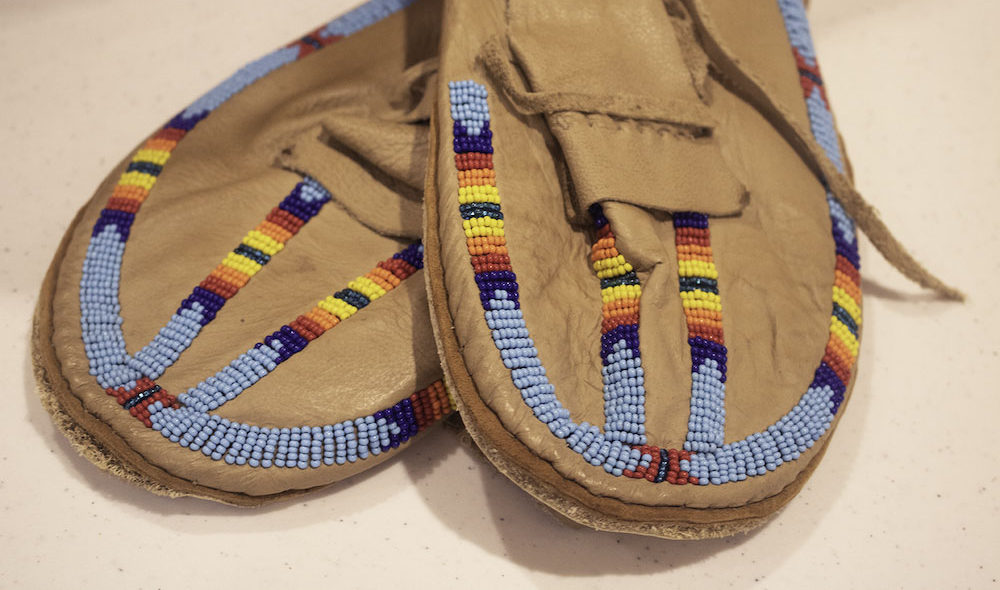
Osage moccasins
Osage Nation

WASHINGTON, D.C. – The Senate Committee on Indian Affairs staff held a virtual listening session, “The ARTIST Act: Updating the Indian Arts and Crafts Act,” on the discussion draft of the Amendments to Respect Traditional Indigenous Skill and Talent (ARTIST) Act of 2023.

First enacted in 1935, the Indian Arts and Crafts Act (IACA) is a truth-in-advertising law that prohibits misrepresentation in the marketing of Indian-made arts and craft products within the United States. Congress has only amended the law three times: in 1990, 2000, and 2010.

IACA also created the Indian Arts and Crafts Board (IACB) within the Department of the Interior to promote economic development of federally recognized American Indians and Alaska Natives through expansion of the Indian arts and crafts market. IACB is charged with implementing and enforcing the IACA and estimates the annual sales of Indian arts and crafts exceeds $1.5 billion.

The ARTIST Act discussion draft would amend IACA by strengthening enforcement and accounting for contemporary sales and marketing platforms. Specifically, the ARTIST Act discussion draft would amend IACA to:

  • Expand protections for Native American artists and Native American-controlled businesses and organizations contributing to the Indian arts and crafts market
  • Ensure Native Hawaiian artisans can define, develop, and support their own economies by including their arts and crafts in the definition of “Native-made” products captured by IACA
  • Authorize any federal law enforcement officer to investigate or make arrests for potential violations of IACA
  • Direct the Secretary of the Interior to dispose of arts and crafts determined to be in violation of IACA
  • Create a forfeiture fund to pay proper expenses related to seizures and forfeitures, including rewards for reporting violations of the IACA
  • Direct remaining forfeiture funds to establish grant programs for arts programs at Bureau of Indian Education schools
  • Require permanent country of origin labeling for all non-Native products
  • Direct the Secretary of the Interior to add the term “Native” to 25 C.F.R. 309.24(a))
  • Authorize the Secretary of the Interior to provide training to federal law enforcement officers on the enforcement of IACA and the Safeguard Tribal Objects of Patrimony (STOP) Act
  • Direct the Secretary of Homeland Security to require all appropriate U.S. Customs and Border Protection personnel to participate in IACA and STOP Act enforcement training
  • Require the IACB to produce an annual report to Congress on the prosecutions, allegations, exceptions, and lost revenue impact on the Native American arts and crafts industry due to counterfeit items
  • Direct the IACB to conduct a feasibility study on using an online registration system for the Source Directory of American Indian and Alaska Owned and Operated Arts and Crafts Businesses and a plan to include Native Hawaiians in the source directory

Comments will inform the legislative process and serve as a resource for future discussions on updating the Indian Arts and Crafts Act.

The Committee will continue to accept written comments on the discussion draft bill until May 19, 2023. Comments may be submitted to [email protected].

Joan Fontcuberta: Redefining Photography and Taming Monsters

Joan Fontcuberta: Redefining Photography and Taming Monsters

Joan Fontcuberta discovered photography at school, when a teacher introduced him to the inner workings of the dark room. He saw it as a real magic trick. He reproduces this magic when he engages in unorthodox experiments in the photochemical laboratory installed in his home. “You talk about working, I talk about having fun,” he says when asked about his photography. Blind spoke with the photographer Joan Fontcuberta at the Rencontres de la Jeune Photographie Internationale.

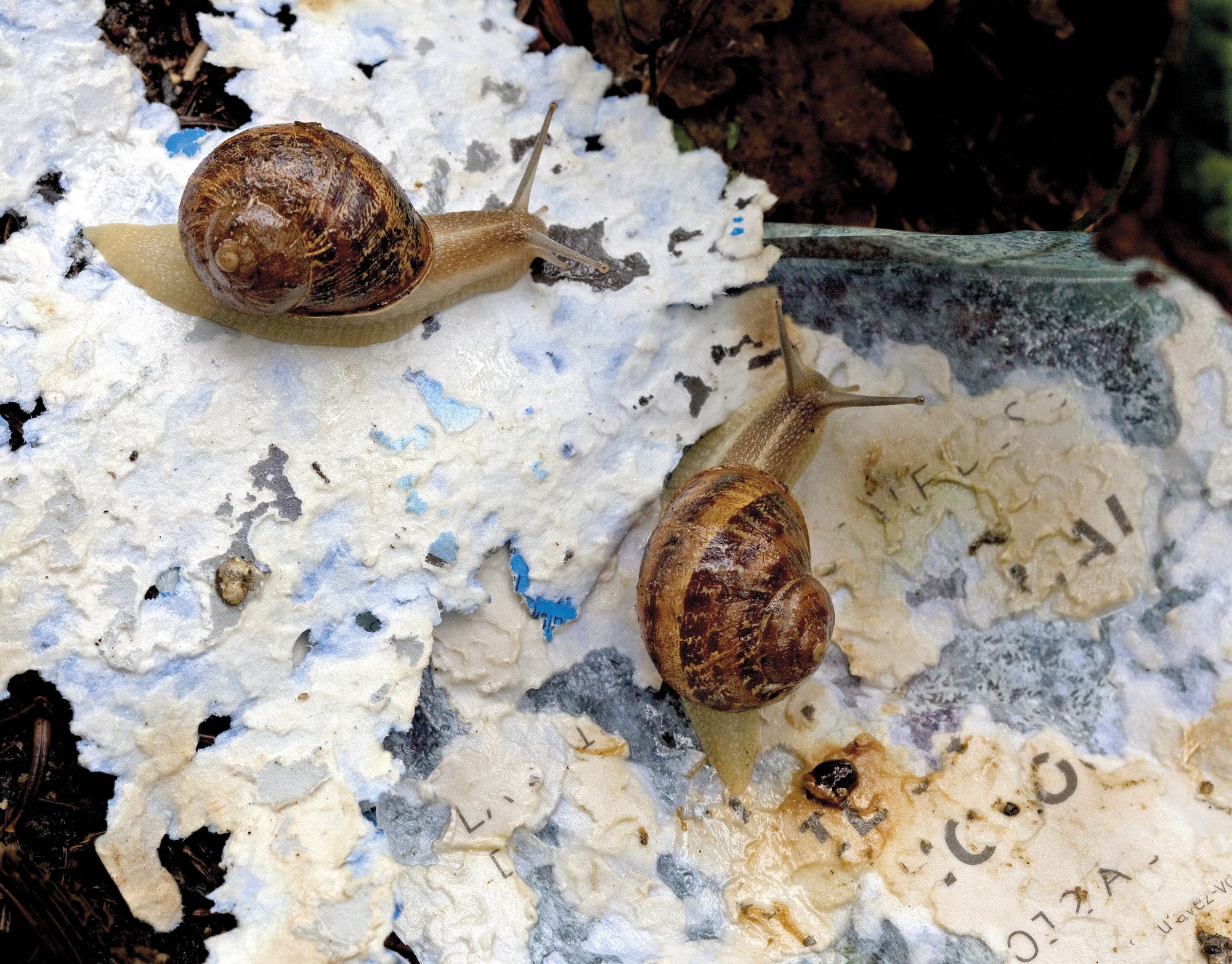
Gastropoda © Joan Fontcuberta

Joan Fontcuberta, you are the guest of honor at the 2023 Rencontres de la Jeune Photographie Internationale in Niort. Is it important to you to support younger generations of artists?

I have been teaching all my life. Teaching is an important part of my creative work. I am as much an artist as a teacher. When I create, I want to transmit, and finally, I teach to learn. I am constantly in contact with different worlds with which I make new connections with my own work. It is in dialogue with the new generations that I can bring my ideas to life.

In Monsters, your exhibition featured at the Villa Pérochon, you use artificial intelligence. How do you envision its role in the artistic field?

It is a new tool that will allow a wider range of possibilities of expression. 

“The old world is dying, and the new world struggles to be born: now is the time of monsters.” Can you explain this quote from Antonio Gramsci that accompanies your exhibition?

For Gramsci, the revolutionary horizon is shifted to the world of the image. Here, analog photography is in transition to a new visual order. Algorithms are the monstrosities. 

Is it possible to tame these monsters? 

We must try to make the transition from a natural stupidity to an artificial intelligence. Humans are stupid: we need prosthetics to achieve greater intelligence. Technologies such as artificial intelligence can help us, but they may not be able to do this. It is a political, philosophical, spiritual, social question… 

To rethink photography is to tame the monsters. Because photography, born during the industrial revolution, was also born with an original sin: to transmit an ideology. And I think that it is necessary to critique it. 

And the image is the origin of this critique?

The image is that which our imagination conforms to, it has a very important role. This is not an opinion, it is an observation made by anthropologists and historians. It has always been that, at the foundations of our civilization, interpretation is visual. Let’s take the transition from ape to human. In the beginning, the human communicates through gestures. He generates a sign system that can only be captured by means of the eye. Thought has a visual nature, it is the image that configures the way to organize our idea of reality.

Concerning artificial intelligence, the question of intellectual property is at the heart of the concerns, since a work created by AI is made from other works whose provenance is unknown. What do you think about this?

If we rethink photography, we must also rethink the condition of the author. We must not forget that, historically, this condition is based on the notion of capitalism: it is a question of property. So, do we envisage keeping this notion of property or do we develop an idea of sharing? 

I think that the work is much more important than the artist, but every type of technological innovation poses problems for the economy of images. In the future, image professionals will necessarily have to find new methods. What we can eventually do is slow down the arrival of these technologies, or else look for ways to adapt to this situation. But their impact is inevitable, like that of a meteorite. 

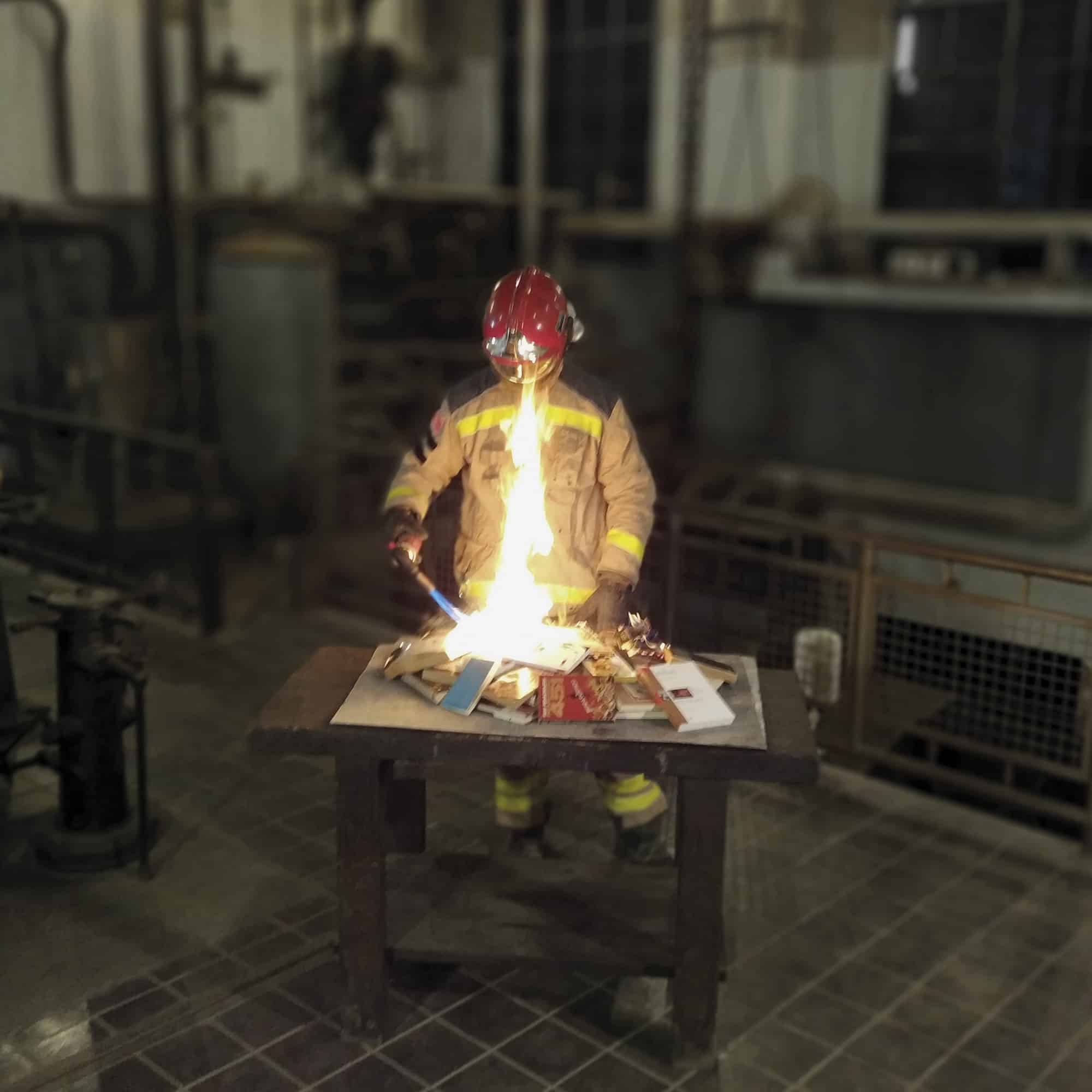
Fahrenheit © Joan Fontcuberta

What do you think photography will look like in a decade or so?

I think that, in the future, today’s categories of the image will undergo change. Painting, drawing, photography … everything will mix together. Already, with the digital camera, we juggle between photo and video. There is already a certain hybridity.  

You have said that photos are not eternal. In the future, could the image disappear to make room for the virtual?

Photography has engaged in a battle with time, but the latter has taken its revenge. First of all, the photo as a physical object is kind of a relic. In the past, it replaced the presence of a body. There was a magical, religious, and superstitious attachment to the image. In the nineteenth century, it was an archival tool. But what happens to memory when pictures can be erased? Every image is now condemned to die, just like people. In my work, I am interested in “suffering” images. They come from archives, often degraded by floods or a hostile environment. Damaged, they will soon disappear; but, above all, speak to memory which has almost disappeared.

The relationship between algorithms and memory is the opposite: they anticipate what is to come, while the photograph archives memories and freezes them. Algorithms are a regime of prediction. They are a way of traveling in time but in a different manner.

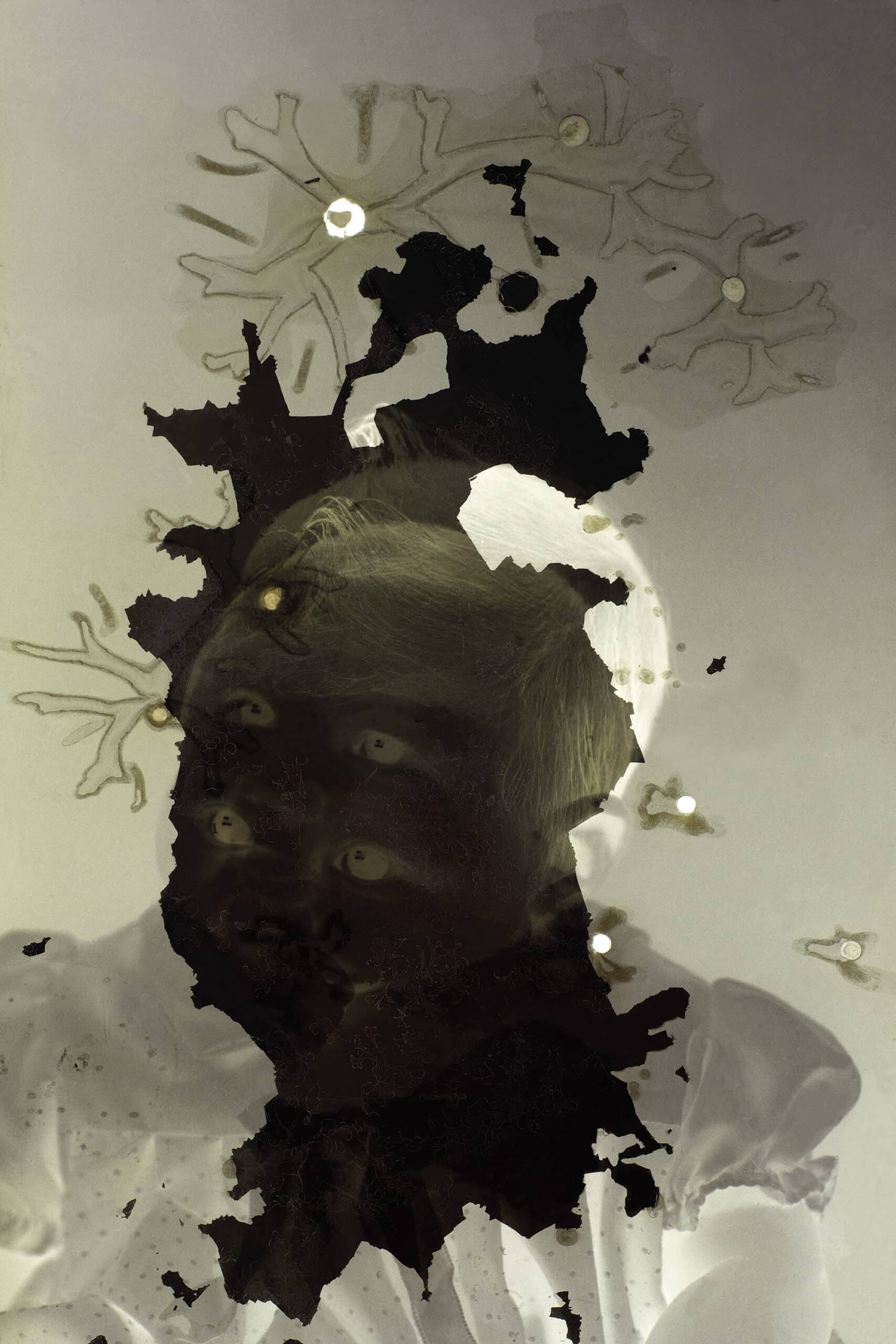
Trauma © Joan Fontcuberta

Joan Fontcuberta, Monsters. March 25 to May 27, 2023. Villa Pérochon, 64 rue Paul-François Proust, 79000 Niort, France. The exhibition is part of the Rencontres de la Jeune Photographie Internationale.

Japanese Photographer Has Taken The Cutest Pictures Of His Then 4-Year-Old Daughter (26 Pics)

Japanese Photographer Has Taken The Cutest Pictures Of His Then 4-Year-Old Daughter (26 Pics)
image

Once a photographer becomes a parent – especially to a baby daughter – he no longer has to look for a model to work with. This was once again proved by Japanese photographer Toyokazu Nagano, taking just the most adorable photos of his youngest daughter, 4-year-old Kanna. The photo series is well described by its laconic name – My Daughter Kanna – as the girl and her natural charm is just enough to fill an entire frame. Each picture is taken on the same road, with little Kanna giving all of her into each pose and mood.

Even though each picture is enhanced with some cute costumes and props, like a tiny piano, a plush panda, or a giant gelato tower, what draws you the most is how photogenic Kanna is, and what wild facial expressions she can pull off. The girl doesn’t seem to be the least bit intimidated by the camera and seems to be especially fond of making some noise.

More info: Instagram | flickr.com | Facebook | twitter.com

AI imagery goes against everything I believe photography is about

AI imagery goes against everything I believe photography is about

I recently came across a succinct description of what us photographers do… “lens-based practice”. Although, “camera-based practice” is arguably just as accurate. 

With the rise of AI, it’s going to be even more necessary to distinguish photography – i.e. image making using a camera and lens – from the frightening prospect that is AI-based image generation. This is machine learning software that simply uses a short text description to make up a picture from elements that it has absorbed from millions of tagged sample images. 

There several AI image generators (opens in new tab) available – such as Dall-E 2, Stable Diffusion, Picsart, Craiyon and Midjourney – which have varying capabilities and applications. Dall-E, for example, even allows users to specify the lens focal length and aperture in their AI-generated images… and the results have been described as “shockingly realistic”.

The results look very convincing, convincing enough that an AI-generated image – meant to look like it was taken by a camera drone – actually won a photo competition in Australia. Submitting the image was a stunt by its creator – Sydney- based company Absolutely Ai – and it came clean after the results were announced… but a point was emphatically made. As it happens, a close examination of the image would have revealed some visual anomalies which means, just for starters, competition judges will have to be a lot more alert.

More alarmingly, a spokesperson for Absolutely Ai, quoted elsewhere, said, “We didn’t need to wake up at sunrise, drive to the beach and send the drone up to capture the image. We created this image from our couch in Sydney by entering text into a computer program”. 

I don’t know about you, but frankly that appals me as it is the antithesis of everything that photography is about… namely the physical, technical and creative efforts that go into realising an idea or vision. It’s cheating on a breath- taking scale, and the potential for AI art to be deceptive or downright dishonest is immense. 

We have, of course, sown the seeds for this with our embrace of image manipulation in programs like Photoshop, but because artificial intelligence is now involved, it’s going to be a lot harder to spot the fakes. Additionally, a lot of Photoshop work is pretty obvious – and mostly always acknowledged by its authors – but an image created by AI looks more like a genuine photograph, such as you might take at sunrise on a beach after making the effort to be in the right place at the right time. 

Then there’s the little issue of copyright, which will be impossible to police because components of the image have come from everywhere and there could be hundreds of different inputs. It’s very likely most of the source images would have been plundered without their authors’ knowledge or permission. 

I remember the furore a few years ago when the now- defunct Australian Institute Of Professional Photography (AIPP) stripped a photographer of her awards and membership for, among other things, using some unattributed elements in images submitted for competition. These elements were tiny, but traceable, which is something that’s going to be much harder to do – if not impossible – with an AI-generated image. What we’re facing now is child’s play compared to those misdemeanours. 

Not surprisingly, major stock libraries are using AI-generated images to gain additional revenue from their existing libraries or making licenses available to AI art companies. However, stock libraries are potentially also victims and, for example, Getty Images is currently taking legal action in the UK against Stability AI (the owner of Stable Diffusion), citing that it unlawfully copied and processed millions of images protected by its copyright.

AI art is not going to affect photography specific to a particular event or subject matter – such as a wedding, portraits, product or sports – but for ‘generic’ imagery that’s more conceptual or thematic, it can deliver results that would otherwise take a lot of time and effort to produce. Incidentally, Midjourney – currently one of the most popular AI image generators – can create pictures that include celebrities or public figures, but others prevent it, along with inappropriate content.

AI art is problematic for professional photographers because – at least as far as public perceptions are concerned – it undermines and devalues every aspect of what we do, most specifically the creative input. One thing is certain: it’s not going to go away any time soon.

Read more

Artist in Residence Noelle Garcia uses art to explore Indigenous identity, family history and recovered narrative

Artist in Residence Noelle Garcia uses art to explore Indigenous identity, family history and recovered narrative

Noelle Garcia uses art to understand Indigenous identity

A+woman+with+brown+hair+and+blue+shirt+points+toward+a+TV+screen.

Jessica Ma/Daily Senior Staffer

Artist in Residence Noelle Garcia spoke about her drawings, paintings and sculptures, which touch on themes of identity, family history and recovered narrative.

Jessica Ma, Assistant Campus Editor

The Center for Native American and Indigenous Research hosted a public talk with its 2023 Artist in Residence Noelle Garcia on Wednesday evening. 

Garcia, a multidisciplinary artist from the Klamath, Modoc and Paiute tribes from Oregon and Nevada, is currently based in the Chicago area. Her art focuses on themes of identity, family history and recovered narrative.

During her talk, Garcia walked the audience through a presentation of some of her artworks, and described the experiences and sentiments behind them. Through art, Garcia described her childhood experiences growing up with her father who was incarcerated. He often sent drawings in his letters to her, she recalled.

“I grew up understanding drawing as this expression of affection,” Garcia said. “Having gone through all the art schools, affection is something we don’t talk about in art.” 

Garcia shared a drawing from her father’s funeral, which she translated into a painting — something she does frequently. The painting is intentionally abstract, she said, so it can be a place to play with space, lines and paint. 

CNAIR Associate Director of Community Outreach and Engagement Pamala Silas, an enrolled member of the Menominee Tribe of Wisconsin and descendant of the Oneida Tribe of Wisconsin, said Garcia weaves her life stories into her artwork. 

“Art is embedded in our everyday life,” Silas said. “It was wonderful to hear the stories and see how it transcends everything about who she is. There’s a freedom she expresses in trying new things.”

To select the artist in residence, CNAIR partnered with the Center for Native Futures, a non-profit organization dedicated to creating a Native and Indigenous gallery space in the city of Zhegagoynak or Chicago.

Center for Native Futures co-founder Chris Pappan, who is of Osage, Kaw and Cheyenne River Sioux descent, said the center strives to invest in Indigenous artists by sharing their work with a broader audience. 

“They asked us to put forward an artist, so we thought Noelle would be the perfect choice,” Pappan said. “I’m getting to know her as a person and as an artist.”

Silas said CNAIR aims to “carve out a space” for Garcia as she pursues her artistic endeavors.

While at NU, Garcia — who previously taught at National Louis University and the School of the Art Institute of Chicago, Homan Square — has been invited to art classes to conduct guest critiques, Garcia said. 

Garcia, who loves to paint, described the process as similar to nature. Paint doesn’t have any edges, she said, which makes it engaging to work with. 

In addition to painting, Garcia also creates soft sculptures, for instance, by covering bottles of pills with beads. Indigenous people are more likely to have heart disease and diabetes, which research stipulates derives from generational trauma, Garcia said. 

“If you use Indian health care, sometimes they’ll send you these giant bottles of pills,” Garcia said. “People will bead around pens, around lighters. I thought, ‘Well, I can bead around bottles.’” 

Garcia said she feels frustrated about the way art is taught in American education. Academia centers Eurocentric ideas of what art should be and what art history is, she said. 

Education is used as a means of erasure, Garcia added, as institutions give positions based on academic credentials, which isn’t representative of artistic knowledge. 

“You’re not going to give this amazing grandma who does amazing beadwork a professor position, because she doesn’t have a degree,” Garcia said. “But why is she going to get a degree in Indigenous studies when she’s lived it and knows more than some of the academics?” 

Garcia also emphasized the importance of mentorship. When she works with other Indigenous artists, she aims to support and uplift them, she said — a practice she wants to see other educators adopt.

For Garcia, learning and teaching are a part of her practice. Indigenous history contains missing pieces due to boarding schools and relocation, Garcia said. Learning practices such as basket making involves going to museums and meeting with elders, she said. 

“My dad has not been able to learn these things, because he was forced into a boarding school. But I can learn it for him,” Garcia said. “I can teach my kids how to do it, and I can teach my art students how to do it.” 

Email: [email protected] 

Twitter: @JessicaMa2025

Related Stories:

‘The land is our relative’: NAISA hosts second annual Pow Wow on Earth Day

30 Days of Indigenous programming celebrates Native American and Indigenous heritage

NAISA commemorates 158th anniversary of the Sand Creek Massacre, reiterates demands to NU

Photo essay: Some Renaissance art and majesty from Cleveland Museum of Art’s The Tudors

Photo essay: Some Renaissance art and majesty from Cleveland Museum of Art’s The Tudors

Since the exhibit The Tudors: Art and Majesty in Renaissance England first opened in February at Cleveland Museum of Art (CMA) has seen art lovers and anglophiles streaming in to view  the first exhibition in the United State to trace the transformation of the arts in Tudor England.

“The exhibition has been really well-received,” says Todd Mesek, the museum’s chief marketing office. “Attendance is ahead of our projections and it’s drawing both new visitors and people who haven’t been here in a while.”

There are only about two more weeks to catch The Tudors, though, as the exhibit closes on Sunday, May 14.

FreshWater’s managing photographer had the chance recently to view the exhibit and give our readers a peak into the scope of the finest artistic production of the English Renaissance—from intricately wrought armor and precious metal and porcelain objects, to glittering tapestries woven with gold and portraits of sumptuously attired courtiers.

Though the Tudor dynasty ruled for only three generations over the course of 118 years, it oversaw the transformation of England from an impoverished backwater to a major European power operating on a global stage.

The Tudors’ investment in artistic patronage legitimized and promoted a series of tumultuous reigns. A vast network of celebrated foreign artists helped the Tudors compete on an international scale, and the exhibition features more than 90 loans from illustrious institutions.

Seven loans from the Royal Collection are from the soon-to-be-coronated King Charles.

“The Tudors are using art to prove they are legitimate rulers—at a time when they’re coming out of a civil war and just trying to hold the nation together,” observes Mesek. “When you look back and realize that this is the time when England is transitioning from a rural backwater into a political superpower, the role of the art is even more impressive.”

Mesek adds he particularly likes the big portraits of Henry VIII, Elizabeth and Mary Tudor.

“Art was the way the Tudors managed their image as well as a diplomatic tool—sometimes to demonstrate power and sometimes as grift,” he says. “You can see how they manage their images over time. The early portraits of Elizabeth use symbolism to demonstrate she’s open to marriage. Later, her portraits embrace the ‘Virgin Queen’ image, indicating that she’s not interested in sharing power with a man and sees her independence in the same light as England’s.”

Mesek points out that Henry’s early portrait shows an awkward teen, but later, he’s depicted as a larger-than-life character. 

The exhibition is organized by CMA and The Metropolitan Museum of Art, in collaboration with the Fine Arts Museums of San Francisco.

Tickets are $15 for adults; $12 for seniors, students and children ages six to 17; children five and under and CMA members free. The CMA recommends reserving tickets through its online platform. Tickets can also be reserved by phone at (216) 421-7350 or on-site at one of the ticket desks. Exhibition tours are offered at 11:15 a.m. daily through May 14.

Insect Week photography awards

Insect Week photography awards
image

A pink grasshopper with a genetic mutation known as erythrism, which causes a reddish discolouration. This species, the meadow grasshopper (Pseudochorthippus parallelus), shows a wide variation in colours from greens, browns through yellow and black to pink/purple. The rarer pink-purple form occurs in females

Center for Railroad Photography & Art to Acquire ‘World-Class’ Art Collection

Center for Railroad Photography & Art to Acquire ‘World-Class’ Art Collection

By Railfan & Railroad Staff

The Center for Railroad Photography & Art has announced that Peter and Christine Mosse have promised their landmark collection of railroad paintings to the non-profit dedicated to the preservation and interpretation of railroad imagery. According to the Center, the Mosse collection is “considered one of the world’s largest and finest private collections of rail-related art” and includes close to 250 original works. 

Executive Director Scott Lothes and Board Chair Bon French announced the acquisition during the Center’s annual “Conversations” conference at Lake Forest College in Illinois, on April 15. Transfer of the majority of the collection will take place years from now, at a date (or dates) to be determined by the Mosses, although some pieces may arrive sooner.

“With the single addition of the Peter and Christine Mosse Art Collection, we will go from having a modest representation of railroad paintings in our archive to a truly world-class collection,” Lothes said. “We are thrilled and humbled by their generosity and confidence.”

Peter Mosse purchased his first railroad painting around 1980 and today the priceless collection represents a sweeping variety of mediums and styles from artists worldwide. The earliest painting dates from 1843 and the most recent is dated 2022. The collection was spotlighted in Fine Art Connoisseur last summer and featured in the Fall 2015 issue of Railroad Heritage, the CRP&A’s quarterly magazine.

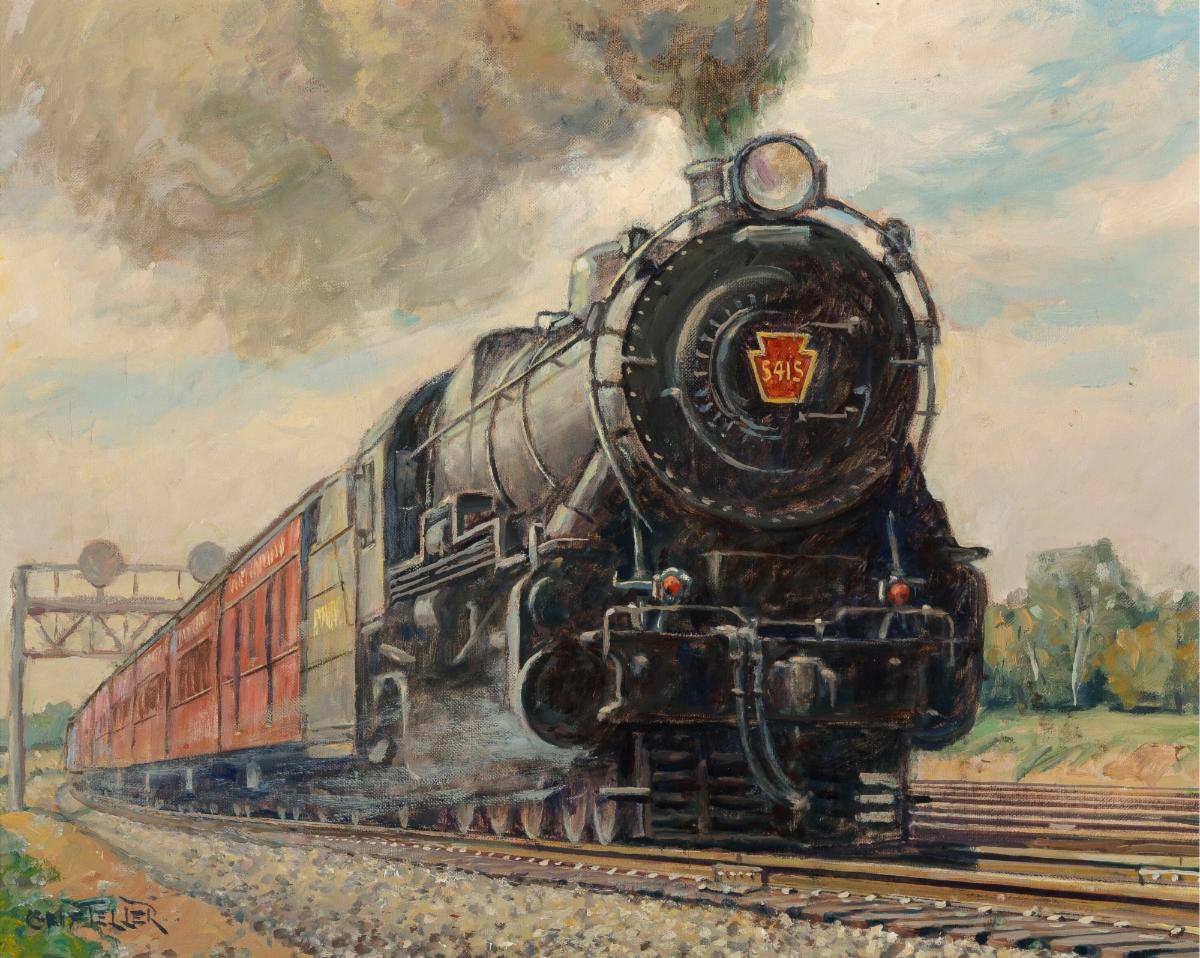
“The 5415” by Grif Teller. Collection of Peter and Christine Mosse.

“The CRP&A impresses me as an exceptional organization,” Mosse said, who has been a member since 2006 and has served on the Center’s board of directors since 2016. “It was the only organization I could think of whose mission aligned with what I was doing.” 

Choosing CRP&A was largely influenced by a desire to keep the collection together, he added.

“There are some works that I believe might be of interest to mainstream museums, and others that might be of interest to railroad museums,” Mosse continued, “but breaking up the collection would destroy what I view as one of its key attributes: namely its diversity across time, artistic styles, and countries of origin, unified solely by the subject.”

While the Madison, Wis.-based CRP&A doesn’t have gallery space, Lothes noted that he and the rest of the staff are eagerly considering future traveling exhibitions, which could visit art museums and other venues where the CRP&A could reach new audiences. Digital images of selected works could also be shared online, subject to copyright and the artists’ wishes.

The Center for Railroad Photography & Art was founded in 1997 to preserve and interpret significant images of railroading. It does that through exhibits, publications and conferences. For more information, visit railphoto-art.org.

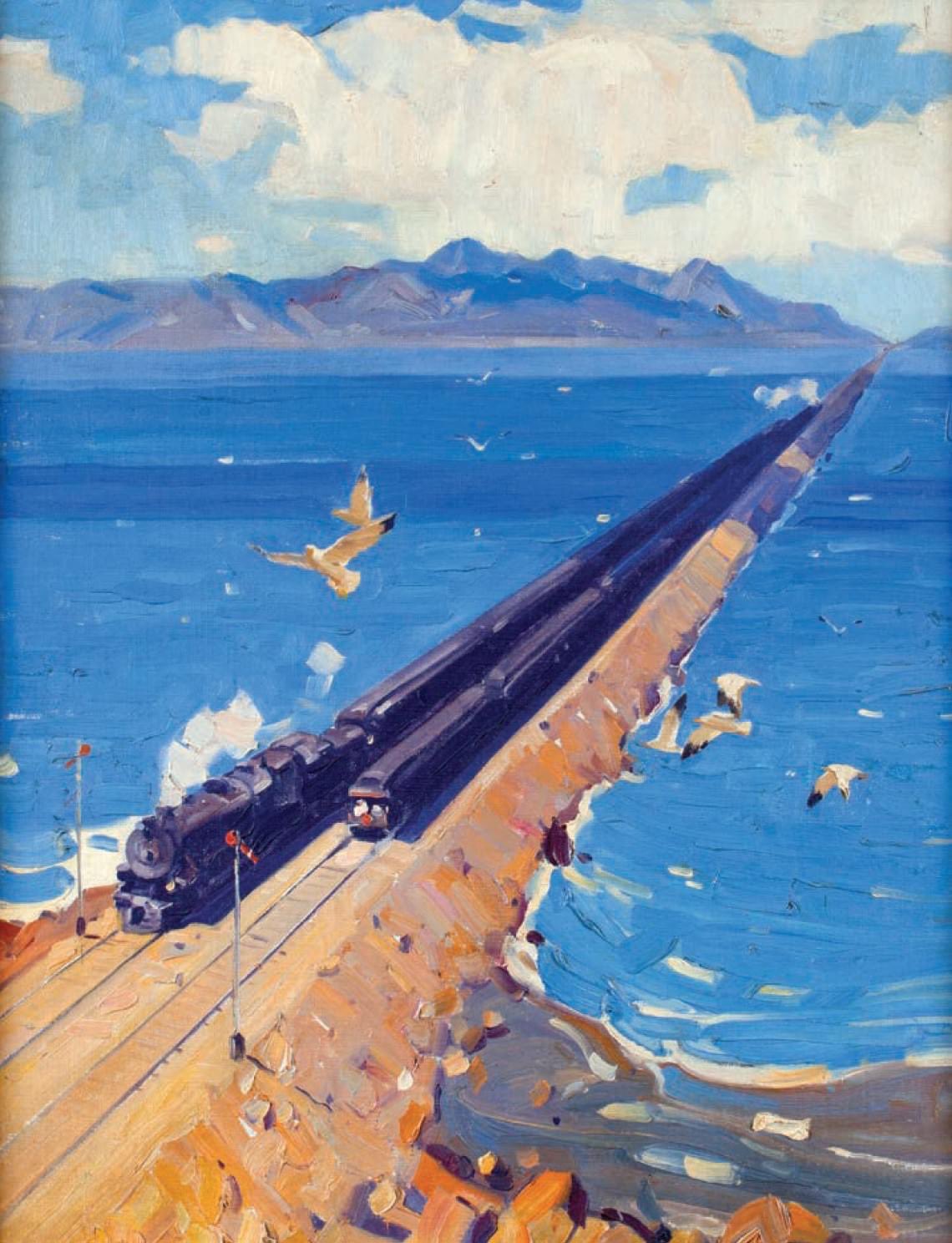
“By Rail Across Great Salt Lake Overland Route” by Maurice Logan. Collection of Peter and Christine Mosse.