Boston exhibition showcases grand sculptures made of Lego
By Admin in Photography
LOS ANGELES — In the early 2000s, China seemed to be on an endless up and up. In 2010, China became host to the world’s second-largest economy and, according to a Pew Global Attitudes Survey in 2005, the country had the largest percentage of respondents who indicated they had made progress in their lives over the past five years. Today, in the wake of the ravages of COVID, China has posted one of its lowest economic performances in decades. Trust in the country remains high, but overall global tensions are mounting. The COVID era of China looks very different.
Cruel Youth Diary: Chinese Photography and Video is a snapshot of the country’s now-distant but important period of growth in the 1990s and 2000s. On view at the newly renovated Hammer Museum of Art, the show is assembled from the collection of the Haudenschild family, a gift to the museum. The included works feature 16 artists caught up in the paradoxes of the time.
“Shut out of official art spaces by strict government guidelines, these artists grew close-knit as they showed their work in a network of nontraditional art spaces such as apartments, garages, real estate developments, and shopping malls,” the exhibition text notes (though I wish it had pointed out that these artists were and continue to be primarily men). Ironically, “many of them found prominence in the global art market even as they faced suppression at home.”
The exhibition greets us with the dizziness befitting a period of rapid economic growth and social change. Liu Wei’s “Unlimited” meets the viewer at the entranceway with a winding, snakes-and-ladders-style assemblage of Chinese shopping areas and malls, interconnected with a series of escalators that form the scaffolding for a cacophony of growth. Zhu Jia’s “Forever,” produced in 1994, is a video piece captured through the then-novel technology of portable cameras, strapped onto a tricycle wheel as he biked around Beijing.
Other works play with scale simply by showing it. The Sitting on the Wall series by Wang Fen (also known as Wang Peijun) shows the rapid urbanization of the Shenzhen and Haikou regions, with school children staring outward at these cities of millions that evolved in just a few decades. Xiang Liqing’s Rock Never series shows the density and repetition of Chinese dwelling places, and Song Tao’s “The Floor (Life Is Wonderful)” is a selection of some 20,000 photos from his daily life in Shanghai. These pair well with Shi Yong’s “Gravitation—Shanghai Night Sky,” a series of photos of skyscrapers in the smoggy-foggy nights of the city, and Yang Yong’s “Run Away (I am not who I am),” comprised of photos of Shenzhen youth, with a Wong Kar-Wai-like sexy composition.
Two striking works are worth seeing in person: Yang Fudong’s The First Intellectual series, a rendition of a bloodied salaryman that has renewed poignance in the wake of the 2020s anti-work movement (known as “lie flat” in China), and Liu Wei’s “It Looks Like a Landscape,” an assembly of photos of nude bodies made to look like a Shanshui painting. Liu was upset that the 2004 Shanghai Biennial kept rejecting his work, so he made something closer to what he thought the exhibition organizers wanted from Chinese art. “I was really angry, really angry,” he said, according to the exhibition text, “so I decided to show them an ass, but it looked like a Chinese landscape, so they liked it.”


Cruel Youth Diary: Chinese Photography and Video continues at the Hammer Museum (10899 Wilshire Boulevard, Westwood, Los Angeles) through May 14. The exhibition was organized by Nicholas Barlow with Adam Moshayedi.
Critics say producer Jada Pinkett Smith and the streaming platform should center the stories of historical Black women instead of rewriting history.
Helena Münninghoff, a formerly unhoused resident of the East Village, was arrested for painting a call for help for her friend on a construction fence.
By Admin in Photography
A photographer selected as a category winner of this year’s international Sony Photography Awards has rejected the prize, saying his entry was actually generated using AI.
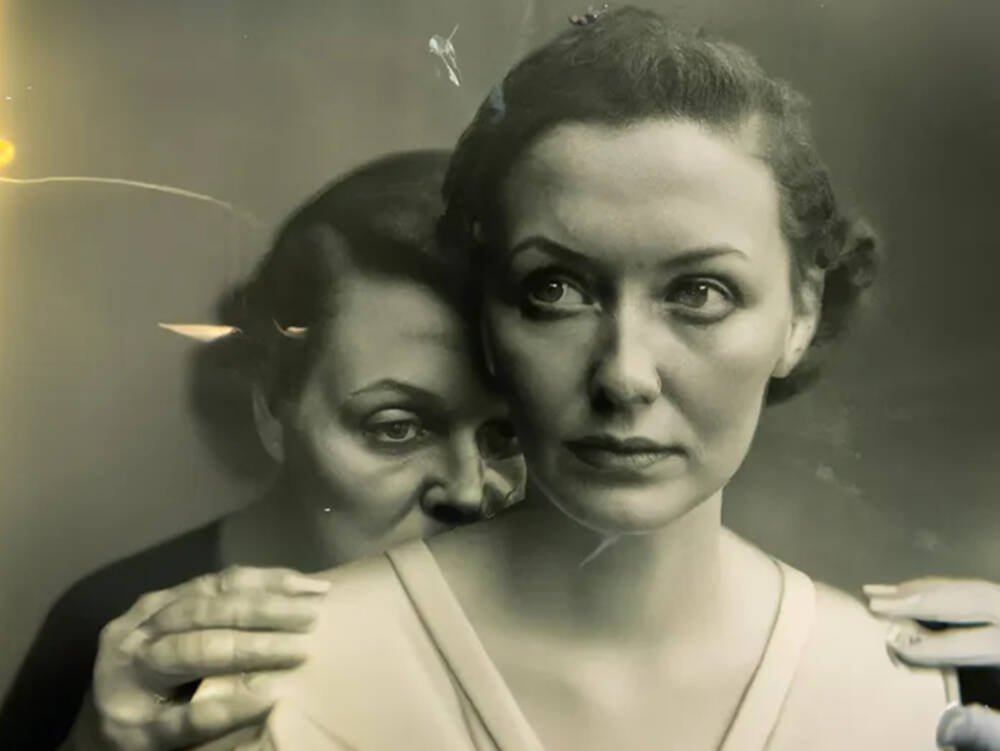
Last year, Boris Eldagsen began creating images for a collection he named Pseudomnesia, a combination of the Latin words pseudo and mnesia that essentially mean fake and memory. He entered an image from this collection into the creative open category in Sony’s photo contest, a piece titled The Electrician in December 2022. He did so without disclosing the snap had been produced with the help of text-to-image tools, since the terms allow the use of “any device.”
Eldagsen described the images in Pseudomnesia as “imagined by language and re-edited more between 20 to 40 times through AI image generators, combining ‘inpainting’, ‘outpainting’ and ‘prompt whispering’ techniques.”
Three months later, the organizers informed him he had won the creative category. Eldagsen said he then admitted to the competition’s organizers his picture had been generated using machine-learning software, and that he wanted to use the competition to launch a public discussion on how the technology was impacting photography.
Though photographers use all kinds of software applications in their work, to retouch, filter, crop, and so on, where do neural networks fit in that stack; are they acceptable tools; and where’s the line in the sand that they cross if they are not acceptable?
Interestingly enough, competitions may allow or even welcome the use of artificial intelligence, and it’s photographers who are uncomfortable with the rise of this kind of computing.
“Right now for me, it is more important that the public debate I hoped for has become international and is in full speed,” he told The Register. “I want to thank the photo community for this.”
Eldagsen said he wants to differentiate photography from realistic AI-generated images. “Can they be in one museum under the name of photography? Will this be good or bad for photography? It is complex, this is why we need to talk about it,” he told us.
He said officials ignored his requests to discuss his situation, and kept him as a winner. He confirmed to us he was rejecting the prize, which included $5,000, Sony camera gear, and a trip to the photography exhibition in London.
“Thank you for selecting my image and making this a historic moment,” Eldagsen wrote on his website, “as it is the first AI generated image to win in a prestigious international [photography] competition. How many of you knew or suspected that it was AI generated? Something about this doesn’t feel right, does it?
“AI images and photography should not compete with each other in an award like this. They are different entities. AI is not photography. Therefore I will not accept the award.
“I applied as a cheeky monkey, to find out if the competitions are prepared for AI images to enter. They are not. We, the photo world, need an open discussion. A discussion about what we want to consider photography and what not. Is the umbrella of photography large enough to invite AI images to enter – or would this be a mistake? With my refusal of the award I hope to speed up this debate.”
I applied as a cheeky monkey, to find out if the competitions are prepared for AI images
After Eldagsen’s stunt became public, officials scrubbed his entry from the Sony Photography Awards and removed his image from the exhibition.
It’s not the first time AI-generated artwork has won a competition. Last year, Jason Allen won the top prize of $300 for his Midjourney-made image at the Colorado State Fair’s fine art competition, causing much controversy.
“We were looking forward to engaging in a more in-depth discussion on this topic and welcomed Boris’ wish for dialogue by preparing questions for a dedicated Q&A with him for our website,” a World Photography Organisation spokesperson told The Guardian.
“As he has now decided to decline his award we have suspended our activities with him and in keeping with his wishes have removed him from the competition. Given his actions and subsequent statement noting his deliberate attempts at misleading us, and therefore invalidating the warranties he provided, we no longer feel we are able to engage in a meaningful and constructive dialogue with him.” ®
By Admin in Photography

Award-winning fine art photographer Brad Walls collaborated with the English National Ballet for a unique photography project showcasing professional ballet dancers from the air.
Walls headed to the newly designed English National Ballet studio in Canning Town in London and worked with six ballet dancers from the English National Ballets Corp de Ballet, including Bree Foad, Lulu Toner, Daisy Wales, Anna-Babette Winkler, Paige Bestington, and Eireen Evrard.

With his project, Walls aimed to “disrupt traditional ballet photography” and shift the perspective from focusing on individual dancers to photographing the entire corp.

“Most ballet photography focuses on a singular dancer in a dramatic pose. To me, the beauty of ballet is rather the opposite, it’s delicacy and teamwork,” Walls says.

To photograph multiple dancers simultaneously, Walls utilized a drone for his photoshoots. He created a series of 14 images, all shot from five to 10 meters (roughly 16 to 33 feet) above the floor.

Walls meticulously planned each of his shots on his iPad. “I dedicated weeks to researching ballet poses on Pinterest and figuring out how to integrate them into my compositions,” Walls explains.
Everyday items inspire some of the compositions. For example, the image ‘Hanging Teacups’ was conceptualized just the day before the photoshoot.
“I stayed in an Airbnb in London that had coffee mugs displayed on wall hooks. The way they were hanging reminded me of the fourth position in ballet,” Walls says.

Symmetry plays a key role throughout Walls’ work, and that remains true in his English National Ballet series.

Symmetry and geometry are on full display in his new image ‘Hibiscus’.
“Geometry provides a hint at consistency in an ever-inconsistent world. Innately, humans are drawn to it. Me, maybe more so,” explains Walls.

“Ballet is not usually viewed from above. I remember the drone humming over our heads and thinking, ‘Oh my, what is this angle going to look like?” says dancer Anna-Babette Winkler of the photoshoot.


Walls has also employed aerial perspectives with the New York City Ballet in an in-progress photo series. Next year, Walls will feature his English National Ballet series alongside his work with the New York City Ballet and the Australian Ballet in a coffee table book.
PetaPixel has featured Brad Walls’ photography on numerous occasions, so make sure to check out his other works such as a his squash court series, synchronized swimming photos, minimalist photos of swimming pools, and unique Olympic sports images — all captured from the aerial perspective.
Image credits: Brad Walls
By Admin in Photography

A photographer revealed how she ingeniously scanned 35mm film negatives with her smartphone.
Photographer and video producer Ksenia Bakalo shared a viral clip of her method on TikTok last month.
@wowframe Scanning 35mm film in Lightroom #MadeWithLightroom #lightroom #adobepartner ♬ оригінальний звук – WF
The video amassed over 27 million views on the social media platform — with thousands of TikTok users expressing their eagerness to try the method.
Before the film can be scanned with a smartphone, Bakalo first develops the film via traditional methods — in a darkroom. After the film becomes a negative, Bakalo tells PetaPixel that the process is “easy.”
In the TikTok video, Bakalo shows how she takes a photo of the negative of the film on a lightbox to begin the process.
The photographer, who is based in Odesa, Ukraine, then opens the Adobe Lightroom app on her smartphone and by using the curve feature in Adobe Lightroom to scan the negative she gets the film photo on her phone.


“To convert the negative of a photo into a positive, all you need is the curves feature in Adobe Lightroom,” Bakalo says.
“To make the colors in the photo correct, you need to drag the lower left end of the curve to the upper left corner and the upper right end to the lower right corner. If you do everything right, the photo will become colored.”
Bakalo’s video received over two million likes on TikTok — with one viewer declaring “Oh my god I need to do this.”
Other photographers on TikTok suggested other innovative ways to scan films — including using the app Filmbox to colorize film as well as using an “invert filter.”
Bakalo says she came up with the idea to scan 35mm film with her smartphone after discovering an old collection of family photos taken on a film camera that had never been developed.
“I came up with the idea after I found a lot of old film photos at home from my childhood and really wanted to see what was on them,” Bakalo explains.
“I didn’t expect the video to go so viral. I just wanted to be useful.”
More of Bakalo’s work can be found on TikTok and Instagram.
Image credits: All photos by Ksenia Bakalo
By Admin in Art World News
If you’re making plans for your undergraduate education, you may be trying to decide on a major. Many students choose only one major, and perhaps a minor as well. But this isn’t your only option.
Depending on your career goals, you may benefit from pursuing a double major for your bachelor’s degree. A double major may open up more job opportunities and help you expand your knowledge in two different or complementary disciplines. One study published in the Columbia Economic Review found that college graduates with double majors usually earn higher salaries than those with only one major.
But what is a double major, and how do you know if it’s right for you? Read on to learn more.
Double-majoring means you complete one degree, usually a bachelor’s, in two areas of study. For example, if you double-major in business and finance, you would earn one degree that lists two majors rather than two separate degrees. The two majors are often related, but not always.
When you earn a degree with a major and a minor, your degree focuses primarily on your major. A double major, however, places equal importance on both majors.
Pursuing a double major allows you to grow your knowledge and skills in two separate areas of study, which may open up a wider variety of potential career paths upon graduation.
To earn a double major, you typically need approval from academic advisors in both majors’ departments. Your university may not allow you to apply overlapping courses toward both majors’ requirements, or it may limit how many courses can count toward both majors. Check with your school to see how it approaches double majors.
Both double majors and dual-degree programs provide an education covering two disciplines, but these degree paths are different.
As discussed above, a double major results in one diploma with two majors. This differs from a dual degree, which awards two separate degrees, such as a bachelor of arts and a bachelor of science.
You can earn a double major at many schools with only 120 credits—the same number of credits required for a single major. Dual degrees, however, typically require more coursework (around 150 credits or more) since they involve two separate degrees.
Requirements for dual degrees vary quite a bit, so check with your university for its specific policies.
Whether a double major is worth it for you depends on whether completing two majors would help you achieve your career goals.
For instance, if your goal is to work in corporate leadership, double-majoring in business and finance may be helpful due to the broad array of knowledge required for a corporate leadership career. Likewise, if you plan to run an art gallery or work in a business related to the fine arts discipline, earning a double major in business and fine arts may be beneficial.
Below we explore some common benefits and drawbacks of earning a double major.
If you’re considering a double major, choosing majors that complement each other may help you develop a deeper understanding of each discipline and give you a competitive edge in the job market.
Below, we overview some common double majors for online learners and how the subject areas can work together to help you establish a successful career.
A business administration bachelor’s provides the skills needed to understand business fundamentals and operate an organization. Adding an accounting major offers more in-depth knowledge of recordkeeping, taxation accounting, data analysis and other financial management issues that business administrators may need to know.
If you plan to work in an administrative position within public health, you might major in both business administration and public health. Together, these majors can prepare you to develop public health policies for government agencies or to manage facilities, staff and operations in public healthcare settings.
Technology has become essential to marketing, so it makes sense to learn both the technical and the consumer sides of marketing. By combining a computer information systems major and a marketing major, you can learn marketing fundamentals and technical concepts that apply to businesses, such as designing programs or creating applications that provide insight into consumer behavior.
Supply chain management focuses on infrastructure issues, such as procurement, fulfillment, logistics and manufacturing. Economics focuses on concepts such as economic growth, policy issues and economic theory. Combining these majors may be helpful if you want to work in procurement or operations management positions.
Double-majoring in marketing and communications majors teaches market analysis, branding, product placement and other marketing fundamentals. This double major would also cover creating and giving presentations, writing, communications theory and other communications skills. These majors pair well together for professionals in the marketing and public relations fields.
A bachelor’s in criminal justice explores the judicial system, law enforcement, criminology and other related topics. When you add a psychology major to the mix, you gain additional insight into human behavior and motivation. Combining these two majors can give you more perspective as you work with criminals, victims and other individuals within the legal system.
If you want to work in international affairs, politics, public policy or global organizations, a political science major can help you reach your goal. Many of these positions involve working with people from other countries, so learning a foreign language can make you a more competitive candidate for these jobs.
If you earn a double major, it means you complete one diploma focusing on two distinct areas of study. When you graduate, both of your majors are listed on your degree.
No, they are not the same. If you earn a double major, it means you earn one degree with two majors. A dual degree results in two different degrees.
If it would help you reach your career goals, earning a double major may be worthwhile. If it wouldn’t help you advance in your career or improve your job prospects, then the extra effort required for a double major may not be worth it.
By Admin in Printmaking
By Admin in Photography
… the Great Blue Heron seen above, asked me to give a five star review to the Rainbow Trout Farm, up canyon from Sedona on SR89A … note the beautiful rainbow trout he has speared and is preparing to have for dinner once he has made it to shore. All of the trout at the farm are raised from eggs obtained from the state and they are hatched, raised and kept in fresh spring water from the property. Although adjacent to Oak Creek, they are never in water from the creek, just pure spring water.
The photo of the Black Hawk below was taken as he switched perches at the north end of the pond … I left a little after sunset and he was still waiting to come in for his dinner … probably a little spooked by my presence in the area.

A very fun day today, breakfast and latte’s with a friend this morning and finishing up work on the presentation I am giving in a couple of weeks in Monterey, California … looking forward to the trip and spending time with family … also another shoot at Filoli Gardens in Woodside California … check it out!
Another amazing day underway and time for a pause for rest before continuing with the day … still breathing and still smiling … we are blessed!
Cheers,
Ted
A bird flies through the sky, and I fly with it. I am in
each pearl of moisture sparkling in the sun. I lie lazy
on the clouds. And I acknowledge my kinship with
each winged thing.
I see all as one, and nothing repels me, as this new
day climbs noiselessly out of the valley of night.
Peace lies over the world and over the world of my soul.
excerpt from On A May Morning by Max Ehrmann
###
The easiest way to reach Mr. Grussing is by email: ted@tedgrussing.com
In addition to sales of photographs already taken Ted does special shoots for patrons on request and also does air-to-air photography for those who want photographs of their airplanes in flight. All special photographic sessions are billed on an hourly basis.
Ted also does one-on-one workshops for those interested in learning the techniques he uses. By special arrangement Ted will do one-on-one aerial photography workshops which will include actual photo sessions in the air.
More about Ted Grussing …
By Admin in Art World News
Who: Informa Group with The Local Collective for strategy and creative.
What: The branding an out outdoor campaign using unique QR codes for the recent Toronto art fair.
When & Where: The campaign ran in Toronto in the six weeks leading up to the April 13 to 16 art fair, using digital and social assets, as well as OOH and print.
Why: The marketing team behind the Artist Project asked the agency to come up with new visual identity and campaign that would reinvigorate the brand and present the event in a new light.


The typical approach with art fairs and festivals is to highlight the art and the artists, but that makes it difficult to build the brand of the event itself, said Omar Morson creative director, head of design.
“So we chose to solve this challenge by creating something that felt very artful as a solo piece of communication,” he said.
How: The Local Collective created QR codes from words often used by people when reacting to art, such as “fantastic,” “beautiful” and “expressive.” “With QR codes typically being auto-generated, the teams had to carefully handcraft each one until it struck the balance between readability by people and scanners,” said Morson.
The QR codes directed viewers to specific artists, ticket purchases, or various support initiatives, but also stood as works of art in their own right. “Often consumers are used to seeing these codes in the bottom one third of a communication, acting as a sign off or even a URL,” sadi Morson. “By putting so much graphic importance on the code, it caused the desired reaction: More people have interacted with the posters and various communication pieces than we had even hoped for.”
The concept is also part of the broader branded design system that lets the Artists Project brand exist without competition from the artists.
People noticed it was words? “When we did distance testing for legibility, we were surprised how many people commented on the words. In fact, because the QR codes are familiar to most people, seeing the odd “break-ups” of structures made the fact that there are words more noticeable,” said Morson.
Milwaukee Art Museum announces new Herzfeld Center for Photography show
Wondering what’s the importance of PDF editing software for photographers? Hop inside this guide to find out!
The loon traveled from Los Angeles to its permanent home in the Twin Cities.
A new beetle species has been named to honor a fellow Husker, bridging the worlds of academia and wildlife conservation.
Silversea, a premier brand in experiential luxury and expedition travel, recently concluded the inaugural season of its first Nova-class ship, Silver Nova,
The Desert Foothills Land Trust (DFLT) is proud to announce a special presentation event featuring acclaimed botanical photographer Jimmy Fike on Saturday, Oct. 12 at 6:30 p.m. at the Sanderson