About

Posts by :

Dallas and West Texas Institutions Announces New Appointments

Dallas and West Texas Institutions Announces New Appointments

The Dallas Museum of Art (DMA) and the Chinati Foundation have announced new appointments for staff and trustees, respectively.
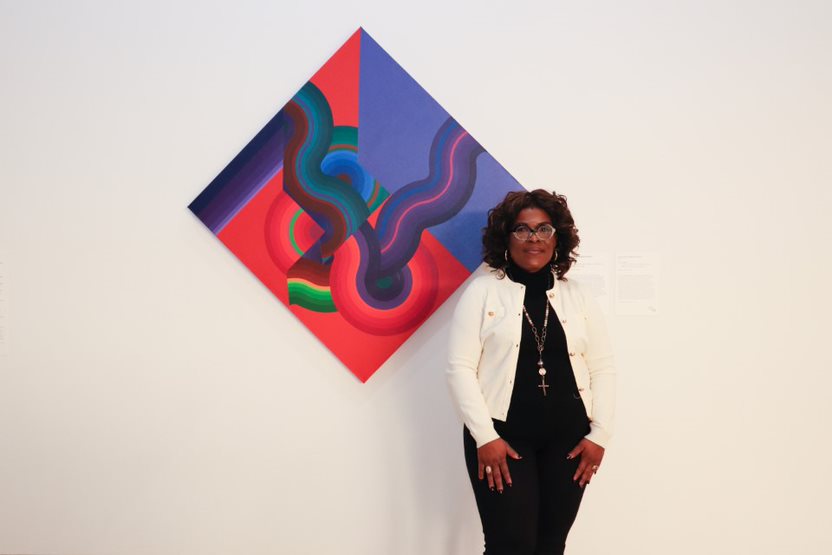
A headshot of cultural worker Nia Amadife.

Nia Amadife. Image courtesy of the Dallas Museum of Art.

Following the recent announcement of changes to its curatorial team, the DMA has also announced a new hire and staff promotions. Nia Amadife has joined the museum in the role of Director of Human Resources. Ms. Amadife most recently served as the Global HR Business Partner & Practice Lead for Childfund International, a nonprofit organization working to support children’s education, health, and safety across the world. In her new position, Ms. Amadife will also serve as an important advocate for the museum’s Diversity, Equity, and Inclusion initiatives. 

Additionally, the museum has announced the promotions of Stacey Lizotte, Brad Pritchett, and Aschelle Morgan. Last July, Ms. Lizotte was promoted to the position of the Allen and Kelli Questrom Center for Creative Connections Director of Education. She has now been appointed Chief Learning Officer in addition to her director role. Mr. Pritchett, who previously served as Chief Marketing & Communications Officer, has been appointed Chief Experience Officer. In his new role, he will maintain his duties related to marketing and communications and will oversee Guest Services and earned revenue. Ms. Morgan, who previously held the position of Director of Communications and Public Relations, has been promoted to Director of External Affairs. In her new position, she will promote the museum as it seeks to better serve the diverse communities of Dallas.

Last month, the Chinati Foundation/La Fundación Chinati in Marfa, named Caitlin Murray as its new Executive Director. Yesterday, the organization announced the appointment of two new trustees to its board: Miguel Fernandez and Franck Giraud. 

In a press release, Mack Fowler and Annabelle Selldorf, chair and co-chair of the board, stated, “Miguel and Franck are accomplished business leaders and dedicated philanthropists. Their vision and expertise will be vital as we focus on Chinati’s future.”

A headshot of Miguel Fernandez.

Miguel Fernandez

Mr. Fernandez serves as the CEO of Flō Networks, XX, which he co-founded in 2001. He also co-founded Saba Investments, a regional technology fund; Stanton Hospitality, an El Paso-based hospitality group; and Sotoak Realty, a real estate company focused on developing downtown El Paso. Additionally, Mr. Fernandez is involved with community groups and nonprofit organizations. He is a member of Borderplex Alliance, an El Paso–based bi-national economic development organization and serves on the Board of Managers of the University Medical Center of El Paso, the primary teaching institution for Texas Tech University’s Paul L. Foster School of Medicine in El Paso.

A headshot of Frank Giraud.

Franck Giraud

Mr. Giraud splits his time between Italy and the United States and has a long history of engaging with contemporary art. He was the international director of 19th- and 20th-century art at Christie’s and later served as the chairman of Giraud, Pissarro, Ségalot (GPS Partners), an art advisory firm with locations in New York and Paris. Additionally, Mr. Giraud has been a supporter of Chinati since his first visit in 1997.

See Inside Artist Filip Custic’s First Solo Show in Tokyo, Where His ‘Super-Bionic’ Sculptures Meld the Body and Technology

See Inside Artist Filip Custic’s First Solo Show in Tokyo, Where His ‘Super-Bionic’ Sculptures Meld the Body and Technology

Will humanity know when singularity has arrived? This is a central question propelling the ascent of young Spanish-Croatian artist Filip Custic.

His works in response have focused on the human body as a canvas, lavishing it with color, layering it with 20th-century motifs of art and psychoanalysis, and fragmenting it with mirrors and screens. Often, the results appear like fantastical scenes composed for high-end fashion magazines and not by accident: the 30-year-old began in marketing working with the likes of Vogue, Esquire, and GQ, and remains, perhaps surprisingly, un-jaded by the creative potential of the commercial world.

Filip Custic, virtualhypermetasuperultramegaconnected. Photo: Filip Custic, courtesy Onkaos.

Filip Custic, virtualhypermetasuperultramegaconnected. Photo: Filip Custic, courtesy Onkaos.

Fitting, then, that one of Custic’s first solo shows has opened inside a luxury shopping mall, Tokyo’s Parco Museum. The exhibition, “Human Product,” stages many of the Madrid-based artist’s founding works that present the body, most often his own, as a site for tweaking and upgrading, just like an operating system, as the artist puts it. Three new sculptural works place Custic within the context of collectible doll culture. Again, Custic believes presenting such works in Japan, the main developer of collectible dolls, makes Parco an ideal location.

“In the show, I basically want people to experience new paradigms, new situations, so we can think out ‘human programming,’” Custic told Artnet News. “I would like to open a conversation focused on how consumerist culture attempts to turn us into ‘commodities.’”

In zzz (2023) and human product (2023), new works in which Custic recasts himself as miniaturized dolls, he calls attention to the somnolent qualities of technologies, but not as you might expect. “I want to express the possibility of being able to sleep in the system and then wake up,” Custic said. “It is a big pressure to be a human being and we must look for moments of relaxation of our consciousness.”

This line of thinking applies to the overall exhibition. In his “Bolso de Pantalla” series (2021), a collection of handbags with incorporated screens that play his own branded messaging, he highlights the idea that carrying a handbag turns a human into a walking advertisement, but not to revolutionary ends.

“Consumerist culture turns us into commodities,” Custic said. “Our existence is more valid if it can be monetized.” A far-cry from calls to reclaim our digital identities.

Custic

Installation view of “Human Product” at Parco Museum, Tokyo. Photo courtesy Onkaos and Filip Custic.

Custic’s arrival in Japan marks the latest in a series of commercial breakthroughs for the artist. In 2018, he provided the visual thematics for Catalan pop star Rosalía’s sophomore album El mal querer. In a series of moving digital sculptures, Custic portrayed Rosalía as a divine figure immersed in worlds of modern spiritualism—think golden crucifixes, moon cycles, and energy circles all cast in scenes of flashing radiance. He later created work to accompany music projects for Julia Stone and Lil Nas X.

These projects stayed true to Custic’s glossy aesthetic, repeating much-used symbols such as cracked mirrors and the fragmented body, but left behind technological considerations. There’s little evidence of Custic making such a turn in his own work.

“It’s difficult to separate the role of technology in my artistic practice and in my life,” he said. “Technology is the only innovative element of our era. I think we will look super-bionic in the future and we will ask, ‘at what point did all this happen?’” Some would argue that moment has already arrived.

See more images of the exhibition below.

Custic

Installation view of “Human Product” at Parco Museum, Tokyo. Photo courtesy Onkaos and Filip Custic.

Filip Custic, “Bolso de pantalla” (2021). Photo: Filip Custic, courtesy of Onkaos.

Installation view of “Human Product” at Parco Museum, Tokyo. Photo courtesy Onkaos and Filip Custic.

Human Product” is on view at Parco Museum, 15-1 Udagawa-cho, Shibuya-ku, Tokyo, through April 24.

Follow Artnet News on Facebook:
Want to stay ahead of the art world? Subscribe to our newsletter to get the breaking news, eye-opening interviews, and incisive critical takes that drive the conversation forward.

Okay, I admit it: Nikon’s Z series is the future of photography

Okay, I admit it: Nikon’s Z series is the future of photography

This month Nikon invited me, on behalf of N-Photo magazine (opens in new tab), to attend an event at Printworks London, in the UK. This magnificent industrial building’s days of churning out national newspapers are far behind it and, if you know anything about the venue in its current guise, you might be wondering if Nikon had invited us to a rave – well, you’re closer than you might think. 

There were, in fact, neon lights, dancing and electronic music. However, rather than throwing my arms wildly in the air – face covered in glow-in-the-dark paint – I spent the afternoon and evening playing around with the very best Nikon camera (opens in new tab) tech (I’d take that over the former every day of the week). Almost all Z-series cameras and lenses were available to test throughout a veritable sandbox of studio portrait setups, complemented perfectly by the utilitarian, industrial location. 

• Looking for the best Nikon lenses (opens in new tab) to go along with your camera?

Nikon wasn’t leaving the purpose of the event up to interpretation, either. A seemingly excessive neon sign displaying the words “Nikon is the future” loomed over the proceedings but, as I held down the Nikon Z9 (opens in new tab)’s shutter button and rattled off a 120-fps burst as a dancer sautéd in front of me, I realized that the Big N wasn’t laying it on thick – it was putting its money where its aperture is. 

The Nikon Z 26mm f/2.8 is super thin and lightweight. (Image credit: Future)

I’ve made no secret that I’m a fan of the good ol’ fashioned DSLR (opens in new tab), but over the past couple of years I’ve witnessed more and more pros commit to the Z system and not look back. The DSLR vs mirrorless (opens in new tab) debate is about as tiresome as reruns of The Simpsons nowadays, but this was the first time I’d got to play with Nikon’s entire Z-series roster in one place – and it made one thing abundantly apparent: the Z system is all grown up. 

Mood-boosting projects!

Super-telephoto lenses, check. Macro lenses, check. S-line holy trinity, check. Pro-grade and vlogger-centric video capabilities, check. Dedicated DX lenses, enthusiast-to-pro camera line-up, cutting-edge mirrorless flagship, check, check, check!

Heck, I even got to play with the latest lenses to come out of Tokyo: The Nikkor Z 85mm f/1.2 S (opens in new tab) and the Nikkor Z 26mm f/2.8 (opens in new tab). The former is a super-duper-fast beefy prime that’s capable of silky-smooth background blur, and the latter has just received an impressive 4.5/5 stars on test (opens in new tab) – where we praised its impressive image quality, lightweight build and incredible 23.5mm thickness.

Nikon has long committed to the mirrorless revolution – and unless you’re thinking of switching to Pentax, it’s the same story across every other major manufacturer. And the good news is, we’ve reached a point where last-gen mirrorless tech is becoming increasingly affordable. You can pick up a used Nikon Z6 (opens in new tab) for the same price as a new Nikon D7500 (opens in new tab) (and a Nikon Z50 (opens in new tab) for nearly half!). 

My Nikon D800 (opens in new tab) ain’t going anywhere yet, but I firmly believe that Nikon is the future. And the future is Z mount.

If you enjoyed this article, you might be interested in reading about the best Nikon Z lenses (opens in new tab) for FX and DX cameras. If you’re clinging to your DSLR you can also check out the best lenses for the Nikon D850 (opens in new tab), and it you’re embracing the revolution then take a look at the best lenses for the Nikon Z50 (opens in new tab).

Crystal Tumblers and Decanters Glint in the Sun in Photorealistic Embroideries by Lucy Simpson

Crystal Tumblers and Decanters Glint in the Sun in Photorealistic Embroideries by Lucy Simpson

All images © Peacocks and Pinecones, shared with permission

Reflecting her interest in drawing and photorealism, Lucy Simpson of Peacocks and Pinecones embroiders the glinting edges of glass and metallic objects in painstaking detail. Each piece is composed by directly observing decorative items like crystal tumblers and decanters, with some of the larger compositions taking upwards of 200 hours to complete. “It’s a slow process, and as a person who isn’t naturally patient, it’s a real endurance test for me,” she says. “I feel a real sense of accomplishment when I finish a piece.”

Simpson’s interest in needlework goes back to childhood and spending time with her grandmother, from whom she learned some basic skills at an early age. Fast forward to around five years ago when the artist had just given birth to her third child, and she took up cross-stitching from patterns as a way to relax. “I had been diagnosed with postnatal depression and anxiety, and my sister bought me my first kit to try and take my mind off things,” she says. “I loved how I had to completely focus on what I was doing, which left no room for intrusive thoughts. After a while, I decided I wanted to stitch my own designs and came across an embroidery style called thread painting and decided to have a go myself.”


Two realistic embroidered glass tumblers in an embroidery hoop and a round wooden frame.

First, Simpson began experimenting with rendering metallic objects, enjoying how single strands in a specific color could evoke a realistic depiction of light glinting off of an edge or seam. She spent time honing her craft on subjects like birds and animals because the stitches lent themselves naturally to the lines of fur and feather, but during the pandemic when she was spending extra time at home, she began to yearn for something more difficult.

“I think the biggest challenge using thread to depict glass is stitching the illusion of transparency,” she says. “I love the intricacies of cut glass and the way it distorts the liquid and makes light bounce around.” Typically working on a neutral background, Simpson sometimes incorporates patterns like gingham or polka dots, and she is constantly experimenting with new ways of realistically translating light and color, one stitch at a time.

Simpson occasionally takes commissions, and you can follow Peacocks and Pinecones on Instagram for updates.


Two realistic embroideries of glass tumblers with yellow beverages and ice in them.

A realistic embroidered glass decanter in an embroidery hoop.

A realistic embroidered glass tumbler with lemons on a blue gingham fabric, in an embroidery hoop.

A realistic embroidered balloon shaped like a champagne bottle on a neutral background in an embroidery hoop.

A realistic embroidered glass tumbler with a lime slice on top of it in an embroidery hoop.      A realistic embroidered pair of sewing scissors with a card of red thread in an embroidery hoop.

Do stories and artists like this matter to you? Become a Colossal Member today and support independent arts publishing for as little as $5 per month. The article Crystal Tumblers and Decanters Glint in the Sun in Photorealistic Embroideries by Lucy Simpson appeared first on Colossal.

Gufram + Snarkitecture Unveil Five New Domestic Sculptures 

Gufram + Snarkitecture Unveil Five New Domestic Sculptures 

For this year’s edition of Milan Design Week, Italian furniture manufacturer Gufram and New York-based design practice Snarkitecture have unveiled their latest collaboration: the Sculpted Series, a collection of five domestic sculptures that blur the line between art and furniture. Although the collection appears to be hard and durable, as furniture is typically designed to be, they are surprisingly soft, composed of foam that’s been treated with a special paint developed by Gufram over 50 years ago.

a collection of white furniture made from foam

The Sculpted Series includes a bookshelf, a bar cabinet, an armchair, a coffee table, and a low table. Handmade by Gufram’s skilled artisans, each piece starts out as a block of polyurethane foam, a material that visually replicates a concrete texture. After being sculpted, they are coated with Guflac® Ultra which makes each piece durable and weather-resistant while maintaining the polyurethane foam’s elasticity and softness. The collection, available only in black or white, rethinks what furniture “should” look like in a domestic space.

black foam cabinet

white foam cabinet

black foam table

white foam table

black foam bookcase

white foam bookcase

black foam table

white foam table

black foam armchair

white foam armchair

The Sculpted Series will be on view at Capsule Plaza during Milan Design Week from April 17-23, 2023.

Stagwell (STGW) Unveils ‘SmartAssets,’ an AI-Powered SaaS Asset Management Platform, Winner of 5th Annual Innovation Competition

Stagwell (STGW) Unveils ‘SmartAssets,’ an AI-Powered SaaS Asset Management Platform, Winner of 5th Annual Innovation Competition

Stagwell’s Annual Competition Acts as Incubator for Tech-Focused Marketing Startups with $1M in Funding to Start

NEW YORK and LONDON, April 11, 2023 /PRNewswire/ — Stagwell (NASDAQ: STGW) Marketing Cloud has announced the winner of its 2022 Innovation Competition, a program designed to unleash employee innovation and fund technology that solves the modern marketer’s pain points. SmartAssets is an AI-powered SaaS platform that uses AI to extract creative components from ads. It then uses performance data from those ads to guide and support the creative process by reporting, forecasting, and optimizing ads for effectiveness. With AI-powered asset categorization, performance analytics, and instant creative adjustments, brands can better optimize production timelines and overall media performance.

“We were inspired once again by the visionary ideas that were presented in this year’s internal ‘Shark Tank,’ where the competition was fiercer than ever,” said Stagwell Chairman and CEO Mark Penn. “The potential and capabilities of SmartAssets perfectly align with the needs of modern marketers – bringing data-driven decision making to the creative process – and we’re excited to leverage the Stagwell ecosystem to perfect the platform, bring  it to market and let it go to work.”

SmartAssets was developed by a team from multilingual content and media consultancy Locaria, part of Stagwell’s Brand Performance Network: Chief Operating Officer Lindsay Hong, Data Scientist Eric Walzthöny, and Innovation Lead Vitaly Boitelet. The platform has three core capabilities:

  • AI-powered asset management: SmartAssets reads the full content of a brand’s creative library and categorizes its attributes. It ensures assets meet industry and brand standards.
  • Performance analytics: By connecting with a brand’s advertising platforms, SmartAssets provides performance reporting data not only to the creatives, but to media teams.
  • Instant creative adjustments: After identifying opportunities, SmartAssets lets users quickly act on them by adjusting creative within the platform instantaneously.

“Global brands know that great creative drives performance just as much as a smart media strategy, and are looking for greater understanding and control of their increasingly complex creative asset portfolio. They want to be sure that the assets they produce not only meet quality and branding guidelines but will also land with the intended audience and drive results,” said Lindsay Hong, COO, Locaria. “By leveraging AI and the existing media infrastructure of the Brand Performance Network, SmartAssets will derive insights at scale to inform the creative process and expedite media strategy activation, allowing brands and agencies to unite their creative and media teams around one goal.”

Stagwell Marketing Cloud’s Innovation Competition provides funds and expertise for Stagwell’s 13,000+ employees to develop transformational ideas for technology-driven marketing solutions. The brief is simple: create a concept for a client-facing product at the intersection of technology, marketing, and business transformation.

“Our annual innovation competition, which we colloquially refer to as ‘Shark Tank,’ taps into the network’s global, cross-functional talent and deep understanding of the modern marketer,” said Stagwell Marketing Cloud Chief Marketing Officer Elspeth Rollert. “We pair that industry knowledge with the vast technical resources we have at Stagwell to build SaaS solutions that solve some of the industry’s biggest pain points.”

Past winners of the Stagwell Marketing Cloud Innovation Competition have developed into successful products, including: 

  • Harris Brand Platform (2018 Winner), an industry-leading brand management software tool that collects critical brand and marketing data on brand competitors and consumers, to help marketers segment, target, measure and optimize campaign effectiveness.
  • PRophet (2019 Winner), the only generative and predictive A.I-driven PR tool that helps professionals draft releases and social content in minutes. PRophet was recently named the winner of the Innovation SABRE Awards North America 2023 in the PR Software and Services category.
  • ARound (2020 Winner), a first-of-its-kind fan engagement platform that delivers stadium-level augmented reality experiences, in use by the MLB, NFL, and launching soon in the NBA.
  • WonderCave (2021 Winner), a peer-to-peer texting solution helping to grow brands and build communities with 1:1 text conversations at scale. WonderCave was crowned the 2022 Campaign Tech Award Winner for Best Texting Platform. 

About Stagwell Marketing Cloud

Stagwell Marketing Cloud (SMC) is a suite of data-driven SaaS solutions built for the modern in-house marketer. Born out of Stagwell’s network of award-winning marketing agencies, SMC’s technology empowers marketers to drive business impact by giving them intuitive tools equipped with proprietary, actionable data. SMC’s portfolio of solutions powers strategic customer research, communications, and media activation for brands worldwide by leveraging technology such as generative artificial intelligence, shared augmented reality, and more. Get your head in the cloud at www.stagwellmarketingcloud.com.

About Stagwell

Stagwell is the challenger holding company built to transform marketing. We deliver scaled creative performance for the world’s most ambitious brands, connecting culture-moving creativity with leading-edge technology to harmonize the art and science of marketing. Led by entrepreneurs, our 13,000+ specialists in 34+ countries are unified under a single purpose: to drive effectiveness and improve business results for their clients. Join us at www.stagwellglobal.com.

Media Contact
Sarah Arvizo
[email protected]

SOURCE Stagwell Inc.

Photography Exhibit

Photography Exhibit

The Starkey Ranch Theatre Library Cultural Center, 12118 Lake Blanche Drive in Odessa, will host a Chasco Camera Club Photography Exhibit from April 23 to May 27. Guests can visit the lobby to view an exhibit of original photography from members of the camera club. For more about the club, visit ChascoCameraClub.org/. For information on the exhibit, call 727-815-7126.

Chickasaw artist strives to carry on culture

Chickasaw artist strives to carry on culture

#inform-video-player-1 .inform-embed { margin-top: 10px; margin-bottom: 20px; }

#inform-video-player-2 .inform-embed { margin-top: 10px; margin-bottom: 20px; }

Michael Cornelius doesn’t consider himself an artist.

An abundant collection of gold and silver medallions earned in First American art markets seems to contradict this sentiment.

A Chickasaw preservationist, Cornelius earned these awards for cultural objects he has created most of his life such as Native flutes, bows, arrows, blow guns, arrow quivers, drums, jewelry, basketry, and various Chickasaw-style weapons and shields.

“The items that other people see as art, it’s just what I do,” Cornelius explained.

In his youth, he developed a keen understanding of his Chickasaw heritage and how cultural items are intertwined with cultural identity, with the help of family members.

His Chickasaw uncle, Byron Maytubby, taught him to craft longbows at the age of 12, and to hunt birds, squirrels and small game.

“We went and cut an ash tree with the ax, and he showed me how to make one. That’s when I started making bows, and I’ve been making them ever since,” said the 69-year-old artist.

Cornelius is constantly in the process of making a longbow or searching the woods for materials for his next project.

His mission for creating traditional Chickasaw art is simple: he wishes to maintain the knowledge of the craft and pass it on to others, just as his uncle did for him.

About 35 years ago, Cornelius began making traditional flutes and developed a connection with Native flutes so strong it has become a part of his identity.

Cornelius has taught dozens of classes on crafting and playing the instrument and performed Native flute concerts across the globe.

“Everybody that sees me says, ‘Oh, you’re the flute guy,’” he said.

In fact, he has crafted so many hand-carved flutes in the past decade he has lost count. Using a wide variety of wood or bamboo cane, Cornelius carves each exclusively by hand, including the two interior chambers.

“There are two different kinds (of flutes), the kind that’s made from bamboo cane, it doesn’t take as long. But the flip side, a hand-carved, I hand carve them inside and out, takes me about 34 hours to make one.”

The results are magnificent, and each flute is one-of-a kind. Cornelius’ flutes have taken the shape of gar fish, complete with detailed scales, a metallic sheen and teeth which resemble tiny needles. Others resemble majestic swans and cranes or are more traditional. His works of art are on

Michael Cornelius display in facilities throughout the Chickasaw Nation.

“When something becomes a passion, I guess it can become a piece of art. I really never figured my flutes were art. I just made them and enjoy them,” Cornelius said.

Once he learned how to craft the flute, he became skilled at playing it and began composing his own music, something very few artists do.

“To play a flute is one thing. To make one is something else, but to find a person that can make and play (one) is a rarity,” he said.

Cornelius has always had an interest in music and earned a music scholarship at Murray State College, Tishomingo, Oklahoma, in the 1970s. About the same time, he started listening to Native flute music. R. Carlos Naki (Navajo, Ute) is one of the first to revive the art and influenced Cornelius.

“It was sort of a Renaissance in the 1960s, but there were only a few flute makers and players around.”

After Cornelius retired from a four-decade career in education, he served the Chickasaw Nation for many years and worked in cultural resources at the Chickasaw Cultural Center. There, he continued his mission to pass on the craft to others.

“When I started at the cultural center, I didn’t know of any Chickasaw flute players. Now there are about seven who took an interest in it,” he said.

A consummate educator, Cornelius explained the historic connection between the flute and the Chickasaw people, who made river cane flutes and ball stick whistles, a form of a river cane flute.

“They would use that to distract opponents during stickball games,” he said.

First American tribes have always used flutes, Cornelius said, pointing to the Anasazi flute, which was discovered in Arizona in 1931 and dated between 620 and 670 AD. The Beltrami flutes, named for an Italian explorer who collected them in the 1820s while exploring the Mississippi River and sent them to Italy, are known as the oldest existing Indigenous flutes.

Although Cornelius retired from the Chickasaw Nation in 2016, his drive to share the culture, as well as preserve the Chickasaw language, has continued.

“I haven’t stopped on my flute journey,” he said.

He launched a First American flutist service and continues to perform at events such as receptions, weddings and concerts.

Take a Bow

– Pass it on

Creating art is engrained in Cornelius. In addition to crafting Native flutes, he continues to create longbows, which are also made exclusively by hand, and can take anywhere from a month to a year to complete.

He selects the wood, typically hickory, bois d’arc, ash or mulberry, and lets the stave cure for two to five years before shaping the bow.

“Being in nature and harvesting is a beautiful thing, too. Taking a piece of raw wood and turning it into something that is pleasing to the eyes is remarkable. To take it from one point to another, it just takes a lot of patience. You have to read the wood. Work with the wood. Troubleshoot the grain. No two are alike. Each one is unique,” he said.

Education

Cornelius said his Chickasaw heritage comes from his mother, Eulita “Lita” Maytubby Cornelius. His maternal grandfather, Silas Maytubby, was an original enrollee.

He grew up in a military family. His father, Thurice Cornelius, served in three branches of the military – Navy, Army and Air Force – and served in three conflicts, including World War II, Korea and Vietnam.

Born in the Philippine Islands, Cornelius grew up in far-flung locations such as Turkey, Arizona and New Mexico before his family returned to the Mill Creek, Oklahoma, area.

After completing high school at Mill Creek, Cornelius attended Murray State College and East Central University, Ada, where he earned a bachelor’s degree. He received a master’s degree in behavioral science from Southeastern Oklahoma State University, Durant. He later attended Bemidji State University, Bemidji, Minnesota, and earned a teacher and principal licensure from the University of Juneau, Anchorage, Alaska.

During his career in education, Cornelius served as a teacher, counselor, psychologist, academic adviser, and other roles in Oklahoma, Minnesota and Alaska, at postsecondary, tribal, public and state institutions.

He is a firm believer that education lifts up the individual and is key to modern survival.

“The modern warrior is the one who has education. Historically, we used the bow for survival, and today we use our education for survival,” he said.

Cornelius is participating in the Artesian Arts Festival for the first time in seven years.

He marvels at the progress of the Chickasaw Nation in the last four decades. He served the tribe beginning in 1976 as an intern for the Comprehensive Employment Training Act (CETA) program, the sole federal program at the time.

“Where we started to where we are today, Governor Anoatubby has done a wonderful job,” he said.

“The Chickasaw Nation is doing a lot of remarkable things, and to be a part of that creates a lot of pride. A person needs to be proud to say, ‘I am Chickasaw, and I belong to a strong tribe,’ it speaks for itself in a lot of ways.”

Cornelius lives near Sulphur with his wife, Patti. Together, the couple has 21 grandchildren, who are learning the art of creating traditional art, such as the longbow.

About the Artesian

Arts Festival

Open to the public at no charge, the Artesian Arts Festival takes place 10 a.m.- 6 p.m. at the Artesian Plaza, adjacent to the Artesian Hotel and Spa, 1001 W. First St., Sulphur, Oklahoma on April 22..

For more information, contact Chickasaw Nation Arts & Humanities at (580) 272-5520, visit ArtesianArtsFestival.com or email ArtistInfo@Chickasaw. net.

#inform-video-player-3 .inform-embed { margin-top: 10px; margin-bottom: 20px; }

Step Inside Gajin Fujita’s Echo Park Studio, Where the Artist Blends Edo-Era Japanese Imagery With L.A. Street Art

Step Inside Gajin Fujita’s Echo Park Studio, Where the Artist Blends Edo-Era Japanese Imagery With L.A. Street Art

Gajin Fujita is a uniquely Los Angeles artist. Born to Japanese parents, Fujita (b. 1972) came up creatively during the 1980’s and ’90s in two of city’s influential graffiti crews, K2S and KGB. In the decades since, Fujita has defined a distinctive visual language that blends imagery from traditional Japanese culture—think samurai warriors and mythical beasts—with imagery from the city’s own unique culture.  

In his current solo exhibition “True Colors” at L.A. Louver, Fujita has created a dynamic world that melds Japanese ukiyo-e figures from the Edo period, including deities and beasts, with scenes pulled from the complexity of our own times. The works are also an homage to his native city. In Home Field LA (2020), the artist’s only self-portrait in the show, the artist is shown looking down on the skyline of downtown L.A. from the house where he grew up, the scene overlaid with patterns of Eastern textiles.  

Photo by Angela Fujita, courtesy of the artist and L.A. Louver.

Courtesy of the artist and L.A. Louver.

He creates these multimedia works that blend spray paint, gold leaf, and drawing in his unique workspace—a deck and compact studio in the back of the Echo Park home he shares with his wife, photographer Angela Fujita. In this small space, Fujita stockpiles spray paint, stencils, and a surprising amount of art by the street artists he grew up with.  

Recently, he brought us in to his creative space and gave us a glimpse into his creative practice.  

Tell us about your studio. Where is it, how did you find it, what kind of space is it?
My studio is in Echo Park, Los Angeles. It’s a tiny, detached building that came with a wooden deck when I got my home in 2012. I do all my spraying out on the deck, and the studio itself is more of a storage space for all my materials. It’s cold during the winters and hot during the summers. 

Photo by Angela Fujita, courtesy of the artist and L.A. Louver.

Photo by Angela Fujita, courtesy of the artist and L.A. Louver.

What made you choose this particular studio over others?
I chose this particular spot because I was looking for a home close to downtown, with a large outdoor where I could work. 

Do you have studio assistants or other team members working with you? What do they do?
So, I usually work alone, but on occasion I will have someone like my brother assist me in gilding gold leaf. I also have my fraternity of graffiti crew members come out and add flavor into the paintings with their tags. 

How many hours do you typically spend in the studio, what time of day do you feel most productive, and what activities fill the majority of that time?
Typically, I try to put in about 4 to 7 hours in the studio. My prime hours of playing with my paints will be in the afternoon to right before the sun starts to set. I try to fill most of my time in the studio to paint, but there are several different processes that involve making my paintings. There are times I will be working on gilding gold leaf onto the surfaces of the paintings, or at times I would be working on drawings and cutting out stencils in preparation to paint. 

Photo by Angela Fujita, courtesy of the artist and L.A. Louver.

Photo by Angela Fujita, courtesy of the artist and L.A. Louver.

What is the first thing you do when you head to your studio?
I usually turn on some music after opening my studio. I’ve been listening to old hip hop radio shows, specifically the Stretch & Bobbito shows from the ‘90s. It was a show that came on after midnight on Thursday nights on WKCR 89.9 NYC. Lots of hip hop band mixtapes from the ‘90s like A Tribe Called Quest to the DITC. I like mixtapes because they’re continuous music for over an hour or more, so it doesn’t cause any interruption during work.

What is a studio task on your agenda this week that you are most looking forward to?
I’m always looking forward to painting or playing with paints and colors! Also preparing the stencils, cutting out the paper stencils with the X-Acto knife. After preparing the stencil I love handling the spray paint and actually making color choices spraying these colors with the use of the stencil. I also love to see the results of what I painted and the revealing phase of when you pull the stencil off the surface. 

What tool or art supply do you enjoy working with the most, and why? Please send us a snap of it.
I like my spray paints, they’re like a basketball to a basketball player.

Photo by Angela Fujita, courtesy of the artist and L.A. Louver.

Photo by Angela Fujita, courtesy of the artist and L.A. Louver.

What kind of atmosphere do you prefer when you work? Is there anything you like to listen to/watch/read/look at etc. while in the studio for inspiration or as ambient culture?
Atmospherically, I like to be by myself and will have some sort of hip hop mix bumping while I paint. And when I’m in the studio I like reading and looking through books of Ukiyo-e woodblock print masters. Also, sometimes I just like listening to what’s going on in the environment surrounding me.

How do you know when an artwork you are working on is clicking? How do you know when an artwork you are working on is a dud?
I try to approach my paintings with a composition that’s planned in advance, so when I start painting, I’m working on something that’ll click and transpire into my vision.  

A black-and-white photograph by Angela Fujita, above a painting by the artist's friend. Photo by Angela Fujita, courtesy of the artist and L.A. Louver.

A black-and-white photograph by Angela Fujita, above a painting by the artist’s friend, Alex “Defer” Kizu. Photo by Angela Fujita, courtesy of the artist and L.A. Louver.

What images or objects do you look at while you work? Do you have any other artist’s work in your studio? If so, please share a phone pic and tell the story behind it.
I look at a lot of colors with the spray paints I have in my studio. Also I do have a few of my friends’ artworks on the walls and in the studio. I have a work by Jesse Simon, my old friend from middle school who is also a member of KGB graffiti crew, and another by Kevin Bays, who was my classmate in graduate school. I also have a work by graffiti artist Miner WCA, and a painting by CAB K2S, an old childhood friend from the neighborhood of Boyle Heights. Next to CAB’s painting is an image of the LA Public Library card I collaborated with them on in 2019 using the image of my painting Guardian Angel (2016). There is also a photo on the wall taken and printed by my wife Angela Lee Fujita in 1992. It is a double exposure with one of the exposures being my torso. Lastly, there’s a painting leaning against a wall by an old friend and artist from middle school, Alex “Defer” Kizu. Defer is a member from the K2S graffiti crew. He painted this painting spontaneously and impulsively on a thick piece of watercolor paper. 

What’s the last museum exhibition or gallery show you saw that really affected you and why?
The last shows that had a huge effect on me were the Caravaggio and the Japanese armor shows that I saw at LACMA. With Caravaggio, I was just in awe to be standing in front of these paintings created by one of my heroes more than 400 years ago. With the Japanese armor show, I was fascinated how these armors made for Japanese warriors 500 years ago were made with not only protective designs in mind but had a lot of aesthetics and creative designs implied—as well with great craftsmanship. 

Follow Artnet News on Facebook:
Want to stay ahead of the art world? Subscribe to our newsletter to get the breaking news, eye-opening interviews, and incisive critical takes that drive the conversation forward.