About

Posts by :

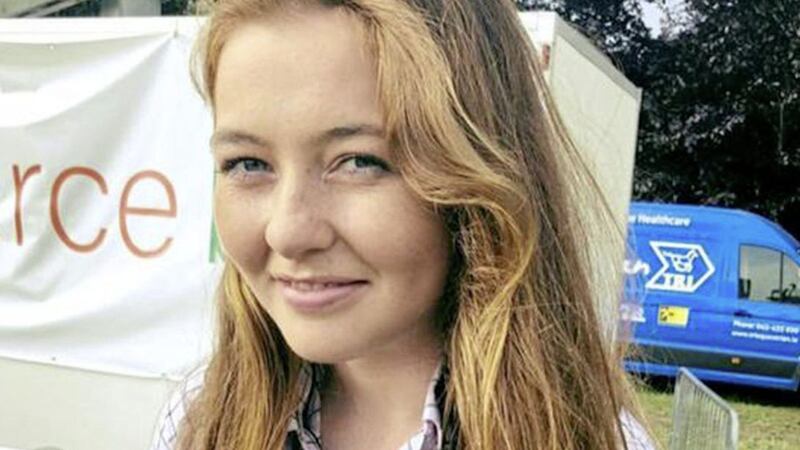
Midlands photographer bond revoked after more evidence found on phone, deputies say

Midlands photographer bond revoked after more evidence found on phone, deputies say

Image: Gregg Martin
Courtesy: Alvin S. Glenn Detention Center

Image: Gregg Martin
Courtesy: Alvin S. Glenn Detention Center

RICHLAND COUNTY, S.C. (WOLO)– A Midlands photographer‘s bond has been revoked on Monday, says RCSD.

The Richland County Sheriff’s Department says on Monday, April 15, there was a hearing in regard to Gregg Martin’s bond which led to the bond revoke.

Investigators say following Martin’s arrest on charges in Gwinnett County, Georgia, RCSD found evidence in his phone which allowed them to add more charges.

His previous charges were use of computer service to seduce, solicit, lure or entice child to commit illegal acts, electronically furnishing obscene material to minors, and obscene internet contact with a child.

Martin continues to be under investigation by the Richland County Sheriff’s Department.

A journey through the lens: Corky Lee’s enduring legacy in Asian American photography

A journey through the lens: Corky Lee’s enduring legacy in Asian American photography

By Samantha Pak
NORTHWEST ASIAN WEEKLY

imageA self-portrait of Corky Lee during his earlier days as a photojournalist. (Reprinted with permission from “Corky Lee’s Asian America: Fifty Years of Photographic Justice”)
” data-medium-file=”https://nwasianweekly.com/wp-content/uploads/2024/04/Corky-Lee-203×300.jpg” data-large-file=”https://nwasianweekly.com/wp-content/uploads/2024/04/Corky-Lee-694×1024.jpg” class=”wp-image-68706 lazy” src=”https://nwasianweekly.com/wp-content/uploads/2024/04/Corky-Lee-694×1024.jpg” alt width=”345″ height=”509″ data-sizes=”(max-width: 345px) 100vw, 345px” srcset=”https://nwasianweekly.com/wp-content/uploads/2024/04/Corky-Lee-694×1024.jpg 694w, https://nwasianweekly.com/wp-content/uploads/2024/04/Corky-Lee-203×300.jpg 203w, https://nwasianweekly.com/wp-content/uploads/2024/04/Corky-Lee.jpg 900w”>

A self-portrait of Corky Lee during his earlier days as a photojournalist. (Reprinted with permission from “Corky Lee’s Asian America: Fifty Years of Photographic Justice”)

For five decades, Corky Lee (1947-2021) dedicated his life to what he described as photographic justice for the Asian American and Pacific Islander (AAPI) community.

Starting out in social services, Lee shot his first photos (on a borrowed camera) in 1970 while working at Two Bridges Neighborhood Council just east of Chinatown in New York, where BIPOC residents lived in run-down tenements. His work included organizing rent strikes, and his photos were used to educate and document residents’ living conditions.

Before long, Lee could be seen at crime scenes, protests, demonstrations, and more, documenting AAPI history—which now could be seen in a new book, “Corky Lee’s Asian America: Fifty Years of Photographic Justice.” The book is a continuous record of the Asian American movement over five decades, featuring about 250 photos, distilled from the hundreds of thousands that Lee took throughout his career, right up until his death on Jan. 27, 2021, from COVID-19.

“This book we edited is a rare documentation of Asian American communities and social justice movements over this long arc of 50 years,” co-editor Mae Ngai said.

The book was published on April 9, and to celebrate its release, Lee’s estate and Asian American Journalists Association (AAJA) Seattle are teaming up to host an event from 6-7:30 p.m. on April 26 at the Wing Luke Museum. The event will include a conversation between Ngai and AAJA Seattle board member Celia Wu. There will also be a slideshow featuring Lee’s work, as well as the opportunity for audience members to ask questions, a book signing, and copies available for purchase.

“I think it’s going to be a really happy occasion,” said Ngai, who had met Lee in the early 1970s in New York’s Chinatown, just as the Asian American movement was beginning to explode and they were both radical activists looking to make “good trouble.”

imageA candlelight vigil in New York’s Central Park on Sept. 15, 2001.

Reprinted with permission from “Corky Lee’s Asian America: Fifty Years of Photographic Justice”

” data-medium-file=”https://nwasianweekly.com/wp-content/uploads/2024/04/A-candlelight-vigil-300×200.jpg” data-large-file=”https://nwasianweekly.com/wp-content/uploads/2024/04/A-candlelight-vigil.jpg” class=”size-full wp-image-68707 lazy” src=”https://nwasianweekly.com/wp-content/uploads/2024/04/A-candlelight-vigil.jpg” alt width=”1024″ height=”681″ data-sizes=”(max-width: 1024px) 100vw, 1024px” srcset=”https://nwasianweekly.com/wp-content/uploads/2024/04/A-candlelight-vigil.jpg 1024w, https://nwasianweekly.com/wp-content/uploads/2024/04/A-candlelight-vigil-300×200.jpg 300w”>

A candlelight vigil in New York’s Central Park on Sept. 15, 2001. (Reprinted with permission from “Corky Lee’s Asian America: Fifty Years of Photographic Justice”)

Undisputed, unmatched, everywhere

According to the book, Lee’s business card declared him the “Undisputed, Unofficial Asian American Photographer Laureate,” as he aimed to break stereotypes that AAPIs are docile, passive, and foreign in this country. He told stories through his photos and Ngai said he saw storytelling as a way to change the historical narrative—specifically, one that had long erased Asian Americans. From community events of all sizes, to people going about their everyday lives, Lee’s work showcases both the “Asian” and “American” sides of the community.

“Corky’s dedication to telling our stories was unmatched, and the book shows how prolific, and diverse, his output was,” Wu said. “Corky was able to create this powerful body of work because he was everywhere.”

This was how Wu’s younger self ended up in the book. She had attended a protest against Michael Cimino’s film, “Year of the Dragon,” in 1985 in New York and “naturally, Corky was there to capture the moment.”

AAPIs’ place in American history

Throughout his career, Lee’s photos documented important moments and movements in AAPI history. When community members in New York gathered to protest the arrest and beating of Chinese American Peter Yew, Lee was there on May 12, 1975, with his camera, to photograph another Chinese American man being dragged away by law enforcement. It was one of Lee’s most well-known photos and was published that same day in the New York Post’s afternoon edition.

imageTwo women protesting against police brutality in 1975. The sign in Chinese read, “Down with racist oppression/Justice for Peter Yew now/Unite and fight to victory.”

Reprinted with permission from “Corky Lee’s Asian America: Fifty Years of Photographic Justice”

” data-medium-file=”https://nwasianweekly.com/wp-content/uploads/2024/04/Two-women-protesting-against-police-brutality-200×300.jpg” data-large-file=”https://nwasianweekly.com/wp-content/uploads/2024/04/Two-women-protesting-against-police-brutality-683×1024.jpg” class=” wp-image-68708 lazy” src=”https://nwasianweekly.com/wp-content/uploads/2024/04/Two-women-protesting-against-police-brutality-683×1024.jpg” alt width=”624″ height=”936″ data-sizes=”(max-width: 624px) 100vw, 624px” srcset=”https://nwasianweekly.com/wp-content/uploads/2024/04/Two-women-protesting-against-police-brutality-683×1024.jpg 683w, https://nwasianweekly.com/wp-content/uploads/2024/04/Two-women-protesting-against-police-brutality-200×300.jpg 200w, https://nwasianweekly.com/wp-content/uploads/2024/04/Two-women-protesting-against-police-brutality-600×900.jpg 600w, https://nwasianweekly.com/wp-content/uploads/2024/04/Two-women-protesting-against-police-brutality.jpg 900w”>

Two women protesting against police brutality in 1975. The sign in Chinese read, “Down with racist oppression/Justice for Peter Yew now/Unite and fight to victory.” (Reprinted with permission from “Corky Lee’s Asian America: Fifty Years of Photographic Justice”)

In 2014, Lee carried out his quintessential act of photographic justice.

He brought together about 250 Asian Americans at Golden Spike National Historical Park in Promontory Summit, Utah. The site marks where the transcontinental railroad was completed in the 19th Century. And while Chinese workers played a major role in building the western half of the railroad, they were intentionally excluded from the 1869 original photo marking the occasion because of anti-Chinese racism at the time. On the 145th anniversary of the railroad’s completion, Lee reenacted the original photo with Asian Americans—including direct descendants of railroad workers—to record their role in one of the greatest technological achievements at the time.

And while Lee occasionally sold his photos as a freelancer, his work was mostly a labor of love, which he did gratis, Ngai said. For his day job, he worked as an account executive at a minority-owned print shop, where he worked from 1983-2011.

“Although Corky never was paid as a photojournalist, he was the ‘undisputed’ documenter of the Asian American movement from the 1970s up until his untimely death in 2021,” Wu said, adding that Lee was also one of the founders of the AAJA New York chapter and is listed in the national organization’s honor roll as a pioneer in photojournalism.

Lee photographed the AAPI community until the very end, capturing New York’s Chinatown through the early days of COVID-19. Taking portraits of people standing in front of their favorite restaurants, which had been closed at the time, as well as people protesting the rising violence against the AAPI community, he wanted to show how AAPIs were victims of the pandemic, not the cause of it, Ngai said.

“That was his last work,” she said.

imageSome of the last photographs Corky Lee took were of Asian Americans in 2020, protesting against the racist attacks during the coronavirus pandemic.

Reprinted with permission from “Corky Lee’s Asian America: Fifty Years of Photographic Justice”

” data-medium-file=”https://nwasianweekly.com/wp-content/uploads/2024/04/last-photographs-Corky-Lee-took-300×200.jpg” data-large-file=”https://nwasianweekly.com/wp-content/uploads/2024/04/last-photographs-Corky-Lee-took.jpg” class=”size-full wp-image-68709 lazy” src=”https://nwasianweekly.com/wp-content/uploads/2024/04/last-photographs-Corky-Lee-took.jpg” alt width=”1024″ height=”683″ data-sizes=”(max-width: 1024px) 100vw, 1024px” srcset=”https://nwasianweekly.com/wp-content/uploads/2024/04/last-photographs-Corky-Lee-took.jpg 1024w, https://nwasianweekly.com/wp-content/uploads/2024/04/last-photographs-Corky-Lee-took-300×200.jpg 300w”>

Some of the last photographs Corky Lee took were of Asian Americans in 2020, protesting against the racist attacks during the coronavirus pandemic. (Reprinted with permission from “Corky Lee’s Asian America: Fifty Years of Photographic Justice”)

How Angela Kelly Helps Her Clients Shine

How Angela Kelly Helps Her Clients Shine


Angela Kelly

The April 2024 edition of our sister publication South Sound Business is the Women Who Lead issue. The fourth feature is below; read the previous one here


Angela Kelly, founder of Kelly Design and Photography, loves to help companies shine. As a business owner and true artistic polymath, she now enjoys the freedom to choose her hours, workplace, and projects — but developing that flexibility took time.

In 2018, Kelly was working in a print shop, a restaurant, and as a freelance graphic designer. She knew she wanted a career in design and photography but didn’t know how to break into the industry or find a full-time position.

That all changed when Kelly landed her first major freelance project with Rainier Valley Hemp Co. She developed assets for the business that included a promotional video, photo shoot, packaging design, and Pacific Northwest-inspired branded merch. The project put her on the map.

“When that came my way, I began thinking that I should start taking this more seriously,” she told South Sound Business.

After the positive reception to her work with Rainier Valley Hemp, Kelly decided to take a leap of faith. Knowing she’d need to dedicate more time to the launch of her business, she left her other two jobs, and with them, the security of a consistent paycheck.

“Starting your own business can feel like a risky roller coaster,” Kelly said. “When you cut off other dependable sources of income, you have to tackle obstacles as they arise and stay flexible.”

Despite the financial uncertainty inherent in entrepreneurship, Kelly remained steadfast in her dream of owning a company. In early 2019, she finally received her business license for Kelly Design and Photography.

Since then, she has helped multiple Olympia-based, women-owned businesses increase sales and develop their brand. Notable clients include the Fog & Fern Coffee House; Artväna, an acrylic painting club for adults; and Sucreabeille, an organic perfumery. She also has worked as an outside consultant with the city of Olympia’s marketing team.

Kelly’s future endeavors include growing her client base and expanding into a brick-and-mortar studio.

“I want to build a team of five to 10 other social-media experts, photographers, videographers, and graphic designers, and create an environment where they can pursue their professional goals and continue developing their craft,” she said.

Kelly believes that curiosity and a “better together” mindset are essential to producing high-quality, impactful assets.

“In school, you have this social aspect to learning. You’re surrounded by peers and can bounce ideas off each other,” she said. “I want to bring that collaboration into the professional space and develop opportunities to keep (my team) at the top of their game.”

For young entrepreneurs, Kelly encourages staying true to oneself. “When you’re starting out, focus on the things that make you uniquely you rather than transforming into your mind’s version of a ‘business owner,’” she said. “Don’t be afraid to let your weird show.”


Q&A 

What did you want to be when you were a kid?

A pilot. At 17, I even managed to take one solo flight from Olympia to Kelso.

How do you unplug?

Quality time with friends

What book are you reading?

I’m almost through a book of old Japanese folk tales. I enjoy fiction that teaches me something about culture, art, or history.

What/who motivates you?

I’m really motivated by “the grand reveal.” That moment of unveiling the logo, packaging design, or image I’ve been laboring over, and seeing my client’s reaction (not to brag, but I’ve pulled a happy tear or two).

‘Now It’s My Turn Pt. II’ gathers community for a cause under shared interest of photography

‘Now It’s My Turn Pt. II’ gathers community for a cause under shared interest of photography

Get the latest Syracuse news delivered right to your inbox.
Subscribe to our newsletter here.

In photographer Chelsea Reeves’ art gallery, a white basketball enshrined in a clear display case symbolized the popular saying, “You miss 100% of the shots you don’t take.” White floral garlands embellished the artwork’s platform. With this piece, Reeves hopes to inspire people to give themselves their own flowers.

“There are many people who say they aspire to do something, there are few people who actually do it. I wanted to show the importance of creating our own opportunities for ourselves and not waiting for it to happen to us,” Reeves said to the crowd at the gallery.

On Sunday, Reeves organized and hosted her second art gallery, “Now It’s My Turn Part II,” in Syracuse University’s Shaffer Art Building. Over 80 Syracuse community members visited her gallery highlighting SU’s basketball teams, her time at CultureCon, her time spent in New York City and Syracuse events including this year’s Martin Luther King Jr. celebration and Pheelz and Leon Thomas III’s performance in Goldstein Auditorium.

“I loved how the gallery brought students from different walks of campus together under the common interest in photography. The audience was super engaged and clearly admired the variation in the art selection,” said Adam Baltaxe, one of the gallery’s organizers.

Last year in Shaffer, Reeves hosted her first gallery, “Now It’s My Turn,” which featured images of student models and different campus events. SU alumna and artist Adore Ellis, known for her work at Levi Strauss & Co., spray-painted shirts that were distributed to attendees.

This year, with the hopes of bringing the Syracuse community together to engage in philanthropy, Reeves partnered with Save A Child’s Heart (SACH) foundation, a new organization on SU’s campus. SACH has provided life-saving treatment to more than 6,600 children worldwide, particularly from regions like the Palestinian Authority, Gaza, Iraq, Morocco and Africa.

“The highlight of my experience was the incredible support from the Black community,” said SACH founder Ryann Washington. “It was amazing to see everyone come together to support (Reeves) and contribute to a great cause.”

Washington is a junior majoring in biology and forensic science. After spending time with children and witnessing SACH’s life-changing work during a visit to the organization’s base in Tel Aviv, Israel, Washington said she and a group of friends wanted to raise awareness and funds when they returned to campus.

Gallery attendees placed bids starting at $15 for some of Reeves’ work up for auction. Fifteen percent of all proceeds will be donated to SACH. Senior and fellow organizer Maram Ahmed said the gallery was much bigger than she expected. She said the highlight of her experience was pulling back the tape to reveal the finished look of the gallery sign and seeing everyone show love to her work.

“Getting to see the variety of images that Reeves captured, she has a special way of seeing the world and I felt that through her work,” senior Sonia Issa said.

Disclaimer: Chelsea Reeves is a contributing photographer for The Daily Orange. She did not influence the editorial content of this story.

membership_button_new-10

Ananya Panday turns Karan Johar’s worthy muse in a photography attempt

Ananya Panday turns Karan Johar’s worthy muse in a photography attempt

Ananya Panday turns Karan Johar's worthy muse in a photography attempt


Ananya Panday and Karan Johar share an adorable bond. Taking to Instagram, the director posted a photo of Panday that he clicked as a part of his photography attempt.
Check out the photo here:

Ananya Panday Karan Johar

In the stunning photo, Panday looks gorgeous in a long beige body-con dress. She is posing beside a decoration of balloons and teddy bears. The color combination of the photo is aesthetically pleasing. “My attempt at photography! @ananyapanday as a worthy muse!” Johar’s caption read.

Ananya Panday Karan Johar

The actress reacted to the story with an adorable reply. “@karanjohar hehe love you,” she wrote.

The Kho Gaye Hum Kahan actress made her Bollywood debut with Dharma Productions’ Student of the Year 2. She has also been invited to Karan Johar’s Koffee with Karan many times with several leading actresses of the industry.

Stop the car! Capturing sunset silhouettes

Stop the car! Capturing sunset silhouettes

I can’t tell you how many times I’ve chastised myself for failing to stop when a photo opportunity presents itself while driving. I’m trying to get better about that and here’s an example where I pulled over for a sunset photo… and glad I did.

Driving

Looking in the rear view mirror I see a blast of color with magnificent clouds. Bummer! As I’m traveling at 75 MPH. Guess I’m going to miss it. Wait a minute! There’s a pull off, and I’m going to take it! Even though the peak of color has passed it’s OK. People wouldn’t believe the what I just saw anyway! Color is still soft and magical and the view ain’t half bad. Grab the camera from the trunk and get to work.

sunset silhouette photos
Sunset silhouette with a vertical composition.

The clouds are nicely layered with multiple colors. In the foreground I am blessed with trees in silhouette against the blue mountains. Having a relatively long lens also allowed to isolate a single tree with a great shape above the line. Aha! A subject to with which to work in front of the pastel colored sky. That’ll work!

Work the composition

Once you’ve discovered a scene it’s time to get the most from the moment. The cloud color fades pretty quick so there is a need to work quickly. When you find a decent subject make sure you try different compositions. Horizontal, vertical and panorama are all possibilities. I choose to share a horizontal and vertical composition with you in this article. One note. Try to keep the horizon level when making landscape images. If your camera has one activate the level to save yourself time in post production.

sunset silhouette photos
Horizontal composition. Always watch for a straight horizon. It’s easy to tilt a bit while you are making the capture. Many cameras today have a built in level. Activating it can be a great help. If you miss the leveling you can fix that in post production.

Exposure

When photographing sunsets in order to get deep rich and vibrant color there is a need to underexpose. When you underexpose and you are working a silhouette subject it can block up all the detail. I prefer to overexpose the scene just a bit and bring the sky exposure down in post production. When working this way there are a lot more options for the final look of the image. If you crush your blacks on capture when you try to pull detail out of the shadows you end up with noise galore. You can always take an image that has been exposed to the right and deepen your shadows for best results. Learn more about ETTR technique here. And, here.

I’ll need to stay on this kick of stopping when a photo event reveals itself. Then, I can stop chastising myself for missing them. Back behind the wheel and I can’t wait to get home to process this find!

Yours in Creative Photography,

Bob

Photography project elevates voices of Belfast’s Market community in face of trauma and addiction

Photography project elevates voices of Belfast’s Market community in face of trauma and addiction

In Belfast’s Market community, a photography project is using the power of art to address the deep-rooted issues of trauma, mental health, and substance abuse.

A People’s Tapestry, a joint effort between Queen’s Communities and Place (QCAP), Market Development Association (MDA), and residents, has culminated in an exhibition highlighting the community’s resilience and determination.

Lucy Flynn (17), one of the young participants, spoke about the emotional impact of the sessions: “It was just building up week by week. And building your confidence slowly but surely. And at the very end, we just had so much trust in each other. Yeah. It just grew everyone’s confidence.”

She added: “I just think that it’s good that we’ve started, that all the people in the Market are starting to go to these groups. And that you’re starting to raise more of an awareness that these groups are happening. And they’re a positive thing for the Market. Instead of it being scary that we’re going to be talking about all these bad things. And that can seem daunting to some people.”

Another participant Molly O’Reilly, shared the story behind her chosen photographs: “I had picked a photo of my uncle, two brothers. me and my sister. Because it just meant so much to me that these are actually the people who got me through so much, helped me and I’ve just spent my whole life with them really.”

She continued: “My other photo was of my mummy, and it was because we had lost her over a year and a half ago. And it was the trauma and the grief that our family has been through after we had lost my mummy. It wasn’t good. It wasn’t nice. And going out with our group and talking about it and actually having people to speak to about the grief that I was feeling. It was heart-warming to be honest.”

From left to right - Patick McNally (QCAP Local Programme Support), Lucy Flynn (Participant), Áine Brady (QCAP Local Coordinator/MDA Chairwoman), Tracey Conlon (Participant), John Bassett (Participant), Molly O'Reilly (Participant) and Dr Karen McGuigan (QCAP Dimension Lead for Community Health and Wellbeing, and Senior Research Fellow)
From left to right – Patick McNally (QCAP Local Programme Support), Lucy Flynn (Participant), Áine Brady (QCAP Local Coordinator/MDA Chairwoman), Tracey Conlon (Participant), John Bassett (Participant), Molly O’Reilly (Participant) and Dr Karen McGuigan (QCAP Dimension Lead for Community Health and Wellbeing, and Senior Research Fellow)

The exhibition, featuring interwoven photographs and narratives, chronicles the origins, evolution, and challenges of the Market community.

Participants, ranging from teenagers to adults, attended workshops facilitated by Matt Faris of Funky Buddha Productions, where they shared their experiences through photography, storytelling, and poetry.

Áine Brady, the Community Innovation Practitioner from QCAP and Chairwoman of the MDA, emphasised the significance of the project: “I think art rather than providing a distraction actually allows people to confront their issues, but in a way that’s very safe and is at their own pace and tempo and that’s very much what we’ve seen happening in our group.

“It also allows for voices that normally wouldn’t be heard to be elevated. For example you would very rarely hear working class voices in arts buildings and theatre spaces and exhibition spaces.”

“The voices of Market residents are central here for the next couple of weeks via this exhibition so I think art has really allowed to elevate our people’s voices.”


The project is part of a wider initiative to address the growing substance use problem in the area.

Queen’s University Belfast is one of five UK universities awarded the Community Innovation Practitioner pilot, supporting collaboration between academia and local communities to tackle shared challenges.

“A People’s Tapestry,” a collaborative photo exhibition between Queen’s Communities and Place (QCAP), Market Development Association (MDA), and the local residents,.

Dr Karen McGuigan, QCAP’s Community Health and Wellbeing Lead, highlighted the importance of arts-based methods in facilitating conversations that traditional scientific methods may not: “We’ve been very clear in terms of the use of the arts-based methods and what they can bring to communities and how that opens conversations that maybe traditional scientific methods don’t.

“In this there’s a framework there from which everything has developed and I think us being able to reflect the creative aspects within that has been really important.”

“There’s a good bit of learning not just for communities and that can be shared but also for academic audiences and policymakers beyond that as well.”

Max Naylor Rambles Through Mystical Woodlands in Ethereal Oil and Ink Paintings

Max Naylor Rambles Through Mystical Woodlands in Ethereal Oil and Ink Paintings

“Storm Surge” (2023), ink on paper, 51 x 66 centimeters. All images © Max Naylor, shared with permission

Through ancient wooded glens and along rugged sea coasts, Max Naylor invites us to wander along shady passageways, squeeze between lichen-cloaked boulders, and inhale the fragrance of wildflowers. His detailed landscapes in ink and oil paint (previously) capture petals, branches, waves, and an array of botanicals in dreamlike scenes that teeter elegantly on the edge of reality.

Time of day is often indeterminate in Naylor’s paintings, where blue may suggest nighttime or just the shade cast below the cover of trees. Sometimes the scenes entice us into misty distances or a hilly horizon beyond. The artist employs atmospheric light and repeating tree trunks or flowers that verge on pure pattern, playing with our perception of presence and depth by drawing attention to all details at once.

If you’re in Bristol, stop by Spike Island Open Studios between May 3 and 5 to see Naylor’s work in person alongside more than 70 other artists. See more on the artist’s website and Instagram.


an oil and ink painting of a forest with a glen of wildflowers and fungus on trees in the foreground

“Woodland Glade” (2024), ink on paper, 51 x 66 centimeters

an oil and ink painting of a large erratic boulder covered with lichen and moss, with flowers flowing underneath it

“Erratic Boulder (after the deluge)” (2024), oil and ink on linen, 160 x 180 centimeters

an oil and ink painting of a yellow wooded scene with lots of boulders covered in lichen spots

“Early Glow” (2024), ink on paper, 51 x 66 centimeters

an oil and ink painting in a blue palette featuring trees and patterns of snowdrops on the forest floor

“Blue Landscape with Snowdrops” (2024), ink on paper, 51 x 66 centimeters

an oil painting of a large erratic boulder in a meadow with lichen and moss all over it

“Nestling” (2024), oil on linen, 75 x 95 centimeters

an oil and ink painting of ab abstract landscape with lots of foliage

“Wild Wild Life” (2024), ink on paper, 51 x 66 centimeters

an oil and ink painting of a rocky landscape with lots of lichen and moss on the boulders and a small waterfall tucked in the brush

“Under the Gunnera” (2023), ink on paper, 51 x 66 centimeters

an oil and ink painting of a coastline with trees and a cloudy sky

“Ragged Coast with Sea Cabbage” (2023), ink on paper, 51 x 66 centimeters

Do stories and artists like this matter to you? Become a Colossal Member today and support independent arts publishing for as little as $5 per month. The article Max Naylor Rambles Through Mystical Woodlands in Ethereal Oil and Ink Paintings appeared first on Colossal.