About

Posts by :

Buckley was there: the FSU student photographer who captured Tallahassee’s turbulent ‘60s & ‘70s

Buckley was there: the FSU student photographer who captured Tallahassee’s turbulent ‘60s & ‘70s

TALLAHASSEE, Fla. (WCTV) – Name a noteworthy moment in Tallahassee during the Vietnam War era, and there’s a good chance FSU physics major John Buckley was there, camera in hand.

Buckley had political activism on the mind throughout his college years, using 35mm film to tell a striking story.

View looking toward peace officers on the steps of the Capitol during the Free Sandford rally...
View looking toward peace officers on the steps of the Capitol during the Free Sandford rally by FSU students, 1969.(John Buckley / Florida Memory)

In one photo, FSU students rally at the Capitol steps, protesting over an international student’s arrest for disorderly conduct.

In another, legendary civil rights icon C.K. Steele speaks to a Frenchtown crowd, frustrated over the arrest of a man accused of firebombing a business.

Reverend C.K. Steele speaking to crowd during the 'Free Bill Johnson' rally, 1971.
Reverend C.K. Steele speaking to crowd during the ‘Free Bill Johnson’ rally, 1971.(John Buckley / Florida Memory)

The angst of an era captured on film, and saved for posterity by the State Archives.

Adam Watson is a photographic archivist at the archives.

“He was the photographer that took action, he showed up,” Watson said.

Watson invited WCTV into the photographic collection room at the State Archives, sifting through more than 5,000 images.

“You’re kind of right in the moment with him,” Watson said.

John Charles Buckley was born in 1945, spending his childhood years in Panama City Beach.

The Buckley family gathered around a dinner table in Panama City Beach. John is closest to the...
The Buckley family gathered around a dinner table in Panama City Beach. John is closest to the camera.(Michelle Holder)

His youngest sister, Michelle Holder, said John was independent from the start.

“He was the oldest of five,” she said. “John worked at a grocery store. And he walked and it wasn’t any small task back then- he walked a long, long way.”

Buckley made his way to Tallahassee, enrolling at Florida State University to study physics. He found himself on a college campus at a time when America – and the world- seemed at a breaking point.

“He cared so much about a lot of things, injustice mostly,” Holder said.

At some point, Buckley picked up a camera, and made it his mission to be in the right place at the right time.

“It almost seemed like he couldn’t help himself,” Watson said. “He had to document it. And that’s what is so great about that collection for us, to be able to see, and for the future to be able to see what those times were like.”

In 1971, controversy swirled on FSU’s campus. A student activist, known as ‘Radical’ Jack Lieberman, taught a noncredit course at FSU’s Center for Participant Education on how to start a revolution in America.

Scene from the CPE trial in the FSU Moore Auditorium - Tallahassee, Florida.
Scene from the CPE trial in the FSU Moore Auditorium – Tallahassee, Florida.(John Buckley Florida Memory)

Buckley was there as an on-campus hearing ended with Lieberman’s expulsion. Civil Rights Attorney Kent Spriggs was captured standing in the center of one photo showcasing the trial.

“Gives you a real window into what the time was like at that time,” Spriggs told WCTV.

Spriggs also represented two of the Quincy Five, another flashpoint moment for the Big Bend.

When five Gadsden County men were falsely accused of killing law enforcement, Buckley was there as FSU students protested outside the student union.

”Everybody kind of understood that if there was some kind of interesting political thing going on that Buckley would be there and he would be shooting,” Spriggs said.

Watson said Buckley’s wife, Pat, mentioned the camera kept him sane in those years.

“He just carried the camera around with him everywhere,” Watson said.

And yet, as the years passed, Buckley moved on. He became a chemistry teacher in Quincy, later working for the State.

A photo of John Buckley later in life.
A photo of John Buckley later in life.(Michelle Holder)

His sister said he rarely if ever took any photos again.

“He wouldn’t bring it to events because he was sick of it, I guess. I don’t know,” she said.

Thousands of photos from just a few whirlwind years in Tallahassee were collecting dust.

That is until Buckley received a terminal cancer diagnosis. His wife and friends pushed for Buckley to donate his collection.

Watson visited his home in 2008. He was one of the last people to hear Buckley’s life story.

“We sat for awhile just quietly,” Watson said. “He just sort of looked out. I was trying to imagine what was going through his head.”

It was a chance to reflect on a life.

“We got the collection in October 2008, and he passed away by December of that year,” Watson said.

Buckley’s legacy now lives on in the form of thousands of photos. A true Florida Memory.

Visit the John Buckley collection online at Florida Memory, the digital home of the archives. The website hosts just a fraction of the full collection, available for viewing by request at the archives.

To stay up to date on all the latest news as it develops, follow WCTV on Facebook and X (Twitter).

Have a news tip or see an error that needs correction? Write us here. Please include the article’s headline in your message.

Keep up with all the biggest headlines on the WCTV News app. Click here to download it now.

50 Over 50 exhibit on Saturday celebrates women through portrait photography

50 Over 50 exhibit on Saturday celebrates women through portrait photography

SANTA BARBARA, Calif. – A special event happening this weekend will celebrate a special milestone among women.

“50 Over 50 Portrait Gallery” is an exhibition highlighting 50 remarkable women and their stories of resilience; their diverse experiences, accomplishments and, the journeys that brought them to their 50 year milestone.

The exhibit will showcase the work of award-winning Santa Barbara portrait photographer, Ashleigh Taylor.

“Society tends to tell women our best days are when we are young— that there is an expiration date—but that’s just not true and I‘ve seen that first hand in my clients,” said Taylor, via email.

Event organizers said it is not about being a mother or a wife, sister or daughter or, any other title or label. The exhibit is a stand-alone celebration of each individual woman.

A gala event will accompany the gallery exhibit, giving attendees the chance to meet some of the women featured.

The free event is Saturday, April 20 from 5:30 p.m. to 7:30 p.m. at 633 Chapala Street.

Glenn Baglo, longtime Vancouver Sun photographer, dead at 75

Glenn Baglo, longtime Vancouver Sun photographer, dead at 75

Glenn Baglo’s gruff exterior hid his artistic spirit, and mediocrity exasperated him. Pete McMartin pays tribute to longtime Vancouver Sun photographer Glenn Baglo, who died Wednesday at the age of 75.

Article content

On Wednesday night, Vancouver Sun photographer Glenn Baglo died in Lions Gate Hospital of idiopathic pulmonary fibrosis. He was 75.

Given the relative anonymity news photographers work under, most Sun readers will not recognize his name. This is a shame, because during his 42-year-long career at The Sun, Baglo won two National Newspaper Awards, a Jack Webster Award, and amassed a portfolio of photographs that made him, in my opinion, not just the best news photographer at The Vancouver Sun but the best in Canada.

Advertisement 2

Story continues below

This advertisement has not loaded yet, but your article continues below.

Article content

Article content

And while all of the above speaks to his considerable talent — talent which helped revolutionize photo journalism in this country — it says nothing about Baglo himself, which is the real oversight since, well, there was no one like him. He was that rare person I was lucky enough to meet in my working life that had — and this seems the most appropriate word — texture.


See a gallery of Glenn Baglo’s photographs from over the years.


He was unapologetically rough-edged. He was pathologically contrarian. He chain-smoked, preferred beer to wine, and his favourite nouns and verbs were profanities he used liberally to fulminate on the idiocy of his editors, the public at large and, for that matter, me. Mediocrity exasperated him.


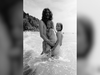
And yet when I think of him, he’s always laughing. He liked a party. And under that gruff exterior hid an artist. Consider, for example, his 1971 portrait of a family at Wreck Beach. Baglo won his second National Newspaper Award for it.

There had been plenty of photos in The Sun of nude sunbathers at Wreck Beach — all of them discreetly salacious — but the nudity in Baglo’s photo was anything but. It was of a mother, father and child standing in the surf, with the child huddled in a protective embrace between her parents. Baglo had waded out into the water to ask them to pose, and he waited until a spray of water, as he said, “hid the naughty bits.” The result was a photo that not only epitomized the popular image of Vancouver at the time — a Lotus Land full of hippies — but in that one singular moment captured a timeless and lyrical portrait of family.

Article content

Advertisement 3

Story continues below

This advertisement has not loaded yet, but your article continues below.

Article content

wreck beach
Vancouver Sun photographer Glenn Baglo won a National Newspaper Award in 1971 for this photograph of a nude family at Wreck Beach. Photo by GLENN BAGLO /PNG

Capturing those singular moments was central to Baglo’s talent. One grisly example came in 1997, when a Mission man named Doug Holtam murdered his pregnant wife and six-year-old daughter, and nearly beat his eight-year-old son to death. Holtam had started an affair with a younger woman and wanted to be rid of his family. Baglo and Sun reporter Lori Culbert were assigned to cover Holtam’s first court appearance, and after doing so, they — alone among the Vancouver media — drove out to Holtam’s house in Mission. The house stood at the end of a long gated driveway, and when they arrived, Culbert, on a whim, phoned the house on her mobile phone. To her amazement, the woman who Holtam had started the affair with answered.

Culbert asked her if she could interview her — “to tell her side of the story,” Culbert said — and the woman agreed. “But no photographer,” the girlfriend said. This didn’t deter Baglo.

“Glenn set up his camera at the end of the long driveway,” Culbert said, “and gave me instructions — in his usual gruff, direct way — to have her walk me to the door and to NOT get in the way of his shot when I left the house. So, when the interview was over and she showed me out, I stood to the side of the door when I left the house as Glenn told me to, and he got the photo of her with a telephoto lens despite having no idea when we would come out, having just seconds to take it, and being so far away.”

Advertisement 4

Story continues below

This advertisement has not loaded yet, but your article continues below.

Article content

shannon goddard
Shannon Goddard, lover of Douglas John Holtam, is pictured in this archive photo. Photo by GLENN BAGLO /PNG

Culbert got her interview, Baglo, his photo, and they had a front-page scoop the kind of which journalists live for.

“He had endless patience for the perfect shot,” Culbert said, “and I loved going out on breaking news stories with him — even if it meant sitting in his smoky car!”

Like Culbert, I too loved going out on stories with Baglo, despite a rocky start to our relationship. I was a cub reporter just starting at The Sun, and I said I wanted a photo of the person I had been interviewing taken in such a way, and he replied that if I ever told him how to take a photograph again, he would “beat the s- — -” out of me. It was a lesson I took to heart.

One of our more memorable trips together came in 1980. Baglo and I had flown by prop plane into the huge Spatsizi Plateau Wilderness Park, 500 kilometres north of Smithers. It was among the most remote terrain in all of B.C., and we had been sent there by The Sun to cover Greenpeace’s attempt to stop the big-game hunting that had been allowed in the park.

glenn baglo
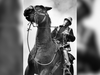
Oct. 17, 1980 — Vancouver Sun photographer Glenn Baglo on horseback at the Spatsizi Plateau. Photo by PETE MCMARTIN /PNG

We were in the park for five days, on horseback, along with a team of hunting guides and two wealthy German financiers who had paid a small fortune to hunt caribou. The Germans’ shooting skills were questionable at best, the horses we rode seemed intent on killing us, and Greenpeace was nowhere in sight. One caribou was killed, the carcass of which the celebratory Germans, much to our disgust, castrated. On the way back to our camp, I found a big whitened rack of caribou horns, tied them onto my saddle and decided I would take them back to Vancouver with me.

Advertisement 5

Story continues below

This advertisement has not loaded yet, but your article continues below.

Article content

But the real adventure for Baglo and I came on our flight out of the park. I sat in the front with the pilot and Baglo sat on a bearskin in the rear baggage area, and some time after we took off, clouds set in. The pilot took us lower and lower to get beneath the clouds, and at one point we were flying only a few hundred feet through a mountain valley. The clouds kept coming lower and lower, and the pilot, sounding genuinely concerned, was not encouraging, and Baglo and I thought, well, this is it, it’s been nice knowing you, they’ll never find our bodies in this terrain.

It was just then that the pilot spotted an old abandoned rail bed a few hundred feet below us. The rail bed was bare gravel, and just wide enough for the plane to land on, so the pilot took us down, landed, and Baglo and I, shaken, got out and took the longest pees in our lives. We sat there for a few hours in this mountain valley until the clouds lifted. We took off and made it to Smithers.

The first thing Baglo did at the airport was kick in the rear panel of our company car — “for The Sun almost killing us” — and I tore the car’s fabric headliner trying to fit the caribou horns into the back seat. Then we drove to what was considered the best restaurant in Smithers, which, at the time, was not saying much, and we ordered the most expensive steaks we could, drank two bottles of Baby Duck (because, the waitress told us, they had run out of red and white wine) and chased it with scotch. When we finished, we found a parking ticket on the car. It was the last straw for Baglo. He punched the parking meter as hard as he could, mangling his hand, which we then had to bandage up. The next day, I drove home but got a speeding ticket in Burns Lake for doing 80 km/h in a 50 km/h zone. Baglo took over driving and immediately got a speeding ticket, too, from the same cop, for doing 100 kph. I still marvel that we survived that trip. When we got back to the office, Baglo paid for the dent in the car and I paid for the torn headliner. The caribou horns are still in my backyard.

Advertisement 6

Story continues below

This advertisement has not loaded yet, but your article continues below.

Article content

One more story:

As a rookie reporter, I was sent out with Baglo to do an interview with a young boy for a reason I can no longer remember. I do remember how peeved I was doing it. I thought it was a puff piece, and when we got to the boy’s house I did a quick, cursory interview with him.

Then Baglo started taking photos. After a few shots, he went back to his car, took out a collapsible step ladder, set it up on the sidewalk in front of the boy’s house and asked the boy to pose on his bicycle. He took more photos from the top of the step ladder. Apparently dissatisfied, Baglo went back to his car and took out a light stand and set it up on the sidewalk. He took more photos. We were there for another half-hour. Watching him work, my impatience morphed into a kind of shame, and I came away thinking, there are no small stories, only lazy journalists, and that I had to up my game. Baglo taught me more about newspapering in that one afternoon than four years of journalism school had.

Last words:

When he was first hospitalized, he and I emailed each other, and the news he was getting from his doctor was not good. He knew his time was limited. Of that, he wrote:

Advertisement 7

Story continues below

This advertisement has not loaded yet, but your article continues below.

Article content

“At least I wasn’t born in Gaza.”

Soon after that he emailed me what may have been the last photo he ever took.

It was a self portrait. He was in his hospital bed, unshaven and haggard, hooked up to oxygen, but looking oddly calm and, as always, defiant. He regarded the lens with a look that was neither smiling nor unsmiling, and his expression seemed to be informed by thoughts of eternality.

In the photo, he was wearing a cardboard bed pan on his head, and on it he had written “I. Jones.”

“Made a hat for my grandson’s Indiana Jones costume,” he wrote in his email to me, as only he could. Damn if I didn’t laugh out loud.

mcmartincharles@gmail.com

Article content

Comments

Join the Conversation

This Week in Flyers

RF vs EF Lenses: A Comprehensive Guide for Canon Photographers |

RF vs EF Lenses: A Comprehensive Guide for Canon Photographers |

Canon offers two primary lens options: the newer RF mount lenses and the older EF mount lenses. Understanding the differences and advantages of each system is essential for making informed decisions about your photography gear.

Coming to you from Josh Sattin, this informative video delves into the world of RF and EF lenses, exploring their compatibility, performance, and overall value. Sattin emphasizes the significance of considering factors like cost, availability, and adaptability when choosing between these two lens systems. He highlights the affordability and vast selection of EF lenses, which have been a staple for photographers and videographers for decades.

Sattin also discusses the versatility of EF lenses, particularly their ability to be used on various camera systems beyond Canon through adapters. He showcases several adapters, including options for Sony E-mount, L-mount, and Fujifilm X-mount cameras, demonstrating the potential to expand the use of your EF lenses across different platforms. This adaptability can be a significant advantage for photographers who own multiple camera systems or plan to upgrade in the future.

However, Sattin acknowledges potential drawbacks of using EF lenses with adapters, such as autofocus performance and stabilization issues, particularly with older models. He recommends opting for newer Canon L-series EF lenses or Sigma Art EF lenses for better compatibility and performance on RF mount cameras. Additionally, he emphasizes the superior autofocus, stabilization, and image quality offered by native RF lenses, especially when paired with the latest Canon mirrorless cameras.

Ultimately, the choice between RF and EF lenses depends on your individual needs and preferences as a photographer. If you prioritize affordability, versatility, and access to a wide range of lenses, EF lenses with adapters can be a compelling option. On the other hand, if you seek the best possible performance, image quality, and native compatibility with Canon’s latest mirrorless technology, investing in RF lenses may be the ideal choice. Check out the video above for the full rundown from Sattin.
 

Want a Stylish Photo With Your Pup? This NJ Photographer Specializes in Pet Portraits

Want a Stylish Photo With Your Pup? This NJ Photographer Specializes in Pet Portraits
Photographer Stephanie Blum poses for a self-portrait, with photogenic pup Jay, among colorful florals

Photographer Stephanie Blum poses for a self-portrait, along with photogenic pup Jay, who is being raised by Blum and her husband as a potential Seeing Eye guide dog. Photo: Courtesy of Stephanie Blum; hair and makeup by Ericka Medina; blossoms by Colly Flowers in Morristown

When Stephanie Blum spent her early years in fashion as director of merchandising for Calvin Klein’s design team, she didn’t foresee her future as a full-time photographer specializing in pet portraiture.

“I love this job because I always wanted to work with people and their animals,” Blum says. “Growing up, my family had a lot of rescue animals, so I’m comfortable around pets, and I know how to read a dog’s body language.”

She adds, “Pets are beloved family members, so clients like to include them in professional images to celebrate their intimate bond.” Blum also captures the likenesses of solo humans and other critters in her Mendham Borough studio.

Full services with Stephanie Blum Photography begin with an at-home consultation to meet adults, kids and pets in their own environment. “Understanding how my clients live helps me envision a creative concept that will represent their authentic style,” she says. “It’s also good for animals to meet me before they visit the studio.”

Clients choose Blum because she makes photo shoots stress free by suggesting what to wear, providing professional hair and makeup artists, and offering posing guidance.

After the shoot, it’s time for the big reveal. Images are immediately available for viewing, and clients can select from digital portraits, heirloom-quality photo albums, and framed wall-art options.

Blum usually works with canine clientele because, she explains, “cats are not always willing participants.” However, she would be happy to collaborate with cooperative kitties, as well as horses, birds, bunnies or reptiles.

Blum and hubby Michael Ansell have two pups of their own: 12-year-old Winnie and 11-year-old Benji. In 2023, the couple volunteered as foster parents in the Morristown-based Seeing Eye’s puppy-raising program. Last November, they brought home Jay, a 7-week-old black Labrador retriever, and they are teaching him socialization and good manners for one year.

“I wanted to give back to the community because I’m blessed with good vision,” says Blum. “Michael and I are delighted to raise Jay to one day serve a visually impaired person.”

She is also working on a “pet project” in her spare time. Later this year, Blum will release a coffee-table book that features her portraits of rescue dogs and their poignant backstories. Proceeds will benefit See Spot Rescued, a Jersey City nonprofit dog-rescue organization that re-homes lucky pooches.

Stephanie Blum Photography, 2-A Hilltop Road, Mendham; 732-598-1291.

Follow our home & style editor on Instagram (@susanbrierlybush).


No one knows New Jersey like we do. Sign up for one of our free newsletters here. Want a print magazine mailed to you? Purchase an issue from our online store.

With Few Glimmers of Hope, the World Press Photo Contest Documents War, Migration, and Devastation

With Few Glimmers of Hope, the World Press Photo Contest Documents War, Migration, and Devastation

“The Two Walls” by Alejandro Cegarra, The New York Times/Bloomberg. A migrant walks atop a freight train known as “The Beast.” Migrants and asylum seekers lacking the financial resources to pay a smuggler often resort to using cargo trains to reach the United States border. This mode of transportation is very dangerous; over the years, hundreds have fallen onto the tracks and have been killed or maimed. Piedras Negras, Mexico, October 8, 2023. All images courtesy of World Press Photos, shared with permission

From Israel’s ongoing assault leaving the people of Gaza in horrific destitution to a record-breaking surge of migrants at the U.S.-Mexico border, the last year has seen incredible devastation around the globe. The 2024 World Press Photo contest gathers a profound and illuminating collection of images that approach myriad crises with compassion and clarity.

This year’s competition garnered 61,062 entries from 3,851 photographers in 130 countries. The winning images include a striking black-and-white shot of a man mid-step as he perilously crosses from one moving train car to the next in Piedras Negras and a portrait of an Afghan woman resting on a couch amid the desolate mountain landscape at a refugee camp near the Pakistan-Afghanistan border.


a woman sleeps on a small patterned sofa with a red blanket amid a desolate mountain region

“Afghanistan on the Edge” by Ebrahim Noroozi, Associated Press. An Afghan refugee rests in the desert next to a camp near the Torkham Pakistan-Afghanistan border, in Torkham, Afghanistan, Friday, November 17, 2023. A huge number of Afghans refugees entered the Torkham border to return home hours before the expiration of a Pakistani government deadline for those who are in the country illegally to leave or face deportation.

One of the few hopeful submissions, Jaime Rojo’s “Saving the Monarchs,” looks up at innumerable butterflies fluttering among the trees of El Rosario sanctuary in Michoacán, Mexico. Due to encroaching industry and a changing climate, the insect population had been in sharp decline since the 1990s, although international efforts have reversed the downturn by more than 80 percent. “This beautiful yet powerful story—a symbol of unity in polarized times—offers a solutions-oriented perspective on environmental change and conservation,” a statement about the series says.

In 2023, 99 journalists and media workers died, about 75 percent of whom were killed in the Israel-Hamas war. It was one of the deadliest years on record, with 2024 already approaching that number. “Work, for a news photographer, can be a dangerous place,” the organization says. “Unlike other journalists, news photographers must be where the story is happening— which might be a war zone, a humanitarian disaster, or somewhere free and open media is not welcomed.” The collection, therefore, is also a stark reminder of the people behind the lens and the risks they take to share essential information. 

World Press Photo will bring the winning images to more than 20 cities in the coming months, and if you’re interested in diving deeper into the stories behind the shots, pick up the 2024 yearbook.


a woman walks through rubble that towers on both sides of her

“Israeli Airstrikes in Gaza” by Mustafa Hassouna, Anadolu Images. A resident of al-Zahra walks through the rubble of homes destroyed in Israeli airstrikes. The strikes hit around 25 apartment blocks in the university and residential neighborhood. At the time of writing, March 4, 2024, Israel’s attacks on the occupied Palestinian territories during the Israel-Hamas war had killed some 30,000 people and injured more than 70,000. Gaza City, Gaza, October 19, 2023.

a black and white photo of men hoisting up a shack and carrying it

“The Edge” by Zishaan A Latif. Bengali-speaking Hindus and Muslims help each other shift shops from the edge of the Brahmaputra river at the Tarabari ferry point. The shifting is done in anticipation of the erosion of land that occurs with each monsoon season, which is often devastating for residents as they are forced to constantly adapt to a changing landmass each year. Tarabari, Bahari constituency, Barpeta district, Lower Assam, India, June 15, 2023.

pink flowers float amid water in a green picket fence

“Kakhovka Dam: Flood in a War Zone” by Johanna Maria Fritz, Ostkreuz, for Die Zeit. A peony bush submerged in floodwater on an island in the Dnipro River. The city’s proximity to the frontline hampered rebuilding efforts. Kherson, Ukraine, June 7, 2023.

innumerable monarchs flying in the sky

“Saving the Monarchs” by Jaime Rojo for National Geographic. Butterflies stream through the trees in El Rosario, a sanctuary within the Monarch Butterfly Biosphere Reserve in Michoacán, Mexico. Migrating monarchs winter in the same oyamel fir groves that sheltered earlier generations.

women and children sit around a table playing a game with fiery smoke in the background

“Red Skies, Green Waters” by Adriana Loureiro Fernandez for The New York Times. Neighbors play Animal Lotto under a sky lit by one of the world’s largest gas flares. Punta de Mata, Venezuela, November 5, 2022.

a grandfather and child wade through shoulder height water

“Fighting, Not Sinking” by Eddie Jim, The Age/Sydney Morning Herald. Kioan Climate Emergency Declaration meetings on Kioa Island, Fiji. Kioa island resident Lotomau Fiafia and his grandson John, Lotomau was born on the island in 1952, he saw the changes of the shoreline in the past decades, picture of him standing in the water roughly where the shoreline used to be when he was young, and now its up to his chest. August 8, 2023.

a person wades through polluted foamy water

“Pollution in the Cileungsi River” by Arie Basuki. Residents catch fish on the Cileungsi River, which is polluted by factory waste at Curug Parigi, Bogor, on August 8, 2023. In the dry season, when other areas of the river experience drought, the Cileungsi River has now been polluted with toxic and dangerous industrial waste, which is pitch black, foamy, and smelly. As a result, the supply of clean water, the main water source that comes from the Cileungsi River in the Bekasi area, is disrupted.

crowds of people stand in an desolate field with a massive mining rig

“No Man’s Land” by Daniel Chatard. Police and RWE energy company security officers block activists belonging to the Ende Gelände action alliance, who have entered the Hambach open-pit mine. Kerpen, Germany, November 5, 2017.

Do stories and artists like this matter to you? Become a Colossal Member today and support independent arts publishing for as little as $5 per month. The article With Few Glimmers of Hope, the World Press Photo Contest Documents War, Migration, and Devastation appeared first on Colossal.