About

Posts by :

Walter Pfeiffer Joins Forces with Helmut Lang, Merging Iconic Phot…

Walter Pfeiffer Joins Forces with Helmut Lang, Merging Iconic Phot…
image

In an electrifying fusion of art and fashion, Swiss photographer Walter Pfeiffer, renowned for his captivating 1980s black and white imagery, has collaborated with the esteemed fashion house Helmut Lang. This partnership has birthed a unique collection that transposes Pfeiffer’s signature photographs onto a range of apparel and home decor, including T-shirts, pillows, and blankets. A noteworthy aspect of this collaboration is the commitment to philanthropy, with 15% of all profits being directed to charity. This blend of creativity and social responsibility marks a significant moment in both the art and fashion sectors.

Advertisment

A Glimpse into Pfeiffer’s Artistic Journey

Walter Pfeiffer’s journey into the realms of photography was not marked by conventional paths. Battling with trembled hands since childhood, Pfeiffer developed a distinctive use of flash in his photography to stabilize the images, imbuing them with a unique, summery warmth. His photographic narratives, often spotlighting young men in vibrant, dynamic scenes, traverse the delicate border between dreams and reality. These themes of first love, beauty, and a tantalizing energy resonate profoundly with viewers, reflecting Pfeiffer’s own explorations of identity and perception.

Despite initial skepticism from the art and fashion industries, Pfeiffer’s “simplistic” approach to capturing moments of uninhibited intimacy and lust has garnered a fervent following, particularly among millennials. His work, which spans over five decades, includes not only his iconic photography but also contributions to underground gay zines, marking him as a pivotal figure in both the art and LGBTQ+ communities. Through his lens, Pfeiffer has consistently sought to capture a raw, unpolished beauty, utilizing non-professional models to emphasize authenticity over perfection.

Advertisment

Helmut Lang’s Vision Meets Pfeiffer’s Aesthetic

The collaboration between Walter Pfeiffer and Helmut Lang is a testament to the seamless alignment of their aesthetic visions. Lang, known for his minimalist and deconstructive approach to fashion, finds a kindred spirit in Pfeiffer’s photography, with its focus on intimacy, energy, and a certain rawness of emotion. This partnership not only brings Pfeiffer’s work into a new light but also reiterates Lang’s dedication to integrating art within the fabric of fashion.

The collection, available both online and in stores, serves as a bridge between two influential creators, allowing fans and fashion aficionados alike to experience the convergence of their creative worlds. The inclusion of charity in this venture adds another layer of depth, showcasing a commitment to giving back and supporting causes through the power of art and fashion.

Advertisment

Legacy and Influence: Pfeiffer’s Enduring Impact

Walter Pfeiffer’s influence extends far beyond the confines of photography. His ability to capture fleeting moments of beauty, emotion, and uninhibited expression has inspired generations of photographers and artists. His work, characterized by a palpable sense of warmth and intimacy, challenges traditional notions of beauty and perfection, encouraging a more inclusive and diverse representation of humanity.

As this collection with Helmut Lang reaches audiences worldwide, it not only celebrates the storied career of Walter Pfeiffer but also introduces his visionary work to those who may be discovering it for the first time. This collaboration is a vivid reminder of the power of art to transcend boundaries, whether they be in fashion, photography, or the societal constructs that define us.

In a world where art and fashion continually intersect, the partnership between Walter Pfeiffer and Helmut Lang stands as a beacon of creativity, innovation, and social responsibility. By bringing together the timeless allure of Pfeiffer’s photography with the cutting-edge design of Helmut Lang, this collection not only pays homage to the past but also paves the way for the future of artistic collaboration.

Global Roundup: Greece LGBTQ+ Rights, Black Women Photography Book, Africa Queer Literature, Japan Women’s Maiden Names, Queer Indigenous Artists

Global Roundup: Greece LGBTQ+ Rights, Black Women Photography Book, Africa Queer Literature, Japan Women’s Maiden Names, Queer Indigenous Artists

Curated by FG Contributor Samiha Hossain

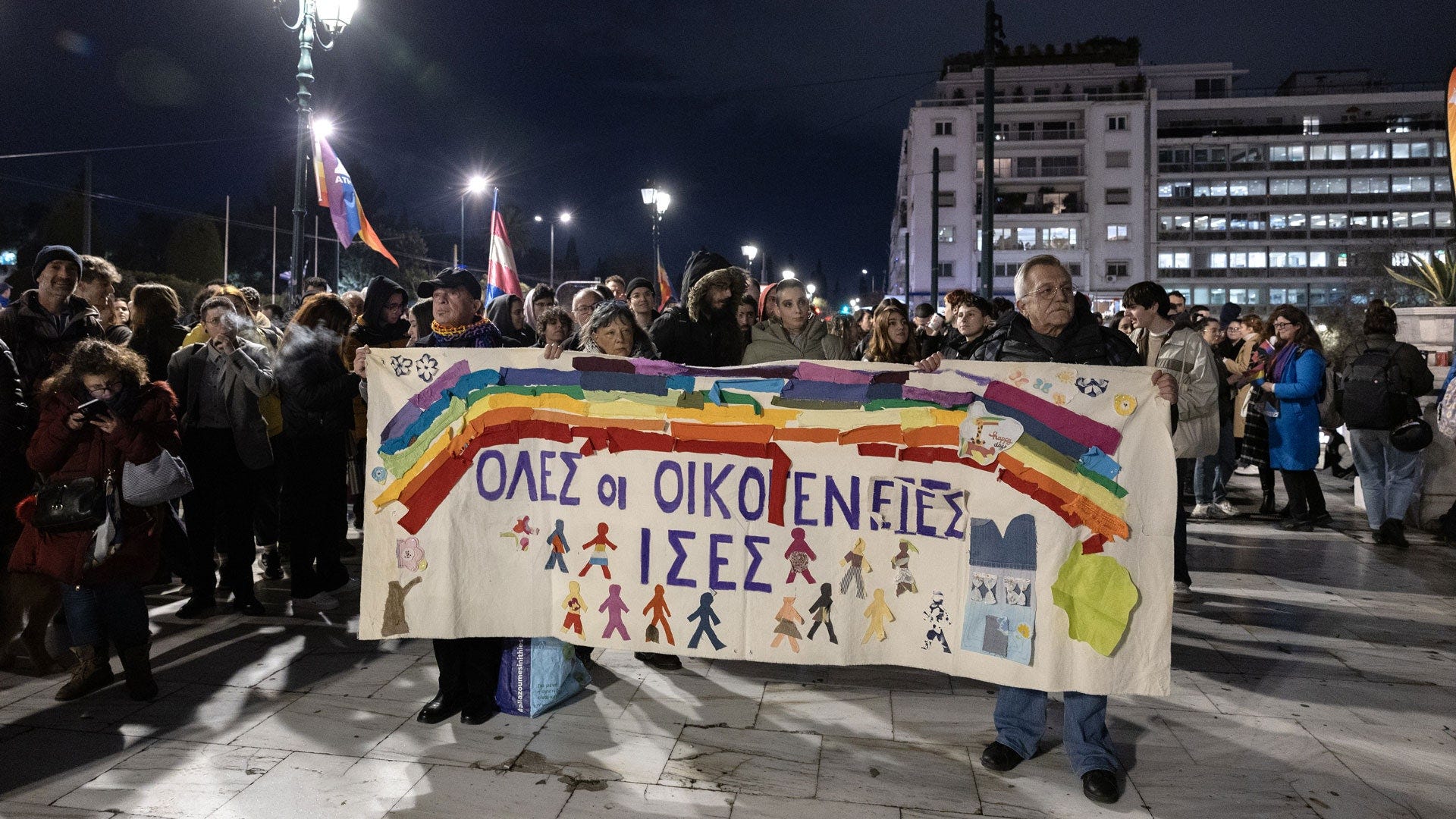
Protesters hold a banner reading “All families should be equal” during a rally in favor of the same-sex marriage bill in front of the parliament building in Syntagma Square in Athens, Greece, on Thursday, Feb. 15, 2024. Photographer: Yorgos Karahalis/Bloomberg via Getty Images

Lawmakers in Greece passed a landmark marriage equality law last week, making it the first Christian Orthodox nation to legalize same-sex marriage and LGBTQ+ adoption.

Although Greece passed laws establishing LGBTQ+ civil unions in 2008 and 2015, activists have contended for years that those laws do not grant full equality. The new law will allow same-sex couples to enjoy the same marriage rights as heterosexual couples, including adoption, which was previously banned for LGBTQ+ Greeks. But the law still leaves prohibitions in place that prevent LGBTQ+ couples from contracting with a surrogate mother, a reproductive option that’s currently only available for hetero couples and single women.

Openly gay president of the SYRIZA party, Stefanos Kasselakis, celebrated the vote by dancing to Katy Perry’s “Firework” at a gay bar in Gazi with his husband Tyler McBeth. The two have openly discussed their hopes to raise children together, whether by adoption or surrogacy.

Violence and intolerance against LGBTQ+ people, especially trans people of color, is still rampant in Greece, where Orthodox Christianity is legally recognized as the country’s “prevailing religion.” Greek law also does not recognize intersex people, restricting legal gender recognition only to “male” and “female.” The country’s first LGBTQ+ cabinet minister, Nicholas Yatromanolakis, left his post in the Mitsotakis administration last year after being appointed in 2021.

Refer a friend

Photographer Suki Dhanda’s “Untitled” from the 2002 series “Shopna,” features in Joy Gregory’s new book “Shining Lights.” Courtesy the artist/MACK

The genesis of photographer Joy Gregory’s latest project, “Shining Lights,” began 40 years ago, at a Valentine’s Day party in London. It was here that Joy, who was the first Black woman to study an MA in Photography at the Royal College of Art in London, first met activist and writer Araba Mercer. After the party and as they became friends, Mercer suggested the pair collaborate on a book about women’s photography.

They presented their plan for the book — comprising the photographs gathered by Gregory, and text by Mercer — to Sheba, a feminist publishing collective focused on Black women’s storytelling that Mercer was a key member of. Sheba was enthusiastic, but the cost of printing all the submitted photographs ultimately proved prohibitive. The idea then, for a book surveying the work of Black women’s photography in Britain in the 1980s and 1990s, lay dormant for several decades. But a 2019 talk Gregory gave at Autograph gallery in London about photographer Maxine Walker’s work sparked renewed interest in the contribution of women of color to photographic art during this period.

The result is “Shining Lights: Black Women Photographers in 1980s–90s Britain,” a new photography book edited by Gregory and co-published by Autograph and Mack. Divided into thematic chapters exploring community and activism, kinship and family ties, travel and landscape photography and more, “Shining Lights” features 57 photographers, capturing the rich breadth of work from this overlooked period and community.

The book includes work by well-known artists such as Walker, whose photographic practice centres on representations of Black womanhood, surrealist artist Mona Hatoum, and Turner Prize nominee Ingrid Pollard, whose images in the book use portraiture to examine gender and sexuality. The project also introduces readers to photographers working during that time who are perhaps not as well known.

What’s really interesting about history, and the way that history is recorded, is there’s always heroes, but actually, it was a collective. And I think a lot of the collective has been written out of the history. -Joy Gregory

Gregory says that while some of the book’s contributors are now recognizable photographers, others have moved on entirely from photography since that era. She adds that it’s because the artists weren’t picked at the time and their stories weren’t being told. For some of the book’s contributors, Gregory says, revisiting that time and the poor treatment they received from the industry was painful. She recalls how those among her network were often shut out of inaccessible arts institutions and forced to work at the margins. 

There was a move to actually educate and help each other, and there was a lot of sharing of materials and knowledge…The way in which people supported each other was really important — well, essential — because the other networks were not open to us. I think as women, it wasn’t open, and I think being of color, it definitely wasn’t open. -Joy Gregory

Gregory feels that in some ways, the landscape today remains similarly inaccessible. She hopes it will be encouraging for younger artists to see the work, perspectives and leadership of those who have preceded them.

Refer a friend

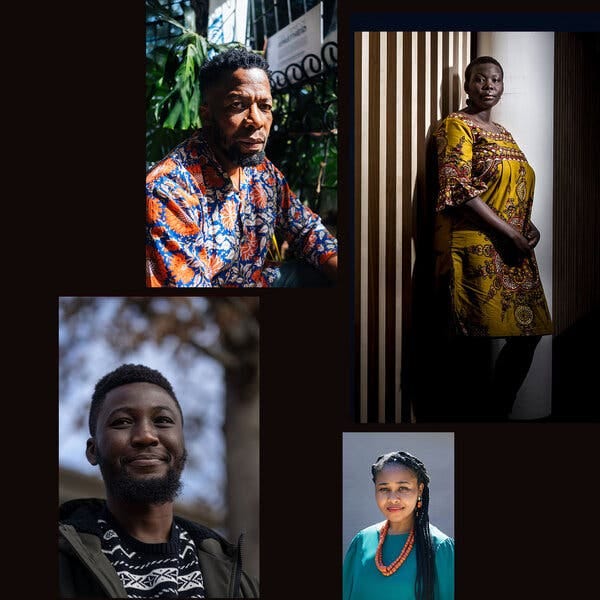
Among the writers who have published L.G.B.T.Q. stories are, clockwise from top left, Kevin Mwachiro, Monica Arac de Nyeko, Chinelo Okparanta and Arinze Ifeakandu.Credit…Clockwise from top left: Khadija Farah for The New York Times; Pepijn van den Broeke; Alyssa Schukar for The New York Times; Cydni Elledge for The New York Times

Queer authors in the African continent are pushing boundaries, finding an audience and winning awards, despite obstacles.

As a queer teenager growing up in northern Nigeria, Arinze Ifeakandu often found himself searching for books that reflected what he felt. After college, he began writing short stories in which gay men battled loneliness but also found lust and love in conservative, modern-day Nigeria.

I have always taken my own desires, my own fears, my own joys seriously. I knew I wanted to write characters who are queer. That’s the only way I am going to show up on the page. -Arinze Ifeakandu

Ifeakandu’s stories gained traction with readers, and with critics. In 2017, he became a finalist for the Caine Prize for African Writing, and last year, his debut collection, “God’s Children Are Little Broken Things,” won the Dylan Thomas Prize for young writers.

Thabiso Mahlape, who founded Blackbird Books in South Africa, has published Nakhane, a queer writer and artist, and “Exhale,” a queer anthology. “So much more can be done,” she said. More Africans are openly discussing sex and expressing their sexual and gender identities. Small Pride marches and film festivals are celebrating queer experiences, and some African religious leaders are speaking up in support of LGBTQ people. Young people, who make up the majority of the continent’s population, are turning to social media to discuss these books, and the big screen is bringing some of them to a wider readership.

The books — fiction, nonfiction and graphic novels — are also being published as a way to push back against virulent homophobia and anti-gay legislation across Africa. By writing them, authors say they hope to engage readers and challenge pervasive notions that homosexuality is a Western import.

These books are an invitation to change mindsets and to start a dialogue. These books are saying, ‘I am not a victim anymore.’ It’s gay people saying, ‘We don’t want to be tolerated. We want respect.’ -Kevin Mwachiro, coeditor of “We’ve Been Here,” a nonfiction anthology about queer Kenyans who are 50 or older

For many of these authors, publishing has brought public recognition and even appreciation. But some have faced harassment or even death threats. Chiké Frankie Edozien, whose memoir “Lives of Great Men: Living and Loving as an African Gay Man” won a Lambda Award, hopes the books will inspire younger generations to read a “dignified and balanced” portrayal of gay Africans.

Books are really powerful, books are really intimate. [And having these queer-centered stories in] libraries for decades to come is great, because the needle has been moved even when it doesn’t feel like it. -Chiké Frankie Edozien

The Nigerian-American author, Chinelo Okparanta, focuses on the coming-of-age story of a young woman during Nigeria’s Biafra Civil War in her 2015 novel “Under the Udala Trees.” The book’s protagonist, Ijeoma, meets Ndidi after finishing school. Together, they attend secret lesbian parties in a church, explore sexual pleasure and even talk about getting married. Okparanta made a conscious decision to end a book centered on a same-sex relationship on a positive note, with one of her characters mulling a Nigeria that is safe for gay people.

There needs to be room for people to have hope. -Chinelo Okparanta

People cross a street in Tokyo’s Ueno district. Photo: AP

A campaign by women in Japan to obtain legal equality for their identities has received a boost after the head of the nation’s largest business lobby expressed support for a change in the law that would allow women to keep their maiden names after marriage.

Campaigners say Japan is the only country in the world that obliges married couples to have the same surname, and unsurprisingly, the man’s family name is overwhelmingly the one chosen. Activists say it is a patriarchal remnant of the legal system held in place by conservative male politicians. However, the head of the influential Japan Business Federation (Keidanren) has come around to the idea of women keeping their maiden names. Keidanren has announced it is drawing up a paper to recommend that the law be amended to allow for different surnames, and that it would be submitted to the government later this year. In 1996, a Justice Ministry panel recommended that the Civil Code be amended to allow for separate surnames. But the panel’s recommendations did not go further, as conservative members of the Diet indicated they would fight it because it would undermine the cohesion of the family unit and weaken traditional values.

These people have always rejected efforts to change the law and allow equality because they are traditionalists and believe that a unified name is important to consolidating the idea of the family. They overlook just how inconvenient the law is for so many women. -Hiromi Murakami, professor of political science 

An editorial in the Mainichi newspaper on February 12 called on the government to “summon political courage” to change the law, pointing out that Keidanren is claiming that the issue is harming the nation’s business. “But the issue extends beyond work and daily life,” the paper said. They added that, “one’s name is integral to their identity. Many feel they have lost a part of themselves, as if their lifetime of achievements has been denied or erased by changing their surname.”

I went through the humiliation of changing my name once when I got married and then, for a second time, when I got divorced. Each time, I had to change all my IDs, bank accounts and even my child’s koseki (family register)…Stories and papers I wrote under my ex-husband’s surname are not credited as my work. I wouldn’t have to go through such humiliation if I had not changed my name. Men do not need to undergo that sort of scrutiny. -Sumie Kawakami, lecturer who focuses on women and gender issues

Refer a friend

Melody McKiver is adapting Indigenous love songs, originally documented by non-Indigenous researchers, to put a spotlight on queer love. (John Paillé)

Indigenous artists in Canada are putting queer love in the spotlight. When Melody McKiver came across a collection of Indigenous love songs transcribed by anthropologists in the early 1900s, the title of one stood out to her: I Don’t Need You Anymore. The song’s lyrics described a man standing on the shore, while a woman leaves in a canoe, drifting out into the water. McKiver wondered where the woman was going — and perhaps, whether she might be off to meet someone else.

What if she’s not going for another man? What if she’s leaving for another woman? What if she’s leaving for a two-spirit person? -Melody McKiver

Now McKiver is creating new interpretations of these century-old manuscripts, originally documented by non-Indigenous researchers, to put a spotlight on queer love. There’s been an “explosion” of queer and two-spirit literature and film as well as music, making it an exciting time for queer creators even compared to five or 10 years ago, they said.

Love stories abound in entertainment, and are practically inescapable in most genres of popular music. McKiver and other Indigenous artists are part of that broadening conversation by bringing 2SLGBTQ+ love stories to the forefront, changing the tune on a largely heteronormative landscape.

For Jeremy Dutcher, telling queer love stories is about giving people the language to learn more about themselves. After all, “the limits of our language are the limits of our mind,” according to the Juno Award and Polaris Prize-winning artist who is Wolastoqiyik and a member of the Tobique First Nation in North-West New Brunswick.

When I came out really young, all I had access to was the word gay, right? Only when we can name something can we fully come into it. -Jeremy Dutcher

Dutcher’s sophomore album, Motewolonuwok, discusses the intersection of the queer experience and the Indigenous experience with his song Ancestors Too Young. Part of that intersection comes from their respective vulnerability, he said, as Indigenous and queer youth are statistically more likely to die by suicide compared to the wider population.

The place where two discriminations meet is a dangerous place to live. What I wanted to share by speaking about that intersection … [is] to breathe some life into that and just say that, you know, we’re going to sing the song. We’re going to remember the ones we’ve lost. -Jeremy Dutcher

Thank you for reading FEMINIST GIANT. This post is public so feel free to share it.

Share

Samiha Hossain (she/her) is an aspiring urban planner studying at Toronto Metropolitan University. Throughout the years, she has worked in nonprofits with survivors of sexual violence and youth. Samiha firmly believes in the power of connecting with people and listening to their stories to create solidarity and heal as a community. She loves learning about the diverse forms of feminist resistance around the world.

Give a gift subscription

In ‘Creation,’ Vadim Sherbakov Captures a Macro Cosmos in Glitter and Ink

In ‘Creation,’ Vadim Sherbakov Captures a Macro Cosmos in Glitter and Ink

Vadim Sherbakov is no stranger to wild and expansive vistas (previously), training his lens on vast landscapes and dramatic events. A fascination with light, scale, and the wonders of the unknown permeate much of his work, from terrestrial subjects to his interest in the cosmos.

Rather than shooting through a telescope or homing in on celestial bodies, he transforms our understanding of the universe—as a crucible for the imagination, its physics, and its boundlessness—on a macro scale in his new high-definition video “Creation.”

Sherbakov expresses the incredible energy and power generated by astronomical phenomena like the Big Bang or supernovas, scaled down to fit inside the artist’s studio. An array of inks, alcohol, soaps, glitter, and other materials were painstakingly combined by set designer Luidmila Tregub, who set the substances in motion while Sherbakov captured twelve hours of footage—less than one percent of which made it into the final cut.

“Creation” continues the journey that the artist began in another short film titled “Velocity.” In the latest chapter, he implements new techniques and materials, including magnets and different liquids and inks.

Find more on Sherbakov’s website and Behance portfolio, and follow updates on Instagram.


All images © Vadim Sherbakov, shared with permission

A still from a video showing abstract forms of colorful ink and glitter.

A gif from a video showing abstract moving forms of colorful ink and glitter.

A still from a video showing abstract forms of blue ink and glitter.

Do stories and artists like this matter to you? Become a Colossal Member today and support independent arts publishing for as little as $5 per month. The article In ‘Creation,’ Vadim Sherbakov Captures a Macro Cosmos in Glitter and Ink appeared first on Colossal.

Photographer Captures Leopard Eating Crocodile in Tree

Photographer Captures Leopard Eating Crocodile in Tree

Years of traveling the plains of the Mara have etched countless wildlife encounters into my memory. From the heart-stopping chase of a cheetah to the tender moments in prides of lions.

None however compare to the recent sighting that left me speechless: a grizzled leopard, his age etched in every whisker, balanced precariously in a tree, his prize, a lifeless crocodile. A sheer testament to an extraordinary feat of nature. It was a moment that transcended mere observation and entered the unexpected twists of the wild.

Earlier I had sat at my computer in the Angama photographic studio when a guide came running in and said there was a sighting of a leopard with a possible snake. Later he sent out that he had inspected and it turned out to be a crocodile.

The next day, I drove towards the same area and noticed something hanging from the tree, which was the tail of the crocodile. I waited for hours hoping that the leopard would go back to its reward. Eventually he did and I was able to get some photos. I have never heard of this occurring in Kenya, there are places around the world such as South Africa or maybe Jaguars in South America where this has been recorded and photographed.

The male that has been photographed is named Shujaa, which means hero in Swahili. He is estimated to be about 14 years old, making him quite senior, with most leopards living for 12-15 years in the wild. He was spotted in the Maji ma Chafu area which is well within his territory. His longevity suggests successful hunting starches and adaptability as suggested with this crocodile kill. His dense markings (which resemble a jaguar due to his rosettes) and his eye (which was injured, possibly by another leopard) are some of his distinguishable features.

I watched as he ate the remaining parts of the crocodile and pieces fell into the tall grass. If you look closely you could tell that there was a wound near the tip of the tail of the leopard, likely from a confrontation with the crocodile. From the size of the tail of the crocodile, you can tell it was fairly large. Then what only remained was the thick scaly tail of the crocodile until the last piece fell and it was gone. Shujaa came down the tree and disappeared into the grass. As I drove away I could hardly contain my excitement from the behavior I had just witnessed.

This wasn’t your typical Savannah showdown. Leopards, while agile climbers, rarely hunt reptiles, and crocodiles, masters of aquatic ambush, are seldom found out of their watery domain. Both leopards and crocodiles are apex predators and there have been documented cases of leopards killing crocodile hatchlings, and crocodiles taking down young leopards that come too close to the water’s edge.


About the author: Born and raised in Nairobi to Egyptian parents, Andrew Andrawes spent 15 years in the United States before returning to Kenya to live in the remote Mara Triangle for the last 2 years. He holds a bachelor’s degree in Biology and African Studies from the University of Virginia, and a post-bacc from San Francisco Art Institute, and an MFA in photography from San Jose State University, where he has also worked, along with in various other studios and camera shops.


Image credits: Photographs by Andrew Andrawes

Haunting Image of Whale Skeletons Wins Underwater Photographer of the Year 2024

Haunting Image of Whale Skeletons Wins Underwater Photographer of the Year 2024
Underwater Photographer of the Year 2024
The winner of Underwater Photographer of the Year 2024.

A stark photo of a diver examining the aftermath of a whale hunt has won Underwater Photographer of the Year 2024.

The brutal image taken by Alex Dawson from Sweden beat off over 6,500 other entrants. The image shows a breath-hold diver below a sheet of ice in Greenland inspecting whale carcasses.

Wide Angle

The remains of whaling undertaken by hunters from Greenland. The minke whales there have a stable population and the hunters use almost all of the whale but the skeleton is put back into the sea where marine invertebrates and fish pick the bones clean. Winner of the Wide Angle category and Underwater Photographer of the Year 2024. | © Alex Dawson/UPY2024
A pod of Atlantic spotted dolphins swimming in the Bahamas. Runner up in the Wide Angle category. | © Remuna Beca/UPY2024
A lemon shark rises from the depths at dusk in the Bahamas. Third place in the Wide Angle category. | © Remuna Beca/UPY2024

Macro

A potbelly seahorse in Australia. Winner of the Macro category. | © Talia Greis/UPY2024
A tiny octopus hitches a ride to the surface in the Philippines. Runner up of the Macro category. | © Dennis Corpuz/UPY2024
Two pygmy seahorses. Third place in the Macro category. © Byron Conory/UPY2024

Wrecks

An underwater military museum in Jordan. Winner of the Wrecks category. | © Martin Broen/UPY2024
The wreck of the Kyle Spangler in Lake Huron. Runner up in the Wrecks category. | © Becky Schott/UPY2024
A huge school of fish swarms a shipwreck in Brazil. Third place in the Wrecks category. | © Fabiana Fregonesi/UPY2024

Behavior

A Bryde’s whale picks off the end of a bait ball. Winner of the Behavior category. | © Rafael Fernandez Caballero/UPY2024
Two female Zoarchias major eelpouts fight over a suitable spawning nest. Runner up in the Behavior category. | © JingGong Zhang/UPY2024
A lone tiger shark picks the bones of a young humpback whale’s carcass. Third place in the Behavior category. | © Brooke Pyke/UPY2024

Portrait

A gray whale. Winner of the Portrait category. | © Rafael Fernandez Caballero/UPY2024
A curious cormorant approaches the photographer beneath a kelp forest in Monterey, California. Runner up in the Portrait category. | © Jon Anderson/UPY2024
A swimming macaque in Thailand. Third place in the Portrait category. | © Suliman Alatiqi/UPY2024

Black and White

Members of a synchronized swimming team in a pool. Winner of the Black and White category. | © Jasmine Skye Smith/UPY2024
A great white shark near Australia. Runner up in the Black and White category. | © Matty Smith/UPY2024
Bottlenose dolphins off the coast of Mayotte. Third place in the Black and White category. | © Serge Melesan/UPY2024

Compact

A nudibranch in Bali, Indonesia. Winner of the Compact category. | © Enrico Somogy/UPY2024
A coconut octopus feels the photographer’s lens. Runner up in the Compact category. | © Enrico Somogy/UPY2024
A bottlenose dolphin in an Egyptian lagoon. Third place in the Compact category. | © Ilaria Mariagiulia Rizzuto/UPY2024

Up and Coming

An opportunistic mahi mahi swipes a fish from a baitball. Winner of the Up and Coming category. | © Lisa Stengel/UPY2024
A diver swims into a circle of baby barracudas. Runner up in the Up and Coming category. | © Sarah O’Gorman/UPY2024
A lionfish in Indonesia. Third place in the Up and Coming category. | © Bryan H. Blauvelt/UPY2024

British Waters Wide Angle

Diving gannets off the coast of Scotland. Winner of the British Waters Wide Angle category. | © Kat Zhou/UPY2024
Bass fish. Second place in the British Waters Wide Angle category. | © Kirsty Andrews/UPY2024
A World War II submarine off the coast of Cornwall. Third place in the British Waters Wide Angle category. | © Rick Ayrton/UPY2024

Underwater Photographer of the Year is a U.K.-based competition with categories just for Brits. For more, head to the competition’s website.

‘I go crazy in the presence of beauty’: the colourful confessions of photographer Walter Pfeiffer

‘I go crazy in the presence of beauty’: the colourful confessions of photographer Walter Pfeiffer

Walter Pfeiffer’s hands have trembled ever since he was a little boy at primary school. The problem, recalls the Swiss photographer, only intensified as he aged. “It amuses me,” he says, “when people call me a genius for using flash from the very beginning. It gave me my style – but I only did it because a flash stabilised my images.”

Pfeiffer’s photographs exude a perpetual summery warmth, as if all the harshness of life has been banished. Before gaining recognition in the art world, he spent years shooting for the underground gay zine scene. Remarkably, after achieving success, he refused to change his approach: it has always been just him and his subject, like a painter with a muse.

These are mostly young men, often captured in moments of exuberance, leaping in the air or striking a pose at home or by the lake. Many shots hover between dream and reality, seeming to speak of first love. “People I don’t like leave me cold,” says Pfeiffer. “But in the presence of real beauty, I go crazy – and I could work for 24 hours. Beauty is rare, not an everyday occurrence, and it’s better that way. If there was too much beauty around we would grow bored with it.” He laughs.

As you flip through Chez Walti Photographs 2000-2022, his latest book, an epic volume spanning 400 pages, you soon grasp how much energy he puts into his craft. While photography still excites him as much as it did in the early days, taking pictures is becoming increasingly strenuous – partly because of his unsteady hands but also due to the difficulty of finding the right models. “Oh, I’m not a drama queen,” he says. “I truly mean it. If I hadn’t been an artist, my life would have been easier.”

Pfeiffer, although a seasoned photographer of 50 years, was unearthed by millennials, who became enamoured of his hyper-colourful shots in the early 2000s. According to Pfeiffer, they embraced him for the same reasons the art world had rejected him. His photographs seemed overly simple, almost amateur. The fashion industry, even more so, tends to value intricacy and depth.

However, as social media boomed, Pfeiffer’s work began to stand out. It was seen as innovative, ahead of its time. “It’s the story of my life,” he says. “I had to earn it all, step by step. I never thought I would make it this far. People consistently put me down, claiming I was just a ‘naive’ photographer. After a while, you end up believing it.”

A monumental Pfeiffer retrospective recently concluded at the Kunstmuseum in Lucerne, and his book signings at cities across Europe always draw huge queues of fervent young photography enthusiasts. Few artists have demonstrated such an enviable ability to foresee – and perhaps lead – taste. It’s no coincidence, although it is certainly ironic, that Pfeiffer is now embraced by the fashion industry.

“In the beginning,” says the 77-year-old, “art directors would approach me with mood boards, sketches and ideas. Oh God, I was so frightened! I’d listen to them but eventually I’d say, ‘Listen, what’s the point of doing something that others have already done?’ I didn’t have an agent at that time. I am a self-taught artist and, frankly, I didn’t know how to handle that kind of stuff. I’m not a professional. When I had to go to London for a fashion shoot, I was so financially strained that I could only afford a second-rate hotel and had to compress everything into a two-day window. Again, this is the story of my life.”

He remembers i-D magazine sending a sizeable box of exorbitantly priced clothes to his Zurich apartment for a photography session. Fearful of damaging the valuable garments in transit, Pfeiffer had them modelled in his living room.

In fact, he has never had his own studio. Nor does he like to preconceive an image. His ideal approach involves meeting the subject then, much like on a blind date, embracing whatever vibe unfolds. “Que sera sera,” he says with a shrug. The results are generally on the lighthearted side, although there is nothing vague about them.

Pfeiffer, born in the Swiss countryside “on the same day and year as Bruce Weber”, originally trained as a painter. “I would use Polaroids as aids,” he recalls. “Then, in the 1970s, I bought a small automatic camera.” Around the same time, he relocated to the city. “My first models were beautiful Zurich street kids. The pursuit of real beauty is the goal of my life. Even today, the people I photograph evoke the Hollywood stars of the 1950s. But they don’t have to be aware of that. I prefer non-professional models. I never had models – I had real people.”

The film stars he would see at the cinema felt like people he was growing up with. As models, he still regards them as unsurpassed. “There are a lot of mirrors and glasses in my pictures, a tribute to my enduring passion for Hollywood and for Cecil Beaton, with his magnificent photographs featuring mirrors. It’s about unattainable perfection. I never quite reach it, so I simplify it. I’ve had several Cecil Beaton moments.”

Pfeiffer realised he was gay at the age of 16. “I was the naive country boy. One day I met a man who was gay, but I didn’t even know what that meant. He introduced me to [gay magazine] Der Kreis.” During that time Pfeiffer also fell for the homoerotic photographs of Karlheinz Weinberger and the highly masculinised drawings of Tom of Finland. “I was captivated by all that beauty and couldn’t comprehend what was happening inside me. Those were different times. You couldn’t just say, ‘I’m 16 and I’m gay.’ Now, it’s like a seal has been broken.”

After photographing his friends in the 1970s, he decided to publish his first book, now a rare find fetching giddying prices online. “It was produced by a publisher so impoverished that we had to convert all my photos to black and white to reduce the printing costs. It’s still a good book, though. It doesn’t age. You must be very careful when publishing a book: some get old while others remain timeless. I have so many books that already look dated even though they were published just three years ago.”

From then on, he says, his life became a constant and often exhausting pursuit of beauty. “It’s my obsession,” he says. “It’s what makes me click click click. I’m obsessed with all those people who take me to new ground, new ideas. When people are boring – mamma mia! – it’s terrible. Too much work. But when the right thing comes along, I feel alive again, although I’m getting slower with age.”

We are in the café of the Swiss National Museum in Zurich. Pfeiffer, drinking tea, reveals that he has been working on an archive for some time. It’s not thousands of images, as one might assume. “I used to shoot analogue,” he says. “And I didn’t always have the money to buy film and develop photos. So in the early days, during fashion shoots, I would be like, ‘Click, click, click – OK, we have it!’ But only because it was all too expensive for me.”

In addition to mirrors, another thread running through Pfeiffer’s work is flowers. They often adorn the hair or faces of his models, reminiscent of the images of Baron von Gloeden, known for his nude shots of young Sicilian men. However, unlike the German baron, Pfeiffer uses kitsch and camp in an ironic manner. His models wear flashy chandeliers instead of hats, while a garish piece of cloth might be wound into a turban. “I think a good photograph needs no explanation,” he says. “One should not even think, but just be amazed.”

Despite having photographed for the likes of Vogue and Vanity Fair, shooting everyone from Tom Ford to Tilda Swinton, the undercurrent of first love is something Pfeiffer is constantly, almost desperately, trying to convey. “Of course I feel love for my models,” he says. “Love is necessary for my work. But I must maintain a certain distance. If there’s no distance and you’re in love, well, then you’re blind.” He laughs and takes a sip of tea. “And it’s not ideal to be blind – especially if your hands are constantly shaking.”

Chez Walti Photographs 2000-2022 is published by Edition Patrick Frey

Untitled Sculpture | Artwork

Untitled Sculpture | Artwork
Artfacts brings transparency to the art world. Artfacts helps collectors make better purchase decisions and artists understand their position in the art world.

My iPhone camera has made me a better professional photographer

My iPhone camera has made me a better professional photographer

“The best camera is the one that’s with you,” has to be the most overused and misquoted passage of text in the photography industry. But while I’ve been guilty of shoehorning Chase Jarvis’ modern proverb into articles left, right, and center, I can hardly think of a more suitable moment than this.

You see, it perfectly encapsulates why I have loved taking photos on every iPhone I’ve ever owned. I’m an avid Nikon photographer, and my favorite camera of all time is the Nikon D800. But as rock solid and powerful as this aging but still pro-grade DSLR is, it weighs roughly 1 kg, and that’s with only a small, 50mm lens attached… Historically, it’s been the camera I reach for when I’m working or capturing ‘serious’ photos. But it’s not the camera that sits by my bedside, accompanies me on public transport, social gatherings, and leisurely events. That would be my iPhone 13.

It’s my everyday photography companion. It’s the camera I use when I’m taking photos for fun. It’s the camera I experiment with – and since I’m not carrying around a bag full of additional kit with endless creative possibilities – it’s the camera that very often forces me to go back to basics. And I’ve become a better photographer because of it.

Mike Harris, iMore contributor

Mike Harris

I’m Deputy Editor of N-Photo: The Nikon Magazine, but moonlight as iMore’s go-to photography know-it-all. I’ve worked in the photo industry for over six years and have been an avid iPhone photographer since the iPhone 4. I firmly believe that iPhone photography is a great starting point for burgeoning photographers, so I’ve created a series of iPhone photography basics tutorials so you can either firm up your existing iPhone camera skills or embark on a whole new passion.

Even pros love iPhone photography 

Person photographing waterfront with iPhone 13

(Image credit: Future)

But before I explain how it’s made me a better photographer, I’d like to return to photographer, author, and entrepreneur Chase Jarvis. The Best Camera Is The One That’s With You is actually the title of one of his books. And if its sentiment couldn’t fit into my neat little narrative any better, the camera he’s talking about is in fact, his iPhone. 

You see, Chase was a photography social media pioneer, and the book was part of a multifaceted project that was centered around the launch of his Best Camera app in 2009. In his own words, the app: “beat Instagram to the market by a year, beat Instagram to 1,000,000 downloads,” and if Instagram’s sale to Facebook in 2012 is anything to go by, he had arguably settled upon a billion-dollar idea.

He explains why Best Camera failed to reach its potential on his blog, but I still think of Chase as a bit of a visionary. After all, he was one of, quite possibly, the first professional photographer to really capitalize on the iPhone’s magnetism as the camera that never leaves your side.

A revolutionary smartphone, and a camera that was technically lacking… 

Steve jobs and iPhone

(Image credit: Apple)

When Steve Jobs delivered his iconic keynote speech that introduced the world to the iPhone, he initially told the audience at Macworld 2007 that Apple was launching a trio of products: “an iPod – a phone – and an internet communicator.” The twist, of course, was that the iPhone was all three rolled into one. So why didn’t Steve add a fourth product? After all, the original iPhone launched with a 2-MP camera and in the years that followed, incremental camera updates from Apple and other smartphone brands in general brought the compact-camera market to its knees. 

Well, the camera on the original iPhone wasn’t anything special, it couldn’t even autofocus. In fact, the slightly older Nokia N95’s camera beat the iPhone’s outright, with its 5-MP sensor, built-in flash, and ability to record video. It wasn’t the only smartphone around at the time with better-specced cameras, such as the LG Viewty, Samsung Ultra Smart F700, and, well, you get the picture. You could argue that Apple didn’t release a competitive camera phone until it launched the iPhone 4 in 2010.

And yet, early iPhones were still adopted by burgeoning smartphone photographers like Chase Jarvis. The secret, then, wasn’t the camera but the phone itself. It debuted Apple’s revolutionary Multi-Touch functionality, which made everything – including the camera – a joy to use; its 3.5-inch TFT screen was bigger and better looking than its competitors, so captured images not only looked great but framing them in live view was fantastic, too. Then you had the iPhone’s advanced Internet capabilities and iOS 1, which made sharing photos a cinch and opened the door to various photo-centric apps, like Best Camera.

Why my iPhone camera has made me a better photographer

A montage of images taken on an iPhone 13

(Image credit: Future)

Today, the best iPhones boast market-leading camera tech, but for me – just like in 2007 – it’s the iPhone camera that makes the iPhone. And that’s precisely why it has made me a better photographer. I used to be faced with an agonizing choice, every time I left the house: Do I take the camera with me or not? Now, it isn’t even a question. Just like Chase identified all those years ago, it’s the camera that’s always with me. 

It’s my web browser, train ticket, debit card, gym membership, GPS and television. And because of this, it’s made me take more photos than ever before. I’d go as far as saying it’s rekindled my passion for photography as a hobby. Heck, it even encourages me to pick up my Nikon camera more, because I use my iPhone to scout potential locations and try out concepts, only to return with my Nikon and a bag full of lenses at a later date. 

The simplicity of the iPhone camera is hugely appealing, too. I spend an awful lot of time editing images on my Macbook Pro, but my iPhone allows me to shoot an image and edit it in seconds. I don’t have to carry around lenses and accessories unless I want to. It’s just me and my iPhone, and if that’s not good enough, I either don’t take the shot or I use my creativity to make it work. It’s liberating, and it’s great practice

“Heck, I even rely on my iPhone indirectly during professional shoots…”

I’m spending less time faffing and more time shooting, and I’ve noticed a difference in the way I work. My iPhone has improved my compositions, as I’m forced to work with the few lenses I’ve got. It’s allowed me to shoot more genres, such as street photography, on my lunch break. And it’s allowed me to be less critical of my work. If it doesn’t work out, it’s no big deal, hardly any time has been lost and I can move on. It’s also encouraged me to shoot and edit more videos, something I used to shy away from.

I even rely on my iPhone indirectly during professional shoots, thanks to the App Store’s wealth of photography-centric apps. helps me plan shoots, helps me calculate exposures when I’m using filters, and allows me to keep tabs on the weather during landscape shoots. This alone has revolutionized my workflow and allowed me to focus more on what matters: photography.

I’m as excited as the next person when Apple debuts its new range of iPhones and their iPhone camera advancements. But that’s not the whole story. My iPhone allows me to be a photographer 24/7. And when I’m not working with my Nikon, it’s the best camera for the job.