About

Posts by :

robots endlessly sort through photographs in oliver frank chanarin’s latest show at KARST

robots endlessly sort through photographs in oliver frank chanarin’s latest show at KARST

a perfect sentence: photography in the algorithm age at karst

UK artist Oliver Frank Chanarin’s new exhibition, A Perfect Sentence, interrogates the photographic image in the age of the algorithm. At the center of this installation are two machines made in collaboration with fellow artists Tom Cecil and Ruairi Glynn. These robotic entities continuously hang and rehang framed photographs stored in stacks on the gallery floor. Appropriating the language of automation, the machines handle the images according to an inscrutable logic: identifying, sorting, displaying, juxtaposing, and storing photographs for the exhibition’s duration. A Perfect Sentence, commissioned by the non-profit platform Forma, is on view at KARST in Plymouth until March 23, 2024. 

robots endlessly sort through photographs in oliver frank chanarin's latest show at KARST
Oliver Frank Chanarin, A Perfect Sentence, 2024 | installation view: KARST, Plymouth | image © Dom Moore

Oliver Frank Chanarin turns robots into unsettling ‘curators’

For this exhibition at KARST, Oliver Frank Chanarin (see more here) reflects on the unsettling sensation evoked by his work, suggesting that viewers feel observed by the artwork itself: ‘There’s something about the way the photographs are handled indiscriminately by the machines – the intimately human analogue prints bristle against the brutally mechanistic display. It goes against the grain of the images, and there is a sense that we are entering a factory rather than a gallery. Inevitably, we are left to reflect on the life of photographs, the myriad ways in which they circulate and accrue our attention or get ignored, and the hidden forces that shape these experiences.’

robots endlessly sort through photographs in oliver frank chanarin's latest show at KARST
image © Dom Moore

The archive of images on display for A Perfect Sentence, only ever partially seen at any one time, was produced by Chanarin last year while traveling across the United Kingdom. Shaped by many spoken and unspoken exchanges with strangers, the artist became increasingly preoccupied with people’s conflicting desires and anxieties around being seen and the fraught experience of making documentary photography in this new social paradigm. Over 12 months, he produced over 3000 color negatives portraying encounters with hundreds of participants, from which he hand-printed unique, C-type prints in the darkroom. Many artworks featured handwritten annotations on cropping and color filtration or show exposure gradients. These interventions on the surface of the images point to a printing process in development and allude to the mercurial nature of identity and the subjectivity inherent in image-making.

robots endlessly sort through photographs in oliver frank chanarin's latest show at KARST
image © Dom Moore

a continuous collaborative project led by forma

Following the presentation at KARST, A Perfect Sentence will then be a highlight of Images Vevey Biennial, Switzerland in September 2024. Subsequently, the exhibition will open at Wolverhampton Art Gallery in November 2024 and National Museum Cardiff in 2025, with additional presentation dates pending. A selection of Chanarin’s C-type prints was exhibited for the first time at Derby’s The Museum of Making earlier this year as a highlight of Format23, the UK’s leading photography biennial. The presentation program and a publication designed and published by Loose Joints will be accompanied by digital outputs and public acquisitions in 2024.

robots endlessly sort through photographs in oliver frank chanarin's latest show at KARST
image © Dom Moore

In 2022, Oliver met and photographed groups and individuals in Plymouth, from navy officers and cadets to skateboarders and sunbathers. A selection of these photographs will be presented alongside images from Oliver’s encounters around the UK. […] Throughout the course of the exhibition at KARST, i-DAT (University of Plymouth’s creative technology research collective) will collaborate with Oliver to develop the AI algorithms, making it both an exhibition and a live research project,‘ shares Ben Borthwick, KARST’s Head of Creative Program.

robots endlessly sort through photographs in oliver frank chanarin's latest show at KARST
image © Dom Moore

A Perfect Sentence is commissioned and produced by Forma, in collaboration with eight UK arts organisations. Photography took place in the regions of the co-commissioning and co-production partners: Derby: Derby QUAD, FORMAT International Photography festival and Derby Museums; East Anglia: Norfolk Museums Service and original projects; London: Guildhall Art Gallery; Plymouth: KARST; Wales: Artes Mundi; Wolverhampton: Wolverhampton Art Gallery. 

Made and collected

Made and collected

The Reese Bullen Gallery on the Cal Poly Humboldt campus in Arcata is showcasing an exhibition curated by Professor and Art + Film Department Chair Nicole Jean Hill.

Through research and collaborative preservation with the archive located in Wyoming, the exhibition features works by photographer Lora Webb Nichols (1883-1962), who created and collected approximately 24,000 negatives over the course of her lifetime in the mining town of Encampment. The images chronicle the domestic, social and economic aspects of the sparsely populated frontier of south-central Wyoming.

Given the period of time the collection spans, the isolation of the Encampment community, and Nichols’ gender, this collection of images is unparalleled in its historical significance and visual storytelling. Photography enthusiasts and historians are encouraged to explore more of Nichols’ photographs and writings online through the American Heritage Center (Laramie, Wyoming) or in person at the Grand Encampment Museum.

The exhibition, “Lora Webb Nichols: Photographs Made, Photographs Collected, 1988-1935,” will run through March 16 at the Reese Bullen Gallery.

Pictured is Lora Webb Nichols’ image of Winters and McCarthy, circa 1933. (Courtesy Reese Bullen Gallery)

Hill will host a “Curator Talk” March 6 from 5 to 6 p.m. in the ArtB, Room 102, Lecture Hall. All are welcome to attend.

The Reese Bullen Gallery, named in honor of a founding professor of the Art Department, was established in 1970. The gallery is located in the Cal Poly Humboldt Art Building, at the intersection of B Street and Laurel Drive, directly across from the Van Duzer Theatre. The gallery is open Wednesday and Thursday, noon to 6 p.m.; Friday, 11 a.m. to 5 p.m.; and Saturday, 11 a.m to 2 p.m. It is also open by appointment; contact the gallery director at rbg@humboldt.edu or call 707-826-5818 to make an appointment.

Admission is free and all are welcome. For campus parking information, visit humboldt.edu/parking.

More information on Lora Webb Nichols Archive can be found at https://www.lorawebbnichols.org.

The Best Macro Lenses To Make Your Close Up Photography Easy

The Best Macro Lenses To Make Your Close Up Photography Easy
Spread the love

Macro photography opens up a whole new world of perspectives. I remember my first venture into this genre. I had to purchase a screw-on thread for my Nikon D300 to be able to reverse mount my Nikkor 50mm f1.4 AF-D lens on the camera. Of course, this method came without any metering capabilities, and everything had to be manually done with a lot of trial and error. Thankfully, exceptionally good macro lenses nowadays are a lot more affordable nowadays, and don’t require you to use DIY hacks. We’ve narrowed down some of the best options you can buy today.

How We Test and Choose the Best Macro Lenses

  • The Phoblographer’s various product round-up features are done in-house. Our philosophy is simple: you wouldn’t get a Wagyu beef steak review from a lifelong vegetarian. And you wouldn’t get photography advice from someone who doesn’t touch the product. We only recommend gear we’ve fully reviewed in these roundups.
  • If you’re wondering why your favorite product didn’t make the cut, there’s a chance it’s on another list. If we haven’t reviewed it, we won’t recommend it. This method keeps our lists packed with industry-leading knowledge. Some of our stories include affiliate links. If you buy something through one of these links, we may earn an affiliate commission. You can read more about our ethics on this on our Disclaimer page.
  • When we test products we’ve got various things in mind. First off, we consider who might want to buy the product and what they might do with it. With that in mind, we try to tackle at least three genres of photography with that product in a variety of situations. For example, if a lens has weather resistance, then we’ll test it accordingly with a weather-resistant camera. We also test the autofocus of the lens in continuous mode, single mode, with exposure preview effects, without those effects, and then with all the major image quality parameters. These days, no one really makes a bad lens — but some are far better than others. And that’s what we’re trying to find in our reviews.
  • In all of our roundups, we’re basing our findings on the reviews that we’ve done. We’re choosing a favorite, but we’re also giving photographers a bunch of others that they might like, depending on how they shoot.

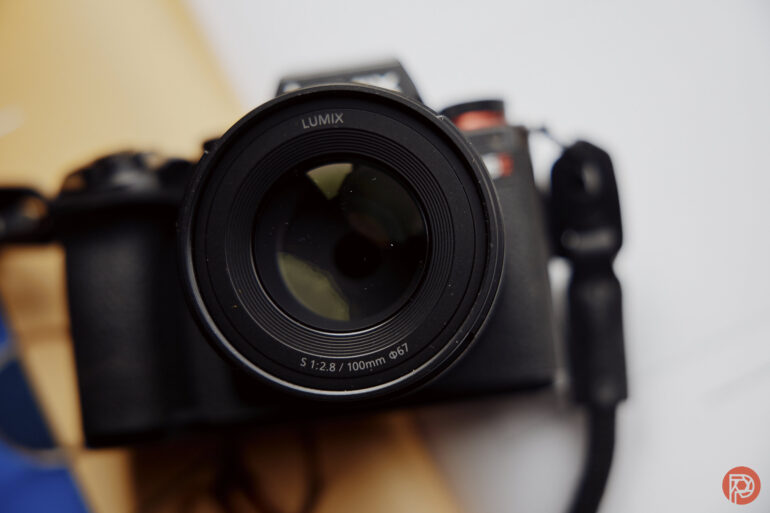
Our Choice Amongst the Best Macro Lenses You Can Buy In 2024: Panasonic 100mm f2.8

This wasn’t an easy choice, as this lens faced some stiff competition for the top spot from the Canon RF 100mm Macro lens. But where the Panasonic 100mm f2.8 Macro Lens pipped the latter was in AF speed and compact size. It’s a great lens to carry around everywhere, something I can’t always say about other f2.8 macro lenses in this focal length range. It’s about the same size as the rest of the Lumix S prime lenses. If you’re an L-mount camera user, this is the best one by far to get. With such great features, it’s no surprise that it took home our Editor’s Choice Award.

Tech Specs

These specs are taken from the Adorama Listing

Compatibility LUMIX S Series Cameras
Lens Construction 13 elements in 11 groups (3 aspherical lenses, 2 UED lenses, 1 ED lens)
Mount L-Mount
Optical Image Stabilizer No
Focal Length f=100mm
Aperture Type 9 diaphragm blades / Circular aperture diaphragm
Maximum Aperture f/2.8
Minimum Aperture f/22
Closest Focusing Distance 0.669′ (0.204m)
Maximum Magnification 1.0x
Diagonal Angle of View 24 Degree
Dust and Splash Resistant Yes
Recommended Operating Temperature 14 Degree F to 104 Degree F (-10 Degree C to 40 Degree C)
Filter Size 67mm
Max. Diameter 2.9″ (73.6mm)
Overall Length From the tip of the lens to the base side of the lens mount: 3.23″ (82mm) (Approx.)
Weight Excluding lens cap, lens rear cap and lens hood: 10.51 oz (298g) (Approx.)

What We Think

In our review, we state:

It’s the single most innovative 100mm f2.8 Macro lens that I’ve used in my career. The Phoblographer has been around for over 14 years, and we’ve reviewed the most lenses of any accredited photography publication. I can say with certainty that this is something as uniquely special as a perfectly sweet, ripe mango on a summer’s day. With that said, it’s just as rare.

For Some Photographers, these Might Be The Best Macro Lenses To Choose From

If you’re not a Panasonic Lumix camera owner, here are some other options from camera brands and 3rd party companies to choose from.

Canon RF 100mm f2.8 L Macro IS USM

An Editor’s Choice Award winner too, but narrowly missing out on the top spot is our next favorite, Canon’s latest 100mm macro lens. In our review, we said:

The Canon RF 100mm Macro not only expertly mixes technical greatness with character but allows photographers to choose when they want that super sharp image or a bit more character. With what feels almost like a built-in variable mist filter, this lens can add a little or a lot of softness. Of course, that softness to the bokeh as well. That’s not the only way the 100mm macro impresses. This lens adds the type of flare that software will try to imitate. This flare is also easy to control by adjusting the position of the lens so, once again, photographers can intentionally add flare or adjust to keep contrast intact.

OM System 90mm f3.5 Macro IS Pro

In our review of this lens, we state:

Besides the autofocus capability, the 90mm also makes Super Macro more accessible with a stabilization of six stops on its own or seven stops with compatible Sync IS bodies. That’s a huge help as camera shake tends to be exaggerated the closer the subject is to the lens. OM System’s weather-sealing is intact too, with the lens given an IP53 rating against dust and moisture. Using the OM System 90mm f3.5 Macro, however, is a delicate balance between an aperture narrow enough to keep something in focus and an aperture wide enough to stave off diffraction. In that sweet spot, photographers can capture wonderfully detailed close-ups

Laowa 90mm F2.8 2x Ultra Macro

This beautiful lens creates some stunning images, but it does have a few drawbacks. In our review we noted:

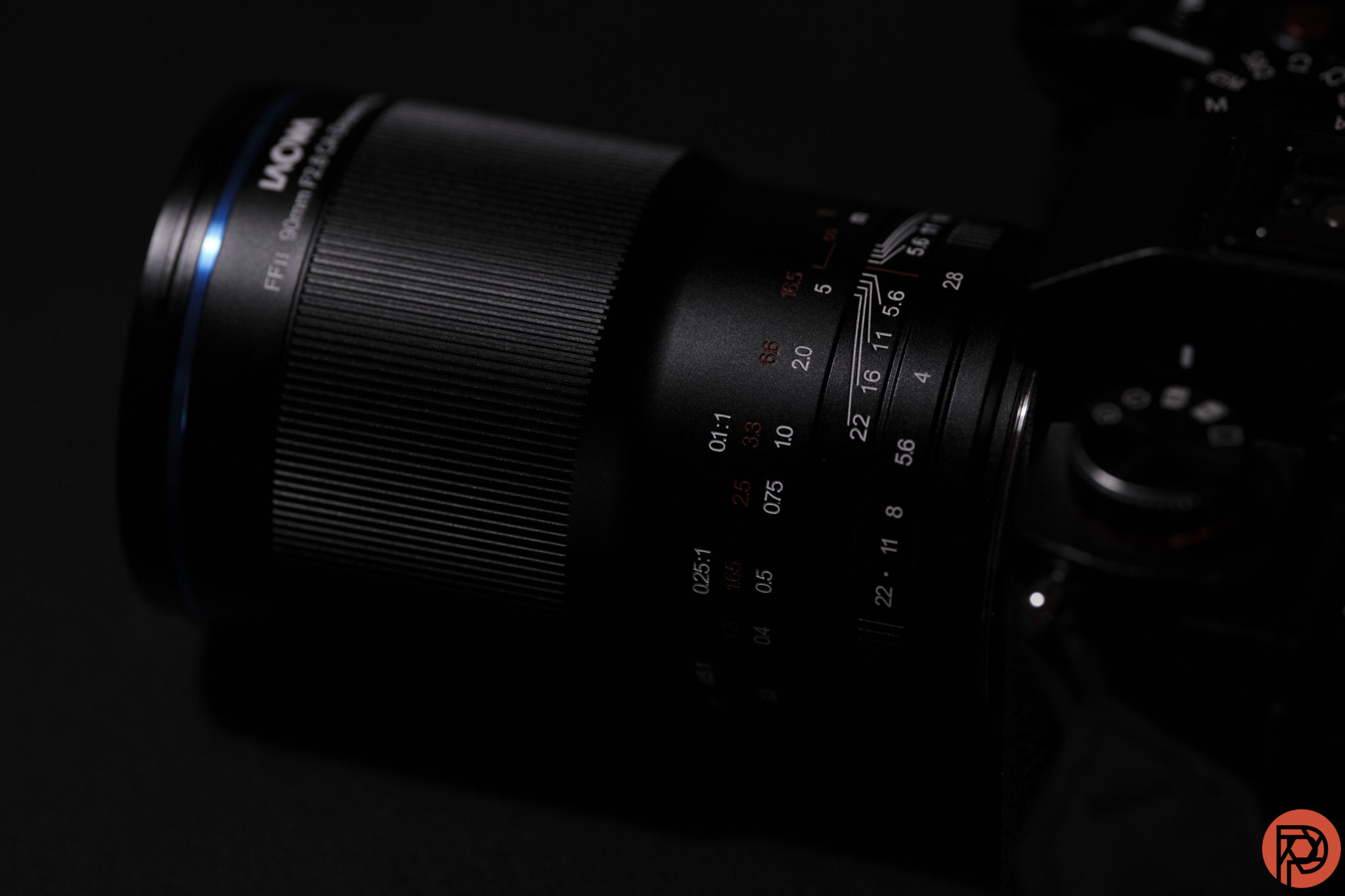
The Laowa 90mm f2.8 2x Ultra Macro is hands-down the most fun I’ve had with a macro lens. The 2x close-up capability makes it possible to capture detail that a standard 1:1 macro can’t. That mixed with the f2.8 and the 90mm makes bokeh so smooth that backgrounds often become a solid color. The rainbow-colored, streaky flare adds even more ways that this lens can help create photos that stand out in a feed. While it’s a manual focus lens, the metal build makes turning its focus ring luxurious. If there’s a reason not to buy the Laowa 90mm 2x, it’s the lack of weather-sealing.

Voigtlander 110mm F2.5 Macro

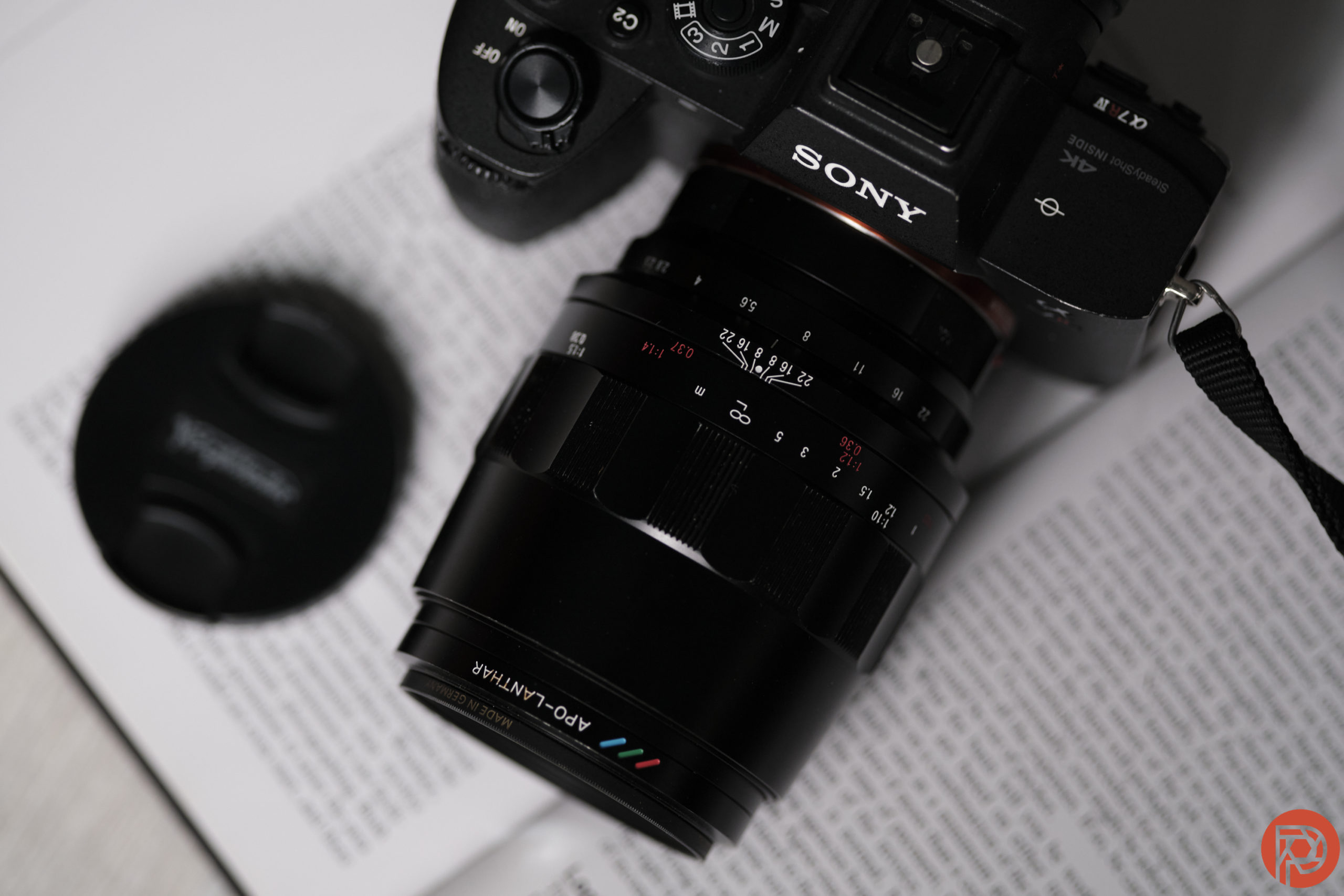
A slightly unconventional focal length for modern lenses, in our review of the Voigtlander 110mm F2.5 Macro we said:

The Voigtlander 110mm f2.5 almost finds the perfect balance between classic and modern. It looks fantastic with a classically-inspired metal build. And, of course, the photos ooze character, bokeh, and sharpness. Electronic contacts make shooting a bit easier, despite the lack of an autofocus motor.

Nikon Z MC 105mm f2.8 VR S

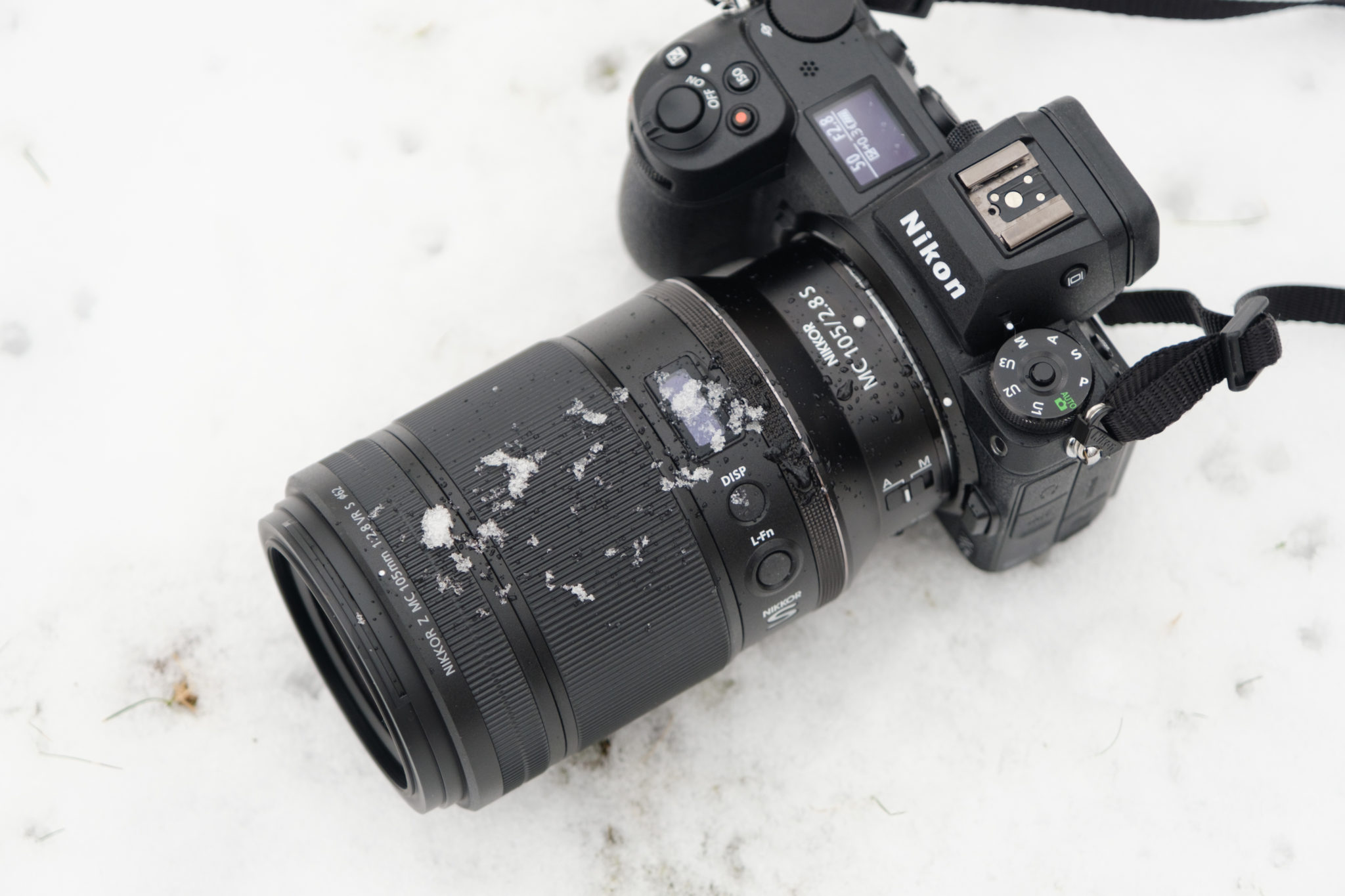
I use the F-mount version of this lens for a lot of the reviews I do here, but the Z mount version is just so much more sharper. In our review of this lens, we state:

When you add the sharpness of the Z mount to a lens that can focus up close, you get stunning detail. The Nikon Z 105mm macro does a great job reducing chromatic aberration, and delivering a sharper image with less fringing than the comparable F-mount. Even though the f2.8 isn’t available at the closest focal distances, this lens can still produce some great bokeh and soft backgrounds.

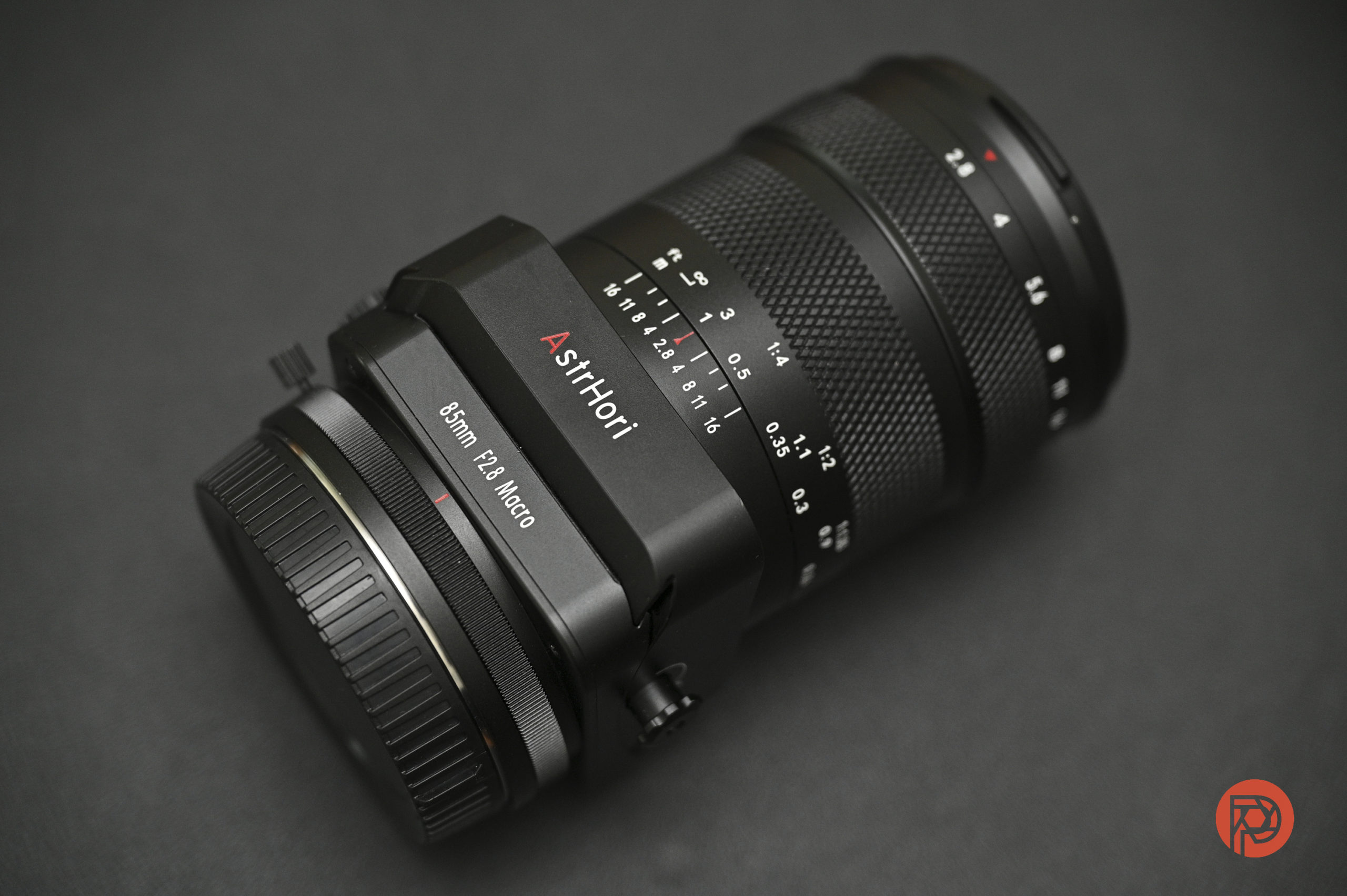
AstrHori 85mm f2.8 Macro And Tilt Lens

AstrHori’s 85mm stands out as the most unique one in this list. It’s a tad unfortunate that it’s built for crop sensors only at the moment, at least in terms of the tilt capabilities. In our review, we said:

The tilt capability is the first that I’ve seen in a macro lens at this price point. It can also be used as a handy portrait lens if you’re willing to work with the very slow manual focus throw. But the tilt feature comes with some heavy vignetting beyond the halfway point, which is why AstrHori clearly labels that feature as an APS-C option. Still, having a tilt feature on a macro lens is probably better than not having one at all. Sharpness is very impressive, even at f2.8, when you’re photographing subjects up close

Using This Guide to the Best Macro Lenses To Buy In 2024

If you’re considering purchasing anything from this list of the best macro lenses, consider the following:

  • All the product images and sample photos in these roundups are shot by our staff. In fact, we don’t talk about products at length in roundups like this unless we’ve done full reviews of them. But you can surely know that we’ve done all the research ourselves.
  • Laowa probably makes the best 3rd party macro lenses right now. But they aren’t without their shortcomings, as we noted above
  • Does macro photography mystify you? Look at our quick guide to understand it better
  • Macro photography autofocus accuracy also depends a great deal on the camera system you’re using
  • The best macro photos are taken with a methodology called Focus Stacking
  • We’d never recommend a product to you that we haven’t tested or that we really didn’t like. You can reference our linked reviews, for more information on this.

Picking the Right One For You

If you’re still a bit confused as to the right macro lens for you, here are some questions to ask yourself

  • What’s your budget?
  • How will you use the product?
  • What lighting situations are you in, and how will that affect what you’re doing? Our reviews hyperlinked in this article can help with that.
  • Are you traveling a lot with it?
  • Will you be using it in a situation that’s a bit rougher?
  • Who else uses this product? How are they using it?
  • What’s so appealing about this product that I can’t get from what I have already or something else?
  • When will I really have time to use this product?
  • Where will I bring this product?
  • How will this product help bring me joy and joy in my photography?

ROMA GHETTO CHIC

ROMA GHETTO CHIC

Not even a week ago, Alessia Glaviano – Head of Global PhotoVogue – a guest on our Spigola podcast, reminded us that it no longer matters whether you shoot with a camera or a smartphone. What matters is the intention behind the shot, not the means. We pondered deeply on this statement, and although there was initially some skepticism, we concluded that to take a true stance on the matter, we had to try it ourselves: capturing moments solely with a smartphone, but with the same attitude we would have had with a professional camera. Xiaomi provided us with the opportunity and the means.

Almost by chance, Xiaomi presented us with a challenge: to visit a distant place and attempt to capture its uniqueness using the brand-new Redmi Note 13 Pro+ 5G. And so began our journey, short but very intense, in Bangkok.

All the promises of this new device – which, along with four others, forms the new Redmi Note 13 Series, further enriching the brand’s Redmi Note lineup – were substantial. Starting from the battery, rechargeable to 100% in just 19 minutes with a lasting capacity of days (not hours), and of course, the camera system consisting of 3 cameras, including a main 200 MP camera, an ultra-wide-angle camera, and a macro camera.

We decided to put Xiaomi to the test in every moment spent in the Thai capital. The first stop was at the Royal Palace and the Wat Pho temple, where the goal was to capture the colors of the mosaics and decorations.

XiaomiXiaomi

Being one of the most touristy places in the city, we encountered many people who, like us, were fascinated by the architecture of these sacred places. The Redmi Note 13 Pro+ 5G came to our aid in this moment as well. The smartphone is equipped with AI-based editing tools that, among other things, allow us to remove people who accidentally end up in our shots. You know those photos you see on Instagram of tourist spots always empty? Now you can have them too, effortlessly!

But a city is not only visited during the day; often, it comes to life at night, illuminated by a myriad of different lights. In our case, the lights were those of the legendary tuk-tuks, indispensable in a trip to Bangkok. In this case, the challenge was formidable: darkness, colored lights, movement. All the ingredients for a challenging shot were present.

XiaomiXiaomi

Not content with just the shot, we continued to play with AI tools and added a bit more movement, some stars, many stars.

When traveling, we know very well that we are not only captivated by architecture, landscape, and glimpses, but we also focus on the faces we encounter on the streets. However, we often don’t have much time to photograph them, sometimes because they move, other times because we are the ones on the move. That’s exactly what happened to us in the characteristic Thai markets, first and foremost the Floating Market.

Reviewing the photos on the return flight and at home with friends was like reliving the journey once again, leaving no detail behind.

XiaomiXiaomi

In Bangkok, on the occasion of the launch of the new Redmi Note 13 Series, the brand also introduced the brand-new Redmi Watch 4 and Redmi Buds 5 Pro. Visit Xiaomi’s website to discover all the features of these devices.

XiaomiXiaomi

Photos shot on Xiaomi Redmi Note 13 Pro+ 5G

Saul Leiter review – glorious survey of an impressionist with a camera

Saul Leiter review – glorious survey of an impressionist with a camera

We call photography “art” with casual unthinkingness now. In Florence there’s a Selfie Museum just round the corner from the museum containing Michelangelo’s David. Can we really describe both as art? But maybe it’s the wrong question. As EH Gombrich put it: “There really is no such thing as Art. There are only artists.” And the exquisite exhibition at MK Gallery of Saul Leiter’s pictures of postwar New York is a masterclass in demonstrating how a photographer can be an artist.

The artist, not the lens, took his pictures. They are no more spontaneous than a Constable landscape – even though both appear unplanned and immediate. But like a plein air painter who’s put in years of looking at landscape masterpieces before taking brushes out into the fields, Leiter looked at the street life of Manhattan with an eye shaped by artistic knowledge and precise ideals of beauty.

That may seem far from obvious on first entering this show. Leiter loved to take pictures from the elevated L train, snapping people from above, or through a street window as they walked, heads down in the rain, oblivious to his camera. He is famous as a “pioneer of colour photography”, which is a boring way to describe him. This exhibition proves he’s just as brilliant in black and white. What holds you and keeps you looking is his eye for the dancing loveliness of everyday life.

In Pull, taken in about 1960, New Yorkers struggle through the snow that reduces buildings to ghostly grey towers behind them. It’s the restraint of his colour that makes this picture so gorgeous: a glimpse of a red car, a small yellow sign, the brown coat of the woman in the foreground. What luck to grab such a random shot in which life composes itself by chance like an impressionist painting. Except it’s not luck at all.

This show immerses you in the flow and surprise of Leiter’s photography yet also shows how it is rooted in clear aesthetic values and strongly felt artistic influences. He doesn’t just point his camera. He finds chance and arbitrariness because he is looking for these things, and uses all his artistry to bring them out.

Leiter moved to New York City as a young man in 1946, having given up a theology degree, because he wanted to be an artist – at a moment when New York was full of them. The abstract expressionist painters – Pollock, Rothko and the rest – were about to become famous. Leiter too wanted to paint. The photographs in this show are interspersed with his abstract paintings, often done on fine Japanese paper; they are gently peppered with pinks and yellows in a way that’s reminiscent of Helen Frankenthaler and Willem de Kooning. One very Rothko-esque painting was done in 1970, the year Rothko died, surely as a memorial. You can also see connections with these artists in his photography as when he boldly frames street life under a huge Rothko rectangle of a red awning.

Leiter painted all his life without ever being a success at it, or apparently minding that he wasn’t. In a film at the end of the show he sits in his studio surrounded by canvases, glowing with happiness as he remembers his life of bohemian hardship. There were times when he got evicted, he laughs, when he had no money at all even though he did get work as a fashion photographer – some of his alluring 1950s Harper’s Bazaar covers are here.

Some people don’t trust beauty, he says, they think an artist like Renoir is corny. He on the other hand always chased “a certain idea of beauty”. And that idea was formed by art. Take his eye for umbrellas. They recur in so many of his pictures that a lab assistant once complained they were becoming a cliche. One example is Footprints, taken in about 1950 in which a red umbrella is seen from above, covering the pedestrian who is adding more footprints to a snowy sidewalk. It’s another moment when beauty surges through the usually unrecorded flow of the everyday.

skip past newsletter promotion

Renoir’s most famous paintings include The Umbrellas, in which a stylish Parisian crowd in the 1880s all promenade under their parapluies in the rain. But it’s not just a passion for umbrellas that Leiter shares with French impressionism. The beauty of rain and snow, the romance of city life, a woman passing by whom he’ll never see again: Leiter is an impressionist with a camera. Yet he also traced the influences on the impressionists themselves, collecting books on Japanese woodblock prints and their art of the “floating world” in which beauty is seen in the casual moment as people carry umbrellas on a rainy day in old Edo.

Leiter doesn’t just look at women from afar as they pass by. His bohemian life wasn’t lonely. A succession of girlfriends posed for him, from a romantic portrait in the grounds of the Cloisters museum to the nudes that conclude the show. He really is unabashed by his quest for beauty. In front of these imaginatively posed erotic photos you realise it’s not just his visual intelligence that makes Leiter a true artist but the sheer joy he took in life.

The African art market boom — a myth or a reality? – The Mail & Guardian

The African art market boom — a myth or a reality? – The Mail & Guardian

Some of those attending this year’s Investec Cape Town Art Fair might be entrepreneurial new collectors looking to buy work from up-and-coming African artists with the intention of turning a profit and diversifying their investment portfolios. 

However, the seemingly unpredictable nature of the art market might act as a deterrent. 

The art market is more complex than other investment markets, such as stocks and government bonds, as art has an intrinsic value that cannot necessarily be quantified and plugged into economic models as easily. 

This makes investing in art a greater risk, as there is no guarantee that the actual returns will be as high as the expected returns. 

Art is classed as a luxury item and its prices are determined by trends, fashion and how much the wealthy are willing to spend on a given work. Higher-priced art can also have significant costs attached, such as a higher buyer’s premium and insurance. 

Collectors can be grouped into two main categories: “pure collectors” and “pure speculators”. 

Pure collectors buy art for its intrinsic, aesthetic value and prestige, which is known as the “utility dividend”.

Pure speculators are predominantly looking to turn a profit. 

Pure collectors are less affected by risk, while speculators are more likely to leave the market in times of uncertainty. When assessing risk, looking to other markets can be helpful. 

Studies comparing the stock and art markets overwhelmingly show that the two are closely correlated, as when the stock market increases the art market also tends to experience a boom. In this sense, art does not lead the market but follows it. 

Despite this tendency to “follow”, there is also great value in analysing the art market itself. According to a statistical report from London-based market analysis company ArtTactic, there was an 8.4% decline in global auction sales of modern and contemporary African artists from 2022 ($87.2 million) to last year ($79.8 million). However, last year saw the second-highest sales total ever. 

Some top African artists saw a dramatic increase in their auction prices last year, with the average price of Marlene Dumas’s work going up by an impressive 201% and Julie Mehretu’s by 129%. 

Conversely, contemporary artists who have been staples of African art, such as Cinga Samson and Lisa Brice, saw a 48.9% and 39% decrease in price, respectively. 

When looking to resell, there are viable options and platforms that can facilitate this process. 

Leading African art auction house Strauss & Co reported a total revenue increase of 2% last year, despite global geopolitical and economic uncertainty. 

As well as this, they were able to attract the interest of new buyers from 35 countries. This makes their market more stable, as even if the local economy dips, their international client base will continue to buy works.

So, what does this information mean for those looking to invest? 

Ultimately, deciding whether to invest in art is dependent on the wants and needs of the investor. 

Those looking to cash in quickly could find themselves coming up short, as while the African market has grown in recent years, it does not come without significant risk. 

For those open to longer-term investments, and who derive pleasure from art ownership, it can be a profitable asset. 

Trailers of the Week: Knuckles, Photographer, Twisters

Trailers of the Week: Knuckles, Photographer, Twisters

Knuckles
Paramount+
Trailer Agency: MOCEAN

The Sonic franchise gets its first live-action series. Below, we meet Knuckles, Sonic’s former enemy turned best friend, as he takes Wade (played by Adam Pally), under his wing. Binge all six episodes on April 26.