
Dave Caudill’s work is expected to be complete in late 2024
Kentucky artist to create sculpture for Lexington Detention Center


In recent years, Chicago museums have been taking steps to reevaluate their collections of Native American art and items, recognizing that they’ve featured problematic depictions of Indigenous people.
In today’s newsletter, we’re looking at how Native American artists are creating their own spaces to provide visibility for their work and their communities in Chicago, which boasts a population of more than 215,000 Native Americans representing over 140 tribal nations, according to the American Indian Center.
Plus, we’ve got reporting on the continued outage at Lurie Children’s Hospital, some coverage of last weekend’s Chicago Auto Show and much more. 👇
⏱️: A 7-minute read
— Matt Moore, newsletter reporter (@MattKenMoore)
Creating space: Back in September, painter and ledger artist Chris Pappan, his wife Debra Yepa-Pappan, and fellow Native American artists Monica Rickert-Bolter and Andrea Carlson, opened the Center for Native Futures — one of the only Native American-owned contemporary art galleries in Chicago.
Key context: The artists cite limited opportunities for artists and problematic treatment of Native American art and items at Chicago museums as reasons they decided to open the gallery at 56 W. Adams St. in the Marquette Building in the Loop. The space embraces the concept of Indigenous futurism, which they say paints a more complete picture of Native Americans by not only considering their past, but placing them in the present and future.
Rethinking collections: As they gradually build a hub for both local and national Native American artists, Chicago area institutions such as the Field Museum, Mitchell Museum of the American Indian and others are attempting to take corrective actions — returning sacred Native American items and showcasing contemporary Native American works in partnership with Native American communities. Chicago art museums also have faced criticism from artists who want to see more local contemporary Native American art on their walls and relationships with Native American communities that go beyond land acknowledgments on their websites.
Ann & Robert H. Lurie Children’s Hospital, located in Streeterville.
Tyler Pasciak LaRiviere/Sun-Times file
The Fish Keg, 2233 W. Howard St.
Ashlee Rezin/Sun-Times
My colleague Ashlee Rezin, a visual journalist here, recommends getting a bite to eat at the Fish Keg.
What makes it special: Family-owned with a super friendly staff, this restaurant has been a Rogers Park staple for more than 70 years, Ashlee tells me. And they make their tartar sauce in-house.
A reliable spot: Ashlee says that, back when she used to work overnight shifts at the Sun-Times, she’d stop by the Fish Keg to pick up an 8 a.m. “dinner.” Her go-to meal after a rough shift? “Fish chips, clam strips and a beer on my couch so I could unwind,” she tells me.
Check the hours: The Fish Keg’s hours have changed a little in the years since Ashlee’s overnight days. Now, you can stop by Tuesday-Sunday, 10 a.m. – 9 p.m.
Pro tip: It’s best to order ahead because they can get busy — especially if you stop by at a normal dinnertime hour, Ashlee says.
📍The Fish Keg, 2233 W. Howard St.
Scenes from Saturday at the Chicago Auto Show at McCormick Place Convention Center.
Pat Nabong/Sun-Times
Rex Reyes used to play with Hot Wheels and go to car shows with his mom as a kid. In 2020, at age 15, he started a Facebook group for exotic car lovers.
Saturday, the 18-year-old was running a space on the opening day of the Chicago Auto Show as large as the one given to Lexus, with more than a half-dozen million-dollar vehicles filling it up.
The 116th rendition of the auto show brought a growing share of electric vehicles, with Lucid and Tesla making their debuts at the iconic showcase.
“To be in the place I grew up going to … it’s truly my childhood dream come true,” Reyes said Saturday at the Chitown Exotic Car Group space.
Reyes, who works in marketing, said the auto show was a good chance to meet people from the car scene, and noted that he had already run into some car influencers whose work he follows. Aside from that, he relished the seemingly unending stream of people stopping to ogle the vehicles in his corner of the massive show.
“I get to surround myself with these amazing cars I love with amazing people on the sidelines,” he said.
Who makes the best paczki in the Chicago area? Explain.
Email us (please include your first and last name). To see the answers to this question, check our Morning Edition newsletter. Not subscribed to Morning Edition? Sign up here so you won’t miss a thing!
Thanks for reading the Sun-Times Afternoon Edition.
Got a story you think we missed? Email us here.
Editor: Satchel Price
Newsletter reporter: Matt Moore
Copy editor: Angie Myers

Image: ‘Ice Bed’ by Nima Sarikhani (Wildlife Photographer Of The Year) / Instagram
Doha, Qatar: A dreamy image of a polar bear by an amateur British photographer has been voted as the winner of Wildlife Photographer of the Year People’s Choice Award.
‘Ice Bed,’ Nima Sarikhani’s stunning photo of a young polar bear peacefully resting on a makeshift bed carved into an iceberg, has bested 24 other images shortlisted from almost 50,000 entries from around the world.
Captured off the Svalbard archipelago, a record number of over 75,000 people cast their votes to name Sarikhani’s picture as this year’s winner.
On Instagram, Sarikhani said: “A polar bear carves out a bed from a small iceberg before drifting off to sleep in the far north, off Norway’s Svalbard archipelago.
Having spent three days searching for polar bears through thick fog, the expedition vessel I was on decided to change course. It turned and headed to where there was still some sea ice. Here we encountered a younger and an older male and watched the pair over the following eight hours. Just before midnight, the young male clambered onto a small iceberg and, using his strong paws, clawed away at it to carve out a bed for himself.”
Organizers hailed the “breathtaking and poignant” photograph, which they said “allows us to see the beauty and fragility of our planet” as well as being “a stark reminder of the integral bond between an animal and its habitat… a visual representation of the detrimental impacts of climate warming and habitat loss.”

Navigating the nuances of beauty photography can be a complex endeavor, particularly for those just embarking on their journey in this specialized field. This helpful video tutorial addresses five common pitfalls that both novice and experienced photographers may encounter, offering invaluable insights into refining their craft and producing more captivating images.
Coming to you from Kayleigh June, this insightful video looks into the subtleties of beauty photography, highlighting mistakes that are frequently overlooked yet significantly impact the quality of the final images. One of the key points June emphasizes is the use of reflectors in beauty shoots. While silver and gold reflectors can add interesting effects, they often introduce unwanted tones and metallic sheens to the skin, detracting from the natural beauty and texture sought after in such photography. June’s advice to opt for white reflectors for a more diffused and natural light reflection is a simple yet effective remedy that can elevate the quality of beauty portraits. This guidance is particularly pertinent for photographers aiming to achieve a natural and flattering illumination in their work.
June also addresses common lighting and composition errors, such as improper shadow placement and the use of inappropriate lens focal lengths. For instance, the tendency to position models too close to the backdrop, resulting in undesirable shadows, or the choice of a wide angle lens that distorts facial features, are pitfalls that can easily undermine the aesthetic appeal of beauty shots. These technical aspects, along with the strategic positioning of lighting to enhance rather than flatten facial features, are crucial for producing standout beauty photography. June’s breakdown of these issues, coupled with practical solutions, empowers photographers to make informed decisions that align with their creative vision and the demands of beauty photography.
The tutorial is a testament to the importance of continual learning and adaptation in the pursuit of excellence. Check out the video above for the full rundown from June.


Veteran New York City event, editorial, and portrait photographer Bob Krasner has done brilliant work for decades, finding a way to make ends meet in the cutthroat field of professional photography. While paying bills with inspired “traditional” work, he has also earned a passionate following through daily abstract photo posts on Instagram. These abstract photos are the subject of a new book, The Archive No. 7, available in a limited-edition run through The Collector’s Corner.
“I had always done abstract stuff here and there, going back to when I first started in high school and in college,” Krasner tells PetaPixel over the phone. “There’s stuff that I look at that I really enjoyed doing. That is the beginning of what I’m doing now.”

“I used to shoot huge weddings and bat mitzvah, that sort of thing. I’m not doing that anymore, not the big ones, but I still shoot at the corporate stuff. I’ve got to make money,” Krasner says. “But even when I was doing all that, I always made time to go out and specifically shoot for myself.”
Then Krasner started posting some of this personal work on Instagram and, invigorated by people’s positive reaction and interest, dove into it headfirst and began creating new work daily.
“I carry my camera with me literally everywhere I go,” Krasner explains. Whether on his way to or back from an event he’s shooting, he makes time for personal work.
At first, Krasner’s abstract work lived alongside his professional work online. He realized that this way of sharing his photos felt incongruous and odd, so he split his work across two Instagram accounts, one for abstracts, and a second one for portrait and event work. While PetaPixel initially reached out to Krasner because of his abstract work, there’s no question that there’s some aesthetic overlap between both of Krasner’s accounts, even if the subject matter is significantly different.

Getting heavily involved in Instagram changed how Krasner shoots, too. Besides wanting to create more new work to be able to make daily posts, he also didn’t like how his feed looked with just portrait orientation images. He says he has long preferred vertical photos, but now he intentionally mixes things up to create a compelling visual language for his portfolio.
“I’ve gotten lots of great stuff with the horizontal shots and I think it gives [my Instagram profile] a lot of variety. It forces me to think differently about my shots.”
“It doesn’t matter what I’m shooting, I try to approach it with an eye based on the composition,” Krasner explains. “When I was shooting wedding portraits, I tried to find locations that kind of framed subjects, and I placed them in the frame.”
Krasner recalls that The Decisive Moment by Henri Cartier-Bresson was a significant influence for him as a young photographer.
“My dad had a copy, which I still have. It’s all beat up, the spine is missing. But I was always amazed by not only the way that he captured that moment with everything perfectly in the frame, but they were also beautifully composed. His stuff is just so perfectly composed, and I always tried to emulate that in my work, no matter what I was shooting.”
Krasner cites Arnold Newman as another one of his photographic heroes. He calls Newman “one of the most brilliant portrait artists ever.”
“I think about him all the time, at least subconsciously, when I shoot. I’m always trying to compose things, especially with artists and musicians in a way that relates to what it is that they do,” Krasner says.
Another of Krasner’s inspirations is his friend, Richard Sandler, a famous street photographer.
“He is an absolutely brilliant street photographer,” Krasner says. He recommends Sandler’s book, Eyes of the City, to any photography enthusiasts.
There’s a lot of thoughtfulness to all of Krasner’s photography, no matter what he’s shooting. There’s also some serendipity.
While it’s typical for a landscape photographer to scout locations and plan every minute detail, Krasner creatively adapts to moments as they come in the concrete jungle of New York City.
It is not so much randomness, although he says he sometimes walks around with no particular place in mind and makes last-minute decisions about what streets to go down, but more like artistic flexibility.

All photographers know that you cannot force a good shot. You need compelling subjects, good light, and a careful eye. Sure, luck nearly always plays a role, but Krasner’s decades of experience enable him to succeed.

New York is a busy place, yet Krasner finds a way to capture moments, small and large alike, that are peaceful and serene. They are simultaneously so not New York City and yet, at times, instantly and obviously from the city.
Importantly, Krasner knows what he likes and where to look, and critically, he has the skills to see the possibilities that pass millions of people by every single day.

To always be ready, he shoots with an all-in-one zoom lens, an unusual choice for a professional photographer.
“I’ve got one lens and I love it,” Krasner says. “It’s a Nikon 28-300mm f/3.5-5.6. Between that and my camera, a Nikon D850, which I also love, my kit is heavy enough for me to carry around. I can’t walk with anything else in my bag. That’s the combo and it’s amazing.”
He also swears by DxO software, which Krasner says is fantastic and helps correct the 28-300mm zoom’s optical shortcomings, including a bit of distortion and vignette.

PetaPixel quizzed Krasner on perspective corrections, as it can be challenging to get straight lines when looking up at tall buildings. Krasner says he sometimes does minor perspective corrections but prefers to edit with a light touch. Much of his editing is limited to basic exposure, contrast, and color adjustments, alongside a bit of healing if something is distracting in the frame.
“I want my photos to stay true to what it is that I saw,” Krasner says.
Although the pandemic adjusted his schedule, Krasner admits he’s a bit of a night owl, so he isn’t up and about early in the mornings. His favorite times to walk around and capture abstract cityscapes are in the afternoon and evening. However, he adds that he has gotten good images at any time of day.
His heavy use of blue skies is apparent throughout much of Krasner’s abstract portfolio. Plenty of shots are mixed in with cloudy or dreary skies, but a lot of his color work features vibrant blue skies.

Notably, in his Times Square series, which stands out from much of Krasner’s work by being one of the few examples of him continuously visiting a single location, there is more variety in time of day and weather.
There’s a lot that’s different about the Times Square photos, in fact, not just relative to Krasner’s overall body of work but also to what other photographers do. New York City is a heavily visited and frequently photographed area, especially in busy tourist locations like Times Square.


However, Krasner’s images are exceptionally different from the norm.
“I really think that I’ve managed to capture Times Square in a way that nobody else has,” the photographer says. “I’ve done research to see what’s out there, and I don’t think that anybody else has looked at Times Square in this kind of minimal, abstract way.”


Krasner created unique work of a highly well-known location by photographing billboards when they’re in between ads, when they often feature solid colors, and not focusing on the thousands of people milling about at any given time.

“I find Times Square fascinating,” he says. “I’m one of the few New Yorkers who will tell you that I love Times Square. I just think the people coming through there, and everything, the whole vibe of it, it is really pretty amazing.”

His work has also inspired fellow photographers to look at New York City in a fresh way. Krasner says he’s had people tell him they noticed things after seeing his photos that they had never seen before, even in a place where they may have lived for decades.
Having been to New York City many times for work, I didn’t realize how brilliantly colorful the city is. Krasner, despite saying he doesn’t personally care much for yellow, manages to find it frequently and put it to brilliant use in his images.

“I shoot a lot of yellow,” Krasner says, admitting that he recently was thinking about color. “I could probably do a book just on my yellow pictures. Yellow is so strong and vibrant, and it plays off against the shadows or the blue sky, or both.”

“If I do a book like that, it’s going to be called Yellow Is Not My Favorite Color, because it really isn’t. Red is probably my favorite color.”
“But then again, I love any color that looks beautiful in the picture.”

Concerning books, it doesn’t need to be hypothetical because Krasner has a brand-new book that is just about to start printing. The photography book, The Archive No. 7, is limited to 100 copies and is available to order for $100. Perhaps coincidental — but probably not — the book’s beautiful cover features a yellow billboard in Times Square. Each copy of the book includes a special signed print made by Krasner himself. The book’s publisher and editor is Akeem Duncan.
Image credits: All images © Bob Krasner, unless otherwise noted

On February 12, the Ucross Art Gallery announced the opening of “Celebrating Complexities,” on view from February 12 through May 17.
The exhibition features art by the 2022 and 2023 recipients of the Ucross Fellowship for Native American Visual Artists, including Gerald Clarke (Cahuilla Band of Indians) of Anza, California; Savannah LeCornu (Tsimshian, Haida, and Nez Perce) of Bellingham, Washington; Mikayla Patton (Oglala Lakota Nation) of State College, Pennsylvania; and Cara Romero (Chemehuevi Indian Tribe) of Santa Fe, New Mexico.

Cara Romero (Chemehuevi Indian Tribe) Mikayla Patton (Oglala Lakota Nation)
“Celebrating Complexities” showcases the work of the four talented artists who work across many different mediums, including photography, sculpture, painting, drawing, printmaking, beading, quillwork and basketmaking. Hailing from diverse backgrounds, geographies and tribal affiliations, they are at different stages in their careers. Each artist explores and celebrates complex ideas in their work, looking at the specific to elucidate the universal. They emphasize their connections to their families, their ancestors and their communities, presenting an Indigenous worldview that encompasses the past, the present and the future. They are reclaiming materials and techniques, narratives and identities, and their work tells rich contemporary stories about people and cultures that are vital and thriving.

Gerald Clarke (Cahuilla Band) Savannah LeCornu (Tsimshian, Haida, and Nez Perce)
The exhibition is guest curated by Brenda Mallory (Cherokee Nation) of Portland, Oregon, a recipient of the Ucross Fellowship for Native American Visual Artists in 2018, the first year of the program.
“I’m honored to come back now to curate this exhibition of works by these recipients of the Ucross Fellowship for Native American Visual Artists,” Mallory said. “Having the opportunity to study their work closely, to listen to their public talks, to delve deeper into their thinking and motivations has been enriching and gratifying. It makes me appreciate anew what Ucross can provide to Native artists.”
Launched in 2018, the Ucross Fellowship for Native American Visual Artists was designed to support the work of contemporary Native American visual artists at all stages in their professional careers. Each year, two artists are selected and presented with a four-week Ucross residency, which includes uninterrupted time, a private studio, living accommodations, meals prepared by a professional chef, staff support and the unparalleled experience of the majestic High Plains. The fellowship also includes the opportunity to be featured in an exhibition at the Ucross Art Gallery and a $2,000 award.
“I am grateful to Ucross not only for creating the Fellowship for Native American Visual Artists and for the opportunity it affords these artists to advance their themes and careers, but also the opportunity for us, the viewers who see the work, to broaden our own thinking and worldview through their considerations and creations,” Mallory said.

“Celebrating Complexities” is on view at the Ucross Art Gallery, located at 30 Big Red Lane in Clearmont, Wyoming, through May 17. Admission is free. The exhibition is supported in part by a grant from the Wyoming Cultural Trust Fund, a program of the Department of State Parks and Cultural Resources. Additional exhibition support is provided by the Arete Design Group and the Wyoming Arts Council, with support from the National Endowment for the Arts and the Wyoming Legislature.
The gallery is open Monday through Saturday from 10 a.m. to 4 p.m. The onsite Ucross Café, which offers coffee, tea and freshly baked pastries by the Ucross artist residency chef, is open Wednesday through Saturday from 10 a.m. to 2 p.m.
On May 3, Ucross will present an artist talk at Sheridan College’s Kinnison Hall at 11 a.m., as well as an exhibition reception at the Ucross Art Gallery at 6 p.m. Both events will be free and open to the public.
After the exhibition departs the Ucross Art Gallery, “Celebrating Complexities” will travel to the Yellowstone Art Museum in Billings, Montana, where it will be on view from June 21 to October 6, 2024.
For more information, to view the exhibition’s brochure and to register for the May 3 events, visit ucross.org.
Photos courtesy of Ucross.


Cars movie disney hi-res stock photography and images – Page 2 – Alamy

Cars 3 disney hi-res stock photography and images – Alamy

3,979 Disney Pixar Cars Stock Photos, High-Res Pictures, and Images – Getty Images

Disney pixar car hi-res stock photography and images – Alamy

Disney cars on the road pixar hi-res stock photography and images – Alamy
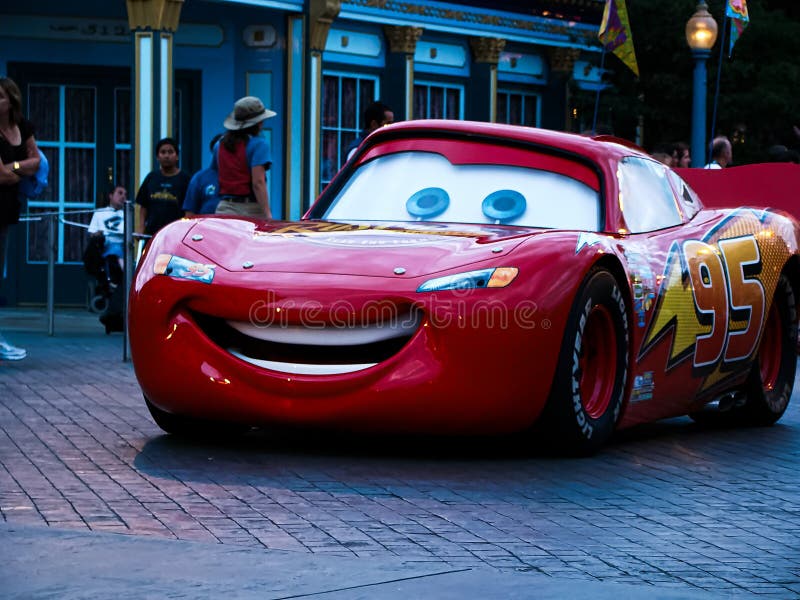
268 Cars Pixar Stock Photos – Free & Royalty-Free Stock Photos from Dreamstime

Cars the movie hi-res stock photography and images – Page 3 – Alamy

Cars 2 movie hi-res stock photography and images – Alamy

Pixar cars hi-res stock photography and images – Alamy

Cars disney ride hi-res stock photography and images – Alamy

Cars movie hi-res stock photography and images – Alamy

Tow mater cars movie hi-res stock photography and images – Alamy

Disney pixar cars hi-res stock photography and images – Alamy

“Seated Stag” (2023), carpet and mixed media, 39 1/2 x 43 x 18 1/2 inches. All images © Debbie Lawson, courtesy of Sargents Daughters, shared with permission
Rising from the plush motifs of woven rugs, the wildlife that emerge from Debbie Lawson’s Kent studio are camouflaged by domesticity. The artist (previously) is known for her sculptures cloaked in ornate carpets, the latest of which are on view now at Sargents Daughters for her solo exhibition Hidden Territories.
Elaborate Persian patterns obscure life-sized stags, lions, and bears, that, while distinct in form, lose their naturalistic qualities under the posh floor coverings. Rather than simply cloak each animal in fabric, Lawson leaves the common rectangular rug shape around each creature, further obscuring the boundary between inanimate, human-made decoration and natural life.
Hidden Territories continues in New York City through March 9. Peek into Lawson’s studio and view more of her work on her website and Instagram.

“White Lion” (2023), carpet and mixed media, 47 x 34 x 19 inches


“Bear Cartouche” (2023), carpet and mixed-media, 57 1/8 x 38 1/4 x 19 3/4 inches

“Red Lion” (2023), carpet and mixed media, 37 x 55 x 12 inches


Do stories and artists like this matter to you? Become a Colossal Member today and support independent arts publishing for as little as $5 per month. The article Debbie Lawson Tames the Wild by Cloaking Life-Sized Animals in Ornate Rugs appeared first on Colossal.









