About

Posts by :

Folk photography on Facebook: What do people want to share?

Folk photography on Facebook: What do people want to share?

I’m striving to understand the question of folk photography and international prize-winning photography. If we keep them side by side, what will we see? I’m raising this question to explore the further study of digital folk culture including digital folk photography and digital anthropology.

Through random Google searching, I found the names of international prize winners in photography from Bangladesh. I just took those images as an example of what we considered a prestigious language considering the subject and visual language. From this search, people can list a few common names, who recently won prizes.

In the list, we’ll find the names such as the Royal Horticulture Society (RHS) Photographic Competition, Paris’ Prix De La Photographie compétition, International Press Freedom Award, Discovery of the Year Award or Time and ASMP’s Global Portraiture Competition.

These competitions explore the success of the language and presentation of the photo crafts of Bangladeshi photographers, too. These photos stimulate and inspire to see the crisis in a particular manner. That success is constructed and measured by the West. Ironically, in the post-colonial era, anti-colonial or decolonization studies earn the apex attention in the area of epistemology in underdeveloped countries like Bangladesh. 

My concern is not to focus on those issues, of what photographers are capturing and what is gaining international sight. Already a small group of people, who capture, analyze, and promote photography as art, are concerned about those issues. That’s why I’m not bothering to share with readers that colonizers always choose the hut and slum as synonyms, what is documented as poverty and what later very much influenced the visual artist to create and express the local aesthetics. Still, artists like the broken houses, old cars, emaciated starving people, or hill people under the surveillance of the state, and at the same time aesthetically preached for tourism.

4 Wide Angle Lenses for Photographers Who Love Great Colors

4 Wide Angle Lenses for Photographers Who Love Great Colors
Spread the love

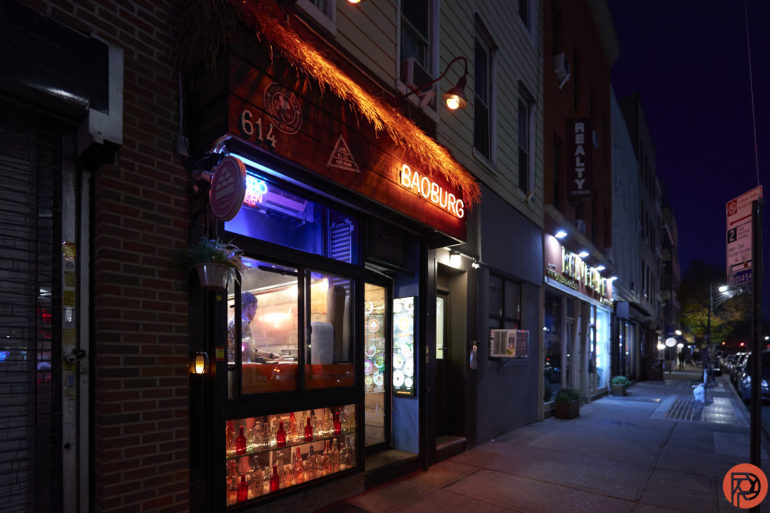
Fact: there’s a lot of clinical quality out there and not enough character. And often, if you want that quality, you can only haul around those lenses if you do many pushups and situps. But modern photography doesn’t require you to be swole. Instead, you can get all the allure and color you want from a few wide-angle lenses. If you love to shoot landscapes, cityscapes, seaside images, architecture, food, etc, then LUMIX has a lens for you. Here are some of the best wide-angle lenses we’ve used for those who love great colors in their photos.

This blog post is presented in partnership with LUMIX.

How We Test and Choose These Wide Angle Lenses and the Colors

  • The Phoblographer’s various product round-up features are done in-house. Our philosophy is simple: you wouldn’t get a Wagyu beef steak review from a lifelong vegetarian. And you wouldn’t get photography advice from someone who doesn’t touch the product. We only recommend gear we’ve fully reviewed in these roundups.
  • If you’re wondering why your favorite product didn’t make the cut, there’s a chance it’s on another list. If we haven’t reviewed it, we won’t recommend it. This method keeps our lists packed with industry-leading knowledge. Some of our stories include affiliate links. If you buy something through one of these links, we may earn an affiliate commission.
  • When we test lenses, we’ve got various things in mind. First off, we consider who might want to buy the lens and what they might do with it. With that in mind, we try to tackle at least three genres of photography with that lens in a variety of situations. If the lens has weather resistance, then we’ll test it accordingly with a weather-resistant camera. We also test the autofocus of the lens in continuous mode, single mode, with exposure preview effects, without those effects, and then with all the major image quality parameters. These days, no one really makes a bad lens — but some are far better than others.
  • In this specific roundup, we’re basing our findings on the reviews that we’ve done. We’re choosing a favorite, but we’re also giving photographers a bunch of others that they might like, depending on how they shoot.

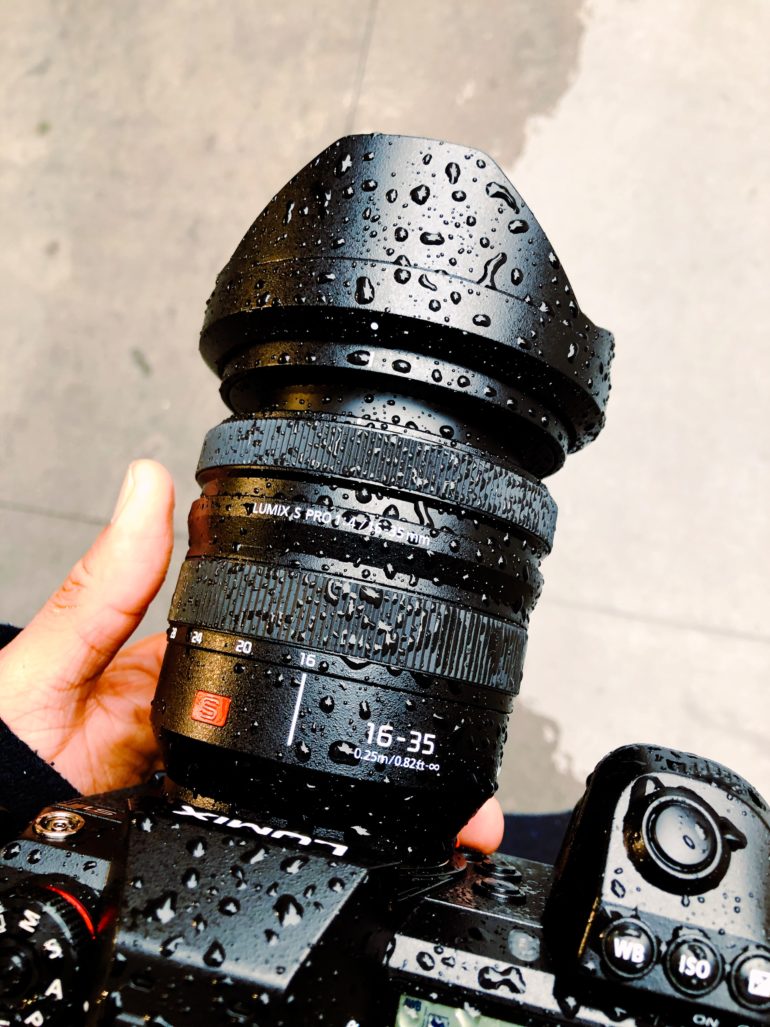
Our Choice Amongst the Best Wide Angle Lenses: LUMIX 16-35mm f4 Lumix S Pro

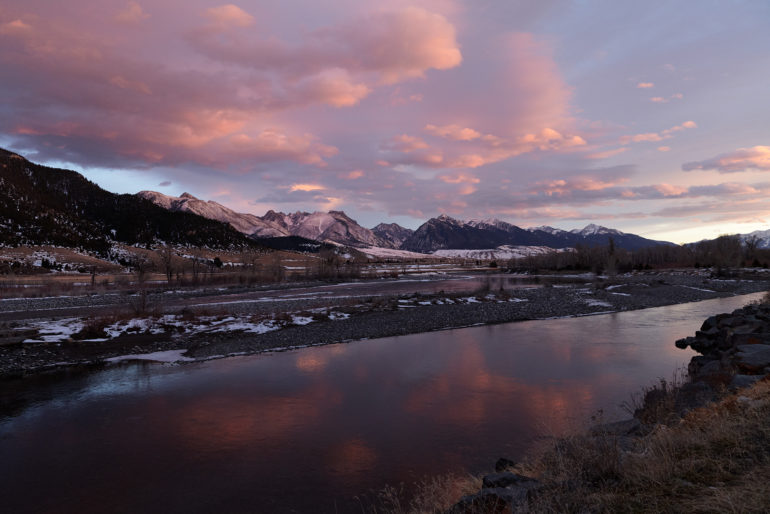
There’s a lot to love about this lens. Out of the box, it has a pretty life-like and vivid color. But when you pour on the sweet waters of Real-Time LUT, your LUMIX camera can blossom photographs as beautiful as the spring sakura. There’s also fast autofocus because it’s one of LUMIX’s wide-angle lenses. And beyond that, it’s weather-resistant, lightweight, and very useful.

  • Small
  • Amazingly lightweight for an L-mount lens
  • Sharp optics
  • Weather sealing
  • Nice feeling in the hand
  • Focuses very fast!

The following specs are from Lensrentals.

Angle of View 107° to 63°
Aperture Blades 9, Rounded
Aspherical Elements 3
Autofocus Autofocus
Brand Panasonic
Diameter 3.3″
Extra Low-Dispersion Elements 1
Filter Size 77.0mm
Focal Length 16.0-35.0
Groups/Elements 9/12
Hood Included Yes
Image Stabilization No
Item Type Lens
Length 3.9″
Lens Type Wide Angle
Max Aperture 4.0
Maximum Magnification 0.23x
Minimum Aperture 22.0
Minimum Focusing Distance 0.8’
Mount L Mount
Ultra High-Refractive Index Elements 1
Weight 1.1 lbs.

What We Think

In our review, we said:

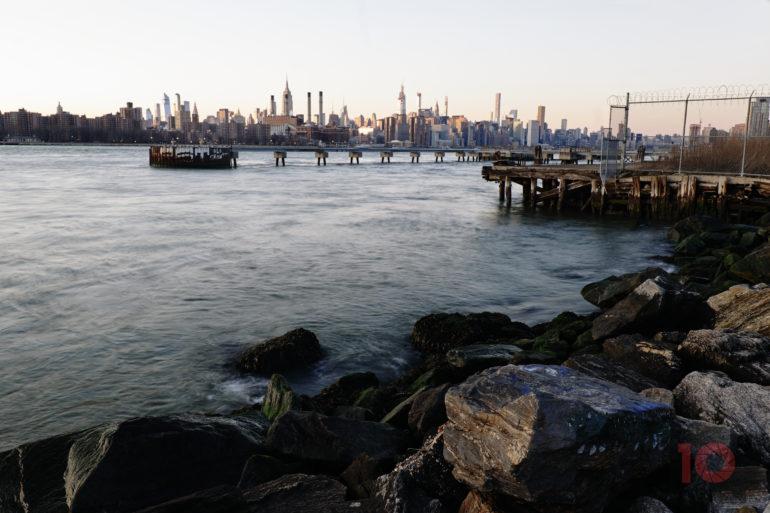
I really like the colors from the LUMIX 16-35mm f4 PRO. I still think LUMIX has lenses with even better tint though. However, for small documentary-style setups, cityscapes, or landscapes, you’ll be happy. As stated earlier, we really like the look of the images with L Monochrome D enabled.

Three Other Wide Angle Lenses With Great Colors

Photographers want great color — that’s not even a question; it’s a demand. In over a decade of camera and lens testing, we’ve found that some of our favorite colors come from prime lenses. So, sure, the zoom lens that we recommend will do a great job if you’re buying an interchangeable lens camera. But if you want stellar colors, then you need to check these out. These are a few LUMIX lenses that we think have phenomenal colors.

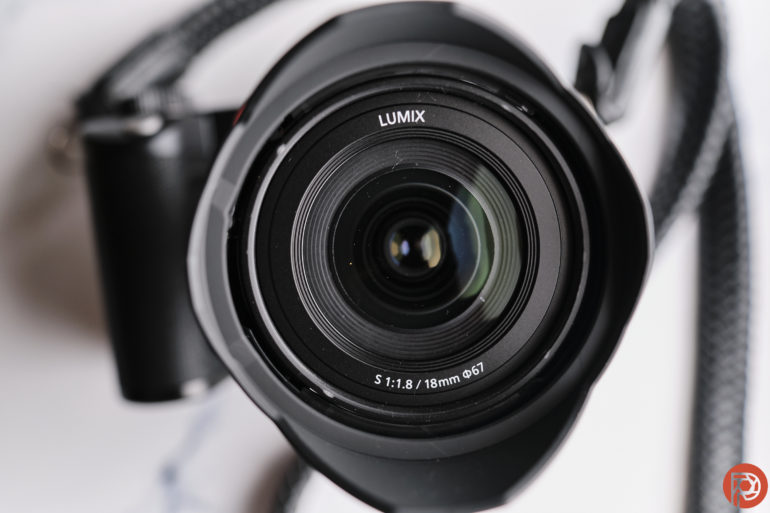
LUMIX 18mm f1.8

In our review, we state:

The LUMIX 18mm f1.8 is in a pretty special place. It’s a small, lightweight lens with full weather resistance, and it focuses incredibly fast. Beyond that, it delivered images that I wouldn’t have imagined otherwise.

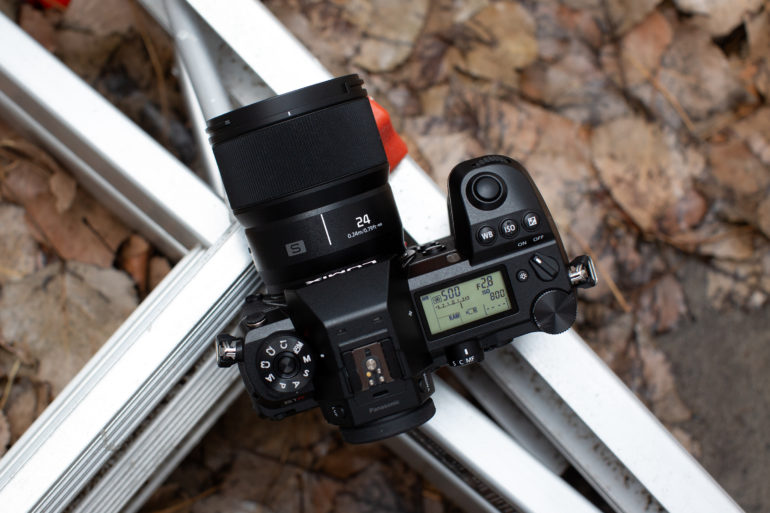
LUMIX 24mm f1.8

In our review, we state:

Images are sharp through the center of the frame with softer edges when shooting wide open. At f2.8, the sharpness is extended through most of the frame. And while the 24mm lens offers plenty of detail, it isn’t too sharp for portraits.

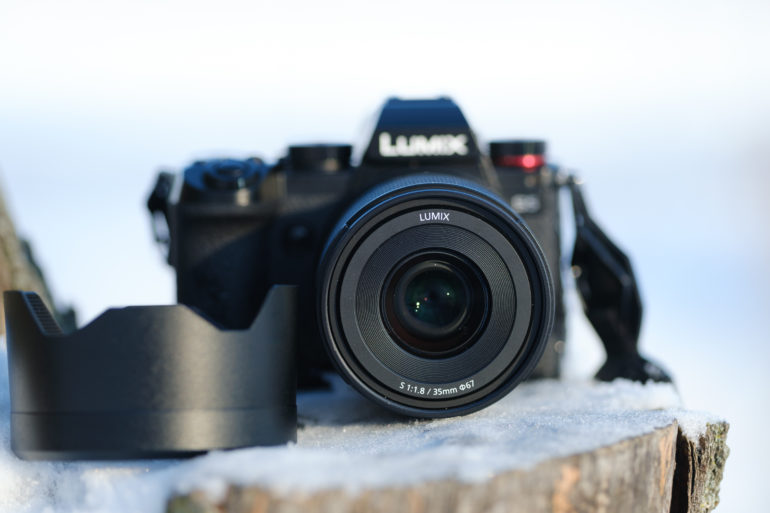
LUMIX 35mm f1.8

In our review, we state:

The only two controls are for manually focusing — the AF/MF switch and the focus ring. The Panasonic S5 menu allows you to customize the speed of the control ring, as well as how far the ring turns to move through the range of possible focal distances. In non-linear mode, the ring turns slowly. That, coupled with focus peaking on the S5, made it easy to manually focus with excellent accuracy. The linear mode focuses much faster, but that makes it more difficult to get perfect focus.

How to Use This Guide to Wide Angle Lenses With Great Color

Here’s what you should know about using this guide to the best wide-angle lenses for LUMIX:

  • This guide contains products we’ve reviewed. Lucky for you folks, we’ve reviewed the vast majority of Panasonic lenses and modern lenses in general. Our Ethical Practices don’t allow us to feature products we haven’t fully reviewed. So when we say these are the best wide-angle lenses with great color for LUMIX, we mean it.
  • This guide is sponsored by LUMIX, who trusts us and understands that we have a set of ethics when it comes to reviewing products. All the product images and sample images in this roundup were shot by Phoblographer staff. There are also links to our full reviews.
  • These are the best wide angle lenses with great color for LUMIX if you’re looking for smaller lenses. We think you’ll love the build quality, size, and overall performance.
  • There are lenses in this list that work well with LUMIX’s autofocus features and many have continued to improve with firmware updates.
  • LUMIX is otherwise known in the market as Panasonic.
  • When considering the best wide angle lenses with great color for LUMIX, remember this is full-frame, otherwise known as LUMIX S. So, unlike Micro Four Thirds, the focal length is exactly what it is.
  • Generally speaking, LUMIX lenses work better on LUMIX bodies than they do with others within the L-Mount Alliance. Part of this has to do with the motors being used.
  • We’ve chosen lenses with weather-resistance. Weather resistance has more use than just shooting in the rain. Think of it as “weathering away” instead of “talking about the weather.” It helps prevent dust from getting into your lens and camera. That means you don’t need to retouch sensor dust.
  • These lenses are for full-frame LUMIX cameras! So they’ll also work on Leica and Sigma L-mount cameras too.
  • With these lenses, you can pretty much do everything with the Leica L-mount. We should know; we own two of them.
  • Basically, treat these like you’re using a higher-end lens. They give that level of performance for a bargain.
  • All the product images and sample photos in these roundups are shot by our staff. In fact, we don’t talk about products at length in roundups like this unless we’ve done full reviews of them. But you can surely know that we’ve done all the research ourselves.
  • This list of the best LUMIX wide angle lenses with great color includes a lot of options for a variety of photographers. We didn’t necessarily feel the need for a longer portrait focal length because a few of the lenses are more than good enough for most needs when it comes to shooting that subject matter. But otherwise, we were focusing on small, lightweight, rugged, and high-performance.

Picking the Right One For You

If you’re still a bit confused as to the right lens for you, here are some questions to ask yourself

  • What’s your budget?
  • How will you use the product?
  • What lighting situations are you in, and how will that affect what you’re doing? Our reviews hyperlinked in this article can help with that.
  • Are you traveling a lot with it?
  • Will you be using it in a situation that’s a bit rougher?
  • Who else uses this product? How are they using it?
  • What’s so appealing about this product that I can’t get from what I have already or something else?
  • When will I really have time to use this product?
  • Where will I bring this product?
  • How will this product help bring me joy and joy in my photography?

Nauticam’s NA-A9III Housing: A New Era of Underwater Photography

Nauticam’s NA-A9III Housing: A New Era of Underwater Photography
image

In the realm of underwater photography, where innovation and resilience converge, Nauticam has unveiled a game-changer. The NA-A9III underwater housing, tailored for the Sony a9 Mark III mirrorless camera, promises to redefine the boundaries of deep-sea visual storytelling.

A Union of Technology and Endurance

Nauticam’s latest offering, the NA-A9III housing, is more than a protective shell for the Sony a9 Mark III camera. It’s an engineering marvel that provides effortless access to the camera’s controls, enhancing the user experience beneath the waves.

Ergonomically designed with dual thumb levers, this housing allows seamless operation, even in the most challenging underwater conditions. The large-bore M24 accessory port is another standout feature, enabling connections to devices like the Atomos Ninja V recorder.

The NA-A9III also hosts fiber-optic ports for strobes and an optional electrical bulkhead. This versatility caters to the diverse needs of underwater photographers, whether they’re capturing the ethereal dance of bioluminescent creatures or the raw power of marine predators.

The Powerhouse: Sony a9 Mark III

At the heart of this revolution is the Sony a9 Mark III camera, a titan in mirrorless technology. It boasts the world’s first full-frame global shutter, facilitating blackout-free continuous shooting at an astounding 120fps with autofocus.

The camera’s no-crop 4K/120p video capability and unparalleled flash sync speed of up to 1/80,000s are game-changers for underwater videography and photography. These features empower visual storytellers to capture the ocean’s depth and dynamism like never before.

Optical Accessories and Security Features

Nauticam’s NA-A9III housing supports a range of optical accessories, including wide-angle and super-macro lenses, enhancing the camera’s imaging prowess. The integrated vacuum check and leak detection systems offer peace of mind, ensuring the safety of the camera in the unpredictable underwater environment.

Crafted with precision, the housing’s build quality is likened to a fine Swiss timepiece. This meticulous design guarantees reliability and longevity, making the NA-A9III a worthy investment for serious underwater photographers.

Priced at $4,657, the NA-A9III is available for pre-order, with shipping scheduled to commence from March 8th. As we venture further into 2024, Nauticam’s innovation continues to push the envelope, illuminating the watery abyss with stunning clarity and unmatched technical finesse.

Indeed, the NA-A9III isn’t just a housing; it’s a testament to human ingenuity, a tool that transforms the seemingly impossible into the beautifully possible. With this release, Nauticam invites us all to dive deeper, explore more, and capture the unseen wonders of our blue planet.