Art World News

Dudi Ben Simon’s Playful Photos Draw on Visual Puns and Humourous Happenstance

Dudi Ben Simon’s Playful Photos Draw on Visual Puns and Humourous Happenstance

All images © Dudi Ben Simon, shared with permission

When Dudi Ben Simon observes the world around her, visual puns and parallels are everywhere: a cinnamon bun stands in for a hair bun; the crinkled top of a lemon is cinched like a handbag; or yellow rubber glove stretches like melted cheese. “I see it as a type of readymade, a trend in art created by using objects or daily life items disconnected to their original context, changing their meanings and creating a new story from them,” the artist says. “I attempt to preserve the regular appearance of the items, but with a switch.”

Ben Simon also takes inspiration from the directness of advertising, focusing on a finely tuned, deceptively simple message that can both be read quickly and provoke humor or curiosity. “I truly believe in minimalism,” she says. “What is not required to tell the story does not exist.”

See more playful takes on everyday objects on Ben Simon’s Instagram. You might also enjoy Eric Kogan’s serendiptous street photography around New York City.


a croissant with dark brown stripes with a belt buckle extending from it as if the belt has been wrapped around the pastry

two image side by side showing, on the left, a wine bottle positioned like the heel of a stiletto with a cork next to it, and on the right, a lemon with the crinkled top around the stem looking cinched by an attached purse string

a photograph of a woman with her hair tied up in a bun, and a cinnamon bun situated where her own hair bun would be

a yellow Birkenstock sandal with a banana peel strapped through one of the buckles

a yellow rubber glove drapes off of a shelf, with a broken egg shell near it, resembling the liquid part of the egg dripping a daisy with a missing petal, which is replaced by a woman's long, white fingernail that resembles the shape of a petal

Do stories and artists like this matter to you? Become a Colossal Member today and support independent arts publishing for as little as $5 per month. The article Dudi Ben Simon’s Playful Photos Draw on Visual Puns and Humourous Happenstance appeared first on Colossal.

Minna Art Market provides vendors affordable alternative convention spot

Minna Art Market provides vendors affordable alternative convention spot
image

Artist Alleys are a popular part of any established anime convention and provide a venue for amateur and professional artisans alike to sell their anime or manga-themed works. Alleys are usually held approximately every three to six months and usually occur in honor of Valentine’s Day, spring, summer, Halloween and Christmas.

The free Dallas-Fort Worth-based Minna Art Market allows others to attend an Artist Alley-type event without paying the hefty price of tickets that anime conventions usually have.

“We pick various art forms from digital art, traditional art, printmaking, nail art, jewelry, accessories, plushies, crochet, apparel, candles and soaps, ceramics, etc.,” said Stephanie Son, Carrollton resident and founder of Minna Art Market, in an email to the North Texas Daily. “Most of our artists have an anime influence to their works, and attendees are drawn to everyone’s unique creative input.”

The next Minna Art Market event is on May 11 at the Denton Civic Center. 

The first Minna Art Market event was in August 2021. Son said the inspiration behind starting the market laid in the desire to generate a space to allow artists to make ends meet amidst the COVID-19 pandemic while adhering to the COVID-mandated requirements. Minna events were outside of Denton in the past. However, they continued to thrive and expand, and the Civic Center accommodated their size, leading to the utilization of the current space.

“Individual vendors will bring their own merch and stuff like that [at conventions], and that’s always been my favorite part because I always love seeing how different artists interpret certain media [and how they] show off their own original art,” said Steph Williams, a Dallas resident and customer of Minna Art Market. “You don’t even have to buy a badge like you would at a convention. It’s just a chance to connect with other artists too.”

Williams began attending Minna Art Market events in 2022, the first one being in May of that year in Lewisville. They have been in the DFW anime and convention scene for ten years and value how smaller artists can participate in the market since it is a small event. They said because Minna is on a smaller scale, it fosters a more cozy and intimate community atmosphere. 


“I feel like Denton is an area that really values art, like the arts in general, and I’m thinking about UNT and how I know that their music program is really good and that’s something they’re known for,” Williams said. “You can definitely tell the people in the area are very appreciative of art in all its forms, and Minna is a great showcase for that.” 

Minna means “all of you” or “everyone” in Japanese. Son chose the name desiring cooperation and customer and vendor assistance. The intentions behind Minna are to help foster support for the artists and expose people who attend the events to new artists. Son is impacted by how she gets to connect to artists she had not known of, and in addition, there is an impact by artists telling her about their experiences with selling at the market.

“I wanted to participate in the market because I have always heard about it, and I think it’s a really good community,” MOLDYWORLD owner Josey Contreras said. “I’m very excited to participate.”

Contreras will sell their creations through the market for the first time in May. They make crocheted items through their small business, MOLDYWORLD. They said they heard a great deal about the market previously, but will be experiencing it in full for the first time in May.

“The best thing about Minna is when the artists and attendees leave happy! I’m overjoyed to hear people express their gratitude towards me about their positive experience at Minna.” Son said in the email. “I love being able to help facilitate an artist community for the DFW area.”

Son said she is shocked to witness just how much Minna has grown, and that word of the marketing spreads even outside the local DFW areas. Artists and attendees travel from out of the state to attend the market.

“I think it’s really impressive what she’s done with this event. I know it’s not easy to start stuff like this, especially on the scale that it’s grown to, because I know that they’ve had to outgrow two different spaces before the current one that they’re in,” Williams said. “Steph herself is really sweet. She’s one of the kindest artists I’ve ever met at conventions and stuff like that.”

‘The art market needs to be strengthened’—Artists recommend more opportunity for the creator economy

‘The art market needs to be strengthened’—Artists recommend more opportunity for the creator economy

Launched in 2014, PhotoSparks is a weekly feature from YourStory, with photographs that celebrate the spirit of creativity and innovation. In the earlier 765 posts, we featured an art festival, cartoon gallery. world music festivaltelecom expomillets fair, climate change expo, wildlife conference, startup festival, Diwali rangoli, and jazz festival.

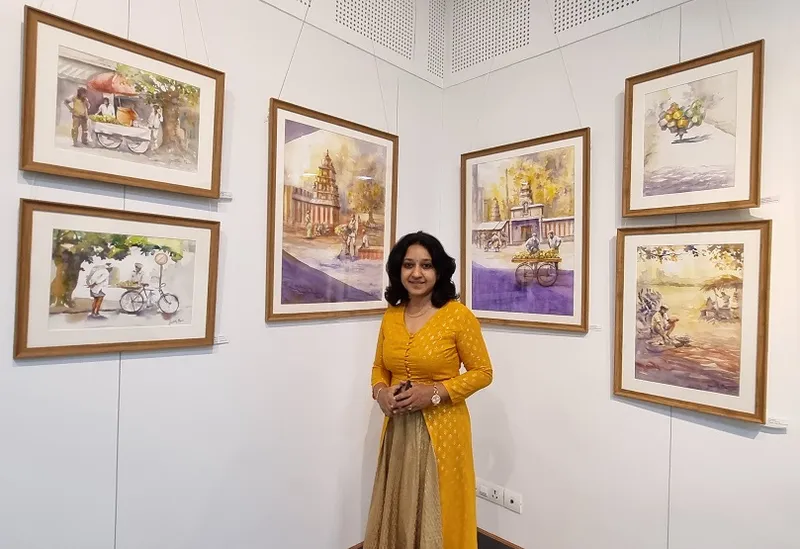
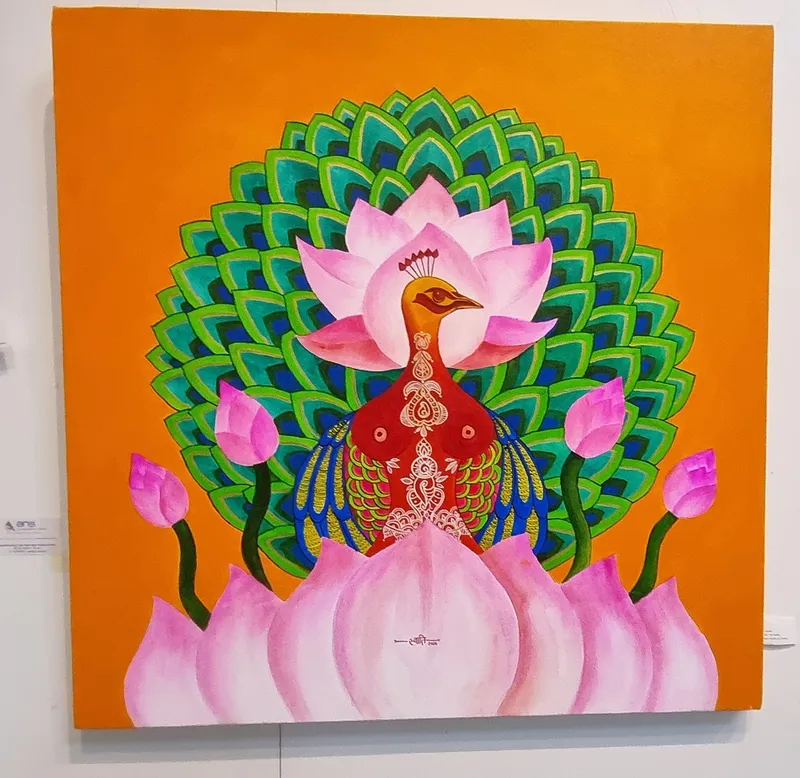
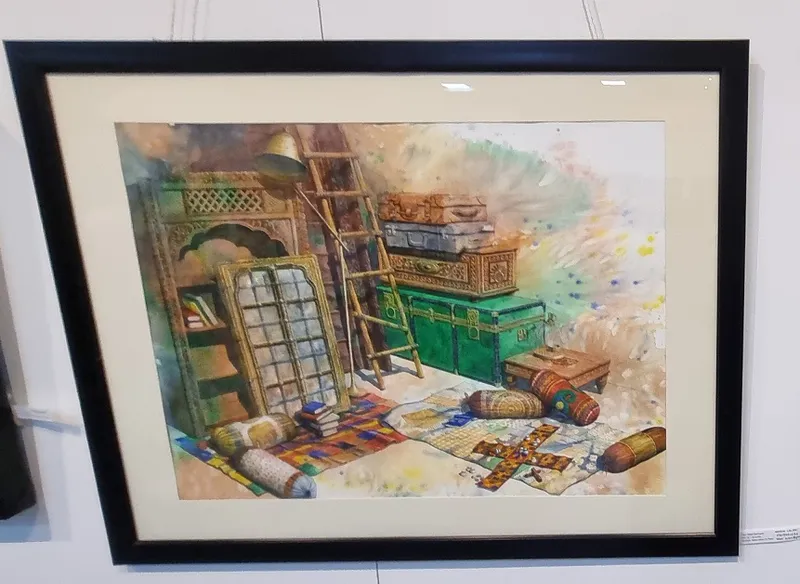
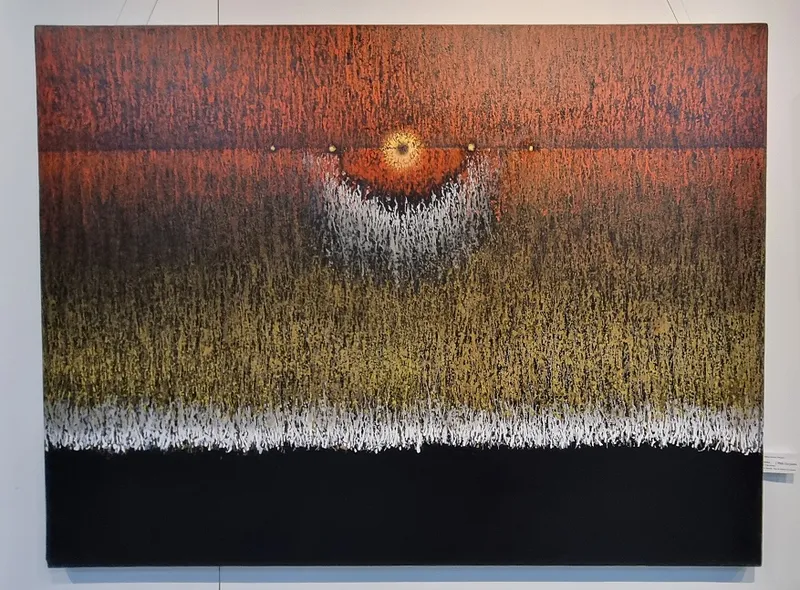
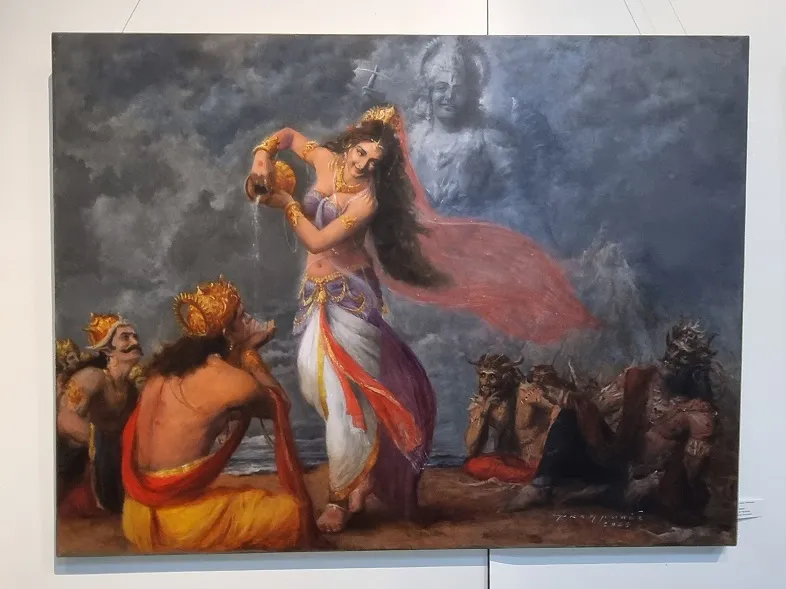
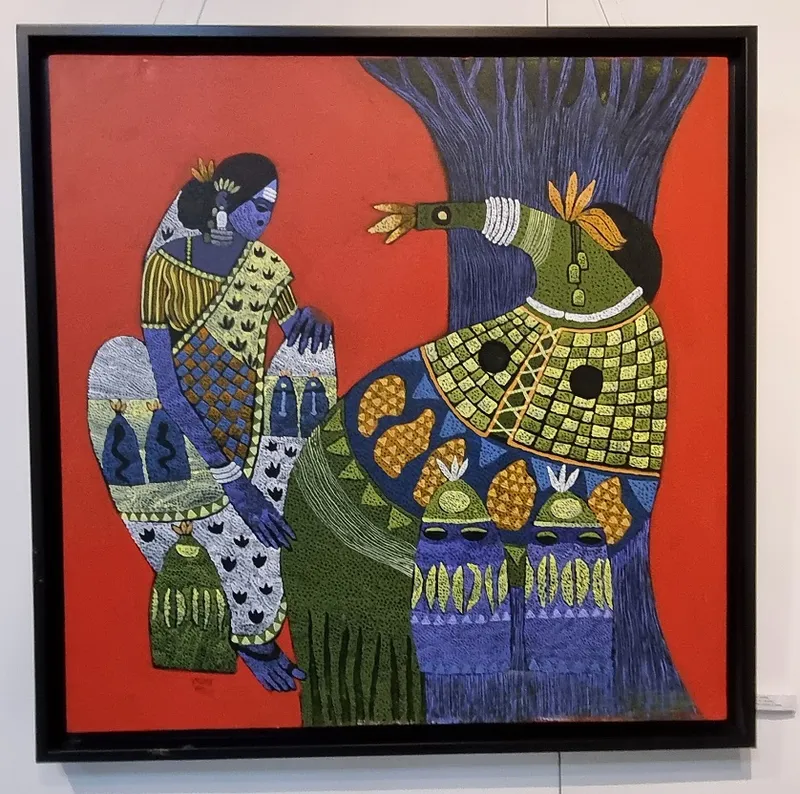
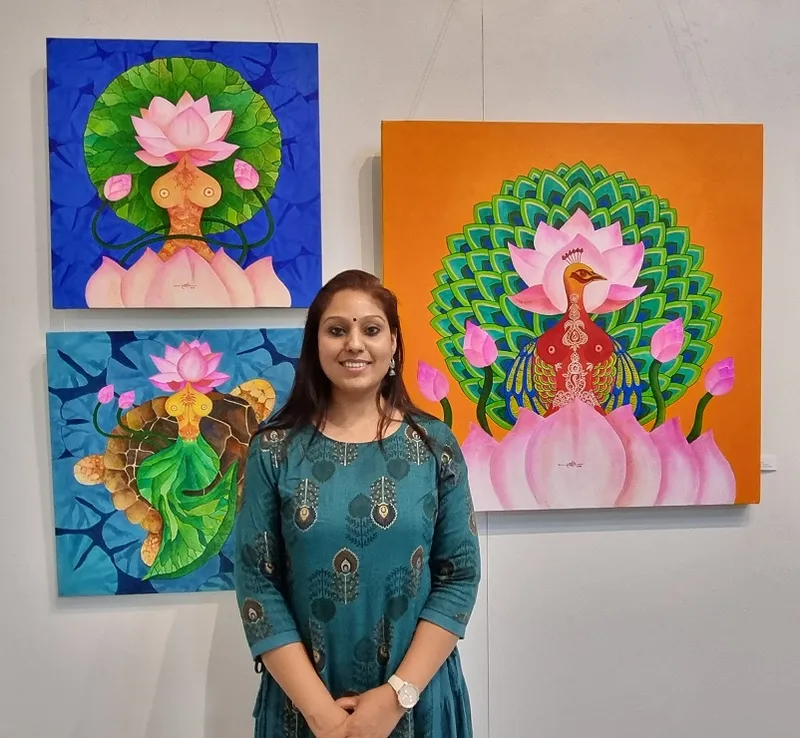
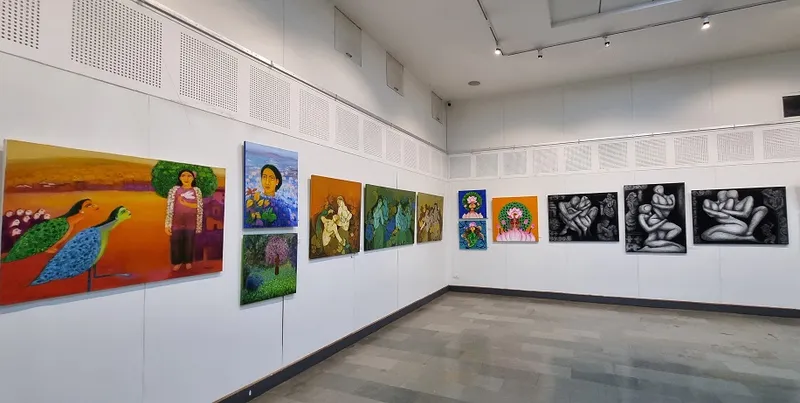
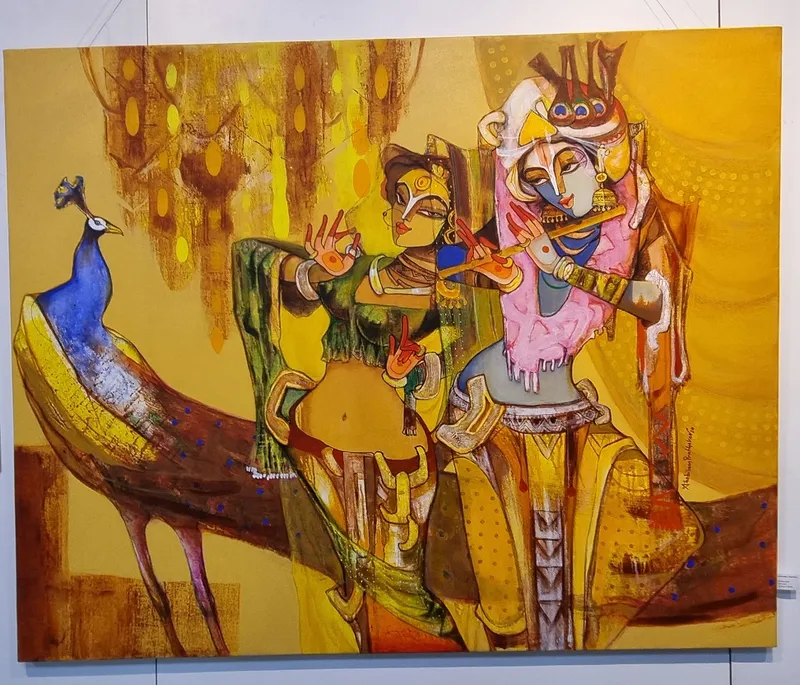
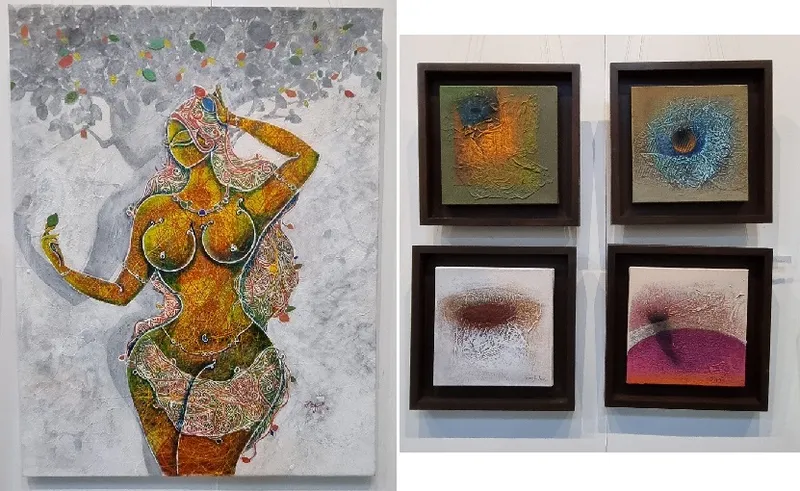
Karnataka Chitrakala Parishath in Bengaluru recently hosted the exhibition titled Charvi (‘something beautiful and intelligent’), curated by Sydney-based Car Street Studios. In this photo essay, we showcase some of the paintings along with artist insights on their creative process.

“Art helps me live each moment deeply, and assimilate and document my experience,” Spoorthy Murali tells YourStory.

Spoorthy Murali” align=”center”>Spoorthy Murali

Spoorthy Murali

She has been painting for around 12 years now. “I am happy to have been a part of several reputed projects and shows, many of which are fundraisers for worthy causes,” she proudly says.

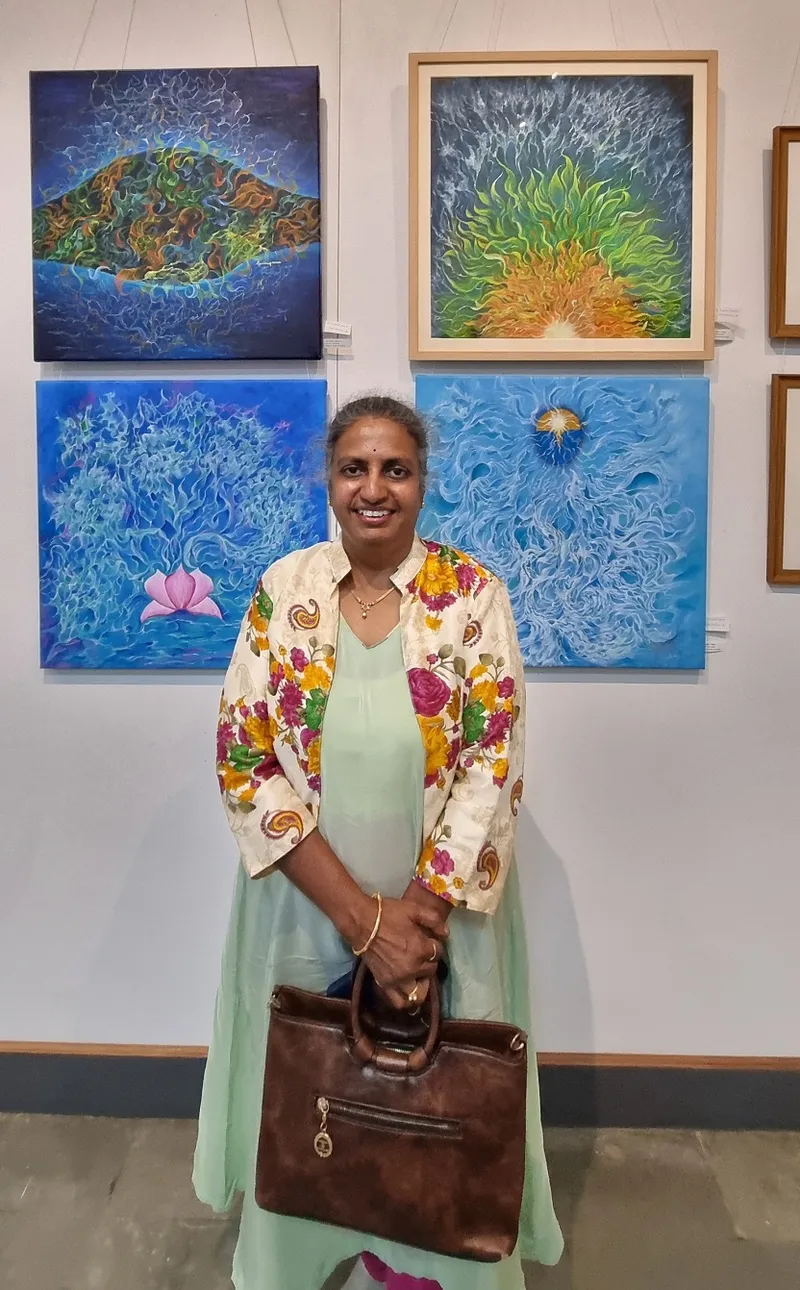
“To me, life is a journey to deconstruct and free the constraints that we put around ourselves. Life is about experiencing this journey fully in all its glory,” Nirupama SP observes.

Art is one of the modes to achieve absolute chaos or absolute stillness. “With each work, I try to break free of a barrier and become just a piece of life,” she adds.

Nirupama SP” align=”center”>Nirupama SP

Nirupama SP

Nirupama has held a solo show and a number of group shows. They include the Karnataka Lalith Kala Academy annual show in 2022.

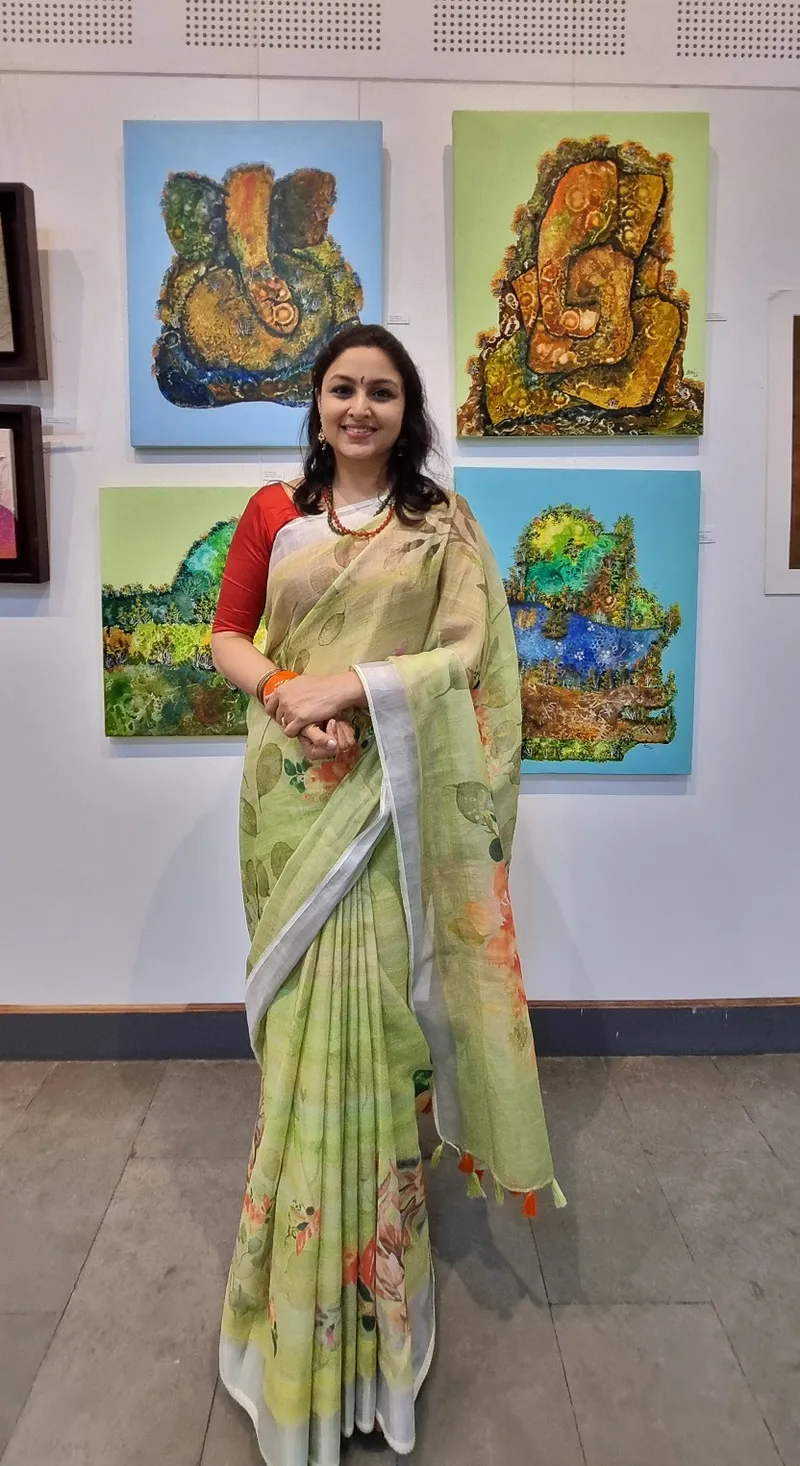
“Art is an exploration of the soul. My journey as an artist began at a young age when I discovered my fascination for colours and their ability to convey emotions beyond words,” Anupama PG describes.

She experimented with various mediums and techniques, developing a distinctive style that merges realism with an ethereal touch. “My works often feature intricate details that showcase an unwavering commitment to craft,” she says.  

Anupama PG” align=”center”>Anupama PG

Anupama PG

She has won a string of awards over the years from the Gulbarga Academy of Art and Culture, Parameshwara Pulakeshi Award (2018) from the Akhila Karnataka Kannada Chaluvali Kendra Samiti in Bengaluru, and Nammoora Saadhaki award from Kartikeya Charitable Trust in Kasaragod.

Other awards include the Women Achievement Award (2019) from Nava Bangalore Club, Art Legend Golden Mayuri Award (2023) from Konaseena Chitrakala Parishath Amalapuram, and Gold Medal at the 19th annual Royal Academy National Awards (2023) in Kalburgi.

The exhibitors suggest different means to increase and improve art appreciation in society. “Broader art education is needed at the elementary level. More eminent people should come forward and express their opinions on art,” Anupama suggests.

0

Murali advises that more events should be facilitated where the public and the art world interact with each other.

Nirupama recommends that art appreciation should start early in life by exposing children to the art world. “They should be encouraged to express themselves freely through art, and see how such expression works through regular visits to art galleries,” she says.

“The art market needs to be strengthened so that artists can depend on it for their bread and butter,” Nirupama signs off.

Now what have you done today to pause in your busy schedule and harness your creative side for a better world?

1
2
3
4
5
6
7
8
9
10
Swati Tiwari” align=”center”>Swati Tiwari

Swati Tiwari

(All photographs were taken by Madanmohan Rao on location at the exhibition.)

The Burden: A Darkly Funny Musical Punctures Existential Dread with Unusually Cheerful Song and Dance

The Burden: A Darkly Funny Musical Punctures Existential Dread with Unusually Cheerful Song and Dance

Today we’re returning to a dark comedy classic that, although released in 2017, rings just as true in 2024. Directed by Swedish animator Niki Lindroth von Bahr, “The Burden” is a wildly wry musical that skewers loneliness, greed, beauty myths, and the existential woes of modern life through a lively cast of animal characters.

The award-winning short film visits a bleak supermarket, hotel, call center, and fast-food restaurant where employees break into song and dance, sometimes to the tune of common sales refrains. “Would you like to sign up for our money-back guarantee? Try our satisfaction guarantee?” monkeys croon. When an apocalypse hits the bizarrely relatable world, the characters jump at the chance for change.

Watch “The Burden” above, and find Lindroth von Bahr’s other films on Vimeo.


a fish in a bathroom and another in sweats open their hotel room doors to the lobby where another fish stands behind the desk

a dog moves his cart to stock the shelves at a grocery store

two mice dance with their cleaning supplies in a restaurant

Do stories and artists like this matter to you? Become a Colossal Member today and support independent arts publishing for as little as $5 per month. The article The Burden: A Darkly Funny Musical Punctures Existential Dread with Unusually Cheerful Song and Dance appeared first on Colossal.
Art galleries turn to fresh forms of collaboration as market splinters

This year’s 12th edition of Frieze New York opens with the art trade under pressure. The fair, followed by an extended season of commercial events that culminate in the city’s bellwether auctions, finds itself in a market that has started the year in distinctly depressed form, exacerbated by macroeconomic volatility and geopolitical uncertainty. 

Most gallerists are putting on a brave face, noting that decent sales are still being made in an environment where business could be a lot worse. There has been “a little correction”, says Olivia Barrett, founding director of the LA gallery Château Shatto, which brings a mixed booth of artists to Frieze (May 1-5). She thinks that for smaller galleries such as hers, the wider world has a less immediate impact. “We run a tight programme so tend not to experience the peaks or the troughs,” she says.

For some of her peers, though, the backdrop has prompted creative business thinking. “At this moment of uncertainty, adaptability is key,” says the New York gallerist Nicola Vassell. She is referring to the gallery’s tie-up with the global outfit Hauser & Wirth, where the mega-gallery agreed to co-represent Vassell’s artist Uman. Unlike other shared representation deals, for which a partner gallery could, at best, get a small percentage of their artist’s sales elsewhere, the arrangement with Hauser & Wirth splits the commission evenly. Called Collective Impact, the structure was initiated with the Uman partnership last year and Hauser & Wirth has since struck the same deal with New York’s Company Gallery and their artist Ambera Wellmann.

In a photo, a young woman wearing a black apron over a white shirt stands in the middle of her canvases and sketch-filled studio.
Portrait of Uman in her studio (2023). A Somalia-born, New York-based artist, she draws on her cross-cultural identity to paint otherworldly, colourful universes © Courtesy the artist/Hauser & Wirth/Nicola Vassell Gallery. Photo: Luigi Cazzaniga

As the (much) bigger partner, Hauser & Wirth’s management sees Collective Impact as “an entrepreneurial way to support a smaller structure and put the artist in mind first”, says gallery president Marc Payot. The idea, he says, came up during the pandemic, “when the gap between the larger galleries and the rest of the ecosystem got bigger”.

The 2023 Art Basel/UBS Art Market report found that at dealers with a turnover of more than $10mn, sales increased by 19 per cent in 2022, while those with turnover below $250,000 reported an average fall of 3 per cent, having also posted the smallest rise in sales in 2021. (The trend sharply reversed last year.)

Collaborating, says Payot, helps prevent the situation where an artist decides to leave their grassroots gallery for a bigger player — known in the industry as “poaching”, but often simply motivated by the artist’s growing commercial success needing a bigger network. Keeping the original gallery on board means that activity continues at price levels where the megas don’t operate and “offers the artist a space where they feel comfortable”, Payot says. In exchange, the structure gives its mega-collaborator “the street cred of access to a younger generation of artists and curators”.

A neon-lit white sign hanging on a wall reads ‘EGOÏSTE’ in capital letters.
‘Égoïste’ (2023) by Sylvie Fleury © Courtesy the artist/Karma International/Sprüth Magers. Photo: Ben Westoby
A neon-lit bright pink sign hanging on a striped pink and white wall reads ‘pleasures’ in italics characters.
‘Pleasures (pink flamingo)’ (2022) by Sylvie Fleury © Courtesy the artist/Karma International/Sprüth Magers

Vassell, who brings a work by Uman to the Independent fair (May 9-12), is equally convinced. With Collective Impact, she says, “the investment of each gallery is singular” within a structure designed to foster sharing. Tangible advantages include having access to Hauser & Wirth’s “enormous expertise, attentiveness and global footprint”, while being able to share information in an otherwise very private market, she says.

The rewards can be immediate. At Hauser & Wirth’s exhibition of Uman in London this year, the artist’s average price range had moved up about 10 per cent, to between $90,000 and $135,000, Payot says.

So is it really win-win? There are those sceptical of Hauser & Wirth’s motives. “You could say they are doing some sort of image management because of a reputation for hoovering up plenty of other artists in the past,” says one art adviser. Vassell says that the reaction from her peers has been “everything from absolute ecstasy to cynicism”. Success, she says, rests partly on “enthusiasm for the unconventional nature of the effort”.

Payot underlines that Collective Impact is not about Hauser & Wirth per se and that he would like it to be a blueprint for the industry “to take the whole ecosystem into consideration”.

No other gallery has openly followed their lead, though there is enthusiasm from some smaller players. “I find what Nicola has done very inspiring,” says Rakeb Sile, co-founder of the Lagos and London gallery Addis, which opens a show in New York’s Nada Exhibition Space soon (Threads of Connection, May 8-June 1). “For the bigger galleries,” she adds, “this is a game they have to play, to support rather than cannibalise the industry.”

In an abstract canvas, swathes of purple, black and pink hint at a female profile with bright red lips.
‘Milky phonemes’ (2024) by Emma McIntyre © Courtesy the artist/Chateau Shatto

Olivia Barrett of Château Shatto says such tie-ups can work well even without the formalised split of commission. She cites her recent partnership with David Zwirner gallery for the artist Emma McIntyre, whose new work, “Milky phonemes” (2024), is among those her gallery is bringing to Frieze. “We’ve always had a very transparent conversation [with Zwirner], rather than being two entities jockeying for inventory and relationships,” she says.

Vassell also gives credit to other galleries with which she shares artists in the more traditional way, including Various Small Fires, Corvi-Mora and The Modern Institute. There’s evidence of galleries joining forces at Frieze too, with 10 of its 68 exhibitors sharing booths, including Sprüth Magers and Karma International showing Sylvie Fleury.

This growing collaborative spirit “won’t stop poaching”, says Magnus Resch, an industry expert and the author most recently of How to Collect Art. “Gallerists have historically had difficulty working together,” he says, “because their businesses are owner-driven — they do what they do because they have a strong identity that they like to share with the world.” But he describes himself overall as “a fan” of the thinking behind the Collective Impact arrangement. “The biggest problem in the art world is its lack of new collectors. The more affordable prices [at smaller galleries] bring people in, and the backing of the bigger gallery gives comfort. Some might then get the ‘collector virus’ and convert into major buyers.”

Some flexibility is built in — each Collective Impact deal is set to run for five years, Payot says, after which “perhaps the artist isn’t as important to the smaller gallery, or perhaps they would rather stay with them only, or they might want to keep the structure — five years is a long time in the art market.” Ultimately, Vassell says, in more challenging times, “it’s about finding ways to grow, joining forces with decent people and having a spirit of adventure.”

Two Decades After Its Release, ‘The Art Book for Children’ Gets a Vibrant Makeover

Two Decades After Its Release, ‘The Art Book for Children’ Gets a Vibrant Makeover

All images courtesy of Phaidon, shared with permission

First published in 1997, Phaidon’s The Art Book has long been a go-to source for introductions to some of the most influential artists. Spanning medieval to modern times, the volume contains more than 600 works and is available in 20 languages. About two decades ago, the iconic title received another type of translation geared specifically toward younger art lovers when editors released The Art Book for Children.

That kids’ edition presents a bite-sized, accessible version of The Art Book and was recently updated and revised. The new volume features 30 artists from its predecessor along with 30 additions, bringing together the most significant names from art history like Katsushika Hokusai, Jackson Pollock, and Frida Kahlo. Each spread includes one or more works by each artist and a fun, informative text, inviting children to look closely and discover a variety of paintings, sculptures, photographs, and more.

The Art Book for Children will be released on May 22 and is available for pre-order in the Colossal Shop.


a book spread featuring a cloud work by Georgia O'keefe with text about the piece

a print of a pink mountain and blue water and trees surrounding

Katsushika Hokusai

vincent van gogh's iconic the starry night painting with a swirling blue sky and town below. plus a self portrait of the artist and brief text

Vincent Van Gogh

an open book spread with a large spider sculpture in a public place. on the left side the page says Louise Bourgeois and Artistic Arachnids

a painting of a woman in a gold gown and a man rising from his throne-like chair

Artemisia Gentileschi, “Esther Before Ahasuerus” (1622), oil on canvas

an open book spread with a portrait of Frida Kahlo and her dog and monkey with text about her and Portraits with Pets on the left page

the cover of the art book for children

Do stories and artists like this matter to you? Become a Colossal Member today and support independent arts publishing for as little as $5 per month. The article Two Decades After Its Release, ‘The Art Book for Children’ Gets a Vibrant Makeover appeared first on Colossal.
Jason Limon Gets to the Heart of Human Emotion in His Soul-Stirring Skeleton Paintings

Jason Limon Gets to the Heart of Human Emotion in His Soul-Stirring Skeleton Paintings

“Peas In A Pod” 10 x 10 inches. All images © Jason Limon, shared with permission

Reaching toward universal experiences unclouded by specific identities, Jason Limon strips his recurring characters to the bare bones. The San Antonio-based artist (previously) continues his uncanny paintings of skeletons, who find themselves in precarious, startling, and genial situations. Recent works include “Peas In A Pod,” which features two friends adopting new heads from a large, curved shell. Similar smiling orbs appear in “The Right Grape” as a character chooses and fits the cheerful green fruit onto its neck.

Working in acrylic paint, Limon conjures myriad textures, whether through the deckled edges of a paper-craft structure or thin, crinkled plastic wrap. Combined with his muted palette of neutrals and jewel tones, these three-dimensional effects imbue the scenes with a vintage charm and a sense of timelessness.

Limon is currently working on a few personal projects, so keep an eye on his Instagram for updates. Find originals and prints in his shop.


a bronze papercut hand holds a skeleton figure holding a pink rose as it floats on blue water

“Drift,” 12 x 9 inches

a green skeleton picks up a grape from a bunch and fits it on its neck. all the grapes have faces

“The Right Grape,” 9 x 12 inches

a papercut box with a grim reaper/bat figure painted on it holds a skeleton figure in its arms

“Succumb,” 6 x 8 inches

an orange lightning bold pierces a cloud and three skeletons try to move it

“Lightning,” 6 x 8 inches

a skeleton is trapped in a garden that's in a frame. four gray skeletons are in the corner of the frame with orange and pink motifs surrounding

“Framed II,” 8 x 10 inches

“Look Around,” 10 x 10 inches

a skeleton rests in a translucent sleeping bag of stars and the moon with a pillow that says sleep

“Sleepy,” 6 x 8 inches

Do stories and artists like this matter to you? Become a Colossal Member today and support independent arts publishing for as little as $5 per month. The article Jason Limon Gets to the Heart of Human Emotion in His Soul-Stirring Skeleton Paintings appeared first on Colossal.
Stéphane Thidet Challenges Physics and Social Norms in His Site-Specific Installations

Stéphane Thidet Challenges Physics and Social Norms in His Site-Specific Installations

“Rideau” (2020), in situ installation at Théâtre Graslin, Nantes, France, water, pumps, pond installation in situ. Photo © Martin Argyroglo, courtesy of the artist and Galerie Aline Vidal. All images shared with permission

Paris-based artist Stéphane Thidet invites viewers into wondrous worlds that skew perceptions and distort the laws of physics: a small wooden boat appears to arise from hard planks, flat stones nest inside a bookcase where paper tomes once stood, and water cascades from a Nantes theater making it impossible to enter without being drenched. Crafted with familiar materials and subject matter, Thidet’s site-specific installations and sculptures twist common scenes into unexpected territories.

Explore an archive of the artist’s work on his website.


two wooden chairs sitting side by side with their inner leg sawed down to spindly bits

“Chair” (2009), chairs, wood shavings, and sawdust, variable dimensions. Photo © Stéphane Thidet, courtesy of the artist and Galerie Aline Vidal

the edges of a small boat emerge from a wooden floor installation in a brick cavern

“La Crue” (2010), poplar wood, nails, variable dimensions. Photo © Galerie Aline Vidal courtesy of the artist and Galerie Aline Vidal Collection MAC VAL

water rains down from a classical style building with columns out front

“Rideau” (2020), in situ installation at Théâtre Graslin, Nantes, France, water, pumps, pond installation in situ. Photo © Martin Argyroglo, courtesy of the artist and Galerie Aline Vidal

a wooden bookcase with flat white stones slotted in like books

“Sans titre (Je crois qu’il y avait une maison, il me semble y avoir vécu)” (2010), bookcase and white stones, 239 x 187 centimeters. Photo © Stéphane Thidet, courtesy of the artist and Galerie Aline Vidal Collection CNAP

a wooden house stands atop a scaffolding with a tall staircase

“Il n’est pas de nouveau monde” (2023), wood and steel, 300 x 550 x 400 centimeters. Photo © Cité internationale de la langue Française, courtesy of the artist and Galerie Aline Vidal

Do stories and artists like this matter to you? Become a Colossal Member today and support independent arts publishing for as little as $5 per month. The article Stéphane Thidet Challenges Physics and Social Norms in His Site-Specific Installations appeared first on Colossal.
Sacha Jafri may have cracked the unpredictable art market

Sacha Jafri may have cracked the unpredictable art market

Sacha Jafri’s 17,000-square-foot “Humanity Inspired” collection captured global attention when it achieved the record as the world’s largest art canvas in 2020. The following year, he became one of the world’s most expensive living artists.

Known for his magical realist works, Dubai-based Sacha Jafri paints from a mediative state.

“I’m in a complete trance,” Jafri told CNBC. “I have no clue what I’m doing. After it, I will look at it, and I will go, ‘Wow, oh my god!’ Because I’m not aware of creating it.”

He has worked as an artist since the late 1990s, but it was his “Humanity Inspired” collection that captured global attention. The 17,000-square-foot work achieved the record as the world’s largest art canvas in 2020.

The following year, he became one of the world’s most expensive living artists after selling his work “Journey of Humanity” for $62 million at a charity auction – though he said he is incredibly selective about what he takes to auction.

“I’ve made this quite conscious effort to keep my work out of auction,” Jafri said.

“Because you don’t want your work in auction too early, you don’t want a boom-bust. I also want to control who owns my work. I want to avoid people buying it, storing it in a cupboard selling it three years later, and making money. I want it to be shared.”

Since then, among his other artistic endeavors, Sacha has had his art sent to the moon. He collaborated with Rolls Royce to customize six luxury cars, complete with charitable NFTs embedded inside the glove box.

He also invested in a state-of-the-art studio, located in the Al Quoz industrial area in Dubai. Watch our video above for a tour.

LSU School of Art Market showcases student creativity

LSU School of Art Market showcases student creativity
image

Between 9 a.m.-4:30 p.m. on April 24-26, LSU’s Free Speech Alley is transformed into a unique showcase of artistic talent as the LSU Ceramic Arts Student Association hosts its biannual School of Art Market.

The event brings together students from various art disciplines, including ceramics, digital art, graphic design, painting, sculpture and printmaking to showcase their work in a shared space.

Aspiring students line the walkway displaying a diverse array of artwork. Whether simply admiring or looking to purchase a piece, students passing through can immerse themselves in the creativity of their peers, supporting local talent and adding a touch of art to their day.

The School of Art Market is a platform for students to showcase their talents and profit from their work. Proceeds from the market go to the individual artist, giving them a valuable opportunity to earn income from their creative endeavors. Additionally, funds raised from the market contribute to the School of Art’s efforts to bring in guest artists.

The Reveille spoke with some of the artists about themselves and their artwork.

“I was a high school art teacher for the better part of 18 years, and ceramics has always been my focus … I wanted to come back and get a master’s degree to hopefully teach at the collegiate level,” said Pete Froehlich, a second-year ceramics MFA student.

“I’ve been doing ceramics for about 25 years now, on and off,” Froehlich said. “My work is functional and intended to be used. I’ve recently started making larger serving pieces that are gathering spaces, encouraging social interaction and connection during shared meals.”

“I’ve been in the School of Art for three and a half years. And I just really love working with my hands. There’s no real comparison to it. I like making little things that people can take with them,” said Adrianna Hawkins, a fifth-year sculpture major. 

“The only thing I like to do is paint. I think that if I weren’t doing art, I would not be in college,” said painting and drawing junior Cheyenne Marchetta. 

Ella Madura, a junior painting and drawing and chemistry student, discussed her evolution as an artist, saying, “I took my first painting class here, and it took over my life. I switched to being dual-degree, so now I’m getting a BS and a BFA.” 

Madura’s work often reflects personal spaces and relationships. “A lot of my pieces are interiors, their personal interiors, to me, they’re kind of self-portraits. So a lot of it is personal space for me with people who are close to me,” she said.

“I love how stories can impact people. That’s why I mostly want to go towards more comics and illustrations,” said digital art senior Loreal Bart. 

By participating in the School of Art Market, these students not only showcase their talents but also gain valuable experience in marketing and entrepreneurship. The market provides a platform for students to sell their art, connect with the community and take a significant step forward in their artistic careers.