Art World News

Southern Indiana superheroes: Local unveils comic book at Carnegie event

Southern Indiana superheroes: Local unveils comic book at Carnegie event

NEW ALBANY – Comic books have been a staple of American society for the last century, and the arts in general are an important part of today’s culture.

In order to celebrate both, the Carnegie Center for Art and History held a launch program Tuesday evening for a new comic booklet called “The Adventures of Captain Klimt: The Canonizer Cometh!” The titular hero, once known as Professor Valdemar Vasari, was doused in radioactive oil paint and gold foil. Now, he protects art everywhere from art vandal villains.

There was an Austrian artist by the name of Gustav Klimt who was active during the late 19th and early 20th centuries. He served as inspiration for the name and powers the superhero received. Gustav Klimt was a prominent member of the Vienna Secession movement, most known for his paintings, sketches, and murals. The most famous of those is The Kiss, which was created in 1908.

Daniel Vance is a part-time employee who works as the marketing assistant of the Carnegie Center, which is part of the Floyd County Library system. He is also the creator of the event’s featured comic. He was excited for the evening’s event.

“Summer is a really busy time for things here and at the library; that’s why we hold a lot of events during this time. I think we had a great turnout tonight,” he said. 

Vance then talked about art and how it has influenced him over the years. “I’ve always been into art history, ever since I was a kid. I first got the inspiration for Captain Klimt years ago. We’ve talked about creating more Captain Klimt comics. It’s a fun way to get people into art history and let them know what the Carnegie Center has to offer.”

Scenes from the 1927 movie “Metropolis” were also accompanied with live music from the soundtrack performed by local musician Jake Reber on the double bass and other electronic tools he calls gimmicks. “Metropolis” is a work of art in itself, and that analogy resonates with those who are familiar with Superman. The entire movie and music ran during the duration of the program.

“It was an honor to be a part of tonight’s event. I get to do what I love,” Reber said about his participation.

William Smith, the co-founder of a local magazine called Printed, was also excited about the event.

“I’m so glad we were invited to be part of this evening. Printed is a local, self-published magazine. We take submissions of all kinds from those in the Louisville and Kentuckiana areas. It’s a real labor of love. The money we make from the sales of the magazines we sell goes back to the artists,” Smith said. 

Attendees could pick up free copies of the “The Adventures of Captain Klimt, as well a free template comic book which they can use to create their own comic characters’ adventures. Participants also had the option of creating their own comic book superhero and super hero mask with the supplies provided to them.

Whether people were creating their own superheroes, browsing the featured work in the gallery, soaking up the ambiance the movie and music provided, or enjoying free refreshments while mingling with others, all in attendance immersed themselves in the culture of art.

Erwin Wurm’s Motley Crew of Suits and Sausages Cuts a Rug at Yorkshire Sculpture Park

“Big Mutter” (2015). All photos by Jonty Wilde, installation at Yorkshire Sculpture Park (2023) courtesy of the artist and Thaddaeus Ropac Gallery. Images courtesy of YSP, © Erwin Wurm, shared with permission

Dancing business suits, a handbag with legs, and contorted vehicles are just a few of the uncanny scenes visitors to Yorkshire Sculpture Park will encounter this summer. Acclaimed Austrian artist Erwin Wurm’s first large-scale museum exhibition in the U.K., Trap of the Truth, includes nearly 75 sculptures indoors and dotted around the landscape, plus numerous drawings, paintings, photographs, and videos created during the past three decades.

Wurm began making art with inexpensive, everyday items like used clothes, scraps of wood, and cans. As he experimented with materials and ideas, he had an epiphany: “At some point, I came to realise that everything surrounding me can be material for an artistic work, absolutely everything… That was the decisive step, as then anything was possible.” Now known for playful, surreal, and often humorous installations, the artist challenges perceptions of the human body, quotidian objects, and sculpture itself.


A sculpture of two pink, dancing business suits.

“Big Disobedience” (2016)

Wurm often tangles comically with ideas around politics and culture, referencing capitalism, cultural norms, and social conformity. By giving business suits a life of their own and transforming them from dull gray to playful pink, he separates the wearer from the symbol, freeing them to move about on their own. A giant water bottle, a much-loved object of comfort, is personified with a pair of shoes and titled “Big Mutter”—mutter means “mother” in German—along with other references to his nation’s identity and history, like anthropomorphized Viennese sausages.

The title Trap of the Truth nods to the 17th-century French mathematician and philosopher René Descartes, who immortalized the phrase, “I think, therefore I am,” as he interrogated the subjectivity of truth. Wurm captures a sense of uncanny joy, prompting viewers to question what they see and how they relate to the world around them.

Trap of the Truth continues through April 28, 2024, and you can find more on Yorkshire Sculpture Park’s website. Explore more of Wurm’s work on his website and on Instagram.


A chrome or silver sculpture with a cloud for a body and legs with sneakers.

“Big Hypnosis” (2008)

An installation view of a sculpture of a Renault 25 car at an unusual angle.

“Renault 25” (1991)

An installation view of a sculpture of two empty business suits dancing and a tall sculpture of a button-down shirt shaped like a box, with legs.

Left to right: “Big Disobedience” (2016) and “Big Kastenmann” (2012)

Two images side-by-side. The left image shows an empty business suit standing on a lawn. The right image shows a pastel blue Birkin handbag on very long legs.

Left: “Big Suit 2” (2010-2016). Right: “Step (Big)” (2021)

Three sculptures of sausages with arms and legs that appear to be dancing on the lawn.

Left to right: “Untitled” (2018), “Giant Big, Me Ideal” (2014), and “Untitled” (2018)

A sculpture of a Mercedes work truck that bends up a wall.

“Truck II” (2011)

Two sculptures of a briefcase and a suitcase with legs on a lawn.

Left to right: “Dance” (2021) and “Trip” (2021)

Do stories and artists like this matter to you? Become a Colossal Member today and support independent arts publishing for as little as $5 per month. The article Erwin Wurm’s Motley Crew of Suits and Sausages Cuts a Rug at Yorkshire Sculpture Park appeared first on Colossal.

The Art of Storytelling for Brands and Marketers

The Art of Storytelling for Brands and Marketers

The Gist

  • Emotional appeal. Storytelling humanizes brands, creating stronger emotional connections.
  • Customer resonance. Authentic stories evoke emotions, aligning with customers’ values.
  • Brand identity. Storytelling reveals the people, values and culture behind a brand.

Storytelling is not just a tool, it’s a potent strategy that breathes life into a brand and creates emotional connections with customers. It’s about humanizing a brand, presenting it as more than just a business entity, but rather as a relatable character with its own personality, beliefs and values. Storytelling creates emotional ties, the kind that lead to loyalty and an affinity toward a brand. It allows brands to illustrate a unique narrative that resonates with their customers. This article will delve into storytelling, what it means for brands, and how brands are successfully using it as a marketing strategy.

Humanity Is All About the Art of Storytelling

Humans are natural storytellers and have been telling stories since the beginning of humanity. We enjoy hearing a story, as well as sharing a story with others. Very often, the story one tells others has a main character — the storyteller — and many secondary characters — everyone else. We’ve been listening to stories all of our lives: from our parents, siblings, school teachers, ministers, as well as neighbors, entertainers, musicians, artists, writers and businesses. 

A 2017 report from Harvard Business Review revealed that chemicals such as cortisol, dopamine and oxytocin are released in the brain when a person listens to a story. If our goal is to drive a point home, cortisol facilitates the formulation of memories. Dopamine assists with the regulation of emotional responses and helps to keep the listener engaged. Oxytocin is associated with empathy, a crucial element in creating, deepening, or maintaining deeper connections with others.

John January, co-CEO at Signal Theory, a brand development, marketing and design firm that humanizes advertising through behavioral science, told CMSWire that it’s important to remember that people really don’t change — we still think and react the same way now as we did when we gathered around the bonfire after a successful hunt or gather.

campfire stories


“Around those fires, what did we do? We told stories,” said January. 

“Storytelling is a singularly powerful strategy for brands because our lives revolve around stories. The stories of our history. The stories of our tomorrow. The stories that we tell ourselves. Whether they are little or big, stories are fundamentally human. And that’s why brands should tell them,” said January.

When businesses tell stories, much like human storytellers, the stories they tell have a main character — the business itself, and secondary characters — their customers. Similar to the stories one person tells another, they often have a theme, such as the secondary characters having a challenge that must be surmounted — and of course, the hero of the story (the business) comes along and solves the challenge, providing the secondary characters with a happy ending. Of course, this is an oversimplification, but essentially the business tells the story about how they are able to provide a positive outcome for the customer, the community or the world at large.

“Meaning is at the top. Joy is in the middle. And comfort is the foundation. That’s it. That’s all people really want,” explained January. “It’s truly no more complicated than that. So, in the end, those are the fundamental factors that should underpin the story you want to tell.”

The stories that brands tell today also have another element: They seek to humanize a business, to put a face on a faceless entity. Stories can tell a tale about the founder, the executives, the employees of the business and the community it serves. This gives the brand an opportunity to express itself in ways that traditional marketing practices do not provide. In order to be effective, brands must fully understand themselves to be able to articulate their stories.

“Every storyteller has a POV. What’s your brand bringing to the world? What is the point of the story you want to tell? Not just the selling strategy,” said January. “But your own worldview. Are you a joy, comfort or meaning brand? Do you offer a combination of two? To resonate, you need to offer all three. How can the story you tell amplify a different, perhaps less developed, part of your brand?”

Brands are often convinced that technology is the solution for every problem or challenge, but the simple act of telling a story creates a human connection that technology alone cannot replace. “Technology is not a replacement for the connection a story can build with the people you want to reach. Don’t look at tech as a magic bullet. Look at it as a tool that can help you tell richer, more immersive stories,” said January.

Related Article: Storytelling Drives the Modern Customer Experience

A Brand’s Stories Must Resonate With Customers

Anna Grace Du Noyer, consultant, speaker and group director at Fierce Brands, a group that includes niche agency Fierce PR and circular fashion label Fierce Wife, told CMSWire that her personal journey, which was defined by overcoming a lifetime of trauma, the traumatic deaths of her parents and domestic violence, led her to become a well-known advocate for inclusivity and empowerment, which formed the bedrock of the narratives that are woven across the Fierce brands. “These narratives have transformed the Fierce Group into more than a corporate entity,” said Du Noyer. “These narratives serve as an aspirational beacon to our audience, resonating with their experiences, aligning with their values, and fostering an emotional connection that transcends typical consumer-brand relationships.”

Du Noyer provided an example of a brand that successfully uses storytelling as a way to resonate with customers. “One compelling example is Apple, with its iconic “Think Different” campaign. Here, the narrative centered around the rebels, the troublemakers, and the round pegs in square holes — an ethos which resided at the very heart of Apple’s identity,” said Du Noyer. “By aligning themselves with the narrative of innovation and non-conformity, they not only appealed to the emotions of their customers but also differentiated themselves from competitors.”

Related Article: The Power of Storytelling

A Brand’s Stories Must Be Authentic and Organic

Authenticity is the foundation of trust. Consumers today are increasingly skeptical of traditional advertising and are more likely to connect with brands that are genuine and transparent. When a brand tells authentic stories, it demonstrates its honesty and builds trust with its audience. Authentic stories have the power to evoke emotions and create a deeper connection with customers. When a brand shares stories that resonate with its customers’ values, aspirations or challenges, it creates an emotional connection that goes beyond mere transactional relationships.

Ricci Masero, marketing manager at Intellek, a cloud-based learning technology provider, told CMSWire that to tell genuine, organic stories that align with a brand’s values, it’s important to humanize the brand and present it as a relatable character with its own personality, beliefs and values. “This approach generates emotional connections and fosters loyalty,” said Masero. “By incorporating narratives into content, businesses can engage readers emotionally, rather than just presenting facts. This immersive experience helps audiences connect with the content on a deeper level, leading to better brand recall, engagement, and sharing.”

Masero explained that when it comes to incorporating storytelling into your marketing efforts, it’s crucial to remember that authenticity is key. “To achieve this, start by delving deep into your brand’s identity and purpose. Understand what makes your brand unique, the journey it has taken, and the impact it aims to make in the world,” said Masero. “Then, identify stories that exemplify these qualities and create emotional connections.” Masero suggested that the stories can revolve around a brand’s origin, customer testimonials, or the positive changes the brand’s product or service has brought to people’s lives.

“Storytelling is a powerful tool that can elevate your brand and create meaningful connections with your audience. By embracing genuine, organic storytelling techniques, you can breathe life into your brand, making it relatable and memorable,” said Masero.

Storytelling Reveals the Faces Behind a Brand

Through storytelling, brands can go beyond the typical product or service descriptions and reveal the face behind the brand — the brand’s identity, values, culture and the people who drive it. By humanizing the brand, storytelling creates emotional connections builds trust, and enables customers to see the brand as more than just a business.

Erin Banta, co-founder of Pepper, a unique sustainable custom-made home goods ecommerce site, told CMSWire that consumers like being able to put a face to a brand, and businesses can achieve that type of brand awareness by using storytelling as a marketing strategy. “For example, testimonials or client highlights are one way you can tell the story of your brand and your business,” said Banta. 

“On social media, repost user-generated content and endorsements from influencers to give your brand that personal touch. Once you’ve created that brand awareness, your name will remain in the forefront of your customers’ brains,” said Banta, who believes that building that story, and history, around your brand builds customer engagement, investment and loyalty.

Final Thoughts on Storytelling

Storytelling is a potent marketing tool that humanizes brands, creating emotional connections and enhancing customer loyalty. By authentically presenting their unique values and impact through stories, brands can resonate with customers on a deeper level. This not only personalizes a faceless business but also differentiates it from competitors, building enduring customer engagement and loyalty.

Applications for Kentucky Crafted are now open

Applications for Kentucky Crafted are now open
image

Applications are being taken right now by the Kentucky Arts Council for next year’s Kentucky Crafted arts marketing program. The deadline to turn applications in is August 15th.

Applicants for Kentucky Crafted must be a visual or craft artist who does original work in any medium, a full-time resident of Kentucky and 18 years of age or older. Officials said they should also have a well-developed body of work and some marketing experience.

Communications Director at the Kentucky Arts Council, Tom Musgrave, said beyond those requirements, artists should also have a strong narrative.

“You have to apply to get in it,” said Musgrave. “Not just your work but your ability to communicate your story as an artist and the story of the work you do. Obviously, the work has to be of very high quality.”

Officials said Kentucky Crafted not only assists visual and craft artists but is a symbol of artistic excellence in the commonwealth.

Musgrave said since 2020 the council was forced to meet virtually to evaluate applications.

“This is the first year since the pandemic that we are doing in person panels once again. We are very excited about that and I know the panelist are too because they like being in the same room as each other and be able to look at the art up close and see texture of the natural and organic products and get the scents,” said Musgrave. “So that is a very big deal for us.”

The council plans to start application evaluations sometime in September and start orientation in October.

More information on how to apply for next year’s market can be found at the Kentucky Arts Council’s website at kyarts.gosmart.org.

Should you trust AI with your digital ad dollars?

Should you trust AI with your digital ad dollars?

Artificial intelligence has a variety of uses in the automotive industry. While many dealerships use artificial intelligence in a marketing and customer service capacity of writing content and offering assistance with chatbots, artificial intelligence can also help you determine the who, what, and where of advertising. We’ll go into more depth about current and future cases of how to use artificial intelligence within automotive advertising.

Efficiency Advertising

One of the main advantages of AI-based advertising is the ability to make decisions in real time with human guidance, but without the need for a human to push the button.

In many ways, artificial intelligence is already used in advertising. Google, Bing, and other major advertising and search platforms, for example, have lots of data on their customers and use “Smart Bidding” methods of deciding who and when to serve an ad, and how much to pay to serve that ad. Within these same platforms, ads are also made on the fly from a collection of images and pre-determined ad copy which specifically targets that user.

No matter the platform, artificial intelligence is a quick and smart decision-maker when it comes to determining when and where to place an ad with some human direction, which generally involves knowing which customers convert the best for you.

Issues: Transparency, data privacy, and bias

While some owners, general managers, and tech people might express come concerns about data privacy and transparency, the companies that provide artificial intelligence are largely responsible for maintaining and storing data in a way that won’t be harmful to you, your dealership, or the customer.

If you are worried about knowing how well the artificial intelligence-based platforms are performing, we strongly suggest you use analytics-based platforms, which are often free, and tag campaigns so you understand how well artificial intelligence campaigns work.

Humans and AI

At some point, you have to align what artificial intelligence is capable of, and your actual goals. For example, artificial intelligence doesn’t know when you want to change budgets, or when you are short on a goal. The idea here is that you’ll need humans guiding your artificial intelligence through shifting goalposts and needs so that it doesn’t learn the wrong things.

AI Vendors and technologies

Getting a good grasp on how AI programs work is the same challenge as getting a good idea of how digital marketing vendors work without truly understanding digital marketing. We have a couple of tried and true methods of evaluating how these work: Ask for references, even if they aren’t local. You’ll want to understand how things work from another store and know how they are set up to handle artificial intelligence programs before diving into it on your own.

If a company is new enough not to have any references, you might skip them and try something else. Look online for reviews too, of course.

Integrating Artificial Intelligence into your advertising

A couple of things that will probably be impacted by launching an artificial intelligence advertising campaign are your art, ad copy, and data. Artificial intelligence often uses data that is floating around at secure points on the web, and your own DMS or CRM, Be prepared to open the doors to your DMS so that artificial intelligence knows the same things you do about your customers, like loan end dates and driving habits.

Stay Informed

Look out for articles like ours and new advancements that help you better understand artificial intelligence and how it will integrate with your business to make it better. We also suggest considering your dealership’s weak points and how artificial intelligence can help there. If you are having trouble keeping your business development center staffed, consider finding information specific to that topic so you know how it can really help you.

Delhi High Court discusses the importance of novelty and originality in design disputes

Delhi High Court discusses the importance of novelty and originality in design disputes

The judgment dated 03 July 2023 of Delhi High Court, in Jayson Industries Vs Crown Craft India Pvt. Ltd addresses the crucial issue of design novelty and originality. The plaintiff, who holds Design Registrations 326707, 326883, and 326882, accused the defendant of design piracy. Central to the plaintiff’s claim is the novelty and uniqueness of the designs of their bucket, mug, and tub. According to the plaintiff, these products incorporate distinctive shapes, configurations, and surface patterns, setting them apart visually from similar items in the market. The plaintiff argued that the defendant’s products are obvious and fraudulent imitations of their registered designs, constituting piracy. The following comparisons were made:

To support their claims, the plaintiffs presented various views of their registered designs, showcasing different angles and sections of each item. It was emphasized that the designs have been granted novelty based on their unique features, particularly the ribbed nature of the body and the flange-like extensions on the vessels’ rims.

The dispute, initially filed before a District Judge (Commercial Court), was transferred to the High Court due to the defendant’s plea challenging the validity of the suit designs. The district court had previously granted an ex-parte ad interim injunction in favour of the plaintiffs, restraining the defendant from selling, marketing, distributing, or supplying the disputed bucket, mug, and tub. The ex-parte interlocutory injunction remained in force, and the defendant sought relief and vacation of the injunction.

In response to the allegations, the defendant raised questions on the imitative nature of the designs and challenged the validity of the suit designs. The defendant argued that the Designs Act, 2000 lacks a provision similar to the Trade Marks Act, 1999, which statutorily presumes the validity of a registered trademark. Contrarily, the defendant claimed that there is no such presumption of validity for a registered design under the Designs Act. Additionally, the defendant contested the novelty and originality of the suit designs, seeking their cancellation based on grounds such as lack of novelty, originality, and prior publication.

The defendant presented various documents, including brochures and registered designs to demonstrate the lack of novelty and originality in the suit designs. The argument emphasized that even slight differences in the shape of flanges or other minor changes would not save a design from invalidation if it were deceptively similar to the prior art. Furthermore, the defendant contended that trade variants of the existing prior art cannot be considered “original” within the meaning of the Designs Act. These contentions gave rise to a prima facie triable issue challenging the validity of the designs.

The court conducted a thorough examination of the application of the law to the presented facts, particularly focusing on the issue of design novelty. Based on the principles outlined in the Designs Act, the court raised doubts regarding the novelty and originality of the suit designs. It concluded that the suit designs lacked novelty and originality, leading to the rejection of the plaintiff’s request for an interlocutory injunction

The court analysed the suit designs, specifically highlighting the plaintiffs’ claimed novel and original features: the vertical ribs along the length of the designs and the flanges on the rim. However, upon careful examination of the prior art, the court found no convincing evidence that these features were indeed novel and original.

The court held that the vertical ribs along the length of the bucket, tub, and mug, as well as the extended flanges at the rim, were not unique to the plaintiffs’ designs. It cited various prior art references that demonstrated the existence and use of similar features before the plaintiffs’ designs came into play. Following were the prior design documents:

i)  Bathroom tub as uploaded by Sara China Bona Mould:    

ii) Mug as uploaded by Sara China Bona Mould:

iii) Tub No. BN2103169 invoiced by Bona Mould to Crown Craft,

iv) Mug No. BN2103170 invoiced by Bona Mould to Crown Craft

v) Bucket from the catalogue of Migeplastics

vi )Design 784645, registered in favour of David  A. Richardson.

vii )SeMius Durable Practical Solid Geometric Shape Storage Garbage Household Trash Can, available on amazon .in since 14 March 2019:

The court observed that the vertical ribs in the suit designs were identical to those found in the prior art. While there were some minor variations in the shape, number, and extent of protrusion of the flanges, the court considered these changes as trade variants rather than substantial differences. Therefore, the court deemed the defendants’ challenge to the suit designs’ novelty and originality credible, resulting in the rejection of the plaintiff’s request for an interlocutory injunction.

The court’s decision emphasizes the significance of demonstrating novelty and originality in design disputes and underscores the necessity of thorough prior art investigation to support assertions of uniqueness and exclusivity. It also highlights the cruciality of conducting comprehensive prior art searches before making accusations or initiating legal action for design infringement.

thMTHRshp art gallery prepares for takeoff

thMTHRshp art gallery prepares for takeoff

Courtesy Liz Jordan

Liz Jordan thought conventional art world practices could use some updates — changes that would make being an artist a little less impossible for mothers and other people with day jobs. Because a starving artist isn’t very admirable when there are multiple mouths to feed.

So the East Dallas mom started up a company, a fine-arts gallery called thMTHRshp, which aims to change the culture by upgrading the commission structure to favor the artist and offer extra support to historically marginalized artists.

thMTHRshp’s founding artists are women and mothers, LGBTQIA+ people, artists of color, disabled artists and those with professions outside the art world. They will soon launch an online gallery, and will have their first in-person show in November at Ephemeral Space, which is owned by Jason Cohen, who also owns Curiosities.

“We combine our love of art with social justice and community outreach initiatives to create positive change in our communities,” Jordan says by email. “Our dual career artists are stay-at-home moms and other professionals who thrive with the flexibility of a gallery and the community of a collective.”

She says the gallery’s commission agreements, in which artists receive a minimum 70% of the sale of their work, up to 85%, will make a big difference for thMTHRshp artists. Galleries typically take 50% on two-dimensional works such as paintings and photographs, according to art marketing blog reddot.

“That’s a game changer, and I am so excited to offer that opportunity to artists in our community and across the U.S.,” Jordan says. “I am happy to be a part of the movement representing marginalized artists AND supporting financial success for artists.”

The gallery offers workshops open to the public and led by the artists — think yoga, abstract painting, photography, mixed-media pet portraits, creative learning for preschool and elementary students, floral design, mindful and creative learning for preschool and elementary kids, art and hang for LGBTQIA+teens. Workshops accommodate new parents, people with disabilities and others interested in learning and healing through art. They want to create positive change that ripples through East Dallas and beyond, the founding artists note.

“Community engagement and outreach are essential to our mission,” Jordan says. Everyone involved in thMTHRshp believes the whole neighborhood benefits from multicultural and multidisciplinary experiences, she adds.  Texas Women’s University.

thMTHRshp won the 2022 Texas Women’s University StartHER grant, which gives 25 current or aspiring women business owners $5,000 to undertake new and innovative projects. As the gallery page notes, it’s “a place where artists can be artists, no side hustle required.”

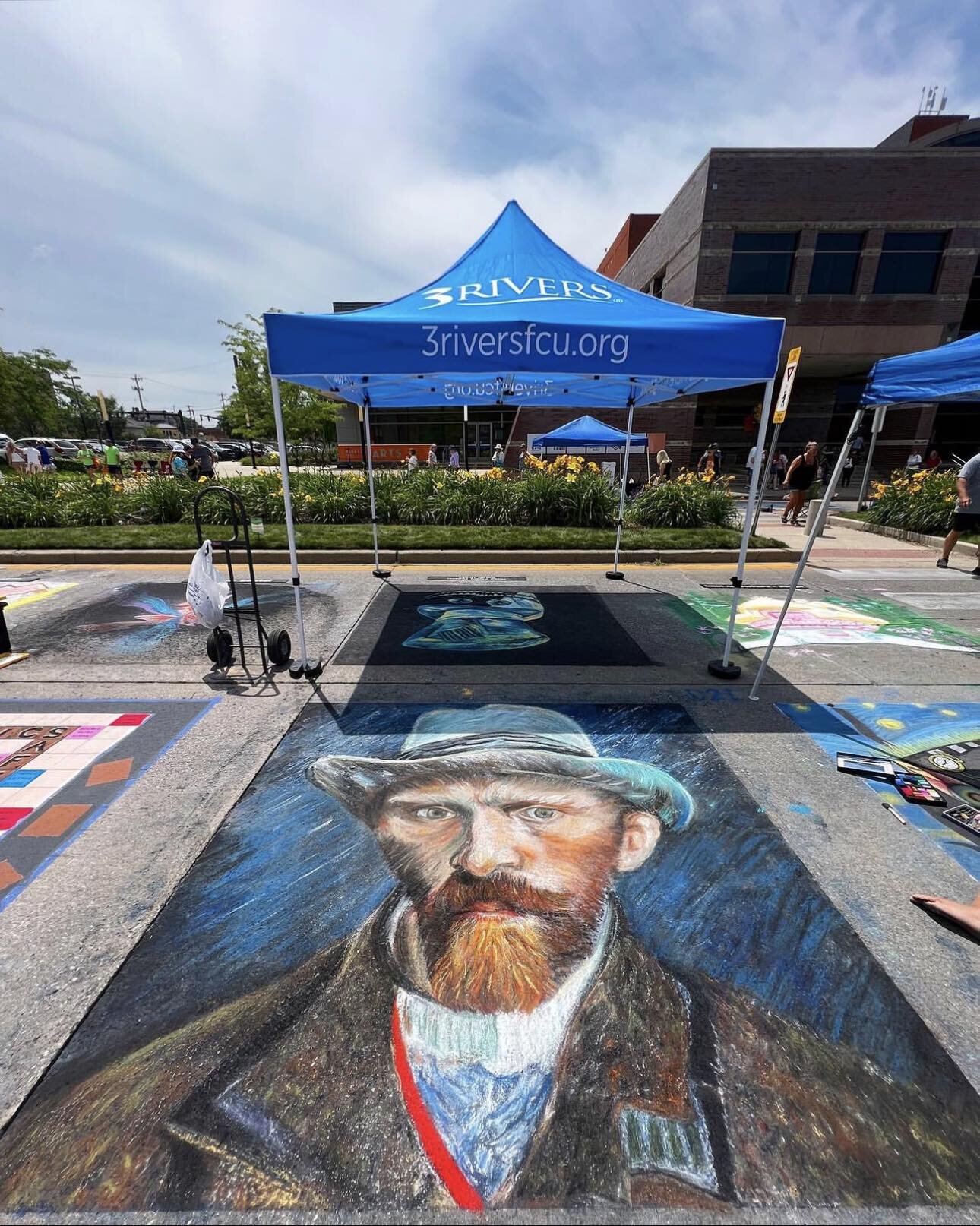
#PlacesofNEI: Colorful creations filled Main Street for the return of Chalk Walk

#PlacesofNEI: Colorful creations filled Main Street for the return of Chalk Walk
Northeast Indiana is evolving. These are the people and places shaping its future.

#PeopleofNEI #PlacesofNEI

Enjoy this story? Sign up for free solutions-based reporting in your inbox each week.

Stephen J. Bailey is a Fort Wayne native and the owner of PH Digital that was founded in 2006. Based out of the Anthony Wayne Building in downtown Fort Wayne, he specializes in web development, SEO development, social media management, and digital marketing campaigns with numerous companies in northeast Indiana. Stephen loves road trips, sushi, his pups, and spending time on our three rivers.

UW and Wyoming SBDC Network to Host Workshop in Lander July 18

UW and Wyoming SBDC Network to Host Workshop in Lander July 18
image

For anyone contemplating starting a small business, the thought alone can be daunting.
However, advice and assistance are available.

Audie Cunningham will discuss the basics of starting a business during a Wyoming Small
Business Development Center (SBDC) Network workshop titled “Start Your Own Business”
Tuesday, July 18, from 5:30-6:30 p.m. at the Lander Library, located at 451 N. Second
St. To register, go here. Registration is free.

The Wyoming SBDC Network offers business expertise to help Wyoming residents think
about, launch, grow, reinvent or exit their business. The Wyoming SBDC Network is
hosted by the University of Wyoming with state funds from the Wyoming Business Council
and funded, in part, through a cooperative agreement with the U.S. Small Business
Administration.

Topics to be covered include helpful startup tools, sources of business capital and
a business plan overview.

Cunningham is the Wyoming SBDC Network’s regional director for Fremont and Teton counties.
She enjoys seeing community members bring their business ideas to life and is eager
to help them grow and thrive. As an entrepreneur, Cunningham has worked in art licensing
and graphic design, and she has 10 years of experience in customer service and marketing
through her work in public libraries. Her education and experience have given her
knowledge in print and digital marketing, creating marketing plans, social media marketing
and business planning.

For more information, call Maureen Johnson, marketing, communication and database
manager for the Wyoming SBDC Network, at (307) 343-0925 or email mjohn125@uwyo.edu.

Inside Ross Sklar’s Acquisition Spree As Starco Brands Targets Growth

Inside Ross Sklar’s Acquisition Spree As Starco Brands Targets Growth

How do you build a multi-million-dollar business from scratch? For Ross Sklar, who has done exactly that with Starco Brands since launching the company in its current guise four years ago, the answer might be summarised as play to your strengths. Entrepreneur Sklar has expanded Starco through a combination of careful management and strategic acquisitions, largely eschewing day-to-day involvement in operational affairs in favour of driving collaboration and making smart appointments.

“My skills lie in getting deals done and in bringing people together,” explains Sklar. “If you can recruit the best talent to run your businesses, you’ve got a real chance of making it work.”

It’s an approach that has seen Starco make three significant acquisitions since Forbes first met the company, a little under two years ago. First, in September 2022, it acquired Art of Sport, a personal care business aimed at athletes and sports players co-founded by the basketball star Kobe Bryant. That was followed in January by the acquisition of Skylar, which produces a range of hypoallergenic fragrances, and then in February with a deal to acquire Soylent, a company that manufactures plant-based drinks.

With the global economy stuttering and businesses everywhere still suffering from the after effects of the Covid-19 pandemic, this period might not have been an obvious time to launch an M&A spree. Indeed, globally, M&A deal volumes have fallen off a cliff over the past year.

However, Sklar believes that is exactly the time to pursue new opportunities. “I’ve always thought that distressed times can be the moment to make your move,” he argues. “If you sit back and lick your wounds, you almost always discover that you’ve missed an opportunity.”

Each of the Starco acquisitions provides an example of that. First, with Art of Sport, Sklar had been a fan of the business well before the tragic death of Bryant in 2020 but noted its subsequent struggles in the face of Covid-19. “We started to talk to the management about how we could help,” Sklar explains. “What we saw was a business with a huge opportunity to play in so many different segments, because it wasn’t simply a sports and leisure brand.”

The company’s existing range of body and skincare products, designed specifically with athletes in mind, has had some traction, Sklar points out, but he also sees potential to expand into areas such as sports drinks, supplements and similar products. The sport drinks market alone is growing at a rate of 4.8% a year according to research from Allied Market Research and could be worth as much as $22 billion globally by 2031.

At Skylar, meanwhile, Sklar was excited by a business that had been “developed by a great founder with huge vision”. Skylar had developed the first mass-market hypo-allergenic range of prestige fragrances, targeting a younger customer base prepared to try different fragrances and to sign up to subscription deals. But it had been run for scale rather than for profit. “The products were unique,” Sklar says.

Again, it’s a huge market with untapped potential. Products for sensitive skin racked up sales of more than $40 billion last year according to Grand View Research, with the market set to grow at a rate of almost 9% a year. Yet few businesses have identified fragrances as a potentially valuable subset of that marketplace.

As for acquisition number three, Soylent taps into huge demand from customers concerned about their health and wellbeing, which continues to grow in the wake of the pandemic. Products such as Soylent’s drinks are bought by customers focused on tracking the nutritional benefits of what they consume, but more broadly there is growing interest in drinks as potential meal replacements. Statista forecasts that the value of plant-based nutrition market could grow from around $29 billion in 2020 to as much as $162 billion by 2030. “There is also an opportunity to make nutrition accessible to everyone,” says Sklar, who points out that cash-strapped families could also find the product useful as they seek to eat healthily.

Sklar’s focus now is to strengthen the businesses acquired by enabling them to tap into the broader group’s expertise and experience. Soylent, for example, could benefit from Starco’s track record in experiential marketing – it has worked closely with music star Cardi B to build a brand for its Whipshots business, which sells vodka-infused whipped cream. All three businesses are tapping into some sort of behavioural change in broader society, Sklar points out, so that creates opportunities for idea sharing and innovation too.

Across Starco Brands as a whole, revenues have now grown to around $70 million a year. The company is listed on the OTC market, the decentralised stock market through which investors can buy and sell stocks in early-stage and developing companies. That has been important, in that it has enabled Starco to grow partly through financing deals with its own stock.

“This is the value-building stage for the business,” reflects Sklar. “Are we looking to the senior exchanges such as Nasdaq or New York? Yes, but we don’t feel any pressure and we’ll do it on our timescale.” In the meantime, private equity and venture capital investors in the sort of businesses that Starco is targeting have an opportunity to take a stake in the company when selling out of their own portfolio holdings. Andreessen Horowitz, GV, Upfront Ventures and Lightspeed Partners have all become Starco shareholders in this way.

Entrepreneurs have to be patient, picking their opportunities carefully, Sklar insists. It’s something he learned while building the Starco Group, which over the past 20 years has assembled a string of consumer products businesses, either through organic innovation or acquisition. The realisation that Starco wasn’t capturing the full value of its intellectual property led to the launch of Starco Brands, and now Sklar hopes he’s on his way to closing that gap.