Art World News

Inspira™ Technologies Reports First Quarter 2023 Financial Results

As of March 31, 2023, the Company had $11.5 million in cash, cash equivalents, and short-term bank deposits

RA’ANANA, Israel, May 18, 2023 /PRNewswire/ — Inspira Technologies OXY B.H.N. Ltd. (Nasdaq: IINN) (Nasdaq: IINNW) (the “Company” or “Inspira Technologies”), a company aiming to revolutionize acute respiratory care, announced today its financial results for the first quarter ended March 31, 2023.

Dagi Ben-Noon, Chief Executive Officer of Inspira Technologies, stated: 

“We believe that this is a very important period for the Company, as we continue to progress towards the regulatory submission of the New ALICETM Device with the U.S. Food and Drug Administration (FDA) in the coming months. This is in addition to the ongoing clinical studies of the HYLATM non-invasive blood sensor currently underway at Sheba Medical Center in Israel. The progress of these devices represents important building blocks of our flagship INSPIRATM ART system, which is advancing in the development process.”

Highlights:

  • May 11, 2023 – We announced that we are developing the VORTX™ Blood Oxygenator, a disposable oxygenator unit (kit) that uses a unique technology for saturating blood with oxygen and removing carbon dioxide. The VORTX is being designed to be sold separately to an addressable market currently estimated at $1.16 billion as well as being made compatible with our INSPIRA ART system and ALICE device.
  • March 22, 2023 – We announced a First in Human of HYLA™ Blood Sensor in a clinical study. We also announced the first use of the HYLATM in a patient undergoing open-heart surgery at Sheba Medical Center in Israel.
  • February 13, 2023 – We announced that we received approval from Sheba Medical Center to conduct a clinical study of the HYLA™ Blood Sensor.
  • January 23, 2023 – We announced that we were granted a patent by the U.S. Patent Office for the INSPIRA™ ART System’s Convertible Dual Lumen Cannula Device and Method of Use. All 20 claims were found to be novel, with inventive step and industrial applicability.

Financial Results for the Three Months Ended March 31, 2023

Research and development expenses for the three months ended March 31, 2023, were $2.0 million, compared to $1.5 million for the corresponding period in 2022. The increase is a result of the Company’s recruitment of employees and the expanded research and development of its new technologies and operations.

Marketing expenses for the three months ended March 31, 2023, were $168 thousand compared to $472 thousand for the corresponding period in 2022. The decrease is attributable to decreases in share-based compensation expenses and a reduction in marketing activities. The marketing department increase its efforts in the first quarter of 2022 with respect to brand awareness and exploring go-to-market capabilities.

General and administrative expenses for the three months ended March 31, 2023, were $1.0 million, compared to $1.5 million for the corresponding period in 2022. The decrease resulted primarily from a decrease in share-based compensation expenses.

Finance income for the three months ended March 31, 2023, was $368 thousand, compared to $2.2 million for the corresponding period in 2022. The change in finance income resulted primarily from the calculation of the fair value of the Company’s financial equity liabilities to pre-initial public offering (IPO) and IPO investors, in addition to the fluctuation in the U.S. dollar – New Israeli Shekel exchange rate during the first quarter of 2023.

Finance expenses for the three months ended March 31, 2023, were $112 thousand, compared to $25 thousand for the corresponding period in 2022.

Net loss for the three months ended March 31, 2023, was $3.0 million, compared to a net loss of $1.3 million for the three months ended March 31, 2022.

Balance Sheet Highlights

Cash, cash equivalents and short-term bank deposits were $11.5 million as of March 31, 2023, compared to $13.9 million as of December 31, 2022.

Financial liabilities at fair value totaled $431 thousand as of March 31, 2023, compared to $368 thousand as of December 31, 2022. The financial liabilities represent the fair value of the Company’s equity liabilities to pre-IPO and IPO investors.

As of March 31, 2023, the Company’s shareholders’ equity totaled $10 million, compared to shareholders’ equity totaling $12.8 million as of December 31, 2022.

Inspira Technologies OXY B.H.N. Ltd.

Inspira Technologies is an innovative medical technology company in the respiratory treatment arena. The Company has developed a breakthrough Augmented Respiration Technology (INSPIRA ART), designed to rebalance patient oxygen saturation levels. This technology potentially allows patients to remain awake during treatment while preventing the need for highly invasive, risky, and costly mechanical ventilation systems that require intubation and medically induced coma. The Company’s products have not yet been tested or used in humans and has not been approved by any regulatory entity.

For more information, please visit our corporate website: 
https://inspira-technologies.com/

Forward-Looking Statement Disclaimer

This press release contains express or implied forward-looking statements pursuant to U.S. Federal securities laws. These forward-looking statements and their implications are based on the current expectations of the management of the Company only and are subject to a number of factors and uncertainties that could cause actual results to differ materially from those described in the forward-looking statements. For example, the Company is using forward-looking statements when it discusses its regulatory strategy, the continuation of its progress towards the regulatory submission of the ALICE Device with the FDA, the progress of its clinical studies, and its believe that the progress of its devices represents important building blocks of its INSPIRA ART system. These forward-looking statements and their implications are based solely on the current expectations of the Company’s management and are subject to a number of factors and uncertainties that could cause actual results to differ materially from those described in the forward-looking statements. Except as otherwise required by law, the Company undertakes no obligation to publicly release any revisions to these forward-looking statements to reflect events or circumstances after the date hereof or to reflect the occurrence of unanticipated events. More detailed information about the risks and uncertainties affecting the Company is contained under the heading “Risk Factors” in the Company’s annual report on Form 20-F for the fiscal year ended December 31, 2022 filed with the SEC, which is available on the SEC’s website, www.sec.gov.

US Public Relations
Dave Gentry
RedChip Companies Inc.
1-800-RED-CHIP (733-2447)
Or 407-491-4498
[email protected]

Copyright © 2018-2023 Inspira Technologies OXY B.H.N. LTD., All rights reserved.

UNAUDITED CONDENSED INTERIM STATEMENTS OF FINANCIAL POSITION 


(US dollars in thousands)


March 31,


December 31,


2023


2022


ASSETS


Current Assets:


Cash and cash equivalents


6,362


6,783


Cash deposits


5,136


7,120


Other accounts receivable


371


591


Total current assets


11,869


14,494


Non-Current Assets:


Right of use assets, net


1,004


1,107


Property, plant and equipment, net


535


411


Total non-current assets


1,539


1,518


Total Assets


13,408


16,012


March 31,

 December 31,


2023


2022


LIABILITIES AND SHAREHOLDERS’ EQUITY


Current Liabilities:


Trade accounts payables


191


150


Other accounts payable


1,350


1,217


Lease liabilities


307


329


Financial Liabilities at Fair Value


431


368


Total current liabilities


2,279


2,064


Non-Current Liabilities:


Lease liabilities


637


728


Loan from the Israeli Innovation Authority


412


398


Total non- current liabilities


1,049


1,126


Shareholders’ Equity:


Share capital and premium


54,397


53,814


Foreign exchange reserve


(2,222)


(1,928)


Accumulated deficit


(42,095)


(39,064)


Total equity


10,080


12,822


Total Liabilities and Shareholders’ Equity


13,408


16,012


UNAUDITED CONDENSED INTERIM STATEMENTS OF COMPREHENSIVE INCOME

(US dollars in thousands)


For the Three Months
Ended March 31,


For the Year
Ended
December 31,    


2023


2022


2022


Research and development expenses


2,054


1,560


8,054


Marketing expenses


168


472


1,325


General and administrative expenses


1,065


1,544


5,391


Operating loss


3,287


3,576


14,770


Finance )income(


(368)


(2,196)


(4,678)


Finance expenses


112


181


Loss (profit) before tax


3,031


1,380


10,273


Taxes on income


Loss (profit) for the period


3,031


1,380


10,273


Other comprehensive loss (profit), net of tax:


Items that will not be reclassified to profit or loss:


Exchange profits(losses) arising on translation to presentation currency


(294)


(425)


(2,138)


Total comprehensive loss for the period


3,325


1,805


12,411


CONDENSED INTERIM STATEMENTS OF CHANGES IN SHAREHOLDERS’ EQUITY


(US dollars in thousands)


For the Three-Month Period Ended March 31, 2023 (Unaudited):


Share capital and premium


Adjustments arising from translating financial operation


Accumulated deficit


Total


Balance on January 1, 2023


Changes during the period:


53,814


(1,928)


(39,064)


12,822


Loss for the period


(3,031)


(3,031)


Other comprehensive loss


(294)


(294)


Total comprehensive loss


((294


(3,031)


(3,325)


Share-based compensation


583


583


Balance on March 31, 2023


54,397


(2,222)


(42,095)


10,080


Logo: https://mma.prnewswire.com/media/1941810/Inspira_Technologies_Logo.jpg

SOURCE Inspira Technologies

Ruslan Khasanov Brings Cosmic Phenomena Down to Earth in His Mesmerizing Short Film ‘Space Iris’

Ruslan Khasanov Brings Cosmic Phenomena Down to Earth in His Mesmerizing Short Film ‘Space Iris’

All images © Ruslan Khasanov, shared with permission

For more than ten years, Ruslan Khasanov (previously) has been enthralled by the ecstatic effects of light, color, and movement, which he expresses in an ongoing series of photographs and videos. Composed of a mixture of liquids like water, oil, and paint, he captures hundreds of high-resolution images that are then edited into a short film titled “Space Iris,” which is accompanied by an original composition by Fabio Fonda. “The iris, with its intricate patterns and colors, shares a striking resemblance to the vibrant and colorful cosmic nebula,” Khasanov says. “Just as the eye is a window to the soul, the nebula serves as a window to the vast universe beyond.”

You might also enjoy his earlier projects “Eye” and “heterochromia iridum,” which you can find among many other pieces, on Behance and Vimeo.


A photograph of mixed liquids that resembles an abstract eye iris or cosmic nebula.

A photograph of mixed liquids that resembles an abstract eye iris or cosmic nebula.

A photograph of mixed liquids that resembles an abstract eye iris or cosmic nebula.

A GIF of mixed liquids that resembles an abstract eye iris or cosmic nebula.

A photograph of mixed liquids that resembles an abstract eye iris or cosmic nebula.

A photograph of mixed liquids that resembles an abstract eye iris or cosmic nebula.

A GIF of mixed liquids that resembles an abstract eye iris or cosmic nebula.

A photograph of mixed liquids that resembles an abstract eye iris or cosmic nebula.

A photograph of mixed liquids that resembles an abstract eye iris or cosmic nebula.

Do stories and artists like this matter to you? Become a Colossal Member today and support independent arts publishing for as little as $5 per month. The article Ruslan Khasanov Brings Cosmic Phenomena Down to Earth in His Mesmerizing Short Film ‘Space Iris’ appeared first on Colossal.

Branding And How Marketers Can Stay Relevant – And Profitable – In A Post-Privacy World

Branding And How Marketers Can Stay Relevant – And Profitable – In A Post-Privacy World

Until now, marketers have lived in a world where they thought they had a binary choice. They could harness quantifiable and measurable performance marketing, or they could invest in brand marketing that was sure to move the hearts and minds of audiences – but not the needle on their KPIs. Or, at least, that was the popular perception in a world of near-perfect performance marketing.

That’s not the world marketers live in anymore. The data-driven construct that allowed companies to plan and spend with high confidence has been replaced by a new model and a new reality. Marketers exist in a privacy-first world where data is constrained, and the big wins don’t come easy.

Calling it the App-ocalypse may sound extreme. But the impact on marketers’ modus operandi since Apple deprecated IDFAs and Google started down the path to phase out third-party cookies is nothing less than seismic.

Marketing needs a new blueprint

From data-driven user acquisition (UA) marketers to performance marketing pros and from lifecycle experts to retention specialists, I have interviewed hundreds of marketers across all app verticals over the last few years. One message comes through loud and clear: targeting on Apple’s iOS is tougher than ever – and you can bet the farm Android will follow suit.

To drive connection and conversion, marketers are under pressure to re-think their UA strategies and how they measure their results. It demands bold and brave approaches that break the playbook. Some UA managers, notably Philippa Layburn, get high marks for being creative in how they harness incomplete data sets. The Senior User Acquisition Manager at Trailmix Games, recently named a Rising Star in the mobile games industry, went one step further to innovate new performance metrics that identify and engage valuable users (and their cohorts) from the get-go.

Other marketing leaders, notably Piyush Mishra, Head of Growth Marketing at Product Madness, are mapping new methodologies that marketers in all verticals, not just gaming, can use to develop consistent and compelling user journeys.

It all starts with an approach that harnesses signals and an always-on experimentation mindset to produce campaign creatives that are memorable and hit the metrics, Mishra told me during a recent podcast interview. The next step is to “keep the ad creative in sync” at every stage, from the ad to the app landing page. It’s an approach that minimizes variables – and risk. It also ensures minimum drop-off in the user journey and maximizes efficiency in media buying.

But there’s a catch. Even teams that are in the enviable position of having the talent to scale winning creatives, the resources to produce equally attractive (and personalized) Custom Product Pages, and the genius to measure the results have to deal with chance and change.

(By way of background, Custom Product Pages – or CPP – refers to the long-awaited feature that allows app publishers to create similar versions of their default Apple App Store product page to highlight specific app content. This powers a consistent user journey from the ad users see to the app landing page – clear messaging marketers can leverage to increase user conversions and decrease user acquisition costs.)

The brand is back

Success in a post-privacy world is highly unpredictable. To make matters worse, the headwinds facing the global App Economy have reached gale-force speeds, turning up the pressure on marketers to conserve cash, not burn it on UA.

And finally, the marketplace has become a monstrously large and massively noisy space where apps compete for audience attention. This is where a strong brand pays dividends.

“Unless you’ve built a brand, the user journey to conversion typically remains longer due to a lack of top-of-the-mind awareness,” Mishra says. Short user attention spans and limited budgets represent a dangerous disconnect marketers can only bridge with a strong brand.

The conclusion runs through my interviews with marketers and C-level leadership like a leitmotiv. They may be struggling with the lack of data, but they are overwhelmed by the requirement to establish a brand that will win them consumer loyalty and trust for the longer term (and boost customer lifetime value in the process).

Fighting smart with strong brand

The good news: marketers are beginning to grasp the value brand adds in today’s environment. They recognize the decisive role brand plays in the customer journey. It’s what gets people’s attention, it’s what drives their decision, and finally, it’s what keeps them coming back. Even better, they are building cross-functional teams and talent to capitalize on the brand opportunity.

The not-so-good news: marketers’ efforts are at a crossroads. While it’s clear that even the best performance marketing can’t compensate for a weak brand, the pathway to drive positive margins and brand strength is less defined.

The market needs data and analysis that answer key questions about the real and measurable value of brand. Fortunately, the latest BRAG Index, which stands for Brand Relative App Growth Index, provides actionable insights, informed by data, that marketers can harness to ask and answer tough questions. How does brand impact app installs and growth? What allows outperforming apps to maintain their edge and momentum? Why does user sentiment matter?

The resource, published by independent mobile growth platform Digital Turbine, Inc., and Apptopia Inc., an app intelligence provider, distills and deconstructs the winning strategies that distinguish the market leaders from the laggards into their component parts. [Disclosure: Digital Turbine retains my services as an online talent and video podcast host.]

Specifically, the index identifies four strategies winning apps have internalized to punch above their weight.

  1. Community Marketing – Here the focus is on customer connection, either through catering to a niche community or enabling users in that community to amplify and promote the app to their networks organically. Companies that harness this strategy orchestrate marketing tactics to create intimate and targeted campaigns that resonate with a micro-community for maximum impact.
  2. Product-Led Growth – Innovations and features are the main attraction, and effective advertising echoes the benefits of both to attract new audiences or extract additional value from existing users. In some cases, product quality fuels organic growth. In others, loyalty programs or efforts to incentivize users to recommend an app to friends and family accelerate the positive dynamic.
  3. Advertising Execution – From creative storytelling to compelling creatives, the key is not the channels, formats or approaches in the marketer toolbox. It’s how companies wield these component pieces to deliver consistent experiences and, ultimately, outgrow their peers.
  4. Device Integration – There’s strength in numbers, and partnerships are the core of competitive edge. Apps that choose this strategy benefit from being deeply integrated into the device experience. Whether the app is preloaded on the mobile phone or immediately visible on the home screen, the lack of friction enables easy discovery, encourages frequent use and breeds trust.

By analyzing a combination of brand performance tracking and deep app performance metrics, the index spotlights the winning apps and highlights the strategies companies across the spectrum – from startups eager to make their mark to established players resolved to hold onto market share – have executed to build strong brand and beat the market.

Brands with reason to BRAG

The apps with top BRAG-ing rights also harnessed these strategies to unlock their Brand Power. This metric, informed by research conducted by audience targeting company GWI, measures the number of consumers that had expressed awareness, interest and consideration in installing an app. Comparing intent with action (install and engagement data from Apptopia) produces what Digital Turbine calls a “new full-funnel app performance metric.”

The index identifies five high performers (Top BRAG-gers) across five app categories.

  1. Streaming Video: Tubi – By harnessing product-led growth, Tubi rose above the noise in a sea of free streaming apps. Moreover, the company scored a positive app review sentiment of 92%, more than double that of its closest competitor.
  2. Music & Audio: Audiomack – The music streaming app literally pumped up the volume on all marketing channels. More importantly, it did this after repeatedly testing efficiencies with different mobile ad networks and Search Ads on iOS – and both added up to exceptional advertising execution.
  3. Shopping: TEMU – This may not be the leading name in retail, but that’s where the index makes good on its promise to pick up on the fast-movers poised to have a massive impact. Here the differentiator is advertising execution. The company used advertising strategically to reach a leading position in the app store before unveiling the “Shop like a Billionaire” tagline during its Super Bowl commercial spot. The ad communicated a strong and consistent brand message reinforced when viewers went to the app store to find Temu already held the number one spot.
  4. Social Media: TikTok – The social media app relied on device integration (preloads) to cement its market share and reach new audiences. Removing the friction in the journey, making it dead simple for users to discover and use their app, didn’t just fuel additional growth for the market giant. The index reports following this strategy allowed TikTok to win over users despite GWI survey results that “showed the app had poor customer sentiment.”
  5. Travel: Hopper – While it may not be a brand superpower, it outperforms its Brand Power thanks to compelling ads on TikTok and other social networks. The company didn’t just deliver an entertaining message; it turned social media into an effective UA channel to increase buzz and decrease costs.

Significantly, the winning apps in their category don’t always have the most installs. Instead, these apps converted the greatest percentage of their Brand Power.

Give brand meaning

As the popular industry adage tells us: When times are good, you should advertise. When times are bad, you must advertise.

But marketers must also find new efficiencies. The good news is that efforts to build strong brand pay dividends at every stage in the funnel. The value is real and tangible whether it materializes in higher installs or deeper loyalty. The not-so-good news is that quantifying what defines a strong brand and how to build one is never as black and white. At times, it feels like a black box.

Now, more than ever, marketers require a framework that unravels the alchemy of brand and unlocks the blend of art and science in marketing. It’s where reports like this can be foundational, providing marketers a roadmap they can follow to “wash, rinse and repeat” strategies to build strong brand with remarkable results.

The report is available here.

ICS 2023: The fine art of storytelling

ICS 2023: The fine art of storytelling

ICS 2023: The fine art of storytelling, Marketing & Advertising News, ET BrandEquity


Sandeep Sharma, Dinesh Joshi, Karishma Bhagi, Saumya Jain, Samarpita Samaddar, Shivanjali Singh and Pooja Pathak (L-R)

In a competitive world, where there are numerous brands fighting for the consumer’s attention, it becomes extremely critical for brands to stand out and put the message across in a unique manner.

At the India Communication Summit 2023, Saumya Jain, senior officer, content and community, ETBrandEquity.com moderated a panel discussion to decode the fine art of storytelling with Karishma Bhagi, lead – corporate communications, South Asia, Kellogg Company, Dinesh Joshi, head – corporate communications, HP India market, Sandeep Sharma, executive director (corporate communication and branding), IndianOil, Shivanjali Singh, head – corporate communications, Vodafone Idea, Samarpita Samaddar, India communications director, Bumble, and Pooja Pathak, founder and director, Media Mantra.

Samaddar of Bumble opened the discussion by highlighting how in today’s era where the cultural and media landscape is ever evolving, innovation in communication strategies is crucial. Especially now, where the world is saturated with information.

Additionally, it is important to know who the brand is really communicating with. “Unless you know who you are talking to, you wouldn’t know how to talk to them,” she said.

HP India’s executive created a parallelism between four P’s of marketing and four P’s of storytelling, namely, people, problem, product and possibilities.

But why is it important to drive consumers via stories to a brand?

From childhood, people are conditioned to listen to stories. But stories can have different forms and in every way as life moves, a story is happening. This is what people look forward to, Sharma added.

Over the years, Bhagi shared the evolution of storytelling happened decades ago through cave paintings and mythological stories of gods. Those stories built memorability in us and that is exactly what brands are trying to do today as well.

The Vodafone Idea executive added, “In earlier times, storytelling was one way to gain attention. But today, it has become more participative, more interactive and more immersive.”

Because of such technological advancements, storytelling is happening more on digital mediums. This is also why the attention span is getting shorter and the stories brands tell have to be engaging yet prompt.

Moving further, Pathak put focus on a few do’s and don’ts when it comes to storytelling. “Make the story more authentic, consistent and definitely transparent. This will help brands create well refined and well defined content,” she said.

Joshi further suggested following the ABCD of storytelling, which translates to being authentic, bold, clear and diverse.

The IndianOil executive wrapped the discussion and said, “Your story should be visually very appealing and the communication should be clutter-free. Also, don’t seek attention for the sake of it.”

ICS 2023: The public affairs link between business, policy and society

The panel highlighted talk points around the current policy environment and the role of ESG in influencing policymakers. The experts also dived deep into the change in strategic communications, public relations and its impact.

“,”next_sibling”:[{“msid”:100324827,”title”:”Ed Sheeran beats second copyright lawsuit over ‘Thinking Out Loud'”,”entity_type”:”ARTICLE”,”link”:”/news/marketing/ed-sheeran-beats-second-copyright-lawsuit-over-thinking-out-loud/100324827″,”category_name”:null,”category_name_seo”:”marketing”}],”related_content”:[],”msid”:100330035,”entity_type”:”ARTICLE”,”title”:”ICS 2023: The fine art of storytelling”,”synopsis”:”At the India Communication Summit 2023, executives from IndianOil, Vodafone Idea, Bumble, Kellogg, HP India and Media Mantra got into a discussion to decode the fine art of storytelling and how it has evolved over the years.”,”titleseo”:”marketing/ics-2023-the-fine-art-of-storytelling”,”status”:”ACTIVE”,”authors”:[{“author_name”:”BE Staff”,”author_link”:”/author/479256949/be-staff”,”author_image”:”https://etimg.etb2bimg.com/authorthumb/479256949.cms?width=100&height=100″,”author_additional”:{“thumbsize”:false,”msid”:479256949,”author_name”:”BE Staff”,”author_seo_name”:”be-staff”,”designation”:”Staff Writer”,”agency”:false}}],”Alttitle”:{“minfo”:””},”artag”:”ETBrandEquity”,”artdate”:”2023-05-18 16:48:09″,”lastupd”:”2023-05-18 16:48:10″,”breadcrumbTags”:[“storytelling”,”samarpita samaddar”,”sandeep sharma”,”vodafone idea”,”indianoil”,”media mantra”,”kellogg company”,”hp india”,”ics 2023″],”secinfo”:{“seolocation”:”marketing/ics-2023-the-fine-art-of-storytelling”}}” data-authors=”[” be data-category-name=”Marketing” data-category_id=”381″ data-date=”2023-05-18″ data-index=”article_1″ readability=”26.680838029895″>

At the India Communication Summit 2023, executives from IndianOil, Vodafone Idea, Bumble, Kellogg, HP India and Media Mantra got into a discussion to decode the fine art of storytelling and how it has evolved over the years.

BE Staff

  • Updated On May 18, 2023 at 04:48 PM IST

imageSandeep Sharma, Dinesh Joshi, Karishma Bhagi, Saumya Jain, Samarpita Samaddar, Shivanjali Singh and Pooja Pathak (L-R)”>
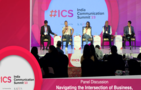
Sandeep Sharma, Dinesh Joshi, Karishma Bhagi, Saumya Jain, Samarpita Samaddar, Shivanjali Singh and Pooja Pathak (L-R)

In a competitive world, where there are numerous brands fighting for the consumer’s attention, it becomes extremely critical for brands to stand out and put the message across in a unique manner.

At the India Communication Summit 2023, Saumya Jain, senior officer, content and community, ETBrandEquity.com moderated a panel discussion to decode the fine art of storytelling with Karishma Bhagi, lead – corporate communications, South Asia, Kellogg Company, Dinesh Joshi, head – corporate communications, HP India market, Sandeep Sharma, executive director (corporate communication and branding), IndianOil, Shivanjali Singh, head – corporate communications, Vodafone Idea, Samarpita Samaddar, India communications director, Bumble, and Pooja Pathak, founder and director, Media Mantra.

Samaddar of Bumble opened the discussion by highlighting how in today’s era where the cultural and media landscape is ever evolving, innovation in communication strategies is crucial. Especially now, where the world is saturated with information.

Additionally, it is important to know who the brand is really communicating with. “Unless you know who you are talking to, you wouldn’t know how to talk to them,” she said.

HP India’s executive created a parallelism between four P’s of marketing and four P’s of storytelling, namely, people, problem, product and possibilities.

But why is it important to drive consumers via stories to a brand?

From childhood, people are conditioned to listen to stories. But stories can have different forms and in every way as life moves, a story is happening. This is what people look forward to, Sharma added.

Over the years, Bhagi shared the evolution of storytelling happened decades ago through cave paintings and mythological stories of gods. Those stories built memorability in us and that is exactly what brands are trying to do today as well.

The Vodafone Idea executive added, “In earlier times, storytelling was one way to gain attention. But today, it has become more participative, more interactive and more immersive.”

Because of such technological advancements, storytelling is happening more on digital mediums. This is also why the attention span is getting shorter and the stories brands tell have to be engaging yet prompt.

Moving further, Pathak put focus on a few do’s and don’ts when it comes to storytelling. “Make the story more authentic, consistent and definitely transparent. This will help brands create well refined and well defined content,” she said.

Joshi further suggested following the ABCD of storytelling, which translates to being authentic, bold, clear and diverse.

The IndianOil executive wrapped the discussion and said, “Your story should be visually very appealing and the communication should be clutter-free. Also, don’t seek attention for the sake of it.”

ICS 2023: The public affairs link between business, policy and society

The panel highlighted talk points around the current policy environment and the role of ESG in influencing policymakers. The experts also dived deep into the change in strategic communications, public relations and its impact.

  • Published On May 18, 2023 at 04:48 PM IST

Join the community of 2M+ industry professionals

Subscribe to our newsletter to get latest insights & analysis.

Download ETBrandEquity App

  • Get Realtime updates
  • Save your favourite articles


Scan to download App


Sandeep Sharma, Dinesh Joshi, Karishma Bhagi, Saumya Jain, Samarpita Samaddar, Shivanjali Singh and Pooja Pathak (L-R)

In a competitive world, where there are numerous brands fighting for the consumer’s attention, it becomes extremely critical for brands to stand out and put the message across in a unique manner.

At the India Communication Summit 2023, Saumya Jain, senior officer, content and community, ETBrandEquity.com moderated a panel discussion to decode the fine art of storytelling with Karishma Bhagi, lead – corporate communications, South Asia, Kellogg Company, Dinesh Joshi, head – corporate communications, HP India market, Sandeep Sharma, executive director (corporate communication and branding), IndianOil, Shivanjali Singh, head – corporate communications, Vodafone Idea, Samarpita Samaddar, India communications director, Bumble, and Pooja Pathak, founder and director, Media Mantra.

Samaddar of Bumble opened the discussion by highlighting how in today’s era where the cultural and media landscape is ever evolving, innovation in communication strategies is crucial. Especially now, where the world is saturated with information.

Additionally, it is important to know who the brand is really communicating with. “Unless you know who you are talking to, you wouldn’t know how to talk to them,” she said.

HP India’s executive created a parallelism between four P’s of marketing and four P’s of storytelling, namely, people, problem, product and possibilities.

But why is it important to drive consumers via stories to a brand?

From childhood, people are conditioned to listen to stories. But stories can have different forms and in every way as life moves, a story is happening. This is what people look forward to, Sharma added.

Over the years, Bhagi shared the evolution of storytelling happened decades ago through cave paintings and mythological stories of gods. Those stories built memorability in us and that is exactly what brands are trying to do today as well.

The Vodafone Idea executive added, “In earlier times, storytelling was one way to gain attention. But today, it has become more participative, more interactive and more immersive.”

Because of such technological advancements, storytelling is happening more on digital mediums. This is also why the attention span is getting shorter and the stories brands tell have to be engaging yet prompt.

Moving further, Pathak put focus on a few do’s and don’ts when it comes to storytelling. “Make the story more authentic, consistent and definitely transparent. This will help brands create well refined and well defined content,” she said.

Joshi further suggested following the ABCD of storytelling, which translates to being authentic, bold, clear and diverse.

The IndianOil executive wrapped the discussion and said, “Your story should be visually very appealing and the communication should be clutter-free. Also, don’t seek attention for the sake of it.”

ICS 2023: The public affairs link between business, policy and society

The panel highlighted talk points around the current policy environment and the role of ESG in influencing policymakers. The experts also dived deep into the change in strategic communications, public relations and its impact.

“,”next_sibling”:[{“msid”:100324827,”title”:”Ed Sheeran beats second copyright lawsuit over ‘Thinking Out Loud'”,”entity_type”:”ARTICLE”,”link”:”/news/marketing/ed-sheeran-beats-second-copyright-lawsuit-over-thinking-out-loud/100324827″,”category_name”:null,”category_name_seo”:”marketing”}],”related_content”:[],”msid”:100330035,”entity_type”:”ARTICLE”,”title”:”ICS 2023: The fine art of storytelling”,”synopsis”:”At the India Communication Summit 2023, executives from IndianOil, Vodafone Idea, Bumble, Kellogg, HP India and Media Mantra got into a discussion to decode the fine art of storytelling and how it has evolved over the years.”,”titleseo”:”marketing/ics-2023-the-fine-art-of-storytelling”,”status”:”ACTIVE”,”authors”:[{“author_name”:”BE Staff”,”author_link”:”/author/479256949/be-staff”,”author_image”:”https://etimg.etb2bimg.com/authorthumb/479256949.cms?width=100&height=100″,”author_additional”:{“thumbsize”:false,”msid”:479256949,”author_name”:”BE Staff”,”author_seo_name”:”be-staff”,”designation”:”Staff Writer”,”agency”:false}}],”Alttitle”:{“minfo”:””},”artag”:”ETBrandEquity”,”artdate”:”2023-05-18 16:48:09″,”lastupd”:”2023-05-18 16:48:10″,”breadcrumbTags”:[“storytelling”,”samarpita samaddar”,”sandeep sharma”,”vodafone idea”,”indianoil”,”media mantra”,”kellogg company”,”hp india”,”ics 2023″],”secinfo”:{“seolocation”:”marketing/ics-2023-the-fine-art-of-storytelling”}}” data-news_link=”https://brandequity.economictimes.indiatimes.com/news/marketing/ics-2023-the-fine-art-of-storytelling/100330035″>

Michelangelo’s David blocked from Scottish ad campaign

Michelangelo’s David blocked from Scottish ad campaign

Michelangelo’s David has run into trouble again. The sculptural Renaissance masterpiece was banned from the subway rail system in Glasgow, Scotland, due to nudity, recalling the recent row in Florida when parents of students at a conservative charter school complained about the statue’s inclusion in the curriculum.

DRG Group, which runs Barolo restaurant, featured David on a poster which depicts the sculpture eating a slice of pizza with the tag line: “It doesn’t get more Italian.” But the firm Global, which manages the advertising space on the subway, initially rejected the image.

The poster was then revised, incorporating stickers of the Italian flag which covered the crotch area. “We got stickers made and the feedback was that they weren’t actually big enough,” Nadine Carmichael, head of sales and marketing at the DRG Group, told the BBC. “Our next port of call was to show Michelangelo from the waist-up. We got there in the end.”

Mario Gizzi, director of the DRG Group, which runs Barolo, told The Times: “This is a globally recognised piece of art. It is taught in schools. People from all over the world travel to see it. It’s not the 1500s anymore, it’s 2023. Are we really saying that the people of Glasgow can’t handle seeing a naked statue?” Global had not responded to a request for comment at the time of writing.

David was at the centre of a culture war in Florida after Hope Carrasquilla, the principal of Tallahassee Classical School, was ousted by the school board when three parents of students complained about the statue, with one parent stating her child “should not be viewing those pieces”.

Jeff Kottkamp, the school’s general counsel, told The Art Newspaper: “The controversy was never about the art. It was about following the school’s policy of notifying parents anytime a topic that could be viewed as sensitive is being discussed in class.”

But Cecilie Hollberg, the director of the Accademia Gallery in Florence, said: “As director of one of the most important museums in the world, precisely because of the sculpture of Michelangelo’s David—a Renaissance masterpiece, an icon of sculpture—I am surprised by the ignorance that seems to be at the heart of what happened in Florida.”

CoSA Digital Arts Conservatory Hosts Annual Film and Animation Festival; Awards-Style Show Sets the Stage for Artistic Excellence – May 25

CoSA Digital Arts Conservatory Hosts Annual Film and Animation Festival; Awards-Style Show Sets the Stage for Artistic Excellence – May 25

Coronado School of the Arts (CoSA)’s Digital Arts Conservatory is set to wow audiences at its film and animation festival on Thursday, May 25th at the Coronado Performing Arts Center from 5-7:30pm. The event, the “CHS and CoSA Digital Arts Extravaganza,” is an awards-style show with voting and prizes. Buy tickets here.

“The digital arts students are really excited to show their brand-new work,” said Anna Woerman, Digital Arts Conservatory Chair. “They are looking forward to having audience members vote for their favorite pieces. The awards at the end are a highlight for everyone; the energy is electrifying!”

The event features an artist’s reception at 5pm in the theatre lobby, with film and animation screenings starting promptly at 5:30. The show includes short films, animations, multimedia pieces, and print pieces. Several Coronado High School classes will be involved in the show, including all four strands of the CoSA’s Digital Arts Conservatory: Graphic Design, Game Design, Film, and Animation. The event also features work from the CHS Digital Photography class.

The students have been doing this awards-style show since 2015, with the exception of the pandemic, said Woerman. The sophomore digital arts marketing class heads up all the show promotion and production; they also curate all the pieces, create voting forms, edit the reels and even work as emcees. It’s a true collaboration!

“Their work ethic towards the end of the year on these time-consuming projects is admirable. These shows take months of work and sharing it with an audience is an important experience,” said Woerman. “When students know their work is valued, their learning becomes even more meaningful.”

The cost to attend the event is $10 for adults, $5 for CUSD students/staff, seniors, and the military. Buy tickets here.

About CoSA
Coronado School of the Arts (CoSA) is San Diego County’s premier public school arts conservatory, home to 200 scholar artists grades 9 through 12, who attend the nationally ranked Coronado High School. CoSA provides an intense, pre-professional arts education to students from Coronado and from all over San Diego, who are admitted after a competitive application/audition process.
Each school day CoSA offers three or more hours of instruction, pairing young artists with educators who are also industry specialists. With a curriculum designed by professional artist/educators, students are immersed in their chosen specialty in one of six conservatories: Classical and Contemporary Dance, Digital Arts (Animation, Filmmaking, Game Design, and Graphic Design), Instrumental Music, Musical Theatre & Drama, Theatre Production, Design & Management and Visual Art.  CoSA is a State of California-approved Career Technical Education program.
Our award-winning student artists perform and exhibit at the Coronado Performing Arts Center on the Coronado High School campus, in either the 570 seat Main Stage or 80 seat Black Box theatre. Coronado Performing Arts Center is also available for rent to local organizations. About twenty five percent of the CoSA budget is raised each year by the CoSA Foundation. If you would like to see the arts continue to thrive in education, please consider making a donation at www.cosafoundation.org.

Forbes Releases 2023 30 Under 30 Asia List

Forbes Releases 2023 30 Under 30 Asia List

2023 List Highlights 300 Outstanding Young Entrepreneurs and Trailblazers Who Are Innovating and Thriving Across Industries in the Asia-Pacific Region

SINGAPORE (May 18, 2023) – Forbes announced today its eighth annual “30 Under 30 Asia” list, featuring 300 young entrepreneurs, leaders and trailblazers across the Asia-Pacific region, all under the age of 30, who are effecting positive change and driving innovation amid global economic uncertainty and a challenging environment. The Forbes 30 Under 30 Asia Class of 2023 features 30 notable honorees selected for each of the 10 categories, including The Arts (Art & Style, Food & Drink); Entertainment & Sports; Finance & Venture Capital; Media, Marketing & Advertising; Retail & Ecommerce; Enterprise Technology; Industry, Manufacturing & Energy; Healthcare & Science; Social Impact and Consumer Technology.

Among those featured on this year’s list are K-pop girl bands Le Sserafim and NewJeans; Thai actor Metawin Opas-iamkajorn; content creator Wonjeong Seo who has the second-most followed TikTok account in South Korea; mental health advocate Chan Sheung Yee who founded Companion HK; Hayden Marks, whose Melbourne Bushfood products feature Australia’s native ingredients; Chinese film director Chen Jianying who won the Golden Palm Award for Short Film at the 75th Cannes Film Festival; Mayank Kale and Amrit Singh, cofounders of Loop Health which is working to change how healthcare insurance is offered in India and Lester Li, founder of Singapore’s King of Fried Rice.

Rana Wehbe Watson, Forbes 30 Under 30 Asia Editor, said: “Despite a challenging year marked by global economic uncertainty and a drop in VC funding, this year’s 2023 Forbes 30 Under 30 Asia entrepreneurs continued to innovate and thrive across industries.”

“Some deploy AI to streamline tasks. Others promote financial literacy inclusion and craftsmanship-based and adaptive fashion. Ranging from startup founders to artists, athletes and scientists, their collective creativity and determination inspire optimism.”

Featured highlights on the “30 Under 30 Asia” list include:

  • The Arts (Art & Style, Food & Drink): Harsh Agarwal, 27, Founder, Harago – India
  • Entertainment & Sports: MC Cheung Tin-Fu, 26, Singer – Hong Kong
  • Finance & Venture Capital: Seo Kyoung Lee, 28, Associate, TPG; Board Member, Kakao Mobility – South Korea
  • Media, Marketing & Advertising: Simran Kaur and Sonya Gupthan, both 26, Cofounders, Girls That Invest – New Zealand
  • Retail & Ecommerce: Lorin Winata, 29, Founder, Melati Drinks – Singapore
  • Enterprise Technology: Bo Zhiyuan, 29, Founder, Qingflow – China
  • Industry, Manufacturing & Energy: Kyosuke Shibata, 28, Cofounder, Rutilea – Japan
  • Healthcare & Science: Zhao Yaran, 27, Cofounder, Veminsyn Biotech – China
  • Social Impact: Emma Clegg and Molly Rogers, 29 and 28, Cofounders, JAM The Label – Australia
  • Consumer Technology: Akshay Rampuria and Yashovardhan Poddar, 28 and 29, Cofounders, Openhouse – India

The 2023 list features a diverse set of 30 Under 30 honorees, with 20 countries and territories represented across the Asia-Pacific region. India leads the region with the highest number of honorees of 75 on this year’s list, followed by China with 34. Japan came in third with 33 honorees, while Singapore has 30 honorees. South Korea takes the fifth spot with 28 honorees on the list.

To source candidates for the list, Forbes Asia reporters and editors comb through thousands of online submissions, as well as tap industry sources and list alumni for recommendations. More than 4,000 candidates are evaluated by the Forbes Asia team and a panel of independent, expert judges on a variety of factors, including (but not limited to) funding and/or revenue, social impact, scale, inventiveness and potential.

Honorees were vetted and selected by a panel of accomplished and acclaimed judges in each category. They include Roshni Nadar Malhotra, Chairperson of HCL Technologies and Trustee of Shiv Nadar Foundation; Kai-Fu Lee, Chairman and CEO of Sinovation Ventures; JP Gan, Founding Partner at INCE Capital; S.D. Shibulal, Cofounder of Infosys and Axilor Ventures; Kishin RK, Founder and CEO of RB Capital; Allan Zeman, Founder and Chairman of Lan Kwai Fong Group; Kuok Meng Ru, Founder and Group CEO of Caldecott Music Group; Nisa Leung, Managing Partner at Qiming Venture Partners; Laurence Lien, Founding CEO of Asia Philanthropy Circle; Arif Rachmat, Cofounder and Executive Chairman of TAP Group; Patrick Grove, Cofounder and Group CEO of Catcha Group; InKyung Lee, Partner at MBK Partners; David Gowdey, Managing Partner of Jungle Ventures; Paul Ronalds, Founder and CEO of Save the Children Global Ventures; Janice Lee, CEO of Viu; Hian Goh, Founding Partner of Openspace Ventures; Chandra Tjan, Cofounder and General Partner, Alpha JWC Ventures; Vinnie Lauria, Founding Partner of Golden Gate Ventures; Snehal Patel, Managing Director at Saena Partners; Meena Ganesh, Cofounder and Chairperson of Portea Medical; Nadiah Wan, Group Chief Corporate Officer of TMC Life Sciences Berhad; Ronald Akili, CEO of PTT Family; Akiko Naka, Founder and CEO of Wantedly; Hua Fung Teh, Group President of ONE; Maria Grace Uy, Cofounder and President of Converge ICT Solutions; Sonny Vu, Founder of Alabaster and Nicole Warne, Founder of Gary Pepper Girl.

For the complete Forbes 2023 30 Under 30 Asia package, visit here

On social media, please follow @ForbesAsia on Twitter | Facebook | Instagram

Notes to editors:

About Forbes:

Forbes champions success by celebrating those who have made it, and those who aspire to make it. Forbes convenes and curates the most influential leaders and entrepreneurs who are driving change, transforming business and making a significant impact on the world. The Forbes brand today reaches more than 140 million people worldwide through its trusted journalism, signature LIVE and Forbes Virtual events, custom marketing programs and 48 licensed local editions in 82 countries. Forbes Media’s brand extensions include real estate, education and financial services license agreements.

Forbes Asia Media Contact: Catherine Ong, cath@catherineong.com or +65 9697 0007

Forbes Asia Media Contact: Chenxi Wang, chenxi@catherineong.com or cell: +65 8187 3215

Artist who falsely claimed Native American heritage sentenced for violations of the Indian Arts and Crafts Act

Seattle – A 67-year-old Western Washington artist was sentenced today to 18 months of federal probation for violations of the Indian Arts and Crafts Act (IACA) by representing himself as a Native American artist, when he had no tribal enrollment or heritage, announced U.S. Attorney Nick Brown. Jerry Chris Van Dyke aka Jerry Witten, of Seattle, pleaded guilty in March 2023. At the sentencing hearing, U.S. District Judge Tana Lin noted that this was not a one-time error, but a ten-year period of “undermining a community and identity.”

“Prosecuting cases of fraud in the art world is a unique responsibility and part of our work to support Tribal Nations,” said U.S. Attorney Nick Brown. “I hope this case will make artists and gallery owners think twice about the consequences of falsely calling an artist Native and work Native-produced. They should consider the damage to reputation, the legal fees, and ultimately a criminal record. Fake Native art should be kept out of the marketplace because it harms the legitimate Native art community.”

The investigation of Jerry Van Dyke began in February 2019, when the Indian Arts and Crafts Board received a complaint that Van Dyke was representing himself as a Nez Perce Indian artist, when in fact, he is not an enrolled tribal member. Investigators from the U.S. Fish and Wildlife Service made undercover purchases at a gallery in the Pike Place Market area of Seattle that advertised pendants Van Dyke had made as Native American art. Van Dyke used the name Witten for these sales. When interviewed by agents, Van Dyke admitted knowing about the Indian Arts and Crafts Act, and admitted he was not a tribal member. Through the gallery Van Dyke had sold more than $1,000 worth of carved pendants represented as Native American artwork based on Aleut masks. According to the plea agreement, Van Dyke had worked with the gallery for more than ten years, with the gallery owner providing him with woolly mammoth ivory, antlers, animal bones and fossilized walrus ivory to make the pendants that it sold.

Speaking in court today, Shannon F. Wheeler, Chair of the Nez Perce, said “artwork is full of our culture… it is a piece of who we are.” Chair Wheeler continued that the sale of fake Native art “continues a process of devaluing us as a people.”

Native art “speaks of the enduring relationship that we have with our landscape,” said Nez Perce Cultural Resource Director Nakia Williamson. “All we have left is our identity, and that is under attack.”

“Jerry Van Dyke’s false tribal affiliation and marketplace saturation erodes the sustainability and economic well-being of Native American artists,” said Edward Grace, Assistant Director of the U.S. Fish and Wildlife Service Office of Law Enforcement. “Our dedicated team of special agents works on behalf of the U.S. Department of the Interior and the Indian Arts and Crafts Board to protect American Indian and Alaska Native artists and the consumers who purchase authentic Native American art and craftwork. This sentencing is important in the ongoing effort to end violations of the Indian Arts and Crafts Act. We want to thank our partners at the U.S. Department of Justice and the Indian Arts and Crafts Board for their assistance with this investigation.”

“By statute, the Indian Arts and Crafts Board (IACB) is responsible for the Indian Arts and Crafts Act, a truth-in-marketing law governing the sale of Indian art and craftwork. The prosecution of Jerry Van Dyke under the Indian Arts and Crafts Act for counterfeiting Alaska Native art is another critically important step in protecting the economic livelihoods and rich cultural heritage of contemporary and traditional Indian artists, as well as preserving the vitality of the Indian art market in the Northwest and nationwide,” stated IACB Director Meridith Stanton. “When individuals and businesses market art misrepresented as Indian made, they undercut Indian artists and Indian economies, and prey upon unwitting consumers. For those selling counterfeit Indian art and craftwork, wherever you are we will diligently work to find you and prosecute you under the Act.”

Van Dyke pleaded guilty in March 2023 to Misrepresentation of Indian Produced Goods and Products. The crime is punishable by up to one year in prison.

The case was investigated by the U.S. Fish and Wildlife Service. The case was prosecuted by Assistant United States Attorney and Tribal Liaison J. Tate London.

Brendon Burton Captures Moments of Nostalgia and Wonder in North America’s Most Isolated Places

Brendon Burton Captures Moments of Nostalgia and Wonder in North America’s Most Isolated Places

All images © Brendon Burton, shared with permission

Growing up in an isolated community, photographer Brendon Burton developed an eye for the way decaying buildings nestle into the landscape or punctuate vast expanses. Now based primarily in Portland, Oregon, he travels around the U.S. in search of rural places that are culturally worlds apart from major urban centers, seemingly existing on their own timelines. Like his series Thin Placeshis recent body of work titled Interstices—to which some of these images belong—emphasizes the notion of liminality, advancing time, and spaces for passing through.

Utilizing drones to achieve dramatic aerial views in addition to intimate perspectives shot from ground level, Burton highlights the relationships between the built environment and wilderness, ancestry and life cycles, and presence and local traditions. “I recently visited the Deep South for the first time and documented Courir de Mardi Gras in a rural Cajun community in Louisiana,” he says. “It was truly an insane event, and the people I met were so kind and welcoming. I definitely will be visiting the South again soon.”

Burton is currently working on a second photo book focusing on the effects of the climate crisis and cultural isolation in rural communities throughout North America. As for future trips, he is headed to Saskatchewan and Manitoba this summer, then rural Appalachia in the autumn. Prints are available on his website, and you can find more on Instagram.


A dilapidated church and an animal skeleton in a pond.

A figure walking through corn.

An old school house in a field of sunflowers.

A view out a window to a mountain in the distance.

A snowy landscape surrounding an old farm.  An abandoned house becoming overgrown.

An abandoned feed mill or barn. An abandoned farmhouse with goats.

Do stories and artists like this matter to you? Become a Colossal Member today and support independent arts publishing for as little as $5 per month. The article Brendon Burton Captures Moments of Nostalgia and Wonder in North America’s Most Isolated Places appeared first on Colossal.