Art World News

ICS 2023: Communication through art has the power to break all barriers, says Sushant Divgikar

ICS 2023: Communication through art has the power to break all barriers, says Sushant Divgikar
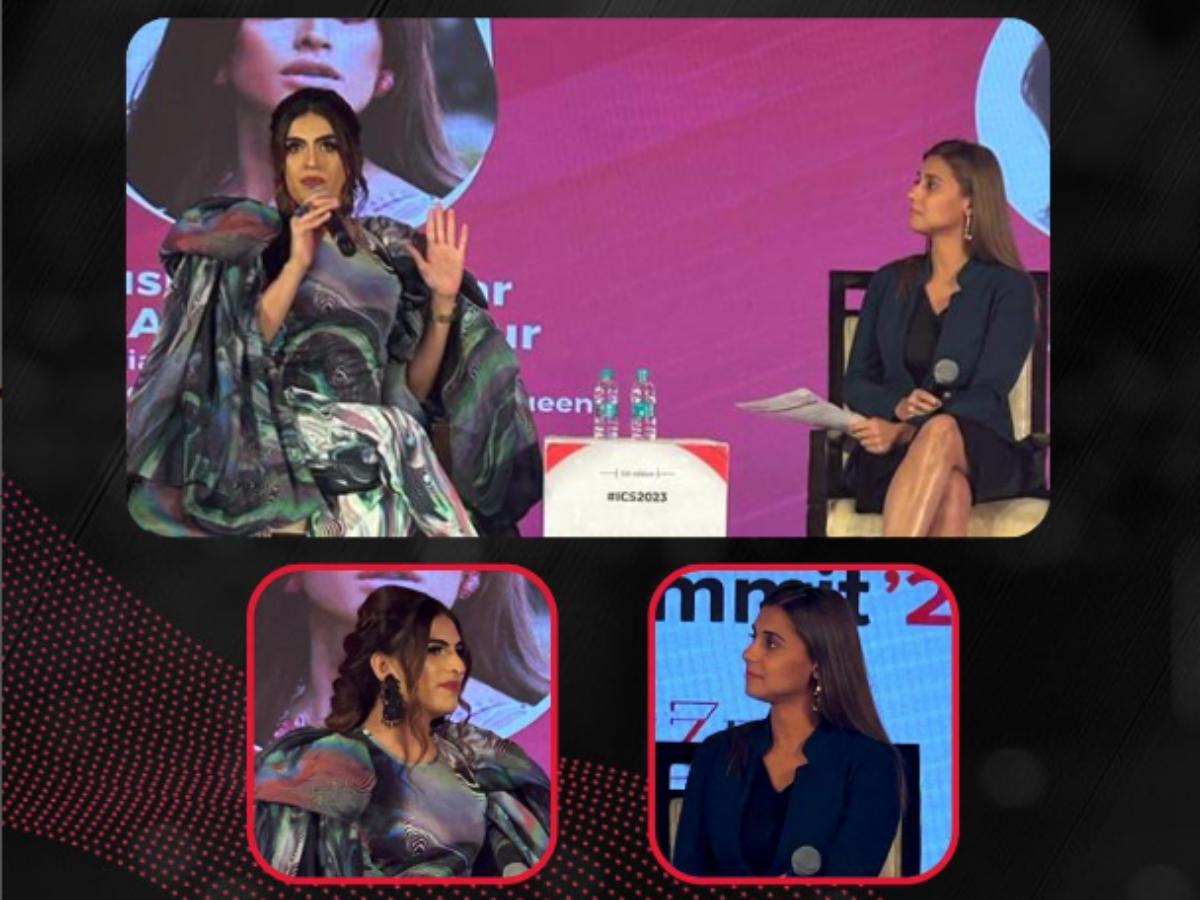
imageSushant Divgikar (L) and Devina Lason (R)”>
Sushant Divgikar (L) and Devina Lason (R)

Sushant Divgikar, a trans-fluencer, model, actor, singer and activist owned the stage at India Communication Summit 2023 to speak about the importance of communicating ‘they’ instead of ‘he’ or ‘she’.

When it comes to communicating the correct pronouns for non-binary genders, Divgikar in a fireside chat with Devina Lason, senior anchor and producer, ETB2B suggested that just referring to people how they want to be referred to is needed. People might not understand everything happening in a room but they surely can learn to respect it from a distance.

“This won’t be an overnight change because people are conditioned to believe that transgender people will not sit on the stage and talk in a language that they choose for them to speak,” the trans-fluencer said.

Hence, it is important to have to have a deeper sense of understanding of terms when communicating.

Beyond the barriers of communication, Divgikar finds it very absurd that everything has to be with one’s gender, especially when they are outside of the binaries. “They don’t just deserve a seat on the table, they need a table to themselves,” stated Divgikar, as the audience applauded in a roaring endorsement.

Coming to the shaping of mass mentality and consciousness in order to really get communication across effectively via media, Sushant said, “People ask me why are you not comfortable with a man playing a transgender’s role? Firstly, because in that case, let a man play the actress and also let the man play his own mother.”

For the longest time, people who were transgender in the films were made to be comic relief characters, and it was acceptable to do anything to them, Divgikar shared. “You could molest them, you could make fun of them, you could do something as severe as sexual abuse too.”

Today, it’s changing. A lot of the community people who are artists are changing the game, and are at the forefront of it. “Yes, it is tougher for us, but at least the next generation will have it easier than us,” they said.

This is why Divgikar believes communication through art has the power to break all these barriers.

Next, how one packages their communication is very important. How they want to say, or what they want to convey to the larger audience is critical. Hence, it’s very important to make communication very gender fluid to begin with.

Any brand or organisation that has packaged the communication well in their messaging has succeeded, as per Divgikar.

For people who are still struggling with understanding the communication aspect of pronouns, the transmodel suggested to simply ask how the person would like to be addressed as, because no question is silly.

ICS 2023: The intersection of communication and influencers

In a panel discussion at the India Communication Summit 2023, organised by ETBrandEquity, panelists explored the various aspects of influencer marketing, from having a data driven approach, to not chasing the number of followers.

  • Published On May 10, 2023 at 07:45 PM IST

Join the community of 2M+ industry professionals

Subscribe to our newsletter to get latest insights & analysis.

Download ETBrandEquity App

  • Get Realtime updates
  • Save your favourite articles


Scan to download App


College of Business provides unique learning opportunity with international flair | University of Nevada, Reno

College of Business provides unique learning opportunity with international flair | University of Nevada, Reno

A new course offered by the College of Business at the University of Nevada, Reno allows students to experience an international learning opportunity without leaving the United States.

“Museums and Marketing” (Marketing 492), which will be offered during the 2023 summer mini session from May 22 to June 9, will be co-taught by Thomas Burnham, associate professor of marketing at the University of Nevada, Reno, and Andrea Lauria, professor of museology at the University of Rome Tor Vergata. The course combines the two professors’ expertise in marketing and museology, the study of museums and the history of their establishment and development, to create a unique course with an international perspective and multi-disciplinary approach.

“Considering my experience in museology and the strong economic and social impact that the hyper-museums have on the territories on which they are built, professor Burnham and I decided to associate our subjects and create a course on museums’ marketing,” Lauria said. “The topic of hyper-museums is extremely interesting and not only from the art historical perspective but also for its socio-economic impact on societies and territories.”

The course will explore the inner workings of museums, providing a unique perspective on the history of museums as institutions of power, how museums work as an example of brand marketing and the shifting business models of museums today. Museums throughout the northern Nevada and California region will participate in the course through field trips and guest lectures from experts in the field. Participating museums include the San Francisco Museum of Modern Art (MOMA), the California Academy of Sciences Museum, the National Automobile Museum, the Nevada Museum of Art and the Discovery Museum.

The partnership between University of Rome Tor Vergata and the College of Business began in 2019. In addition to the course being taught this summer, Burnham also hosted two of Lauria’s graduate students from Rome and helped them work on their theses in September 2022. Future plans for collaboration between the two universities include an official exchange program.

“Part of the future that they envision is bringing our students there,” Burnham said. “We want more student exchanges to take our students to Rome.”

Interested students can register online for the course until May 23. The course is open to all undergraduate students pursuing a business major or minor.

Vienna Tourist Board Unveils ‘UnArtificial Art’

Vienna Tourist Board Unveils ‘UnArtificial Art’

The Vienna Tourist Board has launched UnArtificial Art, a marketing campaign designed to ‘promote the city’s 100+ museums in order to “See the Art behind AI Art”’.

The new campaign sees famous figures from the world’s most acclaimed artists transformed into the internet’s universally adored animal – the cat – using the power of Artificial Intelligence. 

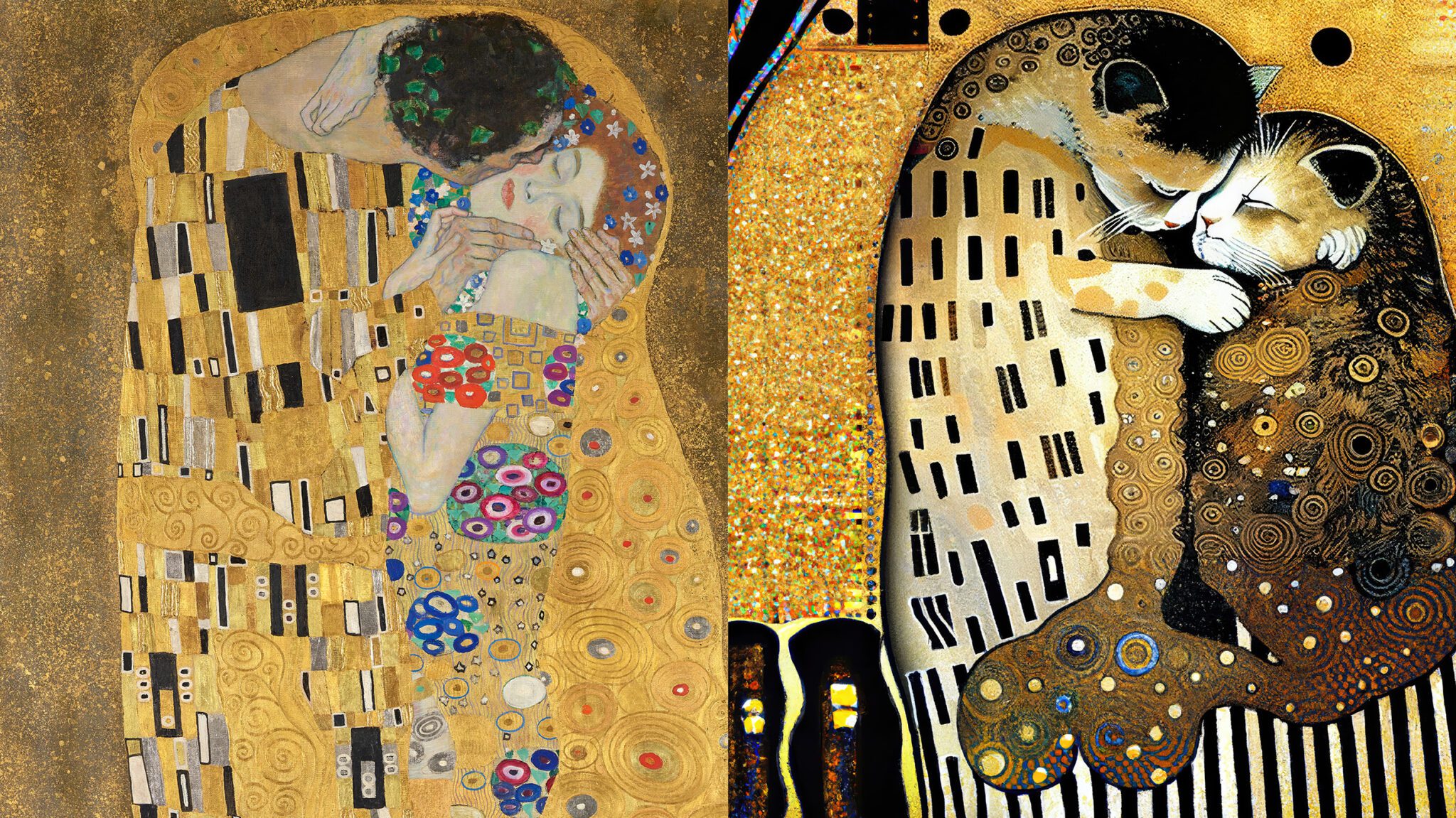
One such example featured in the campaign is a mash up of Gustav Klimt’s ‘Kiss’, which sees the much adored lovers transformed into cats, still wearing the intricately decorated robes and positioned in the iconic lovers embrace.

Credit: Jung von Matt DONAU & Vienna Tourist Board

“With so much artificial intelligence (AI) invading lives – particularly with programs like DALL-E or Midjourney that allow anyone to create “works of art” – Vienna wants to remind visitors of who made that all possible in the first place” said Norbert Kettner, Vienna Tourist Board’s CEO.

“The campaign aims to show that AI art is only possible because an algorithm references real works made by real humans, and the originals can often only be seen in Vienna. The Viennese Modernism movement that revolutionized the artworld over a century ago continues to live on and affect today’s art through the algorithms that guide AI creations,” he continued.

As part of the campaign, the Vienna Tourist Board has also released a short film with art expert Markus Hübl, which aims to showcase the art that made AI possible. You can view the video below:

[embedded content]

This isn’t the first time AI has been used in a marketing campaign, with VisitDenmark turning to the power of artificial intelligence for a marketing campaign launched earlier this year.


At the Skift IDEA Awards, we are looking for advertising campaigns created with the intent to drive action.

If you have an initiative to share, head to the Skift IDEA Awards and start your submission today.

What to read to avoid getting hoaxed

What to read to avoid getting hoaxed

HUMANS ARE, and have long been, a credulous bunch. In 1844 Edgar Allan Poe published an article in the New York Sun about a man who had flown across the Atlantic in a balloon. Two days later the newspaper fessed up (“We are inclined to believe that the intelligence is erroneous”), but not until its offices had been besieged by people wanting to know more. In 2009 a similarly inflated story—which caused American news networks to scramble their reporters— was released by a couple from Colorado who said that their six-year-old son was in a giant balloon soaring 7,000 feet into the air. Later that day “balloon boy” was found at home, where his publicity-hungry parents had apparently hidden him.

Hoaxes can hint at the nature of the societies that fall for them. When Stern, a German magazine, published what it believed to be Hitler’s diaries in the 1980s, it was an early example of a trend that Germans call “Hitler kitsch”, using the Führer as a marketing tool. Similarly Anna Delvey, who created a false identity on Instagram in order to defraud people, exploited for dastardly ends a social-media platform used by millions. These five books cover some of history’s most notorious hoaxes, not all of which have been entirely debunked.

Selling Hitler. By Robert Harris. Pantheon; 387 pages; $18.95. Cornerstone; £10.99

Forty years ago Konrad Kujau appeared to make the find of a century: dozens of volumes of Adolf Hitler’s diaries. They were hand-written in delicate Gothic script and spanned the period from his rise to power in the 1930s almost up to his death in 1945. As well as recording Hitler’s assessment of Germany’s progress in the war, they confided such prosaic troubles as bad breath and flatulence. Thus began an audacious hoax. Stern bought the diaries (pictured). A bidding war among English publications led Rupert Murdoch to fly to Switzerland to negotiate the serialisation rights for one of his newspapers, the Sunday Times. Hugh Trevor-Roper, a British historian, initially vouched for their authenticity. On closer examination, however, the diaries turned out to be an amateurish fake. Kujau, who began his counterfeiting career by forging lunch vouchers, had stained the pages with tea to make his fabrications look old. The incident is told with biting wit by Robert Harris, a British journalist and novelist. The diaries, which will soon go on display at the German national archives, may have been deeply embarrassing for all involved. But the story also captivated the public. As Mr Murdoch put it at the time: “After all, we are in the entertainment business.”

Fake: The Story of Elmyr De Hory, the Greatest Art Forger of Our Time. By Clifford Irving. Out of print. Download on Kindle; $2.99

After the second world war some of Europe’s most distinguished families found themselves destitute. That is how Elmyr de Hory, a Hungarian aristocrat, ended up touring the galleries of America, selling works by Matisse, Modigliani, Picasso and Renoir. Or so he claimed. In fact de Hory (which almost certainly was not his real name) had forged the pictures. His stories of life in Paris in the 1920s, and his personal relationships with some of the artists he faked, gave him an air of authenticity that helped him to fool the art world. He hobnobbed with celebrities, such as Zsa Zsa Gabor. In the 1960s, having sold more than 1,000 fake artworks, he was found out. By then he was living in Ibiza, where Clifford Irving, a struggling novelist, was his neighbour. Irving offered to write de Hory’s story, which became “Fake: The Story of Elmyr De Hory, the Greatest Art Forger of Our Time”. But much of what de Hory told Irving is impossible to verify, deepening the mystery about him. Irving was clearly inspired by his subject. He went on to write a purported autobiography of Howard Hughes, claiming that he collaborated on the book with the reclusive billionaire. Hughes in fact never met Irving, but he was not so reclusive that he did not get in touch with his lawyers: Hughes sued Irving’s publisher. Irving went to prison. Today de Hory’s forgeries are sought after in their own right. He became so notorious that after his death in 1976 fake “Elmyrs” flooded the art market.

The Coming of the Fairies. By Arthur Conan Doyle. Bibliotech Press; 130 pages; $24.95. Cosimo Classics; £12.99

Modern techniques of image manipulation have turned the public into sceptics. But in the early 20th century seeing was believing. In 1917 two girls in Yorkshire, in northern England, borrowed a camera and went to play in the garden. When the pictures they took were developed, they showed the girls surrounded by small, sprite-like creatures. They became known as the Cottingley fairies, after the village in which the images were taken. After the mother of one of the girls showed the images at a meeting of the Theosophical Society, a mystical movement, word of the fairies spread. Photography experts found no sign of fakery. When Sir Arthur Conan Doyle, the author of the Sherlock Holmes mysteries and a keen spiritualist, wrote an article on the fairies using the photos as evidence of their existence, he caused a sensation. He called the images an “epoch-making event”. He later expanded on the article in a book published in 1922, “The Coming of the Fairies”. Unfortunately, the sprites never did come out of the woods. In 1983 the two friends admitted that they had faked the photos, though they continued to maintain that they really had seen fairies.

Piltdown Man: The Secret Life of Charles Dawson. By Miles Russell. The History Press; 272 pages; $14.99

Arthur Conan Doyle appears in another of the 20th century’s murkiest hoaxes. In 1912, at a meeting of the Geological Society of London, Charles Dawson, an amateur archaeologist, presented fragments of a skull that he claimed was the missing evolutionary link between apes and humans. He found them in a gravel pit in Piltdown, in southern England. The jaw was almost indistinguishable from that of a chimpanzee. Some scientists were suspicious from the beginning, but it wasn’t until 1953 that Time magazine published evidence showing that the Piltdown man was not a million-year-old human ancestor but a hacked-together chimera consisting of a medieval human skull, a 500-year-old orangutan’s jaw and fossilised teeth from a chimp. Dawson died a few years after he presented his find, and the full story remains unclear. Did he orchestrate the whole thing, or were the fragments planted for him to find? If the latter, who did it? One outlandish theory is that Conan Doyle, who played golf near where the bones were found, may have wanted to discredit the scientific community after one of his favourite psychics was debunked. Miles Russell, an archaeologist at Bournemouth University, puts this theory to bed in his book. He pins the blame squarely on Dawson, writing that he hoped the discovery would get him elected to the Royal Society.

My Friend Anna. By Rachel DeLoache Williams. Gallery Books; 288 pages; $27. Quercus Publishing; £16.99

Anna Sorokin is among the most charismatic of contemporary scammers. Ms Sorokin, who was born in Russia, created an alter ego in the form of Anna Delvey, a wealthy socialite. After moving to New York, between 2013 and 2017 she defrauded banks, hotels and people who thought they were her friends of hundreds of thousands of dollars. By convincing them that she was fabulously rich, she found it easy to get others to bankroll her lifestyle. Rachel DeLoache Williams, who worked for Vanity Fair, was one of those who fell for Ms Delvey’s tricks, at a cost of $62,000. She wrote about it in the magazine, and later in a book, “My Friend Anna”. Ms DeLoache Williams, who was already familiar with Ms Delvey from her glamorous posts on Instagram, was drawn in by her talk of family trusts and setting up charitable foundations. It was only when they went on a luxurious holiday together, and Ms Delvey scarpered, leaving Ms DeLoache Williams with the bill, that the penny dropped. Rather than succumb to bitterness, Ms DeLoache Williams reflects on the ease with which anyone can use social media to create an alternative reality. Ms Sorokin just took it further than most. She was locked up for almost four years, and has since sold the rights to her story to Netflix (though much of the money went to pay legal fees and restitution). As a condition of her release, she must no longer post on Instagram.

Also try

The Economist has published its share of April Fools hoaxes, some of which have caught readers out. Read why corporate practical jokes can often backfire (a lesson we should perhaps keep in mind).

Tseng Kwong Chi’s Iconic Portraits of Art Stars

Tseng Kwong Chi’s Iconic Portraits of Art Stars

One day in the spring of 1979, Keith Haring spotted artist Tseng Kwong Chi cutting a distinct silhouette as he stood on the corner of First Avenue and Fifth Street in Manhattan. Intrigued, Haring approached, got Tseng’s phone number, and went about his day, only to call Tseng later that day with an invitation to a poetry reading at Club 57 — the fabled St. Mark’s Place nightclub which was home to the burgeoning East Village art scene. 

The two artists quickly became collaborators as Tseng accompanied Haring on his jaunts through New York’s literal underground, traversing countless train platforms in search of prime real estate: empty wall spaces where advertising would otherwise appear. With chalk in hand, Haring crafted a powerful and profound love letter to New York City that launched his career into the stratosphere. Tseng documented it all, photographing these ephemeral works made for the people, not the industry.

Tseng’s love of portraiture was rooted in his training as a painter, a passion he brought to photography when he moved to New York in 1978 and honed with the creation of the “Ambiguous Ambassador” persona for his series East Meets West (a.k.a. Expeditionary Self-Portrait Series), which began the following year. Donning a Zhongshan suit, sunglasses, and an ID badge, Tseng traveled to major landmarks, cosplaying the stereotypical Asian tourist, and making enigmatic and reflective self-portraits with a 1940s Rolleiflex.

Using photography to play with notions of image and identity, Tseng was the perfect portraitist to chronicle the 1980s downtown New York art world. His close friendships with Haring, Jean-Michel Basquiat, and Andy Warhol provided an insight and understanding of their vision and character, allowing him to create cinematic tableaux that elevated artists to the realm of rock stars — selections from which were on view at the Yancey Richardson booth during The Photography Show in New York.

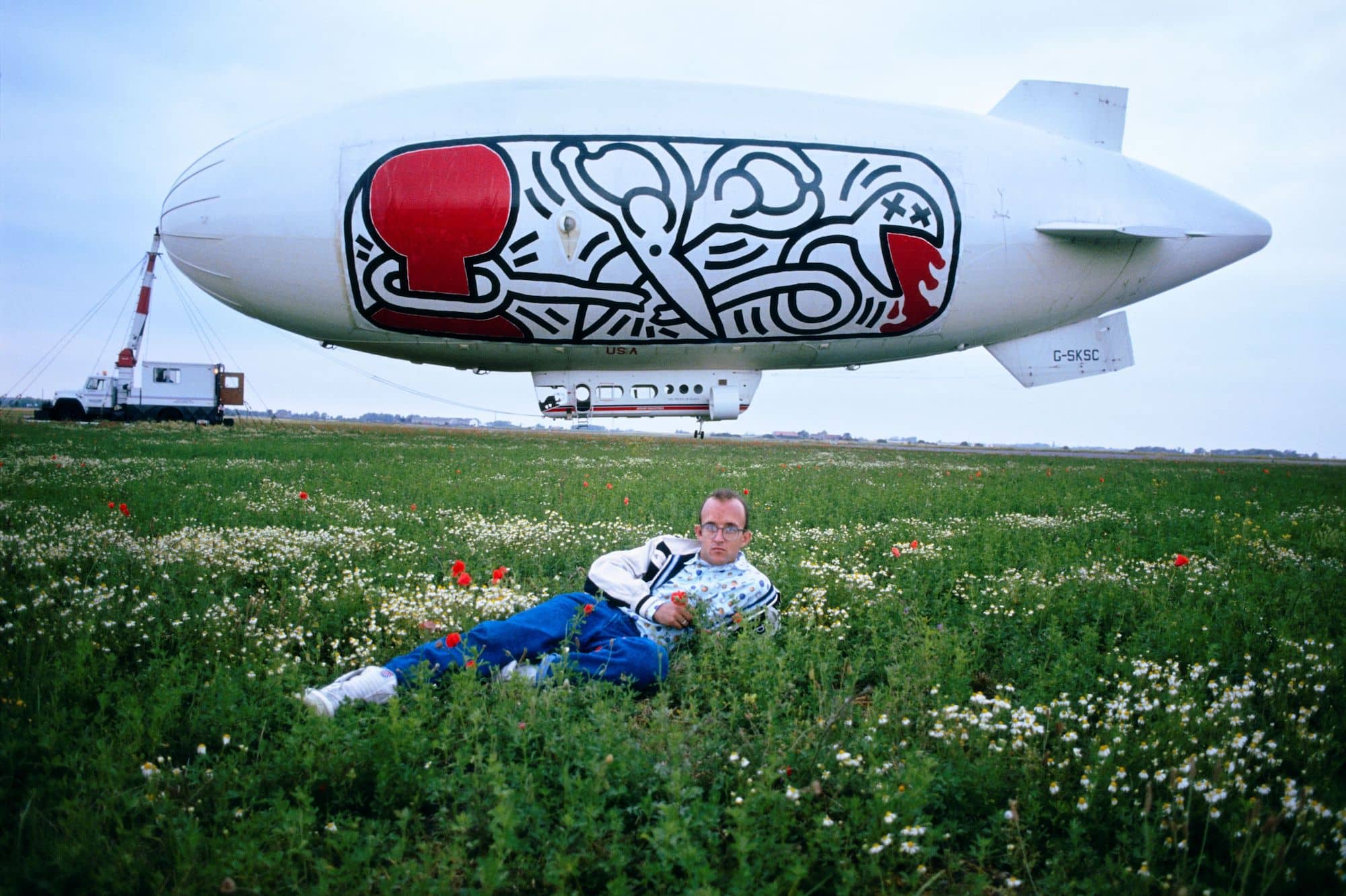
Keith Haring with blimp in France, 1989. Photo: Tseng Kwong Chi © Muna Tseng Dance Projects Inc, Art: © Keith Haring Foundation, courtesy of Yancey Richardson Gallery

New Art, New Money

Hailing from Hong Kong, Tseng Kwong Chi was a child prodigy who studied in Paris before settling in New York in 1978 to pursue his passion for photography. He developed the “Ambiguous Ambassador” persona after wearing it to meet his family for dinner at the legendary Windows on the World restaurant, where the maître d’ treated him as a foreign dignitary.

Impressed by the ways in which Chairman Mao’s influence had shaped Western thought, Tseng brought the “Ambiguous Ambassador” to the 1980 Met Gala, posing alongside designers, socialites, and philanthropists with singular aplomb, bringing a splash of downtown shenanigans to the insular uptown scene. Fluidly moving through different communities, Tseng felt right at home in the 1980s art scene, just as the art world began to make headlines with record breaking sales.

Suddenly the figure of the starving artist was replaced with the rock star, a mythic figure whose name alone would demand 7 or 8 figure sales. The New York Times Magazine investigated the marketing of Jean-Michel Basquiat in a 1985 cover story, “New Art, New Money,” only further adding to his mystique. It was a long-awaited moment — the seeds of which had been planted and sown for years by Andy Warhol, who wisely aligned himself with Basquiat. 

[embedded content]

A Constellation of Art Stars

With art prices skyrocketing in the 1980s, the media was transfixed by the New York art scene. Tseng Kwong Chi’s portraits of Keith Haring, Jean-Michel Basquiat, and Andy Warhol perfectly encapsulated the spirit of the times, playfully using and challenging our obsession with myth by making the artists appear both accessible and larger than life.

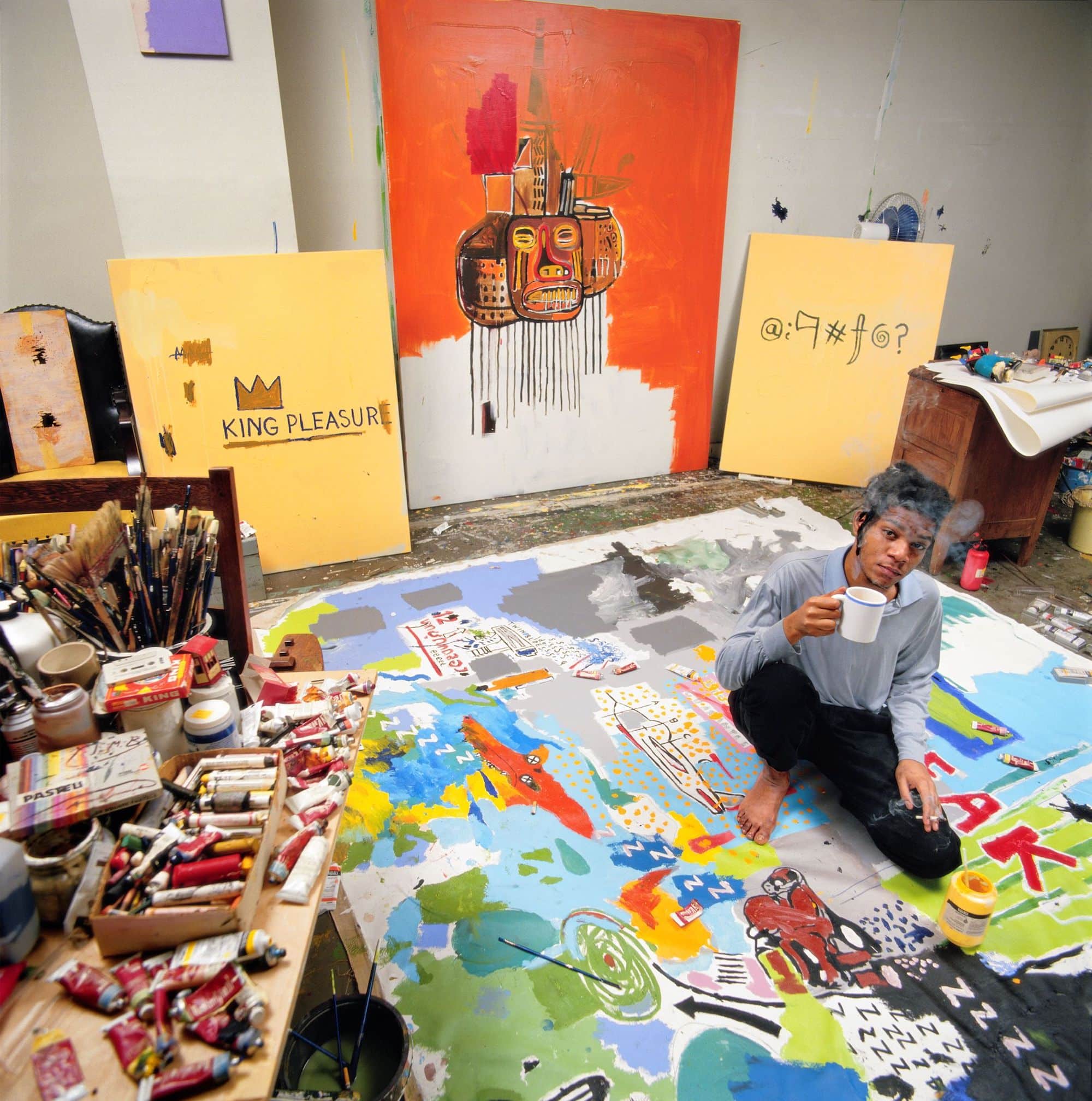
Jean-Michel Basquiat, New York, “KING PLEASURE” sitting with coffee cup, 1987. © Muna Tseng Dance Projects Inc, courtesy of Yancey Richardson Gallery

Jean-Michel Basquiat, New York, “KING PLEASURE” sitting with coffee cup, 1987. © Muna Tseng Dance Projects Inc, courtesy of Yancey Richardson Gallery

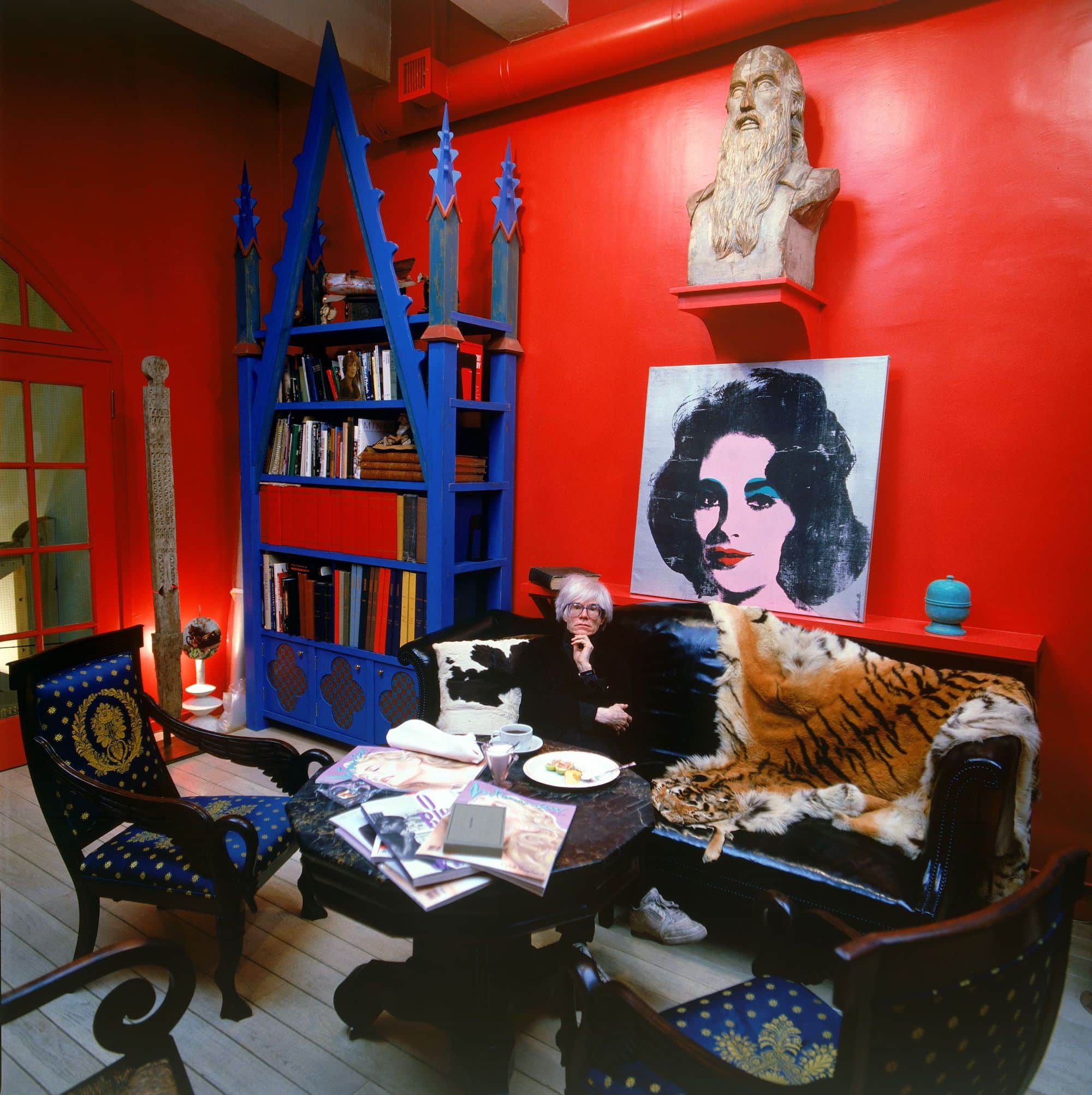
Andy Warhol, New York, with Liz Taylor’s portrait in Fred Hughes’ red studio, 1986. © Muna Tseng Dance Projects Inc, courtesy of Yancey Richardson Gallery 
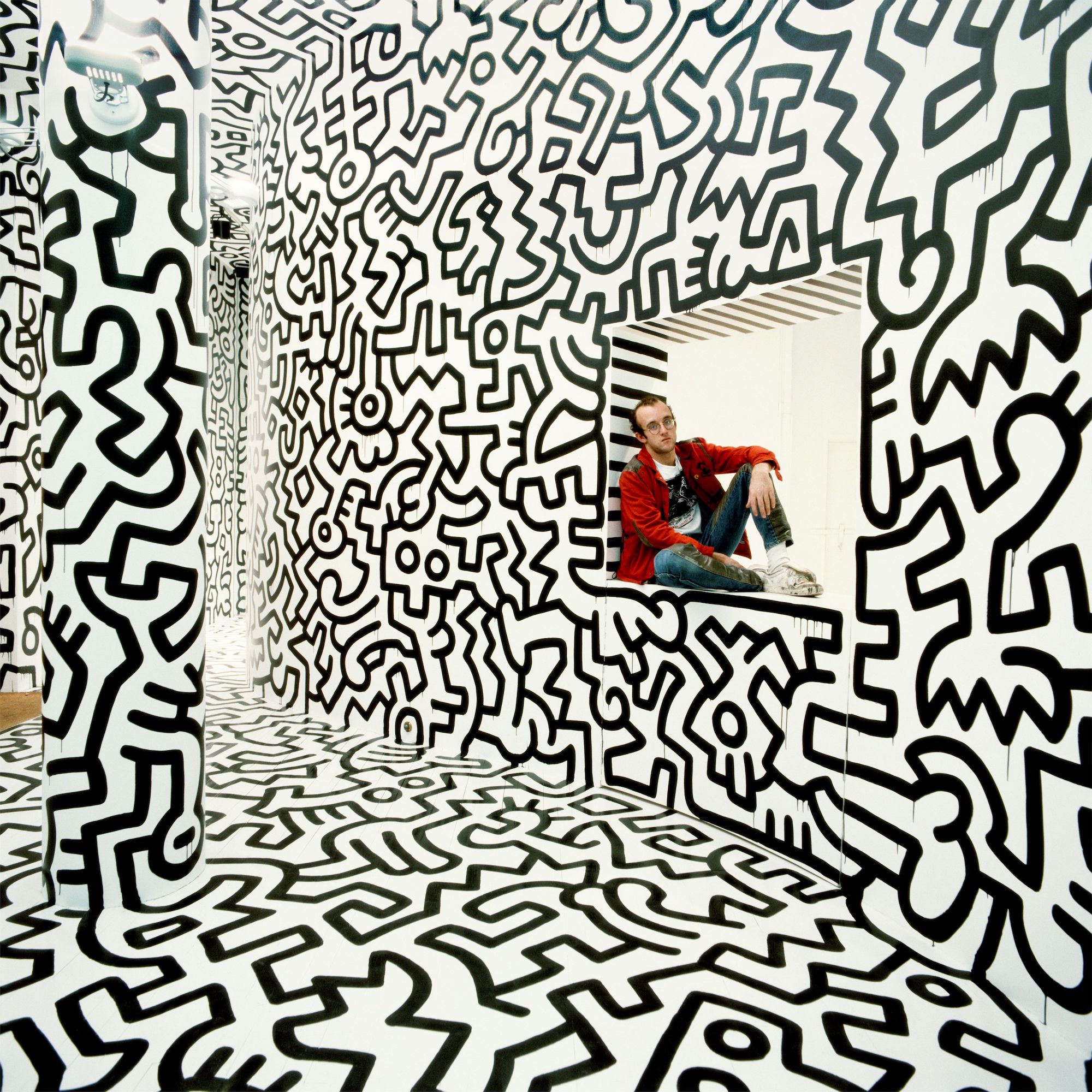
Keith Haring Pop Shop New York, 1986.
Keith Haring Pop Shop New York, 1986. Photo: Tseng Kwong Chi © Muna Tseng Dance Projects Inc, Art: © Keith Haring Foundation, courtesy of Yancey Richardson Gallery

Formal yet familiar, Tseng simultaneously embraces and subverts notions of American exceptionalism. In his 1987 portrait of Basquiat, the artist is sitting atop a large canvas on the floor, enjoying a fresh cup of coffee and a cigarette, still dressed in loungewear and barefoot. He’s in the studio amid the art supplies and unfinished canvas and looks utterly at peace, as though there’s no other place he’d rather be.

Crafted as landscapes and interiors, each photograph offers a glimpse into the world of the artist as they breathe and live. In Tseng’s 1986 photograph of Warhol, he sits beneath his portrait of Elizabeth Taylor at home, wearing all black (with white Reeboks to match his fluffy wig), surrounded by the detritus of his daily life.  

But perhaps it’s his 1986 portrait of Haring in the Pop Shop that is the culmination of Tseng’s on-going collaboration with the artist. Haring sits snuggled inside his work, just one more figure inside the bigger landscape he imagines in his art. After their fateful encounter in 1979, Tseng and Haring worked together to amass an archive of some 20,000 photographs over the course of a decade — before they both passed from AIDS in 1990, just one month apart.

Yseng Kwong Chi’s portraits can be found on the website of the Yancey Richardson Gallery, New York.

Jean-Michel Basquiat and Andy Warhol, New York, 1985. © Muna Tseng Dance Projects Inc, courtesy of Yancey Richardson Gallery

Jean-Michel Basquiat and Andy Warhol, New York, 1985. © Muna Tseng Dance Projects Inc, courtesy of Yancey Richardson Gallery


Grady Goods: A Young Family Turns A Life Of Art Experience Into Business

Grady Goods: A Young Family Turns A Life Of Art Experience Into Business

There’s something to be said about being rooted in a place. When I met Jae Grady, owner of the new Grady Goods store at 620 Baxter Ave., it was in our youth, finding our way to punk shows and raves, but now we find ourselves meeting again — as older folks — with families and careers. Now we’re old punks with the leftover ethic of working hard and doing the shit we want to get done ourselves. 

Jae, his wife Jane, his sons Arlo and Ronan, and their dog Lobo have put this ethic to work to open their first family business. In the most Gen X way, building on Jae’s years of merchandising experience and work as a buyer, the Gradys decided the time is now to bring those years of work into a space that can have an impact on the local arts community. That this is a family effort is a true statement — even the dog has a role in the business. 

The Gradys, Jane and Jae with sons Arlo and Ronan, and now shop dog Lobo.

The seeds for the dream of Grady Goods were planted long ago when Jae began working in a family business, A Taste Of Kentucky, owned by his aunt and uncle, Sherry and John Hassmann. 

“I did a little bit of all the odd jobs that you do when you’re starting out in retail,” he said. “I would do everything from shipping to delivering. And then as things progressed, I got into doing more custom merchandise, buying, and ordering.”

Eventually, Jae moved on to work at Why Louisville, another retail gift/t-shirt shop.

“I was there for about two years, I think, and again focused on local artists, local vendors as often as possible. That’s something that I got a real connection to — starting out with A Taste of Kentucky — is meeting vendors all over the commonwealth, and getting, almost, a familial friendship going with a lot of these folks.” 

Following Why Louisville, Jae found himself at Merridian Home Furnishings where he learned more about household goods. Eventually, Jae got a call from the Speed Art Museum. 

A close friend of his was the assistant manager and “very pregnant” as he described her. She was going on maternity leave and Speed needed someone to fill her shoes and take on the responsibilities of the role in a relatively short period of time. 

“I think originally when it opened, they were kind of marketing towards a higher price point,” said Jae. “And part of what I was asked to do when I was hired in — as merchandise buyer and developer — was to try to get things more reflective of the permanent collection, and special exhibitions that came through the Speed — and also to get the price point down to a place that was accessible for everyone, which is something that’s hugely important to me.” 

That request, to make the museum store more accessible struck a chord with Jae. 

“I have a lot of love for museum stores. It was always — since I was a kid — it was my favorite part of any field trip. [I would] mow an extra lawn or something like that to try to get a few extra bucks so I could get my astronaut ice cream.”

Taking that feeling into his work gave the Speed gift shop an exciting feel for visitors. In Jae’s Speed Art Museum store, whether you had $2 or $200, there was something available for you. 

“We had representatives from virtually every department that were part of a merchandise team that we all had some input on,” he said. “So everybody had an idea of what foot did we want to put forward when people walked into the museum, and their first experience was walking into the store, ‘What’s the impression we want to give?’ How do we make sure everybody feels welcome when they come inside? And so, we went really deep on those things and really turned the store into a place that was much more accessible than where it had began.”

Achieving his goal at the Speed and meeting other professionals in the Museum store business made a big difference for Jae. 

“Towards the end of my time in the Speed… well, the entire time I was there, I was very active with the Museum Store Association which is an international organization — of just what it sounds like — museum stores from every type of museum.”

In 2022, Jae became the president of the association and got to work on one of the biggest projects of his career which wrapped up his time at the Speed just before he jumped full force into creating Grady Goods, where he intends to bring the sensibility of a museum store into a store for regular artists and regular folks. 

“Everything wrapped up with Mucha, which I got to work directly with Alphonse Mucha’s great-grandson, Marcus Mucha, who was a delight to work with.”

With the Speed at his back, after a very successful Mucha exhibit and merch sales, Jae and his wife Jane made the decision to give Grady Goods a go, with Jane who grew up in PeeWee Valley, Kentucky deciding to keep her day job at Weyland Ventures, while helping Jae to grow the store which will feature gifts, jewelry, and art by local and regional artists and craftspeople. 

I spent a lot of time in the broader art world — the higher echelon of the art museum world,” he said. “And while I saw some beautiful things and had my eyes open to new types of artwork, there’s also aspects of the large art world that can be a little bit off-putting for someone like me. I  get a bit disillusioned to a lot of the processes that happen when it gets into a certain financial stratum, and I’m not trying to disparage that world at all.”

Wanting to connect more on the ground with artists is a big part of why Jae decided to separate from museum life. 

“There’s something that I’ve wondered for some time, that is also a thought that that really drives me wanting to connect back to local art and that I oftentimes wonder, what the art world would look like — the larger art world — if it weren’t driven by the fetishes and tensions of the ultra-wealthy. And, you know, that’s something that goes back all the way to the Medici times. That’s not anything new.”

Jae stands by the Grady Goods sandwich board outside the new shop.

Growing Up And Getting Out

Jae was born in Chicago but moved to Louisville as a very young child of an also young mother. His relationship with his step-father was strained and like many kids who liked to create more than they loved school, or who found the lure of freedom greater than being at home with parental rules, Jae found himself moving out of his family home at the age of 17 and finding an apartment on Payne street in the Phoenix Hill neighborhood near the Highlands. 

“It feels like a real homecoming for me,” Jae says of opening the store in the same area. “Like I’ve come full circle coming back to this neighborhood, which I truly… it’s one of my favorites. It’s where I first was on my own and really started seeing the world in a totally different way. And back then, my roommates at that first apartment were Scott Davis that owned Highland Grounds, Greg Sanders who was always doing music, improv, and things up there, and Craig Pfunder. We were doing acoustic duets around town to make extra money and pay bills.” 

Pfunder is best known around Louisville, and beyond, as the guitarist and vocalist of alt-rock/electronic group VHS or Beta. 

In high school, Jae had done theater, and used that skill in performance with The Alley Theater which performed in the back of Highland Grounds coffee shop. 

“God, it was just a great place and way to be introduced to a life on your own,” he said. “Um, and then also spent a long time at Twice Told Coffee Shop, which was just about the best damn performance coffee shop that ever was. I used to host an open mic at Twice Told.”

Twice Told was a coffee shop that “everyone” visited at some point growing up in ‘90s Louisville near the Highlands. That is, anyone involved in music or art. 

“I remembered, and I thought it was so adorable at the time,” Jae says, remembering some of the acts that played the coffee shop stage. “There were some other kids that were right around my age, and I feel like they had lived more towards the east side of Louisville, but I could’ve been wrong. But these kids dragged all their band equipment to hurriedly set up and play like the two or three songs that you got to play. I just thought to myself, every time that they would do that, I would think, ‘What a dedicated group of kids.’ Like they’re really gonna do something. And that was My Morning Jacket, you know?”

Jae also played in local bands and continues to play his guitars, while also spending time with his family.

Bringing it Home

Those years of coffee shops, and living the creative bohemian life of an artist gave Jae the connections that ultimately brought him full circle to Jane, his kids, and now Grady Goods. He learned during those years that what makes an artist is the desire and practice of making and not the pieces of paper earned in a classroom. 

The gallery of Grady Goods will feature a different local artist monthly.

And as he approaches what he does with Grady Goods, Jae is also taking into account some other things he’s learned about as the parent of a child with autism. 

    “Our first monthly featured artist is Chimel Ford,” Jae said. “Chimel is a highly functioning autistic artist and is vocal about autism awareness. He just captured our eyes and our hearts with his work. It’s very colorful pop art. He tends to focus on a lot of popular portraiture and he saw a lot of beauty in the boxes and the labels and the bags of his favorite snacks.”

Jae and Jane’s younger son Ronan was diagnosed with autism during the pandemic, and it’s important to them that Grady Goods is a place where neurodiverse artists and makers feel welcome. 

Their plan for the store includes having a rotating selection of local art displayed in the gallery room each month. Considering Jae’s work with the Speed Museum, they would like to help artists expand their earning potential through other types of merchandising. 

“So the museum store aspect of Jae’s background, and his ability to do art licensing, we wanna bring that museum store approach to the gift shop for our local artists. So for example, in a perfect world, we would’ve planned ahead a little better, and we would’ve had postcards, magnets, stickers, and a t-shirt of Chimel’s artwork. Going forward, we want to get images from our artists who are gonna be showing —something from the show — and create that museum-store-quality product in this space for our local artists,” said Jane.

It’s a unique twist that more artists are seeing as sustainable ways to fund their art practices. Many local artists, like Irene Mudd — an artist featured in Grady Goods — already take their images and create multiple types of goods. These good created tiers of prices that make purchasing local art easier and accessible for all, something that is central to the ethics of the Gradys. •

Grady Goods is open Wednesday – Saturday 10 a.m. – 6 p.m. and Sunday noon-5 p.m.

UMD Smith Launching Doctor of Business Administration Program

UMD Smith Launching Doctor of Business Administration Program

Newswise — Applications are open for the new Doctor of Business Administration Program at the University of Maryland’s Robert H. Smith School of Business.

The program is designed for working professionals to elevate their careers as leaders in business organizations and government agencies that utilize cutting-edge technologies and business analytics to drive growth and innovation.  

The practitioner-oriented curriculum covers business strategies, research methodologies, analytics, legal and ethical issues in digital economy, and big data management – all within a 3-year program designed with flexibility.

“Emerging and rapidly advancing technologies along with the proliferation of data has redefined how leaders approach and solve operational problems,” says Assistant Dean of Doctoral Programs and Dean’s Professor of Accounting for the Smith School Rebecca Hann. “Senior executives and researchers increasingly are challenged to expand their expertise and skill sets to keep current with a rapidly changing business landscape.”

The 54-credit-program’s areas of specialization are Information Systems and Marketing.

The information systems track will engage students with state-of-the-art research tools and techniques in AI, machine learning, and predictive analytics and causal Inference from large-scale data – all toward developing:

  • A deep understanding of digital business models, digital platforms and emerging technologies and their implications for business strategy and policy;
  • A solid foundation in behavioral and economic theories for nuanced insights into the role, impact, and potential of digital technologies; and
  • Rigorous research skills and advanced critical reasoning applied to real-world decision making in business and government.

The marketing track curriculum covers topics including marketing analytics, digital-marketing, e-commerce and retail management, social media strategies, customer relationship management, brand and product management, advertising and marketing communications, new product development and innovations. Students will develop skill sets and comprehensive knowledge in:

  • Social media and web analytics, market segmentation, marketing mix models, personalization and recommendations, and attribution modeling;
  • Using behavioral theories to understand users’ as well as customers’ motivation, attitudes and behaviors and make behavioral predictions; and
  • Understanding of foundational theory and practical application of marketing behavioral and quantitative topics.

Smith’s DBA program further accommodates working professionals with flexible course offerings during weekday evenings and weekends.

For more information go to Smith’s Doctor of Business Administration homepage.

What is Baton Rouge airport’s smoking lounge turned art gallery now selling?

What is Baton Rouge airport’s smoking lounge turned art gallery now selling?

Question: What does a former smoking lounge in the Baton Rouge airport need?

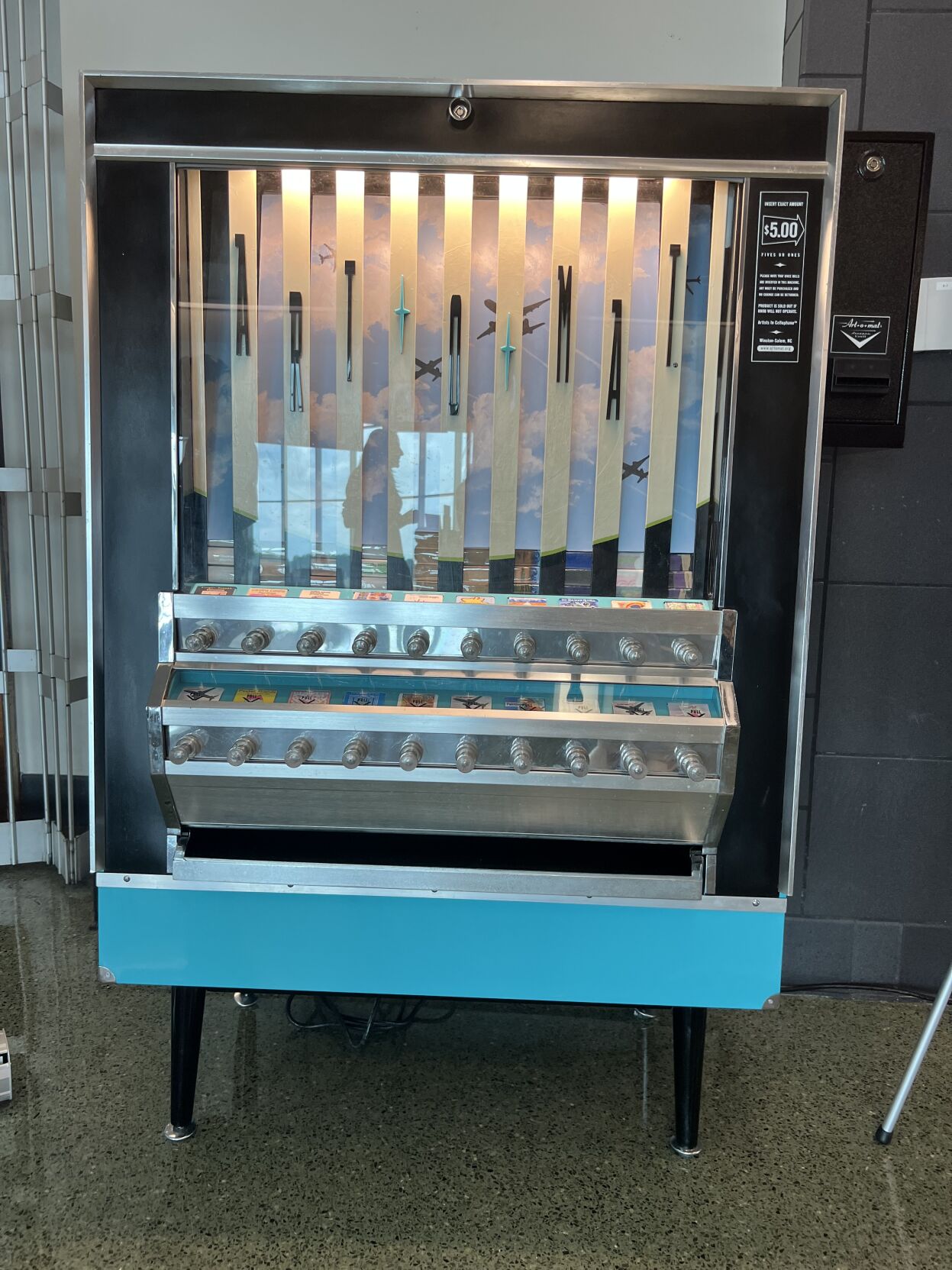
Answer: Clearly, it needs an Art-o-mat, a former cigarette vending machine turned into an art dispenser, which is exactly what the Baton Rouge Gallery at the Baton Rouge Metropolitan Airport helped to unveil Tuesday morning. 


IMG_7332.jpg

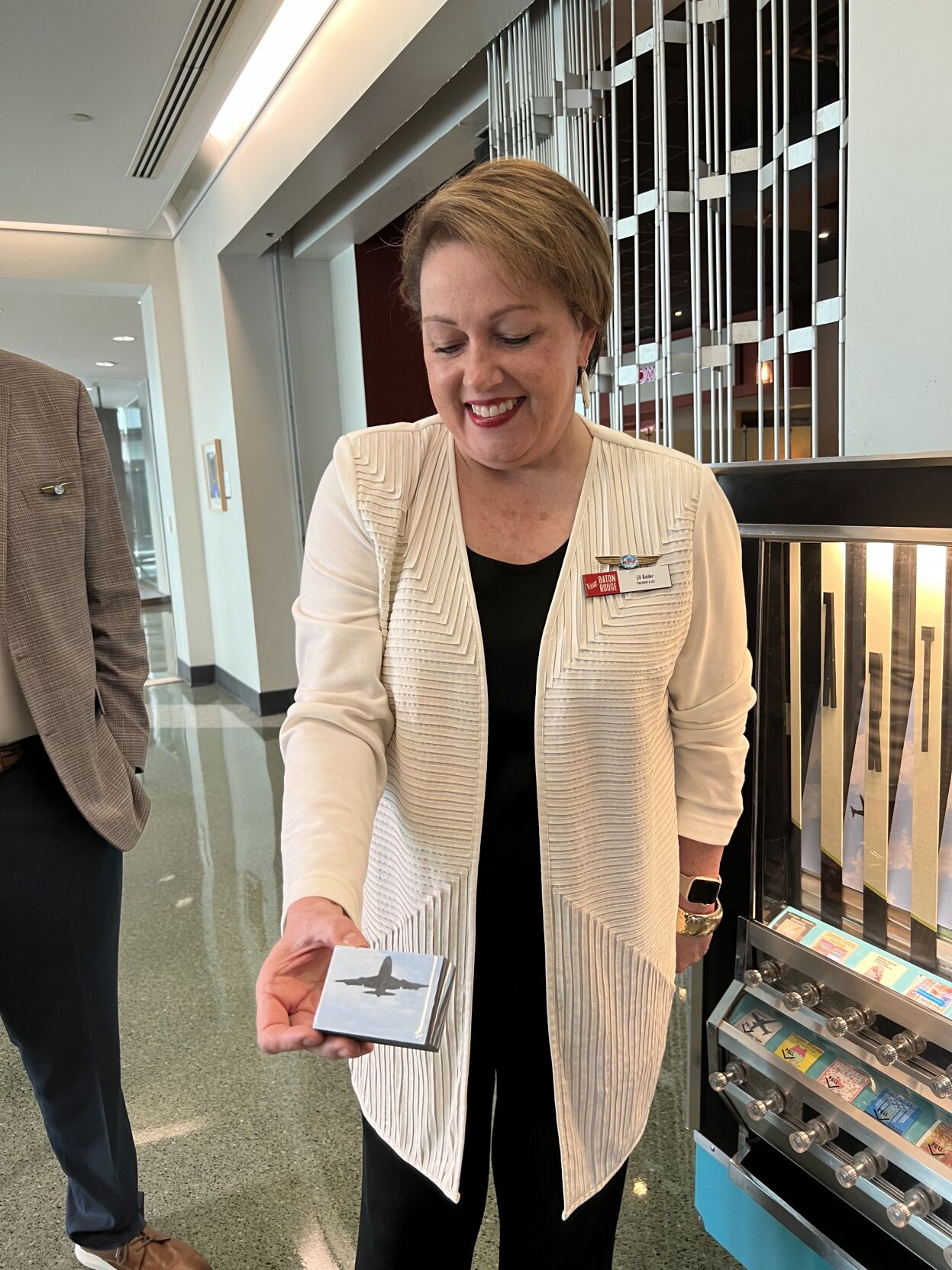
Jill Kidder, president/CEO of Visit Baton Rouge, purchased the first piece of art from the new Art-o-mat vending machine located by the Baton Rogue Gallery in the Baton Rouge Metropolitan Airport. 


The first-ever airport art vending machine opened for business at a time when the airport’s director of aviation, Mike Edwards, said the airport is up to 91% of its pre-pandemic volume and touted American Airlines’ June 1 launch of Baton Rouge-direct-to-Washington, D.C.’s Reagan National daily flights, with a 5:42 a.m. departure and an evening return. 

Edwards and other area officials, including Jill Kidder, president/CEO of Visit Baton Rouge, were on hand for the Art-o-matic’s unveiling, in a nod to National Travel and Tourism Week, May 7-13. Kidder said new data shows that in 2022, 7.2 million visitors to Baton Rouge spent $450 million, providing savings of about $1,000 in tax dollars per household.


IMG_7341.jpg

This aviation-themed Art-o-mat vending machine was unveiled at the Baton Rouge Metropolitan Airport May 9, 2023. 


“Tourism makes us better,” Kidder said. 

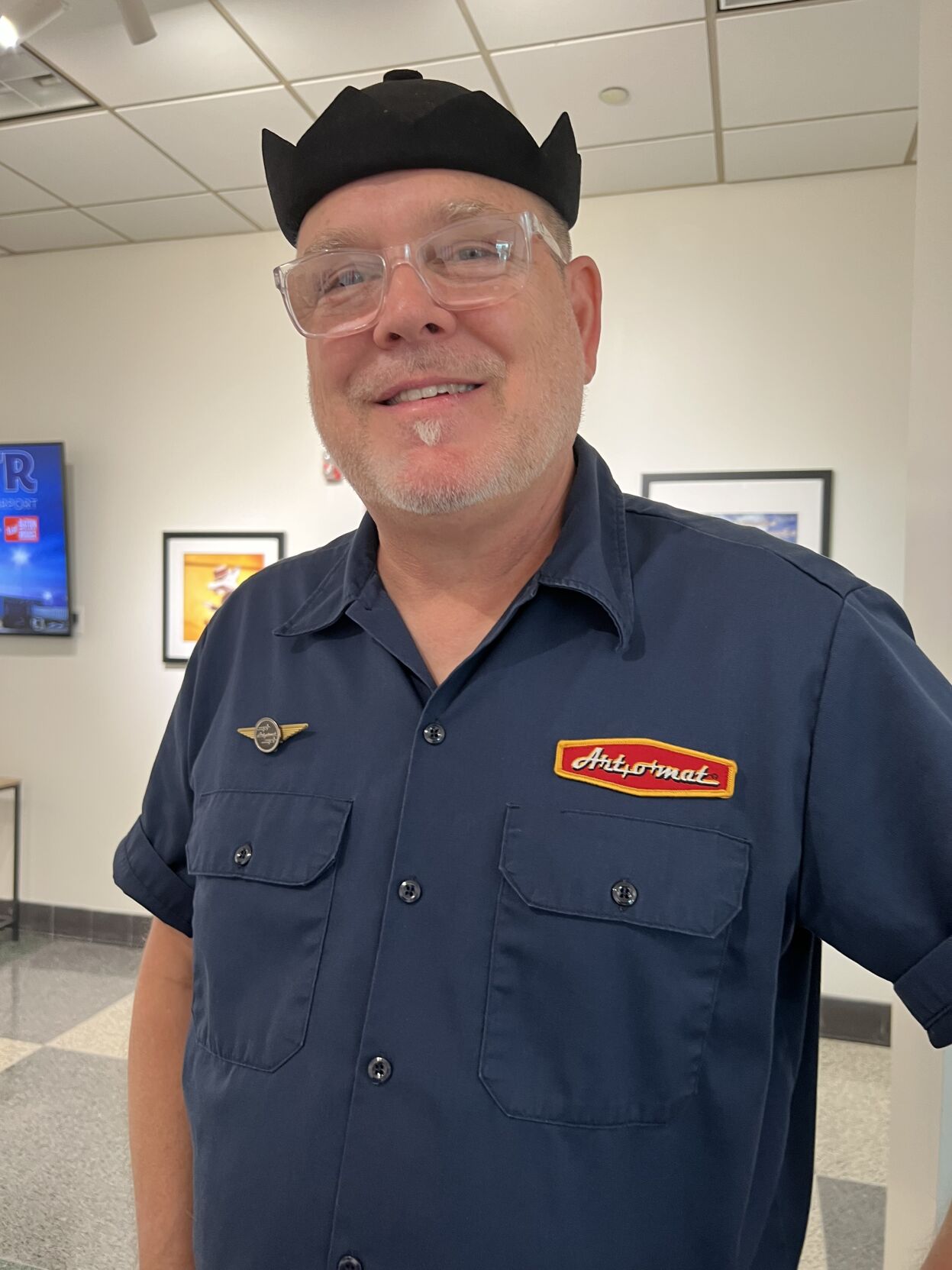
Clark Whittington, creator of the Art-o-mat in 1997, assisted in the art vending machine’s reveal.

Jason Andreasen, president/CEO of the Baton Rouge Gallery, said Whittington contacted him within hours of the news back that the gallery was opening a location in BTR airport, saying an Art-o-mat had never been in an airport and he hoped they could make it happen.

“It’s a retired cigarette machine placed outside a retired smokers’ lounge,” Andreasen said. “The art could be equally addictive.”

The art, which sells for $5 a piece, comes in a small box, about the size of a cigarette box. The airport’s Art-o-mat is about the 200th one placed across the country, according to Whittington, of Winston-Salem, North Carolina. Two Baton Rouge-area artists provide art for Art-o-mat vending machines around the country.

[embedded content]

Andreasen said the machines cost between $4,000 and $5,000 to place. Another Art-o-mat is at the Baton Rouge Gallery in City Park. Artists receive half the proceeds of the pieces they sell. 

The art available at the newest Art-o-mat appears to be all flight-related — from small paintings of hot air balloons, planes or birds to miniature papier-mâché bird sculptures. 

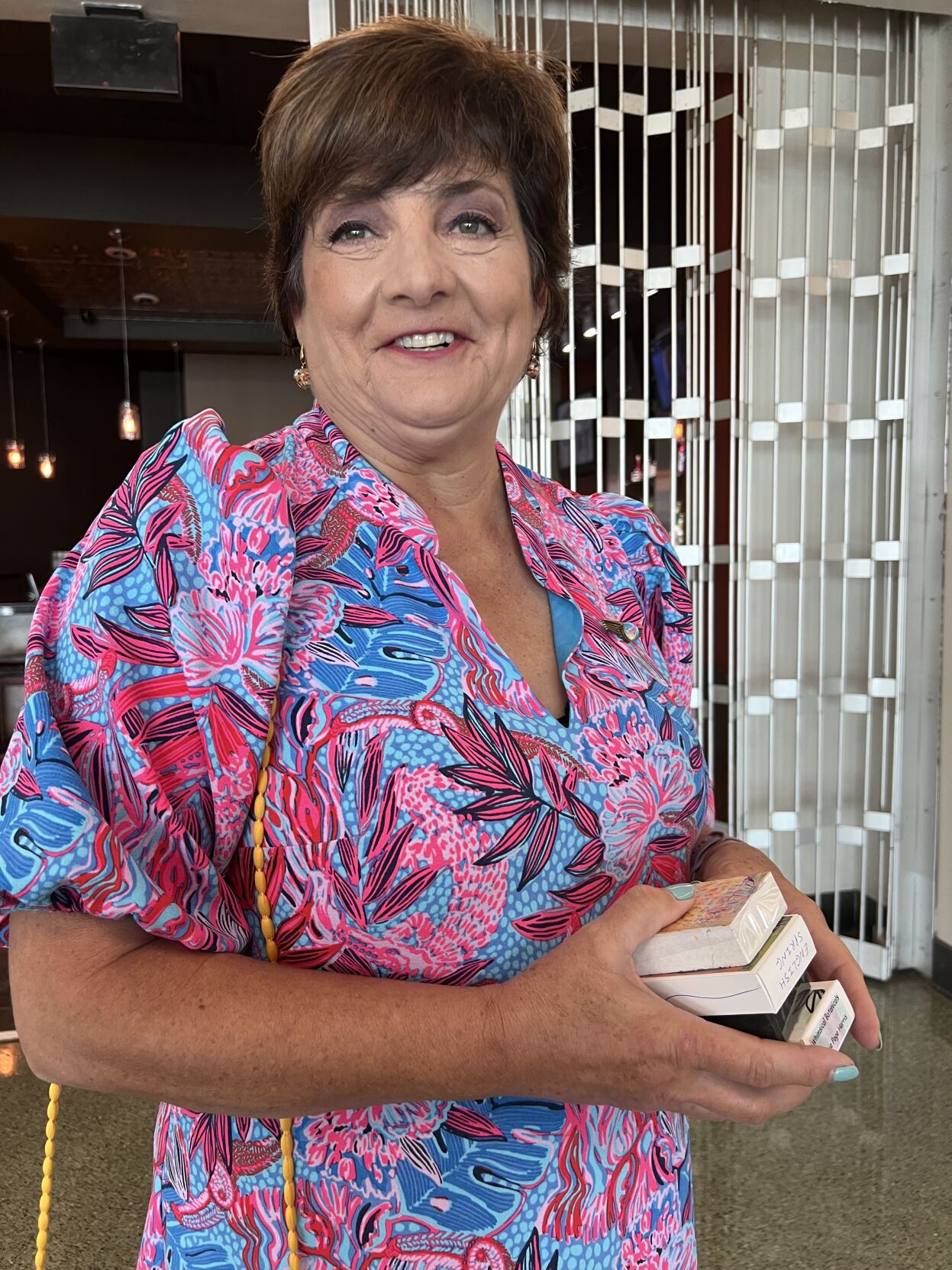
Debbie Daniel, of Baton Rouge, considers herself “a lover of all things Art-o-mat.” She has collected more than 100 of the diminutive works of art, which are on display in her home.


IMG_7340.jpg

Debbie Daniel, of Baton Rouge, considers herself “a lover of all things Art-o-mat.” She has collected more than 100 of the diminutive works of art, which are on display in her home.


“I have them in my windows. I buy them for my grandchildren,” she said. “I can’t get enough of them. I need to go to AA — Art-o-mat Anonymous.”

Daniel said one of her favorite aspects of buying the pieces is after she opens the small box, takes in the artwork and then sends a note to the artist who created it to let them know where their piece of art ended up. Each piece of art comes with information about how to contact the artist. 

Andreasen said he and his staff will stock the machine at least once a month. 


IMG_7325.jpg

Clark Whittington, founder of Art-o-mat, from Winston-Salem, N.C. assisted in unveiling the Art-o-mat located just outside the Baton Rouge Gallery in the Baton Rouge Metropolitan Airport on May 9, 2023. It is the first Art-o-mat located in an airport.


“Once we get a handle on how much activity it gets, we’ll determine how often we refill it,” he said. “Hopefully, we’ll have to refill it all the time.”

Jim Caldwell, the airport’s marketing and public relations manager, said all indications show potential for great sales for the wee works of art, as he anticipates a busy summer of travel.

First Ascent marketing firm grows in Wilmington

First Ascent marketing firm grows in Wilmington

WILMINGTON – First Ascent Design, the homegrown digital marketing agency, has expanded its headcount in downtown Wilmington and moved into a larger office space – one that is familiar to its founders.

First Ascent Design, a homegrown marketing firm, recently leased the former coIN Loft and CompassRed office in the Crosby and Hill Building at 605 N. Market St. | PHOTO COURTESY OF WIKIPEDIA

Led by husband-and-wife co-founders John and Pauline Himics, First Ascent was launched eight years ago in the now-defunct coIN Loft coworking space. Established through a state-supported public-private partnership known as Start It Up Delaware under then-Gov. Jack Markell, the coIN Loft was Delaware’s first coworking space and the entrepreneurial ecosystem helped to grow First Ascent’s clientele.

By 2019, the agency had outgrown the coworking space and moved into its own offices on North King Street. During the pandemic, the firm saw a rush of new business as clients sought to transition their marketing efforts online.

“A lot of folks that had leaned on a lot of traditional methods just couldn’t lean on them anymore. They had to do digital things for the first time, and we were a great partner to get that done,” Himics told Delaware Business Times.  “We doubled our headcount in both 2020 and 2021 and added 50% last year. It’s been an interesting sprint for us.”

Now totaling 20 employees, First Ascent was in need of bigger office space once again.

That led First Ascent to 605 N. Market St., the home of the former coin Loft, where John Himics said it felt like “an opportunity to bring the story full circle.” They signed a lease for about 4,400 square feet with landlord Buccini/Pollin Group that will keep them in their hometown city for the foreseeable future, Himics said. It fills the space left after former tenant CompassRed was acquired by LabWare.

“We’ve got beautiful, exposed brick in the front. In the back, we’ve got three skylights to let a lot of natural light in. Everything that made it attractive as a coworking space is still here and is very attractive for an agency vibe as well,” he said.

While some firms have given up office space in favor of coworking space or remote work, Himics said he felt that it was important for First Ascent’s culture to have space of its own. The firm works a hybrid schedule of three days in the office and two at home, but when leaders discussed the future of office space during the pandemic, the employees were emphatic.

“I had multiple folks on the team tell me, ‘I don’t care if there’s still paint drying or exposed wires or walls are drying. I want to get off my kitchen table and get back in and be with the people that I enjoy working with,’” Himics recalled.

In finding new office space, Himics said the firm did consider its options, but it didn’t think long about whether to stay in the First State. He said it was the encouragement of a coIN Loft colleague that convinced the couple to start the firm, and since then the network of professionals in Delaware has helped the firm grow. First Ascent counts Delaware State University, Goodwill of Delaware and Delaware County, the Delaware Alliance for Nonprofit Advancement, Buccini/Pollin Group, Delaware College of Art & Design, The Mill, and Delaware Innovation Space among its clients.

“That community here in Delaware has been the reason why we won’t go anywhere else,” he said.

For now, First Ascent continues to focus on quality service, offering branding and identity, graphic design, web development and digital marketing. It’s also been branching further north, taking on more projects in the Philadelphia suburbs, but also taking select projects up and down the East Coast.

“I’ve answered RFPs anywhere that Amtrak will take us. I don’t feel that we’ll be moving out of Wilmington anytime soon because I can do work in Baltimore, Boston, New York, etc., just by hopping on the train,” Himics said.

To Draw Museum Visitors, Vienna Turns to AI (and Cats)

To Draw Museum Visitors, Vienna Turns to AI (and Cats)
Left: Egon Schiele, “Self-Portrait with Chinese Lantern Plant” (1912); right: Midjourney AI picture generated by Vienna Tourist Board (all images courtesy Vienna Tourist Board)

From a pawesome rendition of Gustav Klimt’s “The Kiss” (1907–1908) to a purrfect remix of Egon Scheiele’s “Self-Portrait with Chinese Lantern Plant,” (1912) the Vienna Tourist Board is using artificial intelligence to generate feline spinoffs of classic Austrian artworks. The delightful images are part of a new marketing campaign meant to encourage tourists to visit Vienna and “see the art behind AI art.”

The AI-generated cat versions of the famous works come at a time when programs like DALL-E and MidJourney face criticism from artists for potential plagiarism and stolen intellectual property. But rather than avoid AI, the board has instead decided to lean into the controversial technology and explore the ways it can be a fun, educational tool — see, for example, a version of Pieter Bruegel’s “Tower of Babel” (c. 1563) that features a seven-tiered edifice covered in cats.

Left: Pieter Bruegel, “Tower of Babel” (c. 1563); right: Midjourney AI picture generated by Vienna Tourist Board

Alongside the AI artworks, the tourism board also released a cheeky video featuring art historian Markus Hübl. In the video, Hübl takes viewers through a few of Vienna’s fine art museums to ponder some of the masterpieces (and their AI-cat counterparts) that visitors can see in real life in the Austrian capital. 

In the Belvedere Museum, Hübl explains the meaning behind the intricate detailing in Klimt’s “The Kiss.” 

“A man and a woman at the top of a little part of rock. These very strict hard forms symbolizing the male system and the very soft circles symbolizing the female system,” he says, explaining the juxtaposition of the square and circular patterns in the iconic painting.

Then he turns his attention towards the AI version on a tablet. Like the original work, the cat rendition features two figures, each emanating opposite energies while entangled in a passionate embrace. Except instead of a human couple, this painting consists of two kittens.

“Cats are an ambiguous symbol. On the one hand for wildness. On the other hand, most of them are castrated and living in our flats. We are searching for both phenomena: softness and sweetness, and untamed wildness. Aren’t those both not driving forces for creativity and art? What a metaphor,” he jokes.

Left: Gustav Klimt, “The Kiss” (1907–1908); right: Midjourney AI picture generated by Vienna Tourist Board

In the Leopold Museum, Hübl gives some backstory behind Scheiele’s “Self-Portrait with Chinese Lantern Plant,” pointing out the power in Schiele’s direct eye contact and the cultural subcontext behind the self-portrait. He then turns to the AI rendition, which shows an angsty cat dressed in a black blazer.

“A mangy disheveled cat is going into direct contact with us — face to face. It is also a little bit morbid, one ear seems to be cut and the fur is muddy. The cat is looking not really happy, but can we really understand what’s going on in his soul?” he asks. 

“Maybe this cat, like all the other cats on the internet, wants to tell us: Look at me.”

Midjourney AI picture (2023), inspired by Gustav Klimt, “Beethoven Frieze” (1902)

Photographs by Mona Bozorgi and Emma Creighton Hopson are on view at the UK photo fair from May 10 to 14.

Butler is leaving LA’s Hammer Museum to lead the New York museum, which has been under interim leadership for a year.

Hoop Dreams: Basketball and Contemporary Art both celebrates and critiques a game that has grown into a global mega-industry.

With virtual and in-person learning options in London and New York, these courses are intended to give students the tools and confidence to build their careers.

The owl sculpture has been removed from an exhibition at the Minneapolis Institute of Art and will be repaired.

Little Richard: I Am Everything honors the a-lot-ness that made him a 20th-century pioneer, while acknowledging the bumps along the trail he blazed.

The School of Visual Arts in NYC offers a diverse range of more than 200 online and on-campus courses and over 10 artist residency programs.

We counted down the minutes until we hit the stretch of highway closest to the installation, but we didn’t stop.

The artist’s plein-air painting of Austria’s Lake Attersee could fetch up to $45M.