Art World News

Drägerwerk AG & Co. KGaA : Notification pursuant to Art. 5 (1) and (3) of the Regulation (EU) No 596/2014 and Art. 2 (2) and (3) of the Delegated Regulation (EU) 2016/1052

Drägerwerk AG & Co. KGaA :  Notification pursuant to Art. 5 (1) and (3) of the Regulation (EU) No 596/2014 and Art. 2 (2) and (3) of the Delegated Regulation (EU) 2016/1052
image

EQS-News: Drägerwerk AG & Co. KGaA

/ Key word(s): Miscellaneous

Drägerwerk AG & Co. KGaA: Notification pursuant to Art. 5 (1) and (3) of the Regulation (EU) No 596/2014 and Art. 2 (2) and (3) of the Delegated Regulation (EU) 2016/1052

20.11.2023 / 12:18 CET/CEST
The issuer is solely responsible for the content of this announcement.


Notification pursuant to Art. 5 (1) and (3) of the Regulation (EU) No 596/2014 and Art. 2 (2) and (3) of the Delegated Regulation (EU) 2016/1052: Purchase of own shares – final notice

In the period from 4 October 2023 to 17 November 2023 (inclusive), a total of 80,460 preferred shares were bought back within the framework of the share buyback of Drägerwerk AG & Co. KGaA (“Dräger”). In accordance with Art. 5 (1) of the Regulation (EU) No 596/2014 and Art. 2 (1) of the Delegated Regulation (EU) 2016/1052, the start date of the buyback was announced for 4 October 2023 on 2 October 2023.

The share buyback is completed.

The acquisition of the preferred shares served the purpose of fulfilling obligations relating to an employee stock program within the meaning of article 5, paragraph 2 (c) of the Regulation (EU) No 596/2014. The Executive Board also had the opportunity to acquire additional shares by converting part of its variable compensation under the program.

A bank mandated by Dräger conducted the buyback of the Dräger preference shares exclusively on a stock exchange.

In the period from 4 October 2023 to 17 November 2023, the daily number of preferred shares bought back, weighted average share price and aggregated volume totaled:

Date Total number
of shares
bought back
Weighted average
share price
(EUR)
Aggregated
volume
(EUR)
10/04/2023 1,761 43.40 76,423.75
10/05/2023 634 44.18 28,008.75
10/06/2023 2,022 44.36 89,688.45
10/09/2023 1,951 44.53 86,870.15
10/10/2023 1,307 44.72 58,443.40
10/11/2023 2,024 44.43 89,930.15
10/12/2023 2,030 44.71 90,768.10
10/13/2023 1,555 44.17 68,687.10
10/16/2023 1,696 44.15 74,872.75
10/17/2023 309 47.85 14,786.40
10/18/2023 2,659 48.66 129,375.80
10/19/2023 2,852 48.97 139,653.25
10/20/2023 2,960 48.85 144,582.85
10/23/2023 3,181 48.96 155,756.35
10/24/2023 3,043 48.14 146,482.45
10/25/2023 3,318 47.65 158,106.65
10/26/2023 1,824 47.45 86,540.95
10/27/2023 2,823 47.28 133,471.15
10/30/2023 1,429 47.47 67,832.15
10/31/2023 1,421 47.56 67,588.00
11/01/2023 3,525 47.82 168,549.20
11/02/2023 3,544 50.34 178,414.15
11/03/2023 4,055 51.03 206,929.30
11/06/2023 4,097 51.34 210,360.30
11/07/2023 4,161 50.83 211,513.60
11/08/2023 4,282 51.70 221,358.30
11/09/2023 4,347 52.58 228,545.30
11/10/2023 4,414 52.94 233,670.70
11/13/2023 2,025 53.71 108,761.10
11/16/2023 3,984 54.66 217,782.00
11/17/2023 1,227 55.75 68,409.30
Total 80,460   3,962,161.85

In accordance with Art. 5 (1) and (3) of the Regulation (EU) No 596/2014 and Art. 2 (2) and (3) of the Delegated Regulation (EU) 2016/1052, information about the transactions is available on the Company’s website (www.draeger.com) in the Investor Relations section (www.draeger.com/en_corp/Investor-Relations/Share).

Lübeck, Germany, 20 November 2023

Executive Board
Drägerwerk Verwaltungs AG, acting as the general partner of
Drägerwerk AG & Co. KGaA

Moislinger Allee 53–55
23558 Lübeck, Germany
www.draeger.com


20.11.2023 CET/CEST Dissemination of a Corporate News, transmitted by EQS News – a service of EQS Group AG.
The issuer is solely responsible for the content of this announcement.

The EQS Distribution Services include Regulatory Announcements, Financial/Corporate News and Press Releases.
Archive at www.eqs-news.com


RISD Pre-Collegiate Programs Are Now Enrolling for Summer 2024

RISD Pre-Collegiate Programs Are Now Enrolling for Summer 2024

Artwork by RISD Pre-College student James A.

Rhode Island School of Design has opened registration for its residential summer Pre-College program and year-round online intensive Advanced Program Online.

At Rhode Island School of Design (RISD) Pre-College, rising high school juniors and seniors can experience life as a RISD undergrad and work alongside hundreds of other creative, highly motivated students who will inspire them to push their limits and produce their best work. Students will follow a college-level curriculum inspired by the RISD first-year experience with day-long studio classes, visits to the Nature Lab and RISD Museum, critiques, and projects that will forever shape how they approach art and design. Outside of the studio, students can participate in trips and events throughout Providence and beyond. Summer 2024 runs from June 29 through August 3.

To apply for the RISD Pre-College residential summer immersive, visit precollege.risd.edu/program-overview.

RISD’s Advanced Program Online is a year-round online intensive designed for high school students interested in pursuing art and design in college who want to learn best practices in developing their work. This series of college-level courses for students in grades 10 to 12 calls on creative young people to access a more ‘flexible mindset’—applying art and design methods to chart new territories of creation and problem-solving. The Spring 2024 term runs from March 2 to May 12, and the Summer 2024 term runs from June 22 through August 18.

To register for RISD’s Advanced Program Online year-round intensive, visit precollege.risd.edu/advanced-program.

Whether on-campus or online, students will participate in courses led by reputable teaching artists, learn to manage time and self-motivate, and develop concepts, sketches, and finished pieces that can be included in or inform their college applications. Both programs are designed to not only help students build portfolios but also develop as artists and individuals.

Learn more and compare programs at precollege.risd.edu/compare-programs.

Do stories and artists like this matter to you? Become a Colossal Member today and support independent arts publishing for as little as $5 per month. The article RISD Pre-Collegiate Programs Are Now Enrolling for Summer 2024 appeared first on Colossal.

Art and Culture – Universal Music Group, Ethiopia’s Sewasew Multimedia Sign First of Its Kind Distribution Agrmt.

Art and Culture – Universal Music Group, Ethiopia’s Sewasew Multimedia Sign First of Its Kind Distribution Agrmt.

Communiqué officiel de UNIVERSAL MUSIC GROUP N.V.

Addis Abeba – Universal Music Group (UMG), the world leader in music-based entertainment, and Sewasew Multimedia, Ethiopia’s leading music and Entertainment Company, today announced that they have signed the first of its kind distribution agreement for the Ethiopian market.

Under the terms of the agreement, Sewasew Multimedia will be responsible for the digital distribution and marketing of UMG’s extensive catalog of music in Ethiopia. This includes music from UMG’s globally recognized labels, such as Def Jam, Interscope Records, Island Records, Motown Records, Republic Records, and Virgin Records, as well as music from their African divisions, such as Def Jam Africa, Motown Gospel Africa, and Republic Records Africa.

Sewasew Multimedia said the Download Service Provider (DSP) agreement between UMG and Sewasew Multimedia is a significant development for the Ethiopian music industry. It will provide Ethiopian consumers with access to a wider range of music than ever before, and supercharge the reach of Ethiopian artists, bringing their music to a global audience.

“We are excited to partner with Sewasew Multimedia to bring UMG’s music to the Ethiopian market,” said Ulrik Cahn EVP Africa, Middle East and Asia. “UMG has a long and successful presence in Africa, and given Ethiopia’s rich and vibrant music culture, we are excited to work with Sewasew Multimedia to help grow the Ethiopian music industry to its full potential.”

Abraham F., Managing Director, Sewasew Multimedia, on his part said “We are thrilled to partner with UMG, the world leader in music-based entertainment to bring their extensive catalogue of music to the Ethiopian market. This partnership is a testament to Ethiopia’s growing importance in the global music industry, and we are confident that it will be a success for both companies.”

Sub-Saharan Africa was the fastest growing region in 2022 with recorded revenue growth of 34.7%. The agreement is a demonstration of UMG’s commitment to the region, and its wider strategy to increase its presence and accelerate its growth in high potential music markets around the world, according to a media statement from Sewasew Multimedia.

Copyright 2023 Addis Standard. All rights reserved. Distributed by AllAfrica Global Media (allAfrica.com)., source News Service English

Case of U.S. man caught with walrus tusk statue in his trunk reveals the debate over Inuit art exports

Case of U.S. man caught with walrus tusk statue in his trunk reveals the debate over Inuit art exports

On July 25, 2021, Pedro Huertas, an American doctor trying to cross from Canada into the U.S. at the Highgate Springs border crossing in Vermont, told a border guard he was bringing one $2,000 stone statue with him.  

He was lying. 

A search of his vehicle revealed nine bubble-wrapped packages of various sizes, one of them long and thin, others small, according to a criminal complaint filed in U.S. court. When border guards asked Huertas what was inside, he and his wife would not respond to their questions.

Three of the statues, U.S. authorities would later learn, were carved from sperm whale teeth and another was made of a walrus tusk. The border guards seized them. 

CITES, which restricts the sale of products made from protected species, and other, country-specific laws, make it difficult — and sometimes impossible — to leave Canada with products made from whales, walruses and seals, even if they are carvings made from animals hunted legally by Inuit or from bones that are have sat in the tundra or on the shore for years.  

three tupilaks
U.S. officials found these three tupilaks carved from sperm whale teeth in Pedro Huertas’s vehicle when he tried to cross the border in July 2021. (United States Attorney’s Office, District of Vermont)

Huertas wanted the statues back, and a few days later, he presented the authorities with documents, including official certificates of authenticity, that purported to show that the items were decades old, a fact which, if true, might have allowed him to keep them and avoid charges.

It was not true. According to an account in the U.S. District Court documents, they were drawn up at Huertas’s request by the art gallery where he had purchased the carvings — Images Boréales, a prominent Inuit art gallery in Old Montreal.

Huertas was charged in the U.S. with knowingly importing parts of an endangered species without the proper permits. The owner and an employee of Images Boréales are also facing charges here in Canada for allegedly falsifying documents and possessing sperm whale teeth. 

The laws that Huertas and Images Boréales are accused of breaking exist to prevent the sale and export of endangered species products. They are celebrated by some conservationists even as Inuit artists decry them as too restrictive. Some Inuit-art enthusiasts abroad are willing to go to extreme lengths to acquire pieces made from whale bone and walrus ivory. 

a carved walrus tusk
U.S. officials found this carving, made from a walrus tusk, in Pedro Huertas’ vehicle. (United States Attorney’s Office, District of Vermont)

At Images Boréales, on St-Paul Street in the heart of Old Montreal, a busy tourist area, carvings of soapstone sit on glass shelves near sculptures made of whale bone and walrus ivory. 

But the sale of such items, particularly to Americans and tourists from outside of Canada, is complicated. 

A necessary inconvenience

Some animal conservationists say that while many Inuit art enthusiasts may find the rules around import onerous or heavy-handed, they are necessary to make sure animals aren’t killed for their tusks and bones.

Barry Kent Mackay, the director of the Animal Alliance of Canada, said treaties like CITES — the Convention on International Trade in Endangered Species of Wild Fauna and Flora — are necessary.

The laws are there to protect animals even if they inconvenience people, “including a carver in the far North, or an art gallery in Montreal or an American who wants an ornament on his coffee table” because they help ensure that animals aren’t being killed gratuitously for the price tag on their body parts.  

“The higher the demand, the greater the incentive to remove these animals,” Kent said. “The only way to ensure that the artisans will have something that they can carve is to protect the walrus, prevent it from becoming extinct.”

This Inuk artist carves whale bone. See why he’ll keep doing it

6 days ago

Duration 3:00

Featured VideoRuben Anton Komangapik says artists who sculpt whale, walrus, and narwhal bones or ivory pose no threat to those species, and he argues export restrictions on their art are unnecessarily strict.

Working with deliberate precision in his studio in Belleville, Ont., Ruben Anton Komangapik, an Inuk hunter and artist, uses hand tools to carve a trench into a piece of whale bone.

The massive mammal died decades ago. Fresh whale bone is saturated with oil and can’t be carved. Artists often work with bones that have lain on a beach for years, exposed to the elements — sometimes for more than a century — victims of whalers who hunted the animals for their oil.

But Komangapik says he will struggle to sell the finished sculpture that emerges from the whale bone because of the export restrictions. 

“It’s really difficult because being an artist, you’re living pretty much on a piece-to-piece situation,” he said.

WATCH | Why work with whale bone?

Theresie Tungilik, an Inuk artist and the president and spokesperson for CARFAC, a union that represents the interests of Canadian artists, has advocated against the Marine Mammal Protection Act (MMPA), a U.S. law that restricts the import of products made from whales, seals and walruses, among other animals.

She recently circulated a petition, signed by other artists, calling for changes to the MMPA to allow Inuit artists to sell their work to the American market. The restrictions hurt Inuit artists’ ability to sell their work and make money, she said. 

“We hunt the animal not just for their bones and ivory, we hunt them because we need the food to eat,” she said, “and it’s a big plus when a walrus has a tusk and it can be made into art.”

Komangapik said Inuit carvers sometimes face pressure from artist co-ops to use other materials and avoid using bone or ivory because those items are more difficult to sell. 

four stone statues
Sculptures made of different kinds of stone sit in the window at Images Boréales, an Inuit art gallery in Old Montreal. (Dave St-Amant/CBC)

But that never stopped him. Working with whale bone reminds him of his grandfather, who was also a carver, he said. 

“Every time I carve it,” he says, “the smell of it and the touch of it and everything associated, it feels like I’m visiting him.”

‘They can’t buy it’

Sculptures made of whale bone and walrus ivory have piled up in warehouses in southern Canada, purchased by co-ops that market art carved by artists in the North to worldwide markets. 

Since the pieces made from marine mammals usually can’t be exported — they end up on shelves and in storage.

RJ Ramrattan, the general manager at Canadian Arctic Producers (CAP), a co-op that pays Inuit artists for their work, promotes it and sells it worldwide, describes the sale of art made from whale bone and ivory as a “nightmare.”

Some export permits require details about how the animal was killed that are difficult — or impossible — to get for some of the pieces that Inuit artists carve. 

Man with a statue
RJ Ramrattan, the general manager of Canadian Arctic Producers, a wholesaler of Inuit art, stands beside a sculpture made of whale bone that can’t be sold to clients in the U.S. (CBC)

For example, in the case of a decades-old sculpture carved from a piece of whale bone that has sat outside since the early 20th century, it would be difficult to prove where and how an animal was killed, and how the artist acquired it — especially if the artist is dead. 

“I have many, many clients from the U.S. coming to the galleries,” Ramrattan said. “They love the bone, they love the whale bone, they love the walrus ivory … but they can’t buy it.”

Despite the headaches that often come with trying to sell and export a piece of Inuit art made from bone or ivory, some art dealers see the necessity of the restrictions.

“I understand the idea. The idea is to protect,” said John Houston, owner and director of Houston North Gallery, which sells Inuit art, and an Arctic filmmaker. “If someone says, “Oh wow, I’m going to carve a whole lot of walrus ivory, which means I’m going to go and kill a whole ton of walrus,’ — well, we don’t want that.”

But when a gallery circumvents the export restrictions, it could lead to additional scrutiny of the whole sector, he said, and ultimately hurt the industry.

“What good is going to come with that? Either things stay as they are and someone just gets a fine or quite possibly, [the authorities] end up saying ‘we’re gonna have to tighten this all up.'”

two large sculptures made of bone
Sculptures like these ones, carved from whale bone and other marine mammal parts, can’t be exported to the U.S. without permits, which artists and dealers say are nearly impossible to get. (Christopher Langenzarde/CBC)

Houston said he would love to have access to the American market, where Inuit-art enthusiasts are willing to pay top dollar for sculptures made of whale bone and walrus ivory. But the roadblocks posed by export restrictions are too restrictive. 

Huertas, meanwhile, pleaded guilty in October to a misdemeanor charge of knowingly importing parts of an endangered species into the U.S. and, after a plea deal that kept him out of prison, agreed to pay a $50,000 fine. The court also ordered the forfeiture of the four ivory carvings.

Now, Matthew Namour, the owner of Images Boréales, and one of his employees, Imene Mansour, are scheduled to appear in a Montreal courtroom on Dec. 4 to answer to charges that they breached the Wild Animal and Plant Protection and Regulation of International and Interprovincial Trade Act. They have not yet entered a plea. 

Mansour, Namour and the gallery have been charged with possessing sperm whale teeth, which are part of an endangered species, with the intent to sell or distribute them and Mansour and the gallery are accused of presenting false documents to authorities. If guilty, they face a minimum fine of $5,000 or a maximum of six months in jail, or both. 

Through a lawyer, they declined to answer questions, saying that it was still early in the proceedings. The criminal complaint against Huertas in the U.S. alleges that Mansour falsified documents on Huertas’s behalf. These allegations remain to be proven in the criminal proceedings in Canada.

Platform to connect funders with artists launches

Platform to connect funders with artists launches
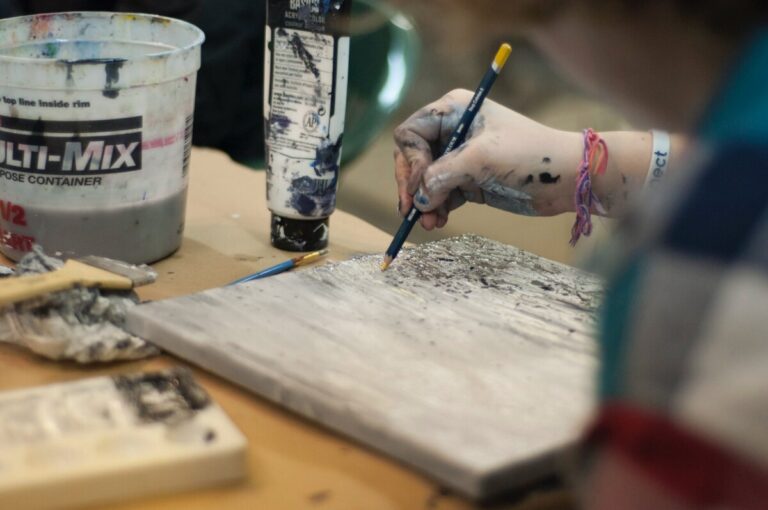
An artist draws on a board. By Alicia Zinn on Pexels

The International Body of Art (IBA), which helps underrepresented artists launch their careers through its public exhibitions programme, has launched a platform to enable funders to sponsor and connect with emerging artists.

It follows research from the IBA that shows that 26% of artists have had to abandon their careers in the arts due to limited financial prospects, and 29% of ethnic minority artists have seen their white peers’ careers progress further than theirs. The research also found that 35% of ethnic minority artists have had to abandon a career in the arts due to having limited financial backing.

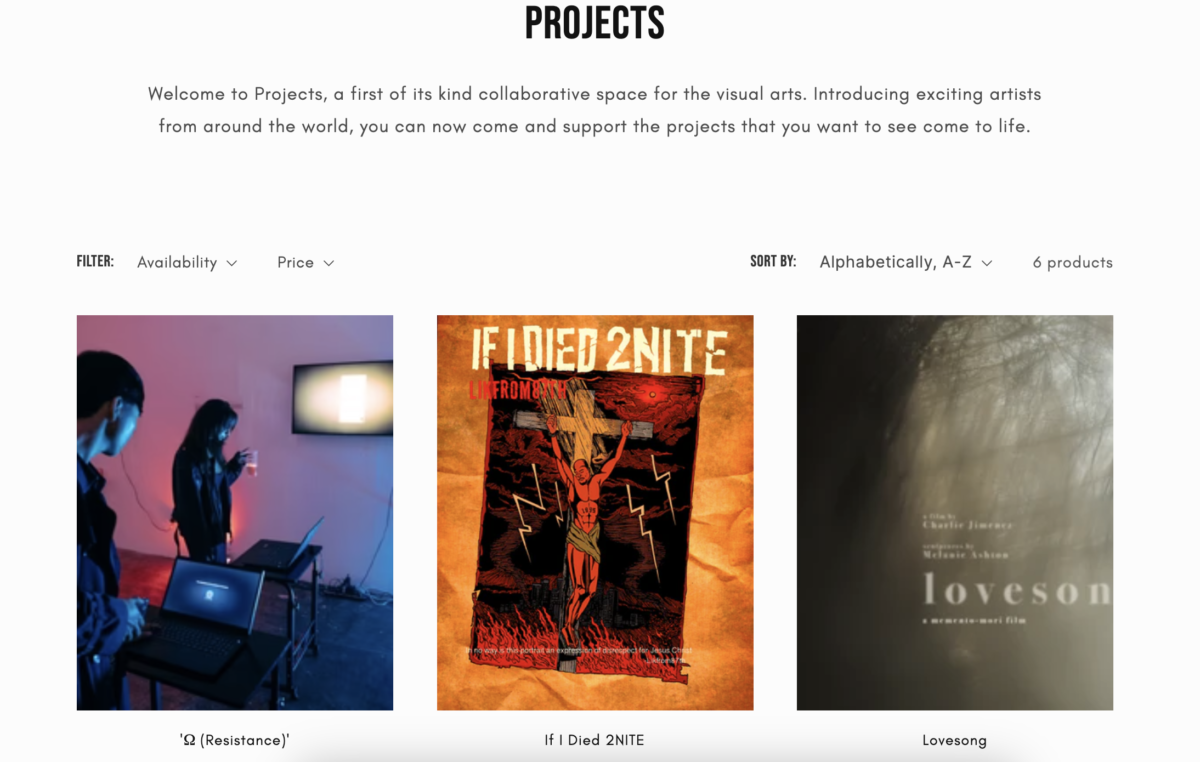
The platform is called ‘Projects‘, and to contribute to a project there are various options of different values, ranging from £5 to £1100. With each contribution, there are different ‘rewards’. These can range from a signed ‘thank you’ note, to private premier invitations, 1-on-1 Q&A calls, or even an extended meditation session with an artist.

Advertisement

Introduction to Fundraising through gaming and livestreaming, by Julian Barrell. Orange background with white illustration of a gaming handset.

The rewards have been created by the artists themselves, with each one tailored to their project. ‘Projects’ aims to allow early-stage art collectors to connect with promising emerging artists to break down the barriers to entry for both artists and art enthusiasts. 

April Kelly, IBA’s project manager said:

“In our artist support and exhibition curation, we always ensured that artists felt that they could be experimental, that they could take risks, and that they could be supported in creating honest, passionate, and personal works. After an early exhibition, we experienced artists thanking us for giving them this freedom – it was then that we realised how profound the problems of the art world are.

“Its rigidity does not simply affect access, but it continues to dictate from within the work of artists. The traditional market almost forces artists to keep making the same works that are instantly sellable and recognisable, so it doesn’t actually allow any room for innovation. That’s what we want to be here for.”

Screenshot of the International Body of Art's new Projects platform which connects funders with emerging artists
Projects

IBA CEO Maria Artool commented: 

“What truly sets IBA’s Projects platform apart is its focus on community. It’s not just about funding projects for the sake of it; it’s about becoming part of an extraordinarily diverse, open-minded, international, and innovative community that thinks outside the box and challenges barriers.

“While individual projects offer their own set of rewards that align with their artistic goals, the platform as a whole provides a space for art lovers and enthusiasts to actively shape the future of the art world. By selecting which projects should receive funding and be brought to life, backers are invited to play a unique role in defining the future of art. They become an integral part of the artistic process, which is a structure that is the first of its kind in the industry.”

Loading

Is there an art to salary negotiation?

Is there an art to salary negotiation?

In the world of accounting, where every figure must add up, the equation of personal value often goes unbalanced. .

As the industry grapples with inflationary pressures and technological transformation, accountants find themselves at a crossroads. The Hays Salary & Recruiting Trends 2023 guide reveals a positive outlook for the profession, with 94% of employers expecting stable or increased performance and 62% planning to hire new staff​.

Amidst this backdrop, salary negotiations take on new significance. In 2023, 89% of accountancy and finance employers raised pay, responding to cost of living concerns, with an average salary increase of 6.5%.

Notably, qualified accountants and in-house tax experts within SMEs saw significant raises, highlighting the value placed on specialized skills in today’s market​​.

Negotiating a salary increase is therefore more than a financial discussion; it’s a testament to recognising one’s professional worth.

Understanding your worth

The foundation of effective salary negotiation lies in a clear understanding of your market value. This requires thorough research into current salary trends specific to your role, experience level, and location within the accounting field.

Resources like online salary checkers and industry surveys can be invaluable.

For instance, the Chartered Accountants Ireland Leinster Society’s survey highlighted that the average salary package for Chartered Accountants in Leinster in 2023 was €118,578, with newly qualified professionals seeing a 6.6% increase to €62,866 compared to the previous year​​.

Additionally, the demand for specialised skills, such as audit and analytical abilities, has led to average salary increases of up to 10% in these areas​​. Understanding these market dynamics is crucial in establishing a baseline for your salary expectations and strengthening your negotiation position.

Building a strong case

Crafting a compelling case is a pivotal element of salary negotiation. It is not just about stating your desire for a pay increase; it’s about substantiating your request with concrete examples of your contributions and achievements.

Document your accomplishments, particularly those that have directly benefited your firm – be it through cost-saving measures, revenue generation, or enhanced efficiency.

Resources & Whitepapers

Elaine Brady, Managing Partner at Barden Dublin, highlights the power of data in this context, noting, “Accurate data on reward can create competitive advantage for those who choose to use it.”

Brady’s research reveals that men are 2.6 times more likely to negotiate their salary than women when changing roles. She also notes the difference between internal and external salary negotiations: the former are more complex and based on previous and potential future performance, while the latter are governed by market conditions and the supply of talent in the specialist area​​.

Timing your request

The success of a salary negotiation often hinges on impeccable timing and clear, confident communication.

Choosing the right moment is key – consider the financial health of your company, recent successful project completions, or annual review periods. During the recovery from the Covid-19 pandemic, many sectors, including accounting, faced financial challenges, making it crucial to back any pay rise request with solid results and evidence of your contributions.

According to PayScale’s Salary Negotiation Guide, its advisable to align your request with your company’s performance review schedule and to understand the broader financial health of the company. Requesting a raise when the company’s revenue is rising or after a major financial win that you contributed to increases the likelihood of success.

Effective communication is equally vital. Articulate your reasons for the pay rise request clearly, focusing on your skills, responsibilities, and how you have contributed to the company’s success.

As Des Gibney, Chairperson of Chartered Accountants Ireland Leinster Society, notes, communicating the breadth of opportunities and one’s role in them is essential in any negotiation. Approach the conversation with a blend of professionalism and personal advocacy, ensuring your points are well-structured and backed by data and examples.

Sealing your worth

The cost-of-living crisis in the UK, as reported by the ICAEW, has significant implications for the accounting sector. The Resolution Foundation’s report warns of a prolonged impact on financial resilience and health, with real wages not expected to return to early 2022 levels until the end of 2027.

This crisis is squeezing the finances and health of many, particularly those in the prime age group of 25-55 years. The report notes that even with falling wholesale gas prices, the scaling back of government support means retail energy prices are expected to rise. Consequently, this crisis is leaving a long-term mark on people’s finances and health, with the rest of the financial year expected to be challenging​​.

For the accountancy sector, this environment suggests an increase in demand for both personal and corporate insolvency services. The UK’s economic situation, characterised by rising interest rates and higher taxes, is expected to lead to an increase in unemployment and financial pressure on households.

Accountants are likely to be busier, providing crucial advice on government energy support, tax reliefs, and financial planning. Their role in helping businesses navigate this environment of squeezed margins and reduced revenues is more important than ever​​.

Mastering salary negotiation in the accounting field is therefore going to be more challenging than ever, but a blend of timely insight, strategic communication, and an informed understanding of one’s worth remain the core pillars of a successful negotiation.

Armed with data, awareness of market trends, and an appreciation for the timing of their request, accountants stand in a strong position to advocate for the compensation in line with market conditions. Navigating this process with confidence and clarity not only furthers their personal career goals but also sets a benchmark for fair and transparent compensation practices in the industry.

Playing in the Hot Obesity Market, Carmot Braves Chilly IPO Waters

Playing in the Hot Obesity Market, Carmot Braves Chilly IPO Waters

NASDAQ Market site/iStock

Pictured: NASDAQ Stock Exchange headquarters/iStockJHVEPhoto

Carmot Therapeutics on Friday filed for an initial public offering (IPO), banking on its pipeline of GLP-1 agonists and the multibillion-dollar potential of the obesity market.

Carmot did not disclose how many shares of its common stock will be put up for sale or its projected earnings from the planned offering. The company expects to wrap up its IPO before the year closes, after which it will trade on Nasdaq under the proposed ticker CRMO, according to a Nov. 17 SEC filing.

The California-based biotech is advancing a pipeline of “life-changing therapeutics for people living with metabolic diseases,” particularly obesity and diabetes, per the SEC filing. One of its most mature candidates is CT-868, a dual agonist of both the GLP-1 and GIP receptors, both of which play crucial roles in the regulation of insulin secretion, appetite and weight.

CT-868 is being developed for type 1 diabetes patients who are overweight or obese, and is designed to be a once-daily injectable therapy. Earlier this month, Carmot launched a Phase II trial of the candidate in this indication.

Last month at the Obesity Society’s Obesity Week 2023, Carmot presented 26-week data from a placebo-controlled, double-blinded and randomized Phase II study of CT-868 in type 2 diabetes patients with overweight or obesity. Results demonstrated that the candidate induced significant improvements in HbA1c, blood pressure and other cardiovascular risk factors.

According to its website, Carmot is also advancing a dual GLP-1/GIP agonist for type 2 diabetes with obesity, dubbed CT-388, as well as an orally available small-molecule GLP-1 agonist for the same indication, called CT-996. The California–based biotech is also working on a preclinical-stage candidate for Prader-Willi syndrome.

Carmot will use the proceeds from its IPO to fund the development of its clinical-stage candidates, as well as support its preclinical projects, general corporate operations and, potentially, “to in-license, acquire or invest” in other businesses, platforms or assets.

With its Nasdaq bid, Carmot joins the small club of biotechs that have braved the fraught 2023 market, contending with an economic downturn, high interest rates and increasingly discerning investors. Compared with the more than 150 offerings in 2021, only a few dozen companies have gone public this year so far, including Cargo Therapeutics and Lexeo Therapeutics, both of which made their offers earlier this month.

According to an analysis by Endpoints News, the IPO drought is likely to continue until next year, particularly amid the Israel-Hamas war.

Carmot is pinning its hopes on the lucrative obesity market, which some analysts expect could reach $200 billion in value. Though this space is dominated by Novo Nordisk, which owns Wegovy (semaglutide), and Eli Lilly, which sells the newly approved Zepbound (tirzepatide), even a small slice of the market could mean a windfall for Carmot.

Tristan Manalac is an independent science writer based in Metro Manila, Philippines. He can be reached at tristan@tristanmanalac.com or tristan.manalac@biospace.com.

Collector Chris Ingram on why philanthropists need to step up to support UK galleries

Collector Chris Ingram on why philanthropists need to step up to support UK galleries

The generally diplomatic British art collector and businessman Chris Ingram, 80, sees no reason to hold back his views on some fellow art-buyers. “The biggest change in the market has been the number of billionaire so-called collectors who are buying art, putting it into freeports and not even looking at it,” he declares over lunch in London.  

A major collector of Modern British art since selling his media-buying business two decades ago, Ingram’s credo is clear. “I like the collection to be seen,” he says. It’s not just warm words: in the past financial year, 73 per cent of the 400-plus works in the core collection were on public display, while the contemporary and outsider-art collection of nearly 200 works also travels widely. Since he suffered a stroke in 2016, limiting movement on his right-hand side, art has offered Ingram a distinct motivation. “In a way, it’s kept me going,” he says.

Unlike many of his collector counterparts, he says he was never tempted to have a private museum for his holdings. “People would have to go there, to one place, whereas I’m sending art out to them,” he says.

‘Erased’ (2022) by Eliana Marinari

As a result, Ingram’s works have adorned some surprising venues recently, ranging from The Clink prisoner rehabilitation restaurants at HMPs Styal and High Down to the Scottish National Gallery of Modern Art’s Barbara Hepworth retrospective last year. Works from the Ingram Collection are also frequently on display at The Lightbox gallery and museum in Woking, the Surrey suburban town where Ingram grew up, and an institution that he has long supported.

Ingram notes that as well as skewing the display of art, the new money in the market has also “upset its value”. There is, he says, “no difference to these buyers, whether they get something at say £60,000 or £80,000, so the rest of us fall back” when bidding. The impact, it must be said, is not all bad news for Ingram, whose first purchases of Modern British art were made when prices reflected the category’s unfashionable status.

He is reluctant to give the current value for the whole collection, as it isn’t for sale, preferring to focus on what it does, though a trustees’ report put it at more than £10mn in 2021. He is prepared to highlight some individual pieces whose values have grown over time. In 2002, Ingram bought a 1965 Hepworth oil and pencil work for £14,000, now valued for insurance at £180,000. In the same year, he purchased an Elisabeth Frink Riace warrior sculpture for £40,000, and notes that a work from the same series, “Riace II” (1986), sold publicly for £230,000 in 2008. Work by Frink, who runs deep in the Ingram Collection, has since made more than £1mn at auction.

The head and body of a horse made from rough fabrics is suspended from a ceiling
‘Wind Horse’ by Losel Yauch © Abdalrahman Elkot

Ingram is not a straightforward interviewee — he keeps me on my toes by frequently answering questions with a follow-up question or two. It seems part of his inbuilt instinct to challenge the status quo. Curator and art adviser Jo Baring, who is director of the Ingram Collection, recalls that in the early days, “I would often tell Chris that ‘in the art world, we work like this’ and he would answer, ‘Well, why?’”

It perhaps explains why he seems just as comfortable branching out from Modern British and into the contemporary realm. “Supporting the current generation is a natural adjustment,” he says. He sees his role as partly educational in a world unfamiliar with business practices. Already a regular at degree shows, Ingram noticed how uncomfortable young artists were when it came to selling their works. “Many didn’t know how to invoice me,” he says.

This observation contributed to the thinking behind the Ingram prize, a free-to-enter competition for UK-educated artists at the start of their careers, launched in 2016; its 32 shortlisted artists are on view this week at Cromwell Place. The shortlisted works are in a range of media: as well as paintings, there are films, sculptures and installations with materials that include recycled sari silk and St John’s wort seeds.

Painting of three bronze women supporting each other in front of bright lilies
‘Sisterhood’ (2023) by Erin Holly © PDP Gallery

Winners’ work is bought for the Ingram Collection while all of the shortlisted artists are offered ongoing support, including a professional development day that covers areas such as copyrighting, applying for residencies and, of course, invoicing. The prize, whose previous winners include Sin Wai Kin (nominated for last year’s Turner Prize), had its highest number of entries this year, Baring says.

Also this month, works from the Ingram Collection are on loan to venues ranging from Woking coroner’s court — 16 works including a 1990 lithograph by Elisabeth Frink — to Brasenose College, Oxford — 24 pieces, including David Hockney’s etching and aquatint “My Bonnie Lies Over the Ocean” (1962). The collection has joined forces with the Women’s Art Collection for the exhibition Women & Water, featuring work by artists including Frink and Tracey Emin (Murray Edwards College, Cambridge, until February 25). Ingram and Baring are still buying, including opportunities that fill any gaps in the Modern British holdings. The future of his collection is squarely with the nation, Ingram says. “There’s nothing for my children and grandchildren to fight over,” he semi-jokes.

Photo of a red scarf reading England hanging on a scabrous wall over a small fireplace
‘England’ by Isobel Scarsbrook

He is conscious that it isn’t just artists who need support now. “It is very saddening that councils are pulling out of local museums,” he says. The Lightbox is one of the latest to face an uncertain future as Woking borough council has proposed stopping all funding for arts and culture as part of a £12mn cut to local services. Ingram confesses he is “confused” by the UK government’s policy towards culture, including severe cuts in London, but lays some of the responsibility at the foot of private individuals. He questions once again: “Where are all the others who could make sure their collections are seen by all and sundry?”

The Ingram Prize is on view at London’s Cromwell Place, November 22-26, ingramcollection.com

Krampus market heads to El Paso County Coliseum to spread Christmas cheer

Krampus market heads to El Paso County Coliseum to spread Christmas cheer

He sees you when you’re sleeping, and he knows when you’re awake.

He knows if you’ve been bad or good, and we’re not talking about good old Saint Nick.

Krampus is coming!

Kaleidoscope Art Market is hosting its 7th Annual Krampus Fest, Art Show and Market.

It’s happening Saturday, December 9th at the El Paso County Coliseum, 4100 E. Paisano.

RECOMMENDED: Socorro kicks off the holiday season with Winterfest

Organizers say this year’s event is their biggest fest yet!

The free, family-friendly event kicks off at 4 in the afternoon and the festivities won’t wrap up until midnight.

RECOMMENDED: Free holiday movie screenings return to downtown El Paso as part of annual WinterFest celebration

There will be fire dancers, food trucks, live music and local vendors as well as a Krampus parade and contest.

Do you have what it takes to be crowned Prince, Princess, King or Queen?

Well grab your best set of horns and dress to impress!

Organizers will also be collecting household supplies for the Reynolds Home, a shelter that helps homeless women and children.

Items that will be accepted include, but are not limited to, baby wipes, trash bags and toilet paper.

Sign up to receive the top interesting stories from in and around our community once daily in your inbox.