Native

Wind Cave celebrates Native Americans’ Day with art show, speakers, sculpture dedication, hoop dancing and food

Wind Cave celebrates Native Americans’ Day with art show, speakers, sculpture dedication, hoop dancing and food

How does the way we are raised impact our self-expression? This Native Americans’ Day, Monday, October 9, Wind Cave explores this question within the theme “Culture Through Art: A Celebration of Native American Expression.”

There are multiple activities throughout the day, starting in the Visitor Center auditorium at 9 a.m. with a welcome from park Superintendent Leigh Welling and National Park Service (NPS) Native American Affairs Liaison, Dorothy FireCloud. An enrolled member of the Rosebud Sioux Tribe, FireCloud is the first person to hold her position within the NPS, working on a national stage to support the agency’s commitment to tribal relations and policy implementation.


Wind Cave Indigenous

A sign marking the natural entrance and the significance of Wind Cave to the Indigenous peoples of this area. More information on the Lakota Emergence Story can be found by clicking here


At 9:30 a.m., Jhon Goes in Center, an Oglala Lakota metalsmith who played a seminal role in the revival and adaptation of plains metalwork, will give a presentation entitled, “Another America and a Regional Landscape.” This talk highlights the Black Hills as a pivotal cultural and creative landscape for Indigenous peoples.

People are also reading…

Following Goes in Center, at 10:30 a.m., award-winning fashion designer Tosa Two Heart will discuss her journey in design and the aesthetic influences of her contemporary clothing designs in a talk titled, “Lakota Storytelling Through Fashion Design.”

The dedication of the sculpture “Cȟaŋgléška-Wakȟaŋ”, or “Sacred Hoop,” will occur at 11:30 a.m. with artist Kelly Looking Horse telling the story of its creation and the philosophical influences of each part. The sculpture is over 20 feet tall and reaches from the lower exhibit level of the park’s Visitors Center up into the skylight.

Activities move outside at 1:30 p.m. with world-renowned hoop dancers Starr Chief Eagle and Jasmine Bell. Chief Eagle and Bell will lead demonstrations, accompanied by a live drum, and invite participation from the audience to help understand the art of the hoop dance.

At 3:30 pm, Emmy Her Many Horses, a Sicangu Lakota author, musician, and actress, will conclude the talks with a presentation entitled, “Classical, Traditional, Ancestral: What Makes it Native?” In this discussion, Her Many Horses confronts her personal experience within a university music program and its tension with her own culturally-based systems of knowing.

Throughout the day, Native American artists will be available at booths, allowing visitors to learn about the continuum of Native American cultural expression and to purchase art from local artists. A food truck with Native American selections will also be available.

The Native Americans’ Day Celebration demonstrations are free and appropriate for all ages. Funding for this event is provided by the Black Hills Parks and Forests Association, a non-profit partner with Wind Cave National Park.

For more information, call the park at 605-745-4600.

You must be logged in to react.
Click any reaction to login.

#lee-rev-content { margin:0 -5px; }
#lee-rev-content h3 {
font-family: inherit!important;
font-weight: 700!important;
border-left: 8px solid var(–lee-blox-link-color);
text-indent: 7px;
font-size: 24px!important;
line-height: 24px;
}
#lee-rev-content .rc-provider {
font-family: inherit!important;
}
#lee-rev-content h4 {
line-height: 24px!important;
font-family: “serif-ds”,Times,”Times New Roman”,serif!important;
margin-top: 10px!important;
}
@media (max-width: 991px) {
#lee-rev-content h3 {
font-size: 18px!important;
line-height: 18px;
}
}

#pu-email-form-daily-email-article {
clear: both;

background-color: #fff;

color: #222;

background-position: bottom;
background-repeat: no-repeat;
padding: 15px 0 20px;
margin-bottom: 40px;
border-top: 4px solid rgba(0,0,0,.8);
border-bottom: 1px solid rgba(0,0,0,.2);

display: none;

}
#pu-email-form-daily-email-article,
#pu-email-form-daily-email-article p {
font-family: -apple-system, BlinkMacSystemFont, “Segoe UI”, Helvetica, Arial, sans-serif, “Apple Color Emoji”, “Segoe UI Emoji”, “Segoe UI Symbol”;
}
#pu-email-form-daily-email-article h2 {
font-size: 24px;
margin: 15px 0 5px 0;
font-family: “serif-ds”, Times, “Times New Roman”, serif;
}
#pu-email-form-daily-email-article .lead {
margin-bottom: 5px;
}
#pu-email-form-daily-email-article .email-desc {
font-size: 16px;
line-height: 20px;
margin-bottom: 5px;
opacity: 0.7;
}
#pu-email-form-daily-email-article form {
padding: 10px 30px 5px 30px;
}
#pu-email-form-daily-email-article .disclaimer {
opacity: 0.5;
margin-bottom: 0;
line-height: 100%;
}
#pu-email-form-daily-email-article .disclaimer a {
color: #222;
text-decoration: underline;
}
#pu-email-form-daily-email-article .email-hammer {

border-bottom: 3px solid #222;

opacity: .5;
display: inline-block;
padding: 0 10px 5px 10px;
margin-bottom: -5px;
font-size: 16px;
}
@media (max-width: 991px) {
#pu-email-form-daily-email-article form {
padding: 10px 0 5px 0;
}
}
.grecaptcha-badge { visibility: hidden; }

Artists Repertory Theatre’s shows paused, but will ultimately go on

Artists Repertory Theatre’s shows paused, but will ultimately go on
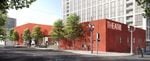
A rendering of the exterior of Artists Repertory Theatre's new building. The building will serve as ART's new home beginning 2024.

A rendering of the exterior of Artists Repertory Theatre’s new building. The building will serve as ART’s new home beginning 2024.

Courtesy LEVER Architecture

Last month, Portland’s Artists Repertory Theatre announced it was canceling its whole season weeks before it was going to start because of insufficient cash on hand. Then came a second blow: layoffs announced on Sept. 5 that took the company from 10 full-time employees to six.

THANKS TO OUR SPONSOR:

ART is not alone. Theaters in Oregon and around the country are struggling right now to bounce back from the pandemic.

Aiyana Cunningham is the new managing director of the theater. She said the situation came as a shock to her and the whole company.

“There were multiple convergent factors that came together at once that informed that decision and a key part of that is something that ART is suffering from, that is also affecting theaters nationally, which is this crisis of returning to live performance and rebounding from the challenges of being closed during the pandemic.”

She says ticket sales are down between 20 – 50% compared to 2019 before the pandemic.

“So when people attend, they engage, they connect and then they give. So when the audience isn’t coming back, isn’t seeing the shows, then they’re not as motivated or connected to make that additional donation.”

But ticket sales are not the biggest source of revenue for ART and most other theater companies.

“The largest chunk of funding actually comes from private foundations via grants and also city and state local grants, which actually fortunately have remained pretty vibrant throughout the pandemic and have been quite helpful.”

THANKS TO OUR SPONSOR:

Cunningham says ART’s current financial difficulty reflects what many theatres are experiencing around the country.

“We certainly are in a national crisis for the survival of professional nonprofit theater. The National Endowment for the Arts estimates that about two or three companies close every month right now.”

The renovations on the company’s building downtown continues, Cunningham says.

But ART’s mission is about more than just having a venue to showcase new works. Cunningham says it’s just as much about the kind of works and voices it elevates.

“ART specifically has a commitment to new works and to a diversity of artists, to BIPOC artists and Native artists.”

And Cunningham says, the space is vital to its ArtsHub, a place for individual artists and organizations to put on productions, take classes and workshops and host a variety of events, from artists talks to social events and more.

She says there’s a long road ahead to fundraise the roughly $5 million that will be needed to complete the whole project. The first phase of renovations will be done in November, in advance of producing new work and hosting events there as soon as February 2024.

Meanwhile, there’s little hope of salvaging the current season.

“We’re being so careful with our resources, not just the money, but our staff time too, that even if we had the money to produce a play, I think it very much is in question for whether or not that’s the wisest thing because we’re playing the long game to be able to get back into our renovated space,” Cunningham said.

Aiyana Cunningham spoke to “Think Out Loud” host Dave Miller. Click play to listen to the full conversation:

Your browser does not support the audio element.

THANKS TO OUR SPONSOR:

How can you identify authentic Native-made art and crafts?

How can you identify authentic Native-made art and crafts?

Federal prosecutions of counterfeit retailers have identified products that were manufactured overseas and then sold in the U.S. as authentic Native American art.

PHOENIX — Tourists and online shoppers who want to buy authentic Native American arts and crafts may have a tough time discerning between what’s real and what’s imported.

They have good reason to be skeptical.

Federal prosecutions of counterfeit retailers have identified products that were manufactured overseas and then sold in the U.S. as “authentic Native American art.” A longtime Navajo jewelry store owner said in the Southwest region of the U.S. there are wholesale dealers who sell products that originate from China, Tawain and the Philippines. Some “Navajo” rugs are actually made in Pakistan.

“Of course it’s offensive. It’s our livelihood,” said Lyndon Tsosie of House of Stamps located in Gallup, New Mexico.

Tsosi said there are legitimate retail shops that sell indigenous products. The key is knowing where to look. Meanwhile, an effort is underway on the federal level to improve protections for Native artisans.

Seek out the artists, talk to local galleries and cultural centers

“It’s always best to talk to them (artists) one one-on-one, or talk to them through social media,” Tsosie said.

While shopping in person, ask for a card of authenticity with the artist’s name. Many Native artists – including Navajo rug weavers, squash blossom jewelry makers and painters – have profiles online, Tsosie said.

“If a product is legitimate, they (sellers) will go out of their way to tell you who made it,” Tsosie said.

Art galleries and cultural centers are also reliable resources for finding out where authentic Native products can be found in a given community. Better Business Bureau ratings can also provide reliable information about a business’s reputation, Tsosie said.

Resources online to find authentic native products in the Southwest

Some tribal nations provide resources online for authenticated work. 12News also identified the following online resources for authentic Native American art in the Southwest:

  • In the Phoenix area, the indigenous-owned Native Art Market links sellers to buyers online.
  • Project Dream Catcher  provides a list of Native American women entrepreneurs who graduated from a business development program at the Thunderbird School of Global Management
  • Navajo Silversmith Lynn Benally sells handmade jewelry online through her business Lynn Designs. 12 News recently visited Benally’s studio near Window Rock. “From raw material comes something so beautiful, so intricate,” Benally said. “When I was nine years old my grandfather took me aside and told me, ‘one day this is what you’re going to be doing’.”
  • Galleries such as Southwest Native Originals and Adobe Gallery  have longstanding reputations for contemporary and historic art

Tsosie said social media like Instagram and Facebook have opened avenues for Native artists to sell directly to buyers.

“This is the new American Indian, having the artistry and living off it in a harmonious way. You become your own king, if you will, in the financial world of making a living,” Tsosie said.

Federal push to update Indian Arts and Craft Act

This year the Bureau of Indian Affairs is proposing updates to the landmark 1990 Indian Arts and Craft Act, including a “Made in America” requirement and a new certification trademark to certify an item as an “Indian Product.”

Other potential updates include expanding the definition of an Indian Product and allowing non-Indian labor to work on Indian products (this is viewed as a way to make running a business easier for indigenous business owners).

The Senate Committee on Indian Affairs is proposing legislation that would strengthen enforcement of the Indian Arts and Crafts Act, according to Tribal Business News

Tsosie wants tougher enforcement but said proposals are fraught with politics.

RELATED: Indigenous People’s Day PHX Fest celebrates Indigenous culture in the present tense

“When you throw politics into anything, then you get roadblocks. You get people on the right and on the left but they really don’t ever ask the jeweler, or the bead maker, or the potter or the rug weaver; How do the standards affect them?”

The federal government just wrapped up a nationwide public comment period on the proposed regulations.

Feds prosecute counterfeit vendors

Vendors found guilty of selling counterfeit Native art risk prosecution.

This month the Department of Justice secured a 2-year prison sentence for a business owner selling phony indigenous art that was actually made in the Philippines. The punishment is the most severe ever for violation of the Indian Arts and Crafts Act.  Two co-conspirators are also awaiting trial.

“Fakes and counterfeits, such as those marketed for huge sums of money by the Rodrigos, tear at the very fabric of Alaska Native culture, Native livelihoods, and Native communities,”  said Indian Arts and Crafts Board Director Meridith Stanton in a news release.

In 2018, a New Mexico jewelry store owner was sentenced to six months in prison for selling Filipino-made jewelry as Native American art, according to KRQE.

 Up to Speed 

Catch up on the latest news and stories on the 12News YouTube channel. Subscribe today.

[embedded content]

Peoria native returns home to promote new book

Peoria native returns home to promote new book

PEORIA (25News Now) – Peoria native Glenn Bowie made his way back to the River City to promote his new book, The Art of Speaking Into Existence. A book signing was held at the Riverfront Museum Saturday morning.

The Art of Speaking Into Existence takes us on a journey through Glenn’s life. From humble beginnings in Peoria’s Taft Homes, to life lessons learned along the way. “It’s about dreaming big. It’s about having vision and goals for your life. It’s about overcoming, persevering, being determined to make it, but most importantly never giving up on life.” Bowie says.

He adds that writing this book has been a life changing experience. “To be able to write a book and talk about it is unbelievable.” The Art of Speaking Into Existence is for anyone who is ready to dream big and tackles life’s challenges with a positive mind. Glenn hopes readers will not only feel inspired but will gain principles that lead to a life of prosperity.

Glenn currently lives in California as a speaker, author, trainer and consultant. However, there’s truly no place like home. “It doesn’t get any better than Peoria Illinois”, Bowie says with a smile. “To be able to be here at this moment is something special that I’ll always remember for the rest of my life.”

The Art of Speaking Into Existence can be purchased through his website, Glenn Bowie Speaks.

Bowie adds that a second book is already in the works.

Indigenous People’s Day PHX Fest celebrates Indigenous culture in the present tense

Indigenous People’s Day PHX Fest celebrates Indigenous culture in the present tense

The second annual festival will be Oct. 9 from 10 a.m. to 8 p.m. and includes a skateboard competition, art installation and more.

PHOENIX — When Autumn Rose Williams hears people talk about Indigenous communities, it is often “in the past tense.” 

For Williams, who serves as the public relations and media coordinator for Indigenous People’s Day PHX Fest, Indigenous People’s Day is a celebration of Indigenous histories, just as much as it is a celebration of the Indigenous people who live in the Valley right here, right now. 

“It is important to tell our histories, to tell our stories, and make sure we as Indigenous people are seen, heard, understood and respected,” Williams said. “Indigenous PHX Fest is really amplifying, honoring and showcasing the beauty of Indigeneity here in the Valley.” 

The annual Indigenous People’s Day PHX Festival returns to the Valley for its second year Oct. 9 with the theme “Indigenize the Valley.” 

Here’s everything you need to know before you go:

Starting out

As someone who has been “working since the ground up,” Candace Hamana said seeing how much the festival has grown means the most to her. Hamana is one of the co-owners of Cahokia, the Indigenous-led, Indigenous women-owned art and entrepreneur space that puts on the festival.

“Seeing how much the community has risen up to meet us and to meet our needs in this moment by way of collaboration and in kind sponsorship and community support is the most heartening thing,” Hamana said. 

Cahokia PHX hosted the first festival last October, and this year are joined by the Gila River Indian Community and Becker Boards as sponsors for the festival. 

Festivities 

The festival isn’t the only event people can attend. This year attendees can explore a launch party and gallery event on Oct. 4 from 6-9 p.m. at the Phoenix Art Museum and an Indigenous film screening on Oct. 7 at the Burton Barr Central Library.

At the festival itself, there is a skateboard competition, a pop-up market featuring over 120 Indigenous artisans and food vendors, musical performances, a mural and art installation, and an exhibit at the Heard Museum. The festival is free to enter, but people attending are encouraged to RSVP.

This year also features the inaugural Sacred Cycle of Life Bike Tour hosted by RVSO, Heavy Pedal Phoenix and DoorDash. The ride will be Oct. 9 from 8 a.m. to noon, and pre-registration is required to participate.

Indigenous People’s Day as a city holiday

This is also the first Indigenous People’s Day that will be observed as a paid city holiday.

Phoenix declared Indigenous People’s Day a paid city holiday on April 19, 2023. City offices will be closed and city services will follow a similar pattern to Martin Luther King Jr. Day. 

Hamana remembers getting the news alert on her phone when Indigenous People’s Day was made a paid city holiday earlier this year. 

The proclamation by Mayor Kate Gallego helps indigenous tribes everywhere to feel “seen and be celebrated” Hamana said, but it was just one small, “overdue” step forward. 

“The proclamation by the mayor… is giving Indigenous communities the opportunity to be acknowledged for their ingenuity and their contributions to the history that predates Arizona statehood,” Hamana said. “This is one positive step in that direction but we would like to see it more as a call to action to be recognized as a state holiday, at the very least. It’s overdue.” 

Hopes for the festival

Hamana and Williams both said they hope festival goers walk away with a greater understanding of Indigenous people overall, from the history and heritage of Indigenous communities predating Arizona statehood to the Indigenous business owners, artists and neighbors in your own community today. 

“There’s history, there’s stories, there’s culture,” Hamana said. “It’s not something that’s just in a past tense.” 

From the film screenings and the skateboard competition to the artists and vendors, Williams said Indigenous People’s Day PHX will celebrate the stories of many Indigenous people and communities right here in the Valley.

“It is really, really important for people to really have an appreciation and respect for who we are as Indigenous people, told by Indigenous people,” Williams said. 

Get to know 12News

At 12News, we listen, we seek, we solve for all Arizonans. 12News is the Phoenix NBC affiliate owned by TEGNA Inc. 

12News is built on a legacy of trust.  We serve more than 4.6 million people every month on air, on our 12News app, Facebook, Instagram, YouTube, Twitter, and 12News.com

We are committed to serving all of the Valley’s communities, because we live here, too.  

12News is the Official Home of the Arizona Cardinals and the proud recipient of the 2018 Rocky Mountain Emmy Award for Overall Excellence. 

Stay connected by downloading the 12News app, available on Google Play and the Apple Store.  Catch up on any stories you missed on the show on the 12News Youtube channel. Read content curated for our Spanish-speaking audience on the Español page. Or see us on the 12News Plus app available on Roku or Amazon Fire. 

12News Digital Exclusives

Go beyond the TV broadcast and learn more about unique Arizona stories on the 12News YouTube channel. Subscribe for more digital-exclusive content!

[embedded content]

ZYEP Art Apprentices Participate in Grand Canyon Cultural Demonstration Program

ZYEP Art Apprentices Participate in Grand Canyon Cultural Demonstration Program

Last month, three young artists from the Pueblo of Zuni had the opportunity to share their culture, history and traditional arts with the public through the Grand Canyon Cultural Demonstration Program. They are LaShea Harris, 24; Chasady Simplicio, 19; and Cassandra Tsalate, 21.

All three young people participated in the Zuni Youth Enrichment Project’s Emerging Artist Apprenticeship program, and Harris and Tsalate also completed the Advanced Artist Apprenticeship program. Kandis Quam, ZYEP’s assistant art coordinator, chaperoned the trip.

“We monitor our art students to see who has the capabilities to do something like this,” said Elroy Natachu Jr., ZYEP’s art coordinator. “We’re looking for young people with a solid work ethic and mental fortitude. They need to be motivated, self-driven, and able to push outside their comfort zone. With these three, we saw that light.” 

Never miss Indian Country’s biggest stories and breaking news. Sign up to get our reporting sent straight to your inbox every weekday morning. 

The free cultural demonstrations took place from 9 a.m. to 4 p.m. daily at various locations at and around Desert View Watchtower, the easternmost developed area along the park’s South Rim. The artists also conducted demonstrations for other youth at Grand Canyon High School; in both cases, the artists said they appreciated the opportunities to engage with the public.

Apprentices at the Grand Canyon (Photo/Zuni Youth Enrichment Project)

“I was nervous at first, but I really liked talking to people,” said Simplicio, who creates traditional Zuni Pueblo weaving. “People wanted to know how long it takes to produce a piece. I explained that it depends on the weaver, and on the design. One woman was so interested in our weaving process; she had her own small loom to fix socks. I thought that was cool!”

The three artists shared living quarters while in residence at Grand Canyon National Park, and Simplicio noted this gave the trio opportunities to get to know each other better.

“We talked about meaning, color and design in our work,” they remembered. “I learned a lot from LaShea and Cassandra.” 

Harris said she also felt “a lot of nerves” before the program started, in part because she embarked on her journey with traditional Zuni embroidery just a year ago.  

“It was a little bit intimidating, but I enjoyed sharing what I knew,” she recalled. “It was a popular time for European tourists, and we introduced them to Zuni art.”

“I was trying not to be nervous,” said Tsalate, who produces Zuni Pueblo pottery, with a laugh. “I told myself it was like trying to teach someone here at home. The ranger told us to ask ourselves, what is one thing we can leave them with? 

“So, I talked about the significance of these traditional arts in our culture, and what revitalizing them means for the future of our people,” she continued. “I also talked about being passionate about culture and history. That’s what makes me motivated… the history! Hopefully we inspired others.” 

Indeed, through the cultural demonstration program, these young artists became teachers for peers and adults alike. Natachu said this is vital for the future of the Zuni people.

“Our art forms are culturally rooted,” he explained. “They share how we view the world. They show it through our Zuni lens. Without future culture bearers, the knowledge of these traditional art forms will be lost — the artistic processes, and what they were meant for.”

Tsalate said she hopes the cultural demonstration program encouraged others to embrace their talents, especially women. And, back home, she hopes more Zuni youth will get more deeply involved with art and culture.

To that end, Harris said ZYEP’s Emerging Artist Apprenticeship Program is a good place for young people to start exploring their interests, passions and talents in the arts. The program not only provides art instruction, it also connects young artists with experienced mentors who can help guide them on their artistic journeys.

“Our experience at the Grand Canyon shows how far the apprenticeships can take you,” Harris observed. “You never know what doors will open. It’s great that ZYEP offers these opportunities, exposing youth to different arts and showing them that they can do it.” 

While the group were able to visit a few of the tourist sites along the South Rim during their stay, their main focus was their artwork and strengthening connections to their roots in a place that is sacred to the Zuni people.

“It was so scenic, and there was the cultural significance as well,” Harris said. “It felt different to do my embroidery there. I felt closer to our ancestors.” 

Grand Canyon has been home to 11 tribes for generations, which means it is more than a national park, a World Heritage Site and a natural wonder of the world. It’s also a sacred space for entire peoples: Havasupai, Hualapai, Hopi, Yavapai-Apache, Kaibab band of Southern Paiute, Las Vegas band of Southern Paiute, Moapa band of Southern Paiute, Paiute Indian Tribes of Utah, San Juan Southern Paiute Tribe, and Zuni.

The purpose of the Cultural Demonstration Program is to give members of those 11 traditionally associated tribes a voice at Grand Canyon by supporting interactions with the public through demonstrations of traditional Native practices and crafts. Made possible by grants from the Grand Canyon Conservancy, the program began in 2014 and continues to grow.

Now that she is back home, Harris said she is planning to take time to create something new. As she takes on larger embroidery projects, she is dedicated to further developing her own style. 

Chasady Simplicio demonstrates her talents (Photo/Zuni Youth Enrichment Project)

Simplicio agreed, noting they plan to continue working on their weaving and learning more advanced techniques.

“I want to help my community by inspiring others, and showing them that you can make it as an artist, even if you’re a young person,” they said. “It’s always worth it to try something new.”

As for Tsalate, continuing with her pottery is one piece of a larger puzzle. Not only would she like to explore other mediums, like jewelry and basketry, she is pursuing an education in museum studies. 

“I want to teach history,” she explained. “It’s so important. I want to open up conversations with our elders and encourage them to teach, as well.

“I also want to be in touch with other artists, people of all ages,” she continued. “It’s about bringing our community together, and improving access to outside resources like museums and national parks. I’m just so inspired.” 

After this first experience with the Grand Canyon Cultural Demonstration Program, Natachu said he anticipates that this will become a regular part of ZYEP arts programming.

“We need to support the young people who have the capability to carry the torch into the future,” he said. “They must take our places one day.”

More Stories Like This

Bard College Hosting the Second Annual Conference of Rethinking Place: Bard-on-Mahicantuck
Little Priest Tribal College Celebrates 25th Anniversary 
Indian Youth Service Corps Gets $3.5M Boost
Chickasaw Nation Breaks Ground for Child Development Center in Ada, Okla.

Native News is free to read.

We hope you enjoyed the story you’ve just read. For the past dozen years, we’ve covered the most important news stories that are usually overlooked by other media. From the protests at Standing Rock and the rise of the American Indian Movement (AIM), to the ongoing epidemic of Murdered and Missing Indigenous People (MMIP) and the past-due reckoning related to assimilation, cultural genocide and Indian Boarding Schools.

Our news is free for everyone to read, but it is not free to produce. That’s why we’re asking you to make a donation to help support our efforts. Any contribution — big or small — helps.  Most readers donate between $10 and $25 to help us cover the costs of salaries, travel and maintaining our digital platforms. If you’re in a position to do so, we ask you to consider making a recurring donation of $12 per month to join the Founder’s Circle. All donations help us remain a force for change in Indian Country and tell the stories that are so often ignored, erased or overlooked.

Donate to Native News Online today and support independent Indigenous journalism. Thank you. 

About The Author
Native News Online StaffNative News Online Staff
Author: Native News Online StaffEmail: This email address is being protected from spambots. You need JavaScript enabled to view it.
Native News Online is one of the most-read publications covering Indian Country and the news that matters to American Indians, Alaska Natives and other Indigenous people. Reach out to us at [email protected].


A migrating message: Traveling art project heightens awareness of pollinator-friendly plants

A migrating message: Traveling art project heightens awareness of pollinator-friendly plants

#inform-video-player-1 .inform-embed { margin-top: 10px; margin-bottom: 20px; }

#inform-video-player-2 .inform-embed { margin-top: 10px; margin-bottom: 20px; }

At just 2 years old, Clyde Wilder Houle Bareford can already identify milkweed and goldenrod when helping his mother collect seeds for use in her most recent public art endeavor.

In fact, Merrimac artist and environmentalist Jenn Houle credits her young son with a significant role in motivating her to develop and execute the traveling art project she started earlier this year, “Plant Paint Cross-Pollinate.”

The project’s goal is to create a butterfly exhibit that “migrates” through communities using the transformative power of the arts to emphasize eco-friendly landscaping and gardening practices.

“We’re in an environmental crisis,” Houle says, stressing that opting to plant native species is “an easy, low-cost way to create habitat and make a difference.”

Houle strove to create something that spans multiple communities. Currently, her project is on display at select sites in Haverhill, including Bradford Common, Winnekenni Park, Plug Pond, Tattersall Farm, Whittier Birthplace and public school grounds, along with the Northern Essex Community College campuses in Haverhill and Lawrence.

“The environmental crisis is something that we need to work on across county, state and country lines,” she says.

Digging in

The project kicked off with a series of “Plant and Paint” workshops in January and February. Participants from Amesbury, Groveland, Haverhill, Lawrence, Merrimac, Newbury and West Newbury were invited to add their own creative touches to 15 large-scale aluminum composite cutouts representing the five lepidopterous families (also known as butterflies and moths) native to Massachusetts — swallowtails, whites and sulphurs, gossamer-wings, skippers, and brush-footed butterflies.

“The 15 butterfly murals are a community of voices coming together to celebrate planting native — a simple, yet powerful contribution each individual can make to help restore our ecosystem,” Houle says.

At the start of each workshop, she gave a presentation to emphasize why so many gardeners are now incorporating native plants into their backyard.

Houle takes her inspiration from entomologist Doug Tallamay’s “Homegrown National Park” project, along with her experience viewing cave paintings in France, where the voices of prehistoric artists spoke of the connection of interspecies communities — a richness she strives to achieve in her own work.

“It’s important that many voices come together to speak as one in dialogue about the issue of native plants rather than the work being a monologue from one artist’s perspective,” she says.

The non-native species and cultivars invading backyards, parks, schools and government buildings have little to no nectar or pollen, and therefore can’t support the fat-rich caterpillars that 96% of songbirds feed to their nestlings, explains Carol Decker, a West Newbury resident and the former longtime director of Mass Audubon’s Ipswich River Wildlife Sanctuary in Topsfield.

“Birdseed is great — but for a baby bird, it doesn’t cut it — they need caterpillars,” Decker says.

Houle and Decker are members of West Newbury Wild and Native, or WN2, a local group committed to restoring healthy ecosystems “one yard at a time.”

After offering a few tips on painting, Houle turned workshop participants loose, letting their imaginations guide them as they used acrylics to depict a variety of native plants on the butterfly canvases. Houle also painted five butterflies, focusing on the plants that the insects feed on and nest in as they transition through the stages of metamorphosis.

Those who attended planted pollinator-friendly species in pots to start — or expand — their own eco-sensitive backyard gardens. Gathered by Clyde and his mom, members of WN2 and local garden clubs, seed choices included milkweed, coneflower, bee balm, goldenrod and aster.

Spreading the word

Starting this summer and continuing through the end of October, the “Butterfly Mural Migration” has been fluttering around the communities, landing in local open spaces, libraries and schools, raising awareness about native plantings and pollinators as it inspires care for local habitats.

“My hope is to evolve, repeat and expand the project annually, and for participants to save and share seeds to spread plants — so the message grows in multiple ways,” Houle says. “Cross-pollination is starting to happen at each ‘Plant and Paint’ — conversations around ways to bring together visual art projects and native garden planting. It’s very exciting.”

Using her artistic talents to inspire positive change isn’t a new concept for Houle. An adjunct instructor at Fitchburg State University and Northern Essex Community College, the Newton, New Hampshire, native’s childhood experiences camping and hiking fostered her love and care for the environment. A painter at heart, Houle earned a Bachelor of Fine Arts from Massachusetts College of Art in 2007 and a Master of Fine Arts from Cornell University in 2015.

She and husband, Stevie Bareford, a brewer and illustrator she met in art school, even gave out milkweed seeds to guests at their 2017 wedding.

They started their own native plant garden shortly after buying their home in Merrimac in 2020 and installed a colorful pollinator mural on one wall of the family-owned BareWolf Brewing in Amesbury during the pandemic lockdown.

Houle is also collaborating with the nonprofit Pentucket Arts Foundation to create a similarly dramatic and educational mural on an exterior wall at Dr. Frederick N. Sweetsir Elementary School in Merrimac. The project is phase three of the foundation’s “Natural Restorations: A Tri-Town, Tri-Mural Public Art Exhibit.”

Following Clyde’s birth, concerns over the growing impacts of climate change — such as habitat loss and species extinction — propelled the artist to take a more public approach to her advocacy. Houle and Bareford are committed to raising Clyde in as eco-friendly an environment as possible.

“Everybody doing a little will make a huge difference,” Houle says.

#inform-video-player-3 .inform-embed { margin-top: 10px; margin-bottom: 20px; }

Thinking About Nonmemory: Mike Kelley’s Work In Dialogue With Artists Curated By Jay Ezra Nayssan At Hauser & Wirth DTLA

Thinking About Nonmemory: Mike Kelley’s Work In Dialogue With Artists Curated By Jay Ezra Nayssan At Hauser & Wirth DTLA

Mike Kelley was a much beloved California artist who explored issues of memory and architectural space before his untimely death in 2012 by suicide, at age 57. Particularly in the latter part of his career, Kelley created works that explored his memory of specific places he had encountered as well as creating imagined fantastical cityscapes and landscapes. “Nonmemory” is an expression Kelley used to negotiate the relationships between place, memory, and identity.

Jay Ezra Nayssan is a very thoughtful curator, writer and the founder of Del Vaz Projects, an arts nonprofit, who I first met during Frieze LA when he staged an event at the Thomas Mann House and then a show in his own home in Santa Monica (the former one-time childhood home of Shirley Temple).

Nayssan, in cooperation with the Mike Kelley Foundation, has brought together works by Kelley as well as seven other contemporary artists whose works engage with the locus of memory: Kelly Akashi, Meriem Bennani, Beatriz Cortez, Raúl de Nieves, Olivia Erlanger, Lauren Halsey and Max Hooper Schneider. For this exhibition, Nayssan began reading Mike Kelley’s texts until, he said at the press preview, “he could hear Mike’s voice.”

Like the other current shows at Hauser & Wirth DTLA from Stefan Brüggemann and Harmony Korine, the beauty and the intelligence of this show won’t be apparent from a cursory walkthrough. It very much deepens the experience to understand what you are looking at – and to know the intentions of the artists and curator involved.

On exhibit are works by Kelley that map out one of his former schools; distinguishing among what he does and doesn’t remember about the layout and buildings; as well as a sculpture that features his “city on a hill,” an imagined city perhaps on Superman’s native Krypton.

The artists whose works Nayssan has selected interact with Kelley’s work in spirit. So, for example, Moroccan-born Brooklyn-based artist Meriem Bennani created an installation that invites one to view video that is a combination of documentary and animation. The video explores the legacy of Morrocco’s past as a French colony, and the way in which her own education at a French Lycée in Morrocco affected her and the identities of students there.

Olivia Elander’s work resonates with Kelley’s as it juxtaposes shapes, forms, and objects in ways that, in the words of the press release, “investigate the mythology behind American social mobility and its fraught relationship to gender and class.”

Nayssan has chosen the work of Raúl de Nieves and Max Hooper Schneider to highlight another aspect of Kelley’s artistic practice, the use of found objects that as Nayssan put it make “the familiar… de-familiar.” De Nieves incorporates everyday found items in a process of “accumulation and adornment” that makes the ordinary into the unimaginable. In this exhibition, De Nieves uses in his map-like work that chart his migration from Michoacán, Mexico to the United States.

Hooper Schneider takes this approach even further with works that are constantly in flux, as the objects he gathers into shapes and forms degrade over time. As the amalgams take on a shape of their own. they look like cousins to Mike Kelley’s Memory Ware Flat #16, exhibited in the show.

Los Angeles based artists Kelly Akashi and Beatriz Cortez both create sculptural works from geologic forms in ways that speak Kelley’s use of rocks and boulders as plinths and artworks in of themselves.

Finally, Nayssan chose a work by Lauren Halsey that is part of her efforts “to archive and preserve the unique, hybrid culture of South-Central LA into the future,” to be in dialogue with Kelley’s “Mobile Homestead.” These works are meant to engage one in thinking about public art and, as the press release states, to underscore “the complexities of navigating between institutional and non-institutional space.”

In conjunction with the exhibition, Del Vaz Projects and Hauser & Wirth Publishers have co-published a book on the exhibition with text by Nayssan and reproductions of works in the show as well as important works by Kelley and his original essay on “Architectural Non-memory Replaced with Psychic Reality.” There is also a full complement of public programming including a panel discussion among artists featured in the exhibition, as well as performances (for more information see hauserwirth.com/events).

Like much of Kelley’s work, Nonmemory is a journey from the remembered, the found, the junk, the everyday, to the assembled, the created, the fabricated that asks us to consider What is Art and of what is it made.

Local winners — Area creators featured in state art exhibit

Local winners — Area creators featured in state art exhibit

Photo courtesy of the State Museum of Pennsylvania /
Ebensburg native Brandon Hirt’s piece “You’ve Got a Friend in PA” is featured in the State Museum of Pennsylvania’s Art of the State exhibit.

A Bedford County woodworker has received the State Museum Art Docents’ Choice Award during the Art of the State: Pennsylvania 2023 exhibit.

George Radeschi’s piece, simply named #188, was inspired by the ancient art of Egypt, Greece and Native America. No stains or dyes are used; instead, he works with a combination of light and dark woods, cut in different ways to show off varying grains and wood colors.

“I love working with wood,” Radeschi said in his artist statement. He makes his turnings, bowls and cutting boards/serving trays with woods from all over the world, including rosewood, goncalo alves and bubinga from Brazil and zebra wood from Africa.

“The oak, maple, ash, hickory and walnut I use come from my property,” Radeschi said. “I cut down the trees, cut them on a sawmill and stack them to dry.”

Photo courtesy of the State Museum of Pennsylvania /
Bedford County native George Radeschi’s “#188” won the museum’s Docents’ Choice Award and is featured in the Art of the State exhibit.

A piece by photographer Brandon Hirt of Ebensburg is also included in the Art of the State exhibit. The Art Institute of Colorado graduate’s photo, “You’ve Got a Friend in PA,” features old Volkswagen Beetles under trees on a fall day.

“My luminous landscapes are a way for me to find beauty in our region in the oddest spots,” he said in a statement. “We are filled with tremendous scenery in Western PA, even if some of it might be rust.”

Art of the State is an annual juried exhibition that has showcased the work of Pennsylvania’s artists at The State Museum of Pennsylvania since 1968.

“This year’s Art of the State exhibition continues a 56-year tradition of diversity,” said State Museum Director Angelica Docog. “The artists find inspirations from diverse backgrounds, and each has a unique style. While some artists are deeply rooted in Pennsylvania traditions, others bring inspiration from around the world. Some artists have decades of experience and others are new or returning to creative pursuits. Despite these varied perspectives, all artists seek to engage with viewers. We look forward to sharing these artists’ stories with our visitors.”

Winners were chosen from 86 finalists selected from 1,850 entries representing 29 Pennsylvania counties. Selection jurors reviewed and scored all of the submitted works. Those with the highest ratings in each category are featured in the exhibition. The awards juror then determines the first place, second place and third place winners in each of the categories.

Art of State runs through Jan. 7 at The State Museum of Pennsylvania, adjacent to the State Capitol in Harrisburg.

The museum, at 300 N. St., Harrisburg, is open from 9 a.m. to 4:30 p.m. Wednesday through Saturday and noon to 4:30 p.m. on Sunday. Admission is $7 for adults, $6 for adults 65 years old and older, $5 for children ages 1-11 and free to active military and their immediate family with a military ID. Retired military personnel are also admitted free with a valid ID.

Planetarium shows are $3 extra.

Metered parking spaces and city parking garages are available within a three-block radius of the museum.

For more information, visit statemuseumpa.org/artofthestate/.

Today’s breaking news and more in your inbox





