Native

Former instructor returns to Saint Ben’s with exhibition of handmade paper and prints

Former instructor returns to Saint Ben’s with exhibition of handmade paper and prints

Only months ago, Derick Wycherly was an adjunct instructor teaching drawing and printmaking at the College of Saint Benedict and Saint John’s University.

He recently moved back to his native Montana, but shortly will return to campus as the featured artist in the first exhibition of the 2023-24 academic season in the Gorecki Art Gallery at Saint Ben’s. A member of the Chippewa Cree Tribe of Rocky Boy’s Indian Reservation, about 4 ½ hours east of Missoula — where he is now the collection manager of the Montana Museum of Art and Culture, his show is titled “In Land.” Much of the work originated in the Welle Book Arts Studio – only feet from where it will be displayed from September 13 through October 26 in the Benedicta Arts Center.

“I was looking for a place to get some teaching experience after grad school, when much of my printmaking came during the pandemic,” said Wycherly, who completed his Master of Fine Arts in 2022 at the University of Wisconsin in Madison. “During COVID, there were a lot of studio closures, and I felt I needed more time to keep going with my work.”

He found the solution at CSB and SJU. Through networking, he learned Rachel Melis, who also has an MFA from UW-Madison, was going on sabbatical for 2022-23 and someone with his skill set was needed to teach her classes.

“It was my year of adjunct, but it was practically a residency because the art department was so generous about letting me use the facilities,” Wycherly said. “It was like a gap year to be able to work on my own and be away from the business side of things. Coming in as an outsider, I found this separate little world at Saint Ben’s and Saint John’s. There’s a lot of pleasant landscaping at Saint Ben’s, and it’s pretty at Saint John’s, where the art building is right near the water, and you can walk down just about any time and see little critters. It was a nice, quiet break for me.”

Wycherly is a member of the Chippewa Cree Tribe of Rocky Boy’s Indian Reservation, about 250 miles northwest of Missoula, where he is now collections manager for the Montana Museum of Art and Culture. He earned his Bachelor of Fine Arts from the Rhode Island School of Design in 2011. Then he spent eight years at an etching studio in New York City before working with handmade paper to create lithographs, monotypes, serigraphy and even performance art during his master’s study.

So, he was ready for a little slower pace and time for introspection when he came to Central Minnesota. In Land, he said, speaks to lands’ interconnectedness and divided state through handmade sheets of paper aligned as repeat patterns that are variable and shift with time, emotion and alterations in process.

“I like to use the different handmade papers to create different fibers and textures,” Wycherly said. “All of that is like parts of the natural world. That’s what I’m collaborating with in the process. Sometimes it’s just cotton or flax, and abaca is another fiber I used. The fibers have different qualities when beaten to different consistencies, and it’s a material difference, as opposed to just drawing one object or a different object. You can feel the imagery ingrained in the paper. I create a base sheet and design stencils to lay on more pulp over that. The color and the drawing are built into the sheet through stencils.”

On exhibit will be four or five editions, each displayed as a group of sheets on the wall (totaling roughly 200), that connect visually to create a larger field of pattern. The handmade sheets sometimes receive ink printed from a matrix of copper or stone, in register with the stenciled pulp. One of his bigger projects is a benefit for Hand Papermaking, Inc., a broadside that includes a poem by Leanne Betasamosake Simpson, an Indigenous scholar and musician from Canada. With permission, Wycherly uses Simpson’s poem, which is based on a performance by artist Rebecca Belmore created in Peterborough, Ontario.

“(Belmore) was painting these big white X’s in milk on the side of a grocery store while across the street an Indigenous Nation was reburying an ancestor whose remains were disturbed at the construction site of a grocery store parking lot,” said Wycherly, who produced a brick image from 82 cotton-based sheets with abaca stenciled over. “My piece pays tribute to Rebecca’s performance and Leanne’s poem. I’m also acknowledging the history of this institution as a former boarding school for Native children by using the white walls of the gallery to recreate those white X’s.

“Saint Ben’s and Saint John’s are a gorgeous place of learning, but they’re also going through reparations with the collection of sacred objects described as ‘gifts,’” Wycherly said of recent efforts by CSB and SJU to work with the abbey, monastery and tribes in Minnesota to reconcile their roles in Native American boarding schools, primarily in the late 19th and early 20th centuries. “I have living relatives that went through the boarding school experience and it’s a very heavy subject. I appreciate that Saint Ben’s and Saint John’s are inviting Indigenous artists and authors to share their work, but I also didn’t want to do a show of just pretty landscapes.

“Each sheet is like a plot of land that could be for sale individually, but it connects to all the sheets around it as part of a larger, continuous whole. It’s a contradiction that creates friction and inspiration. And the fibers and the water and ink, everything is from the earth and going back to become part of the landscape. I hope, when people look at them, they feel a heightened sensitivity to reality. You can see and feel the value of the textures, but also the positionality of who you are, where you’re at and when we are.”

Wycherly is helping the MMA, which had been closed for decades, prepare for a late September grand opening. He is in the process of moving the first 400 pieces from an 11,000-article collection that must be relocated in two years at the University of Montana. During his visit in the fall, he will conduct a workshop with Melis’ printmaking classes and appear at an artist’s reception from 5-7 p.m. on October 26, the last night of the exhibition.

Sector Cycle

“Sector Cycle” shows the intricasies of the handmade paper and printmaking process Derick Wycherly uses to create his art.

The Aldrich to break ground on accessible, native landscape for art and community

The Aldrich to break ground on accessible, native landscape for art and community

The Aldrich Contemporary Art Museum is pleased to announce a renovation to the Museum’s 3-acre campus and Sculpture Garden and create a universally accessible, native landscape for art and the public in the heart of historic Ridgefield, Connecticut.

Groundbreaking is scheduled for the fall of 2023 and the Museum anticipates opening the newly redesigned space in the fall of 2024 with a group exhibition that will span the Museum’s indoor galleries and Sculpture Garden.

A public fundraising campaign will be launched this fall to support this important project.

Since the Museum’s founding in 1964, The Aldrich’s campus has included a Sculpture Garden and public art installed throughout its grounds. While the Museum’s campus has always been free and open to the public seven days a week from dawn until dusk, the renovations will improve accessibility with pedestrian pathways to link Main Street and the Sculpture Garden, add an accessible ramp from the Museum’s building to the Garden, and create amphitheater seating. In addition, these renovations will improve storm water management, protect wetland health, and add approximately 40 trees to the property.

Executive Director Cybele Maylone shared: “Since the Museum’s founding, the Sculpture Garden has been an essential part of the Museum experience. With this project, The Aldrich will dramatically improve our campus, providing a better experience for artists and for Museum’s entire community.”

Museum stakeholders identified the following goals for the new Sculpture Garden design outlined in a Master Plan: accessibility and inclusion for all; to expand the platform for artists with flexibility for exhibitions, events, programming, and community use; and environmental stewardship.
Board Chair Diana Bowes shared: “The Aldrich’s Sculpture Garden Master Plan is an ambitious and significant renovation of the Museum’s exterior campus. Our improved Sculpture Garden will greatly enhance The Aldrich’s ability to support artists and engage the public. It’s a natural culmination of all the work we’ve put behind expanding opportunities for Aldrich artists and connecting to the community. It will allow The Aldrich to reach its full potential. Once you’ve seen the plans, it’s hard to turn back. It just makes sense. And what a gift to
the community!”

The Master Plan will make approximately 50% more space available to artists and the community, including a Secret Garden, Pollinator Pathway, and Boardwalk.

Chief Curator Amy Smith-Stewart shared: “Art out in the world is seen by visitors on their terms under an open sky for free. The museum has a long history of showing public art on its campus. Our new and improved grounds will provide better accessibility to more communities while also enhancing visitor experience through the creation of pathways, seating, and green areas for education, exploration, and collective participation that improves well-being and advances equity. With additional spaces to exhibit outdoor work and an amphitheater to increase interdisciplinary programming, artists will have greater opportunities to grow and broaden their vision while reaching a larger more diverse audience. With more for visitors to encounter and more space for artists to create, our campus will become a more inclusive, imaginative, and holistic place for art, community, and nature to be together.”

The new Master Plan was designed by STIMSON. Based in a Cambridge, Massachusetts, STIMSON was named firm of the year by the Association of Landscape Architects in 2021. Recent projects include the Florence Griswold Museum, Hackley School, and Brown University, along with private residences throughout New England.

The Aldrich is currently raising the $3.25 million needed to complete the project. The Museum was awarded a $500,000 Good to Great grant from the State of Connecticut for this project this spring. More details on the groundbreaking will be released in the coming weeks.

More information on the project and fundraising opportunities can be found on our website here.


Editor’s note:

Do you want to be part of history and the preservation of community? Donations towards to Sculpture Garden can be made on The Aldrich website here, where donors may choose “Sculpture Garden” as the focus of their gift.

Exhibition celebrates Lambert Wilson’s legacy

Exhibition celebrates Lambert Wilson’s legacy

He was still a teenager then, studying middle grade education as an undergraduate at Western Carolina University, when his introductory art history teacher Janie Leftwhich offered the class extra credit in exchange for visiting the Eagle Dancer sculpture by famed Cherokee artist John Julius Wilnoty

Wilson took her up on it — and was blown away by what he saw. Every detail of the 27-inch piece communicated a sense of movement and majesty. Wilnoty had carved the single piece of cherry wood used to make it so that the tree’s rings suggested the muscles and underlying structure of the dancer’s body. The sight lit a spark inside the young man. At that moment, Wilson decided to start his own collection of Cherokee art.

“I think when he came to Western, not only did he find the Eagle Dancer, but he found the spirit too, of the Native Americans who settled this land,” said Jenny Holland, Wilson’s partner from 2006 until his death in 2022 . “I think that was part of his draw to WCU.”

Holland spoke to a crowd of more than 200 people who came to the WCU Fine Art Museum at Bardo Arts Center Aug. 30 for a reception marking an art exhibition  showcasing Wilson’s art collecting legacy. Wilson, a Swain County native who spent three decades as an elementary school teacher and principal, served on the Swain County Board of Education and Southwestern Community College Board of Trustees and owned two motels and an art gallery in Cherokee, touched many lives during his 68 years on earth — and that impact was apparent in surveying those present Aug. 30. The crowd attending “Spark of the Eagle Dancer: The Collecting Legacy of Lambert Wilson” included educators, artists, tribal members and an array of community leaders.

“We knew him in different capacities, but I think we all knew him as a very passionate art collector,” said Carolyn Grosch, the museum’s curator of collections and exhibitions. “That was something he really dedicated 50 years of his life to.”

Related Items

In the 120-page exhibit book, professional curator and retired WCU Research Associate Professor Anna Fariello reflects on the first time she visited Wilson’s home.

“I can’t describe the shock of walking into his home and seeing every surface — every wall, every table, every shelf, literally everywhere — covered with Native American art,” she wrote. “I believe that Lambert Wilson’s collection is larger, more significant, than many at major institutions.”

The exhibition currently on display at WCU showcases more than 140 works of contemporary Native American art, spanning the gamut from baskets and pottery to photography and watercolor, in styles both traditional and modern. In her essay for the exhibition catalogue, Museum of the Cherokee Indian Director Shana Bushyhead Condill said Wilson’s collection was an important testament to the continued existence of Native people and Native culture.

news boogerofrebellion

Cherokee artist Joshua Adams believed Wilson liked his piece “Booger of Rebellion” because it was similar in scale to the original 27-inch Eagle Dancer carving. Tim Burleson photo

“The power, then, of contemporary Cherokee art is that it is impossible to relegate us to the past when looking at work from today,” she wrote. “Lambert, as curator of that exhibition, recognized that power and made a point of featuring artists working today. Importantly, also, is he drew that thread from our past to today, illustrating with pottery how our traditions have changed over time but are still influenced by the work of our ancestors.”

Taking over all three rooms of the exhibition space at WCU, the display celebrates not only the works themselves but also the relationship Wilson had with them and with their makers. In the display of “Chosen for Leadership” — a dramatic wooden mask standing 25 inches high and made of carved butternut wood, with a headdress of abalone shells, trade beads, rabbit fur and pheasant wings — EBCI artist Joshua Adams speaks of the affinity he had for Wilson and his mode of collecting.

“I always dreamed of doing Indian Market, and Lambert was always encouraging me to do that show,” reads a quote from Adams affixed to the display. “’Chosen for Leadership’ went on to win first place. I think Lambert showed up at four or five in the morning at my booth and said, ‘Hey I’ll buy that mask if no one buys it today.’ I had the chance to sell the mask a couple of times that day, and I didn’t because I wanted Lambert to have it. I just wanted to be part of his collection.”

“For Lambert, collecting was not simply about purchasing a work of art,” Grosch said during the reception. “And it wasn’t just about appreciating an object for its beauty, or its craftsmanship. Those were all important things to him, but I think for him, his impulse to collect really was an expression of his love for people and community.”

At first, Wilson focused his collection on Cherokee art. But in 2006, he met Holland, and together they expanded the collection to include artists from other tribes. They got a second home in Santa Fe, New Mexico, which became his “operational base” for Southwestern artists. Despite the heat, August was his favorite time to be in Santa Fe, because that’s when the annual Indian Art Market was held.

“He loved the art, but he loved the artists more,” Holland wrote in the exhibition catalogue.

Art exhibitions are often planned years in advance, but the display at WCU opened less than 10 months after Wilson’s untimely death in October 2022. That’s thanks to hard work and collaboration from Wilson’s friends and family, artists, Bardo Arts Center staff and others at WCU and in the Cherokee community, said Denise Drury Homewood, executive director of the Bardo Arts Center.

“I thank y’all for coming,” Wilson’s sister Linda Wike told the crowd. “Thank you for what Lambert meant to you. And I thank God he chose us girls to be his sisters. And that he was the best brother in the world. My wish for everybody here is that you have a brother like we do.”

“Spark of the Eagle Dancer: The Collecting Legacy of Lambert Wilson” will remain on display through Friday, Dec. 8, at the WCU Fine Art Museum, located at 199 Centennial Drive on campus. The exhibit is free to visit and open 10 a.m. to 4 p.m. Tuesday through Friday and 10 a.m. to 7 p.m. Thursdays. For more information, call 828.277.ARTS or visit arts.wcu.edu/spark.

Gallery Glance: “These Colors Will Not Run,” Nerman Museum of Contemporary Art

Gallery Glance: “These Colors Will Not Run,” Nerman Museum of Contemporary Art
image

Tom Jones (Ho-Chunk), “My Country, ‘tis of Thee” (2002), digital inkjet print, is part of the exhibit “These Colors Will Not Run” at the Nerman Museum of Contemporary Art. (collection Nerman Museum of Contemporary Art / photo by EG Schempf)


Color speaks volumes — its absence or presence conveying stark realities, deep emotions and breathtaking beauty. It can wield power, invite someone in or push them away. “These Colors Will Not Run” at the Nerman Museum of Contemporary Art is an exploration of color, from the vibrance of bugle beads and crayons to the dull grayscale of black and white photographs. It is also an examination into the lives, cultures and artmaking practices of each artist — all of whom are living Native artists — including Craig George (Navajo/Diné), Jeffrey Gibson (Cherokee/Choctaw), Dyani White Hawk (Sičangu Lakota), James Johnson (Tlingit), Tom Jones (Ho-Chunk), Douglas Miles (San Carlos Apache) and Holly Wilson (Delaware Nation/Cherokee).

The titular phrase — “These Colors Will Not Run” — appears on Jones’ print “My country, ‘tis of Thee.” In it, two Native women stare out at viewers. The elder is seated, grasping a cane, while the younger stands next to her, wrapped in a black blanket. Behind them, an American flag ripples in the wind, held by a smiling white woman rendered in 1950s pin-up style. Jones’ work references the complexities of patriotism, juxtaposing archival Native images with classic Americana. His “Protect us by Thy might” displays an archival image of an Indian war dance with text at the bottom explaining, “Native Americans proportionally send more of their people off to war, more than any other group in America.” In each piece, sepia tones are broken with the ubiquitous colors of the American flag.


Highlighting an array of colors, like that of a crayon box, Wilson’s “How Much More Must She Bear” features a grid of 12 miniature busts of girls adorned in bear ears. The girls are nearly identical, yet within their distant expressions come slight variances. Each bear is a different color, from black and white to bright green and orange. Wilson explains, “The Bear Girls do not see the color of each other’s skin or limitations that have been placed upon them because of who they are or where they come (from).”

Gibson’s and White Hawk’s works are strikingly intricate, highlighting more traditional Native artmaking practices. Gibson’s “Shield, number 1” is composed of a deer hide painted in vibrant geometric shapes stretched across a wooden ironing board. Sharp triangles jut out from the shield, indicating their intent to protect. White Hawk’s “Untitled (All the Colors)” features intricately threaded beads arranged in bold horizontal stripes. The piece is rounded like an archway beckoning viewers.

Themes of athleticism link the works of Miles, Johnson and George though their mediums are vastly different. Miles’ “Douglas Miles at The Fort” is a photograph of Miles’ son, professional skateboarder Doug Miles, Jr., in front of the Bureau of Indian Affairs. Miles is “a photographer that has been capturing Native American reality, not romanticism, triumph, not tragedy,” according to the artist’s website. Johnson’s graphic, animalistic works are painted on old skateboards. George’s lifelike “Need for Speed” oil painting depicts a bike racer leaning toward the handlebars shouting, in pain or exaltation, as he whirs past graffiti-lined walls.

Colors may fade over time, yet their symbols and imprints are lasting. Featuring works all drawn from the museum’s permanent collection, “These Colors Will Not Run” is an expression of each artist’s relationship to color and what various colors evoke in them. It is also a snapshot of a moment in their lives — their passions, perspectives and shared histories as Native people. Though the artists, tribes and works are unique, “These Colors Will Not Run” pulls them into a cohesive whole.

“These Colors Will Not Run” continues at the Nerman Museum of Contemporary Art at Johnson County Community College, 12345 College Blvd., Overland Park, through Dec. 21. (The show will close temporarily, Sept. 4-15, for a display of Wild Life! auction artworks.) Hours are 10 a.m. to 5 p.m. Tuesday, Friday and Saturday, 10 a.m. to 8 p.m. Wednesday and noon to 5 p.m. Sunday. Hear an artist talk with Dyani White Hawk Sept. 28. For more information, 913.469.3000 or www.nermanmuseum.org.

The Ultimate Guide to CryptoCubes: A Metaverse-Native Collection

The Ultimate Guide to CryptoCubes: A Metaverse-Native Collection

CryptoCubes are more than NFTs; they’re more than art; they’re more than an experimental digital collection. They’re a piece of digital art history. They’re an experiment. And they’re a philosophical exploration of what it means to be “on-chain.”

The CryptoCubes collection is one of the first examples of generative 3D art, meaning they are algorithmically generated and now fully stored on the Ethereum blockchain. They’re not linked to external servers—they are pure code that creates unique shapes, colors, and patterns. NFT enthusiasts know how rare and challenging it is to do this successfully in 2023 and beyond.

CryptoCubes did it in 2020.

They sold in waves of 50 until 256 NFTs were sold, denoting the number of integers in the RGB color code. At the time of writing, the floor price for a CryptoCube is 6.8 ETH on OpenSea, with a total sales volume of nearly 2,002 ETH.

How did such an innovative project come to fruition so far ahead of other 3D on-chain generated art projects? In large part because of its creator, Han Saglam.

What are CryptoCubes?

Every CryptoCube is a result of a unique generation process, which Han created. According to his “Genesis” Medium article from September 2020, which explained the then-forthcoming collection, CryptoCubes are “algorithmically generated volumetric abstractions[…]each CryptoCube is a unique output.”

[embedded content]

Despite the algorithmic inspiration for each CryptoCube, the final collection of 256 CryptoCubes is the outcome of Han’s careful curation and artistic vision. The CryptoCubes playground allows users to animate the CryptoCubes and use them in 3D metaverse environments like OnCyber. 

Among the infinite possibilities that the algorithm presented, Han selected the 256 that best represented his vision for CryptoCubes. When he spoke to nft now about the collection, he said, “When people ask me how many cubes I generated, I can only respond: ‘a lot.’”

Credit: nft now

Why cubes? Because to Han, the cube is a symbol of digital creation. “The cube is a human-made shape; you can’t find it in nature,” said Han. “Its artificiality defines it in the digital world.”

Cubes are also the building blocks of the digital world. They embody both simplicity and complexity, serving as the foundational elements from which intricate digital environments and creations can be constructed. Han cites Minecraft, the massively popular sandbox game, as an example of the creative possibilities with cubes. “Minecraft looks simple: it’s just a bunch of blocks. But what people create with those blocks is complex.”

A team spent 10 years building Middle-Earth from Lord of the Rings in Minecraft. | Credit: Minecraft Middle-earth

Similar to Minecraft, with CryptoCubes, Han begins with something simple—literally a building block—and invites others to use it as a canvas for their creativity.

Who Created CryptoCubes?

Han isn’t new to the world of NFTs. He’s been involved in two other projects that showcased his passion for the experimental convergences of the aesthetic and the algorithmic, the geometric and the organic, the digital and the physical. An ardent music aficionado with a particular love for piano, Han sees art and technology as an intricate dance between input and output. “The output, whether visual or audio, is as important as the technology that creates it,” he says.

To that end, he created another project, AlgoRhythms, which he developed in collaboration with digital artist Nicolas Daniel. Curated by Art Blocks, the project was a collection of 1,000 generative audio-visual data sculptures, meaning the NFTs themselves played algorithmically-generated musical notes. This project was later followed up with AlgoBeats. AlgoBeats was also a  collaboration between Nicolas and Han. Together, they’ve developed a unique digital music box that fuses the systematic approach of programming with the dynamics of music. While their previous project, AlgoRhythms, focused on music scales, AlgoBeats delves into uncharted rhythms and sounds. It’s designed as a creative tool for musicians, especially in the blockchain realm, and boasts interactive easter eggs for users.

That led him to LightOnChain, a groundbreaking installation that bridged the gap between the physical and digital worlds. Han financed this ambitious project entirely from his crypto earnings, overseeing everything from contracting to installation. LightOnChain was an NFT-powered light installation located in a Turkish town called Kaplankaya. The collection consisted of 660 physical lights that were connected to blockchain-connected hardware.

The installation allowed people to send transactions that could change the brightness, amplitude, frequency, and exact light in the physical world. It was a way of interacting with the blockchain in a tangible and visible way. When he built it, Han says he wasn’t aware it was considered one of the first examples of a physical version of NFTs. Firsts have become second nature for him at this point.

Han does everything with CryptoCubes himself; the way he likes it. Just as a piano performance is the intimate act of one person, so is his relationship with CryptoCubes: a singular, independent opus of creative and technical artistry.

How to buy a CryptoCube NFT

To join fellow CryptoCubes holders Erick Snowfro, VonMises6529 FundPablo, and the Los Angeles County Museum of Art, you can buy your own on OpenSea or SuperRare. According to Saglam, the value of a CryptoCube is multifaceted. First, there’s the historical significance. “It’s one of the first examples of 3D generative collection that is currently on-chain,” he says. “It’s a milestone in the history of digital art.”

But owning a CryptoCube isn’t just about owning a piece of history. It’s also about owning a piece of potential.

“CryptoCubes aren’t static. They’re dynamic and interactive. You can use them in different ways in the digital realm, such as creating your own compositions with them. Every day is a new evolution.” Han mused.

CryptoCube holder Reuben Wu’s unique creation with his cube.

CryptoCubes Creators

Driven by this desire to inspire individual creativity in the same vein as Minecraft, Han created CryptoCubes Creators. The initiative invites artists to infuse their unique flair into the CryptoCubes’ aesthetic and ethos. Each creator picks a CryptoCube number and uses that specific cube to construct their own artwork in their unique style.

Every three months, Han collaborates with a new set of artists. So far, over 100 different artists have participated in this project, including notables like Erick Snowfro, Claire Silver, Refik Anadol, Fvckrender, Rik Oostenbroek, and DeeKay, whose piece titled Right-Click Savers sold for $200,000.

In selecting artists for collaboration, Han goes beyond name recognition, “I focus on curating and inviting the artists who are nft native, and have helped shape the nft scene.”

The future of CryptoCubes

Han isn’t satisfied with what he’s achieved so far. He wants to challenge his technical abilities and push the boundaries of on-chain art.

He cares about this mission because, to him, 100 percent on-chain art because it is more secure, transparent, and authentic than its off-chain counterparts, which rely on external servers that can be compromised. “On-chain art,” he says, “will live for as long as Ethereum lives.”

Creating on-chain artwork isn’t easy. Han has to work out the technical details of compressing source code to fit into a single transaction without losing image quality. But that’s what Han does: he finds interesting technical problems and solves them.

“As we evolve better infrastructures, compression algorithms, and scaling solutions, we’ll be able to get more complex data on-chain. Then we’ll really see what’s possible with on-chain art.”

We also invite you to check out Han’s latest project, where he creates distinctive artworks, crafted using Javascript and GLSL shaders, and resides fully onchain. Each piece, a true 1 of 1, is encapsulated in its own smart contract, making it self-contained for sales and unalterable.

The next CryptoCubes Creators drop will be in the following months. You can follow the Hanrgb, CryptoCubes Twitter for updates.

City of Melfort showcasing James Smith Cree Nation artist

City of Melfort showcasing James Smith Cree Nation artist

Reconciliation Melfort also played a part in bringing the paintings to Melfort, as well as recently getting the city to proclaim September as truth and reconciliation month.

The exhibit’s opening (which happened last Friday, Sept. 1) coincides with the anniversary of the tragic killings at the James Smith Cree Nation, while also serving as a lead-up to the National Day for Truth and Reconciliation on Sept. 30.

“I think the intention behind having Jerry at the gallery is just starting to try and include some indigenous artwork within our community fabric, so it’s a bit more regular, as opposed to just a simple special occasion,” explained Rob Lok, director of community services.

“Certainly noting the anniversary of the tragedy from last year, as well as the month of September being Truth and Reconciliation month, I think it’s just really important… displaying artwork is a form of responding to the calls to action.”

Whitehead is a nationally celebrated Cree artist, known for his rich surreal powwow scenes, vivid depiction of family, and ceremony.

The exhibit includes a 60” x 120” painting titled My Boys Are OK from 2015, as well as Recollections and The Direction I am Heading which according to the city are more reflective of Jerry’s current abstract work.

“I find it’s gonna connect communities together,” Whitehead told northeastNOW. “I never thought I’d be doing this stuff as I was growing up, because they never had anything like this before, Native artists coming in and trying to do all these things.”

“[The tragedy] it was really emotional, a lot of those people I knew. Some I didn’t grow up with because I was away for so long, but we’re all related, so whatever happens to one family it happens to all of us,” he added.

Whitehead, a member of the Peter Chapman Band within James Smith Cree Nation, now currently resides in Vancouver, B.C.

news@northeastnow.com

On Twitter @BenTompkins_8

Joseph Sample’s Western art collection donated to Billings museum

Joseph Sample’s Western art collection donated to Billings museum

BILLINGS – The Yellowstone Art Museum in Billings has added 45 works of Western art to its permanent collection following the death of Joseph S. Sample, who amassed an impressive collection of artwork by some of the region’s most legendary painters.

The works were collected by Sample beginning in the 1950s and obtained by YAM in June, adding to the Sample family’s legacy of gifts to the museum. Beginning in 1985, Miriam Sample, who was married to Joseph, purchased and donated more than 200 works of art by contemporary and Montana artists to the YAM. In total, Miriam donated more than 400 pieces of artwork to a dozen regional museums. Miriam died in June 2008 at the age of 88, and Joe died in October 2022 at age 99.

The couple’s collections couldn’t be more different, but together they tell an eclectic story of the West and the artworks that have contributed to its iconography. While Miriam sought out works by contemporary artists of her time, Joe was dedicated to collecting the Western masters, many of whom made Montana their home, reports the Montana Free Press.

“To be able to show Joe’s collection, as well as the contributions from Miriam, is hugely significant for one institution,” said Lisa Ranallo, curator of the permanent collection at YAM. “Not only does it start that dialogue of Western art — but what is Western art as a complex definition that is continually changing.”

Joe amassed works by two dozen Western artists, including Frederic Remington, C.M. Russell, Will James, Edgar Samuel Paxson, E. William Gollings, Maynard Dixon and Joseph Henry Sharp. Two Indigenous artists, Kevin Red Star and William Standing, are represented in the collection. The value of the donation was not disclosed by YAM, but acquiring such a complete collection of private art representing the American West from the turn of the century into the late 1940s is rare.

“The collection from Joe adds work that we can use to tell a fuller historical story,” said Jessica Ruhle, YAM’s executive director. “There is a hope that this will broaden our visitor base and be of real excitement and interest to the community.”

YAM plans to display both Miriam and Joe’s collections simultaneously, opening with “The Joe Sample Collection with selected works by Joseph Henry Sharp” on Oct. 5, and then “Gifts from Miriam Sample” on Nov. 16. This two-part celebration honors artwork gifted to the museum by the philanthropic couple.

AN ARTISTIC FORTUNE

The husband-and-wife duo made contributions to Montana’s artistic and cultural landscape in many ways, including through television, public broadcasting and radio, which brought Joe from Chicago, where he was born, to Montana in the 1950s.

“He fell in love with the West, and falling in love with the West was also falling in love with a lot of those works that came from that time in history,” said Pat Sample, one of Joe and Miriam’s three sons.

According to Pat, Joe landed in Billings when the media market was wide open, and he established the Montana Television Network with stations in Billings, Butte, Great Falls and Missoula. At the time, Western artwork was selling for “pennies on the dollar,” Pat said, and is now “worth a fortune.” Joe was in the right place at the right time to collect such works.

sart2.png

Courtesy of YAM
“Native American Landscape,” 1947, oil on canvas, by James Ralston, is one of 45 works donated to the Yellowstone Art Museum by Joseph Sample.

“A lot of us kids love that art and would love to have some, but [Joe] said, ‘No, it’s not going to you. It’s going to the people of Montana,’” an arrangement the family supported, Pat said.

“Having a private collection of this caliber gifted to a public collection — rather than being broken apart and sold and disbursed to who-knows-where — it lets you see that broader picture,” Ruhle said. “This work is not going to be hidden away and inaccessible to the public.”

“He wanted it to go to a place for people to enjoy it,” Pat added. “That’s how he operated with just about everything.”

‘AN EXTRAORDINARY MAN’

Joe Sample’s impacts are far-reaching, from his contributions to Montana’s media landscape to the Billings Public Library to his long-running jazz program on Yellowstone Public Radio, “Spreadin’ Rhythm Around.” His involvement in YPR extended into fundraising and supporting the studio’s expansion in the 1990s when it was named the Joseph S. Sample Studios — much to his chagrin.

“You have to understand Joe’s sense of humor,” said Ken Siebert, general manager of YPR, referencing Joe’s on-air pseudonyms, which included “Fred Seeds of the Watermelon Growers of Northern New Jersey” and “Red Beans and Ricely Yours, Old Scatman,” his sign-off from his jazz program.

“He didn’t want to be out there as, ‘I’m Joe Sample,’ and here’s all this money I am giving,” Siebert said. “He was always trying to encourage the growth and the listenership of the station because he believed so much in what public broadcasting does.”

The extent of Joe’s philanthropy may never be known. Even his family was surprised at some of the donations that have come to light following his death. “I didn’t even know half the things that he had given to until after he passed away,” Pat said. “He was really quiet about it and took a lot of enjoyment in doing it.”

Joe moved from Chicago to Billings in 1954, though his first experience in Montana was a few years earlier while attending a wedding in Missoula. He stopped in Butte to purchase a tuxedo shirt. According to Joe’s obituary, he was directed to the mortuary and “decided then and there that a place where the only person in town who owned a tux was the mortician was a place he wanted to live.”

Joe returned to Chicago often, where he met Miriam. He was seated next to her at a dinner party and said that he was looking for a woman willing to live in Montana. Miriam replied that Joe needed to “find someone who can live with you,” recalled Barbara Sample, wife of the late Michael Sample (one of Joe and Miriam’s sons). “They started dating immediately, and they were married within a year,” Barbara said.

Similarly, Barbara and Michael met on a blind date, and a year later, in 1972, they were married. Barbara, who grew up in Great Falls across the street from the C.M. Russell Museum, had not seen Russell’s works outside a museum setting, so she was shocked when she walked into Joe and Miriam’s house and saw original work by Russell hanging on the wall.

sart3.png

Courtesy of YAM
“Cowboys,” 1911, watercolor on board, by C.M. Russell, is one of 45 works donated to the Yellowstone Art Museum by Joseph Sample

“I didn’t know people could have them, because they were always in a museum,” Barbara said. “They were just so kind and generous, and Miriam was so patient. She taught me about art and brush strokes. At the time, I didn’t know anything [about art].”

Barbara described Miriam as far more outgoing than Joe, “which is why I think they got along so well,” she said. “If you went into their home, Miriam’s art was gargantuan and gorgeous and colorful and free-flowing. She loved modern art, and Joe loved Western art. The difference was night and day.”

When Miriam died in 2008, Barbara said, her relationship with her father-in-law deepened. “Anyone who knew Joe was privileged. He was such an extraordinary man,” Barbara said. Then her husband Michael died in 2014 after being stabbed at his downtown Billings business.

“When Michael was killed … there are no words …,” Barbara said. “The outcome of that was that we became incredibly close.” She remained in Billings and spent time with Joe, often traveling with him to Florida, where he spent winters in Naples. His son Pat lives outside of Seattle, and his son David lives in northwestern Montana.

At the end of Joe’s life, Barbara stayed by his side, listening to story after story as visitors shared their recollections of time spent with Joe.

“I’d sit there with my mouth hanging open,” Barbara said. “Joe never told anyone what he had done within the state. He didn’t believe in putting his name on anything. I would never have known except for the parade of people who came through.”

As Joe neared his 100th birthday, he told Barbara, “I promise you, I won’t live till 100.”

“He did not want all that attention,” she said.

A PERMANENT HOME

Per his wishes, the works Joe collected throughout his lifetime will now have a permanent home at YAM. “He wanted people in the state of Montana to have total access to this art, and he wanted people in Billings to have first access to it, just like they have to Miriam’s art,” Barbara said.

“I don’t think he was interested in the financial end of it at all,” Pat said. “What he really wanted to do was put it out for the public and have the people enjoy it.”

The Samples’ philanthropy also lives on through the Sample Foundation, which grants money to health and social service nonprofits in Montana.

sart4.png

Courtesy of YAM
“Crow Summer,” no date, oil on canvas, by Joseph Henry Sharp, is one of 45 works donated to the Yellowstone Art Museum by Joseph Sample.

The collections that the couple amassed will be stored in YAM’s Visible Vault, which the Sample Foundation was instrumental in funding. The vault allows the public access to the museum’s collection for viewing or research, and the Sample Foundation funded handicap-accessible lifts as well as the observation deck and audio system.

“That’s what kept him going — being able to get out there and help people,” Pat said.

Barbara said what she misses the most about Joe is his kindness, humor and generosity. “He had the ability to find me as equal no matter what, and I think he did that for everybody,” she said.

“The Joe Sample Collection with selected works by Joseph Henry Sharp” will be on display at the Yellowstone Art Museum from Oct. 5 to Jan. 7, 2024. “Gifts from Miriam Sample” will be on display from Nov. 16 to Aug. 18, 2024. An opening celebration for the Joe Sample exhibition will take place on Oct. 12 at the YAM and will include a live jazz performance.

The public can access any of the YAM’s stored artworks through the Visible Vault, and once the Joseph Sample collection is fully cataloged, the public will be able to view the works online along with other works in the permanent collection at https://yellowstoneart.pastperfectonline.com.

Indie Showrunner Rafi Nizam Creates High-End Children’s Show on a Budget

Indie Showrunner Rafi Nizam Creates High-End Children’s Show on a Budget

Editor’s note: This post is part of our weekly In the NVIDIA Studio series, which celebrates featured artists, offers creative tips and tricks and demonstrates how NVIDIA Studio technology improves creative workflows. We’re also deep diving into new GeForce RTX 40 Series GPU features, technologies and resources and how they dramatically accelerate content creation.

Rafi Nizam is an award-winning independent animator, director, character designer and more. He’s developed feature films at Sony Pictures, children’s series and comedies at BBC and global transmedia content at NBCUniversal.

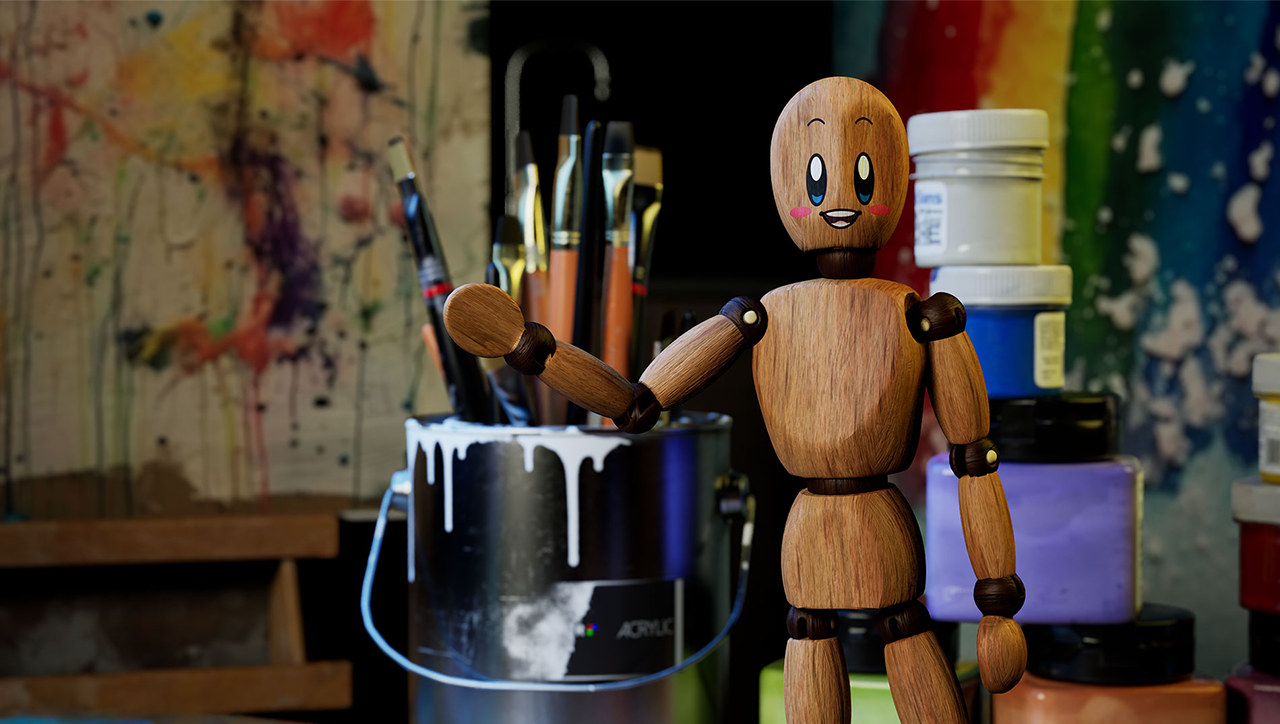
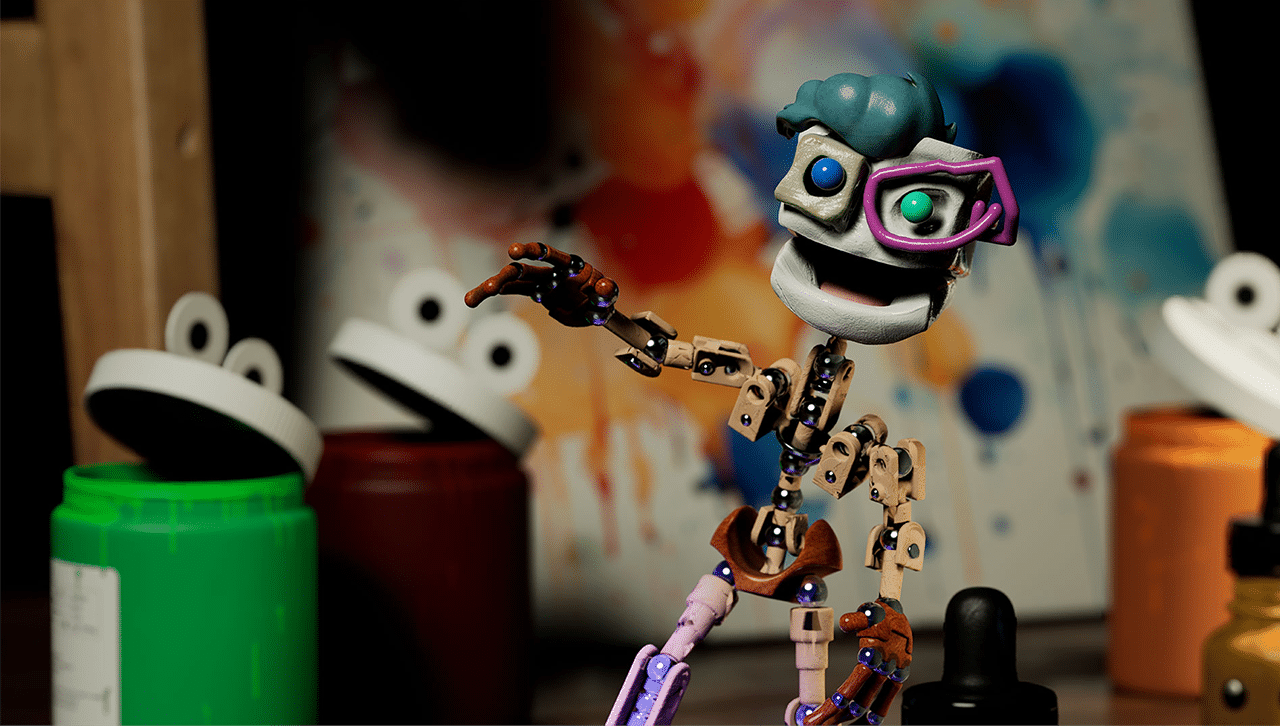
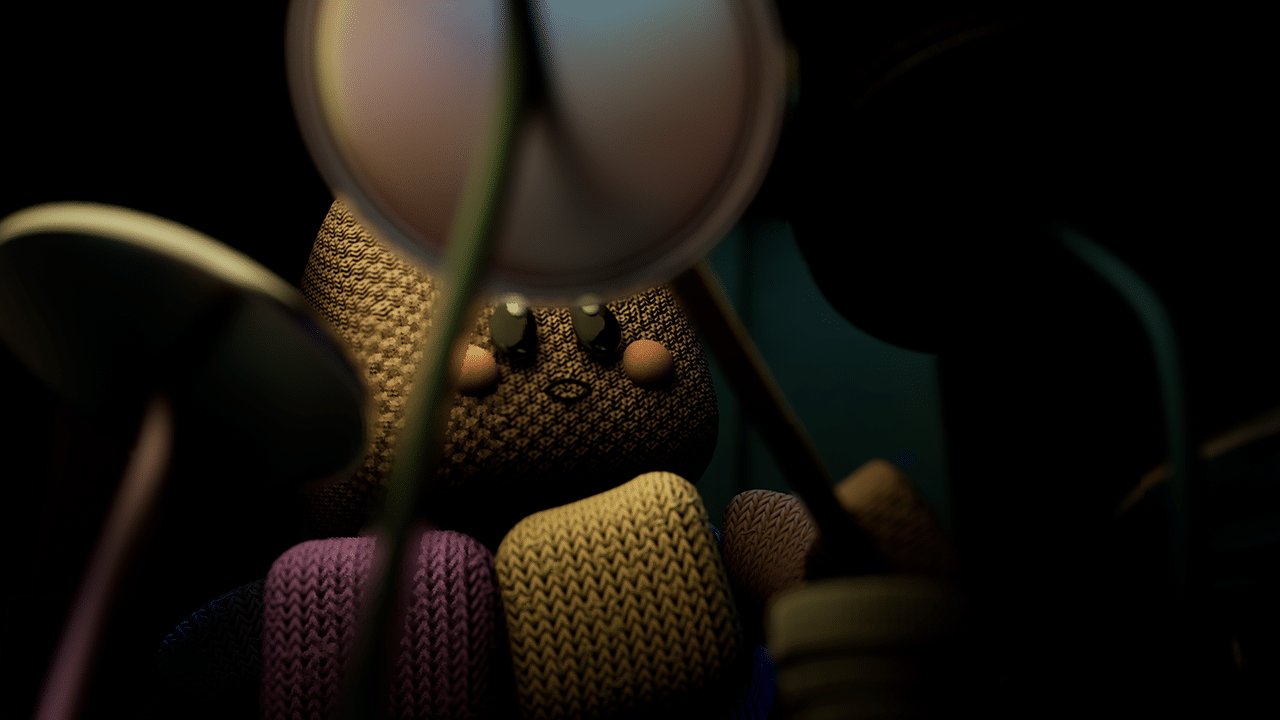
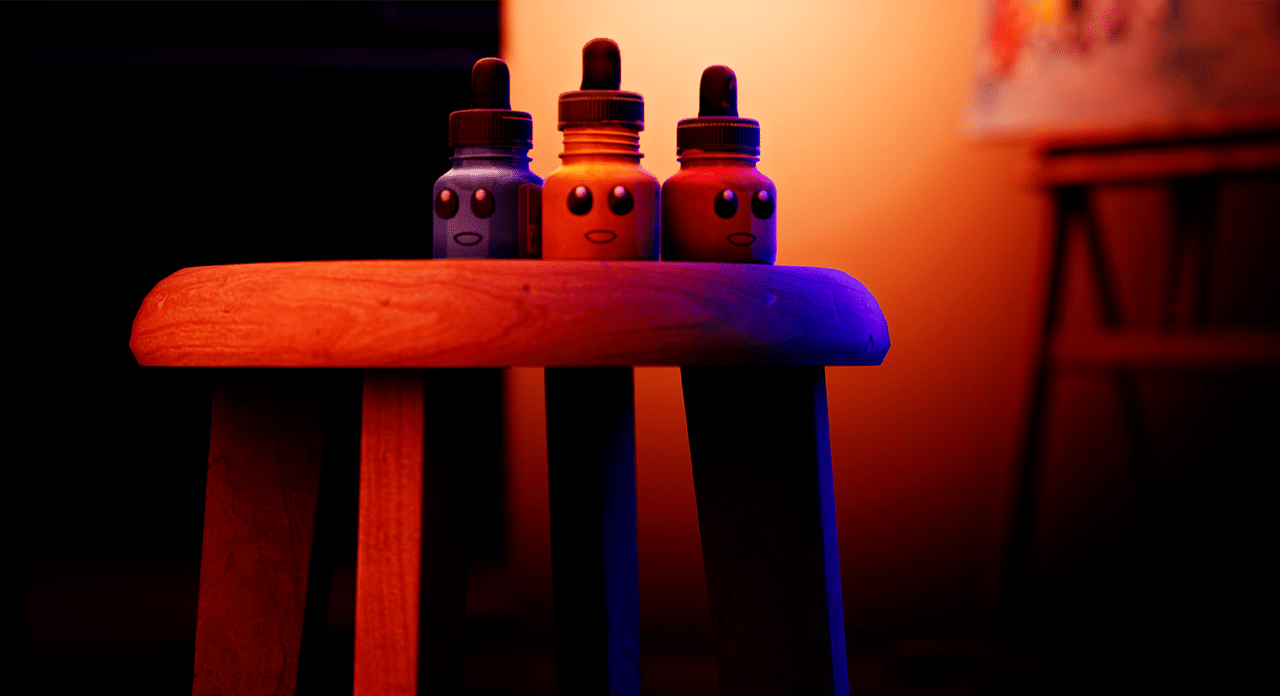
He’s also the creator of Arteana’s Art Squad — a computer graphics animated series featuring vibrant characters who use the power of art to solve the world’s problems. They come together in the Junior School art classroom, where each brings unique artistic talents, knowledge and perspective on art history, art therapy and in art-making.

Aimed at children, the series seeks to inspire viewers by portraying the characters’ artistic journeys and the power of creative expression. Their adventures are meant to spark a sense of empathy by exploring the universal themes of self-doubt, social dynamics, success and failure. Underscoring the power of imagination and creative thinking is a common throughline.

Nizam’s creative insight and unique perspective are the subjects of this week’s In the NVIDIA Studio installment.

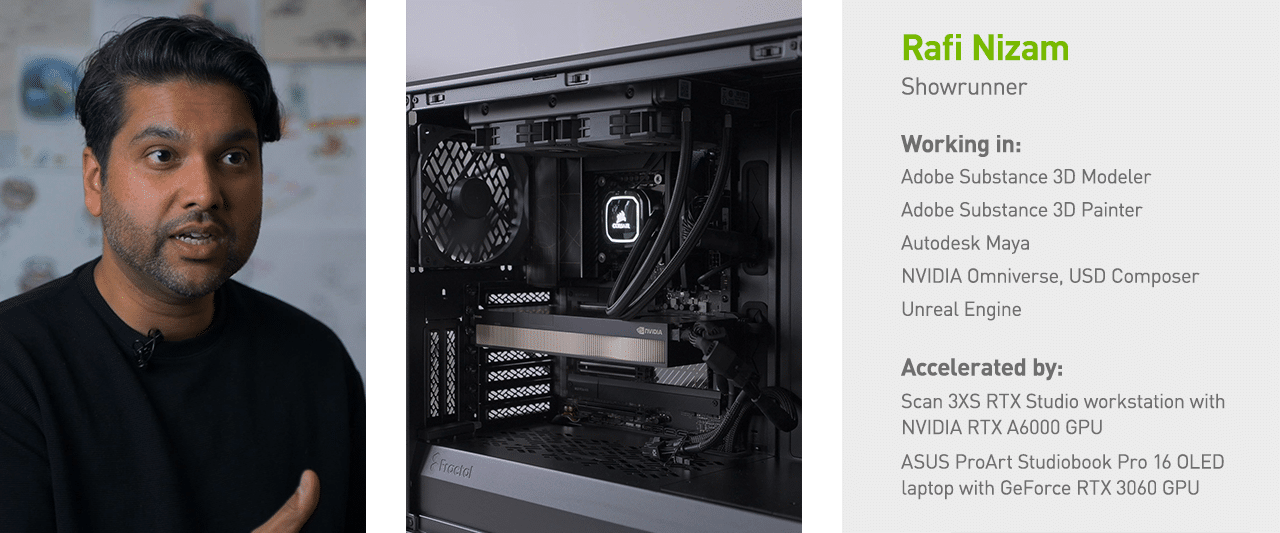
The artist recently participated in the ASUS ProArt Masters’ Talks sessions program, where he demonstrated how ASUS ProArt solutions, including the NVIDIA Studio-validated ProArt Studiobook Pro 16 OLED laptop with a GeForce RTX 3060 GPU and the Scan 3XS RTX Studio workstation with NVIDIA RTX A6000 graphic cards, helped produce a high-end animated series on an indie budget.

[embedded content]

Meet Arteana’s Art Squad 

Meet Arteana, leader of the Art Squad, who possesses a keen interest in historical artists and art movements.

Arteana, leader of the Art Squad.

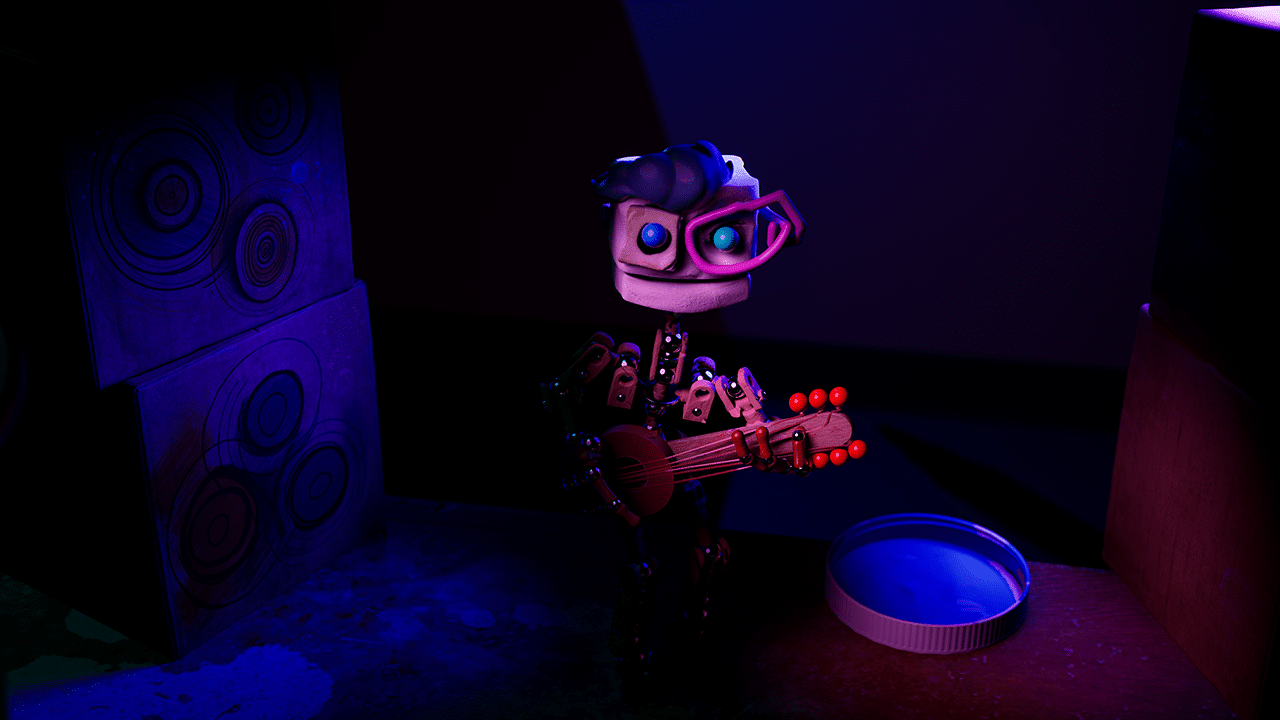
Rivette demonstrates diverse art techniques and is always looking for new ways to express her creativity.

Rivette has a keen eye for detail and a passion for experimenting with different mediums.

ThreeDee, seen here playing the drums, is a kind and compassionate character who uses art therapy as a means of promoting well-being and healing and to uncover the underlying worries that plague the squad.

ThreeDee is passionate about the transformative power of creativity and believes in making space for everyone to explore their emotions and express themselves through art.

Then there’s Figgi, whose spontaneous performance art inspires others to redefine boundaries and embrace individuality.

Figgi, the youngest member of the Art Squad.

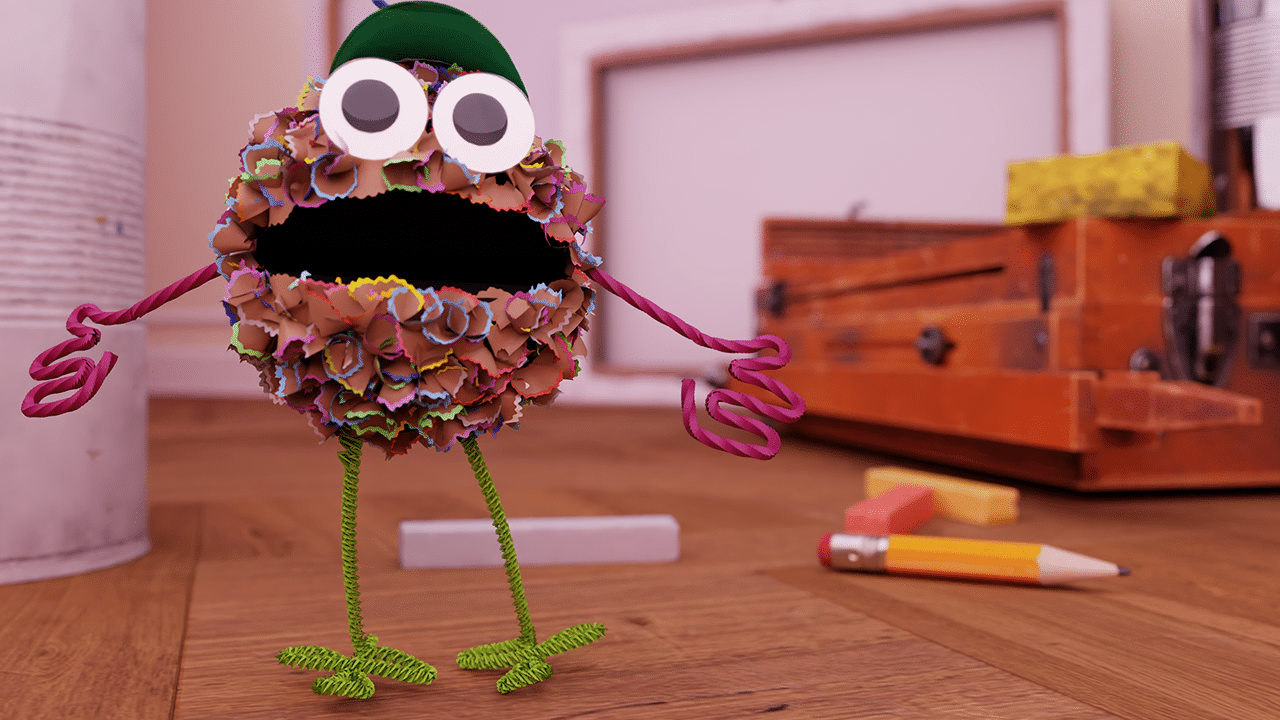
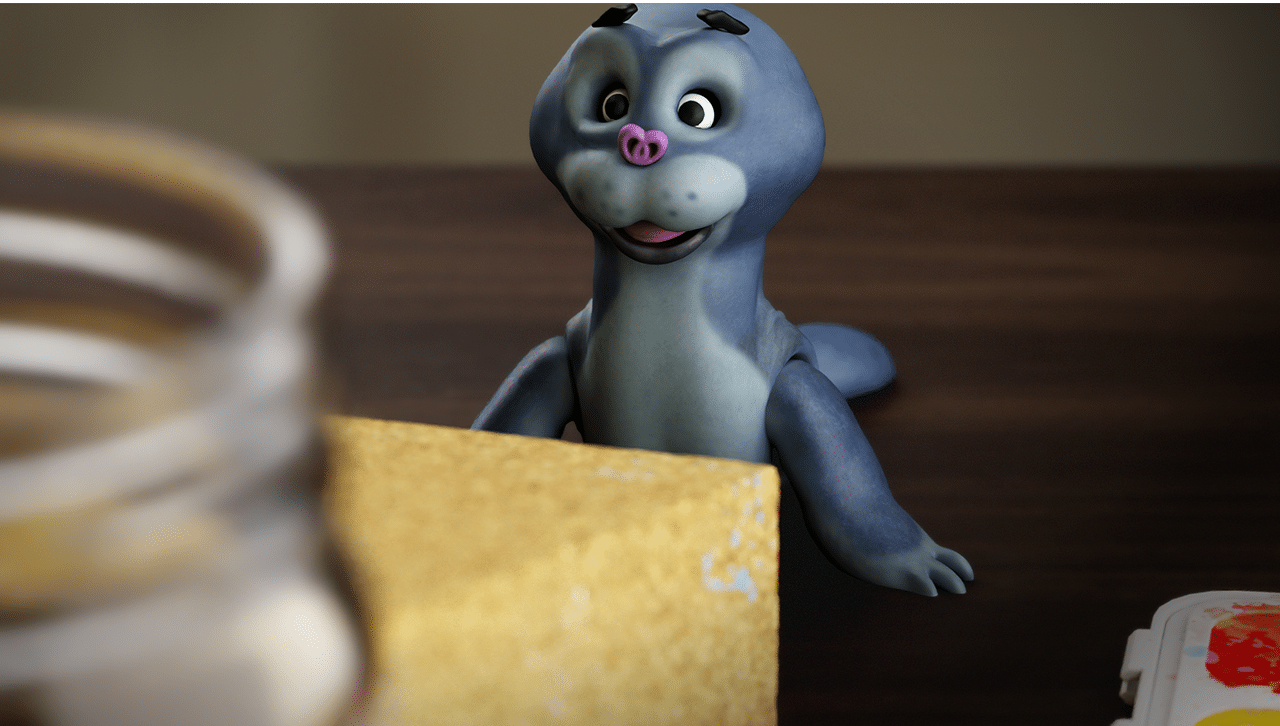
Rounding out the squad is PuttPupp — a lovable and playful character made of putty erasers — who serves as the class pet.

PuttPupp is incredibly expressive and animated with a boundless energy that putts everyone in a good mood.

Art Squad, Assemble

Nizam — matching the demeanor and spirit of his work — is honest. He’s not an expert at 3D modeling, nor is he a visual effects artist, and he’s not the most adept at production pipelines. However, he does love to draw.

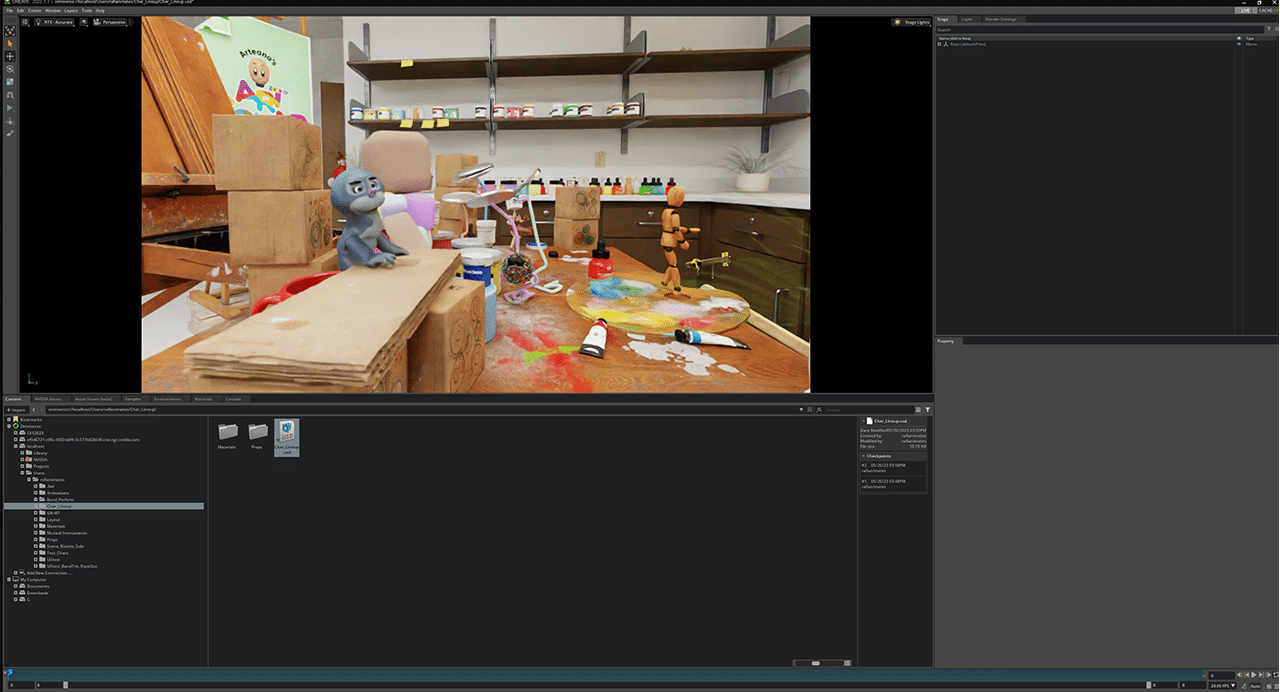
His focus has always been on characters, storytelling and world-building. He built Arteana’s Art Squad independently while working in NVIDIA Omniverse, a platform for building and connecting 3D tools and apps.

“Speaking as a storyteller first and a non-technical indie creator second, I find Omniverse to be the most user-friendly and versatile way to connect the 3D apps in my workflows I’ve come to rely on, and enjoy this way of working from concept to final pixel.” — Rafi Nizam

“As a showrunner, embarking on making a CG animated show without a crew is kind of daunting, but I’m using NVIDIA Omniverse to discover ways to overcome my limitations in this space,” Nizam said.

Nizam began by modeling each squad member and building production assets in Adobe Substance 3D Modeler using VR. He also utilized the VR app Gravity Sketch to create models for the different objects required in each set or scene.

“Designing 3D character models in VR makes pre-production and look dev possible for an artist like me,“  he said.

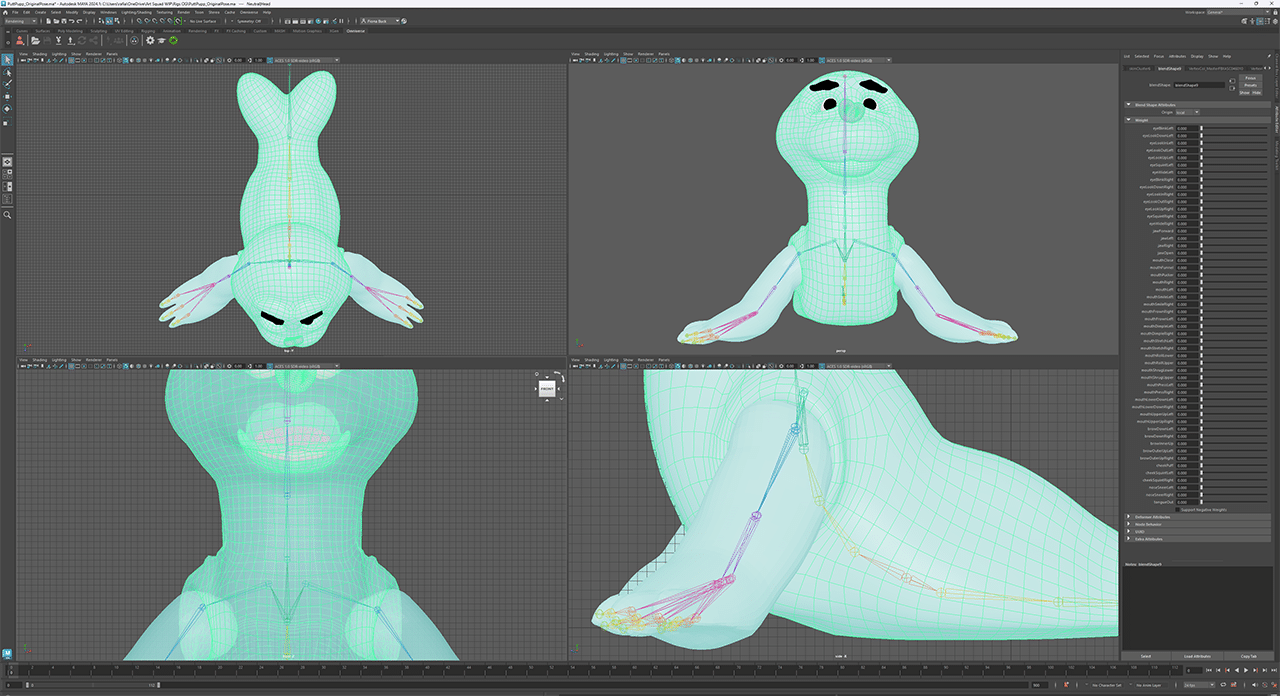
Nizam imported his character into Autodesk Maya for the rigging process — creating a skeleton for the 3D model so that it can move.

His RTX GPU delivered AI-powered, accelerated denoising with the default Autodesk Arnold renderer, resulting in highly interactive and photorealistic renders.

Character rigging in Autodesk Maya.

Nizam then moved to Adobe Substance 3D Painter to create textures and materials, applying them to production assets. NVIDIA RTX-accelerated light and ambient occlusion baking optimized assets in mere seconds.

Immaculate textures built in Adobe Substance Painter.

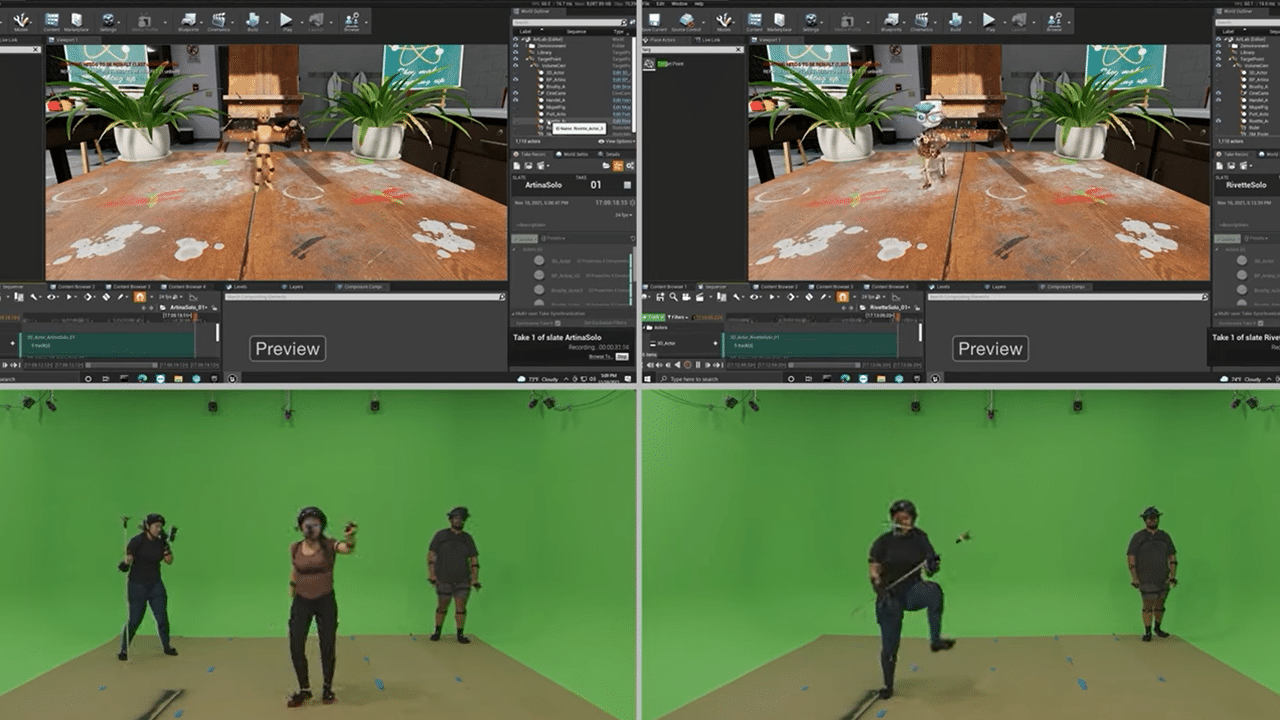
Next, Nizam deployed Unreal Engine to record motion captures via a Perception Neuron suit, creating scenes and camera sequences in real time. NVIDIA DLSS technology increased the interactivity of the viewport by using AI to upscale frames rendered at lower resolution, while retaining high-fidelity detail.

Motion capture with Noitom Perception Neuron suits in Unreal Engine allowed Nizam to be more spontaneous with his work.

“Motion capture fosters experimentation and spontaneous collaboration with performers capturing an abundance of movement, a luxury often untenable for indie projects,” said Nizam.

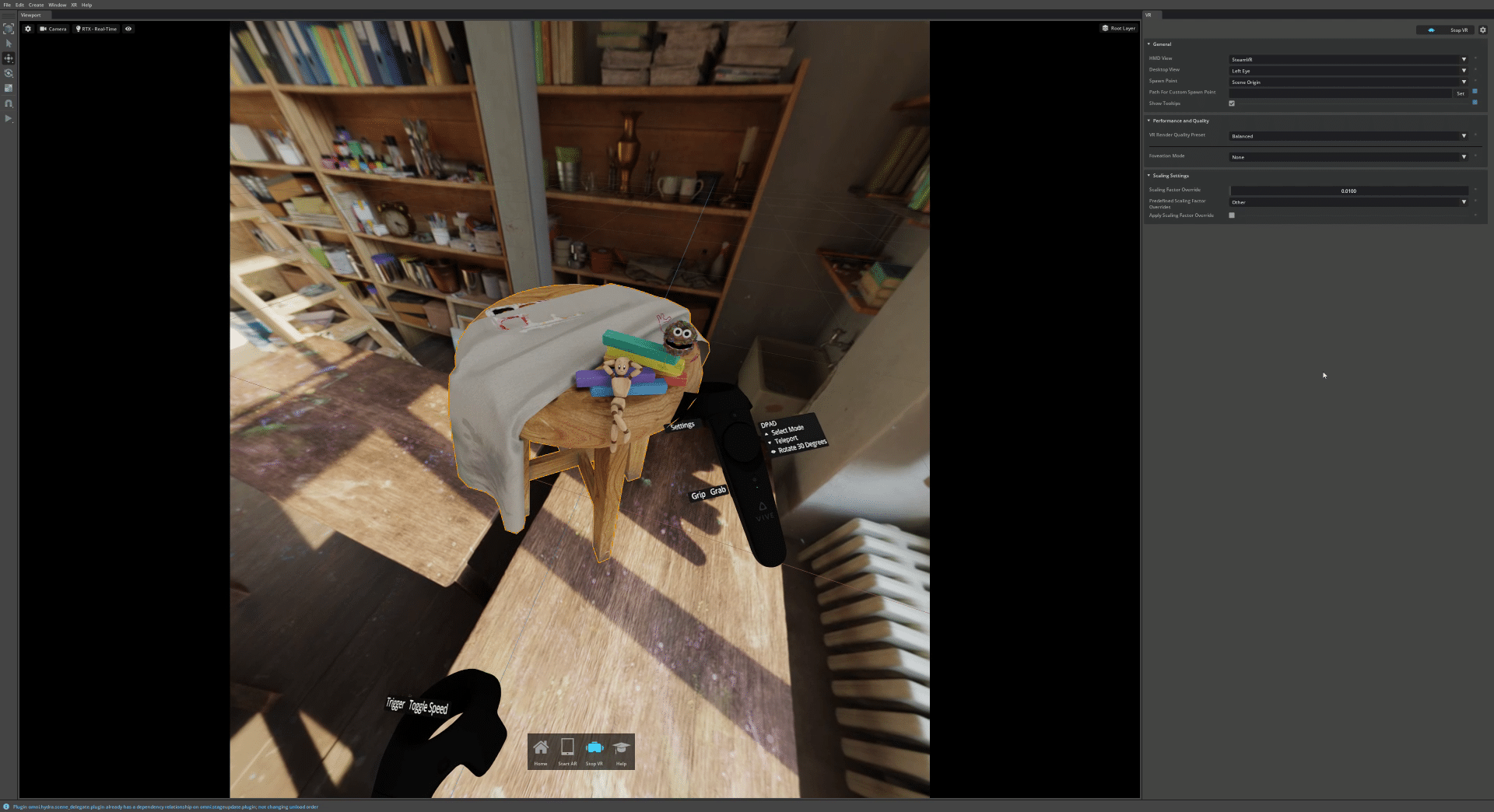
NVIDIA Omniverse’s spatial computing capabilities took Nizam’s creative workflow to the next level. The Omniverse USD Composer’s native VR support enables artists to interactively assemble, light and navigate scenes in real time, individually or collaboratively, in fully ray-traced VR.

VR in Omniverse USD Composer.

Here, Nizam adjusted scene lighting and approved the overall layout in VR. He then moved to desktop to polish and refine the 3D sequences, reviewing final shots before exporting the completed project.

Rendering in NVIDIA Omniverse USD Composer.

Final Renders, Final Thoughts

Nizam is a big proponent of Omniverse, OpenUSD and its ability to streamline 3D content creation.

[embedded content]

“Less time and effort, more productivity, cost savings and simpler real-time workflows — I use Omniverse daily for these reasons,” he said.

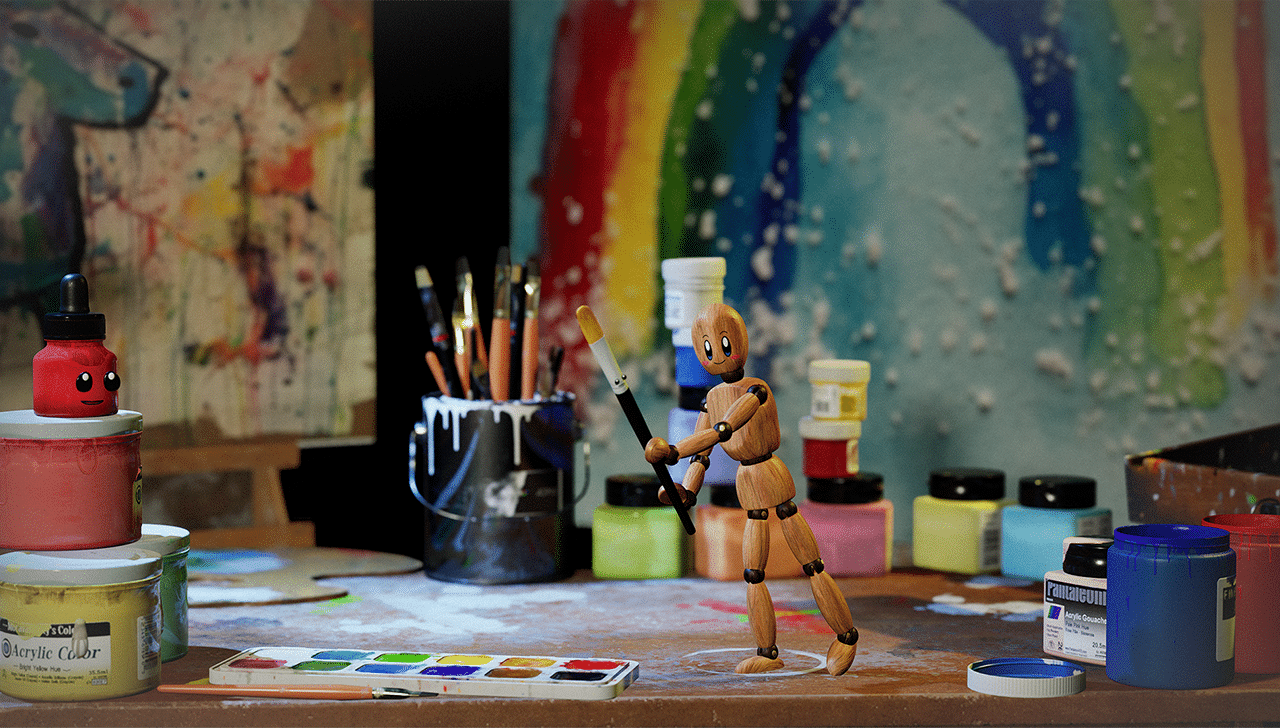
Fun with art at the Junior Art school.

The Omniverse platform has at its foundation OpenUSD, an open and extensible framework for describing, composing, simulating and collaborating within 3D worlds. OpenUSD unlocks Omniverse’s potential by enabling movement between 3D apps — artists can transition all individual assets to their desired format with a single click.

Whatcha doin’ up there, Arteana?

“All apps were in sync and updated on the fly while I assembled it, thanks to Omniverse being the backbone of my CG creative and production process,” Nizam said.

Stunning colors and depth of field.

“I rely on Omniverse Nucleus and Cache as the USD infrastructure for my production pipeline, allowing for seamless collaboration and facilitating cross-application workflows,” Nizam said. “Additionally, I utilize various software connectors, which help bridge different apps and streamline the creative process.”

Rafi Nizam is the director and creator of ‘Arteana’s Art Squad.’

Check out Nizam on Instagram.

Follow NVIDIA Studio on Instagram, Twitter and Facebook. Access tutorials on the Studio YouTube channel and get updates directly in your inbox by subscribing to the Studio newsletter. 

Get started with NVIDIA Omniverse by downloading the free standard license or learn how Omniverse Enterprise can connect your team. Developers can get started with Omniverse resources. Stay up to date on the platform by subscribing to the newsletter and follow NVIDIA Omniverse on Instagram, Medium and Twitter

For more, join the Omniverse community and check out the Omniverse forums, Discord server, Twitch and YouTube channels.

Native Jackson Hole: Discover treasures of the West

Native Jackson Hole: Discover treasures of the West
image

Native Jackson Hole is a staple for Western art anchored by its one-of-a-kind jewelry and captivating artwork. For more than 30 years the gallery has represented artists known for iconic jewelry, fine art and lifestyle pieces that celebrate the classic elegance of life in the Tetons, both past and present.

“It is the place where original and exquisite jewelry converge,” said Cristina Calcai, manager of Native JH.

This page requires Javascript.

Javascript is required for you to be able to read premium content. Please enable it in your browser settings.

Proposed amendment to Indian arts law raises fears for some Natives

Proposed amendment to Indian arts law raises fears for some Natives
image

Michael Na Na Ping Garcia remembers a time when counterfeit Native art flooded the market.

“I couldn’t give jewelry away in the late ’70s,” Garcia said.

He described factories in which 100 workers or more, Native or not, were cranking out products like bracelets to be sold as “Indian art.”