Native

Native American music festival comes to Sioux Falls this weekend

Native American music festival comes to Sioux Falls this weekend
image

Native American artists will be in the Levitt at the Falls spotlight at the inaugural Mitakuye Owas’iƞ festival.

Mitakuye Owas’iƞ means “All My Relatives” in Dakota. Two days of festivities begin July 7 at 7 p.m. on the main Levitt stage in downtown Sioux Falls.

On Friday night hip-hop musician Gabriel Night Shield will open for featured artists Frank Waln. Waln will perform alongside traditional hoop dancers.

Saturday’s events will include traditional dances, singing and puppeteering performance by Jackie Bird at 10:30 a.m., a fashion show featuring the work of Native American clothing designers, make-up artists and hair designers at 2 p.m. and a panel discussion on Oceti Sakowin language at 12:30 a.m.

All My Relatives Festival activities will also be available in the parking lot behind the Levitt Shell and in the neighboring Startup Sioux Falls and Rehfeld’s Underground venues throughout Saturday.

At 11 a.m. Saturday an All My Relatives art show featuring fine art from regional Native American artists will be hosted at Rehfeld’s Art & Framing Underground. A children’s area featuring STEM activities from the South Dakota Afterschool Network, Lakota hand games, and activities from the 605 Art bus will be available in the parking lot behind the Levitt from 11 a.m. to 3 p.m.

Saturday will also feature concessions from Native-owned food truck, Buffalo Gals and a vender fair at the Startup Sioux Falls porch and Marketbeat Theatre.

Musician Kobe Jordan will open for Saturday’s final performance by blues-rock band Indigenous.

This inaugural All My Relatives festival is sponsored by South Dakota State University’s Wokini Initiative. Sarah Bad Warrior-Vrooman, Director of Wokini and Tribal Relations at SDSU, said the goal of the initiative is to collaborate with Native youth.

“The partnership between Wokini and the Levitt is important for supporting and inspiring our Native youth by bringing a celebration of Native culture and artistry to youth and families in the Sioux Falls region,” said Bad Warrior-Vrooman

The Executive Director of the Levitt at Sioux Falls, Nancy Halverson, said the goal of the SDSU program aligns with the nonprofit’s mission.

“We are grateful to the Wokini Initiative for their partnership and support of the All My Relatives Festival, which is an important program to advance our mission of building community through music,” said Halverson.

Find a full schedule of events here.

Grounded in Clay: The Spirit of Pueblo Pottery

Grounded in Clay: The Spirit of Pueblo Pottery

For the first community-curated Native American art exhibition at Metropolitan Museum of Art in New York (14 July–4 June 2024), the Pueblo Pottery Collective has selected more than 100 Pueblo pots to be displayed alongside contemporary commissions. The aim: to expand public understanding of such vessels, which can express both communal and personal histories. Ranging from early examples dating to the 11th century through to murals by contemporary Pueblo artists, highlights include a storage jar (c. 1870–80) by Arroh-a-och from Laguna Pueblo in New Mexico and an Acoma jar (1920–25) by the Acoma Pueblo artist Juanita Johnson. Find out more on the Met’s website.

Preview belowView Apollo’s Art Diary

Storage jar (c. 1870–80), Arroh-a-och. Indian Arts Research Center of the School for Advanced Research

Monkey figure (c. 1966), Felipa Trujillo. Indian Arts Research Center of the School for Advanced Research

Bean pot with lid (1963), Lorencita Pino. Indian Arts Research Center of the School of Advanced Research

EMERGING CURATOR

EMERGING CURATOR

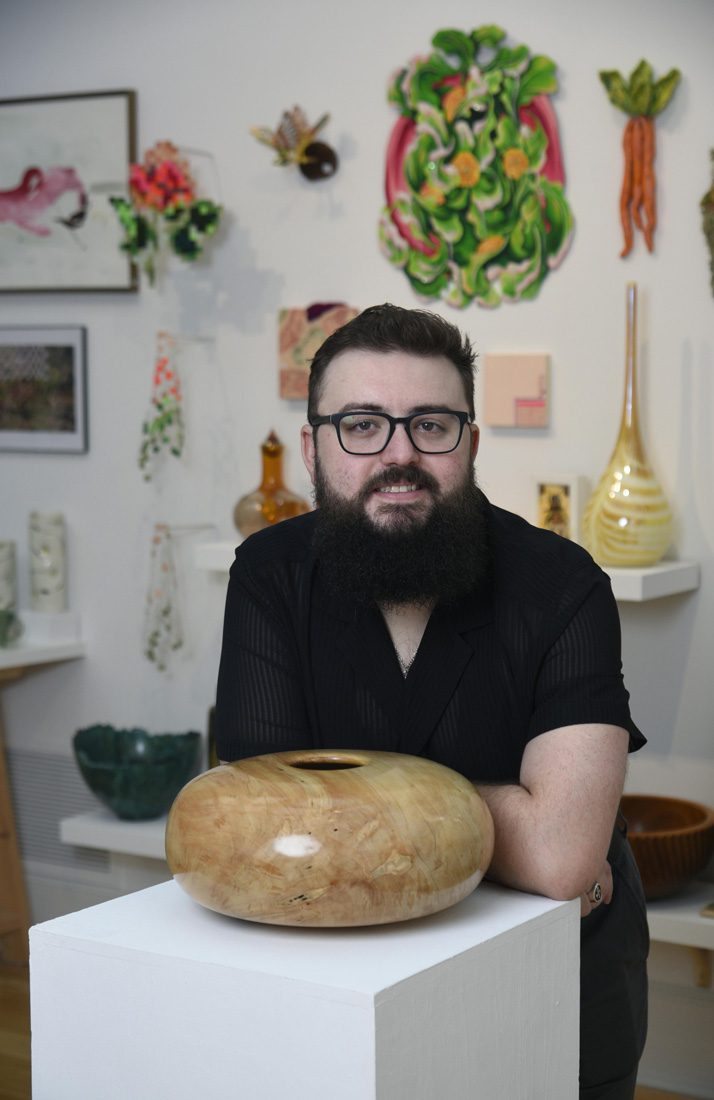
Jacob O’Kelley brings a new lens to Atlanta’s art scene!

Jacob O’Kelley

Jacob O’Kelley thinks the city is sitting on a goldmine of artistic talent and encourages Atlantans to get out and explore. “There are a lot of galleries and art to be seen and a lot of untapped talent here,” says O’Kelley, who joined Swan Coach House Gallery, on the Atlanta History Center grounds in Buckhead, last June as creative director.

O’Kelley is himself an emerging artist who paints and creates installation art with found materials, and furniture focused on domestic spaces through a “queer focus lens,” but his true passion is curating.

After graduating from Georgia State University with a degree in drawing and painting, he opened a gallery in 2018 with college friend Abigail Justman. The young business partners created ShowerHaus Gallery out of a standalone building where the showers were when it was a mill at The Goat Farm Arts Center. The space focused on solo shows with emerging artists and group shows that mixed emerging with mid-career and well-established artists, something that’s not often done. The duo also collaborated on shows around the city, which they continue to do today.

In fact, the ShowerHaus team had put on a few exhibitions at Swan Coach House Gallery before O’Kelley came on full-time. The Georgia native now curates the curators who work on four of the seven shows the gallery presents annually and works alongside Gallery Manager Maria Bruckman to put together the major exhibitions. Here, we chat with him about his role, career and art in the city.

What are the biggest exhibitions you work on at Swan Coach House Gallery?

We call them mega shows. The Summer Invitational, an annual craft- and textile-based exhibition, will highlight the works of more than 90 artists this year. The Little Things show is all about 2D small works by painters and illustrators. I also manage the annual Edge Award that the Forward Arts Foundation, the [nonprofit] behind Swan Coach, gives out to emerging or underrepresented artists.

Besides Swan Coach House, what are some of your favorite galleries?

Whitespace in Inman Park is a really beautiful gallery, and I love that they can have three shows going at the same time. The new Johnson Lowe Gallery is a massive space. And Echo Contemporary Art is a new space on the Westside that’s run by my former boss from the MINT gallery, where I worked for a year as gallery manager before I got the job at Swan.

What would you consider a pivotal moment in your career?

It was when ShowerHaus did The High Rise Show, a four-floor exhibition in downtown Atlanta at the end of 2019. It involved over 200 artists and nine organizations, including Fulton County Arts & Culture, The Goat Farm, MINT and Peters Street Station, working together. Two to three thousand people showed up on opening night. It showed that there’s a lot of artists in Atlanta and that plenty of people want to see art.

What are your future goals?

The two directors before me at Swan Coach were pushing contemporary art and experimental stuff, which I love and want to push further. [Eventually,] I want to go to grad school for art history or curatorial [studies].

JACOB O’KELLEY
jacobokelley.com
@jacob.okelley

PHOTO: Joann Vitelli

Different Ways of Knowing

Different Ways of Knowing

Our Shared Breath: Creativity and Community is on view at the Jordan Schnitzer Museum of Art through October. The show is part of Common Seeing, an annual series that corresponds to the campus-wide Common Reading program at the University of Oregon. This year, like last — the reading was extended for an additional year — the UO’s Common Reading is Robin Wall Kimmerer’s national bestseller Braiding Sweetgrass: Indigenous Wisdom, Scientific Knowledge, and the Teachings of Plants. 

Kimmerer is a distinguished teaching professor of environmental biology at SUNY in Fabius, New York, and a member of Citizen Potawatomi Nation. Her text weaves together different ways of knowing: essays that incorporate aspects of memoir, science, her Native American culture, identity as a woman and perhaps most of all, love of nature. 

In a talk at the UO in 2022, she drew on the Potawatomi language to suggest, “I propose that we adopt a new pronoun, an animate pronoun, so that we might speak of Earth beings (including my beloved plant teachers) in plural form as our ‘kin.’”  

As a Common Reading, Kimmerer’s book is handed out to incoming first-year students and to all faculty. There is no requirement that faculty at UO incorporate the text into their teaching, but many do. From history to philosophy, to ethnic studies to dance, the list of courses utilizing Braiding Sweetgrass is long.     

Co-curators Danielle Knapp and Zoey Kambour chose the art. Knapp, who is the McCosh curator at JSMA, says they selected artworks not to illustrate, rather to complement the themes presented in the Common Reading. Each of the six artists in the exhibit are identified as either Indigenous or American. They are: Melanie Yazzie (Diné or Navajo), Sara Siestreem (Hanis Coos), Rick Bartow (Mad River Wiyot, 1946 – 2016), Lehuauakea (Kanaka Maoli), Ryan Pierce (American) and Malia Jensen (American). 

The artists are mostly represented by just one or two works, so you might think this is a small and simple show that’s quick to view. The opposite is true. The art here represents bodies of work as complex and intriguing as Braiding Sweetgrass. 

Bartow’s artworks — straightforward depictions of birds — were done with ink and a stick. The late artist is well known in Eugene for his transformative portraits placing humans within the frames of other animals. Knapp says she appreciates any excuse to retrieve his art from the permanent collection. Here, even these straightforward “stick” drawings are expressive, and the inclusion of his art lends a historical weight to the show.

Lehuauakea is the only artist whose making of work for this show was supported by the museum. Each piece in their series depicts a traditional Hawaiian pattern, done in earth pigment on kapa, a traditional Hawaiian barkcloth. The earth for the pigment, though, was obtained from different lands corresponding to five Native cultures in Oregon (which they refer to as “the so-called state of Oregon”): Nehalem, Yahooskin, Tillamook, Chinook and Umatilla.

Ryan Pierce’s two paintings in the show, “The Seal of Strength in Solitude” (2017) and “The Seal of the Hard Harvest” (2018), are executed with Flashe (a brand of vinyl paint) on paper in an inviting illustrative style. They are included, courtesy of Elizabeth Leach Gallery in Portland. As beautiful as they are, they symbolize an art practice that extends far beyond any gallery walls. The paintings are images from Pierce’s 2018 “walkable artist book” called The River in the Cellar, which is a book without pictures. 

It’s the reader’s mission, should they accept it, to find the missing art.  

This mission is part of a story in which the reader/art-finder is aligned with the narrator of the book in trying to cope with climate chaos and to become a citizen of the desirable city-state of Multnomah. To become a citizen, you must follow the text to different sites in Portland, all in natural areas near water, and locate prints of these two paintings and nine others. 

Pierce is a fan of Braiding Sweetgrass and has used it as a text when leading a unique artist residency at  Signal Fire, an accredited school and wilderness program that he and ex-wife Amy Harwood co-founded in Portland. The program ran about 10 years. Pierce is currently chair of the Low-Residency MFA Program in Visual Studies at Pacific Northwest College of Art, and would like to establish another wilderness appreciation art residency.  

Art in the show isn’t meant to be illustrative, but Melanie Yazzie’s single contribution, an acrylic painting titled “Pray, Talk to Them,” is illustrative of the heart of Braiding Sweetgrass. Initially on loan from Glenn Green Galleries, it has since been purchased by JSMA and is the first work by Yazzie in the museum’s collection. 

The painting reflects love — and kinship — between a woman and the plants growing in the ground beside her. The actions identified in the title are made clear by dotted lines moving from the woman’s mouth to each plant. 

It is a “delicate” painting, the artist says.  

When I meet Yazzie on Zoom she is exactly on time. Her punctuality is purposeful, she says. It’s meant to combat the stereotype about “Native time.” She is often early to meetings, and for deadlines, too. 

Originally from Ganado, Arizona, in Navajo Nation, she is in Boulder, Colorado, when we meet, where she works as a professor of printmaking at University of Colorado. At first, she doesn’t remember which work she has in the exhibit. Responding to my surprise, she says, “I have about 30 artworks out now. It’s hard to keep track.”   

What is the secret to her success as an artist? 

She attributes the fact that her “art career has always taken care of itself” to the passion she has for communicating her culture through art. Combating stereotypes is part of that, especially negating the stereotype that comes from anthropology, she says, which is the idea that native people are vanishing. 

Her goal to let people know that her culture is still very much alive has taken her around the globe, sharing her art as she “walks in the world as a contemporary Navajo.” 

Our Shared Breath: Creativity and Community runs through October at the Jordan Schnitzer Museum of Art on the University of Oregon campus. Lehuauakea will give an artist talk at the museum 2 pm Sunday, July 30.

Artist Brock Seals serves up local talent and good eats at ‘Art, Mimosas and Pancakes’

Artist Brock Seals serves up local talent and good eats at ‘Art, Mimosas and Pancakes’

St. Louis’ artist communities and art districts are getting nationally recognized, and homegrown foundations have uplifted the arts for decades. Yet, there are still artists that fall through the cracks and struggle to connect with the greater St. Louis art scene.

Photography, mixed media, sculptures and more will cover the walls at the Hawthorne on Saturday, July 8, 2023.

Nicholas Coulter

/

Photography, mixed media, sculptures and more will cover the walls at the Hawthorne on Saturday, July 8, 2023.

Instead of waiting for a seat at the table, multidisciplinary artist and St. Louis native Brock Seals decided to build his own. He told St. Louis on the Air that his event Art, Mimosas and Pancakes — also known as AMP — was created to combine some of his favorite food and showcase his own art. “[Art, Mimosas and Pancakes] started out of the need for me to want to show my work outside of social media. When I was in college … I had a lot of friends who were artists, and I had a lot of friends who just loved going to events and needed something to do.”

Art, Mimosas and Pancakes attendees show off their Dancakes creations.

Art, Mimosas and Pancakes

Art, Mimosas and Pancakes attendees show off their Dancakes creations.

The event’s name says it all. The art is everywhere — paintings, photography, mixed media, sculptures and crafts. The musical performances cross genres from hip-hop to afrobeats, R&B and djing. Art is in the pancakes as well. The team behind Dancakes and the Joy of Pancakes creates portraits and still-life using pancake batter. And, of course, there are mimosas to wash it all down.

In the last nine years (there was a year hiatus during the pandemic) AMP has grown to include more than 50 artists, increased food options and a larger venue — the Hawthorn. In recent years, AMP has seen more than 1,000 guests. “Every year we just grow,” Seals said. “Last year, and the year before that, we were at capacity. Over capacity, honestly … so it was a blessing to find a bigger space.”

The eighth annual Art, Mimosas and Pancakes will be held at the Hawthorn in Downtown West.

Art, Mimosas and Pancakes

The eighth annual Art, Mimosas and Pancakes will be held at the Hawthorn in Downtown West.

For a preview of the performances at Art, Mimosas and Pancakes — including Brock Seals’ song “HIM” — and how Seals brings St. Louis with him when performing across the country, listen to St. Louis on the Air on Apple Podcast, Spotify, Google Podcast or Stitcher or by clicking the play button below.

Artist Brock Seals serves up local talent and good eats at ‘Art, Mimosas and Pancakes’

Related Event
What: Art, Pancakes and Mimosas
When: Saturday, July 8
Where: The Hawthorn (2231 Washington Ave, St. Louis, MO 63103)

St. Louis on the Air” brings you the stories of St. Louis and the people who live, work and create in our region. The show is produced by Miya Norfleet, Emily Woodbury, Danny Wicentowski, Elaine Cha and Alex Heuer. Ulaa Kuziez is our production intern. The audio engineer is Aaron Doerr. Send questions and comments about this story to talk@stlpr.org

A Guide to Black Art in DC: Emerging Artists, Galleries, and More

A Guide to Black Art in DC: Emerging Artists, Galleries, and More

Left: “Peace,” 1969 by Lou Stovall. Photograph courtesy of Phillips Collection. Right: Lou Stovall. Photograph courtesy of Stovall Family.

When Sam Gilliam died last year, it was a huge loss for the art world. That was followed, in March, by the death of Lou Stovall, and a few years back we also lost David C. Driskell, a world­renowned artist and scholar. In addition to their enormous impact, these three men shared another notable trait: They were all not just artists, but Black artists, and they all lived and worked in our area.

Black art has long been a major force in Washington. Long before downtown galleries and national museums welcomed artists of color, African American painters, sculptors, and crafters were making distinctive and significant work around the city. What follows is a look back at the last century of Black art in DC, or at least a small fraction. To truly display its breadth and influence, you would need to build a whole museum—which sounds like a good idea to us!


Eight Great Artworks by Black DC Artists

Two experts share their favorite art pieces

Screen time: Lou Stovall in his studio in 2004. Photograph courtesy of Stovall Family.

How do you capture the huge variety of notable work by DC’s Black artists? We asked a couple of experts for some picks: Adrienne L. Childs, an art historian and adjunct curator at the Phillips Collection, and Jeffrey C. Stewart, a Pulitzer Prize–winning author and Black-studies professor at the University of California, Santa Barbara.

Adrienne L. Childs’s Picks

1. “Wind and Crepe Myrtle Concerto” by Alma Thomas, 1973, Smithsonian American Art Museum (not on view).
2. “Behold Thy Son” by David C. Driskell, 1956, National Museum of African American History & Culture (not on view).
3. “Wives of Sango” by Jeff Donaldson, 1971, National Museum of African American History & Culture (not on view).
4. “The Colonel’s Cabinet” by Renée Stout, 1991–1994, Smithsonian American Art Museum (not on view).

1. “She captures the essence of Washington’s explosion of springtime flowers in her signature abstract aesthetic.”

2. “Stout’s magical installations reveal how spirit and memory is contained in everyday objects.”

3. “I love the way ‘Wives of Sango’ speaks to the spirit of the Black Arts Movement in real time.”

4. “It beautifully speaks to the unspeakable horror of the Emmett Till story through a reference to Christian themes.”

Jeffrey C. Stewart’s Picks

1. “Lever No. 3” by Martin Puryear, 1989, National Gallery of Art (not on view).
2. “W.E.B. Du Bois” by Addison N. Scurlock, 1911, National Portrait Gallery (not on view). Photograph courtesy of Scurlock Studio Records, Archives Center, National Museum of American History.
3. “Les Fétiches” by Loïs Mailou Jones, 1938, Smithsonian American Art Museum (on view). Photograph courtesy of National Museum of Women in the Arts.
4. “Breathing Hope” by Lou Stovall, 1996, National Gallery of Art (not on view).

1. “It is much more than a tool—it is some graceful, mysterious being easing across the floor.”

2. “Our finest portrait of W.E.B. Du Bois—one that exemplified Scurlock’s mastery of light and mood.”

3. “It was Jones who read the African tradition as an aesthetic and had the artistic ability to translate it into works of art that became icons of Black consciousness in the 1960s and 1970s.”

4. “Spectacular color and design characterized Stovall’s printmaking, no better embodied than in the uplifting beauty of ‘Breathing Hope.’ ”


An Eventful Century

A look back at over a 100 years of Black art in DC

  • 1921

    James Herring, an artist and professor, launches Howard University’s art department. In 1943, he’ll open DC’s Barnett-Aden Gallery, the country’s first Black-owned art gallery.

  • 1922

    Thomas W. Hunster retires as director of drawing for African American public schools. For almost 50 years, he taught art skills to kids in DC’s segregated schools.

  • 1924
    Photograph courtesy of archives of American Art, Smithsonian Institution.

    Alma Thomas is the first graduate of Howard’s art department. She’ll go on to a long painting and teaching career, making her one of DC’s most notable art figures.

  • 1943


    James A. Porter, who attended and then taught at Howard, publishes the book Modern Negro Art. He’s considered the first Black art historian.

  • 1948

    Loïs Mailou Jones and Celine Tabary launch the Little Paris Studio, an important gathering for DC’s Black artists.

  • 1961

    DC public-­school art teachers found the DC Art Association. It soon becomes a significant force in community arts education.

  • 1965

    A group of like-minded artists adopt the name Washington Color School. Sam Gilliam and Kenneth Young are among the Black artists later associated with it.

  • 1967
    Photograph courtesy of Smithsonian Archives.

    John Kinard serves as the first director of the new Anacostia Neighborhood Museum. A crucial cultural institution east of the Anacostia River, it eventually becomes known as the Smithsonian’s Anacostia Community Museum.

  • 1967
    Photograph by Carl Nard.

    Sam Gilliam’s first-ever museum exhibit opens at the Phillips. The museum is also the first to acquire one of his works: “Red Petals.”

  • 1969
    Photograph by Jeffrey C. Stewart.

    Artist Ed Love—soon to be known for his large metal sculptures—begins his influential teaching stint at Howard University.

  • 1970

    Jeff Donaldson becomes chair of Howard’s art department. He’d recently cofounded AfriCOBRA (African Commune of Bad Relevant Artists) in Chicago—a key group in the Black Arts Movement, which advocated Black consciousness and autonomy.

  • 1974

    The Duke Ellington School of the Arts opens. As the city’s arts-focused public high school, it has since educated generations of talented Washingtonians.

  • 1976
    Photograph courtesy of Photographs and Prints Division, Schomburg Center for Research in Black Culture, New York Public Library.

    Larry Neal, a significant figure in the Black Arts Movement, is named executive director of the DC Commission on the Arts and Humanities.

  • 1989

    Richard Powell curates the group show “From the Potomac to the Anacostia” at Washington Project for the Arts.

  • 1996
    “Sand Dunes at Sunset, Atlantic City” courtesy of White House Collection/White House Historical Association.

    The White House acquires a painting by Henry Ossawa Tanner, the first work by a Black artist in its permanent collection.

  • 2001
    Photograph courtesy of David C. Driskell Papers at David C. Driskell Center, University of Maryland.

    David C. Driskell founds a center at the University of Maryland to study and promote African American art. Driskell, who died in 2020, was one of the country’s most important scholars of Black art.

  • 2003
    Photograph of “Tomorrow I May Be Far Away” courtesy of Paul Mellon fund.

    The National Gallery of Art puts on a major retrospective of work by Romare Bearden, one of America’s most significant artists of color.

  • 2014

    The Corcoran Gallery of Art shuts down. Its collection—which includes significant work by many Black artists—is later acquired by various other DC museums.

  • 2016
    Photograph of National Museum of African American History & culture by Alan Karchmer.

    The National Museum of African American History & Culture opens, immediately becoming one of Washington’s most essential institutions.

  • 2023
    Photograph courtesy of Stovall family.

    On March 3, Lou Stovall dies at age 86. The artist and printmaker (below left) was one of DC’s key art figures, and his studio, Workshop Inc., a longtime hub for creators.


Further Reading

Washington Art Matters: Art Life in the Capital 1940–1990 By Jean Lawlor Cohen, Elizabeth Tebow, and Sidney Lawrence

The Washington Arts Museum—a now-defunct group devoted to local artists—put together this history and rallying cry.

Art in Washington and its Afro-American presence: 1940–1970 By Keith Morrison

This book grew out of a groundbreaking exhibit that the author curated. It’s no longer in print, but you can get it from the DC library.

Beauty Born of Struggle: The Art of Black Washington Edited by Jeffrey C. Stewart

An essay collection that started with a 2017 panel discussion at the National Gallery of Art featuring the likes of Sam Gilliam and David C. Driskell.


Sam Gilliam’s Evolution

Sam Gilliam. Photograph by Fredrik Nilsen Studio/David Kordansky Gallery.

Ask a random stranger to name a famous DC artist, and Sam Gilliam will very often be the response. Though he grew up mostly in Louisville, Kentucky, Gilliam was closely associated with Washington, living here from the early ’60s until his death in 2022. His work is hard to categorize. “He was an experimenter—changing, always evolving,” says Phillips Collection director Jonathan Binstock, who has previously overseen Gilliam exhibits. “He was an incredibly innovative artist, so it’s difficult to say what kind of art he made.” Here’s a quick look at just three of Gilliam’s styles of work.

Color Field Paintings

“Shot Six.” Photograph courtesy of Corcoran collection.

Inspired by Washington Color Field painter Thomas Downing, Gilliam’s bold early work has clean lines and vivid hues. A great example is his 1965 painting “Shoot Six,” which you can see at the National Gallery of Art.

Drape Paintings

“Light Depth.” Photograph courtesy of Hirshhorn Museum.

His most famous innovation is these three-dimensional hanging works, which broke painting out of its frame and proved hugely influential. “Light Depth,” from 1969, is at the Hirshhorn.

Black Paintings

“Rail.” Photograph courtesy of Hirshhorn Museum.

In 1975, Gilliam moved away from the drape paintings (though he’d later return to them). For a time, he focused on complex, dark-hued work like 1978’s “Rail,” now at the Hirshhorn. But he didn’t stay still for long: Gilliam continued experimenting with new techniques for the rest of his life.


Six Emerging Black Artists in DC

First artwork: “Self-Portrait, 2023” by Maurice James Jr. Photograph courtesy of artist. Second artwork: “This Won’t Save Me” by Adrienne Gaither. Photograph by Anne Kim. Third artwork: “Untitled” (2022) by Larry Cook. Photograph courtesy of artist.

Black art isn’t just about history: It continues to thrive in this area. We asked three local curators to each choose an up-and-coming artist whose work you should look out for.

Curator: Adrian Ferguson, owner of Art of Noize

Ferguson has been creating and selling art since he was a kid. He runs a gallery and studio space in Petworth.

Emerging artist: Maurice James Jr.

“I describe his work as Black pop art,” says Ferguson. “He reimagines popular TV, music, and images we’ve grown up with and puts an African American spin on them.”

Curator: Asantewa Boakyewa, deputy director of the Smithsonian’s Anacostia Community Museum

Boakyewa has spent 15 years focusing on contemporary art and Black history and culture at museums and universities.

Emerging artist: Adrienne Gaither

“Gaither has a mural that’s permanent in our museum,” says Boakyewa. “She works in geometric shapes and is very interested in color.”

Curator: Maleke Glee, director of Stable Arts

A writer, curator, and adjunct professor at Bowie State University, Glee studies Black contemporary art and vernacular cultures, among other things.

Emerging artist: Larry W. Cook

“He started as a [music] club photographer,” says Glee, “but now he’s been acquired by museums and other institutions. He continues to highlight the go-go community in his practice.”


Four DC Galleries to Visit

Four local spots fostering today’s Black art scene

Mehari Sequar Gallery.

11:Eleven Gallery

10 Florida Ave., NW

Owner Nicola Charles grew up in London, and her DC gallery has an international perspective.

Art of Noize

821 Upshur St., NW (second floor rear)

Since 2017, it’s been a gathering spot for DC’s creative community, offering not just a gallery but also studio and event space.

Homme Gallery

2000 L St., NW; 52 O St., NW

Run by DC native Amir Browder, it supports emerging and underground photographers, clothing designers, and visual artists.

Mehari Sequar Gallery

1402 H St., NE

Owner Sequar emphasizes representation, with most exhibitions featuring female artists of the African diaspora.


Photograph courtesy of Smithsonian American Art Museum.
Photograph courtesy of Estate of David C. Driskell.
Photograph courtesy of Smithsonian American Art Museum.
Photograph courtesy of Jameela K. Donaldson.
Photograph courtesy of National Gallery of Art.
Photograph of Adrian Ferguson courtesy of artist.
Photograph of Maurice James Jr. courtesy of artist.
Photograph of Asantewa Boakyewa courtesy of artist.
Photograph of Adrienne Gaither by Mariah Miranda.
Photograph of Maleke Glee by Beverly Price.
Photograph of Larry W. Cook courtesy of artist.
This article appears in the June 2023 issue of Washingtonian.

Briana A. Thomas is a local journalist, historian, and tour guide who specializes in the research of D.C. history and culture. She is the author of the Black history book, Black Broadway in Washington, D.C., a story that was first published in Washingtonian in 2016.

Restoring Ed Galloway’s Totem Pole Park: A Q&A with Erin Turner about her August workshops and lecture series

Restoring Ed Galloway’s Totem Pole Park: A Q&A with Erin Turner about her August workshops and lecture series
image

For the past eight years, Erin Turner has been working to help restore Ed Galloway’s Totem Pole Park near Foyil. 

In August, Turner will host a workshop and lecture series at the historic park that Ed Galloway created in the late 1940s as a roadside attraction along Route 66. It was added to the National Register of Historic Places in 1999.

Each day will focus on a different theme: Totem Pole Parks and Monumentality; Historical Backdrop and Cultural Appropriation; Photography and the Archive; and Art, Public Space and Roadside Attractions. These themes will be developed through short readings, group discussions, hands-on restoration of physical artworks, and guest lectures. 

Workshop Dates

  • Session 1: Aug. 1-4, 10 a.m.-4 p.m.
  • Session 2: Aug. 16-19, 10 a.m.-4 p.m.

Participants can attend the entire 4-day program or a single day. The cost is $60 and there will be daily shuttle service from Tulsa. 

There also will be two lectures that are free and open to the public. The first will be on Aug. 6 at Will Rogers Memorial in Claremore. There will be a second lecture in Tulsa on Aug. 20 at Center for Public Secrets. Both events will be moderated by Pablo Barrera, associate curator at Oklahoma Contemporary.

More details on the workshops and lecture series can be found here

Turner is a University of Tulsa graduate and works as a site-specific installation artist who is interested in land-based practices, preservation, and collaboration.

She took part in a Q&A by email to further discuss her work on the Ed Galloway Totem Pole Park and share additional info on the workshops and lecture series. 

You mentioned you’ve spent the last eight years working on restoring Ed Galloway Totem Pole Park. What is it about this project that drew you in and why is it important to restore it? 

I am an artist, and began my career as an oil painter. I later focused much of my artistic production on sculptural installations. When I first visited Ed Galloway Totem Pole Park, I was drawn in to the marriage of my first two loves: painting and sculpture. I was enamored by the scale and the knowledge that Ed Galloway had single-handedly built this park during his retirement from primarily found materials: house paint that neighbors no longer needed, sand that was collected from a creek in the backside of the property where the park sits, old bailing wire and telephone wire that acts as structural support for the concrete, and field stones.

There is something so uniquely Oklahoma about this park, and something that is truly exemplary as an artistic feat.

I was first drawn in by the artist, by imagining Ed Galloway creating what he considered a monument to the American Indian. I found it to be really extraordinary that during this era a white man had decided to dedicate the last 25 years of his life to create a massive work in reverence to the American Indian. This was the jumping-off point for me.

Since then I have continued to develop more reverence to the artistic devotion of such a monumental work, but also to continue to question what made Ed Galloway create this park, why a totem pole park in the middle of Oklahoma, and what all this means to the larger narrative of Oklahoma, of art environments, of national perceptions of the American Indian, and of the history of Native representation found all over Oklahoma (and obviously beyond). 

During my first visit to the park, very nonchalantly, I was told that the park’s director, David Anderson, was looking for someone to restore the paint on the large totem. As a young artist this was my dream job; researching the best procedures of how to restore a historical concrete art environment, learning concrete repair techniques, and working with archives to rebuild the facades.

The first year I worked with a dear friend, Margo Hoover, to research the best measures, develop a budget, and execute. We worked together the first year, and I have continued the project since. In more recent years I have been grateful to have continued help from my partner Giovanni Montoya, and some help from Heather Valenzuela, Lily Möhn, and Taylor Weigant

Since initiating this project I have become a part of the Network of Artist Built Environments, which is a group of site stewards from all over the country. This site, the Ed Galloway Totem Pole Park, is an incredible example of grassroots art environments, but I also think it is an important site in the growing concern with how to better interpret monuments, and especially when trying to interpret conflating histories.

I think we have a really important job to do, as well as opportunity, in critically thinking about this site and in how Oklahoma history, art history, and Native history are communicated to the public. I think it is really important to look at the history of these themes and consider how Native appropriation should be discussed and placed into a historical and contemporary context. In my opinion this is a vital component that has been missing in the narrative that surrounds the history of Ed Galloway as a human and as an artist, and in the larger national dialogue about monumentality and acknowledgment. 

How did you learn about the park?

For the last 20 years I have often visited and worked at the Hundred Monkey Ranch, an artist studio and residency in Osage County owned by Kreg and Chris Kallenberger. One of the structures at the ranch is a large barn which housed Kreg Kallenberger’s glass studio.

On his studio walls hang a few large black and white posters of aged photographs of a large conical structure covered with hundreds of animal figures and Native American busts that stands more than triple the size of the trees around it. Another poster depicts a man standing next to a large and intricately carved wooden sculpture wrapped with lizards, snakes, and other reptiles.

I had admired these images for years, imagining their location far away from Oklahoma, and building stories in my mind of what these sculptures were and who had built them. It wasn’t until 2015 that I learned they were located in Foyil, Oklahoma, merely 1.5 hours from the Hundred Monkey Ranch.

It turns out that Chris Kallenberger had curated an exhibition of the first restoration project at the Ed Galloway Totem Pole Park at Philbrook Museum in Tulsa, and these posters had been exhibition copies of old archival images of Ed Galloway and his monumental work. The next day a small group of art enthusiasts set off for Foyil; the tour led by Kreg Kallenberger.

I was born and raised in Tulsa and was educated about Vernacular Art Environments when I was in high school by Richard Bay, one of my art teachers. We had even taken a trip to Lucas, Kansas, to view the concrete art environment called the Garden of Eden and visit the Grassroots Art Center. I was shocked that I had never heard about the Ed Galloway Totem Pole Park, and that I had been raised only an hour away from this site. Most of my friends had never heard of this site, nor had visited it. I found that to be incredibly odd.

When do you hope to complete restoration? 

The Ed Galloway Totem Pole Park is owned and operated by the Rogers County Historical Society, a small nonprofit in Claremore. The operating costs for the park come solely from the sales at the Fiddle House, the museum and gift shop at the Totem Pole Park. It would be great to finish this project, the sooner the better, however funding is always a complication and we have been working slowly because of that. We hope to have the restoration of the Fiddle House (Galloway’s old studio that now is the museum and gift shop) by the end of the summer, and hopefully a small totem, bbq, and picnic table near the gift shop.  

You’re hosting two 4-day workshop sessions at the park in August. What all does that entail and who is the target audience: students, scholars, artists, hobbyists or anyone? Do they need to have experience doing this kind of work? What can people expect if they take part?

This program is designed to engage and educate arts students and arts enthusiasts 16 years or older on Ed Galloway’s Totem Pole Park with the expectation of initiating long-term interest in the site. No experience is necessary, and people from diverse backgrounds are encouraged to join the project.

The series of workshops will give historical and contemporary context to the grassroots art environment that was created by Ed Galloway from the 1930s to the 1950s. We will examine the function and role of monumentality in sculptural form through reading and discussion.

We will also consider how the archive functions in the restoration process of historic structures, as well as the initial use of archives in the original construction of the park. We will look at how tourism on Route 66 has shaped this site, and look at similar artist-built environments in the area.

The majority of the day, participants will have the opportunity to learn restoration techniques through hands-on work learning techniques such as historic stucco repair, injection mortar repair, and painting the facades using silicate paint.

During the workshops, participants will be asked to propose complementary projects that will contribute to the park’s long-term goals. It will be a great opportunity for people who are interested in learning how to work directly with a public facing site such as this sculpture park, those who love hands on work like painting, and also those interested in brainstorming the development of public facing interpretation such as signage, walking tours, and curriculum. 

Each day will focus on a different theme: Totem Pole Parks and Monumentality; Historical Backdrop and Cultural Appropriation; Photography and the Archive; and Art, Public Space, and Roadside Attractions. At the base of all these inquiries we will look at the intricacies of Native representation and cultural appropriation both at the time that the Totem Pole Park was constructed, as well as presently, with the intention of continuing to interpret the park as an art site with criticality and from multiple perspectives.  

You’re also hosting two free lectures in August with various folks involved. What is the goal of these events? 

The goal of the lecture series is two-fold: diversity of perspective and education. By bringing together this group of art and history professionals we will develop a narrative around Native representation that grounds this site in the intricacies of history and the themes of the archive and monument. This aspect of the project intends to acknowledge some of the mechanisms that have shaped the way that people have looked at Native American-themed art in the country. 

The first lecture, taking place in Claremore on August 6 at the Will Rogers Memorial Museum Auditorium, will create the foundation of this dialogue. We will discuss the Indian New Deal Totem Pole Restoration that was happening in Alaska between 1938 and 1942, which may have been a contributing factor to the construction of this monumental work. We will discuss Creek history and the history of allotment in Oklahoma and the role that Charles Page played in both land grabs and the Sand Springs Home, giving foundational knowledge about some of the Native policy during the 1930s and 1950s. We will also discuss the history of vernacular art environments and look at examples in the United States and learn how Ed Galloway’s park fits into this genre. 

The second lecture, taking place in Tulsa at the Center for Public Secrets on August 20, will develop a narrative that surrounds some of the more specific visual themes found at the Totem Pole Park: Native representation, monumentality, tourism, and the archive. We will hear from artists, curators, and journalists, working in Oklahoma about how they are presently addressing these themes in their work. We will see the history of Native representation, beginning with the photography of Andrew Curtis and the legacy of the myths surrounding the “vanishing Native” that have plagued the country for over a century. We will also look at the role that tourism has played in Native representation, and hear about the impacts on Native communities that straddle Route 66. We will look at monumentality as a theme specifically as it relates to memorializing marginalized populations, and how we can better think about how to uplift the communities that these monuments seek to commemorate.  

We will later use the dialogue of these conversations to create a publication that will be available to the public. This document will also contribute to further developing ideas for walking tours and other curriculum and public facing interpretation at the park as a means of education. The intent is to ground the site in history by acknowledging the mechanisms that have shaped the way that people have viewed Native America in Oklahoma and in the country, and how this site can serve as a case study for vernacular art environments and other monuments grappling with complicated and overlapping histories. 

Anything else you’d like to add? 

Please visit the website to apply for the workshops. We really hope to see as many people come out as possible. It is important to register, as there are only a certain number of seats available during the workshops. If anyone has knowledge about the specific themes or is an artist working with these themes, I would especially love to have a conversation with them and consider them for other aspects of this project. Please get in touch with me via email: eturnerinstal@gmail.com

This project is funded large in part by the Oklahoma Historical Society through their Oklahoma Heritage Preservation Grant, and with a couple generous donations from Steve Sanders and Mary Macmahon. If someone would like to donate, we are looking for lunches to be donated for the workshop dates, and refreshments for the lecture series.  

Artist Statement:

My practice is diverse in form and content, however there is a prevailing conversation about the perception of the pan-American landscape in all of my work; a dialogue between the imagery and symbolism representing the land and the societal standards that are involved in placemaking. Public perceptions converge with personal inquiries. I dialogue and collaborate with counter histories, challenge preconceptions, and indulge plurality. Themes such as time, location, perspective, memory, landscape, and material are found throughout my work. Deep reverence to indigenous peoples is a through-line, always coupled with unearthing harrowing histories as a form of acknowledgment and respect. Participation with the natural environment, awareness of a changing climate (and therefore human relationships to landscape) and the politics that control nature are opposing forces I continue to probe in my work. 

I have continued to imagine and consider how the totem as a form became the subject of a grassroots art environment in Oklahoma in the 1930s. I consider the Totem Pole Park as a monument and as an archive. Looking at the manner in which the Native American figure has been utilized to create the facade of the totems (over 200 bas-relief busts and figures), I theorize about what photographic ephemera and government programs Ed Galloway would have had contact with during his life as he contemplated and designed this park. I am interested in the history and mythology of Native representation, the politics that shape the archives that Ed Galloway would have used (think Andrew Edward Curtis and beyond), and the mechanisms in which cultural appropriation has fueled the many facets of past and contemporary society. With this project I consider how necessary it is to generate dialogue and conversation with a variety of Native voices that can speak from their specific place within this history, and how collectively this site can be better interpreted for the ten thousand plus visitors who come to the site annually. It is my goal to center the Native perspective in Northeastern Oklahoma while contextualizing this park within its historic and artistic placement. 

Rethinking land art at the Barrick

Rethinking land art at the Barrick

Land—its substance and usage—will always be controversial, particularly in the American West. The notion of the West—and more pointedly the Mojave region of Southern Nevada as an open expanse providing substrate for any number of human endeavors—is a deeply entrenched one. In Modern Desert Markings, 10 artists explore the history of contemporary landscape marking in Southern Nevada through the lens of land art. 

In this exhibition, commentary varies. There is of course much to be said on the settler colonial history of Southern Nevada and its relationship to the blank-canvas perception of the desert by historically prominent land artists like Jean Tinguely and Michael Heizer. The exhibition is masterful in its multi-lensed approach to deconstructing the functions of art within the landscape.

“Modern Desert Markings” exhibition at the Marjorie Barrick Museum of Art, Spring 2023.

April 3, 2023
(Becca SchwartzUNLV)

” data-medium-file=”https://i0.wp.com/www.doublescoop.art/wp-content/uploads/2023/07/4.-Emily-Budd_Becca-Schwartz-scaled.jpg?fit=300%2C200&ssl=1″ data-large-file=”https://i0.wp.com/www.doublescoop.art/wp-content/uploads/2023/07/4.-Emily-Budd_Becca-Schwartz-scaled.jpg?fit=900%2C600&ssl=1″ decoding=”async” class=”wp-image-9607 size-large” src=”https://i0.wp.com/www.doublescoop.art/wp-content/uploads/2023/07/4.-Emily-Budd_Becca-Schwartz.jpg?resize=900%2C600&ssl=1″ alt width=”900″ height=”600″ srcset=”https://i0.wp.com/www.doublescoop.art/wp-content/uploads/2023/07/4.-Emily-Budd_Becca-Schwartz-scaled.jpg?resize=1024%2C683&ssl=1 1024w, https://i0.wp.com/www.doublescoop.art/wp-content/uploads/2023/07/4.-Emily-Budd_Becca-Schwartz-scaled.jpg?resize=300%2C200&ssl=1 300w, https://i0.wp.com/www.doublescoop.art/wp-content/uploads/2023/07/4.-Emily-Budd_Becca-Schwartz-scaled.jpg?resize=768%2C512&ssl=1 768w, https://i0.wp.com/www.doublescoop.art/wp-content/uploads/2023/07/4.-Emily-Budd_Becca-Schwartz-scaled.jpg?resize=1536%2C1024&ssl=1 1536w, https://i0.wp.com/www.doublescoop.art/wp-content/uploads/2023/07/4.-Emily-Budd_Becca-Schwartz-scaled.jpg?w=2048&ssl=1 2048w, https://i0.wp.com/www.doublescoop.art/wp-content/uploads/2023/07/4.-Emily-Budd_Becca-Schwartz-scaled.jpg?resize=2000%2C1334&ssl=1 2000w, https://i0.wp.com/www.doublescoop.art/wp-content/uploads/2023/07/4.-Emily-Budd_Becca-Schwartz-scaled.jpg?resize=450%2C300&ssl=1 450w, https://i0.wp.com/www.doublescoop.art/wp-content/uploads/2023/07/4.-Emily-Budd_Becca-Schwartz-scaled.jpg?resize=1300%2C867&ssl=1 1300w, https://i0.wp.com/www.doublescoop.art/wp-content/uploads/2023/07/4.-Emily-Budd_Becca-Schwartz-scaled.jpg?resize=400%2C267&ssl=1 400w, https://i0.wp.com/www.doublescoop.art/wp-content/uploads/2023/07/4.-Emily-Budd_Becca-Schwartz-scaled.jpg?w=1800&ssl=1 1800w” sizes=”(max-width: 900px) 100vw, 900px” data-recalc-dims=”1″>

Emily Budd, “Digging Machine (for an End of the World),” 2023, photo by Becca Schwartz/UNLV Creative Services

Of the many impressive works, Emily Budd’s vision of reconstructive queer futures in the work “Digging Machine (for and End of the World)” stands out as a striking work of assemblage and a nuanced commentary on the destructive forces of our cultural engines and the need to reconstruct from the detritus viable progressions through time. Marisa J. Futernick builds tone through temporality in the form of a slide show highlighting the shifting locations and experiences through a narrated slideshow, a catalog of region and emotion.

Marisa J. Futernick, “Mirage,” 2023, image courtesy of the artist

“Modern Desert Markings” exhibition at the Marjorie Barrick Museum of Art, Spring 2023.

April 3, 2023
(Becca SchwartzUNLV)

” data-medium-file=”https://i0.wp.com/www.doublescoop.art/wp-content/uploads/2023/07/6.-Jen-Urso_Becca-Schwartz-scaled.jpg?fit=300%2C200&ssl=1″ data-large-file=”https://i0.wp.com/www.doublescoop.art/wp-content/uploads/2023/07/6.-Jen-Urso_Becca-Schwartz-scaled.jpg?fit=900%2C600&ssl=1″ decoding=”async” loading=”lazy” class=”wp-image-9605 size-large” src=”https://i0.wp.com/www.doublescoop.art/wp-content/uploads/2023/07/6.-Jen-Urso_Becca-Schwartz.jpg?resize=900%2C600&ssl=1″ alt width=”900″ height=”600″ srcset=”https://i0.wp.com/www.doublescoop.art/wp-content/uploads/2023/07/6.-Jen-Urso_Becca-Schwartz-scaled.jpg?resize=1024%2C683&ssl=1 1024w, https://i0.wp.com/www.doublescoop.art/wp-content/uploads/2023/07/6.-Jen-Urso_Becca-Schwartz-scaled.jpg?resize=300%2C200&ssl=1 300w, https://i0.wp.com/www.doublescoop.art/wp-content/uploads/2023/07/6.-Jen-Urso_Becca-Schwartz-scaled.jpg?resize=768%2C512&ssl=1 768w, https://i0.wp.com/www.doublescoop.art/wp-content/uploads/2023/07/6.-Jen-Urso_Becca-Schwartz-scaled.jpg?resize=1536%2C1024&ssl=1 1536w, https://i0.wp.com/www.doublescoop.art/wp-content/uploads/2023/07/6.-Jen-Urso_Becca-Schwartz-scaled.jpg?w=2048&ssl=1 2048w, https://i0.wp.com/www.doublescoop.art/wp-content/uploads/2023/07/6.-Jen-Urso_Becca-Schwartz-scaled.jpg?resize=2000%2C1334&ssl=1 2000w, https://i0.wp.com/www.doublescoop.art/wp-content/uploads/2023/07/6.-Jen-Urso_Becca-Schwartz-scaled.jpg?resize=450%2C300&ssl=1 450w, https://i0.wp.com/www.doublescoop.art/wp-content/uploads/2023/07/6.-Jen-Urso_Becca-Schwartz-scaled.jpg?resize=1300%2C867&ssl=1 1300w, https://i0.wp.com/www.doublescoop.art/wp-content/uploads/2023/07/6.-Jen-Urso_Becca-Schwartz-scaled.jpg?resize=400%2C267&ssl=1 400w, https://i0.wp.com/www.doublescoop.art/wp-content/uploads/2023/07/6.-Jen-Urso_Becca-Schwartz-scaled.jpg?w=1800&ssl=1 1800w” sizes=”(max-width: 900px) 100vw, 900px” data-recalc-dims=”1″>

Jen Urso, “What the Desert Already Has,” 2023, photo by Becca Schwartz/UNLV Creative Services

Jen Urso’s “What the desert already has” provides a masterful rebuke of more extraction-based land art practices, highlighting the flora both native and invasive to Michale Heizer’s Double Negative in two grow tanks potted with the landmark’s seed and soil. Keva Lough speaks to impositions on the Landscape: “I wanted my mark making to be virtual. My way of mark making is optical rather than physical [a thread through most of her work]. The mark is not embedded, it is placed visually. I want to make the marks be the trail left behind of my thought process. But they are also physical in a way.” Through analog collage placed in digital format, Lough layers the written history over the terrain of Southern Nevada incorporating selections from scans of reports and scientific data, proposals for a monument to dissuade visitors the Yucca Mountain site. Lough is keen to show us the preconceived colonial notions that can be held in landscape.

“Modern Desert Markings” exhibition at the Marjorie Barrick Museum of Art, Spring 2023.

April 3, 2023
(Becca SchwartzUNLV)

” data-medium-file=”https://i0.wp.com/www.doublescoop.art/wp-content/uploads/2023/07/3.-nic-jacobsen_becca-Schwartz-scaled.jpg?fit=200%2C300&ssl=1″ data-large-file=”https://i0.wp.com/www.doublescoop.art/wp-content/uploads/2023/07/3.-nic-jacobsen_becca-Schwartz-scaled.jpg?fit=683%2C1024&ssl=1″ decoding=”async” loading=”lazy” class=”wp-image-9608 size-large” src=”https://i0.wp.com/www.doublescoop.art/wp-content/uploads/2023/07/3.-nic-jacobsen_becca-Schwartz.jpg?resize=683%2C1024&ssl=1″ alt width=”683″ height=”1024″ srcset=”https://i0.wp.com/www.doublescoop.art/wp-content/uploads/2023/07/3.-nic-jacobsen_becca-Schwartz-scaled.jpg?resize=683%2C1024&ssl=1 683w, https://i0.wp.com/www.doublescoop.art/wp-content/uploads/2023/07/3.-nic-jacobsen_becca-Schwartz-scaled.jpg?resize=200%2C300&ssl=1 200w, https://i0.wp.com/www.doublescoop.art/wp-content/uploads/2023/07/3.-nic-jacobsen_becca-Schwartz-scaled.jpg?resize=768%2C1152&ssl=1 768w, https://i0.wp.com/www.doublescoop.art/wp-content/uploads/2023/07/3.-nic-jacobsen_becca-Schwartz-scaled.jpg?resize=1024%2C1536&ssl=1 1024w, https://i0.wp.com/www.doublescoop.art/wp-content/uploads/2023/07/3.-nic-jacobsen_becca-Schwartz-scaled.jpg?w=1366&ssl=1 1366w, https://i0.wp.com/www.doublescoop.art/wp-content/uploads/2023/07/3.-nic-jacobsen_becca-Schwartz-scaled.jpg?resize=2000%2C2999&ssl=1 2000w, https://i0.wp.com/www.doublescoop.art/wp-content/uploads/2023/07/3.-nic-jacobsen_becca-Schwartz-scaled.jpg?resize=1300%2C1950&ssl=1 1300w, https://i0.wp.com/www.doublescoop.art/wp-content/uploads/2023/07/3.-nic-jacobsen_becca-Schwartz-scaled.jpg?resize=300%2C450&ssl=1 300w, https://i0.wp.com/www.doublescoop.art/wp-content/uploads/2023/07/3.-nic-jacobsen_becca-Schwartz-scaled.jpg?resize=400%2C600&ssl=1 400w” sizes=”(max-width: 683px) 100vw, 683px” data-recalc-dims=”1″>

nicholas jacobsen, “Pioneering Terra Nulliparous,” 2023, photo by Becca Schwartz/UNLV Creative Services

Michael Dax Icovone documents his body’s relations to time and space with six miles of twine in a dialogue with De Maria’s Las Vegas Piece. He relays the act of generation work in the landscape excellently through his video. Nicholas b jacobsen highlights the West’s manufactured emptiness in the diorama forum, miniaturizing the genocidal colonial practices that made the concept of the West as vacant an acceptable conversation for land artists to engage. With three works all thougrouly conversant, Jacobsen’s poignant statement on the erasure of native cultures and communities holds a deep resonance. Adriana Chavez’s whimsical approach to the conundrum that land art presents myopic focus on broad landscapes winnowing the conversion to chosen perceptual points instead of directing greater interpretations. “Rift on Rift” by Paula Jacoby-Garrett is a leave no trace approach to land art. Using insulation material and landscape cloth, she provides a striking series of images that linger on the landscape only as long as the artist desires. Rachelle Reichert drawing the satellite image of her visit to Jean Dry Lake Bed is captivating as an act of mark making on mark making, with the incorporation of new ways to document the structure of the earth. Exceptional draftsmanship aside, “Artist at Jean Dry Lake Bed December 9, 2022,” and its companion piece “Jean Dry Lake Squared” create a subtle balancing act between lived experience, sculpture, and the land. Mark Brest van Kempen redefines “Las Vegas Piece” by documenting the botanical growth that has now completely subsumed the work, in a tribute to the land’s recovery from and indifference to human intrusion. 

Paula Jacoby-Garrett, “Riff on Rift,” 2023, image courtesy of the artist

“Modern Desert Markings” exhibition at the Marjorie Barrick Museum of Art, Spring 2023.

April 3, 2023
(Becca SchwartzUNLV)

” data-medium-file=”https://i0.wp.com/www.doublescoop.art/wp-content/uploads/2023/07/5.-Mark-Brest-van-Kempen_Becca-Schwartz-scaled.jpg?fit=300%2C200&ssl=1″ data-large-file=”https://i0.wp.com/www.doublescoop.art/wp-content/uploads/2023/07/5.-Mark-Brest-van-Kempen_Becca-Schwartz-scaled.jpg?fit=900%2C600&ssl=1″ decoding=”async” loading=”lazy” class=”wp-image-9606 size-large” src=”https://i0.wp.com/www.doublescoop.art/wp-content/uploads/2023/07/5.-Mark-Brest-van-Kempen_Becca-Schwartz.jpg?resize=900%2C600&ssl=1″ alt width=”900″ height=”600″ srcset=”https://i0.wp.com/www.doublescoop.art/wp-content/uploads/2023/07/5.-Mark-Brest-van-Kempen_Becca-Schwartz-scaled.jpg?resize=1024%2C683&ssl=1 1024w, https://i0.wp.com/www.doublescoop.art/wp-content/uploads/2023/07/5.-Mark-Brest-van-Kempen_Becca-Schwartz-scaled.jpg?resize=300%2C200&ssl=1 300w, https://i0.wp.com/www.doublescoop.art/wp-content/uploads/2023/07/5.-Mark-Brest-van-Kempen_Becca-Schwartz-scaled.jpg?resize=768%2C512&ssl=1 768w, https://i0.wp.com/www.doublescoop.art/wp-content/uploads/2023/07/5.-Mark-Brest-van-Kempen_Becca-Schwartz-scaled.jpg?resize=1536%2C1024&ssl=1 1536w, https://i0.wp.com/www.doublescoop.art/wp-content/uploads/2023/07/5.-Mark-Brest-van-Kempen_Becca-Schwartz-scaled.jpg?w=2048&ssl=1 2048w, https://i0.wp.com/www.doublescoop.art/wp-content/uploads/2023/07/5.-Mark-Brest-van-Kempen_Becca-Schwartz-scaled.jpg?resize=2000%2C1333&ssl=1 2000w, https://i0.wp.com/www.doublescoop.art/wp-content/uploads/2023/07/5.-Mark-Brest-van-Kempen_Becca-Schwartz-scaled.jpg?resize=450%2C300&ssl=1 450w, https://i0.wp.com/www.doublescoop.art/wp-content/uploads/2023/07/5.-Mark-Brest-van-Kempen_Becca-Schwartz-scaled.jpg?resize=1300%2C867&ssl=1 1300w, https://i0.wp.com/www.doublescoop.art/wp-content/uploads/2023/07/5.-Mark-Brest-van-Kempen_Becca-Schwartz-scaled.jpg?resize=400%2C267&ssl=1 400w, https://i0.wp.com/www.doublescoop.art/wp-content/uploads/2023/07/5.-Mark-Brest-van-Kempen_Becca-Schwartz-scaled.jpg?w=1800&ssl=1 1800w” sizes=”(max-width: 900px) 100vw, 900px” data-recalc-dims=”1″>

Mark Brest van Kempen, “Las Vegas Piece Piece, 2023,” photo by Becca Schwartz/UNLV Creative Service

In all, MDM is a thought-provoking study of land use and interpretation through truly generative dialogs about land art. Is a beautiful exercise in how we carry ideas forward and prevent them from stagnating. The collective and individual bodies of work give terrific insight into ways we can view something as majestic and abiding as the desert.

Modern Desert Markings: An Homage to Las Vegas Area Land Art closes July 8 at the Barrick Museum at UNLV.

Cover photo: Paula Jacoby-Garrett, “Riff on Rift,” 2023, image courtesy of the artist

Cheyenne River Youth Project’s RedCan 2023 begins today

Cheyenne River Youth Project’s RedCan 2023 begins today

JULY 2023:

The 9th annual RedCan invitational graffiti jam is just one week away, and CRYP staff and volunteers are preparing to welcome artists, performers and guests to the Cheyenne River Sioux Reservation for four days of art, culture and connection. The first and only event of its kind in Indian Country, the award-winning RedCan event is this week (July 5-8, 2023), and is free and open to the public.

This year’s featured artists are East, Cyfi, Hoka, Biafra, Wundr, 179, Lawst, Lucious, Rezmo, TamiJoy, Yukue, and Desi Mundo. During the four painting days, each artist will work closely with a CRYP Lakota Art Fellow or teen intern, giving the community’s young people valuable opportunities to learn new skills, practice new techniques, and connect with Native and non-Native artists from around the country.

The action begins on July 5-6, when the 12 artists will be painting large-scale murals at select sites across the city of Eagle Butte — transformative public art that will bring Lakota stories, language and values to life. While the featured artists paint in the community, volunteers from Ursuline College and the University of Missouri-St. Louis will be offering youth activities at Dairy Queen, 24325 U.S. Hwy 212, and at the apartment complex on Main Street between H and G streets, where last year’s “Mitákuye Oyás’iŋ” RedCan mural is located.

On Friday and Saturday, July 7-8, all the action will be centered in the Waniyetu Wowapi (Winter Count) Art Park. In addition to the mural painting and youth art activities, the schedule in the art park also includes traditional Lakota dancing, hoop dancing classes, games, and refreshments.

CRYP will close each of these painting days with a free community meal and special live performances. The Wake Singers, an Olgala Lakota rock band comprising cousins Douglas, Michael and Reed Two Bulls, will take the Waniyetu Wowapi stage on Friday.

Cheyenne River Lakota and Crow Creek Dakota rap artist, producer and sound designer Bazille will perform Saturday evening. Afterward, CRYP will welcome renowned Mvskoke Creek/Seneca hoop dancers The Sampson Brothers for the final performance of RedCan 2023.

RedCan 2023 Schedule:

July 5

11 a.m.: Animal magnets and take-home trivets at Mitákuye Oyás’iŋ apartments

2 p.m. Beaded bracelets and washer necklaces at Dairy Queen

July 6

11 a.m.: Watercolor silhouettes, watercolor string art, watercolor with crayon at Mitákuye Oyás’iŋ apartments

2 p.m.: Spin art and summer spinners at Dairy Queen

July 7

11 a.m.: Cloud dough and galaxy jars

11 a.m.-2 p.m.: Lakota Dance Exhibition

6 p.m.: “Build Your Own Fiesta Bowl or Burrito” — community meal hosted by USML volunteer group

7 p.m.: Live performance from the Wake Singers

July 8

11 a.m.: Design your own superhero: mask, cape, bookmark; sock animals

11 a.m.-2 p.m.: Lakota Dance Exhibition

2 p.m.: Make your own slime, “Calm Down” jars

2 p.m.: Hoop-dancing workshop

4 p.m.: Water Field Day: capture the waterfall (flag), water target practice, frozen T-shirts, water slide kickball

6 p.m.: Community meal hosted by Wokicik’u Catering, a Rosebud Indian Reservation-based business owned by Franky Young.

7 p.m.: Live performances from Bazille and the Sampson Bros.

As always, the Cheyenne River-based Wakinyan Maza drum group will open and close each day of RedCan with a prayer, smudging and drum song at CRYP’s Čhokáta Wičhóni (Center of Life) teen center for all who wish to participate.

To learn more about this year’s RedCan artists and performers, and to make a tax-deductible contribution to support RedCan 2023, visit www.lakotayouth.org/redcan.
And to learn more about the Cheyenne River Youth Project and its programs, and for information about making donations and volunteering, call (605) 964-8200 or visit www.lakotayouth.org. And, to stay up to date on the latest CRYP news and events, follow the youth project on Facebook, Twitter, Instagram, and YouTube.

MAY 29, 2023:

In less than two months, the Cheyenne River Sioux Reservation will be ground zero for the 9th annual RedCan invitational graffiti jam, the first and only event of its kind in Indian Country. RedCan is scheduled for July 5-8, 2023, and is open to the public.

The Cheyenne River Youth Project announced the names of the 12 featured artists who will paint murals around the Eagle Butte community on July 5-6 and in CRYP’s public Waniyetu Wowapi (Winter Count) Art Park on July 7-8. The grassroots, Native- and woman-led nonprofit organization also unveiled a short film about the RedCan project titled “Changing the Narrative.”

“Five of our 2022 featured artists were Native women, and all five are returning this year,” said Julie Garreau, CRYP’s executive director. “We are excited to amplify their voices, perspectives and gifts through this little film, just as we are honored to welcome them back to Cheyenne River for four more days of creation, connection, cultural exchange, and the healing, transformative power of art.”

Those artists are 179, Lucious, Rezmo, TamiJoy and Yukue. Also part of the Redcan 2023 lineup are East, Cyfi, Hoka, Biafra, Wundr, Lawst and Desi Mundo.

During the four painting days, each artist will work closely with a CRYP Lakota Art Fellow or teen intern. These young Lakota art students will be able to learn new skills and practice new techniques as they assist the artists.

“This mentorship is a vital part of RedCan,” Garreau explained. “Not only does it bring Native and non-Native artists from across the country to our homelands, giving our community members a priceless opportunity to engage with the largest art movement in the history of humankind, it also gives our young people opportunities to explore their identities, share their voices and stories, and grow as artists.”

“I’m excited that even more teens are interested in participating in RedCan this year,” said Wakinyan Chief, CRYP’s art manager. “One of our programs assistant trainees completed several teen internships with us, and he’s heading into his third RedCan. Every couple of weeks, he tells me how much he’s looking forward to this summer’s event.”

Most of the featured artists have participated in multiple RedCans, as well; in fact, some have participated since the inaugural event in 2015. According to Garreau, that has deepened the RedCan experience in ways that she and her staff couldn’t have anticipated in the beginning.

“We’ve seen lifelong friendships develop, and the artists often refer to RedCan as a family,” she said. “That is profoundly moving to all of us at CRYP, because relationships lie at the heart of everything we do. And as we strengthen the bonds between us, we also see beautiful collaborative work develop — particularly between our guest artists, local Cheyenne River artists, and our young art students. It’s such an honor to witness this unfold year after year.”

While the artists paint in the community, CRYP and its volunteers will host youth arts, crafts and recreational activities at dedicated community sites. Then, when the artists move to the art park, the action moves with them.

“In the past, our two days in the art park have included DJ music, Lakota exhibition dancing, field day games, arts activities, hoop-dancing classes, and so much more,” said Jerica Widow, CRYP’s programs director. “It’s a joy to see the kids learning and having fun while family members and guests stroll through the park, enjoy the music and dancing, and watch the artists work.”

Community members also frequently gather at the mural sites in town, and not just the new ones. Garreau noted that, last year, CRYP staff witnessed people stopping at the older murals as well and discussing the details of the artwork with their companions.

“Our community really has embraced RedCan,” she reflected. “Throughout each year, as we drive or walk around town, we see all of this art — literally hundreds of murals since RedCan began — that uplifts us and reflects who we are as Lakota people. It is really powerful.

“For me, it’s a centering point,” she continued. “That’s so important, because the work we do here can be really challenging.”

On Friday and Saturday, July 7-8, CRYP will close each painting day in the art park with a free community meal and special performance on the Waniyetu Wowapi Art Park stage. Cheyenne River Lakota and Crow Creek Dakota rap artist, producer and sound designer Bazille will perform Friday night.

The Wake Singers, an Olgala Lakota rock band comprising cousins Douglas, Michael and Reed Two Bulls, will take the stage on Saturday. And, as always, the Cheyenne River-based Wakinyan Maza drum group will open and close each day of RedCan with a prayer, smudging and drum song for all who wish to participate.

CRYP will share more specific details about this year’s youth activities, community meals, and special performances in June. In the meantime, to view the new “Changing the Narrative” short film, visit CRYP on Vimeo at vimeo.com/lakotayouth (direct link: https://vimeo.com/793015587).
To learn more about this year’s RedCan artists and performers, and to make a tax-deductible contribution to support RedCan 2023, visit www.lakotayouth.org/redcan. All proceeds will be used to purchase paint, artist supplies, food and beverages, and to help cover the artists’ travel expenses.
And to learn more about the Cheyenne River Youth Project and its programs, and for information about making donations and volunteering, call (605) 964-8200 or visit www.lakotayouth.org.

In 2022, acclaimed hoop dancers The Sampson Brothers performed on RedCan’s final evening.
Photo credit Cheyenne River Youth Project.

Featured artists paint at mural sites in the community for RedCan’s first two days, then paint in the art park during the event’s final two days.
Photo credit Cheyenne River Youth Project.