Native

Lyla June Johnston to talk about Ancient native food systems on Nov. 28

Lyla June Johnston to talk about Ancient native food systems on Nov. 28

UNIVERSITY PARK, Pa. — Lyla June Johnston, an Indigenous musician, scholar and community organizer of Diné (Navajo), Tsétsêhéstâhese (Cheyenne), and European lineages, will delve into the lessons of ancient native food systems in an upcoming public talk. 

The free talk is open to both campus and community members and will take place on Tuesday, Nov. 28, at 7 p.m. in the HUB Flex Theater or via Zoom. A reception and refreshments will follow the talk, providing an exciting opportunity to honor history and traditional knowledge during Native American Heritage Month.

Those attending the event in person can park at the HUB Parking Deck at an hourly rate, while those joining via Zoom can register online.

Johnston, known for her multi-genre presentation style that merges art, culture and ecology, will highlight how humanity can rediscover its role as a keystone species by reconnecting with intuitive wisdom.

Throughout her career, Johnston has used her unique presentation style to inspire personal, collective and ecological healing globally. She has received numerous awards for her work, including the PEO Scholar Award, the Lives of Commitment Award, and multiple writing and poetry recognitions. An excerpt from her poem “Indigenomics” emphasizes the universal connection to the Earth and the importance of preserving that connection.

The event is being hosted by the Plant Science department, the Sustainable Food Systems Network, and the Indigenous Peoples Student Association. Kirsten Lloyd, assistant teaching professor in the Department of Plant Sciences and event coordinator, hopes that Johnston’s message of hope and understanding will resonate with the State College community.

“Lyla deeply understands how humans can both create beauty and cause harm — to each other and to nature — as we are all one,” Lloyd said. “She’s unique in that she knows the ways of both modern and ancient cultures. These intuitive ways of knowing create relationships that transcend the objective, materialistic way that we view the world in Western thinking.”

Lloyd also highlighted Johnston’s use of formal scholarship to document the intuitive and scientific ways Indigenous peoples have shaped living systems, emphasizing how this wisdom can guide us to a more beautiful and sustainable way of being, Lloyd said.

About the Sustainable Food Systems Network at Penn State

The Sustainable Food Systems Network at Penn State includes the Dr. Keiko Miwa Ross Student Farm, Student Farm Club, Course-Client Collaborations, and the affiliated inter-college Food Systems Minor program. The program aims to develop students’ knowledge about sustainable agriculture practices, offering hands-on learning opportunities and positively contributing to the community.

Relative Arts showcases indigenous art forms

Relative Arts showcases indigenous art forms

EAST VILLAGE, MANHATTAN — In the heart of the East Village, Relative Arts is a brick-and-mortar store, community space, and open atelier, dedicated to celebrating indigenous vendors, contemporary artists, and designers.

Co-founded by educator Liana Shewey and fashion designer Korina Emmerich, Relative Arts goes beyond being a retail space. They host events ranging from gallery shows, poetry readings, intimate musical performances, and knowledge-sharing events that foster empowerment and connection within the indigenous community, what Emmerich views as a “curated clubhouse.”

“I have never had such a full and supportive group of indigenous people as I do here in New York City,” said Shewey.

Through art and education, Relative Arts honors tradition while fostering the advancement of “Indigenous Futurism,” an emerging art and design movement that pushes for a more representative future.

“We are thinking about what it looks like for us to not just be surviving but thriving into the future. There are many different ways that we are able to contribute to a more representative society of the original stewards of this land,” said Shewey.

Relative Arts commits to social impact through T-shirt campaigns, contributing 30% of proceeds to initiatives supporting Indigenous communities.

“You will find everything from fashion, clothing, design, wellness products, and jewelry,” said Shewey. “We really carry every kind of art form that you could imagine that indigenous people are making.”

“It invites people into the conversation to gain new understanding that we are trying to make this world an equitable place that celebrates the beautiful diversity of our culture,” said Shewey.

Nishina Loft, artist in residence at Relative Arts, creates tufted earrings, art prints and clothes that embodies the resilience of indigenous identity.

“We know who we are, we know where we come from. We have this shared experience of being indigenous and what that means. So being able to come into a space where you’re understood and cared for is just really empowering,” said Loft.

From giant eyeballs to musical robots, where to find public art in North Texas

From giant eyeballs to musical robots, where to find public art in North Texas

Looking to broaden your appreciation of art but don’t know where to start?

To quote the immortal words of Glinda the Good Witch of the North, “There’s no place like home.”

That’s right. A great place to begin your art discovery is in your own neighborhood or in the places you go every day. Some of the best opportunities to enjoy art come in the form of public art that’s all around us.

To help get you started, we’ve identified a few of the many pieces of public art in the DFW area that you’re going to want to check out.

Keren Carrión

/

KERA NEWS

According to the artist, the meaning behind the 30-foot eye is, “whatever you want.”

The Eye (2007) by Tony Tasset, Fiberglass, Resin, and Steel Sculpture

Where its located: 1601 Main Street, Dallas

Why you’ll love discovering it: The Eye is so quirky; it’s no wonder we started off with it. I mean, c’mon! It’s a 30-foot EYEBALL in the middle of Downtown Dallas! Much like a roadside attraction or a giant ball of string, you just have to go see it. According to the artist, the work has no particular meaning, but he did model it after his own eye.

What to do next: Just two blocks away is the beautiful Thanks-Giving Square. The property consists of a serene garden and a chapel. The garden, set fifteen feet below ground level, uses water features to block out the sounds of the city. The spiral-shaped chapel on the east side of the property is inspired by the Great Mosque in Samarra, Iraq and contains 73 horizontally mounted panels of stained glass.

You'll find this piece among the butterflies at White Rock Lake.

Therese Powell

/

KERA NEWS

You’ll find this piece among the butterflies at White Rock Lake.

Whirl (2006) by John Christiansen, Sculpture

Where its located: In front of the Bath House Cultural Center at White Rock Lake in East Dallas, 521 E. Lawther Drive, Dallas

Why you’ll love discovering it: This airy elliptical sculpture is going to remind you of a breezy summer day. Its bronze rings and leaves sit on a concrete pedestal in a butterfly garden right in front of a popular cultural center. It was the artist’s intention to have the flowers in the garden eventually grow to cover the base so it would look like the sculpture was floating.

What to do next: Take a closer look at the Bath House Cultural Center. Constructed in 1930, this Dallas landmark was one of the first Art Deco buildings in the southwest. Originally it was a place for Dallasites to escape the Texas heat; today it’s a home for artists and independent theater companies. Walk around to the back of the center and skim some stones on White Rock Lake.

Therese Powell

/

KERA

“Clean Slate” by KAWS is one of many pieces you’ll find at NorthPark Center

Clean Slate (2015) by KAWS, Painted Bronze Sculpture

Where its located: NorthPark Center – 8687 North Central Expressway, Dallas

Why you’ll love discovering it: KAWS’ character named “Companion” carries two sleeping (or misbehaving) children. Tired parents navigating the mall with kids can relate to this piece. You can find the sculpture, fittingly enough, near the Mrs. Fields cookie shop. In addition to “Clean Slate,” NorthPark Center currently has close to 30 pieces from artists like Mark Di Suvero, Antony Gormley and Henry Moore on view. Pick up a free map at the Concierge, located on Level One near Neiman Marcus, and take a self-guided tour of the artwork.

What to do next: Explore even more of Raymond and Patsy Nasher’s collection at the Nasher Sculpture Center in the Dallas Arts District. You’ll find works by Calder, de Kooning, di Suvero, Matisse, Miro, Moore, Picasso, Rodin, and many others in the Galleries and Garden. Admission is free on the first Saturday of each month.

Dallas native, Georgia Carroll was the model for 'Spirit of the Centennial.

Therese Powell

/

KERA NEWS

Dallas native, Georgia Carroll was the model for ‘Spirit of the Centennial.” Carroll went on to marry orchestra leader Kay Kaiser.

Spirit of the Centennial (1936) by Raoul Josset, Sculpture

Where to find it: Women’s Building at Fair Park – 3800 Parry Ave., Dallas

Why you’ll love discovering it: The State Fair of Texas is still a few months away, but that doesn’t mean you can’t pay a visit to Fair Park to see this beautiful lady. She was created for the 1936 Centennial and was inspired by Botticelli’s “The Birth of Venus.” Instead of emerging from the sea on a clamshell, this beauty sits perched on a Saguaro cactus above a reflecting pool. Saguaro cacti aren’t native to Texas, but it’s rumored the model who posed for the statue is. That’s none other than actress Georgia Carroll, a starlet in the ‘40s. Carroll grew up in East Dallas and is a 1937 graduate of Woodrow Wilson High School.

What to do next: This fair lady sits at the entrance to Fair Park. You owe it to yourself spend the day exploring the rest of the treasures located there. Not only is Fair Park home to one of the largest collections Art Deco buildings in the world, but the park’s 244 acres are packed with sculptures, murals and fountains created especially for the 1936 Centennial. A KERA favorite is the Texas Woofus statue. He’s a composite of various animals that you’ll find during the State Fair.

This work by artist Amandalynn, is just one of many murals you'll find in Downtown Arlington.

DENNIS HEVIA

/

Arlington Museum of Art

This work by artist Amandalynn, is just one of many murals you’ll find in Downtown Arlington.

Cowgirl (2019) by Amandalynn, Mural

Where to find it: Arlington Museum of Art, 201 W. Main St., Arlington

Why you’ll love discovering it: The girl surrounded by Monarch butterflies who adorns the entrance to the Arlington Museum of Art was painted as a promotional piece for the inaugural KAABOO music festival that took place in May 2019 at AT&T Stadium.

What to do next: Take a mural tour through Downtown Arlington. This handy mapfrom Downtown Arlington.org pinpoints the locations of all the city’s public art. Finish up with a stop at the Mellow Mushroom for pizza and picture with the giant yellow mushroom.

Unity Arch by Owen Morrel along the Entertainment District Sculpture Trail at Richard Greene Linear Park in Arlington.

Yfat Yossifor

/

KERA

Unity Arch by Owen Morrel along the Entertainment District Sculpture Trail at Richard Greene Linear Park in Arlington.

Unity Arch by Owen Morrell, Steel Sculpture

Where to find it: Arlington Entertainment Art Trail at Richard Greene Linear Park, 1601 E. Randol Mill Road, Arlington

Why you’ll love discovering it: What better way to enjoy nature than with AT&T Stadium and Globe Life Park as a backdrop? The trail features between 15 and 20 different sites that allow you to view around 40 sculptures. The stainless steel infinity sculpture, “Unity Arch,” stands nearly 14 feet tall is covered with a mesh made of reflective metal plates.

What to do next: Be sure to sign up for an AT&T Stadium Tour. Besides an up-close look at artwork displayed throughout the stadium, you’ll also get the chance to toss a ball on the world-famous field.

The Mustangs at Las Colinas are the centerpiece of Williams Square, a plaza in the Las Colinas Urban Center.

David Lloyd

/

City of Irving Dept. Arts & Culture

The Mustangs at Las Colinas are the centerpiece of Williams Square, a plaza in the Las Colinas Urban Center.

Mustangs of Las Colinas (1984) by Robert Glen, Bronze Sculpture

Where it’s located: Williams Square Plaza, 5221 N. O’Connor Blvd., Irving

Why you’ll love discovering it: The bronze sculpture of nine wild mustangs galloping across a stream was commissioned by businessman Ben Carpenter as a focal point for his residential and business development called “Las Colinas.” Working from his studio in Nairobi, Kenya, African wildlife artist Robert Glen spent a year researching mustangs. He used horses from southern Spain as the models for his sculpture—horses with the same bloodlines as those brought to America by the Spanish centuries ago.

What to do next: Take a walk around the banks of Irving’s Lake Carolyn and the Mandalay Canals, which were inspired by the canals in Venice. Next, explore the Water Street area of the Las Colinas Entertainment District where you’ll find plenty of restaurants and shops.

'Waiting on a Train' is part of a trio of robot sculptures located in Deep Ellum.

Therese Powell

/

KERA NEWS

‘Waiting on a Train’ is part of a trio of robot sculptures located in Deep Ellum.

Waiting on a Train (2009) by Todd Oldham and Brandon Oldenberg, Metal Sculpture

Where it’s located: Near the corner of Pacific Street and Good-Latimer Expressway in Deep Ellum

Why you’ll love discovering it: This sculpture is actually the second of three metal men in the Traveling Man series. His robot brothers, “Walking Tall” and “Awakening,” are nearby along Good Latimer. This guy is interesting because even though he’s new and futuristic, he captures the essence of old Deep Ellum. His head resembles a guitar headstock — a nod towards the area’s music history — and he’s leaning against the last piece of the Good-Latimer Expressway tunnel. The beloved mural-covered tunnel was demolished in 2005 to make way for DART’s Green Line.

What to do next: Deep Ellum is full of amazing murals. Take a stroll down Commerce, Elm and Main streets and you’ll find a treasure trove of artwork perfect for Instagram, selfies or just admiring. In fact, Frank Campagna’smural “Deep Ellum TV” is located on a building right next to “Awakening.” It depicts a dinosaur and a robot playing music together–an update of an early mural that had the two fighting.

'We Are Music & Music is Us' was installed in Oak Cliff's Kiest Park in conjunction with Stevie Ray Vaughan's 66th birthday.

Therese Powell

/

KERA News

‘We Are Music & Music is Us’ was installed in Oak Cliff’s Kiest Park in conjunction with Stevie Ray Vaughan’s 66th birthday.

We Are Music & Music is Us (2020) by Casto Solano, Metal Sculpture

Where it’s located: Kiest Park 3080 S. Hampton Road, Dallas

Why you’re going to love finding it: This outdoor sculpture features four steel-cut images of Stevie Ray Vaughan and his older brother, Jimmie. The musicians are two of Oak Cliff’s most favored sons, so it’s fitting that it’s situated not far from where the two grew up. The images and words on the piece are cut outs, so you can see through them. The look of the weathered steel changes depending on the angle and the time of day you view it.

What to do next: Pack a lunch and plan for a picnic; afterward, take a hike and explore the park’s many walking paths.

Take a stroll through Inspiration Alley in Fort Worth's Foundry District

Gila Espinoza

/

KERA News

Take a stroll through Inspiration Alley in Fort Worth’s Foundry District

Inspiration Alley (2017) murals by various artists

Where it’s located: The Foundry District, 200 Carroll St., Fort Worth

Why you’re going to love finding it: Located in the heart of Fort Worth’s Foundry District, Inspiration Alley is one of Texas’ only permanent outdoor art galleries. The collection of mural art is packed with rotating works from some of the area’s most talented artists.

What to do next: Mosey on over to Doc’s Recordsfor a trip down memory lane. Peruse through over 10,000 square feet of vinyl records, CDs, cassettes, and 8 track tapes. More than music, the store also has vintage items like clothing, posters, magazines, comics and music memorabilia.

'Vortex' is art that talks back

Kevin Todora

/

Modern Art Museum of Fort Worth

‘Vortex’ is art that talks back

Vortex (2002) by Richard Serra, Steel Sculpture

Where it’s located: Front Lawn of Modern Art Museum of Fort Worth, 3200 Darnell St., Fort Worth

Why you’ll love discovering it: The words “interactive” and “immersive” get thrown around a lot these days when referring to art, but this piece actually delivers on both counts. Walk inside the immense 67-foot steel structure, look up at the sky through the opening at the top, and then yell or clap. As it bounces off the metal, the reverberation of sound will make you feel like you’re at the Grand Canyon.

What to do next: Make a day of it and explore Fort Worth’s Cultural District. The Modern Art Museum of Fort Worth, the Kimbell Art Museum and the Amon Carter Museum of American Artare all world class museums and all are within walking distance of each other. Afterward, head down the bricks on Camp Bowie and treat yourself to a frozen custard from Curly’s or a hamburger from Kincaid’s.

Continue your public art journey with these resources:

Fort Worth Public Art
City of Dallas Arts and Culture
Arlington Convention and Visitors Bureau
Downtown Arlington
Dallas Arts District

Got a tip? Email Therese Powell at tpowell@kera.org. 

Art&Seek is made possible through the generosity of our members. If you find this reporting valuable, consider making a tax-deductible gift today. Thank you.

Qantas’ Airbus A220 Livery Features a Story Through Aboriginal Art

Qantas’ Airbus A220 Livery Features a Story Through Aboriginal Art

Qantas has revealed its inaugural Airbus A220 aircraft, featuring a captivating Aboriginal-inspired livery. Set to join QantasLink, its regional subsidiary, and commence operations in early 2024, the aircraft, registered as VH-X4A, was showcased at Airbus’ facility in Mirabel, Canada, ahead of its anticipated arrival in Australia by the year’s end.

image
A QantasLink A220 with the new livery | Photo: Qantas

This aircraft showcases the Aboriginal artwork of senior Pitjantjatjara artist Maringka Baker, narrating the ‘dreaming story of two sisters who traverse remote Australia together, covering vast distances to find their way home,’ as outlined in a statement from the airline.

Collaborating with Indigenous Australian design agency Balarinji, Qantas has ensured a distinctive fuselage design for its aircraft, marking another addition to the Flying Art Series. This particular design, featuring over 20,000 dots, required the artistic efforts of a team of 100 painters over two weeks to complete.

image
A QantasLink A220 with the new livery at the Airbus facility in Mirabel, Canada | Photo: Qantas

Adding an extra layer of cultural significance, the aircraft has been christened ‘Minyma Kutjara Tjukurpa,’ translating to ‘The Two Sisters Creation Story,’ drawing inspiration from the captivating artwork. Currently situated at Airbus’ Mirabel facility in Canada, the A220 is scheduled to touch down in Australia before the conclusion of 2023.

Qantas CEO Vanessa Hudson shared her enthusiasm, stating, “These aircraft have the potential to change the way our customers travel across the country, with the ability to connect any two cities or towns in Australia. That means faster and more convenient travel for business trips and exciting new possibilities for holiday travel. A whole new fleet type also means a lot of opportunities for our people to operate and look after these aircraft.”

image
A QantasLink A220 with the new livery at the Airbus facility in Mirabel, Canada | Photo: Qantas

Hudson added that the A220 is anticipated to arrive during Christmas, with its inaugural commercial flights scheduled for early 2024 on QantasLink’s service between Canberra and Melbourne before expanding across a broader network.

The introduction of the A220 marks the sixth aircraft in the Flying Art Series, with the initial plane, a Boeing 747 named Wunala Dreaming, debuting in 1994 and the most recent addition being a Boeing 787 Dreamliner in 2018. The A220-300 is set to replace QantasLink’s aging Boeing 717 fleet, presenting substantial operational enhancements.

image
A generic QantasLink A220 | Photo: Airbus

Boasting nearly twice the range, approximately 25% less fuel burn per seat, and reduced emissions, the A220 is expected to gradually replace the 717 fleet, which is approaching an average age of 22 years, with its final flight scheduled for June 2024.

Featuring two cabins accommodating up to 137 passengers – ten in business and 127 in economy – the A220 is a versatile asset for QantasLink, capable of serving domestic and regional networks while opening up new routes.

image
Another view of a generic QantasLink A220 | Photo: Airbus

Qantas anticipates having seven A220s in service with QantasLink by mid-2025, with the fleet expanding to 29 by 2027. In addition to its narrowbody renewal, including the Airbus A321XLR, Qantas is set to receive 12 Airbus A350-1000s to upgrade its long-haul fleet.

Attention, Arts and Crafts Enthusiasts: NMAI’s Native Art Market Is Back This Weekend

Attention, Arts and Crafts Enthusiasts: NMAI’s Native Art Market Is Back This Weekend

Attention, Arts and Crafts Enthusiasts: NMAI’s Native Art Market Is Back This WeekendAttention, Arts and Crafts Enthusiasts: NMAI’s Native Art Market Is Back This Weekend

Lovers of art, craftsmanship and all things creative: make your way down to Bowling Green on Saturday, December 2 from 10 a.m. to 5 p.m. for the National Museum of the American Indian’s (NMAI) annual Native Art Market. The market will feature traditional and contemporary artworks by award-winning Indigenous artists from across the Americas, with mediums including jewelry, paintings, photography, pottery and sculpture. Attendees will also get to enjoy live acoustic guitar by Jesse Alan Horn (Potawatomi) and DJ Jonray (Laguna/Acoma Pueblo).

The market is free to enter and will be set up in the rotunda on the museum’s main floor. In addition to purchasing beautiful handmade creations (gift-buying procrastinators, take note!), you’ll also have the opportunity to learn about Indigenous art and creativity at the museum, which is free and open daily from 10 a.m. to 5 p.m.

Tags: native art market, nmai

Smithsonian Scholars Recommend Their Favorite Books of 2023

Smithsonian Scholars Recommend Their Favorite Books of 2023
BookList-2023-Curator.jpg

This year’s titles include Daughter of the Dragon, Whalefall and Witness.
Illustration by Emily Lankiewicz

In April this year, Smithsonian scientists in collaboration with NASA launched a revolutionary new tool into space from Florida’s Cape Canaveral Space Force Station. At 7,000 miles per hour, a Falcon 9 two-stage rocket delivered its satellite payload to geostationary orbit, 22,236 miles above the United States, Mexico and Canada. The satellite—a washing machine-sized suite of instruments known as TEMPO, short for Tropospheric Emissions: Monitoring of Pollution—is now providing detailed analysis of the continent’s air pollution. The project has been in development for more than 30 years at the Smithsonian Astrophysical Observatory in Cambridge, Massachusetts.

Then, this summer, a female orca that had been found stranded on a Florida beach in January became a prized new Smithsonian specimen: Its putrid carcass was loaded into a small pickup truck and driven north on I-95 toward its new home at the Smithsonian’s National Museum of Natural History. Visitors to that museum, meanwhile, were taking in a new long-term exhibition, the first of its kind on a device that has become ubiquitous—the cellphone. Also this year, curators at the National Museum of African American History and Culture made headlines with a fresh take on Afrofuturism and its seismic influences in Black life. And at two of the Smithsonian’s art museums, well-received shows honored the work of video artist John Akomfrah. Other exhibitions included a look at the Disney Parks and a dig into the Chinese ancient city of Anyang, along with shows on contemporary artists like the Japanese-born Ay-O and the Native artists Shelley Niro and Robert Houle, as well as the vibrant works inspired by nature created by the former teacher and Washington, D.C. artist Alma Thomas.

Informing this extraordinary work is a cast of thousands—Smithsonian staffers bringing their best game to the work of preserving specimens and collecting artifacts, launching scientific discovery, and bringing curatorial reconsideration to our nation’s complex history. At the invitation of Smithsonian magazine, 12 representatives make recommendations of stellar 2023 novels, biographies, story collections and journalistic reporting across a range of topics including mid-20th-century Hollywood, life in a New York City art colony, weather-related folk wisdom and what it takes to survive being swallowed by a whale.

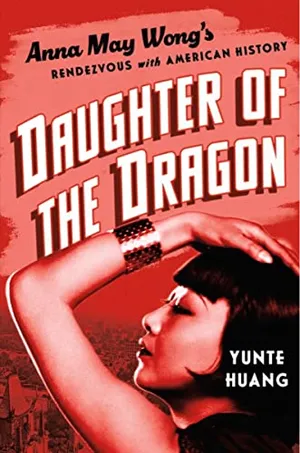
Daughter of the Dragon: Anna May Wong’s Rendezvous with American History by Yunte Huang

Recommended by Ryan Lintelman, curator of entertainment, National Museum of American History

The captivating, beautiful Anna May Wong overcame adversity and prejudice in the early to mid-20th century to build a remarkable career as the first Chinese American movie star. But when she began losing glamorous parts to white actresses and found herself increasingly typecast in racist roles, Wong left Hollywood, disillusioned and mostly forgotten. Scholar Yunte Huang from the University of California, Santa Barbara, skillfully recovers the actor’s fascinating story. While fleshing out the missing details of Wong’s life and times, Huang explores the historical, social and cultural context with an English professor’s attention to words, symbols and the meanings behind them. And from this book, a picture immerges of a cosmopolitan, well-connected woman who persevered, finding opportunities to work in Europe and in television before her untimely death in 1961 at the age of 56. Wong is an Asian American icon only now earning the recognition and praise she so long deserved.

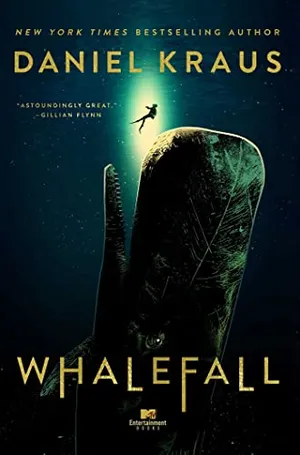
Whalefall by Daniel Kraus

Recommended by Nick Pyenson, curator of fossil marine mammals, National Museum of Natural History

How would it feel to be swallowed by a whale? Not just nibbled, like a lobster diver or a kayaker, but full Jonah? The science fiction and fantasy novelist Daniel Kraus imagines a modern riff, pitting a teenage boy against (and inside) an old, bull sperm whale off Monterey Bay. Kraus locates much of the teen’s ordeal in the whale’s multi-chambered stomach, with heavy pours of father-son angst. Impressively, Kraus defies incredulity by doing his homework. I study whales and, as a scientist, I appreciated that all of the pieces of Kraus’ griping narrative fit together from the anatomy of these awesome creatures. Much of the story feels like John Steinbeck’s Cannery Row meets the Red Planet in Andy Weir’s The Martian, paced to the tense countdown of the dwindling air in the teen’s scuba tank. The recently announced movie should be wild—and not for the squeamish.


Whalefall: A Novel

The Martian meets 127 Hours in this “powerfully humane” (Owen King, New York Times bestselling author) and scientifically accurate thriller about a scuba diver who’s been swallowed by an eighty-foot, sixty-ton sperm whale and has only one hour to escape before his oxygen runs out.

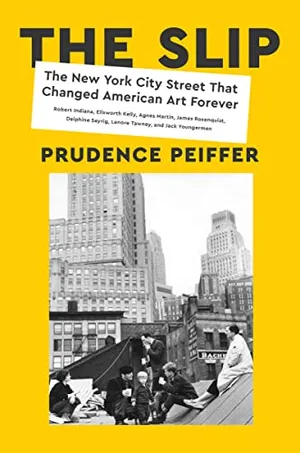
The Slip: The New York City Street That Changed American Art Forever by Prudence Peiffer

Recommended by Stephanie Stebich, director, Smithsonian American Art Museum

Several prominent art personalities—from Agnes Martin to Ellsworth Kelly, and from James Rosenquist to Lenore Tawney, not to mention the intense character of New York City itself—abound in this artful story about a specific spot and moment in American art. In the mid-20th century, Coenties Slip, located in the financial district of lower Manhattan, began to attract artists who sought the energy and “collective solitude” of the new art capital. That concept describes both the need for creative quiet and the convening of like spirits. That power of place is also important for artists who came from afar to develop different artistic styles and personal relationships. The history of this unique place is well described from its early shipping days to its heady redevelopment into a vibrant artist colony in the years between 1956 and 1964. For those who love the history of New York City and an insider’s view of the early life of major figures in modern art, this is a compelling read.

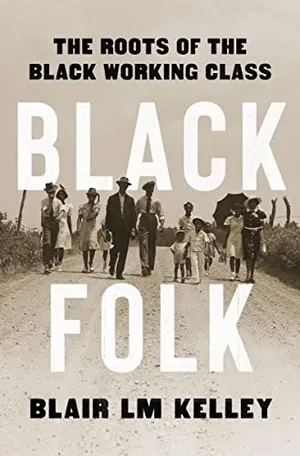
Black Folk: The Roots of the Black Working Class by Blair L.M. Kelley

Recommended by William Pretzer, supervisory curator for history, National Museum of African American History and Culture

Inspired in part by the civil rights movement, American scholars of the 1960s and ’70s began to take seriously the notion of social class and the history of marginalized peoples in the U.S., an approach labeled “history from the bottom up.” Research into the social and cultural experiences of workers, immigrant groups and enslaved people led the way, soon to be followed by family, women’s and cultural history. In this well-crafted narrative, Kelley’s own family history spanning 200 years becomes a lens on the development of a Black working class. As good historians do, Kelley raises more questions than she answers about the creation of the Black working class. Those who follow in her footsteps, however, will find Black Folk an excellent guide for examining in greater detail (and thus more diversity) the intersections of family, gender, race, work, class and social justice.

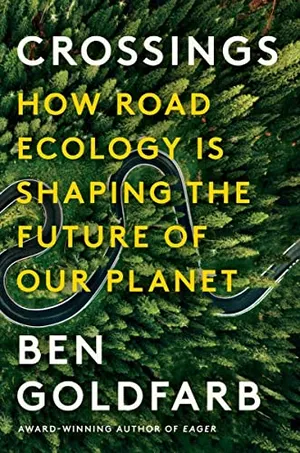
Crossings: How Road Ecology Is Shaping the Future of Our Planet by Ben Goldfarb

Recommended by Jeffrey K. Stine, curator for environmental history, National Museum of American History

Why did the chicken cross the road? Environmental journalist Ben Goldfarb questions the logic of that old riddle, which, he says, treats the road as immutable while demanding an explanation and rationalization for the fowl’s actions. With wit and a wealth of detail, Goldfarb explores the multitude of hazards that the world’s 40 million miles of roads impose upon wildlife and the growing efforts to lessen or mitigate those effects. His discussion of road ecology—a relatively new branch of conservation biology—could hardly be timelier. Highway mileage is projected to double by midcentury, yet biodiversity loss continues at a rate faster than at any time in human history. Without pulling punches in his assessment of highway impacts, Goldfarb laces the book with examples of hope, showcasing how purpose-built infrastructure, such as wildlife tunnels and bridges, redesigned culverts and rewilding roadsides, can blunt some ecological problems, benefiting all inhabitants of the world, both human and nonhuman.

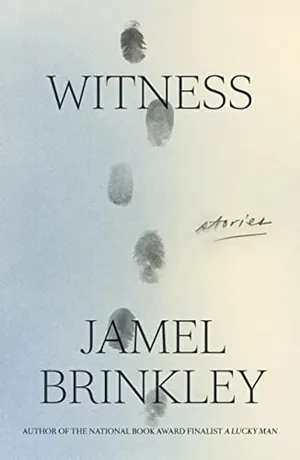
Witness by Jamel Brinkley

Recommended by Lindsay Harris, head of the Research and Scholars Center, Smithsonian American Art Museum

The highly visual narratives crafted by the award-winning short-story writer Jamel Brinkley remind us of the range of perspectives that coexist at any given time, and the importance of storytelling to make sense of the world and our place in it. In his newest collection of ten stories, Brinkley portrays contemporary New York City in the throes of change. A widow, soon to retire from delivering room service in a Queens hotel, finds joy exchanging hand-written missives with the delivery woman from her favorite food app. A young man attending a dance party at the Brooklyn Museum unexpectedly meets his estranged father’s former lover. A group of friends in Bedford-Stuyvesant struggles to recall the business that once operated in a local storefront, which now shelters animals and a troubled, homeless man they barely recognize from their childhood. Throughout the vignettes, photographs recur as portals to the past that offer glimpses of characters and their surroundings as they once were. The story collection highlights how revelatory it can be to formulate and express point of view by integrating the arts.


Witness

In these ten stories, each set in the changing landscapes of contemporary New York City, a range of characters―from children to grandmothers to ghosts―live through the responsibility of perceiving and the moral challenge of speaking up or taking action.

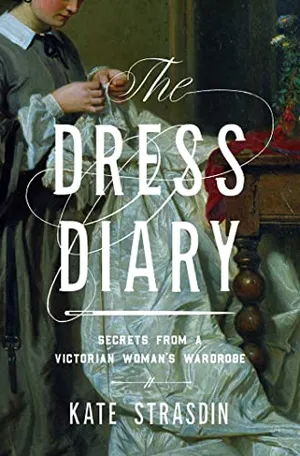
The Dress Diary: Secrets from a Victorian Woman’s Wardrobe by Kate Strasdin

Recommended by Jocelyn Knauf, docent program manager, National Museum of American History

As a museum educator and former archaeologist, I am fascinated by how the seemingly insignificant things that people used and discarded in past eras can give us insight into their lives and experiences. In 1838, an Englishwoman named Anne Sykes began to document in a bound volume the clothing that she and her friends and family wore, including pieces of printed fabrics and swatches of silk. Nearly 200 years later, after in-depth study of what has become known as “The Dress Diary,” fashion historian Kate Strasdin shows us how Sykes’ wardrobe and the garments worn by those around her are tied to broader cultural landscapes and connected to larger social networks, industry and empire. Clothing chronicles the everyday lives of women; the rituals of mourning, the move to a new home, weddings and christenings are rendered meaningful and consequential. But the author also contextualizes this period of the 19th century, tracing the elements of women’s clothing from the cotton plantations in the southern U.S. to the far reaches of the British colonial empire.

King: A Life by Jonathan Eig

Recommended by Chris Wilson, director of Experience Design and the African American History Program, National Museum of American History

In remembering the civil rights movement, we are often blinded by our tendency to understand this period as the consequences of the actions of super-heroic leaders—who are usually men. There is no better example of this than how we remember Martin Luther King Jr. The Black freedom struggle of the 1950s and ’60s is often seen as being defined by King, and King, in turn, is seen as being defined by his public life and work. One antidote to this simplistic understanding is to broaden one’s consideration and see the movement as the far-reaching efforts of the many. In reality, a vast number of people and groups worked to redefine the nation from many directions and through many, sometimes competing, tactics. To deepen our knowledge, we need to fully understand these people along with their weaknesses, fears, flaws and lives beyond the public spheres of their activist work.

In his King biography, which the New York Times calls the “first comprehensive account of the civil rights icon in decades,” Eig helps us see the complexity. We learn the difficult relationship King had with his father and other leaders, his struggles with mental health, and his discomfort with conflict. We learn about those who had as much to do with the successes of the movement but who continue to receive little credit, including women like his own wife, Coretta Scott King, as well as Rosa Parks, Ella Baker and Diane Nash. To better understand this world icon, we should—as Eig does—explore his full life to more fully grasp the movement and our nation’s history.


King: A Life

In this landmark biography, Jonathan Eig gives us an MLK for our times: a deep thinker, a brilliant strategist, and a committed radical who led one of history’s greatest movements, and whose demands for racial and economic justice remain as urgent today as they were in his lifetime.

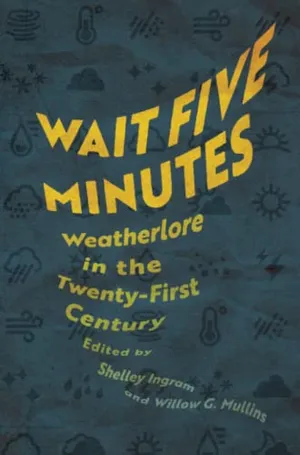
Wait Five Minutes: Weatherlore in the Twenty-First Century edited by Shelley Ingram and Willow G. Mullins

Recommended by James Deutsch, curator of folklife and popular culture, Smithsonian Center for Folklife and Cultural Heritage

Folk wisdom about the weather, known to folklorists as “weatherlore,” dates to the earliest humans, whose lives often depended on the vagaries of snow, rain, heat and gloom of night—to borrow the folkloric motto of the U.S. Postal Service. The 15 essays in this volume, written by specialists in communications, folklore, literature, philosophy, religion, science and other fields of study, evenly divide into sections on belief, text and tradition. Specific topics include the personal narratives of storm survivors, the contemporary usage of the word “snowflake,” the roles of magic and prophecy in weather prognostication, the effects of climate change on Christian belief, and the difficulties climate change is bringing to home canning. My contribution, titled “Bob Dylan’s Windlore,” derives from my all-time favorite song lyric espousing weather wisdom—“You don’t need a weatherman to know which way the wind blows” from the legendary poet’s 1965 anthem “Subterranean Homesick Blues.”

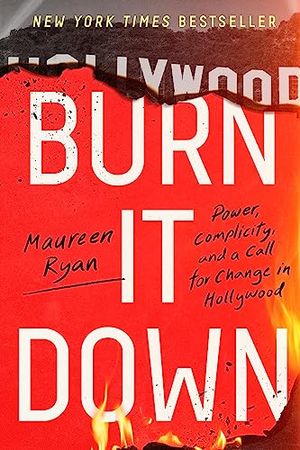
Burn It Down: Power, Complicity and a Call for Change in Hollywood by Maureen Ryan

Recommended by Elisabeth Kilday, visitor services manager, National Portrait Gallery and Smithsonian American Art Museum

The critic and reporter Maureen Ryan has been writing about entertainment for years and, in her new bestseller, she looks at the widespread sexual harassment and misconduct in the television industry. Through interviews with actors, writers and others in the industry, Ryan doggedly pursues the question of why, after the much-vaunted #MeToo campaign, bad antics and toxic abuses continue behind the scenes at popular television shows. Harvey Weinstein may be behind bars, but the industry allows other abusers to continue working. It was difficult at times to read about shows that I enjoyed in the past, but Ryan doesn’t just highlight the problems—she offers ideas for improvements going forward. Hollywood is not alone in facing these issues of harassment and biases, and readers may be surprised at how they can relate to the stories told and the proposed solutions.


Burn It Down: Power, Complicity, and a Call for Change in Hollywood

In this spectacular, newsmaking exposé that has the entertainment industry abuzz and on its heels, Vanity Fair‘s Maureen Ryan blows the lid off patterns of harassment and bias in Hollywood, the grassroots reforms under way, and the labor and activist revolutions that recent scandals have ignited.

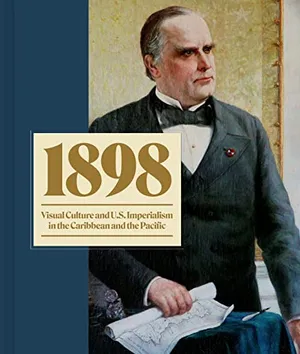
1898: Visual Culture and U.S. Imperialism in the Caribbean and the Pacific by Kate Clarke Lemay and Taína Caragol

Recommended by Theodore Gonzalves, curator of culture and the arts, National Museum of American History

Caragol and Lemay have accomplished an incredible feat—they curated a thoughtful exhibition and edited an accompanying text that links a sorrowful past with the urgency of the present. During the War of 1898, commentators and scholars asked the question about the U.S.: “Are we an empire or a republic?” To dispossess people of their land, seize it for themselves, administer the transfer of treasure and labor across borders, brutally suppress movements for self-government, and feed media with one-sided narratives—all of those and more were the hallmarks of an empire coming into view. Caragol and Lemay highlight perspectives from communities deeply affected by these events in Hawaiʻi, Guam, the Philippines, Cuba and Puerto Rico. Full disclosure: For the catalog, I wrote a short essay about the cost of forgetting empire as well as remembering acts of resistance in the Pacific. If you are not able to visit the show, which remains on view through February 25, 2024, and which the Washington Post referred to as the “best and most engaging work the National Portrait Gallery has done in a decade,” then turn to this accompanying text for the finely crafted context it offers of distant events that today continue to offer us powerful lessons.

Get the latest on what’s happening At the Smithsonian in your inbox.

Geoffrey Baer on ‘The Most Beautiful Places in Chicago 2’

Geoffrey Baer on ‘The Most Beautiful Places in Chicago 2’

The Most Beautiful Places in Chicago 2 premieres on Monday, December 4 at 7:00 pm on WTTW and streaming on the PBS app. Check out the companion website at wttw.com/mostbeautiful

On Monday, December 4 at 7:00 pm, WTTW will premiere The Most Beautiful Places in Chicago 2 with host, writer, and producer Geoffrey Baer. Viewers will be invited to come along on Geoffrey’s newest journey to discover the stories behind eye-popping spaces and places around Chicago – from sparkling mosaics and historic homes to public parks and gardens to intricate facades and architectural marvels. 

We sat down with Geoffrey this month to talk about the show, a few of his favorite locations, and the fascinating Chicagoans who share the places they think are beautiful in the new special. 

Why did you decide to follow up The Most Beautiful Places in Chicago with a sequel?

The response to the first program was overwhelming. People let us know that they loved seeing what it is that makes Chicago great, and why they are so proud of the city. 

How did you define a “beautiful place?”

In the first show, we really leaned into jaw-dropping physical beauty. In part 2, you’ll see more, including “the Bean” at Millennium Park and the dazzling Tiffany interiors of the Chicago Cultural Center. But what makes these and the many other places we explore in this program deeply beautiful has as much to do with the human stories behind them as with their physical beauty. 

Can you give us some examples?

If you’ve ever gotten off Lake Shore Drive at Foster, there’s a mosaic mural that’s twinkly and sparkly and really lights up the underpass – but almost nobody ever stops to really look at it. This stunning public work, called Indian Land Dancing, has an almost folk art quality to it, and the story that it tells is about the Native American community in Chicago. Viewers will hear from the Indigenous artists who took the lead in imagining this beautiful community-made space to serve as an antidote to the more cliché sculptures you see around town and to remind people that Native Americans are still here. They’ve always been here. 

Another good example is the Chicago Vocational High School. It has a remarkable and giant classical columned entrance with beautiful relief sculptures of drill presses and T-squares, designed to reference what the students are learning inside. The original plan was to create an inspiring place to signal the future of Chicago as an industrial city and train the next generation of trade workers who would feel proud of their vocation and training. 

The architectural critic Lee Bey went there, right? He’s featured in the show.

Yes, Lee’s trade focus at the high school was the printing press and, go figure, he grew up to be an author! In the show, we visit a number of buildings Lee highlighted in his book, Southern Exposure, about under-appreciated architecture on the South Side.

Who else will we meet in the show?

We talk to Gunny Harboe, the most famous restoration architect in Chicago, about his team’s astonishing restoration of the Chicago Cultural Center. I think most people who know the building are aware of Preston Bradley Hall and the Tiffany dome, but there’s another dome in the Grand Army of the Republic Hall that deteriorated over time. During the restoration process, Gunny discovered that a century of paint layers could be scraped off to reveal the original paint that was still there underneath. When you are in that hall today, you will see paint that was brushed on by the people who first finished those rooms in the late 1800s.

In another part of the show, there’s a young ecologist and conservation biologist, Deja Perkins, who is one of the most remarkable people I have ever interviewed. Her mission in life is to help people of color feel comfortable and welcome exploring nature and birdwatching. She speaks very poignantly about how Black people have not always felt safe exploring nature. We venture to Jackson Park with Deja and a group of young people, and I know our viewers will be moved by the conversation. And I got to go birdwatching! It was so much fun. 

Revisiting Randy Reinholz (Choctaw)

Revisiting Randy Reinholz (Choctaw)

Music Credit: “NY” composed and performed by Kosta T, from the CD  Soul Sand; used courtesy of the Free Music Archive

 Jo Reed: For the National Endowment for the Arts this is Art Works, I’m Josephine Reed.

Randy Reinholz: The aesthetic is reciprocity. If I bring something to the conversation, it’s to share with you. So that’s the reciprocity that marks native theater. The story is alive. It grows. It’s not static, and it will always have some kind of generosity, even if it’s difficult or a tragedy.

Jo Reed: Today, we’re marking the end of Indigenous Peoples Month by revisiting my 2018 interview with Randy Reinholz, he is the producing artistic director and co-creator of Native Voices at the Autry, a Los Angeles theater company begun almost 30 years ago that produces new work by Indigenous playwrights. 

Native Voices not only puts on equity productions of native work—it also nurtures new and emerging talent, providing workshops and retreats for writers and actors, creating staged readings for new work, and providing a platform established playwrights as well. Randy Reinholz who is a member of the Choctaw nation is at the center of all of it … he started his career as an actor and has moved into directing with over seventy-five productions in the United States, Australia and Canada; he’s also playwright whose play Off the Rails—an adaptation of Shakespeare’s measure for measure set in Buffalo Bill’s Wild West was produced by the Oregon Shakespeare Festival. With Randy as producing artistic director Native Voices at the Autry has produced 32 plays, including 19 world premieres; 13 Playwrights Retreats; 22 New Play Festivals; 6 Short Play Festivals and more than 200 workshops and public staged readings. Just as significantly, it is deeply respected in both the Native American and theatre communities for its innovative artistry which highlights the unique points of view within the more than 500 Native American nations in North America. Like many successful programs, Native Voices was created to address an absence—not of talent but of opportunity.

Randy Reinholz: It was 1993. I’d just joined the faculty at Illinois State University, and my wife was also on faculty, Jean Bruce Scott, who is the cofounder of Native Voices. And essentially we were looking for a play that we might be able to produce there at Illinois State. It was kind of a homogeneous, mid-western state school, not very diverse, and the question came up, could we find a script that could reflect my culture. I’m an enrolled member of the Choctaw Nation of Oklahoma. Could we find that script, and then what would it look like if our students performed it? I didn’t know of any scripts, but I did know a lot of people in play development, so we started looking at those folks, started calling, seeing who knew what, and nobody really knew any more than I did, which was a little surprising. And one thing led to another. We found some folks. We worked through Native Earth in Toronto, a Canadian company, and then IAIA, Institute of American Indian Arts, and from there we brought some of those playwrights to campus at Illinois State in 1994. They started talking to each other quickly. We had panel discussions and so forth. We read their plays and they were really grateful to have their plays read out loud. One of the things that came up over and over again is in the United States, people hadn’t invited more than one native playwright to anything. And so to get to see each other’s work and start to think about how other people were approaching some of these topics of colonization was really, really good. They were excited. We did have a script that was filled with multicultural characters and one native character, and that’s called Now Look What You Made Me Do by Marie Clements–Marie has gone on to win the Governor General’s Award several times in Canada–and we produced that play the following year. The playwrights were so excited about being able to see each other’s work that we invited another cohort in. So the first year we had five. The second year we produced a play and brought in four more plays to read, and that became Native Voices.

Jo Reed: Well, obviously it’s so important to be able to have the voices and talent of Native American playwrights out there. One would think that you would want many of those parts to be in fact portrayed by Native American actors, so you can’t just do one piece of the puzzle.

Randy Reinholz: There you go. That’s exactly right, and we were just looking for a play to produce at a university. Often the universities, we produce plays– I’m still a professor. I’m at San Diego State now. We often produce plays where the actors aren’t quite age appropriate. Sometimes they’re not ethnic appropriate. But as we move into professional theater, of course we do want those things. And I think the other thing that’s part of that, when there aren’t people in the room who know native culture, so much of the rehearsal time is spent on Indian 101, just ideas, you know, basic ideas about how tribal enrollment works, what are issues on reservations, what are the federal programs, what are the basic history. People in the United States up until very recently were given misinformation about Native American history, and that’s I suspect because we’re very uncomfortable with the stolen lands and the broken treaties.

Jo Reed: Did you find that you really had to spread your wings and make it much more inclusive?

Randy Reinholz: Absolutely. And I got a new job, like I said, here at San Diego State, and we had been consulting with The Autry in Los Angeles about their programming and their institution, which they wanted to become more multicultural, and they’ve been incredibly successful.

Jo Reed: And that’s the Autry Museum of the American West.

Randy Reinholz: There we go. Right, right, they’re in Griffith Park. And as we started to talk, we were consulting on one of their major exhibitions called Powerful Images, the plan was it would start at The Autry and then a number of museums that focus on western culture, would take this exhibition. They asked our opinion about does it portray contemporary native people enough? The vision was powerful images of Native American people through American history. And, you know, the overwhelming criticism was it’s just too historicized if it constantly looks at native people in the past, and this is a surprising thing the research revealed. People who attended Western Heritage Museums believed by the factor of 85 percent that Native Americans were extinct, and that was really surprising, that what our informed audience should’ve been thinking. And so we really thought it was imperative, then, to have contemporary stories and contemporary images. If we only had images, it’s fed into that, even if they were contemporary. So a play a play became a way to put native people with native stories in front of an audience on a regular basis. And it was a good strategy, and that led to Native Voices at The Autry, and we’ve been there for 20 years.

Jo Reed: Before we get into some of the specific theater programs that are created and run by Native Voices — let’s hear an excerpt from a production. This is actor Román Zaragoza in They Don”t Talk Back which was written by Tlingit playwright Frank Henry Kaash Katasse and directed by Randy Reinholz…

Film excerpt

Jo Reed: That was an excerpt from the Native Voices production They Don’t Talk Back… I know being an equity company is very important to Native Voices— Randy Reinholz explains why.

Randy Reinholz: My wife and I, Jean Bruce Scott, who founded the company, we started off as actors. We believed actors should be paid. Los Angeles is an interesting town. It’s a feast or famine place for a lot of actors. And so we thought we would work with the union to pay the actors a living wage. There’s a lot of people who pay actors in Los Angeles $20, $30 a performance and little to nothing for the rehearsal, so we really wanted to compensate the actors. The second piece of that was many of the actors would be Native Americans, people who didn’t often get a chance to play leads in plays at all, much less in film, so we thought that that would be equitable. So we’ve been on those equity contracts since 2001, so really proud of that. And, then, as you build a theater company and the actors are paid a working wage, you pretty much have to pay everybody in the room something. Again, a lot of theater in Los Angeles trades on good will, and we thought, well, everybody at least deserves minimum wage. And now we’re to the point where all the creative team gets paid the working wage, whatever the union representation is, whether it’s stage directors and choreographers or United Scenic Artists and so forth.

Jo Reed: And you also do, I have to say, something very near to my heart, which are free stage readings, which as a theatergoer is one of the things I just love.

Randy Reinholz: Thank you. I’m glad that you enjoy that. That makes up a big part of our audience. A lot of people are interested in what’s next or what might be on the margins that’s not quite capable of these productions that cost upwards of a million dollars. So the staged reading is a chance for the actors to show the playwright what the play sounds like, and to some extent, there’s some limited staging so we can see if tricky costume changes and so forth, do we have time for those sorts of things. They tend to take place in front of a music stand with very, very minimal staging, the actors have script in hand, and it really turns into an evening of the imagination, so the audience’s imagination really is deeply engaged. So we do those standalone readings. We do playwright’s retreats. I think we’ve done 15 radio plays through the years. We tour work. We work with youth groups. We have a special curriculum to go in to work in community. Often what’s really fun is when we have very established actors who always come back to Native Voices because they want to give back and they want to give particularly to native communities. And so they’ll go out to community and we’ll work with these young, usually junior high kids. They get so excited when they realize, “Oh, my gosh, my mentor from my play is from blah, blah movie or blah, blah television series.” So that makes it real, and a lot of native youth haven’t had people to look up to in the media. There’s been maybe one, two, three, and now you’re starting to see a lot of people making it in the media, in mainstream media, they’re mostly playing native roles, but sometimes they actually are playing things that aren’t ethnic specific, and it’s just because they’re talented actors.

Jo Reed: And the Festival of New Plays is a really important cornerstone.

Randy Reinholz: Correct. What we noticed early is that sometime– most of the scripts that we receive– we evaluate scripts once or twice a year. We have an open call. Everything’s on the web, Native Voices at The Autry. We have these calls, and a lot of times people would send us a script–and they’d been working on it two, four, five years–they were so close to it that it was really difficult for them to make any kinds of changes. And of course what happens when developing theater, there’s the thing I think I’ve written when I’m in my room reading it to myself, and then when other people read it back to me you hear so much. And, of course, the big thing, are there questions. What questions do the other artists ask, and that becomes really crucial. And of course, that’s the great story feedback that all writers need, and that’s what the retreat gives us, is a little bit of time. We read the script early. We have this company of actors. Usually we have 30 to 40 actors involved with this process. They’ve been involved– I think we’re 25 years into this, yes, so they’ve done this kind of work a lot. Often they’ve seen the playwright’s work in other places, sometimes at Native Voices. Sometimes they have a relationship, so that becomes really integral artmaking, and I think it’s the way theater has been made for a long time, and we’re really grateful to be able to do that. It gives us about a week to be together, ask questions. The writers are not from Los Angeles, so there’s also a little camaraderie or community that starts to build. We make sure we have a number of community meals and so forth. We always have representatives from the local tribal government, so Gabrielino-Tongva is the land, the traditional lands of where The Autry sits, so we often start off with blessings and recognition of the land, and then really great conversations about, “Well, where are you from?” “How do you do this?” “How do your people–” “Really? We do– we don’t do it like that. We do it like this.”

Jo Reed: You’ve been doing this for a generation, which is extraordinary, so I wonder if there were issues that native writers perhaps were focusing on when you first began and what they were, and whether you’ve seen a shift over time.

Randy Reinholz: Sure. We really do feel that we kind of have an insight into what are the issues in Indian country. Often when a group gets their voice back, the conversation is about oppression, what that feels like, all the forms it takes. That was with the early days in the early plays that we looked at. Then it was about oppression and how abuse was central to that, whether it was being abused, having been abused, learning to become an abuser, and then all the forms abuse takes: alcohol, sex, drugs, and so forth, violence. Then as tribal gaming comes into play, the question of, well, who’s really native and what does it mean? And, of course, the big insult you can throw at someone when you’re in a community of color is to say, “But you’re not really,” and then fill in the thing that we all say we are, and we pick someone out to beat them up for not being that. So that becomes a question of who’s what. A question we’re seeing right now, there’s tremendous violence against native women that’s rampant in the country. Native women, four out of five experience sexual violence. A native woman is 10 times more likely to be murdered than the regular population. The suicide rate in communities waffles between five times the national average up to ten times the national average. What’s causing that, and how do we start to pull apart this epidemic of murdered and missing women? How do we start writing plays that start to hold the law enforcement agencies accountable? The population that’s most likely to be killed by a law enforcement officer is a native person. So bringing those kinds of issues to the floor are part of the plots of the different stories we’re looking at. That’s a big deal right now.

Jo Reed: And let me just ask you, what’s the gender balance like with the participants in Native Voices?

Randy Reinholz: We probably have a few more women than men as actors. We’ve been pretty balanced in the number of plays we’ve produced. We tend to produce plays by women as often as by men, which is not in line with the professional theater. The professional theater has not been particularly good at that historically. We have gender balance both by playwrights, directors, and actors and also the rest of the creative staff becomes important. And we’ve also become a center for people particularly here in the southwest but on the west coast not only for casting, which makes a lot of sense that people would come to us, particularly large resourced institutions looking for casting, but people are asking us about, “Hey, we have an entry level position for a stage manager,” you know, that sort of thing, and so people are proactively seeking our talent out to engage them to round out the whole field.

Jo Reed: Of course, that allows, as you mentioned earlier, Native American kids who can then look and say, “Oh, it’s possible to have a career in theater.”

Randy Reinholz: Absolutely. And we don’t get out into community as much as we like because it’s really expensive, and native communities don’t have a lot of resources to host us, so that is something we’ve been looking at. You know, how do we rebalance? Ever since the Great Recession that’s been a real problem. But we do bring youth in, and last year I had a play called Off the Rails, which was at Oregon Shakespeare Festival, and it’s an adaptation of a Shakespeare, Measure for Measure. But it’s set in the old west, the 1880s, and the backdrop is the American Indian boarding school system, which is a very difficult piece of American history that a lot of Americans don’t know. But since it was set against the boarding school, it has a lot of youthful characters in it. We knew a lot of students would come see the play. And I think a lot of young people– they saw themselves in those characters. It was a really interesting way for young people to view Shakespeare and the old west. And we did get a lot of native kids to the show. But, of course, the kids, what they recognized, the native kids, were the dances. One of the characters is written so that it’s always played by a culture bearer from the region, and so that character, informs the end of the play with dances that are recognizable to people from the region. And so when those young native kids saw all those dances on stage, some of them would hop up and dance at the seat. Bill Rouche, the director, he’s so smart. He just invites the audience to come on stage. And the kids would rush down to be part of that dance, because they were taking stage in a power arena, and their culture was being celebrated.

Jo Reed: There are so many ways I want to go with this, but let me just ask you this first. Is there an aesthetic, do you think, that’s distinctly native that’s being brought on the stage through the work that you’re doing at Native Voices?

Randy Reinholz: The aesthetic is reciprocity. If I bring something to the conversation, it’s to share with you. And then as I share that story, you start to share your story, which all the sudden causes Collin over here behind the desk to say, “Huh, that reminds me of my story,” and then he tells his story. And after I’ve heard those stories, I understand my story in a deeper, more meaningful way that I wouldn’t have had if I hadn’t shared it with you in the beginning. So that’s the reciprocity that marks native theater. The story is alive. It grows. It’s not static, and it will always have some kind of generosity, even if it’s difficult or a tragedy.

Jo Reed: And do you see the plays over the years kind of in dialog with each other, in conversation with each other?

Randy Reinholz: Absolutely. To some extent, having a stage, a dedicated stage, a time of year when these stories happen and a place, has been super empowering. And of course what’s happened is, is it sort of exploded in a very good way, native theater that is. So like last year we had three plays in major venues by native women at the same time, whereas five years before you wouldn’t have had a show by a native woman in a major venue the entire year. So people want these stories. It’s not to commercial theater yet. I would like to see a native play on Broadway, but I’m not saying I think there’s gonna be one next week. But rather I think the major not-for-profit theater companies are starting to realize if they’re in dialog, not only do native communities want to see native plays, but theatergoers want to see native plays. I think theatergoers have an appetite for the country where we live, and we want to see all of these important ideas on stage, not only the entertainment or the great craft.

Jo Reed: I want to get back to The Autry for just one second. Do you work with the curatorial staff at all at The Autry so that the plays and the exhibits, there can be a kind of symmetry?

Randy Reinholz: Yeah, they’re in dialogue, absolutely. As you said, the plays are in dialogue with each other, and whether we plan it or not, our patrons come see our plays. And if things go well, they’re curious and want to go inside the building, the museum. There are lot of rotating exhibitions. And about 12 years ago I guess now, The Autry merged with the Southwest Museum, which was the first museum in Los Angeles. I think there are 300,000 or 400,000 Native American objects in the Southwest collection that has been merged together and preserved with The Autry collection. And then the ARC is about to open, which is the Autry Research which will be a really large facility in some ways based on the Smithsonian’s National Museum of the American Indians’ Maryland Complex. So you can go arrange a trip out to Maryland, and you can look at specific objects based on geography or time. And you have to be a researcher and you have to be pretty clear about what you want. One time I was doing a play there, so they offered this to me, so I was shocked when I went out there. My favorite story from that memory is, is when I went there they said, “Well, there’s a room to pray if you want to pray before you see the objects, and of course you might need it after you leave.” And I thought, pray, huh? Well, that’s really thoughtful. “I won’t need that. I really appreciate you. Thank you.” So then I get in there. I get on the Genie lift. I pull out the drawer, and I start looking at these objects, and I realize I’m crying, and I can’t control myself. And I was shocked. Like, I’m just not this kind of person. It doesn’t happen very often. And I was like, I’d better lower the Genie lift and go find that prayer room and calm down.

Jo Reed: Wow.

Randy Reinholz: So it’s amazing that when people with these backgrounds connect with things from their culture, often objects that were taken — many objects in museums were intended to be grave, burial, funeral objects. And of course, The Autry is incredibly vigorous about NAGPRA and repatriation and holding onto objects and preserving them until the culture bearers for the places that they belong are in a position to make sure that they’re gonna last for generations. And it’s a fascinating piece of American history to be part of. So, yes, we are involved with curatorial and we do hear these conversations. We often are thinking about how does the play we’re planning on doing next connect with things?

Jo Reed: Funding is never easy, and I know you’ve gotten grants over the years from a number of organizations, including the National Endowment for the Arts.

Randy Reinholz: Yeah, I mean because you and I are talking, it’s gonna sound like I’m sucking up to you. It was super important that we were recognized by the NEA because in the field of theater when we started presenting plays by Native Americans, the professional theater really treated us as if we were cute children in that of course they should be applauded for what they’re doing, but it’s not real theater because we do real theater and none of them are ever in our theaters. That’s a hard Catch-22 to overcome. Again, that was why we started working with union contracts, so we could get working professionals that the professional theater companies recognized working with us, and then they could go out in the community and talk about our professionalism. It was because of the funding of the NEA that we could make those bold choices and commitments. And, again, in Los Angeles, when we said we’re paying a working wage based on union minimums, they were shocked, because many of the people who denigrated our work weren’t paying people. And the NEA gave us the faith to say we’re gonna do this and we’re gonna do it for a period of time — it’s the backbone. It’s the gold standard in American art, particularly for startup companies. We’d only been I think producing five years when we first got our first NEA grant. Well, then the city and the county came on. Well, then we had the NEA, the city, the county, and then corporate funders started to come on, and then in the Great Recession, we started having individual donors come on. And of course, that’s the mix that any not-for-profit needs to be sustainable. And the NEA has been through there for us the whole time. Sometimes the NEA had more capacity than others and sometimes maybe our work merited it more than others, but it was exciting to say that we are funded by the NEA. And then because we were funded by the NEA, I started being invited to serve on NEA panels, and then from serving on NEA panels, I started serving on panels for granting organizations all over the country, which has helped keep native voices aware of best practices, to be deeply involved in community, to bring the best artistic practices they can to those projects, and then to make art that is breathtaking. It’s not just, “oh, it’s good because of those poor people getting a chance to do something.” It actually ends up being the innovative art that changes the way things get done.

Jo Reed: You have supported a generation, which is– congratulations.

Randy Reinholz: Thank you.

Jo Reed: That is a wonderful thing. What has surprised you doing this work?

Randy Reinholz: I guess, you know, I had faith that the talent was there. I had faith that the talent would be deep and important beyond just the culture. And watching these artists whose personas and whose work is grounded in these ancient ways of working find ways to adapt to become innovators in the field, I think that’s the thing that’s the most exciting. I think we’ve often thought that the way people succeed is to make compromises, and I think what happens is real culture that’s important actually informs what the emerging culture of the country wants to be. And, of course, we’re at this crossroads of, what will our culture be as a country? And it’s great to see that people who have had resiliency for hundreds and hundreds of years are actually being looked to to model what are some next steps. That’s exciting.

Jo Reed: And what do you want to see for the generation to come?

Randy Reinholz: We’re always thinking about the past and what needs to happen next. One of our goals is to have a very successful succession process. So my wife and I are cofounders. Next year is the 25th anniversary, and we’re hoping to announce the new leadership of Native Voices as that season rolls out. I’m not quite sure when and how that’s gonna happen, but we are starting to engage in conversations with people. So looking for that succession, looking to have this next generation of artists define what they want the role of the senior elders in the process to be, like myself. So looking for that next generation to take over the leadership, the visioning, building on what’s worked in the past but also defining what really needs to happen next, that’s what’s exciting. That’s what I want to continue to see. I want to see these artists that are going off and working in these professional venues and being paid well to keep coming back to Native Voices to find ways to plug in and give back to this company of artists, the new generation of artists, and that’s been happening. I want to see that happen more.

Jo Reed: Fair enough. Well, Randy, thank you. Thank you for giving me your time, and thank you for your extraordinary work. 

Randy Reinholz: And thank you for bringing the attention of the NEA to people across the country. It’s so vital, this work, and I know it’s not a lot of money in the world of billionaires, but it’s so crucial because the process is so rigorous. But year in and year out, the NEA has picked a lot of winners, and that’s exciting to be part of that legacy.

Jo Reed: Yes, indeed. It is on this end, too. Thank you.

That was my 2018 interview Randy Reinholz—he’s Producing Artistic Director and co-creator of Native Voices at the Autry. We’ll have a link to Native Voices in our show notes. 

You’ve been listening to Art Works produced at the National Endowment for the Arts. You can subscribe to Art Works where ever you get your podcasts. So please do and leave us a rating on Apple—it helps people to find us. For the National Endowment for the Arts, I’m Josephine Reed. Thanks for listening.

Iconic Indian theatre artists you should know about | The Times of India

Iconic Indian theatre artists you should know about  | The Times of India

Girish Karnad, a luminary in Kannada theatre, marked the pinnacle of Modern Indian playwriting in the 1960s. His multidimensional career includes playwriting, acting, directing, and screenwriting. Karnad’s ability to blend history and mythology with contemporary issues brought him critical acclaim. The recipient of the prestigious Jnanpith Award, Karnad’s plays, translated into various languages, have been directed by renowned figures in Indian theatre and cinema.

Image: Flickr

Israeli gallery destroyed by Hamas finds new homes

Israeli gallery destroyed by Hamas finds new homes

Art began disappearing from Israeli museum galleries on 7 October, the day that Hamas terrorists went on a murderous rampage that took around 1,200 lives and roughly 240 hostages, as institutions moved their collections into storage for safekeeping.

At the Israel Museum in Jerusalem that day and in the weeks since, archaeological and ancient artefacts began entering reinforced vaults for the first time since the Gulf War. It is therefore unusual now, as many Israeli museums remain shuttered and their walls bare, to install a painting.

On 12 November the Israel Museum hung a red-tinted landscape painting, The Curving Road (2010), by Ziva Jelin. It is part of an ongoing series that Jelin, a native of southern Israel’s Kibbutz Be’eri and the longtime director and senior curator of Be’eri Gallery, has worked on for the past decade. In the trilingual Hebrew, Arabic and English wall text accompanying the painting in the Israeli art wing, Jelin says of her colour choice that “red is a pure feeling. A hypnotic emotional power, passion and love.”

Red hue an eerie harbinger

Though not her original intention, the canvas’s hue, along with the damage it sustained on 7 October, now seem like harbingers of the catastrophe that occurred at Be’eri and neighbouring towns that day. “I chose a painting that was a landscape of the road leading to the kibbutz but looking toward the direction of Gaza,” says Amitai Mendelsohn, the senior curator and head of the museum’s Israeli art department, of his selection among the landscapes salvaged from Jelin’s studio. “This is probably the road where some of the terrorists came and entered the kibbutz.” Be’eri, which has become synonymous with the horrors of that day in Israeli consciousness, was one of the communities hardest hit by Hamas terrorists, with around 85 residents murdered (among them the prominent peace activist Vivian Silver) and roughly 25 taken hostage in a town of 1,200 people.

Our idea was to show [the painting] in its damaged state, to show that art can be a way to give us strength

Amitai Mendelsohn, Israel Museum

The Curving Road was damaged by a bullet hole and shrapnel from a hand grenade Hamas terrorists threw into Jelin’s studio. As the work was being installed at the museum on 12 November, Jelin said this damage “charges the artworks with additional meaning, it is pretty chilling”.

Jelin’s canvases survived, but the gallery she has curated and directed since 1994 did not. The building and the art in it were incinerated by Hamas on 7 October. Be’eri Gallery was founded in 1986 by the late Orit Svirsky (a victim of the 7 October attack) and was known for attracting prominent Israeli artists despite its distance from Israel’s cultural hubs. “Be’eri is quite far from the centre, but it was a very vibrant place for art,” Mendelsohn says.

Gallery finds temporary home in Tel Aviv

The gallery recently secured a space to operate temporarily in Tel Aviv as of 2024, for the next three years, in a move initiated by the Tel Aviv Municipality and other entities. The landlord will provide the space rent-free, and the municipality will forgo property tax.

In the meantime, the Janco-Dada Museum in the northern Israeli town of Ein Hod will host a re-creation of the photography exhibition that was on view at Be’eri Gallery on 7 October. A solo exhibition by Osnat Ben Dov titled Shadow of a Passing Bird, it includes still-lifes taken in the artist’s home. The accompanying artist books that Ben Dov produced have also been reprinted and the exhibition reopened to the public in Ein Hod in mid-November.

These combined institutional efforts to honour the art and legacy of Kibbutz Be’eri reflect a larger desire to help that community rebuild. “For the museum, this was a way for us to pay homage to people who were brutally murdered,” says Mendelsohn. “Our idea here was to show [the painting] in its damaged state, to show that art can be a way to give us strength to continue from this terrible time that we’re in.”

On 7 October Hamas terrorists crossed into Israel on a murderous rampage, killing more than 1,200 people and taking around 220 hostages. The Israeli military responded to these atrocities with a declaration of war against Hamas, launching airstrikes and placing Gaza under siege. According to the Hamas-run health ministry, more than 14,500 Palestinians have been killed—most of them civilians. Since a temporary ceasefire began on Friday 24 November, a total of 69 hostages have been freed by Hamas and 150 Palestinians have been released from Israeli prisons.