Native

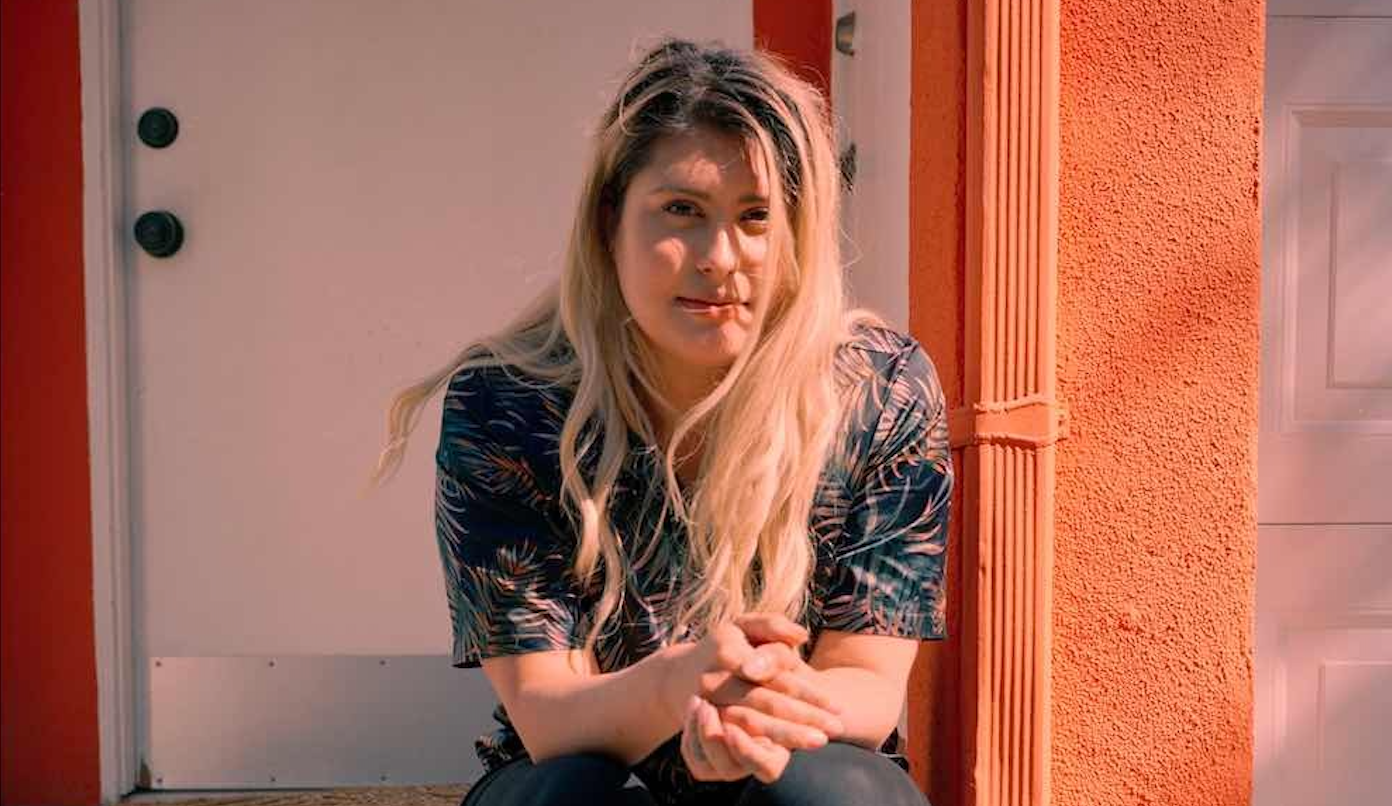
A Circular Path: A Conversation with Indigenous Program Alum Alexandra Lazarowich

A Circular Path: A Conversation with Indigenous Program Alum Alexandra Lazarowich
image

You talked about your rom-com and how you are still working on getting it out there. With working on it through the Lab, what were some opportunities that came out of that, from both working on that script, but then also the cohort that you had, and some of the folks that were involved?

What’s really great about the lab is everyone gets to connect with their mentors, but also connect with other people in the room. Tommy and I had known each other loosely before we were in a cohort together, but he was able to read my work, I was able to read his work and through that process,Tommy has put out the good word for me with the people that he’s working with. That sort of friendship building, but also interconnection, is really important, especially in the industry. I feel like that’s been one of the really cool things that has come out of the cohort. 

I think a lot of the time, there’s an expectation that you’re going to be plucked from obscurity by some network executive or some talent agent, or something like that, but I feel like often it’s people who like you, like your work, and think that you have talent. They put your name forward to somebody who’s looking for somebody to work on a TV show, to be a writer, to be a director, and that’s where a lot of the opportunities have come out of.

My rom-com worked as a very good spec script for me. To try to get more work in the industry as a writer, and also just trying to get more work as someone who’s a writer and director. So I think the opportunities have been twofold. But I really think what’s special are the friendships that we build and the connections you build within your own cohort — and then through just knowing other people who’ve also been in Sundance.

Was there any sort of before and after, with the Native Lab in terms of how you approach your own work as an artist?

I think [the lab] gave me more confidence to see myself as a writer. Because writing is very difficult and I admire people who love it and enjoy it. But it’s hard, and you’re trying to get ideas out… andalso be authentic to the stories that you’re telling. So I definitely think my writing skills have grown exponentially since the lab. And, from all the wonderful mentors I had and also through the process of securing work, being a writer on a TV show has also grown my skill set exponentially. All of them are little building blocks that help you to be better at your job. 

Looking back it feels just like yesterday, but also a million years ago when I was in the lab. I learned so much from the mentors, I learned so much from the other fellows in the lab, and I was able to take what I’ve learned and apply that to the work that I’m doing now for other people.

Is there a dream project you have that you would want to work on either from a directorial view, or writing, or both?

I would really like to have somebody fund my rom-com. I think this has been a lot of Indigenous folks’ experiences; it’s a long game of getting your work made and you have to stick to your beliefs, and really believe strongly in the work that you’re making, and that it’s important. So I think for me there are a couple of dream projects. Specifically, I would really like to make this rom-com. I’m still surprised no one has made a rom-com about Indigenous folks… I feel like there’s still such a gap missing. There’re a lot of historical films being made about Indigenous folks, but where are the fun comedies that are one off films? And where are the stupid Christmas movies that represent our experience and that share the larger modern interpretation of what it means to be Indigenous and what Indigenous Christmas looks like? What Thanksgiving looks like?

Those are the types of films that I want to make and I really want to see. I’m excited because it feels like the tide is turning a little bit. I think, with the success of Fancy Dance and Reservation Dogs, people can see the talent out there and are interested in these stories… So much groundwork has been laid by a lot of people to get us here.

Celebrate Indigenous Power With Our Playlist of Queer Artists

Celebrate Indigenous Power With Our Playlist of Queer Artists
image

There are many ways to make sure that queer Indigenous voices are heard. Music is just one of them. From indie rock to hip-hop, stretching from folk all the way to dubstep-tinged pop, a diverse cohort of LGBTQ+ Indigenous artists are representing the struggles, joys and complexities of their communities. They’re also just making damn good music. That’s why Them lifestyle editor Quispe López and I curated this playlist that’s perfect to bump during Indigenous People’s Month or any time of year.

Kicking off the playlist is Black Belt Eagle Scout, the musical moniker of singer-songwriter Katherine Paul. Her dulcet but melancholy track “Indians Never Die,” off her 2018 debut album Mother of My Children, was inspired by the Dakota Access Pipeline protests at Standing Rock. In a press statement accompanying the song, Paul made a powerful statement about the meaning of its title: “Imagine hearing on the news that the government doesn’t support you as a human being and never has […] Indigenous people are the protectors of this land. Indians never die because this is our land that we will forever protect in the present and the afterlife.” The poignant indie folk song meditates on that message with soothing vocals and somber guitar lines.

Elsewhere on the list, Colombian-Canadian Afro-Indigenous singer-songwriter Lido Pimienta delivers Latin alt-pop stylings on the undulating “Eso Que Tu Haces.” On the heartbreaking track, Pimienta sings in Spanish about coming to terms with a one-sided love while finding compassion for herself. Australian musician Mo’Ju also brings us a blues-inspired heavy hitter with their track “Native Tongue” off their 2018 album of the same name. The haunting track features The Pasefika Vitoria Choir with a gorgeous acapella melody that pairs perfectly with the soulful lead vocals.

But perhaps my favorite track on the list is from the Indigenous Mexican MC and vocalist Frosty. Her ’90s hip hop-inspired track “Not Exotic,” off her album All Frost No Ice, absolutely floored me. Frosty bravely and unabashedly leans into feelings of anger and rage, while waxing poetic about her Indigenous pride. Over a foreboding, bassy beat she raps, “Don’t call me exotic’ motherfucker / I’m Indigenous / and even in your most evolved state you couldn’t get with this.” I can’t wait to hear more from this self-proclaimed “rapatista” (rapper/zapatista) in the future.

Composer Andrew Balfour brings stories of Indigenous soldiers to BU as Artist-in-Residence

Composer Andrew Balfour brings stories of Indigenous soldiers to BU as Artist-in-Residence

Award-winning Cree composer Andrew Balfour brings his Truth and Reconciliation project Nôtinikêw (Going to War) to Brandon University (BU) this week as Artist-in-Residence.

Telling the stories of forgotten Indigenous soldiers through music, Nôtinikêw will feature the Brandon University Chorale, directed by Andrée Dagenais and accompanied by Balfour, Leanne Zacharias (cello), Cory Campbell (songkeeper) and Nolan Kehler (tenor). The week will feature a series of open rehearsals, culminating with a performance on Sunday at 3 p.m., at Brandon City Hall.

Balfour will also present an Out of Bounds Lecture Series talk on today (Tuesday, Nov. 21) from 12:30 to 1:30 p.m., in the Kinsmen Rehearsal Hall (Room 1-20) of the Queen Elizabeth II Music Building. The topic of Balfour’s Out of Bounds talk will be “Storytelling Through Music.”

There is no admission charge for any of the events.

Schedule of Events:

Open Rehearsal: Monday, Nov. 20, 4 — 5:40 p.m., Lorne Watson Recital Hall

Out of Bounds Lecture Series: Tuesday, Nov. 21, 12:30 — 1:30 p.m., Kinsmen Rehearsal Hall (Room 1-20, Music building)

Open Rehearsal: Wednesday, Nov. 22, 4:30 — 5:40 p.m., Lorne Watson Recital Hall

Open Rehearsal: Saturday, Nov. 25, noon ­— 2 p.m., Brandon City Hall

Nôtinikêw performance: Sunday, Nov. 26, 3 p.m., Brandon City Hall

Poster for Notinikew features intersecting lines of red, black and white paint.

About Andrew Balfour:

Andrew’s works have been performed and/or broadcast locally, nationally and internationally. He has been commissioned by the Winnipeg, Regina and Toronto Symphony Orchestras, Ensemble Caprice, Groundswell, the Winnipeg Jazz Orchestra, the Winnipeg Singers, the Kingston Chamber Choir, Roomful of Teeth, Tafelmusik and Toronto Mendelssohn Choir, among others. Andrew is also the founder and Artistic Director of the innovative vocal group Dead of Winter (formerly Camerata Nova), now in its 25th year of offering a concert series in Winnipeg. With Dead of Winter, Andrew specializes in creating “concept concerts,” many with Indigenous subject matter (Wa Wa Tey Wak) [Northern Lights], Medieval Inuit, Fallen). These innovative offerings explore a theme through an eclectic array of music, including new works, arrangements and inter-genre and interdisciplinary collaborations. Andrew has become increasingly passionate about music education and outreach, particularly on northern reserves and inner-city Winnipeg schools, where he has worked on behalf of the National Arts Centre, Dead of Winter, the Winnipeg Symphony Orchestra (WSO) and various Winnipeg school divisions. Andrew was Curator and Composer-in-Residence of the WSO’s inaugural Indigenous Festival. In 2017 he was awarded a Gold Medal by the Senate of Canada for his contribution to Canada’s Indigenous and music communities.

About BU

Success is built at Brandon University. Our growing, progressive campus welcomes a diverse and inclusive community that combines proud tradition with shared ambition. Through our excellence in teaching, research, and scholarship, we educate students to make a meaningful difference as engaged citizens and leaders. Join us at BrandonU.ca.

Stories – Heal the Land and Understand

Stories – Heal the Land and Understand

Hamilton magazine asked Burke about her background, what brought her to Central New York, and what she hopes to accomplish while here. (Responses edited due to space.)

What initially sparked your interest in Native American and Indigenous studies?

When I was born, my parents were living with an Omaha family and had been for some time. As a kid, I was raised by that family — particularly my grandmother — while my parents worked. I went to dances and ceremonies and was raised in an American Indian church, which gave me a completely different worldview and background from so many other kids. Throughout college and graduate school, advisors and professors encouraged me to pursue studying Native and Indigenous peoples because of this background, and I came to see that I am a good translator, can be a good advocate, for American Indian peoples. I also feel a duty to the community that raised me and the tremendous gifts they gave me, and I try to honor them in the work that I do.

Was there a moment or experience that prompted you to pursue this field in tandem with environmental studies?

I have always been interested in environmental issues. I was raised with a traditional worldview where the world operates according to different principles than most Americans are raised to understand — everything is alive and sentient and therefore has rights, and I’m just one piece of a great big puzzle. There isn’t a special quality that makes humans more special than or ascendant to any other species. I became interested in environmental justice in particular when I realized that the people who raised me did not have access to their sacred places. Their sacred place was behind a fence in the nearby farmer’s field, and they had to ask permission to go there. The river that ran through their lands was dammed, and they did not get any proceeds from the electricity it generated. I learned very early that access to place, “resources,” and rights were not equally distributed — that racism and inequality dictate how these things are distributed. 

What aspects of this position piqued your curiosity?

I wanted to grow professionally and work in service of a community. I’ve always been a community builder, so being able to do that here on campus and with local communities interested me right away. Hamilton is on land that traditionally belonged to the Oneida Nation, and it began as the Hamilton-Oneida Academy; the relationships at the foundation of this institution should be honored and healthy.

Since I am a Fellow here, teaching is just one component of my job. I am also building connections between the many faculty teaching Native and Indigenous studies on campus, co-teaching Native and Indigenous studies content in any course that will have me, and creating campus-wide programming to bring Native and Indigenous speakers, artists, and activists to campus to work with students.

Why is it important for academia and society as a whole to engage with and understand Native American and Indigenous perspectives?

I trace climate change back to colony and empire, that set of ideologies and the vast reordering of ecologies that happened as a result. If we’re going to meet this crisis with any kind of understanding, we have to trace it back to its roots and invite all voices to the table. As a country, we have not done that. In particular, we are going to need Indigenous nations and their leadership. To give one small example: In the United States, American Indian reservations are the most biodiverse pockets of our country. When we’re thinking about species, extinction, and conservation, we are going to have to rely on the friendship of those nations to help us heal this land and rebuild biodiversity.

Celebrate Native American Heritage Day with artist demonstrations

Celebrate Native American Heritage Day with artist demonstrations

Auburn, NY (Nov. 21, 2023) — The Schweinfurth Art Center is hosting artist Dan Hill (Cayuga Nation, Heron Clan) for live demonstrations of traditional Haudenosaunee Trade Silver Jewelry and wooden flutes on Saturday, Nov. 25, 2023. The event, which runs from 11 a.m. to 4 p.m., is free and open to the public.

Through storytelling, Hill will explain how the history and designs of his silverwork reflect Haudenosaunee creation stories; and how his flutes and music represent Haudenosaunee communication with and responsibilities to the natural world.

The event, part of the Schweinfurth’s Folk Arts Series and a celebration of Native American Heritage Day, is funded in part with a grant from the New York State Council on the Arts.

Included in Saturday’s free admission is access to tour the current exhibits, “Quilts=Art=Quilts 2023” and “Off Script and Unexpected,” a solo exhibition by sculptor Lee Hoag of Rochester. For more information, call the art center at 315-255-1553.

###

About the Schweinfurth

The Schweinfurth Memorial Art Center is a multi-arts center that opened in 1981 thanks to a bequest from Auburn-born architect Julius Schweinfurth. The art center’s programs include more than a dozen exhibitions each year and educational programs for children and adults, which feature local, national, and international artists. For more information, link to schweinfurthartcenter.org

For more information, contact:

Maria Welych, Marketing Director

Schweinfurth Art Center

315.255.1553 w. | 315.380.6472 m.

mwelych@schweinfurthartcenter.org

HOPI R2 shows blend of Native art and technology to students at Thomas Elementary

HOPI R2 shows blend of Native art and technology to students at Thomas Elementary

FLAGSTAFF, Ariz. — HOPI R2 visited Thomas Elementary School Sept. 22 to the surprise of many excited students and Star Wars fans.

Duane Koyawena, the artist who painted R2, conducted several presentations to students. Koyawena painted R2 with Hopi cultural symbols and designs, and Joe Mastroianni built the droid.

Koyawena was invited to show HOPI R2 to display the artwork and talk a little about its construction and engineering. He also talked about his identity as a Hopi tribal member, who he is as an artist and his interest in Star Wars.

So, what inspired the building of OPI R2?

The idea came about when Koyawena attended an exhibit at the Museum of Northern Arizona curated by Tony Thibodeau, director of research and collection at the museum. They were displaying Star Wars art, many of the artists were Native Americans who had interests in such artwork.

“They wanted an R2 unit but couldn’t afford to bring one,” Koyawena said. “And so, they asked one of the local gentlemen, who is the marketing director’s husband from the Museum of Northern Arizona, if he could possibly build one. He was able to and so he asked me, since it was an exhibit for Indigenous art, if I’d be interested in painting it for him. So, I did, and painted him with Hopi pottery-style designs.”

The HOPI R2 was completed in 2019 and has since made several appearances. The students at Thomas Elementary were excited to see it.

“(The students) were attracted to it. They were supper happy … I think the idea of meeting a droid for the first time, an actual robot that moves around … a lot of the kids were really excited and impressed by it,” Koyawena said.

Koyawena said the reception at Thomas Elementary was great and he enjoyed his time there. He enjoys taking the droid around for presentations and he plans to attend other exhibits in the future. He has conducted presentations on the droid at Coconino High School, the Children’s Museum in Phoenix, the Heard Museum, schools in Kayenta and Tuba City, Hopi fairs and events, and many conferences.

Aside from painting HOPI R2, Koyawena’s artwork also includes custom-designed shoes, paintings, murals, drawings and hand-painted custom skateboards. His work can be viewed at dkoyawenaarts.com.

Koyawena is a Hopi tribal member, his clan is Taawawungwa (Sun Clan) and he is from the Village of Sipaulovi on Second Mesa on the Hopi Reservation.

Information provided by Flagstaff Unfied School District.

Douglas Todd: First Nations artist offers original take on ‘decolonization’ and how to redeem the past

Douglas Todd: First Nations artist offers original take on ‘decolonization’ and how to redeem the past

Opinion: Ts’msyen artist’s portrayal of residential schools, decolonization and Christian symbols are challenging — as well as more frank and multi-layered than what we normally hear.

Get the latest from Douglas Todd straight to your inbox

Article content

Patricia June Vickers is a painter, a healer of trauma, a member of the eagle clan from the northwest B.C. village of Gitxaala and a victim of incest who is inspired not by the church as an institution, but by the teachings of Jesus.

Given her unique story, the Ts’msyen woman’s portrayal of residential schools, decolonization and Christian symbols are challenging, and more frank and multi-layered than what we normally hear these days.

Advertisement 2

Story continues below

This advertisement has not loaded yet, but your article continues below.

Article content

Article content

Vicker’s art exhibition at Regent College, on the University of B.C. campus, titled Healing Journey, explores the tragic complications associated with what she calls “the atrocities” committed by clergy and others in Canada’s residential school system, which her father and grandmother attended.

In an unsettling, profound way, the exhibition interweaves traditional Indigenous spirituality — with sacred animals and birds — with her devotion to the 2,000-year-old ritual of communion, which she has continued to cherish since first taking part in it as a 15-year-old.

The younger sister of the acclaimed Ts’msyen artist Roy Henry Vickers, she is a powerful painter in her own right. And for 30 years she’s also been a sought-after practitioner of trauma therapies such as neuro-feedback. Her skills are based on what she learned through a gruelling journey to comprehend her rage, a result in large part of being sexually abused by her father.

Because of her discomfort with the church people who ran the now-defunct federally funded residential-school system, Vickers doesn’t formally refer to herself as a Christian. Yet she continues to participate in the liturgy of the Book of Common Prayer, which was first created in the 1500s by what is now the Anglican Church.

Article content

Advertisement 3

Story continues below

This advertisement has not loaded yet, but your article continues below.

Article content

“The really big word now is decolonization,” Vickers said. “To me colonization is a curse. And a curse is a spiritual act. A curse cannot be reversed (in traditional Indigenous spirituality). It can only be transformed.”

To her that means, despite the positions taken by some decolonization activists, there is no going back. “The only way is forward.”

To Vickers, that requires factual history, truth-telling and the transformation of the past, which she believes only comes through authentic dialogue and mutual respect.

Vickers grandmother
Patricia June Vickers’ exhibition includes a painting of her grandmother, who attended residential school, as an intense-looking girl, clutching to her chest a booklet bearing the words, “Looking Unto Jesus.” jpeg

That’s in part why her art exhibition, which evokes empathy for children who attended residential schools, includes several images of transformation, including large raven figures, often seen as shape-shifters.

“The raven is the one who brings light into the world,” Vickers says. And, to her, so does Christ.

Vickers believes there is profound connection between traditional Indigenous spirituality, which she calls “medicine,” and “the teachings of Christ,” which she differentiates from institutional churches. As a result, some of her paintings include words from the Book of Common Prayer, covered by images of sacred bears, eagles and ravens.

Advertisement 4

Story continues below

This advertisement has not loaded yet, but your article continues below.

Article content

Now living in North Vancouver after years in northern B.C. and at the University of Victoria (where she obtained a PhD), Vickers recounted being raised by her mother, a white school teacher, and father, an Indigenous fisher who had attended Anglican St. Michael’s residential school in Alert Bay for a year before refusing to return. Existence was chaotic.

“My father has been described as a pedophile,” she said in a recent panel discussion devoted to her exhibition at Regent College, a post-secondary Christian institution. “I grew up with incest. It was difficult to make sense of that. To find meaning. Although I don’t really know if I was looking for meaning, I think I was looking more to understand.”

Vickers, 68, can’t fully explain the origins of her father’s “distorted” feelings and behaviour, but believes he was “dehumanized.”

She has received permission from her siblings and adult children to talk about her dad, who died a decade ago, and the family history, which includes agonizing awareness her father’s mother, her grandmother, Tsi-ii, also attended residential school.

Advertisement 5

Story continues below

This advertisement has not loaded yet, but your article continues below.

Article content

While Tsi-ii had nine children, and “only had good things to say about her time in Indian residential school,” Vickers said her grandmother’s words were belied by the way “she was physically violent with her children and grandchildren.”

The exhibition includes a poignant painting portraying her grandmother as an intense-looking girl, clutching to her chest a booklet bearing the words, “Looking Unto Jesus.”

raven
Some works by Patricia June Vickers portray birds such as Raven, one of “the bringers of light,” against a backdrop of passages from the Book of Common Prayer. jpeg

Vickers’ spiritual and social views may be specific to her, but they also offer a glimmer into some of the perspectives of the almost 900,000 Indigenous people in Canada who self-identified as Christians in the 2021 census, 47 per cent of the total number of Indigenous Peoples. That compares with an equal number who said they are secular, plus four per cent who put themselves in the category of “traditional (North American Indigenous) spirituality.”

Given Vickers’ extremely difficult childhood, which led to what for her were unexplainable bouts of anger, she began to explore in-depth therapy for what she would eventually realize was PTSD. “I grew up with incest and feeling ashamed.”

Advertisement 6

Story continues below

This advertisement has not loaded yet, but your article continues below.

Article content

When she realized her “dissociative amnesia” was hurting her four young children, she sought help at age 36.

Now she works as an intergenerational trauma therapist with various Canadian psychiatrists and therapists, including Gabor Maté, author of The Myth of Normal: Trauma, Illness and Healing in a Toxic Culture. She is among those who offer an “Indigenous, integrated approach to healing” through Raven’s Call Canada.

Vickers’ own practices involve “prayer through a (paint) brush,” sweat-lodge ceremonies, understanding of the “neurobiology of trauma,” and centuries-old Anglican services.

“I would say the most powerful experience I grew into was through the Book of Common Prayer, and communion in particular. It was transformational for me.”

Her exhibition, which runs to Jan. 24, includes a room titled “Holy Communion,” which contains small patterned stools in a semicircle, evoking childhood memories of kneeling with other young people at the altar.

The rite has been integral to her personal effort to cleanse her soul. “We need the supernatural,” she says. “It’s always there for us.”

dtodd@postmedia.com

Related Stories

  1. None

  2. Squamish Nation carver Xwalacktun hugs an emotional Bill Tate, 93. They met in August when the artist was preparing a house post for St. Andrew’s Wesley United Church, which would embrace a plaque devoted to Tate’s grandfather, a residential school founder.

    Todd: Can B.C. First Nations and churches find peace on Earth?

  3. There was ‘no such thing as secular’ in traditional Indigenous culture, but now it’s a common First Nations identity, says Ray Aldred, who heads an Indigenous studies centre in Vancouver. Read further to also meet a young First Nations woman who is Jewish.

    Todd: 47% of Canada’s Indigenous people say they’re “secular.” Equal proportion are “Christian”

  4. Who has final say in an Indigenous community? As hereditary chief Bob Joseph says, “It depends.” Hereditary and elected chiefs gather from three Vancouver Island First Nations to discuss conflict over Fairy Creek old-growth logging. The people in the photo are (left to right): Front - Pacheedaht Hereditary Chief Frank Queesto Jones; Huu-ay-aht Tayii ?aw?il ?iišin (Head Hereditary Chief Derek Peters); Ditidaht Chabut Satiixub (Hereditary Chief Paul Tate). Back row (left to right): Elected Pacheedaht Chief Councillor Jeff Jones; Elected Huu-ay-aht Chief Councillor Robert J. Dennis Sr.; Olivia Peters (daughter to the hereditary chief), and Ditidaht elected Chief Brian Tate.

    Douglas Todd: Powers of hereditary chiefs test many First Nations


Support our journalism: Our in-depth journalism is possible thanks to the support of our subscribers. For just $3.50 per week, you can get unlimited, ad-lite access to The Vancouver Sun, The Province, National Post and 13 other Canadian news sites. Support us by subscribing today: The Vancouver Sun | The Province.

Article content

Comments

Postmedia is committed to maintaining a lively but civil forum for discussion and encourage all readers to share their views on our articles. Comments may take up to an hour for moderation before appearing on the site. We ask you to keep your comments relevant and respectful. We have enabled email notifications—you will now receive an email if you receive a reply to your comment, there is an update to a comment thread you follow or if a user you follow comments. Visit our Community Guidelines for more information and details on how to adjust your email settings.

Join the Conversation

This Week in Flyers

Here’s how wealthy Indian youngsters are diversifying their investment portfolio to grow their wealth

Here’s how wealthy Indian youngsters are diversifying their investment portfolio to grow their wealth

In the ever-evolving landscape of wealth management, young billionaires are forging their own, distinct path to growing their riches. They are seeking out investment opportunities in alternative avenues that encompass a range of options including real estate, start-ups and passion projects.

Not for them those conventional options of equities and fixed deposits. These individuals are diversifying their investment portfolios across a spectrum of sectors and are exploring opportunities that go beyond traditional products and even national boundaries.

Alok Saigal, President and Head of wealth management firm Nuvama Private, is seeing this change firsthand. He says young ultra-high-net-worth individuals (UHNIs)—those whose wealth is valued at over $30 million—have a very different approach to investing compared with their forebears. “They are seeking investment opportunities beyond conventional wealth management products like mutual funds, PMS (portfolio management services), bonds, and stocks. They are also keen on opportunities beyond domestic frontiers and manage currency and geographic risk efficiently—since they consider themselves global citizens,” he says.

Start-ups

One bandwagon appears to be investments in the start-up space. Young start-up founders who have turned billionaires are giving back to the ecosystem that brought them these riches, increasingly deploying their capital and expertise in other start-ups. Entrepreneurs discern the value of diversifying their portfolios. They often seek opportunities that resonate with their industry knowledge, enabling them to harness their insights and networks.

Kunal Shah, the 40-year-old Founder and CEO of fintech company Cred, is one such example. He said at a recent event that he has invested in around 80 fintech start-ups, typically committing an average of $50,000 in each. “I do not have any mutual funds or stocks; my investments are entirely focussed on start-ups as a way to give back. The primary motivation is not financial returns but rather contributing to the advancement of the ecosystem,” he said during a discussion on CNBC-TV18 at the Global Fintech Fest 2023. According to research firm Tracxn, Shah has provided early support to several fintech enterprises, including payments firm Razorpay and crypto asset app CoinSwitch.

Others, too, like the founders of Indian unicorns Zerodha, Paytm, and Zomato, have dabbled with investments in the Indian start-up ecosystem.

Typically, these investments are directed towards early-stage start-ups, often in the seed or Series A stages. “In such scenarios, investors anticipate returns ranging from 2x to as much as 10x of their initial investment within a couple of years. Co-investing with fellow founders or collaboratively establishing their funds is also a prevalent practice,” remarks Saigal.

Passion of the Rich

Increasingly, young billionaires are turning towards non-traditional “passion” investments that comprise collectible assets like fine art, vintage cars, yachts, and wine. These investments, while providing aesthetic and emotional satisfaction, also have the potential to yield impressive returns.

Art, though not a mainstream spending avenue, does interest a segment of young UHNIs.

Nikhil Kamath, the 37-year-old Co-founder of discount stock broker Zerodha and wealth management company True Beacon, believes Indian art will substantially appreciate in the years to come. He is actively researching this segment as an asset class and is particularly optimistic about the potential of acquiring works by acclaimed artists like F.N. Souza, Tyeb Mehta, or S.H. Raza, which he sees as having significant upside.

“Young billionaires enjoy art, and many of them are buying art to enjoy it, while few are looking at it as an investment avenue. But it turns out to be an excellent investment option, and the prices of works of art by Indian artists have gone up as there is a huge demand out there,” says Himanshu Kohli, Co-founder of Client Associates, a Gurugram-based private wealth management firm.

Having said that, in what is perhaps a reflection of their age and social consciousness, impact investing and strategic philanthropy have also joined the conversation. Adds Sapna Narang, Managing Partner at Capital League, a Gurugram-based all-women boutique wealth management firm, “Discussions around impact investing and strategic philanthropy are also on the rise, with some individuals discussing aligning their social and environmental goals with their investment objectives.”

Luxury Villas and more

Of course, not all traditional markers of wealth have been shunned—definitely not real estate. Consider this: Earlier this year, Neha Bagaria, the Founder and CEO of Herkey (formerly JobsForHer), 42, bought an apartment in the upscale Malabar Hill area in Mumbai for a cool Rs 121 crore.

Indeed, real estate consultancy CBRE South Asia says there has been a surge in demand for luxury homes —those that have a price tag of Rs 4 crore and above. It says luxury home sales in India have jumped a remarkable 130 per cent year-on-year in the first half of 2023 to 6,900 units from 3,000 in 2022.

“Weekend houses, big villas, farmhouses, or bigger apartments are the big preferences for these UHNIs, as they like working from anywhere. We know a lot of our clients who have bought expensive properties outside India in places like Dubai and London,” says Kohli. He says these upwardly and geographically mobile individuals shuttle between the Delhi-NCR region and Goa and Dubai.

Besides, these wealthy individuals are spreading their bets even among foreign real estate markets. Many factors underpin this trend, including the desire to provide a residence for children studying abroad and prestige. “Overseas homes are also gaining popularity, as they offer diversification and, in some cases, the prospect of acquiring citizenship or residency rights, aligning with the broader trend of global investment diversification in the real estate sector,” says Narang.

For instance, in Portugal, purchasing property priced above a certain threshold or acquiring real estate in Dubai grant individuals the chance to obtain permanent residency in those countries.

Equity markets, too, remain an attraction. “Since these founders are astute individuals, they have a strong inclination to gain exposure to direct secondary market equities. This aligns with their desire for hands-on involvement and control in the selection and management of their investments,” says Saigal. He adds that they’re also showing interest in platforms that facilitate investments in baskets of exchange-traded securities.

Clearly, the young and wealthy have realised post Covid-19 that uncertainty is unavoidable and every day is important, which is reflected in their diverse approaches to investment.

@teena_kaushal