Photography

Nikon’s genius ad campaign proves that AI could never replace real photography

Nikon’s genius ad campaign proves that AI could never replace real photography

Nikon Peru has come up with an ingenious campaign to prove the power of real photography over AI-generated images. In the last few months, AI image generators have claimed to be able to replace photographers offering cheaper, faster alternatives to hiring the real deal. Editorial and advertising photographers in Latin America have been particularly affected by these recent new developments but Nikon’s campaign is a testament to the beauty of what they call “Natural Intelligence”.

Using the slogan ‘Don’t give up on the real world’ Nikon found a series of surreal-looking landscapes you can actually visit, all shot on Nikon cameras. From from colorful Hornocal Mountains in Argentina (John Fowler) to the giant Renisdranger basalt stacks on Iceland’s infamous black sand beach (Marco Nürnberger), it’s hard to imagine that anything AI generated could beat these magnificent areas of beauty.

Cameras used in the campaign weren’t just the latest and greatest such as the Nikon Z9 or Nikon Z7 Mark II (in fact, they didn’t appear at all) but some of the older DSLR models including a Nikon D5100, a Nikon D850 and a Nikon D610. Not only does this campaign demonstrate that nothing can replace the beauty of real photography and you don’t even need to use the latest kit to create awe-inspiring magical images. 

• Check out the best Nikon cameras ranging from impressive entry-level models to top-spec professional systems

“imagine prompt:: psychedelc mountain range painted in colors with expressionism art style” – Photograph of the Serranía de Hornocal, Argentina, taken by Esmée Winnubst with a Nikon D5100 (Image credit: Nikon Peru)

“imagine prompt:: Manhattan skyscrapes a hundred years after the zombie apocalypse” –  Photograph of Zhangjiajie National Forest Park, China, taken by Carlos Adampol Galindo on a Nikon D610 (Image credit: Nikon Peru)

“/imagine prompt:: a latte skatepark in the midde of the desert in Mars” – Photograph of The Wave, Coyote Buttes, Arizona, USA, taken by John Fowler with a Nikon D80 (Image credit: Nikon Peru)

AI image generators such as Midjourney and Dall-E are meant to be able to create photo-realistic images from a simple text prompt but they still don’t have that true essence of reality photography offers. Programs such as Photo AI are advertised as being a more affordable alternative to hiring a photographer by offering professional studio headshots that are created using a collection of selfies you upload. But the results aren’t accurate and many of these generators are still facing issues of racial bias. Nikon’s stunning images however go to show that sometimes, the beauty of real-life locations can’t be replicated. 

Just as you would in AI, Nikon has included an imaginative prompt that you might use if you were generating the images using AI. The cliffs in Iceland for example were accompanied by the prompt /imagine prompt: a realistic Minecraft cliff at the seashore in winter season while the Hornocal Mountains in Argentina were paired with the prompt imagine/prompt: psychedelic mountain range painted in colors with expressionism art style

Other locations photographers include the Hallelujah Mountains (also known as the floating mountains) in the Zhangjiaje National Forest Park, China which was used as the location inspiration for the 2009 film Avatar. The Grand Canyon in the US and a lone Dragon’s Blood tree in Yemen were also featured in the campaign.

As an experiment, I used the prompts Nikon came up with and inputted them into DALL·E 2 (my go-to AI image generator is Midjourney but you needed to sign up for a subscription to use the service), and as expected, the results were underwhelming. They looked computer-generated, they didn’t possess the natural beauty of Nikon’s photographs and the AI was unable to generate images that looked truly realistic. 

So far, Nikon’s genius piece of marketing has been a roaring success in Peru leading to an increase in camera sales. But this is perhaps not the most important outcome of the campaign. It once again reiterates the importance of creativity, an artistic vision, and the photographer’s technical abilities to capture what AI cannot recreate – real, honest, beauty. 

Why not also check out the best mirrorless cameras and browse our top picks from Nikon, Canon, Sony and more

Austria’s Hannes Jirgal helping grow the game with his passion for photography

Austria’s Hannes Jirgal helping grow the game with his passion for photography

Photo: Peter Kramberger

As American Football continues to grow in Europe, we need those who will stand on the sidelines and capture their best image of the players, coaches and fans.

For Austrian photographer Hannes Jirgal, he has had this passion from a very young age when he got his first camera. Years later, his work is showcased all around Europe for many eyes to see.

AFI was able to have a chance to ask Hannes questions about his journey, experiences and opinions from his time as an American Football photographer in Europe.

AFI: How long have you been in photography?

Jirgal: I got my first camera when I was about 13 years old. At age 20 I went to art school and learned photography from scratch … (in the meantime I am 56 years old). After finishing art school, I worked in a photo studio professionally. After digital photography was invented and changed the landscape of photography totally, I basically do photography as a side job only. The meaning of photography to me has still not changed, I just do photography much more extensive and thorough,than in my early years.

Photo: Peter Kramberger

 AFI: How did you get into American Football?

 Jirgal: A schoolfriend of mine had been playing as a running back for the Vienna Vikings and he invited me to a game in 1986. Since then, I have not missed a lot of Vikings games. In the beginning, I tried to be a player, however, after a severe knee injury I returned to being the photographer.

AFI: How many photos do you usually take at a game/event?

 Jirgal: It depends on the weather, the teams, the level, never less than 1,000 pics per game, in the ELF mostly about 2,000 and more.

AFI: What is your routine when photographing on game day?

Jirgal: I start by trying to be at the stadium as early as possible, viewing the facility spots and places to take the best photos from different angles and perspectives. Preparing the working space in the eventual media center, set up electricity source and W-Lan, mounting cameras to get ready. Taking photos of the arriving players, locker room situation, warm up, maybe covering fans outside, game day and hospitality events.

After that, jumping into the game, usually the league administration wants to have photos quite simultaneously sent, so I always need to work on best photos and send them right away. After years of working together we developed a great team covering the success of the Vikings over the years, mentioning the great Kiki Klepsch, Director of Communication, who is holding the reins of the Vikings Media Department with lots of empathy and professionalism.

Gameday routine starts days before, working on travel itinerary, gameday schedules and preparing equipment is essential, usually I travel with the team to every away game, stay in the same hotel, joining meals and meetings.

Hannes Jirgal sprinting to find the best shot at a San Francisco 49ers game.

AFI: What do you enjoy most about your job?

 Jirgal: That might be the hardest question, I took my first ever photo at a football game in 1986, so I had many anniversaries since. At the beginning of every football season, I ask myself if I still have the same fire and energy to cover every game, to search and go for the perfect football photo. I enjoy every new location, every play of every game. Enjoy covering the energy of this game and the boundaries and brotherhoods of many generations of football players in purple and gold.

In the meantime, sons of my old teammates play on the team, so I even be able to compare their way of playing football to their dads. It’s about creating stories, showing the colorfulness, the complexity of the sport, visible in newspapers, books, magazines, nowadays in social media. Every year, team, game, play is different, so photography has to develop the same way, it’s about reinventing photography every year, game, play.

AFI: What are your opinions on the growth of American Football in Europe?

 Jirgal: The growth of American football in Europe is quite impressive in regard of the ongoing improvement of quality of players, teams and leagues. Meaning, football in Europe is quite on a high level, especially in Germany, Austria , by chance also in Scandinavia. Especially if you compare the limited financial background of football programs in Europe. Football in Europe is based on the obsession of people, coaches, players and staff, building an environment of being able to work and train professionally without getting their input paid accordingly. In my eyes, the ELF is starting to try changing mechanisms. Viewer interest, fan bases and spectators at football events start growing, but unfortunately cannot be compared yet to the crowd watching Soccer here.

Photo: Peter Kramberger

AFI: What is your favorite experience from photographing American Football.

 Jirgal: In many years I have had great experiences taking photos at football games, most memorable ones have been taking photos in the US at high school, college football and at NFL games. Being able to take photos of Joe Montana and Jerry Rice in their active times, meeting and shooting J.J. Stokes or William Perry, attending NFL practice or meet and greets … This gave a lot of inspiration for the years to come in Europe.

Hannes continues with his passion and fire every time a new season comes around. In the eyes of Jirgal, the perfect football photo has not been captured just yet. From what it seems, this is what keeps Hannes going every season.

For Hannes, we thank you for your art, as your photos continue to shine light on American Football and help it grow in Europe one picture at a time.

Pop Quiz: Texas A&M tight end Max Wright talks photography and proposing on Kyle Field

Pop Quiz: Texas A&M tight end Max Wright talks photography and proposing on Kyle Field
image

Texas A&M’s Max Wright enters his sixth season in Aggieland as one of  leaders in the tight ends room as well as the entire team. In his career, he’s caught 13 passes for 194 yards and two touchdowns while serving as the Aggies’ go-to blocking tight end. Here is a pop quiz with the A&M super senior.

Interview has been slightly edited for clarity.

Q: How excited are you to get things kicked off?

A: I’m excited. Anytime you get to start another season in Kyle Field is a great feeling. We’re really pumped up. We’ve had a really good off-season and a great fall camp and we’re excited to kick it off this weekend.

Q: What is the evolution of your facial hair as you’ve gone through your time here at A&M and what went into those decisions?

People are also reading…

A: So, actually I came in and I was bare faced. I was extremely baby faced. I wasn’t really able to grow any facial hair at all. Throughout the years, I thought that I wished I could grow a beard or something cool. We’ve got the strength coach, Coach Red [Brandon Sanders], who has that rocking red beard and everything and I admired it. But really, it was from watching “Tombstone.” Old Western movie. Doc Holliday and those guys have those wicked mustaches and I was like, “Man, those guys are cool.” So, I wanted to be able to get one of those.

Q: Off the field, what are some of your hobbies?

A: I’m an outdoorsman. I love doing anything, whether it’s hunting or fishing. Recently, I’ve taken up a little bit of photography. My sister’s future husband — they’re getting married in October — he is actually a professional photographer. So, he introduced me to that. So I enjoy doing some of that stuff too.”

Pop Quiz: Texas A&M’s Max Wright


Q: What is your favorite things to photograph?

A: I’ve done a few family portrait stuff for my fiancé’s family and then also kind of for my family, as well. They’ve gone pretty good. I’ve done pretty well with them. But, I also really enjoy taking pictures of wildlife and stuff. So, whenever I’m hunting and stuff, I’ll take my big camera. I have a big camera lens on there that goes 100 to 400 millimeters, so I can get out and really reach out and touch them.

Q: What is your biggest hunting trophy?

A: Actually, just this past spring, after my shoulder surgery, Luke Matthews — I was in his wedding, I was his best man. Instead of doing a bachelor trip we did like a hunting trip, just family and a couple of us guys. I shot a kudu. I shot a non-typical. He had one [horn] that spiraled up on the right side and other other one hooked back.

Q: You got engaged to former Texas A&M volleyball player Mallory Talbert over the off-season. How nerve wracking was that day?

A: More than any game. More than any tunnel that I’ve had to run out of. It’s not even close. But it was honestly more exciting nerves. I’ve been dating Mallory since my sophomore year here, so going on four years. Shout out to Texas A&M, love makers. She’s a volleyballer here and we met. Planned it out with her family and my family. Did it here, actually, in Kyle Field. That’s the best Aggie way to do anything.

Q: Was it a surprise or did she figure it out?

A: So, I tried to make it as big of a surprise as I could. So that’s the thing though, nowadays, it’s kind of hard to make it a surprise. They want their hair done and their nails done. You’ve got to make sure they have a nice dress on. So, my pitch to her was, “Hey, we’re doing a little photo shoot for graduation pictures and I want you to be in some of my grad photos,” because I was in some of hers. So I was like, “Hey, get dressed up. I”ll have my [graduation] gown and stuff. We’ll take a few pictures in Kyle that are fun for us two and then we’ll go around campus and do some other stuff.” I was hoping she had no idea, but I think once she started piecing together, “Oh, interesting. You want to take pictures on Kyle, but it’s 100-something degrees outside and you want me dressed up real nice.” She’s real smart, so she kind of knew it was coming. It was really fun. She was surprised. She cried.

Q: How is your volleyball game?

A: We play together. We’ll play some sand together, for sure. She’ll sometimes play me in some little pickup games that they play at practice and stuff and every now and then, when I get a point on her, she’ll turn on the competitiveness and put like eight on me. She’s like, “Know your place.” But we have fun playing and volleyball is one of my favorite sports to watch.

#lee-rev-content { margin:0 -5px; }
#lee-rev-content h3 {
font-family: inherit!important;
font-weight: 700!important;
border-left: 8px solid var(–lee-blox-link-color);
text-indent: 7px;
font-size: 24px!important;
line-height: 24px;
}
#lee-rev-content .rc-provider {
font-family: inherit!important;
}
#lee-rev-content h4 {
line-height: 24px!important;
font-family: “serif-ds”,Times,”Times New Roman”,serif!important;
margin-top: 10px!important;
}
@media (max-width: 991px) {
#lee-rev-content h3 {
font-size: 18px!important;
line-height: 18px;
}
}

#pu-email-form-breaking-email-article {
clear: both;

background-color: #fff;

color: #222;

background-position: bottom;
background-repeat: no-repeat;
padding: 15px 0 20px;
margin-bottom: 40px;
border-top: 4px solid rgba(0,0,0,.8);
border-bottom: 1px solid rgba(0,0,0,.2);

display: none;

}
#pu-email-form-breaking-email-article,
#pu-email-form-breaking-email-article p {
font-family: -apple-system, BlinkMacSystemFont, “Segoe UI”, Helvetica, Arial, sans-serif, “Apple Color Emoji”, “Segoe UI Emoji”, “Segoe UI Symbol”;
}
#pu-email-form-breaking-email-article h2 {
font-size: 24px;
margin: 15px 0 5px 0;
font-family: “serif-ds”, Times, “Times New Roman”, serif;
}
#pu-email-form-breaking-email-article .lead {
margin-bottom: 5px;
}
#pu-email-form-breaking-email-article .email-desc {
font-size: 16px;
line-height: 20px;
margin-bottom: 5px;
opacity: 0.7;
}
#pu-email-form-breaking-email-article form {
padding: 10px 30px 5px 30px;
}
#pu-email-form-breaking-email-article .disclaimer {
opacity: 0.5;
margin-bottom: 0;
line-height: 100%;
}
#pu-email-form-breaking-email-article .disclaimer a {
color: #222;
text-decoration: underline;
}
#pu-email-form-breaking-email-article .email-hammer {

border-bottom: 3px solid #222;

opacity: .5;
display: inline-block;
padding: 0 10px 5px 10px;
margin-bottom: -5px;
font-size: 16px;
}
@media (max-width: 991px) {
#pu-email-form-breaking-email-article form {
padding: 10px 0 5px 0;
}
}
.grecaptcha-badge { visibility: hidden; }

We Review theRocknRoller Cart R12T: Every Photographer Needs One! |

We Review theRocknRoller Cart R12T: Every Photographer Needs One! |

There is something innately annoying about having to carry stuff. I can’t decide if it’s shoulder pain, back pain, or just a general need to do physical activity. If you are a photographer who has to bring out more gear than a camera bag’s worth, this is a product for you. Don’t think so? Then read on!

Introduction

Made by RocknRoller, this cart was originally designed for the music and entertainment industry. It does a great job of being an ideal solution for that market. I used it in such a capacity when throwing a party in the studio – the DJ had the whole cart for his setup and loved it. However, that is only how I occasionally use this product. Other 99% of the time, it is my tether trolley, light modifier storage, and gear mover. It does a great job at being just that – the ultimate solution for getting a lot of gear from point A to point B, and then turning into a workstation.

There’s a reason for the title – photography equipment builds up really fast. Before you know it you are carrying light stands, tripods, computers, and much more to a location in the middle of nowhere without any vehicle access. Assignments that demand more than a camera are typically the ones when you need such a product. Last time I checked, it was more affordable to get a cart instead of several large camera bags that fit a light stand. Also, such bags have limited customization options, as such you can’t turn one into a tether station or a DJ table. This is the reason I pick a RocknRoller over a Think Tank Photo Stand Manager. Let’s see what things make it worth your while.  

Build Quality

There are many things that can go wrong with such a product. From shelves breaking to wheels slipping to the whole thing collapsing. A high-end version of this product: a grip cart is made from solid pipe metal. They are transported in production vans and typically are bulky and quite expensive to make.

For RockNRoller to make a product that’s en-par with grip cart in terms of durability and quality, while also being portable and lightweight, they need to have some clever design solutions. Which they do.

Let’s start from the bottom: the wheels. They are made with solid tires that won’t go flat. While the suspension won’t be great when compared to air-filled tires, the benefit is that you never worry about having a flat tire slow you down. The rim itself is lightweight plastic, however quite thick, proving not to be a weak point. There are breaks on the two rotating wheels which stop the cart from rolling. One downside I must point out is that the brakes themselves don’t have a lot of surface area to push on with your foot. Moving upwards, we have 3 solid rails that hold up the bottom shelf, which are covered in wool fabric. Then on, we have 2 foldable side rails which are there to hold the top shelf. Made out of wood, it is covered in a non-slip material that appears to look like water but actually isn’t. This provides a great surface for your gear such as cameras, monitors, etc. It would be great to see this shelf also covered in the same wool-like material as the one on the bottom. Unfortunately, it is not possible to swap them around as the top shelf attaches with bolts, while the bottom one with latches.

The bottom shelf can definitely take quite some abuse, as it rests on 3 solid metal bars. I had no problem putting a bunch of sandbags, light stands, and other gear on it. You can put up to 500 lbs of load on it without a worry.  As for the top shelf, I would not give it the same payload as the bottom one. Given that it latches onto the sides, it definitely can hold less, but then again I do put my monitor, camera, and other miscellaneous stuff on it. When transporting, I’ve also put things such as the Profoto ProFresnel (weighting 22 lbs) without a worry on it. Overall, a very successful design.

Features

Moving on to the features, this cart claims to have 8-1 capability. The particular model I have, the R12 can be used in its short and long configuration, the long one doubles the length of the cart, which while making it harder to maneuver, is quite useful as a workstation and a solution for carrying a light stand. Then, you can use it with or without the bottom shelf. If all you have is a bunch of boxes, it makes sense to use it without a bottom shelf, however, as soon as you carry smaller items such as lights, chargers, cables, and other stuff, a bottom shelf becomes a necessity. On top of that, you can purchase the optional top shelf, which I would recommend highly, as it converts the cart into a workstation. Lastly, you can fold the two vertical supports inwards making the whole thing smaller. So much so it fits in the back of a regular car.

Then you can choose to accessorize your cart with things such as handle bags for light stands, multi-pocket pouches, and so on. It is great to see a cart with the ability to be tailored for every photographer’s specific needs.

Some features that I would say are missing from the cart are things such as a top wool deck, some clamps on the side to secure light stands horizontally, and last but not least, large shelves with side walls to prevent gear from falling off.

What I Liked

  • Clever design
  • Price
  • Durability
  • Functionality

What Could Be Improved

  • Dedicated light stand mounting option
  • Shelves with side walls

Conclusion

Overall, RockNRoller Multicart is one of the most cost-effective and efficient solutions to carry a lot of gear for a photographer. Being on par with production carts, this sometimes overlooked product can solve a lot of problems for photographers who work on-location or need to get a lot of gear from one place to another in a short period of time without extra weight on their shoulders.

Smartphone App Aims to be Analog Photographers’ Digital Companion

Smartphone App Aims to be Analog Photographers’ Digital Companion

Passionate film photographer Don Goodman-Wilson has long been seeking a digital companion app to help him keep track of all the variables that, while making film photography such a fantastic way to make photos, can clutter a photographer’s mind. So, Goodman-Wilson decided to build the app he needed.

Called Crown + Flint, the new smartphone app for Android and iOS enables photographers to easily keep track of the equipment they use during their analog photography adventures, the photos they capture, and create organized notes about everything.

Goodman-Wilson writes on 35mmc that he has long tried to keep notes. In the early 2000s, he traveled with a pad and paper to write down valuable shooting information. However, this is tedious. A digital notes app not built for photographers is not much better. Goodman-Wilson was at a loss, with no solution proving easy enough to use while also including all the benefits he wanted to realize through note-keeping.

Crown + Flint photography app

“So, I wrote an app. I set some pretty stringent goals for this app. It must collect relevant metadata on shots I take: Exposure, light metering, location, time, which camera body and lens I used, what film is loaded. It must be no more cumbersome to use than a hand-held light meter. It must make it easy to correlate the collected data with the physical film itself, ideally through some combination of printable sheets to store with the negatives and/or EXIF data I can merge into film scans. And it should reflect the needs of the photographer, not just the needs of the data being collected,” he explains.

Crown + Flint has three primary modes and the first allows the user to manage their equipment. Users can create files for each of their cameras, including information about available shutter speeds and compatible lenses they own.

Crown + Flint photography app -- screenshots showing a smartphone app

As Goodman-Wilson explains, this mode is not something photographers will frequently use, but it underpins the app’s other features.

The equipment management informs the app’s second mode, its metadata and light metering functionality. An app for light metering is not new in and of itself. Still, because Crown + Flint includes camera and lens information, the light meter is catered to the camera and lens combination the photographer uses. For example, the light meter will only suggest apertures and shutter speeds that a photographer’s gear can use.

“Crown + Flint uses your device’s camera to suggest a light meter reading as an exposure value (relative to ISO 100), just like many light meters you may have used before. The key difference is that, unlike most hand-held or in-camera meters that offer relatively primitive methods to evaluate the scene, Crown + Flint uses your smartphone’s native intelligent evaluative metering to make sure that shadows retain detail, while the rest of the scene remains in balance,” Goodman-Wilson explains.

The final primary mode in the app is film tracking. This section tracks the lifetime of a user’s film, including the ability to assign film to a camera and mark when a film roll has been expended.

Once exposed and developed, there are also areas for photographers to keep meticulous notes about how best to use the film, their thoughts about the results, and full development details. “Never wonder what’s loaded into which camera, or what rolls are waiting to be developed,” Goodman-Wilson says.

Crown + Flint photography app -- screenshots showing a smartphone app

Pricing and Availability

While film photographers reading this may already be chomping at the bit to download Crown + Flint for themselves, it is unfortunately not yet available. Goodman-Wilson quickly found many suitable beta testers, who are hard at work testing the app to ensure that when it is ready to release to everyone, it will be as good as possible.

Goodman-Wilson expects Crown + Flint to arrive on the Apple App Store and the Google Play Store by early October. Additional details should be available soon on Crown + Flint’s official website.


Image credits: Images courtesy of Don Goodman-Wilson

Mauro Lepe Finds Healing in Authentic Film Photography

Mauro Lepe Finds Healing in Authentic Film Photography

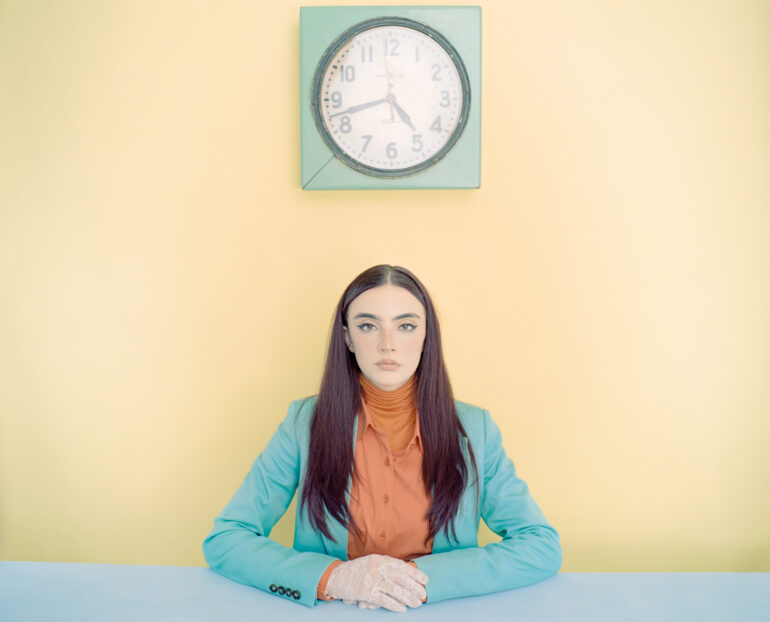
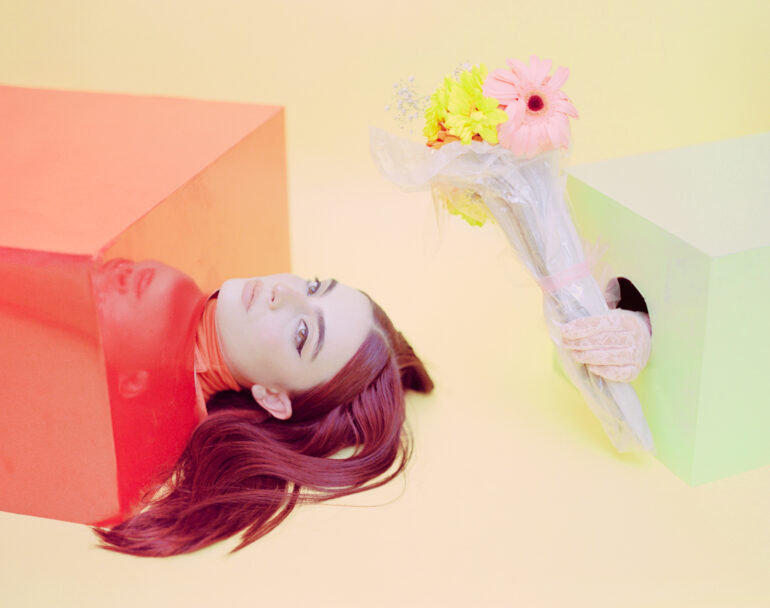
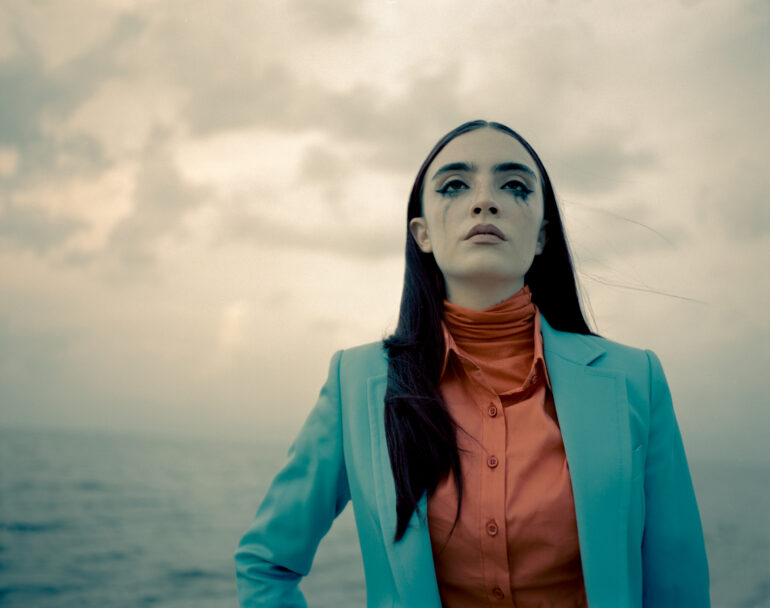
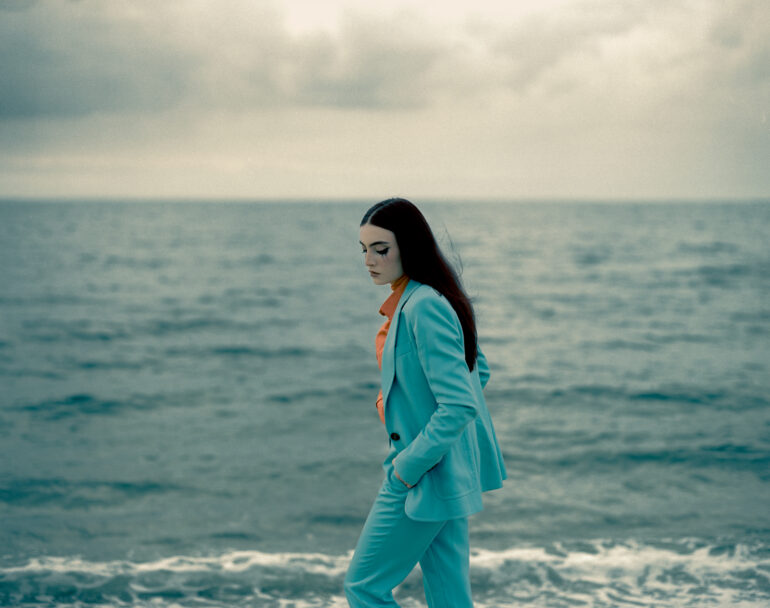
Photographer Mauro Lepe grew up in Chile, where skateboarding was a major part of his life. He was always surrounded by skateboard magazine photographers setting up flashes and shooting the skaters. “…we were just a bunch of crazy kids living in a one-bedroom apartment living off beer and ramen noodles,” he tells the Phoblographer. “I guess I felt we didn’t seem important enough to be shot with such professionalism, but those photographers made you feel important no matter who you were, and that really stuck with me. Unfortunately, being able to afford a camera was out of the question, but I promised myself that one day I’d pick one up.” That’s how he got into film photography.

All images by Mauro Lepe. Used with permission. Be sure to check him out on Instagram.

Mauro adores the Pentax 67 and uses it for lots of his work. He used to shoot 35mm, but to him, the 67 was a game-changer. Additionally, Mauro builds his own props for the set with woodworking tools.

Looking at Mauro’s work, you see inspiration from cinema and pastel palettes. But more importantly, you see very meticulously crafted images

“I tend to base my photos on past experiences: mistakes, regrets, failures, and even trauma,” he tells us. “I guess these things affect people in a variety of ways. Some people find it really easy to move on, and for most, these have a lasting impact.” These days, Mauro tries to recreate scenes from his past and present in a fictional linear narrative. To him, it’s a way to take control of the thoughts that go through his head. In this way, he can move on and let go.

“It’s very therapeutic if that makes any sense.”

Mauro Lepe

His photos are all done on film — which lends itself to the authenticity we don’t see much these days in digital. He’s inspired by abstract painters like O’Keeffe and Joan Mitchell.

Planning the shoots out is a hugely important thing for Mauro. He doesn’t like leaving things to chance. Because of this, he’ll plan a shoot a few weeks ahead because he wants to be fully in control. He even does this for the set, the clothing, etc. “The model is also key since she’s in charge of transmitting the emotion of what’s taking place, no matter how weird the set might be,” he tells us.” All this is part of Mauro’s healing process. To that end, he thinks that photographers who use AI are totally fine.

“There shouldn’t be rules to this. we all should be able to express ourselves in any way we see fit.”

The Rise of ‘Vacation Photographers’

The Rise of ‘Vacation Photographers’

vacation photographer

Holidaymakers are hiring professional “vacation photographers” to document travels with their families abroad.

In a 2018 study, more than 40% of millennials said they prioritized “Instagrambility” and the picture-worthiness of a particular destination when they chose their next holiday.

And five years later, it appears that holidaymakers are willing to pay for professional photographers to travel with them and shoot their vacations.

According to a recent report in The Daily Mail, companies such as Flytographer recognize this demand and specialize in connecting travelers with photographers in their holiday destinations in over 350 destinations.

“We’ve had tens of thousands of people use our services to hire a photographer around the world, including solo travelers, couples, and more than 20,000 moms,” Nicole Smith, who founded Flytographer a decade ago, tells The Daily Mail.

“It’s so important for moms to get into the photo instead of always being the invisible one documenting the moment.”

Tired of Not Appearing in Family Photos

The Daily Mail spoke with multiple mothers who hire vacation photographers for their family holidays. Some of these mothers explained that while paying for a vacation photographer may seem like a luxury, it is a small price to pay for capturing memories of a holiday — especially when it can often be challenging to get a portrait of the entire family.

Several interviewees including Hannah McClune, who is a mother as well as a professional photographer herself, tell the publication how they had become frustrated with taking the majority of the pictures of their families on holiday. As a result, many of the mothers interviewed found they did not feature in the holiday pictures with the rest of their families.

McClune says she paid $881 (£700) for a photographer for a half-day shoot with her husband and her sons, aged 12 and nine, in the Dominican Republic a few years ago. She noted that the images were some of the first photos that she managed to capture of her and her husband together since their wedding day in 2009.

McClune says she often sources her vacation photographer on Instagram ahead of a family holiday. She recently paid $377 (£300) for a shooter for a vacation photographer for her family in Kerala, India.

‘Clients Can Be Fully Immersed in The Holiday, Rather Than Photos’

Photographer Juliet Lemon specializes in wedding, corporate, and wildlife photography. However, The Daily Mail reports that since 2013, families have also been hiring her to travel with them to document their holidays.

Lemon reportedly charges upwards of around $2,518 (£2,000) a day to shoot on vacation. The photographer says she recently spent eight days in Finland with one family, taking pictures of their adventures in the Arctic Circle. She has also been to Palma, South America, and on multiple safaris for clients.

“The clients who flew me to Finland wanted to be fully immersed in the holiday, not fretting about taking photos,” Lemon tells the publication.

“Having me there meant they could enjoy those magical moments of husky sledding, feeding reindeer, ice fishing, or watching the Northern Lights, while I discreetly snapped away.

For Lemon’s clients, there’s a big difference between taking holiday pictures away on an iPhone and having an experienced photographer, who understands lighting techniques and has everything from underwater equipment to drones and long lenses.


Image credits: Header photo licensed via Depositphotos.

Sofia Coppola’s “Archive” features rare photographs of Kirsten Dunst, Emma Watson and Elle Fanning

Sofia Coppola’s “Archive” features rare photographs of Kirsten Dunst, Emma Watson and Elle Fanning


CNN
 — 

With the deaths of the five blonde Lisbon sisters, the 1998 adaptation of Jeffrey Eugenides’ novel “The Virgin Suicides” from filmmaker Sofia Coppola told a tragic tale through gauzy, sunlit suburban scenes. Her characters in the movie, and her subsequent works including “Lost in Translation,” “Somewhere,” and the soon-to-be-released “Priscilla,” about Priscilla Presley’s relationship with Elvis, are marked by their sense of yearning; no matter the era or geography, her protagonists are adrift, searching for connection and meaning.

Now Coppola is releasing “Archive,” an anthology of rare behind-the-scenes images and ephemera collected during the making of her movies. Filled with sketches, letters, magazine clippings and diaristic polaroids of her muses, including Kirsten Dunst and Elle Fanning, “Archive” fits neatly in Coppola’s nostalgic coming-of-age narratives and adds another romanticized dimension to her output.

Coppola’s groundbreaking deep dives into the psyches of young women have each taken their place in their zeitgeist, even when they haven’t been box-office hits. (“Marie Antoinette,” her exuberant take on the ill-fated teenage monarch, received mixed reviews in 2006 and offended the French, but its cult status has made a generation of period pieces far less stuffy.)

As she pointed out in a published interview in “Archive,” very few moviegoers saw “The Virgin Suicides” during its original US release, despite its popularity at Cannes. “The studio was nervous about a film about girls who are going to kill themselves. So it barely came out, and no one here saw it,” Coppola said. “Since then, a whole new generation of girls has discovered it, which makes me happy.”

As Coppola’s directorial debut turns 25, and the biodrama “Priscilla,” starring Cailee Spaeny and Jacob Elordi, premieres in Venice this month, the monumental tome is a time capsule of her career so far. In “Archive,” Coppola reflects on the threads woven through her films, including her latest, which is based on Presley’s 1980s autobiography, “Elvis and Me,” and focuses on how she navigated her teenage years after meeting the superstar.

Below, take a peek inside of “Archive,” which publishes this month by MACK, for a look at some previously-unseen insight into Coppola’s films.

Vaune Trachtman and Rachel Portesi to display photography at Michael S. Currier Center

Vaune Trachtman and Rachel Portesi to display photography at Michael S. Currier Center
image

PUTNEY — Acclaimed alternative-process photographers Vaune Trachtman and Rachel Portesi will exhibit their work from Sept. 8 to Oct. 29 at the Michael S. Currier Center at 418 Houghton Brook Road in Putney. An opening reception is scheduled from 4:30 to 6:30 on Friday, Sept. 22.

Trachtman and Portesi are Vermont-based artists who each use photographic processes that meld historical and contemporary technologies. Trachtman’s photogravures bring together cellphone imagery and archival negatives, while Portesi’s work ranges from tintypes to Polaroids and includes film, 3D imagery, and sculpture. Thematic similarities in their work include the impact of family, the passage of time, and photography’s unrelenting gaze.

Both artists have received Creation Grants from the Vermont Arts Council and the National Endowment for the Arts. They will also be available for a meet-and-greet from 2:30 to 3:30 p.m. on Oct. 8 at Putney School’s annual Harvest Festival.

In the last 12 months, Trachtman has been a Photolucida Critical Mass Top 50 honoree, the People’s Choice Award Winner in Klompching Gallery’s Fresh Annual, a winner in Soho Photo’s International Alternative Processes Competition and the Julia Margaret Cameron Awards, and the recipient of the Olcott Family Award in The Print Center’s International Competition. Her series “Now Is Always” was named a Top Portfolio by Rfotofolio and an Outstanding Work by the Denis Roussel Awards, and her series “Roaming” was shortlisted for the International Hariban Prize. Both series will be on display at the Currier Center. She is a graduate of The Putney School and lives in Brattleboro.

Portesi’s work in tintypes, Polaroids, film, and 3D imagery explores the nuanced transitions in female identity related to motherhood, aging, and choice. Her work has been exhibited throughout New England, most recently at The Griffin Museum of Photography (MA), The Newport Art Museum (RI), and in New York at Freight+Volume Gallery. Portesi’s work has been featured in Vogue, Forbes, the Boston Globe, ArtNews, Musée, and many other journals. In 2022 Analog Forever magazine named her as one of the year’s top 40 analog photographers. She is featured in the new publication, “Counterculture in Contemporary Photography” alongside Putney’s own Sally Mann. In the spring of 2024 Portesi will debut a new work commissioned by the Wadsworth Atheneum in Hartford, Conn. Portesi lives in Saxtons River.