Freelance photographer charged with traveling to meet child for sex


Moving house is no mean feat when you live in a home of this size.
A fascinating documentary called Jay Myself sheds light on famed American photographer Jay Maisel, now 92, and the extraordinary work that went on behind the scenes when he left his iconic home in New York City with his wife, Linda, in 2015.
The artist’s home of 48 years – which was located at 190 Bowery and was sold to private developers for $55 million – spanned 36,000sqft and featured 72 rooms over six stories, with some boasting 18ft high ceilings.
But as Jay Myself shows, the spaces were stacked with a menagerie of curiosities which Maisel had collected over the years – from a room packed with table legs to another featuring drawers full of artfully arranged batteries.
Given the extent of his collection, the move took a total of three months with his staff and family members working around the clock.


In one scene, Maisel explains to viewers that there was a time that he was concerned he was developing Alzheimer’s as he couldn’t remember where certain things were located in his rambling home.
In response, one of his doctors asked how many drawers he had.
When he couldn’t recall the exact amount, he went home and counted all of the drawers he had installed to store his knickknacks and the total came to 4,800.
It was then he realized it was quite normal not being able to recount where something was with so many possibilities.
Rewinding to the start, Maisel said he came across the towering building when he was looking to move out of a place he had on 2nd Avenue in downtown Manhattan.
He said his previous home was somewhat of a fire hazard as it was built out of wood and he always feared it might burn down while he was away.
When he first viewed 190 Bowery, he feared he wouldn’t be able to afford it with a price tag of $102,000, but the real estate agent convinced him it would be the right move.
The down payment on the building was $25,000 and coincidentally Maisel had just landed a photography assignment which paid exactly that amount and he moved in on March 17, 1966.
The New Yorker went on to turn the building into a home, gallery and storage space, and it was where his daughter, Amanda, was raised.
Maisel’s wife Linda reveals in the film that she was worried at first about bringing a child into such a chaotic environment with razors and other objects casually laying around, but 190 Bowery appeared to serve more of an adventure playground for children and adults alike.


Stephen Wilkes, who directed Jay Myself after serving as one of his protegees, explains when he first walked through the door of 190 Bowery it ‘overwhelmed’ his senses.
Maisel’s other admirers also express their amazement over the space he had, remembering everything from playing basketball in one of the main spaces and attending his wedding there.
Vintage photos showcased in the documentary show Maisel at home at 190 Bowery, with the spaces looking much the same, just with less clutter.
Before being converted into a livable space, 190 Bowery – which was built in 1898 – served as the third home of the now-defunct Germania Bank and it still has many throwbacks to its banking days.
The original vault, said to be the size of studio apartment, is still in the basement, the original copper cage elevator is still intact, and it is still possible to make out where the bank teller stations were positioned on the main floor.
Explaining what lured him to the building, Maisel says: ‘I wanted a place that I would have roots and this was this building.
‘The unfortunate thing is that I collected like I was going to live here forever and I have stuff that I should never have saved and now I gotta leave it… I had always planned to die here.’
In Jay Myself, the calendar counts down as Maisel’s moving day draws closer.
Reminiscing about his long-term property, the photographer muses at one point: ‘I’ve been so spoiled, I’ve had this place almost 50 years. I’ve always had enough room to do anything I’ve wanted to do.’


It takes Maisel’s movers an entire week just to empty the vault, with drawers lining the walls from floor to ceiling.
They then go about packing up the rest of the building floor by floor under Maisel’s direction.
Maisel’s daughter Amanda, who comes back towards the end of the move, says that she thinks it is ‘exciting for him in some ways… like a new adventure.’
However, she adds: ‘I also think he cannot deal with the fact that he might not get around to all the things that he wants to do with all the stuff that he’s collected over the years.’
Meanwhile, wife Linda says she is feeling ‘overwhelmed’ and she is ‘trying to figure out how I can con Jay into leaving certain things.’
Finally, after 35 trucks have carted away his possessions, Maisel exits the building and hands over the keys.
He and his wife moved into a 10,000sqft former carriage house in Brooklyn and the vast bulk of the belongings from 190 Bowery were moved to an industrial storage facility.
Looking back at his love affair with one of Manhattan’s most mysterious properties, Maisel concludes: ‘If I had to do it all over again, I would have bought two buildings instead of one.’
Since Maisel’s departure, 190 Bowery has been converted into offices and a retail space.


A new exhibition featuring photographs from Jean Howard, a Hollywood icon whose lens captured the essence of the golden era of cinema, is now on display through Sept. 30 at the University of Wyoming American Heritage Center (AHC).
The exhibition, titled “Jean Howard’s Hollywood: The excitement, the glamour and the good times,” highlights a selection of her exceptional photography, and it offers a captivating glimpse into the glamour and allure of Hollywood’s golden age, according to a news release.

As photographers, our unique life experiences have a profound impact on our artistic expression and photographic style. Each of us carries a personal narrative that is woven into the fabric of our work. Exploring personal stories is a powerful and rewarding journey that not only helps us understand ourselves better but also adds depth and authenticity to our photography. Let’s delve into the significance of personal experiences in shaping your photographic style and how you can use storytelling to infuse your work with emotional resonance.
Our life experiences, memories, and emotions are an essential part of who we are as individuals and artists. Embrace your life story and allow it to influence your photography. Consider your upbringing, cultural background, travel experiences, relationships and pivotal moments in your life. Reflect on how these experiences have shaped your values, beliefs, and perspectives.
As you explore your personal story, you will discover recurring themes and emotions that resonate with you. Use this self-awareness to infuse your photography with authentic and meaningful content that is uniquely yours.

Photography can be a powerful medium for self-expression and storytelling. As you explore your personal stories, use photography as a tool to express your emotions, thoughts and reflections. Think of your camera as a journal, capturing moments that evoke feelings and memories that are significant to you.
Through your photography, you can create visual narratives that offer glimpses into your life experiences, allowing viewers to connect with your work on a deeper, emotional level.
As you draw inspiration from your personal experiences, seek out subjects that hold personal significance. Whether it’s portraits of loved ones, landscapes that evoke cherished memories, or abstract images that represent your emotions, photograph subjects that speak to your heart.
By photographing meaningful subjects, you infuse your work with authenticity and a genuine connection to your own story. This connection will shine through in your images and resonate with viewers who can sense the depth and sincerity in your work.

Emotions play a vital role in storytelling and photography. Use your camera to capture emotions and moments of reflection that are significant to your personal journey. These could be moments of joy, grief, love, solitude, or any emotion that holds meaning for you.
Photographing emotions allows you to connect with your audience on a human level, fostering a deeper understanding of your experiences and creating an emotional bond through your art.
Visual storytelling is a powerful technique to communicate your personal stories through photography. Experiment with sequencing images to create photo essays or series that tell a compelling narrative. Use captions or accompanying texts to provide context and insights into the stories behind your images.
Visual storytelling not only engages your viewers but also allows you to explore complex themes and emotions in a cohesive and impactful way.

Exploring personal stories through photography requires vulnerability and a willingness to share your authentic self with your audience. Embrace vulnerability as a strength, as it allows you to create genuine connections with your viewers. When you share your personal stories, you open the door for others to relate to your experiences and find their own connections within your work.
Your personal stories are also an invaluable source of inspiration that shapes your photographic style and artistic expression. Embrace your life experiences, find meaningful subjects, capture emotions, and experiment with visual storytelling to infuse your photography with authenticity and emotional resonance. Use photography as a tool for self-expression and embrace vulnerability as a strength in sharing your personal stories with your audience.
Remember, your unique journey as an individual is what sets your photography apart and makes it truly yours. Let your personal stories also guide you in creating art that is not only visually compelling but also deeply meaningful to both you and your viewers. Happy exploring and storytelling through photography!
Happy exploring and creating!

It is, in many ways, a time portal.
 PREMIUM
 Step into Studio Goppo in Santiniketan, West Bengal, and one could well be back in the 1850s. The cameras are wooden, perched on wood-and-brass tripods. Images are captured on glass plates coated in chemicals.
There are few studios in the world that still use these techniques. Referred to as historical photography, it is a medium that harks back to an era before film.
Each image is cumbersome and laborious to produce. But it does what smartphones and Instagram simply cannot: it allows the photographer to create something unique. And because of all the labour and craft involved, each image holds within it the story of how it was made. This is where the studio gets its name (Goppo is Bengali for Tale).
This promise, of a one-of-a-kind image crafted by hand, is what draws photographers to this space, which holds small workshops two or three times a year, to spread its philosophy on the medium.
Now in its tenth year, Studio Goppo is also sending little ripples out into the world, in the form of new kinds of photo art being produced by former students, and bought and sold at exhibition. And more studios dedicated to historical photography.
Swapan Nayak, for instance, first signed up with Studio Goppo in 2015, disillusioned with his work as a photojournalist. “I wanted to do more, in a world where just the ability to take a good picture no longer stood out,” he says. “I was also looking for a medium in which I could express myself better.”
He was considering moving to Italy to study historical photography, when he came upon this 800-sq-ft space, in searches online. Each workshop involved working with new materials and devices. Sessions were conducted by founders Arpan Mukherjee and Shreya Mukherjee, professors of graphic art and art history respectively; and photo artist Manoj Biswas. “I was so happy when I found them,” says Nayak, 58.
The core of the Goppo philosophy is an unusual one, in a time of social media: A photograph ought to have meaning and purpose, says Arpan Mukherjee, 46.
Part of that meaning comes from understanding what goes into it and how it is made, he adds. This is why Mukherjee teaches about chemicals, plates and exposure. Workshop sessions also explore the liminal spaces between imagination and image; different materials and definitions for image-making.
Mukherjee, a professor of graphic art at Visva Bharati, the university at Santiniketan, began his journey with historical photography in 2003, when he started tinkering with old film cameras, and making his own. His partner Shreya Mukherjee, 43, a visiting professor of art history at Burdwan University’s College of Art and Design, was then researching the history of pre-digital photography in India.
Eventually, they decided to share their ideas around the medium. Rather than an exhibition, they decided to take the workshops route. Goppo remains a small operation, by design; one that seeks only to sustains itself, they say. Former students return for refresher courses, or to learn a different technique, and this helps.
Nayak has attended two workshops so far, one each on gum printing and albumen printing. Some of his work was shown in an exhibition in Kolkata in 2022, and four pieces sold, for ₹30,000 each. “That has given me the confidence to dedicate myself to alternative photography full-time,” he says.
Other former students have opened their own alternative-photography studios, such as Kanike in Bengaluru, co-founded by Vivek Muthuramalingam, and Maze Collective in Delhi, founded by Ashish Sahoo.
“This gives me great satisfaction,” Mukherjee says. “We always wanted more studios like ours in this part of the world, to spread a different philosophy of photography.”


Sistagraphy was formed in 1993 when Sheila Turner, an Atlanta-based documentary photographer, created a platform for Black women photographers to exhibit and share their stories. Turner sent invitations to nine other photographers she knew personally, and the first exhibition occurred. The next year the exhibition took place under their new name Sistagraphy coined by the PhotoGriot Sue Ross. This year marks their thirtieth year, and we’re speaking with a few members. Furery Reid, the Executive Director, and Catherine J. Alston, one of the founding members, join us to discuss their 30th Anniversary.
I ask Reid to tell us about the organization, and she speaks about the history of photography being the purview of white men. Women were not known as photographers. Specifically, many Black women photographers were not offered opportunities to exhibit their work beyond their homes. Sheila Turner decided that the work and stories told by Black photographers should be valued and viewed by the world.
Sistagraphy changed the perception of Black women photographers with annual exhibitions held throughout metro Atlanta. While based in Atlanta, the organization has members throughout the United States, and a few live internationally. Louisa McCullough, formerly of Atlanta, hopes to gather an active cohort in Northern California.
On Friday, July 28th, Sistagraphy members will honor their founder with music, art, poetry, and more. The community is invited to join the celebration from 6PM – 8PM.
For more information on Sistagraphy, you can follow them on social media platforms.

6 weeks old Audrey is taking the internet by storm with her Barbie-themed photo shoot. Like many others, we thought she was a doll until she opened her eyes. Barbies don’t come realer than this and this black barbie literally served. Swaddled in pink paired with a cute rosette hair band, brown skinned Audrey looked very stunning with her curly black hair and gold studs.
In the sweetest way, she slowly opened her eyes to reveal her gorgeous black pupils as if she had went through some top modelling classes, she’s such a natural. Prepare to swoon while watching this BTS video from her session with the amazing Sugar Moments Photography in Lekki Lagos. Hit the ▶ button below to watch:
Check out the resulting photos below:
Credit: @sugarmomentsphotography

A new photograph of Prince George has been released ahead of his 10th birthday on Saturday, the Kensington Palace announced Friday.
“The Prince and Princess of Wales are pleased to share a new photograph of Prince George ahead of his tenth birthday tomorrow,” reads a statement from Kensington Palace.
The photograph of smiling Prince George was taken in Windsor earlier this month by Millie Pilkington, according to the statement.
George’s mother, Kate Middleton, has often photographed her children for past birthdays.

Raheleh Mohammad, Curator’s Choice
(JERSEY CITY, NJ) — Pro Arts Jersey City will host PH21 Photography Gallery, Budapest Hungary at ART150 Gallery: The natural and the artificial, a curated international photography exhibition from August 5-27, 2023. The exhibit was curated by Zsolt Bátori, PhD & Borbála Jász, PhD of PH21 Photography Gallery.
There will be an Opening Reception on Saturday, August 5th from noon to 3:00pm at ART150 Gallery.
Curators’ Statement, “The natural and the artificial are diametrically opposed concepts that evoke contrasting ideas such as organic versus geometric, spontaneous versus designed, instinctive versus deliberate, wild versus tamed, and more. However, there exists a continuum between these opposing forces. The interplay, cross-border interactions, struggles, and coexistences of the two at these junctures provide unique experiences to explore, especially in the visual realm.”

Suzanne Gonsalez-Smith, Honorable Mention
“Throughout the history of the medium, photographers have been drawn to the creative possibilities of capturing, interpreting, and presenting the natural, the artificial, and their many intertwined forms. Images of these subjects are among the most captivating ways of elucidating our intricate and often conflicting relationship with our environment. By exploring and depicting the natural and the artificial in all their varied forms, photographers can offer insight into the complexities of the world we inhabit.”
Exhibiting artists represent seven countries, including 11 states across the US: Marea Atkinson (So Australia, Australia), Susan Borowitz (NY, USA), Lindsay Brice (NYC, USA), Eva Brunner (Berlin, Germany), Robert Cadena (NJ, USA), Suzette Dushi (NYC, USA), Laurie Toby Edison (CA,USA), Szabina Farkas B. (Pécs, Hungary), Sari Fried-Fiori (TX,USA), Mindy Gluck (NJ, USA), Suzanne Gonsalez-Smith (ND, USA), Stephanie Guillen (NJ, USA), Erin Hillery (MO, USA), Terry Irwin (PA, USA), Gary Justis (Il, USA), Allison Lake (CA, USA), Simone Madeo (Alexandria, Italy), Jose Ney Mila (FL, USA), Raheleh Mohammad (OH, USA) Robert Morrissey (OR, USA) Fern L. Nesson (MA, USA), Nancy Oliveri (NYC, USA), Karen Safer (CA, USA), Joel Simpson (NJ, USA), Dina Sirat (Netanya, Israel), Lev L. Spiro (CA, USA), Eszter Varga (Kecel, Hungary) Ingrid-Nathalie Wizun (Montreuil, France), Georg Worecki (Daleiden, Germany)

Two Honorable Mentions: (LEFT) Simone Madeo (RIGHT) Fern L. Nesson

Art150 Gallery is located at 157A First Street in Jersey City, New Jersey. The gallery is open weekends in August (Saturdays and Sundays from 1:00pm to 4:00pm) and by appointment. The gallery is wheelchair accessible.
Pro Arts Jersey City is a non-profit 501 (c)(3) professional visual arts membership organization dedicated to supporting and promoting artists and their work.
ART150 Gallery is made possible by the generous donation of GFP Real Estate. Our programming is made possible in part by funds from the New Jersey State Council on the Arts/Department of the State, a partner agency for the National Endowment for the Arts and by Funds from the National Endowment for the arts, administered by the Hudson County Office of Cultural & Heritage Affairs, Thomas A. DeGise, County Executive, and the Board of Chosen Freeholders. Other support includes funding from the Jersey City Arts and Culture Trust Fund, and the funding from the National Endowment for the Arts administered through the Jersey City Arts Council.

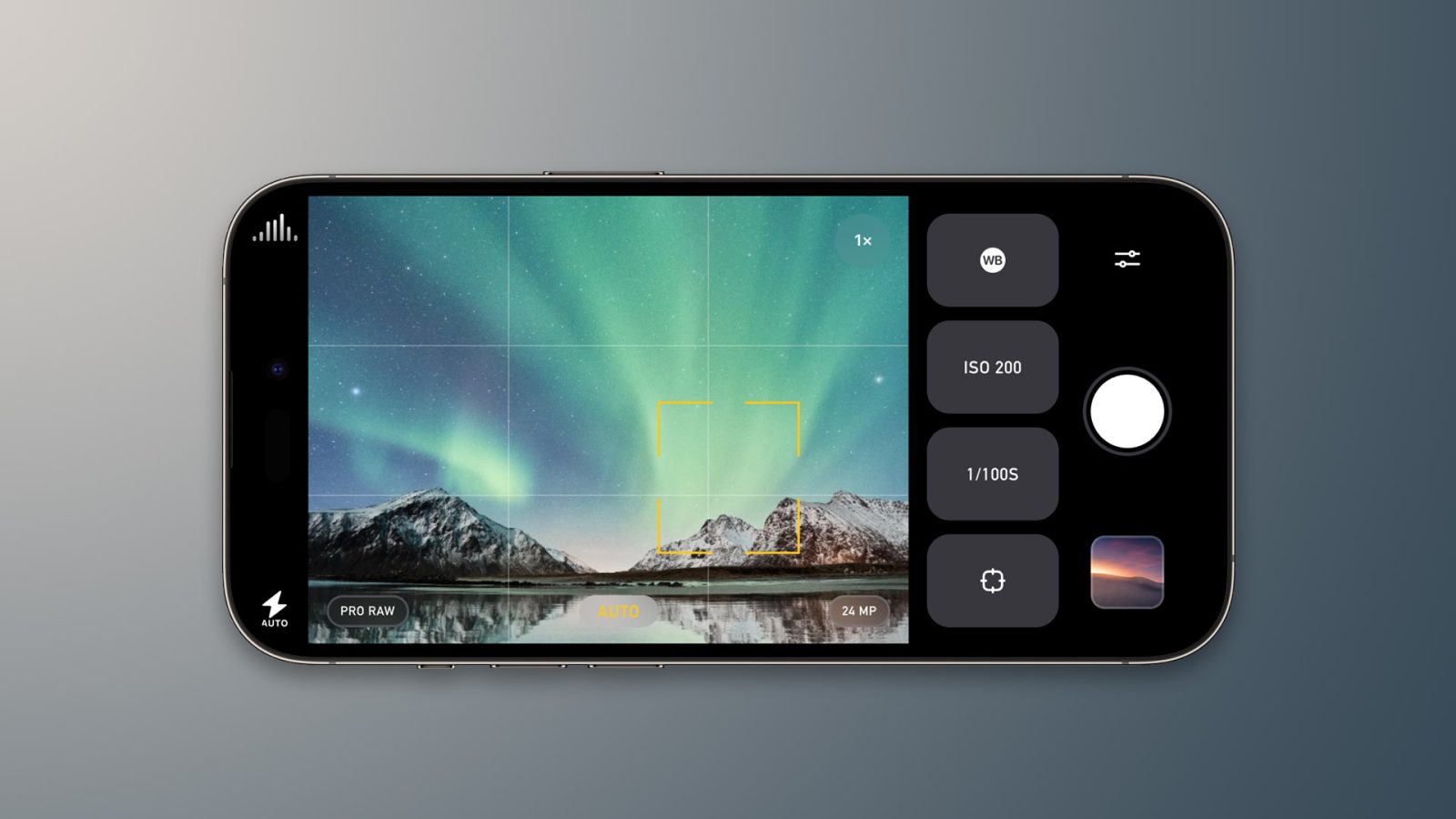
If you’re a longtime iPhone user and love photography, you might remember Camera+. The app was one of the most popular iPhone tools for taking photos with manual controls. Now LateNiteSoft, the company that created Camera+, is back with a new app called Photon – which is also a tool for pro photography.
As described by the developers, Photon provides “all the control you need to create powerful professional photos.” Just like existing alternatives such as Halide and even Camera+ (which remains available on the App Store), Photon has multiple options for manually adjusting and controlling the iPhone camera before taking photos.
Users can precisely adjust focus, exposure (with shutter speed and ISO settings), and white balance. To make your photos perfect, Photon offers advanced tools like Focus Peaking, which highlights exactly where the lens is focusing. The app also supports different photo formats such as HEIF, JPEG, ProRAW, and RAW.
For those with iPhone 14 Pro and iPhone 14 Pro Max, the app lets users easily choose between 12-megapixel and 48-megapixel photos when using the main wide lens. Another interesting feature in the app is Session Preview. With this feature, users can review each photo they shot at that moment to quickly delete the ones that didn’t look good or share the best ones.
Noël Rosenthal, LateNiteSoft’s Product Manager, told TechCrunch that Photon combines over 10 years of experience in the photography business into a completely new experience. “We took the time to rethink every aspect of the shooting experience, considering all of the feedback we’ve received and the impacts of all of our choices in the past,” he said.
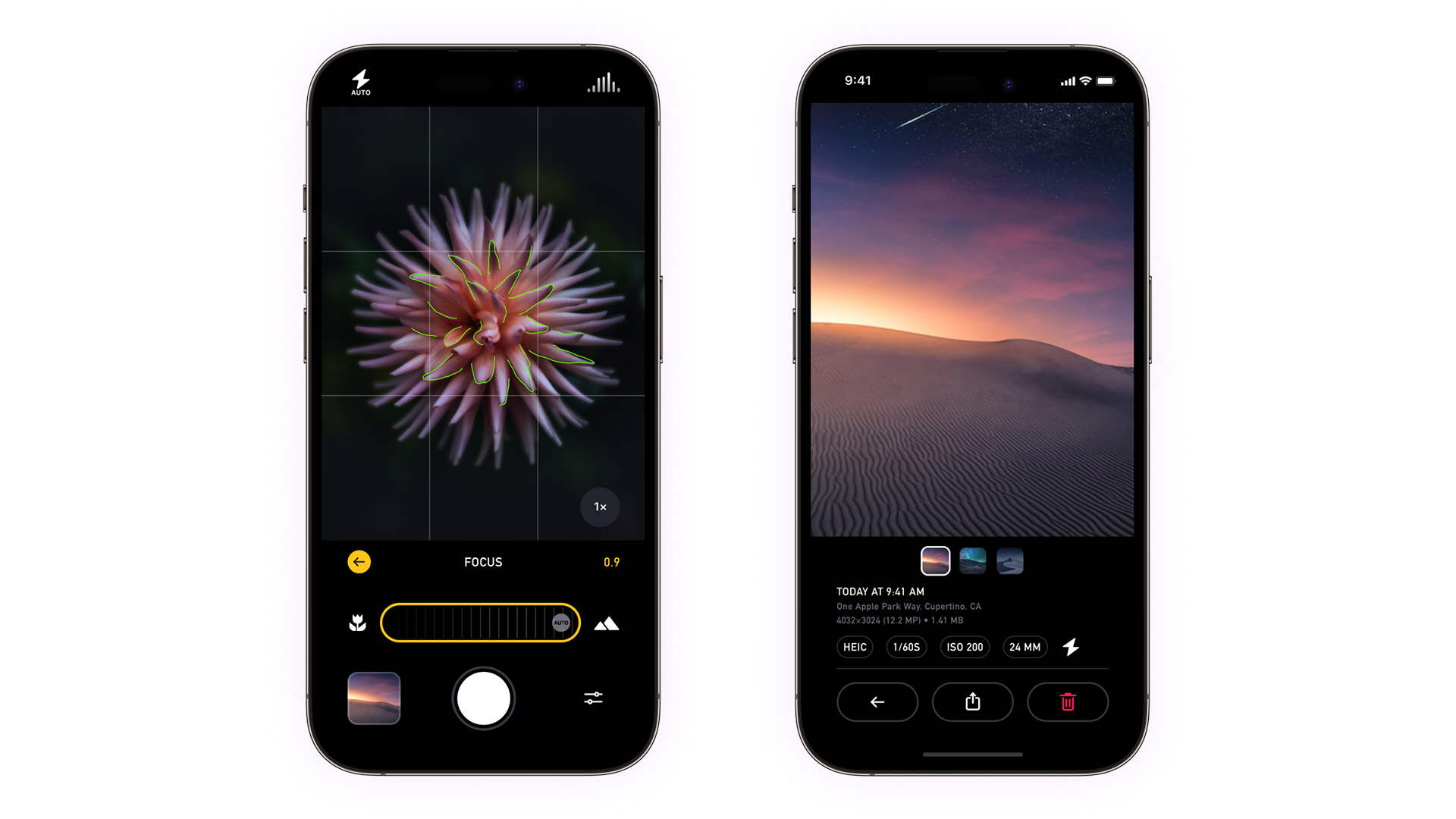
Photon is now available on the App Store, and it requires an iPhone running iOS 16 or later. While you can download it for free, the manual controls are only available under a $3.99 monthly subscription or $19.99 annual subscription. If you prefer, you can purchase a lifetime license for $39.99.
FTC: We use income earning auto affiliate links. More.