Photography

Lower Marsh: do you have photos from the 50s, 60s or 70s?

Lower Marsh: do you have photos from the 50s, 60s or 70s?

The organisers of a community photography project are keen to hear from anyone with photos or memories of Lower Marsh and The Cut in the 1950s, 1960s or 1970s.

Lower Marsh: do you have photos from the 50s, 60s or 70s?

Or are you a Ukrainian – recently located to the area? Do you have memories of the 1960s in Ukraine? Do you have any photos with you? 

Pedalling Arts are producing a major community photography project around the Waterloo area; a reflection and celebration of the local cultural heritage. 

The are looking for historic photographs of the area as well as memories form the 1950s, 1960s or 1970s to be a part of a retrospective. These will reflect working life, especially representing Lower Marsh Market in parallel to market scenes in Ukraine from the same time. 

The collection of photographs will be displayed in the shop windows down Lower Marsh and the surrounding area with a digital audio guide accompaniment.

Find out more about the project and register your interest.

Portrait of Humanity: moving photos of beauty and resilience

Portrait of Humanity: moving photos of beauty and resilience

A competition that captures the resilience, beauty and diversity of humanity has revealed its shortlist

Taken in conflict zones, on football pitches and in an Afghan skatepark, the shortlist for this year’s Portrait of Humanity award celebrates resilience.

Capturing a full gamut of human emotions – from joy to grief, connection to isolation – its latest shortlist attempts to understand cultures, communities and people all over the world at a time of tumult.

“Over the past year, headlines have been dominated by tragedy and absurdity; streams of images – of war, protests and brutality – relentlessly flooding our screens,” said the British Journal of Photography, announcing the latest shortlist.

Support journalism that inspires and empowers people
Good journalism has a cost. As an independent media organisation, to publish our inspiring journalism we rely on financial contributions from people like you, who share our vision for a more constructive and balanced media.
Support Positive News from just £1

“Today, we reveal the 200 shortlisted images of Portrait of Humanity, an award that seeks to celebrate what unites us as individuals during times of division. Portrait of Humanity is a call for unity, but it is also an urgent reminder of the shared fight against humanity’s biggest challenges: to protect the environment, choice over our own bodies, and the right to be and love whomever we want.”

The shortlisted images, including those below, have been brought together in a book – The Portrait of Humanity Vol. 6 – which is published by Bluecoat Press and available for pre-order now.

A woman revolutionises Londons football scene

Photograph by Sam Riley

Aged eight, Iqra Ismail, a British-born Somali, found a space for girls like her in football. At 19 she became the youngest to win a Black List award, which celebrates black excellence in English football. Now 22, she’s established as a player, coach and club director. A campaigner and advocate for inclusion in the sport, Iqra runs Hilltop FC in London, which welcomes players from underrepresented groups including Muslim women.

Image: Portrait of Humanity vol. 6 © Sam Riley 

A bereaved mother finds forgiveness

Photograph by Wouter le Duc

Diane Foley is the mother of journalist James Foley, who was publicly executed by Isis in 2014. Her book American Mother is about meeting one of her son’s killers, forgiveness, and the failure of the US government to free hostages. Photographer Wouter le Duc was deeply moved by her story. “As we said goodbye, she shook my hand and told me, ‘God bless you’,” he said. “I am not a religious person, but I felt the warmth she radiated.”

Image: Portrait of Humanity vol. 6 © Wouter le Duc

Grateful to be here

Photograph by Aneesa Dawoojee

Born in the early 1940s, Eglon came to England from Jamaica in 1958 and initially worked in a food factory in Vauxhall, London. Life was not always easy for the UK’s ‘Windrush generation’. “It’s difficult for some of us to get along in this country,” he says. “But this country is blessed in many ways, when you see suffering over the world, it makes you think how fortunate some of us are to be here.”

Image: Portrait of Humanity vol. 6 © Aneesa Dawoojee

Breakfast in a war zone

Photograph by Anya Tsaruk

Ukrainian photographer Anya Tsaruk returned home during the war to document her family and friends’ everyday lives during Ukraine’s fight for freedom and independence. Her work examines the complexity of contemporary life in Ukraine and its people. “It offers an alternative view to the simplified and victimised image of Ukrainians often produced by and unquestionably accepted in the west,” she says.

Image: Portrait of Humanity vol. 6 © Anya Tsaruk

Dancing to keep a cultural heritage alive

Photograph by Alex Kurunis

These three women are members of the London-based folkloric troupe, Fraternidad 100% Salay Filial Londres. They specialise in Salay, a form of folkloric dance originating from Cochabamba, Bolivia. The playful dance mimics farmers harvesting and sowing seeds. There are some 370 Salay dance groups worldwide. In 2019, it was declared a protected form of cultural heritage in Bolivia.

Image: Portrait of Humanity vol. 6 © Alex Kurunis

We are all connected

Photograph by Niamh Barry

Niamh Barry photographed this group of people who belong, like Barry, to Dublin’s queer community. It soon transpired that most were connected somehow. “I realised that us queers are bound to almost every queer in Ireland. The queer community is only a fraction of the global population, leading to interlocking pathways generating chains of mutual association that spread out, like a telephone wire, to connect us all.”

Image: Portrait of Humanity vol. 6 © Niamh Barry

Taking back her right to learn

Photograph by Juliette Cassidy 

This photograph was taken at a school in Mazar-e-Sharif, Afghanistan, as part of a series documenting the Skateistan project. Skateistan is a nonprofit that uses skateboarding and education to empower children. More than 2,500 children, aged 5–17, attend Skateistan’s programmes in Afghanistan, Cambodia and South Africa. Half of those taking part are girls, who have faced significant barriers to education since the Taliban took control of Afghanistan.

Image: Portrait of Humanity vol. 6 © Juliette Cassidy

Main image: Anya Tsaruk, Portrait of Humanity

Support solutions in 2024

Positive News is helping more people than ever to get a balanced and uplifting view of the world. While doom and gloom dominates other news outlets, our solutions journalism exists to support your wellbeing and empower you to make a difference towards a better future.

But our reporting has a cost and, as an independent, not-for-profit media organisation, we rely on the financial backing of our readers. If you value what we do and can afford to, please get behind our team with a regular or one-off contribution.

Give once from just £1, or join 1,400+ others who contribute an average of £3 or more per month. You’ll be directly funding the production and sharing of our stories – helping our solutions journalism to benefit many more people.

Join our community today, and together, we’ll change the news for good.

Support Positive News

The Most Visually Arresting Images From PHotoESPAÑA

The Most Visually Arresting Images From PHotoESPAÑA

June 12, 2024

Lead ImageLúa Ribeira: Agony in the GardenCourtesy of the artist, © Lúa Ribeira

With 84 exhibitions and 293 artists, this year’s PHotoESPAÑA extends into all corners of Madrid: there are shows in neo-baroque palaces and repurposed ironworks, in a vertiginous water tower and amid the capital’s lush botanical gardens. With a theme of “perpetual motion”, the festival spans from international names to anonymous discoveries – from a panoramic sample of the late Erwin Olaf’s career in a subterranean centre beneath the fountains of Plaza Colón, to photographer David Trullo’s unearthing of an illicit trove of homemade erotica from the 1930s, taken by a high-society Madrid couple who mysteriously disappeared. There’s a collection of African and Middle Eastern photographers circling themes of exodus and migration; and the convention-defying Consuelo Kanaga, a photographer who died virtually unknown but whose powerful portraits of African-American lives across the US are being newly reappraised. We chose three highlights from the multitude of voices brought together for the next era of PHotoESPAÑA – its first under new director Maria Santoyo.

A recent signing to Magnum’s illustrious cooperative, Lúa Ribeira melts into the communities she captures, including the Jamaican dance hall scene and migrants living in limbo in a Tijuana park, creating spaces where unpredictable encounters can occur. “I am interested in nuns, thieves, and gardens,” she says. “In the rotting body, witchcraft, hotel receptions, and heaven’s gates. Phantoms, funeral directors, and gravity.” She is also fascinated by the ways cultural expression can be liberating, by movements that lie outside of the mainstream, and how power structures work – preoccupations she can trace back to her upbringing in Galicia in northwest Spain, a region whose distinctive traditions were violently suppressed during Franco’s dictatorship.

PHotoESPAÑA showcases her new project, Agony in the Garden, inspired by the emerging trap and drill music scenes in Spain – where numbers of unemployed young people teeter around the second-highest in Europe. Ribeira says she’s intent less on documenting the subculture and its hedonism than reading between the lines, translating its sound and energy into moments that seem to exist outside of time. She sets her subjects in rocky landscapes dotted with illegal landfills, a backdrop that nods to this generation’s late-capitalism inheritance. In that barren place though, Ribeira finds richness in a community sometimes represented as shallow and apolitical. “I think there is something rooted and fearless in the way they articulate the present moment – the financial crisis, the pandemic, the ecological crisis,” she said at the crowded opening of her show, housed in an elegant pink-hued mansion. “This music is a way of connecting as a group of people in this present, extremely precarious moment. People who do not have a lot of money or potential jobs – but they have their phones and that gives them space to communicate, to create, to experiment, while everything that surrounds you is desolate.” Alongside her photographs, Ribeira includes a glimpse into her kaleidoscopic references – the screenshots, film stills, baroque paintings, sketches, religious and mythological imagery she draws on to create work that reaches for a way to dismantle the seemingly rigid structures that separate us.

Agony in the Garden is at Lázaro Galdiano Museum in Madrid, as part of PHotoESPAÑA, until August 25.

Young Haiti-born, LA-based photographer Widline Cadet couldn’t come to the Madrid opening of her exhibition Take this with you; despite living in the US since she was ten, she still doesn’t have a Greencard. It’s an absence that’s also conjured in her work – the early absence of her mother, who left Haiti to work in New York when she was a baby, and today, the absence across the ocean of the homeland to which Cadet can’t return. “It’s a dance between where you’re from and where you’re going,” says Désirée Kroep, the exhibition’s curator, introducing the photographer’s haunting work at the Casa de America, a 19th century palace close to El Retiro park.

Untangling the parts of herself and her history she no longer has access to, Cadet peppers the gallery with memories: framed family photographs on a mantelpiece, footage from the celebratory, Haitian funeral of a grandmother she never met, even her former living room and its floral, plastic-covered sofa and gauzy curtains, recreated in one corner. The result is a dreamlike family archive of her own that is suffused with a deep, yearning ache – but also isn’t quite what it seems. The little glitch of an extra, unaccounted for pair of limbs or the strangers on the street that she reimagines as doppelgangers or siblings all act as a reminder of the slippery nature of memory.

Take this with you is at House of America in Madrid, as part of PHotoESPAÑA, until September 7.

Displayed in a former industrial sawmill, the painterly images of Ukrainian rocket-scientist-turned-photographer Boris Savelev positively glow. Ghostly and melancholic, often taken at dawn or dusk, they “do something magical with light,” says longtime friend and the show’s curator, Adam Lowe. Savelev has been exhibited alongside Nan Goldin in the past, a kinship that’s tangible in the way Savelev trains a deeply empathetic eye on the grimy urban textures he’s drawn to. “So many of these are images that seem to be taken from the gutter, but actually they’re star gazing,” says Lowe. “They’re generous, giving images.”

This is Savelev’s largest retrospective to date, encompassing a six-decade career from Leica to digital, from his hometown of Chernivtsi, to the Soviet Union, and now as a refugee in Vigo, Spain, post the Russian invasion of Ukraine. Together they tell a layered story of social and political convulsion: “When I first met Boris in ‘95, the world was changing and it felt so optimistic,” Lowe says. “The Berlin Wall was down, suddenly there was a flow and a mix, people were communicating and Boris was travelling to Madrid or London or New York. And then in 2014, when Crimea was invaded, something starts to happen with the shadows in his photographs – a feeling of optimism has gone.” But Savelev’s quicksilver instinct for an image remains intact – he doesn’t like his subjects to notice him before the shutter clicks: “When he’s out photographing, it’s like a performance,” says Lowe. “You see him walking along the street and suddenly he’ll feel various things coming together and it’s almost like a dog picking up a scent; his whole body language changes and he’ll be off.”

Viewfinder: A Way of Looking is at El Espacio Cultural Serreria Belga in Madrid, as part of PHotoESPAÑA until July 14.

PHotoESPAÑA is on until September 29.

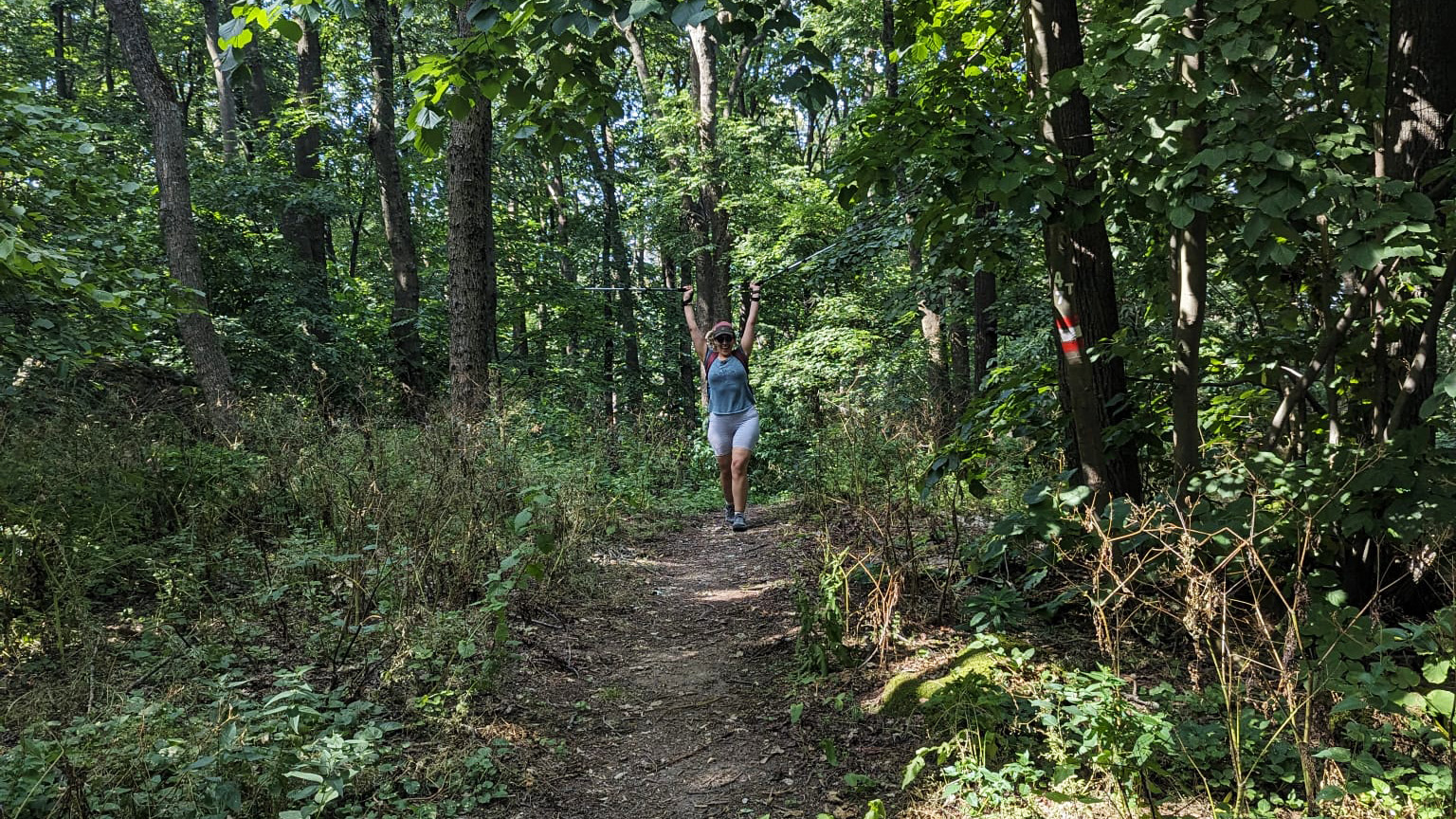
Transform your forest photos with these seven proven techniques

Transform your forest photos with these seven proven techniques
[embedded content]

If you ask me, being in the forest is one of the best ways to spend your time. However, if you also bring your camera, you’ll see how challenging and frustrating it is to take decent photos. Finding a clear composition can be difficult with towering trees, cluttered undergrowth, and ever-changing light. In his latest video, landscape photographer Andy Mumford shares his experience and insights on capturing the beauty of forests. With his tips, you’ll learn plenty of ways to get the best out of your forest photos.

Before we move on, I’d like to point out what Andy points out: doing landscape photography in the forest is all about the experience. I know you want to get home with some neat photos, but don’t forget to relax and enjoy the scent of plants and the sound of birds while spending time in nature.

forest funforest fun

Now that we’ve got that out of the way, here are some key takeaways from Andy’s video:

  1. Embrace diffused light: harsh sunlight can be unforgiving in forests, and it’s one of the trickiest lighting situations. Andy suggests that you opt for overcast days so you avoid those super bright patches of sunlight. Alternatively, shoot during the golden hour (sunrise and sunset) when light is softer and more manageable.
  2. Find the order in chaos: forests are inherently messy. I love that while wandering through them, but it’s a nightmare for photography. Andy advises you to look for clean lines, interesting shapes in trees, or breaks in the foliage to create a sense of order and lead the viewer’s eye through the frame.
  3. Utilize mist and fog: other than looking magical, mist and fog act as natural filters, softening the background and highlighting key subjects. Use this to your advantage!
  4. Leading lines: streams, fallen logs, or winding paths can create a leading line, drawing the viewer into the image.
  5. Foreground matters: while the towering trees are the stars, including some foreground elements can add depth and context. However, due to the messy nature of the forests we mentioned above, be mindful not to clutter the composition.
  6. Focal point is key: with so much visual information, a strong focal point is essential. Look for a unique tree, a patch of light, or an interesting rock formation to anchor the image.
  7. Experiment with angles: don’t be afraid to get low or explore high vantage points to create a more dynamic composition.

So, the next time you head out to the forest, remember these tips. They’ll help you transform chaotic forests into captivating, calming landscape photos and make the viewers feel the peace and enjoyment you felt while wandering among the trees.

[Learning to Photograph Forests | Andy Mumford]

Highlight Photography Talents in Indiana Agriculture Photo Contest

Highlight Photography Talents in Indiana Agriculture Photo Contest
image
ENTER NOW …

Participants encouraged to submit photos reflecting the wide array of agriculture

During the month of June, the Indiana State Department of Agriculture will accept submissions for the 17th annual Indiana Agriculture Photo Contest. (ISDA)

INDIANAPOLIS — During the month of June, the Indiana State Department of Agriculture will accept submissions for the 17th annual Indiana Agriculture Photo Contest. The contest is open to all Indiana residents and was created to recognize the hard work and contributions of Hoosier farmers, as well as the beauty of the state’s agricultural landscape.

“Each and every Hoosier is welcome to submit an entry to the contest,” said Lt. Gov. Suzanne Crouch, Indiana’s Secretary of Agriculture and Rural Development. “No matter the camera equipment you own, we encourage you to submit your best images showcasing Indiana agriculture.”

Participants are encouraged to submit photos reflecting the wide array of agriculture. The categories photos can be entered under are:

  • On the Farm: Showcasing any building, piece of equipment or activity that is a part of life on an Indiana farm.
  • Faces of Agriculture: Featuring those who grow and produce food, fuel and fiber in Indiana.
  • Agritourism: Spotlighting Indiana’s seasonal and agricultural destinations, such as orchards, wineries and farmers markets.
  • Conservation: Highlighting Indiana’s natural beauty with landscapes, water and wildlife.

In total, 10 winners will be selected: two from each category and two overall. Winners will be invited to attend a special ceremony at the Indiana State Fair, where they will be recognized and receive certificates from Lt. Gov. Crouch and Indiana State Department of Agriculture Director Don Lamb. Contest winners will also have their photographs featured in the offices of the Lt. Governor’s Family of Business in Indianapolis throughout the year.

Indiana agriculture is a beautiful thing and we are blessed to be surrounded by so much of it,” Lamb said. “I look forward to seeing how that beauty is captured in this year’s contest.”

Contestants can submit up to five photos in digital format accommodated by a submission form for each photo. Photos will be evaluated based on creativity, composition and category representation. Entries must be submitted by 5:00 p.m. (ET) on June 30, 2024.

Click here for Indiana Agriculture Photo Contest entry forms, guidelines and criteria or visit ISDA.IN.GOV

— Indiana State Department of Agriculture

4-H Offers Photography Classes for the LaRue County Fair

4-H Offers Photography Classes for the LaRue County Fair

Local youth can work on their photography skills and prepare exhibits to enter in the LaRue County Fair. Exhibits will be taken on Thursday, August 1st from 10:00 — 1:00 at the Floral Hall located at 375 South Greensburg Street in Hodgenville.

This page requires Javascript.

Javascript is required for you to be able to read premium content. Please enable it in your browser settings.

Rabanne Arts Factory 2024: get to know the six finalists

Rabanne Arts Factory 2024: get to know the six finalists

The successful candidates were selected by a panel of experts including Dazed’s very own co-founder and CEO Jefferson Hack

12June 2024

Late last year we announced our latest initiative with Rabanne to find the next generation of visionaries in digital image-making. Titled ‘Arts Factory’, the programme aims to provide a platform for the finalists to showcase their craft for the chance to work with Rabanne on an exciting project at the end of this year.

Out of an impressive pool of applicants from all across the world, only a few creatives were selected. To carefully deliberate through the portfolios, we formed an expert panel featuring Jefferson Hack, Julien Dossena, Venus Lau, and Claude Adjil. The six finalists include Alice Bucknell, Lorenzo Risani, Elizabeth O’Brien, Buse Simon, Lola Moniz, and Lucy Ellis. Ranging across different forms of multimedia, their specialities vary from merging traditional and digital art practices to using technological advancements as a means of storytelling – while also critiquing what the rapid evolution of current tech means for art and culture as a whole today.

As an extension of the project, Rabanne has just announced its partnership with Art Basel. On June 12th, judges Jefferson Hack and Julien Dossena will be joined by the director of Art Basel Paris, Clément Delépine, for a panel discussion. In addition to that, towards the end of the year, the winner(s) of the Rabanne Arts Factory will have the chance to showcase their work at Art Basel in Miami Beach.

Below we get to know the finalists, as well as the judges who selected them.

ALICE BUCKNELL

Alice Bucknell is an LA-based artist, writer, and educator pushing boundaries at the intersection of gaming and art. Recently, they’ve been crafting cinematic universes within game worlds, delving into the emotional landscapes of video games to unpack different ideas around complex systems, relationships, and knowledge forms. Bucknell also runs ‘New Mystics’ and serves on the faculty at SCI-Arc, helping to shape the next wave of digital art and architecture.

LOLA MONIZ

Artist Lola Moniz specialises in movement, tapping into a fusion of virtual realms with physical scenographies. Her art practice weaves multimedia narratives through writing, editing, video, and scenography. Currently, she’s pursuing a master’s in Fashion with a Focus on Image, Media, and Editorial at Duperré School in Paris, blending rising tech with tangible traditional storytelling.

BUSE SIMON

Buse Simon, also known as BUSESART, is a London-based technical 3D artist specialising in ‘Unreal Engine 5’ – a 3D creational tool. Collaborating with global brands and artists like Chris Avantgarde, ARTBAT, and KAS, she’s also an Unreal Engine Fellowship alum and part of the Epic Dev Community. As an Unreal Engine Instructor for the ARCHI-Metaverse-PRO Advanced Modelling & Game Design Class and a Production Designer at Populous London, she’s honed her expertise in real-time procedural design pipelines. BUSEART’s work includes developing virtual assistants and creating immersive 3D characters, animations, and environments.

LORENZO RISANI

Born in Bagno a Ripoli, Italy, in 2000, Lorenzo Risani is a multimedia artist working with photography, video, sound, sculpture, and 3D modelling. He initially studied Biology at the University of Pisa but shifted to art after winning a scholarship to Istituto Marangoni, where he now studies Multimedia Arts in Florence. Lorenzo’s art journey began in 2016 after a workshop with photographer Marco Quinti, leading to exhibitions such as Le farfalle non devono essere toccate (2017), Flash in Romania (2018) and most recently Visionary Minds #2 (2023). Currently, Lorenzo is preparing installations for the upcoming Istituto Marangoni Firenze Graduation Show.

ELIZABETH O’BRIEN

Elizabeth O’Brien’s artistic practice blends digital animation and sculpture to explore contemporary, digital environments. Her work often critiques the current relentless advancement of technology and its capitalist ties, questioning the boundaries between technology and nature by merging woodwork with digital software. Highly Influenced by ideas of post-humanism, Simon O’Sullivan’s Fictioning and thinkers like Deborah Levitt and Donna Haraway, O’Brien creates objects that reimagine anthropocentric narratives. In her work with Collective Hysteria – a multidisciplinary collective –  her digital avatars challenge traditional gallery spaces, broadening accessibility and confronting gendered social structures.

LUCY ELLIS

Lucy Ellis is an experimental animator in her final year of BA Fine art with Creative Computing. Her work blurs the lines between digital and analogue, using scrap and found materials to craft new identities and narratives. Texture plays a crucial role in her practice, helping to evoke different memories. Ellis’s innovative approach repurposes materials, transforming their original purpose into something entirely new. With a keen eye for process and materiality, her animations explore the ephemeral nature of existence, creating an immersive experience that resonates deeply with her viewers.

JEFFERSON HACK, JULIEN DOSSENA, VENUS LAU AND CLAUDE ADJIL

For the judging process, four industry experts joined forces to find the next generation of talent, including Dazed co-founder and CEO Jefferson Hack. Since founding Dazed in the early 1990s, Hack has gone on to launch many iconic titles including AnOther, Another Man, Nowness, Dazed Beauty, and the innovative Dazed Studio. Known for its trailblazing stories, Dazed Media spans print, digital, and video, continuously shaping the cultural zeitgeist. 

Hack was joined by Julien Dossena. Launching his fashion journey at Paris’ École d’Arts Appliqués Duperré, Dossena went on to work at Balenciaga under Nicolas Ghesquière’s wing, quickly rising to the role of senior designer by 2008. Today, he brings his unique touch to Paco Rabanne, skillfully blending the brand’s rich artisanal legacy with contemporary sensibilities, offering fresh interpretations that embody the label’s signature blend of sensual allure and grounded sophistication.

Elsewhere, another judge included Venus Lau, director of Jakarta’s Museum MACAN, who previously led artistic initiatives at Modern (Meta) Media Group and K11 Art Foundation. Her curatorial prowess is evident in exhibitions like Katharina Grosse’s Mumbling Mud and Simon Denny’s Real Mass Entrepreneurship. At Ullens Center for Contemporary Art, Beijing, she curated acclaimed shows featuring artists like Ming Wong and Haegue Yang.

The final judge is Claude Adjil. Based in London, Adjil is the current curator-at-large at the Serpentine where she has been the brain behind exhibitions such as Grace Wales Bonner: A Time for New Dreams (2019), Arthur Jafa: RHAMESJAFACOSEYJAFADRAYTON (2022) and Steve McQueen: Grenfell (2023). Alongside her work at the Serpentine, Adjil also works as a curator for the Aspen Art Museum.

Doggy dazzlers! Colourful Japanese street scenes

Doggy dazzlers! Colourful Japanese street scenes
image

Noguchi: ‘People gather at the beach seeking the warmth of the winter sun. Families, couples, individuals and even someone taking a nap during a break from a nearby construction site. I captured the moment when these four different groups came together. At the same time, my then five-year-old daughter, who was playing in the sand at my feet, jumped in front of the camera. I felt like I was given the opportunity to capture a slice of everyday life. It is a memorable piece that showcases how street photography, family photography, and my work as a photographer can come together’

Kyra Snyder: Lifelong photography passion becomes a business

Kyra Snyder: Lifelong photography passion becomes a business

Kyra Snyder of rural Bowen has had a longtime passion for photography, at least partially fed by her grandparents. The circumstances surrounding old photographs fascinated her.

“I remember sitting and looking at all of the black and white photos that my Grandpa and Grandma Steenberg had and feeling like I was transported back to when the photo was taken when they would tell me about the photo,” Snyder said.

“I maintained the interest in photography throughout school, participating in the Yearbook Club, newsletters, and taking additional photography classes in high school.”

But the birth of her son a dozen years ago truly ramped up her passion even further. “I wanted to be able to have the same moments with him someday that I had with my grandparents,” she continued. “I wanted to flip through photos and share the stories with him.”

Although things began to blossom when she decided to buy a better camera for photographing him, that began to extend to family and friends who wanted her to shoot photos for them as well. It’s true that when you build a better mousetrap, the world beats a path to your door.

“I decided I would offer my services under the name ‘K. Snyder Photography’ and I would keep the prices reasonable for the families and individuals that I worked with,” she said. “I have had so much joy in seeing clients that I took their family photos, then their children’s senior photos, and now I am getting ready to take photos of their grandchild. It has been an honor to capture those special moments.”

With her impending marriage and accompanying name change, she chose to rebrand the business as Rustic Roots Photography, reflecting her desire to capture family legacies which would last forever. One of the key elements of her work has been a passion for natural lighting photography.

“It is only using light in photos created by the sun,” Snyder explained. “I do not use additional lights, reflectors, etc. Although this sounds like it would be the easiest form of photography, that is not always the case. Knowing when that ‘golden hour’ is at any given point is crucial in taking certain style photos. Finding locations that are not too shaded, too bright, and where the clients are comfortable are key.”

Snyder said that the biggest challenge is to be able to be flexible as lighting conditions change, being able to adjust to get the desired results. “Those who know me well know that I love a challenge and this keeps me on my toes,” she said.

Snyder said that she specializes in photography of families and children. “I have found that I enjoy the candid moments of the children being ornery, silly, and being ‘themselves.’ It is important to me that I capture your family the way that they are, personalities included. My goal is to capture photos that are authentic and true, and that you can enjoy for many years to come.”

Families and children also fit well with Snyder’s own personality. “I have a silly side, and it always brings me so much joy to get a good belly laugh out of a dad or grandpa, a silly smirk from a kiddo, and genuine smiles from everyone in the photograph.”

Her market area is primarily in Hancock County, which isn’t a huge leap for a woman originally hailing from Keokuk, Iowa. She found that moving across the bridge was, in essence, finding a new home. She became the manager of the U. S. Cellular location on Carthage Square. After that business closed six years ago, she brought her management experience to Blessing Hospital, first as their contract administrator and then, currently, as their business coordinator.

While her specialty remains family and children, Snyder said that she has been hired to do weddings, baby showers, local bands, promotional materials, lifestyle sessions (done in the clients’ home) and professional headshots for businesses.

During a two-year break from photography, Snyder used the time to remodel a home she purchased and develop a hobby farm featuring a large flower garden and a host of different animals. This also has become a setting for some client photography. Her upcoming marriage to Ryan Hellyer also played a role in the business restart.

“I am sure that the entire Hellyer (family) would tell you that I am pretty hard headed and determined,” she said. “That is where I am able to find ways to make things work. Ryan reassured me that there has to be a way and if anyone could figure it out, it was me.”

“I plan to have several set-ups to accommodate all sizes of families and age groups of children,” Snyder continued. “I do still have appointment times available, if interested.”

In that regard, she can be reached by calling 217-430-8415 or by email at kyrasnyder@gmail.com.