Photography

How Kodachrome Film Changed the History of Photography

How Kodachrome Film Changed the History of Photography
Ferry Barber Shop, 1959 © Fred Herzog and Equinox Gallery

In the 1950s and 1960s, Fred Herzog used it to photograph the streets of Vancouver. Raghubir Singh used it to capture life in India in vibrant color. In the 1980s and ’90s, Steve McCurry brought it with him on his travels. At around the same time, Luigi Ghirri was using it to document everyday life in suburban Italy. In this collection of artists, we revisit the emergence of Kodachrome—”King Kodachrome,” as Singh called it—a color reversal film that made history.

Jackpot, 1961 © Fred Herzog and Equinox Gallery

The Vancouver of the 1950s and 1960s has vanished. The wooden houses have been replaced by concrete, and the wide streets have narrowed and filled. But before Vancouver changed, it was photographed in color by Fred Herzog.

A solid decade before Sternfeld, Eggleston, Misrach, and Shore, Herzog’s choice of positive color film was an odd and prophetic one. Until the mid-1970s, black and white was obvious and common choice, but Herzog didn’t fall prey to that pretension. Explore more in the book Fred Herzog / Modern Color by Hatje Cantz.

Raghubir Singh, Ganapati immersion, Chowpatty, Bombay, 1989
Chromogenic print
Photograph copyright © 2017 Succession Raghubir Singh,
Courtesy Howard Greenberg Gallery

In the late 1960s and early 1970s, Raghubir Singh (1942-1999) secured his position as one of the early serious photographers to work in color. At the time, Kodachrome slide film was not generally accepted by his contemporaries in Europe and the United States, but Singh felt it was necessary to his life and purpose as a photographer of India.

Unfortunately, it wouldn’t be available in his home country until trade restrictions were lifted in the early 1990s. In the meantime, Singh relied on magazines overseas, including National Geographic, to provide him with the precious film he had nicknamed “King Kodachrome.”

Boy in mid-flight, Jodhpur, Rajasthan, 2007 © Steve McCurry

In 1978, a 28-year-old Steve McCurry embarked on his first journey to India. At the time, he wasn’t photographing in the vivid color that defined the majority of his career but in black and white. It was the country itself, he suggests, that propelled his transition into Kodachrome. He went through hundreds of rolls in that first visit.

McCurry came to know the cities, the villages, the temples, and the holes in the wall by traveling throughout India by rail, stopping to preserve people and places to which he felt instinctively drawn. He woke before dawn and continued shooting long after the sun went down and his legs grew wary.

Luigi Ghirri
Courtesy the Estate of Luigi Ghirri and MACK

In 1978, Luigi Ghirri self-published Kodachrome, a landmark book republished by MACK on the 20th anniversary of his passing. Known for his wit and avant-garde sensibility, the Italian artist transformed the mundane into the surreal through his creative use of color and cropping. Colazione sull’erba, also published by MACK, focuses on the photographs he made in the suburbs of Modena.

Discover More

A Computational Photography Trick Would Be Great for OM System

A Computational Photography Trick Would Be Great for OM System

They’re the only brand to really embrace it, but OM System really shines when users show what’s possible with the computational photography settings. Sure, there’s something to be said about more pure photography features, but I could shoot film if I really wanted to go that route. In fact, there’s a Hasselblad loaded up with CineStill right next to me. But sometimes, I want an imaging product like what OM System offers. And I honestly think they could take their computational photography even further.

OM System’s Dive Into Computational Photography

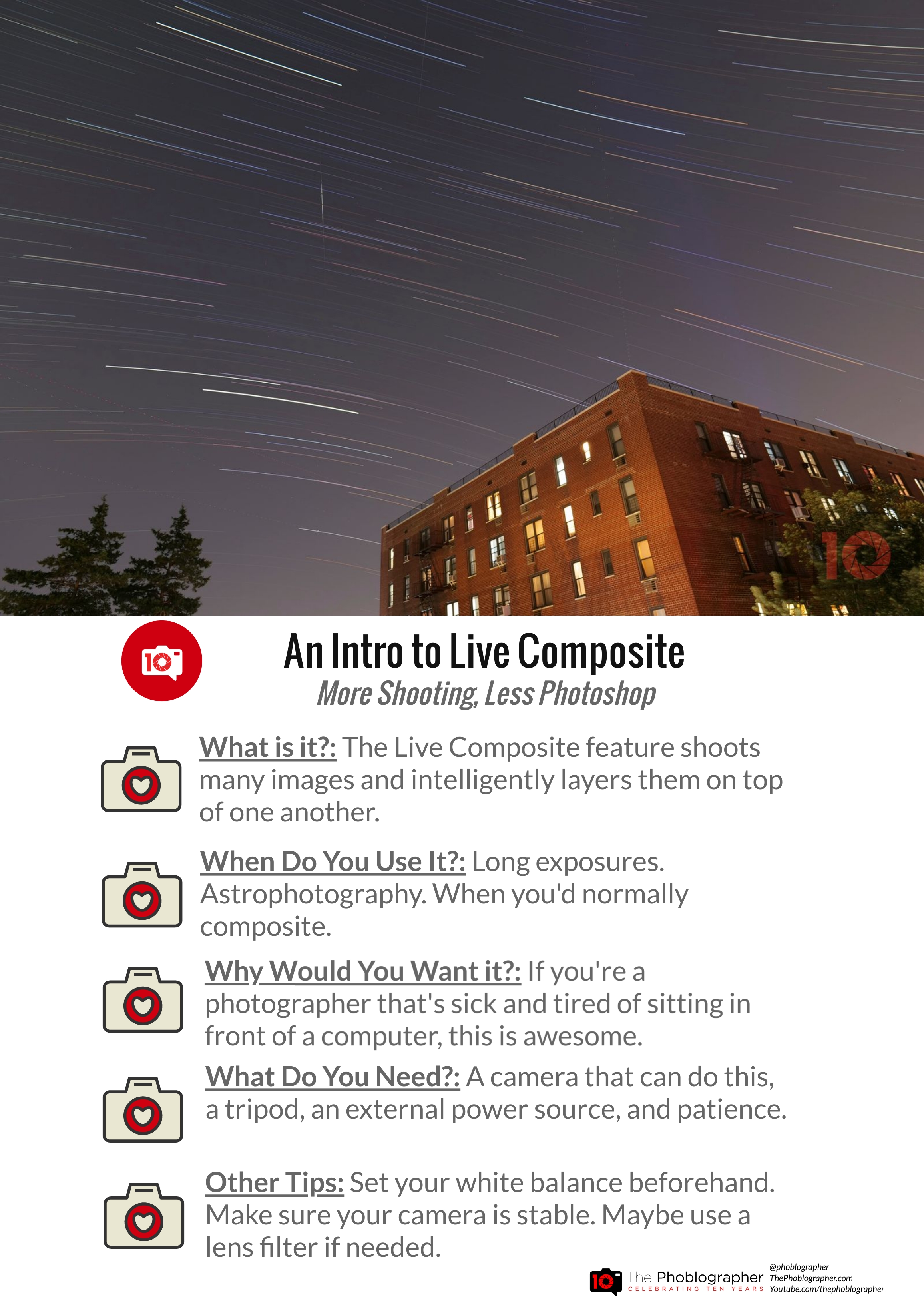
First off, I’m sure some folks aren’t completely aware of OM System’s computational photography. There’s a lot involved here. Beyond standard HDR abilities, there are some cool tricks like focus stacking, live composite, and live ND. All these save you a ton of time in Photoshop or post-production. That’s pretty awesome. The system does things no other camera system is capable of. I know that, after a long day shooting photos, I don’t want to sit down and edit a ton of them. So, knowing that I got the shot done in-camera is wonderful. Combine this with star-rating images to immediately access my favorites and I’m very happy.

But OM System could do something even bigger with computational photography. Specifically, I think they could address a problem that Micro Four Thirds has had for a long time.

Getting Full-Frame Depth of Field With Computational Photography

Let’s put it this way: if your phone’s camera can create artificial bokeh, why can’t Micro Four Thirds cameras do the same via computational photography? Just imagine: their 25mm f1.2 PRO would actually look like a 50mm f1.2 on full-frame. The same goes for their 17mm f1.2 PRO. It could also make a telephoto like their 300mm f4 render like an actual 600mm f4 instead of a 600mm f8. And with a very powerful processor, it could probably be combined with something like Pro Capture Mode and render RAW files as the final images. 

Of course, they’d have to get it just right. Google and Apple have a ton of problems to address with Portrait mode and stuff, but OM System could likely do a significantly better job. And now that they’re no longer tied to their mother company, I think more innovation is possible. OM System could also inject the AI noise algorithms in their software into the camera. Honestly, there’s so much that could be possible with all this. 

I’m also sure OM System would make this only possible with their own lenses. And that’s perfectly fine. Sure, Panasonic has wonderful glass, but it would also probably mean that maybe OM System starts to make fast zoom lenses again. Back in the DSLR days of Four Thirds, they made f2 zoom lenses. 

Now, there’s a reason why I think this should be a computational photography add-on. Micro Four Thirds offers a real advantage when shooting with their lenses. The extra depth of field can make a ton of things easier. Besides this, we’re happy with how small and lightweight the cameras and lenses can be. 

Jerusalem photographer captures spirit of vanishing neighborhood

Jerusalem photographer captures spirit of vanishing neighborhood

These days we are all photographers, right? Actually, snappers or documenters might be a more accurate description. And while the pictures Hodaya Kalman-Book had on display at the Social Space (in the former President Hotel building on Ahad Ha’am Street) over the last fortnight, could be classified as realistic and, yes, documentary, they are plainly the work of an artist, someone who has a firm grasp of the discipline, as well as the local lay of the land. The spread was curated by Maya Bamberger.

Kalman-Book has a lot on her young hands. As the 23-year-old mother of 16-month-old twin daughters, she somehow managed to complete a four-year study program at the Emunah Academic College of Arts and Design. She spent some time considering her options for her final project, eventually realizing that the old adage, “there’s no place like home” applied here too.

In fact, it was when she learned that her home patch was poised to change, possibly out of all recognition, that she realized it was high time she moved up a gear or two and got herself and her camera out and about.

Kalman-Book lives in that most grassroots of Jerusalem neighborhoods, Katamon or, as the locals call it, the Katamonim. To be clear, this is not the largely genteel Old Katamon part of town. This is the working class stratum of the urban socioeconomic hierarchy.

KALMAN-BOOK and her husband moved into the neighborhood two and a half years ago, blissfully ignorant of the plans the municipality had for the area. She says it was a shock when reality dawned that a pinui binui – “evacuation and reconstruction” – scheme was in the works, and that her physical milieu, including the very building in which she lived, was about to get a fundamental makeover. 

THE SOCIAL fabric in the Katamonim is about to change forever. (credit: Hodaya Kalman-Book) THE SOCIAL fabric in the Katamonim is about to change forever. (credit: Hodaya Kalman-Book)

“I decided I needed to do something, for my final project, that I loved. And I love photography,” she says.

That, then, was going to be her chosen vehicle of expression to try to get the word out about the transformation that is about to descend on her surroundings. 

A photographer’s project: Taking pictures of Katamonim as it disappears 

“I have been taking photographs for a few years now. I also work in that – taking pictures of events, families, and such like.”

Any photographer worth their salt will tell you that you have to prepare the groundwork before you sling your camera over your shoulder and set off for your location of choice. Of course, that doesn’t always apply when you are a photojournalist trying to relay images to the world from some battleground. But Kalman-Book had no such logistical considerations to ponder. She was going to document her own home patch, a place where she knew many of the locals and was familiar with the bricks-and-mortar fixtures.

“It took me a while to decide exactly what it is I want to do, and I came to the conclusion that I want to engage in the space around me,” she explains. That “space” meant the whole fabric of life – human, physical, and natural. 

“There are some special people who live here, and there are unique buildings. Everything is going to completely change. It will be unrecognizable when they have finished here.” 

THE PROJECT duly evolved, partly with planned excursions and partly with a more of an opportunist mindset. 

“There were days when I set with an agenda – what and where I was going to shoot. But there were days when, say, I’d go off to the makolet, talk to people on the way, and I’d have my camera with me. It became part of my daily routine. I’d take my daughters to the neighborhood garden and I’d talk to people and sometimes take their picture.”

That familiarity, and the ease of the subjects, came across in the portrait works in the exhibition. These were the smiling faces of characters you can come across every day of the week in certain parts of the city, particularly the less well-heeled areas. The subjects clearly knew Kalman-Book was on their side and were happy to cooperate. 

“That was what was special about this work,” she says. “It was being part of the place, of the ambiance, and getting to know people close up.”

That was very much the photographer’s aesthetic and professional line of attack for the project. This was more about the basic human component than the irreversible structural process the district is about to undergo, and the implications that it would have on street-level life there. 

“There is the saying that ‘a person is nothing but the shape of his native landscape’,” she says quoting from a poem by celebrated Hebrew language Russian-born poet Shaul Tchernichovsky.

Kalman-Book feels there is a symbiotic relationship between humans and the structures in which they live and work, and encounter on a daily basis. “People are very much impacted by the area in which they live. There is something which is not quite harmony, but there is something special shared between people and the buildings that are important to them, in Jerusalem and other places.”

But it is the capital where Kalman-Book lives, breathes, and works and, particularly, her own backyard which interests her the most and that she set out to lovingly document for her final project.

It has been a voyage of discovery for her, on various levels. “I am a born and bred Jerusalemite, from Kiryat Moshe,” she says. “Maybe it’s not a nice thing to say, but I didn’t know anything about the Katamonim before we moved there. It is not the kind of place you stumble across on your way somewhere else.”

It is no secret that Jerusalem is reaching for the sky, as ever-increasing tower blocks spring up all over the show. The southern reaches of Derech Hebron, for example, are now unrecognizable compared with just five or six years ago, as apartment buildings of 20 or 30 floors have materialized there.

I wondered whether that came into Kalman-Book’s line of thought as she snapped away in her neighborhood. She preferred not to take sides on the urban skyline issue. 

“This project is about people. I am not addressing the matter of whether it is good or bad [to completely change the physical milieu]. Jerusalem is developing. It is a process that has to take place. I am interested in relating to people, the people – the simple folk – that live in the Katamonim. They just get on with their lives. I wanted to provide a platform for people whose lives are about to change. I am not looking to say if it is good or bad.”

She did, however, get the local lowdown on the impending game-changer. She says it is far from an open-and-shut case scenario. 

“I tried to speak to as many people as possible. There are some who don’t believe it is going to happen. Some are waiting for it to happen. Some don’t even think about it. There is going to be a change. I set out to show what there is there now, and what is going to change.”

Intriguingly, most of the photos in the exhibition – all except two – were printed on cloth. 

“Yes, and they were hung on a line, like a clothesline, attached with pegs,” Kalman-Book notes. That, she says, was designed to bring a whiff of her homestead to the Social Space. 

“Clotheslines are something that is very characteristic of the neighborhood, like in times gone by.”

She was keen to impart a sense of simplicity and of folk who just go about their everyday lives, minding their own business, until that is rudely interrupted by some more powerful outside force. 

“I sometimes have the feeling that they [the authorities] in Jerusalem do just what they want with these kinds of neighborhoods because the people that live there don’t have the ability to influence or change things. This [pinui binui] is going to have a drastic effect on their lives, whether they like it or not.”

Kalman-Book would certainly like to do something about it or, at the very least, provide the locals with a mouthpiece and a means of telling the world what is about to unfold in one of the poorer quarters of the capital. But does she really believe her work can make a difference? Does she have faith in the ability of artists and their art to generate change? 

“I do believe in the power of pictures,” she declares. “Just the mere fact that we are talking about this means I have managed to proffer an issue from a different angle. Lots of people talk about pinui binui. It is a burning issue in Jerusalem and all over Israel. What is special about pictures is that they remain.” 

Unlike, it seems, the building over in the Katamonim. 

“A few years down the road, regardless of what remains here, there will be a document. This won’t be forgotten. I would like to believe that my work can have some impact. At least I am doing my bit.”

College head Dr. Efrat Grossman believes in the power of art to make a difference and has faith in the efforts of Kalman-Book and her fellow students to generate desirable shifts on the sociopolitical scene. 

“Hodaya’s work, in her unique frames, commemorates a neighborhood that is gradually vanishing and commemorates a time, atmosphere, and people. All the works in the exhibition were created through an immersive inner process that all the students underwent. Their output reflects the ideas and personal and social values they chose to advance and bring to the light of day.”

Interestingly, it is not only about Kalman-Book’s neighbors, who feature in a work that is, essentially, about her domestic environs. There are a couple of shots with happy-looking Asian foreign workers in there too. “She takes pictures of people who are there, in the neighborhood,” Bamberger observes. 

“For Hodaya it doesn’t make any difference if they have been there for a few years, like her and her family, or were born and bred there, or are foreigners just passing through. It is all part of the same social fabric.”

That comes through in the structural, human, and flora and fauna elements of the exhibition. The faces she captured chatting on a bench, out with their dog, or peeping a little warily out of their home base are people she knows and cares about. 

“She photographs the domain in which she lives,” says Bamberger. “I think she has developed a special sensitivity to the people there, the way they look at life. She captures their humaneness.”

One shot, in particular, spells out the impending transformation which, no doubt, will not only change the local aesthetics but will have a powerful bearing on the social and human fabric there. 

The picture shows an unassuming four-story apartment building. The exterior is mottled with air conditioners and laundry hanging on clotheslines, with old TV antennae protruding from the roof into the leaden wintry sky. To the right, in front of the building, there is a large billboard showing three tightly-packed tower blocks, naturally with unblemished blues skies and plenty of green spaces around. The slogan on the billboard reads: “Growing together with you.” 

That, clearly, is a matter of human or other perspective. ❖

P.E.I. wildlife photographer captures images of ‘spectacular’ rare eagle

P.E.I. wildlife photographer captures images of ‘spectacular’ rare eagle

A P.E.I. nature and wildlife photographer has captured what he considers the photos of a lifetime after finally catching up with a roaming and very rare eagle. 

Glen Strickey, who since 2020 has been tracking sightings of the only known Steller’s sea eagle in North America, was able to snap some images of the bird in Spaniards Cove on the east coast of Newfoundland this summer. 

He said it was a surreal experience.

“I’ve been watching this happen over the last couple of years, thinking, ‘God, I’d love to see this bird and get a photo of it.’ It looked incredible,” he told CBC’s Island Morning.

“It’s pretty spectacular. It’s the only Steller’s eagle in all of North America and it’s just a gift to be able to see something like that. Nature never ceases to amaze me in its beauty.”

It just kind of takes your breath away.— Glen Strickey, P.E.I. nature and wildlife photographer

Not only was the eagle itself a beautiful sight, but so was the surrounding scenery during his excursion to Newfoundland, with “icebergs around and whales jumping around … it was quite spectacular,” he said.

“The cove was like something straight out of Jurassic Park, with 250 to 500 cliffs all around it,” Strickey wrote on his Facebook page. “The Steller’s eagle has seemed to become a part of the eagle community there and is often seen around other eagles.”

Just missed it before

Strickey said he’s narrowly missed the chance to photograph the eagle on multiple occasions. The raptor was spotted in Nova Scotia the day after he’d finished a visit to family in the area. He also missed the bird in New Brunswick because he wasn’t able to make it there when it was spotted.

A dark eagle with white tail, shoulders, rump, thighs and forehead, and a bright yellow beak.
A second image Glen Strickey took of the Stellar’s sea eagle on a Newfoundland cliffside. (Facebook/Glen Strickey Photography)

After monitoring the bird’s flight patterns at various times of year, he was certain it would be in Newfoundland in early summer, so he and his wife decided to head to the province and take a boat tour leaving from the Bonavista Peninsula, a well-known area for bird-watching about a three-hour drive from St. John’s.

“Nature doesn’t always give you what you want, but I had a good feeling that it was going to return to the same area because it was there all last summer,” he said of the eagle.

The species’ normal habitat ranges from northern Russia to northeast Asia, but this specific individual had been spotted around Texas and Maine before making its way to Atlantic Canada.

“The Steller’s sea-eagle was named for a noted 18th-century zoologist and explorer, Georg Wilhelm Steller,” says a description on the San Diego Zoo website. “It is considered the most powerful and aggressive of its closest relatives, the bald eagle and the white-tailed sea-eagle.”

Eagle with big yellow beak looking in direction of camera.
Wildlife photographer Ian Murray took this photo of the eagle near Northport, N.S., in 2022 and shared it to the Facebook community that was created to track its whereabouts in Canada. (Ian Murray/Wallace River Photography)

Strickey said the path the eagle took to get all the way to eastern Newfoundland made the moment when he laid eyes on it extra special.

“When you think about it, it’s absolutely mind-blowing, the journey this bird makes,” he said. “To be able to find this one and see in person this one bird that made this incredible journey — it just kind of takes your breath away.”

Photographer’s Glorious 360° Star Trail Image With the Northern Lights

Photographer’s Glorious 360° Star Trail Image With the Northern Lights

360 degree star trail image

A photographer created a stunning 360-degree star trail image with the northern lights glowing brightly.

360 photographer Christoph Simon created the unusual image after visiting a remote part of Iceland — with his final star trail panoramic image containing an incredible 834 photos. The 360 images can be viewed here.

Note: To see the star trail panoramics, select the menu button and scroll down where you will find the star trail panoramics.

star trail panoramic

Creating a 360-Degree Star Trail Panoramic Image

Simon took the photos on a Sony a7R III with an 8mm fish eye lens attached, this gives a 90-degree field of view. He took four photos covering north, west, south, and east and then a nadir shot, which is of the floor.

Photographer beneath the northern lights in Iceland
Simon shooting underneath the aurora borealis in Iceland. | Alexander Albrecht

Then to create the star trail image, Simon shot 829 photos over the course of an hour and a half which were later stacked and stiched into a single image.

Once the German photographer had the star trail image and the other five photos, he stitched them together using the PTGUI software.

“The biggest challenge was blending the base panorama with the stacked star trail sky,” Simon tells PetaPixel.

“By adding the brightness of the 829 individual shots, the stacked sky differs somewhat from the basic panorama. In order to get that right, I stitched the panorama in PTGUI and output the individual layers separately. I then masked them manually in Photoshop to create perfect transitions.”

It’s a complex image that requires a deep knowledge of 360 photography. But technicalities weren’t Simon’s only problem.

“A big challenge was actually the temperature when taking photos,” he explains.

“The night was very cold at -15 degrees Celsius (5 degrees Fahrenheit) and if you stand outside for several hours and don’t move much, it gets quite chilly.”

Simon setting up a panohead for the 360 shot. | Alexander Albrecht

Simon took the photos in Westfjords, a peninsula in northwestern Iceland, and was lucky enough to have a dazzling display of the aurora borealis when he was there.

“The footage for this project was shot on a cold, clear night in a beautiful valley,” he says.

“The aurora activity was high and so we had perfect conditions for several hours. Not only very bright but also very colorful, different colored northern lights showed up that night.”

Simon has been working as a professional 360 photographer and videographer for more than 10 years.

More of his work can be found on his website and Facebook.


Image credits: Photos by Christoph Simon unless otherwise stated.

How Using Light Pollution Filters Enhances Your Night Sky Photography

How Using Light Pollution Filters Enhances Your Night Sky Photography

K&F Concept

So you’ve found your perfect spot to capture the night sky. The weather is perfect and you’ve been tracking the stars and planets for weeks to capture this moment. But, when that perfect moment comes, the pictures you’ve captured end up hazy and soft. Why? Likely due to excessive light pollution from the surrounding area, especially if you’re nearby a larger city.

If you happen to find yourself in one of those densely packed cities, it can be quite hard to find a place to take a nice shot of the night sky without traveling for dozens if not hundreds of miles. Even after hours of driving to the location, you can still be left with large pockets of light pollution from the bright city lights off in the distance reflecting in the sky which will reduce the contrast and depth of your otherwise perfect shot.

So what can be done to help correct this without spending days traveling out into the middle of nowhere? Well, if long travel days are out of the question, using K&F CONCEPT Light Pollution Filters can help significantly improve those night sky images.


Full Disclosure: This sponsored story is brought to you by K&F CONCEPT.


What Causes Light Pollution?

Even though some planets and stars are bright enough to be seen with the naked eye, capturing great images of these celestial bodies can be more than a challenge thanks to Light Pollution. As the International Dark Sky Organization puts it, “Light pollution is a side effect of industrial civilization, Its sources include building exterior and interior lighting, advertising, commercial properties, offices, factories, streetlights, motor vehicles (including airplanes and helicopters), fires, and illuminated sporting venues. This light, and the electricity used to create it, is being wasted by spilling it into the sky, rather than focusing it on to the actual objects and areas that people want to be illuminated.”

This excess light bleeds into the surrounding night sky for miles where it is bounced back by even the smallest amounts of humidity and clouds in the atmosphere, effectively making even a perfectly clear night feel strangely yellow and eerie. This “haze” is generally created by yellow-orange sodium and mercury-vapor lights that produce a very specific wavelength of light that can sometimes even show a green/cyan glow depending on the conditions.

Light Pollution Over Chicago at Night

To help you eliminate some of the excess light pollution from your shots, it might be worth using a Light Pollution Map or App such as Clear Dark Sky or Light Pollution Map to help you figure out the darkest area near you.

What Are Light Pollution Filters/How Do They Work?

K&F-CONCEPT-Light-Pollution-Filters

To understand what a physical light pollution filter (LPF) is, you need to first to know how they work. Filters, no matter what kind, will subtract or block a percentage of incoming light, and can never add to the light taken in by the camera. What they can do, however, is block unwanted light (like light pollution from city lights) and isolate a specific target range between 575nm and 600nm from the visible light spectrum. As a result, photographers can see the desired light source (in this case, the night sky full of stars and galaxies) much clearer than you would otherwise have been able to.

These filters work effectively because most outdoor light sources do not shine evenly across the visible light spectrum, and as such they emit radiation in a few select wavelengths. A clear example of this is most older high-pressure sodium streetlights. These create light in mostly the yellow wavelength and the K&F CONCEPT Light Pollution Filters suppress/reduce those and similar wavelengths, allowing you to capture much cleaner night skies.

Visible Light Spectrum Chart

It’s worth noting that LPF’s can’t cover every unwanted wavelength, and can’t do much about car headlights and incandescent bulbs that produce light at nearly every visible wavelength, so you should be prepared on that front.

Basically, Light Pollution Filters allow almost all visible blue and red light through, blocks about half of the greens, and almost entirely eliminates all but about 5-10% of the yellow-orange polluting light through them.

Side by Side comparison of the K&F Light Pollution Filter

Why Should You Use Light Pollution Filters?

Image Provided by K&F CONCEPT with Light Pollution Filter

The answer to this is rather simple; By using a K&F CONCEPT light pollution filter, the effective yellow/orange light pollution usually found near the horizon can be reduced or even eliminated in your captured photographs, making your images of the night sky significantly improved.

Image Provided By K&F CONCEPT - no filter
Before
Image Provided By K&F CONCEPT with Light Pollution filter
After

Something you should keep in mind when using these filters is you will often have to adjust for an additional 1/3 to 2/3 stop of light. This is not necessarily a huge deal, but worth remembering when planning and setting up your shots. Additionally, if you opt for some of the cheaper versions, they can leave “artifacts” (such as blooming, color tings, chromatic aberration, aliasing, additional noise, and moire). Proper multicoated filters (like the K&F CONCEPT) will reduce or eliminate most if not all of these possible artifacts.

[embedded content]

Types of K&F CONCEPT Light Pollution Filters

Depending on your personal preferences, the K&F CONCEPT Light Pollution Filters are available in both Circular and Square formats giving you the option of mounting the filters directly to your lenses, or with the use of special mounts that can allow for combinations of filters to be used together.

K&F CONCEPT Light Pollution Filters

The K&F CONCEPT Filters are made of Japanese AGC Glass with 28 layers of nanometer multi-coating exceptional water, dust, oil, glare, reflection and scratch resistance, while creating little to no color shift/casts.

Design and Build Quality

K&F CONCEPT NANO-X Circular Light Pollution Filter

As mentioned above, the NANO-X Circular Light Pollution filters from K&F CONCEPT are resistant to scratches and water damage, so it’s an ideal filter to take with you on adventures and stargazing trips. The filter ships in a tough and durable plastic case with rubber grips to keep the filter from shaking around inside the case while in transit, helping ensure it will remain in its best condition for as long as possible.

K&F CONCEPT NANO-X Circular Light Pollution Filter Packaging

The filter has a double-sided nano-coating to block orange and yellow wavelengths of light with a scratch and dust-resistant coating that also boasts High Definition (HD) visibility (meaning sharp and no ghosting/fogginess) with low reflection and no vignetting along the edges. The aviation aluminum alloy filter itself is very thin and lightweight, with the CNC frame coming in at just 3.8 millimeters in height and weighing just 24.6 grams.

Side View of the K&F CONCEPT NANO-X Light Pollution Filter

The Circular version of this filter is available from $32.99 to $64.99 in 52mm, 58mm, 67mm, 72mm, 77mm, and 82mm thread sizes and is also double-threaded allowing you to combine the filter with others (stacking) for even more creative choices while capturing your images.

K&F CONCEPT NANO-X Circular Light Pollution Filter

Should you prefer square filters, the K&F CONCEPT Light Pollution filters are available in that format also in both the raw glass and with a protective Metal Frame and should fit any standard square filter holder.

K&F CONCEPT Square Filter Holder Packaging

That being said, we used the metal-framed filter using the K&F CONCEPT filter holder and step-up rings so that the system could easily connect to any lens in our bags.

K&F CONCEPT Square Filter Kit

The K&F CONCEPT square filter holder is able to hold two square filters as well as an internal “circular” filter like a circular polarizer (CPL). This was an impressive feature as it allowed for the CPL to be rotated quickly and easily while square filters were mounted using a built-in mechanical wheel on the side of the frame. (The square system with the light pollution filter weights just 188.6 grams).

K&F CONCEPT Square Filter Mount with Light Pollution Filter

The filter(s) for the square system each come with their own protective case to keep the filters safe from dust, water, scratches, and breaking while not in use.

Close up detail of the K&F CONCEPT Square Light Pollution Filter

Adjustment wheel and Lock detail of the K&F CONCEPT Square Filter Mount

The holder also features a smooth felt material on the filter side to reduce any chance of scratching the filters while inserting or removing them from the system and includes a metal, spring-loaded locking mechanism that makes it easy to quickly mount and remove the entire system from the adapter rings. This system made it incredibly easy to swap the filters from one camera to another while using different lenses with different adapter rings on them, allowing for quick focal length changes between cameras.

K&F CONCEPT Square Filter mounted on Nikon Z6 with 24-70mm F/2.8 S

K&F CONCEPT Square Filter mounted on Nikon Z6 with 24-70mm F/2.8 S Zoomed Out

We paired both sets of filters with a K&F CONCEPT X284C2 Carbon Fiber Tripod during our time with the filters which allowed for some very fast, and very sturdy setups in multiple locations of our night-sky testing.

K&F CONCEPT X284C2 Carbon Fiber Tripod with Square Filter Kit

K&F CONCEPT X284C2 Carbon Fiber Tripod Wide Angle View

Additional Images captured using the K&F CONCEPT Light Pollution Filters

Sunset with No K&F CONCEPT Light Pollution Filter
No Filter
Sunset with K&F CONCEPT Light Pollution Filter
With K&F CONCEPT Light Pollution Filter
No K&F CONCEPT Light Pollution Filter
No Filter
with K&F CONCEPT Light Pollution Filter
With K&F CONCEPT Light Pollution Filter
no K&F CONCEPT Light Pollution Filter
No Filter
with K&F CONCEPT Light Pollution Filter
With K&F CONCEPT Light Pollution Filter
Moonrise with no K&F CONCEPT Light Pollution Filter
No Filter
Moonrise with K&F CONCEPT Light Pollution Filter
With K&F CONCEPT Light Pollution Filter
Cloudy Los Angeles - no K&F CONCEPT Light Pollution Filter
No Filter
Cloudy Los Angeles - with K&F CONCEPT Light Pollution Filter
With K&F CONCEPT Light Pollution Filter
Simi Valley - no K&F CONCEPT Light Pollution Filter
No Filter
Simi Valley - with K&F CONCEPT Light Pollution Filter
With K&F CONCEPT Light Pollution Filter
Night sky - no K&F CONCEPT Light Pollution Filter
No Filter
Night Sky - with K&F CONCEPT Light Pollution Filter
With K&F CONCEPT Light Pollution Filter
Los Angeles skyline - No K&F CONCEPT Light Pollution Filter
No Filter
Los Angeles skyline - with K&F CONCEPT Light Pollution Filter
With K&F CONCEPT Light Pollution Filter
Downtown Los Angeles - no K&F CONCEPT Light Pollution Filter
No Filter
Downtown Los Angeles - with K&F CONCEPT Light Pollution Filter
With K&F CONCEPT Light Pollution Filter
View from Griffith - no K&F CONCEPT Light Pollution Filter
No Filter
View from Griffith - with K&F CONCEPT Light Pollution Filter
With K&F CONCEPT Light Pollution Filter
Night sky in the mountains - no K&F CONCEPT Light Pollution Filter
No Filter
Night sky in the mountains - with K&F CONCEPT Light Pollution Filters
With K&F CONCEPT Light Pollution Filter

Image Provided By K&F CONCEPT

Image Provided By K&F CONCEPT

Image Provided By K&F CONCEPT Image Provided By K&F CONCEPT

Image Provided By K&F CONCEPT

Image Provided By K&F CONCEPT

Image Provided By K&F CONCEPT

Image Provided By K&F CONCEPT

Are the K&F CONCEPT Light Pollution Filters Worth It?

The Square and Circular light pollution filters from K&F CONCEPT are very tough and durable in their design making them incredibly handy when used in the middle of nowhere. There was very little worry about any dirt, dust, or moisture on the filters causing any damage or scratches, and on top of that, they were actually very useful for cutting out the orange and yellow light pollution haze & color cast from night-sky images.

So yes, these Light Pollution Filters are actually very useful for landscape, street, and astrophotographers to help them capture cleaner images of the night skies, and they can even help enhance sunset images.

Dusk view with the K&F CONCEPT Light Pollution Filter

The NANO-X Circular K&F CONCEPT Light Pollution filters range in size from 52mm to 82mm and are available for $35.99 to $71.99 per filter depending on the size of the filter mount, and the NANO-X PRO Square filters are available from $81 to $109 depending on if you prefer the metal frame or not. Additionally, the Filters will also be on a Prime Day Sale on July 11 and 12.

K&F CONCEPT focuses on making photo and video cameras and accessories and has over 200 patents for those products. Currently, the company’s gear is sold in 56 countries and regions with over 300 business partners as well as being ranked among one of Amazon’s Top Best Sellers with a total of four products that have been honored with the 2023 Red Dot Award for Product Design, including a camera backpack, two tripods, and a switch cleaning pen.


Welcome to a PetaPixel Showcase, in which our staff gives you a hands-on with unique and interesting products from across the photography landscape. The Showcase format affords manufacturers the opportunity to sponsor hands-on time with their products and our staff, and it lets them highlight what features they think are worth noting, but the opinions expressed from PetaPixel staff are genuine. Showcases should not be considered an endorsement by PetaPixel.

Photographer Onboard Titan Sub Was Alarmed by OceanGate CEO’s ‘Cavalier’ Attitude

Photographer Onboard Titan Sub Was Alarmed by OceanGate CEO’s ‘Cavalier’ Attitude
Photographer onboard Titan sub
Photographer Brian Weed with OceanGate CEO Stockton Rush onboard the Titan sub (right).

A photographer and camera operator who dove on the ill-fated Titan sub with Stockton Rush was alarmed by the OceanGate CEO’s cavalier attitude.

Brian Weed, a camera operator and analog photographer, has given an interview where he describes Rush as being “blinded by his own hubris” and despite a career spent in extreme environments, he says being in the Titan sub was the only time he felt something was “wrong.”

Weed was making a TV show on the Discovery Channel called Expedition Unknown when he took a test dive in the Titan sub with Rush in Puget Sound, Washington with a view to visiting the Titanic shipwreck — but Weed ultimately bowed out of the mission due to safety concerns.

“Things did not go as planned on our test dive,” Weed tells Insider. “That whole dive made me very uncomfortable with the idea of going down to Titanic depths in that submersible.”

According to Weed, the thruster system malfunctioned during the test dive and the computers had to be recalibrated as well as non-stop communication issues with the crew above water.

‘You’re Dead Anyway’

Weed says he was spooked by a conversation with Rush shortly after he was deadbolted into Titan. The photographer asked Rush what would happen if the submersible had to make a sudden ascent in an emergency.

“[Rush] says, ‘Well there’s four or five days of oxygen on board,’ and I said, ‘What if they don’t find you?’ And he said, ‘Well, you’re dead anyway’,” Weed tells Insider.

“It seemed to almost be a nihilistic attitude toward life or death out in the middle of the ocean.”

Rush’s cavalier attitude made Weed feel uneasy, coupled with the fact he could hear “banging, cracking, and clanking” during the launch procedure.

“We were thinking if this isn’t going well, you know, we’re supposed to go on a dive to Titanic within the next couple of months. It feels like we’re not ready to go,” Weed tells Insider.

Canceling the Dive

Weed says that no sooner had the test dive begun, everything started going wrong — with the thruster system failing leaving them “sitting ducks” in the water.

According to Weed, they spent two hours going nowhere because they had no power to get down to their target in Puget Sound.

“The whole time I’m in the water locked in this [submersible] and thinking this is supposed to go to the Titanic in two months,” Weed tells Insider.

“We can’t get below 100 feet and this is supposed to go 12,000 feet under the ocean.”

Titan submersible descending

Weed says that Rush continually played the problems down and called him a “very convincing” and someone you “want to trust.” But Weed did not trust him.

“He’s a great salesman. He’s committed. He fully believes in what he’s doing. And he fully believes in his innovation and his technology and what he is capable of creating,” Weed said of Rush.

“Stockton believes so much in his own creation and innovation that he wasn’t willing to even consider that he might be wrong about something.”

Weed’s production company hired a consultant from the U.S. Navy who raised concerns over the carbon-fiber hull of Titan. After reading the report, Weed felt like it was playing “Russian roulette” because “there’s no way to know when it’s going to give out.”

On June 19, Weed saw the headlines about the Titan sub going missing and instantly felt sick.

He underlines to Insider that he “never regretted” his choice not to go on Titan to visit the Titanic shipwreck.

Photographers and Titan

Weed isn’t the only camera operator coming out and talking about a tense experience with Rush and Titan, on Wednesday PetaPixel reported Jaden Pan’s story who says Rush suggested sleeping in the sub after the battery went “kaput.”

Photos of the month: June 2023

Photos of the month: June 2023
Cousins Laila and Shyanne Davis, 7, and 9, played with hula hoops at the Freedom Cookout held at the Shirley-Eustis House in Roxbury to celebrate Juneteenth. Suzanne Kreiter/Globe Staff
A tern rested on the head of Mark Baran, a MassWildlife worker, on Bird Island in Buzzards Bay in Marion on June 6.Vincent Alban For The Boston Globe
Artist Ricardo Gomez worked on a spray-painted portrait of rapper/songwriter/record producer Guru, next to Black Market in Roxbury on June 1. Born Keith Edward Elam in Roxbury, Guru died in 2010. Pat Greenhouse/Globe Staff
Framed by the South Boston skyline, diver Iris Schmidbauer from Germany prepared for landing during the first day of the Red Bull Cliff Diving World Series on June 2 in the Seaport.John Tlumacki/Globe Staff
Mary Ford watched the 13th annual Juneteenth Emancipation Flag Raising and Parade hosted by the Boston Juneteenth Committee and the Museum of the National Center of Afro-American Artists (NCAAA) in Roxbury. Vincent Alban For The Boston Globe
Charlie Cecilia, posed for a portrait at the 2023 Boston Dyke March at the Parkman Bandstand on Boston Common in Boston on June 9.Vincent Alban For The Boston Globe
Matignon softball players Keyshla Perez (left) and Kyla Vitale celebrated a run during their team’s loss to Carver High School in the first round of the Division 5 tournament in Carver on June 2. It was the last game for Saint Joseph Prep and Matignon, which formed a joint softball team. Both schools are closing. Craig F. Walker/Globe Staff
(Left to right) Andy Scheff held the Lincoln Minutemen flag as he took a break on the Boston Common while Frances Wentworth helped Keith Gilbert adjust his attire during a military parade held on “June Day” on June 5. The Ancient and Honorable Artillery Company’s 385th anniversary election of officers and change-of-command ceremony is a tradition dating back to 1638.Jessica Rinaldi/Globe Staff
After Red Sox center fielder Kiké Hernández made a nice catch to rob the Rockies of a hit for the last out of the fifth inning, he held the ball up and Pablo Reyes (left) and Rob Refsnyder (right) celebrated the catch. Jim Davis/Globe Staff
Kelly Sholole, 14, danced among friends in the Hazzel Junk Collective at the National LGBTQ+ Pride Month kickoff event on City Hall Plaza on June 2. Vincent Alban for The Boston Globe
Westwood High School seniors wore their gowns and boarded school buses for one last time on June 2. The buses took the seniors on a farewell tour of five elementary schools, two of which will be closing. At Deerfield Elementary School, which will be closing, students waved to the seniors on the bus. Suzanne Kreiter/Globe Staff
Governor Maura Healey took a short break with Lieutenant Governor Kim Driscoll during a formal swearing-in ceremony for state cabinet officials on June 1. David L. Ryan/Globe Staff
Anasia Pierre, 7, danced outside Faneuil Hall in Boston on June 29. Vincent Alban For The Boston Globe
Newburyport High School celebrated their win during the 2023 Division 3 high school tennis state championships at MIT on June 18.Taylor Coester for The Boston Globe
Sonya Malloy posed at the 13th annual Juneteenth Emancipation Flag Raising and Parade in Roxbury. Vincent Alban For The Boston Globe
Cyprian Ojatabu rested after competing in the boys 400 meters on the second day of the MIAA’s Meet of Championships at Fitchburg State University’s Elliot Track Complex on June 3.Vincent Alban For The Boston Globe
Phil Enos was among those hanging out on June 4 at the back door of Sligo Pub, a dive bar in Davis Square that closed last month after 75 years.
Vincent Alban For The Boston Globe
Nine-year-old Kiki Roland opened the refrigerator in the section of her family’s home in Boxborough that is is undergoing a renovation. The rest of the kitchen is in a bedroom.
Suzanne Kreiter/Globe Staff
Gelin Etienne sat on a bench in the early morning rain at the Public Garden in Boston on June 28. Etienne said he has been living outside for over five years as a spiritual sacrifice requested by God. “It’s what God wants me to do,” he said. Craig F. Walker/Globe Staff
Artist Salvatore Del Deo walked with the aid of his son, Romolo Del Deo, around site of Frenchie’s Shack, a driftwood dune shack on the National Seashore in Provincetown that he has occupied with his family for 77 years. The National Park Service issued an order for them to leave the shack in the spring and boarded it up on June 29.David L. Ryan/Globe Staff
Zee Elhassan, 12, of Boston, celebrated with his friends after he scored a basket against Celtics draft pick Jordan Walsh at the unveiling of a newly renovated gym at the Cambridge Community Center on June 26.Jessica Rinaldi/Globe Staff
Bryan Pfeiffer and Josh Lincoln held out American Emerald dragonflies, also known as Cordulia shurtleffii, that they caught in an undisclosed location in Vermont’s Northeast Kingdom before releasing them on June 22.Jessica Rinaldi/Globe Staff
Gabrielle Logan held a rainbow umbrella while attending the LGBTQ+ Pride Month kickoff event at City Hall Plaza on June 1.Erin Clark/Globe Staff

.overflow_x_hidden {
overflow-x: hidden;
background: #000000;
}

#page-footer {
background: #ffffff;
}

.image img {
max-height: 100%;
max-width: 1400px;
margin-left: auto;
margin-right: auto;
display: block;
}

.img_caption{
max-width: 1400px;
margin-left: auto;
margin-right: auto;
color: #fff;
}

.overline{
color: #fff;
}

.article.header h1 {
color: #fff;
}

.article.header h2 {
color: #fff;
}

.byline{
color: #fff;
}

.affiliation{
color: #fff;
}

.date{
color: #fff;
}

.time{
color: #fff;
}

.dropcap {
color: #fff;
}
.html-render{
color: #fff;
}

.paragraph p {
color: #fff;
}

.paragraph h1{
color: #fff;
}

.paragraph h2 {
color: #fff;
}

.paragraph h3 {
color: #fff;
}

.paragraph h4 {
color: #fff;
}

.paragraph h5 {
color: #fff;
}

.paragraph h6 {
color: #fff;
}

.divider {
border: 0;
border-bottom-color: currentcolor;
border-bottom-style: none;
border-bottom-width: 0px;
border-bottom: 2px solid #fff;
clear: both;
max-width: 150px;
margin: 40px auto;
}

.paragraph a, p a:hover {
border-bottom: 2px solid;
color: #fff;
}

.paragraph p a:hover {
border-bottom: 2px solid;
color: #a8a8a8;
}

.comments-toggle {
color: #005dc7;
background: #fff;
}

.comments-container {
font-size: 12px;
line-height: 14px;
border-bottom: 2px solid #ddd;
margin-top: 40px;
margin-bottom: 40px;
padding-bottom: 24px;
background: #fff;
}

.sharebar_comment_count{
color: #fff;
}

Do You Need a Tripod for Landscape Photography?

Do You Need a Tripod for Landscape Photography?

Besides the camera and lens, perhaps no piece of equipment is more standard in landscape photography than the tripod. And while a tripod can help ensure you get the best image quality possible, it does not come without drawbacks. So, do you really need a tripod, or would you be better off without one? This excellent video essay discusses the issue. 

Coming to you from Jason Friend Photography, this great video essay discusses the usage of tripods on landscape photography. It might seem like using a tripod is a no-brainer since it increases image quality, but the drawback is both the increased weight and the slowdown of your workflow. If you plan to move between a lot of locations or try a variety of different perspectives, a tripod can actually become a hindrance. In particular, with the advanced stabilization capabilities of both modern cameras and lenses, you can get away with handholding more shots than ever before, making it easier to stay mobile while still getting high-quality shots. Check out the video above for the full rundown from Friend.

And if you really want to dive into landscape photography, check out “Photographing The World 1: Landscape Photography and Post-Processing with Elia Locardi.” 

How to take food photography to the next level with your iPhone’s camera

How to take food photography to the next level with your iPhone’s camera

Taking the perfect food photo is a brilliant way to entice an audience with an iPhone, whether you’re selling a product, trying to pick up extra views on social media, or simply looking to share some food highlights with close friends and family. And let’s be honest here, who doesn’t like to look at food?

But, while the food you’ve made or ordered can look like an indulgent treat in person, thanks to awkward lighting, unfortunate surroundings, or even excess steam, the once-gooey pizza pics you had in mind can turn into greasy cheesy nightmares you may want to hide in your photo stream rather than post online. 

Plus, finding what works for you in a sea of influencers, editing apps, staging tips, and sets can get overwhelming. In this guide, we’ll uncover the untapped potential that can be found in your iPhone’s camera, as well as run through some essential tips and tricks you can utilize when selling your menus and taking great food photography.

Set the table and the scene

Table of food taken with iPhone

(Image credit: iMore)

Staging a scene can often make the most difference when taking food photography, and if utilized properly, it can even become a signature to your brand, channel, or style. A brilliant starting point when seeking out this element of the food photography process is first to browse online and mark the photos you find compelling or enticing. Because style is so subjective, it will be about finding the framing and lighting that appeals to you and what you want to emulate in your work and building your own visual identity from there.

A quick glance on Instagram will show a wide array of techniques to dabble in. From panning video content that uses heavy flash lighting to meticulously staged cookbook portrait photos, cycling through and finding what appeals can help you hone in on the style you want to go for. For businesses and blogs, having a consistent grid on your Instagram or TikTok is something that appeals to users and can give you ar professional ambiance, creating a clear message for your brand. So it’s key that you find a general style to start with, but never be afraid to experiment and freshen things up.

Once you have a great idea of what you’d like to create, it’s always recommended to take a dive into your settings first to make sure you are shooting in the best quality before jumping in. While some third-party apps offer their own camera options, I’d always recommend using the Camera app itself to capture the media and then upload them for the best quality images.

iPhone 14 Pro with camera app on screen sitting on wooden table

(Image credit: iMore)

To access your Camera settings, open the Settings app and select Camera. Within this submenu, you’ll see all manner of settings to toggle with, each offering a benefit to your photo-taking escapades. Firstly, tap Record Video. When shooting for Instagram or TikTok, there are quality limitations that can mean 4K resolution capture is unnecessary, so choosing the lower quality option saves room on your precious internal storage. In this menu, you’ll see a list of resolutions to choose from. Shooting in 1080p at 60 frames per second is a smart choice, as this is a good standard to maintain across the board.

For the food photography itself, the iPhone’s base settings are worth digging into. One helpful tool you can toggle on to assist with consistency in your shots is the Grid, a cross-hatch overlay that can help you when you’re framing your shots. You can find this option within the Camera settings menu and tap to turn it on. When shooting, the grid will clearly outline a central box to frame the food more easily. You want to have your subject front and center, but once again, don’t be afraid to get creative with grid placement.

The Grid can be a great tool to use in tandem with the iPhone’s manual focus system, which will anchor the perspective of the camera to the item of your choice in the scene. To assert control over your camera’s autofocus, all you need to do is tap the screen where you want the camera to focus when taking a photo or a video.

Hungry friends and hot food

Once you’ve got to grips with a style and figured out your settings, there are some remediable food-based issues to contend with that can cause trouble for your photographic endeavors.

Coping with steam is a classic foodie photo-taking complaint and one that is mostly unavoidable, especially with piping hot food. The best and easiest way to deal with steam is to make the most of it and find a way to include it in your shot. Not only can this make the food look inviting, but the image can be edited to look even more moody after the fact. By stepping away and angling the camera vertically, you can capture the dish with steam whilst giving your iPhone’s camera the space not to fog up.

Another important consideration is the lens focus, though, as the moving steam may draw its attention. To mitigate this, tap the food on the preview and let the camera correct its focal point. You’ll likely need to do this a few times to achieve a clear image. Make use of dark backgrounds to amplify the contrast where possible too.

BBQ Pizza at Dough Loco in Lincoln

(Image credit: Dough Loco)

Lighting and Flash

Another common grievance in food photography is dimly-lit restaurants and environments with difficult lighting. In this case, there are two paths you can take; the first is to commit to your flash. This stylistic choice can deliver some glossy photos that show off the sheen of a dish, which is useful if that’s the sort of up-close style you’re going for.

If you’re looking for a more soft, subtle shot, then Apple’s Night Mode feature can do the trick. Night Mode will turn on automatically when your iPhone camera is in low light and is signified by a yellow half-moon icon at the top right of the Camera app interface, right next to the flash. 

To use this feature, make sure you tap the display to set a clear focal point and hold the phone still as it takes the photo. The result will be an image with soft lighting that can show off the finer notes of your food. This is especially helpful when you want to avoid that oily or greasy that can be exacerbated by flash photography. 

Where you can, natural light will always be king, of course. In my own photography, soft cloudy sunlight, like that found on a kitchen bench, tends to provide the cleanest image. Setting a plate just out of direct sunlight can achieve that perfect brunch shot that will highlight the lighter tones without making them overexposed.


Cook, capture, repeat

BBQ Chicken Wrap at a coffee shop in Lincoln

(Image credit: iMore)

Now that you’ve read our tips on how to contend with steam, low light, and staging, it’s time to head out into the world and take some stylish photos of your food. 

Remember to experiment with the settings and find your style, then reflect that on your social media grids to give users an aesthetic vision they’ll want to keep coming back to.