Photography

Ron Haviv and the ‘power of photography’

Ron Haviv and the ‘power of photography’

In the time it takes to read this article, around 10 million photographs will be taken. Most will come from the smartphones of users who are compelled to constantly document their lives.

By contrast, award-wining American photojournalist Ron Haviv has mostly taken photos to document conflict. He has photographed more than 25 wars, from the US-led invasion of Iraq to conflicts in Afghanistan, Panama, Haiti, and most lately Ukraine

Born in 1965, he is co-founder of the photo agency VII and works with UNICEF, Doctors Without Borders and the International Red Cross, in addition to numerous publications. 

While his thought-provoking images have become a way to raise awareness abour the horrors of war and violence, this was not initially by design.

“I wouldn’t say that I chose it ,” he told DW at the Global Media Forum in Bonn in June. “My first foreign assignment was in Central America covering elections in Panama that turned violent.”

Then everything changed.

“I took a photograph that became very famous. Seven months after I took the photograph, the United States invaded Panama. And the president of the United States spoke about the photograph as one of the justifications for the invasion,” he explained.

young children sit down and watch a story being read to them as thez shelter underground
Children in a Kiev subway station shelter from Russian missile attacks. From Ron Haviv’s “I once had a home” series, it was runner up in UNICEF’s Photo of the Year, 2022.Image: Ron Haviv, USA, VII for 1843/Economist/picture alliance

‘Raising awareness and education’

Haviv soon gained “an understanding at that moment that the photography that I could do, especially around conflict, could play a very serious role in conversation, in raising awareness and education.”

This sparked an interest in documenting historical events with his lens, including the 1989 fall of the Berlin Wall or Nelson Mandela’s release from prison in 1990.

But it wasn’t long before Haviv was dragged back into conflict zones, including the never-ending war in Iraq.

It was a steep learning curve for Haviv, and not just in terms of photography technique. He also had to discover that “it was imperative that there were people telling these stories to hold people accountable, not only for their action, but for their inaction,” he explained.

Amanda Meltzer of New York looks at a photo of a Bosnian prisoner that is part of a photo exhibit on the war in the former Yugoslavia
Haviv’s image of a desperate Bosnian prisoner during the war in Yugoslavia featured at the United Nations in New York in 1993Image: Kevin Larkin/AP Photo/picture alliance

Photography ‘becomes evidence’

“In my career I have documented three genocides – Rwanda, Bosnia and Darfur.”

Within some of the cruelest of human acts, taking photos becomes ever more important.

“The photography moves past this idea of just being journalism, it becomes evidence. Photography can’t stop a war. Photography can’t start a war, but it can play a very important role in the dissemination of information and the way that decisions are made.”

In 2015, Turkish journalist Nilüfer Demir took an image that was to prompt responses from European leaders regarding a “human catastrophe.” The image of Alan Kurdi, the two-year old Syrian refugee who drowned in the Mediterranean Sea en route to Europe, lying face down in the sand, led many to ask the question of where the moral line should be drawn when photographers take such images.

‘The power of photography’

Haviv is in little doubt just how important these photos are. “I believe in the power of photography,” he said.

“I’m of the belief that the greater good overrides, that the story is important enough to be seen. Even if somebody’s crying or suffering, the photograph needs to be taken to show the world what’s happening.”

But what about the sensitivities, the intrusion? Haviv is unequivocal. “Having done this for more than 30 years,” he said, “I have never gone to a funeral of somebody that’s died through politics, war, famine, and been told, ‘No, don’t take any photographs.'”

People have instead demanded that he document the plight of their loved ones. “I have been physically dragged by a family member and said, ‘Photograph my son, photograph my child, show the world.'”

President of Turkey Recep Tayyip Erdogan holds up a photo of Alan Kurdi, a young Syrian refugee who drowned in the Mediterranean Sea while he and his family tried to reach Europe amid the European refugee crisis, while speaking the United Nations General Assembly at UN headquarters on September 24, 2019 in New York City
At the time, some observers thought the image of Alan Kurdi would bring about policy change, but little has since changed Image: Drew Angerer/Getty Images

Fending off the threat of AI

But is the whole photography craft under threat from transformational technologies such as artificial intelligence (AI)?

“What you should be expecting from people like myself is authorship of an idea,” he said in response to th threat of AI. “This is a story that I’m telling in depth, especially now. There is integrity, that this is not an AI production: This is reality.”

He continued: “I’m showing you a true representation of the way that I saw things. And you have to trust me because I am a valued person or I’m doing it with The Economist and you trust The Economist and therefore you believe what you’re seeing.”

With AI able to easily manipulate images, “we are moving more and more into this place where it will be very difficult to believe what you’re seeing,” Haviv said.

But there is a chance that such dystopian misrepresentations can be avoided.

“There is no place for AI in my world,” the photographer continued. “The goal is to keep AI out and it has to be done in partnership with the publications, in partnership with the camera companies, and most importantly, in partnership with the audience.”

He descibes a new initiative led by Adobe called Content Authenticity Initiative, whereby photo files will be given a blue check to confirm they have not been manipulated.

Haviv has been in the photojournalism business for over 30 years. Though many things have remained the same, technology now threatens the authenticity of the craft, meaning the way we see the world needs to be questioned more than ever.

Interview conducted by Manasi Gopalakrishnan

The Big Picture 2023 Photography Awards: 47 Winning Images And Finalists Capturing The Rich Diversity Of Life On Earth

The Big Picture 2023 Photography Awards: 47 Winning Images And Finalists Capturing The Rich Diversity Of Life On Earth

Every year, the famous ‘The Big Picture’ photography contest, organized by the California Academy of Sciences and Biographic, brings us closer to the work of some of the best nature photographers in the world. The 10th-year contest winners and finalists have been selected, and we are more than happy to share the amazing nature shots with you that made the cut.

Overall, there were 7 categories: Art of Nature, Aquatic Life, Winged Life, Landscapes, Waterscapes, and Flora, Terrestrial Wildlife, Human/Nature, and Photo Story: A Matter Of Time. The Grand Prize was won by Corey Arnold, a commercial fisherman and photographer from Washington, United States, with a photograph of a bear in a backyard called “Backyard Friend”.

So without further ado, we invite you to immerse yourselves in these beautiful photographs, and for last year’s awards, see the post on Bored Panda here.

More info: bigpicturecompetition.org | Facebook | twitter.com | Instagram

Skjverøy, Norway.

“This photograph is a perfect demonstration of evolution and ecology: carousel feeding by Norwegian orcas. A behavior first coined with respect to bottlenose dolphins, carousel feeding is a hunting tactic wherein a pod of marine mammals work together to herd prey into a tight ball, or, as it appears in this photo, a donut-like shape. As the ball is herded tightly by one or more individuals, the rest of the pod will whip their tails into the school in order to stun, and then feed on, the fish within.”

bigpicturecompetition Report

Isle Royale National Park, Michigan, United States.

“An intimate portrait five years in the making: A majestic moose (Alces alces) reveling in the water where it spends most of its time during the summer months. The moose population in this area has grown sharply in the last few years due to a decline in gray wolves—their only predator. This single-prey, single-predator relationship in Isle Royale National Park has been closely studied by scientists for over 50 years.”

bigpicturecompetition Report

Shiqu, Sichuan Province, China.

“A difficult scene shows a snow leopard (Panthera uncia) and a Pallas’s cat (Otocolobus manul) both engaged in a struggle for survival—one to feed and the other to stay alive. It is remarkable to see them together at all but especially in this light, as they are typically not active during the daytime. Unfortunately for this Pallas’s cat, she picked an inopportune time to go hunting for pikas for her kittens, and even more unfortunate, these squat felids cannot outrun a leopard due to their stocky bodies. This photographer, with help from forest rangers and permission from the local government, fed her orphaned kittens with road-killed pikas from the area until the cats were able to fend for themselves.”

bigpicturecompetition Report

Zin Desert, Israel.

“As there are less than 5,000 of them left in the world, finding any Nubian ibex (Capra nubiana) is a challenge—let alone battling adult males. This photographer has witnessed numerous juveniles bumping heads as practice, but before this moment had never seen adult males battling at full power for the right to breed.”

bigpicturecompetition Report

Borgarfjörður Eystri, Iceland.

“As this surreal photo demonstrates, Atlantic puffins (Fratercula arctica) are well known for being some of the most photogenic birds on the planet. They’re also highly social and mate for life, and while their primary mating ritual is a behavior called ‘billing,’ where they rub their beaks together, puffins also give gifts to their partners, such as a choice feather as seen here.”

bigpicturecompetition Report

Asheville, North Carolina, United States.

“With a wildlife corridor passing through their property, a retired couple living on the outskirts of Asheville, North Carolina frequently find four-legged visitors at their back porch, including this beautiful American black bear (Ursus americanus). In fact, residents of Asheville are known for their close relationship with wild black bears in the area. This photographer theorizes that through this coexistence, these bears may be growing more intelligent and increasingly bold—resulting in close contact like that featured here.”

bigpicturecompetition Report

Maui, Hawaii, United States.

“An astonishing image: four green sea turtles (Chelonia mydas) serenely swim through the waters of Maui. While it’s not unusual to see them in Hawaiian waters, where they thrive thanks to strict protections, it is extraordinarily rare to spot more than two swimming together. Green sea turtles are primarily solitary creatures once they reach adulthood, coupling only briefly for courtship and to breed.”

bigpicturecompetition Report

Tossa De Mar, Spain.

“Miquel Angel Artús Illana is a photographer from and trained in Barcelona, currently residing in Tossa De Mar. He has always been fascinated by landscapes, traveling weekly since he was very young to the native forests and mountains of his home.”

bigpicturecompetition Report

San Francisco, California, United States.

“A gaze of raccoons perk up as a car peels by in Golden Gate Park—where you might catch at least twenty of these critters on any given night. It’s not uncommon to observe this many together in the wild, but it used to be unusual to see this many at once in a city—no doubt a direct result of the large amounts of unsecured garbage available in urban areas.”

bigpicturecompetition Report

Moreai Rurutu, French Polynesia.

“Here, even in rough waters, a humpback whale (Megaptera novaeangliae) calf playfully rolls while its mother sleeps just out of frame. While this is an extremely rare sight—and even more remarkable photo capture—not much is known about why humpbacks roll. This photographer notes that he’s spent hundreds of hours documenting these beautiful creatures, yet had never seen this behavior demonstrated before.”

bigpicturecompetition Report

Rangiroa, French Polynesia.

“A serene moment of paddletail snappers (Lutjanus gibbus) swimming in the largest atoll in the Tuamotu Islands, this masterful image captures the many layers of a healthy, thriving ecosystem—above and below the surface—in a single frame. Not only is this photo a testament to the beauty of the ocean, but it’s also a powerful example of what it looks like when our watery world is protected.”

bigpicturecompetition Report

Kosi Bay Lake, South Africa.

“An image years in the making: Seemingly coy hippopotamuses (Hippopotamus amphibius) sit below the surface of the water, eyes fixed on the camera. After extensively researching this specific family, including taking underwater drone footage of their behavior, this photographer eventually felt comfortable enough to jump in and take this image. Why all the preparation? These hefty creatures kill more people per year than sharks, making an underwater image of them as spectacular an endeavor as it is dangerous.”

bigpicturecompetition Report

Osaki-shi Miyagi-ken, Japan.

“Even up close, it’s clear to see why Japanese hoverflies (Monocromia pleuralis) are often mistaken for honey bees or wasps; however, as their name suggests, they are members of the fly family. It’s hypothesized that they have evolved to resemble bees and wasps as a form of protection, but they do share a similarity with their lookalikes: they’re exceptional pollinators, making them an integral part of their local ecosystems.”

bigpicturecompetition Report

British Columbia, Canada.

“What they lack in size they make up for in feistiness! Rufous hummingbirds (Selasphorus rufus) are notorious for their relentless attacks on both flowers and other hummingbirds, but here we get to see a moment of pause during flight. This unusual perspective allows us to see a softer side of this finger-lengthed, yet mighty, species.”

bigpicturecompetition Report

Anilao, Philippines.

“So named for the transparent webbing that connects to the female’s arms, the blanket octopus (Tremoctopus violaceus) is a curious cephalopod. They exhibit one of the most extreme displays of sexual size dimorphism in nature, with females, like the one pictured here, reaching up to nearly 6 feet in length—while the males only grow to a paltry inch.”

bigpicturecompetition Report

Reynivellir, Iceland.

“Naturally, this photographer had high hopes of seeing the Northern Lights while in Iceland. Unfortunately, due to gray skies and the low intensity of the lights, he wasn’t able to capture them in the sky; however, he later found a surprise in the sand of Iceland’s volcanic black beaches—a shock of green that closely resembled the iconic Arctic phenomenon.”

bigpicturecompetition Report

Besigheim, Baden-Württemberg, Germany.

“Impossible to see with the naked eye, this microscopic view of a lesser stag beetle (Dorcus parallelipipedus) shows what it looks like from head to chest. While these beautiful bugs look deceptively smooth on the surface, a closer look reveals a symphony of scales and textures.”

bigpicturecompetition Report

White Mountains, Arizona, United States.

“This year’s Art of Nature winner serves as a photographic Rorschach test! The photographer mentions a range of reactions and theories as to what the mesmerizing lines might be part of. A coastal scene with waves crashing on the cliff or sand rippled with waves in the deep desert? We’ll keep you in suspense no longer: It’s the underside of a mushroom, likely a member of the Lactarius family. The photographer notes that he was drawn back to the unusually vibrant colors displayed on the gills, the blue color in particular, which might indicate the presence of psilocybin or psilocin. Trippy indeed!”

bigpicturecompetition Report

Carmel Bay, United States.

“Urchins are often vilified in media coverage of changing kelp forests—they’re the most visible cause of kelp forest loss, devouring algae and replacing lush forests with spine-studded barrens. But in this remarkable photo, we see how urchins belong to kelp forests as much as the kelp itself does; more importantly, they play a crucial role as detritivores—eating dead algae and feeding marine life higher up the food chain. Ultimately, urchins are trying to survive in changing seas just like kelp; the loss of their kelp forest homes is a consequence of climate change from which they also suffer.”

bigpicturecompetition Report

Bwindi Impenetrable National Park, Uganda, Africa.

“Capturing an image of a week-old mountain gorilla (Gorilla beringei beringei) is no easy feat, as the mothers are understandably protective of their offspring and the number of such gorillas in general has shrunk. After surveilling this gorilla family at a distance for many days, the opportunity to snap a shot of the newborn presented itself, resulting in a solemn reminder of both the beauty and fragility of nature.”

bigpicturecompetition Report

Lake Clark National Park, Alaska, United States.

“Looking for a change in scenery while traveling for the first time since the pandemic began, this photographer wasn’t disappointed by Alaska or this Alaskan Peninsula brown bear (Ursus arctos gyas). However, she did have to practice patience, as most days were dominated by cloudy conditions. Finally, the sky gradually started to change color, making the ground appear as though this majestic animal was walking on clouds and allowing the photographer to capture this breathtaking, ethereal image.”

bigpicturecompetition Report

Sabah, Malaysia.

“Exhibiting a behavior that’s all-too human, a proboscis monkey (Nasalis larvatus) hugs another after preventing it from falling out of a tree. Endemic to the jungles of Borneo, these highly social animals are on the brink of extinction, making their embrace all the more heart-wrenching.”

bigpicturecompetition Report

Tromsø, Norway.

“An Arctic moth perches on a leaf in the night, theoretically on the lookout for a mate. Thanks to the freezing temperatures, and flanked by the ethereal tendrils of the Northern Lights, it moved very slowly, allowing the photographer to capture it. If only we could all be afforded such a view while looking for a date!”

bigpicturecompetition Report

See Also on Bored Panda

Gulf of Mannar, Sri Lanka.

“From a bird’s eye view, this is an artful, geometric perspective of greater crested terns (Thalasseus bergii), but it reveals a tragic scene. Upon closer inspection, one sees the terns in a frenzied flight to save their hundreds of eggs—laid on the sparse sand patches—from being washed away into the sea.”

bigpicturecompetition Report

Región de Atacama, Copiapó, Chile.

“Even the driest non polar desert in the world is teeming with life if you look closely enough. After various trips to the area, this photographer camped out for three days in order to capture this breathtaking image that shows how the mist and fog roll over the seemingly barren desert of Atacama.”

bigpicturecompetition Report

Lake Matheson, Fox Glacier, Westland National Park, New Zealand.

“A mesmerizing, yet deadly, spore scene. This beautiful, mushroom-forming fungus (Armillaria novae-zelandiae) is a member of the Physalacriaceae family—one of three Armillaria species native to New Zealand. This highly invasive species is often found on decaying wood and capable of causing root rot in plants with which it comes into contact.”

bigpicturecompetition Report

Nehalem Bay State Park, Oregon, United States.

“Reminders that we are all made of stardust can be found in the most unlikely of places: Including this Pacific sea nettle, (Chrysaora fuscescens) that has washed up on the beach. As the sun glints and radiates against its beautiful body, a galaxy shines through.”

bigpicturecompetition Report

Lwiro Primate Sanctuary, Kahuzi-Biega National Park, Congo, Africa.

“A Congolese care worker swaddles two rescued chimpanzees (Pan troglodytes) as she might her own children. This photographer spent several weeks working in and around Kahuzi-Biega National Park, including at the associated Lwiro Primate Sanctuary, where over 100 rescued chimpanzees have been given a second chance at life. The result of this time is a remarkable photo that not only tugs at the heartstrings, but reminds us that we are more alike than different.”

bigpicturecompetition Report

Amatitlán Lake, Guatemala.

“We’ve been conditioned to think that when it comes to nature, green is good; unfortunately, in the case of Amatitlán Lake this couldn’t be further from the truth. Each year, enormous quantities of untreated sewage and sediment are carried into this lake from Guatemala City. The result is this disarmingly neon green and undoubtedly toxic lakefront view, visible from the air.”

bigpicturecompetition Report

Kalo Chorio (outside Nicosia), Cyprus.

“This photographer had always hoped to capture the inside and outside of an owl tree nest at the same time. With this exact photo in mind, he took years to construct an appropriate camera trap and bird box and wait for these Cyprus scops owls (Otus cyprius) to use it. And use it they did. The pictured owl alone returned to its offspring nearly twenty times a night with all manner of prey in tow, including this unlucky gecko.”

bigpicturecompetition Report

See Also on Bored Panda

Fagradalsfjall, Reykjanes, Iceland.

“A hypnotic scene as viewed from a neighboring mountain: New lava flow branches off to run its course, the pattern reminiscent of tree roots. The photographer muses that volcanoes are one of the few places where you can watch the land change and grow over the course of seconds, when typically geology takes thousands or millions of years, existing on a timescale far greater than that of humans.”

bigpicturecompetition Report

Anilao, Philippines.

“With camera settings focused on the goby she was chasing, this photographer stumbled upon a much more alluring subject: rainbow cynarina coral (Cynarina lacrymalis). These incredible single polyp corals are highly sought after by aquaculturists, and are also known as button or donut corals thanks to their circular shape with contrast-color center.”

bigpicturecompetition Report

London, United Kingdom.

“After spending weeks observing this young red fox as it learned optimal trash-picking time (before the weekly pick-up), this photographer was finally able to capture a photo of it opportunistically raiding the overflowing bin. Despite what this image might lead you to believe, Vulpes vulpes are not typically garbage eaters, but actually omnivores—meaning their diet ranges from fruits and grasses to smaller animals. Thanks to urban development, that diet has now expanded to include ‘fast food scraps.’”

bigpicturecompetition Report

North Carolina, United States.

“A brown bear (Ursus arctos) cub enthusiastically grips the edge of its cage, as though inviting the photographer forward for a photo. Though this initially may not seem gut-wrenching, this photographer notes that this cub’s parents live below in a concrete cell, where they can only hear one another, nothing more. She hopes that by seeing this photo, the viewer will ensure they do not patronize roadside or other unaccredited zoos.”

bigpicturecompetition Report

Sørfolda, Norway.

“When they coined the phrase ‘whale of a tale,’ they must have been thinking of Hvaldimir—a beluga whale (Delphinapterus leucas) with one incredible backstory. After surfacing off the coast of Norway in 2019 wearing a Russian harness and a camera mount, locals believed that Hvaldimir had been trained as a spy. Beyond this theory, not much else is known about him, but as this image suggests, he’s gotten into a fair amount of trouble with humans. As he’s no longer part of a pod due to his domestication, he seeks out human interaction, which can be quite dangerous.”

bigpicturecompetition Report

West Chicago, Illinois, United States.

“A female coyote crosses a freight train bridge. Urban coyotes in Chicago have distinct territories they claim as their own, often using railroad tracks to avoid crossing busy highways in order to travel between green spaces and abandoned lots where they hunt for rabbits, rodents, and other urban food sources.”

bigpicturecompetition Report

See Also on Bored Panda

Flower Photography: How to Take Beautiful Flower Photos?

Flower Photography: How to Take Beautiful Flower Photos?

With nature’s renewed bloom, flower photography is the ideal medium for capturing the beauty of the flora that surrounds us. You only need to leave your house to be able to photograph flowers from every angle.

However, while taking snapshots of flowers is easy, getting the shot right takes a bit of skill. If you’re going to take macro photo of flowers, there are a number of conditions you’ll need to meet in order to succeed: the choice of lens, composition, settings, angles of view, time of day, and so on*.

Macro photography lets you see every detail of a flower. Credit: Dominik Scythe / Unsplash Taken with a NIKON D7000: 150.0mm ƒ/6.3, 1/320s and ISO 200

Macro flower photography: Get as close as possible

Flower photography is divided into classic and macro photography. Macro photography, or simply macro, refers to an image with a magnification ratio of at least 1:1, that is, a life-size image.

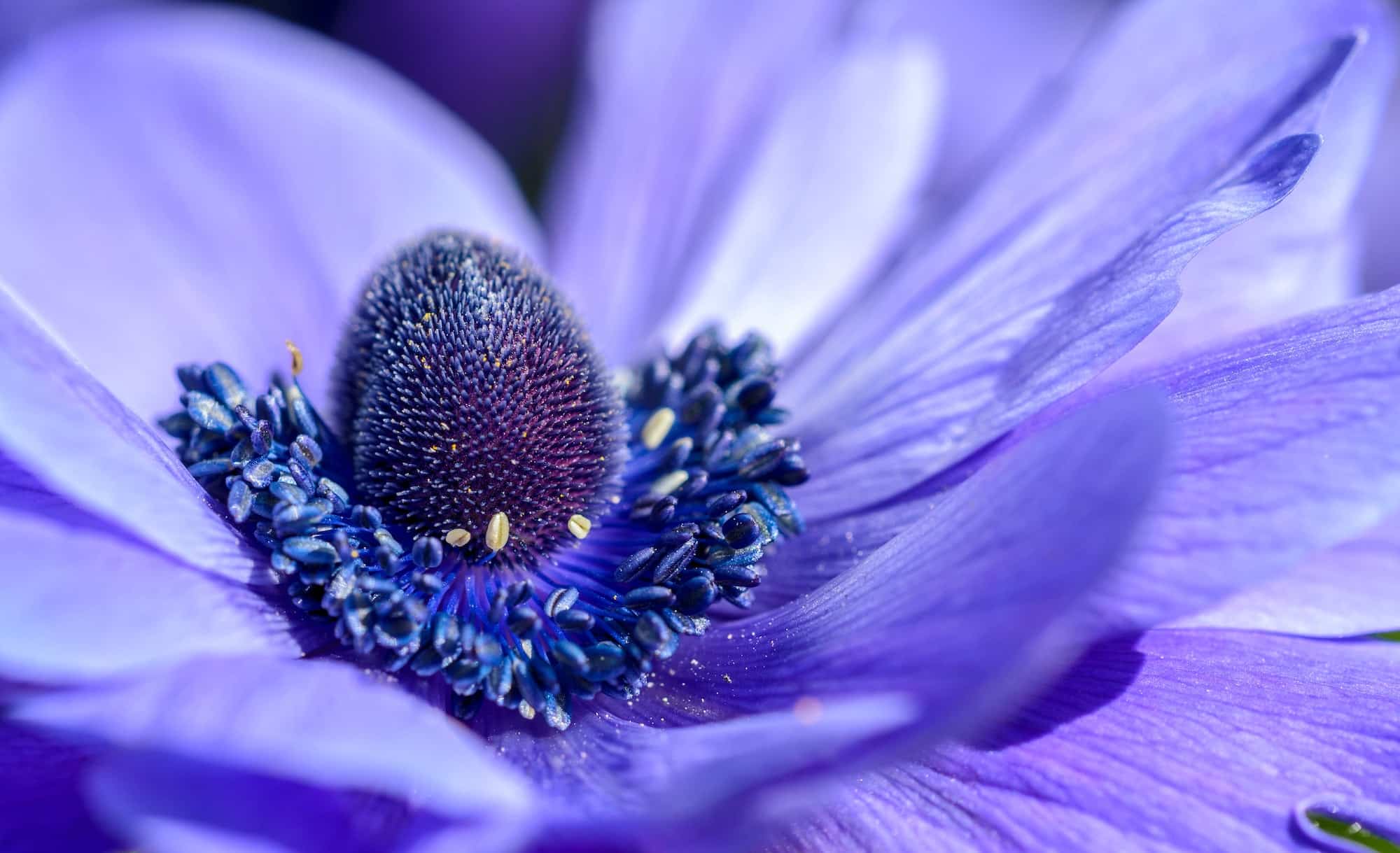
Macro flower photography allows the photographer to get as close as possible to the subject, to enlarge it and capture every minute detail, even features invisible to the naked eye. It brings the miniature world of flowers (pollen, stamen, pistil, micro-insects, etc.) into perfect focus.

More technical than classic photography due to the demands of proximity, macro photography requires specific equipment, which we will look at below.

Flower photography: Before you get started

To get the best flower photo, it’s important to determine the following conditions:

• When best to shoot flowers?

• Where to photograph flowers?

• What are the optimal conditions for flower photography?

Flower photography is a great outlet for your creativity. Credit: Lee 琴 / Unsplash Taken with a SONY ILCE-7M2: 28.0mm ƒ/4.5, 1/1600s and ISO 100
  • When best to shoot flowers?

The optimal time to photograph flowers is in spring, when flowers and trees are in bloom. This is the best season to enjoy and capture nature’s explosion of color. Flowers can, however, be photographed all year round, since every season has its own species and its specific color palette.

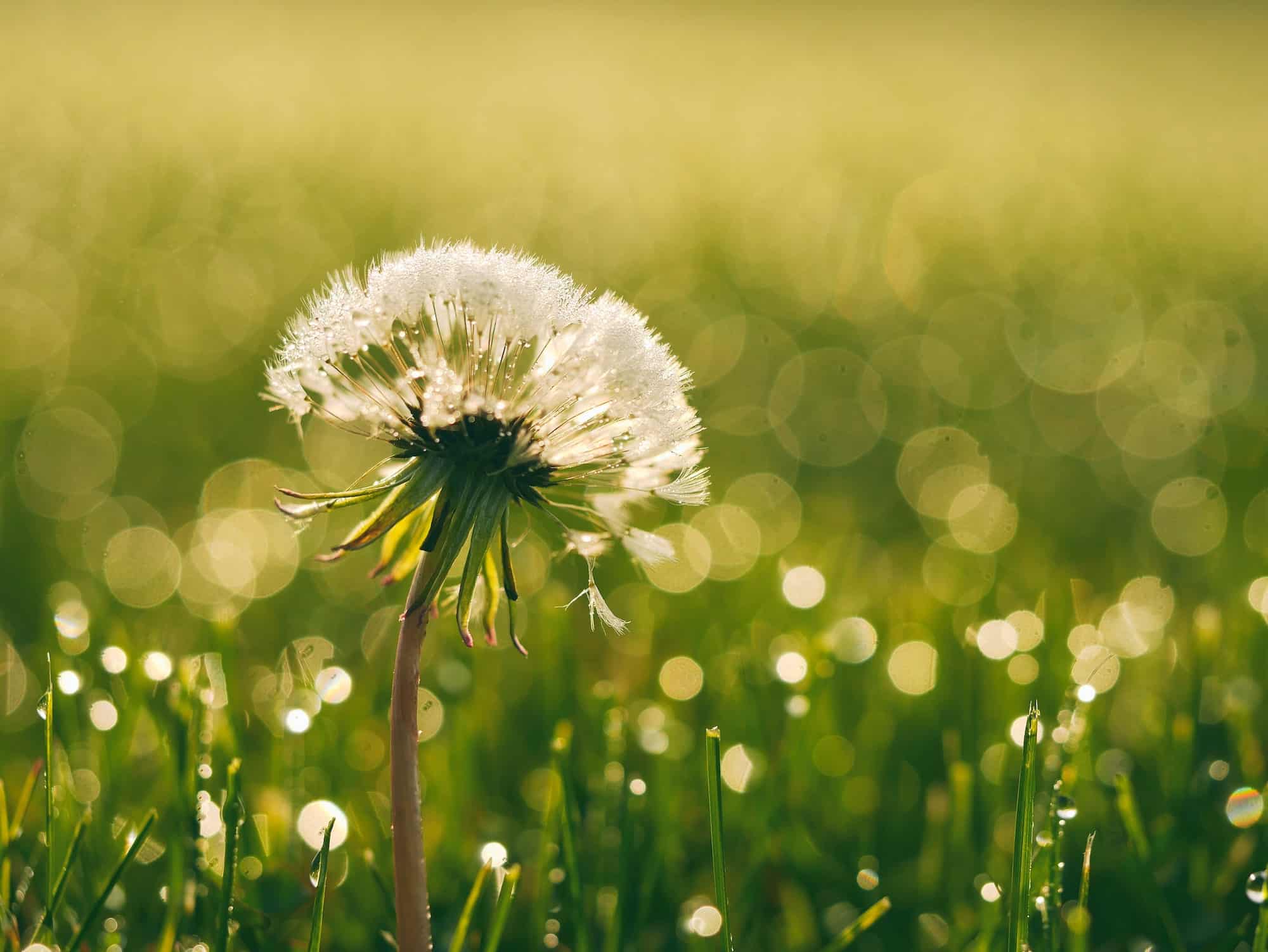
On the day of the shoot, head out the door early in the morning, just after sunrise, or later in the evening, before sunset. These times of day are known as the “golden hours,” because the light is soft and warm, and it enhances the colors of flowers. Early-morning flower photography allows you to capture dew drops on the petals, adding an extra touch to the composition.

  • Where to photograph flowers?

Found anywhere you look, flowers are the easiest photography subject to find. Whether at home or in your travels, you can find flowers in any garden, park, forest, on a mountain walk, near a beach, etc… You can also photograph flowers indoors, at home, arranged in creative ways (a bouquet, in a watering can, etc.).

While garden-grown plants and exotic wildflowers lend themselves best to photography thanks to their vibrant colors, we should not underestimate dead flowers. Wilted petals, filaments, and seeds offer a great opportunity for beautiful still life photographs.

  • What are the optimal conditions for flower photography?

The blur in flower photos helps complement the main subject. Credit: Aaron Burden / Unsplash Taken with a Panasonic DMC-GX7: 60.0mm ƒ/2.8, 1-1600s and ISO 125

The ideal conditions for flower photography are overcast skies with no wind. The presence of clouds (the more overcast, the better) diffuses and softens the light, yielding a well-exposed, more natural and uniform image. Soft light also brings out the color and detail in your flower species. 

By contrast, on a bright sunny day, especially at midday, strong direct sunlight can exaggerate the contrast of your photos, deepening the shadows and obscuring the details (shapes, textures, imperfections, etc.). You need to pay attention not only to how strong the light is, but also where it’s coming from (behind, overhead, facing you) to properly manage the exposure of your flower photographs.

Make sure there’s no wind when you’re out photographing flowers. If it’s windy, you won’t be able to focus properly and get a perfectly sharp image because your subject is constantly moving. If you want to take a flower photo on a windy day, make sure you have a windscreen (a reflector or a simple piece of cardboard).

Finally, the presence of rain can enhance your flower photos, since flowers balancing drops of water offer creative photo opportunities. You can shoot during the rain or just after, before the drops dry. If you want to recreate the effect of rain or dew, you can bring a spray bottle and mist your flowers.

Although soft light is ideal, depending on your flower photography project, direct light can generate interesting effects. This is the case, for example, when flowers are backlit (sun located on the other side of the flower), which might create halos of light and highlight the translucent fragility of the petals. Similarly, a slight breeze can create an interesting aesthetic.

What equipment should I use for flower photography?

There are many accessories available to make taking a flower photo easier. Credit: David Brooke Martin / Unsplash Taken with a NIKON D7200: 21.0mm ƒ/22.0, 2/5s and ISO 100

Flower photography is very accessible and doesn’t require any special equipment. However, if you want to take more elaborate photos, particularly for macro flower photography, you’ll need to equip yourself with quality equipment, whether in terms of cameras, lenses, or accessories.

  • What camera to choose? 

For flower photography, you can use any type of camera: smartphone, compact, SLR, hybrid, film, etc. With the right settings, a great picture is in the bag. So you don’t need a professional camera. 

However, it is recommended that you use a camera that allows you to change lenses and that has a manual mode, so that you can adjust your settings and optimize your image. This is particularly important in the case of macro flower photography, where a reflex or hybrid camera is ideal.

  • What lens to choose for flower photography?

Make sure to prepar before going out to photograph flowers. Credit: Alice Castro / Unsplash Taken with a NIKON D1200: 50.0mm ƒ/2.5 and ISO 100

Long focal lenses are the best choice in flower photography. They give you a narrow angle of view and blur the background to make the subject pop. They also allow for optimal focus, even when the lens is nearly touching the flower.

However, you can take beautiful flower photos with any lens, whether standard (e.g., 18–135 mm), wide-angle (less than 50 mm), or telephoto (between 90 mm and 600 mm). A wide-angle lens, for example, allows you to capture flowers in their environment, creating interesting distortion effects. 

In the case of macro flower photography, since you need to get as close as possible to your subject to capture all the details, you’ll need a macro lens. Usually with a focal length of 50 mm to 180 mm, macro lenses enable you to focus precisely on your chosen flower and achieve perfect sharpness, even at close range.

Whatever your choice of lenses, the important thing is to find one that is best adapted to your creative project and to measure the distance between you and your subject to optimize your focus. Experiment with your lenses (readjusting your settings every time) and figure out what works best for you.

  • Accessories

To facilitate your flower photography, you can equip yourself with certain accessories, the importance of which will depend on your approach, the weather conditions, and your ideas:

A tripod: Although not essential for flower photography, the tripod’s stability will help you steady your frame and stay in focus. In macro flower photography, a tripod, unaffected by movement, is essential to maintaining optimum focus and perfect sharpness.

• If the light is too bright, you can use a lens hood to shade your lens and ensure even illumination. You might also get a light diffuser to soften the light, or a reflector to help reflect the light back towards your subject (to accentuate contrast, intensify the color, etc.).

Flash: To obtain ideal illumination when taking close-ups, use a small aperture. When the light is insufficient, the flash offers extra illumination. In macro photography, the flash helps to obtain natural light and compensate for the absence of light in extreme close-ups.

Remote shutter release: If you’re using a tripod, it will allow you to shoot without having to touch your camera, once you have adjusted all your setting. Since it avoids vibrations or the risk of changing focus, a remote shutter release makes it easier to get a perfectly sharp flower photo.

To create a nice blur in flower photography, you need a large aperture. Credit: Mona Magnussen / Unsplash Taken with a NIKON D3200: 85.0mm ƒ/4.0, 2/2500s and ISO 100
  • Flower photography settings

While you can go out and take a flower photo without thinking about the settings on your camera or smartphone, these settings are essential to improving your technique and getting interesting images. In flower photography, there are three main parameters to consider: aperture, ISO sensitivity, and shutter speed.

  • The manual mode

While it’s perfectly possible to take beautiful flower photos in automatic mode, especially if you’re a beginner, only switching to the manual mode will allow you to improve your shots. Depending on your distance and the context of the photo (low light, wind, etc.), automatic mode might struggle to obtain an optimal focus.

In manual mode, you can finetune all the settings you need for a successful shot. Because of the very shallow depth of field in macro flower photography, manual focusing is a must to prevent any potential movement.

The aperture controls the amount of light entering your camera lens and is represented as an ƒ-number. When it comes to flowers, photography needs to emphasize the main subject, setting it apart from its background using blur. To foreground the flower, a shallow depth of field is required.

This shallow depth of field is achieved with a large diaphragm opening, recommended between ƒ/4 and ƒ/2.8, to isolate the flower from its environment. 

In macro flower photography, the very shallow depth of field means that a large part of your frame will be out of focus. You can then reduce the diaphragm aperture to ƒ/16 or ƒ/22 to obtain greater depth of field and thus better sharpness. This will, however, limit the light, which you will need to compensate with other settings.

To set your aperture, you can use your camera’s manual mode or use the Aperture Priority mode, available on many cameras. Run a few tests and find the aperture that best suits your flower photography project and ensures that your main subject is crisp and clear.

Flower photography is a great way to showcase the beauty of nature. Credit: Tj Holowaychuk / Unsplash Taken with a FUJIFILM X-Pro2: 90.0mm ƒ/2.0, 1/4000s and ISO 200

ISO sensitivity

Like aperture, ISO allows you to control the amount of light captured by your camera, yielding a more or less illuminated, detailed image. When it comes to flower photography, depending on the conditions (time of day, the weather) and your aperture and shutter speed, you will need to adjust your ISO sensitivity (a low aperture will require more light).

In general, if you’re photographing a flower on a sunny or overcast day, you won’t have to worry too much about ISO, which can be kept low (between 100 and 800) since the sensor receives enough light. In the early morning and late afternoon, on the other hand, you will need to adjust your ISO to capture as much light as possible and compensate for low levels of light. 

Depending on your needs, you can go up to ISO 3200 to get a very sharp image without too much risk of digital noise (grainy picture). Try several ISO settings to find the sensitivity that gives you the best results without graininess.

  • Shutter speed and exposure time

The third major setting to consider on your flower photography outings is shutter speed. Like the other parameters, shutter speed allows you to control the amount of light hitting the sensor by adjusting the length of exposure. Generally, and in flower photography specifically, the longer your focal length, the shorter your exposure time, especially in macro shots.

To secure a sharp shot that freezes the action and brings out the details of your subject, you will need to pick a high shutter speed, i.e., a short exposure time. We recommend setting your shutter speed between 1/200s and 1/1000s. 

The longer your exposure time, the more light your sensor registers, and the better it captures the movement of the flower and its surroundings (nearby branches, insects, etc.). If your exposure time is too long, you will likely end up with a blurred or streaky image. This effect is magnified on windy days.

Flower macro photography brings out all the details invisible to the naked eye. Credit: V2osk / Unsplash Taken with a Nikon D800: 105.0mm ƒ/36.0, 1.6s and ISO 50
  • RAW format

If you’re planning to process and rework your photos on your computer, you should shoot in uncompressed RAW photo format. Unlike JPEG, which has a limited value in post-production, the RAW format preserves all the details of the scene.

How to prepare for your flower-photography outing?

Once you’ve chosen the right equipment and set up your camera properly, before you press the shutter release, you need to prepare your photos well: background control, frame, composition, etc.

  • Plan your outing

Because flower photography depends so much on the location, the season and the bloom calendar, the time of day, and the weather conditions, it’s important to prepare your outing in advance. Check the forecast for sunshine, cloud cover, wind or rain, and so on.

This will make it easier for you to determine what equipment to bring (sunshield, reflector, spray, etc.), as well as what to wear. In general, choose clothes that you won’t mind getting dirty, so you can sit or lie down to frame your shot. You might even bring a small kneeling pad.

  • Honing the background

To make sure your subject stands out and is immediately visible, you need to be attentive to your background. It should complement your flower, be uncluttered, so it doesn’t distract from your subject and overwhelm your flower photo. 

A busy background can have a large number of objects in the frame (stems, grass, branches, other flowers), a distracting human background (buildings, walls, fences), areas that are too bright or too vivid, spots of light, etc.

When photographing flowers, the shallow depth of field needed to bring the subject into focus calls for a blurred background. This harmonizes the photo, masking any flaws and immediately drawing attention to the subject. Depending on your photo projects, you can also fill the entire frame with your subject, thus minimizing the background.

To enhance or clean up your background, especially if it’s too busy, you can set up a solid-colored backdrop that will contrast with the bright or pale color palette of your subject and create a unique setting that will foreground and enhance your flower. You may also take advantage of other flowers in the background to create creative patterns of shapes and colors.

For highly creative flower shots, you can play with the depth of field and create a foreground blur, letting your subject recede into the background or shooting it over another flower. Play with distance and depth of field to achieve unique, interesting results.

  • Framing and composing your photo

For successful and memorable flower shots, in addition to paying attention to your background, work on your framing and composition; in other words, set the stage for what happens in your image. 

There are no rules for framing or composition. Anything in your frame can contribute to a beautiful photo. The important thing is to know what you want to emphasize and to capture what you like.

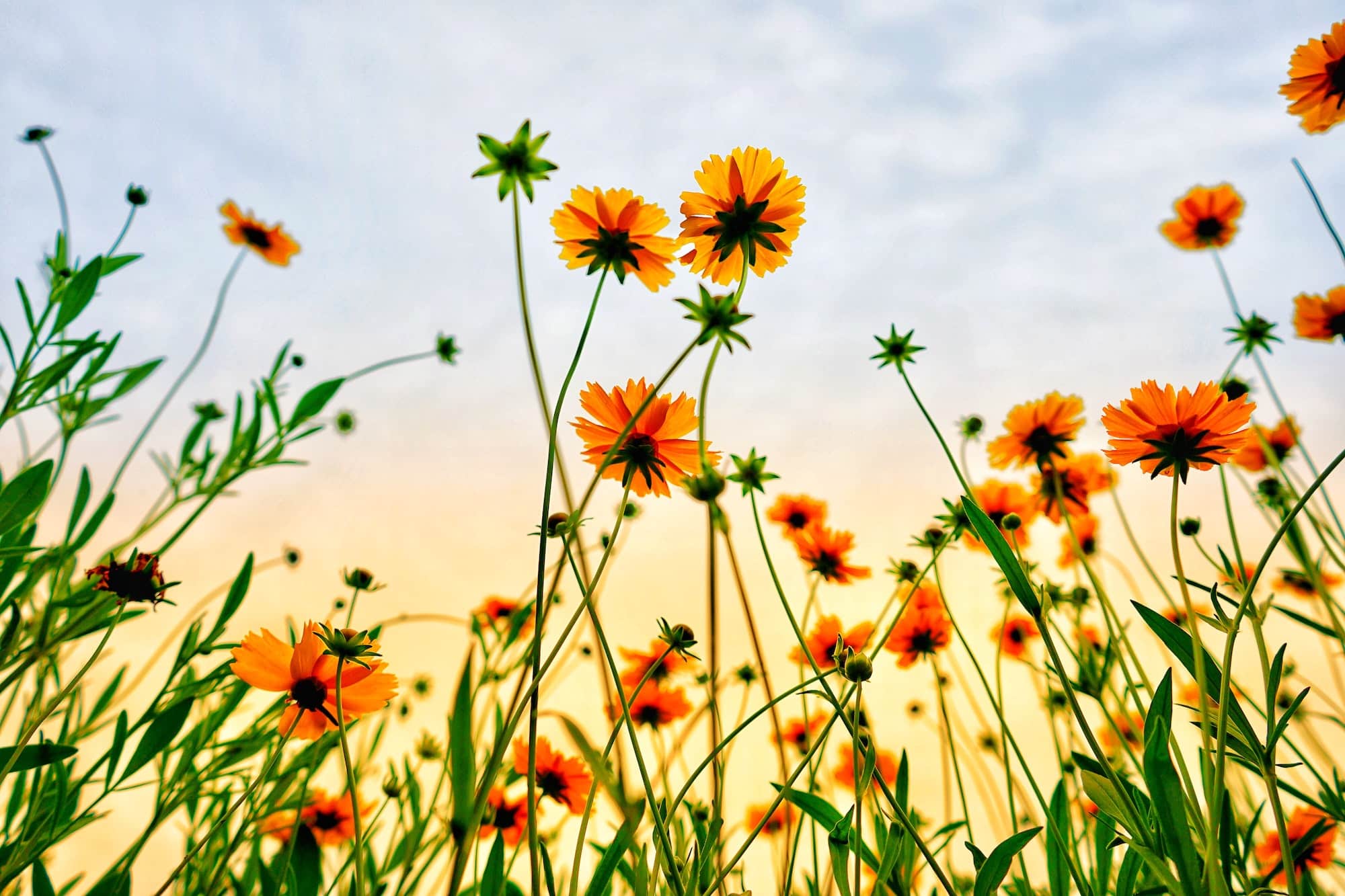
Whether to obtain a wide shot, a close-up of a single flower or a bouquet, a profile or three-quarter view, a bird’s eye or worm’s eye view, in portrait or landscape mode, don’t hesitate to move around the flower and try out different angles. In general, it’s best to position yourself at the level of the flower, or close to the ground, for greater immersion and a more intimate, natural flower photo.

When composing your flower photo, show the extent of a field, look for details (petal transparency, textures, etc.), the presence of insects (bee, butterfly, ladybug, etc.), or play with contrast, colors, symmetrical shapes, etc.

  • Unleash your creativity

Whether you use analog photography, black-and-white, accessories, or high color contrast; highlight the flower’s imperfections or create original mises-en-scène, the important thing in flower photography is to unleash your creativity and get exceptional shots that you bring you satisfaction.

  • Respect nature

While flowers offer an incredible field of possibilities for taking photos and perfecting your technique, you mustn’t forget that you’re in a natural environment. Respecting nature means refraining from trampling, or pulling out, other flowers and grasses only to get closer to your subject and taking care not to disturb the wildlife around you. May your photos be the only trace of your presence.

İbrahim Özdemir / Unsplash Taken with a Canon EOS 600D: 55.0mm ƒ/9.0, 1/200s and ISO 100

Processing your flower photos

To perfect your flower photos, you might want to process and retouch them using photo processing software, such as Lightroom, Photoshop, etc. While reworking your photos is optional, it can enable you to correct flaws, balance or enhance the colors, and create original montages.

  • Processing in flower photography most often involves:

• Cropping the photo,

• Adjusting the exposure,

• Increasing contrast,

• Increasing brilliance,

• Adjusting the white balance,

• Harmonizing or enhancing colors,

• Correcting defects or imperfections (pollen, dirt, etc.),

• Reducing digital noise.

Play around with the different settings and experiment to get your perfect flower photo. Remember to edit your photos in RAW format for best results.

Now you know the ins and outs of flower photography. Take advantage of the natural surroundings to refine your technique, try out new perspectives and settings, and, above all, enjoy the beauty of plants and their individual characteristics.

*Article produced with the expertise of the MPB photo equipment resale, purchase and exchange site.

A dead flower can bring a lot of character into the photo.
Credit: Bich Tran / Pexels
Taken with a Canon EOS M10: 27.0mm ƒ/4.5 and ISO 100.

How to Take Beautiful Flower Photos

How to Take Beautiful Flower Photos

With nature’s renewed bloom, flower photography is the ideal medium for capturing the beauty of the flora that surrounds us. You only need to leave your house to be able to photograph flowers from every angle.

However, while taking snapshots of flowers is easy, getting the shot right takes a bit of skill. If you’re going to take macro photo of flowers, there are a number of conditions you’ll need to meet in order to succeed: the choice of lens, composition, settings, angles of view, time of day, and so on*.

Macro photography lets you see every detail of a flower. Credit: Dominik Scythe / Unsplash Taken with a NIKON D7000: 150.0mm ƒ/6.3, 1/320s and ISO 200

Macro flower photography: Get as close as possible

Flower photography is divided into classic and macro photography. Macro photography, or simply macro, refers to an image with a magnification ratio of at least 1:1, that is, a life-size image.

Macro flower photography allows the photographer to get as close as possible to the subject, to enlarge it and capture every minute detail, even features invisible to the naked eye. It brings the miniature world of flowers (pollen, stamen, pistil, micro-insects, etc.) into perfect focus.

More technical than classic photography due to the demands of proximity, macro photography requires specific equipment, which we will look at below.

Flower photography: Before you get started

To get the best flower photo, it’s important to determine the following conditions:

• When best to shoot flowers?

• Where to photograph flowers?

• What are the optimal conditions for flower photography?

Flower photography is a great outlet for your creativity. Credit: Lee 琴 / Unsplash Taken with a SONY ILCE-7M2: 28.0mm ƒ/4.5, 1/1600s and ISO 100
  • When best to shoot flowers?

The optimal time to photograph flowers is in spring, when flowers and trees are in bloom. This is the best season to enjoy and capture nature’s explosion of color. Flowers can, however, be photographed all year round, since every season has its own species and its specific color palette.

On the day of the shoot, head out the door early in the morning, just after sunrise, or later in the evening, before sunset. These times of day are known as the “golden hours,” because the light is soft and warm, and it enhances the colors of flowers. Early-morning flower photography allows you to capture dew drops on the petals, adding an extra touch to the composition.

  • Where to photograph flowers?

Found anywhere you look, flowers are the easiest photography subject to find. Whether at home or in your travels, you can find flowers in any garden, park, forest, on a mountain walk, near a beach, etc… You can also photograph flowers indoors, at home, arranged in creative ways (a bouquet, in a watering can, etc.).

While garden-grown plants and exotic wildflowers lend themselves best to photography thanks to their vibrant colors, we should not underestimate dead flowers. Wilted petals, filaments, and seeds offer a great opportunity for beautiful still life photographs.

  • What are the optimal conditions for flower photography?

The blur in flower photos helps complement the main subject. Credit: Aaron Burden / Unsplash Taken with a Panasonic DMC-GX7: 60.0mm ƒ/2.8, 1-1600s and ISO 125

The ideal conditions for flower photography are overcast skies with no wind. The presence of clouds (the more overcast, the better) diffuses and softens the light, yielding a well-exposed, more natural and uniform image. Soft light also brings out the color and detail in your flower species. 

By contrast, on a bright sunny day, especially at midday, strong direct sunlight can exaggerate the contrast of your photos, deepening the shadows and obscuring the details (shapes, textures, imperfections, etc.). You need to pay attention not only to how strong the light is, but also where it’s coming from (behind, overhead, facing you) to properly manage the exposure of your flower photographs.

Make sure there’s no wind when you’re out photographing flowers. If it’s windy, you won’t be able to focus properly and get a perfectly sharp image because your subject is constantly moving. If you want to take a flower photo on a windy day, make sure you have a windscreen (a reflector or a simple piece of cardboard).

Finally, the presence of rain can enhance your flower photos, since flowers balancing drops of water offer creative photo opportunities. You can shoot during the rain or just after, before the drops dry. If you want to recreate the effect of rain or dew, you can bring a spray bottle and mist your flowers.

Although soft light is ideal, depending on your flower photography project, direct light can generate interesting effects. This is the case, for example, when flowers are backlit (sun located on the other side of the flower), which might create halos of light and highlight the translucent fragility of the petals. Similarly, a slight breeze can create an interesting aesthetic.

What equipment should I use for flower photography?

There are many accessories available to make taking a flower photo easier. Credit: David Brooke Martin / Unsplash Taken with a NIKON D7200: 21.0mm ƒ/22.0, 2/5s and ISO 100

Flower photography is very accessible and doesn’t require any special equipment. However, if you want to take more elaborate photos, particularly for macro flower photography, you’ll need to equip yourself with quality equipment, whether in terms of cameras, lenses, or accessories.

  • What camera to choose? 

For flower photography, you can use any type of camera: smartphone, compact, SLR, hybrid, film, etc. With the right settings, a great picture is in the bag. So you don’t need a professional camera. 

However, it is recommended that you use a camera that allows you to change lenses and that has a manual mode, so that you can adjust your settings and optimize your image. This is particularly important in the case of macro flower photography, where a reflex or hybrid camera is ideal.

  • What lens to choose for flower photography?

Make sure to prepar before going out to photograph flowers. Credit: Alice Castro / Unsplash Taken with a NIKON D1200: 50.0mm ƒ/2.5 and ISO 100

Long focal lenses are the best choice in flower photography. They give you a narrow angle of view and blur the background to make the subject pop. They also allow for optimal focus, even when the lens is nearly touching the flower.

However, you can take beautiful flower photos with any lens, whether standard (e.g., 18–135 mm), wide-angle (less than 50 mm), or telephoto (between 90 mm and 600 mm). A wide-angle lens, for example, allows you to capture flowers in their environment, creating interesting distortion effects. 

In the case of macro flower photography, since you need to get as close as possible to your subject to capture all the details, you’ll need a macro lens. Usually with a focal length of 50 mm to 180 mm, macro lenses enable you to focus precisely on your chosen flower and achieve perfect sharpness, even at close range.

Whatever your choice of lenses, the important thing is to find one that is best adapted to your creative project and to measure the distance between you and your subject to optimize your focus. Experiment with your lenses (readjusting your settings every time) and figure out what works best for you.

  • Accessories

To facilitate your flower photography, you can equip yourself with certain accessories, the importance of which will depend on your approach, the weather conditions, and your ideas:

A tripod: Although not essential for flower photography, the tripod’s stability will help you steady your frame and stay in focus. In macro flower photography, a tripod, unaffected by movement, is essential to maintaining optimum focus and perfect sharpness.

• If the light is too bright, you can use a lens hood to shade your lens and ensure even illumination. You might also get a light diffuser to soften the light, or a reflector to help reflect the light back towards your subject (to accentuate contrast, intensify the color, etc.).

Flash: To obtain ideal illumination when taking close-ups, use a small aperture. When the light is insufficient, the flash offers extra illumination. In macro photography, the flash helps to obtain natural light and compensate for the absence of light in extreme close-ups.

Remote shutter release: If you’re using a tripod, it will allow you to shoot without having to touch your camera, once you have adjusted all your setting. Since it avoids vibrations or the risk of changing focus, a remote shutter release makes it easier to get a perfectly sharp flower photo.

To create a nice blur in flower photography, you need a large aperture. Credit: Mona Magnussen / Unsplash Taken with a NIKON D3200: 85.0mm ƒ/4.0, 2/2500s and ISO 100
  • Flower photography settings

While you can go out and take a flower photo without thinking about the settings on your camera or smartphone, these settings are essential to improving your technique and getting interesting images. In flower photography, there are three main parameters to consider: aperture, ISO sensitivity, and shutter speed.

  • The manual mode

While it’s perfectly possible to take beautiful flower photos in automatic mode, especially if you’re a beginner, only switching to the manual mode will allow you to improve your shots. Depending on your distance and the context of the photo (low light, wind, etc.), automatic mode might struggle to obtain an optimal focus.

In manual mode, you can finetune all the settings you need for a successful shot. Because of the very shallow depth of field in macro flower photography, manual focusing is a must to prevent any potential movement.

The aperture controls the amount of light entering your camera lens and is represented as an ƒ-number. When it comes to flowers, photography needs to emphasize the main subject, setting it apart from its background using blur. To foreground the flower, a shallow depth of field is required.

This shallow depth of field is achieved with a large diaphragm opening, recommended between ƒ/4 and ƒ/2.8, to isolate the flower from its environment. 

In macro flower photography, the very shallow depth of field means that a large part of your frame will be out of focus. You can then reduce the diaphragm aperture to ƒ/16 or ƒ/22 to obtain greater depth of field and thus better sharpness. This will, however, limit the light, which you will need to compensate with other settings.

To set your aperture, you can use your camera’s manual mode or use the Aperture Priority mode, available on many cameras. Run a few tests and find the aperture that best suits your flower photography project and ensures that your main subject is crisp and clear.

Flower photography is a great way to showcase the beauty of nature. Credit: Tj Holowaychuk / Unsplash Taken with a FUJIFILM X-Pro2: 90.0mm ƒ/2.0, 1/4000s and ISO 200

ISO sensitivity

Like aperture, ISO allows you to control the amount of light captured by your camera, yielding a more or less illuminated, detailed image. When it comes to flower photography, depending on the conditions (time of day, the weather) and your aperture and shutter speed, you will need to adjust your ISO sensitivity (a low aperture will require more light).

In general, if you’re photographing a flower on a sunny or overcast day, you won’t have to worry too much about ISO, which can be kept low (between 100 and 800) since the sensor receives enough light. In the early morning and late afternoon, on the other hand, you will need to adjust your ISO to capture as much light as possible and compensate for low levels of light. 

Depending on your needs, you can go up to ISO 3200 to get a very sharp image without too much risk of digital noise (grainy picture). Try several ISO settings to find the sensitivity that gives you the best results without graininess.

  • Shutter speed and exposure time

The third major setting to consider on your flower photography outings is shutter speed. Like the other parameters, shutter speed allows you to control the amount of light hitting the sensor by adjusting the length of exposure. Generally, and in flower photography specifically, the longer your focal length, the shorter your exposure time, especially in macro shots.

To secure a sharp shot that freezes the action and brings out the details of your subject, you will need to pick a high shutter speed, i.e., a short exposure time. We recommend setting your shutter speed between 1/200s and 1/1000s. 

The longer your exposure time, the more light your sensor registers, and the better it captures the movement of the flower and its surroundings (nearby branches, insects, etc.). If your exposure time is too long, you will likely end up with a blurred or streaky image. This effect is magnified on windy days.

Flower macro photography brings out all the details invisible to the naked eye. Credit: V2osk / Unsplash Taken with a Nikon D800: 105.0mm ƒ/36.0, 1.6s and ISO 50
  • RAW format

If you’re planning to process and rework your photos on your computer, you should shoot in uncompressed RAW photo format. Unlike JPEG, which has a limited value in post-production, the RAW format preserves all the details of the scene.

How to prepare for your flower-photography outing?

Once you’ve chosen the right equipment and set up your camera properly, before you press the shutter release, you need to prepare your photos well: background control, frame, composition, etc.

  • Plan your outing

Because flower photography depends so much on the location, the season and the bloom calendar, the time of day, and the weather conditions, it’s important to prepare your outing in advance. Check the forecast for sunshine, cloud cover, wind or rain, and so on.

This will make it easier for you to determine what equipment to bring (sunshield, reflector, spray, etc.), as well as what to wear. In general, choose clothes that you won’t mind getting dirty, so you can sit or lie down to frame your shot. You might even bring a small kneeling pad.

  • Honing the background

To make sure your subject stands out and is immediately visible, you need to be attentive to your background. It should complement your flower, be uncluttered, so it doesn’t distract from your subject and overwhelm your flower photo. 

A busy background can have a large number of objects in the frame (stems, grass, branches, other flowers), a distracting human background (buildings, walls, fences), areas that are too bright or too vivid, spots of light, etc.

When photographing flowers, the shallow depth of field needed to bring the subject into focus calls for a blurred background. This harmonizes the photo, masking any flaws and immediately drawing attention to the subject. Depending on your photo projects, you can also fill the entire frame with your subject, thus minimizing the background.

To enhance or clean up your background, especially if it’s too busy, you can set up a solid-colored backdrop that will contrast with the bright or pale color palette of your subject and create a unique setting that will foreground and enhance your flower. You may also take advantage of other flowers in the background to create creative patterns of shapes and colors.

For highly creative flower shots, you can play with the depth of field and create a foreground blur, letting your subject recede into the background or shooting it over another flower. Play with distance and depth of field to achieve unique, interesting results.

  • Framing and composing your photo

For successful and memorable flower shots, in addition to paying attention to your background, work on your framing and composition; in other words, set the stage for what happens in your image. 

There are no rules for framing or composition. Anything in your frame can contribute to a beautiful photo. The important thing is to know what you want to emphasize and to capture what you like.

Whether to obtain a wide shot, a close-up of a single flower or a bouquet, a profile or three-quarter view, a bird’s eye or worm’s eye view, in portrait or landscape mode, don’t hesitate to move around the flower and try out different angles. In general, it’s best to position yourself at the level of the flower, or close to the ground, for greater immersion and a more intimate, natural flower photo.

When composing your flower photo, show the extent of a field, look for details (petal transparency, textures, etc.), the presence of insects (bee, butterfly, ladybug, etc.), or play with contrast, colors, symmetrical shapes, etc.

  • Unleash your creativity

Whether you use analog photography, black-and-white, accessories, or high color contrast; highlight the flower’s imperfections or create original mises-en-scène, the important thing in flower photography is to unleash your creativity and get exceptional shots that you bring you satisfaction.

  • Respect nature

While flowers offer an incredible field of possibilities for taking photos and perfecting your technique, you mustn’t forget that you’re in a natural environment. Respecting nature means refraining from trampling, or pulling out, other flowers and grasses only to get closer to your subject and taking care not to disturb the wildlife around you. May your photos be the only trace of your presence.

İbrahim Özdemir / Unsplash Taken with a Canon EOS 600D: 55.0mm ƒ/9.0, 1/200s and ISO 100

Processing your flower photos

To perfect your flower photos, you might want to process and retouch them using photo processing software, such as Lightroom, Photoshop, etc. While reworking your photos is optional, it can enable you to correct flaws, balance or enhance the colors, and create original montages.

  • Processing in flower photography most often involves:

• Cropping the photo,

• Adjusting the exposure,

• Increasing contrast,

• Increasing brilliance,

• Adjusting the white balance,

• Harmonizing or enhancing colors,

• Correcting defects or imperfections (pollen, dirt, etc.),

• Reducing digital noise.

Play around with the different settings and experiment to get your perfect flower photo. Remember to edit your photos in RAW format for best results.

Now you know the ins and outs of flower photography. Take advantage of the natural surroundings to refine your technique, try out new perspectives and settings, and, above all, enjoy the beauty of plants and their individual characteristics.

*Article produced with the expertise of the MPB photo equipment resale, purchase and exchange site.

A dead flower can bring a lot of character into the photo.
Credit: Bich Tran / Pexels
Taken with a Canon EOS M10: 27.0mm ƒ/4.5 and ISO 100.

Photographer is Arrested Protesting the Destruction of Rare Bird’s Habitat

Photographer is Arrested Protesting the Destruction of Rare Bird’s Habitat

WIldlife photographer arrested

A wildlife photographer has been arrested in a Tasmanian forest for protesting the logging of trees where he has taken photos of the critically endangered swift parrot.

Rob Blakers was arrested on Tuesday at the same spot where he previously took an amazing photo of 12 swift parrots in one tree. He estimates that there were 30 around him at the time — about 4% of the remaining population.

Swift parrots
Rob Blakers’ photo of 12 swift parrots taken last summer where the trees are being felled.

“It was extraordinary. I have only spent a few years looking for swift parrots, but this was far above anything else I’ve ever seen,” he tells The Guardian.

However, Blakers was outraged when the Tasmanian government logging agency began felling trees in the Eastern Tiers, a two hour drive from the capital of Hobart.

He joined with the Bob Brown Foundation and a group of protesters entered the area where Sustainable Timber Tasmania was cutting down trees. The police were called and asked Blakers to leave, when he refused he was arrested.

Blakers, who is a renowned nature photographer in Tasmania, says he is “furious” with the logging.

“My reaction was: how dare they? How can they just so brazenly ignore all of the science, all of the advice they have received, and just go in and smash this forest?” He tells The Guardian.

Swift parrot
Swift parrot | Rob Blakers

Blakers has been visiting that area of Tasmania for the last three years to document swift parrots, often climbing trees to get a shot of them in the canopy.

He says he has seen consistent aggregations of swift parrots in numbers not seen anywhere else in the world.

“Flocks of up to 30 birds were observed on several occasions, with 12 parrots photographed in a single tree on Christmas Eve,” he says.

“On many mornings and evenings, their calls were the dominant sound of the forest. At least one nesting site was confirmed, but there were almost certainly more.

“Parrots were flocking and feeding in both the canopy and at ground level. This was prime swift parrot habitat and an extraordinary natural phenomenon.”

Rob Blakers
Rob Blakers at the logging site.

At the time of logging, there were no swift parrots in the area as they spend winters on the Australian mainland and come to the forest in the summer to nest.

“Two weeks ago logging began in this forest. I spent two full days last week urgently attempting to contact Forestry Tasmania. There was no response to my calls,” he says.

“In the last few days I have returned to this forest to document the damage. The southeast portion of the coupe, which was alive with swift parrots through the summer, has been substantially logged.”

Blakers says the timber agency has broken its own rules after logging trees 114 feet (35 meters) from the nesting tree he captured in a photo. Under the agency’s rules, there is supposed to be a buffer of at least 164 feet (50 meters.)

Out West Photography opens gallery

Out West Photography opens gallery

Anyone who scrolls through Facebook pages of people, places and activities in the Lincoln County area have most likely come across dramatic photos posted under the name Out West Photography. Earlier this month, the photographer behind those images, Ben King, opened a gallery in South Beach so people can view — and purchase — his artwork in a variety of sizes and printed on several different mediums.

The Out West Photography gallery opened on June 3 in space #807 at Aquarium Village, 3101 SE Ferry Slip Road. King said he spent about a month getting the gallery space ready, but admits it’s a “work in progress” and there are a few more touches he wants to add.

This page requires Javascript.

Javascript is required for you to be able to read premium content. Please enable it in your browser settings.

14th Annual Fran Achen Juried Photography Exhibition set for July 1

14th Annual Fran Achen Juried Photography Exhibition set for July 1

WHITEWATER — The Whitewater Arts Alliance (WAA) exhibition officially opens on July 1. The photographs in the show will be displayed on the walls of the gallery and, concurrently, in an online virtual display that will appear on the WAA website.

An opening reception featuring the presentation of awards and discussion of the outstanding photographs will be held Sunday, July 2 at 1:00 P.M. at the Cultural Arts Center–402 West Main Street–where light refreshments will be served. Voting for

This page requires Javascript.

Javascript is required for you to be able to read premium content. Please enable it in your browser settings.


Featured Local Savings


The Man Who Pictured Ghana’s Rise at Home and Abroad

The Man Who Pictured Ghana’s Rise at Home and Abroad

The 94-year-old British-Ghanaian photographer James Barnor calls himself “Lucky Jim” — he’s been “at the right place at the right time and met the right people” during a career spanning more than six decades and two continents, he said in a recent telephone interview from his London home.

It’s easy to believe him looking at “James Barnor: Accra/London,” a major retrospective of his work across genres — studio and street photography, photojournalism and fashion, images that range from the quietly intimate to the historical and iconic. Shown at the Serpentine Galleries in London in 2021, the exhibition is on view in an expanded form at the Detroit Institute of Arts, through Oct. 15.

Take a modest picture by Barnor from 1952 of Roy Ankrah, a Commonwealth featherweight boxing champion. Barnor decided to tag along when Ankrah and his wife, Rebecca, visited a friend — none other than the independence leader Kwame Nkrumah, who would go on to transform the Gold Coast from a British colony into the Republic of Ghana, becoming its first prime minister in 1957 and later its president. Barnor posed the three on Nkrumah’s couch — and then jumped into the frame, perching on an armrest, becoming part of a momentous history unfolding.

“This photo is quite revealing of James’s opportunism, his ability to make use of a scenario as it presents itself to him in the moment,” said Lizzie Carey-Thomas, who co-curated the Serpentine show. “He always seemed to be aware that something really important was happening.”

In a black-and-white photograph, Barnor perches on the armrest of a couch while two men and a woman in a skirt sit on it.
Self-portrait by Barnor, right, with Kwame Nkrumah, the Ghana independence leader, left, Roy Ankrah, the boxing champion, and his wife, Rebecca, in Accra, c. 1952.via Autograph, London

The exhibition’s more than 170 pictures chronicle Barnor’s crucial role representing an emerging nation and its people’s sense of self. He became Ghana’s first photojournalist in the 1950s, according to historians. He worked in London in the swinging ’60s, capturing the fashion and lives of Ghanaian expats and celebrities. In 1969, he returned to Accra to set up what is considered the country’s first color photography lab. (He returned to London permanently in 1994.)

While not yet as well known as some of his contemporaries — the American photojournalist and activist Kwame Brathwaite, say, or the Malian photographer Malick Sidibé — Barnor has been hailed in recent years. At a virtual celebration of Barnor in 2021, the photographers Tyler Mitchell and Samuel Fosso, and the artist Tourmaline were among those citing Barnor’s pioneering work and profound influence.

Antwaun Sargent, whose exhibition on young Black photographers, “The New Black Vanguard,” traveled to the D.I.A. in 2021-2022, said the Barnor retrospective is an important follow-up.

“The audience in Detroit got to see the here and the now — a younger generation of photographers like Campbell Addy, Awol Erizku, Tyler Mitchell, Ruth Ossai — and now they get to see who those photographers were looking back to,” Sargent said in an interview. “That’s not usually what happens — lots of institutions like to think that Black artists don’t have a history. This creates a lineage, and James is firmly in that lineage.”

Sargent added that “Barnor was the first to capture from inside the community our beauty and our notions of self-determination, and subsequent generations have had his photography to build on.”

Born in 1929, Barnor left school early and apprenticed in photography with a cousin, J.P. Dodoo, before establishing his first studio in Jamestown, Accra, in 1952. He called the space Ever Young, after a Norse myth about a goddess whose grove of apples conferred eternal youth — and indeed he captured the energies and aspirations of young Ghanaians in the years leading up to independence. Ever Young became a cultural center, and Barnor photographed everyone who gathered there: individuals and families, in both western-style and traditional dress; a female graduate of the police academy, hand raised in a crisp salute; a practitioner of yoga twisted into a series of asanas.

A young woman in her new hairstyle after school, Ever Young Studio, Jamestown, Accra, 1956. Barnor was fascinated by the intricacy of braiding.via Galerie Clémentine de la Féronnière, Paris

“A James Barnor photograph is instantly recognizable,” said Carey-Thomas. “It’s got a very particular quality of engagement with his subject. You’re really aware of the fact that he’s having a conversation with those sitters.”

He sometimes arranged his portrait subjects in the open air (“Daylight was free,” he laughed). He swapped his unwieldy studio equipment for a smaller camera to capture life on the city streets: young men piled into a roofless car out for a joyride; a man whose shirt reads “The Nigerian Superman” on a precariously balanced bicycle. Images of Ankrah and his family eating breakfast — a Kellogg’s Corn Flakes box displayed prominently on the table — or listening to records on a shiny new hi-fi hold up a mirror to a growing middle class, as hungry for the products and pleasures as their counterparts in the so-called developed world.

His career developed with the expansion of print journalism in West Africa. When The Daily Graphic, a newspaper owned by The Daily Mirror in London, set up operations in Ghana in 1950, it searched out local photojournalists. “The Mirror photographer looked at my work and said, ‘Oh, not quite, but we will train you.’”

Barnor shot covers for Drum Magazine, Nigerian edition, September 1966. Antwaun Sargent, a curator, said that “Barnor was the first to capture from inside the community our beauty and our notions of self-determination.”via Galerie Clémentine de la Féronnière, Paris

The images Barnor created for Drum, a highly influential South African magazine with an international audience, along with The Daily Graphic and the U.K.-based Black Star picture agency during these years offer a rare insight into the first nation in Africa to decolonize. His photos at the D.I.A. show the rise of Nkrumah and his Convention People’s Party as well as the opposition National Liberation Movement, and British riot police breaking up political gatherings.

Nii Quarcoopome, a specialist in African art, who along with Nancy Barr, in the photography department, curated the D.I.A. show, said that Barnor’s political neutrality allowed him to move between factions. “He insisted that he was nonaligned. Nobody saw him as dangerous,” Quarcoopome said.

Pictures of the 1957 Independence celebrations in Accra include photos of then-Vice President Richard Nixon during his only visit to Africa, which many Ghanaians assumed was motivated by a desire to gain an economic foothold in the resource-rich region.

Barnor captured the arrival of U.S. Vice President Richard Nixon in Accra, 1957.via Galerie Clémentine de la Féronnière, Paris
Barnor’s Drum magazine cover with model Marie Hallowi, Kent, England, 1966. Barnor often recruited his models on the street and asked them to bring their own outfits to the shoots.via Autograph, London

Two years after decolonization, Barnor boarded a ship for England on the advice of a friend — “London is the place for you,” the letter said. He did fashion and editorial photography for magazines aimed at West Indian, African and South Asian immigrants, and he pursued a university degree. He eventually got a job at a leading color processing lab.

Examples of his fashion photography are also on view in New York at the Brooklyn Museum’s exhibition “Africa Fashion.” Barnor recruited his African-origin models on the street and asked them to bring their own clothes to shoots —there was no budget for wardrobe.

One woman who posed, Erlin Ibreck, wrote in the retrospective’s exhibition catalog that she never thought of herself as beautiful when compared to the images she saw in other magazines, but working with Barnor “gave me the feeling that we were conspiring together to shatter accepted images of beauty, and to replace them with new and just as valid representations.”

Erlin Ibreck, at Campbell-Drayton Studio in London, 1966-67 (printed 2010-20). Barnor “gave me the feeling that we were conspiring together to shatter accepted images of beauty, and to replace them with new and just as valid representations,” she wrote.via Galerie Clémentine de la Féronnière, Paris

In our conversation, Barnor expressed some regret about his decision to return to Ghana in 1969. “I was at the height of my fame and prosperity,” he said of London. “But I had the chance to take back to Africa something that wasn’t there — color photography, color printing, which in the 1960s was even new in Europe.”

Barnor pointed out a 1971 photograph of a shop assistant outside the newly established Sick-Hagemeyer color-processing laboratory in Accra. She holds brightly colored plastic bottles, with more arrayed at her feet — a carefully composed study in turquoise, coral and white. “This was my announcement,” Barnor explained. “I will take a color picture here in Ghana, develop it here and print it here, so you can see that I can do it.”

A shop assistant at Sick-Hagemeyer in Accra, 1971. “ I had the chance to take back to Africa something that wasn’t there — color photography, color printing, which in the 1960s was even new in Europe,” Barnor said.via Galerie Clémentine de la Féronnière, Paris

A few years later in Accra, Barnor opened a new business, Studio X23. But when the Ghanaian economy collapsed in the mid-1980s, he returned to London. Having lost his momentum as a photographer there, Barnor took a steady job as a cleaner at Heathrow Airport — a change in course that he has described as a typical immigrant story.

Quarcoopome, who grew up in Accra, learned of Barnor’s work from one of his elder brothers researching their family lineage. Intrigued, he and Barr traveled to Paris, where Barnor’s archive of 32,000 images is stewarded by the Galerie Clémentine de la Féronnière. Barr has been actively expanding the D.I.A.’s collection of African photography, including acquisitions of Barnor’s work, so bringing the Serpentine survey over made sense.

Nii Quarcoopome, left, and Nancy Barr, curators at the Detroit Institute of Arts who organized the Barnor show, in front of a replica of Barnor’s portrait studio.Cydni Elledge for The New York Times

The curators were struck by the fact that Barnor “had so many stories — it was unusual to hear the voice of a living photographer who has such a great mind and retentive memory,” Quarcoopome said.

What he was not expecting was that the photographer’s stories would touch on his own history: “With every conversation comes a new revelation about my family,” Quarcoopome said.

The curator walked me over to a photo in the gallery showing an elegantly dressed woman in a caftan, leaning on a TV console topped by a silver tinsel Christmas tree. This was his uncle’s wife; on the wall behind her was a framed photograph — also by Barnor — of his uncle. So far, Barnor has discovered more than 75 photographs of Quarcoopome’s relations in his archive.

The photographer James Barnor, at his home in Brentford, London.Kalpesh Lathigra for The New York Times

“It makes you feel like, ‘Oh my goodness, the only thing that James doesn’t know about me is my DNA,’” Quarcoopome said.

But the influence that his own family had on Barnor’s career was even more surprising. “My uncle was actually the one who gave him 10 British pounds to buy his first camera,” the curator said. “Barnor’s Studio X23 was in my grandfather’s backyard!”

Barnor, who wasn’t able to travel to Detroit for the exhibition, laughed when I recounted Quarcoopome’s words. “I’m the last one standing,” he said. “All the people I know now are younger than me. I have more stories to tell them than they themselves know.”