Photography

Elkins Park’s Bennett Povlow to showcase photography in joint exhibit ‘Out There’

Elkins Park’s Bennett Povlow to showcase photography in joint exhibit ‘Out There’
image

Bennett Povlow, a photographer and Elkins Park resident, will be part of “Out There,” a joint exhibit with David Ackerman and Barbara Warren, on view through July 16 at Gallery 14 Fine Art Photography in Hopewell, New Jersey.

From TownTopics.com’s coverage:

Povlow, from Elkins Park, Pa., explores “Taos Pueblo and Greenbackville, VA,” where at first blush the ancient Taos Pueblo in New Mexico and the obscure fishing village of Greenbackville in northern Virginia have nothing in common. But both are full of character and mystery in their own way. They each have their secrets. He invites viewers to be the judge.

Povlow featured his series, “The Anthropomorphism of Ferns,” in a Gallery 14 exhibit last year.

For all the latest news, follow us on Facebook or sign up for Glenside Local’s “Daily Buzz” newsletter here.

Image courtesy of Gallery 14

Orlando photographer seeks to empower trans community through portraits

Orlando photographer seeks to empower trans community through portraits
image

Whenever we have our picture taken, some of us fuss over how we look. We hope for a good hair day or think a certain angle is our best. Now imagine seeing your picture and thinking that outward appearance doesn’t match who you are inside. It’s a reality for a lot of trans women and trans men, but Orlando-based photographer Harry Aaron hopes to empower them through the truID Project. “I’ll be helping both masc and fem presenting transgender individuals both in Florida and beyond get portraits taken that really reflect their true ID, their true identity,” Aaron said. On a Saturday in early June, he transformed a local studio to feel like a Hollywood photo shoot with all the lighting, equipment, makeup artists and hair stylists one would expect to see at a big-budget shoot. “My background is a combination of sports, portrait, advertising,” Aaron said. “I’ve been fortunate to work with companies like WeWork, Peloton, WWE, body armor the Drink company.”He said that knowledge has helped him better serve the people whose pictures he’s photographing. “It’s brought me a wealth of experience behind the camera and getting a better understanding of how to make people feel comfortable in front of it,” Aaron said. Even though the trans men and women who participated in the truID Project got to feel like stars, they didn’t have to pay thousands of dollars to get their pictures taken.”truID Project is a pay-what-you-can portrait event series,” he said. “If you’ve got two bucks in your pocket, I’ll still send you off with a professional portrait.”Jaz is one of the people who had Aaron take her portrait.“It enlightened me. Brought me back to good times in my past life,” Jaz said.Even though her curiosity brought her to the photo shoot, she has a keepsake from the day to hold on to.“Just admire them. And show some associates from my peer support group or something like that,” she said. “I’m really impressed. It’s like, it’s so cool.”Aaron’s inspiration for the project stemmed from the recent news stories affecting LGBTQ+ people.“Seeing the barrage of negativity that’s been directed toward the trans and LGBTQ community overall, especially in Florida, I wanted to try and do something for those in my community, direct action, that could help people even on a 1-to-1 level,” Aaron said. And he received help from volunteers like Tiffany Borroso, the owner of Orlando Bridal Makeup. Tiffany said she didn’t think twice about volunteering her services to help.“I think it’s just so important for somebody to feel like they can represent who they are without hiding it or feeling scared or feeling like they can’t afford to do something like this,” Borroso said. “For me, I didn’t even think about not being paid or whatever being here on a Saturday, I don’t care what day it was. For me, it was important to be here and show up for the community in such a special way.”“I want this to be a situation whether you’re using it for LinkedIn, Twitter, Facebook, whatever it may be- emailing it to friends and family that you haven’t seen in a while, I want to send folks off with a photo where they can say this right here is who I am,” Aaron said.

Whenever we have our picture taken, some of us fuss over how we look. We hope for a good hair day or think a certain angle is our best. Now imagine seeing your picture and thinking that outward appearance doesn’t match who you are inside. It’s a reality for a lot of trans women and trans men, but Orlando-based photographer Harry Aaron hopes to empower them through the truID Project.

“I’ll be helping both masc[uline] and fem[inine] presenting transgender individuals both in Florida and beyond get portraits taken that really reflect their true ID, their true identity,” Aaron said.

Advertisement

On a Saturday in early June, he transformed a local studio to feel like a Hollywood photo shoot with all the lighting, equipment, makeup artists and hair stylists one would expect to see at a big-budget shoot.

“My background is a combination of sports, portrait, advertising,” Aaron said. “I’ve been fortunate to work with companies like WeWork, Peloton, WWE, body armor the Drink company.”

He said that knowledge has helped him better serve the people whose pictures he’s photographing.

“It’s brought me a wealth of experience behind the camera and getting a better understanding of how to make people feel comfortable in front of it,” Aaron said.

Even though the trans men and women who participated in the truID Project got to feel like stars, they didn’t have to pay thousands of dollars to get their pictures taken.

“truID Project is a pay-what-you-can portrait event series,” he said. “If you’ve got two bucks in your pocket, I’ll still send you off with a professional portrait.”

Jaz is one of the people who had Aaron take her portrait.

“It enlightened me. Brought me back to good times in my past life,” Jaz said.

Even though her curiosity brought her to the photo shoot, she has a keepsake from the day to hold on to.

“Just admire them. And show some associates from my peer support group or something like that,” she said. “I’m really impressed. It’s like, it’s so cool.”

Aaron’s inspiration for the project stemmed from the recent news stories affecting LGBTQ+ people.

“Seeing the barrage of negativity that’s been directed toward the trans and LGBTQ community overall, especially in Florida, I wanted to try and do something for those in my community, direct action, that could help people even on a 1-to-1 level,” Aaron said.

And he received help from volunteers like Tiffany Borroso, the owner of Orlando Bridal Makeup.

Tiffany said she didn’t think twice about volunteering her services to help.

“I think it’s just so important for somebody to feel like they can represent who they are without hiding it or feeling scared or feeling like they can’t afford to do something like this,” Borroso said. “For me, I didn’t even think about not being paid or whatever being here on a Saturday, I don’t care what day it was. For me, it was important to be here and show up for the community in such a special way.”

“I want this to be a situation whether you’re using it for LinkedIn, Twitter, Facebook, whatever it may be- emailing it to friends and family that you haven’t seen in a while, I want to send folks off with a photo where they can say this right here is who I am,” Aaron said.

Art Beat: Summer concerts, Where’s Waldo, photography exhibit and July author talks

Art Beat: Summer concerts, Where’s Waldo, photography exhibit and July author talks

Summer music at the Port of Edmonds

Wednesday, Thursday, Friday and Saturday, 6- 8 p.m., Sundays from 2-4 p.m. through Sept. 2

Mary Lou Block Public Plaza

458 Admiral Way, Edmonds

Sea Notes at the Marina, the Port of Edmonds’ summer music program, kicked off Friday, June 23 with Andrew Sumabat leading a jazz jam session at the Mary Lou Block Public Plaza. Various waterfront performances will continue all summer long with evening music from 6-8 p.m. every Wednesday, Thursday, Friday and Saturday through Sept. 2. On Sundays, you will be treated to singer-songwriter sets from 2-4 pm.

From melodic guitar music to local high school jazz combos, Sea Notes at the Marina offers something for everyone. This summer’s program concludes on Sept. 2 with a special performance from local steel drum group Steel Magic Northwest.

All performances are free to attend and take place at the Mary Lou Block Public Plaza, 458 Admiral Way. You are encouraged to bring your own chair or find a spot along the grassy hill or on a nearby plaza bench. Consider bringing a picnic or ordering takeout from Anthony’s Beach Café located onsite.

Please check the Port of Edmonds website for the updated schedule. Sea Notes at the Marina is sponsored by the Port of Edmonds, Anthony’s Restaurants, and Jazz Colony.

~ ~ ~ ~

Edmonds Bookshop Where’s Waldo scavenger hunt in downtown Edmonds

July 1-30, Party July 31 at 11 a.m.

Downtown Edmonds, hosted by the Edmonds Bookshop

111 5th Ave. S., Edmonds

From July 1-30, scavenger hunters can pick up a passport at any of the 51 participating businesses or organizations, get it stamped after finding the Waldo figure “hiding” at each location, then turn in the passport to Edmonds Bookshop to be entered for prize drawings. Once you’ve found Waldo in 25 locations, you may show your passport to the staff at Edmonds Bookshop to get a temporary tattoo (while supplies last). Completed passports should be turned in by 5 p.m. on July 30 to be entered to win a prize! Raffles, games, photo ops and more will be part of the end-of-event party at the Bookshop on Monday July 31st at 11 a.m. A list of participating locations and other information can be found on their website.

~ ~ ~ ~

Photographer and digital artist Anne Prather’s ‘Flight of Fancy’ exhibit at Gallery North

Head Streaming, by Anne Prather

Reception Saturday, July 8, 1-4 p.m.

Gallery North

401 Main St,, Edmonds

Gallery North announces the opening of Flight of Fancy, a solo show by photographer and digital artist Anne Prather.

Artist, author, scientist and musician Anne Prather, whose book Mystic Intersections explores her early artistic journey, is delighted to share its continuation in her solo show, Flight of Fancy.

A battle with breast cancer in 2015 left Prather without the cancer but with new challenges in her artistic career. “As my eyesight has changed, I‘ve learned to use the numbers in a color picker to mix and match my colors and gradients, much like a painter uses a palette,” Prather says. A long-time textile fan, Prather used her newfound inner vision to transfer her images onto shimmering silk scarves. “It’s a complete blast to imagine, unhindered by looking at them, these images draped, tied and otherwise reshaped by the cloth,” she says.

Flight of Fancy explores specific aspects of her emergence as a sighted person and post-cancer return to near-blindness. “In my head I still have 20/20 vision,” Prather says. Flight of Fancy reflects this vision.

Gallery North invites evveryone to the artist’s reception for Flight of Fancy on Saturday, July 8 from 1-4 p.m. You can also meet Anne and other gallery members at the Edmonds Art Walk on Thursday, July 20 from 5-8 p.m. This exhibit will be open to the public July 1-31.

~ ~ ~ ~

July author talks with Sno-Isle Libraries

Click the links in the titles to learn more and register for these online events.

Charles Soule: New York Times bestselling author of Daredevil and She-Hulk

Saturday, July 15, 11 a.m.

You’re invited to an awe-inspiring talk with New York Times bestselling author Charles Soule as he talks about his newest book, The Endless Vessel, which explores the way we’re all connected  — and what can happen when we lose our capacity for joy.

The Voice in Our Head: Author talk with award-winning psychologist Ethan Kross

Thursday, July 20, 10 a.m.

How can we transform our inner self-saboteur into an internal life coach? World-class psychological scientist Ethan Kross has written a definitive guide to mastering self-talk. In Chatter, Kross uses a blend of science and real-world case studies to help us harness the power of our inner voice.

Crying in the Bathroom: A Memoir: An author talk with Erika Sánchez

Chat with award-winning writer Erika Sánchez about her utterly original, moving and disarmingly funny memoir Crying in the Bathroom. Growing up as the daughter of Mexican immigrants, Sánchez was a self-described pariah, misfit, and disappointment. Twenty-five years later, she’s a novelist, poet, and essayist.

— By Elizabeth Murray

Photo by Brittany Gross

Elizabeth Murray is a freelance writer thankful to call Edmonds home. When she’s not busy wrangling her two kids (and husband), you can find her playing uku

Project Save Photograph Archives announces move and exciting plans

Project Save Photograph Archives announces move and exciting plans
The Kevorkian-Bogdasarian Family, St. Louis, MO, 1885. Courtesy of Souren Stevens. Project Save.

WATERTOWN, Mass.—Project Save Photograph Archives is thrilled to announce a major move to a new space this summer. The new location – 600 Pleasant Street in Watertown – will feature an exhibition gallery and larger office space.

When its doors open this fall, Project Save will be one of the few hubs for photography not just in the Boston area but in the entire region, featuring exhibitions from the archives, various workshops and lectures, as well as exhibits of contemporary photographers. 

The move represents a significant milestone and comes less than two years after the addition of new executive director, Dr. Arto Vaun, who has brought a fresh perspective and transformative vision to Project Save. Vaun’s commitment to elevating Project Save’s profile and highlighting its true value has already produced a wider impact and attracted a larger audience. 

Through initiatives such as the annual Artist and Research Residency, the Conversations on Photography series and interactive new website, Project Save has launched a bold new vision to claim its rightful place in the national and international field of photographic cultural work. 

Outing of Turkish-Armenian Teachers Association. Bardizag, Ottoman Empire, 1914. Photographer unknown. Project Save.

Founded in 1975 by Ruth Thomasian, Project Save Photograph Archives is a groundbreaking nonprofit that champions photography as a means of preserving and sharing the global Armenian experience and social history in general. Its collection spans over 80,000 hardcopy original photographs from around the globe, making Project Save the oldest and largest such archive in the world. 

According to Vaun, “We’re living in a time when once again there are forces actively trying to rewrite history and erase any traces of Armenian culture. There’s no clearer, more powerful and direct evidence to counter such attempts than photographs.”  

In the past year, Vaun has also built a new advisory board with experts from premiere institutions such as the Getty Museum, the Smithsonian, Harvard, the Library of Congress, Boston Public Library and Oxford. The members range from curators and archivists to scholars and acclaimed photographers and artists. 

“The fact that such successful professionals who are non-Armenian have enthusiastically joined our board tells me that Project Save has great potential that’s beyond just the Armenian world,” Vaun said. “It also reaffirms the fact that Project Save’s legacy is extremely unique, important, and must be secured for future generations.”

According to Vaun, the upcoming move is part of a larger plan for growth. “Our 50th anniversary in 2025 will be a major milestone. The goal is for Project Save to secure its own permanent building in the next five years,” he said. “It would further solidify Project Save’s identity as one of the few important photographic archives and museums in North America, and one of the most vital organizations dedicated to social history and the global Armenian experience.”

Project Save has launched a JumpStart campaign to rally investors around its new vision and plan. “Amazingly, we’re like a 48-year-old startup,” said Vaun. “The product is already built, unique and strong. It has incredible potential and wide appeal. But there’s never been the proper kind of investment to realize that potential. So this is a very exciting and rare opportunity, not only for our organization but for all those who care about introducing a wider demographic to Armenian culture and history.”

Guest Contributor

Guest Contributor

Guest contributions to the Armenian Weekly are informative articles or press releases written and submitted by members of the community.

Guest Contributor

Latest posts by Guest Contributor (see all)

2023 Council Grounds State Park announce ninth annual photography contest

2023 Council Grounds State Park announce ninth annual photography contest

BY TINA L. SCOTT
EDITOR

This photo, though not a contest entry, is a colorful example of the kind of image that would make a great entry in the Plant category. Laurie Nikolai-Svetlik photo.

The Friends of Council Grounds State Park are again holding their ninth annual amateur photography contest in 2023, and they want to encourage visitors to Council Grounds State Park (CGSP), located just north of Merrill, to “come and enjoy the park and remember to bring a camera along and take photos for the contest.”
Park visitors in previous years have captured some wonderfully unexpected and candid images of animals in the park and people enjoying Council Grounds, as well as great images of plants and landscapes, to enter into the contest.

Rules
There is no cost to enter and the rules are few and easy to follow. All photos entered into this year’s contest must have been taken within the boundaries of Council Grounds State Park between Aug. 1, 2021, and July 31, 2023, (a two-year period), and each person can enter only one photograph, so pick your best image to enter. Professional photographers and anyone who sells their photos are not eligible.
Images must be in color, submitted as high resolution digital JPEG files, emailed to: [email protected], and may only be submitted between July 1 and July 31, 2023. Keep images at their original aspect ratio (don’t crop them into weird thin photos) for best results. No panoramic, digitally enhanced, or altered photos. Submit images that be enlarged and clearly printed in an 8×10” format.
Photos can be submitted in one of four contest categories, so submit your photo in the best category for your photo’s subject matter.

Photo contest categories are:

  • Plants (includes wildflowers, trees, shrubs, fungi, berries, cones, etc.)
  • Wildlife (includes animals, birds, insects, etc.–anything found walking, crawling, hopping, or flying in CGSP.)
  • People using the park (includes people engaged in any activity in the park–walking, hiking, cooking, swimming, biking, fishing, exploring, just relaxing, etc.). (Please do NOT include photos with recognizable faces of people.)
  • Landscapes (includes broad scenes, sunsets, sunrises, rivers, etc. but remember, no panoramic images.)(This is the most popular category.)

Each photo submitted must include:

  • Contest category
  • Date taken
  • Photographer’s name, mailing address, email address, and telephone number

By entering the contest, photographers verify the image is their own and agree to have their submitted photos used/copied/displayed/published (without fee or compensation) in conjunction with the contest, including in local publications, in articles relating to this or future contests; online at the Wisconsin Parks Website, on the Friends Facebook page, etc., and displayed in the Park contact station; on cards or postcards for sale by the Friends Group; and/or saved or re-used for any future purpose by the Friends of Council Grounds State Park group.
Any photo that does not comply with the contest rules, is not properly labeled, or is deemed inappropriate in any way by the Friends of Council Grounds State Park Board will be rejected.
Contest judges, DNR employees, and Friends Group members and their families are not eligible to enter.
Complete rules are available online at: dnr.wisconsin.gov/topic/parks/councilgrounds/photocontest or on the Friends of Council Grounds State Park Facebook page. Copies of complete rules are also available at the Park office and in the entryway at the Merrill Chamber of Commerce office.

Judging
After July 31, a panel of judges from the Friends Group will narrow the entries down to the top three in each category. Photographer names will not be revealed to the judges. Any category with fewer than eight entries may be canceled.
The three finalist photos in each category will then go to public voting to determine the final first-and second-place winners in each category. Public voting will take place from Aug. 15 through Aug. 31, 2023. Finalist images may be viewed on the Friends of Council Grounds State Park Facebook page, at the Park contact station, and at the T.B. Scott Free Library in Merrill, Wis. The public will vote on their favorite single image on the Friends of Council Grounds State Park Facebook page or by emailing their vote for their favorite image to [email protected] Only one vote per person. Duplicate votes will be eliminated.
Winners will be notified and announced in Sept. 2023.
First-place winners in each category will receive a 2024 Wisconsin State Park vehicle sticker. Second-place winners in each category will receive Council Grounds merchandise or a gift certificate valued up to $15.

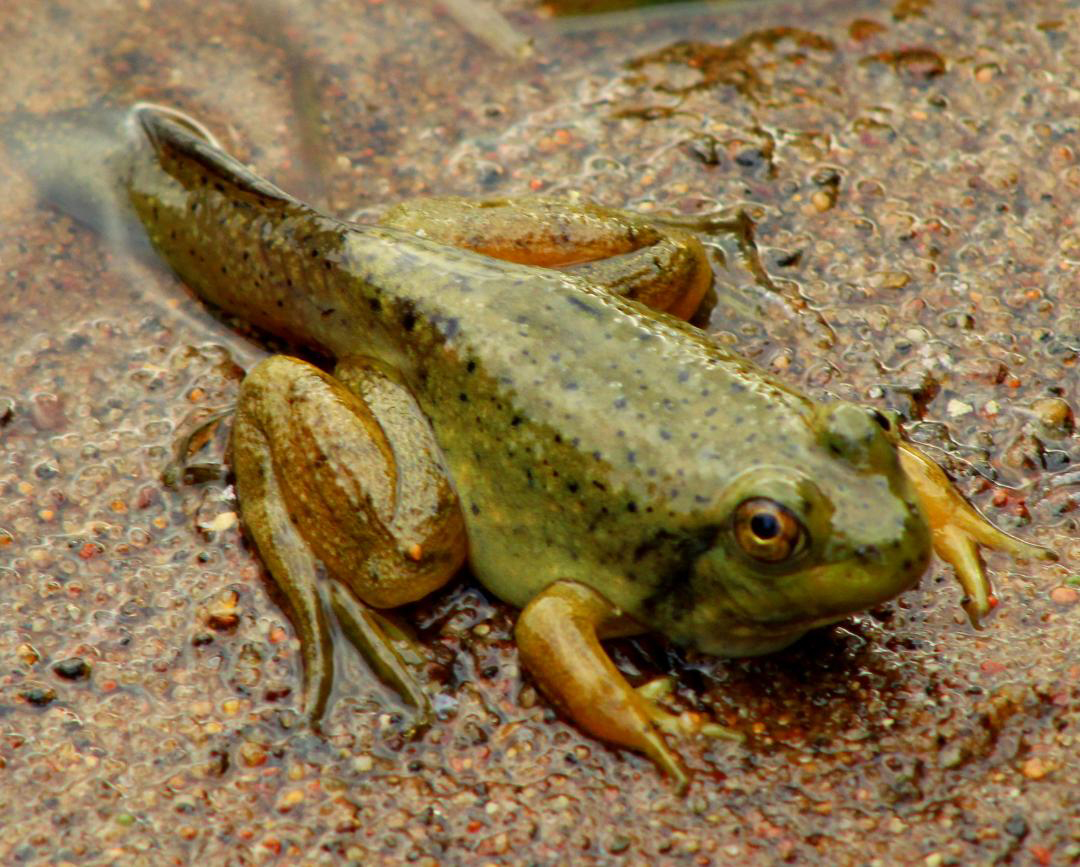
This photo of a developing tadpole was entered into the Wildlife category in a previous year’s Friends of Council Grounds photography contest. Gregg Warning photo.

See 11 Breathtaking Bird Images From the Audubon Photography Awards

See 11 Breathtaking Bird Images From the Audubon Photography Awards

Whether flying, hunting, breeding or preening, birds and their varied behaviors make for some stunning photos. From a female Baltimore oriole’s bright yellow feathers, to the iridescent shine of a pigeon’s neck, these winning shots from the 2023 Audubon Photography Awards showcase the beauty of bird life that can often go undetected.

Last week, the National Audubon Society announced the winners of the 14th iteration of its annual bird photography contest. A panel of 15 judges whittled down a submission pool of some 2,200 entrants from eight Canadian provinces, all 50 states and Washington, D.C. They looked at each image’s technical quality, originality and artistry.

The judges selected several honorable mention recipients and prize winners across eight categories, including one for videos and one for images of female birds.

The National Audubon Society holds the contestants to high ethical standards. As of last year, the nonprofit banned images taken using a technique called playback—when the photographer plays an audio recording of a bird’s own call or the sound of a predator. Some birders now see this as an unethical practice, as it can disrupt animals’ natural behavior, distracting them from activities such as feeding or protecting their young.

The organization also requires its photographers to leave a respectful amount of space between them and the wildlife. It suggests using telephoto lenses to zoom in, rather than closely approaching or baiting the birds. Birds nesting on beaches, in particular, require extra care, because frightened adults might leave their young vulnerable to predators or extreme temperatures.

Experts in bird behavior and ethical bird photography review all the images, looking for red flags that might suggest a photo was taken in a harmful way.

From the massive pool of entries, the images below rose to the top. They capture not only the beauty of birds, but their fascinating behaviors and the habitats that are critical to their survival. If you can’t get enough, Audubon magazine has shared a gallery of the contest’s top 100 photographs.

Grand Prize Winner: Rock Pigeon

Two pigeons face left in profile, each with one orange eye in view against a black background. One bird is preening the other, its bill buried in gray, green, and purple iridescent feathers.

A pigeon preens its mate.

Liron Gertsman / Audubon Photography Awards / 2023 Grand Prize Winner

It may come as a surprise to city-dwellers that the bird known for pecking at trash on sidewalks has earned the National Audubon Society’s top prize. But “when you take a minute to look closely at a pigeon, you’ll see that they’re quite beautiful,” contest judge Preeti Desai, the organization’s senior director of social media and storytelling, tells Audubon magazine. “In the right light, their iridescent neck feathers appear to glow.”

Liron Gertsman, a Canada-based professional nature photographer, captured this image of the much-maligned birds.

“I rarely point my lens toward pigeons, but I couldn’t resist as this pair, perched under a pier, carefully groomed each other’s feathers,” Gertsman tells the publication. “Purposefully exposing for the brighter parts of the image, I used the shadowy environment to create a studio-like black background for these remarkable iridescent birds.”

Though they have a reputation for being dirty, pigeons are fastidious creatures that frequently bathe. The social grooming behavior shown here, known as allopreening, is an affectionate courtship technique. Pigeon pairs tend to mate for life, stick together year-round and share parenting duties such as incubating eggs and raising their young.

Professional Award Winner: Atlantic Puffin

An Atlantic Puffin sits on the edge of a craggy cliffside, its head turned to the left, its white breast in sharp contrast to the gray background. Lime green algae and small purple wildflowers drape the cliff, breaking up the otherwise dark image.

An Atlantic puffin sits atop a rocky cliff.

Shane Kalyn / Audubon Photography Awards / 2023 Professional Winner

While on a road trip in Iceland, professional photographer Shane Kalyn and his wife heard a tip that they could see a puffin colony in the Westman Islands. About half of the Atlantic puffin’s breeding population nests in Iceland, where the rocky cliff sides create an ideal habitat.

After taking a ferry to the islands, the couple pulled over for a break.

“There, we saw a lone bird perched on the most amazing lava rock cliff, which was covered in colorful lichen and blooming wildflowers,” Kalyn tells Audubon. “It was raining, and the sky was dark, creating a moody tone. I knew this moment was special.”

Amateur Award Winner: Chinstrap Penguin

A Chinstrap Penguin, wings outstretched, dives from an iceberg. Head down, its bill is nearly touching the water’s surface. In the background, a white and blue iceberg is capped with fresh white snow.

A chinstrap penguin dives from an iceberg.

Karen Blackwood / Audubon Photography Awards / 2023 Amateur Winner

Amateur photographer Karen Blackwood was watching a group of gentoo penguins in Antarctica’s iceberg-filled Cierva Cove, when she noticed a lone chinstrap penguin standing on an iceberg.

“It peered over the edge, and I knew it was going to jump,” Blackwood says to Audubon. “I adjusted my settings, keeping in mind the pitching boat, moving iceberg and penguin that would soon be in midair. The bird jumped directly in front of me, diving straight into the water. I caught it just before it slipped beneath the waves and got both eyes and its perfect shape.”

Youth Award Winner: Dunlin

A sandpiper in profile appears to have jumped from the rocks to avoid an incoming wave. The bird’s wings are behind its body, its feet just above the rock in front of a background of water droplets from the surf.

A dunlin leaps from a rock as a wave crashes to the shore.

Kieran Barlow / Audubon Photography Awards / 2023 Youth Winner

In Barnegat Light, New Jersey, a group of sandpipers stood on the rocky shoreline, foraging for a meal. Each time a wave came in, the birds would take flight for a few moments, just in time to avoid being swept into the ocean. Watching them, photographer Kieran Barlow tells Audubon he “became enraptured.”

“I hunkered down between boulders and waited,” he tells the publication. “It was a challenge not to fall between the wet, seaweed-covered rocks into the water.”

But by the time an hour had gone by, Barlow had captured this photograph of a dunlin taking flight with little time to spare before the wave hit the shore.

Female Bird Prize: Baltimore Oriole

A bright yellow female Baltimore Oriole with thin light strands of grass held in her bill perches at the end of a branch and faces to the right in the frame. The strands billow around her, slightly out of focus, in front of a blurred green background.

A female Baltimore oriole carries fibers to use in her nest.

Sandra M. Rothenberg / Audubon Photography Awards / 2023 Female Bird Prize Winner

Though the orange and black pattern of a male Baltimore oriole is perhaps more well-known—and featured in the logo for Baltimore’s Major League Baseball team—the species’ females are a sight to behold, and this one earned the Female Bird Prize.

This is the third year that the National Audubon Society has given this award, which is meant to highlight the female birds, which are generally less colorful than males and “often overlooked and underappreciated in birding, bird photography and science,” according to a statement from the organization.

Female Baltimore orioles construct a hanging pouch to serve as their nest, sometimes spending more than a week weaving together strong plant fibers to make a durable home for their young. Amateur photographer Sandra M. Rothenberg grew up watching the female orioles gather strands of grass or horsehair for their engineering feats. Now, she watches the birds in Warren, Pennsylvania, from behind a small blind, or a structure that hides her from the animals’ sight.

“This female barely landed to grasp a tangled clump of horsehair and natural hemp and sisal fibers caught on a branch. She was surrounded by a lacy, fluttering, diaphanous veil,” Rothenberg says to Audubon. “Off she flew into the woods with her prize trapped in her slender bill.”

Plants for Birds Winner: Verdin

A gray bird with a yellow head and a small rust-colored patch on its wing stands in profile on a broken cactus branch that’s white, brown, and green. The bird carries a pale green caterpillar in its bill.

A verdin sits on cane cholla with a caterpillar in its bill.

Linda Scher / Audubon Photography Awards / 2023 Plants For Birds Winner

In Tuscon, Arizona, amateur photographer Linda Scher saw her first verdin, a songbird that lives year-round in parts of the Southwestern U.S. and Mexico. She watched a pair of them make a nest in a cactus known as cane cholla.

Scher came back to the site about a month later and found the verdins gathering caterpillars to feed their young. As the winner of the Plants for Birds category, the image demonstrates the relationship between the verdin and the flora in its native habitat.

“In this photo, we see the role that native plants such as cacti play in providing critical food and shelter for birds—even in the harshest environments,” contest judge Marlene Pantin, partnerships manager for the National Audubon Society’s plants for birds program, tells Audubon. “I am struck by how the cactus seems to envelop the bird, providing a sense of care and protection for it.”

Fisher Prize: Brown Pelican

A Brown Pelican at the top of the frame sits in the water, its wings pulled behind its body. In the dark water below is the crescent silhouette of a shark, its snout nearly touching the pelican.

A brown pelican sits in the water as a shark swims below it.

Sunil Gopalan / Audubon Photography Awards / 2023 Fisher Prize Winner

While photographer Sunil Gopalan was on a cruise in the Galápagos Islands, the lights of the boat attracted fish to the site where it was docked. To feed on the fish, several Galápagos sharks appeared, as well as a brown pelican. They competed for the fish, with the bird lifting itself into the air when a shark came near it.

To Gopalan, this was a moment that had to be captured, so he waited until the shark swam beneath the pelican, visible as a blurred silhouette.

“An interaction of species like that is a photo opportunity,” Gopalan tells Audubon. “I didn’t know if this sort of photograph was common, but for me, it was special.”

Professional Honorable Mention: Northern Hawk Owl

An owl looks directly into the camera from atop a tree with dark pine cones on the bare branches that stand out against a white background, mirroring the pattern of the owl’s dark breast feathers.

A northern hawk owl sits at the top of a snow-covered tree.

Liron Gertsman / Audubon Photography Awards / 2023 Professional Honorable Mention

This snowy photo of a northern hawk owl earned Grand Prize winner Liron Gertsman a second accolade. Unlike other owls that hunt with their sharp hearing at night, northern hawk owls hunt from a perch during the day, watching for voles or other birds to swoop down on.

Looking for these creatures, Gertsman trekked tens of miles through snow-covered terrain to find this individual at the top of a tree.

“Even with snowshoes on, I was sinking down to my knees at almost every step,” he tells the Canadian Broadcasting Corporation’s Lisa Bryn Rundle.

Amateur Honorable Mention: Reddish Egret

A Reddish Egret stands in shallow water against a blurred yellow background, its body facing left and its wings open behind it. A small fish and water droplets are suspended in the air in front of the bird’s open bill.

A reddish egret catches a fish.

Nathan Arnold / Audubon Photography Awards / 2023 Amateur Honorable Mention

Amateur photographer Nathan Arnold spotted this reddish egret while kayaking at sunrise in San Carlos Bay–Bunche Beach Preserve, in Fort Myers, Florida.

When one of these egrets hunts, it pokes its bill into the water to snatch a fish, then tosses the prey into the air before swallowing it whole.

“I took this photo as the light over my shoulder illuminated water droplets and a small fish, right as the egret flipped its breakfast into its bill,” Arnold tells Audubon. “The scene felt surreal.”

Youth Honorable Mention: Green-winged Teal

A male Green-winged Teal sits on top of a female in the water, his bill appearing to push the female’s head down. His brown and green head stands out against an otherwise gray background with blurred snowflakes around the frame.

A male and a female green-winged teal court and mate as snow flurries fall.

James Fatemi / Audubon Photography Awards / 2023 Youth Honorable Mention

After a winter with much less snow than usual in Alexandria, Virginia, one day in February had a forecast for flurries in the morning. Photographer James Fatemi went to Huntley Meadows Park and found this pair of green-winged teals to be some of the only birds visible in the marsh.

“After a few hours, they began their courtship ritual and mating just as large flakes started to fall,” he says to Audubon. “I hung my lens over the boardwalk to get a water-level view.”

Plants for Birds Honorable Mention: Tree Swallow

Thousands of Tree Swallows sit on two cypress snags in a swamp, looking like leaves. One tree is larger in the foreground and the other is smaller in the background. More birds fly around the trees, their dark forms in contrast to the purple and blue sky.

Tree swallows fly in a swarm around two bald cypress trees at sunrise.

Vicki Santello / Audubon Photography Awards / 2023 Plants For Birds Honorable Mention

One early morning, amateur photographer Vicki Santello was on a kayak in Louisiana’s Atchafalaya National Heritage Area, when she heard a noise like a loud hum.

“My ears guided me to the source: thousands of tree swallows hunting insects on the wing and water surface,” Santello says to Audubon. “Their collective wing-beating generated the noise.”

Above the water, tree swallows flew in wide sweeping motions, foraging by snatching insects out of the air. And those aren’t leaves on the tree branches—they’re even more swallows, tightly packed together.

Get the latest stories in your inbox every weekday.

PHOTOS: Grateful Dead Photography & Poster Art Exhibit To Open In SF Before Final Dead & Co. Shows

PHOTOS: Grateful Dead Photography & Poster Art Exhibit To Open In SF Before Final Dead & Co. Shows

San Francisco’s Haight Street Art Center has announced a special Grateful Dead photography and poster art exhibit, Between the Dark and Light: Grateful Dead 1965-1995, set to coincide with the last three shows of Dead & Company‘s final tour next month.

Curated by acclaimed rock photographer Jay Blakesberg, with text by Grateful Dead historian Blair Jackson, the exhibit will kick off with a special exhibition preview and opening reception on the evening of Tuesday, July 11th from 5–9 p.m. with a live screen-printing demo, music from Bay Area keyboardist Scott Guberman, a poster giveaway, and other free swag. The exhibition is then set to run through the summer until September 3rd.

Visitors will behold almost 100 rarely-seen photographs hand-selected by Blakesberg from the Retro Photo Archive and dozens of iconic images from Grateful Dead photographers Adrian Boot, Alvan Meyerowitz, Andy Leonard, Baron Wolman, Bob Minkin, Dave Seabury, Ed Perlstein, Elizabeth Sunflower, Greg Gaar, Herb Greene, Jonathan David Sabin, Mark Norwine, Mary Ann Mayer, Michael Dobo, Patti Healy, Ron Rakow, Rosie McGee, Snooky Flowers, Steve Schneider, Susana Millman, and Blakesberg himself.

©RetroPhotoArchive

“The Grateful Dead has always allowed fans to bring cameras into their concerts, which has left us Dead Heads with a vast photographic history of this band,” Blakesberg said. “Some of us started our careers photographing the Grateful Dead, myself included. The photographs on display show the band on and off stage, and create a wonderful historical look at the band’s 30-year career.”

Also included in the exhibition are posters from the Haight Street Art Center’s collection showcasing the evolution of the Dead’s visual style from the Haight-Ashbury days until Jerry Garcia’s passing in 1995.

Related: Legendary Artist Stanley Mouse, Who Helped Shape The Psychedelic Aesthetic, Suffers Stroke

“We are thrilled to collaborate with Jay to host this extraordinary collection of photographs that capture the musical and cultural journey through the Grateful Dead’s career,” said Kelly Harris, the Haight Street Art Center’s Executive Director. “When combined with posters from the Art Center’s permanent collection, the exhibition poignantly tells the story of a Bay Area treasure that came of age during the golden age of San Francisco’s Haight-Ashbury.”

©Jay Blakesberg

Jackson added, “What a great trip it is to see the Dead’s incredible journey told through so many rare or never published photographs, as well as iconic images by some of the best photographers who documented the Grateful Dead experience. From the group’s humble beginnings to its shows in football stadiums packed with dancing Dead Heads, the contours of the Grateful Dead story really come alive in new and exciting ways on the walls of the Haight Street Art Center.”

Head here for tickets to the opening of Between the Dark and Light: Grateful Dead 1965-1995. A limited-edition, commemorative Grateful Dead-themed exhibition poster and handbill designed by Caitlin Mattisson and silkscreened in Haight Street’s studio will be available for purchase.

Scroll down to view additional photos from the exhibition, and for more information on Haight Street Art Center and its upcoming exhibitions, head here.

Adrian Boot, Alvan Meyerowitz, Andy Leonard, Baron Wolman, Bob Minkin, Dave Seabury, Ed Perlstein, Elizabeth Sunflower, Greg Gaar, Herb Greene, Jonathan David Sabin, Mark Norwine, Mary Ann Mayer, Michael Dobo, Patti Healy, Ron Rakow, Rosie McGee, Snooky Flowers, Steve Schneider, Susana Millman, Between the Dark and Light: Grateful Dead 1965-1995, Between the Dark and Light, Between Dark and Light, grateful dead, grateful dead photos, grateful dead photography, grateful dead photographer, jay blakesberg, blair jackson, grateful dead historian, Grateful Dead Photography & Poster Art Exhibit, Grateful Dead Photography & Poster Art Exhibition, Grateful Dead Photography Exhibit, Grateful Dead Photography Exhibition, Grateful Dead Photo Exhibit, Grateful Dead Photo Exhibition, Grateful Dead poster Art Exhibit, Grateful Dead Poster Art Exhibition, Grateful Dead Poster Art, grateful dead art, retro photo archive, scott guberman, haight street art center, dead & company, dead & co, dead & company sf, dead & co sf, dead & company san francisco, dead & co san francisco, grateful dead art exhibit, grateful dead art exhibition, grateful dead art exhibit sf, grateful dead art exhibition sf, grateful dead art exhibit san francisco, grateful dead art exhibition san francisco, jay blakesberg exhibit, jay blakesberg exhibition, jay blakesberg grateful dead exhibit, jay blakesberg grateful dead exhibition, jay blakesberg grateful dead photo exhibit, jay blakesberg grateful dead photo exhibition, jay blakesberg grateful dead photography exhibit, jay blakesberg grateful dead photography exhibition, jay blakesberg grateful dead photography, jay blakesberg grateful dead photo

Adrian Boot, Alvan Meyerowitz, Andy Leonard, Baron Wolman, Bob Minkin, Dave Seabury, Ed Perlstein, Elizabeth Sunflower, Greg Gaar, Herb Greene, Jonathan David Sabin, Mark Norwine, Mary Ann Mayer, Michael Dobo, Patti Healy, Ron Rakow, Rosie McGee, Snooky Flowers, Steve Schneider, Susana Millman, Between the Dark and Light: Grateful Dead 1965-1995, Between the Dark and Light, Between Dark and Light, grateful dead, grateful dead photos, grateful dead photography, grateful dead photographer, jay blakesberg, blair jackson, grateful dead historian, Grateful Dead Photography & Poster Art Exhibit, Grateful Dead Photography & Poster Art Exhibition, Grateful Dead Photography Exhibit, Grateful Dead Photography Exhibition, Grateful Dead Photo Exhibit, Grateful Dead Photo Exhibition, Grateful Dead poster Art Exhibit, Grateful Dead Poster Art Exhibition, Grateful Dead Poster Art, grateful dead art, retro photo archive, scott guberman, haight street art center, dead & company, dead & co, dead & company sf, dead & co sf, dead & company san francisco, dead & co san francisco, grateful dead art exhibit, grateful dead art exhibition, grateful dead art exhibit sf, grateful dead art exhibition sf, grateful dead art exhibit san francisco, grateful dead art exhibition san francisco, jay blakesberg exhibit, jay blakesberg exhibition, jay blakesberg grateful dead exhibit, jay blakesberg grateful dead exhibition, jay blakesberg grateful dead photo exhibit, jay blakesberg grateful dead photo exhibition, jay blakesberg grateful dead photography exhibit, jay blakesberg grateful dead photography exhibition, jay blakesberg grateful dead photography, jay blakesberg grateful dead photo Adrian Boot, Alvan Meyerowitz, Andy Leonard, Baron Wolman, Bob Minkin, Dave Seabury, Ed Perlstein, Elizabeth Sunflower, Greg Gaar, Herb Greene, Jonathan David Sabin, Mark Norwine, Mary Ann Mayer, Michael Dobo, Patti Healy, Ron Rakow, Rosie McGee, Snooky Flowers, Steve Schneider, Susana Millman, Between the Dark and Light: Grateful Dead 1965-1995, Between the Dark and Light, Between Dark and Light, grateful dead, grateful dead photos, grateful dead photography, grateful dead photographer, jay blakesberg, blair jackson, grateful dead historian, Grateful Dead Photography & Poster Art Exhibit, Grateful Dead Photography & Poster Art Exhibition, Grateful Dead Photography Exhibit, Grateful Dead Photography Exhibition, Grateful Dead Photo Exhibit, Grateful Dead Photo Exhibition, Grateful Dead poster Art Exhibit, Grateful Dead Poster Art Exhibition, Grateful Dead Poster Art, grateful dead art, retro photo archive, scott guberman, haight street art center, dead & company, dead & co, dead & company sf, dead & co sf, dead & company san francisco, dead & co san francisco, grateful dead art exhibit, grateful dead art exhibition, grateful dead art exhibit sf, grateful dead art exhibition sf, grateful dead art exhibit san francisco, grateful dead art exhibition san francisco, jay blakesberg exhibit, jay blakesberg exhibition, jay blakesberg grateful dead exhibit, jay blakesberg grateful dead exhibition, jay blakesberg grateful dead photo exhibit, jay blakesberg grateful dead photo exhibition, jay blakesberg grateful dead photography exhibit, jay blakesberg grateful dead photography exhibition, jay blakesberg grateful dead photography, jay blakesberg grateful dead photo

Adrian Boot, Alvan Meyerowitz, Andy Leonard, Baron Wolman, Bob Minkin, Dave Seabury, Ed Perlstein, Elizabeth Sunflower, Greg Gaar, Herb Greene, Jonathan David Sabin, Mark Norwine, Mary Ann Mayer, Michael Dobo, Patti Healy, Ron Rakow, Rosie McGee, Snooky Flowers, Steve Schneider, Susana Millman, Between the Dark and Light: Grateful Dead 1965-1995, Between the Dark and Light, Between Dark and Light, grateful dead, grateful dead photos, grateful dead photography, grateful dead photographer, jay blakesberg, blair jackson, grateful dead historian, Grateful Dead Photography & Poster Art Exhibit, Grateful Dead Photography & Poster Art Exhibition, Grateful Dead Photography Exhibit, Grateful Dead Photography Exhibition, Grateful Dead Photo Exhibit, Grateful Dead Photo Exhibition, Grateful Dead poster Art Exhibit, Grateful Dead Poster Art Exhibition, Grateful Dead Poster Art, grateful dead art, retro photo archive, scott guberman, haight street art center, dead & company, dead & co, dead & company sf, dead & co sf, dead & company san francisco, dead & co san francisco, grateful dead art exhibit, grateful dead art exhibition, grateful dead art exhibit sf, grateful dead art exhibition sf, grateful dead art exhibit san francisco, grateful dead art exhibition san francisco, jay blakesberg exhibit, jay blakesberg exhibition, jay blakesberg grateful dead exhibit, jay blakesberg grateful dead exhibition, jay blakesberg grateful dead photo exhibit, jay blakesberg grateful dead photo exhibition, jay blakesberg grateful dead photography exhibit, jay blakesberg grateful dead photography exhibition, jay blakesberg grateful dead photography, jay blakesberg grateful dead photo
Bob Dylan and The Dead photographed at Autzen Stadium in Eugene, OR July 19, 1987 © Jay Blakesberg/Retna LTD.

Adrian Boot, Alvan Meyerowitz, Andy Leonard, Baron Wolman, Bob Minkin, Dave Seabury, Ed Perlstein, Elizabeth Sunflower, Greg Gaar, Herb Greene, Jonathan David Sabin, Mark Norwine, Mary Ann Mayer, Michael Dobo, Patti Healy, Ron Rakow, Rosie McGee, Snooky Flowers, Steve Schneider, Susana Millman, Between the Dark and Light: Grateful Dead 1965-1995, Between the Dark and Light, Between Dark and Light, grateful dead, grateful dead photos, grateful dead photography, grateful dead photographer, jay blakesberg, blair jackson, grateful dead historian, Grateful Dead Photography & Poster Art Exhibit, Grateful Dead Photography & Poster Art Exhibition, Grateful Dead Photography Exhibit, Grateful Dead Photography Exhibition, Grateful Dead Photo Exhibit, Grateful Dead Photo Exhibition, Grateful Dead poster Art Exhibit, Grateful Dead Poster Art Exhibition, Grateful Dead Poster Art, grateful dead art, retro photo archive, scott guberman, haight street art center, dead & company, dead & co, dead & company sf, dead & co sf, dead & company san francisco, dead & co san francisco, grateful dead art exhibit, grateful dead art exhibition, grateful dead art exhibit sf, grateful dead art exhibition sf, grateful dead art exhibit san francisco, grateful dead art exhibition san francisco, jay blakesberg exhibit, jay blakesberg exhibition, jay blakesberg grateful dead exhibit, jay blakesberg grateful dead exhibition, jay blakesberg grateful dead photo exhibit, jay blakesberg grateful dead photo exhibition, jay blakesberg grateful dead photography exhibit, jay blakesberg grateful dead photography exhibition, jay blakesberg grateful dead photography, jay blakesberg grateful dead photo

An East Village Synagogue Long Inhabited by Artists

An East Village Synagogue Long Inhabited by Artists
image

Abstract photographer Jack Sal lived here for more than 30 years in the front rooms of a former synagogue on East 6th Street — just up the stairs from his former roommate William Wegman. This was the section where the women of the Proskurover Zion Congregation would have prayed separately.
Photo: Allyson Lubow Photography/Allyson Lubow

In the early 1980s, photographer and East Village resident Timothy Greenfield-Sanders was obsessed with his neighborhood’s stock of old religious buildings. He’d just closed on an old rectory on Second Avenue when a synagogue nearby on 6th Street went on the market. “It was a building that longed for a new beginning,” he says. The problem was he didn’t have money for another down payment. So he started talking it up to other people who might. Like the photographer William Wegman, who was quickly gaining fame for shooting his own Weimaraner dogs. On a shoot, Greenfield-Sanders found out Wegman had just lost his apartment to a divorce and was living with a roommate, the abstract photographer Jack Sal. Wegman and Sal were interested, and so was Greenfield-Sanders’s teenage neighbor on Second Avenue, Maria von Hartz. “I’d just been discovered and suddenly had some money,” says von Hartz.

Together, the 18-year-old model and the three professional photographers bought the building in 1982 for $154,500, dividing up the price and the space. Wegman paid five-eighths of the mortgage and taxes for the main worship room — a first-floor duplex with 20-foot-tall ceilings and a second story that overlooks the grand space thanks to two wide balconies. Sal paid two-eighths for the front of the building, where the women of the congregation would have once worshiped separately, a bright, cheerful space thanks to high arched windows. For one-eighth, Greenfield-Sanders took the smallest apartment on the fourth floor — believed to have belonged to the building’s former caretaker. And for two-eighths, von Hartz took the third floor, the home of what Greenfield-Sanders remembers as a former Polish or Ukrainian social club when he arrived in 1982 but was archived in a 1923 copy of The Worker as Katz Hall, the meeting place for “sympathizers” of the Polish Branch of the Workers Party.

“It was this cavernous space,” says von Hartz. “This huge loft with urinals in the front, pool tables, a 30-foot Art Deco bar with beer signs, neon signs, card tables, four pool tables. I was like, ‘Oh my God! I’ll take it.’” She and her friends would often run into Wegman’s crowd. “He was always coming in and out with his dogs, and there would be famous people in the halls. I’d be coming in with all my makeup on from a modeling shoot and the B-52’s are in the hallway, getting their album cover done.”

“I remember once Bill had a shoot with Steve Martin, who came to pose with the dogs,” says Greenfield-Sanders. “It was kind of glamorous in that way.” For Wegman, it was a perfect workspace — the balconies meant he could shoot from overhead, the high ceilings let him work with bigger lights, and the space was so immense that he could carve out a separate small apartment in front where his assistants could crash. “Another thing that I used, not legally, was the yard,” he admitted. But the neighbors, which incidentally included the playwright Lee Breuer, were friendly and gave Wegman’s dogs freedom to roam.

Things changed when — per Wegman — “the Pyramid Club kicked up.” The club — which opened in 1979 — meant bass lines made a constant boomp boomp boomp in Wegman’s bedroom from midnight to 4 a.m. despite all efforts at soundproofing. For Sal, whose rooms faced the street, the noise came years later. “Towards the end, there was this horrendous bar called Death & Co.,” he said. “There’d be people out at all hours. We tried to fight them.”

Wegman officially grew out of the studio when he had kids. “With children, it became a kind of hair-raising space,” he says. So he eventually found 40,000 square feet across two empty buildings in Chelsea. In 1996, he sold his share of the synagogue to Paola Igliori, an artist and writer who had just published American Magus, a book about Harry Smith, the Beat Generation artist and visionary. “Harry Smith would be there all the time,” Sal remembered. “And all these other crazy people. Crazy in a good sense of the word.”

“I always had huge parties with, I don’t know, Allen Ginsberg and the rapper Killah Priest from Wu-Tang Clan,” Igliori says. She furnished the small apartment Wegman had built for his assistants with furniture from the Chelsea hotel suite that had once belonged to the artist and poet Rene Ricard, whom she wrote a book with. In 2014, Igliori bought out Sal, too, taking over his apartment but renting out Sal’s basement studio to Vito Schnabel, who, before he opened his own gallery, used it to stage shows for the Bruce High Quality Foundation. “I’m like the godmother of Lola Schnabel,” she says. Lola and Vito’s mother, May Andersen, moved into Sal’s old apartment for a time, and Andersen’s friend, the performance artist Kembra Pfahler, ended up using the basement studio. Greenfield-Sanders got out of the building in 2004, in part because despite only owning one-eighth, he found himself doing an outsize portion of upkeep. “It was too much work.”

Von Hartz was on the third floor-through most of this mayhem, gradually transforming the space to match her life, which later included a husband and children. She added bedroom walls, upgraded bathrooms, and expanded the kitchen, getting rid of the old bar, which never stopped smelling of beer. “It kind of just morphed into a kitchen bar.” Recently, she rented the space to a tenant and moved into the townhouse her parents had bought when she was a kid, right next to the former rectory on Second Avenue where Greenfield-Sanders still lives. This year, she listed the loft at 431 East 6th. “I have to go to therapy about actually selling it,” she says.

Igliori refuses to move out entirely, keeping Wegman’s old duplex for herself. But this week she listed Sal’s front apartment, the small studio apartment Wegman built for his assistants, and Sal’s basement studio — an offering of three stories at the front of the building that broker Brian Goldfarb is marketing as a “maisonette.”

On tours, Goldfarb has found himself forced to explain who Wegman is. (“I say, ‘You know, the guy who takes the photographs of the dogs?’ And they’re like, ‘What?’ and I explain.”) But Wegman’s career is sometimes less confusing than explaining how the building’s ownership was divided up into eighths, and how that agreement still stands, 41 years later. “It’s basically an agreement between friends.”

The 1851 building was turned into a synagogue in 1927 by Ukrainian immigrants, according to nonprofit Village Preservation. It was home to the Proskurover Zion Congregation and Kranken Untershtitsung Verein (KUV, or Sick Benevolent Society).
Photo: Rachel Kuzma/Sotheby’s International Realty

Tin ceilings are original to the synagogue. This section, where Sal lived on the second floor, was where the women of the congregation would pray separately.
Photo: Allyson Lubow Photography/Allyson Lubow

Sal lived here from 1982 to 2014, when he sold to the poet and author Paola Igliori, who had already overtaken Wegman’s duplex in the back of the building.
Photo: Allyson Lubow Photography/Allyson Lubow

The tiles in Sal’s former kitchen he bought in Delft, the Netherlands. The stove is a turn-of-the-century model. Sal found one just like it at an old appliance shop on Kenmare Street and loved it so much that he insisted on taking it when he left. Igliori agreed but made him replace it with an exact match. “I love that stove,” she said.
Photo: Allyson Lubow Photography/Allyson Lubow

Sal turned the 2,500-square-foot basement, which extends to every property line, into a studio. When he got here in 1982, the basement was a kitchen for a yeshiva. He turned one bathroom into a darkroom and kept the other.
Photo: Allyson Lubow Photography

Igliori rented the basement out to her family friend Vito Schnabel, who ran it as a gallery before running his own name-brand space and staged shows by the Bruce High Quality Foundation. Later, Igliori let artist Kembra Pfahler work downstairs.
Photo: Allyson Lubow Photography

Upstairs, on the third floor, is what Maria von Hartz calls “the loft.” She first saw the floor-through apartment when she was in high school and working as a model, making money her parents were hoping to invest in property.
Photo: Rachel Kuzma/Sotheby’s International Realty

The skylight once loomed over an old clubhouse. Von Hartz remembered “urinals in the front, a 30-foot Art Deco bar with beer signs, neon signs, card tables, four pool tables.”
Photo: Rachel Kuzma/Sotheby’s International Realty

The loft was ideal for throwing ragers. “When you’re 20 and people are coming into your party that you’re throwing and it’s a 1,900-square-foot loft, it was kind of magical,” von Hartz said.
Photo: Rachel Kuzma/Sotheby’s International Realty

Eventually, she got rid of the old bar, which never stopped smelling of beer, and expanded the kitchen. “It kind of just morphed into a kitchen bar.”
Photo: Rachel Kuzma/Sotheby’s International Realty

There was no kitchen when von Hartz saw the place: This was where a row of urinals was. The social club was a Polish or Ukrainian club when von Hartz bought, but it was listed in a 1923 copy of The Worker as Katz Hall, the location of a party given to “sympathizers” of the Polish branch of the Workers’ Party.
Photo: Rachel Kuzma/Sotheby’s International Realty

She changed the apartment so often over the years, adding and removing walls, that it inspired her to pursue a career in interior design. She now runs her own firm.
Photo: Rachel Kuzma/Sotheby’s International Realty

William Wegman remembers barricading this door back when the East Village “wasn’t exactly completely gentrified.” But down the block was the studio of Walter De Maria, who gave him advice. “He told me I should get a cat and name it Anaïs Nin and start working with a cat.”
Photo: Rachel Kuzma/Sotheby’s International Realty

Today’s Photo from Ted Grussing Photography: Which is Which?

Today’s Photo from Ted Grussing Photography: Which is Which?

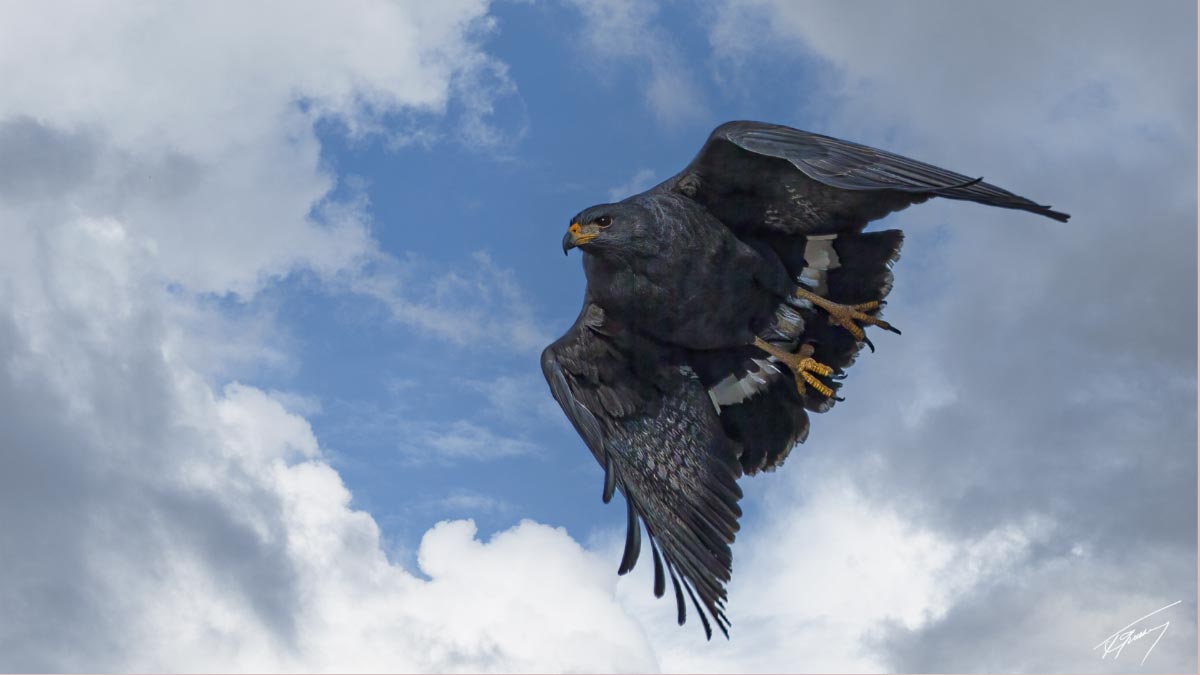
… today was one of those rare days that come along once in a while … things did not go along quite as expected, but as always, issues were resolved again, it was a terrific day! This brought to mind a little confusion that can occur when getting a look at raptors in flight and wondering which of several different species we are looking at. One source of confusion can be in putting an ID on black raptors. Above we have a photo of a Zone Tail hawk that I shot as he was flying down the fairway towards our home … below is a photo of a Black Hawk which I shot down at Bubbling Ponds Fishery in Page Springs.

The Zone Tail has multiple white bands on his tail and the ends of his wings appear to look more like those of a turkey vulture than a hawk … good reason for this because the Zone Tails will frequently fly with the vultures. Over the millennia creatures on the earth below have learned that the vultures do not do fresh kills, but only eat that which something else has killed and this equals a sense of safety when they see vultures overhead. Zone Tail hawks have evolved too and from the ground appear very much like a vulture … the crucial difference is that they do kill live food like the lizard that is firmly gripped in his talons … whoops, guessed wrong!

Black Hawks only have a single broad white band on the tail and are a little bigger than Zone Tails. Check out Audubon for Black Hawks and for Zone Tail Hawks.

Have a beautiful day, keep breathing and look around … we share the planet with some pretty amazing creatures!

Smiles,

Ted

To you my boy, the only world I know.
Remember this: whichever course you choose,
You’ll sometimes turn about and walk awhile
The other way, for none of human kind
Is all of good or all of evil made.
Let this and honest poverty not turn
Your heart in bitterness and wild despair
To hardened thoughts of Him who made all things.

excerpt from Breaking Home Ties by Max Ehrmann

###

photo_tedgrussingThe easiest way to reach Mr. Grussing is by email: ted@tedgrussing.com

In addition to sales of photographs already taken Ted does special shoots for patrons on request and also does air-to-air photography for those who want photographs of their airplanes in flight. All special photographic sessions are billed on an hourly basis.

Ted also does one-on-one workshops for those interested in learning the techniques he uses.  By special arrangement Ted will do one-on-one aerial photography workshops which will include actual photo sessions in the air.

More about Ted Grussing


Healing Paws

Healing Paws

This is an advertisement

Wildfire photography featured in Upcountry History Museum’s next exhibit

Wildfire photography featured in Upcountry History Museum’s next exhibit

Artists may find inspiration in unexpected places. For photographer Kari Greer of Idaho, a summer job in college as a firefighter with the U.S. Forest Service opened the door to a more than 25-year career as a wildfire photographer.

Her work will be on display from July to October at Greenville’s Upcountry History Museum.

Being introduced to fighting wildfires

Greer was first exposed to fighting wildfires when she took a summer job in 1994 at Gifford Pinchot National Forest in Washington while she was attending California State University, where she majored in film production and photography.

Following her first summer, Greer said she developed a passion for the job and returned three additional summers where she worked on a Type 2 IA hand crew, a 20-person team where they would take fire assignments, dig handlines, conduct burn operations, mop up, fight fires and do rehabilitation following fires.

Kari Greer
Photo provided

Transitioning from firefighter to wildfire photographer

Once college was behind her, Greer said she took her two passions and combined them by working as a firefighter through 1997 and then obtaining a contract with the U.S. Forest Service in 1998 to photograph fires.

“Photography was basically my first love and then during college, I started fighting fire and the two just mingled,” Greer said. “It was like such a smooth transition. It was such a wonderful niche to fall into.”

“First Creek Fire” Lake Chelan, Washington, August 2015. Photo by Kari Greer

Using firefighter training to stay safe on the job

While Greer is not actively employed as a firefighter, she has maintained her qualifications by completing a fitness course and fire-line certification training each year.

Every time she goes into the field, she said she credits her training and experience for allowing her to stay safe while doing her job and communicating with firefighting teams on the scene.

“I believe you really need to have fire experience and understand the incident-command system in order to operate efficiently out there,” said Greer. “(You need) to know how to be in the right place at the right time and how to communicate with other fire resources so that you are part of the group that’s out there. (You should) try to be as seamless as possible and not get in the way.”

Taking a career and turning it into an exhibit

Drawing from Greer’s 25-year career, the Moscow Contemporary Art Gallery in Moscow, Idaho, compiled a 64-photo exhibit, “Facing the Inferno: The Wildfire Photography of Kari Greer,” which will feature images from 85 fires across nine states.

The exhibit will run from July 1 to Oct. 22 at the Upcountry History Museum in Greenville. It will be accompanied by a companion exhibition with artifacts and archival materials focused on wildfires and wildland firefighting in the Carolinas.

For more information, visit upcountryhistory.org.

States where Greer has photographed wildfires

  • Arizona
  • California
  • Colorado
  • Florida
  • Idaho
  • Montana
  • Utah
  • Washington
  • Wyoming