Photography

8 photo books for your radar this summer

8 photo books for your radar this summer

Sapphic love, subcultures in suburban Europe and the steamy heat of a summer in Saigon: we take a trip through a selection of the season’s most exciting photo books

11June 2024

From “atomic” wedgies to teenage kicks, we’ve gathered a selection of photo books to pour over during long summer days. Get hot under the sheets with Tee A. Corinne’s tender shots of lesbian love, explore the streets and beaches of Vietnam in Tracy Dong’s moving love letter to her homeland, and step into the warm night with a compelling collection of images devoted to life after dark…

Pioneering lesbian artist and activist Tee A. Corinne rose to fame in the mid-70s for her still-celebrated publication, The Cunt Coloring Book. Even as a resource for sex education groups, she wanted her drawings of vulvas “to be lovely and informative, to give pleasure and affirmation” (an intention that coloured much of her subsequent output). Shortly after publishing, Corrine came out as a lesbian. Since “no one else was making the images I wanted to see”, she began to explore how she could use photography to “make sense out of this new life and culture into which I was moving”.

Her photographs – of passion, tenderness and touch between women – are published in a new book, alongside never-seen-before slides, contact sheets, and ephemera from her archive. Tee A. Corinne: A forest fire between us celebrates how Corinne brought together pleasure, play, intimacy, activism, and community in her work. As Corinne wrote in 1993, her images are an ode to “the radicalism of turning the lights on in secret, darkened places and making that enlightening into a public record.”

Published by MACK and available here

Mutable, liminal, at times ineffable, nighttime contains many things – the stillness of sleep, the ecstasy of dance floors, dreamscapes, hauntings, hidden pleasures, and the promise of escape. In Night Fever: Film and Photography After Dark, edited by Shanay Jhaveri, Head of Visual Arts at the Barbican, the night is a canvas for creativity. Gathering a cohort of trailblazing image-makers (or “nightwalkers” as Jhaveri calls them), the publication explores cinematic and photographic representations of the small hours from the 60s to the present. 

From Ming Smith’s spellbinding shots of Grace Jones performing at Studio 54, and Paz Errazuriz’s tender portraits of transgender sex workers in Chile in the 80s, to Myriam Boulos’ life-affirming depictions of desire after dusk in present-day Beirut, the images stress that “there is no single night”. Collectively, they affirm Djuna Barnes’ observation in her 1936 novel Nightwood: “The nights of one period are not the nights of another. Neither are the nights of one city the nights of another”. 

Capturing not just the appearance of night but the swirl of emotions within it, this is the perfect book to get lost in when it’s too hot to sleep. 

Published by Koenig Books and available from July, 2024.

Tension – both literal and erotic – is everywhere in Benjamin Fredrickson’s debut photo book, which documents the wedgie subculture from an insider perspective. An avid participant in the scene, the New York-based photographer shot this series over four years, working with his male subjects to “co-construct” images of extreme or “atomic” wedgies. Framed by Foucault’s belief that “kink” provides the opportunity for “inventing new possibilities of pleasure; [as] a kind of creation, a creative enterprise”, Fredrickson’s book asserts the artistic potential of kink and the communities that form around it. 

Even as his sitters are dominated and objectified – “the body is used as a prop to make the wedgie shine,” Fredrickson states – reciprocity is crucial, as both sitter and photographer come together to fulfil their desires. While viewers are invited “to ogle the bodies and wedgies on display, and to become a third participant in the dynamic”, there is an element of denial at play too. As Frederickson reminds us: “The wedgie leaves something to the imagination.” 

Published by Baron and available here

Since leaving Buenos Aires for Germany in 2020, photographer Marina Mónaco has documented suburban youth cultures across Northern Europe. Her lens lingers on the often enchanting, often painful rites of passage who accompany coming of age – falling in love, heartbreak, friendship, artistry, idealism. The Berlin-based artist chronicled her travels in her first solo exhibition and photo book, I saw you in a song (2023). Its recent sequel, I saw you in a song: an anti-memoir (published last month), continues these themes, interweaving her documentary photographs with the diaries, letters, and mixtapes that inform her work.

Neue Welle, the main photo series featured in both books, traces her connection with the German new wave scene, and her muse Nils Keppel. This collision was formative in developing her signature style – stark black and white photography that calls up the dark romanticism of late 70s and 80s Berlin. As Mónaco told Dazed: “I think I discovered complementarity with the artists because they found in my photography the visual dimension of what they were trying to express through sound.” 

Published by WeMakeItBerlin.

Since 2016, Paul Mpagi Sepuya’s Dark Room series has unsettled the formal and conceptual foundations of portrait photography, and teased the unstable meaning of “dark room”, a word that refers to the site of photographic processes and to spaces of sexual intimacy. Situating “queerness and blackness as starting points for looking at photography from the ground up”, Sepuya takes the studio as his subject. Through his intricate choreographies of bodies, mirrors and photographic equipment, he stages sensory melodramas between artist and subject, reflection and gaze, constantly pushing new visual possibilities. 

Dark Room A-Z offers a deep dive into the dense web of methodologies, strategies, and co-creators behind this prolific body of work. It contains both new and previously published critical texts, sources of inspiration, and Sepuya’s own reflections on his thematic preoccupations. 

Published by Aperture and available in August. 

After Saigon fell to the North in April 1975, marking the end of the decades-long Vietnam War, members of the South Vietnamese military were imprisoned in “re-education” camps and forced to perform heavy labour to help rebuild the decimated country. Among them was Tracy Dong’s father. Subject to desperate living conditions even after his release, he finally managed to escape his homeland by boat in 1989 – along with his wife, Dong’s sister, and 135 other refugees.

Growing up in British Columbia, where her family settled, Dong knew little of her family history in Vietnam. It was only in 2021 that she sat down with her father and encouraged him to tell her the whole story. A year later, she returned to Vietnam for the first time since childhood, in an effort to reconnect with her extended family and reconcile with her homeland. From family photographs to street scenes and handwritten diary entries, images from her journey are published in her monograph, Tell Me About Saigon.

“[It’s] at first a documentation of a return back to a homeland, but with time it becomes a claim, a remark and an ongoing question of personal evolution in response to forgotten ancestors and former selves,” she explains. “In order to heal you need to go to the source of the wound, and to move forward you must imagine and reconnect.”

Published by Kris Greaves Projects (KGP Monolith) and available here.

Photographer Robert F. George is driven by the desire “to capture unique pieces of time”. In his latest publication, Harmony Rats, that slice of time is Brattleboro, Vermont at the turn of the millennium. Its pages are filled with photographs of teenagers loitering along Flat Street and in the Harmony Parking Lot. Located behind Brattleboro’s red-brick downtown, the parking lot has been a popular hangout spot for young people since the 60s, and has been eulogised in punk songs and poems

George’s images are striking in their simplicity. Explaining his preference for black and white, the photographer says: “Colour gives us a certain reality… In removing one kind of reality, [black and white] gives us another: a purity, a sense of history, drama and gravity.” Despite being rooted in a specific time and place, these Y2k images touch upon the universal gravity of teenage years – days in which absolutely nothing and absolutely everything can happen at once. 

Published by Pine Island Press and available from Death Ray Distro here

From his polaroids of 90s skate culture in Brooklyn to his short film The Park (2017/18), an uninterrupted capture of an unfenced basketball court in Fort Greene, legendary New York photographer Ari Maracopoulos is renowned for documenting the sports communities that exist within the whirl of city life.

His new book, Sumo Judo, exhibits that same appreciation for movement, technical skill, and camaraderie among young athletes, both on and off the mat. It contains portraits of Sumo wrestlers photographed at the Kokonoe stable in Tokyo in 2013, as well as portraits of Judo students at the Kyoto University Gymnasium in 2023. These images are all about energy exchange – between competitors, and between photographer and subject. Marcopoulos approaches his participants with grace and ease, and they welcome the camera’s gaze in turn.

Co-published by Dashwood Books and Roma Publications, and available here

In the wild: Panthers capture stunning photos of nature

In the wild: Panthers capture stunning photos of nature

Nature Photography Day is June 15. To celebrate, FIU News sat down with just a few of the Panthers who love wildlife so much that they’re using photography to share the wonders of the natural world with everyone.

In this piece, we feature alumna Kirsten Hines MS ’02, who travels around the globe to photograph some of the most amazing animals on the planet. Tune into FIU News this week to read the entire series, spotlighting various Panther photographers and the stories behind some of their favorite photos. Nature Photography Day is designated by the North American Nature Photography Association and is meant to promote an appreciation of nature photography and the role photography plays in helping people learn about wildlife. 

Kirsten Hines MS ’02 can’t imagine a life far away from nature. She is a wildlife photographer searching for beauty, a biology alumna who appreciates the science behind natural phenomena, and, perhaps most importantly, a human who ardently desires to remain connected to her environment.

“Nature has always been my passion, my safe place, my calm,” she says. “It’s where I draw inspiration.”

With a camera gifted to her by FIU classmates and armed with the knowledge she learned while earning her biology degree at the university, Hines set out on an adventure to explore the world 10 years ago.

She hiked the mountains of New Zealand, lived in Australia, taught English in China and worked on a boat in the Bahamas. With her camera by her side, Hines began to realize her calling.

Today, Hines is a nature photographer-writer who has authored or co-authored eight books, including the award-winning “Wild Florida: An Animal Odyssey,” which was recently published.

Hines has continued traveling around the world, capturing the wonders of nature. She has photographed gazelles in Dubai, zebras in Tanzania, seals in Antarctica, birds in Costa Rica, an elusive panther (and her cubs) in Florida, and many more animals across the globe.

She gave us a look behind the scenes of some of her favorite photos.

A ‘Meadow’ in the Fenway and a ‘Glacier’ in Kenmore Square

A ‘Meadow’ in the Fenway and a ‘Glacier’ in Kenmore Square

“Barbara Bosworth: The Meadow” consists of only a book and 17 photographs. That might be just as well. The photographs are so beautiful in their understated way that any more than that might seem overwhelming.

The show runs through Dec. 1 at the Museum of Fine Arts. The museum’s Karen Haas curated.

Barbara Bosworth, “Fall light on the meadow,” 2003, from the series “The Meadow.”© Barbara Bosworth, courtesy Museum of Fine Arts

Bosworth, who taught for many years at MassArt, is a landscape photographer of lyrical yet exacting sensibility. Part of that exactitude is owing to her use of a large-format camera, which allows for surpassingly fine detail.

In 1996, Bosworth began going to a 20-acre conservation site in Carlisle. She’d visit there at different times during the day and during all four seasons. Bosworth did this for some 15 years. In collaboration with a friend, the poet Margot Anne Kelley, Bosworth published “The Meadow” (2015). That’s the book mentioned above. The exhibition features several wall texts by Kelley.

Most of the photographs are 32 inches by 40 inches, or vice versa. One of them, rolled out scroll-like, is roughly 13 feet by 9 inches. Its anomalous shape is one of the more charming things in a show of great charm. There are also four photographs that seem almost miniatures by comparison, either 8 inches by 10 inches or vice versa.

Barbara Bosworth, “Apple tree,” 2013, from the series “The Meadow.”© Barbara Bosworth, courtesy Museum of Fine Arts

The big ones attract the eye, as one would expect. They then hold it, as one might not. It’s a tribute to Bosworth’s delicacy and innate sense of modesty that a larger scale should feel so right. Photographically, bigness can be vulgar, even poster-ish. Not here. These are images that benefit from being big. Size lets them breathe. The four small ones, in fact, feel slightly confined.

Regardless of size, each of the images looks distinctly itself and specific, yet also of a piece. One might conceive of “The Meadow” as a kind of mosaic, with each photograph contributing to the tessellation.

Barbara Bosworth, “Queen Anne’s Lace along the lane,” 2006, from the series “The Meadow.”© Barbara Bosworth, courtesy Museum of Fine Arts

It’s also of a peace, but that can be deceptive. Though there’s a sense of quietude to these images, they’re by no means silent. Anyone who’s been in a meadow knows they’re rarely without the sound of wind, insect life, flowing water. They’re alive, and that liveliness is no less about sound than sight.

That balance between specificity and wholeness has counterpart balances: between plenitude and openness, visual straightforwardness and a larger sense of mystery, the natural world and human presence. Signs of the latter include a bird house, a picnic table and bench, a wooden fence and gate, the angle of which, opened, elegantly aligns with a leafless tree.

Barbara Bosworth, “View of the meadow, frosty dawn,” 2003, from the series “The Meadow.”© Barbara Bosworth, courtesy Museum of Fine Arts

Alignment can take many forms. In “Fireflies along the lane,” there’s a sense of depth that’s as startling as the stutterings of light that dot the image. “View of the meadow, frosty dawn” offers a juxtaposition of frost and mist that’s like a mini-primer on winter in New England. The luminousness of “Full light in the meadow” manages to be both ravishing and subdued (speaking of balance). In “Twilight with daffodils,” Bosworth shows why “magic hour” gets called that.

The text accompanying that photograph is from Kelley: “seeing without needing to name, sensing without needing to act, for a few moments at least, we inhabited a truth that was, if nothing else, closer to the ground.”

Alex Joseph Hansen, “Carroll Glacier, Looking South, Glacier Bay National Park and Preserve.”Alex Joseph Hansen/Panopticon Gallery

Kelley means closer to the ground in both senses of the term. Alex Joseph Hansen’s photographs at Panopticon Gallery are far above the ground, literally, and what magnificent terrain that Alaskan ground is.

“Glacier: Bradford Washburn’s Mountain Photography Meets Contemporary Counterparts — Photographs by Alex Joseph Hansen” (if there’s an unwieldier exhibition title this year, you don’t want to know it) runs through July 30.

There are three photographs by Washburn (1910-2007), the pioneering mountain photographer and longtime head of the Museum of Science, and 20 by Hansen. All but one of the Hansens are 20 inches by 30 inches, or vice versa. The one exception is a real monster, 40 inches by 80 inches. There’s nothing small scale about the sublime, and these mountainscapes are nothing if not sublime.

Alex Joseph Hansen, “Dangerous River Abstract, Near Yakutat, Alaska.”Alex Joseph Hansen/Panopticon Gallery

The Hansen photographs are unmatted, with thick black frames. This accentuates the whiteness of the snow in some photos and chimes with its dark absence in others. The absence is doubly dark, with several images showing the effects of climate change. Ponder the third word in the title “Trident Glacier Remains, Eastern Alaska Range.”

In only a quarter of the photographs is the horizon visible. It’s a self-contained world Hansen presents. Trees, rocks, clouds, shadows: All make appearances, but what dominates is upthrust stone, the ice and snow that lay upon it, and the rivers and ocean into which that ice and snow are drawn. The quite-glorious black-and-white tonalities Hansen achieves make that dominance all the more striking in appearance.

Alex Joseph Hansen, “Ruth Glacier, Central Alaska Range.”Alex Joseph Hansen/Panopticon Gallery

In an artist’s statement, he writes that “What matters is that I’m there and present.” The obvious corollary to that is a sense of such a presence getting conveyed to anyone looking at his images. Vastly different as they are in look and style, technique and subject, that sense applies to “Glacier” and “The Meadow” both.

BARBARA BOSWORTH: THE MEADOW

At Museum of Fine Arts, 465 Huntington Ave., through Dec. 1. 617-267-9300, www.mfa.org

GLACIER: BRADFORD WASHBURN’S MOUNTAIN PHOTOGRAPHY MEETS CONTEMPORARY COUNTERPART – Photographs by Alex Joseph Hansen

At Panopticon Gallery, 502c Commonwealth Ave., through July 30. 781-740-1300, www.panopticongallery.com


Mark Feeney can be reached at mark.feeney@globe.com.

Expanding Visuals: Stock Photography Market Shows Significant Growing Trends and Technology Forecast to 2031 | ImagineChina, Masterfile, The Mega Agency, Newscom

Expanding Visuals: Stock Photography Market Shows Significant Growing Trends and Technology Forecast to 2031 | ImagineChina, Masterfile, The Mega Agency, Newscom

Stock Photography Market

Coherent Market Insights has released a statistical report titled “Stock Photography Market Recent Trends, In-depth Analysis, Size, and Forecast 2024-2031.” This report offers a comprehensive overview of the competitive landscape, geographical segmentation, innovation, future developments, and a compilation of tables and data. The competitive landscape analysis provides detailed information about each vendor, encompassing company profiles, total revenue (financials), market potential, global presence, market share, pricing, locations of production facilities, and the introduction of new products .The study looks into multiple elements of the organization using exploratory methods like primary and secondary research.

Request a sample copy of the report @https://www.coherentmarketinsights.com/insight/request-sample/4549

It supports well-informed decision-making in the dynamic corporate environment by acting as a useful data source. The research analyst provides an in-depth analysis of the many industry sectors.

The Stock Photography Market research also offers a thorough analysis of the key market components, including drivers, challenges, opportunities, restrictions, risks, and micro and macroeconomic factors. The next section, which focuses on industry trends, discusses market drivers and major market trends.

Market Analysis:

Stock Photography Market drivers and significant market trends are covered in the next section, which is devoted to industry trends. Production and capacity analysis based on industry capacity, production value, marketing pricing trends, and production are provided by the research.

Along with the market’s main geographic areas, market segments, and current industry trends, this report looks at the market. The reader is intended to benefit from the report’s comprehensive SWOT, Porter’s Five Forces, feasibility, and investment return analyses in crafting skilfully corporate growth strategies.

Strategic proposals might help established Stock Photography Market players improve their financial position in the sector.Scope of the Stock Photography Market:

The Global Stock Photography market is anticipated to rise at a considerable rate during the forecast period, between 2024 and 2031. In the market is growing at a steady rate and with the rising adoption of strategies by key players, the market is expected to rise over the projected horizon.

The report covers extensive competitive intelligence which includes the following data points:

Business Overview
Business Model
Financial Data
Financial – Existing
Financial – Funding
Product/Service Segment Analysis and specification
Recent Development and Company Strategy Analysis
SWOT Analysis
Key Company Profiles:

Adobe Stock, Getty Images, Visual China Group (VCG), Shutterstock, 123RF,Agence France Presse (AFP), Agefotostock, Alamy, AP Images, Artlist, Coinaphoto, Depositphotos, Dissolve, Dreamstime, East News, Envato, Fotosearch, ImagineChina, Masterfile, The Mega Agency, Newscom, Photofolio, Pixta, Pond5, PR Photos, Redux Pictures, Reuters Images, SilverHub Media, Stocksy, SuStock Videotock, Imagesbazaar, Videvo, PEXELS, NHK Video Bank, Nippon News, Motion Array, Storyblocks, WENN, and ZUMA Press.

Market segmentation:

By Product Type: Stock images and Stock videos
By License: Royalty Free (RF) and Royalty Managed (RM)
By End User: Marketers, Films & TV Producers, Media & Publishing Companies, Businesses and Individual Creators, and Others
By Source: Macrostock and Microstock

Regional Analysis:

The Global Stock Photography market research report on the global Global Stock Photography market offers complete analysis across various regions around the globe. The report contains detailed country-level analysis, market revenue, market value and forecast analysis for the following countries and regions: Geographically, the comprehensive analysis of ingestion, revenue and Market share and growth speed, historical and forecast (2024-2031) of these regions are covered:

This Report lets you identify the opportunities in Global Stock Photography Market by means of a region:

⦿ North America (the United States, Canada, and Mexico)
⦿ Europe (Germany, UK, France, Italy, Russia and Turkey, etc.)
⦿ Asia-Pacific (China, Japan, Korea, India, Australia, and Southeast Asia (Indonesia, Thailand, Philippines, Malaysia, and Vietnam))
⦿ South America (Brazil etc.)
⦿ The Middle East and Africa (North Africa and GCC Countries)

Access Now@https://www.coherentmarketinsights.com/insight/request-customization/4549

The report provides insights on the following pointers:

Market Expansion: Comprehensive information on the product portfolios of the top players in the Stock Photography market.

Product Creation/Innovation: Detailed insights on the upcoming technologies, R&D activities, and product launches in the market.

Competitive Analysis: In-depth assessment of the market strategies, and geographic and business segments of the leading players in the market.

Market Development: Comprehensive information about emerging markets. This report analyses the market for various segments across geographies.

Diversification of the Market: Exhaustive information about new products, untapped geographies, recent developments, and investments in the Stock Photography market.

What Stock Photography Market Report Provides:

The report provides key statistics on the market status of the Stock Photography manufacturers and is a valuable source of guidance and direction for companies and individuals interested in the industry.

The report provides a basic overview of the industry including its definition, applications, and manufacturing technology.

The report presents the company profile, product specifications, capacity, production value, and market shares for key vendors.

The total market is further divided by company, country, and by application/type for the competitive landscape analysis.

The report estimates the market development trends of the Stock Photography industry.

Analysis of upstream raw materials, downstream demand and current market dynamics is also carried out

The report makes some important proposals for a new project in Stock Photography Industry before evaluating its feasibility.

Table Of Content:

Research Objectives and Assumptions

▪ Research Objectives

▪ Assumptions

▪ Abbreviations

Market Purview

▪ Report Description

– Market Definition and Scope

▪ Executive Summary

– Market Snippet, By Type

– Market Snippet, By Application

– Market Snippet, By Region

▪ Coherent Opportunity Map (COM)

Market Dynamics, Regulations, and Trends Analysis

▪ Market Dynamics

– Drivers

– Restraints

– Market Opportunities

Continue…

Request for Report Customization@https://www.coherentmarketinsights.com/insight/request-customization/4549

533 Airport Boulevard, Suite 400, Burlingame,
CA 94010, United States
Phone: US +12067016702 / UK +4402081334027
Email: sales@coherentmarketinsights.com

About Coherent Market Insights
Coherent Market Insights is a global market intelligence and consulting organization that provides syndicated research reports, customized research reports, and consulting services. We are known for our actionable insights and authentic reports in various domains including aerospace and defense, agriculture, food and beverages, automotive, chemicals and materials, and virtually all domains and an exhaustive list of sub-domains under the sun. We create value for clients through our highly reliable and accurate reports. We are also committed in playing a leading role in offering insights in various sectors post-COVID-19 and continue to deliver measurable, sustainable results for our clients.

This release was published on openPR.

Sony A9 III underwater review

Sony A9 III underwater review
Sony A9 III Underwater Review01

Sony has once again revolutionized underwater photography with the Sony A9 III’s coveted, long-awaited, and seemingly unattainable “global shutter.” For years, the idea that every pixel on a sensor could be recorded and sent to the processor instantaneously seemed impossible. What would such an advanced shutter mechanism look like for underwater photography? Well, now we know—and it’s game-changing. 

Sony A9 III Underwater Review01Sony A9 III Underwater Review01
The Sony A9III allows you to capture black backgrounds during the day with a high flash sync speed – like this photo of a diver with a jellyfish at noon. f/16, 1/250, ISO 250

The World’s First Global Shutter Camera

The Sony a9 III ($5,998) boasts a revolutionary feature known as a global shutter, which allows the image sensor to capture every pixel in an entire image simultaneously. Unlike a mechanical shutter, there are no moving parts involved in the process; it’s entirely electronic. Sony achieved this through their innovative ‘stacked sensor’ design, where each layer of the sensor processes data simultaneously, enabling much faster readout speeds. 

With a global shutter, the Sony A9 III can achieve a flash sync speed of up to 1/80,000th of a second, a significant leap from the typical 1/250 limit imposed by most cameras when using strobes. The global shutter has several benefits for underwater photographers:

  1. Capture underwater photos in much brighter lighting conditions (e.g., shallow, tropical water in the midday sun) and properly expose sunlight and sunballs while illuminating your subject with your strobes. The result is a more dramatic gradation from your highlights to your shadows, with the subject isolated and illuminated by artificial strobe light. 
  2. Increase your shutter speed to capture photos with black backgrounds in bright lighting conditions. With a few exceptions at very high shutter speeds, this will not affect the light from your strobe.
  3. A higher shutter speed allows you to “freeze” a moving subject in your image for better details and less motion blur.
  4. If you are not shooting with strobes (which are limited by recycle times), an ultrafast readout speed allows the camera to capture photos extremely quickly – up to 120 frames per second (RAW) burst shooting.

We had the exciting opportunity to be the first to dive with the new Sony A9 III on an experimental blackwater dive in the Pacific Northwest and at some of our local shore diving sites. Conditions were perfect for testing a global shutter – the bright mid-day sun allowed us to push our shutter speeds higher than traditional flash sync speeds and play around with isolating ambient light. The blackwater dive benefited from a fast shutter speed as small, fast-moving critters encircled us. Overall, we are impressed with the results and believe that the Sony A9 III is a gateway to further innovation that will redefine underwater photography. 

We had the exciting opportunity to be the first to dive with the new Sony a9 III on an experimental blackwater dive in the Pacific Northwest, as well as at some of our local shore diving sites. Conditions were perfect for testing a global shutter – the bright mid-day sun allowed us to push our shutter speeds higher than traditional flash sync speeds and really play around with isolating ambient light. The blackwater dive benefited from a fast shutter speed as small, fast-moving critters encircled us. Overall, we are extremely pleased with the results and believe that the Sony a9 III is just our first taste at further innovation around the corner that will redefine underwater photography. So enjoy these images and videos that we captured and read on for our full review of the Sony a9 III for underwater photography… 

Top Sony A9 III Specifications

  • 24.6 megapixel stacked full-frame CMOS sensor
  • First full-frame camera with a global shutter
  • 1/80000 max shutter speed and flash sync speed
  • 120 autofocus calculations per second
  • 120 fps 14-bit RAW burst shooting
  • Native ISO of 250
  • 4K/120p recording with full width of the sensor
  • 4K/60p recording oversampled from 6K for more detail
  • -5 EV lowlight autofocus sensitivity
  • Electronic shutter only
  • 8 stops of 5-axis in-body image-stabilization
  • Weight: 617 grams
  • Size: 136.1 x 96.9 x 72.8mm
YouTube video
[embedded content]

Incredible 1/80,000 Flash Sync Speed

As we mentioned, the most exciting feature of the A9 III is a flash sync speed equal to the maximum shutter speed on the camera – 1/80,000th of a second. Now, you can use your strobes at any shutter speed. Considering that until now, most full-frame cameras could not shoot higher than 1/250 with strobes, the A9III represents a whole new dimension of creativity

In underwater photography, the shutter speed on your camera controls the exposure of your image’s ambient light (e.g., the background). Shooting at much higher shutter speeds allows you to shoot in shallow, clear water directly into the sun. Because the artificial light from your strobes is not affected by shutter speed, your strobe exposures should remain the same while having even more control over your background. It will be easier to capture black background macro photos as well. That said, there is a certain point where the fast shutter speed will eclipse the time it takes for your strobe to fire. This point is sure to vary by strobe brand, and it will be interesting to test at which point strobe power will decrease because the shutter is too fast. 

Sony A9 III Underwater Review01Sony A9 III Underwater Review01
When you have a high flash sync speed, you can separate your background ambient light from your artificial strobe exposure. In this photo a bull kelp, a high shutter speed allowed me to expose the sunlight properly in just 5 feet of water during the middle of the day, while I illuminated the kelp with my Ikelite DS230 Strobes. f/22, 1/400, ISO 250

TTL: Some Considerations

TTL converters and flash triggers allow you to capture photos with accurate lighting exposure from your strobes. A TTL converter will tell your strobes what power to fire at, making them “automatic” and eliminating your need to adjust them manually. During our review, we used an Ikelite Sony TTL Converter ($350) with Ikelite DS 230 strobes which was very accurate (as you can see in our photos). 

While testing higher shutter speeds, we found an unexpected limitation presented by the camera. Attaching a TTL converter or flash trigger to the A9 III causes it to automatically think that a TTL flash is connected, even if you set the converter to “manual” mode. When a TTL flash is attached to the A9 III, it limits the max shutter speed to 1/500th of a second instead of 1/80,000th of a second. So, if you want to take full advantage of the max flash sync speed, it’s essential to make sure you are using a manual flash trigger or manual sync connection.

Say Goodbye to the Rolling Shutter

The A9 III’s instantaneous global shutter eliminates the rolling shutter phenomenon (when an image warps because the sensor is read from top to bottom when taking a photo). Action photos will no longer contain these warp artifacts when shooting with the electronic shutter. This camera is a dream for action photographers, particularly ambient light action photographers, who want to take advantage of the remarkable 120 fps burst shooting speeds of the A9 III.

It is easy to shoot quick pelagic subjects at any speed and not worry about rolling shutter effects with fast subjects. The global shutter also helps make video movement less warped and “jello-like” when panning. Underwater video shooters should be happy with this development as well.

The lack of a rolling shutter has also eliminated issues with banding while taking photos under incandescent light. While this does not benefit underwater shooters, it is an excellent feature.

Sony A9 III Underwater Review01Sony A9 III Underwater Review01
This photo of jellyfish in the middle of the day is another great example of how a high shutter speed can allow you to capture unique lighting compositions. This photo was captured with the Sony a9 III in an Ikelite a9 III housing, a Canon 8-15mm lens, a metabones adapter, and dual Sony DS230 strobes. f/22, 1/400, ISO 250

Autofocus and Burst Shooting

With a 24.6 stacked CMOS full-frame sensor, the design of the A9 III targets speed beyond the global shutter. Because the sensor is stacked, reducing processing times, the camera can do 120 autofocus calculations per second and 120 frames per second burst shooting (14-bit RAW files). The stacked shutter makes the A9 III the fastest-focusing and fastest burst-shooting full-frame camera on the market. Although most underwater strobes could not keep up with these speeds, the A9 III does open up a new dimension of autofocus tracking and burst shooting capability. Action photographers won’t find a better camera on the market, likely for years to come.

In our underwater shooting, we found the autofocus from the Sony a9 III to be on par with our experience with the Sony A7R V ($3,898). Both cameras feature the world’s top autofocus system powered by a dedicated AI autofocus processor. We selected the autofocus continuous mode with autofocus tracking for most of our shooting. It worked spectacularly for blackwater diving – even with the Sony 90mm macro lens. That said, I would have liked to see the camera pick up fish eyes for tracking. It is still not quite on par with competitors like the Canon R7 ($1,399).

Sony A9 III Underwater Review01Sony A9 III Underwater Review01
Metridium anemones captured with the Sony a9 III, Canon 8-15mm fisheye and metabones adapter, Ikelite a9 III housing, and dual Ikelite DS230 strobes. f/13, 1/80, ISO 250

Dynamic Range Concerns

As with all technological developments, the Sony A9 III has some drawbacks. The stacked sensor design reduces dynamic range by 1.5 stops, indicated by a native ISO of 250 rather than 100. While diving, we extensively tested how the stacked sensor design of the A9 III affects the details of the image’s highlights and shadows by spending time in shallow water on a bright sunny day and shooting into the sun. You can see in the photo below that while there is some loss of detail in the highlights, there are plenty of sufficient details in the shadows and a nice gradient from whites to blacks. Although I can see a slight difference in dynamic range to similar sun ball photos we captured with the Sony A7 IV and A7r V, the difference is subtle enough to discount the benefits of a high flash sync speed of 1/80,000th of a second. However, you may want to consider another camera if you use a TTL converter, as the benefits of shooting at 1/500 of a second are made even by the native ISO of 250.   

Sony A9 III Underwater Review01Sony A9 III Underwater Review01
In this dynamic range test, I was testing the Sony a9 III at its native ISO of ISO-250. You can see that the highlights are a bit blown out at the center of the sun but the gradation of color to the shadows is quite even and nice. If I lowered the exposure, the highlights would be exposed properly, but more of the background would be darker and black. Overall, the loss in dynamic range is not a huge issue, but it is a little noticeable. 1/500, f/22, ISO 250

Video Recording at 4K/120p

While the dynamic range limitations might not be ideal for video shooting, the A9 III is still a highly capable video camera, the major highlight being the lack of a rolling shutter. The camera can capture video in 4K/120p with the full width of the sensor and 4K/60p oversampled from 6K for greater detail. Our underwater footage demonstrates how these high frame rates made it easy to slow down footage of jellyfish and macro subjects for further stabilization. We shot all our footage in S-LOG3 and color graded for additional dynamic range and details in our video. 

While Sony might not have designed the A9 III for video shooters, it inherits excellent video features from other Sony full-frame bodies. The camera is still a fantastic option for hybrid photo and video shooters.

Sony A9 III Underwater Review01Sony A9 III Underwater Review01
The Ikelite Sony a9 III housing in the field, set up for macro.
YouTube videoYouTube video
[embedded content]

Sony A9 III Underwater Housings and Lenses

Two underwater housing options are available for the Sony A9 III – the Ikelite Polycarbonate A9 III Housing ($1,995) and the Nauticam Anodized Aluminum A9 III Housing. We expect future housing releases from most manufacturers, including Aquatica and Marelux. Unfortunately, the Sea & Sea Sony Universal Housing will not be compatible with the Sony A9 III.  

Whether you focus on macro photography, wide-angle, or prefer something mid-range, you’ll find a selection of different underwater lenses compatible with the Sony A9 III. Native Sony lenses provide the best autofocus; however, lenses from other manufacturers are also compatible with the appropriate adaptors.

Conclusions

The Sony A9 III is an engineering marvel, although its $5999.99 price point puts it beyond the needs of the general consumer. Sony’s progress with the global shutter will likely impact underwater photography as significantly as the leap from DSLR to mirrorless cameras. The revolutionary capability of a shutter and sync speed maxing out at 1/80000 and recent improvements in strobe technology result in incredible ambient and artificial light control. Shallow sun ball photos and beautiful black backgrounds are easily attainable with the A9 III. The only potential limitation could be the strobe’s flash duration – an aspect of strobe engineering that did not previously pose any limitations. 

Sony’s global shutter has also opened the door to remarkably rapid autofocus refresh rates and incredibly fast burst shooting. It will be almost impossible to miss underwater action at 120 fps, and with no rolling shutter, the A9 III is the ultimate action camera for bait ball and pelagic shooting. 

Though the A9 III may have limitations in dynamic range, it is Sony’s first attempt at the global shutter. In years to come, this technology will extend to consumer-grade cameras with improvements to dynamic range. One thing is sure: It’s an exciting time to be an underwater photographer. 

Sony A9 III Underwater Review01Sony A9 III Underwater Review01
The Sony a9 III is a two part benefit for macro underwater photographers. A higher shutter speed allows you to easily produce black backgrounds by eliminating ambient light, but it also helps freeze the frame for fast moving critters. 1/500, ISO 500, f/22

Christine Thomas catches the ‘shutter’ bug with nature photography

Christine Thomas catches the ‘shutter’ bug with nature photography

For a limited time, you can get full access to breaking news, all original Outdoor News stories and updates from the entire Great Lakes Region and beyond, the most up-to-date fishing & hunting reports, lake maps, photo & video galleries, the latest gear, wild game cooking tips and recipes, fishing & hunting tips from pros and experts, bonus web content and much, much more, all on your smartphone, tablet or desktop For just a buck per month!

Quentin De Briey captures SS24’s best looks on skaters

Quentin De Briey captures SS24’s best looks on skaters
image

Taken from the summer 2024 issue of Dazed. You can buy a copy of our latest issue here.

Hair JOSEPH PUJALTE at BRYANT ARTISTS, make-up CELINE MARTIN at ART + COMMERCE, models ​​ EFRON DANZIG at MIDLAND AGENCY, CARLISLE AIKENS and TYLER GOULDEN at NEXT, ANDRÈS RAMIREZ, photographic assistants ACHRAF ISSAMI, CHRISTIAN VARAS, styling assistants AROUA AMMARI, CAMILLA POCE, hair assistant FLAVIEN HYMMONET, make-up assistant ELISZAVET PAPATHANASIOU, videographer DAVID SANTOS, production KITTEN, casting ESTHER BOITEUX at EB AGENCY

Uttarakhand: No photography, videography allowed in Kainchi Dham festival to maintain the dignity of this sacred place

Uttarakhand: No photography, videography allowed in Kainchi Dham festival to maintain the dignity of this sacred place

The management committee in Kainchi Dham in Nainital district, has completely banned the photography and videography for social media reels in the temple premises in view of the coming Kainchi Mahotsav on 15 June. This step has been taken to protect the sanctity and maintain the decorum at this sacred place of worship.

No photography, videography allowed during Kainchi Dham festival to maintain the dignity of this sacred place

Nainital: After Char Dham shrines, the management at the Baba Neeb Karoli Maharaj’s Kainchi Dham has banned photography and videography ahead of the Kainchi festival in a bid to maintain dignity among the devotees. Before this, Mahanirvani Akharas in Haridwar also banned reel making in the premises of temples to maintain the dignity of sacred religious places.

A grand annual affair at Baba Neem Karoli Maharaj’s Kainchi Dham

Kainchi Dham in Nainital district celebrates its foundation day on 15 June every year which holds immense significance for the devotees of revered saint Baba Neem Karoli Maharaj. Baba’s devotees from all corners of India and across the world visit Kainchi on this occasion to pay their obeisance on this occasion. In view of an expected rush of devotees, the district administration is making special arrangements to follow the law and maintain peace in the Kainchi Festival.

No social media reels, photography-videography in Kainchi Dham

According to the local administration, no social media reels will be allowed in the premises of Kainchi Ashram. Nainital district magistrate, Vandana Singh said that social media reels, photography-videography have been banned at the Kainchi Dham to maintain the dignity at the sacred place of worship. Moreover, some steps have been taken like a complete ban on honking of vehicles, use of plastic, smoking, and tobacco will remain effective during the festival. She also informed the media that all magistrates and officers of all concerned departments have been nominated as nodal officers to maintain law and order and to ensure systematic and safe movement of tourists and devotees in Kainchi Dham Mahotsav.

Forest department will vigil the river near temple

Among all the assigned works to the concerned departments, DFO, divisional forest officer, Nainital, has been given the responsibility of taking special vigil in the river around the temple complex and the bridge. To clean the garbage and dirt in the river, the administration has also deployed personnel to clean the river and prevent any movement around the river from the point of view of security, and to check the devotees entering into the river for bathing purposes. ADM (additional district magistrate) Nainital will coordinate with all the concerned departments and issue guidelines as per the need and release the orders to make the desired arrangements.

CMO will see all the healthcare facilities at the temple

Chief medical officer (CMO) Nainital has been assigned to deploy one ambulance along with life-saving equipment and medicine, medical team in the festival control room in the temple premises. Additionally, the sub-district magistrate has been instructed to make permanent and temporary parking arrangements between Koshyakutoli Bhawali and Kainchi Dham as well as to coordinate with the temple committee to make smooth arrangements for water, temporary toilets and electricity in the parking places. Sub-district magistrate Nainital will ensure necessary arrangements for safe and orderly movement of tourists and devotees at the main entrance of Kainchi Dham.

SDM Haldwani will take care of the shuttle services

Among all the assigned duties, sub-district magistrate, Haldwani will look after the shuttle services being operated from various places by the divisional transport officer, Haldwani for the tourists and devotees arriving at Kainchi Mahotsav. To ensure smooth operation of shuttle services from various places, he will also arrange shuttle services between the administration and transport department and passengers as per the requirement. Besides, the divisional transport officer (enforcement), Haldwani is assigned to take care of smooth operation of shuttle services being operated from various places and availability of sufficient vehicles as per the number of passengers for the services.

Latest Stories

Final Call: URBAN Photo Awards Deadline Approaching – Global Photographers, Submit Now

Final Call: URBAN Photo Awards Deadline Approaching – Global Photographers, Submit Now
URBAN Photo Awards - LAST DAYS!!!

URBAN Photo Awards – International Photography Contest

URBAN Photo Awards - LAST DAYS!!!

URBAN Photo Awards – International Photography Contest

URBAN Photo Awards - LAST DAYS!!!

URBAN Photo Awards – International Photography Contest

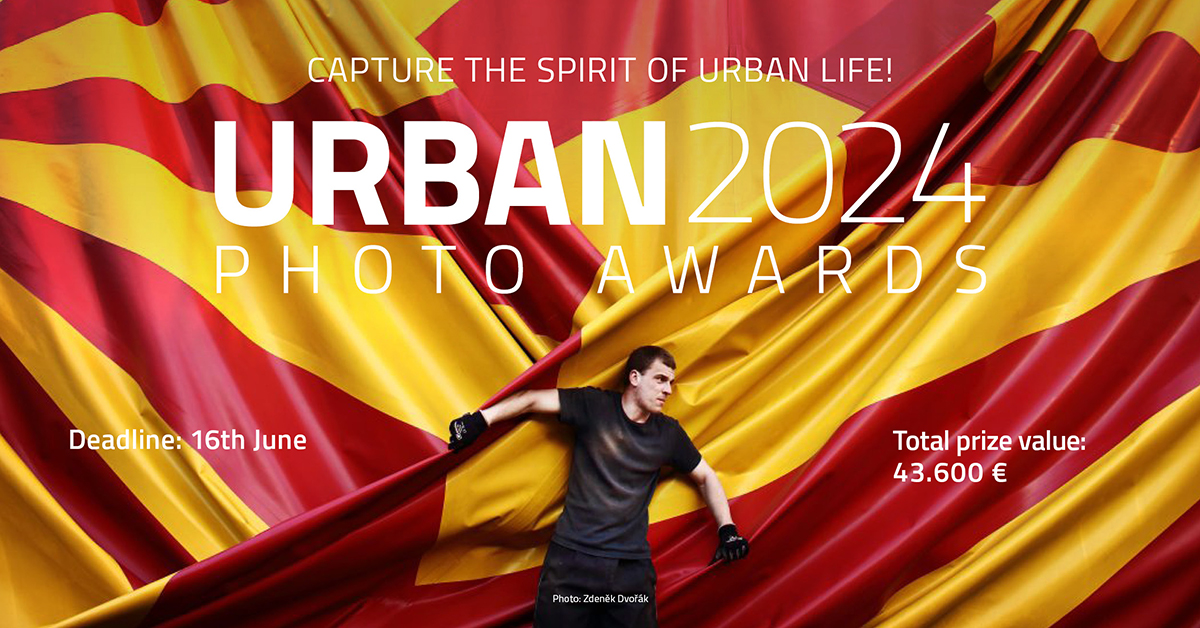
Enter the URBAN Photo Awards by June 16 for a chance to win €43,000 in prizes and showcase your work at Trieste Photo Days in Italy.

This year’s URBAN Photo Awards promises to be our most exciting yet, honoring the legacy of Patricia D. Richards and showcasing the world’s best urban photography.”

— Stefano Ambroset, founder

TRIESTE, ITALIA, June 11, 2024 /EINPresswire.com/ — The URBAN Photo Awards is celebrating its 15th anniversary, inviting photographers worldwide to submit their final entries by June 16th, 2024. With over €43,000 in prizes and an exhibition at the esteemed Trieste Photo Days in North-East Italy, this global photography competition is a unique opportunity for photographers to gain international recognition and showcase their work.

Celebrating Patricia D. Richards: A Transatlantic Tribute

In memory of Patricia D. Richards, the URBAN Photo Awards introduces “The Patricia D. Richards Legacy Award.” This special prize, aimed at photographers under 35 in the Projects & Portfolios section, commemorates Patricia’s lifelong passion for photography and her annual visits from Texas to Trieste. Her legacy continues to inspire young photographers to pursue their creative visions.

Patricia’s friends and family in Plano, Texas, along with her extended community in Trieste, remember her as a mentor who bridged cultures and brought a unique perspective to urban photography. As we approach the final submission deadline, we invite young photographers to honor her legacy by showcasing their talent.

Last Chance to Submit Your Free Entry

Photographers still have the opportunity to submit one photo for free. Additionally, photographers under 35 can participate in the URBAN Photo Arena, a special contest that allows for another free photo submission. These initiatives ensure accessibility and encourage a diverse range of participants to join the competition. Don’t miss this chance to showcase your work and compete for over €43,000 in prizes.

Join a Vibrant Global Network

Participating in the URBAN Photo Awards means joining a vibrant international community. The Trieste Photo Days festival, where the winning works will be exhibited, offers a dynamic platform for photographers to connect, learn, and celebrate. The festival includes solo and group exhibitions, workshops, masterclasses, and talks by industry leaders.

This year’s jury, led by Magnum’s Harry Gruyaert, along with Adam Pretty and Denis Curti, continues the tradition of excellence set by past jurors such as Martin Parr, Susan Meiselas, Alex Webb, Paolo Pellegrin, Alec Soth, Bruce Gilden, and Nino Migliori. Their expertise ensures that each entry is evaluated with the utmost care and respect, maintaining the high standards of the URBAN Photo Awards.

Enhance Your Exposure and Career

Winning the URBAN Photo Awards provides substantial prizes and unparalleled exposure. Winners will have their work showcased at the prestigious Trieste Photo Days, with the award ceremony taking place on October 26th. Winners will connect with audiences, professionals, and industry leaders from across Europe. The prizes include exclusive “Stele” trophies by Giorgio Celiberti, a renowned Biennale of Venice artist, emphasizing the competition’s prestige.

Visit Our Website and Attachments for More Information

For detailed submission guidelines, past winners’ stories, and more information, visit URBAN Photo Awards. Check out the attached documents for insights into “The Patricia D. Richards Legacy Award” and get inspired by Patricia’s journey and contributions.

Contact Information:

dotART – Cultural Association
+39 040 372 0617
info@urbanphotoawards.com

Embrace this final opportunity to share your vision of urban life, honor Patricia Richards’ legacy, and become part of a global network celebrating photography. Submit your photos by June 16, 2024, and join us in making this year’s URBAN Photo Awards a memorable event.

Stefano Ambroset
URBAN PHOTO AWARDS
+39 040 372 0167
info@urbanphotoawards.com
Visit us on social media:
Facebook
X
Instagram
YouTube

image