Photography

Exhibition explores Hajj through art and photography

Exhibition explores Hajj through art and photography

JEDDAH: An extraordinary exhibition titled “Journey Through the Holy Sites” has opened its doors in Jeddah, offering a captivating exploration of a pilgrim’s experience during Hajj.

Showcasing a collection of historic pieces, this unique exhibition features 26 artists, including three talented Saudi photographers.

Running from June 12 to 23, at Terhal Hall in Jeddah Park, the exhibition coincides with the Muslim holy pilgrimage to the sacred city of Makkah. In collaboration with the Islamic Art Museum and Oyoun Jeddah Charity Association, this remarkable showcase presents over 100 exhibits, ranging from photographs and paintings to books, manuscripts, and other precious artifacts.

The primary objective of this exhibition is to reflect the Kingdom’s unwavering commitment to ensuring a seamless and accessible journey for pilgrims from around the world. It also aims to highlight the various initiatives implemented to facilitate Hajj for all individuals.

Dedicated to Makkah as a historically and economically significant city, the exhibition covers the journey from the medieval age to the Ottoman era and up to the present day. A particular section focuses on artistic representations of the rituals, including embroidered fabrics that once adorned the Kaaba and breathtaking aerial shots of the Holy Mosque.

Dr. Zuhair Maimani, a business development consultant at the Creativity Zone Foundation and organizer of the exhibition, emphasized that the exhibition aims to showcase the collective efforts of Islamic nations in making this blessed ritual a resounding success. He further emphasized the role played by Saudi Arabia in serving the Two Holy Mosques and the pilgrims.

“This exhibition portrays the status of Makkah, the significance of Hajj, and its impact on the lives of Muslims worldwide. It also contributes to fostering a greater understanding of Islam among non-Muslims,” Maimani explained.

Running parallel to the main exhibition is a photography exhibit about the Hajj captured through the lenses of three talented Saudi photographers: Prof. Khaled Khader, Prof. Susan Baaqhil, and Imad Al-Husseini.

Baaqhil, the first professional award-winning photographer-artist in Saudi Arabia, expressed her pride in representing Islam and Saudi Arabia to the world.

“We take great pride in presenting a truly unique perspective on Hajj and offering a local lens through which visitors can experience it,” she stated.

Baaqhil continued: “Displaying rare images captured since 2002, I aim to provide a compelling portrayal of the extensive urban redevelopment currently taking place in the holy city of Makkah.”

In addition to the local pieces, objects, photographs, and artworks, the exhibition also hosts live calligraphy workshops and showcases Islamic designs, adding an interactive element for visitors to engage with.

Visitors are welcome to explore the exhibition from 10 a.m. to 10 p.m.

San Antonio photographer preserves women’s stories

San Antonio photographer preserves women’s stories
image

SAN ANTONIO — Photojournalist Bria Woods always tries to capture people in their natural element — such as Victoria Herrera, whom she photographed on San Antonio’s Southeast Side. 

It’s part of a series called “Where I Live,” in which folks in the community write their own stories to be published in the San Antonio Report, a nonprofit news organization. 

“Most of the contributors to the series are women, and it has really been a treat for me, to not only meet other women in our community, but to see San Antonio through their eyes,” Woods said. 

Woods highlights women through personal projects such as her annual photography series, “Her Story Project.” The theme of the project was “rest” and what rest meant to the 15 women that she photographed. 

“Women’s stories often go overlooked, unnoticed; they don’t get the same celebration as men’s stories and men’s contributions,” Woods said. 

Lisa Ramos, a San Antonio-based professor of Mexican American studies, agrees with Woods. 

“To get the recognition, we always have to remind those in charge — who are usually men — that we were there too. We contributed, and it’s an ongoing battle,” Ramos said. 

She says we have made strides, but more needs to be done. Many of her students feel validated when they learn about someone who looks like them. Woods agrees.

“It could be your neighbor who did something amazing, inspiring,” Woods said. 

Woods says that’s why she highlights women who probably wouldn’t get that recognition to begin with. 

“Yes, there are women out there that are doing great, but there are also women right here in our community. Success is local,” Woods said. 

She’s also calling attention to women’s stories through other mediums including radio, where she calmly gives her opening monologue. Woods says this is a necessary work that will live on for generations. 

“There’s so much power in someone using their own voice to tell their own story,” Woods said.

San Antonio photographer preserves women’s stories

San Antonio photographer preserves women’s stories
image

SAN ANTONIO — Photojournalist Bria Woods always tries to capture people in their natural element — such as Victoria Herrera, whom she photographed on San Antonio’s Southeast Side. 

It’s part of a series called “Where I Live,” in which folks in the community write their own stories to be published in the San Antonio Report, a nonprofit news organization. 

“Most of the contributors to the series are women, and it has really been a treat for me, to not only meet other women in our community, but to see San Antonio through their eyes,” Woods said. 

Woods highlights women through personal projects such as her annual photography series, “Her Story Project.” The theme of the project was “rest” and what rest meant to the 15 women that she photographed. 

“Women’s stories often go overlooked, unnoticed; they don’t get the same celebration as men’s stories and men’s contributions,” Woods said. 

Lisa Ramos, a San Antonio-based professor of Mexican American studies, agrees with Woods. 

“To get the recognition, we always have to remind those in charge — who are usually men — that we were there too. We contributed, and it’s an ongoing battle,” Ramos said. 

She says we have made strides, but more needs to be done. Many of her students feel validated when they learn about someone who looks like them. Woods agrees.

“It could be your neighbor who did something amazing, inspiring,” Woods said. 

Woods says that’s why she highlights women who probably wouldn’t get that recognition to begin with. 

“Yes, there are women out there that are doing great, but there are also women right here in our community. Success is local,” Woods said. 

She’s also calling attention to women’s stories through other mediums including radio, where she calmly gives her opening monologue. Woods says this is a necessary work that will live on for generations. 

“There’s so much power in someone using their own voice to tell their own story,” Woods said.

Lens Flare in Photography: A Complete Guide

Lens Flare in Photography: A Complete Guide

Lens flare can appear as spots or streaks of light and color or as a washed-out hazy look in your photographs. Some photographers and filmmakers like to use it creatively, but it usually shows up as an unpleasant surprise that can ruin your picture.

What Causes Lens Flare?

Lens flare occurs when stray light enters the lens and is reflected off interior lens elements. You’ll get it most often when shooting into a bright light like the sun, moon, or artificial light, or when your subject is blocking a bright light.

A diagram of off-camera sunlight causing lens flare. Illustration by Ggia and licensed under CC BY-SA 3.0.

Zoom lenses tend to be more prone to lens flare than prime lenses because they generally have more elements, which means there’s more potential for non-image-producing light to bounce around and create flare. For the same reason, lens filters can increase the risk of producing lens flare. Wide-angle lenses are usually more flare-resistant than longer lenses, but that doesn’t mean they’re immune from flare.

Lens manufacturers add special coatings to help reduce lens flare, but they can’t reduce the risk of lens flare to zero. However, there are things we can do to avoid lens floor and eliminate it in post if necessary.

Lens flare from direct sunlight seen as spots on a lighthouse.

Types of Lens Flare

There are several different types of lens flare:

Starburst

Starbursts happen when you shoot a bright point of light, such as the sun, moon, or artificial light, at a higher f-stop, generally f/8 to f/16. Higher f-stops will create longer and sharper bursts than lower f-stops. Use a lower f-stop if you want to minimize the burst effect.

You can also create a starburst by blocking some of the light and letting it peak out from behind a solid object like the way part of the sun in the image below is blocked by the tree branch.
You can control the size of the burst with your aperture. In the image above, the picture on the left was shot at f16, creating a strong burst effect. The picture on the left was shot at f4, resulting in a softer and shorter burst.

Ghosting

Ghosting appears as small round or oval-shaped spots of color when shooting into a bright light or when a bright light is in the scene. You’ll see it in the viewfinder if you look for it and can often eliminate it by a slight change in the angle of the camera to the light source.

Ghosting flare appears of round or oval shaped colors.

Veiling

Veiling lens flare looks like a hazy wash over your image. It happens when a strong light source is just outside your image.

Here’s an example of the hazy, low contrast look created by veil flare.

Sensor Flare

Sensor flare, also called red-dot flare (although sometimes the dots are green), is caused by light that is reflected off the sensor to the lens and then back to the sensor. It happens most often when shooting directly into a strong light like the sun with a small aperture of f/11 or higher.

The spot pattern that appears around the top of the sun are examples of sensor flare. The circles of light against the windmill are ghosting flares.

Anamorphic

Anamorphic lens flare appears as a horizontal streak of light rather than the usual circular flares. Originally they were the result of a flaw in the optics of anamorphic lenses. Lenses have improved over the years and you can buy anamorphic lenses that no longer produce the streak. However, filmmakers and photographers who want the look can buy streak filters to create anamorphic-like flares.

Still frames from the Hollywood blockbuster film Star Trek (2009). Director J.J. Abrams is known for his frequent use (and some would say overuse) of lens flare in his Star Trek series.

How to Avoid Lens Flare

Since flare is most commonly caused by shooting into bright light, the obvious solution is to not do that. Of course, that approach isn’t always practical since it could severely limit your compositional choices. Nonetheless, there are several things you can do to eliminate, or at least reduce, lens flare.

  • Use a lens hood. Most lenses come with a lens hood designed to reduce lens flare. They work a little like the visor of cap, shielding the lens from tray light.
  • Use your hand. With the cap analogy in mind, hold your hand or a hat next to or above the lens to try and block some of the stray light hitting the lens. Use live view so you can see if your hand is helping and also to make sure it isn’t getting into the picture.
  • Remove your lens filters. As mentioned, lens filters can increase the risk of lens flare, so remove the filter if shooting into bright light.
  • Re-compose. You’ll see lens flare in your viewfinder while composing if you look carefully for it. If you see it, try re-composing by just shifting the angle of your camera to the light source.
  • Come back later (or earlier). If you’re shooting into the sun and it creates flare, try again at a different time when the sun is in a different position.
  • Use a wider aperture. Setting your aperture to a lower f-stop, such as f8 or lower, can help minimize flare.
  • Use your finger. This trick involves taking two pictures and blending them in Photoshop. It works well if the flare appears below the sun. First, switch to manual exposure. Frame up your shot and take the picture Then lower a finger in front of the lens until it blocks the sun. Load the two images onto separate layers in Photoshop with the image with flare on top. Create a mask for the flare layer and then use a black brush to mask out the flare and reveal the clean image below.
  • Clean your lens. Dust and other spots on your lens will add flare to your images when shooting into bright light, so keep them clean.

How to Remove Lens Flare

You can often remove lens flare in Lightroom and/or Photoshop, depending on the type and severity of the flare. In Lightroom, the healing tools can often handle flare if it appears as just a little spot of light or color. You may have to experiment with the content-aware, healing brush or clone stamp to see which works best.

Larger flares or multiple flares may require Photoshop’s more powerful re-touching tools. These include the remove tool, spot healing brush, healing brush, patch tool, clone stamp, and content-aware fill. It will require some trial and error to find the best tool or the best combination of tools to get a pleasing result.

One trick with the clone stamp is to change the blend mode to color. When you do this, the clone stamp will only copy the color of the source area rather than all of the detail. So if you find a section of the image where the color matches (more or less) the color that the flared area should be, you can use the clone stamp to paint over that area with just the right color and leave the underlying pixels intact. Like everything, it will probably take some practice and will depend on the specific situation.

The Finger Trick

Finally, let’s do a quick walkthrough of the finger trick described above. It’s best to use a tripod, but you can get away with doing this handheld if you’re careful not to change the framing of the scene.

Switch to manual exposure. You have to use manual exposure to keep the exposure from changing when you put your finger in front of the lens.
Set up your shot and take the first picture with the lens flare.

Lower a finger down in front of the lens until your fingertip blocks the sun or other light source, eliminating the lens flare. Take the shot.

Load the two images into Photoshop as separate layers. Put the one with the flare on top. Create a mask on the top layer with the flare and use a black brush to mask out the flare.


About the author: John Tunney is a fine-art photographer and instructor based on Cape Cod, MA. You can see his work on his website and on Instagram.


Image credits: Photos by John Tunney.

5 Ways to Use Photoshop’s Generative Fill Feature for Real Estate

5 Ways to Use Photoshop’s Generative Fill Feature for Real Estate

Photoshop’s new AI-powered Generative Fill feature has generated a ton of buzz around the industry for its ability to perform powerful edits with just a single click. And while it has many discussing what extremes it can be pushed to, it also has some very practical, time-saving applications. This great video tutorial will show you five such applications for real estate photography. 

Coming to you from Kevin Raposo, this excellent video tutorial will show you five useful applications of Photoshop’s new Generative AI feature for real estate photography. Like Raposo, I have been impressed by Generative Fill’s ability to perform edits that would normally take me a fair amount of time and effort. For example, on a recent headshot shoot, a client asked for a shot to be changed to a center crop, which meant I needed to extend the canvas to the side, including his shoulder and shirt, which had a rather intricate pattern that would take a significant amount of cloning work to create convincingly. I gave Generative Fill a try, and it got it 99% there, even recreating the pattern and natural wrinkles in the shirt perfectly. All I had to do was a slight exposure and color adjustment. Needless to say, I was quite impressed. Check out the video above for the full rundown from Raposo. 

‘A total perfectionist’: the understated, underrated photography of Evelyn Hofer

‘A total perfectionist’: the understated, underrated photography of Evelyn Hofer

In 1982, on the occasion of an Evelyn Hofer exhibition at the Witkin Gallery in Manhattan, Hilton Kramer, art critic of the New York Times, asked: “Is it possible in this age of publicity for a photographer to be both famous and obscure at the same time?” In an age of information overload, that remains, to a degree, a pertinent question.

Hofer, who died aged 87 in 2009, is one of those quiet but accomplished photographers whose importance has taken considerable time to accrue. When Kramer wrote his review, championing her as “one of the most illustrious of living photographers”, Hofer was 60, but, as Kramer pointed out, not one of her works featured in the Museum of Modern Art’s extensive permanent photography collection. “She seems not even to have been heard of,” he wrote, sounding personally affronted.

Evelyn Hofer and another woman reflected in a round mirror on a wall next to an iron radiator

Much has changed, though slowly, in the interim. Hofer’s poised and attentive colour portraits now feature in museum collections worldwide, and in recent years there have been retrospectives devoted to her work in Switzerland, Ireland and the Netherlands. Yet while photographers such as Thomas Struth, Rineke Dijkstra and Alec Soth have acknowledged her influence, Hofer’s work has not inspired a wave of popular attention like the one that attended the posthumous reappraisal of her male contemporary and fellow colour pioneer Saul Leiter.

The reasons for this are complex, and not just to do with Hofer being overlooked by a male-dominated photography culture. In her lifetime she was best known for a series of evocative travel books, published between 1959 and 1967 in collaboration with well-known writers: Mary McCarthy (The Stones of Florence); VS Pritchett (London Perceived; New York Proclaimed; Dublin: A Portrait) and Jan Morris (The Presence of Spain). Clare Grafik, co-curator of a long-overdue British retrospective of Hofer’s work, which opens at the Photographers’ Gallery, London, later this month, thinks that the perceived commerciality of these commissions may have initially worked against Hofer being taken seriously as an artist.

The tail fins and lights of a row of parked cars seen against a backdrop of skyscrapers

“Her colour work, particularly her portraits of people in their urban settings, is so extraordinary that it’s difficult to understand why she is not more well known and appreciated,” Grafik says. “Through those books Hofer’s work undoubtedly reached a lot of people, [but] many readers perhaps did not take that much notice of the photographs other than as illustrations of the writing. In art circles there may have also been a latent snobbery towards her because she was seen as a commercial photographer, but working on the travel books is how she developed her own style.”

The forthcoming exhibition makes clear that Hofer was a formally brilliant photographer of people, places, environments and objects. Looking at her colour portraits of ordinary people in 1960s Dublin and New York, it’s difficult to think of any other photographer who so evoked the atmosphere of those cities while creating images that are so rigorous and richly hued. Her Dublin exudes a muted, melancholy atmosphere, while New York is vibrant with the suggestion of life and colour even in the stillness she imposes on her subjects.

A police officer on a motorcycle parked in front of a blossoming cherry tree

“Her images are incredibly subtle in every regard,” says Grafik, “and there is a lack of possessiveness in her approach. You can sense the delicate balance in the relationship between her and her subjects.”

Hofer photographed people individually or in small groups on the streets, using an unwieldy 4x5in (10x12cm) Linhof Technika view camera that required a degree of patience and engagement from both her and her subjects. “She was always studying the light,” Andreas Pauly, her former assistant and executor of her estate, told the New York Times in 2010. “She had a little notebook and would write down when the light would be good, then she would come back at that time. It was rare she set up a camera and did something quickly.” The results are the polar opposite of traditional street photography, being still, poised and deftly composed rather than frantic, snatched and fly-on-the-wall. In one memorable image she posed a tough-looking motorcycle cop beneath a blossoming cherry tree, making you wonder about the preceding conversation between the macho guy and the diminutive woman with the huge, cumbersome camera.

A small girl with a big bike near a crossroads of residential streets with a dog in the background

Grafik describes Hofer’s style as “environmental portraiture”, citing its stylistic resemblance to August Sander’s more austere work in Weimar Germany. “There are whispers of Sander’s style in her monochrome portrait of three gravediggers in Dublin, for instance, but Hofer photographs people in their settings in a way that doesn’t reduce them to their function. There is often an interesting complicity between her and her subjects, as in her wonderful colour portrait of four Irish footballers standing in a row. There is a slight glint in their eyes, as if they know they are performing for her camera.”

Like all Hofer’s subjects, though, they are performing quietly, responding to her unassuming presence and precise instructions. Her photograph of a young girl in Dublin, standing astride an adult-sized bicycle, is both a portrait and a landscape. It is also a study in attentiveness: the smartly dressed subject bathed in sunlight and shadow on a street that is eerily empty – perhaps it was a Sunday – save for an uninterested dog in the background. The composition is echoed in Hofer’s portrait of a young man posing cooly on a racing bike in a New York park, the towering Queensboro Bridge looming in the background. In both instances, the gaze of the photographer’s subject is calmly quizzical.

Four men standing in a doorway, looking at the camera

Born in Marburg, Germany in 1922, Hofer’s early life was disrupted by the rise of nazism, her family fleeing to Geneva, Switzerland in 1933 when she was 11. She began her career with an apprenticeship at a Swiss portrait studio before taking private lessons from the influential teacher and photographer Hans Finsler, a member of the new objectivity movement. He taught her the theory and practice of photography, but also technical expertise, including the chemistry of print-making, a grounding that would underpin her later mastery of the complex dye transfer printing process that gave her colour images such rich, deep tones.

In 1946, Hofer settled in New York, having also lived in Spain and Mexico. There she began working for Harper’s Bazaar under its celebrated art director Alexey Brodovitch, and befriended the artists Saul Steinberg and Richard Lindner, who, she said, “showed me how to look”. Her still lifes artfully arranged objects echo the paintings of 17th-century Dutch masters. Grafik finds it revealing that Hofer’s close friends were painters: “They were creating their own world, not relying, like photographers, on the outside world to come to them.”

A young man on a racing back in a park with the Queensboro Bridge in the background

At some point in the mid-50s, Hofer met the writer Mary McCarthy, who asked her to provide the images for The Stones of Florence, a literary meditation on the Italian city’s culture, art and history. So began perhaps the most creatively fertile decade of Hofer’s working life, with a subsequent, more sustained collaboration with VS Pritchett producing atmospheric books on London, New York and Dublin. With hindsight, it’s clear that Hofer’s technical skill and aesthetic judgment elevated this work to the level of art photography.

She returned to editorial work in the late 60s, working for Time and Life magazines. In the 70s she shot several extended photo essays for the Sunday Times, including one on British prisons and another on life in Crossmaglen, a staunchly republican village in south Armagh, at the height of the Troubles.

A vinyl-seated booth in an Italian restaurant with an ornate plaster ceiling and murals on the walls

Throughout, Hofer remained an intensely private individual. Elisabeth Biondi, erstwhile visuals editor of the New Yorker, commissioned Hofer for several Vanity Fair pieces in the late 1980s, including one in which she photographed the interior of Andy Warhol’s apartment after the artist’s death. Biondi and Hofer became friends.

“We weren’t close, but we got on,” says Biondi, laughing. “Charm was not Evelyn’s strong point. She had a German exactness that I recognised in myself, and she could be stubborn to the point of infuriating, but she was a total perfectionist. Her aesthetic reflected that: she was constantly seeking technical perfection alongside beauty, and to that end her photographs are calm and totally balanced compositionally. When you commissioned her, you knew she would deliver work to the highest standard.”

Now and then, Biondi caught a glimpse of Hofer’s life outside photography. “She lived alone in a building that had once been a kind of artist’s colony in the West Village. She was very independent, and her apartment, like her life, was meticulously ordered. I know there was a relationship with someone in the past but she did not talk about it. One sensed that, to fall back on the old cliche, she was married to her work – so much so it would probably have been difficult to be her partner.” Biondi pauses for a moment. “For Evelyn, the work was her life.”

Twice in a lifetime: would you dare meet your doppelgänger?

Twice in a lifetime: would you dare meet your doppelgänger?

For a week, I put it off. My deadline crept closer, but I did not want to click the button, I did not want, actually, to “find my doppelgänger”. Perhaps I could write around it, I suggested, weakly. I went to lunch; I kept my eyes on the pavement for fear of catching my own eye.

The subject of doppelgängers swims regularly in and out of popular culture, mirroring, revealing, bringing varying degrees of discomfort. Naomi Klein’s new book grapples with the idea of a doppelgänger after the writer and academic realised she was regularly mistaken for Naomi Wolf. On Twitter, recently, she asked her followers if they’d ever encountered their own lookalike and the replies were filled with familiarly gripping stories, including a comedian who’d been on stage when, as a whole, the audience and he started to become aware of his lookalike sitting in an early row – the two went on to perform the set as a double act.

Every few months there is a tabloid piece featuring similar stories, illustrated with photos of two people laughing side by side, amazed to have met their twin on a plane, or at a wedding – these are framed as beautiful coincidences, we meet the subjects when the shock is fresh and they’re grinning with wonder. Deborah Levy’s new novel explores the same theme – travelling through Europe, a pianist called Elsa comes across her double. “My startling thought at that moment was that she and I were the same person,” Elsa says. “She was me and I was her. Perhaps she was a little more me than I was.”

Doubles.

Those stories relied on coincidence, a sort of supernatural chance, which one can bypass now, if they choose, by downloading an app. But before this long list of lookalike apps existed, before Google Lens allowed a person to upload a selfie then click to find every other stranger on earth that shared their features, seeing your doppelgänger (the word translates from German as “double walker”) was considered a bad omen. The very worst omen, in fact. According to both English and German folklore, it meant death would follow. I tried talking to my editor again: “I’m just trying to write a fun piece, I’m not ready to die.”

The feeling of seeing doubles in those tabloid stories is similar to a kind of seasickness. It’s the differences that destabilise you – the same but different variations of nostril and ear, which cause that familiar psychic wobble. You feel it when looking at the work of Canadian artist François Brunelle, who was inspired to find and photograph more than 200 pairs of unrelated doppelgängers after being taken aback, he said, by how similar he looked to Rowan Atkinson. The picture series, I’m Not a Look-alike!, which took 12 years to put together, features men and women who stare out of the frame with the same round gazes, the same low brows (as seen on the previous page).

When the project went viral, it was brought to the attention of Dr Manel Esteller, a researcher at the Josep Carreras Leukaemia Research Institute in Barcelona, who recruited 32 pairs of Brunelle’s look-alikes to take DNA tests and complete questionnaires about their lives. What was the explanation for these doppelgängers, he wondered? What were we seeing? He found that the 16 pairs who were “true” lookalikes, according to facial-recognition software, shared significantly more genes than the others that the software deemed less similar.

Doubles.

“Now there are so many people in the world,” Dr Esteller explained to the New York Times, “the system is repeating itself.” Not only are apps that can find our doppelgängers multiplying, the population is multiplying, too, at a pace which means we are all more likely to have one. I just… don’t want to meet her.

To be fair, I should’ve known what I was getting into when I started writing. One reason I’d been led here, to this piece, and this list of apps and the blankest selfie I could muster, was a series of news stories about people tracking down their doppelgängers with malicious intent. When the body of a young woman was found last August in a parked car in Germany, her family identified her as Sharaban K, 23, a Munich-based beautician with Iraqi roots. But after the postmortem, questions were raised. The victim was eventually named as Khadidja O, an Algerian beauty blogger – the two looked (said police) “strikingly alike”. They discovered that several similar looking women had been contacted on social media by Sharaban K in the week before Khadidja’s death – in January she was arrested.

“Investigations have led us to assume that the accused wanted to go into hiding because of a family dispute and fake her own death to that effect,” said the state prosecutor’s office. “You don’t get a case like this every day, especially with such a spectacular twist.”

Doubles.

Then April came, and a woman, 47, was sentenced for stealing the identity of her American lookalike, who she’d poisoned with a tranquilliser-laced cheesecake. In August 2016, Russian-born Viktoria Nasyrova had visited the New York home of Olga Tsvyk, 35, carrying a cake. The women looked strikingly similar with the same hair and complexion, and both spoke Russian. The next day a friend found Tsvyk unconscious, “dressed in lingerie with pills scattered around her body as if the woman had attempted to kill herself”. When she got home from the hospital she found her passport and papers were missing; in court this year, Nasyrova shouted “Fuck you” at the Queens Supreme Court judge as he sent her to prison for 21 years.

An earlier doppelgänger case saw a man called Richard A Jones convicted of aggravated robbery after being picked out of a lineup and serving 17 years in prison, despite maintaining his innocence. But in 2018, after witnesses were shown side-by-side photographs of him and another suspect (a stranger to Jones), and couldn’t tell them apart, a judge threw out his conviction. So, yes, that German state prosecutor was right, you don’t get a case like this every day, but also, you don’t… not?

Teghan Lucas, an anatomist who specialises in forensic anthropology, had by chance researched the possibility of a case like Jones’s three years earlier. She analysed the faces of almost 4,000 people, measuring the distances between features, such as their eyes and ears, and calculating the probability that two people’s faces would match. She found the chances of sharing “eight dimensions” with someone else are less than one in a trillion. With 7.4 billion people on the planet, that’s only a one in 135 chance there’s a single pair of doppelgängers. “It’s extremely unlikely,” Lucas told the BBC.

Doubles.

But, as Jones’s case later proved, this analysis had a flaw – it relied on computers rather than the odd unpredictability of the human eye, the ways we respond to a face, or a movement. When we say we recognise someone, we’re not just revealing something about them, we’re revealing something about ourselves – our recognition abilities, and what we’ve learned about how a face might age, the slipperiness of a smile, what we see when we see a stranger.

It’s a subject that interests Anouchka Grose, a psychoanalyst who, a few years ago, found strangers started treating her differently, a mixture of awe and familiarity. She was unnerved, until someone explained they were mistaking her for an actor in Hollyoaks who looked remarkably similar. It’s not an uncommon experience, Grose says. She likens it to falling upon a reflection of yourself in a window or unexpected mirror, and taking a moment before realising that person is you. “Maybe you’re instantly repelled, or feel oddly drawn to this weird you-like person. Seeing yourself as if from the outside is something like seeing a ghost, or being undead.” It makes you wonder, “What if the other you was more real than you? Or better at it?”

I ask her why this is a subject that remains so fascinating to us. Well, she says, “Freud thinks the doppelgänger is uncanny, as it’s unconsciously linked to the idea of one’s own death. The soul is the original ‘double’. Human narcissism is such that we long for immortality and so the ‘immortal soul’,” like the portrait in oil, or the family photograph, “promises to keep us in the world forever. The world without us is just too unthinkable. But that wish or fantasy becomes repressed and so the double becomes uncanny – the thing we were using to defend ourselves against the idea of our own death becomes the thing that reminds us of it.”

Doubles.

Death – there it is again. Why does every road from the doppelgänger lead back to the earth? “Seeing someone just like you can make you feel totally displaced. While part of you might want to take on the world together, another part of you might think, ‘What’s the point in me any more?’ I guess envy and rivalry are the big risks with doppelgängers. What if they stole your job, your friends, your partner? Or – what if they felt as displaced by you as you do by them?” Grose adds, quite brightly, “The only way out would be a fight to the death.” While that idea – that a person must die after seeing their doppelgänger – seems archaic and grounded in the ghostly, like most myths it describes something very real. Later, Grose emails me a warning: “Stay off those apps!”

Still stalling, I sent my editor a history of doppelgänger sightings believed to have ended in death. She was tiring of me now. The best-known stories include Catherine the Great’s servants seeing her double sitting on her throne while she was asleep. The empress ordered the impostor to be shot; Catherine died of a stroke a few weeks later. A hundred years after that, the poet Percy Bysshe Shelley told his wife, Mary Shelley, he’d seen his double. He reported a number of sightings, the last occurring on a terrace in Italy in June 1822, where his doppelgänger asked if he would “ever be content”. A few days later, Shelley’s boat capsized, and he died. My editor replied promptly with a link to an explanation: psychologists have identified neurological conditions in which one hallucinates their own image at a distance. It follows, then, that somebody with a brain tumour which was causing hallucinations, hallucinations which include seeing their double, might die shortly after. Fine, I responded, grimly. My selfie glared at me. My deadline tutted. I clicked the button.

Doubles.

In the past, it would have taken a lifetime of travel and remarkable luck to bump into your doppelgänger. Today, apparently, it takes a basic smartphone. The lists of apps are named things like Twin Stranger and I Look Like You, and they claim to match your face to that of its users, or its nearest celebrity, or a long-dead person in a painting. There are functions on social media sites which do similar, like Pinterest’s Visually Similar Results search, and there’s Google Lens, which scans the whole internet.

As I scrolled through the options, I got a brief understanding of the impulse of a person like Viktoria Nasyrova. What if there was a way, a simple way, to slip unseen into a stranger’s life, and move about in their shoes without anybody noticing? Historically, meeting a lookalike would have happened rarely and by accident, but today an industry has formed that offers to search the world for yours while you wait, scrolling in bed. It reminded me of the search for “the one”, the search for a soulmate, now also shifted online after years relying on random encounters. The search for someone who will understand us. Connection.

Doubles.

In the half second it takes for Google to swoop through its many millions of images, my screen filled with faces. But, having scrubbed the internet for my lookalike, it presented me, not with a nice 45-year-old in Hungary or distant sister in Hull, but instead the cropped “before and after” faces advertised by plastic surgery websites. And honestly, I have no illusions that the “after” face was my lookalike. Was this what I’d been worried about? Being confronted with my flaws? With what I really looked like, outside the mirror?

I tried again, a different photo, and got a woman selling earrings in Poland. I realised what the app was seeing was basically: white woman with nose. The mystique had truly been lost. The poetry, gone. I was reluctant to try the celebrity lookalike sites, because what it means to look like a celebrity is to look like a vastly less attractive version of them. Nonetheless, I uploaded my photo and kept clicking until I got Cher. Then, after many false starts, their shonky website creaking under the weight of me, Twinstrangers presented me with 856 results – the majority were simply cheery girls with red hair. But – there was one, a woman with dark eyebrows and a combative stare, who the site said was an 86% match. I saw something of myself in her.

Doubles.

It made me pause, for a second at least. What did it mean to see a person who looked like me? What did it mean, to see a glimpse of myself living happily in Armenia? And to know that it was likely there were other strangers who look even more similar? To know I could be one of hundreds, with the same grim smile, the same pointy chin? I have pencilled in a funeral for July.

We ask 3 Broadway photographers: How do you turn a live show into a still image?

We ask 3 Broadway photographers: How do you turn a live show into a still image?

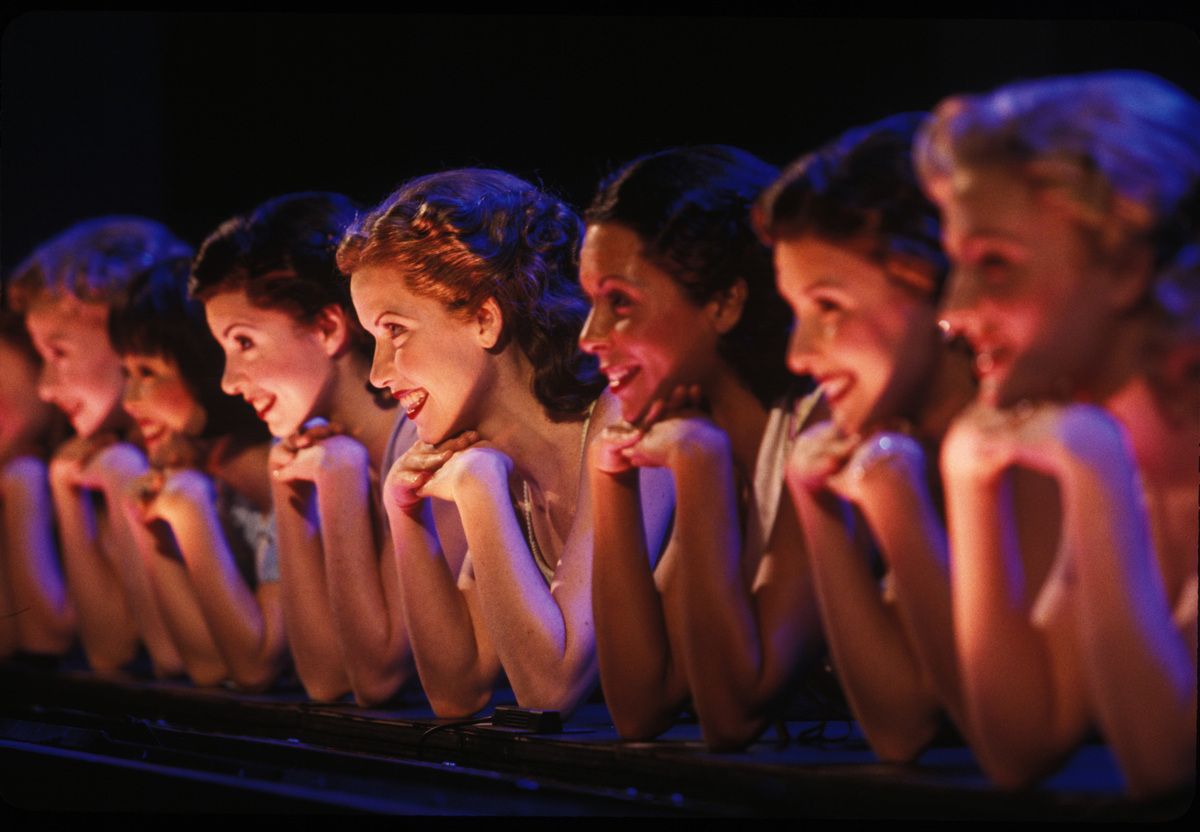
Joan Marcus took this photo for 42nd Street. Marcus began taking production shots while she was a graduate student estimates she’s now photographed 1,000 shows.


Joan Marcus


Joan Marcus

Theater is, by its nature, evanescent; every performance is different, based on the chemistry of the cast and the audience. But there are ways theater fans can relive their memories: Playbills and souvenir programs, scripts, cast recordings and production photos.

Only a handful of theater photographers work on Broadway and their challenge is to capture the essence of live performance for generations to come. Three of them spoke with NPR about their craft.

Marc J. Franklin: ‘Energy that only musical theater can give you’

Marc J. Franklin was Playbill‘s photo editor for years. Now, he’s a production photographer. Last season, he took pictures of the Tony Award-winning musical, A Strange Loop. This season, he photographed the Tony-nominated shows Some Like It Hot and Topdog/Underdog.

“Anybody can set up a tripod and click a button,” said Franklin. “There is this electric, ephemeral thing that happens in a room, depending on who is in that room, both onstage and off. And that affects your performance. That affects the energy that the audience feels. And so, when I take photos, I really try to capture that.”

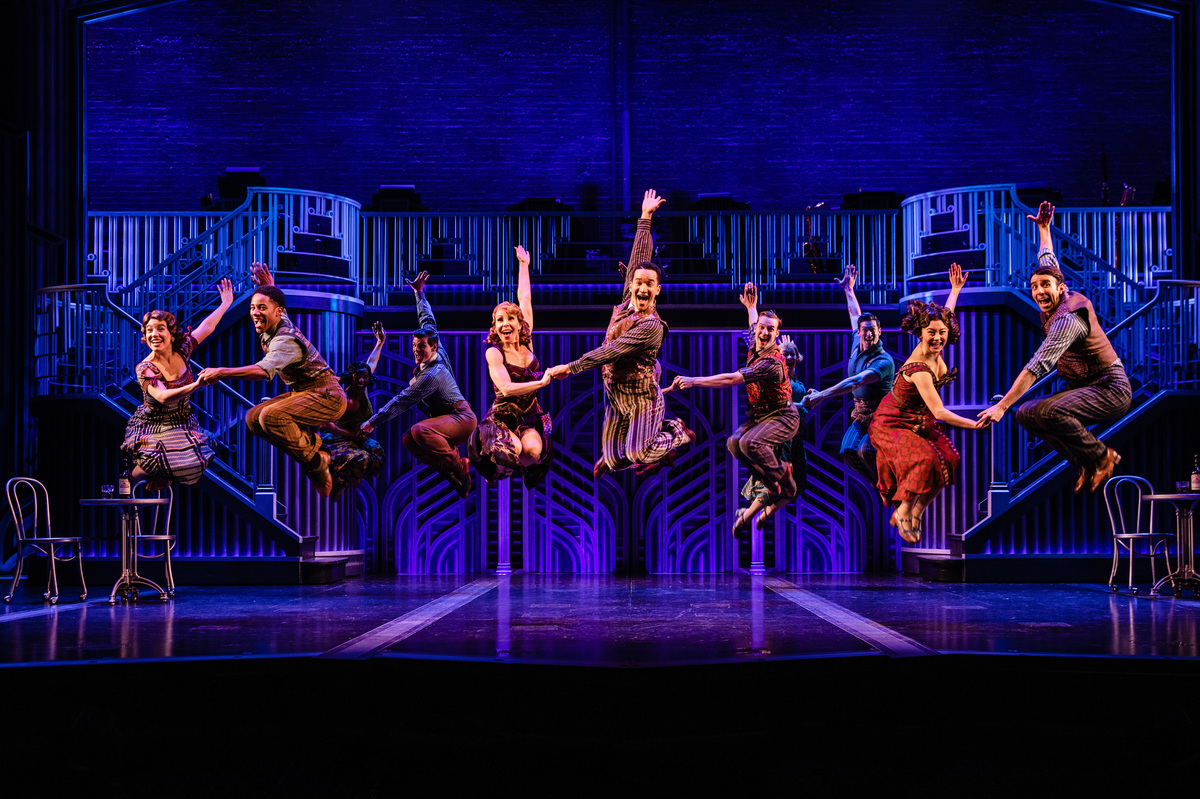
“This was a tough shot to get,” Marc J. Franklin says of this photo he took for Some Like It Hot.


Marc J. Franklin


Marc J. Franklin

For this Some Like It Hot picture, above, Franklin set up the shot at a photo-call. “This was a tough shot to get, because you have to make sure that everybody is all in unison,” he said. “You have to make sure that everybody is looking at you. For me [it] really captures the spirit of musical theater and this energy that only musical theater can give you in a still image, which is always the challenge!”

Corey Hawkins as Lincoln in Topdog/Underdog


Marc J. Franklin


Marc J. Franklin

Franklin often chooses to take close-ups from an angle. “We rarely experience life in very centered, linear ways,” he said. “You know, we’ll be walking down the street and we’re not directly in the center of the sidewalk. And you look to your right and you see something, or you look to your left and see something. And having that angle gives us more of a sense of place than something directly head on. So, I always try to capture that, especially when it is a more contained, close-up image.”

Corey Hawkins as Lincoln, left, and Yahya Abdul-Mateen II as Booth in Topdog/Underdog


Marc J. Franklin


Marc J. Franklin

Joan Marcus: ‘I like what I do’

Joan Marcus is the current dean of Broadway photographers. She started taking production shots while she was a graduate student in Washington, D.C., and eventually moved to New York to take photographs of Broadway and Off-Broadway shows full-time in the late 1980s. She says she’s worked on about a 1,000 shows and she’s received a special Tony honor for her body of work.

When Marcus started, production photos were shot on film and developed in a dark room. Most were black and white.

“I like what I do, essentially,” Marcus said. “It’s kind of fun to work on a big hit; you know, something that runs forever and ever and ever and ever.”

Like Wicked, above, which will have its 20th anniversary this October.

D’Arcy Carden as Alicia, left, Scott Foley as Jaxton and Chris Sullivan as Caden in The Thanksgiving Play


Joan Marcus


Joan Marcus

Marcus takes thousands of photos at dress rehearsals and photo-calls – like she did at The Thanksgiving Play, which opened this spring. She then culls them down to 300 to 400 images to give to producers and press agents “and then they whittle it down.”

Sometimes her favorite shots fall by the wayside because of the needs of the production. “They have to market a show,” she said. “You know, it’s not just reporting what the show is. It’s like what’s going to sell the show, too. So, it’s not a totally pure aesthetic.”

Jesse Tyler Ferguson (times 12) in Fully Committed


Joan Marcus


Joan Marcus

Jenny Anderson: ‘I pinch myself every day’

Jenny Anderson, a Mississippi native, has been working as a Broadway photographer for 15 years. Her specialty is backstage shots, which have become more popular now that there’s Instagram and theater websites.

Colton Ryan, left, and Anna Uzele star as Jimmy and Francine in New York, New York.


Jenny Anderson


Jenny Anderson

For the musical New York, New York’s opening night, Anderson took editorial shots of the cast on the rooftop of the St. James Theatre, above.

“Eighty percent of my gigs are Broadway and theater, which is lovely, because I feel like I’m fully a part of the community,” Anderson said. “And so now as a freelancer, I get hired by producers and publicists of shows to do opening nights, backstage, behind the scenes, anything really. I shoot a lot of opening nights.”

Backstage with Anna Uzele at New York, New York


Jenny Anderson


Jenny Anderson

Later, she took more candid black-and-white photos backstage in the dressing rooms, above.

“It’s kind of crazy and wild and a little frustrating sometimes to make sure you get the right photos of the right people and everyone’s happy and all that,” Anderson said. “But I love it so much. And I pinch myself every day that I am anywhere near Broadway, much less an active member.”

Audio and digital story edited by Jennifer Vanasco. Audio produced by Isabella Gomez Sarmiento. Digital story produced by Beth Novey.