Photography

Today’s Photo from Ted Grussing Photography: Filoli Wins

Today’s Photo from Ted Grussing Photography: Filoli Wins

… flowers are fun and looking into the depths of them is a passion of mine … you are transported into a very special world where beauty is without limit and so are the universes you can create whilst drawn into these micro worlds of attraction.
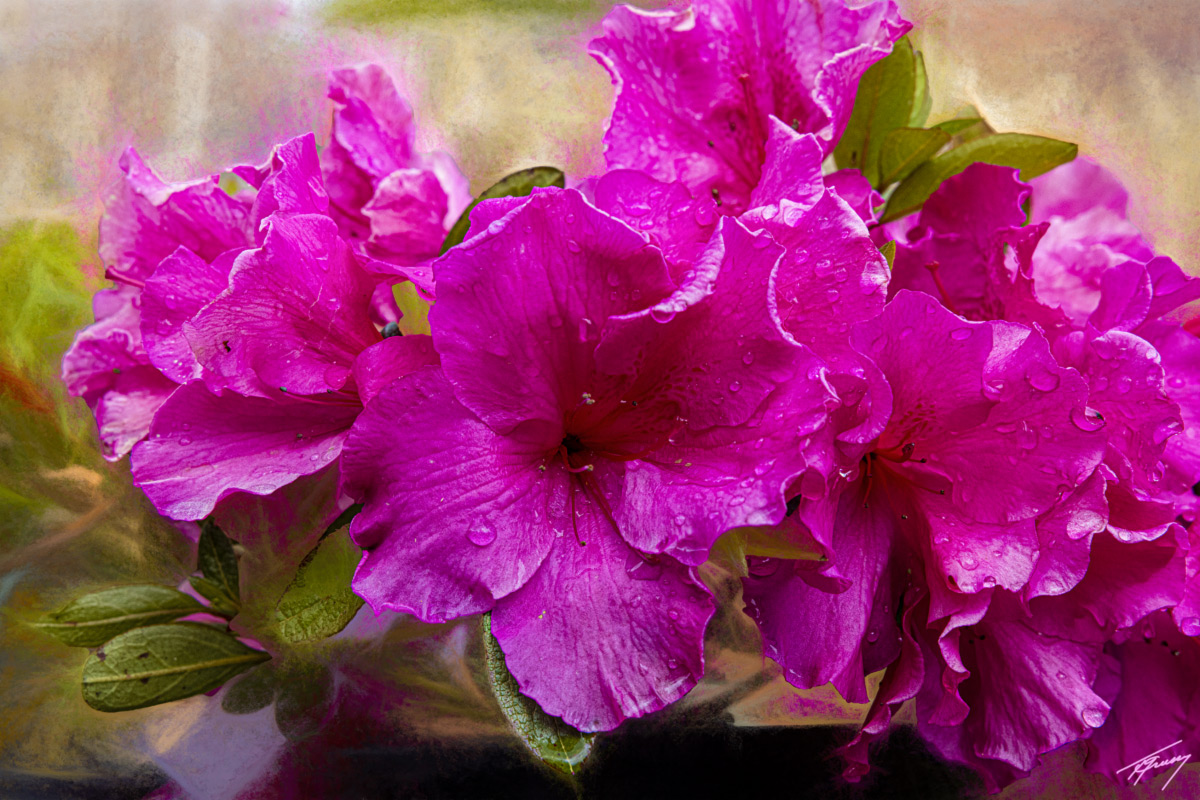
The Iris in the top photo was one of a very few I kept as most of them had the upper petals sagging under the weight of the rain drops … this bloom was kinda sheltered … the azaleas below were not sheltered, but nevertheless had only minor bending of the petals. In going through all of the flower images today, the shots from Filoli had the better backgrounds to work with, thus the call for Filoli over Stanford Mall. Both photos will make high quality prints up to eight feet by four feet and any size smaller. I’m in the process of setting up an online gallery where you pick the photo and let me know which one you want … coming soon, but in the interim if you see something you want, just email me.

In my emails when I use the color magenta as above, they are active links that you can click on to go to the websites of the company or organization and learn more about them including locations, directions and anything else they are sharing.

The presentation that I gave to Padre Trails Camera Club is now online and if you would like to view it, click on the link above. My presentation goes live at about four minutes. I enjoy in person presentations and hope you will enjoy it also. Thanks to the wonderful people up there who made it possible. If you are asked for a password, it is: #Z1JhpmE hopefully I have it set up so you don’t need it.

Another beautiful and productive day has been lived … it is really nice being here and waking in the morning with the chance to live another day and maybe get it more right than the day before … keep breathing and smiling … you are here!

Cheers,

Ted

I bring but this one common thought
My life has wrought;
That from the dregs of drear despair
Still everywhere
There is a joy I yet may sip—
‘Tis comradeship
With all mankind, the high and low
I know.

excerpt from I Know by Max Ehrmann

###

photo_tedgrussingThe easiest way to reach Mr. Grussing is by email: ted@tedgrussing.com

In addition to sales of photographs already taken Ted does special shoots for patrons on request and also does air-to-air photography for those who want photographs of their airplanes in flight. All special photographic sessions are billed on an hourly basis.

Ted also does one-on-one workshops for those interested in learning the techniques he uses.  By special arrangement Ted will do one-on-one aerial photography workshops which will include actual photo sessions in the air.

More about Ted Grussing

I turned to photography in my darkest moments & it helped me heal

I turned to photography in my darkest moments & it helped me heal
Motherly Collective

Postpartum. The period of your life that begins the moment you welcome your child into the world. The period of your life that isn’t really just a period, but in actuality is the rest of your life—the aftermath of becoming a mother. It is perhaps one of the most complex trials that mothers go through. 

I was unwary enough to believe that the journey would be all joy and bliss, but as I progressed into my motherhood experience, the naivety began to shed—and the realities began to trickle, or rather flood, in. Once I entered motherhood, there was an eclipse. Everything went dark. I felt alone. In despair. A foreigner in my own skin. And during what was one of the hardest times of my life, my saving grace was found in a creative outlet: portraiture. 

baby nursing from mother

baby nursing from mother

Over a year and a half into postpartum, I found myself still grappling with emotions of grief. I felt at my lowest time and time again. I knew there was a possibility that I was suffering from postpartum depression, but, at the time, I believed I lacked the guidance necessary to get me the help that I needed.

But in such a vulnerable moment, I felt a tug to pick up my camera and start documenting. I wanted to capture every aspect of motherhood—the beautiful, the gritty, the raw, the intimate, the all-consuming. I wanted to still the moments and use these photographs as a means of reflection. And I wanted to share my story. Because as isolated as I felt, I knew that in reality I was far from alone. I needed to share not only what motherhood looks like, but what it feels like to go through such a substantial shift.

And so I did. My motherhood portrait study was brought to fruition from a need to embrace vulnerability and also to create dialogue around the universal experience and hardships of mothering. Motherhood: The Thread That Holds Us Together is a visual synopsis into not only my own motherhood experience, but also the narratives of six other moms who willingly allowed me into their lives and into their homes to capture their stories. 

mother taking photo with baby

mother taking photo with baby

I began capturing my motherhood narrative, largely on film. I dove into exploring the shift within my emotions. I captured the intimate and painful moments of breastfeeding. I journeyed through the ache of my grief. By all means, I used portraiture to lay to rest the woman that I once was, and to welcome with open arms the new being that I was becoming: a mother.  

Capturing my motherhood journey through photos allows me to honor and fall in love with my changes. It allows me to lend grace to this new territory that I am trying to gracefully navigate. And I had no idea how opening myself up to my brokenness could be the very thing that began to mend those fragmented pieces. I truly believe that portraiture helped to pull me out of a dark place. It allows me to see myself, to see my motherhood experience, from the outside in. And that, in part, led me to finally seeking the help that I needed.

I called a postpartum support line. I got a therapist who specializes in postpartum. And I was diagnosed with Adjustment disorder with symptoms of high-functioning postpartum depression and anxiety.  As I said, I knew that I’d likely been suffering since childbirth, but I never gave myself room to say that I needed help. I never gave myself grace to admit that I needed help.

sad parent crying on floor

sad parent crying on floor

I think a lot of us mothers do that sometimes. We carry the weight of our silence because we believe that we can’t share our hardships. We believe that having a tough time adjusting to motherhood equates to us being a bad mom. But it doesn’t.

Through turning to portraiture in one of my darkest moments, the reality of the motherhood experience was revealed to me. Motherhood is both up and down. Easy one moment and hard the next. Full of good days and full of bad ones. Beautiful and very hard. But that’s what makes it.

My camera became a tool of healing, weaving, and redeeming. It became a means of storytelling and encouraging conversation. It became a way of exploring the physical, mental and emotional shift that motherhood brought upon me. And it became the thing that helped to pull me out of the throes of grief. 

This story is a part of The Motherly Collective contributor network where we showcase the stories, experiences and advice from brands, writers and experts who want to share their perspective with our community. We believe that there is no single story of motherhood, and that every mother’s journey is unique. By amplifying each mother’s experience and offering expert-driven content, we can support, inform and inspire each other on this incredible journey. If you’re interested in contributing to The Motherly Collective please click here.

5 Helpful Portrait Photography Tips for Beginners

5 Helpful Portrait Photography Tips for Beginners

Portrait photography is one of the most popular genres, but it can be a particularly tricky one, as you have to have not only solid camera technique, but the ability to work with people well. If you are new to portrait photography and looking to improve your images, check out this fantastic video tutorial that features a seasoned shooter sharing five useful tips. 

Coming to Miguel Quiles, this great video tutorial discusses five portrait photography tips for beginners. If I had to give one tip to newer portrait photographers, it would be when it comes to the editing stage, err on the side of doing less. Today’s editing tools are tremendously powerful, and while that can make our work easier, the downside is that they make it very easy to go overboard. An overly processed portrait can look artificial and can even be insulting to the client. Aiming for a natural, mildly processed look is a great way to start building your skills. Check out the video above for the full rundown from Quiles. 

If you would like to continue learning about the art of portraiture, be sure to check out our range of tutorials on the subject in the Fstoppers store.

Optimist Club to host online youth photography contest

Optimist Club to host online youth photography contest
image

Know some youth in the community who have an eye for photography?

From Wednesday, May 10 until Saturday, May 20, the Verona Optimist Club will collect submissions for an online photography contest for youth high school age or younger, according to a news release. 

Youth photographers are asked to submit photos that illustrate or exemplify one of the ten verses/lines of “The Optimist Creed.” The Creed, contest application and additional information is available at veronaoptimists.org.  

Photographers or parents/guardians should email photo submissions to veronaoptimists@gmail.com. The event coordinators will then post the photo to the Facebook event page. 

In the email, contestants must include the Creed verse their photo represents and an application signed by the youth and a parent/guardian that is available on the website. 

Photos will be judged by the Verona Optimist Club photo committee for best representing the verse/line of the Creed. An additional people’s choice award will be provided for the image that gets the most likes on Facebook. 

All photo submissions will be on display – and winners will be announced – at the Verona Optimist Guest Meeting at 6:30 p.m. on Thursday, May 25 at the Verona Senior Center. Winners will receive a gift card to a local arts and crafts store.

“The photo contest is a great opportunity for us to share the benefits of the verses of the Optimist Creed with our community and to appreciate the wonderful photography skills of youth,” President Jodi Farritor said in the release.

Optimist International is one of the world’s largest service club organizations with over 80,000 adult and youth members in almost 3,000 clubs throughout the world. Optimist members conduct yearly positive service projects reaching more than six million young people.

“By providing hope and positive vision, Optimists bring out the best in youth, our communities and ourselves,” the organization’s mission statement reads.

Heike Odermatt Teaches People to Love Nature Through Photography

Heike Odermatt Teaches People to Love Nature Through Photography

Heike Odermatt nature photography interview

PetaPixel saw nature photographer Heike Odermatt’s work featured in the “Gallery” section of the most recent issue of Elements Magazine and was instantly struck by Odermatt’s featured image of a reflection in a harsh, Arctic landscape.

After a quick visit to her website, the positive impression snowballed. Odermatt’s work is rich in detail, incredibly diverse, and sensational.

PetaPixel sees many talented photographers’ work, but Odermatt was a new name despite her excellent photography. PetaPixel contacted Odermatt to learn about her career and excellent portfolio.

Odermatt’s Origin Story

Heike Odermatt got her first camera when she was 17 or 18; she isn’t quite sure anymore. It was a Rollei 35, and she received it on loan. Although she had long been enamored by photography, she could only shoot sporadically with her first camera because film and processing were prohibitively expensive.

“During that time, I mainly tried to photograph horses, my great passion for as long as I can remember,” Odermatt tells PetaPixel. She continues, “Unfortunately, the Rollei with its 35mm wide-angle fixed focal length lens was not ideal for horse photography because the proportions are quickly distorted, which appears unnatural for a horse portrait.”

Heike Odermatt nature photography interview

A few years later, in the early 90s, Odermatt bought her first SLR camera, a Minolta XE1 from the 1970s. She paired 50mm prime and 80-200mm telephoto zoom lenses to her Minolta.

“I taught myself photography with this camera,” Odermatt explains.

In the intervening years, Odermatt worked as a graphic designer for a major newspaper company and even stayed working there after she became serious about the prospect of being a more serious nature photographer in 2002. Odermatt tells PetaPixel that she has “never been a full-time wildlife photographer.”

While nature photography is her passion and primary focus, she has tried her hand at other types of photography over the years, including studio portraiture, reportage, and sports photography.

Even though she’s done many types of photography, “Nature photography still fascinates me the most. It allows me to look for ever-changing motifs and lighting situations while enjoying all the beauty of nature,” Odermatt says.

“Staging an image in a studio with different poses and studio lights was not challenging enough for me, and working with people costs me a lot of energy. I like to work with existing light and changing circumstances and adjust my photography accordingly.

Heike Odermatt nature photography interview
Odermatt tells PetaPixel this is the shot that “made me decide to devote myself entirely to nature photography in addition to my job and other commitments in 2002.” | © Heike Odermatt

20 Years of Awards and Honors

Over the past two decades, Odermatt has had the honor of receiving numerous awards and being on competition juries herself.

2006 was a special year for Odermatt because it was the first time she entered a competition. She entered the GDT Nature Photographer of the Year, and six of her photos were awarded.

Heike Odermatt nature photography interview
This was one of the six photos Odermatt entered into her first photo contest that received awards. | © Heike Odermatt

Another significant accomplishment was winning an award in the popular Wildlife Photographer of the Year competition and the European Wildlife Photographer of the Year contest for the same image.

Winning two awards around the same time with the same photo “made it a double highlight for me,” says Odermatt.

Heike Odermatt nature photography interview
“Death and New Life” | © Heike Odermatt

Odermatt tells PetaPixel that it’s not always her newest photos that win awards. For example, the picture below, “When the Ice Melts,” had long been tucked away in Odermatt’s archives. “I had somehow overlooked this image for a long time,” she laments. It caught her eye long after she captured the photo, and it ended up winning second place in the European Wildlife Photographer of the Year competition in 2017.

Heike Odermatt nature photography interview
“When the Ice Melts” | © Heike Odermatt

“It’s good that you look through your archive from time to time. Photos often come to light that you overlook shortly after taking the photo or because you have not yet had a personal bond with them. For me, the photos often must mature in the archive for a while, just like good whisky,” Odermatt says.

“Finally, I would like to highlight my latest award, which was an important stimulation for me personally to continue fighting to be more active in photography again,” Odermatt says.

She’s been struggling with an ongoing illness and has been able to take photos only sporadically “for many years.” The image, “Heather in the Last Light of the Sun,” is one of Odermatt’s newer images and was awarded in the European Wildlife Photographer of the Year competition two years ago.

Heike Odermatt nature photography interview
“Heather in the Last Light of the Sun” | © Heike Odermatt

Having been part of juries, Odermatt knows firsthand the factors affecting which photos win awards.

“Which photos ultimately achieve the placements depends, among other things, on the composition of the jury, the respective trends in nature photography, and the number of new, good, and well-implemented picture ideas that have been submitted,” Odermatt explains.

She tells PetaPixel that as digital photography has become commonplace over the past couple of decades, the quality of submitted photos has continually improved.

“Cameras have become technically more sophisticated, and it’s much easier to travel nowadays,” Odermatt says.

She adds that because so many amazing photos are entered into competitions these days, photographers shouldn’t feel discouraged if they don’t win. However, she says, “It’s always a great honor to get awarded at photo contests.”

Heike Odermatt nature photography interview

A Changing Style or an Evolving Workflow

Alongside the diversity featured in Odermatt’s portfolio, there appears to be a shifting photographic style. However, when PetaPixel asked Odermatt if her style has changed over time, she replied that she doesn’t think it’s changed much in the past 20 years.

“Actually, I don’t think my photographic style has changed that much in the last 20 years, I still listen to my gut feeling. On the one hand, what has changed is the technology. The digital makes a lot more possible. In the analog era, I must have thought about whether I should press the shutter button 10 times for every photo. Each press of the shutter button costs money. Digital cameras have made it possible for me to implement my creative ideas, which I already had before, but couldn’t always bring to life,” Odermatt says.

Heike Odermatt nature photography interview
A northern gannet in Helgoland, Germany | © Heike Odermatt

She made the transition to fully digital photography between 2006 and 2008. At this time, Odermatt began photographing northern gannets using intentional camera movement when the birds were trying to land.

“I certainly hadn’t seen similar photos from other photographers during that time or before. These photos then became popular through social media, and today, gannet photography with intentional camera movement has become a popular workshop highlight for other photographers,” Odermatt says.

Heike Odermatt nature photography interview
A northern gannet in Helgoland, Germany | © Heike Odermatt

That said, while Odermatt’s style, and the types of photographs she wanted to capture, may not have changed much, her ability to express herself has evolved with improved technology and the affordability of shooting with digital cameras.

“On the other hand, in all these years, I was mostly only able to photograph during my travels, and I tended to leave out the very creative photography because I always felt like I didn’t have enough time,” Odermatt says.

Heike Odermatt nature photography interview
This is an image from Iceland that Odermatt captured on slide film in 2004. | © Heike Odermatt

She tells PetaPixel it’s much easier to be creative at home. However, she rarely had time at home because of work and other commitments. Her illness has made travel much more challenging, so she mostly only captures new photos in her immediate surroundings, “which has led to more abstract photos.”

“Also, because I usually can’t choose the best light and location, I must let myself be guided when it’s physically feasible. One deals a little more creatively with the subjects that one finds at this moment,” Odermatt says.

Further, where Odermatt lives in the Netherlands isn’t especially rural. Nature is less extensive than in other areas where Odermatt has always loved to photograph, which adds an extra challenge. To overcome these difficulties, “I tend to try to get into details or take very intimate landscape shots,” Odermatt explains.

Heike Odermatt nature photography interview

“What appeals to me most about abstract photography is that I can move away from pure documentation and give the photos a different dimension. I want to capture the secrets that seem hidden in nature for most people and then hope that these images will show the viewer a different perspective of nature, but without the images being digitally manipulated,” she says.

She enjoys experimenting with warm versus cool color contrasts, which is prevalent throughout her portfolio.

“For me, graphic lines, patterns, and textures bring a certain calmness and harmony to a photo. A good balance in the image is important to me, the “chaos” wants to be ordered, and I achieve this by paying attention to colors, lines, and the like,”

Heike Odermatt nature photography interview
Odermatt captured this photo in 2021 near her home. While her illness has made it challenging for her to travel like she used to and visit the areas she most loves photographing, she has found a growing affinity for abstract photography and focusing more on the intimate details of her surroundings. | © Heike Odermatt

Awakening Imagination through Wildlife Photography

Alongside landscape photography, Heike Odermatt’s portfolio features a lot of wildlife photography.

“My approach to wildlife photography isn’t that different from landscape photography. My gut feeling is always very important to me. A photo must speak for itself,” Odermatt says.

Heike Odermatt nature photography interview

It can sometimes be easy to capture a captivating landscape image in a spectacular location, but with wildlife photography, it’s less about the place and more about the moment.

Heike Odermatt nature photography interview
Gentoo penguin | © Heike Odermatt

“If a wildlife photo tells a little story or awakens the viewer’s imagination, then it suits me,” Odermatt says.

Part of capturing these all-important moments is being familiar with the animals someone wants to photograph. Odermatt enjoys learning more about animals through observation. She tries to disturb her subjects as little as possible and believes that the experience of wildlife is just as important as her photographs.

Heike Odermatt nature photography interview
Rockhopper Penguins | © Heike Odermatt

“Photographing from hides or feeding wild animals is not my way of photographing animals, even if this type of wildlife photography would make it much easier for me today.”

Heike Odermatt nature photography interview
Southern elephant seal pup | © Heike Odermatt

There are many wildlife photos in Odermatt’s portfolio captured on the Falkland Islands, and few animals have quite as much personality as penguins.

Heike Odermatt nature photography interview
King penguin | © Heike Odermatt

“I really like the penguins. After two trips to the Falkland Islands many years ago, I still feel a certain homesickness. It feels good when animals are not afraid or stressed by humans,” Odermatt says of her experience there.

Heike Odermatt nature photography interview
National Geographic calendar, 2019 | © Heike Odermatt

She fulfilled another wildlife photography dream a few years ago when she saw wild polar bears in Svalbard.

“I always wanted to see a polar bear. On Svalbard, we were lucky enough to meet several polar bears during a sailing trip. One polar bear we were able to observe for a few hours. I immediately fell in love with this charismatic animal, and I hope that I can experience this again,” Odermatt explains.

Heike Odermatt nature photography interview
Polar bear on Svalbard | © Heike Odermatt

Macro Photography Utilizes the Same Photographic Skills in a Much Different Way

Sometimes a landscape doesn’t grab Heike Odermatt. During some of these unlucky outings, she’s taken the opportunity to do macro photography.

“I don’t have any special equipment for macro photography. Most macro photographers probably have a larger selection of lenses, but I only own one, an older Sigma 150mm f/2.8 APO Macro DG HSM, and a set of extension tubes,” Odermatt says.

She also does a lot of macro photography using telephoto lenses, ranging from the shorter, classic 70-200mm f/2.8 telephoto zoom to longer lenses like a 100-400mm zoom or a 500mm f/4 prime. In these cases, she tells PetaPixel that she often uses a teleconverter or extension rings.

Heike Odermatt nature photography interview
Green-veined white butterfly | © Heike Odermatt

“I think that every genre in photography stands and falls with a good photographic eye. Starting with the correct composition of the photo, what do you include, and what do you leave out? How does the level of sharpness progress? For me, the following always applies, I only try to include the essentials into the composition and try to frame out everything else,” says Odermatt.

Like with her wildlife photography, she finds that macro photography requires a very good background.

“For me, macro photography feels like a slightly less demanding type of photography than landscape photography. In landscape photography, you are completely dependent on the situation on-site: weather, light, and atmosphere. Disturbing human factors are also an aspect for me as a nature photographer that I pay attention to. Even though one could easily stamp away such disturbing elements with an image editing program today, I prefer not to take these photos at all, or I search for a certain composition for so long that all disturbing factors are eliminated from the picture,” explains Odermatt.

Heike Odermatt nature photography interview
“The Little Ant” | © Heike Odermatt

The idea of patience and even the idea of not capturing a photo at all came up a few times during PetaPixel’s chat with Odermatt. She greatly emphasizes leaving things alone and waiting for the right moment. If the right moment doesn’t come, she won’t force it.

“I simply try to make the best of the situation that nature offers me,” she says.

The Arctic’s Unyielding Hold on Odermatt

Although her health has negatively impacted Odermatt’s ability to travel these days, she has been to many places over the years.

Heike Odermatt nature photography interview
Svalbard | © Heike Odermatt

“I have lost my heart in the world’s cold regions where nature still dominates,” Odermatt says. “It makes me feel very small and humble and shows nature’s power.”

These wild places stand in strong contrast to Odermatt’s home, the Netherlands, where she’s lived for the past 40 years after growing up in Germany.

Odermatt still hopes to visit more new locations in the coming years. “Greenland is still a big wish of mine, which I hope will come true sometime in the next few years. A very big dream is the Antarctic, which I could have almost fulfilled in 2012 on a sailing boat with a handful of nature photographers, but unfortunately, my health didn’t allow it. This dream still wants to come true. Who knows what the future will bring?”

Heike Odermatt nature photography interview
Svalbard | © Heike Odermatt

Odermatt is also painfully aware of how climate change harms the beautiful places she’s been to and still wants to go. She hopes that people become more thoughtful about the polar regions and the danger they face.

The Nature Photographer’s Goal

Heike Odermatt describes her photographic style to PetaPixel as “always looking for a certain harmony and stillness, perhaps because I need it myself.”

“For me, less is usually more, and sometimes I photograph with a wink. Images that speak for themselves are important, but sometimes I like to puzzle the viewer,” Odermatt explains.

“With my photography, I want to bring nature and its beauty, but also its vulnerability, closer to the viewer,” she says.

She wants her photography to provide viewers with a stronger feeling toward nature and to help people see its beauty and learn to love nature. It’s so important that people value nature and the environment, as it’s the first step toward taking better care of the planet. Odermatt considers this her mission as a photographer.

Odermatt Reflections on her Photography

While Odermatt has many more photographic goals to accomplish, it’s always worthwhile for artists to reflect on where they’ve been when charting the course for where to go next.

“My favorite photos have changed regularly through the years, and I can’t point to any real favorites now, but I want to highlight two older photos. They were important for me at the beginning of my nature photography career.”

Heike Odermatt nature photography interview
Iceland | © Heike Odermatt

“In 2002, I visited Iceland for the first time, and this was also my first trip purely aimed at nature photography. In 2004 I visited Iceland again, this time with a small group of photographers, still using analog technology. During this trip, we hardly had any snow, and the temperature was mostly above freezing,” Odermatt recalls.

“On the way to the Gullfoss waterfall, all we had was rain and, as a result, very green surroundings. Due to the water flying up, it was difficult to see across to the other side, the side covered with ‘cauliflower,’” she continues.

“I took advantage of the few seconds it was visible through the mist of water. Sometimes you make a photo that you think you will be really proud of. The photo you cannot wait to see developed. This was one of those photos. To me, this was the most important photo of this journey, and I could hardly wait until I got the slides of the photo lab back in the hope that this particular slide roll was not damaged. I made this photo at the beginning of my career, but to me, it still signifies all I love, a wintery, fairytale-like image that takes you into another reality.”

Heike Odermatt nature photography interview
Northern Gannet, 2007 | © Heike Odermatt

“I like this photo because it’s more than just a photo of a Northern Gannet. Because of the long shutter speed and the special movement of the wings and tail, it becomes a more picturesque image of an angelic bird. The last rays of sunshine give the photo a warm look,” Odermatt says about the image above.

“There is a longer fragment in this image, which shows how the wings and tail move while landing. For me, this photo reflects the freedom and happiness that I felt the night that I took this photo.”

Odermatt captured this photo in the Lummenfelsen in Helgoland, Germany. It’s a popular area that tourists and photographers frequent. However, patience won the day. During dusk, the area became quieter, and finally, Odermatt was the last person left.

“I was all alone in an area that is usually very busy and felt the freedom,” Odermatt explains.

She enjoyed the experience and was rewarded with a last bit of light that burst through the heavy clouds, allowing her to capture this beautiful photo.

Heike Odermatt’s Portfolio Reflects Talent, Creativity, and Patience

No matter when Odermatt captured a particular photo in her portfolio or what equipment she used, some themes run through all her work. She expertly captures wonderful moments in nature. Sometimes they’re outwardly spectacular. Other times they’re quiet and serene. In every case, her photos are beautiful.

While she can no longer travel like she once could and doesn’t capture as many photos anymore, Odermatt has remained committed to sharing the beauty she sees in nature to spectacular effect.

A photographer’s most essential tool isn’t their camera; it’s what’s just behind the camera. In Heike Odermatt’s case, her mind and photographer’s eye have proven remarkably powerful.

Heike Odermatt nature photography interview

She has repeatedly proven the importance of patience, persistence, and readiness for the moments that don’t always materialize. Great photography cannot be forced. It must be given the time and space to happen. When these amazing moments occur, Odermatt is ready.

More of Heike Odermatt’s incredible work can be seen on her website. She is also on Instagram, where followers can keep up with her latest work.


Image credits: All images © Heike Odermatt

Step Into Tim Walker’s Fantastical World of Renaissance Photography

Step Into Tim Walker’s Fantastical World of Renaissance Photography

Tim Walker’s images can feel more like elaborate, otherworldly Renaissance paintings than pictures snapped through a fish eye lens. The photographer has honed a Baroque photographic style that sets him apart from any other shooter working today—and he constantly creates work that toes the line between fine art and fashion photography. That singular approach to image-making has made Walker stand apart, and has cemented his legacy—prompting the Victoria & Albert Museum in London to open a retrospective dedicated to the photographer’s work (many of which have run in the pages of this very magazine) from 2019 to 2020.

Now, a slightly different version of “Tim Walker: Wonderful Things” is on view at The Getty Museum in Los Angeles. “Walker brings something real to elaborately staged compositions that are all about artifice,” Paul Martineau, curator of photographs at The Getty, told W in an e-mail. “That something is hard to define: sometimes it’s intellectual, at other times, it’s emotional—it is the essence, I think, of what makes people want to study the image.” This iteration of “Wonderful Things,” which will be mounted at The Getty through August 2023, features greater clarity on the conceptual aspects of the exhibition, taking note of the inspirations Walker gleaned while combing through the V&A archives and paying homage to the photographer’s team of collaborators, without whom none of these images would come to light. Along with a team of curators, Martineau selected 10 brand-new sections from nine photo shoots to accompany the mini retrospective that introduces the show.

The range of work on view is vast—and includes a handful of shoots from the pages of W. When asked which image from the exhibition is his favorite, Martineau admitted it was “a difficult question to answer. At this moment, I am drawn to the picture scrolls found in Soldiers of Tomorrow,” he said. “With multiple images collaged together on a long clear support, they remind me of looking at a reel of old fashioned motion picture film. But next week, I will be turning over a different set of photographs in my mind.” Below, a look at some of the most eye-catching and brilliant works featured in “Wonderful Things.”

© Tim Walker Studio, courtesy of the Getty Museum

a photograph of three women by tim walker

Tim Walker, Illuminations (2018). Models Sara Grace Wallerstedt, Ana Viktoria, and Zuzanna Bartoszek all wear Valentino.

© Tim Walker Studio, courtesy of the Getty Museum

Tim Walker, Blue Satin, 2022. Amphibian, Lewis Walker, and Salvia with blue satin.

Tim Walker, Blue Satin, 2022. Amphibian, Lewis Walker, and Salvia with blue satin.

© Tim Walker Studio, courtesy of the Getty Museum

a photograph in a field by tim walker

Tim Walker, Cloud 9, 2018. Radhika Nair, Chawntell Kulkarni, and Kiran Kandola wear Richard Quinn.

© Tim Walker Studio, courtesy of the Getty Museum

a photograph by tim walker

Tim Walker, Pen and Ink, 2017. Duckie Thot wears Saint Laurent.

© Tim Walker Studio, courtesy of the Getty Museum

Tim Walker, Tree Dance: Amphibian, 2022.

Tim Walker, Tree Dance: Amphibian, 2022.

© Tim Walker Studio, courtesy of the Getty Museum

Tim Walker, Soldiers of Tomorrow, 2018. Styling by Jack Appleyard; knitting by Josephine Cowell Lond...

Tim Walker, Soldiers of Tomorrow, 2018. Model: Sethu Ncise; styling by Jack Appleyard; knitting by Josephine Cowell London.

© Tim Walker Studio, courtesy of the Getty Museum

Tim Walker, The Land of the Living Men, 2018. Model: Jérôme Thompson with Mad March Hare London.

Tim Walker, The Land of the Living Men, 2018. Model: Jérôme Thompson with Mad March Hare London.

© Tim Walker Studio, courtesy of the Getty Museum

Handle with Care, 2018 Tim Walker (British, born 1970) Models: Sgàire Wood, James Crewe, Karen Elson...

Tim Walker, Handle with Care, 2018. Sgàire Wood, James Crewe, and Karen Elson wear The Row, Saint Laurent by Anthony Vaccarello, Daniela Geraci, Sarah Bruylant, and Molly Goddard.

© Tim Walker Studio, courtesy of the Getty Museum

Tim Walker, Box of Delights, 2018. James Spencer wears a hat by Philip Treacy. Styled by Walter Van ...

Tim Walker, Box of Delights, 2018. James Spencer wears a hat by Philip Treacy. Styled by Walter Van Beirendonck.

© Tim Walker Studio, courtesy of the Getty Museum

Tim Walker, Cloud 9, 2018. Radhika Nair wears Halpern and Dolce & Gabbana.

Tim Walker, Cloud 9, 2018. Radhika Nair wears Halpern and Dolce & Gabbana.

© Tim Walker Studio, courtesy of the Getty Museum

Tim Walker, Box of Delights, 2018. Fashion: Ludovic de Saint Sernin; styled by Shona Heath.

Tim Walker, Box of Delights, 2018. Fashion: Ludovic de Saint Sernin; styled by Shona Heath.

Local Photography Studio Carries On Family Heritage

Local Photography Studio Carries On Family Heritage


T&T OWners

Pictured is Tory Hebert and Treva Breaux


Owners of local photography studio T+T Natural Elegance, Tory Hebert and Treva Breaux, have put together a business endeavor that is not only a creative outlet, but has become a way for them to honor Breaux’s family heritage as well. 

The story of their business began with Treva Breaux, who took an interest in photography at an early age. His grandfather, Eustace Breaux, ran a photography studio in the local area for many years called Eustace Inc., which is where Treva gained early exposure to working with cameras. He learned basic photography skills as a child from both his grandfather and his parent who was also a photographer. As a young boy he was given an opportunity to experiment, borrow cameras for practice work, and learned how to use each new camera his grandfather purchased.  


T&T Action

“My grandpa [primarily focused on high school] seniors, families and wedding photography,” Breaux said. “The idea of photography was always in the back of my mind. Taking pictures was part of growing up because my grandpa was such a big photographer.” 

Shortly after getting married in 2021, Breaux and his husband Tory Hebert – who were both working as full-time high school teachers at the time – decided to create a photography business to share the creative photography passion they both loved. Both Tory and Treva have theater backgrounds, and it was their love of the creative process in theater that finally led them back to photography. 

“[Photography] fills that need to stage something and have this artsy take on portraying ideas into a final product,” Breaux said of his business. 


T&T Action2

The pair took care in naming their new studio, wanting in their business’ name something that would aptly describe the way they planned to capture their clients’ images.

“We chose T+T Natural Elegance [because of the style we wanted it to reflect]; we want it to be very natural,” Breaux said. “We’re not trying to over-edit pictures or over-edit people. We’re trying to catch the raw beauty of people.”

Much like Treva Breaux’s grandfather Eustace did in his studio, T+T Natural Elegance focuses primarily on wedding, senior portrait and special event photography and now videography. As their business has progressed, the business owners have come to discover more of what drives them through each photo shoot. 


T&T Action3

“What we’ve realized is that we really enjoy seeing people celebrate the milestones of their lives,” Breaux said. 

The business has expanded into special events and cultural events such as quinceaneras, along with engagement and weddings, family portraits and the senior high school portrait photography they’ve typically pursued. 

With their backgrounds both as high school educators, Breaux says he and his husband Tory’s work in high school senior portraits tend to be particularly rewarding.

“When we [take senior portraits], that’s meaningful to us…many of the pictures we take either Tory or I taught the student,” Breaux said. “I love seeing students realize all of their work paid off whenever we’re taking their pictures.”

Breaux recently left his job as a high school teacher and now runs much of the day-to-day business operations full time for T+T Natural Elegance, while his husband and partner Tory Hebert continues hard at work in what Treva says are two full time jobs – both teaching high school students and working in the studio after classes end each day. 


T&T Action4

Just as in life, the photography duo shares duties in their business, particularly editing work.

“We’re kind of like Yin and Yang in a sense, we balance each other out,” Breaux explained. “[Tory] is really good at editing photos, I’m really good at editing video…we really do have a nice balance.”

To learn more about Tory Hebert and Treva Breaux’s work, or for booking information, visit T+T Natural Elegance’s website at www.ttnaturalelegance.com or contact them via their Facebook page.    

Photographer Gets $105K Payout After Arrest at BLM protests

Photographer Gets $105K Payout After Arrest at BLM protests

Police

A photographer will get a $105,000 payout from the City of Atlanta after being arrested during the Black Lives Matter (BLM) protest in 2020.

Photojournalist Sharif Hassan was photographing the BLM protests in downtown Atlanta on the night of June 1, 2020 — a few days after the murder of George Floyd by police officers in Minneapolis.

Hassan’s attorneys say he photographed Atlanta Police Department (APD) officers arresting an individual at the protests.

His attorneys say that after officers spotted him taking photographs, Hassan was immediately forced to the ground and handcuffed.

Despite repeatedly identifying himself as a photojournalist covering the protests to several APD officers, Hassan was taken into custody and put in jail overnight.

Hassan also claimed that APD officers seized his camera’s memory cards and never returned them.

The APD officers allegedly used the city’s curfew which was at 21:00 as an excuse for the photographer’s arrest.

According to Fox 5 Atlanta, Hassan allegedly faced criminal and curfew violation charges for over six months until the city dismissed all charges against him for “evidentiary reasons.”

The photographer sued the city of Atlanta on First Amendment grounds. This week, it was announced that the city of Atlanta would pay Hassan $105,000 to settle his lawsuit.

The City of Atlanta and police officers involved in the arrest reportedly made no admission of wrongdoing by settling with Hassan.

“I brought this lawsuit to hold the City accountable for hastily creating a police state while leaving our rights as journalists as an afterthought,” Hassan says in a statement released to the media.

“Unlawful arrest while being separated and handcuffed through the night is something that should not happen to members of the press. The goal is to ensure that our rights are protected in the future.”

Hassan’s case is one of several instances where photographers were injured or mistreated during the BLM protests in 2020.

Photojournalist Linda Tirado was blinded by a foam bullet fired by police while covering the George Floyd protests in Minneapolis.

Footage also emerged of a Denver police officer shoving a photographer into a fire as the George Floyd protests raged.

Meanwhile, in October, photographer Trevor Hughes received a $350,000 payout from Denver Police after he nearly lost his finger while covering the protests in 2020.


Image credits: Header photo licensed via Depositphotos.