Photography

Love Songs: Photography and Intimacy. International Center of Photography

Love Songs: Photography and Intimacy. International Center of Photography

NEW YORK, NY (April 20, 2023)—The International Center of Photography (ICP) explores love and desire through intimate images taken by lovers in a group exhibition this summer. On view from June 2 through September 11, 2023, Love Songs: Photography and Intimacy features over 250 works throughout ICP’s galleries, presenting photographic projects that read as personal stories by 16 international artists, including Nobuyoshi Araki, Ergin Çavuşoğlu, Motoyuki Daifu, Fouad Elkoury, Aikaterini Gegisian, Nan Goldin, René Groebli, Hervé Guibert, Sheree Hovsepian, Clifford Prince King, Leigh Ledare, Lin Zhipeng (No. 223), Sally Mann, RongRong&inri, Collier Schorr, and Karla Hiraldo Voleau. 

Revealing private and powerful intimate relationships, Love Songs includes series dating from 1952 to 2022 by some of the leading and emerging photographers of our time that express complex, elusive, and contradictory entanglements. Taking us through personal, often unseen stories between different couples—from the first days of an affair through marriages, honeymoons, domestic bliss and the pain of separation, even to death and the last days shared between loves—the intimacies depicted by these artists are rarely seen in the history of photography and offer images of love that range from poetic, to romantic, to raw. 

“This summer, ICP will turn over the entirety of our exhibition spaces to powerful, intergenerational stories of love in the exhibition Love Songs: Photography and Intimacy,” said David E. Little, Executive Director of ICP. “This major exhibition offers a unique viewpoint into how relationships are photographed and presents images of intimacy rarely represented in photographic history with such openness and directness. We look forward to welcoming audiences to explore and connect with Love Songs, which is an international collaboration with our friends at the Maison Européenne de la Photographie (MEP), Paris, and curator Sara Raza, who remixed the international show at ICP.” 

Nobuyoshi Araki, Sentimental Journey, 1971. Collection Maison Européenne de la Photographie, Paris, Gift from Dai Nippon Printing Co.Ltd. © Nobuyoshi Araki, Courtesy of Taka Ishii Gallery; Rong Rong&inri, from Personal Letters, 2000. Hand-annotated gelatin silver print. © RongRong&inri; Hervé Guibert, Sienne, 1979. Collection Maison Européenne de la Photographie, Paris, © Christine Guibert, courtesy Les Douches la Galerie, Paris; Aikaterini Gegisian, Handbook of the Spontaneous Other (Blue 4), 2019 © Aikaterini Gegisian.

Love Songs explores the history of photography through the lens of love, inspired in part by the canonical work of Nobuyoshi Araki and Nan Goldin. The exhibition features work from Araki’s landmark books Sentimental Journey (1971), a visual diary of his honeymoon with his wife, Yoko; and Winter Journey (1989-1990), which documents the final months of Yoko’s life until her death at age forty-two. Placing his own life at the center of the work, Araki blurs the lines between moments of intimacy and insignificance, as the love story transforms into a tragedy. A selection of raw, color-saturated, yet tender photographs from Goldin’s The Ballad of SexualDependency (1973-1986) are also included. Originally presented as a slideshow accompanied by a soundtrack of music by Nico, Maria Callas, and James Brown, Goldin recorded the spontaneous and unfiltered daily life of her friends, showing the vulnerability and sometimes brutality of romantic relationships.  

Personal Letters (2000) marks the first chapter of the love story of RongRong&inri, the working name of two artists. The lovers embarked on an impassioned correspondence from September through November 2000, mailing each other photographs with promises of eternal love handwritten with ardor on the borders of the prints, expressing the intensity of their emotions and their desire to be together forever. Hervé Guibert met Thierry Jouno in 1976; his series Thierry (1976–1991) chronicles their passionate 15-year relationship. Guibert’s photographs of Jouno in hotel rooms during their travels are sensual portraits in which he reveres his lover’s nude body.  

L’oeil de l’amour (The eye of love) (1952) by René Groebli is radically intimate, bringing the viewer inside the domestic and romantic space of a Paris honeymoon. Groebli chronicles lazy days in a hotel room with deep and loving closeness, as if he wished to remember every second of time spent together—his wife dressing and undressing, the unmade bed, a bottle of wine on a table, her hand holding a lit cigarette. Filled with joy, tenderness, and a tinge of melancholy, Motoyuki Daifu’s Lovesody (2008) candidly captures his experience of falling in love with a single mother of a two-year-old boy while she was pregnant with her second child. An unvarnished portrait of their daily lives, the photographs show their small, chaotic apartment cluttered with toys, piles of clothes, and half-eaten food, displaying the vulnerability and uncertainty of the moment. 

Clifford Prince King’s 2019 works celebrate queer Black love and Black liberation, disrupting norms of culture, gender, identity, and race. His intimate color photographs, some staged, depict private spaces inspired by and drawn from real and imagined moments in his life and community. Lin Zhipeng (No. 223)’s Photographed Colors of Love (2005-2021) documents the defiant youth of China exploring their sexuality and freedom in the face of an authoritarian regime. His colorful and pattern-filled images feature his friends and lovers, and depict a generation trying to live authentically, free from taboos around gender, homosexuality and desire. 

Collier Schorr’s Angel Z (2020-2021) is a collaborative project made with her artistic and romantic partner Angel Zinovieff, who writes: “When I look at you with the camera in your hand looking at me, there is a difference between that and what I see when the camera is not present. It is different because the camera is a third presence, a witness.” Schorr invites us to penetrate the intimate space of their relationship, questioning the tension between private and professional relationships. In Proud Flesh (2003–2009), Sally Mann documents her husband Larry’s late-onset muscular dystrophy, creating images of great vulnerability, frailty, tenderness, and mortality. In Hephaestus (titled for the Greek god of blacksmiths, Larry’s profession), marks on the image evoke scars, and other works have a feeling of forensic documents. 

Aikaterini Gegisian’s 2019 series of photographic collages on paper and book titled Handbook of the Spontaneous Other include found pop culture materials from the 1960s and 1970s, such as adult magazines, travel journals, and National Geographic. Gegisian’s process of “de-collaging” rebels against and emancipates commodified and fetishized images. A 2021-2022 series of mixed-media assemblage works by Sheree Hovsepian evoke fragmented and abstract contours of the female body. Using her sister as her model and a stand-in for herself, Hovsepian plays with ideas of kinship, resemblance, self-love, eroticism, subjugation, and mythology of the female form.  

Silent Glide (2008), a three-screen video installation by Ergin Çavuşoğlu, offers a fractured narrative about the imminent separation of a pair of lovers, set against the backdrop of the picturesque sea and industrial landscape of Hereke, Turkey. Çavuşoğlu explores the inner turmoil and the quest for meaning that leads to the couple’s breakup. Fouad Elkoury’s series On War and Love (2006) depicts the demise of an intergenerational romantic relationship, overlapping with the thirty-day period of war in Lebanon from July 13 to August 14, 2006. Featuring daily diary entries of photographic montages layered with handwritten notes, the work reveals the wounds of personal and political life.  

For his 2010 project Double BindLeigh Ledare photographed his ex-wife in a country cabin, then asked her current partner to do the same, producing two sets of near-identical images. Ledare juxtaposes the photographs with a large collection of printed ephemera, exploring the psychology of how one “reads” images and comparing a broken marriage to a burgeoning love. In Another Love Story (2021), Karla Hiraldo Voleau restages photographs from a former relationship with a man known, in this context, only as X. After discovering that he had been leading a double life and living with another woman, Voleau cast a model to play the role of X and visited locations they had spent time together to reenact intimate moments from their relationship before the moment of betrayal.  

The exhibition is organized in collaboration with the Maison Européenne de la Photographie (MEP), Paris, based upon an original idea by Simon Baker, and was curated at MEP by Frédérique Dolivet and Pascal Hoël. The exhibition includes 118 works on loan from the MEP’s collection. The New York presentation of Love Songs is organized by curator and writer Sara Raza, who remixed the show to feature new work. The English-language catalogue for the exhibition is published by ICP and DAP. 

“I’ve recut and reordered the original visual playlist of the Love Songs exhibition to include bodies of work by artists whose subversive photographic and filmic practices rely on the montage technique of interweaving art and ideas of our time,” said curator Sara Raza. “These works offer a window into the themes of aftermath, contradiction, collision, desire, distortion, and reality.” 

About the Curator

Sara Raza is an award-winning curator and writer specializing in global art and visual cultures from a post-colonial, post-Soviet perspective. She is the author of Punk Orientalism: The Art of Rebellion (Black Dog Press, London 2022). Raza has curated for the Solomon R. Guggenheim Museum (New York), Mathaf: Modern Arab Art Museum (Doha, Qatar), and the 55th Venice Biennale, among others. Formerly, she was the Guggenheim UBS MAP Curator for the Middle East and North Africa at the Solomon R. Guggenheim Museum, and Curator of Public Programs at Tate Modern, London. Sara holds a BA and an MA, both from Goldsmiths College, University of London, and pursued studies towards her PhD at the Royal College of Art, London. She lives and works in New York City, where she teaches at the School of Visual Arts and New York University. 

Exhibition Access 

ICP is open every day except Tuesday from 11 AM to 7 PM, and until 9 PM on Thursdays. Admission: $18 for adults; $14 for seniors (62 and over), military, and visitors with disabilities (caregivers are free); $12 for students (with valid ID); $3 for SNAP/EBT card holders; free for ICP members, ICP students, and all visitors 14 years and under. Admission is by suggested donation on Thursdays from 6 to 9 PM. Tickets can be reserved online at icp.org/tickets. Visitors are asked to arrive during the 30-minute window of their timed ticket to help ensure a safe flow in the lobby. For more information, read ICP’s updated Visitor Information and Accessibility guidelines and policies. 

Exhibition Support

Exhibition support has been generously provided by the ICP Exhibitions Committee. Exhibitions at ICP are supported, in part, by public funds from the New York City Department of Cultural Affairs in partnership with the City Council and by the New York State Council on the Arts with the support of the Office of the Governor and the New York State Legislature.

2023 State of Photography: Business Isn’t Great and Use of AI is Going Up

2023 State of Photography: Business Isn’t Great and Use of AI is Going Up

State of Photography 2023

Zenfolio has published its 2023 State of Photography Industry Report that seeks to answer questions about how photographers are doing and how the industry is evolving.

The report is the result of a survey that Zenfolio conducted with a set of 2,248 photographers across 78 countries that primarily specialize in the portrait, landscape, wedding, sports, and family genres. The company adds that the respondents to the survey were also mostly part-time or full-time self-employed photographers with more than 10 years of experience.

Zenfolio State of Photography 2023

Zenfolio State of Photography 2023

The main takeaways from the survey surround the overall health of the industry as well as the increased use of artificial intelligence (AI) in workflows and how photographers feel about the technology.

Almost 20% of the photographers surveyed reported their business had increased from a year ago. Photographers who are making at least $100,000 report that they are seeing clear revenue increases over the past year, and across all other brackets 40% report that revenue has decreased. 66.6% of photographers reported that their businesses were either slower or performing as expected.

While that sounds bad, it’s actually an improvement over last year when 76.2% of all surveyed photographers had reported a negative impact on their revenue. Still, a majority of photographers saying business is not growing isn’t great.

Zenfolio State of Photography 2023

Many say they are still dealing with the aftereffects of the COVID-19 pandemic and the impact of rising inflation.

AI is taking a bigger role in photographers’ workflows, which should come as no surprise. Almost 50% of survey respondents say that they have integrated AI into their photography workflows, and only 11% see AI developments as having a negative impact on photographers.

Zenfolio State of Photography 2023

The survey found that if photographers could choose one thing to spend less time doing, 41% of photographers want to spend less time editing. 34% say they are using AI to help them reduce the tedium of the task. AI use overall is spread out over various tasks, but employing it for editing was the most common. That percentage is likely to go up over the next couple of years, especially as more platforms come to market that do an increasingly better job at mimicking a photographer’s specific style.

Zenfolio State of Photography 2023

Zenfolio’s full 2023 State of Photography Industry Report can be read on the company’s website.


Image credits: Zenfolio

Ambiguity in photography show at the Currier Museum of Art

Ambiguity in photography show at the Currier Museum of Art

A show at the Currier Museum of Art.

One of the current exhibits at the Currier right now is  Seeing is Not Believing: Ambiguity in Photography.

This is a timely look at ambiguity and the question “How do we know, what we hear and see is real?”  As in so much of what we consume for media these days, knowing the backstory and knowing the context is critical to a fair and accurate evaluation.

This is the Currier’s Member Appreciation Week and we were treated to a members-only tour by Kurt Sundstrom, senior curator of collections. Sundstrom selected for deeper inspection and discussion a dozen or so images from a full gallery show of photographic prints all but one of which is owned by the Currier.

To see such an assembled collection made me, as a photographer, very appreciative of the work behind the scenes by the people responsible for the framing and preservation of these great works that span more than  100 years.  I recognized the amount of work that had to be done to mount and mat the individual photos into a uniform set of frames. While subtle, this consistency eliminated any background distraction or favoritism. The viewer is left to enjoy and explore the combinations and juxtapositions that the curators chose to assemble.

This presentation also makes a bold statement about the changes within the Currier during its re-imagining of the galleries. No longer are we subjected to a chronological display of work. Rather, this show makes the point of positioning images to enhance our opportunity to question time and the message of ambiguity. Time is literally woven into the very first piece you see upon entering the gallery.

Persistence of memory #12  By Dinh Q. Le, American, born Vietnam, 1968 is a chromogenic print and linen tape assemblage created in 2000. The work is composed of two images which have been woven together using a traditional grass mat weaving technique. One is a photograph of the Vietnam War taken in 1962, the other is of Tom Cruise in the 1989 movie Born on the 4th of July. The work allows you to question whose war and what is historic reality or a pop culture interpretation.

Senior Curator Kurt Sundstrom describing the backstory on this historic and controversial photo. photo | Keith Spiro

Likewise in a completely different set of images was a print on loan of the famous Eddie Adams, Saigon Execution (1968)  also from the Vietnam War. This most misunderstood image was taken out of context and became a photo that Adams later regretted ever taking. But in this show, each of these photos elicit a more modern questioning of, can you trust what you are being shown, and what is real?

There is a different set of images that has the viewer questioning pattern repetition. Positioned differently, these images might otherwise send your thinking towards sensuality or some other passion.

The Currier continues to re-imagine itself.  The galleries take a refreshing new approach to presenting items from the collection. There are lively Art After Work programs on Thursdays with live entertainment, musical numbers, and storytelling. There is a lot going on and something for everyone. This photography exhibit will be up for another month or so. After that, the photos will be put into storage and given a rest from all the light.  If you’d like to see the show in a curator led tour, there is at least one more chance this Saturday, April 22nd. The tour will be led by curator Rachael Kane and you need to register in advance.


Today’s Photo from Ted Grussing Photography: Where Are You?

Today’s Photo from Ted Grussing Photography: Where Are You?

… a little east of Page Springs at 5304 feet above mean sea level and Page Springs is at 3514 feet above mean sea level, so we’re about 1800 feet above the ground and looking over the Page Springs area … this is where a lot of my wildlife photos are from.

Looking from the bottom to the top of the photo we have Oak Creek flowing through the photo inside the green ribbon that is coming at us. Above the green ribbon there is a triangle peak on the horizon and that is Bill Williams Mountain (the first volcano in the San Francisco Volcanic Field) and directly below that is the gap into Sycamore Canyon with Black Mountain on the left and Casner Mountain on the right of the gap.

The red roof right of center and near the bottom cover the fish hatchery where trout are raised and above them, Bubbling Ponds, the rectangular ponds which is where the game fish are put until mature and ready to be placed in lakes and rivers. The pathways around the ponds are where we walk and get a lot of great shots (some not so good too). The trees that surround the ponds are frequented by Osprey, Black Hawks, Eagles and more as they survey the source of their meals and target them before leaving their perches to collect it.

SR89A is a very thin line above the west end of the green area and runs left to right … Cottonwood is to the left and Sedona to the right. The red rocks on the right side of the image are the break off from the Colorado Plateau running west from roughly the end of Long Canyon … it turns NW and ends up near Ash Fork on I-40 west of Williams. The Village of Oak Creek where I live is about 4 miles to the right of my current position over House Mountain, a thirteen million year old Shield Volcano that used to be part of the Colorado Plateau.

Below we have a beautiful Great Blue Heron launching from the shoreline of Watson Lake in the granite dells part of the lake … it is totally unconcerned with where on the planet he is … he lives his life as it is and where he is.

Into the weekend for me … have beautiful days, keep breathing and smile at those you meet and greet … you may be rewarded with a smile that lights you up!

Cheers,

Ted

Occasionally permit self-abandonment to the
caprice of beauty; rush past the sentinel that keeps
you in the prisoned city, and live for an hour in the
house of the world, acquainting yourself with the still
people of the air.

Learn the music of a summer night by the restless
wave of the sea, or surrender to the sunlight of an
open country where the illimitable sky at last meets
to kiss the sweet green earth and stay till the crimson
shafts burn the western world;

And something will rise in you that is not connected
with the tiring routine of your trade—something
strange and calm.

Something Will Rise In You by Max Ehrmann

###

photo_tedgrussingThe easiest way to reach Mr. Grussing is by email: ted@tedgrussing.com

In addition to sales of photographs already taken Ted does special shoots for patrons on request and also does air-to-air photography for those who want photographs of their airplanes in flight. All special photographic sessions are billed on an hourly basis.

Ted also does one-on-one workshops for those interested in learning the techniques he uses.  By special arrangement Ted will do one-on-one aerial photography workshops which will include actual photo sessions in the air.

More about Ted Grussing

Exhibition at Museum of Contemporary Photography Explores Changing Role of Music

Exhibition at Museum of Contemporary Photography Explores Changing Role of Music

A new exhibition at Columbia College’s Museum of Contemporary Photography is exploring the constantly changing role of music, asking visitors to think about how music relates and interacts with everyday life.

Moroccan artist Hassan Hajjaj is inspired by club cultures and hybrid sounds.

“Some people like to think of Hassan as the Andy Warhol of Morocco,” says Asha Iman Veal, associate curator at the Museum of Contemporary Photography.

“He takes these amazing portraits of all sorts of artists and musicians and friends of his, and these amazing settings he hand styles himself,” Veal said.

Nigerian artist Emeka Ogboh, who lives in Germany, created a sound installation entitled, “The Song of the Germans”.  There are ten speakers playing Germany’s national anthem, which is sung by ten African singers in their native languages.

Leah Gallant, program curator at Goethe-Institut Chicago, a presenting partner,  says,

“It’s sort of commenting on discussions around race and immigration in Germany, and sort of the ongoing question of who and what is considered German,” Goethe-Institut Chicago program curator Leah Gallant said.

There is also an installation by artist Tony Cokes, which looks at the U.S. military’s use of unbearably loud music as a form of torture. 

“I feel like it connects to a lot of current discussions around cultural ownership and the political implications of music,” Gallant told NBC 5.

Overall, 10 artists from the Columbia College community and around the world are raising questions about the impact music has on ritual, power and play.

“So many of the exhibition pieces are thinking about nationalism, they are thinking about politics and belonging in these really heavy ways, but I think music makes it accessible. And also, really digestible for people,” Veal said.

“Shift: Music Meaning Context” is up at the Museum of Contemporary Photography at Columbia College through Aug. 6.

The First Look Debate from a Wedding Photographer’s Perspective

The First Look Debate from a Wedding Photographer’s Perspective

Normally when I write articles about photography, I’m not very polemic — I try to stay neutral and give advice that photographers can apply to their own personal wedding photography style even if it differs from my own. I care more about giving people solid advice than worrying about clickbait.

In this case, my flexible and adaptable position gives me insight into both sides of what can be an oddly polarized issue, the “first look” debate.

People like to get heated about whether or not they do a first look on the wedding day. A lot of couples come to us with it already firmly in their minds whether or not they want to see each other before that key moment walking down the aisle. Then, it’s our job to convince them to do it our way.

Luckily for me, there’s no convincing involved because this wedding photographer’s perspective is to let my couples do whatever they want. Therefore, in this article, I can give you the advice I give my couples, the pros and cons of both ways of doing things from over a decade’s worth of weddings. You can use the information to decide how you want to handle the topic as a wedding photographer.

What is a First Look?

Believe it or not, we still get this question a lot, what is a first look? A first look is when a couple sees each other for the first time on the wedding day prior to the wedding ceremony at a time and place other than walking down the aisle. Often it is a staged but private moment to allow for similar anticipatory emotions that one would get during the processional.

First looks are done for a variety of reasons the two most popular being to allow for more time in the wedding day schedule for things like pictures and to allow the couple a private moment together rather than being in front of their guests during a moment of heightened emotion. Since one of the main reasons for doing a first look is the photography timeline, a lot of wedding photographers have a strong opinion about this.

There are a lot of pictures we are expected to capture on a wedding day and yes, a first look makes that schedule significantly easier. However, there are also good reasons for letting your couple stick with tradition as traditions are powerful for a reason. That first look moment can be beautiful if it’s kept private and intimate and it can also be beautiful for the moms, dads, grandmoms, granddads, best friends, and other family members to witness. Couples that do a first look are less likely to cry when they’re walking down the aisle and I have to admit I love a good emotional processional even though it can make my timeline more stressful.

Why Do a First Look?

From a photographer’s perspective, a first look allows us to knock out some pictures before the ceremony which significantly relieves pressure on the timeline. After the ceremony, a couple often wants to greet guests and participate in pictures which can be hard to accomplish if we have to do family, bridal party, and couples’ portraits. Especially if we want to get portraits in a variety of backdrops or even at a location that isn’t on site.

If you do the math of how much time a couple gets with each of their 200 wedding guests during a 4-hour wedding reception it becomes quickly clear why they might not want to miss cocktail hour. As the photographers, we’re expected to capture a wide variety of pictures and it can be a very stressful day. If your couple wants to do a first look, you can create a timeline with breathing room and the ability to accomplish a lot more.

Additionally, some couples might be extremely stressed or nervous on a wedding day. Seeing each other and having more time actually together on their wedding day can be really nice. For some people, it completely reduces their stress and allows them to enjoy their day more even doing things like riding to the ceremony together and just having time to breathe and connect.

If your couple is willing to do a first look you can take them somewhere epic for portraits and you can knock out bridal party pictures ahead of time. Without a first look, the schedule becomes much more compressed as you’ll see in the next section. Part of the reason that we’re not married to either solution is that we almost always do family pictures after the ceremony anyway and we almost always try to do portraits in great golden hour and sunset light.

Why to Not Do a First Look?

Now, on the other side of the argument, I’ve been to weddings as a guest where I don’t spend much if any time with the couple regardless. In some ways, this is to be expected. The couple has to greet all of their guests from all the different areas of their life as well as do things like dance, cut cake, and take family pictures.

In some ways, the expectation that a bride and groom are going to get to spend quality time connecting with everyone on their wedding day is completely unrealistic anyway. Wedding guests come from all over and sure, it’d be nice to spend time together. But everyone is really there to witness the wedding — the wedding is the purpose of the event. Therefore, whatever traditions make the wedding special and meaningful to a particular couple are the traditions I advise them to do.

From a wedding photographer’s perspective, I want my couples to have emotions, memories, and meaning. Therefore, sometimes not doing a first look is the perfect choice because that pre-ceremony anticipation is electric and makes for storytelling gold as they walk down the aisle sobbing or smiling. As a photojournalistic wedding photographer, I want to capture those emotions and moments that make a wedding so meaningful.

Additionally, as I mentioned, I also almost always do family pictures right after the ceremony and some couple portraits during sunset and golden hour anyway. Therefore, while it totally creates more breathing room in my timeline and often results in more portraits and more bridal party pictures for my couples, it’s not a huge sacrifice for me to squeeze in order to give my couple the wedding they want.

Ways to Make the First Look Decision Work for You

If your clients choose to do a first look, you can advise them to tell their loved ones of their decision and to try to let go of their reactions to it. Some family members might be disappointed to miss out on witnessing that moment so the couple can try explaining their reasons to them if they want.

We also still sneak away for portraits at sunset too. We work really hard to balance getting epic photos for our clients while also making sure they have the best experience possible. One of the things that really helps is when we meet the couple ahead of time for an engagement shoot because then working together on the wedding day is more efficient.

As you can imagine, that engagement shoot is really clutch for couples that choose not to do a first look because we often have less time for portraits than when we do a first look. Location scouting and making sure we know where we want to shoot portraits also make us more efficient as does the fact that we’re a husband and wife team so we can work really efficiently to get great portraits in a short amount of time. It becomes about quality over quantity.

To First Look or Not First Look

In summary, I find that there is a different right answer for each of my couples as to whether or not they should do a first look. If you’re just starting out as a wedding photographer it might be worth trying to convince your couples to do a first look in order to relieve timeline stress on yourself. And depending on how you work you might have a strong opinion one way or another.

Regardless of your decision, or your couple’s decision, I laid out some of the pros and cons of doing a first look. And hopefully you gleaned some ways to understand why people choose one over the other. I imagine that certain photographers present a generally traditional or nontraditional style which very likely plays into the types of clients they attract, that seems like a good way to impact and influence the debate.


About the author: Brenda Bergreen is a Colorado wedding photographer, videographer, yoga teacher, and writer who works alongside her husband at Bergreen Photography. With their mission and mantra “love. adventurously.” they are dedicated to telling adventurous stories in beautiful places.

Photographer Rejects Prize for His Award-Winning Photo Made w/ AI

Photographer Rejects Prize for His Award-Winning Photo Made w/ AI
“Pseudomnesia | The Electrician” © Boris Eldagsen

“Pseudomnesia | The Electrician” (Photo: Boris Eldagsen)

When the Sony World Photography Awards announced the winners of the Open Competition in March, German photographer Boris Eldagsen was listed as the winner of the Creative Category. His image Pseudomnesia | The Electrician is a black and white portrait of two women from different generations. While Eldagsen was presented with his award at a ceremony in London in April, he’s since declined the prize. Calling himself a “cheeky monkey,” Eldagsen had actually entered an AI-generated image into the contest.

Though he originally did so to spur open dialogue and a conversation about the acceptance of AI images in photography contests, it’s spun into a much bigger story. At the heart of the situation are conflicting stories about how the Word Photography Organisation handled the disclosure and communication. Eldagsen maintains that he disclosed using AI to create the photo before his image was named winner of the category and that this information was purposely withheld from journalists.

When writing about winning photos from the contest, press publications are given a file with information about the image. On My Modern Met, we publish that information in full. Oftentimes, the information includes stories of how the work was created or the meaning behind the image. The statement provided with Eldagsen’s “photo” simply read, “From the series Pseudomnesia,” with no mention of AI.

Eldagsen maintains that he pushed the organizers to state that his image was the result of AI and offered to have a public debate about the merits of AI in a photography contest. While they agreed to publish a Q&A with him about the topic on the official website, after 21 days without receiving questions, Eldagsen decided to decline the prize while onstage at the awards ceremony. He has published his exchange with the organizers on his website.

For their part, the World Photography Organisation issued the following statement: “As a medium photography has always been at the forefront: constantly adapting and evolving, it has a singular ability to transform itself and push boundaries. We are interested in photography as an art form, and within the Sony World Photography Awards we have our Creative categories in the Professional and Open Competitions which welcome photographers to experiment and explore the dynamism of the medium. With technological advancements, a wider audience of creators are engaging with lens-based work and we look forward to seeing how this can expand the reach and impact of photography.”

While Eldagsen certainly feels that there was a missed opportunity on the part of the World Photography Organisation, he hopes that the focus will return to the original matter at hand. How does AI imagery fit into the world of photography? Eldagsen, who started using AI generators after two decades of practicing photography, thinks that the solution is simple.

“Photo contests need to create a new category for AI photography,” he tells My Modern Met. “That’s easy to do. And then, if you have photography competitions, in the end people need to prove that it’s photography. There are RAW files and a multitude of technical possibilities to do that. Just look at the World Press Photo Award.”

While Eldagsen thought that the incident would make waves in the photography community, he was surprised about how much attention the story has received. “It just shows the impact and how important it is to find a new terminology to talk about the situation because in the past, especially in the photo community, everyone just seemed like startled rabbits looking at a fox. Now the debate is on, and I’m very happy about that.”

He says that he owes a debt of gratitude to other photographers who took the time to translate his interviews into other languages, which helped the news travel globally. To find solutions for how to handle future situations with AI, he’s confident that the community can come together to find solutions. And in the meantime, his victory in the contest and subsequent refusal of the award has certainly put photography contests on notice that they cannot continue to turn a blind eye to AI image generators and the impact they are having on the world.

Boris Eldagsen: Website | Instagram | Facebook

My Modern Met granted permission to feature photos by Boris Eldagsen.

Related Articles:

AI-Generated Artwork Wins Contest and Sparks Fierce Online Debate

Art Trend of 2022: How AI Art Emerged and Polarized the Art World

Ordinary Photos of a House Party Are Actually an AI-Generated Event

Popular Instagram Photographer Confesses That His Work is AI-Generated

World Press Photo Contest 2023: Global winners revealed

World Press Photo Contest 2023: Global winners revealed
Iryna Kalinina (32), an injured pregnant woman, is carried from a maternity hospital that was damaged during a Russian airstrike in Mariupol, Ukraine, 09 March 2022.Evgeniy Maloletka/World Press Photo Foundation

Evgeniy Maloletka’s picture, Mariupol Maternity Hospital Airstrike, has been named World Press Photo of the Year.

Taken on assignment for the Associated Press, the image shows Iryna Kalinina, a wounded pregnant woman aged 32, being carried on a stretcher, across debris from a maternity hospital in Mariupol, Ukraine, that was damaged during a Russian airstrike.

Her baby, named Miron after the word for “peace”, was stillborn, and half an hour later Iryna also died.

Ukrainian photographer Evgeniy Maloletka was one of the very few photographers documenting events in Mariupol at that time.

“We came to Mariupol just one hour before the invasion,” says Maloletka.

“For 20 days, we lived with paramedics in the basement of the hospital, and in shelters with ordinary citizens, trying to show the fear Ukrainians were living with.”

The World Press Photo recognises the best photojournalism and documentary photography.

This year’s winners were chosen from more than 60,000 entries by 3,752 photographers from 127 countries.

The Story of the Year, was awarded to Mads Nissen for a series entitled The Price of Peace in Afghanistan.

Khalil Ahmad (15) shows his scar from an operation to remove his kidney

Mads Nissen/World Press Photo Foundation

The series depicts life in Afghanistan under the Taliban and a lack of international aid.

Unable to afford food for the family, the parents of Khalil Ahmad, 15, decided to sell his kidney for US$3,500 (£2,800).

The lack of jobs and the threat of starvation has led to a dramatic increase in the illegal organ trade.

The jury chose Battered Waters by Anush Babajanyan as the winner of the Long-Term Project Award.

Sonunbek Kadyrov pilots his water taxi, serving the village of Kyzyl-Beyit, Kyrgyzstan, on 16 March 2021.

Anush Babajanyan/World Press Photo Foundation

The project, shot for VII Photo and National Geographic Society, explores the impact of water management after the end of the Soviet Union which has been made worse by the climate crisis.

Babajanyan’s work, spanning years, documents the resilience of people living in Central Asia.

“Water intertwines with their lives,” explains the photographer.

“People’s lives are also changing because the climate is changing, and they have to adapt to that, too. I wanted to capture this powerful spirit.”

The Open format award went to Mohamed Mahdy for Here, The Doors Don’t Know Me – a project in collaboration with residents of Al Max in the Egyptian city of Alexandria, to preserve the memory of their fast-disappearing fishing village.

A young boy jumps into water, Alexandria, Egypt - 16 Mar 2021

MOHAMED MAHDY/World Press Photo Foundation

The World Press Photo regional winners were also announced, some of which can be seen below, with captions from the competition.

line

Africa, Singles: The Big Forget by The Lee-Ann Olwage, Bob & Diane Fund, for Der Spiegel

Lee-Ann Olwage/World Press Photo Foundation

Sugri Zenabu, a mangazia or female community leader of the Gambaga “witch camp”, sits encircled by residents in Gambaga, Ghana.

Zenabu shows some signs of confusion and memory loss associated with dementia.

line

Asia Singles: Shireen Abu Akleh’s Funeral by Maya Levin for Associated Press

Israeli police clash with mourners as they carry the coffin of slain Al Jazeera journalist Shireen Abu Akleh during her funeral in east Jerusalem, 13 May 2022.

Maya Levin/World Press Photo Foundation

Israeli police clash with mourners carrying the coffin of slain Al Jazeera journalist Shireen Abu Akleh during her funeral in east Jerusalem, 13 May 2022.

Abu Akleh, a Palestinian-American reporter who covered the Mideast conflict for more than 25 years, was shot dead two days earlier during an Israeli military raid in the West Bank town of Jenin.

line

Europe Singles: Yana and Victor by Alkis Konstantinidis for Reuters

Yana Bachek, consoled by her partner Yevgeniy Vlasenko and her mother Lyubov, cries over the body of her father Victor Gubarev, 79, killed while buying bread during the shelling of Kharkiv, Ukraine on 18 April 2022.

ALKIS KONSTANTINIDIS/WORLD PRESS PHOTO FOUNDATION

Yana Bachek, consoled by her partner Yevgeniy Vlasenko and her mother Lyubov, cries over the body of her father Victor Gubarev, 79, killed while buying bread during the Russian shelling of Kharkiv, Ukraine on 18 April 2022.

Russian forces began advancing towards Kharkiv, Ukraine’s second-largest city, as soon as their full-scale invasion began on 24 February 2022.

line

North and Central America, Singles: The Dying River by Jonas Kakó for Panos Pictures

Alfredo, Ubaldo, and Jose tend beehives near Wenden in the Arizona desert, USA, 11 March 2022

JONAS KAKO/World Press Photo Foundation

Alfredo, Ubaldo, and Jose tend beehives near Wenden in the Arizona desert, USA.

A substantial decrease in rainfall in the area means that the men must now provide water for the bees in troughs.

This image is part of a broader project on how the climate crisis and increasing water demand are affecting the Colorado River.

line

South America, Singles: Oil spill in Lima by Musuk Nolte for the Bertha Foundation

Workers deal with the environmental disaster caused by an oil spill at Repsol's nearby La Pampilla refinery at Playa Cavero, Peru, 21 January 2022

MUSUK NOLTE/WORLD PRESS PHOTO FOUNDATION

Workers deal with the environmental disaster caused by an oil spill at Repsol’s nearby La Pampilla refinery at Playa Cavero, Peru.

On 15 January, nearly 12,000 barrels of crude oil spilled into the sea while a tanker was unloading at the refinery.

Repsol, the Peruvian government and the Italian tanker company each disputed the cause of the spillage, trading accusations of negligence, inadequacy of equipment, and mismanagement.

An exhibition of the winning photographs and stories from the 2023 contest, will open at De Nieuwe Kerk, Amsterdam in the Netherlands on 22 April 2023

All photos subject to copyright

Related Topics

Peter Miller, Iconic Vermont Photographer, Dies at 89

Peter Miller, Iconic Vermont Photographer, Dies at 89
click to enlarge Peter Miller - COURTESY OF PETER MILLER

  • Courtesy of Peter Miller
  • Peter Miller

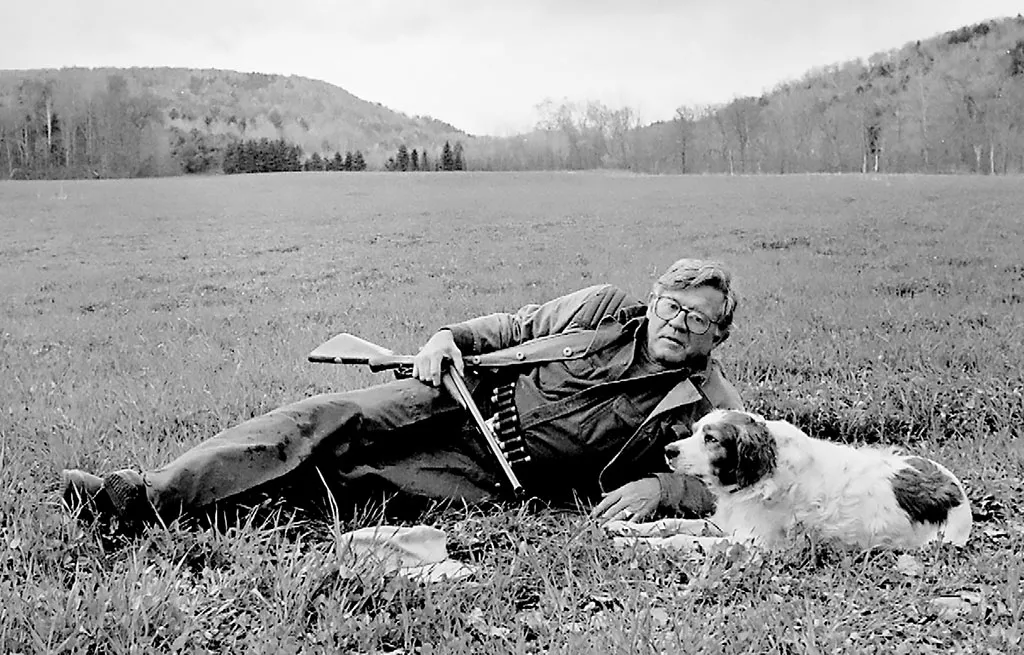
Peter Miller, the photographer and writer who documented a passing way of life in rural Vermont through intimate black and white portraits of its people, died on Monday. He was 89.

His death, confirmed by his longtime friend Rob Hunter, followed a hospitalization for pneumonia.

Even Vermonters who don’t recognize Miller by name will likely recognize his work. He’s best known for a series of self-published coffee-table books that featured portraits of and essays about older Vermonters — often farmers — who embodied the rugged authenticity that first made him fall in love with the state upon arriving here in the 1940s as a teenager.

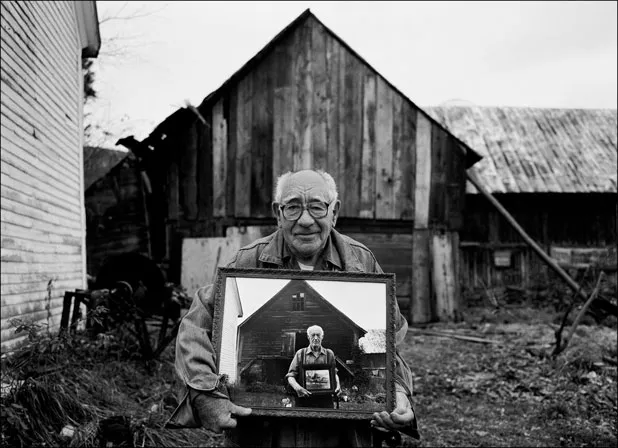
Among his most iconic images are the 1959 portrait of Will and Rowena Austin, a retired farm couple from Weston; and the 1997 portrait of Fred Tuttle, a Tunbridge dairy farmer and U.S. Senate candidate.

An avid outdoorsman, Miller also had an affinity for landscape photography. Until his health began to fail him recently, he could often be found chasing sunsets across the countryside. “It isn’t photography that I like so much,” he said during one of a few interviews with Seven Days in the months before his death. “What I do like is beauty.”

Miller received his first camera as a gift from his mother, who bought it with insurance money the family received after someone stole some guns Miller owned. As a student at the University of Toronto, he met famous portrait photographer Yousuf Karsh and traveled to Europe as his assistant, helping out on photo shoots of notable figures including Pablo Picasso, Albert Camus and John Steinbeck.

Miller enlisted in the U.S. Army after graduating college and spent two years working as a Signal Corps photographer in Paris, roaming the streets with his camera. He then wrote for Life magazine in the late 1950s before returning to Vermont to raise his children.

In the late 1980s, Miller sought to compile his three decades of Vermont images into a book that would tell the story of a changing culture. He pitched it to roughly a dozen publishers — and struck out with each.

Undeterred, Miller refinanced his house in Waterbury and used the money to self-publish Vermont People, an acclaimed book that sold over 15,000 copies. He went on to self-publish six other books, the most recent of which, Vanishing Vermonters: Loss of a Rural Culture, was released in 2017.

His work would earn him notable acclaim. In 2005, he was named the Burlington Free Press Vermonter of the Year. And in 2013, former senator Patrick Leahy read a tribute to Miller on the floor of the U.S. Senate.

click to enlarge Peter Miller's iconic photo of Fred Tuttle - PETER MILLER

  • Peter Miller
  • Peter Miller’s iconic photo of Fred Tuttle

“His resiliency is remarkable and his uncanny ability to display the beauty of Vermont in a way words cannot do justice serves as an inspiration for photographers everywhere,” Leahy said in his speech.

The self-publishing route allowed Miller to produce his books with meticulous care, which is perhaps why the quality of his volumes rival those put out by large publishers. His works can often be found at small-town bookshops and general stores.

But the do-it-yourself approach had its downsides — primarily, financial.  Though his writing and photography sales once brought in up to $85,000 annually, Miller’s income had plummeted in recent years, making it harder and harder for him to get by in an increasingly expensive state. Last year, he sold his longtime home in Waterbury and moved into an apartment at a senior facility in Stowe. At the time of his death, he was cataloging his work with the hope of  selling his portfolio.

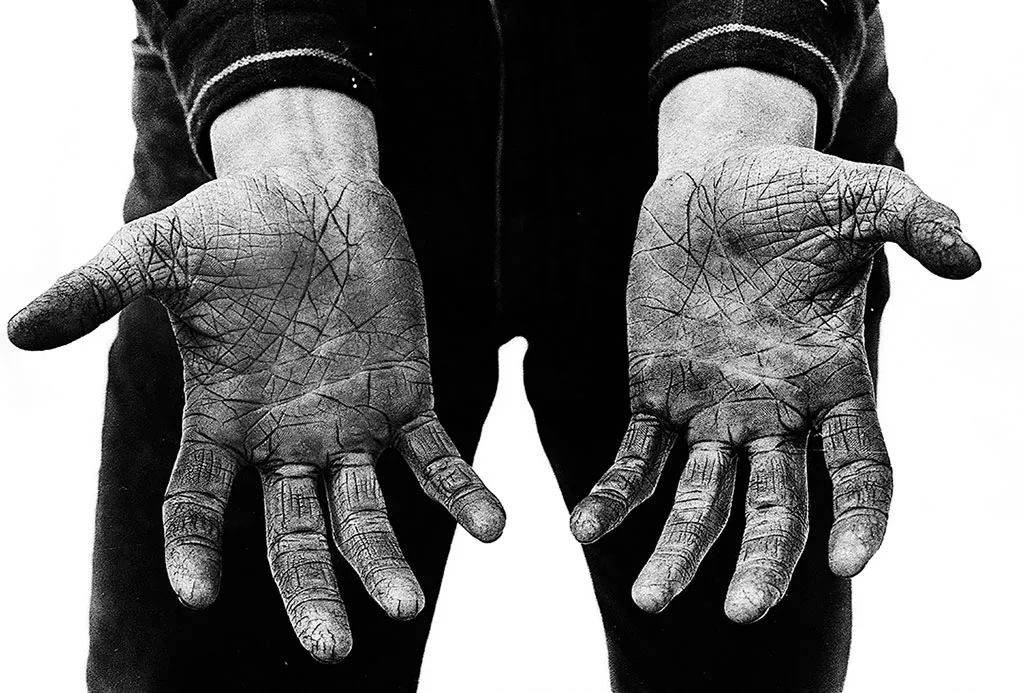
click to enlarge A Blacksmith's Hands - PETER MILLER

  • Peter Miller
  • A Blacksmith’s Hands

A self-described curmudgeon, Miller could indeed come off rough to new acquaintances. Hunter, for instance, recalled meeting him for the first time while working as the executive director of the Frog Hollow Vermont Craft Gallery. “He came in, and he’s like, ‘So you gonna buy my books?'” Hunter said with a laugh.

But Miller’s gruff exterior quickly gave way to a warmth and kindness that friends say stemmed from his deep curiosity about people and their stories.

“All those people he photographed, a lot of them were long-term investments that he would make: going out, talking to them, getting to know who they are,” said Hunter, a documentary filmmaker. “That, I think, made for a better end product.”

Hunter grew close with Miller over the years and once even spent dozens of hours following him around while producing a documentary film series about some of Frog Hollow’s artists. The two had fallen out of touch during the pandemic but recently reconnected, with Hunter visiting Miller numerous times before his death.

After learning of Miller’s passing, Hunter searched his own computer for the raw footage he shot of his friend and sat down to watch.

“I will miss him tremendously,” Hunter said.

Xiaomi 13 Ultra Preview: Game-changer for Smartphone Photography?

Xiaomi 13 Ultra Preview: Game-changer for Smartphone Photography?

Xiaomi 13 Ultra Intro

Let’s say it right away: the Xiaomi 13 Ultra is the elephant in the room when it comes to smartphone cameras in 2023, and it’s not even about the advanced camera hardware or the specs.

It’s about the processing. Photos out of an iPhone 14 Pro or a Galaxy S23 Ultra are a huge improvement from previous generations of smartphones, but they are undeniably “smartphone photographs”. That is to say that they are over-processed, often with unrealistic colors, excessive sharpening and altogether when viewed on anything bigger than a phone, they lose their appeal.

The Xiaomi 13 Ultra changes all of that. Instead of trying to give you the wildest colors and most “pop”, it goes for a more toned down, realistic look. Something way more similar to how photos taken on a real camera would look.

And that’s what makes it so special. But of course, it’s not just about that.

The Xiaomi 13 Ultra is also a great flagship phone. It has the Snapdragon 8 Gen 2 processor inside cooled with a proprietary Xiaomi solution so gamers can get even better performance than with conventional flagships. It has the world’s brightest display. It has long battery life. And it has much faster charging the Samsung and Apple. Let’s see if this is indeed not just the camera phone of 2023, but the smartphone of 2023, full stop.

*This preview is based on specs and other official information about the Xiaomi 13 Ultra, but we have not yet used/tested the phone fully.  

What’s new about the Xiaomi 13 Ultra

  • Photos that don’t have typical oversharpening, “smartphone processing” 
  • Superb night time zoom camera performance
  • Ultra-wide lens goes even wider than most cameras
  • Variable aperture main camera
  • Very cool camera-like design
  • All out flagship with Snapdragon 8 Gen 2 chip
  • Long battery life, fast charging
  • To arrive globally later in 2023

Table of Contents:

Xiaomi 13 Ultra Specs

It’s amazing Xiaomi fit all of this hardware in a phone

Let’s start with an overview of the specs, shall we?

Xiaomi 13 Ultra Design & Colors

QUICKSUMMARY


The Xiaomi 13 Ultra is a perfect illustration of what happens when form follows function. The function is a camera-first phone and the Xiaomi 13 Ultra looks a lot like a traditional camera that is slimmed down to a phone size. The slightly raised camera bed, the round camera system, the textured leather like finish are all throwbacks to traditional camera design.

It might be an acquired taste for some, but we love this look. It’s at least different than the glass-and-metal sameness that surrounds us.

Xiaomi calls the texture on the back of the phone a second generation nano-skin and ensures it will resist stains and look brand new even after a long while of using the phone. It takes some courage to sell a white phone and we’d be curious to see if it really holds its color even after months of use. Speaking of colors, you have a white, a green, and a black version, and all of them look stunning.

The other thing that strikes us is just how thick the aluminum frame on the phone is. We don’t think we’ve seen such a thick frame, and this should definitely help make this phone extra durable.

The USB-C port on the bottom now supports USB 3.2 speeds finally too.

We should also mention the so called professional camera kit, which is basically a case, a camera handgrip with a physical shutter key, and a 67mm filter thread. Super cool and we bet photographers will appreciate it. The kit is sold separately for around $150. 

Xiaomi 13 Ultra Display

The brightest display ever on a phone  

Xiaomi partnered with panel maker China Star and this is their latest C7 display generation technology, and it seems like the only reason why it exists is to beat the most advanced screens out there by just a tiny bit.

While the latest Samsung OLED panels hit as much as 2,500 nits of brightness, the Xiaomi 13 Ultra hits 2,600 nits. Yes, the difference is not huge, but also yes, this makes it the world’s brightest smartphone ever. This has a good ring to it, don’t you think?

We have not yet tested the screen in our lab measurements, but that’s coming soon.

As for biometrics, you have an in-screen fingerprint scanner, and again, we will be testing that in more detail soon, but we don’t expect any major issues or innovation there.

Xiaomi 13 Ultra Camera

Photographer’s dream!

We probably all know that one guy who really cares about photography, carries a big camera around with them, edits the RAW files, all that good stuff.

But what if you could get similar looking photos straight out of the camera without ever touching Photoshop?

That would be the dream, wouldn’t it?

Unfortunately, that’s not where the industry went with smartphone photography. Phones recently go for wild extra-vibrant colors, aggressive HDR and excessive sharpening. Looks good on a 6-inch screen, but pretty disappointing once you see it on a bigger screen like a tablet or a laptop.

Well, Xiaomi says no to all of that with the Xiaomi 13 Ultra.

No crazy vibrant colors, no excessive sharpening here. This phone goes for a completely different look with a more natural, film feel. Colors are fine tuned with some contribution from Leica, and the massive 1-inch type main camera sensor is amazing in both daytime and low-light conditions.

Xiaomi 13 Ultra Camera Specs:

  • 50MP Wide (IMX989, 1″ sensor), 23mm lens, f/1.9 – f/4.0
  • 50MP Ultra-wide (IMX858, 1/2.51″ sensor)
  • 50MP 3.2X Zoom (IMX858): 75mm f/1.8
  • 50MP 5X Periscope zoom (IMX858): 120mm f/3.0
  • 32MP Front cam
As you can see, the main camera comes with variable aperture. At f/1.9 it’s wide open and that’s great if you shoot an object up-close and want the background to be slightly blurry. At f/4.0 everything is in focus. Cool.

*Images courtesy of @UniverseIce.

The image above showcases just what a massive difference we have in the processing on the Xiaomi 13 Ultra and the Galaxy S23 Ultra.

And just look at that massive 1-inch camera sensor and how Xiaomi managed to include three other cameras in the mix too. Really impressive.

What we feel is the biggest improvement here is just how useful the zoom cameras are in low light. The telephoto cameras on most phones just fall apart in dim conditions, but not the Xiaomi. Early samples show that because of its wider aperture, it even captures better looking shots at 10X zoom than the Galaxy S23 Ultra!

And you also have a good amount of detail all across the zoom range: 0.5X, 1X, 2X, 3X, 5X and 10X are where the quality is at its best.

Xiaomi 13 Ultra Performance & Benchmarks

Snapdragon 8 Gen 2 with some Xiaomi cooling magic

Having the Snapdragon 8 Gen 2 inside would put the Xiaomi 13 Ultra on par with all the rest of the phones, but the company wanted to stand out, so it has developed a new cooling solution that is way more efficient than others.

This is particularly important for gaming, but also for camera tasks which can be even more tasking than a game. With this cooling technology, the 13 Ultra maintains video frame rates at a lower temperature than all other major competitors.

We will be looking at the performance of the Xiaomi 13 Ultra in depth soon, so make sure to check back here in a while.

There is no compromise with the rest of the specs too: all models come with 12GB of LPDDR5X RAM. The base starts at 256GB of UFS 4.0 storage, and you can also get a 512GB model, or even a 1TB model. There is no microSD card slot on this phone.

Xiaomi 13 Ultra Android version and MIUI

Our biggest concern with Xiaomi phones has always been the software. The 13 Ultra runs on Android 13 skinned with MIUI 14.

This is a simple skin that borrows quite a few ideas from iOS. It has its quirks like a weird multitasking interface and a visual style that might not appeal to everyone.

However, the bigger concern is with the way it aggressively kills background apps and often, there is nothing you can do about it. If you rely on a certain app for notifications, you don’t know what the MIUI skin will decide about it. It might kill it in the background and you will never have your push notifications on time. This is the biggest issue for Xiaomi phones and it has been the case in the past few years, so do keep that in mind. Xiaomi is doing that to optimize the battery performance, but that’s really not the way to go from our point of view.

Xiaomi 13 Ultra Battery

5,000mAh inside with super fast charging

Somehow, despite the giant camera system, the Xiaomi 13 Ultra is still able to pack the same 5,000mAh battery size as other flagship phones.

We still have not tested battery life, but considering our experience with previoous Xiaomi phones, there is no reason for concernt.

Xiaomi’s official measurements say this phone will last 1.3 days of use on average which is a solid score.

Xiaomi 13 Ultra Charging Speeds

The 13 Ultra supports an impressive 90W fast charging and you get the cable and the charger included in the box.

A full 1-100% charge takes just 37 minutes, approximately twice as fast as a Galaxy phone and even faster compared to an iPhone. 

You also have support for 50W fast wireless charging, which is great too. Compare this to 10W wireless charging on the Galaxy and 15W MagSafe charging on the iPhone, it’s a world of a difference.

Xiaomi 13 Ultra Audio Quality and Haptics

We have not yet tested the loudspeakers of the Xiaomi 13 Ultra, so check back for more information about this in a couple of weeks.

What we have seen is that Xiaomi uses a slightly smaller vibration motor on the 13 Ultra compared to the previous model, the 13 Pro. That makes sense considering the giant battery and camera module, but should reflect slightly on the quality of the haptic feedback you get.


Xiaomi 13 Ultra Competitors

The Xiaomi 13 Ultra is both a camera phone and just a stellar flagship, so it’s main competition are the best phones around: the Samsung Galaxy S23 Ultra, the iPhone 14 Pro Max, and the Google Pixel 7 Pro.

It is also competing with other phones out of China that also have put their focus on the camera system: the Oppo Find X6 Pro has recently received glowing reviews for its camera, the Vivo X90 Pro Plus is great at night, and the list goes on.

Still, the global availability of the Xiaomi 13 Ultra and its unique camera approach make it stand out in a crowd.

Xiaomi 13 Ultra Summary

The Xiaomi 13 Ultra shapes up to be one of the most impressive flagship releases in 2023.

It shifts the paradigm for smartphone photography with what might well become the best camera of the year. But it also has stellar performance, it’s a great device for gaming, it has a stand-out design, fast charging and all the bells and whistles you could think of.

The thing that might be holding it back the most is the restrictive MIUI software which aggressively kills apps in the background and might not be to everyone’s liking.

But let’s hold back until we finalize our testing. Stay tuned for our final review with detailed camera and performance measurements of the Xiaomi 13 Ultra coming soon.