Photography

A Photographer Asked Drag Queens One Question, And Everyone Needs To Read Their Answers

A Photographer Asked Drag Queens One Question, And Everyone Needs To Read Their Answers

With recent legislation around the country targeting LGBTQ+ people and drag queens specifically, North Carolina-based photographer Matt Ramey decided to start a new ongoing photo series called “Ancestral Fantasy: Tales of Freedom, Beauty, and Truth.”

The series features portraits of North Carolina drag queens in and out of costume, along with their responses when Ramey asked them a question: “Why is it important to live your truth?”

“The inspiration for this project started once the rumblings that demonized drag started taking hold in the political discourse. Ever since I can remember, LGBTQ+ folks have been under attack in America,” Ramey told HuffPost. “It’s so upsetting to see queer folks become the boogeyman. They are our family, neighbors and community. I want to do my part to help amplify their voices and tell their truth.”

Just this week, North Carolina House Republicans introduced a bill that would ban drag in public areas or where there are minors present.

Ramey hopes the portraits of drag queens out of their dazzling makeup and stunning costumes help others realize they are just regular people.

“It is easy to demonize something you don’t see as real,” the photographer said. “It’s important to remember that behind the makeup and performance is a real person, a human, just like you. They have a life, a family, goals, struggles, dreams and a truth they live in. They are entertainers and it’s important to see them as people, and not as a caricature.”

Below, check out the portrait series “Ancestral Fantasy: Tales of Freedom, Beauty, and Truth” by Matt Ramey and the answers to the question “Why is it important to live your truth?”

Brenda The Drag Queen

Matt Ramey for HuffPost

“When a drag queen pops on that first wig, pump, nail or lash, she’s taking back something the world has convinced her doesn’t exist over who she can be. Then, merely the existence of that character gives everyone they interact with the permission to be a little bit more themselves. When a young queer person sees a drag queen, they might think, if that towering person in a mermaid-cut sequin gown can do that, maybe I can make it one more day at school in the face of those bullies — as opposed to ending my life.

Anti-drag legislation takes away these opportunities. I can sing filthy parodies in nightclubs on Friday night and read a book to children on Saturday morning just like Chris Rock can do stand-up one day and voice a character in an animated movie the next. It’s called range — and drag queens have it the same as any other entertainer does. If 99.9% of the content I absorbed as a child situating heterosexual love as the only love didn’t somehow groom me to be straight, I can’t imagine that my reading to kids in a ball gown is going to groom them to be anything other than someone with more permission to be whoever they want to be.”

Matt Ramey for HuffPost

Alex Thee Rabbit

Matt Ramey for HuffPost

“Because freeing myself and living in that freedom lets others know that they too can dream and live the fantasies of their ancestors, just as I do.”

Matt Ramey for HuffPost

Chanté Elise Cassidy

Matt Ramey for HuffPost

“For all we truly know, we only have one life to live. You’d be doing yourself and the people around you a disservice by not being yourself and living your truth. One Love.”

Matt Ramey for HuffPost

Chloe Cassidy

Matt Ramey for HuffPost

“It’s very important to be the person you needed when you were younger.”

Matt Ramey for HuffPost

Emory Starr

Matt Ramey for HuffPost

“It’s important to live your truth because each individual has something specific and unique to offer. If you’re not living your truth then you’re denying not only yourself but the universe this special thing that only you can provide. True fulfillment is found in living your truth.”

Matt Ramey for HuffPost

Dana St. James

Matt Ramey for HuffPost

“Living my truth is important to me because, as a transgender woman of a certain age, I have been able to show younger generations that living an honest and joyful life is possible. While leading by example, I feel I can inspire others and show them that you don’t have to limit yourself to others’ concept of gender, and be your authentic self.”

Matt Ramey for HuffPost

Miss B Haven

Matt Ramey for HuffPost

“In a world full of so much deception, living in your truth is one of the bravest acts of resistance. To live in your truth is to choose yourself despite all the odds.”

Matt Ramey for HuffPost

Poison Venemisis

Matt Ramey for HuffPost

“There is a magnetic fire in my spirit that pulls me to dance and perform, almost a celestial force. The way my outward expression has been perceived or consumed has always pushed me outside of the norm, made me an outlier or outcast. I only found my place in the world through experiencing things that were more like me: music, art, fashion. I am so grateful that certain people have this unshakable urge to live in authenticity and make it known that we exist in a community; that everything and everyone has its time and place.

It’s important for me to live in my truth to honor those people ahead of me who fought for my liberty and for everyone who comes after to find themselves in me, to find this fuel to live in unshakable authenticity. I believe the world is abundant and accepting diversity is the foundation to social success. We need for everyone to be empowered to be exactly who they care to be, to listen to their calling and fulfill that in support and freedom.”

Matt Ramey for HuffPost

Ruby Liquer

Matt Ramey for HuffPost

“Organized religion taught me lies. And nearly killed me. My community taught me truth. And they accept me!”

Matt Ramey for HuffPost

Shelita Bonet Hoyle

Matt Ramey for HuffPost

“Because I need to be who I needed when I was younger. Growing up, no one around me looked like me or sounded like me or acted like me. And it took me a long time to realize that was OK. I live in my truth to show them that they can learn to love their truth, too.”

Matt Ramey for HuffPost

Teagress

Matt Ramey for HuffPost

“Queer kids out there deserve to see people like them thriving as adults as who they want to be. To put it frankly, the world doesn’t like to see people like us thrive. They want us to fall into place, be what they expect us to be, fall into the roles they expect us to fall into. Open your eyes: Drag and trans bans are being passed all around the country. It’s important now more than ever to not back down and show that queer people aren’t dangerous, but people that have been here for millennia.”

Matt Ramey for HuffPost

rnrn HPGam.cmd.push(function(){rnttreturn HPGam.render(“inline-1”, “entry_paragraph_1″, false);rn });rnrn”,”

rnrn HPGam.cmd.push(function(){rnttreturn HPGam.render(“inline-2”, “entry_paragraph_3″, false);rn });rnrn”,”

rnrn HPGam.cmd.push(function(){rnttreturn HPGam.render(“inline-infinite”, “repeating_dynamic_display”, false);rn });rnrn”],”adCount”:0}}”>

Go To Homepage

German photographer refuses prestigious Sony World Photography award 2023. Here’s why

German photographer refuses prestigious Sony World Photography award 2023. Here’s why

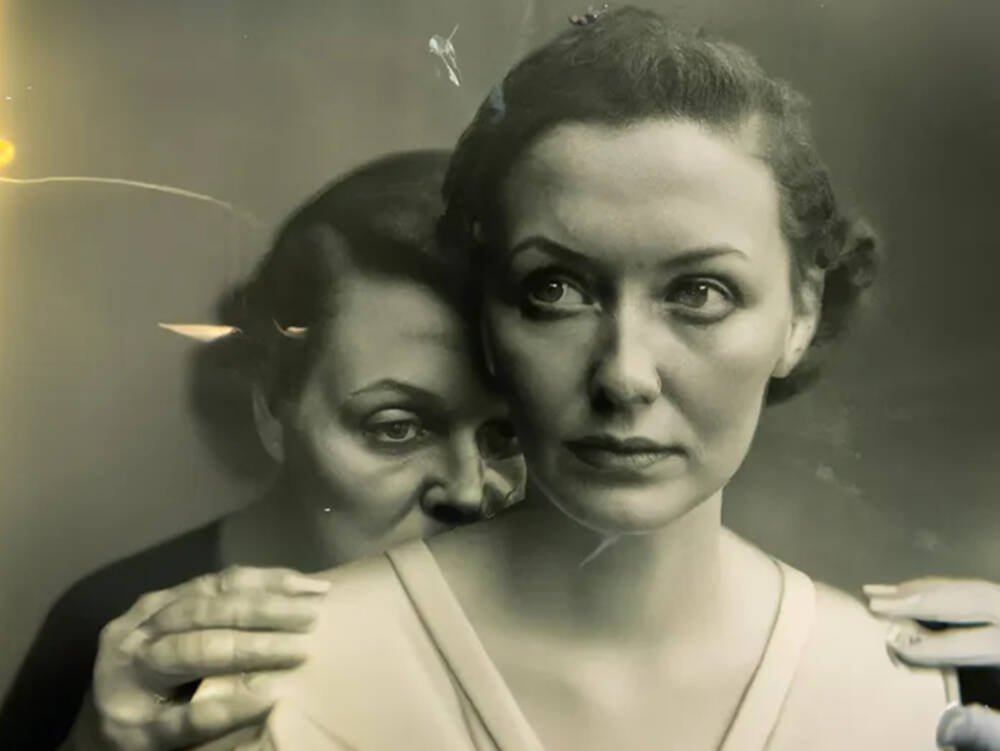
A German photographer who won the Sony World Photography Award 2023, has refused to accept the same, stating that he was being a ‘cheeky monkey’ and that he has generated the prize winning image using artificial intelligence (AI) in order to ‘spark a debate’. 

The photographer Boris Eldagsen refused to accept the SONY World Photography 2023 award. He had won the award in the creative open category. 

The winning photograph has two women possibly from two different generation. The black and white photo shows one leaning on the other, while the seemingly younger female in the front looks up. 

In a statement on his website, Eldagsen, who studied photography and visual arts at the Art Academy of Mainz, conceptual art and intermedia at the Academy of Fine Arts in Prague, and fine art at the Sarojini Naidu School of Arts and Communication in Hyderabad, said he “applied as a cheeky monkey” to find out if competitions would be prepared for AI images to enter. “They are not,” he added.

“We, the photo world, need an open discussion,” said Eldagsen. “A discussion about what we want to consider photography and what not. Is the umbrella of photography large enough to invite AI images to enter – or would this be a mistake?

“With my refusal of the award I hope to speed up this debate.”

He said this was a “historic moment” as it was the first time an AI image had won a prestigious international photography competition, adding: “How many of you knew or suspected that it was AI generated? Something about this doesn’t feel right, does it?

“AI images and photography should not compete with each other in an award like this. They are different entities. AI is not photography. Therefore I will not accept the award.”

Eldagsen suggested donating the prize to a photo festival hosted in Odesa, Ukraine.

A spokesperson for the World Photography Organisation said Eldagsen had confirmed the “co-creation” of the image using AI to them before he was announced as the winner.

Images generated with AI tool Midjourney has taken the world by storm, and probably left them in utter confusion. 

From billionaires imagines in poorer settings, to grand-old senior skateboarding with ease, the essentially realistic images sure has taken internet on a rather bumpy ride. 

Freedom fighters taking a selfie to kings and rulers re-imagined, an AI tool has possibly blurred the boundary and rendered creativity ‘limitless’. 

The stunt comes at a time of intense debate over the use and implications of AI with some issuing apocalyptic warnings that the technology is on the brink of irreversibly damaging the human experience.

Catch all the Technology News and Updates on Live Mint.
Download The Mint News App to get Daily Market Updates & Live Business News.

More
Less

A man with a knife in his back: Oliver Frank Chanarin’s best photograph

A man with a knife in his back: Oliver Frank Chanarin’s best photograph

This was my first project after my 20-year collaboration with Adam Broomberg came to a close in 2021. I had never really worked as an artist or a photographer on my own, but I think we both needed to see what it felt like. Our photos had been highly conceptual, and I wanted to return to why I first became a photographer: going out into the world with a feeling of wonder, watching and having experiences with strangers. So that’s what I spent 2022 doing: meeting pensioner groups, carnival troupes, gender activists and, as this image shows, attending a meeting of the Casualties Union, who were perfecting wound makeup.

The Casualties Union, a group of volunteers that has been operational since the second world war, is used by hospitals, the emergency services and even corporate clients, to test out catastrophe scenarios. If the police were staging a hypothetical suicide attack in London, they would need casualties that not only looked like the real thing but acted like the real thing. There’s a lot of performance required, and real precision about the way the volunteers act out injuries.

I’ve worked all over the world in some difficult situations, including the Afghanistan war and some psychiatric hospitals, always thinking of myself as a neutral witness. But through the making of this recent work, and because of seismic changes in our culture, I became very aware of being white and male, and the privilege and complexity that brings. In some cases, it made it quite hard for me to make the pictures I wanted to.

So many things came up during this project, called A Perfect Sentence, that I could never have imagined. The world is so much more interesting than the contents of my head. And it has changed in such a radical way: we had Brexit, the pandemic, George Floyd’s death and Black Lives Matter. I encountered a huge amount of anxiety from people about being in front of the camera, and about who was taking the picture. I had had this daydream about meandering along and capturing a moment in time in this country. But actually it was very fraught. Things shifted – with the focus now being on the power dynamic between photographer and subject.

I shot this project on film, which had a big impact on the pictures. There’s a time lapse between the moment that you take a shot and when you see it. I retreated into my darkroom for months. I’m not a very experienced colour printer, so I made a lot of errors, got the skin tones wrong, the exposure too light or too dark, and sometimes the pictures came out way too magenta or cyan. Then, at a certain point, I realised some of those prints were more interesting to me than whatever the final picture was. Although they were imperfect, they demonstrated that a picture is not an objective thing, not a piece of evidence, but something more subjective and nuanced.

If you look at the work of Henri Cartier-Bresson, or even Martin Parr, a lot of that sort of street photography is not really morally acceptable any more. I think that style of working has been neutralised by the internet. It’s a mixed blessing: on the one hand, it means the person being pictured has a lot more authority. On the other, all the images we see today are more constructed, with less spontaneity. What I love about the Casualties Union photos is that the volunteers are trying to capture moments of trauma, yet the pictures are incredibly staged, robbing them of any real sense of urgency. These pictures speak to this tension.

A Perfect Sentence by Oliver Chanarin, produced by Forma, is at the Museum of Making, Derby, until 3 September. A book of the project is published by Loose Joints on 1 June

skip past newsletter promotion

Oliver Frank Chanarin.

Oliver Chanarin’s CV

Born: London, 1971.
Trained: Artificial Intelligence at Sussex University.
Influences: “August Sander, Annie Ernaux, my mother.”
High point:Winning the Deutsche Börse photography prize in 2013.”
Low point: “The death of Broomberg & Chanarin.”
Top tip: “As Wim Wenders said: ‘The most political decision you make is where you direct people’s eyes.’”

Cultural Thursdays Presents Photographer Wilhelm Bleckmann’s Rare Collection

Cultural Thursdays Presents Photographer Wilhelm Bleckmann’s Rare Collection

Pasadena Senior Center (PSC) is excited to announce its upcoming event, “Cultural Thursdays – Meet Photographer Wilhelm Bleckmann,” which will take place on Thursday, April 20, 2023, at 2:00 p.m. The event is free to attend and will be held at PSC’s Fireplace Lounge.

Wilhelm Bleckmann is a renowned photographer who has an impressive collection of rare and candid photos of popular television and movie personalities from the 1970s. He served as the director of photography for Society West magazine, giving him access to exclusive events attended by Hollywood’s elite during that time. Bleckmann’s photographs capture his subjects in unlikely pairings and unguarded moments, making them a valuable treasure trove for pop-culture anthropologists.

A native of Germany, Bleckmann is a professor emeritus at Pasadena City College, where he taught for more than thirty years. His passion for photography has taken him on various assignments throughout his career, including stints as a photojournalist, cinematographer, and still photographer for media outlets like the Los Angeles Board of Trustees, KABC, and KTTV-METRO MEDIA TV.

Bleckmann’s photography portfolio is a testament to his preference for candid, rather than posed, compositions. He has said that he prefers to capture people going about their business rather than smiling for the camera, and his lone-wolf approach allows him to capture most of his subjects in fluid moments. This approach makes Bleckmann’s photographs even more intriguing and interesting to observe.

During the Cultural Thursdays event, Bleckmann will share some of his fascinating photographs with the attendees, and there will be an informal talk and reception where guests can engage with the photographer and ask him questions about his work. PSC recommends that guests reserve their spots as soon as possible.

The Pasadena Senior Center is located at 85 E. Holly St., Pasadena. For more information, call (626) 795-4331 or visit https://www.pasadenaseniorcenter.org/activities-events/special-events/895-cultural-thursdays-meet-photographer-wilhelm-bleckmann

Laowa 25mm f0.95 CF APO Review: Best for Street Photography?

Laowa 25mm f0.95 CF APO Review: Best for Street Photography?

There aren’t many modern Fujifilm lenses that really bring me a lot of joy to use. And that’s not to say that they’re bad, but they’re big deviations away from what we’ve known Fujifilm for for years. Many of the new optics just don’t feel retro enough. However, the Laowa 25mm f0.95 CF APO not only feels retro, but nails it on image quality. And if anything, I think it could be the best lens for Street Photography available to the Fujifilm X mount.

The Phoblographer may receive affiliate compensation for products purchased using links in this blog post.

The Big Picture

There are a lot of wonderful things going for the Laowa 25mm f0.95 CF APO. First off, there’s the super shallow depth of field ability. And when you want to use it for street photography, you just stop it down to f5.6, focus it to five or six feet away, and then zone focus all you want. Couple all this with metal build quality, small size, and affordable pricing. Then also consider the fact that this lens has an apochromatic lens element inside to make your subjects pop even more.

Of course, while that’s also positively phenomenal, it’s not all perfect. The lens doesn’t have AF/AE contacts, and so the exposure won’t be communicated to the camera. That makes used it with a flash much harder if you’re shooting TTL. And more importantly, it’s not weather resistant, and so the build quality that your otherwise weather-resistant Fujifilm camera has is more or less voided.

We’re giving the Laowa 25mm f0.95 CF APO four out of five stars. It’s about time that Laowa really starts adding weather resistance to their lenses. Want one? They’re $549 on Laowa’s website. Phoblographer subscribers get a special discount as a membership benefit.

Pros

  • Nice focus throw
  • Beautiful optics
  • Lens character that’s gorgeous
  • Zone focusing scale that’s incredible for street photography
  • Apochromatic elements make subjects pop from the background

Cons

  • Not weather resistant
  • Depth of field scale goes from zero to 60 pretty fast
  • No AE/AF focusing contacts

Gear Used

We tested the Laowa 25mm f0.95 CF APO with the Fujifilm X Pro 3, the Tiffen Color Intensifier filter, and Profoto B10. The lens was on loan from Laowa, and the rest of the gear is ours.

Innovations

Where the Laowa 25mm f0.95 CF APO is really innovative comes with it having a few things: first off, there is a quick and easy option to set the lens to have a clicked or de-clicked aperture. Additionally, there is an apochromatic lens element, that really makes subjects that are in focus pop. This is something that only Leica ever uses in their modern lenses, though Sigma has used it in at least one of their lenses. And, of course, this is an f0.95 lens for Fujifilm. While it’s not super rare, it’s very uncommon.

Ergonomics

The Laowa 25mm f0.95 CF APO looks a lot like the company’s other Argus lenses; which seem to be the highest end options for them. If you look at it directly from above, it will appear like most other manual focus lenses with zone focusing markers, a depth of field scale, apertures, distances, etc.

The lens hood attaches to the front of the lens and doesn’t allow you to use a lens filter at the same time. That’s an odd part of the design.

On the bottom is a switch that transforms the aperture from clicked to de-clicked easily.

Build Quality

While this lens isn’t weather resistant, it’s made of metal. And when mated to Fujifilm cameras, it feels right at home. The lack of weather resistance is consistently my biggest problem with Venus Optic lenses. I really wish that it had it to ensure that I can shoot with these lenses all day and every day. In fact, I’d use these over Fujifilm’s own lenses.

Ease of Use

This is a manual focus lens. So you can either use focus peaking combined with the power of fervent prayer, zone focusing, or you can use magnification with Fujifilm cameras. Either way, it’s a bit difficult to use when shooting wide open. But if you’re stopping down and doing zone focusing, this is by far one of the best lenses you can and will ever use for street photography with Fujifilm.

Honestly, in the hands of a skilled photographer, this lens will be faster to capture moments than Fujifilm’s own lenses.

Focusing

Like all other Laowa lenses, this is a manual focusing lens. And if you don’t like that, then consider Fujifilm’s own lenses. Otherwise, you’ll realize pretty quickly that the zone focusing abilities of this lens make it really useful for street photography and candid shooting.

Because of the design being a wide-angle lens, the focus goes from zero to infinity really fast. At around 5 feet away, the lens will really become its most useful. But if you want to zone focus anything a bit further than that, you’ll have a heck of a time.

What’s more, if you’re photographing people and shooting wide open, you really need to be super careful. The focus peaking might tell you that you’re in focus, but many times you really won’t be. It’s one of the most annoying things about this lens and you’re buying it partially for the f0.95 aperture, but it ends up not being very useful at that f-stop.

Image Quality

There is a lot to love about the image quality of the Laowa 25mm f0.95 CF APO. Of course, photographers will want to shoot wide open with it a lot. But when you’re stopping it down, it will probably perform best, not only in terms of ease of use but also image quality. Combined with Fujifilm’s film simulations, it’s really difficult to take a bad photo with the Laowa 25mm f0.95 CF APO.

Bokeh

I mean, look at that! Wow! The bokeh is creamy, flarey, there’s character galore, the apochromatic lens element really makes the subject stand out. You can’t say anything bad about the bokeh.

Color Rendition

The Laowa’s color rendition also comes from Fujifilm’s sensor. I used the Classic Chrome and Classic Negative film simulations a lot. And they performed exactly how I’d expect when underexposed, overexposed, etc. They’re beautiful.

Lens Character

The Laowa 25mm f0.95 CF APO doesn’t exhibit problems with fringing, but you’ll get a bit of swirly bokeh when you’re shooting wide open. For what it’s worth, I’m not opposed to that.

Sharpness

Stopping the lens down to f4 and f5.6 makes it feel a lot more serious. Combine that with off-camera flash and you’ll be very happy with the results you get.

Extra Image Samples

From day one, The Phoblographer has been huge on transparency with our audience. Nothing from this review is sponsored. Further, lots of folks will post reviews and show lots of editing in the photos. The problem then becomes that anyone and everyone can do the same thing. They’re not showing what the lens can do. So we have a section in our Extra Image Samples area to show edited and unedited photos. From this, you can make a decision for yourself.

Unedited

Edited

Who Should Buy the Laowa 25mm f0.95 CF APO?

Truly, the only people I think will benefit most from using the Laowa 25mm f0.95 CF APO are street photographers. But keep in mind that the build quality isn’t weather-resistant.

Tech Specs

Taken from Laowa’s website.

Specifications
Format APS-C
Focal Distance 25mm
Aperture Range f/0.95-11
Angle of View 58.8°
Lens Structure 14 elements in 9 groups
Aperture Blades 9
Min. Shooting Distance 34cm
Max. Magnification 0.15x
Focusing Manual (MF)
Filter Thread Ø62mm
Dimensions About Ø 71.5mm * 81mm
Weight About 575g
Mounts Sony E/ Nikon Z/ Canon RF/ Fuji X/ Canon EF-M

SUV crashes into Footsteps Photography in Lowell

SUV crashes into Footsteps Photography in Lowell

Ask Mike: Red-White Game Breakdown, Ticket Scalping …

4 hours ago


.cls-3{fill:#fff;fill-rule:evenodd}

Pig Trail Nation team looks at how Arkansas Baseball …

1 day ago


.cls-3{fill:#fff;fill-rule:evenodd}

ESPN Arkansas’ Tye Richardson gives his thoughts …

1 day ago


.cls-3{fill:#fff;fill-rule:evenodd}

Hog Hoops Report with Kevin McPherson (4-16-23)

1 day ago


.cls-3{fill:#fff;fill-rule:evenodd}

Razorbacks speak to series sweep over Vols

2 days ago


.cls-3{fill:#fff;fill-rule:evenodd}

Dave Van Horn speaks to series sweep over Vols

2 days ago


.cls-3{fill:#fff;fill-rule:evenodd}

Arkansas Football Recruiting Report with Otis Kirk …

2 days ago


.cls-3{fill:#fff;fill-rule:evenodd}

Arkansas head coach Dave Van Horn recaps 6-3 win …

3 days ago


.cls-3{fill:#fff;fill-rule:evenodd}

Will McEntire, Gage Wood and Jace Bohrofen recap …

3 days ago


.cls-3{fill:#fff;fill-rule:evenodd}

KJ Jefferson, Raheim Sanders, and Isaiah Sategna …

3 days ago


.cls-3{fill:#fff;fill-rule:evenodd}

Chris Paul Jr. and Landon Jackson talk Spring Game

3 days ago


.cls-3{fill:#fff;fill-rule:evenodd}

Sam Pittman breaks down the Spring Game

3 days ago


.cls-3{fill:#fff;fill-rule:evenodd}

Courtney Deifel looks ahead to UAB

5 days ago


.cls-3{fill:#fff;fill-rule:evenodd}

From Batesville to The Hill: The Story of Gage Wood

6 days ago


.cls-3{fill:#fff;fill-rule:evenodd}

Brady Slavens and Tavian Josenberger speak to loss …

6 days ago


.cls-3{fill:#fff;fill-rule:evenodd}

Dave Van Horn speaks to loss to Little Rock at home

6 days ago


.cls-3{fill:#fff;fill-rule:evenodd}

Dave Van Horn recaps Hogs 21-5 win over Little Rock …

7 days ago


.cls-3{fill:#fff;fill-rule:evenodd}

Sam Pittman Press Conference after practice #12 of …

7 days ago


.cls-3{fill:#fff;fill-rule:evenodd}

Ask Mike: Cali’s Big Weekend, Muss’ Roster Changes …

1 week ago


.cls-3{fill:#fff;fill-rule:evenodd}

Hog Hoops Report with Kevin McPherson (4-9-23)

1 week ago


.cls-3{fill:#fff;fill-rule:evenodd}

Arkansas Football Recruiting Report with Otis Kirk …

1 week ago


.cls-3{fill:#fff;fill-rule:evenodd}

Courtney Deifel and Cylie Halvorson recap 4-3 walk-off …

1 week ago


.cls-3{fill:#fff;fill-rule:evenodd}

Gage Wood and Caleb Cali recap 6-4 win over Ole Miss …

1 week ago


.cls-3{fill:#fff;fill-rule:evenodd}

Dave Van Horn recaps 6-4 win over Ole Miss to win …

1 week ago


.cls-3{fill:#fff;fill-rule:evenodd}

AJ Green and Isaiah Sategna give an update on spring …

1 week ago


.cls-3{fill:#fff;fill-rule:evenodd}

Zach Williams and Lorando Johnson give an update …

1 week ago


.cls-3{fill:#fff;fill-rule:evenodd}

Dave Van Horn discusses splitting double-header with …

2 weeks ago


.cls-3{fill:#fff;fill-rule:evenodd}

Brady Slavens & Hunter Hollan discuss splitting double …

2 weeks ago


.cls-3{fill:#fff;fill-rule:evenodd}

Coach Deifel breaks down the heartbreaking loss to …

2 weeks ago


.cls-3{fill:#fff;fill-rule:evenodd}

Arkansas FB players give update on Spring Practice

2 weeks ago


.cls-3{fill:#fff;fill-rule:evenodd}

Art in the Early 2000s China Boom

Art in the Early 2000s China Boom

LOS ANGELES — In the early 2000s, China seemed to be on an endless up and up. In 2010, China became host to the world’s second-largest economy and, according to a Pew Global Attitudes Survey in 2005, the country had the largest percentage of respondents who indicated they had made progress in their lives over the past five years. Today, in the wake of the ravages of COVID, China has posted one of its lowest economic performances in decades. Trust in the country remains high, but overall global tensions are mounting. The COVID era of China looks very different.

Cruel Youth Diary: Chinese Photography and Video is a snapshot of the country’s now-distant but important period of growth in the 1990s and 2000s. On view at the newly renovated Hammer Museum of Art, the show is assembled from the collection of the Haudenschild family, a gift to the museum. The included works feature 16 artists caught up in the paradoxes of the time. 

“Shut out of official art spaces by strict government guidelines, these artists grew close-knit as they showed their work in a network of nontraditional art spaces such as apartments, garages, real estate developments, and shopping malls,” the exhibition text notes (though I wish it had pointed out that these artists were and continue to be primarily men). Ironically, “many of them found prominence in the global art market even as they faced suppression at home.”

The exhibition greets us with the dizziness befitting a period of rapid economic growth and social change. Liu Wei’s “Unlimited” meets the viewer at the entranceway with a winding, snakes-and-ladders-style assemblage of Chinese shopping areas and malls, interconnected with a series of escalators that form the scaffolding for a cacophony of growth. Zhu Jia’s “Forever,” produced in 1994, is a video piece captured through the then-novel technology of portable cameras, strapped onto a tricycle wheel as he biked around Beijing.

Other works play with scale simply by showing it. The Sitting on the Wall series by Wang Fen (also known as Wang Peijun) shows the rapid urbanization of the Shenzhen and Haikou regions, with school children staring outward at these cities of millions that evolved in just a few decades. Xiang Liqing’s Rock Never series shows the density and repetition of Chinese dwelling places, and Song Tao’s “The Floor (Life Is Wonderful)” is a selection of some 20,000 photos from his daily life in Shanghai. These pair well with Shi Yong’s “Gravitation—Shanghai Night Sky,” a series of photos of skyscrapers in the smoggy-foggy nights of the city, and Yang Yong’s “Run Away (I am not who I am),” comprised of photos of Shenzhen youth, with a Wong Kar-Wai-like sexy composition.

Two striking works are worth seeing in person: Yang Fudong’s The First Intellectual series, a rendition of a bloodied salaryman that has renewed poignance in the wake of the 2020s anti-work movement (known as “lie flat” in China), and Liu Wei’s “It Looks Like a Landscape,” an assembly of photos of nude bodies made to look like a Shanshui painting. Liu was upset that the 2004 Shanghai Biennial kept rejecting his work, so he made something closer to what he thought the exhibition organizers wanted from Chinese art. “I was really angry, really angry,” he said, according to the exhibition text, “so I decided to show them an ass, but it looked like a Chinese landscape, so they liked it.”

Yang Fudong, “The First Intellectual” 1–3 (2000), chromogenic prints
Yang Zhenzhong, “Lucky Family,” 2–4 (1995), chromogenic prints
Xiang Liqing, “Rock Never,” detail (2002), inkjet prints
Shi Yong, “The Moon Will Be Seen Tonight—Gallery Scenery No. 1,” detail (2002), chromogenic print
Yang Fudong, “Honey” (2003), single-channel video, 8:54 min.

Cruel Youth Diary: Chinese Photography and Video continues at the Hammer Museum (10899 Wilshire Boulevard, Westwood, Los Angeles) through May 14. The exhibition was organized by Nicholas Barlow with Adam Moshayedi.


CalArts Anniversary Weekend Celebrates 50 Years of Experimentation in Visual and Performing Arts

Join the party in Valencia, California, for three days of open studios, concerts, exhibitions, performances, and more from April 28 to 30.


Why Charging Admission to Rome’s Pantheon Is a Bad Idea

What is the excuse for charging people for something that was free for 1,900 years?


Prison Abolition Art in Florida Removed Under University Pressure

The University of Florida’s off-campus art gallery was vandalized after the school asked its curator to take down banners criticizing the local police department.


Wrightwood 659 Welcomes Three New Exhibitions

“Kongkee: Warring States Cyberpunk”, “Shahidul Alam: Singed But Not Burnt”, and “Patric McCoy: Take My Picture” are on view at the Chicago art space.


MTV’s The Exhibit Was a Ratings Flop

Compared to predecessors like Bravo’s 2012 “Gallery Girls,” the art world reality TV show tanked.


Can You Buy the Time of a Political Prisoner?

Cuban artist Luis Manuel Otero Alcántara, who remains behind bars at the Guanajay maximum security prison, talks to Claudia Genlui Hidalgo about his latest — and unconventional — project.


Scotiabank CONTACT Photography Festival Celebrates 27th Edition in Toronto

The 2023 festival includes public art by Genesis Báez, Seif Kousmate, and Hélène Amouzou visualizing intersections of land, migration, and imagination.


Internet Perplexed by Netflix’s Black Cleopatra

Critics say producer Jada Pinkett Smith and the streaming platform should center the stories of historical Black women instead of rewriting history.


NYPD Arrests Artist Painting Message of Support for Unhoused Man

Helena Münninghoff, a formerly unhoused resident of the East Village, was arrested for painting a call for help for her friend on a construction fence.

Man rejects top photography prize after revealing AI use

Man rejects top photography prize after revealing AI use

A photographer selected as a category winner of this year’s international Sony Photography Awards has rejected the prize, saying his entry was actually generated using AI.

Last year, Boris Eldagsen began creating images for a collection he named Pseudomnesia, a combination of the Latin words pseudo and mnesia that essentially mean fake and memory. He entered an image from this collection into the creative open category in Sony’s photo contest, a piece titled The Electrician in December 2022. He did so without disclosing the snap had been produced with the help of text-to-image tools, since the terms allow the use of “any device.”

Eldagsen

Convincing … Eldagsen’s award-winning AI-created snap

Eldagsen described the images in Pseudomnesia as “imagined by language and re-edited more between 20 to 40 times through AI image generators, combining ‘inpainting’, ‘outpainting’ and ‘prompt whispering’ techniques.”

Three months later, the organizers informed him he had won the creative category. Eldagsen said he then admitted to the competition’s organizers his picture had been generated using machine-learning software, and that he wanted to use the competition to launch a public discussion on how the technology was impacting photography.

Though photographers use all kinds of software applications in their work, to retouch, filter, crop, and so on, where do neural networks fit in that stack; are they acceptable tools; and where’s the line in the sand that they cross if they are not acceptable?

Interestingly enough, competitions may allow or even welcome the use of artificial intelligence, and it’s photographers who are uncomfortable with the rise of this kind of computing.

“Right now for me, it is more important that the public debate I hoped for has become international and is in full speed,” he told The Register. “I want to thank the photo community for this.”

Eldagsen said he wants to differentiate photography from realistic AI-generated images. “Can they be in one museum under the name of photography? Will this be good or bad for photography? It is complex, this is why we need to talk about it,” he told us.

He said officials ignored his requests to discuss his situation, and kept him as a winner. He confirmed to us he was rejecting the prize, which included $5,000, Sony camera gear, and a trip to the photography exhibition in London. 

“Thank you for selecting my image and making this a historic moment,” Eldagsen wrote on his website, “as it is the first AI generated image to win in a prestigious international [photography] competition. How many of you knew or suspected that it was AI generated? Something about this doesn’t feel right, does it?

“AI images and photography should not compete with each other in an award like this. They are different entities. AI is not photography. Therefore I will not accept the award.

“I applied as a cheeky monkey, to find out if the competitions are prepared for AI images to enter. They are not. We, the photo world, need an open discussion. A discussion about what we want to consider photography and what not. Is the umbrella of photography large enough to invite AI images to enter – or would this be a mistake? With my refusal of the award I hope to speed up this debate.”

I applied as a cheeky monkey, to find out if the competitions are prepared for AI images

After Eldagsen’s stunt became public, officials scrubbed his entry from the Sony Photography Awards and removed his image from the exhibition.

It’s not the first time AI-generated artwork has won a competition. Last year, Jason Allen won the top prize of $300 for his Midjourney-made image at the Colorado State Fair’s fine art competition, causing much controversy.

“We were looking forward to engaging in a more in-depth discussion on this topic and welcomed Boris’ wish for dialogue by preparing questions for a dedicated Q&A with him for our website,” a World Photography Organisation spokesperson told The Guardian.

“As he has now decided to decline his award we have suspended our activities with him and in keeping with his wishes have removed him from the competition. Given his actions and subsequent statement noting his deliberate attempts at misleading us, and therefore invalidating the warranties he provided, we no longer feel we are able to engage in a meaningful and constructive dialogue with him.” ®